Cal Orey
Subject: HEALING POWERS OF HONEY, REVISED & UPDATED: New Book Takes You on a Magical Nature’s Golden Nectar Tour
The Healing Powers of Honey: Revised and Updated New foreword by Jonny Bowden, Ph.D., author of The 150 Healthiest Foods on Earth Publisher: Publisher: Kensington - Imprint: Citadel - Series: Healing Powers - Publication date: August 25, 2026 Part of series: Healing Powers Learn how to boost your immune system, combat ailments, and so much more, all with the natural power of antioxidant-rich and anti-inflammatory honey—the pantry staple and sustainable superfood that’s also the green choice for healthy living, and natural cures. A newly revised and updated edition of the #1 hit, now with new research, heart-healthy recipes, honey bee data, and home cures! DISCOVER HONEY’S AMAZING BEE-HEALTHY POWERS Did you know? . . . Eating honey, Mother Nature’s ancient medicine, can still work its healing magic and help lower the risk of disease—adding quality and years to your life—at any age! The buzz: Consumers are seeking healthy alternatives to refined sugar due to concerns about obesity, diabetes, and heart disease, the #1 killer. Yes! Raw, unprocessed honey is more popular than ever before and is touted a “superfood” as it replaces unhealthy table sugar and artificial sweeteners—helping to combat the skyrocketing rise in chronic ailments and life-threatening diseases. During the COVID-19 pandemic, beekeepers experienced a surge in demand for the disease-fighting, antioxidant-rich “apocalyptic food” widely believed to boost immune health. Increasing threats to honey bees’ survival may harm the planet’s nourishing superfoods that you love to eat—such as fruits and nuts—that the honey bee pollinates. Honey, known as Mother Nature’s “nectar of the gods,” is an ancient remedy noted in the Bible and used for centuries to quell a cough, soothe a sore throat, energize you, and even calm frazzled nerves due to stressors such as post-COVID-19 virus variants and climate change health effects. Enjoy gripping and adventurous survival stories about honey bees and humans as well as fascinating reasons why the popularity of honey is soaring, Manuka honey medicinal uses are surging, and herbal flavored varietals are trending. You’ll also love new heart-healthy recipes with honey twists such as Whipped Ricotta Toast with Lemon Thyme Honey, Hot Honey Glazed Turkey Loaf, and Turmeric Honey Immunity Booster, plus buzzworthy home cures thanks to honey’s gifts (including super “bee foods” like propolis and royal jelly) from the hive! Health & Lifestyle, Alternative Health, Nutrition, Paranormal, Near Death Experiences, Pets and Animals, World, Science, Climate Change
United States
Cal Orey, M.A., is an author-journalist who is well-known worldwide for her popular Healing Powers series ongoing since 2000, published by Kensington. She specializes in health, nutrition, Earth changes, and climate change. She is a gifted storyteller and shares gripping and heartwarming stories in her books. Also, the author who shares her wit and candor has been a favorite guest on C2C, KSFO, Newsmax, Ann Louise Gittleman's podcasts; B&N book events, and more. 
|
Tannia Ospina
Subject: Why ecommerce brands are scrambling to protect their trademarks in 2026 Alt: •The hidden legal risks facing online businesses right now—expert available •Why trademark monitoring matters more than trademark filing •The ecommerce trademark attorney helping founders scale smarter •How franchise brands can avoid costly IP mistakes before expanding As ecommerce brands, creators, and online businesses continue scaling rapidly, many are unknowingly exposing themselves to significant legal risks including trademark disputes, copycat sellers, AI-generated content issues, website compliance claims, and brand infringement. Tannia Ospina, founder and managing attorney of Ospina Law Firm, is available to provide expert commentary on: Hidden Trademark mistakes founders make that costs them thousands and how to avoid Protecting e-commerce brands before they go viral and scale nationally Copyright risks for businesses in 2026 when using AI content Why trademark monitoring matters more than your LLC Trademark monitoring vs. trademark filing- why brands are only doing half the work IP as a business asset-why founders wait too long and what it’s costing them Rise in Website Compliance Lawsuits for Ecommerce Brands and How to Avoid Them 5 things she would never do before launching a product brand What brands are actually getting sued for online in 2026 Difference between a trademark and a copyright and why both matter for ecommerceAs both an attorney and entrepreneur, Tannia offers practical, founder-focused insight that translates complex legal issues into actionable business strategy. She is available for interviews, expert commentary, podcasts, contributed articles, panels, and speaking opportunities. Website: www.theospinalawfirm.com Instagram (Personal): https://www.instagram.com/tanniaospina Instagram (Firm):https://www.instagram.com/ospinalawfirm/ Facebook:https://www.facebook.com/ospinalawfirm YouTube:https://www.youtube.com/@tanniaospinalaw LinkedIn:https://www.linkedin.com/in/tannia-ospina-trademark-attorney/ Pinterest:https://www.pinterest.com/tanniaospina/ Careers, Legal, World News, Personal Development, Inspirational, Motivational, Professional, Tourism, Variety
United States
Subject: Why ecommerce brands are scrambling to protect their trademarks in 2026 Alt: •The hidden legal risks facing online businesses right now—expert available •Why trademark monitoring matters more than trademark filing •The ecommerce trademark attorney helping founders scale smarter •How franchise brands can avoid costly IP mistakes before expanding As ecommerce brands, creators, and online businesses continue scaling rapidly, many are unknowingly exposing themselves to significant legal risks including trademark disputes, copycat sellers, AI-generated content issues, website compliance claims, and brand infringement. Tannia Ospina, founder and managing attorney of Ospina Law Firm, is available to provide expert commentary on: Hidden Trademark mistakes founders make that costs them thousands and how to avoid Protecting e-commerce brands before they go viral and scale nationally Copyright risks for businesses in 2026 when using AI content Why trademark monitoring matters more than your LLC Trademark monitoring vs. trademark filing- why brands are only doing half the work IP as a business asset-why founders wait too long and what it’s costing them Rise in Website Compliance Lawsuits for Ecommerce Brands and How to Avoid Them 5 things she would never do before launching a product brand What brands are actually getting sued for online in 2026 Difference between a trademark and a copyright and why both matter for ecommerceAs both an attorney and entrepreneur, Tannia offers practical, founder-focused insight that translates complex legal issues into actionable business strategy. She is available for interviews, expert commentary, podcasts, contributed articles, panels, and speaking opportunities. Website: www.theospinalawfirm.com Instagram (Personal): https://www.instagram.com/tanniaospina Instagram (Firm):https://www.instagram.com/ospinalawfirm/ Facebook:https://www.facebook.com/ospinalawfirm YouTube:https://www.youtube.com/@tanniaospinalaw LinkedIn:https://www.linkedin.com/in/tannia-ospina-trademark-attorney/ Pinterest:https://www.pinterest.com/tanniaospina/ |
Michael David McGuire
Michael David McGuire has worked with… and shares fascinating stories from… some of Hollywood’s most famous personalities - https://studiohousemedia.com/celebrity-talkshows.html. United States
Michael David McGuire began working in local radio in the mid-1960's... becoming a reporter, TV news anchor, fashion model and actor by the early 1970's. As an actor, McGuire appeared in major projects for Warner Bros, Paramount, Quinn Martin Productions, Disney, ABC-TV, CBS-TV, 20th Century Fox and local TV stations from Coast to Coast. As a voice-over talent in the 1980's and 90's, McGuire remains one of the highest paid commercial talents in the industry... doing regional and national projects for Tang, Stri-Dex, McDonald's, Macy's, Publix Markets, Pepsi, Dolly Madison Cakes, Norway Sardines, Round Table Pizza, Bank of America, Wachovia Bank, US Army, Mattel, Atari, Safeway, Albertsons... plus local banks, car dealerships, radio stations, TV Promos, grocery stores, political campaigns, hotel/casinos, restaurants and specialty shops across North America. McGuire began working as a talent and media development consultant in 1980, appearing in over 800 separate markets across North America, Europe and Asia... and working with high profile clients (sports, celebrity, political, business) on an exclusive NDA basis. Based in New York, McGuire continues as a media, marketing, PR and media development consultant... working with a client base worldwide. For more information, please call (323) 656-3000. See Film List at IMDb- IMDb.com/name/nm4528542 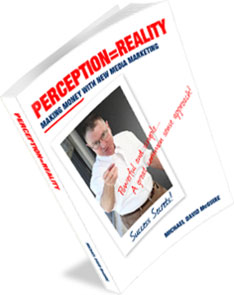
|

Jack Bremen
Pitch: Haunted Happy Hour – Behind the Screams with Jack Bremen What I wish to be interviewed about: I would love to pull back the curtain on indie filmmaking and share the chaotic, thrilling journey of bringing my latest feature film, Haunted Happy Hour, to life. As a filmmaker who works both in front of and behind the camera, I can give your audience a raw, authentic look at what it truly takes to write, direct, and produce independent cinema today. We can dive into the mechanics of visual storytelling, the evolution of modern horror/thriller genres, and how to maintain creative control in a fast-paced industry. Why your audience will appreciate these insights: BBS Radio TV listeners are creators, deep-thinkers, and entrepreneurs who value authenticity and passion. Filmmaking isn't just about cameras; it's about problem-solving, resilience, and the universal human drive to tell stories. By sharing the real-world victories and hurdles of Haunted Happy Hour, I will give your audience practical, inspiring takeaways on how to turn a creative vision into a finished reality—regardless of their budget. Plus, everyone loves a good behind-the-scenes look at how movie magic (and suspense) is made! The unique value I bring to your show: I bring a rare, 360-degree perspective to the conversation. Because my background spans the performing arts, media production, emerging technology, and marketing, I don't just speak "Hollywood"—I speak to the hustle. I can seamlessly pivot from the artistic side of directing actors to the technical side of modern production and the business strategy of indie film distribution. I am energetic, highly adaptable, and dedicated to delivering an entertaining, high-value conversation that will keep your listeners hooked from start to finish. United States
Jack Bremen is one of the rare individuals who possesses a broad professional skill set and a true zest for life. With experience ranging from the creative and performing arts to marketing and technology, Jack is comfortable both in front of and behind the camera, at his computer, in a business meeting, or on a surfboard. His diverse career has included work in nearly every facet of communications, from academia and technology to media production and photography. Born and raised in Dallas, Texas, Jack grew up with a passion for skateboarding, emerging technology, and storytelling. Feeling a call to head west, Jack moved to Los Angeles. He also continues to write, perform, and is in pre-production on his second feature length film. 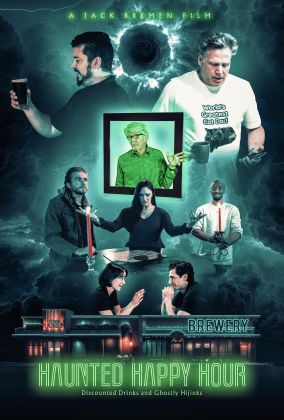
|

Evelyn Elphia
Evelyn Paul Announces New Book “Mindless As F*ck,” A Radical Reframe of Modern Spirituality and Real-Life Integration
Atlanta, GA / Global — May 1, 2026 — Holistic private chef and wellness advisor Evelyn Paul announces the upcoming release of her debut book, Mindless As F*ck, a raw, unfiltered exploration of spiritual awakening, identity disruption, and the challenge of translating transcendence into everyday life. The book challenges what Paul describes as “performative spirituality,” a growing cultural trend that often prioritizes aesthetics, language, and identity over real-world application. “This isn’t a book about escaping life,” Paul says. “It’s about learning how to function inside it, especially when everything you thought you knew about yourself changes.” Paul’s journey began with a spontaneous out-of-body experience, often referred to in Eastern traditions as a Kundalini awakening, which fundamentally altered her perception of reality. Following this experience, she left her business and embarked on a multi-year period of travel and study across India, Greece, Asia, and the Caribbean in search of understanding and integration. Unlike traditional spiritual memoirs, Paul’s work focuses less on the awakening itself and more on what comes after: rebuilding identity, maintaining emotional stability, and returning to everyday responsibilities while navigating expanded awareness. Her professional background includes training at the Institute of Culinary Education in New York City, Ayurvedic studies in Kerala, yoga and meditation training in Dharamsala, and shamanic studies in Bali. She has also worked as a private chef for high-profile clients, integrating her wellness philosophy into high-pressure, real-world environments. Over time, Paul began developing practical tools based on her lived experience, methods for grounding, emotional regulation, self-trust, and navigating internal change while maintaining external responsibility. These tools form the foundation of her book. Mindless As F*ck also explores: The gap between spiritual language and lived reality The limits of modern self-help culture The tension between inner transformation and external responsibilityRather than positioning spirituality as escape or elevation, Paul reframes it as something that must survive contact with real life, stress, relationships, work, illness, and change. “This work is not about becoming someone new,” Paul explains. “It’s about remembering what you already are and learning how to function from that place in the real world.” The book is published under Wise Tracks Publishing and will be released on May 1, 2026. Additional media assets, interviews, and excerpts will be made available upon request. Literature, Alternative Health, Energy Healing, Yoga, Emotional Health and Freedom, Mental Health, Personal Development, Inspirational, Motivational
I’d love to introduce you to Evelyn Elphia, author of the upcoming book
Mindless As F*ck: The No BS Survival Guide to Inner Peace and Outer Power (May 1), a raw, funny, and culturally grounded take on inner peace that challenges a core idea in modern wellness: What if “mindfulness” is actually working against you? Rooted in her St. Lucian background, where humor, honesty, and calling things out is second nature, Evelyn brings a voice to the wellness space that cuts through the performance and gets to what actually works. Her work blends linguistic insight, neuroscience-informed practices, and lived experience to show how the way mindfulness is commonly taught may be sending the wrong signals to the nervous system, creating more mental noise instead of less. Built from real-life application while working in high-pressure environments, managing stress as a private chef and personal transformation while traveling, the book combines practical tools with humor, cultural commentary, and a voice that feels like truth-telling, not teaching. Her core message is simple: People don’t need more practices, they need ones that actually work when life gets real. Evelyn is available for interviews and long-form conversations where depth and honesty can exist in the same space. |

Glenna Hecht
COACH What do you do when the person you love is still here—but the way you have always connected no longer works? In How Old Are You Today? Dementia, A Mother, A Daughter, and The Game That Transformed Their Lives, Glenna Hecht shares the reality of caring for her mother through dementia—and the moment everything changed. After trying to fix, explain, and correct what was happening, nothing worked. Conversations broke down. Logic created distance. Connection slipped. Then one question shifted everything: Her mother answered, “Guess.” What followed wasn’t a cure. It was something more useful: a simple, repeatable way to connect when memory and logic no longer align. This is not a clinical approach or a caregiving manual. It’s a lived experience that became a practical tool. One that changed their relationship and continues to help others do the same. MEDIA ANGLES A simple question became a repeatable way to connect with someone living with dementia. Dementia isn’t something you fix. It is something you face. Connection versus correction: why trying to fix it often makes things worse. What works when memory and logic no longer work. The moment caregiving shifts from trying to fix to learning how to relate differently. What caregiving really looks like behind closed doors. Why “meet them where they are” is not enough unless you know how to do it. How one relationship changed when control was replaced with curiosity. What this experience reveals about presence, attention, and how we show up for people.United States
Glenna Hecht did not set out to write a book about dementia. She was trying to stay connected to her mother when everything that used to work stopped working. Conversations broke down. Logic didn’t land. Trying to help often made things worse. Then one question changed the dynamic: “How old are you?” That moment became a game. The game became a daily ritual. And that ritual became a way to connect when memory and logic no longer aligned. Before this, Glenna spent decades leading HR and training inside organizations including Starbucks and Levy Restaurants at Walt Disney World and later founded her own firm, Humanistic Consulting. Her book, How Old Are You Today? Dementia, A Mother, A Daughter, and The Game That Transformed Their Lives, reflects that experience—direct, unpolished, and grounded in what works. She speaks on leadership, the How Old Are You Today? game, and leads an HR consulting practice informed by what that experience revealed about leadership, presence, and judgment. 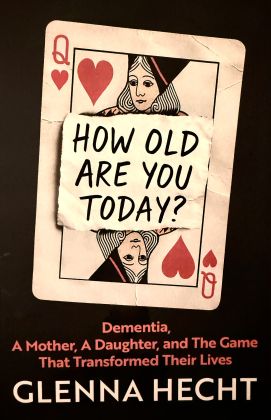
|

Sal Amato
Hello, My name is Sal Amato. I’m reaching out because I believe your audience would be deeply engaged by a conversation that’s becoming harder to ignore. With recent reports of scientists disappearing or dying under unusual circumstances—and growing public discussion around advanced technologies and disclosure—people are starting to ask bigger questions about what’s really going on behind the scenes. I’m the author of Hidden Powers Disclosure From Within, a new book due for release in mid-2026 that explores a world where the truth isn’t hidden... it’s controlled. The story connects real-world patterns— media influence, classified research, technological suppression, and global power structures—into a narrative that challenges how we perceive reality itself. This isn’t about speculation for the sake of it. It’s about examining patterns, asking uncomfortable questions, and opening up a conversation your listeners are already thinking about. I’d love to come on your show to discuss: – The idea of “controlled truth” vs hidden truth – Why people struggle to believe what’s right in front of them – The growing pattern of missing scientists and emerging technologies – How all of this ties into the bigger picture explored in Hidden Powers Disclosure From Within ABOUT THE BOOK A secret meeting between high-ranking U.S. officials and two alien races—one offering power, the other peace—was buried from history. The choice made that day didn’t just shape the future... it built a hidden system of control, placing power brokers at every level of society to manage what we see, hear, and believe. Over the past 70 years, we’ve been conditioned—marketed to, divided, Today, as a plan is set in motion to force humanity into a one-world government, one of the very architects of that system breaks ranks—risking everything to expose the truth. And when that truth comes to light, the question becomes: will we come together to save ourselves... or destroy each other to protect the very people who created the system? I’m an actor, writer, and longtime tech innovator with a background in early streaming media and digital systems, and I bring both a storytelling and real-world perspective to these topics. If this sounds like a fit for your show, I’d be happy to coordinate a time that works for you. Thank you for your time—and for creating a platform where these conversations can happen. Entertainment, History, Paranormal, UFOs, Philosophy, Politics & Government, World, Personal Development, Religion
United States
Sal Amato is an actor, writer, producer, and novelist whose career spans decades across film, television, music, and emerging media. His work is driven by a sharp understanding of human behavior and a lifelong fascination with the forces that shape perception, power, and truth.
A performer from an early age, Sal began earning recognition in grammar school for both hosting and acting. By 1978, he was already in the studio with Richard Marx (as a child), performing a Betty Crocker commercial. That same year, he began a DJ career—one he still enjoys today as a hobby.
Sal is a graduate of the Midwestern School Of Broadcasting, earning his “diploma” in 1984 along with his FCC license.
He would go on to appear in films and television projects including Bad Boys (1982), The Untouchables (TV Show), My Best Friend’s Wedding, While You Were Sleeping, Chicago Overcoat, Where It Gets You, Chicago Fire, and The Big Leap, along with numerous commercials and media appearances.
It should also be noted that Sal was one of the youngest performers ever accepted into The Second City, where he trained under the late Don DePollo, sharpening his skills in improvisation, performance, and character-driven storytelling. He later performed stand-up in the early 2000s—“for therapy,” as he puts it.
A true digital pioneer, Sal was working online as early as 1988 as a stockbroker, leveraging technology to gain a competitive edge long before it became commonplace.
By 1992, he was using the early internet to source data in the music industry, and by the mid-1990s, he was already experimenting with CU-SeeMe video technology and building websites in anticipation of the streaming revolution.
In the late 1990s, his work expanded rapidly across technology and media. In 1997, he was selected as the Program Director for A Taste of Chicago’s Cyber City, where he produced shows with tech companies to stream live to millions of people directly from Chicago's lakefront food festival.
During this same period, his work continued through ventures such as Modern Tracks, delivering online and audio services for radio stations, record labels, and trade publications. In 1998, Sal became the first person to stream an internet radio station to an FM signal with “CD audio quality.”
As a lobbyist, he was on Capitol Hill in the late 1990s, helping Congress better understand the digital divide. He collaborated with Hulu in its early development phase, worked with Roku before it became a streaming giant, and helped shape Source Media’s Interactive Channel in 1999 by developing and programming original content concepts well ahead of their time.
Sal also played a key role in building Addicted to Radio into a major online platform by expanding its programming and content. At its peak, the online streamer reached more than seven million monthly listeners.
In addition, Sal produced EDM America TV and created “The Beat” format in the Chicago area.
Transitioning into writing and producing, Sal has developed projects that blend entertainment with sharp cultural observation. His work reflects his unique background across performance, media, and technology—combining storytelling with themes of influence, control, and the systems that shape public thinking.
His animated series Bakers in the Burbs has been optioned and is currently in development for streaming, and his mob-vengeance series Joe Caracelli is set to debut on a streaming platform in 2026.
With Hidden Powers: Disclosure From Within, Sal makes his debut in long-form fiction, bringing a cinematic voice and technological authenticity to the page.
Drawing on decades of experience across entertainment and digital innovation, the novel explores the unseen systems of influence that shape modern society—challenging readers to question not just what they believe, but why they believe it.
In 2024, Sal received the Latin Living Legends Award for his contributions to the industry and his work at the legendary WCYC in Chicago in the 1980s.
When he’s not writing or working, he spends time with his family; loves dogs (he’s been known to pick up strays to help them); loves Golden Retrievers—and, of course, his music.
Sal continues to work across multiple areas of the entertainment industry, including analog-to-digital media preservation—preserving the past while staying firmly focused on what’s next.
FAVORITE MOVIES: Chariots Of The Gods, Slap Shot, The Formula, Into The Night, Vice Squad, The Godfther 1 & 2, Naked Gun, HIdden Figures, Don't Start The Revolution Without Me, IMproper Channels, Beverly Hills Cop (Just the first one), Absence Of Malice, The Help, Casablanca, Used Cars, Enemy Of The State, All Marx Brothers and Abbott & Costello movies, Up In Smoke, Dreamscapes, Patton, Bedknobs And Broomsticks, Contact, Space Cowboys, Arthur, Jurassic Park, Caddyshack, Back To School, The Other Woman, All Harry Potter movies and about a million more.
Sal on Facebook http://facebookhttp://facebook.com/salamato711
Sal on Instagram http://instagram.com/salinchicago
Sal on YouTube |
Dr Josette Pelatan PhD
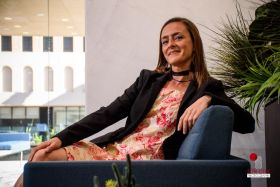
Dr Josette Pelatan is a filmmaker and scholar who connects lived adversity with academic knowledge and visual storytelling. Her work opens honest conversations about homelessness disability mental health education inequity and social justice. She is the founder of JosetteXMP Productions. She creates films and media projects that promote empathy dignity and social awareness. Dr Pelatan earned a PhD in Interdisciplinary Health Sciences while facing housing instability and a relapsing neurological disability. During this time she taught herself filmmaking writing producing and voice performance to tell stories often ignored by mainstream media. Her developing film projects The Prostitute’s Daughter and Homeless with a PhD are based on real experiences. These stories encourage audiences to rethink how society treats vulnerable people. They invite discussion about public health systems structural inequality stigma and resilience. Dr Pelatan offers audiences a story that goes beyond inspiration. She provides insight reflection and real-world perspective. She brings knowledge from health sciences storytelling media production and advocacy. She speaks honestly about ongoing challenges and lived experience. Her mission is to elevate marginalized voices through art and education. Her conversations are thoughtful clear and purposeful. Listeners are invited to reflect on assumptions and consider new perspectives grounded in empathy and action. Topics she can discuss Overcoming systemic barriers and redefining resilience Visual Arts, News, Marketing, Management, Languages, Entertainment, Alternative Health, News, Emotional Health and Freedom
United States
|
Pedro Naranjo
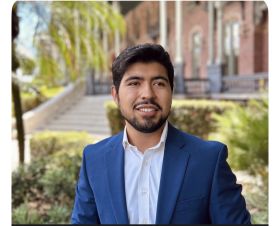
For upcoming stories, please consider aiKonversa, delivering done-for-you professional AI and web solutions in just 48 hours for $100-200 per website, hosting and chatbot/whatsapp integration. Combining a certified PMP, AWS, and Salesforce expert with a track record of scaling agencies to $100k USD monthly, the company was founded by Daniel Ruiz, an entrepreneur with businesses in Colombia generating over $5M USD in annual revenue. Pedro Naranjo, co-founder can comment on: The 48-Hour Challenge: How we managed to reduce months of web development to just two days. AI for the 'Brave Small Business': Why you don't need a Silicon Valley budget to have a smart business. The Death of the Contact Form: Why people want to chat via WhatsApp instead of sending an email into the void. The 'Owner’s Trap’- If the owner doesn't answer the phone or WhatsApp immediately, the customer moves on to the next business on Google. We automate the 'boring' part of sales and service so the business stays open even when the lights are off.Pedro says, "Our job is to give weekends back to business owners. A website that doesn't talk to your customers is just a digital flyer. We build digital employees. Traditionally, if you wanted a professional website and an AI bot, you had to invest thousands of dollars and months of back-and-forth emails. We broke that model. We automated our own internal processes to offer a one-time payment price that actually fits an SME's budget. We don't sell code; we sell a shortcut to becoming a modern company.” More info: Website URLs: https://aikonversa.com/ https://aikonversa.com/about Facebook: https://www.facebook.com/people/Konversa-ai/61586993353457/ Twitter: https://x.com/aikonversa Instagram: https://www.instagram.com/ai_konversa/ https://drive.google.com/drive/folders/1AsBj7uCmZE92kPJUV9xgaJ_IXqjKxiT5 https://drive.google.com/drive/folders/1UWRvGCzOjhNLLvBk2k27mBJkhd6Wm681 https://drive.google.com/drive/folders/13LDbJRMdmq8LMOiHH_VEPPendNZd_pSAhttps://drive.google.com/file/d/16sRPCrc1NMBhTjxq2EAvvX4A2RhuVS3y/view?usp=drive_link Careers, Local News, National, Inspirational, Motivational, Pop Culture, Tech News, Tourism, Variety
United States
|

Listen Live
RADIO 'AUDIO' SHOWS
Station #1 audio
Station #2 audio
T.V. 'VIDEO' SHOWS
Station #1 video
Station #2 video
Click Here For
More Listening Choices
CALL IN LIVE
TO GET ON THE AIR
- only during live shows -
BBS STATION 1
888-627-6008
Direct 323-744-4831
BBS STATION 2
888-429-5471
Direct 323-744-4841
CUSTOMER SERVICE
- 10:00 am to 10:00 pm CST -
BBS Radio TV
Toll Free: 888-710-8061
Direct Line: 323-744-4828