
Bill Conroy Attn Todd Beezley bookings@specialguests.com
Dispatches from The House of Death: A Juarez Cartel informant, a DEA Whistleblower, mass murder and a coverup on the edge of the Empire “The kingpin strategy simply doesn’t work,” Conroy says. And Mexico’s current wave of violence proves the point yet again. Unlike traditional hierarchies, modern drug cartels are not fragile pyramids dependent on a single leader. They are sprawling, decentralized criminal enterprises designed to survive decapitation. When a top figure is removed, the result isn’t collapse — it’s chaos. Lieutenants, regional bosses, and ambitious underlings fight to fill the vacuum, unleashing turf wars that devastate civilians and destabilize entire regions. Conroy explains that many of these foot soldiers and mid-level operators didn’t begin as hardened criminals. They emerged from what he calls an “economy of poverty,” where desperation replaces opportunity. For people with no viable path out of grinding poverty, cartel life offers something intoxicating: fast money, status, and the promise — however fleeting — of a lavish lifestyle. They trade decades of deprivation for a few years of excess, fully aware the ending is likely violent. Decapitating leadership only accelerates this cycle. Ambitious underlings, already seasoned by years inside the organization, see opportunity rather than deterrence. The result is fragmentation, not peace — more factions, more weapons, more killings. Conroy argues that focusing exclusively on Mexico’s cartels ignores the real driver of the violence: demand in the United States. As long as American consumption of narcotics like cocaine continues to surge, the supply chains will regenerate no matter how many leaders are arrested or killed. The drug war’s center of gravity isn’t south of the border — it’s inside broken American communities. At its root, Conroy says, demand traces back to social decay: broken homes, the erosion of nuclear families, and generations growing up without stability or purpose. That void is increasingly filled with narcotics. Until that demand is confronted honestly, cartel violence will remain a renewable resource. USA
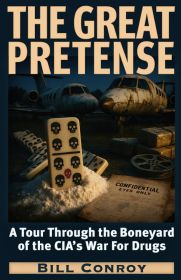
Bill Conroy, M.A. in Mass Communications/Journalism (Marquette University), is a veteran journalist with 40 years of experience working as a staff reporter, editor-in-chief, and freelance correspondent at print and online publications across the United States and in Mexico. His journalism has been cited in more than 35 books to date. Conroy also is the author of the nonfiction books The Great Pretense: A Tour Through the Boneyard of the CIA’s War for Drugs; Dispatches from the House of Death: A Juarez Cartel informant, a DEA whistleblower, mass murder and a coverup on the edge of the Empire; and Borderline Security: A Chronicle of Reprisal, Cronyism and Corruption in the U.S. Customs Service. |
David Rubin
Strait Jacket Diplomacy: Israel Watching Closely as Breakdowns in Negotiations over Iran Raise Risk of Wider Regional Confrontation A fragile diplomatic effort is now teetering on the edge of collapse, as the standoff between Iran and the United States shifts from negotiation to open strategic brinkmanship, with the security of Israel and the stability of global energy routes through the Strait of Hormuz increasingly at risk. David Rubin, the Founder and President of the Shiloh Israel Children’s Fund LIVES inside Israel and can provide an extremely unique perspective, on many fronts. One of those fronts includes Lebanon, a location of heavy bombing by the IDF. Supporters of Hezbollah there are actually demonstrating against in-person negotiations between the two countries. What was framed as a pathway to de-escalation now appears to be hardening into a wider regional confrontation, where each failed round of talks only raises the stakes and narrows the options for restraint. It appears that neither Iran nor the United States are on the same page when it comes to peace. Rubin, as well as the children his foundation are desperately trying to rehabilitate from trauma are caught in the crosshairs. USA
David Rubin, former Mayor of Shiloh Israel, is the author of seven books, including his latest, Confronting Radicals: What America Can Learn from Israel, which has recently been made into a movie. Rubin is the founder and president of Shiloh Israel Children’s Fund, established after he and his then three-year-old son were wounded in a terror attack. |
David Roberts Attn Todd Beezley bookings@specialguests.com
Microplastics are already in your water, food, and air
Government action is just the beginning—exposure isn’t
Low-cost habits can reduce daily intake now
Industry innovation is moving faster than regulation
This is a personal health issue, not just environmental
Mara-Labs is part of a growing private-sector effort to detect and combat microplastics at the source, offering insight into how science and technology are already addressing a problem governments are only beginning to define. Roberts can speak to the scale of the issue, cut through exaggeration versus legitimate concern, and explain why microplastics are not just an environmental story—but a personal health issue hiding in plain sight. With federal officials now elevating the issue and public awareness rising, this is a pivotal moment. David Roberts is available to discuss what this “war on microplastics” really means, what comes next, and most importantly, how Americans can take meaningful steps right now to reduce their exposure while the policy debate unfolds. To address the issue, David has developed BrocElite®— a stabilized sulforaphane supplement designed to support detoxification, mitochondrial health, and cellular resilience. David has more than 20 years of public health experience on three continents. Food, Fitness & Exercise, Nutrition, Local News, World News, National, World, Biology & Chemistry, Climate Change
USA
David holds a MPH from Johns Hopkins, a Masters in BME from the UVA, and a Bachelors in EE and BME from Duke. He founded Mara Labs after his late wife’s cancer diagnosis sparked a deep dive into plant-based compounds and cellular protection. His personal health journey led directly to the development of BrocElite®— a stabilized sulforaphane supplement designed to support detoxification, mitochondrial health, and cellular resilience. David has more than 20 years of public health experience on three continents. |

Adam Finnegan Attn Todd Beezley bookings@specialguests.com
After COVID, the assumption was that we’d fixed the system. We didn’t. We are still relying on outdated detection methods in an era of engineered biology, where the next threat won’t announce itself until it’s already everywhere; that is biowarfare. Finnegan is available to break down why this threat is not speculative but structural. Current U.S. bio-surveillance systems are designed to identify known pathogens. They are far less capable of recognizing something engineered to evade detection or something entirely new. By the time unusual symptoms trigger alarms in hospitals, the opportunity to contain an outbreak may already be gone. Say Bye-Bye with BiowarfareFinnegan can explain how modern biological threats have evolved beyond traditional frameworks of biowarfare. The concern is no longer limited to deliberate, large-scale attacks, but to subtle, deniable deployment of biological agents that spread silently and exploit the very gaps built into detection systems. In that context, the presence and movement of Iranian biological materials during a period of instability is not just a regional issue but a global one. He can also speak to the broader national security implications. Biological materials developed under the guise of legitimate research can be repurposed quickly, and in chaotic environments, control over those materials can degrade. That creates opportunities not only for state use, but for loss, theft, or unauthorized deployment. Most importantly, Finnegan argues the deeper story is domestic vulnerability. Years after COVID exposed systemic weaknesses, the United States still lacks the infrastructure, coordination, and speed required to respond to a fast-moving biological event. The result is a dangerous imbalance in which adversaries can operate in the shadows, while detection lags behind. Finnegan offers a clear-eyed assessment of what has changed, what remains dangerously outdated, and what must be done before a biological threat moves from theoretical to unavoidable. Alternative Health, History, Medicine, World News, National, World, Biology & Chemistry, Pop Culture, Theory & Conspiracy
USA
Adam Finnegan is a survivor of Lyme disease and immune tolerance and has been battling health problems since he was young, with the onset of a chronic disease in 2016. He is a writer, graphic artist and designer, and avid reader and researcher of history, biological warfare, esoteric philosophy, spirituality, and the Western Mystery Traditions. He has made a special study of the life and work of Erich Traub and the science of immune tolerance. He has collected and translated to English all of Traub’s published research. He lives in Cape Cod, Massachusetts, peacefully by himself, where he enjoys BMX biking, fitness, study, the arts, and self-development. |
Mark Biltz
Hell Over Hormuz? A war of words is generating between Iran and Donald Trump, leaving many wondering about the consequences. The conflict between the United States, Israel and Iran continues, but pastor and author Mark Biltz wonders which side will “hell” when it comes to the Strait of Hormuz. Right before the weekend, President Donald Trump threatened to rain down “hell” on Iran if it failed to make some sort of deal to reopen the Strait of Hormuz. There also seems to be concern over a missing U.S. airman, who was flying a fighter jet that was shot down over southern Iran. So far, Iran has refused to back down from Trump’s threats, with a military official promising that the “gates of hell will be opened” if Israel and the United States continue their attack. USA
Pastor Mark Biltz is the founder and Senior Pastor of El Shaddai Ministries in Washington State. He is a well-known and popular speaker on the Feasts of the Lord and has authored four best-selling books and videos on the Feasts that have gone global. Mark Biltz has lectured at congregations and conferences all over the world including twelve countries on 5 continents. He’s been on the cover of several magazines and has been interviewed many times on national radio stations as well as appearing on several different television programs. Pastor Biltz has a local congregation in Washington State and live-streams their weekly service on their website at www.esm.us as well as on face-book and you-tube to over 200 cities from 20 nations. 
|

Robert "Tosh" Plumlee
What if the biggest lie in modern American history didn’t end in 1963—but became a blueprint? The alleged assassin of Charlie Kirk, Tyler Robinson, is looking increasingly like a Patsy. Throw in a magic bullet from a 30.06 that didn’t exit Kirk’s neck and things get really interesting. Lee Harvey Oswald was being monitored by a man named George Joannides. If Tyler Robinson had such a person monitoring him, who was it? Authors Robert Tosh Plumlee and Ralph Pezzullo are available to expose what newly declassified records suggest is not just a cover-up—but a repeatable intelligence pattern. That template is beginning to have ALL the earmarks of being used in the assassination of Charlie Kirk. United States
Robert "Tosh" Plumlee is a former contract pilot who claims to have participated in covert aviation operations connected to U.S. intelligence agencies beginning in the early 1950s. According to his account, he flew missions throughout the Caribbean and Latin America involving weapons transfers, intelligence logistics, and clandestine operations targeting Cuba. Plumlee has provided statements to investigators examining intelligence activities and the Kennedy assassination over several decades. |
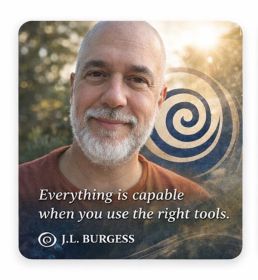
JL (Joe) Burgess
I’m a nervous system pattern observer who works in real-time with how people think, react, and get stuck in emotional loops.
After a near-death experience, my perception changed in a way I didn’t understand at the time—but it allowed me to start seeing patterns in behavior that most people miss. Not in theory, but in the moment someone is experiencing them.
What I do now is simple, but not common: I can identify when someone is caught in a reactive loop, show them what’s happening, and interrupt it—live.
Most people don’t struggle because they lack knowledge. They struggle because their nervous system is running a pattern they can’t see.
I don’t teach motivation or mindset. I help people see what’s actually happening inside them so they can change it in real time.
United States
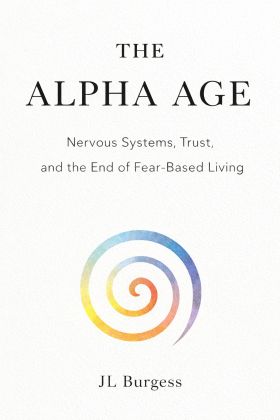
Joe Burgess is a nervous system pattern observer and the founder of SpiralFlows, a system designed to help people recognize and interrupt emotional and behavioral loops in real time.
His work is rooted in lived experience. After a near-death event that fundamentally shifted his perception, Joe began to see patterns in human behavior that most people overlook—especially in moments of stress, conflict, and uncertainty. What started as personal observation evolved into a refined ability to identify how expectation, memory, and reaction shape the way people experience reality.
Rather than focusing on motivation or mindset, Joe works directly with the moment a reaction occurs. He helps individuals recognize when they are caught in a loop, understand what triggered it, and interrupt it through awareness and breath. This allows people to regain clarity, regulate their response, and make decisions from a grounded state instead of reactivity.
Through SpiralFlows, Joe is developing tools, content, and real-time applications that bring this awareness into everyday life. His approach is simple but powerful: you cannot change what you cannot see—and once you see it clearly, change becomes possible immediately.
|
Richard Burian
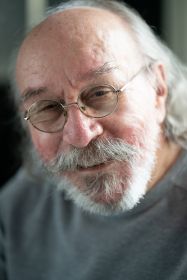
Richard Burian is a Vietnam Veteran whose story did not end when his military service concluded. Instead, it became the foundation for what he chose to do next. Like many veterans, Richard experienced the shift from structured military life into the uncertainty of the civilian world. What sets him apart is how he responded. Rather than stepping away from service, he found a way to continue it — not through words, but through action. Richard is the founder of Good5brations Collective, a platform created to support veteran-owned and service-connected businesses. His focus is simple but powerful: turning appreciation for those who serve into real, practical support that helps veterans build sustainable livelihoods. This is not about charity. It is about opportunity. Through his work, Richard highlights a reality often overlooked — that many veterans possess exceptional skills, discipline, and resilience, yet still face challenges when transitioning into civilian careers or entrepreneurship. His approach offers a different solution: creating visibility, connection, and economic opportunity for those who have served. In conversation, Richard brings a grounded and authentic perspective on: His experience as a Vietnam Veteran The transition from military to civilian life The ongoing challenges veterans face beyond service The importance of supporting veteran-owned businesses How individuals and communities can make a meaningful differenceHis story resonates beyond the military community. It speaks to purpose, resilience, and the idea that service does not have to end — it can evolve. This would be a thoughtful, story-led discussion with practical relevance for audiences interested in veteran affairs, entrepreneurship, leadership, and personal purpose. United States
Richard Burian is a Vietnam Veteran and the founder of Good5brations Collective, a platform dedicated to supporting veteran-owned and service-connected businesses. After serving his country, Richard experienced first-hand the challenges many veterans face when transitioning into civilian life. Rather than stepping away from service, he chose to continue it in a different way — by creating opportunities for others who have served. Through Good5brations Collective, Richard focuses on turning appreciation into action, helping veteran and service-community businesses gain visibility, grow sustainably, and connect with customers who want to support them. His work is driven by a simple belief: that those who have served should not be left behind once their military career ends, and that meaningful support comes through opportunity, not charity. Richard brings a grounded and authentic perspective to conversations around service, resilience, entrepreneurship, and life after the military. His story reflects a lifelong commitment to giving back and continuing to serve beyond the uniform. |
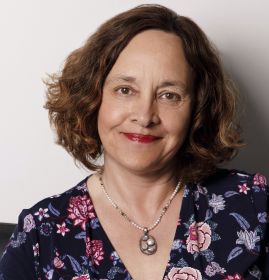
Yildiz Sethi
New Book Challenges the Foundations of Modern Psychotherapy and Offers a New Path to Mental Wellness A groundbreaking new book by psychotherapist and educator Yildiz Sethi is challenging long-held assumptions about mental health treatment and questioning why depression and other diagnoses continue to rise despite decades of research and billions spent on care. In Let's Take the Crap Out of Psychotherapy, released on Amazon in March 2025, Sethi examines the historical foundations of modern psychotherapy and highlights what she believes are outdated beliefs that still shape current treatment models. Drawing on insights from neuroscience, epigenetics, and decades of therapeutic practice, Sethi argues that many mental health approaches focus on managing symptoms rather than addressing root causes. She critiques systems such as the Diagnostic and Statistical Manual of Mental Disorders, suggesting that diagnostic frameworks and research protocols may not fully reflect the complexity of human psychology. Sethi also raises questions about the prominence of Cognitive Behavioural Therapy, widely considered a standard evidence-based approach, proposing that while helpful for symptom management, it may not always address deeper underlying drivers of distress. Instead, the book introduces a different perspective grounded in the body’s natural capacity for healing and psychological homeostasis. After more than 25 years of clinical practice, Sethi identified what she calls the Six Core Conditions for Wellness, principles she believes are essential for psychological recovery and resilience. Her work explores therapeutic approaches designed to access deeper mental processes, including brief and solution-focused interventions aimed at resolving underlying emotional patterns. These ideas underpin therapeutic frameworks she developed, including Emotional Mind Integration, Rapid Core Healing, and RCH:PTIT-P&G Trauma Recovery. “Human beings are naturally designed for healing and equilibrium,” Sethi explains. “When we understand how the mind and nervous system actually work, recovery from issues like depression and trauma can happen much more effectively than traditional models often suggest.” Based in Mount Tamborine, Queensland, Sethi is an author, psychotherapist, educator, and host of the Crazy Normal for Better Mental Health and Wellbeing podcast. Her interdisciplinary background includes science education, counselling, hypnotherapy, and studies in spiritual and psychological traditions. Her work aims to spark conversation within the mental health community about how psychotherapy might evolve as new scientific insights emerge. Key Topics Yildiz Sethi that can be used as blog subjects or Can Speak On The Six Core Conditions for WellnessWhy symptom-management approaches may fall short Addressing root causes of depression and trauma Innovations in brief psychotherapy Trauma recovery approaches such as Rapid Core Healing Integrating neuroscience, epigenetics, and subconscious processes into therapy More Information: E yildiz@yildizsethi.com Location-Mount Tamborine, Queensland, Australia Australia
About Yildiz Sethi Yildiz Sethi is a psychotherapist, educator, and author with over 25 years of experience working with the human mind and emotional healing. With a background in science education and counselling, she developed innovative therapeutic frameworks focused on resolving the root causes of psychological distress through brief and solution-focused interventions. She holds a Master of Counselling, a Bachelor of Education, and a Diploma in Hypnotherapy 
|

Listen Live
RADIO 'AUDIO' SHOWS
Station #1 audio
Station #2 audio
T.V. 'VIDEO' SHOWS
Station #1 video
Station #2 video
Click Here For
More Listening Choices
CALL IN LIVE
TO GET ON THE AIR
- only during live shows -
BBS STATION 1
888-627-6008
Direct 323-744-4831
BBS STATION 2
888-429-5471
Direct 323-744-4841
CUSTOMER SERVICE
- 10:00 am to 10:00 pm CST -
BBS Radio TV
Toll Free: 888-710-8061
Direct Line: 323-744-4828