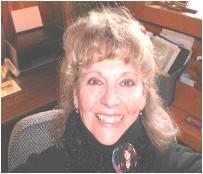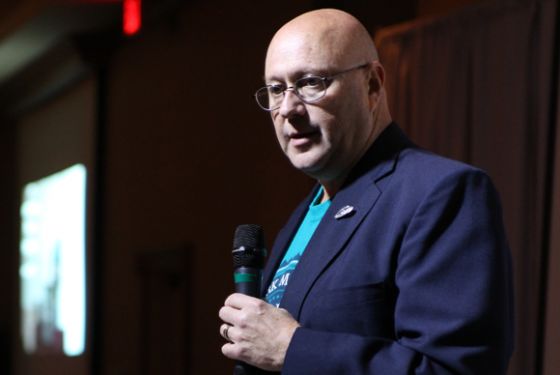
Steven D. Kelley was born and raised in southern California. He started a career in the precision electro optics field during the advent of the laser. He rose from optics manufacturing technician to manager of quality control, engineering, and production control. During this time, Steven was advancing the state of the art of semi conductors, military systems, and massive optics.
After leaving to start his own company, S.K.Industries, became involved with CIA working in support of Iraq vs. Iran. Sometime later, the newly formed company received a contract to build solid-state lasers for what would turn out to be an NSA operation run by Ollie North. It was a result of that experience that Steven became awake and began the process of researching the truth and getting on the path to enlightenment.
Steven hosts the Steven D. Kelley show on the TruthCatRadio.com Radio Network.

Cities Under the Plain: The true story of one mans journey, through science, magic, and the CIA to understand the world in the 21st century
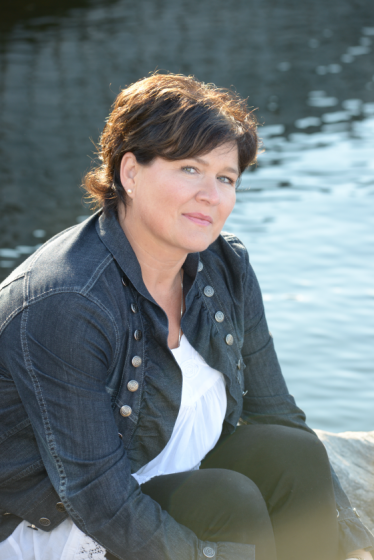
Ladonna Brave Bull Allard is a Lakota historian and activist. In April 2016, she founded the first resistance camp of the Dakota Access Pipeline protests, Sacred Stones, aimed at halting the Dakota Access Pipeline near the Standing Rock Indian Reservation in North Dakota.
Allard is an enrolled member of, and former historical preservation officer for, the Standing Rock Sioux Tribe. Her people are Inhunktonwan from the Jamestown Valley, Hunkpapa and Blackfoot.
While there are now multiple water protector camps at the Standing Rock, Sacred Stone, the first camp, is on Allard's private property. Out of this grew the global Dakota Access Pipeline protests. By December 2016, more than 10,000 indigenous people and environmental activists were camping in the area. This movement has become the largest intertribal alliance on the American continent in centuries, and possibly ever, with over 200 tribal nations represented.
Sacred Stone Camp founder Ladonna Bravebull Allard addressed the UN on behalf of the Standing Rock Sioux Nation to request assistance in the struggle to protect Indigenous water and sacred sites from the Dakota Access Pipeline...
Ladonna Bravebull Allard:
Greetings distinguished representatives,
I greet you with a good heart today. I am Ta Maka Waste Win, an enrolled member of the Standing Rock Sioux Tribe I am speaking regarding the participation of the over 300 million Indigenous Peoples of Unci Maka Mother Earth. Within the United Nations system, we the Indigenous peoples request that our participation be granted at the highest possible level and that our representatives be legitimate and elected by Indigenous Nations and organizations in each region. This will secure that our participation and contributions on issues that affect us are addressed in a legitimate manner. Lack of this legitimate representation and contributions on issues that affect us are resulting in violations of our equal and inalienable rights as members of the human family. As such is the current and urgent situation of the Standing Rock Sioux Tribe, my home, where the Dakota Access Pipeline has blatantly violated the Universal Declaration of Human Rights, the United Nations Declaration on the rights of Indigenous Peoples, ILO 169, the Laramie Treaty of 1868, unresolved Ihunktonwana Land Claim Docket 74A and most importantly our Mother Earth.
The organization hereby invokes the Universal Declaration of Human Rights, the United Nations Declaration on the rights of Indigenous Peoples, ILO 169 to be enforced and brought to life to put an immediate stop to the Dakota Access Pipeline. We request that an observer and media team be sent immediately and permanently to Standing Rock until this issue is resolved to protect the water. This situation with Dakota Access has been going on for 6 months now. It has endured Spring, Summer, Fall and heads into Winter as we protect and defend our right to water. We demand immediate assistance and protection for our Lakota, Dakota, and Nakota sisters and brothers. Today we are here to formally denounce terrorism from transnationals agaisnt Indigenous Peoples of Mother Earth, as such is our situation in Standing Rock and also the urgent situation of our Indigenous sisters and brothers in the Amazon and many other parts of the world.
The organization remains committed to solving the challenges faced by our generation which is to protect life and clean water for the future generations and so that all that exists can continue to exist. The Indigenous Traditional Knowledge is the only path remaining to heal the unsustainable pattern of production and consumption that is destroying our lives and the world around us. Agenda 2030, without our legitimate representatives and inclusion of Indigenous Peoples Traditional Knowledge will fail. Our knowledge can help heal Mother Earth. Without it, great and irreparable damage will lead us to destruction. We must unite to protect the Water and our Mother Earth. We, the Indigenous Peoples of Mother Earth walk to the future in the footprints of our ancestors
Cannonball, SD – On April 1st, 2016, tribal citizens of the Standing Rock Lakota Nation and ally Lakota, Nakota, & Dakota citizens, under the group name “Chante tin’sa kinanzi Po” founded a Spirit Camp along the proposed route of the bakken oil pipeline, Dakota Access.
This Spirit Camp is called Iŋyaŋ Wakháŋagapi Othí, translated as Sacred Rock, the original name of the Cannonball area. The Spirit Camp is dedicated to stopping and raising awareness the Dakota Access pipeline, the dangers associated with pipeline spills and the necessity to protect the water resources of the Missouri river. We reject the appropriation of the name “Dakota” in a project that is in violation of aboriginal and treaty lands. The word Dakota means “the People” in the Dakota/Lakota/Nakota language and was never intended to be used in a project which violates traditional ceremonial areas.
Chante tin’sa kinanzi Po is a grassroots group with the following mission statement: “They claim this mother of ours, the Earth, for their own use, and fence their neighbors away from her, and deface her with their buildings and their refuse.” – Chief Sitting Bull. His way of life is our way of life–standing in opposition to the Dakota Access Pipeline is our duty. Group: Chante tin’sa kinanzi Po translates as People, Stand with a Strong Heart!
The Dakota Access threatens everything from farming and drinking water to entire ecosystems, wildlife and food sources surrounding the Missouri. The nesting of bald eagles and piping plovers as well as the quality of wild rice and medicinal plants like sweet grass are just a few of the species at stake here. We ask that everyone stands with us against this threat to our health, our culture, and our sovereignty. We ask that everyone who live on or near the Missouri River and its tributaries, everyone who farms or ranches in the local area, and everyone who cares about clean air and clean drinking water stand with us against the Dakota Access Pipeline!
We will not allow Dakota Access to trespass on our treaty territory and destroy our medicines and our culture. From the horse ride that established the Camp of the Sacred Stones, to the 500-mile Run for Our Lives relay that delivered our recommendations to the Army Corps of Engineers, with the hundreds of community members who met with Army Corps Colonel Henderson on April 29, and the ongoing vigilance of our prayers, we are committed to stopping the Dakota Access Pipeline.
Hello! My name is Rose Campbell.
I could have made this truly
an "about Rose" page, but other than
a quick history than pertains to my
channeling skills, I prefer not to bore
the general public needlessly. I
reserve that special treat for friends
and family.
I discovered my ability to speak to the spiritual realms in my early 30's.
However, upon reflection, I discovered that I do remember various times
in my life that I "heard" things about situations or people that I shouldn't
have known as far back as the age of 6 or 7. Thus, it was not that I
became a channel in my 30's, it is just when I got smart enough to
realize it! Some of us are slow learners.
Channeling is to connect to the spiritual realms with a form of telepathy. I
actually do hear a thought voice inside my head. Some folks call it the
"spiritual inner ear", not related to the inner ear which gives you physical
balance however. It is a spiritual gift, one that the Apostle Paul spoke of
and of which I believe Jesus meant when he said "Let those with ears
hear and those with eyes see."
Anyway, I can talk to all levels of the spiritual realms. I focus the brunt of
my public work on connecting people to their spiritual support team.
While I believe it might be comforting to speak to the loved ones who
have gone on before us, I have seen the truly phenomenal gifts given
through people's connection with the higher sources. Besides, many
times those guides are our dearly departed once they re-enter the
wisdom of their souls. I also gave up doing very much of the 'deceased
people' readings because it involved too many tears, often my own and I
hate to cry!
So enough about me. I have a request of those of you who have found
this page: Please listen to the following song. It is one of my "ever and
ever" favorites, and I think it says so much. It gives a hint or two on how
to create a "life uncommon", not only for self, but for the world.
Rose
Amy D. Cohen, Practitioner for Emotional/Mental Health. She creates customized remedy blends using plant medicine/extracts to reverse negative emotions, thought patterns & behaviors that hold us back from living life happy. She works with individuals and families all over the world. You can see her on TV and hear her on top radio stations throughout the U.S. Amy specializes in relieving your intense anxiousness, severe sadness, children behavior challenges, symptoms of autism feeling stuck, and 40+ changes. She is a Certified Practitioner, a Speaker and and teacher of this healing modality creating Practitioners around the world specializing in Emotional/Mental Health. Amy can be emailed at amycohen@strongestminds.com; or skype amy.c.50 or phone at 800-474-1667.
From a Tacoma Weekly article in 2010:
“You’re a legend around here. Everyone knows who you are when you talk about basketball,” a friend told 32-year-old Dontay Harris at a party.
To the bittersweet disappointment of local and international fans alike, the Tacoma basketball legend has announced he will officially retire after the end of his International Basketball League (IBL) season this year.
Over his past six seasons in IBL, Harris has earned 2,435 points in a total 106 games, making him the all-time leading scorer and a four-time league all-star. He has also gained a reputation as being a hometown hero while representing Tacoma on three of the city’s IBL teams – the Thunder, Jazz and Tide. His best season offensively came as a member of the Jazz in 2007. The power forward averaged 21.2 points in 18 contests.
Harris’ last regular-season home game in the IBL was on June 19. The league honored their star during a special recognition ceremony, where he watched the Tacoma Tide officially retire his jersey.
Although making it official this year, Harris made the conscious decision to start winding down his career about two years ago, after turning down contracts to play in Japan and New Zealand. For the 32-year-old athlete, life on the road has been exhilarating, but stressful. It has also brought back painful memories of a childhood shuttled between numerous homes and families.
“I didn’t even exist”
Harris was in fifth grade when he entered the foster-care system. His mother raised him during his early childhood and his biological father played a very small role in his life.
“When they took me away from my mom, I didn’t know what to do,” Harris recalls. “I was a very introverted child.”
In the foster-care system, he remembers being picked on for being the ‘quiet kid’ and bullying and beatings from the other children were a common occurrence. When he got older, he began running away. Although he did not have many belongings, Harris would never forget to take his coat and basketball.
“All I had for comfort in my life was my ball,” he explained.
At 11, Harris would wind up sitting in front of grocery stores in the middle of the night, where he remembers watching the world through teary eyes and thinking about his life.
“I remember seeing grown people walk right by me like I didn’t even exist.”
Between his elementary and middle school years, Harris remembers attending more than 20 schools. His academics suffered as a result. If school subjects are like completing a puzzle, Harris missed crucial pieces.
“I’d go from Pierce County to Yakima to Spanaway and everyone’s curriculum was different. I could never quite catch up.”
By the time he entered Mt. Tahoma High School, Harris would also enter a more stable living situation with a foster parent, whom he now refers to as his mother. But by then, the floundering student had given up on his studies. Ninth and 10th grades were the worst years.
“I didn’t want to try hard, because I was used to failure and I was scared,” Harris admitted.
During those same years, he was cut – twice – from the basketball team at Mt. Tahoma. By 11th grade, things began to change.
A 5-foot-6-inch Harris had grown into a 6-foot-9-inch prospect seemingly overnight. Coaches began to take notice. And that year, he became the team’s swinging (junior varsity and varsity) center position.
That summer, an alarm went off inside the young athlete. He began waking up at 6 a.m. and conditioning. He would shoot the ball and scrimmage with friends and relatives until dusk. He would review plays of teams on television and in video clips. Basketball became his obsession. And when he came back to school senior year, Harris explained his improvement was like night and day.
“That’s when I started noticing that when you work hard at anything, it will make a difference,” Harris said. “I also realized that basketball could really take me somewhere.”
“I’m going to do me.”
Tacoma was a rough place in the 1980s and 1990s. Drugs and gang violence plagued the East Side neighborhoods Harris grew up in. At 12, he spent time in juvenile detention for fighting in a group home. After that, he promised himself he would never go back to jail and has not since. As a teen, he hung out with a group of friends for protection. While some might have called it a gang, Harris considered it a family.
“I wasn’t running around with a gun, but I wasn’t going to back down if you were coming toward me talking trash,” he said.
During high school, Harris was shot while defending a friend at a party. This event had a profound impact on his decisions about basketball.
“I remember going into shock and hearing people say I was dead,” he said. “It was surreal.”
And while recovering, he had an epiphany that pushed him toward achieving his goal.
“The guys I was protecting and getting in trouble with didn’t come to see me or call. It was the oddest thing to me,” Harris said. “I just thought, ‘I’m going to do me. I’m leaving.’”
So, at the end of his senior year, Percy Carr, a basketball coach from San Jose City (Junior) College, encouraged him to come play basketball in California.
So, he did.
Over the next four years, Harris would go from California, on to Drake University in Des Moines, Iowa. After graduating from Drake in 2000, he began playing for basketball teams in Europe. He joined the Basketball League of Norway in 2001, as a member of the Oslo Kings. He earned all-league first-team honors and claimed the league’s championship after defeating the Kongsberg Penguins. And after briefly playing for Germany’s Basket Esch, Harris chose to come back to the United States to be with his family.
Back home, Harris took on positions playing for the American Basketball Association’s Bellevue Blackhawks and Tacoma’s three IBL teams. Playing in his hometown is something Harris says he will never forget.
“For the first time you actually saw Tacoma guys taking a chance and getting a shot to get noticed. I was excited for them to have that opportunity.”
Although never quite making it to the pinnacle – the NBA – Harris says he is proud of what he has been able to accomplish during such a short career.
“No, I didn’t make it into the NBA and hurt for a while,” Harris said. “But, I’ve seen over 10 countries, played all over the world. I’ve met and built relationships with people in different countries. And it was all because I’ve played basketball.”
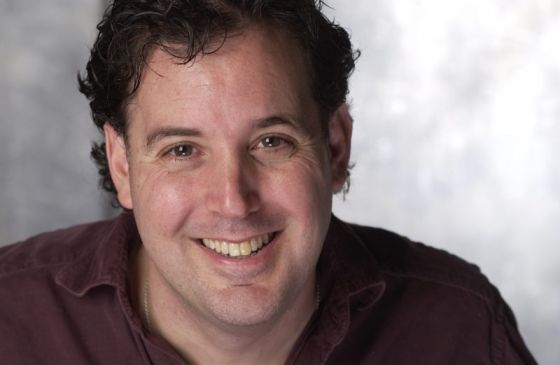
Matt Johnson has spent his entire life in Seattle. A life-long Seattle sports fan, Johnson's family attended original Seattle Sounders matches at Memorial Stadium, as well as the iconic Kingdome.
Johnson parlayed his love for sports into a career in sports broadcasting. In the early 2000's, Johnson was a producer at Sports Radio 950 KJR. Johnson transitioned to producing the Seattle Seahawks Radio network for 11 seasons, which included three Super Bowl appearances.
From 2009-2014, Johnson was the Sounders radio pre & post-game host. In 2016, Johnson returned to the Sounders to fulfill a life-long dream as the Voice of the Seattle Sounders Radio network.
The Clairvoyant Gourmet, Janie Boisclair, is a rare 5C Clairvoyant, meaning that all five of her senses- sight, hearing, touch, taste, and smell- are ‘clear’ (Clair) channels to the spirit world. The spirits seem to especially want to connect with Janie through her sense of taste and smell, since for years every reading she has given has had some type of food element. Through her readings, she brings back missing ingredients, lost family recipes, joyous meal-time memories from the other side, and memories that need to be revisited for therapeutic reasons. She can even connect with spirit guides who offer insight on what foods are needed to balance your Chakra energy system.
Alex Kerten says his life has been framed by the shadows of two cataclysmic events: the Holocaust and the subsequent creation in 1948 of the State of Israel. His parents arrived in what was then called Palestine at the tail end of World War II, having survived the Holocaust taking place in Europe. They met in a refugee camp, one of many that had been set up for the streams of immigrants pouring in after the war, and it was there that he was born in 1945.
The camps were filled with fractured souls who had suffered the horrors of Nazi atrocities and been left plagued by trauma from the past. For many of the children of these survivors like him, that trauma was passed on and became part of their own psychological makeup. As a teenager, he discovered music as an outlet to lighten the heaviness that he felt as a child and the recurring dreams and nightmares he kept having about the Holocaust. I He threw himself into his new passion and, by the age of 16, he was playing the guitar in a house band that appeared on the radio, performed with leading Israeli artists, and accompanied visiting artists to Israel like Harry Belafonte, Jacques Brel, Rita Pavone, and Marlene Dietrich.
At 18, like every Israeli teenager, Alex was inducted into the Israel Defense Forces where he was first exposed to — and attracted by — martial arts (MA). After completing his mandatory service, he decided to pursue the study of martial arts in Japan and, later, when he returned to Israel, he continued the regimen under Grand Master Gad Skornic. After years of study, in which he also gained valuable real-life experiences, he graduated with seven black belts — four in Kenpo Jitsu, one in Ninjitsu, and two in Hashita.
Over the following decades, while pursuing various business pursuits, he continued to focus on the connection between mind and body and began to study structuring and healing movements at the Dr. Aryeh Kalev center, where he worked and taught arts of healing movements for about 5 years. At the same time he studied psychophysical integration (or mind/body integration) at the Trager Institute, an approach developed by Dr. Milton Trager. Using that knowledge, and structuring movements in martial arts (Tai Jitsu) and effects of music on body-language, body forms, feelings, movement and rhythm he began to work with Parkinson’s patients and established the Gyro-Kinetics method (Gyro=balanced / Kinetics= body movements) which is a preventive rehabilitation program in P.D. The method combines movement, touch, and music to restore the physiological balanced state on physical, mental and emotional levels and aims to improve quality of life by preventing and reducing the multiple clinical disabilities. It has been successfully used in conditions such as: movement disorders, musculoskeletal, vascular, respiratory and digestive disorders.
He then worked for a couple of years at the Reuth Hospital in Tel Aviv, where with Dr. Marietta Anka he built a pilot study which lasted for three months and consisted of weekly sessions of Gyro-Kinetics (G.K) on 11 P.D patients. Results : All patients finished very satisfied and G.K had a significant immediate post session but also a long standing improving effect on motor parameters.
At the year 2004 he and Dr. Anka participated at the 8th. International Congress of P.D and Movement disorders , which took place in Rome Italy. Conclusion was: G.K seems to be effective on general motor and mood dysfunction in P.D. It can also improve the respiratory and gastrointestinal disturbances and the patients awareness of his disease. Later Alex taught at the Maccabi Health Institute, part of Maccabi health care services in Israel.
He mentioned an incidenthe had about 30 years ago during a Martial arts training. He was choked by one of the instructors. He wouldn’t let go of his grip and Alex's hand paralyzed, He attempted to get him to stop by looking at him in the eyes. Instead, he interpreted the stare as a challenge and continued the choke hold.
All of the old Holocaust nightmares of torture and humiliation suffered by my family at the hands of Nazis rushed back to Alex — and he fainted.That traumatic incident haunted him and developed into a chronic dreams and nightmares that affected his life for many years. He looked for help by going to various specialists in the medical field, but nobody provided a remedy. So he decided that he was going to have to help himself. He began to investigate the physiology of behavior — brain waves and the way the autonomic nervous system (ANS) in our body affects a person’s anatomy, where we live our traumas over and over again by entering into an anxiety-filled state of being. Alex began to realize that he was constantly repeating those horror stories his father had passed down to him about the Holocaust, and they were having a debilitating effect on his very being.
Building on his accumulated knowledge of martial arts and behavior patterns of the body and mind, he began to communicate with his body, instead of listening to the stories from the past being constantly generated by his mind;and managed to rid himself of his chronic nightmares and anxiety through mind/body interaction!
With time, Alex began to specialize in behavior patterns, body forms, arts of movement body language, the power of music upon our neural networks and the effects they have upon our body systems. It was then that he decided that he could share what he had learned with others who suffered from chronic disorders.
Clients came to him with behavior problems and unclear chronic diseases for which MDs had no answers. Alex built a methodic program in physical behavior patterns in which the clients learned about body language, mind language and body mind interraction while acquiring techniques to deal with their chronic problems. Alex became skilled in various forms of physical therapy for pain, movement, posture, respiratory, and attention disorders. His specialty is working with Parkinson’s disease (PD) patients, who, in actuality, suffer from a combination of the above neuropathological disorders.
Based on his knowledge in these fields, he developed the Gyro-Kinetic method, which is founded on the concept of movement, music, and rhythm — creating motion in the body, which stimulates simultaneous physiological, biological, and psychological reactions. Instead of listening to their minds, I Alex teaches clients how to listen to their bodies and communicate between the two. Our minds are constantly dredging up stories and scripts from our past that dictate how we should behave, and we’ve stopped listening to our bodies. This simple but incredibly powerful concept is the key to my method and it has consistently proved its potential upon the symptoms we call “Parkinson’s” and other neurological conditions. He believes that what he teaches in the fields of the physiology of behavior, martial arts, and the art of movement has a valuable lesson for everyone — especially for people diagnosed with early-stage Parkinson’s.