Guest Occupation: Associate Professor of Literacy Education at Elmira College
Guest Biography:

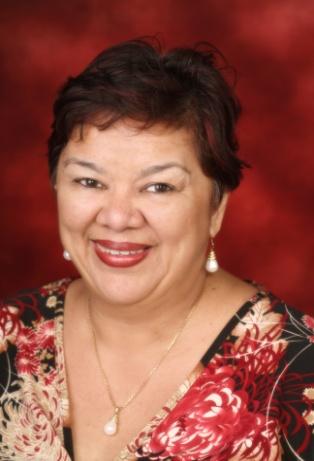
Please allow me to introduce myself.  I am a former elementary school teacher and currently work as a teacher educator at Elmira College where I am employed as an Associate Professor of Literacy Education.  I formerly worked for six years at Arkansas State University within the Department of Education teaching undergraduate and graduate reading courses.

My years as an elementary school teacher were spent in Mississippi.  My first teaching job was in Philadelphia, located in Neshoba County — a place infamous for the murders of three civil rights workers during Freedom Summer of 1964.  The movie, “Mississippi Burning” chronicles the murders of James Chaney, Micky Schwerner, and Andrew Goodman and while the movie veers from some of the factual details, it does capture the spirit of this time of racism and hate.  I am not a native of Mississippi and was captivated by this small southern town, its history, and how it viewed civil rights.  As a school teacher in Philadelphia I couldn’t help but see connections between the town’s history and its citizens, public schools in general, and education policy.  Thus began a career devoted to examining the intersections between the civic lives of people and education policy at the local, state, and federal levels.

My decision to pursue a career as a literacy scholar and educator was a natural extension of my professional practice.  Literacy education has become of one the most politicized areas in education, as made evident by the “Reading Wars” that culminated in No Child Left Behind and Reading First policies.  Corporate entities have been well poised over the decades to take advantage of the reading debates with commercial, scripted, “teacher proof” products that guarantee success for schools and teachers who implement them “with fidelity.”  My dissertation research while earning my Ph.D. in Curriculum and Instruction at Mississippi State University focused on expert teachers in Mississippi attempting to use one of these commercial programs while teaching children in some of the poorest and low performing schools in Mississippi.  This research demonstrated the problems associated with these types of programs and how they, in fact, diminish the role of teachers in literacy instruction and can negatively impact students.  Most importantly, I found that teaching children living in impoverished communities, whether rural or inner-city, requires much more than a program.  requires teachers with big hearts, expert knowledge, and an understanding of the impact of poverty on academic achievement.  As one teacher poignantly told me, “I’m trying to teach these children to read and they’re trying to survive.”  I published my findings in the journal Literacy  in an article entitled “Commercial Reading Programmes as the Solution for Children Living in Poverty” in 2010.  This research was nominated by the United Kingdom Literacy Association (UKLA) for literacy research of the year.

I’ve learned over the years that one cannot examine the impact of poverty and other social issues on education without looking at the history of education reform.  The intersections between race, poverty, and economic policies are profound and undeniable.  I began reading about economist Milton Friedman’s free market ideas a number of years ago when examining the use of his voucher concept to maintain a segregated school system in the south.  I became aware that while he is often acknowledged as the father of the voucher movement, scholars often do not sufficiently examine the magnitude of his ideas on education policy in general.  In our current education reform era, driven by the Common Core and RTTT policies, while the American public is clamoring to understand how our country ended up with the current set of corporate-driven education reform policies, I felt compelled to try to answer questions that had been at the forefront of my research for a number of years:  How is it that Republicans, devoted to small government and diminished federal government intervention in education, became the party that expanded the role of the federal government beyond all imagination with NCLB?   And how is it that those same federal education policies were then embraced — and extended even further — by Democrats?  On the surface this doesn’t make sense.

My book The Origins of the Common CoreHow the Free Market Became Public Education Policy is the culmination of my research.  I felt at times like I was deciphering hieroglyphics and trying to find  a Rosetta Stone of current education policy to help me  understand the language of the conservatives, the supposedly liberal Democrats, the business community, and those engaged in systemic public education reform.  The bond among these groups, it turned out, has been an allegiance to free market economic theory.   I was left, after writing the book, with an uneasy feeling about which party I could trust to do the right thing when it comes to our nation’s public schools.  Both parties have been involved in creating what seems like the “wild west” in public education where the emphasis is on making a buck and not on educating our children.  It’s been an uneasy story to write about.  There are no political heroes when it comes to our nation’s public school systems.  While education policy makers may have had good intentions, they have overwhelmingly yielded to those who envision education as a free market in which huge profits can be made.  As a result, it is our nation’s children who are suffering.  This is a tragedy now unfolding before our very eyes!

Guest Category: Education
Guest Occupation: Professional Boxer
Guest Biography:
Xavier Martinez is a Professional Boxer, at just 17 years old.  Martinez has been training with Ray Woods since he was 7 years old.  He has over 60 Amateur bouts, and just recently won his first Professional fight.  Martinez was Nationally Ranked in both 2013 and 2014, number 4 & 3 respectively.  Martinez lives in Sacramento, California.
Guest Category: Sports & Recreation, Professional, High School, College
Guest Occupation: Author, Public Speaker, Healer, Teacher, Aboriginal Elder
Guest Biography:

Bilawara Lee is an Elder of the Larrakia Nation of Darwin Northern Territory, Australia, Her name Bilawara means the red tailed black cockatoo: an ancestral spirit being that brings about change.

She is acknowledged and respected as a healer and teacher of the ancient wisdoms of Aboriginal Spirituality and Healing. She is the Australian Aboriginal representative on the International Indigenous Grandmothers Council, the Wisdom Keepers of the Worlds Ancient Sacred Knowledge and currently works as an Elder on Campus for the Flinders University’s Northern Territory Medical Program. Bilawara is an Authorised Marriage Celebrant and is the sole owner operator of Dirila [Dreamtime] Ceremonies.  

Bilawara is a faculty member of the Casa de La Luna Institute in the USA and travels nationally and internationally to conduct workshop and ceremonies. Bilawara is a published International author with two books Star Dreaming and Healing from the Dilly Bag.

Bilawara life is completely dedicated to helping us discover the wholeness and boundless beauty within our spirits and hearts, and travels nationally and internationally to conduct special life-changing workshops and ceremonies.

As a Grandmother of the oldest, continues surviving cultures on Earth, Bilawara will share with you wisdoms from the Ancestors for your spiritual journey to the stars.

Guest Category: Health & Lifestyle, Medicine, Paranormal, Philosophy, Physics & Metaphysics, Psychology, Self Help, Spiritual
Guest Occupation: Pilot
Guest Biography:

CAPTAIN RUSS WITTENBERG - U.S. Air Force – Is a former U.S. Air Force fighter pilot with over 100 combat missions. Retired commercial pilot. Flew for Pan Am and United Airlines for 35 years. Aircraft flown: Boeing 707, 720, 727, 737, 747, 757, 767, and 777. 30,000+ total hours flown. Had previously flown the actual two United Airlines aircraft that were hijacked on 9/11 (Flight 93, which impacted in Pennsylvania, and Flight 175, the second plane to hit the WTC).

Article: "'The government story they handed us about 9/11 is total B.S.' Wittenberg convincingly argued there was absolutely no possibility that Flight 77 could have 'descended 7,000 feet in two minutes, all the while performing a steep 270 degree banked turn before crashing into the Pentagon's first floor wall.'

'For a guy to just jump into the cockpit and fly like an ace is impossible,' said Wittenberg, recalling that when he made the jump from Boeing 727s to the highly sophisticated computerized characteristics of the 737s through 767s, it took him considerable time to feel comfortable flying."

Audio Interview 9/16/04: "[Flight 77] could not have flown at those speeds which they said it did without going into what they call a high speed stall. The airplane won't go that fast if you start pulling those high G maneuvers at those bank angles. To expect this alleged airplane to run these maneuvers with a total amateur at the controls is simply ludicrous."

Guest Category: History, Politics & Government, Theory & Conspiracy
Guest Occupation: Rabbi/Human Rights Activist
Guest Biography:

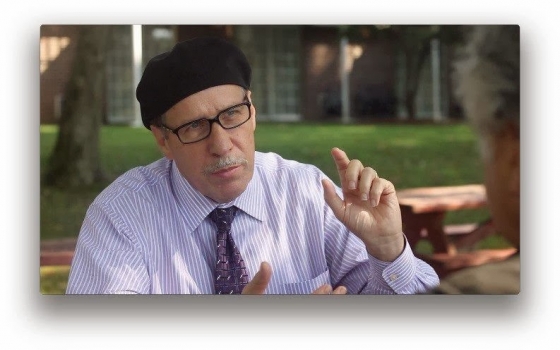
RABBI BRANT ROSEN has been a congregational rabbi since 1992 and has served the Jewish Reconstructionist Congregation (JRC) in Evanston, IL for the past 17 years. A long-time activist for peace, social justice and human rights, he has traveled on delegations to such countries as Israel/Palestine, the former Soviet Union, Nigeria, Rwanda, Uganda and Iran. A graduate of UCLA and the Reconstructionist Rabbinical College, Brant is a past President of the Reconstructionist Rabbinical Association and is the co-founder and co-chairperson of the Jewish Voice for Peace Rabbinical Council.

Brant's writings appear regularly in his two blogs, Shalom Rav and Yedid Nefesh, and his book Wrestling in the Daylight was published in 2012. He is the recipient of several awards, including AFSC Chicago’s “Inspiration for Hope Award” in 2010, for his activism on behalf of peace and justice in the Middle East. He was also honored by Newsweek magazine in 2008 as one of the Top 25 Pulpit Rabbis in America.

Chicago’s Rebel Rabbi Standing with Palestinians: “We Must Stand with the Oppressed and Call Out the Oppressor”

An Interview with Brant Rosen

from https://www.afsc.org/story/brant-rosen-named-new-regional-director-afscs-midwes…

If you’ve heard of Rabbi Brant Rosen, chances are that you know about his vocal and principled stance on the Israeli-Palestinian conflict. Rosen has been on a personal journey ever since Israel’s 2008-2009 Operation Cast Lead, the brutality of which compelled him to question his beliefs about the State of Israel and Zionism. Much of this journey unfolded in public as Rosen courageously wrote about his evolving views on Israel/Palestine in his well-read blog, Shalom Rav. These blog posts and some of the responses to them formed the basis for his 2012 book “Wrestling in the Daylight: A Rabbi’s Path To Palestinian Solidarity.”Rosen is the founder of the Jewish Voice For Peace Rabbinical Council and for 17 years he was the Rabbi of the Jewish Reconstructionist Congregation in Evanston. He stepped down from this pulpit in September and took a position as the Midwest Regional Director of the American Friends Service Committee. On July 5th, he announced the founding of a new community called Tzedek Chicago. I contacted Rabbi Rosen earlier this week to learn more about his politics, identity, and new community.

When did unquestioning support for the State of Israel become a centerpiece of Jewish identity in the United States? Why did this happen?

Israel became a centerpiece of Jewish identity following the trauma of the Holocaust – an identity which became more or less solidified following Israel’s military victory in the Six Day War. In retrospect, it is staggering to contemplate how quickly and thoroughly this new narrative has taken hold of the Jewish community. In a nutshell, it is a narrative that teaches that the traumas of the past will inevitably become our future unless the Jewish people embrace the ways of empire, nationalism and militarism. I do believe that this narrative is in many ways a betrayal of a central narrative that has sustained the Jewish people for centuries: the story of a people born out of the ashes of a Temple destroyed by the world’s mightiest empire – who responded by creating a tradition rooted in an allegiance to a Power yet greater than any human power.

We have integrated this new narrative so thoroughly that we rarely stop to consider its implications. There are so many examples I could point to; to cite but one simple instance: virtually every synagogue in America has a US and Israeli flag on either side of the Aron Kodesh [the cabinet in a Synagogue where the Torah scrolls are kept].In other words, in our most sacred Jewish spaces, we are literally bowing down to physical symbols of national power. This is a powerful demonstration of how completely this new narrative has taken hold of post-Holocaust Jewish identity. To my my mind, it is nothing short of idolatry – and our inability to recognize it as such shows just how deeply we have bought into a religious mindset that radically values physical/military power over spiritual power.

What does solidarity with the Palestinian people mean to you?

By standing in solidarity with the Palestinian people, I believe I am fulfilling one of the central spiritual directives of my religious tradition – namely that we must stand with the oppressed and call out the oppressor. It’s really that simple. Now of course, I’m not so naïve as to deny the enormous complexities that are raised when Jews stand in solidarity with Palestinians. I know full well that in the eyes of many in my community, standing in solidarity with Palestinians is a profoundly transgressive act.

Since so many frame this issue as a binary conflict between “us and them,” to stand in solidarity with Palestinians must mean that I am choosing not to stand with my own people. I reject this binary meme in no uncertain terms. I believe to my core that standing with the Palestinians is one of the most Jewish things I can do. In the end, my solidarity is not with Palestinians alone but with all who have suffered from prejudice, oppression and structural racism. Needless to say, this has historically included Jews as well. So in the end, I view solidarity as an act that defies “zero sum attitudes.” It is ultimately an act of love that will ensure a future of dignity and security for all.

How do you respond to people who claim that the BDS Movement is antisemitic?

I defy anyone to read the 2005 Palestinian call for Boycott, Divestment and Sanctions and explain to me how it is rooted in anything other than values of equality and international human rights – and it is certainly not anti-Semitic to hold Israel to these standards. There is nothing anti-Semitic in the three essential goals of BDS: namely, an end to the occupation, equal rights for Palestinian citizens of Israel and a recognition of the Palestinian right of return. And there is certainly nothing anti-Semitic about the time honored nonviolent means by which the BDS movement seeks these ends.

Now I know there are those who claim that the “double standard” created by BDS is somehow anti-Semitic; in other words of all the odious regimes in the world, why is Israel being singled out for this treatment? This claim utterly misunderstands the nature of the BDS call – and of the nature of solidarity itself. The BDS call was a call that came from Palestinians themselves. It comes from a myriad of Palestinian civil society organizations and institutions that are asking the international community to give popular support to their cause. The BDS call was not initiated by campus organizers, Protestant church groups, or international solidarity organizations. On the contrary, these groups have made the decision, in many cases after considerable deliberation, to respond to the Palestinian call for support and solidarity. So the real question, it seems to me, is not “What about all these other horrible countries?” but rather: “In the face of international political inaction to solve this unjust situation, the Palestinians have put out a call and are asking for our support and solidarity. Do we believe their call is worth responding to or not?”

In September you announced that you would be stepping down from your pulpit at the Jewish Reconstructionist Congregation in Evanston. What precipitated this move?

I made the decision to resign from JRC because my activism on the issue of Israel-Palestine had created too much stress for my congregation – and for me as well. For the past several years, I have become a increasingly high profile Palestine solidarity activist and we had been doing our best to manage this complicated reality for many years.  To their credit, JRC’s congregational leadership consistently and courageously supported my right and responsibility to speak my conscience on this issue even when most of them did not agree with me politically. In the end, however, I think my activism was just too painful for some members of my congregation. Last year, they became more vocal and organized in expressing their upset – and the atmosphere soon became so intolerable that it became impossible for me to do my job any more. I want to stress that my decision to leave was mine and mine alone. It was not easy for me to leave a congregation to which I had been devoted and that had been home to me and my family for almost twenty years. But if I’m truly honest with myself, I don’t know that it could have ended any other way, given the circumstances.

Do you have any regrets about leaving?

I have great sadness about leaving JRC, but no regrets. Given my current path, I don’t think it would be fair to the congregation – or to me – for me to remain there. While it was a traumatic break for us, I have incredible fondness for the congregation and its members and am proud of what we were able to accomplish there. I wish them nothing but the best.

What is Tzedek Chicago?

Tzedek Chicago is an avowedly non-Zionist congregation rooted in core values of spiritual openness, anti-racism, universalism and solidarity with the oppressed. It is a conscious attempt to create a Jewish spiritual community that celebrates Judaism as a global diaspora-based spiritual peoplehood. I will be serving as its rabbi part time while continuing to work in my full time capacity at AFSC.

Most liberal congregations describe themselves with words such as “open,” “inclusive,” and “welcoming.” Although it might sound odd to say, Tzedek Chicago is really not an inclusive community. We’re an intentional community rooted in very specific values.  We’re not for everyone and we don’t pretend to be.

At this point in my career, I’m not interested in creating another liberal Jewish congregation. There are plenty of them out there and some of them do wonderful, creative, important work. However, over the years I’ve increasingly met people who seek Jewish community but are kept at bay from congregational life because Zionism and support for the State of Israel assumes such a prominent role in virtually every American synagogue. I’m meeting more and more Jews who have no interest at all in enrolling their children in a religious school that considers a personal connection with the State of Israel to be a core Jewish educational value. Quite frankly, many Jews – particularly younger generations of Jews – are asking what this over-militarized ethnic nation state has to do with their Jewish identity.

Now for those who do place a high value on Israel and Zionism, there are a myriad of synagogues to choose from. But for those who do not, there really are no choices at all to speak of. Tzedek Chicago really is an attempt to create a Jewish congregational community for those whose Judaism is not dependent upon identification with Jewish nation-statism. And by extension for those who seek a Judaism rooted in sacred values of such as nonviolence, anti-racism and universalism.

Guest Category: Education, History, News, Politics & Government, Religion, Spiritual
Guest Occupation: Executive Director of Class Size Matters
Guest Biography:

Leonie Haimson is Executive Director of Class Size Matters, a non-profit parent advocacy group working for smaller class sizes in NYC and the nation as a whole. The New York Times has called her the “city’s leading proponent of smaller classes.” She was a public school parent for fifteen years, and is now a board member of the Network for Public Education, the national organization started by Diane Ravitch in 2013. Recently she spearheaded the battle against states and districts disclosing personal student information to a corporation called inBloom Inc., and through inBloom with for-profit vendors without parental consent. She writes for the NYC Public School Parent blog, where she broke the story of the flawed Pineapple passage and questions on the 2012 NY state exams. Her articles and opinion pieces have been published in Education Week, the New York Times, the Nation, New York Daily News, InsideSchools, In These Times, the Washington Post Answer Sheet, Gothamschools/Chalkbeat, Schoolbook, Gotham Gazette, Huffington Post, and elsewhere. She is a graduate of Harvard University, worked as a parent advocate at the Educational Priorities Panel, and started Class Size Matters in 2000. She regularly speaks before parent, community, and governmental groups, and has appeared on CNN, MSNBC, CNBC, NY1, Fox News, Al Jazeera, Democracy Now, NY1, and numerous national radio shows. In 2007 she received the John Dewey award from the United Federation of Teachers; in 2009 she was named as one of NYC’s family heroes by NYC Family Magazine; and in 2013 she was honored as an “Extraordinary Advocate for Our Children” by Advocates for Justice. In 2014, she received the “Parent Voice” award from Parents Across America, for her work on student privacy and helping to defeat inBloom Inc. In 2015, she was named one of the ten most influential leaders in the field of education technology by Tech and Learning magazine. References and publications upon request.

Guest Category: Business, Education, History, Politics & Government
Guest Occupation: Associate Professor CCSU Department of Reading and Language Arts, Public Education Activist
Guest Biography:

As a professional and scholar I conscientiously and actively pursue professional activities in order to keep myself current with issues and concerns surrounding reading and language arts, maintain and expand professional relationships with colleagues in my discipline and other related disciplines, continue to be a relevant and productive contributor to my discipline and other related disciplines, and to add visibility to my department, school, and university.

Among my professional affiliations include: National Council of Teachers of English (NCTE), National Reading Conference (NRC), International Reading Association (IRA), Connecticut Association for Reading Research (CARR), New England Reading Association (NERA), Phi Delta Kappa, CCSU Chapter (PDK), and the Center for Expansion of Language and Thinking (CELT). I am also active in the Connecticut Literacy Think Tank, a consortium of professional educators who are either directly or indirectly involved in reading and language arts from the State of Connecticut, i.e., Central Connecticut State University, Southern Connecticut State University, Western Connecticut State University, Eastern Connecticut State University, St. Joseph’s College, University of Hartford, University of Bridgeport, University of Connecticut, and the State Department of Education/Bureau of Curriculum and Instruction. The Think Tank committee serves as a consulting/advisory body to the Connecticut Association for Reading Research and the Connecticut Reading Association on issues that impact on curriculum and instruction, and assessments in reading and language arts in the state of Connecticut. I also served as Publication Chair and Editor for the Connecticut Association for Reading Research (CARR). CARR is a professional organization dedicated to the enhancement and improvement of professional development of reading and language arts educators in Connecticut. It advocates leadership in support of research, policy and practice that improves reading instruction and supports the best interests of all learners and reading professionals. It also encourages and supports research at all levels of reading and language arts education to promote informed decision making by reading professionals, policy makers, and the public. Through CARR, our graduate students in reading and language arts have received scholarships and research awards. Additionally, I am Treasurer and Chair of the Membership Committee of the Phi Delta Kappa, CCSU Chapter. PDK is an international professional association in education designed to stimulate the professional growth of members and to deal with current problems and issues related to public education. My appointment to the State of Connecticut Task Force for helping struggling readers in Connecticut grades four to nine is beneficial to our department particularly in informing our curriculum and instruction in the clinical sequence—diagnosis and remediation in reading and language arts.

I have always been passionate and committed to working with teachers in classroom practice as well as parents in supporting their children’s literacy learning through professional development programs. I facilitated a series of Annual Parent University Collaborative Professional Development Project in the New Britain Consolidated Schools (2007, 2008 & 2009).

Recently, I have been invited to serve on the Board of the New Britain Grade-Level Reading Campaign, a funded program in collaboration with the Annie E. Casey Grade Level Reading Campaign, the Connecticut Center for School Change, the William Caspar Graustein Memorial Fund, and the Connecticut Department of Education to ensure that all students in New Britain are reading at grade level by the end of grade 3, and the Welcome to My World Autism-a support group for parents with children with autism. Serving on executive boards allows me to influence policies or decisions that impact student learning.

Dr. Jesse "the Walking Man" Turner - One Man Walking In The Name of Love

Dr. Jesse Turner - the Walking Man. Learn about Dr. Turner and his amazing work and activism all for the children. You will meet an extraordinary man who will inspire you and motivate you to lay down your life for the greatest cause of our lifetime. You will meet a real life hero.

Join his event - One Man Walking in the Name of Love
https://www.facebook.com/events/297723840427078/
https://www.facebook.com/events/439900859468582/

Jesse's Walking to DC Page - https://www.facebook.com/Walking2DCJesse

Guest Category: Education, Kids & Family, News, Politics & Government, Society and Culture
Guest Occupation: Owner of the Anaheim White House, a popular restaurateur, Humanitarian of the Year, Restaurateur of the Year, Citizen of the Year, Philanthropist
Guest Biography:

Bruno Serato

It’s the quintessential American success story. A young man immigrates to the United States with nothing more than a dream and $200 in his pocket, works hard and creates one of the culinary world’s most respected and lauded fine dining establishments — the Anaheim White House. Renowned for its dramatic and artfully crafted Northern Italian/French cuisine as well as its elegant and historically significant setting in a mansion dating back to 1909, the Anaheim White House has counted celebrities, U.S. Presidents, dignitaries, world leaders and culinary aficionados alike as loyal patrons since its establishment in 1987. Thanks to his forward-thinking vision and an innate ability to “season” his guests’ dining experiences with a truly unique flair, Bruno Serato has traveled far from his humble roots as a busboy in Italy to create a culinary legacy that is recognized by both critics and patrons alike as among the finest in North America.


Serato traces his roots to post World War II Italy, where his family worked as shepherds and, despite their modest means, were known for providing milk and cheese to those most in need in the war-ravaged country. Though they were getting by, times proved difficult for the growing family so his parents packed up and moved to France to work the land picking potatoes and beets in the northern region, approximately one-hour’s drive from Paris. They settled in the city of Laon, and it was there that he was born and raised along with his four brothers and two sisters until the age of 11.

Serato and his family returned to Italy in 1967 and settled in Verona, the famed city of Romeo and Juliet. This proved to be a fortuitous move for the young man, who was quickly developing a palate for unique regional cuisines while achieving fluency in both the Italian and French languages. It was there that they opened the family business, a small motel complex with a restaurant called the Bar Cristallo, and Serato was called upon to wear many hats in the burgeoning enterprise including chef, waiter, bartender and maitre d’ — often all at the same time!


At the age of 20, Serato’s life took a dramatic turn as he was required to serve one year in the armed forces. He saw this as an opportunity to take a break from the restaurant business and explore other career and life options. After his military service, however, the pull was too strong and he returned to his passion.

A pivotal moment came in 1980, when Serato’s sister, Stella, told him of an opportunity at a French restaurant near her home that had just opened. She lived in Orange County, Calif., and he would have to relocate to America. This wasn’t a problem for the then 25-year-old Serato and he jumped at the chance.

Transitioning to his new life wasn’t easy, but Serato pledged to do everything in his power to thrive in his new environment. His excitement was palpable as he applied for an entry-level position at the famous La Vie en Rose in Brea. Though he couldn’t speak a word of English, he was determined to learn the language and his unbridled enthusiasm earned him a callback and within days he accepted a job as a dishwasher. While many individuals boasting his experience and breadth of knowledge in the restaurant industry would have scorned at such a lowly position, he was thrilled to be working in a renowned establishment.

Serato quickly caught the eye of the restaurant’s management team and rose through the service ranks until he was waiting tables during the coveted night shift. As his language skills improved, he enjoyed many moments of comic relief when performing his duties, such as the time a customer requested a “doggie bag” and, being unfamiliar with the term, thought the term was an insult to the chef and that the remaining portion of their filet mignon was to be discarded. After a good laugh was had by all — including the loyal customer — Serato became even more determined to master the language knowing it would be the key to his “recipe for success.”


His destiny would change again in 1984, when he became friends with a customer named Louis Laulhere. Serato enjoyed the long and interesting conversations in French he had with the gentleman, who always arrived and dined alone. It was during this period that Serato learned that, in order to create the finest dining establishment possible, no details were too small and none were to be overlooked. From the service and cuisine to the employees and their measure of devotion and reliability, no stone was left unturned in his quest for excellence. Then, just as the revamped restaurant began accumulating scores of noted awards and distinctions, Serato broke new ground personally by being named “Maitre D’ of the Year” by the Southern California Restaurant Writers.


In 1987, Serato began exploring the notion of striking out on his own. He had received many propositions over the years to oversee other fine dining establishments, but out of loyalty he remained at La Vie en Rose. But after hearing of the pending sale of the nearby White House Restaurant in Anaheim by leading area restaurateur Jim Stovall, he and Laulhere both knew that it bore the potential to become one of the finest and most beautiful restaurants in Southern California. And while leaving his home at La Vie en Rose proved to be as emotional for Serato as when he said goodbye to his family in Italy, it was a move that he knew would, once again, change his life forever.


Stovall helped Serato navigate the complex financial waters of obtaining corporate financing and within two years, Serato bought the historic property. Though they didn’t have much, their reputations as restaurateurs along with the archive of press clippings and restaurant industry awards spoke volumes on their behalf. While Serato nervously awaited the phone call that bore the possibility of literally making or breaking his future, little did he know that bank officials had as much confidence in his abilities as he did and the loan was secured. His hopes for the Anaheim White House — and his future — had received the “green light.”


Serato threw himself into redesigning the restaurant’s menu to represent contemporary Northern Italian cuisine, but with a French flair. He moved away from dishes with heavy red sauces and created new ones highlighting the lighter tastes and flavors of herbs & olive oil — a move that would help spearhead a culinary trend that would come to be known as “California cuisine.” He also took great pains to develop an unparalleled wine list and secured varietals from across the globe. Serato designed elaborate, yet historically appropriate settings within the restaurant and in the garden areas to create spaces that could accommodate intimate dinner parties or cocktail receptions for more than 450 guests. In addition, he created a catering division that had the ability to accommodate small and large parties of any theme in locations as far away as Bora Bora. These changes earned him both popular and critical acclaim and, over the ensuing years, made the Anaheim White House a draw for celebrities ranging from President Carter to Madonna.

Top 10 2011

CNN Hero

San Marino Silver Medallion

The Scudo San Marino medallion is given to individuals as recognition for acts of generosity, altruism and human solidarity. A special room in a Castle in Florence, Italy is opened up once a year for the award ceremony. The New York Fire Department as well as Mother Teresa of Calcutta were previous recipients of this award. This year Bruno was awarded the Silver medallion (the highest level) of this award and is proud to be in the same company as The NYFD, Mother Teresa and all other former recipients.

Boys & Girls Clubs of America Presidents Award

Bruno was awarded the Presidents Award on October 13 2011, at the National Boys & Girls Clubs of America meeting in Las Vegas. The award was presented to him by the President of the Boys & Girls Club of America, Roxanne Spillett. The honor was awarded to Bruno on behalf of President George Bush & President Barack Obama.

Serato Gets Star on Anaheim’s Walk of Stars

Bruno Serato, owner of the Anaheim White House, the popular restaurateur known for his extensive philanthropic received a star on the Anaheim Walk of Stars on Tuesday August 19, 2008

A highlight of the event will be the attendance of dozens of underprivileged children who receive a free meal each night, thanks to Serato and his Caterina’s Club foundation.

Bruno Serato, proprietor of Anaheim White House Restaurant, Anaheim, won big in this year’s National Restaurant Association “Restaurant Neighbor Award” competition. Serato was honored as 2005’s “Humanitarian of the Year” which singles out an individual restaurant operator’s dedication, commitment, and support to his or her community.

Bruno, along with 2005’s large and small business division winner, was honored on Capitol Hill in Washington, D.C. Serato was awarded for his involvement with two local charities, Paint Your Heart Out and the Boys and Girls Club.

2005 Cornerstone Humanitarian of the Year

Owner Bruno Serato received this award from the “California Restaurant Association”

2005 California Humanitarian Award

2004 Restaurateur of the Year. Bruno was awarded this wonderful honor by the “Southern California Restaurant Writers Association”

2004 Restaurateur of

the Year

Bruno was the honoree of the Anaheim Boys & Girls annual gala on April 3rd, 2004.

Anaheim Boys & Girls Club Honoree

On March 7th, Bruno was honored by the American Italian Renaissance Foundation with the Italian Heritage Award

2004 Italian Heritage Award

Citizen of the Year

Bruno Serato received the ‘2003 Citizen of the Year’ award from the Cypress College Foundation.

In homage to his own humble beginnings, Serato has made it a priority to give back to those less fortunate in the community. Among the organizations that he supports are the Boys and Girls Clubs of Anaheim; Paint Your Heart Out, an organization that renovates the homes of the elderly and infirmed; and Caterina’s Girls Club, which Serato founded in honor of his mother to benefit underprivileged girls in Anaheim. His philanthropic efforts have raised nearly $1 million for various endeavors and earned him a regional distinction of which he is particularly proud, “Citizen of the Year” by the Cypress College Foundation and presented by the City of Anaheim.

As he faces the future with much the same enthusiasm that brought him to this country, Serato has earned a coveted position in Southern California’s culinary landscape. He pledges to continue doing the work that he loves with the same level of passion and devotion that has earned him legions of loyal devotees across the globe. Though he spends much of his time planning for the future, Serato still remains grounded in his roots and, to this day, tells guests a story from the early days that has kept him inspired through these many years.

“One day, the first week after we’d opened the restaurant, a woman who claimed to be a psychic said ‘Tell the owner that you have a ghost here, but that it’s a good ghost, and he will love you because you’re going to do a lot of good. This restaurant will not only be a success, but it will receive all the honors, be written up in all the local and international publications. Presidents will dine here, as well as some of the most famous people in the world.’ ‘Thanks,’ I replied. ‘I’ll be sure to tell him,’ thinking to myself, where do these people come from? It all came true, and after so many years that woman, now a friend, still dines here regularly.”

Guest Category: Arts, Business, Earth & Space, Health & Lifestyle, Kids & Family, Philosophy, Psychology, Self Help, Variety