
Breaking the Silence, April 26, 2026

Breaking The Silence with Dr Gregory Williams
Leadership, Integrity and Generational Character
Guest, Keith Grounsell, a 28-year law enforcement veteran, two-time Chief of Police, former DEA Special Agent, international police advisor, entrepreneur, speaker, and multi-book author
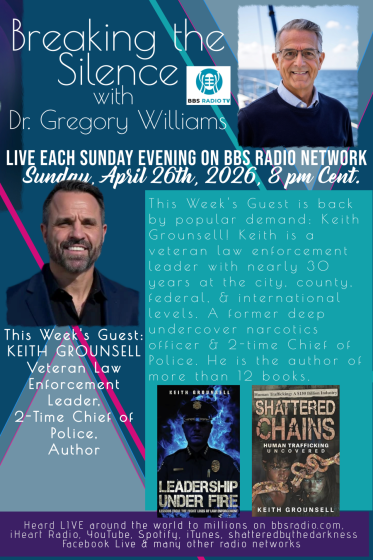
This Week's Guest is back by popular demand: Keith Grounsell! Keith is a veteran law enforcement leader with nearly 30 years at the city, county, federal and international levels. A former deep undercover narcotics and officer and 2-time Chief of Police. He is the author of more than 12 books.
You can find all of Keith's book at his author page on Amazon:
Amazon.com: Keith P. Grounsell: books, biography, latest update
In this episode of Breaking the Silence, Dr. Gregory Williams hosts author and former police chief Keith Groundswell to explore the essential pillars of leadership. The discussion moves from the personal influence of mentors and family to the high-stakes realities of international undercover work and global counter-terrorism. Groundswell emphasizes that true leadership is built on a foundation of integrity that must remain consistent across both public and private life.
The Foundation of Leadership: Integrity and Accountability
Keith Groundswell posits that leadership is a lifelong journey of learning, where the primary responsibility is to mentor others and make them better than oneself. He identifies integrity as the "first brick" of any leadership foundation; without it, even qualities like courage and discipline can be misdirected toward harmful ends. In the modern era, Groundswell notes that the ubiquity of social media and cameras acts as a form of external accountability, ensuring that a leader’s public "happy face" matches their private actions. He argues that as one rises in an organization, the responsibility to work harder and act righteously increases rather than diminishes.
A critical component of maintaining this integrity is the presence of an "accountability partner" or a tight inner circle. Groundswell highlights that leaders must surround themselves with people—whether a spouse or a professional command staff—who are empowered to tell the "honest truth" and challenge potentially poor decisions. He stresses that a leader must create an environment of trust where respectful disagreement is encouraged, ensuring that once a collective decision is made, the entire team supports it.
Mentorship and the Influence of the Father
Groundswell attributes his drive and work ethic to his father, a 22-year U.S. Marine who worked three jobs to support the family. This model of sacrifice taught him that a leader’s role is to step up and support those around them, regardless of personal cost. He acknowledges that while some have positive models to mimic, others use a negative upbringing as motivation to "not repeat the process." Regardless of the source, Groundswell believes that finding a mentor—someone who "checks" you at critical crossroads—is what keeps a person on the correct path.
Global Security and Decisive Action
Drawing from his experience commanding a 5,000-man SWAT team in Afghanistan and working in international narcotics, Groundswell offers a stark critique of current global affairs. He discusses the dangers of "narco-terrorism" and the strategic importance of maintaining a U.S. footprint abroad to prevent the growth of terrorist networks. He specifically criticizes the abrupt withdrawal from Afghanistan, which he claims left vital intelligence databases and $90 billion in weapons in the hands of the Taliban, effectively making them one of the most powerful terrorist organizations overnight. He advocates for decisive leadership in the face of regimes like Iran, arguing that diplomatic policing and human rights protection are essential for a safer world.
Shaping the Next Generation
A significant portion of the conversation focuses on the "diminishment of society" caused by instant gratification and the lack of personal responsibility. Groundswell has authored a children’s book series to help parents spark tough conversations about kindness, boundaries, and self-respect. He argues that respect for authority must begin in the home; if children do not respect their parents or caregivers, they will inevitably become a disruption in school and society. His goal is to move youth away from "victim culture" and toward a mindset of accountability and resilience.
The dialogue serves as a powerful reminder that leadership is not defined by title or power, but by the consistency of one's character. Whether managing a national SWAT team or raising a child, the principles remain the same: take responsibility, maintain a foundation of integrity, and never be afraid to take a stand for what is right.
Guest, Keith Grounsell
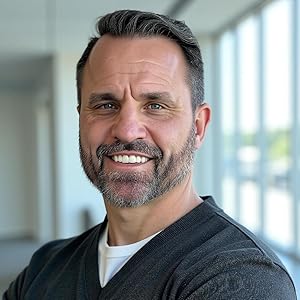
Keith Grounsell is a 28-year law enforcement veteran, two-time Chief of Police, former DEA Special Agent, international police advisor, entrepreneur, speaker, and multi-book author specializing in leadership, undercover operations, and public safety.
Over the course of his career, he has worked at the city, county, state, federal, and international levels, including six years deployed overseas in senior leadership roles with the U.S. Department of State and the United Nations. He has trained and advised leadership within more than 30 national police forces and has served in positions as high as U.S. Contingent Commander.
Keith is also a business owner and entrepreneur, leading multiple ventures focused on leadership development, training, and construction services. His real-world experience in both public service and private enterprise gives him a rare perspective on accountability, organizational culture, and building teams that perform under pressure.
He is the author of numerous books, including the four-volume undercover series A Narc’s Tale, leadership titles Leadership Under Fire, The Great Divider and Chief, and Built To Lead, as well as Shattered Chains: Human Trafficking Uncovered, Policing Without Borders, and two children’s books centered on character and courage. His work bridges frontline experience with practical leadership principles that apply across law enforcement, business, government, and family life.
Keith holds a master’s degree in criminal justice, is court-certified as an expert witness in narcotics enforcement, and has received more than 25 medals and commendations for leadership and high-risk operations. As Chief of Police, he led one South Carolina city from the 28th safest ranking in the state to #1 in under two years through strategic enforcement and community policing.
Whether leading undercover operations, confronting corruption, advising international police forces, or building businesses from the ground up, Keith’s mission remains the same: develop leaders of character, courage, and conviction.

Breaking the Silence

“Breaking the Silence with Dr. Gregory Williams”
Now is the time for you to step out of your own personal darkness and break the silence that has been hidden and closed up inside of you.
“Breaking the Silence with Dr. Gregory Williams” radio program will offer the listeners a Road Map to Hope each and every week with keys to discover within yourself that ray of light to make your day better and brighter. Dr. Williams will not only discuss his own personal journey of overcoming the darkness of years of horrific sexual child abuse in the hands of his father and his father’s friends, but Dr. Williams will also feature special guests that have their own personal stories of overcoming obstacles in their lives and becoming victors instead of victims.
“Breaking the Silence” will also feature information from the professional and medical field that will dive into the important research involving Adverse Childhood Experiences (ACEs) and how to build Resiliency in yourself and in your children. Along with this information will be special guests from greatest minds in the United States to share their expert research and thoughts on this very important subject that each person needs to be aware of.
Now is the time to invest a few minutes each week with some awesome information to give you steps to HOPE and keys to HAPPINESS and PEACE. NOW is the time to Break YOUR Silence and breakout into a NEW and BETTER YOU! Join us each week beginning August 13, 2019 for “Breaking the Silence with Dr. Gregory Williams”. You won’t want to miss a single program. Heard around the world on the best radio network on the airwaves, BSS Radio Network available on iTunes, Google Play, iHeart Radio, Facebook Radio, Spotify and over 100 other high quality digital radio stations.
[00:11] Speaker 1: Welcome to Breaking the Silence with Dr. Gregory Williams. Dr. Williams is the author of the acclaimed book, Shattered by the Darkness: Putting the Pieces Back Together After Child Abuse. Dr. Williams is on the senior leadership team at Baylor College of Medicine in Houston, Texas. And Dr. Williams travels the United States speaking and training professionals, parents, and victims about the importance of dealing with abuse and personal trauma head-on, and not being afraid to break the silence of your own personal pain. Feel free to call in to tonight's show at 888-627-6008 and speak with Dr. Williams and his guests live on air. And now, your host, Dr. Williams.
[01:26] Speaker 2: Well, good evening and welcome to Houston, Texas: Breaking the Silence. I'm Greg Williams right here in, uh, my home, and we're looking over the Texas Medical Center right over here, and, uh, right, right there is the NRG Center, uh, where they play football, the Texans. And it's just great to have you with us tonight. I'm kind of under the weather so my voice is going to be, uh, kind of, uh, rough. Um, I've been swinging on TheraFlu for the last... As you can tell, it's almost empty. Uh, (laughs) I want to do a commercial. TheraFlu, just for you if you... But, um, tell you what, it's, um, it's something that's going around right now down here in Houston, and maybe we need a good frost, uh, before springtime again to, to be able to kill some of the germs. But we're gonna just get through the program tonight, and I fortunately have probably one of the most, uh, prolific, uh, guests tonight that I can just say, "Good evening," and introduce him, and he's gonna take off.
[02:26] Speaker 2: And, uh, we'll meet at the end of the hour, uh, after he says amen because he has so much wisdom and knowledge, and I'm looking forward to having, uh, Keith being introduced here in a minute. And he's back by popular demand. Uh, hey, when are you gonna have him on again? You mentioned you was gonna have him on again. When's he coming back on? And, and he's graciously, uh, said he would do again, so we may just keep on having him as a recurring guest, uh, because he has... If we talk, I think if we spend a program on every one of his books, it would take about four months to get through all (laughs) all the different books that he's had. Uh, so it's great having him with us tonight, and we'll talk about him in a minute. Uh, I spent a week up in, uh, last week towards Dallas.
[03:09] Speaker 2: I started down, uh, last week, or I think it was like Monday or Tuesday, in Alvin, uh, Texas, and, uh, was there at a police event, and, uh, was doing, uh, a keynote presentation there, and when I said amen, I got in the car and literally drove as fast as I could to Quitman, Texas for an event that evening. And then after that event, I drove an hour and a half, almost two hours, to Downtown Dallas, spent the night, and early in the morning, I had a, a Dallas event at Dallas Casa, and, uh, it was just an absolutely wonderful event. Standing room only, they had overflow rooms, three or four overflow rooms, and, uh, In-N-Out Burger were sponsoring it and giving out free meals, and, uh, people were just enjoying that. We had a great time, met a lot of awesome people, but I imagine that's where I got the bug. You just hug people and, and shake hands with a lot of people, and, uh, every now and then you, you get across somebody that doesn't think they're sick and they really are.
[04:10] Speaker 2: But anyway, I, I caught it, but we're gonna get through it. I'm, I'm on the l- hopefully the final couple days of this, but I apologize for my voice. Um, you can get involved several ways tonight, and I would love, and I know our guest tonight would love to hear your comments too, and questions. And this one isn't going to be, uh, specific as far as, "Oh no, I've been abused," or, "Oh no, uh, we're gonna just talk about this one topic." We're gonna be talking about a topic that I think everybody needs to hear about and learn about, and the, uh, the book that we're gonna be talking about is gonna share some insight that there's not a person that, from young to old, that doesn't need to hear some of these principles, uh, from our guest tonight. And I'm really looking forward to that, so if you wanna get involved and say, "Hey, wait, what about this?" Call 888-627-6008 and Thomas will patch you right through here.
[05:10] Speaker 2: He, he doesn't ask for your Social Security number, he doesn't ask to fingerprint you, he don't even ask what state you're in. He just says, ah, "What's your first name?" and he patches you in. And that way we can just greet you and say, "Hey, how are you tonight?" and bring you right on the program. Or, you can get on Shattered by the Darkness Facebook page, and it looks like we're up in there just, uh, doing well. There's some viewers on there. Or, the old-fashioned way, 832-396-6525. You can text me, and I've already had texts, uh, tonight asking, "Why weren't we on?" Well, we were chewing the fat a little beforehand. Uh, we showed up about a minute late. But you can text me a question or a comment here, and at the bottom of the hour when we take our commercial break, I will read those and then share them with our guest and our audience tonight. So, hey, does life get any better than that? I don't think so. But welcome. So we always said if you just, um, take time to, uh, pause.
[06:05] Speaker 2: You know-Go ahead, and TJ, bring, bring our guest because he's a lot better looking and a lot better health than I am. Uh, next to me here, so everybody can see him. And, and Keith Groundsels is with us tonight. He's an author. But, you know, we live in a wild world right now. Uh, it's ... You know, you always hear the, the old-fashioned Westerns, Wild Wild West and all those TV shows and things. Tell you what, this world is just absolutely unbelievable right now. But I'm not for sure. It's n- hasn't been that forever. Uh, I was talking to some people this morning saying, "You know, JFK, what happened to him just up in Dallas, uh, years ago in the early '60s?" Um, and then, you know, this is Trump last night, third or fourth, uh, time where gunshots have f- fired off around him. What's going on with our people? And that's what we're gonna be talking about tonight.
[07:03] Speaker 2: And talking about the thing that concerns me, um, is people of intelligence, of high intelligence, high purpose, uh, have the ability to achieve some unbelievable things in their life. And something happens, something clicks, and what is that? What's causing all of this to happen around us? Or is it just animosity against somebody that you don't like the views, whether it's somebody in the office or somebody at your church or, or somebody in the political realm? What is it that's causing everybody to just lose it, uh, on the highways and on the school campuses around our world? We have probably one of the, the most knowledgeable people on this subject tonight, just about leadership. Uh, Keith has written over 12 books. There's six of them right there beside him. And I advocate, uh, getting online and buying these books. I buy them on Kindle. It's great to read.
[08:07] Speaker 2: You can go right through them and you can bookmark them and you can carry them around all with you right here in your phone or your iPad or whatever. But I have read Built To Lead twice this week, and it's a great book. But he has, uh, nearly, let's just go ahead and say, 30 years of experience in international and county and city and federal levels of undercover work, police work, uh, depth of a nar- narcotic, undercover narcotic officer. Uh, he was a chief of police at, uh, a couple places and they were probably out to get him, uh, just because he wanted to, uh, clean things up. Anytime you go into a closet and you have to get rid of some of that mold, there's going to be people around that's attached to that mold that doesn't want to be touched and it messes up their world. So I just want to welcome to the program, Kre- Keith Groundswell. And Keith, it's great to have you back tonight.
[09:07] Speaker 3: Greg, thank you so much for having me again. I'm super excited about this topic of leadership. And, and leadership for me is a lifelong journey. It's, uh ... I'm a constant student of the game. I don't know it all. I probably don't even know 10% of it, but the 10% that I do know, I'm constantly trying to add to that-
[09:24] Speaker 2: Yeah.
[09:24] Speaker 3: ... and teach others. I believe as a leader, it's your job to teach those around you and make them better than you.
[09:30] Speaker 2: Who in your early years, Keith, did you follow as that leadership expert? I have a couple in my mind, but who was it that you kind of held up as, hey, every time their book comes out, you grab it?
[09:42] Speaker 3: So for me, early on in my life was before I, I read anything, it was my father.
[09:47] Speaker 2: Oh.
[09:47] Speaker 3: You know, my father was a 22-year United States Marine.
[09:51] Speaker 2: Wow.
[09:51] Speaker 3: Um, I, I grew up playing soccer. Um, my dad as a, as a Marine, an enlisted man, not an officer, for 22 years, didn't make a lot of money and probably maybe 600 bucks a month back in those days. And I ended up playing travel soccer and that was rather expensive, so my dad worked three jobs in order to support us and the family and allow me to do those things. They can never go to any tournaments 'cause they afford- couldn't afford to go to the tournaments. I would always stay in a room with some other person on my team, their parents were doing a little better and they were always generous and great to me. And, uh, that, that just ingrained something in me, the role of a father, the role of a leader. You step up and support those around you, whether it be your children or the people that are working with you in the organization.
[10:34] Speaker 2: Did his hard work and endurance of just keeping on keeping at it, waking up and going to work every day, did that model something for you and that could be the reason you have a drive that (laughs) you have one heck of a drive, uh, in your life to be able to just keep on going and doing things that some people would say-
[10:51] Speaker 3: Yeah.
[10:51] Speaker 2: "No, I'm, I'm done. I'm gonna retire"?
[10:53] Speaker 3: No, 100%. A- a- and for me, you know, I saw what he, he did. He was a United States Marine. After hours, he cleaned the hospital up on the base and then he even had a paper route at one time. So, he'd be getting up at two o'clock in the morning, doing papers, go in, be a Marine, and then clean the hospital at night. That's what I saw every single day. I thought that was the norm. I thought s- that's what a man does, you know, when they're responsible for their family and they're trying to provide. So for me, I, uh, as a child, you should always try and strive to be better than your parents. Well, that's a, that's a super high bar that he set for me a- and my brother and my sister t- and it's a constant thing for me to give back to my father who sacrificed for our family. I know there are a lot of people out there having immigrant parents or somebody who, who stepped up and did something for you to have something that they really couldn't afford, you know, to put you in a better place.
[11:48] Speaker 3: By allowing me to play soccer, I ended up getting a scholarship, uh, to g- to college. I was going straight in the military 'cause I couldn't afford college. But I ended up getting a scholarship because of the sacrifices that my father made. I never forget that. It's just like anything in leadership, you always remember where you came from and how you got there and the people that got you there and always pass that forward later on.
[12:09] Speaker 2: So that's, that's the positive side because that's just like, wow, you had a mentor, and God bless you that you had that because it did...... just take up one level, and then you're going to leave that with your kids, and-
[12:21] Speaker 3: Absolutely.
[12:21] Speaker 2: ... and if that generational, uh, just keeps getting passed on to generation to generation. But what about those folks that don't have that as a model? Can they use it just in the adverse way of, "Wait-"
[12:34] Speaker 3: Yeah.
[12:34] Speaker 2: "... I want to do everything opposite that my dad did, so I wouldn't"-
[12:38] Speaker 3: Yep.
[12:38] Speaker 2: "... turn out like he did"?
[12:41] Speaker 3: Absolutely. You know, I have quite a few friends that are very successful in their given careers or their chosen career path, and one specifically I- I can think of recently, uh, we've become really close friends and I found out his background story, and he didn't come from any type of silver spoon. A very rough background where he had zero support, but that motivates him to be a better father, better in everything that he does, and he just took that motivation. So, every person has to find their motivation. Mine was, it was mimicked in front of me.
[13:10] Speaker 3: His was, "I don't want to repeat the process."
[13:13] Speaker 2: Right.
[13:13] Speaker 3: So, it- it just varies from person to person. I also had many mentors along the way, people that checked me along my life, you know, from when I was in 10th grade and I started to get in fights in school and do something stupid, I had a older guy, Mark Wilson, that was a mentor to me, and he took me under his wing and he checked me. A- a- and told me, "Hey, this is not who you are. This is not the person I expect you to be, and this is not who you want to be." And really having somebody that checked me at that exact moment in life, I believe was really what kept me on the path, because you're always gonna have crossroads.
[13:47] Speaker 2: Yeah.
[13:47] Speaker 3: You're gonna see different avenues you can go, and your decision has consequences, good and bad.
[13:53] Speaker 2: Yeah.
[13:53] Speaker 3: You can make the wrong decision (laughs) and start going down that road, and that's something I try and teach- teach my kids, you know, what you do today, like at school, if you go to school and you learn a subject, when you go to college, you're going to repeat those same classes in your core curriculum. So, if you work really hard in high school, college is a little bit easier. But if you didn't work really hard, then it's going to be even more difficult of a situation. So, everything tr- piles upon the next thing, and- and just making correct decisions consistently is- is the key for me.
[14:25] Speaker 2: Yeah. With us being an all-man show tonight, me, you, and Thomas at the radio station-
[14:29] Speaker 3: (laughs)
[14:30] Speaker 2: ... uh, (laughs) how- how important is it to have b- (sighs) an accountability partner, not only somebody that you look up to, but somebody that able to meet you at your level at whatever day and be able to whisper in your ear and say, "Hey, look at me. What's going on? You need to clean up this, you need to stop that." Because I think sometimes the devil, uh, and I- I'll just say the enemy, uh, so we don't get religious and get people all excited, which I really don't personally care, but-
[15:01] Speaker 3: Yeah. (laughs)
[15:01] Speaker 2: ... anyway, get them all upset we're talking about God and the devil, but-
[15:04] Speaker 3: (laughs)
[15:05] Speaker 2: ... you know, they- they want to- he wants to isolate us to where we listen to our own voices, when you really need a good, solid, uh, accountability person, especially men, do we not, off to the side-
[15:18] Speaker 3: Absolutely.
[15:18] Speaker 2: ... to be able to- to help us in those tough times or just keep us on the level?
[15:22] Speaker 3: Yeah. So, the- the difference for me is this, you're going to have haters out there. If you take a stand on anything in life, people are going to challenge you. So, if you have somebody that is nagging at you and telling you everything you're doing is wrong, and that individual has not contributed positively to your life, don't listen to them.
[15:40] Speaker 2: Yeah.
[15:41] Speaker 3: That- that's just a hater. That's someone who probably couldn't achieve what you've achieved in life. But if you have somebody that truly, genuinely loves you and cares about you, and you look at them as a role model, and they tell you something, take it to heart, because that's probably somebody who actually cares. And it- it's just like this, as a father, you know, your father, when your father gets older and passes away, that's the last man that wants you to be better than him on this earth.
[16:06] Speaker 2: Yeah.
[16:06] Speaker 3: So, if you take that into consideration, you have a friend, you have a true friend... My circle is tiny. My cir- I keep it tiny and tight on purpose. I don't trust a lot of people. But the reality is, when I have those true friends, when they tell me something, I take it to heart, and I know they're telling me with good intentions. And if you have that type of person around you, whether it's a spouse, whether it's a good friend, or a- just a mentor from a professional relationship, grab ahold of them, 'cause they're rare, and don't take it personal. Listen, they're checking you to make you better, and that's the most important thing.
[16:39] Speaker 2: Yeah, and there should be, um, because sometimes we get offended when we're criticized or looked down upon, it's like, "Wait," you know, but if it's done out of love, when you said spouse, it automatically, like-
[16:53] Speaker 3: Absolutely.
[16:53] Speaker 2: ... it's like, "Wow, yeah, that's- that's awesome," because I do. Uh-
[16:58] Speaker 3: Same here.
[16:58] Speaker 2: ... they can say, "Hey, wait, bef- don't- don't hit send." (laughs)
[17:01] Speaker 3: (laughs)
[17:01] Speaker 2: I'll- I'll check out an email real quick-
[17:03] Speaker 3: (laughs)
[17:03] Speaker 2: ... and, you know, "D- d- d- don't- don't hit send. Hit delete."
[17:06] Speaker 3: (laughs)
[17:06] Speaker 2: Like, "Oh, come on, I want to tell them off," uh-
[17:10] Speaker 3: (laughs)
[17:10] Speaker 2: ... that- that, to me, uh, is something I need. Um-
[17:14] Speaker 3: Yeah. I know.
[17:15] Speaker 2: ... and that's what partnership's all about, right? Uh-
[17:18] Speaker 3: It is, you know, and having someone to bounce things off of i- is a rare thing in this world. We don't trust a lot of people, and some of us, like us who are blessed to have that spouse that's going to be honest with us, and- and brutally honest a- at times. I believe sometimes it, you know, sometimes it bothers you, like, "Oh, man," you know, but then you start to think about it, like, "They're probably right." You know, I- I really do need to think about it from that perspective. And sometimes bouncing things off people that you trust really, truly makes you think outside your box. So I- I look at this from a leadership perspective. So when I'm a chief of police and I have a command staff, and my command staff and I walk into a room for our weekly command staff meetings and I bring up a topic, I fully expect them in that room to tell me that God's honest truth. A- and whether I like it or not, that's their role.
[18:06] Speaker 3: Their role is to ensure I don't walk out of that room with a stupid idea and try and present it as, "Oh, this is what we need to do," and every single one of them thought otherwise. But how do you get it to where they trust you is by not lashing out at them every time they bring something to you that's like, "Hey, I don't agree with what you're saying."It's okay to have disagreements, and it has to be a respectful, mutual disagreement. And in those command staff, closed door meetings, we had plenty of those.
[18:33] Speaker 2: Yeah.
[18:33] Speaker 3: But in the end, after we bounced it around and, and we made a decision and I walked out and presented that decision, I depended upon everybody in that room to support that decision.
[18:45] Speaker 2: Right.
[18:45] Speaker 3: And that's where a leadership principle comes with. It's okay to discuss things, but in the end, sometimes there may be a different ruling from the way you wanted things to go. And sometimes things are out of your control. And the ultimate person, the top cop, the, uh, top person in an organization is responsible. So support them in what they're doing. A- And then when you have a leader that does make a, a, a mistake or, uh, they fail on something, don't kick 'em when they're down. 'Cause I can tell you, every leader has ups and downs.
[19:15] Speaker 2: Yeah.
[19:15] Speaker 3: And if you kick somebody while they're down or pounce all over them, it's gonna happen to you one day.
[19:22] Speaker 2: Yeah.
[19:22] Speaker 3: And do you want them to do that to you as well? So I always try and put myself in other people's shoes only because I've been on the receiving end, good and bad, of different things that I've learned.
[19:32] Speaker 2: Right. On the... Uh, I b- I believe, and tell me if I'm wrong, um, in the book Built To Lead, you have one chapter, I believe it's on a leader needs to be dependable, uh, dependability.
[19:43] Speaker 3: Mm-hmm.
[19:44] Speaker 2: Uh, reliable, uh, consistent, um... And I think if we go with-
[19:50] Speaker 3: They've been-
[19:51] Speaker 2: ... changing the trends-
[19:52] Speaker 3: They've been trained courageous. You know, these-
[19:54] Speaker 2: Yeah.
[19:54] Speaker 3: There's two... But everything I teach in every single one of my leadership books is the basis of integrity. Because if you don't have integrity, ultimately you can be courageous, but w- if you're standing for the wrong thing, because your integrity is lacking, you know, that's a problem. Or if you have discipline, but your discipline is doing something bad that's not (laughs) good for the organization or good for you, your family, or, or people around you, then that's an integrity issue. So integrity is a 24-hour business. It's not just at work, it's not just at home, it's both. An- and, and I tell people, it's easy as a leader to put on this happy face for 8:00 to 5:00 every single day walking into an office, then go home, and some people are somebody totally different. And eventually that's gonna come to light, especially in this modern day era. Back 20 years ago, you could do that.
[20:48] Speaker 3: Nowadays, you have social media and everybody's got a camera, everybody's watching everything you do from if your grass is too long and you're not taking care of your yard, somebody's gonna post something about you. And they're gonna be like, "Oh man, he doesn't take care of the neighborhood. He doesn't take... He's a chief of police and he's not practicing what he preaches." And trust me, they will do that. I, I've had that even happen to me. Like, "Oh, why ain't the chief doing this?" A- and so eyes are always on you. And honestly, that's kind of a good thing.
[21:17] Speaker 3: It's like when body cameras first came into police work-
[21:20] Speaker 2: Mm.
[21:20] Speaker 3: ... when I was chief of police back 2012, they started to really... It hit and everybody was trying to try these things out. And, and everybody was really scared at first. And then in the end, we realized actually 95% of the body camera footage clears the officer. And, and it really backs up the officer. It's that 5% which we want to expose, which we want to check. And sometimes having big brother look over your shoulder is not a bad thing.
[21:45] Speaker 2: Yeah.
[21:45] Speaker 3: That's an accountability thing, which is one of the leadership responsibilities. Accountability, not only for yourself, but accountability for those around you. Having the courage to speak up. When you see somebody doing something wrong, do you be like, "Oh man, I don't wanna say nothing to them 'cause it's gonna create tension"? Or do you find a way to talk to them? You don't have to be confrontational. Everything should have a positive spin to it. Constructive criticism. You don't just criticize, criticize. It has to come from a constructive nature where people see, okay, the chief or my boss is telling me something in order to help me. He's not tr- smacking me down or he's not trying to pile up a paper trail on me and then hammer me at the end. He's talking to me immediately about a problem so I can correct it. And that's, that's what you do as a leader.
[22:34] Speaker 2: Yeah. So do you think from your experience and, and writings and the research that integrity is that first brick of foundation?
[22:46] Speaker 3: Absolutely. It's like the foundation of a house. If it's cracked, the foundation eventually... It may not be exposed right away, but eventually down the road, the house may shift and you start having problems inside from foundation up. And that's the same thing with leadership. If your integrity is not intact, your foundation is not there. And eventually the house will come crumbling down.
[23:09] Speaker 2: So, uh-
[23:09] Speaker 3: A- and I say that the higher you go up in leadership, the greater the power, the greater the responsibility that you have to take care of people. But there are people who get into top tier leadership positions and they think, "Well, I'm the boss. Now I got it made. Now I just delegate and tell everybody to do anything." In actuality, the higher you go up, the harder you're going to have to work, the more responsibility you have to do the right thing, and the more eyes and ears that are dependent upon you listening to every single thing you say, and they're looking for guidance.
[23:42] Speaker 2: Yeah.
[23:42] Speaker 3: So it's, it's very tough to be in the top tier position, but you have to be hungry and you have to be willing to work, but you have to have integrity. And that's it.
[23:52] Speaker 2: So explain to, to me and everybody listening tonight, why is there so many leaders falling, failing, flopping on personal sin, dis- you know-
[24:13] Speaker 3: Yeah.
[24:13] Speaker 2: ... uh, indiscretions, just personal moral issues?
[24:18] Speaker 3: Yeah.
[24:19] Speaker 2: Wh- why? What's going on? Because it... We're not talking about just, you know, people at the normal workplace. We're talking about principals of colleges, CEOs, pol- politicians.
[24:32] Speaker 3: Yeah.
[24:32] Speaker 2: And it's happening every single day, and we'll probably hear about more tomorrow. What, what's the core of all this? Where's this coming from?
[24:40] Speaker 3: You know, I, I believe it's always been out there, it's just not ever been exposed at this level, because everybody has a cell phone, everybody has a social-
[24:49] Speaker 4: Yeah.
[24:49] Speaker 3: ... media account. There's so many platforms for people to put their opinion out there. A- and even when you're not in the wrong, you could be crucified. A- and I was telling somebody earlier today, you know, doing the right thing is never the easy thing when it's difficult situations. And that, and people you would think doing the right thing should be the easy thing every time, but it's not. Because when you hold others accountable who don't want to take personal responsibility for their actions, they're gonna have backlash and they're going to attack you to discredit the source who's exposing them. And, and, and I believe that, you know, we as a society have kind of, uh, dependent, been dependent upon the internet raising our kids, or, you know, hey, ChatGPT it, or Google it. Um, you know, that's why I started writing books to teach my children certain things, like, where was Daddy for six years when he was working deep undercover?
[25:48] Speaker 3: Daddy didn't want to be absent, but I didn't want the cartels to know I had kids, or to know that I was married. So, I distanced myself at times and didn't come home for long periods because I didn't want them to know I had a family. And it wasn't because I didn't love them, it was because I was trying to protect them. So, it, it's, it's a different world that, you know, we're in now that compares to 20 years ago. I, or I look back when I was in high school, I'm 50 years old, I look back at high school, we didn't have cell phones. First bag phone came out, like, my senior year. A- and it was like life was s- more simple, you know? If you wanted to ask a girl out on a date you normally had to do it in person, but you had to call her home and talk to their dad or their mom. And (laughs) that was a tough call, you know, sometimes.
[26:37] Speaker 4: Yeah.
[26:37] Speaker 3: A- and nowadays they just text and they, or they go to a app, and they don't even meet in, see in, in person until they meet. And, and it's just so unpersonal, and that's why I believe relationships are failing. It's easy to de-commit. You know, back in the day you commit to somebody and you invest time in that person, and it took a long time to get to know somebody, a- and you courted somebody that you really truly, you know, wanted to have a long-term relationship, and you were always looking for marriage. Now they're not. Now they're, they're just so quick for that instant gratification, click of a button, swipe right, swipe left, whatever just, you know. And I believe that has contributed to the diminishment of society, and that's why I wrote my three children's books. I published another one since we last talked.
[27:23] Speaker 4: Oh, great.
[27:23] Speaker 3: Um, so, so I have the Kids Character and Confidence series on Amazon, and, and it's, it's valuable lessons to teach our youth, a- and it sparks conversations, because the last thing you want to do as a parent is don't talk to your kids about tough things. And sometimes you don't know how to open that door. Well, these books do that. And, and there's two books that are made for everyone, but there's one book specifically made for little girls, and, uh, all my children have helped me publish the books that are named after them. So that was part of my, my journey with them, the things I experienced as a father to a little girl versus a father to a boy, or boys, i- is way different. It's, it, it, it's different, you know? They say treat everybody the same. No, it's different. I, I have to worry about different things I worry about with my daughter versus, versus my sons.
[28:12] Speaker 3: And teaching, you know, what girls go through verse- versus what a, a boy goes through is different, but we all have the same trials, tribulations, a- a- and, you know, injustices (laughs) happen to us, and it's not that you're not going to encounter those if you get ready for them, it's just it'll teach you how to respond. So if you prep- It's like working undercover. If I prepare for every scenario, which I tried, I can never be fully prepared, but if I ran something through my mind, like, I'm in this house, they're gonna ask me to use cocaine with them, how am I gonna get outta that? What am I gonna do? If I don't have a plan in place, you know Now granted, you have to be (laughs) able to adjust that plan. What did Mike Tyson say? Everybody's got a plan till you get punched in the face.
[28:56] Speaker 4: Right. (laughs)
[28:57] Speaker 3: You know, get the plans out the window. But that is, that is true, but having a basic plan so you don't get startled a- a- and stumbled from the get-go to where you can respond and then adjust accordingly, that's life. Give them the basis of, hey, don't do these type of things and this is why, and if anybody asks you to do these, you tell them your dad is coming to pick you up. Or if you're, like my daughter, if you're at somebody's house and you have a situation going on and you can't call, it's just a bad situation, you send me this emoji. We got a special emoji. Send me double time this emoji and I'll know I'm on my way. You know?
[29:38] Speaker 4: Wow.
[29:38] Speaker 3: And I'm not gonna ask you, because what if somebody, you see something going on and you don't want to be a part of that? And, and having those conversations with your kids will help, you know, doing your part to move society in the right way, so when they become adults they're responsible adults and they're not, you're not lacking in judgment, character, integrity, and all those basic things that, well, they used to be basic, they're not so basic anymore. You know, I ju- I just truly believe people don't take responsibility for their actions anymore. They're so quick to want to be a victim, uh, because everybody's like, "Oh, I need a GoFundMe account, I'm a victim of this." You know, there are true victims out there.
[30:16] Speaker 4: Yeah.
[30:16] Speaker 3: Let's not... Don't over say, it's just like the word hero. I believe it's, it's been overused. You know, not everybody's a hero. You know, they may be a hero to you, but in the sense of it, you know, not everybody's a hero that does something good, that's just a good person.
[30:32] Speaker 4: Yeah.
[30:32] Speaker 3: And, and I believe we over saturate with, with all these stories. Then you got AI now. They can create fake stories and you don't even know what the truth is, and you're being manipulated and we're being pitted against each other in society right now, a- and we have two different sides, and then you got the puppet master behind the scenes playing this game and pitting races against each other, pitting political parties against each other, a- and we're not smart enough to grasp it.
[30:58] Speaker 1: Wow.
[30:59] Speaker 3: And we don't see it. And that, and that's what bothers me, you know, these attacks politically. I know we spoke about this briefly, but you know, seeing what's going on with our Commander in Chief. There should be nobody in America today that doesn't support the Commander in Chief. I supported previous presidents that I didn't vote for. I never wanted the United States to fail. If you want the US to fail, then you're the problem. Point blank. You should be happy if we're successful. You should be happy when somebody's ending a 47-year ruling dictator that unstabilized the world through the Middle East and f- did so many evil acts that killed thousands of Americans. I remem- I remember being in Afghanistan for three years and, um, I was a commander over a 5,000 man SWAT team. I had 144 Americans that, that worked for me there.
[31:51] Speaker 3: And we did pop eradication and we were really taking the fight to the Taliban, trying to gain Sch- gain some strength, you know, where the Taliban at night would terrorize communities and when the US troops were there, you know, it was, it, it was okay. But at nighttime when the troops would go home, it was a hot mess. You know, they had t- they had to deal with the Taliban at night and no matter what president was in place, I wanted us to be successful there. But one thing that happened while I was there was IEDs were going off and i- (sighs) when these IEDs would blow up, improvised explosive devices for those who don't know, I'm sorry. Um, when they would blow up, there's nobody to shoot back at. They would just detonate, believe they'd get 72 virgins, they'd go to heaven 'cause they killed the infidel or they attempted to kill the infidel.
[32:40] Speaker 3: Well then all of a sudden I'm hearing about these new things coming out called EFPs, explosively formed penetrators, and this was something that actually came from Iran and these things would shoot metal dishes and they would go through tanks and kill everything. And that's where it came from. These are ultimate terrorist organizations that want to kill Americans. They've said it, death to America, millions of times and, and if we don't understand when they got that nuclear rich uranium, when they got it at 60%, they had enough for 10 warheads. 10! And they proved that after they said they didn't have the capabilities of shooting a missile over 2,000 miles, they shot one over 2,500 miles, meaning they could hit Paris. They could hit Europe.
[33:27] Speaker 3: So these nations that don't support us for ending this evil regime, well we have all the countries just about in the Middle East coming together with us like, "Please, please take care of Iran." Because most of them are peaceful, relatively peaceful nations that just want commerce. They want business. They want to be successful. And when you have somebody in the Middle East who destabilizes it and they get a hold of a nuclear weapon, oh my God, that's like, it's one thing to have EFPs or IEDs and, and form ... A- and take the money and, and support proxy organizations that are killing Americans and killing anybody who's not part of their faith system, but when you have a nuclear weapon, you can end the world.
[34:14] Speaker 1: Yeah.
[34:14] Speaker 3: So Trump taking action like he always does. He's, he's the one president in my life, I'm 50 years old, he's the one president in my lifetime that has not been scared to act. He knows there's political opposition. No matter what he does, 50% of the people are gonna hate him. But he does what he believes in his heart of hearts is right. And you have conspiracy theorists, "Ah, he's supporting Israel, he's doing this." Reality is this. He's doing the right thing for us to be safe. And if he doesn't do it, all they're going to do is develop more and more nuclear weapons and when they get the capability to reach America, boom.
[34:54] Speaker 1: Yeah.
[34:54] Speaker 3: Lights out.
[34:55] Speaker 1: Yeah.
[34:55] Speaker 3: So I'm, I for one am very grateful. You know, I ha- I had a son who was deployed over there who was injured and flown out, you know, a- and, and that war over there, the drone attacks are horrendous a- and, and he lost somebody that was real close to him there, uh, was killed in the attack and, um, he's going through severe PTSD and a lot of the effects of that right now and, you know, I 100% support the mission. I believe in the mission. I have blood on the table so to speak. You know, I've been in Afghanistan for years. We had Afghanistan somewhat stable. While we were in Afghanistan, all of our airfields that we had while we were there allowed us to control Iran because we could instantly be on top of Iran.
[35:40] Speaker 3: I remember going out and visiting a base in Islam Qala, which was right next to the Iranian border to see what was going on out there and how close, I mean, we're right there on that border right there and the strategic, you know, approach to this whole bigger war was to stabilize the Middle East. And people can agree or disagree with the war over there in Afghanistan and how it, how long it took and things like that. I understand there's two sides to it. Trump was gonna withdraw, but he was going to leave 2,500 to 2,000 soldiers and he was going to keep several airbases. That's how you withdraw. You don't abruptly pull out, leave $90 billion in weapons and intelligence systems. I remember getting a phone call, not a phone call.
[36:21] Speaker 3: I remember getting, uh, a Facebook message from somebody that I trained their fatherly that he said, "You don't know me, but here's a picture of you and my father." It was a picture of me giving like a, a advanced SWAT team leadership award to their father 'cause I was over the national SWAT team and all their training in AdruScan in Afghanistan. And he said, "I just wanted to let you know that the Taliban just executed my father in the front yard of our house and we're on the run. Can you help me?" I received almost 10 of those. Not exactly like that, but almost 10 of those messages and felt so helpless. When you abruptly pull out of something that you've put so...... your life on the line, blood, sweat, tears, we lost many Americans over the years, you abruptly pull out and you have the Taliban, okay? When I was there, the Taliban were street fighters. Al-Qaeda was the masterminds, all right? We pretty much eliminated them and had them at bay, and they were nothing.
[37:21] Speaker 3: Then when you abruptly pull out and you leave that, they left our databases there. They left our database, our retina scans, everything so the Taliban could get into them and identify everybody who helped the Americans and go kill them. That's what happened. And people like me were absolutely furious at what happened, and it was just the biggest insult to, to those of us who lost friends there, to those of us who sacrificed. I was injured, came home, had multiple surgeries after that, but I, I survived, you know, everything I went through there. But the whole thing is, you just took the Taliban, who was just street fighters, like a street gang, you just made them the number one most powerful terrorist organization in the world immediately at that time, because they had all US weapons.
[38:07] Speaker 3: And then immediately, they're flying US helicopters and hanging women from the helicopters by a noose, and they're doing executions again on a regular basis, and women can't go to school after the fifth grade, and you're starting to see all this, you know, things that happen with what we call chai boys in, and little boys being molested and it's all back out. A- and it's just like, we had them at bay. We were controlling Iran. You abruptly pull out, we have no airbase right there that we could control them, and then you're wondering why Trump has to go in later on. And then one of our presidents wants to give them all this money to try and pay off a terrorist? You don't pay off a terrorist. You give a terrorist money, they're going to fund other terrorist networks, other terrorist organizations. And, and, and strategically, Afghanistan, at the time we went in, controlled 95% of the entire world's opium. 95% of the entire world, which funded all the terrorist activities for Al-Qaeda.
[39:05] Speaker 3: So think about that. Narco-terrorism. You're seeing that theme with Trump. Trump's the first president to ever really say, "They're terrorist organizations." They're absolutely terrorist organizations. They've always been terrorist organiz- He's just the only one with balls enough to step up and say it. And that, for me, like I- I'm, I'm appreciative as a fighter, as a person who's worked with 85 different country national police forces, who's been to Afghanistan, Haiti, Liberia, India, Jordan, trained top-tier special forces units, trained police units, advised up to presidential appointee levels, we got the best damn president we ever had, and we're never gonna see a president-
[39:46] Speaker 2: You know, Pe-
[39:46] Speaker 3: ... like this again.
[39:48] Speaker 2: I, I don't think 99% of the people in our country understand when we mouth off or make opinions and unless we have been risking it all like you and other people that are in the military that have been there, done that. I mean, we read the paper, we watch it on the news, and then we go to Starbucks and grab a cup of coffee and go back to work.
[40:14] Speaker 3: Yeah.
[40:14] Speaker 2: Different ball game. Because when you're dealing with and trying to circle around back to leadership, when you're dealing with... And oh, by the way, TJ, we're not taking a commercial break. This is too good. Um, we're...
[40:26] Speaker 3: (laughs)
[40:26] Speaker 2: When, when you're dealing with, uh, a mindset of an enemy that when they die killing an American or trying to wipe Israel off the face of the earth, they get, uh, a heavenly reward, uh-
[40:45] Speaker 3: Right.
[40:45] Speaker 2: ... to die that way, it's not a normal battle. And-
[40:49] Speaker 3: No.
[40:49] Speaker 2: ... you can't sit down and have negotiations because no matter what you negotiate, they want us and them-
[40:59] Speaker 3: Yeah.
[40:59] Speaker 2: ... dead. That's their-
[41:01] Speaker 3: Absolutely.
[41:01] Speaker 2: That's their- That's in their Bibles. That's in their belief system. H-
[41:05] Speaker 3: Yes.
[41:05] Speaker 2: Why don't we... Why aren't they talking about that, and they're just talking about, you know, how wild we are and how much we're spending on the war?
[41:14] Speaker 3: Yeah.
[41:14] Speaker 2: Where's the leadership coming and going, "Wait, guys, can we not have a discussion-
[41:17] Speaker 3: Yes.
[41:17] Speaker 2: ... and talk about this? Or is it too beyond that?"
[41:20] Speaker 3: I, I truly believe that we're so split in America politically, that we've been pitted against each other with social media and different things, that there's one group that will listen to their side, and there's another group that will listen predominantly to their side, and nobody wants to come to the table and listen to the middle grounds. You can preach it till you're blue in the face, but if nobody's actually listening to it, it's just like you tell somebody, you know, "Hey, Trump's deporting, uh, American citizens." "Okay, tell me one name of somebody." You'll see an interviewer. And they can't name anybody. So the reality is, you've got one side that has what I call Trump derangement syndrome, and they literally hate the man. So anything he does, they're going to go against it, no matter what. That is at a level that's incomprehensible in modern day. You should s- You don't have to like President Trump. And as a matter of fact, I don't like everything he says.
[42:15] Speaker 3: I don't like the way he does certain things. But by God, I believe he's doing the best to his abilities, and he's the best president of my lifetime, hands down. He's doing more to save America for the future than ever. Look at the pressure he put on, like, NATO. Look at what he's doing ending evil dictatorships. He's, he's ended eight major, like, major battles around the world. I mean, you have places like the Republic of Congo, who's been at battle forever, and he ends that. I- It's just amazing to me the credit he's not getting. What other president would have stepped up and saw what was going on in Nigeria and actually said something that could save lives? And, and I believe we can do more in addition.
[42:57] Speaker 2: Yeah.
[42:57] Speaker 3: But there's a group of people that think, "Oh, my God, America shouldn't get involved in these things." Well, let me explain to you a little bit from a man who's actually worked eight years internationally. If we don't get involved and put our footprint on things, and we don't go to these countries, another country...... that has a different agenda to kill Americans, is going to go there and spread their hate. And they are going to grow a terrorist network there and eventually they're going to attack us. Use our brains. We're, we're spreading diplomatic policing, human rights. We're doing things to protect people to have a safer world so you, as Americans, and I can travel around the world and be safe. But nobody likes the person that comes in the room and actually tells people what to do or actually makes a decision. So if in life, if you've never had an enemy in life, that means you've never ever taken a stand for anything in your life.
[43:56] Speaker 5: Okay. Repeat that-
[43:56] Speaker 3: If you-
[43:56] Speaker 5: ... again because that's good. Everybody needs-
[43:58] Speaker 3: If you-
[43:58] Speaker 5: ... to catch that.
[43:59] Speaker 3: If you've never had an enemy or you have no enemies, that means you've never taken a stand for something. 'Cause people in America especially, we're very opinionated, and we all think we're right about different things. So you're gonna have, when you take a stand, you're gonna have people that don't like you instantaneously. I remember, I really didn't have a ton of enemies besides drug dealers and criminals until I became a chief of police, then half the population didn't like me.
[44:25] Speaker 5: (laughs)
[44:25] Speaker 3: It was like, "Wow, you don't, you don't like me." But yet the numbers kind of prove we went from number 28 to number one safest city in the whole entire state of South Carolina in a two-year period. And you don't like that? You don't like feeling safer? "Well, I just don't like your approach." You know what? I'm telling you it works 'cause the proof's in the pudding. So the same thing with America. Like, look at what Trump is doing. You have to make sacrifices. You're, you're the most sought after nation to come to. How do you shut down the border completely, like instantaneously, when you're told by previous presidents it can't be done?
[44:57] Speaker 5: Yeah.
[44:57] Speaker 3: How do you, how do you do that? Oh, you do it by taking action, by empowering people. We have excellent, like, law enforcement in the United States, actually the best in the world, hands down. I know, I've been with all the different countries of law enforcement, and I can tell you everybody looks to us as the gold standard. Yeah, we have our problems-
[45:18] Speaker 5: Sure.
[45:18] Speaker 3: ... because we're humans and we're dealing with human beings that don't like to be told what to do. 'Cause as Americans, we got 10 times more freedoms than anybody else.
[45:28] Speaker 5: Yeah.
[45:28] Speaker 3: So when you have all these freedoms, you have what I call American privilege, and you think that your freedom trumps somebody else's, so you can protest this and you forget it says the right to peacefully assemble. It doesn't say the right to cuss everybody out who believes the opposite of you or stand in the middle of the road and block traffic. Those are against the law.
[45:50] Speaker 5: Yeah.
[45:50] Speaker 3: Th- There's... People are misconscring their rights and they don't know because they've never been to a third world country where you get killed for s- saying the things they say in America.
[46:01] Speaker 5: Yeah.
[46:01] Speaker 3: I've been out on these. I had 11 countries' foreign police units I was responsible for in Haiti at one time, and, um, I was a national coordinator. They were riot teams basically, and we responded to over 500 protests and riots in a two-year period. That's a lot.
[46:19] Speaker 5: Yeah.
[46:19] Speaker 3: And some of those, dozens of people were murdered, and some of those, nobody got killed. But they were legitimate protests. They were protesting we don't have public schools, we don't have power, we don't have clean water. (laughs) These are real, legitimate gripes. In America, we're protesting, oh, they're, they're locking up criminals. Too many criminals are being locked... Well, if you cross the border illegally, that's a criminal violation, so you should be deported and come across the right way.
[46:52] Speaker 5: Mm-hmm.
[46:53] Speaker 3: It's such... It- it's mind-blowing to me that people forgot the basics, and, and we can't get back to...
[46:59] Speaker 2: With that, with that-
[47:00] Speaker 3: Whoever agreed-
[47:01] Speaker 2: ... thought, and to land the plane 'cause we're on the last couple minutes here, to circle back to leadership, and then you said the thing about the kids because those aren't in your back pictures there of the-
[47:11] Speaker 3: Yeah.
[47:11] Speaker 2: ... books. I want you to say those book titles again because I know-
[47:15] Speaker 3: Yeah, absolutely.
[47:15] Speaker 2: ... parents need to instill in their children moral values-
[47:20] Speaker 3: For sure.
[47:20] Speaker 2: ... that's gonna last a lifetime, that can be passed down-
[47:22] Speaker 3: Yeah.
[47:22] Speaker 2: ... generation to generation. But how do we do that when the police officer, the teacher, uh, sometimes the medical profession, um, the politicians, the president doesn't get the respect-
[47:42] Speaker 3: Yeah.
[47:42] Speaker 2: ... for the role of the office?
[47:45] Speaker 3: Yeah.
[47:45] Speaker 2: Are they gonna make mistakes? Yes. But how do-
[47:49] Speaker 3: Yes.
[47:49] Speaker 2: ... we still teach that-
[47:51] Speaker 3: Yeah.
[47:51] Speaker 2: ... leadership qualities into the children? And, uh, about your books, what would you say to the kids? "Hey, don't worry about this. Let me tell you what you need to learn, what you need to understand."
[48:01] Speaker 3: It, it goes back to what I said at the beginning, the foundation of integrity and character a- and accountability and the basic stuff I teach in, in Built to Lead. You know, if the children aren't taught from day one to respect their parents, number one-
[48:18] Speaker 2: Yes.
[48:18] Speaker 3: ... if they don't have-
[48:19] Speaker 2: Yes.
[48:19] Speaker 3: ... parents in the household, number two, they need to respect whoever is raising them. That's, that's a big factor. Because if that respect is not there, when they go to school, they're gonna be the disruption in school. They're gonna be the child that's never listening, and then when they get in trouble, whoever their caregiver or their parent is, is gonna come in and say, "Not little Johnny. Little Johnny would never do something like that." And that shows the parent is the problem, the parent didn't take responsibility. So if you're a grandparent of a child, uh, if you're a parent o- of a child and you, or you're a split family, get these books. It's, it's called the Kids Character and Confidence series.
[48:56] Speaker 3: One is Caleb's Journey of Kindness, it has 22 lessons to teach our youth, and the next one is Noah Says No, and it teaches you when it's okay to say no, such as inappropriate touching with strangers or somebody trying to lure you in certain places, saying no to drugs, the basic stuff-... but it sparks the conversation. And then the third book in the Kids Character and Confidence Series is McKenna's Magical Journey. It's a girl's guide, basically, to being successful in life and having a good upbringing and making the right decisions, and respecting yourself, finding yourself beautiful. Because as a young girl especially, we have all this glitz and glamour, and all these filters and things like that. But reality is, beauty is in the eye of the beholder, meaning that what I think is pretty, somebody else might not think is pretty, but that's okay.
[49:44] Speaker 2: Yeah.
[49:44] Speaker 3: 'Cause if some little boy doesn't like you, then they're not the right person for you, you know? And somebody might find you the most beautiful, attractive girl in the world, and they're gonna treat you with respect, and are not gonna demand you to do things that don't make you feel comfortable. And those are the things-
[49:58] Speaker 2: What, what's the age, Keith? The age range for this -
[50:00] Speaker 3: So, anywhere from ... It can be anywhere from, uh, parents can read it to their kids from, you know, three, four years old, all the way up to maybe 11, 12 years old, something like that. Um, it's, uh, you know, it's funny, 'cause I have my, my book series, A Narc's Tale, about working deep undercover and things like that. And I had, uh, 12-year-old kids, their parents ask me, "Hey, is it okay for my son to do this?" I had one kid who did a book report on my, on that book series for high school, totally appropriate. It actually teaches very valuable lessons about drugs and the dangers of drugs. I don't, I don't glamorize the life. I really tell the realities of what happens with it.
[50:41] Speaker 2: Yeah.
[50:41] Speaker 3: So yeah, so th- that, and then, uh, Leadership Under Fire is my book that talks about fighting corruption, and some things you can do as a leader in any organization to protect yourself, to protect your people, and how to lead from the front, and how to lead where other people are inspired.
[50:56] Speaker 2: Yeah. I've read, uh, on your board there, I've read four of those six. Uh, and I wanna, I wanna look at these, these Kids, this Kids series, and, uh-
[51:06] Speaker 3: Yeah.
[51:06] Speaker 2: And I'll tell you what, Keith, uh, thank you for being with us. I love to have you back, and I would love to-
[51:11] Speaker 3: Absolutely.
[51:11] Speaker 2: ... just take off one hat and put it on, another on you-
[51:14] Speaker 3: Yeah.
[51:14] Speaker 2: ... like the guy in Green Acres, "I'm the mayor today, I'm the mailman tomorrow."
[51:17] Speaker 3: (laughs) Exactly.
[51:18] Speaker 2: Uh, and talk about and invite everybody I can. You thinking about writing a book? He's got a book on how to write a book.
[51:27] Speaker 3: Yeah. I wrote a book (overlapping 00:27:25) .
[51:28] Speaker 2: I, I really, if you don't mind, I'd like to have you come back again and talk about-
[51:32] Speaker 3: Yes.
[51:32] Speaker 2: ... because you're successful. You're one of those that go, "Hey, wait, I've been there, done that." And if you're like me, you've done it. I started off doing it all wrong. Finally figured it out-
[51:42] Speaker 3: Absolutely.
[51:42] Speaker 2: ... how to do it right. But I wanna hear your opinion and you help the people that's out there trying to, to write books, and-
[51:48] Speaker 3: Absolutely.
[51:48] Speaker 2: ... I think everybody's got a story in them.
[51:50] Speaker 3: Yeah. I got a, a system in place, and I've helped several authors. The Great Divider in Chief, another one of my books right there, is all about 30 years of political decisions and the consequences they have, and how to get out of that, that backlash of bad decisions, policy. That's a, that's a very interesting book. Some of the stuff we talked about today is in that book as well.
[52:10] Speaker 2: Fantastic. Well, Keith, thank you so much for being with us. Stay safe-
[52:13] Speaker 3: Thank you so much.
[52:14] Speaker 2: ... where you're at, 'cause I know that's probably an undisclosed location-
[52:16] Speaker 3: Yeah.
[52:16] Speaker 2: ... but you stay safe where you're at.
[52:18] Speaker 3: Absolutely.
[52:18] Speaker 2: And, uh, I'll be reaching out to you pretty darn soon to schedule you down the road-
[52:23] Speaker 3: Cool.
[52:23] Speaker 2: ... for another program.
[52:24] Speaker 3: Thank you so much. I appreciate you.
[52:26] Speaker 2: Thank you, my friend.
[52:27] Speaker 3: My pleasure.
[52:27] Speaker 2: Thank you for the wisdom. Good stuff.
[52:28] Speaker 3: Thank you.
[52:29] Speaker 2: Okay, good night. As we do each and every week, and I tell you, wow, I'm, I'm sitting here, I, I gotta go sit on my chair and, and decipher everything that was, uh, said tonight. (laughs) The, I need to watch the show again. Uh, that was good stuff. Great wisdom. And when somebody comes on a program that you don't have to pull information out, I love. I've had people on who go, "Well, how did that feel?" "Fine." "Uh, what'd you do then?" "Uh, nothing." And, and then you go, "Oh, no, this is gonna be a long hour." But Keith, you just say, "Good evening," and there it is.
[53:07] Speaker 2: (laughs)
[53:08] Speaker 3: (laughs)
[53:09] Speaker 2: I love it. I love it. And, uh, we're, looks like we're getting all kinds of responses too, so people are enjoying that too. Uh, but we will be back, uh, with Keith in a few weeks, just as soon as we have an opening and he's available to come back and help people share what they've gone through. Because I think that's what the purpose is. Uh, you don't go through this stuff in life without recognizing that it's been, you've been allowed to walk down that road to help other people that are heading in that direction. Go, "Hey, wait, don't turn there. This helped me here. This will help you there. Let's join hands. Let's help you down the, the path together." I think that's why, uh, we go through the things we, we do, to be able to help other people. That's my purpose anyway, and I know it is Keith's and a lot of other people. Thanks so much for joining us tonight.
[53:59] Speaker 2: Um, as you go into next week, uh, as that sun rises tomorrow, um, I wanna let you know, no matter what you're gonna be facing, do the right thing. Stand strong, and never forget, there's people that'll help you through it. There's people that you need to be able to pick you up and not kick dirt in your face when you fall. But never forget, you have resilience already inside of you. Tap into that. Learn how to develop it. You don't have to go learn how to do it. It's already inside of you, to be able to uncover it, and let it come out in you, and never forget, no matter what, there's always hope. Join us right here next week for another edition of Breaking the Silence. God bless you, straight from Houston, Texas. Have an awesome, awesome week. We'll see you next Sunday night. Good night.
[54:57] Speaker 2: (instrumental music plays)
[55:05] Speaker 1: Thank you for listening to Breaking the Silence with Dr. Gregory Williams. To contact Dr. Williams, dial 832-396-6525, or email him at shatteredbythedarkness@gmail.com. And don't forget to join us each Sunday night at 8:00 PM central time, 6:00 PM Pacific, on BBS Radio Station 1, for the next episode of Breaking the Silence.


