Breaking the Silence, April 19, 2026



Breaking The Silence with Dr Gregory Williams
Navigating Youth Safety and Human Trafficking in the Digital Age
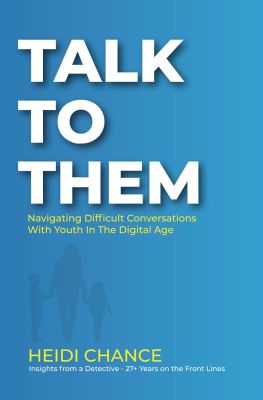
Guest, Heidi Chance, Author of the book "Talk to Them: Navigating Difficult Conversations with Youth in the Digital Age."
This Week's Guest will be Heidi Chance. Heidi is the author of the book: "Talk to Them: Navigating Difficult Conversations with Youth in the Digital Age." She has over 27 years of distinguished law enforcement experience and is recognized as one of the nation's leading subject matter experts in sex trafficking, undercover operations and online safety.
This episode of Breaking the Silence features host Dr. Gregory Williams and guest Detective Heidi Chance, a 27-year law enforcement veteran and expert in sex trafficking. The discussion centers on the urgent need for personal boundaries and the evolving dangers of the "digital white van"—the smartphone—which has become the primary tool for child exploitation.
The Philosophy of Personal Boundaries
Dr. Gregory Williams opens the program by defining boundaries as "guardrails" designed to protect individuals from falling into "deep ditches" or off "cliffs" in their personal lives. He emphasizes that boundaries are not about being standoffish but are essential for safety and minimizing emotional damage. He identifies several critical areas for boundary-setting, including Time (learning to say "no" to protect family time), Emotional (avoiding the "vicarious trauma" of taking on others' pain), and Mental (shutting the door on negative, intrusive thoughts). He notes that for those who have experienced trauma, the goal is often a "manageable life" rather than a return to a perceived "normal."
The Digital "White Van" and Online Exploitation
Detective Heidi Chance introduces the concept of the "digital white van," explaining that the traditional stranger-danger threat has moved from the street into the child's bedroom via the smartphone. Statistics show a 93% increase in online child exploitation since the COVID-19 pandemic began. Predators are increasingly bypassing traffickers to message children directly on platforms like Instagram and Facebook. Detective Chance warns that grooming is alarmingly fast; in undercover operations, she has seen the transition from an initial greeting to a request for a physical meeting happen in as little as 23 minutes.
Law Enforcement Challenges and High-Risk Events
The conversation highlights a significant gap in proactive law enforcement. In large cities like Phoenix, only a handful of detectives are dedicated to undercover sex trafficking work, leaving many departments purely reactive. This vulnerability is exacerbated during major events like the Super Bowl or the World Cup, which attract traffickers who follow the "client" base. Detective Chance stresses that because police are overwhelmed, parents must take the lead in educating their children and monitoring their digital footprints.
Strategies for Parental Intervention
Detective Chance provides practical advice for parents, including the use of specialized devices like Bark or Gabb phones that have built-in safety filters. She emphasizes that parents should never allow phones in bedrooms at night and should lead by example. When discussing difficult topics, she recommends "rapport building" and "verbal judo" rather than immediate confrontation, which can cause a child to shut down. If a child is caught in a "sextortion" or compromising photo situation, parents are urged to stay calm, capture evidence with a separate device, and contact professionals immediately rather than engaging the predator themselves.
The digital landscape has fundamentally changed the nature of child safety, requiring parents to move beyond the "white van" warnings of the past. By establishing firm personal boundaries and actively monitoring digital interactions, families can create a safer environment against the rising tide of online exploitation. As Dr. Williams notes, as long as there is "air in your lungs," there is hope for healing and protection.
Guest, Heidi Chance

Heidi Chance, is a retired law enforcement professional who served 25 years. She is a leader and consultant who equips other law enforcement and other organizations with the tools and awareness to fight for a chance for change in the realm of sex trafficking.
She has testified as an expert witness in court proceedings and is a subject matter expert in the area of sex trafficking. Her specialized sex trafficking training has educated professionals within community groups, child safety departments, probation, jail and corrections staff, other local law enforcement agencies, medical staff, school personnel and officers attending the Phoenix Police Academy. She has also developed an 8 hour advanced detective training course that is featured online for the Arizona Peace Officers Standards and Training Board on the subject of human trafficking.
Heidi is passionate about the POWER OF AWARENESS and making a CHANCE for change for sex trafficking victims and the community understands the growing sex trafficking problem in our communities.
Through her work she has witnessed the POWER OF AWARNESS working in the investigations and trials she has experienced.
Breaking the Silence


“Breaking the Silence with Dr. Gregory Williams”
Now is the time for you to step out of your own personal darkness and break the silence that has been hidden and closed up inside of you.
“Breaking the Silence with Dr. Gregory Williams” radio program will offer the listeners a Road Map to Hope each and every week with keys to discover within yourself that ray of light to make your day better and brighter. Dr. Williams will not only discuss his own personal journey of overcoming the darkness of years of horrific sexual child abuse in the hands of his father and his father’s friends, but Dr. Williams will also feature special guests that have their own personal stories of overcoming obstacles in their lives and becoming victors instead of victims.
“Breaking the Silence” will also feature information from the professional and medical field that will dive into the important research involving Adverse Childhood Experiences (ACEs) and how to build Resiliency in yourself and in your children. Along with this information will be special guests from greatest minds in the United States to share their expert research and thoughts on this very important subject that each person needs to be aware of.
Now is the time to invest a few minutes each week with some awesome information to give you steps to HOPE and keys to HAPPINESS and PEACE. NOW is the time to Break YOUR Silence and breakout into a NEW and BETTER YOU! Join us each week beginning August 13, 2019 for “Breaking the Silence with Dr. Gregory Williams”. You won’t want to miss a single program. Heard around the world on the best radio network on the airwaves, BSS Radio Network available on iTunes, Google Play, iHeart Radio, Facebook Radio, Spotify and over 100 other high quality digital radio stations.
[00:11] Speaker 1: Welcome to Breaking the Silence with Dr. Gregory Williams. Dr. Williams is the author of the acclaimed book, Shattered by the Darkness: Putting the Pieces Back Together After Child Abuse. Dr. Williams is on the senior leadership team at Baylor College of Medicine in Houston, Texas. And Dr. Williams travels the United States speaking and training professionals, parents, and victims about the importance of dealing with abuse and personal trauma head-on, and not being afraid to break the silence of your own personal pain. Feel free to call in to tonight's show at 888-627-6008 and speak with Dr. Williams and his guests live on air. And now, your host, Dr. Williams.
[01:24] Speaker 2: All right. Good evening and welcome to Breaking the Silence from the most beautiful city in the world, Houston, Texas. And here I am in my home and, uh, you can see right over my, uh, shoulder here that the sun's kind of going down here. We've had a, a rainy day, uh, kind of a rainy weekend. I think it's gonna rain all next week too. But, uh, at least the sun's kind of down and the clouds are still out, but it nice and blue anyway, so, uh, welcome to the show tonight. I am really excited about our guest this evening, so, uh, we're, uh, gonna get to her here pretty darn quick. Uh, normally I, I speak 8 to 10 minutes, but I'm gonna try to cut that at least in half just to let you know some things that I think's important that I've experienced in my life this week that maybe you can be able to, uh, apply to your life this coming week.
[02:12] Speaker 2: Um, if you wanna get in touch with us tonight while you're listening to the program, this is one of those right now I just wanna say upfront, you might as well call somebody, text them right now, email them and say, "Hey, watch the show." Because if you're a parent, if you're a grandparent, um, you're gonna want to find out the information that our guest has tonight, and she is probably the most, uh, nationally known expert in the field that we're gonna be talking about this evening. So, uh, make sure you do that. There's two or three different ways to get in contact with us tonight. I always prefer the, the, uh, 800 number. It's 888-627-6008. You can call right into the BBS radio station, and our friend there, Thomas, is running the dashboard in the entire world of BBS right now tonight at the radio station. Uh, we'll answer the phone and patch you right into, uh, myself and the guest, and, uh, you can talk live with us if you have a comment or a question for her.
[03:12] Speaker 2: Feel free to do that. Uh, or you can get on the Shattered by the Darkness Facebook page, and I'm looking at it right here. And you can comment down there and then during the commercial break at the bottom of the hour. I'll check that. Or you can do it the old-fashioned way by just texting me at, um, what's my number? Uh, 832-396-6525. That's my personal cell phone number. Text me on this with a question or thought, and I'll be glad to read that, uh, right after the commercial break. I don't wanna be... I don't like to touch my phone during, uh, interviews because i- it's me and you. Uh, we're gonna be talking and communicating, and I hate people when they are doing this and they go, "So how was your day?" "Uh-huh, yeah," and they're doing that. We're not gonna do that, but I'll check it during the minute, ten-second commercial break that we have at the bottom of the hour. Um, also want to remind you to keep, uh, purchasing this book, and, uh, this is a awesome book.
[04:08] Speaker 2: Micah and Diana uh, Lacerte was on the program for two weeks about two weeks ago. They took a two-week, uh, stint, uh, being interviewed, and this book just came out last week. We're trying to get it to be a best-seller. Uh, I think it's doing really well, uh, it got, it's up to, towards the top of the list. Um, but Amazon, their algorithms and all of the stuff that they go with, you have to be a magician sometimes to be able to figure out, um, if you're a, uh, an Asian, uh, person with a, a white blouse on between the age of 35 and 40, you can get number one best-seller in that category. Uh, but we're trying to get this to best-seller on all, uh, all the lists. But anyway, The Breaker, uh, getting great, great reviews, and, uh, if you have a chance to pick that up, feel free, uh, to do that.
[05:01] Speaker 2: Last week, I believe it was last week, um, I did a whole, uh, segment on personally setting boundaries, and I got a lot of comments, a lot of thoughts, a lot of emails and texts from people that said, "Okay, what... W- you're talking about boundaries. What area, uh, should I have boundaries in?" And I'm so glad you asked because tonight we're gonna ask the es- expert what kind of boundaries should we put on, uh, some of this digital stuff that the kids are in front of. Uh, when you hear the statistics tonight, it's probably gonna, uh, loosen your socks, uh, a little bit, so you may wanna duct tape them on. But, so I'm just kinda, just gonna indicate that there's about 20 different boundaries, and we're not gonna go through all 20. I just wanna hit on a few, uh, tonight of where you need to start considering setting some personal boundaries in your own life. And it's not, uh, to be standoffish.It's not to be uppity.
[06:03] Speaker 2: It's not to be, "Oh, please don't touch me," uh, "Please stay away from me." It's not that COVID, "Hey, stay eight foot away from me so we don't, uh, share germs." Boundaries are placed on the highways, interstates, uh, country roads. Those little guardrails down the street, they're there to protect us from something, a possible greater danger. So, when you think about that, guardrails and boundaries in your own life, you put them around you to ... and your kids. Kids need this, and we're gonna hear that about that tonight. They need it. They want it. It gives them a sense of safety. They'll tell you they don't want it, but they need it, because it ... if they feel protected when they have good common-sense boundaries, that, that means that you care about them. But it also minimizes damage.
[06:58] Speaker 2: It keeps you from falling into a ditch, uh, that's deeper than what your vehicle that you're riding in can handle, or off a cliff, or on a sharp curve, to keep you in, uh, minimum dam- damage, and in the right path that you ought to be, uh, heading in. And it also keeps us in a safe area. And just, if you wanna jot these down real quick, th- there's a few of them I want you to know about that. That boundaries, you need to have one type of boundary, for sure. That's a time boundary. Um, stop saying ... I'm, I'm talking to myself tonight. Stop saying yes to everything. Protect your time. Time is one of those things, that when you give somebody your time, you can't get that back. It is a, it is a currency that is only spent once. So, protect that time, and put boundaries around your time. If you need to put circled dates on your calendar to protect nights with your family, or date night with your significant other or spouse, do that to protect them.
[08:04] Speaker 2: When somebody calls and says, "Hey, wait, uh, can you come talk?" Or, "Can you come share? Can you come volunteer for something?" Uh, Tuesday night you can automatically go, "Nope. Sorry. I'm busy Tuesday night." You don't have to tell them why, but Tuesday night may be the night, or the couple of hours, that you have set aside for family or for interacting with, um, your spouse, or a date night, or to go out to eat every Tuesday night, whatever it is. But time is of the utmost importance, and, uh, protect that time. Another one is emotional boundaries. Um, supporting others is a gift, uh, and I probably guarantee our guest tonight spends a lot of time talking to other people, giving advice and wisdom, and helping them solve their own problems. But you gotta be make ... You gotta make sure that you don't take on those emotions in your world. Don't take their emotions into your lap.
[09:04] Speaker 2: And I was thinking about that, that I'm gonna reach out to, to Micah and Diana, because they're probably having people lined up to tell them their stories of abuse and hurt and pain. And if it's the first time you've ever opened your life to that kind of world, it can be overtaking, and you can literally re-traumatize yourself. Vicarious trauma is real. Secondary trauma is real. And it can really uproot a lot of things. So, you also wanna have emotional boundaries. Talk to people, help people, but don't take their emotions home with you. Work boundaries. Every now and then, we need to understand that work is work. And I'm re- again, talking to myself, but avoid overworking. Um, set start times, end times, and when you leave the office, try to leave it there. Don't check your work email at home, and all of that stuff, because it b- it becomes, uh, sometimes over-demanding, and people are expecting that of you. Digital boundaries. I think this is hugely, uh, important.
[10:14] Speaker 2: Limit your screen time. I think we have enough scientific proof now, uh, in the world, that screen time and too much screen time is not good for anybody. Uh, it's damaging. I mean, we have these court cases that I can't wait to talk to our guests about, uh, that, that literally were, were found guilty of deliberately trying to hurt your children, um, with some of these sites. That's, that's huge. It's letting us know, maybe this isn't the safest thing in the world. It may be convenient to throw to your kid and say, "Here, go play. Here's the phone. Here's the iPad." But we need to limit that and find safe boundaries for them and you. I think that's important. Uh, social boundaries. If there's plans out there that drains you and you don't wanna be a part of, feel free to say no. "No. I, I can't make that tonight.
[11:07] Speaker 2: That's something that I just don't wanna get involved in." And again, you don't have to, um, explain what you're doing, but, uh, sometimes you choose and plan to be around people that drain you. So, try to plan to be around people that you enjoy, that lift you up, that encourage you, and that when you leave, go, "Man, that was a good, uh, time with them tonight. I really, really enjoyed that. I needed that uplifting experience." Uh, energy boundaries too. Uh, focus on recharging your batteries. Uh, I think that's important in life. Uh, conversation boundaries. This is huge. Um, don't get involved in that gossip. When it comes your way, just say, "Hey, is this what we're gonna be talking about? I'm not interested." Um-... don't get involved in arguments if you can prevent it. If it's an uncomfortable topic, I would never recommend right in the middle of lunch with a whole bunch of team members, you go, "Hey, let's talk about Trump." I don't think that's a good idea. I...
[12:14] Speaker 2: Let's talk about politics. Let's talk about what's happening in the w- you know, th- that's never a good wisdom. And then for the love of Pistol Pete, don't get involved in drama. What, what's that gonna cost you except stress on your part? Try to stay away from that and put boundaries around it, go, "Hey, wait, not going there, I gotta get back to my desk," or, "I'm gonna go take a walk," or whatever. Don't feel like just because you're in that, you have to be involved in that. And the last thing that I, I think I need, uh, specifically is mental boundaries. Not every thought that I have that enters in up here in my brain is worthy of my attention. A lot of times the thought would enter, and then I focus on, "Yeah," and then I start hearing my dad's voice. "I am worthless. I'm never gonna amount to anything. Nobody's gonna love me." You're never... You know, and that, that's not worthy of my time anymore.
[13:15] Speaker 2: And when that thought enters in, I need to shut the door on that as fast as I can, and try to boundary that out of my mental stability to keep me somewhat balanced (laughs) and somewhat, whether you believe it or not, normal, uh, in my life, because anybody that's gone through trauma, I don't think normalcy is our goal. I think tolerable, acceptable, manageable life is the goal, because once you have been hurt to a, a drastic, uh, w- in a drastic way, I'm not for sure normal is ever anything that we return back to. But you can sure learn how to deal with it better, and, uh, in that, every thought that comes to your mind does not deserve your attention. We'll talk about the next eight or 10, uh, next week, but I just wanted, uh, to share that with you, 'cause that was on my mind while I was sitting in that chair right there. Okay.
[14:15] Speaker 2: Uh, our guest tonight, uh, if you wanna get involved, 888-627-6008 is probably one of the people that I follow, uh, the most on what social media I have, which is LinkedIn is the only one that I'm on. I'm on Facebook, but I never get on it, but I, I have it on it for the show right now, but I never converse on that, and I don't hardly converse on LinkedIn. But I, I saw, and I listened, and I started listening to speeches, uh, because the comments were getting like, "Hey, why... How do you just knocked it out of the park today? Thank you." And I reached out to her and asked her if she'd be on the show, and she graciously said yes. Uh, so TJ, if you could bring her in right here next to me so the, the world can see her right now.
[15:01] Speaker 2: She is a distinguished law enforcement professional of over 27 years of dedicated service, widely recognized, and I mean this, not just blowing wind, widely recognized as one of the nation's leading subject matter experts in sex trafficking, undercover operations, and online safety, and the book ends of those three things, sex trafficking and online safety. If you are listening right now and you go, "Oh, is that what the show about? Never mind," no, no, no, no, no, do, do not turn it off, because you're sticking your head in the sand, and it is absolutely, and I'll let Heidi tell me different, but it's absolutely of utmost importance, because it's happening in every neighborhood, every skin color, every economic class, every part of town. The good side, the bad side, the, the luxury side, uh, with the, the huge mansions is happening everywhere. So we need experts like this to pause and say, "How can you help us?" She, she has so much, uh, detective work behind her.
[16:18] Speaker 2: Uh, she has so many, uh, accolades. I could, uh, literally, um, spend two pages' worth. But she is the, and I want you to write this down, she is the author of the book, Talk to Them: Navigating Difficult Conversations with Youth in the Digital Age. And let me tell you... No, I, I'm gonna ask you this. This is gonna be my first question, but I wanna welcome to the program tonight, Heidi Chance. And Heidi, welcome. I, I'm... I hope you can hear us all right. And how you doing tonight?
[16:48] Speaker 3: I am doing amazing, and thank you so, so much (laughs) for all of that introduction. I'm very excited to be here.
[16:54] Speaker 2: Well, it's great to have you, and the first thing out of the chute, just... I was gonna try to say something. Thought, "No, let's let you do the talking on this." When I grew up, I'm probably a generation beyond you, uh... When I grew up, we didn't even have the internet. Uh, it's a different world today. And if we don't think it is, we are fooling ourselves. Are we not? I mean, this is just... The same things that we did with our kids back in the early '60s, mid-'60s, late '60s doesn't work today, because it's all digital now. Is that right?
[17:33] Speaker 3: Yeah. I think to put it in perspective, we grew up maybe talking to our kids or experiencing our parents talk to us about the white van, and about how strangers would approach us in person and have the ruse of a candy bar or a puppy, uh, and it's, you know, this person trying to abduct us and those kind of things that, you know, are very scary. But that is the impression that I think continues on to this day, where I think we need to change the thought process of what the white van actually is, (laughs) which is your phone.... that's the white van, um, nowadays, and the, uh, other platforms, obviously, games, the internet, social media, those are where this danger is happening.
[18:16] Speaker 2: Yeah. When we allow our children to have one of these, are we not inviting the white van of the olden days literally to be inside their bedroom?
[18:35] Speaker 3: Yeah, and it's, it's, it's extremely scary because we can put parental controls on phones, we can try and educate ourselves, but really, um, some of the, the measures that we take, these kids are savvy. They grew up with technology. They know what to do to bypass what the parents have put on the phone, um, and unfortunately, the influence is coming from other people, other kids, other peers. The people who are trying to, um, groom and, and, um, mentally warp their sense of what's right and wrong, uh, th- those influences are affecting them and they're, they're learning from everywhere on how to, um, unfortunately engage with strangers on these devices and these games and these platforms.
[19:22] Speaker 2: You know, one of the things I enjoyed about your book was a lot of the statistics, the information that you had. It, it's more of a, a, not only a good read, a great read, a, a, a guidebook, but it also is so much information in it that can tell us that things that aren't on the front pages of the newspapers. What's some of the statistics when it comes to digital use? How many hours are they putting in a day, a week, a month, or however they break it down? And then how does that slowly gravitate towards even a possibility of human trafficking? I mean, just playing on your cell phone, a child at 12, and then it turns into this other side of that. How does that graduate to that? How does that graduate to that? About statistics first.
[20:15] Speaker 3: Yeah, so the National Center for Missing & Exploited Children has reported a 93% increase in children being exploited online since COVID alone, which is-
[20:24] Speaker 2: Wow.
[20:25] Speaker 3: ... you know, pretty recent. And, I think a lot of that is attributed to, um, that particular situation where children were left unattended, um, doing school at home, parents still had to go to work, very, very many different circumstances surrounding that. But the fact that that is documented, um, and then these platforms. Uh, there's a 125% increase on Facebook. A nineties- 92% increase of this type of interaction going on on, uh, Instagram, and then what's really also alarming is that that is child trafficking stats that I'm talking about. The- there's 76% of children that are actually sexually exploited, uh, or enticed online by a person-to-person interaction, meaning, uh, a buyer or a predator just directly messaging them. Cutting out the middleman, cutting out a trafficker altogether, and just directly messaging them.
[21:20] Speaker 3: So, that is what shows us that this is a real danger, uh, that we are facing and that we, it, it's critical level right now that we need to start having these conversations with, with our children, um, you know, as law enforcement, uh, (laughs) we are overwhelmed. Um, we have the ability to respond at this point. We have very few law enforcement that's able to be proactive when we talk about those undercover operations, which means that this is going undetected, this is going on under our noses, and we need more than just law enforcement to be responding to this. We need parents to step up and start, uh, having, having these difficult conversations with their children.
[22:03] Speaker 3: Um-
[22:04] Speaker 2: So-
[22:04] Speaker 3: Yeah.
[22:04] Speaker 2: ... before ... So probably the, the majority of the energy that undercover detective, law enforcement, police officers around the world, are they doing a higher percentage and a must- much higher percentage on following up an incident instead of stopping it at the beginning before it ever gets to an incident? So, it's after the fact that the damage has been done?
[22:34] Speaker 3: Yeah, we are, um, so Phoenix Police Department is where my experience comes from, and Phoenix, the City of Phoenix is the fifth-largest city in the United States.
[22:43] Speaker 2: Wow.
[22:43] Speaker 3: I don't know if you've ever been to Phoenix and I know, uh, uh, you're in Houston?
[22:47] Speaker 2: Yeah.
[22:47] Speaker 3: Yeah. Big city also. So, to put it in perspective, there is nine detectives for the whole city doing the undercover work. So, if they are busy doing, you know, an investigation with a live victim, doing interviews, doing this, there's no one doing any of that proactive work. And this is an informed state-of-the-art police department that's on top of it and actually has a dedicated undercover unit. As I travel around the United States, I am finding law enforcement, number one, hasn't even had a class on human trafficking in the police academy, where you have officers that are being trained about drug dealers and gangsters, but nobody's even talking about human trafficking or interactions with traffickers on a call that we might respond to, like a domestic violence or a simple noise complaint at a hotel. We don't know what we're even out with because we aren't tr- we're not training law enforcement. I mean, we are getting there and that's part of what I also do.
[23:48] Speaker 3: But I am finding that very few departments even have the ability or the manpower to support an undercover unit solely, uh, working on just this. Um, when I'm talking about sex trafficking, I'm talking about different than internet crimes against children, which we do have a unit in Phoenix Police Department that does that, and there are just as few detectives.... doing solely just that all day long. But this is a big agency I'm talking about.
[24:16] Speaker 2: Yeah.
[24:16] Speaker 3: And smaller departments, um, they have people that are, you know, catching and cleaning all in the same day, and they don't have dedicated detectives. So, it's, it's, it's where I think we need to definitely involve parents and we need to put out the truth about what we can handle, and we need to ask for community support and for parents to, um, help with the situation, and don't expect someone else to be doing this, uh, educating their children.
[24:44] Speaker 2: Yeah, and it makes you wonder if it's not one of those things that, "Oh, it'll never happen in my home." When I would imagine, uh, at least for the sexual abuse, there's not too many families out there that I've run across that I, I can say, "Do you know of somebody in your inner circle that was sexually abused or had their child..." and majority of 'em go, "Yeah, yeah, it, it's everywhere." Um, does it make your gut wrench when we're getting ready to go into this World Soccer Cup that's going to just bring millions of people all around the world to our country, uh, to party and have a good time? Um, are they... uh, do you not think that statistics are gonna go through the roof this year?
[25:33] Speaker 3: Yeah, so in Phoenix, we've hosted Super Bowl several times, and each time I've worked both with Phoenix Police Department and then now, uh, a state agency that I work for now for the entire state, and we prepare for these. We, we do operations leading up to and even after. Um, we focus in on the specific trafficking problem with sex trafficking, um, and we do operations to target sex buyers and traffickers because that is... it's not that Super Bowl causes human trafficking, but traffickers are not dumb, and they're gonna bring their victims to where the clients are, and the clients are these attendees of these events. And so, (clears throat) that is, you know, a, a normal thing for them to follow these large events. So, I can only imagine how much of an increase we're going to see.
[26:20] Speaker 2: Yeah. Do, um... before the break, we only have a couple minutes before the break, does the word... if, if somebody that's listening has never heard the word sextortion, is that a concern? Because it is, from what my understanding is, and you're the pro, you're the expert, is it not one of the highest, fastest growing crimes right now, um, because of the money that could be made fairly quickly?
[26:49] Speaker 3: Well, that and the intent to just hurt people, and it's coming from people in other countries to extort money. That's where the, the extortion, the actual threat of you share a harmful image, I'm going to extort money from you. Um, and then also groups like 764, if you've heard of them. They're, uh, a group of, you know, people that are literally just trying to hurt other people, hurt other kids. Um, they're targeting boys more often than girls for this, and they just want to, uh, generate views and likes and comments and shares on social media to pretty much put this person in the position of exposing themselves in a inappropriate way and then turn around and threaten them with that information, uh, obviously having a conversation of learning personal information about them, where they go to school, where their parents work, all those things, and then threatening them with this harmful image or video, that they're going to blast that out, um, unless you pay this, uh, amount of money.
[27:50] Speaker 3: And unfortunately, children are committing suicide over this instead of talking to their parents about it, 'cause the, the damage is done, the image is created, and we really need to talk to our kids, bottom line, about (laughs) images and the fact that they never go away.
[28:05] Speaker 2: Never. Uh, and, you know, now that we have AI, um, you know, even, even one of the popular, uh, sites is like Snapchat, and they think, "Oh, well, that, that disappears in eight seconds or however many seconds once it's viewed, it disappears." And from your experience, nothing disappears, correct?
[28:26] Speaker 3: Yeah, I mean, those things can be captured by another device, even though Snapchat does indicate to you if someone screenshotted your, um, post, um, but you, you have no idea if someone's recording it on another device. You also have no idea who they're sharing it to, or where they're saving it. So, even though the National Center for Missing Exploited Children has the Take It Down program, uh, there is no foolproof way to remove an image once it's shared. So, that is where we need to critically educate parents to have that conversation, to tell kids about that, so that this never happens in the first place.
[29:01] Speaker 2: With, uh, president's, uh, wife, Melania, she, I believe, is advocate of that Take It Down project. Is that, has that been a good movement, uh, where you can say, "Hey, this isn't just a political game, this is really something of substance that can really make a difference if we get behind what it's all about"?
[29:25] Speaker 3: The Take It Down program was long in existence before any president or pre-
[29:29] Speaker 2: Okay.
[29:29] Speaker 3: ... president's wife mentioned it. (laughs)
[29:31] Speaker 2: Yeah.
[29:32] Speaker 3: That's, that's something that's been a resource for parents forever. So, um, and it's one of the top resources that I would, uh, advocate for for parents.
[29:42] Speaker 2: Fantastic. Okay, I'll tell you what, we're gonna take a, uh, little short break. On the other side of this break, uh, Detective, I'd like to, uh, talk about how do you talk... how do you have that dis- difficult discussion with your kids? Uh, what happens if, uh, a child has sent a picture? How do you deal with that? And then I eventually wanna get to, I think, what is a $64,000 question, and probably my favorite chapter in the book, um, how do you deal with...... a child that's being groomed, uh, online, and how can you detect that as a parent, and we're gonna talk about that and so much more on the other side of this commercial break. Stay with us, 888-627-6008. Call and give us a buzz with a question or a comment. We would love to hear from you. We will be right back in about a minute and three or four seconds. Hang with us, okay?
[30:49] Speaker 1: (instrumental music) Get ready for a life-changing journey. From the best-selling author of Shattered by the Darkness and When the Dark Clouds Come, Dr. Gregory Williams is back with his highly anticipated third book, Embracing Your Scars: Learning How to Turn Life's Pain Into Life's Power and Purpose. Have you ever wondered how to transform your struggles into strength? Do you want to stop hiding behind the pain, the heartache, and instead learn how to turn those scars into the very fuel that propels you towards greatness? If you do, then this book is for you. In Embracing Your Scars, Dr. Williams shows you how to take the negative experiences of your past and turn them into the very source of your future success. Don't miss out, because your transformation begins here. The book is available soon on Amazon, Barnes & Noble, and wherever great books are sold.
[32:11] Speaker 2: Welcome back. We have Detective Heidi Chance with us tonight, and I'm just enjoying the first half-hour, it just flew by, and we're gonna have another, uh, final segment with her. And, uh, she is the author of a book that I highly recommend that every parent needs to have, every grandparent needs to have. Needs to be in every library, every teacher needs to have it. It needs to be everywhere. Talk To Them: Navigating Difficult Conversations With Youth in the Digital Age, and that's the age we are in. Uh, Detective, when, um, when we hand our children a phone, what kind of boundaries, um, should a parent consider? First of all, what's the youngest you would ever give a phone to? Hey, wait, that's way too young. Um, wha- how do we protect them from what's going on on this little device right here?
[33:07] Speaker 3: Yeah. So, it's really difficult to put an age to it, because everyone's circumstance is different. It might be a parent that, you know, works later than their child gets home from school and I personally... My son walked in on our house being burglarized, and so he had to run across the street, because we didn't have a home phone, and, uh, you know, ho- luckily, the neighbor was home to call the police. You know what I mean? And he was, I think, 12. And so, um, it's one of those where if, if you have a child that arrives home before you and you have to give them pho- a phone, there are phones and devices out there that look like a smartphone. If you've ever heard of Bark Technologies or Gabb, G-A-B-B, Gabb Wireless, those two companies I highly recommend and always talk about, because they not only have phones that look like a smartphone or a smartwatch, but they also stay informed on all of the apps that are... Every other day, there's a new app out there.
[34:06] Speaker 3: And so, they do the homework for parents, because, for example, the Friendly app. You're, you're not gonna be able to google friendly.com and see on their website any information about this app being dangerous in any way. Because they want people to download it and use it. They're not gonna tell you that part. And so that's where Bark and Gabb come in with doing that homework of investigating these apps, testing them out, doing, um, you know, acting like a peer and creating profiles to see how easy it is for a stranger, a person with bad intentions, to create a profile, act like a peer, and engage with children.
[34:44] Speaker 3: And so, um, I highly recommend that they check out the blog articles on Bark and Gabb that are, you know, posted regularly if there's any question on this particular game that your child's ask- game to download or an app that they want to download and use, and, and that's a resource for parents that is, is huge in this, uh, in this fight against finding out what is safe and what is not safe.
[35:10] Speaker 2: In... If you had to say, and I, I... you may not want to do this, the top three or four apps that you would never allow, and would always say in your presentations out there around the world, say, "Hey, folks, no matter what the CEO says on Fox News or no matter what they say on CBS News, do not let your kids download these apps," what would be some of those that you would say, "Ding, ding, ding, those, those are the ones"?
[35:39] Speaker 3: Yeah. I mean, there's so many-
[35:41] Speaker 2: Yeah. Uh-
[35:41] Speaker 3: ... because there's different types of apps. I mean, there's Vault apps, if you've ever heard of a Vault app, where it basically... it looks like a calculator, and you put in a secret code and it opens up to a secret browser that your parents don't know about, and you can engage with people on that browser, log into a, a TikTok that you created that your parents don't know about, all kinds of things. I mean, they... These apps are designed for secrecy and for parents not to know what's going on. And then, obviously, bringing up Snapchat. I mean, that's a given. That's... Uh, in investigating these crimes and chatting with child predators-... the, the first thing, and I- and when I train on this, and I talk to parents, I have a whole video I show in real time of me posing as a juvenile engaging with a child predator, and in 23 minutes, we go from meeting each other, we were on MeetMe by the way, that's the platform I was on.
[36:32] Speaker 3: And in 23 minutes, we go from meet- meeting and then in a harmful image that's shared with me as a juvenile knowing that I'm underage and then wanting to come pick me up. 23 minutes.
[36:45] Speaker 2: 23 minutes.
[36:45] Speaker 3: Um, and I'm sure it happens quicker than that. Um, and, and so, um, I do that on purpose because I want parents to see some of the things that go on in this conversation where this person's asking personal information about where you go to school, how old are you, where your parents are right now. That's, uh, you know, suggesting that we delete elements of the conversation, and it literally says, "I don't want mommy's ass on us. Can you please delete this, uh, after we're done talking today." And then constantly trying to trip or move me to a different platform. His platform of choice was Snapchat, because again, he thinks things disappear. By the way, law enforcement can still get those things, but it does disappear for, um, the common people using that app, and, um, you know, the purpose of tripping to that lo- that app instead of staying on MeetMe is to be safer so that they don't get caught.
[37:39] Speaker 3: Um, so that, and then obviously we know about all that's going on in the media, um, and- and- and the news with Roblox and Minecraft and some of these gaming platforms, Discord even. These- these platforms have to be held accountable, um, and take measures to prevent a lot of this from happening because this is out of control.
[38:01] Speaker 2: Well, you know, the Roblox CEO ha- has been on Fox every week for the last two or three weeks saying that they are the ultra-conservative, uh, establishment that is doing everything beyond, uh, anybody else of keeping their children safe to use that. It's almost like it's damage control, but-
[38:23] Speaker 3: Oh, yeah.
[38:24] Speaker 2: ... uh, when he's saying it's like, I'm not for sure I buy any of that because that's probably one of the most popular ones that, I guess, in their chat rooms, people are talking back and forth and then going to these other sites offsite.
[38:38] Speaker 3: Yeah. I- I wouldn't, I wouldn't put too much... I mean, this is in full defense mode (laughs) -
[38:44] Speaker 2: Yeah.
[38:44] Speaker 3: ... because of what's going on. So, um, I- I- I wouldn't believe any of that, but it's definitely a concern and parents need to know that that's, uh, existing and what's going on there and pay attention.
[38:56] Speaker 2: How about the GPS detector? If I- I- if I have a phone and, you know, 'cause when I drive by Target, automatically I get a Target ad on my text-
[39:07] Speaker 3: That helps. (laughs)
[39:07] Speaker 2: ... messaging. "Hey, swing in to get a bag of Lay's chips for half price," or whatever, and it's like, well, how do you know I was there when, when they're talking and some of the children and even parents put on that locator, does that give people that are in the underground of the- the- the trafficking and predators and things of that order to where it doesn't take but a minute or two for them to literally know the address of the house that you're sitting in?
[39:38] Speaker 3: Yeah. A lot of these apps, I mean, Snapchat, you have to turn it on. So, that could be something that parents could shut off. However, a savvy child could turn it on at the direction of a- a person that's got bad intentions. They could walk them through how to turn it back on, but there are some apps out there that that is how they work. They work with location services on, that's the only way you can use the app, and that means a savvy person on the other side could find out exactly where you are, and that's a thing that parents need to realize when they discover this is going on, that this might already be a situation where this person knows where your house is.
[40:15] Speaker 3: So (laughs) -
[40:16] Speaker 2: Wow.
[40:16] Speaker 3: ... very concerning.
[40:18] Speaker 2: Okay. So if I'm a parent or grandparent and I'm listening to this and going, "Oh, this is not an issue with my child," and they have three kids in the house, 12, 15, and 18, how can you tell, how can you detect or notice if by chance they could be being groomed by someone? What's a parent to do and what's some of the red flags that should alert them of, hey, wait, how do you, how do you detect that as a parent?
[40:56] Speaker 3: Yeah. I mean, first of all, as a parent, if you're gonna give them access to a device or a game or a phone or a platform, you should know the password and login information for that platform, and you should check. It's one of those things where we do need to test and make sure that they didn't change it on us, and then that would result in a consequence because, uh, and- and it may not be their idea again that they changed the password or changed the login. It's the other person with the bad intentions that probably told them how to do that, but we need to, we need to check and make sure that we can still access it. Um, that is first and foremost, if we're gonna allow access, we have to have access also.
[41:37] Speaker 3: And I've even gone so far as encourage parents to create a secret profile on the side and, uh, also friend request and test whether or not they allow a stranger to friend re- uh, uh, to, um, accept the friend request and- and engage with them, um, you know, to s- to see if they're, um, testing the boundaries and the rules that you put in place, um, that is- is- it's a thing nowadays. Um, but, uh, even further than that, obviously we definitely need to, um, pay attention to their behavior changes like- like a cheating spouse. If I'm on my phone, I'm normally on my phone, but if you're nearby, if I go to move it away so you can't see, you know, and you see that-That is a problem. That should be immediately Spidey-sensed, something's up, they're trying to prevent me from seeing what's on the phone.
[42:30] Speaker 3: Especially if you have rules in place where it's screen time is on these, you know, this time and in this room where I can see the computer and everything's monitored and out in the open, and not behind closed doors. Uh, those headsets, wearing the headset where you can't hear if you're having a conversation with a stranger. Um, all kinds of measures that need to go in, in place of, and rules and expectations and consequences if you're going to allow them to have these, um, access to these devices and games.
[43:02] Speaker 2: Do you recommend that parents should not allow, uh, their kids to take their phones to their bedroom at night?
[43:11] Speaker 3: Yeah. Absolutely. That's, that's, that's, um, a danger zone.
[43:17] Speaker 2: I, I mention this every time I speak when I talk to parents and, and I train the Houston police officers and a lot of police co- officers around the country also on trafficking and, and digital safety, but you're the pro. Um-
[43:30] Speaker 3: Yeah.
[43:31] Speaker 2: ... but I always mention that, "Why don't you just go back to your home after you leave this conference today and get your family all together and say, 'Hey, we're gonna do something for the next week. At bedtime, we're all gonna put our phones in the kitchen on the charger. Uh, and you can pick it up after breakfast in the morning.' If you don't think you have a problem, watch what the reaction of that's gonna be."
[43:55] Speaker 3: Yeah.
[43:55] Speaker 2: Everything will break loose in that house. "No, Mom!" "No, Dad! You can't do that!" And then I always say, "And the chances are you're not gonna do it, Mom or Dad, because you wanna take your phone to the bed with you. And if that's what you do, you might as well go to the front door, unlock the door and throw it wide open before you go to bed, because that's exactly what we're inviting into our homes when you allow those phones to take to- take them to the bedroom and keep them up all night." 'Cause they're checking their phones all night long, are they not?
[44:27] Speaker 3: Oh, yeah. We need to lead by example. Absolutely. Um, and, and (clears throat) , you know, it's one of those (laughs) things where as a little girl my sister and I would sneak playing Barbies when we were little, and we could, you know, got caught, of course, playing in the middle of the night. That's the least of the (laughs) worries now. You're worried about, um, you know, strangers actually in your house. Um, so it, it's, it's a critical level. Um, when I talk about this and the reason why it's so important to me, and the reason why I wrote the book in the whole first place, is because when I first started investigating sex trafficking the national average age of entry was 15 years old. And this was back in like 2006, 2007. Today, that average age is 13 years old. And recently we've rescued a couple of 11 and 12-year-olds out on the streets being trafficked, um, for pur- purposes of prostitution.
[45:19] Speaker 3: And so, that's where I'm trying to sound the alarm to parents that this is a problem getting worse, not better. There is a breakdown somewhere and my attempt to, um, fight this on another level is to plead to parents. And that's why I wrote the book and then I also translated it fully into Spanish as Hablo con Ellos, because I feel that it's an actual, um, vulnerability where a targ- a trafficker's gonna target a kid whose parents aren't prepared for this or don't know what's going on because they have a language issue. Um, and that's an easy target for me as a pimp, to go after a kid whose parents, uh, aren't around or not able to understand what's going on. And so, um, very important for me to start with, uh, Spanish-speaking, uh, parents, but I'm, I'm gonna try and get it translated in other languages as well. But that's, that's the purpose for that.
[46:15] Speaker 2: Yeah. How, um, how important is it for parents to build up, um, and motivate and compliment their child on how important they are, how valuable th- they are, how beautiful they are at an early age? Because if they don't, I always mention some wet-behind-the-ear punk is gonna say, "Man, you look beautiful," and they've never heard that before from their mom or dad. And they're gonna end up being swept away by never hearing those words until it's somebody that wants to hurt them.
[46:52] Speaker 3: Yeah. And, and in addition to that, I talk to parents about, "You need to have conversations about sex," um, because if you don't, someone else is. So, uh, it needs to be coming from you, um, and it's something that has to happen earlier than you would think. Again, with, um, with what I'm talking about is just sex trafficking is eight, seven, eight years old, uh, that's how young I'm talking about having these conversations.
[47:21] Speaker 2: Well, at seven and eight years old, although I was being abused, nothing like this was talked about at grade school. You know, we were literally barefoot (laughs) in overalls in grade school. Uh, nothing like this. This is, it's a whole different world. Um, in the last few minutes that we have, um, how do you connect with your child to talk about difficult situations and everything that you, you discuss in your book? Every one of those is probably top 10 of a very hard conversation to have. How do you approach that as a mom, dad, grandparent? What's the best approach?
[48:06] Speaker 3: Yeah. So, in the book, I tried to create a strategy for parents that I mirrored off of how I would conduct an interview as a forensic interviewer with a victim that doesn't want to really talk to me. They're worried that they're in trouble. They're worried that their trafficker's gonna go to jail.They're worried that if what's th- they say to me is going to cause all of those things. They're worried about the threats and the ramifications and consequences that the trafficker has already told them are all going to happen if you snitch, so it's very difficult to even talk to victims. And so using the strategy that I would use in a forensic interview, putting that into the book so that parents can use those things. For example, rapport building. A lot of times victims think, "Oh, it's the police station. Here's the detective." They're gonna write first, wanna start talking about getting to the nitty-gritty of what's going on here.
[48:59] Speaker 3: But rapport building is where we actually take steps back and get to know them and ask questions that they don't expect us to ask, um, you know. And, you know, my experience is questions about family life, home, upbringing, what you wanna do when you get older. Like, all of this, um, rapport building is, is going on long before any of the, uh, actual direct questions, um, and then obviously moving into those things.
[49:28] Speaker 3: But another example is giving, um, you know, for a parent, examples of someone else, someone else's kid or something that I saw on social media or something going on with someone else that I learned about today, and having that open conversation and communication where it doesn't, like, appear that you're directly asking them if they're doing those things, but this is something that you're saying has happening with someone else, um, and kind of going about it that way so then that way it doesn't feel judge-y or, um, directly related to a situation that might be going on with your child, as an example. Um, but it's, it's definitely taking the time to understand and almost verbal judo (laughs) with the, around, um, you know, what you're trying to accomplish and, and eventually, you know, you will...
[50:16] Speaker 3: You may have times where you actually found some, uh, harmful image or discovered a conversation going on that you had told them not to have, and you will have to be confrontational with them and be direct with them, but, um, you know, prepare yourself. Your reaction to this means a lot. If you yell and scream and, um, go off the deep end, they're not going to at all consider you first when it happens again, and it's gonna happen again. So managing how you react, managing your responses is also something you need to prepare for.
[50:54] Speaker 2: Great. Great wisdom. Uh, in the one minute that we have left, how about if a child, teenager, uh, has sent or been sent, uh, a compromising photo of themselves, what's the first line of action that oughta be taken? Uh, what, what's the first thing you do when the parent says-
[51:20] Speaker 3: Mm.
[51:20] Speaker 2: ... you know, "Uh-oh," now what? What do I do? Do I call the police? How do I handle this? Do I shut the phone off? What... You know, do I get new numbers? How do we approach that issue if they get caught up in this world?
[51:35] Speaker 3: Yeah. If a parent discovers this is going on, um, again, managing your reaction to it, but also if you're going to contact law enforcement and actually, um, hand over this situation and expect us to be able to respond and get this person, who is probably doing this to other kids also-
[51:53] Speaker 2: Yeah.
[51:53] Speaker 3: ... um, understand that we're gonna ask you difficult things. We're gonna ask you for evidence of this. Which means, without screenshotting or recording, taking another phone and recording and capturing, do not engage with this person. You don't have the training, the knowledge, the, the rules that we have to abide by with rules of evidence, entrapment, all of those kind of things. It's better to give a, uh, over to a professional. We may ask you to sign a consent form to do that. But also understand that these apps are designed for the purposes of secrecy. And if they're, uh... You know, if it's a parent engaging with this person acting like their kid and the other person gets a vibe that this is not the person they've been talking to, they can delete it from the other side so the whole thing disappears. Um, and again, the location services is on. Um, lots of things to realize that if you log out of the app, um, it'll log out of the conversation and it'll delete.
[52:49] Speaker 3: So most of this is outlined in the book.
[52:51] Speaker 2: Yeah.
[52:51] Speaker 3: But just be prepared that the law enforcement officer's going to want to ask you, "Can we take over this profile?" And, you know, that's something you may not be expecting us to say, but that's how we're going to be able to get this person.
[53:03] Speaker 2: Right. Fantastic. Well, I'll tell you what, Detective Chance, I, I appreciate you being with us tonight and, and the book, again, is Talk To Them: Navigating Difficult Conversations With Youth in the Digital Age. And you can get it right now on Amazon, uh, and probably every other book affiliate that you can get. Uh, your website, if somebody wants to get in touch with you, if they want to have you come and do, uh, a, a school training, a police department training, uh, what's the best way to get ahold of you and your website?
[53:35] Speaker 3: Yeah. My website is achanceforawareness.com, and similarly I have a Instagram, Pinterest, TikTok, Facebook, all with A Chance for Awareness as the name. And so that's where I have resources on my website. I have a sex trafficking indicators list, decoding emojis, because there's a lot of purpose and intent in using emojis to mean certain things, um, so parents need to educate themselves on that-
[54:03] Speaker 2: Yes.
[54:03] Speaker 3: ... and some other resources. And I'm constantly posting on all of these platforms, education for parents and others.
[54:10] Speaker 2: Yeah. Fantastic. Achanceforawareness.com. Detective, thank you for being with us tonight. I appreciate you giving up your, uh, Sunday evening for us, and, uh, love to have you back on. And you got another book in you, you think?
[54:25] Speaker 3: Yep, yep, and I also have a book-
[54:27] Speaker 2: And you have another book comin' out?
[54:28] Speaker 3: Oh, yeah, definitely. Yeah, I have a book-
[54:30] Speaker 2: Good.
[54:30] Speaker 3: ... I just wrote the foreword for. Um, it's called The Truth About Human Trafficking, and it was authored by Sandy Storm, which is a survivor that I have, um, I've come to know and hold in high esteem. So, you should check out her book also.
[54:44] Speaker 2: Fantastic. Thank you so much. I appreciate it.
[54:47] Speaker 3: You're so welcome. Thank you.
[54:48] Speaker 2: Okay. And now my, my phone's just going off the-
[54:51] Speaker 3: Oh, it is? Okay.
[54:52] Speaker 2: Off, off the edge, which is great. Tell you what, as we do each and every Sunday night, I always like to just close with one thing, that no matter what's goin' on in your world, in your life, tell you what, it, li- life just happens sometimes, that you may not think you have an opportunity to be able to ever see the sunshine again. Uh, I wanna let you know, as long as there's still air in your lungs, there's always hope. As dark as it is behind me, uh, over at the medical center here at Houston, Texas, um, that sun's gonna rise tomorrow. I promise you that. There's always, always hope. Never give up on that. Need somebody to chat with? 832-396-6525. Send me a text and we'll set up a time, and I'll be glad to do that with you. God bless you. Thank you for joining us. Next week for another edition, live from Houston, Texas, of Breaking the Silence. Have an awesome, awesome week. Stay safe. Goodnight.
[55:45] Speaker 2: (instrumental music plays)
[55:55] Speaker 1: Thank you for listening to Breaking the Silence with Dr. Gregory Williams. To contact Dr. Williams, dial 832-396-6525 or email him at ShatteredbytheDarkness@Gmail.com. And don't forget to join us each Sunday night at 8:00 PM Central Time, 6:00 PM Pacific, on BBS Radio Station 1 for the next episode of Breaking the Silence.