
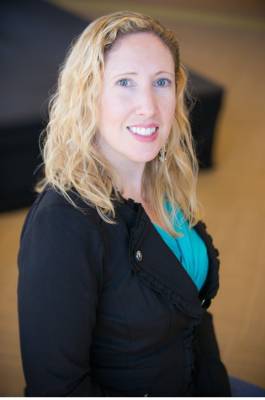
Mary Knebel is a certified Money Breakthrough Coach, a Money Intuitive, and the founder of MoneyPreneurs. She is known as the Moneypreneur, because she helps strong, spiritual businesswomen take control of their money to take control of their lives. Mary is especially known for helping women create that first 10k breakthrough in their business, which quickly turns into 15k and 20k months.
Mary shows women how to transform their {dysfunctional} relationships with money so they can create lives of financial freedom, fun, and fulfillment from anywhere in the world! She is highly intuitive and combines both practical and spiritual tools to quickly get to the heart of what is holding you back, often breaking through life long patterns in a single session.

DR. M L NICHOLS
One of the world’s leading authorities on stress and coping and an expert on post traumatic stress disorder is innovative, insightful, and created The Five Step Stress Coping Model and How to break the Threshold Barrier of Rewiring the Nervous System, meaning, “How to Solve a Problem During the First Session,” and enhance personal success – WIN TIME: these include, Loss, Trauma, Grief, PTSD. Self Sabotage, Performance Anxiety, Military Personal Operational Readiness, Performance Choking, and Brain DEFRAGing. He retired from the US Navy as a Lieutenant Commander and from the California Department of Corrections and Rehabilitation (CDCR). His peers and superiors said, “He is twenty years ahead of his time!” He is currently President of MOAASWRC Military Officer’s Association of America meeting in Murrieta CA.
At Marine Corps Base, Camp Pendleton, California, he was awarded the Navy Achievement Medal for creating the “most innovative and effective correctional religious program in the United States,” which lowered the incident rate by a documented 60 percent. Dr. Nichols graduated number one in his two Navy leadership and management courses, earned a Doctor of Ministry degree from San Francisco Theological Seminary, did post graduate work in Neuro-Linguistic Programming (NLP) and was awarded Master Practitioner and Trainer of NLP and Time Line Therapy ® Certifications. Board Certified. Colleagues and mentors include: Anthony Robbins, Richard Bandler, Arthur Lydiard, Tad James, Emil Couer, Daniel Amen, Lanny Bassham and Eldon Taylor.
His published works include: Communicate: through the Windows of the Mind, the “Four Key Elements of a Successful Institutional Intervention,” Playing In the Zone Made Easy, When Time Doesn’t Heal, and The One Minute Leader: 52 Weeks to Success and posts on “How to DEFRAG Your Brain.” Coming: “5 Step Stress Coping Model.
Dr. Nichols recognizes everyone is a Genius in something. And now with the new applications he is there to help you deal resourcefully with your future. He teaches you how to achieve your goals and dreams, overcome obstacles, and become who you are destined to be via his Stress and Coping process which is the short cut common denominator to pulling together what is already on your inside found in the Genius you. During his training you will activate you vision, create success and become the real you by turning on your success endorphins and neurotransmitters.

TORREY MERCER
Torrey Mercer is more than just a music artist. She is a survivor, an activist, and has been told her and her music are alight in the dark for many. An award-winning recording artist and songwriter from San Diego, Torrey brings bold charisma to the stage through her jazzy-pop vocals and inspiring lyrics. Being trained in pop, jazz, rock, blues, and Broadway in her youth has guided Torrey to become the vocalist and performer she is today. With influences from pop artists such as early Maroon 5, Alessia Cara, and Lady Gaga, Torrey’s performances exude sheer power, layered with thoughtful lyrics on her experiences with bullying, low self esteem, body image, and relationships.
Torrey’s love for music emerged early on in her life, when she was 9 she got involved in musical theater, hoping to find her place in the world. She was bullied and excluded throughout her childhood, and this continued through the end of high school. Feeling like an outcast growing up has made made empathy and compassion for others a defining quality of her music endeavors. Torrey went on her first National Music Tour with the “No Bully Tour” in 2011 at 17, visiting 15 different east coast cities, and 7-8 west coast cities. The same year, she posted a YouTube video defending her idol of the time, Lady Gaga, for her career feats, which landed her 500,000 views on YouTube. Her first single “Looking Glass”, written about her experiences with low self esteem and body image, was released in 2012, winning her the Indie Music Channel Award for “Best Pop Song” in 2013, and was nominated for numerous other awards. “Looking Glass” was featured on the popular YouTube series, “The Most Popular Girls in School” (850,000+ channel subscribers). In 2014, she was named “Best Teen Artist” and “Inspirational Artist of the Year” by the Artists in Music Awards.
In addition to her music feats, Torrey became a motivational speaker and performer at K-12 schools in 2013, where she’s spoken on the subjects of bullying, kindness, and character development. Torrey has impacted over 5,000 students with her program in the state of California, and has spoken at over 15 California distinguished schools. Her individual success led to the founding of her own company, “The Pledge Tour,” an assembly program challenging kids and teenagers to take a “pledge” for self improvement. In 2015, she was awarded the “Peacekeeper of the Year” award for her antibullying efforts by the Encinitas Rotary, becoming the youngest recipient of this award in the rotary’s 50 year history. For more information on The Pledge Tour, and Torrey’s speaking engagements, visit www.ThePledgeTour.com.
Some of her notable performances outside of the No Bully Tour and her assembly work include singing the National Anthem for a pre-season NFL Chargers game, and for the US Tennis Open. She has performed at renown venues such as LA’s Whisky-A-Go-Go, The Jon Lovitz Comedy Club, the San Diego Convention Center, the USS Midway, House of Blues San Diego, House of Blues on Sunset, The Music Box, and Nashville’s Bluebird Cafe, among others.
In early 2016, Torrey independently released her debut EP, Exhale, which reflects on her past, and her personal growth over the last four years. The EP, produced by Tario Holmes (Flo Rida, Melanie Fiona, Big Time Rush, Chris Brown) and co-written with Lena Leon (Christina Grimmie, Coco Jones), was received well by her fans and the press, earning a premiere on PopDust.com, as well as a release party with her largest San Diego draw yet.
Torrey is currently writing new music, and collaborating with other artists and industry professionals to take her next steps. She is grateful for all the support her fans have given her, and can’t wait to see what her career has in store for her next.
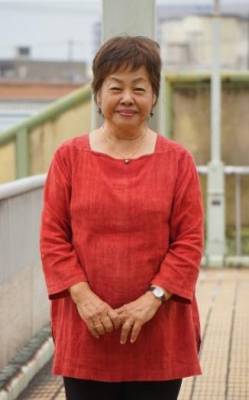
Announcing the August 2017 California Delegation from Okinawa:
“Making Okinawan Voices Heard in America”
Purpose of Visit
We, the delegation from Okinawa, have come to California to promote awareness of the enduring military base problems in Okinawa, Japan. We plan to participate in the APALA convention, and to request assembly members, universities and NGOs, to have a round-table conference, in order to stop the construction of a new U.S. Marine Corps air base at Cape Henoko in Nago City, Okinawa.
The U.S. military built its network of bases on the island by forcibly appropriating villages, homes and farmlands in the wake of the Battle of Okinawa seventy-two years ago. After the war, the U.S. military continued to appropriate Okinawan land to make way for more bases. Even now, thirty-one U.S. bases and military installations occupy private land and residential areas. Therefore, many U.S. base related problems have occurred constantly. Last year, a young twenty 20 year old woman was raped and killed by an ex-marine U.S. civilian employee as she walked home.
The most critical problems facing Okinawans today are as follows:
The cancellation of plans to construct the new Marine Corps air base at Cape Henoko, which involves massive land reclamation of a beautiful coral reef marine ecosystem and the habitat of the critically endangered Okinawa dugong (sea manatee).
To stop flight training and to end the construction of six new helipads in the Yanbaru forest in northern Okinawa. This construction will result in the permanent destruction of forestland said to be comparable to a World Natural Heritage site, as well as the erosion of the quality of life for local residents of Takae Village.
The closure and return of U.S. Marine Corps’ Futenma Air Station. Often referred to as the most dangerous base in the world, continued operations in the densely populated residential areas of Ginowan City violate both US and Japanese safety standards. The deployment of the accident-prone MV-22 Osprey tilt-rotor aircraft to Futenma in 2012 faces strong opposition across Okinawa, particularly considering the recent crash off the Okinawan coast in December of 2016.
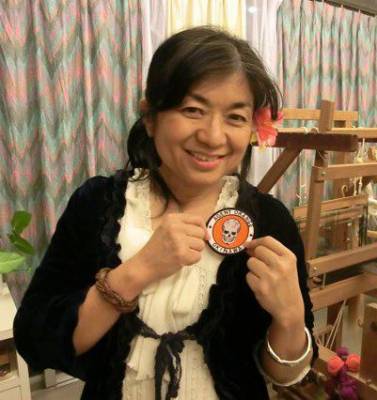
Chie Miyagi is a high school teacher in Okinawa and a member of the Board of Directors of the Okinawa Historical Film Society. She is a representative of Treasures of Ryukyu, a singer-songwriter and author of a picture book 'A Letter from Okinawa' and the Okinawan song of Tida nu fa (Children of the Sun). Her research inclues peace education, Ryukyu independence, and the Student Corps of Okinawa during the Battle of Okinawa.
Twist in Okinawa mass suicides tale
Teacher based book about civilians ordered to kill themselves on own family tragedy
by Mie Sakamoto
HAEBARU, Okinawa Pref. – Chie Miyagi, an English teacher in Okinawa, has published an English-language picture book to teach her students about the mass suicides involving local civilians during the 1945 Battle of Okinawa.
“A Letter from Okinawa” depicts a girl whose parents kill themselves under orders from the Japanese military on Tokashiki, one of the Kerama Islands. The girl lives separately from them on Okinawa’s main island, where she has been drafted into the nurse corps.
The girl, Sachiko, sends a letter to her parents after surviving the war but never receives a reply. She later finds out that her parents died in March 1945 in a mass suicide.
At the end of the story, it is revealed that Sachiko is Miyagi’s mother and that the story is based on her mother’s life.
Earlier this month, in her class at Haebaru High School on Haebaru, Okinawa, Miyagi, 49, read the book to her 35 students and had them draw pictures of war and write a letter to their parents in English, imagining they were Sachiko.
The English teacher also told them to learn as much about the war as they could from the experiences of their grandparents.
“It is hard to imagine the mass suicides, as there is no way I can see them in pictures or other means. It is important to convey what happened in the past,” said Daiki Shiroma, 17, one of the students.
Okinawa was the only inhabited part of Japan where ground fighting took place during World War II, claiming the lives of a quarter of its civilian population. More than 200,000 Japanese and Americans died during the battle.
Many survivors say that as Japan neared the brink of defeat, Japanese soldiers ordered civilians to kill themselves and their loved ones, though some deny the claim.
Although there are no specific figures, about 600 people are said to have died in mass suicides.
The issue drew public attention again last year after the Education, Culture, Sports, Science and Technology Ministry’s school textbook authorization council instructed history textbook publishers to play down the Japanese military’s role in the civilian mass suicides.
Following a major September protest rally in Okinawa, the council approved requests by history textbook publishers to effectively reinstate references to the Japanese military’s role.
But the council did not retract its opinion that the textbook references to the forced mass suicides could cause misunderstanding.
“The number of deaths (in mass suicides) may not be as big as other war dead” from the atomic bombings of Hiroshima and Nagasaki or the Holocaust, Miyagi said. “But it is very cruel that families killed themselves to end their lives. I’d like people to know that the war caused such tragedies.”
Miyagi first knew the truth about the death of her grandparents, Jitsui Makiya and Nae, when she saw a monument with their names engraved on it on Tokashiki Island about 20 years ago.
Until then, she did not exactly know how her grandparents had died because her mother, Sachiko, 80, was reluctant to talk about her wartime experiences, as are many survivors.
“My grandfather served as a school principal and later as village mayor on Tokashiki. He must have loved Tokashiki and wanted to live,” Miyagi said. “My mother must have been very shocked because her parents were telling her to come back to the island, saying it was safe there.”
Her mother said she herself was taught by a Japanese soldier how to die using a grenade by making sure she exploded it next to her heart so she would die instantly.
Her mother said she appreciates the fact that her daughter has written the book.
“If Chie had not written about my parents, no one would know how they ended their lives and they would have died in vain,” her mother said. “But if there had been no war at all, they would not have died in such a way.”
Peter Simpson, 43, an associate professor at Okinawa International University who helped Miyagi write the book, said he was “really moved” when he heard the story of her grandparents in May 2005.
“My knowledge of Okinawa was quite limited” before coming to the prefecture in 1998, Simpson said.
He said his image of the mass suicides was that only a small number of people decided to commit suicide as they believed it was better to die than to be captured by the Americans, or that Japanese soldiers would commit suicide rather than civilians.
“It’s not something that many people know about outside Japan. People know more about the Nanjing Massacre and about the ‘comfort women’ (wartime sex slaves) issue, but most people don’t know about these forced suicides,” Simpson said.
“In Okinawa, the memory of the war, especially among young people, is fading. Even the antiwar kind of culture is under threat. . . . So this story is an important one to tell,” he added.
The idea for the picture book came during Miyagi’s 2002-2004 stay in Northern Ireland and Hungary to study English teaching. In the two countries, she showed students a picture-story show about the mass murders and suicides on Okinawa.
“When I told the story about mass suicides and revealed that Sachiko is my mother, the students were shocked,” Miyagi said. “And they simply felt lost (after knowing that family members had killed each other).”
It is beyond her imagination that people were driven to kill their loved ones, Miyagi said, and she still questions why this happened.
On the other hand, she thinks it is a miracle that she came into the world at all and is still alive now.
“It is miraculous that my mother, who lost her parents and many of her friends, met my father, who also survived the war, and had me,” Miyagi said. “I want everyone to realize that life is the product of a miracle.”
“A Letter from Okinawa,” published last November, has an accompanying Japanese translation and is available for ¥700, including tax. For further information, phone Okinawa Jiji Publishing Co. at (098) 854-1622.
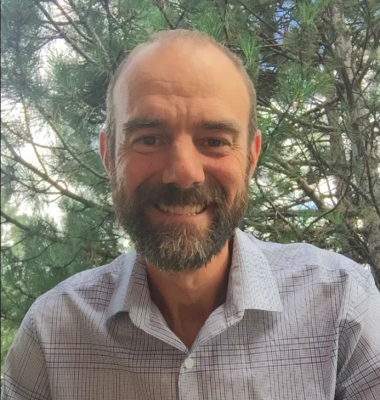
High School Counselor
Coach of The Teen Team
Founder of Get Ready Coaching
Donovan's refusal to settle for less than his true calling moved him from a plan to be a pilot, through the family business, past stock trading to school counseling. The next step in the evolution of his passionate plan is to leverage all that he has learned in 16 years as a school counselor to make the most powerfully profound difference possible as a life coach. He helps create trusted teen teams that groove new healthy routines so teens are fueled for takeoff toward Destination Dream.

Mr. David Migoya is a reporter for The Denver Post newspaper, and a founding member of the Post’s Investigations Team. He has been at The Denver Post since 1999. He has investigated and reported on many issues during his career, including banking, finance, human services, consumer affairs, and business investigations, as well as matters involving the Department of Veterans Affairs and other issues of interest to military veterans and their families. He has also worked at newspapers in New York, St. Louis and Detroit over a 35-year career that began at The Post.
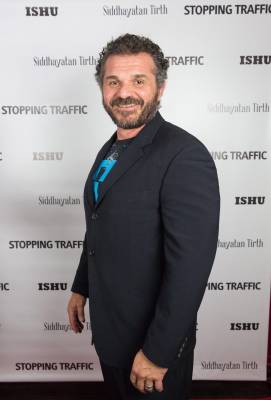
Dr. John A. King is a best-selling author, poet, activist, and trainer that hails from Sydney, Australia. He is a dynamic, passionate, and heartfelt speaker on dealing with Post Traumatic Stress Disorder, abuse recovery, ending human trafficking, and perseverance. His story of being abused and trafficked from the ages of 4-16 isn't one of hopelessness, but of redemption and purpose. John’s story is featured in the multi-award-winning documentary, Stopping Traffic.
From Dr. John King:
- I grew up in Australia; I live in the USA.
- I drive a 1968 Mustang, original paint.
- I have C-PTSD and write about how to get over your crap.
- I also write poetry and posts about Human Trafficking.
- Here are the books I have written, including the poetry one.
- I started Give Them A Voice Foundation to help kids like I was.
- My story is featured in Stopping Traffic movie.
- I run seminars on Trafficking and PTSD.
- I am a PTSD recovery coach and regularly piss people off.
Find a Talk Show
Listen Live
RADIO 'AUDIO' SHOWS
Station #1 audio icon
Station #2 audio icon
T.V. 'VIDEO' SHOWS
Station #1 video icon
Station #2 video icon


Click Here For
More Listening Choices
TO LISTEN ON PHONES
Station #1 Number
1-631-359-9353
Station #2 Number
1-804-220-6484
CALL IN LIVE
TO GET ON THE AIR
- only during live shows -
BBS STATION 1
888-627-6008
Direct 323-744-4831
BBS STATION 2
888-429-5471
Direct 323-744-4841
CUSTOMER SERVICE
- 10:00 am to 10:00 pm CST -
BBS Radio TV
Toll Free: 888-710-8061
Direct Line: 323-744-4828


Listen on iHeart Radio
BBS Radio TV Station 1

BBS Radio TV Station 2
CHECK US OUT ON...