New Realities, May 2, 2026

New Realities with Alan Steinfeld
Beyond the Reality Box, UAP Encounters, Ontological Shock, and the Future of Human Narrative
This panel discussion features Whitley Strieber, Dr. Kimberly Engels, and Jeffrey Kripal exploring the profound "meanings and understandings" behind UAP encounters. The conversation shifts focus from government disclosure to the transformative, physical, and ontological impact on the individuals who experience these phenomena.
The Physical Baseline and the Burden of Testimony
Whitley Strieber emphasizes that the core challenge in understanding UAP encounters is the lack of a recognized "baseline." Despite the public tendency to treat these accounts as jokes or hallucinations, Strieber highlights the undeniable physical trauma and documented anomalies, such as the moving implant in his ear, which he describes as "proof positive" of a physical interaction. Following the publication of his book Communion, Strieber and his wife Anne received approximately 200,000 letters from individuals worldwide. This massive, private archive suggests a "communal work" of experience that intersects with our physical world at a "razor's edge," generating a narrative that humanity has yet to fully articulate.
Resisting "Narrative Flattening"
Dr. Kimberly Engels argues that society suffers from "epistemic injustice" by forcing experiencer testimony into "reality boxes." This "narrative flattening" occurs when we only listen to parts of a story that fit our pre-existing beliefs, such as the Extraterrestrial or Future Human hypotheses, while discarding "inconvenient" details like time distortions or contact with the dead. She proposes a "layered restorative phenomenology" that moves beyond "belief" and into "participation." This approach honors the profound moral and ethical transformations reported by experiencers, who often emerge with a "post-anthropocentric" worldview and a deep sense of interconnectedness with all life.
The Archives of the Impossible and the New Story
Jeffrey Kripal, curator of the "Archives of the Impossible" at Rice University, suggests that we are witnessing the breakdown of old cultural and scientific stories. He posits that UAPs, Near-Death Experiences (NDEs), and DMT-induced states may all exist on the same spectrum of "non-dual signals" that blur the boundaries between mind and matter. Kripal argues that the "impossible" is merely a function of our current models, not reality itself. He advocates for a "middle realm" of thought—one that avoids the reductionism of modern science and the moralizing of traditional religion—to allow for a "revelation of reality" where humanity is no longer the apex or center of the universe.
The panel concludes that humanity is at a "zero point" or a "reset," where our current understanding of consciousness and physicality is no longer sufficient. By embracing "ontological ambiguity" and the "middle realm," we can move past the shock of the impossible and begin to participate in a multi-dimensional reality that demands a more holistic, interconnected story of what it means to be human.
Guest, WHITLEY STRIEBER
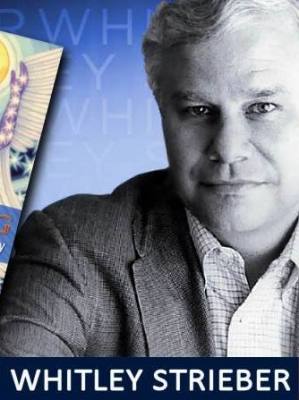
Whitley Strieber is author of more than 40 books, including many novels. Among his non-fiction works are Communion: A True Story, Confirmation: The Hard Evidence of Aliens Among Us, Solving the Communion Enigma: What Is to Come, The Secret School: Preparation for Contact, The Key: A True Encounter, and A New World.
Herein is a surprisingly deep philosophical and spiritual discussion concerning the apprehension and understanding of levels of reality within consciousness and their interaction with the physical world.
Want to go to the edge of the Earth? My guest is Whitley Strieber who offers compelling and startling accounts of his experience meeting non-human intelligence that he calls The Visitors and his ongoing, inspiring story of his desire to understand and form a relationship with them. Strieber's tale is listenable and mind-shattering. Whitley Strieber is widely known for his bestselling account of his own close encounter, Communion: A True Story, and has produced a television special based on Confirmation for NBC. He is also the author of the vampire novels The Hunger, The Last Vampire, and Lilith's Dream, and is the new host of his own radio program, Dreamland, founded by Art and Ramona Bell. His website -- the world's most popular site featuring topics at the edge of science and culture.
New Realities
New Realities has been the leading edge, new Consciousness cable program broadcast from New York for the last 12 years. The series is hosted & produced by Alan Steinfeld. I firmly believe that – ‘A mind stretched to new realities never returns to its original dimension.’ - Alan Steinfeld New Realities is dedicated to exploring evolving human potentials in an evolving world. This series explores the idea of how to become more conscious beings. We present programs that invite the viewer to look at automatic behaviors and take free reign of their body, mind and spirit so that we can hope to inhabit and create a better world.
This program is constantly on the look out for new and different perspectives in achieving a greater and more peaceful reality for the planet. It is about embracing a synthesis of rational understanding with mystical awareness. We must continually be on watch for ways in which we may enlarge our consciousness. We must not attempt to limit our slice of the world, which is given us, but we must somehow learn how to transform it and transfigure it.
[00:00] Speaker 1: The following panel comments on the experiencers' encounters with these UAPs, including here today is Whitley Strieber, Jeffrey Kripal, who's an expert on the field, and Kim Engels, Kimberly Engels, who is studying the phenomena and trying to keep it as broad-based as possible. Enjoy this panel called Meanings and Understandings of the Experience. This is what I'm really excited about, because this is really where the rubber meets the road, not to be too cliché. But this, the experiencer phenomena is the key to this whole thing, yet none of this makes sense, uh, 'cause you're not gonna trust the government, you're not gonna trust theories. You know, great, the nature of reality could be talked about forever, but the nature of experience is something that I think we all need to pay attention to 'cause this is where we intersect with the phenomena. So I'll give everyone about 10 minutes to kind of discuss their perspective and, um, then we'll go into a panel discussion.
[01:10] Speaker 1: And, and what the people who organized this said to me is, "Let's talk about purpose and meaning." Now, I wasn't sure what, what that meant. W- how does meaning and purpose have to do with this? But I thought, you know, Viktor Frankl's Man's Search For Meaning was, it's not w- how we understand something, but how do we respond to the phenomena? That's what, that's what gives meaning to, to something. And one of the heroes of this field is Whitley Strieber. When he was, when he was shocked and traumatized by this phenomena, he, he did something I think very courageous in upstate New York. After being assaulted and, and abused basically, he went back into the woods to meet these beings and confront them on another level. So Whitley, I'm so happy you're here and that your work has made such a difference to experiences around the world. He got 200, or 200,000 letters, him and Anne, that are now housed at Jeffrey Kripal's po- um, Archives of the Impossible at Rice University.
[02:30] Speaker 1: And Whitley, you have been a pioneer in this field and an important player, so how can we approach this to give people an understanding w- what this phenomena really means? What does the experience mean to people? And, and meaning is not understanding, but how do we, how do we respond to something we can't understand? Does that make sense, Whitley?
[02:57] Speaker 2: Well, given the nature of the question, I can only say (laughs) I hope so. (laughs)
[03:03] Speaker 1: (laughs)
[03:04] Speaker 2: The, uh, the problem, the core problem is that we don't have a baseline in, uh, it, uh, in this at all. In other words, there's no, is this a physical experience? Well, you know, I was raped during my experience, and I struggled with that for 20 years, and still have medication that I use occasionally because of the scarring. It was a very severe thing, and it turned into a national or an, even an international joke. And so I've had the experience of having my rape laughed at (laughs) for, for a long time. That changes you a little bit, I think. But I can understand people are scared and that half of them think it's all a bunch of nonsense. And so that, you know, but they, and what this gets back to is this lack of a baseline. Is there a physical experience or not? I think there is.
[04:05] Speaker 2: In fact, I would say I'm sure of it, because not only did that happen to me, that physical experience happened to me, I'm wearing an implant in my left ear, which the video of the attempt to take it out, which is online, and you certainly find it any, on my website, on unknowncountry.com, or anywhere, any number of places, I think it's been on quite a few podcasts, it's proof positive that this is an anomalous object. Because in the video, the doctor sees it leave this spot here and move down into my earlobe, and pulls out. He and my wife see it and describe it on the video. So there can be no question, it's obviously an anomalous object and it's real, and it's physical. But, here's the but, I don't recall it being put in my head by aliens. I recall it being put in my head by two people. I recall this very vividly. They were right there in, in, in my bedroom. They, it wa- th- it was some kind of an operational thing.
[05:11] Speaker 2: The house was invaded by these people, they came right past the alarm system without tripping it, and there was a group of them outside as well. It was a whole big operation, obviously. And they came, they put it in, and they left. Now, fine, so, oh, it's being done by people. Now here's the next but. But, it is totally anomalous. It is, it functions in an anomalous way. It functions very well, in fact. It opens up a slit in my right eye and I can read words passing through the slit. It's not there right now, but it's very often there, especially when I'm writing. So there's something going on there, and it's somewhere...... at a kind of a razor's edge between our world and some other world in which we do participate physically. Now, what about the close encounter phenomenon and all of the narrative, the vast narrative?
[06:22] Speaker 2: When those letters started to come in after we published Communion, and it only took about five or six days before the first letters came in and, you know, an author gets maybe 10 letters when they publish a book. Uh, 20, maybe a big author gets 100. We were getting (laughs) a thousand letters a day in heaps on the living room floor, and I did not know what to do with them. Anne said, I said, "I can't, we can't read them and we can't throw them out," because they, y- you look at one of them had a person's name and address on it and everything, and the detailed expl- and, and very, very, often very private description of things that had happened in their life. I said, "We can't throw them out, and I can't possibly read them all." And she said, "Well, I can." (laughs) And she did. For the next, I think, 15 years, she and the lady she hired, from reading the letter, she found her le- her, her secretary in the letters.
[07:22] Speaker 2: It turned out she was an excellent secretary, she lived right down the street, and she'd had quite a few experiences. Her name was Lori Barnes, uh, and they worked together for all those years. Now the letters are at Rice, some of them. Uh, probably about 20% of them, maybe, at, at Rice, maybe less. But anyway, they're there, a substantial number. Now, here's the thing though. What do they mean? It is such a complicated, enormous body of something. Is it a body of knowledge? Is it the human imagination somehow intersecting with, uh, h- half-believed, uh, uh, stories from other people, and a massive overwhelming generation of essentially a gigantic communal work of fiction? I don't know. We have to find that out. And we can find that out. I'm absolutely convinced of it. There are, uh, the, and the way, I know the way to start. The way to start is with a baseline of what happened physically to these people.
[08:41] Speaker 2: And the interesting thing is the brain, uh, when it, uh, information comes in through the senses, the brain handles that in its executive function area one way. But when it's generated by imagination, it doesn't, doesn't handle it that way. And using a functional MRI scanner and careful interviews, uh, of witnesses, it's not impossible to believe that we could find over time, if we interviewed enough, enough witnesses in this way, uh, breaking down their claimed experiences very carefully, we might be able to find a baseline in physical, in what happened to them physically. Because my assumption is not, I'm not in question about whether or not something physical is there. I am very much certain that there is a physical aspect of it. But what I am in question about is exactly what that is. I remember what happened to me vividly, vividly. I'll never forget it.
[09:54] Speaker 2: I mean, you wake up in a room full of giant insects and they've got, getting ready to intrude on your body medically, you, it's a hard thing to forget. So I, that is rivi- uh, uh, really deep in my mind. And, uh, uh, uh, however, what did I, where did I really wake up? Was it, were these beings what they seemed to be? And this gets back to the last panel. Is this a game or not? And i- if it is a game, then what in the world were they doing? Are they part of the game or are they cheaters moving (laughs) around the, the, the pawns when the other side isn't looking? Or is it something else? Is it something even perhaps that we have not been able to articulate yet? A way of looking at reality and experiencing being that we have not yet been able to put into words at all. I don't know. But I do know this, the events happened, they are physically real, they are very dynamic, and they generate an enormous amount of narrative. We don't know what that narrative means yet, but we can.
[11:23] Speaker 2: I, uh, wait a minute, let me finish. I've got my minute and a half left.
[11:27] Speaker 1: Yeah.
[11:28] Speaker 2: Um, uh, and I'm going to start a foundation very soon. It's all worked out and it's all, it's been approved by one of the states, and we will go to this... We will find out what that baseline is and take this to the next level. Okay, now I'm down to one minute and whatever, whoever was gonna ask me a question-
[11:51] Speaker 1: No, I was-
[11:52] Speaker 2: ... pass.
[11:52] Speaker 1: ... just gonna say, what did you learn by going back into the woods after that trauma? W- why did you do that and what did you learn?
[12:00] Speaker 2: Well, I learned (laughs) the rest of my life. I can't a- answer that in two seconds. Uh, that was my, I, I went back in the woods because...I was more curious than afraid, and more a fool than not. And human beings are here because we do tend to be more curious than afraid, and more fools than not. I was no different from anyone else. Many people wouldn't have gone back in the woods, but I was not one of those people. And what I learned was the beginning of a relationship that has become the largest, most complicated relationship I've ever had in my life with anybody, and I think it is probably the most extensive relationship with NHI that has ever been articulated in writing or anywhere. Uh, and, and it, it objectively articulated in writing. I'm not a believer, uh, at all.
[13:01] Speaker 2: So-
[13:01] Speaker 1: Yeah.
[13:01] Speaker 2: Okay, my 10 minutes are up. I'm watching the clock.
[13:04] Speaker 1: Okay. Thank you.
[13:05] Speaker 2: (laughs)
[13:06] Speaker 1: Stick around-
[13:06] Speaker 2: Sure thing.
[13:07] Speaker 1: ... because we're gonna bring everyone into a discussion, but that was excellent. Uh, next up is Kimberly, then Jeff, and, um, let me just read a little description 'cause I'm not as familiar with you, Kimberly, as I am with Whitley and Geoffrey Kripal. But Dr. Kimberly Engels is an associate professor of philosophy at Molloy University and research director of the John E. Mack Institute, focusing on existentialism, phenomenology, and ethics in relationship to the UAP encounter narrative. She serves as the advisory board for the Society of UAP Studies and is working on a book about experiencers' accounts for... and their ethical and conscious... and their consciousness implications. So, um, thank you, Kimberly. Do you have, uh, something you prepared you wanna share?
[13:56] Speaker 3: Yes. Is this... did this work? Can you see it?
[13:59] Speaker 1: Um, I don't see it right now. Did you add it to the... oh, yeah, I see it now. Go for it.
[14:05] Speaker 3: Okay. All right. So, slide show. So, in my 10 minutes today, I wanna speak a little bit about narrative flattening, um, and this actually will build on what Whitley, uh, just spoke about, and how we can use phenomenology to resist narrative flattening and honor the complexity of experiencer testimony. So, when people talk about UAP disclosure, there is often an imagined future moment when the right authority releases the right information and everything clicks into place. But I think a deeper problem is not that we lack data or information. It's that we have not... that we have often not been listening fully to the information we already have. For decades, people who report encounters with non-human intelligences have been partially witnessed. Their experiences are often filtered, flattened, or forced to fit inside explanations that already exist.
[15:08] Speaker 3: We often ask what these phenomena are, while quietly af- avoiding the harder question of what these experiences ask us to do, how they alter perception, identity, ethics, and the limits of our current ways of knowing, doing, and being. Ultimately, I think we need to move beyond the question of whether or not to believe experiencer testimony and instead ask what testimony prompts or asks from us, how it calls us to participate in a wider multidimensional reality. So, this idea of narrative flattening is the distinction between these two questions that I have here on the screen now, and that is the difference between the question that I think we should ask when we're examining experiencer accounts, like Whitley's and others, of what is sincerely described as appearing in lived experience, right? In physical reality, in the noetic dimensions, in all aspects of the experience. This is the question I think we should be asking.
[16:14] Speaker 3: But I think far too often, we're asking the second question, which is, what do I already know how to see? In other words, how do I take what has been communicated and fit it into the boundaries of the real and the unreal, or the possible and the impossible, that I have already established? Uh, Ingo Swann called these our reality boxes. So, far too often, we hear a particular testimony or story, and we don't listen to all parts of it. We don't witness it fully. So, these are just a few examples of ways that we tend to flatten testimony, okay? Because this doesn't... this comes also from individuals working with different hypotheses about what UAP ultimately are, like, focused on this question of what is it, right? So, when we start with a traditional ET hypothesis, you're gonna bring certain things into focus.
[17:15] Speaker 3: You're gonna focus on the technological capacities, the idea of space travel, how they get here, um, this idea that this is, you know, physically coming from another planet and how that might be possible. And you're going to look at narratives that affirm that idea that these are piloted by extraterrestrials. But then certain things get flattened out when that's what you're looking at testimony... uh, w- when you're looking with the ET hypothesis in mind. The appearance of human figures, that's very common in this testimony. Um, Whitley and his, uh, late wife, Anne, the appearances of the dead that often show up, uh, in these, in these stories. Noetic experiences, right? Uh, expanded states of consciousness, psychical phenomena that accompany them. The time distortions, extended, missing, condensed time. Alternatively, someone might take the hu- future human hypothesis, okay?... and they're gon- then they will focus on the time distortions.
[18:13] Speaker 3: They will focus on the human and humanlike figures that appear, uh, with the idea, uh, that this- these are piloted by human beings from the future. But certain things are still going to get flattened out, right? Uh, the shape-shifting f-figures that appear, the spiritual symbolism, including animals, uh, the beings appearing as owls or deer, the mantid beings that appear, or the figures that are not in any way human-looking, right? Are the furthest from human, uh, or are not humanoid. Or the spiritual and religious valence that is often reported in these experiences, even from individuals who do not come to the experience with any particular religious belief or framework, who had a very secular worldview before they started encountering these phenomena.
[19:01] Speaker 3: Similarly, some people take, you know, imaginal daimonic realm, or this, like, ontological third space hypothesis, which will then focus on the altered states of consciousness or the dome- noetic dimensions, the out-of-body dimensions. They will look at the spiritual symbolism and the spiritual valous- valence, uh, but they may flatten out the corporeal experiences, the aspects of this that are distinctly physical, that do occur in waking state consciousness, in what we understand as consensus physical reality, and where they are confident that they experienced an embodied being. Psychologically reductive, of course, they're going to focus on the subjective experience, what's going on with the individuals in our mental state, uh, but they're gonna flatten out the inner subjective elements, or the experiencer's mental stability, or the patterns that we see across testimony.
[19:49] Speaker 3: So, if you're looking with a lens and you're looking with this question of, "What do I already know how to see?" a lot gets, to use Jeff Kripal's metaphor, a lot gets left off the table of consideration. So, I think that this is actually a form of epistemic injustice, and I'm happy to follow up on this more. Um, but experiencer testimony is often ontologically threatening, meaning it challenges our existing categories for what exists, for what is real. It also introduces ontological ambiguity where it's not clear what something is. We've heard over and over again today that we don't know what this is. And it often demands the possibility of new ontological categories, that we add new items to our ontological inventory of things that could potentially exist.
[20:35] Speaker 3: And when something is ontologically threatening, when it challenges the boundaries, you know, our filters of possibility, in terms of what we think could potentially be real or possible, it's often flattened, dismissed, re-inscribed within familiar categories, and witnesses are not treated as reliable conveyors of their own experience, their meaning-making is not engaged, and the most profound aspects of the experience might be left off the table. So, in my work, um, I think y- you know, what's the solution to this narrative flattening? I, I argue for the use of a th- a th- layered restorative phenomenology that is both descriptive, generative, and interpretive. So descriptive is what most people are familiar with when we talk about phenomenology, this move of bracketing, examining what appears into, into consciousness, in-conscious experience without necessarily assuming its source or origin.
[21:30] Speaker 3: And that, I think, really has to be the starting point when we're examining experiencer narratives. But I also think we need to take it to the generative and the interpretative level. A generative phenomenology examines how experiences generate perceptions of a life world, how they restructure the parameters of subjectivity through we underst- through which we understand what the self is, what otherness is, how we generate new categories and forms of meaning. And at the interpretive level, we also start examining the experiencers' own sense-making process, how they interpret and make sense what of- of what appears, how they integrate it into their understanding of their own, uh, worldview and values. So, these are some phenomenological themes. You know, I've done a lot of work on experiencer narratives. I've looked at Whitley's letters that are in the archives at Rice. I've looked at John Mack's multi-witness study and some of the, uh, letters and transcripts from his work.
[22:29] Speaker 3: I've done interviews, uh, with the experiencers. I've looked at the accounts, uh, on the Reddit forum. Um, these are some of the descriptive themes that emerge. And I know I'm short on time, so I actually wanna move to, um, the more generative and interpretative themes, because this is where I think it gets really interesting. Um, the profound moral and ethical transformations that are often reported by individuals who go through this experience, and this is often what happens over time. So, there's a destabilization of the ego, the identity, the sense of self. The parameters of what's thought of as the self are forcibly dislodged. Multi-dimensional subjectivity emerges that is not limited to being understood through the body or even to the parameters of spatio-temporal reality as we know it. It's a sense of self that is inherently multi-dimensional that, uh, it includes the body, but also, uh, transcends it.
[23:26] Speaker 3: There's this theme of encountering unknown otherness, so new possibilities for meeting otherness without demanding that it assimilate, um, and an expanded post-anthropocentric circle of moral considerability. So, extending moral consideration to the advanced non-human entities, to non-human animals, to plant life. The earth itself kind of enters into the circle of moral and consideration. And experiencers often report a deep-felt sense of interconnectedness with all that is, something that really dissolves the boundary between self and other or subject and object, and changes how they live in the aftermath. So, I'm wrapping this up, I promise. I know I'm almost out of time. Um, but UAP essentially prompt the question, uh, uh, you know, we have to ask, "Who are you," to this unknown other.
[24:15] Speaker 3: And so simultaneously, we're prompted to ask, "Who are we in light of this," right?Uh, experiencers have confronted these questions head-on in their lived experience, moving into fuller witnessing of what they are communicating moves us out of the position of belief and into one of participation. Uh, what comes into view are recurring patterns of transformation, meaning-making, ethical reento- ethical reorientation, and altered relationality that leaves everything on the table without flattening.
[24:45] Speaker 3: Contact experiences-
[24:46] Speaker 4: Right.
[24:46] Speaker 3: ... are ultimately about encountering an unknown other and how we collectively will show up to meet this, leaving our filters of possibility at the door. The question then is not one of what the phenomenon ultimately is, but whether we are willing to become the kind of participants and subjects capable of encountering and exploring it without reduction or premature closure. Thank you very much and I am happy to field any further questions in the Q&A.
[25:14] Speaker 4: Yep. Yep. Yeah. We'll, we'll do a panel. That is excellent because it's so important that we don't reduce this phenomena to something we-
[25:22] Speaker 3: ... phenomena to something we .......................... know.
[25:23] Speaker 4: ... we think we know. It's, it's, it's, it's, it's transactional. It's beyond that. So let me bring Geoffrey Kripal into this and then we'll have a little discussion. I'll just read a little bit here about Geoffrey. Kripal is the American scholar of religion at Rice University and he's known for his work on extreme religious states, mysticism, esotericism, the paranormal, arguing that the impossible phenomena of UFOs, near death experiences, et cetera, are crucial to understanding consciousness and reality, and the future of, of humanity essentially. So, um, Geoffrey, I just have a, a, I, I sent you some question, but the question I really wanna ask you is that, mmm, have to do with sort of what Whitley and Kimberly said, "The impossible does not become acceptable by reducing it to the familiar. It becomes acceptable when the human imagination expands enough to hold it." So what are the means in which we can expand our imaginative capacities to hold this undefined phenomena?
[26:33] Speaker 4: Does that make sense? (laughs) That's just, that's just a little question Or do you want something simpler? Good to see you, Geoffrey. Thanks so much for being here Yeah
[26:42] Speaker 3: And, um...
[26:43] Speaker 4: No, I'll, I'll definitely address your question, Alan. I... 'Cause I think it's kind of the, the elephant in the living room, as it were.
[26:51] Speaker 3: Yeah.
[26:52] Speaker 4: Um, maybe, you know, I like to orbit. I, I like to answer questions by orbiting a planet and then, you know, kind of-
[27:01] Speaker 3: Landing.
[27:01] Speaker 4: Don't really hit the question head-on, um...
[27:04] Speaker 3: That's okay.
[27:05] Speaker 4: Because people are always disappointed (laughs) by my answers. But, but, you know, the orbit, the orbit's good. Um, first of all, let me speak about Whitley and Kim.
[27:16] Speaker 3: Mm-hmm.
[27:18] Speaker 4: Um, I don't think you are an ordinary person, Whitley. Um, (laughs) um, you know, Eric Wargo has this funny phrase, "Preakahogs hooked up to printers." And what he means by that is writers are really, really interesting because they're hooked up to printers. They, they publish a lot of books. And the thing about Whitley, and I'm, I'm addressing Whitley here, is he's written a lot of books about this very thing, this, this very topic. And we now can read... We have the privilege of reading those books and responding to them. And my experience with experiencers is that not everybody is so gifted. Not everybody can write like that. So... And, and this implant, Whitley, that you have in which you, you read these things across the eye, um, again, it's a, it's a form of inspiration for you. It's a form of literary inspiration, and I think this is just so important to keep this in mind. Um, with Kim, you know, this flattening...
[28:25] Speaker 4: One, one of my long, long-held convictions, and, and this is before I got into the abduction phenomena working with experiencers, mostly in the near death experience community, is that the first story they tell me is never the whole story. It's, it's always weirder than that, you know? So they'll, they'll lay out a story and I'm like, "Yeah, that's, that's not the whole story."
[28:52] Speaker 3: (laughs)
[28:52] Speaker 4: And then they'll tell me the story again, and it gets weirder, and then it gets weirder, and then it gets weirder, and it just goes on and on, and it n- never ever makes sense. It never fits in. And by making sense I mean it never fits into our existing categories. So there's something ab- And, and so by weird I don't, I don't mean that in a, um... I think the anomalous is a function of our models. I think it's a function of us.
[29:25] Speaker 4: I don't think it's a function of reality, if, if I can, if I can speak like-
[29:29] Speaker 3: Right. Okay.
[29:30] Speaker 4: I think reality is reality and it's not our boxes. It's not, it's not what we b- we bring to it. And I think the abduction phenomena really s- really speaks to this very powerfully. Now, to get to your question, what I think is happening in the abduction phenomenon is that stories, cultural stories, psychological stories, psychosocial stories are breaking down and something is communicating with us, probably us on some other level, and saying, "Don't, don't believe that story anymore." Or, "Don't, don't tell that story." Um, and so I think we're being called to tell a different story, and I think what we call religion...... uh, or what our ancestors called religion, or what our ancestors called science, or what we call science today. I think these are ways that we, we have understood the world and we frame the world, and science in particular works really well to, to describe this, this physical reality, but it works very poorly to, to describe our experiences.
[30:46] Speaker 4: Um, and so I think we're being called to tell... Alan, to answer your question, I think we're being called to tell a different story, and I think the meaning question really is, the present meanings just don't work. Um, they work for some people, but they don't work for a lot of people. They certainly don't work for the people experiencing these, these anomalous, uh, phenomenon, and I think that's exactly why the anomalous phenomena happen.
[31:11] Speaker 1: Mm. So... yeah.
[31:14] Speaker 4: Go ahead.
[31:14] Speaker 1: Go ahead. No, I was suddenly thinking, so, I mean, we get into it on the panel discussion, what would that new story look like? I mean, it's not formulated yet, but what do you suppose?
[31:23] Speaker 4: Okay, okay. So, that's what we're trying to do at Rice with, with, with the Archives of the Impossible. We're trying to create a kind of a th- we're trying to authorize people's experiences. We're trying to authorize people.
[31:41] Speaker 1: Mm-hmm.
[31:41] Speaker 4: And the idea is that people who have PhDs in various disciplines are really interested in talking about this, and we wanna create a space where they can talk about it, and where they can analyze it, and philosophize about it, and do their anthropology, or do their physics, or do their astronomy, or whatever it is. Now, that is not the full answer. That is not... I'm not suggesting that's adequate, but that's where I find myself in a university, and that's, I think that's a good start to, to this process. Um, people always want to... they want an answer, Alan. They wanna know, is it future humans? Is it extraterrestrials? Is it daimons? You know, what is it? Tell me what it is.
[32:33] Speaker 4: And my response, which I think, I think sometimes is heard as a form of opaqueness-
[32:39] Speaker 1: Mm-hmm.
[32:39] Speaker 4: ... is, "I don't know."
[32:42] Speaker 1: Right.
[32:42] Speaker 4: But let's, let's have a conversation. Let's... and so, you know, one of the things I say a lot is, is that what the... certainly what the Archives of the Impossible is about, it's about a conversation. It's not about a conclusion.
[32:55] Speaker 1: Right.
[32:56] Speaker 4: It's not about a conviction. And I think Whitley and, and Kim would say the same thing. We'd, we're not, we're not here to, to give a final answer to people. We're here to open up a conversation that needs to be had, and it's not happening on a public, kind of broad level. I mean, we get, we get quick answers. "Oh, it's, it's extraterrestrials," or, "Oh, it's nonsense," or, "Oh..." you know, something is always flattened, um-
[33:27] Speaker 1: Right.
[33:27] Speaker 4: ... to use Kim's language, which I think is absolutely spot-on.
[33:31] Speaker 1: Mm-hmm.
[33:32] Speaker 4: Now, the two things I've learned... I mean, I, I, um, I, I, I do want to sort of conclude with the two things I've learned just sort of running these archives and talk about them. When I say Archives of the Impossible, I mean, there are about 20 to 25 of these physical archives. Um, there... so there are multiple collections here that range from everything from Whitley's collection, which is 3,400 letters, by the way, that Anne, um... it's kind of the crème de la crème of, of what Anne read, and we still have Anne's notes on them. And, you know, researchers can come and look at those. Everything from those to remote viewing to physical mediumship to graphic novels to, you know, FATE magazine to... you name it. I mean, we, we have 25 of these collections, and so they're, they're a, a physical archive, and they're designed to increase this conversation.
[34:33] Speaker 1: Mm-hmm.
[34:34] Speaker 4: Um, the two things I have taken away from this, I've, I've been trying to organize and host this for about 10 years now. One is the physicality of the experience. I don't think this is just about people having visions or seeing apparitions. I think there is something they're interacting with physically, and that just blows all of our circuits right there. At least it blows mine. Um, and I also think it's all connected.
[35:07] Speaker 1: Mm-hmm.
[35:08] Speaker 4: Um, I, I really do think that the near-death experience and the abduction experience and the DMT experience, I really do think somehow, we don't know how, they're connected.
[35:23] Speaker 1: Mm-hmm.
[35:23] Speaker 4: Um, and so that's, that's what I'm trying to, to push, you know, in terms of these conferences and in terms of these physical archives. It's very much what Kim said, it's let's keep everything on the table, let's talk about this, let's authorize this, um, and let's not settle for some easy answer. And if you reduce it to your religion, oh, it's all demons-
[35:46] Speaker 1: Mm-hmm.
[35:47] Speaker 4: ... or it's all angels, or if you reduce it to your science, oh, it's all hallucination or it's all physics or it's... uh-uh. Uh-uh.
[35:56] Speaker 1: Yeah.
[35:56] Speaker 4: It doesn't work. It doesn't work.
[35:59] Speaker 1: Mm-mm.
[35:59] Speaker 4: Um, it will explain maybe some of these experiences or cases, but it will not explain all of them.
[36:09] Speaker 1: Right.
[36:09] Speaker 4: And so I'm constantly saying, hold back. Let's, let's think impossibly, and by that I mean let's not use the categories that our religions have given us or that our sciences have given us. Let's think about new, new ways of, of, of doing this.
[36:24] Speaker 1: Right.Well, thank you, Geoff. What, what you're saying reminds me of what I think A- Anne said to Whitley, that the human race is too young to ask-
[36:34] Speaker 2: Yeah.
[36:34] Speaker 1: ... questions or to have answers. What was that, Whitley?
[36:37] Speaker 2: It was, "The human race is too young to have beliefs. What we need are good questions." She was a very much (laughs) of an anti-reductionist, I think.
[36:46] Speaker 1: Well-
[36:46] Speaker 2: There you go, that's it.
[36:48] Speaker 1: So in, uh, what Viktor Frankl says, it's not what... There's no explanation maybe, but it's how do we respond? That's what makes meaning. What... A- a- and, and the meaning is emerges over time, but it's not anything real. It's just the meaning we give it. So but, maybe the big question is how do we respond to the phenomena and then maybe-
[37:14] Speaker 2: Oh.
[37:14] Speaker 1: ... an explanation will come. Does, does that make sense?
[37:18] Speaker 2: I think that Ge- yeah, I think that Geoff's s- summed up that, that whole issue very well when he said, uh, and you've heard him say this many times, uh, "We are being called to tell a different story."
[37:33] Speaker 1: Mm-hmm.
[37:34] Speaker 2: And th- this is, it, this is the key. The stories that we have told ourselves about what the world is don't fit this. Because as Geoff just said, uh, there is near-death experience, uh, con- contact with the dead, uh, DMT experiences and alien abduction are all somehow on the same spectrum. But there's a physical aspect to it. The alien abduction part of it opens a door that's completely unexpected because we... that... th- this is, this is, uh, what happens when you have an alien abduction is, you walk into a DMT experience, and when you come out, you can't sit down.
[38:27] Speaker 2: (laughs)
[38:27] Speaker 1: (laughs)
[38:27] Speaker 2: That's basically the difference. And, um, uh, what in the world is that about? Uh, so th- the, uh, being called, th- the, uh, I wanna just break this state, this sentence down. Like so many things Geoff says, there's an incredible c- compression to his brilliance, and, um, there's a lot in those few words. Being called, we are being called by the experience on a whole lot of different levels. And one of the things that's important is to look back in the past to see when that call began.
[39:10] Speaker 1: Mm-hmm.
[39:10] Speaker 2: Because it began sometime. There was a time when we were not really being called, but then comes into the, in the 19th century, the mid-19th century, suddenly people like, um, uh, Joseph Smith come up with these bizarre ideas of, uh, being visited by angels and a whole huge religion comes up out of it. Uh, the mediumship phenomenon comes into existence. Uh, D- Daniel Douglas Home, Home, uh, starts to, starts to levitate. Something happened. There was plenty of levitation in the Middle Ages as Carlos NMM- MMN Ayres' book, They Flew, indicates. But it wasn't, it wasn't something that mattered in the society, and it didn't seem to speak about us. But these m- anomalous experiences that start speak about us. I've been in Stewart Alexander's, uh, uh, séance that Leslie Kean considers him the best physical medium in the world. I've had the experience of sitting in that séance and watching impossible events unfold in the room all in front of my face.
[40:29] Speaker 2: Uh, in fact, uh, he had the spirit trumpets flying around in the room, and I was sitting there thinking, "This must be a magic trick." Whereupon, the spirit trumpet stopped, came back, arrived in front of my face, came up to my nose, and began rubbing itself up and down on my nose. It literally rubbed my nose in it.
[40:57] Speaker 1: (laughs)
[40:57] Speaker 2: I, I thought to myself, "This is the end. I do not know the story."
[41:02] Speaker 1: (laughs)
[41:03] Speaker 2: I do not know the story. Okay. Now, tell, how do we tell? What do we say? How do we tell a story in a way that's really new? And that, by that I mean, the story enters the conversation not as, uh, not w- with its, uh, with its, both its ambu- ambiguities and its factual basis intact. That's when it begins to be new. When we have, have accepted that there are fa- a factual, there's a factual level, and that we have f- uh, focused the ambiguities in such a way that we have not, as Kimberly warned, reduced them.
[41:47] Speaker 1: Hmm. Hmm. Right.
[41:50] Speaker 2: Then different. Well, well-
[41:52] Speaker 1: Lemme ask Kimberly, if we don't put things in-
[41:55] Speaker 2: Go ahead. No, go ahead. Yeah, yeah, I, I could talk... Listen, you gotta be careful with me. I'll talk all morning.
[41:58] Speaker 1: No. And I, and I love it, Whitley.
[42:00] Speaker 2: (laughs)
[42:00] Speaker 1: I really do love your insights.
[42:02] Speaker 2: Yeah. But I know, we've got Geoff and Kimberly, and I'm very eager to hear because, Kimberly, I have to tell you, that was absolutely fascinating and brilliantly put together. And there's a hell of a lot there, so let's go.
[42:13] Speaker 1: Yeah. So if we don't put it into boxes, Kimberly, if we don't make... I- i- what do we, what do we do with it? It just is amorphous? I mean, how do we deal with this phenomena without, um, flattening it or putting it somewhere?
[42:31] Speaker 3: I mean, it's a difficult question, but the, the, the first step is that you have to get really comfortable with ontological ambiguity, right? With, like, it not necessarily... With, with, with, comfortable with not knowing exactly what it is, right? We can describe how it behaves, and that's how phenomenology is actually really helpful here. Like, describing what appears, describing what it does, describing how it shows up in consciousness, how people interpret it, how it changes them. Like, I think that is all part of it. How it changes not just the people who experience it, but those who study it as well. How it offers opportunities for us to kind of rethink some of these categories. And on one of the slides that I couldn't go too much into, to detail about, you know, I, I was talking about, uh, these experiences, one of the most common phenomenological themes is the blurring of binaries and the liminality, right? Like, the distinction between mind and matter.
[43:32] Speaker 3: It just, it, it gets blurred. The distinction between human and non-human gets blurred. The distinction between self and other, what's coming from me, what's coming from outside of me, like, that gets blurred. Uh, the distinction between the living and the dead, uh, like, that gets, that gets blurred too, uh, between technology and nature, blurred. Uh, so, so all of these categories that we use to kind of make sense and organize a world are, are kind of fundamentally put into question, and we have to get really comfortable with putting them into question. Because once we've put them into question, once we're willing to step back and say, "Okay, the categories that we use to make sense of the world are tentative, they're not absolute, they're not fixed, they're not the final word," then we do have that opportunity for a new story that Geoff was talking about.
[44:24] Speaker 3: And I, I said at my talk in Rice, this is the opportunity for a new story for humanity, but we have to have the courage to write it. And I think the first step to having the courage to write it is that we are willing to sit with this ontological ambiguity, we're willing to sit with th- the dissolving of many of these categories that we've used to make sense of the world. Because when we're willing to sit with their dissolution, what emerges out of it might be something that is more aligned and that is working better.
[44:57] Speaker 3: You know, as Geoff is saying, our current story doesn't work for a lot of people, so what-
[45:00] Speaker 4: Mm-hmm.
[45:00] Speaker 3: ... could emerge out of letting these categories dissolve, uh, you know, what rises from that could be a story that works better for more people and that helps us integrate into, like, this, this multi-dimensional reality in a way that is more holistic, more open-
[45:19] Speaker 4: Mm-hmm.
[45:19] Speaker 3: ... um, and, and just, you know, leads to more better ways of relating. I'll pause there.
[45:25] Speaker 1: Right. No, that's, that's exactly what I was thinking listening to what Whitley was saying and Geoffrey also, that this is physical, and yet maybe we have to redefine what physical is. I mean, I had an experience, I didn't remember, but, uh, where something happened. I had a mark on the back of my... A four-pronged puncture mark that I said, first I said, "It must be a spider bite," and then I happened to run into people who worked with Budd Hopkins, and they said, "No, that's an abduction mark." I said, "What?" It, I mean, that did two things. It freaked me out and pulled me down the rabbit hole, "Oh my God, how could this happen?" I didn't remember it. So there's something to us, Geoff, that is, that we think is physical, and maybe there's another extension of physic- how do you, how do you understand that? I mean, or not even that, how do you ex- deal with that? How, h- what do we do with that? That what we think is physical, it might be more to it than that. Anything, Geoff?
[46:26] Speaker 4: Well, did you ask me that question?
[46:28] Speaker 1: I did ask you that question-
[46:29] Speaker 4: (laughs)
[46:30] Speaker 1: ... because I wanna know what you have to think, what you think of that, because yeah.
[46:33] Speaker 4: No, I, I, I, I'm, I'm with Kim on this one, uh, totally. I mean, I, I think what we mean by... I think by physical we mean real, right? (laughs) we mean, we mean material, we mean we can study it, we can quant- quantify it, we mean, we mean we can do a science with it. And I just think we have to get to a worldview where the material and the mental are not separate, um-
[46:58] Speaker 1: Right.
[46:58] Speaker 4: ... and, you know, so I, I refer to these phenomena as non-dual signals. That's, that's Kim's blurring of the boundaries. I, I think it really does blur the boundaries. On the other hand, you know, going back to Whitley's trumpet experience, I think it's us. I really do. I think we're speaking to us. And so my constant, my constant concern is, for God's sake, listen, because, because it's us speaking. And so the, the, the trumpet, I mean, the rubbing in the nose, that's fantastic. It's also funny, you know? So there's a kind of humor here, there's a kind of reflexivity here, but there's also a use of a h- very human metaphor, rubbing it in the nose, that, th- and it's an E- I'm sure it's an English, uh, an English metaphor as well. Um, so, gosh, something's speaking to us and it's us. So, and it's blurring the boundaries, and it's getting us to this, this worldview in which the physical isn't just physical, it's also, it's also mental or spiritual.
[48:06] Speaker 1: Right. So maybe we need to start fresh, Whitley, and say, you know, what we think is real, what we think is physical, what we think is separate, we need to redefine it all, in a sense. Would you say?
[48:19] Speaker 2: Well, you know, o- one of the things that we need to dis- do is to realize, I think this is all physical. I think that the, that the issue here is that we, we don't have a complete picture of the whole physical world.
[48:36] Speaker 1: Right.
[48:37] Speaker 2: I think that there is, that these things that we see, ghosts and, uh, a- aliens and, uh, all of these things, are part of the physical world. Uh, mental telepathy is quite real, for example, and there's no, there's no connection at all between the people who are telepa- do telepathy. I've now done telepathy quite a few times with people who are, who are practiced in it, who are spellers. And I can, it's easy when I'm with them, but the thing is, I, there's nothing, there's no detectable connection. I don't agree there. I think there is a detectable connection but we haven't discovered it yet, any more than 18, in 1850, uh, we had discovered radio, but it was there. And this is a question of extending the definition of the physical, because ultimately I think that's all there is.
[49:35] Speaker 2: But I think that this, we, we, w- we, w- there is a, a, the spectrum of the physical is much broader than, and much, much more unlimited than it appears from the viewpoint of bodies that are embedded in the stream of time, basically.
[49:55] Speaker 1: Right. Yeah, I get that. And I think time and space are key to this because we don't understand them either and this phenomena seems to be able to manipulate time, manipulate consciousness, may manipulate space and their travel. So, if they are us, or not, we need to sort of grow up and learn what the true nature of consciousness is and this is, this is the problem. It has reset us to zero where we know nothing, and, and, and get rid of all the assumptions, Kimberly, and start fresh. How do we start fresh and, maybe I asked that before, to, to quali- maybe we don't need qualification. May- how do we, where do we begin? That's what I'm saying, from here.
[50:46] Speaker 3: (laughs) Uh, I mean I think that a, a good place to begin i- like I said, is, is listening and centering experience or testimonies phenomenologically, with kind of like this multi-layered phenomenology that is both starting at the descriptive level, uh, you know, suspend, leaving our assumptions at the door, leaving our reality boxes at the door, leaving our boundaries of the real and the unreal, to the extent possible, right? It, and you know, it, it, there's never gonna be a completely interpretation free, but how many of our assumptions can we leave behind and just look at what is described as happening, um, a- and sometimes it's occurring as a physical experience, sometimes, you know, there's aspects of it that don't seem to be physical in the traditional sense, right?
[51:33] Speaker 3: Like the individual may have an experience with their eyes closed that's very noetic or out of body, or something like that, but then, you know, they wake up and they have some kind of physical mark on them, like you said. So it, it straddles those, those boundaries. But how is it experienced, how is it lived, and, uh, you know, what emerges from not just the experience itself but how it changes the individuals in the aftermath, because I think that that is...
[52:01] Speaker 1: Right.
[52:01] Speaker 3: ... an underdeveloped aspect of this phenomenon is how individuals, you know, emerge from these experiences very transformed. So that's why I think we need the other phenomenological components, the generative and interpretive phenomenology. Uh, h- how does this change how they show up and interact in a life world, you know, how they think about themselves, how they think about otherness, how they relate to otherness.
[52:27] Speaker 1: Right.
[52:27] Speaker 3: And how does this co- common phenomenological experience of, you know, these categories breaking down and there being just kind of a sense that everything is one thing. Uh, you know, Whitley said everything is physical. We could also just say everything is consciousness. I, I think those are just kind of two ways of saying the same thing, you know.
[52:47] Speaker 1: Right.
[52:47] Speaker 3: We're describing it a little differently, right? Uh, um, but it, you know, it, it, it's a very deeply felt sense in a lot of these experiences that everything is one. And that actually becomes kind of the, the, that's kind of almost the, the zero point that you're talking about. That's the starting over for many of, uh, of these experiencers. They, they then come out of that with an understanding that at the deepest level everything is one thing.
[53:10] Speaker 1: Right.
[53:10] Speaker 3: And that affects their relationality, their ethics, how they're showing up. Um...
[53:15] Speaker 1: Yeah.
[53:15] Speaker 3: ... and I think we can do that at a collective level too.
[53:18] Speaker 1: Well I think that, yeah, is the reset. But let me read one statement by Geoffrey Kripal here, um, that, I think this is you, Geoffrey. He, he says, "These experiences are not marginal. They're central to human meaning-making, and we need new tools to interpret them." So, their essential, I think is what the rest of the world has missed, that, th- a- a- in order to flatten out reality. Ge- Geoffrey, you have a response to that?
[53:48] Speaker 4: Yeah, I mean, so this, this is my colleague Charlie Stang talking but the, what happened in the West is we ...we flattened or removed the middle realm, you know. And, and in the sciences there is no middle realm. We just say it's all hallucination. But in the Christian theological world we moralized it. "Oh, it's good or evil. It's demons or it's angels." But there's actually this middle realm that is really obvious in other cultures and other religions that is, it is not good or evil, um, and it's filled with living entities. (laughs) . Um, and we just, we have no way of thinking about that other than moralizing it or saying it doesn't exist and that's, that's a problem. And I'm not saying we should go back to the answers or go to the answers of some other culture or some other time period. We need to move forward and, and, you know, use, use our best, our best tools that we have right now.
[54:52] Speaker 1: Well, that is why we're having this discussion because th- there is no going back. We have to move forward. We have to create the fourth mind as, as Whitley says. And so, I think that's why we have to start in a way where we know nothing about consciousness or physicality or experience. I mean, we know something but we have to... What were you gonna say, Geoff?
[55:13] Speaker 4: Yeah. So Alan, what I wanna say here, so, uh, this is gonna sound, um-
[55:18] Speaker 1: No, it's okay. (laughs)
[55:19] Speaker 4: Yeah, it's gonna sound provocative but, but actually, nothing here surprises me.
[55:25] Speaker 1: (laughs)
[55:26] Speaker 4: And, uh, because I'm a historian of religions, uh, and so when people talk about ontological shock, I'm like, "What do you think every religion is?"
[55:35] Speaker 1: (laughs)
[55:36] Speaker 4: It's an ontological shock to the culture that, from which it arose, so-
[55:43] Speaker 1: Right.
[55:44] Speaker 4: ... so all of this is very familiar and even something like disclosure, disclosure is actually a perfect translation of apocalypse, by the way.
[55:54] Speaker 1: (laughs)
[55:54] Speaker 5: Mm-hmm.
[55:55] Speaker 4: That's literally what it means, and it's not just the end of the world, it's the revelation of reality.
[56:01] Speaker 1: Mm-hmm.
[56:02] Speaker 4: And, and so these things have a familiarity to them but they're in a zone that I think we dismiss in the modern world.
[56:13] Speaker 1: Right.
[56:13] Speaker 4: And, and I don't want us to do that. You know, I don't, I don't think we should do that.
[56:17] Speaker 1: Well, from a personal level, Geoff, you had that ontological moment, I think, in India where suddenly...
[56:24] Speaker 4: Right, right. But it was, it wasn't, it wasn't shocking because it had a cultural context.
[56:29] Speaker 1: Oh. But it was shocking to the individual-
[56:33] Speaker 4: Oh, yeah.
[56:34] Speaker 1: ... sense of being.
[56:35] Speaker 4: Sure.
[56:35] Speaker 1: And that's what the world is moving into. You read Whitley Strieber's Communion, it's gonna shake you up in a good way. I mean-
[56:43] Speaker 4: Well, but only, only if you inhabit a particular worldview. (laughs)
[56:47] Speaker 1: Right. (laughs) So that's it. We flatten, we, we don't have to flatten anything into a worldview anymore. Let's start with asking questions, as Ann Strieber would say. And, uh, Whitley, any, um, final comments from you about where we're moving? (laughs)
[57:06] Speaker 5: Well, I think that where we're moving is maybe not a long way off, maybe it's a very long way off. It is an answer to the simple question, why is it like this? And I, by that, I mean the whole vastness that we see around us and the experience within us. Why is it like this and not some other way? Another simple part of it, there is one constant called, uh, uh, the fine structure constant. It's 1/137th. Everything looks and functions the way it does because of that measurement being exactly that long. And unlike all of the other constants, it has no apparent origin. So, if we look past it, are we looking at the mind of God? And therefore, also into our own eyes. That is my final statement.
[58:14] Speaker 1: Well, that's, that's a, that's a good thing. I'm, I'm still in the question though, so Kimberly, what you're accessing from the experiences is something new has happened to people and we need to be with it somehow, right? I mean, what, what's your objective in pursuing that experiencer, um, mission?
[58:40] Speaker 5: Yeah. We absolutely need to be with it and we need to witness it fully. And we need to be willing to make ourselves uncomfortable sometimes in witnessing it fully, because there's just aspects of this that are going to challenge whatever worldview we're bringing to the table. It's, it tends to shatter a lot of our lineations. Some of it's going to be more ontologically shocking for some than others, um, but really, truly leaving it all on the table, as Geoff says, that asks a lot for us, uh, you know. And, and so the question is, you know, how am I being asked to show up? Like, what is being asked of me in order to fully witness experiencer testimony, to truly listen to the extent of these experiences, what they're saying, um, and, and what it means for us collectively as a species?
[59:30] Speaker 5: And can we set our own assumptions, our own theories, our own hypotheses aside long enough to start with that position of full witnessing-
[59:41] Speaker 1: Right.
[59:42] Speaker 5: ... sit in that ambiguity, that ontological ambiguity, and then really see what can emerge from that?
[59:48] Speaker 1: Hmm. Th- excellent. And so Geoff, I think the world is in for a rude awakening because it seems like we're getting closer to the goalpost, even though the goalposts keep moving. Um, if you listen to, um, James Fox's, um, um, national press conference the other day that Whitley was at, you heard the testimony from this doctor who was in the room with these ETs that were physical and deeply spiritual moment of awakening, and he was in tears because he, he, he was living that reality of these other beings. And when we in- meet these other beings, Geoff, how do we deal with it? How do we integrate it? How do we make sense of it? Uh, that's from a non-religious place, from just a place of being, in a sense. I don't know if that's a question but I'm just wanting to know your answer.
[01:00:47] Speaker 4: Well, well again, that's what I think, that's what the conversation is about, is providing a framework or a story or a worldview so when that happens, that isn't...Completely disjunctive. You know, I, uh, I'm not gonna... I'm not saying that there isn't some kind of ontological shock or that the doctor won't be shocked by the physicality of the being. I'm not suggesting that. But it'll be a lot better if we have a worldview in which that encounter makes sense and, and is expected.
[01:01:17] Speaker 1: So, what would that worldview be, uh, you suppose?
[01:01:22] Speaker 4: Well, that there are other beings. We're not-
[01:01:24] Speaker 1: Right.
[01:01:24] Speaker 4: ... the apex. We're not at the center of the universe. We're not, uh, you know, we're not what we thought we were, you know. We, we live in this, this cosmos that is one, as, as the experiencers say. I mean, that, that's a shock right there. Uh, but not a, not a shock in the history of religions. I mean, that-
[01:01:43] Speaker 1: (laughs)
[01:01:43] Speaker 4: That's a really old theme, by the way.
[01:01:45] Speaker 1: Right.
[01:01:45] Speaker 4: It's a really old message, but it's a message that's completely lost or forgotten today.
[01:01:51] Speaker 1: Yeah, and I think that's something to do with, like, consciousness is, is, is, is, um, moldable. It's, it's what we think... When we think of a normal way to think, it, it, it, it, it can... it doesn't have to be that way. The way we think i-... can be modulated by what we encounter. That's... I don't know if that's a conclusion.
[01:02:15] Speaker 4: Yeah.
[01:02:15] Speaker 1: But thank, thank you all, um, for, for your amazing work and really being a part of this movement that asks these questions to question our beliefs. Uh, to, to move beyond what we know and even if it's an experience, don't put into a box. Don't, don't m- belittle your own experience, whatever it is. I mean, acknowledge it, explore it, and, um, I don't know, be proud of it, but stand by it because y- y- we can't argue with experience. So, thank you for tuning into that lo-... I really appreciate it. Thanks, Geoff, Whitley, Kimberly, and talk to you guys soon.
[01:02:59] Speaker 6: Thank you.