
Breaking the Silence, March 8, 2026

Breaking The Silence with Dr Gregory Williams
Establishing Guardrails, Personal Boundaries and Digital Safety for Youth
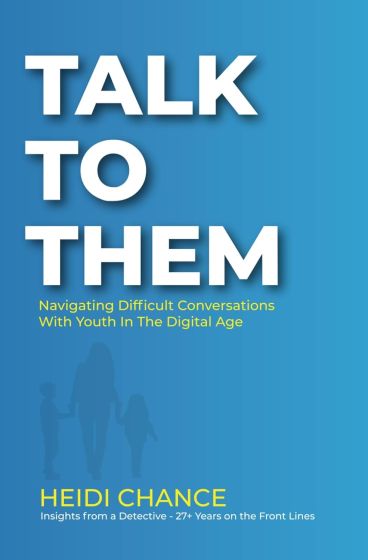
Joined later in the episode by guest, Heidi Chance, author of the book "Talk to Them: Navigating Difficult Conversations with Youth in the Digital Age."
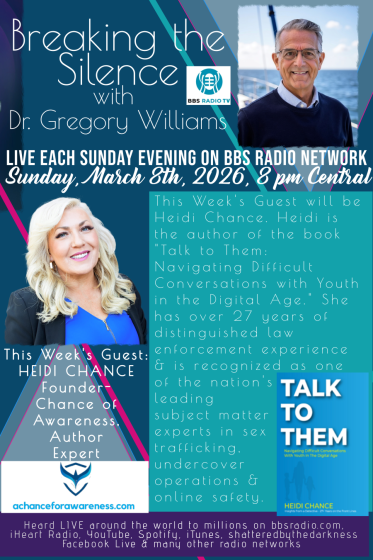
This Week's Guest will be Heidi Chance. Heidi is the author of the book "Talk to Them: Navigating Difficult Conversations with Youth in the Digital Age." She has over 27 years of distinguished law enforcement experience and is recognized as once of the nation's leading subject matter experts in sex trafficking, undercover operations and online safety.
In this episode of Breaking the Silence, Dr. Gregory Williams explores the vital role of personal boundaries as "guardrails" for mental and spiritual health. The program also features veteran detective Heidi Chance, who provides expert insights on protecting children from digital predators and the rising threat of sextortion.
The Philosophy of Personal Guardrails
Dr. Williams introduces the concept of boundaries through the metaphor of "guardrails" on a highway. Just as physical guardrails prevent vehicles from plunging into deep ditches or hitting trees, personal boundaries serve to protect one’s mental stability and "personal space" from being violated by others. He emphasizes that a lack of boundaries often invites a lack of respect, and that establishing these limits is a form of vital self-care rather than an act of selfishness.
Assertiveness and the "Cattle Guard" Response
To maintain these boundaries, Dr. Williams suggests being proactive rather than reactive. He compares the necessary level of assertiveness to an "electric fence" or "cattle guard"—it must have enough "voltage" or clarity to get the other person’s attention and stop the intrusive behavior immediately. This includes stating expectations for the future to ensure the behavior does not repeat. He notes that the only people who typically get upset when you set boundaries are those who benefited from you having none.
Protecting Children in the Digital Age
Guest Heidi Chance, a law enforcement veteran with over 27 years of experience, discusses the evolving dangers children face online. Unlike the "stranger danger" of the past involving physical threats, modern predators use gaming platforms and social media apps like Snapchat to bypass parental supervision. She highlights "sextortion" as a growing epidemic, particularly targeting young boys, where predators solicit nude photos and then extort money under the threat of public exposure.
Parenting and Proactive Conversations
The discussion concludes with the necessity of "self-policing" for children. Chance argues that parents must have difficult conversations about digital safety as early as age 7 or 8, rather than waiting until the teenage years. By establishing personal boundaries and understanding that nothing posted online ever truly disappears, children can recognize "grooming" behaviors—such as requests for personal information or moving conversations to private apps—and report them to their parents immediately.
Setting boundaries is not just a defensive measure but an essential practice for maintaining personal integrity and ensuring the safety of the next generation. Whether it is defining one's own "guardrails" or teaching a child to "self-police" their digital interactions, clear communication and proactive education remain the most effective tools against the chaos of modern life.
Guest, Heidi Chance

Heidi Chance, is a retired law enforcement professional who served 25 years. She is a leader and consultant who equips other law enforcement and other organizations with the tools and awareness to fight for a chance for change in the realm of sex trafficking.
She has testified as an expert witness in court proceedings and is a subject matter expert in the area of sex trafficking. Her specialized sex trafficking training has educated professionals within community groups, child safety departments, probation, jail and corrections staff, other local law enforcement agencies, medical staff, school personnel and officers attending the Phoenix Police Academy. She has also developed an 8 hour advanced detective training course that is featured online for the Arizona Peace Officers Standards and Training Board on the subject of human trafficking.
Heidi is passionate about the POWER OF AWARENESS and making a CHANCE for change for sex trafficking victims and the community understands the growing sex trafficking problem in our communities.
Through her work she has witnessed the POWER OF AWARNESS working in the investigations and trials she has experienced.
Breaking the Silence
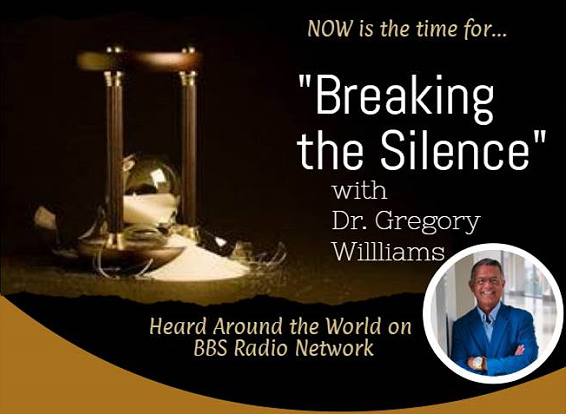

“Breaking the Silence with Dr. Gregory Williams”
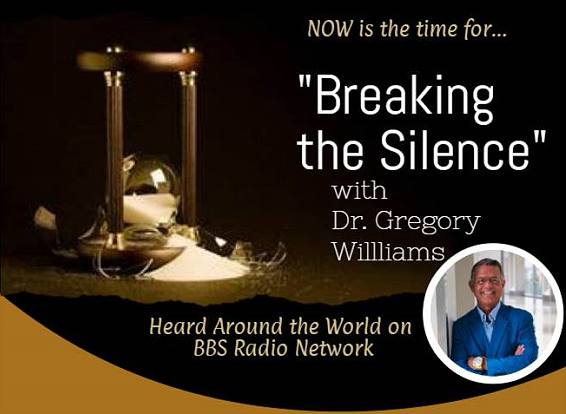
Now is the time for you to step out of your own personal darkness and break the silence that has been hidden and closed up inside of you.
“Breaking the Silence with Dr. Gregory Williams” radio program will offer the listeners a Road Map to Hope each and every week with keys to discover within yourself that ray of light to make your day better and brighter. Dr. Williams will not only discuss his own personal journey of overcoming the darkness of years of horrific sexual child abuse in the hands of his father and his father’s friends, but Dr. Williams will also feature special guests that have their own personal stories of overcoming obstacles in their lives and becoming victors instead of victims.
“Breaking the Silence” will also feature information from the professional and medical field that will dive into the important research involving Adverse Childhood Experiences (ACEs) and how to build Resiliency in yourself and in your children. Along with this information will be special guests from greatest minds in the United States to share their expert research and thoughts on this very important subject that each person needs to be aware of.
Now is the time to invest a few minutes each week with some awesome information to give you steps to HOPE and keys to HAPPINESS and PEACE. NOW is the time to Break YOUR Silence and breakout into a NEW and BETTER YOU! Join us each week beginning August 13, 2019 for “Breaking the Silence with Dr. Gregory Williams”. You won’t want to miss a single program. Heard around the world on the best radio network on the airwaves, BSS Radio Network available on iTunes, Google Play, iHeart Radio, Facebook Radio, Spotify and over 100 other high quality digital radio stations.
[00:11] Speaker 1: Welcome to Breaking the Silence with Dr. Gregory Williams. Dr. Williams is the author of the acclaimed book, Shattered by the Darkness: Putting the Pieces Back Together After Child Abuse. Dr. Williams is on the senior leadership team at Baylor College of Medicine in Houston, Texas. And Dr. Williams travels the United States speaking and training professionals, parents, and victims about the importance of dealing with abuse and personal trauma head-on, and not being afraid to break the silence of your own personal pain. Feel free to call in to tonight's show at 888-627-6008 and speak with Dr. Williams and his guests live on air. And now, your host, Dr. Williams.
[01:26] Speaker 2: Well, good evening and welcome to this, uh, what, first Sunday? No, it's the second Sunday in March but it is a spring forward, uh, Sunday, so I hope you got some rest this afternoon and caught up on your, on your sleep that you missed last night. But welcome to the program tonight from what I truly believe is one of the best and most awesome cities in the entire world, Houston, Texas. And, uh, we have a great guest tonight. I'm kind of, uh, walking on, uh, eggshells tonight because the guest has not showed up. But I told, uh, TJ, Thomas, I just, I said, "Thomas, let's just go ahead and go live." And, um, I always do my opening and will tell you what's happening next week and tell you what's been going on this week, and I'll do a little bit of my normal intros and what I've learned this week. And, um, hopefully, uh, they will be on here in a minute and, um, we will see what happens. But you're, if- hang with us and I appreciate your patience. This is called Live Radio.
[02:26] Speaker 2: I- to be honest with you, I like the pressure. I, I enjoy that, uh, although I look like with this shirt that I'm taking orders at Steak 'n Shake. "May I take your order please?" Uh, anyway, uh, I don't know how well that works on TV. But welcome to the program (laughs) tonight. We're gonna have a great show. Uh, we had great storms. I tell you what, the sun just went down behind me, so the next few weeks, hopefully we'll get to see some awesome sunsets and what Houston, Texas has to offer. You can get involved with the show tonight, and I may be begging for you to get involved with the show tonight by calling in at 888-627-6008 and you can talk right into, uh, the BBS Radio Station and Thomas will patch you right over to me, and hopefully our guest. Uh, or you can get on the, uh, Sh- uh, Shattered by the Darkness Facebook page. I'm looking at it right here. We are live on there too.
[03:20] Speaker 2: And, uh, you can comment through there or you can tap right into this at 832-396-6525 and, uh, looks like I'm getting, uh, some texts right now already. So, uh, welcome to the show. Great to have you tonight. Uh, I always like to, uh, this week I got a opportunity to speak, uh, with a great group of people, and hopefully some of them are, are listening tonight, uh, in Tulsa, Oklahoma, with the, uh, Baptist Children's Home, uh, organization up in O- Oklahoma, and house parents and counselors and staff and, and overseers and organizers and, uh, people that deal with, uh, that clientele in the foster care, uh, system, and, um, the, uh, Children's Home, uh, System, and it was great information. We had some, a great time. I, matter of fact, I went really, really long.
[04:18] Speaker 2: They kept asking questions and we had some feedback, so if anybody's on tonight from Tulsa from the Baptist Children's Home Association, and, uh, that organization, welcome and I appreciate getting the opportunity to meet y'all, um, last week. It was great. Uh, I got a few things happening this week that I'll be speaking at and, uh, looking forward to that. But, uh, it seemed like somebody, uh, last week, I believe it was in the, uh, group that I was speaking to in Tulsa mentioned something about, "What, what's your opinion on setting boundaries and, for yourself and for your children, and what's some of the guidelines, um, that need to be set up to be able to provide that for you?" And, uh, so I was sitting here this afternoon, I just jotted some, uh, things down on my little, uh, uh, Snoopy notepad, and, uh, I just wanna share with you tonight just a few of those thoughts and hopefully by the time I'm done, our guest will have, uh, arrived.
[05:31] Speaker 2: If not, uh, we'll reschedule her for another program later. But, you know, I think one of the most important disciplines that we can do in our life, uh, for ourselves first, and then we'll talk about for parenting, but for ourselves, is to set boundaries, borders. And I like to call them, I believe, uh, what I called them in my second book, uh, When the Dark Clouds Come, I called them, uh, guardrails.... because a guardrail on an interstate is basically there to keep us from going into greater danger. Oh, wait, wait. Think about that for a second. Guardrails are placed on the interstate and on highways, you know, all around the country, all around the world, to prevent a vehicle that is going off the main regular route, to keep them protective from greater danger that could be a large cliff, a hill, a deep ditch, uh, trees, or whatever, and they take an impact.
[06:54] Speaker 2: Matter of fact, they're built now to where they automatically give a little bit to allow the slowdown of a speeding vehicle that runs off the highway or can't control any longer, and they go off into that guardrail. In that own metaphor, and that's the reason I use guardrail as an illustration in my own book, is because we need that in our own life. So many times, people, events, situations will arise in our life that tends to walk into our space and sometimes violate that space, will absolutely cross it without any care, any desire, any concern of what they are doing to you. And I have a few of those things that immediately will throw up a wall like, "Hey, wait. If you're gonna use that language in my presence towards me..." Now, if it's just in my presence, but it's not about me or in my direction, if they're just telling a story and they can't help but using some language, um, I, I let that kind of slide off. But if it's directed towards me, I would go, "Oh, wait. No.
[08:20] Speaker 2: We're not gonna be using that language in my office or in my presence. Please either change the way you're talking or leave, and we'll have this conversation later." That's the way I keep some boundaries in my own life. Um, and sometimes I don't guard that enough with people that'll just walk into my office that I really don't even know and will walk almost around to the back of my desk, and it's like, "Whoa, whoa, whoa, whoa, whoa. Uh, I, I need a little personal space here. Stay on that side, and I'll be here." People, even at events, uh, will maybe sometimes get right up in your space, uh, without permission, and in this world today, uh, I think we need to be protective of that. Uh, a lack of boundaries, uh, invites... And you may wanna write this down. A lack of boundaries in your life invites lack of respect. And I, I wanna show you in these few steps, I'm, I'm gonna talk slow because, uh, the guest hasn't showed up yet, but hopefully we'll hear from them in a minute.
[09:30] Speaker 2: But, um, I have about six or seven of these, of how to set safe boundaries for you and for your kids, and I'll talk about the kids, uh, a little bit later, but these are how to set them safe for you and the importance of that. First of all, the first step, I believe, in setting boundaries is you need to set your limits. Get clear and make it clear about your emotional, your mental, your physical, your spiritual limit. What will you accept and what will you not? What makes you feel uncomfortable? What immediately starts getting your stomach out of kilter and out of sync? And there's certain things that automatically raise my level of anxiety that hasn't been invited into. I haven't offered to say, "Hey, it's all right. Go ahead and spew," but I sometimes let that cross over, and it causes anxiety. You need to set your limits and then name those limits in your mind, and if you have to verbalize them, say, "Wait.
[10:54] Speaker 2: I would appreciate you wouldn't take the name of my Lord and Savior in vain." And if it's that where they say GD just like people say, you know, highway or good morning, it's like, "Whoa, whoa, whoa, wait. I, I, I would appreciate," and when you immediately do that, you automatically set some boundaries there. That is protection of you. So what are yours? If you just had to, to get out a notebook right now, maybe we can do that this next 45 minutes. Um, what are some of the things that you would name? What are some things that you would list out of being, uh, your emotional boundaries, your mental boundaries, physical boundaries? You know, to be honest with you, um, even though it was a terrible time in our entire world when COVID was here, I really kind of enjoyed the physical space limits.... don't get right on my back, uh, in line at Ross, uh, and be right there with the cart, uh, hitting at my ankles. G- give me a little space. I l- I like that.
[12:20] Speaker 2: That, that physical space there, I enjoy. And I think sometimes even on the elevator, there's eight already on there and the door opens and people say, "Oh, I, I, can I cram in two of my ch- three children?" And it's like, "Oh, my, oh, yeah, come on in," and we're all like this. That makes me, w- wait, can I step out? You guys all... I'll, I'll take the next elevator. That makes me really uncomfortable. Uh, what, what's your physical limits? Emotional, mental, and how about your spiritual limits? What will you tolerate? Uh, we live in a world we ha- where supposedly we have to be absolutely, uh, tolerant of everybody else's belief, and I'm not against that. But I won't, um, allow somebody to cram their belief down my throat, uh, indicating that I have to see it their way or no way, or the highway. I, I won't do that. And, uh, I think that's really important for us to be able to, number one, set those limits and kinda try to protect, uh, what's going on in our world.
[13:32] Speaker 2: And then again, in all of that, what makes you feel uncomfortable? What makes you feel ill at ease? And write those down. That'd be a good journal homework, uh, tonight to do. Um, then number two, tune into your own feelings. If you, if it makes you uncomfortable, set a boundary. Tune into that. So when anxiety starts to rise and is in the presence of certain people and they act a certain way or they talk a certain way or they talk a certain vibe... I was at a restaurant with my wife the other night, and, uh, I, I whispered to her across the table, I said, "You know, to be honest with you, I would buy the table behind me's the four people's meal if they would just leave." It was so loud and it, it disturbed the whole evening, uh, the, the whole environment of going out to eat and, and enjoying being time and having, uh, conversations with, with people that you care about because it was rebounding off the walls. Um, tune into your own sensitivity and to your own feelings.
[14:49] Speaker 2: Um, and then in, in reality, uh, you already start preparing yourself for the response of what happens when somebody gets up close and starts to cross over. You can automatically have that prepared in your mind or in your, your boundary list, "Hey, wait, wait, I would appreciate if," without question, uh, without a reason. If somebody gets mad at you for creating a boundary, consider that a good sign that that's at a... that's an awesome sign that the boundary was necessary to begin with. Let me repeat that. If somebody gets mad because you've set a boundary for yourself, consider that a good sign that that boundary was necessary for you to set. It underline, highlights, and circles that's why you set the boundary to begin with. If they get mad because you have values, you have boundaries, you have safeguards.
[16:14] Speaker 2: You would never, I don't think, maybe you would, allow somebody to talk to you like they talk to you on the golf course or like they talk to you at the office or like they talk to you down at Lions Club. You would never allow that to happen with somebody to walk into your room, in your living room in your home, and use that kind of language in front of your children. If they, if they aren't allowed to do that in front of your children in your own home, then don't allow them to violate that boundary where you can control it if it's in your environment. So name your limits and then tune in with your feelings, okay? So fine-tune. Don't always try to satisfy everybody else's feelings. You need to satisfy and self-control your own. This is called self-care to the utmost. And self-care is never selfish. Self-care is always vital to you be able to maintain... Let me talk about m- me. For me to be able to maintain somewhat of mental stability in my world that I can absolutely control.
[17:41] Speaker 2: So set those limits and then tune in to your feelings. Number three, give yourself permission. You have a right. And I hope you're jotting these down. You have a right to set healthy boundaries. Nobody can tell you that you can't set that. You set your own. I think, a- and maybe, maybe it's a man thing, uh, I'm not much of a man, but maybe it's a man thing.... respect, lack of respect, um, takes me from here to here just like that. And it's like, well wait, wait, this is the area that I'm responsible for. Don't be coming in from ano- another department or another, uh, place, another level of authority, another area of your expertise and try to tell me what I've been doing for th- for the last 20, 25 years in this, uh, hospital world. Uh, like, wait, wait, wait, wait, wait. I'll listen to you, but don't demand, okay? I, I think that respectability is something that, uh, men tend to really, uh, gel with, uh, more readily. So give yourself permission.
[19:12] Speaker 2: Uh, you have a right to set healthy boundaries. Number four, make self-care. Make self-care a priority in your life. If you second guess it, if you never make a point to get around to it, it'd be one of those things you never get round to it. Um, you got to get to the point of making it a priority. Take care of this in your life. If it's bothering you, if it's causing you stress, if it's causing you anxiety, if it's causing you, uh, an uneasiness in your stomach, that just when you walk in, uh, the door from work you wanna kick the dog, uh... because of the day that you've had, I, I think it's really, really, really important that you use this and make it a priority, uh, in your life. Um, because in all reality, you teach people how to treat you, uh, by deciding what you will or what you won't accept. So we're training people all the time, teaching them how they can speak to you, they can act around you, they can treat you, they can respect or lack of respect you.
[20:46] Speaker 2: They can have different values than you and have no problem throwing it up in your face. You're training them and you're teaching them, and by not verbalizing it, you're giving them the A-okay that that's fine. That behavior in my presence is just okie-dokie. And I don't think we really, uh, need to sign off on that and give a okay stamp on that. I think we need to be able to, uh, put on our big boy pants and our big girl pants and be able to draw some boundaries and say, "Hey, whoa. Wait. Whoa, what's wrong? We need to talk. Not that, not here, not that way, and not that tone." I think, and I don't, I don't do this very often, and I don't want to get too far off into the ditch on this tonight. I think politics has got to the degree that it has with the bitterness and the hatred and the animosity and the backbiting and the name-calling, and all it took was one person to start it, and then it dominoes. And it never, never... Negativity never decreases.
[22:14] Speaker 2: Negativity is always fueled by positive... No, it's always fueled by more, by more. And those dominoes start falling, and they start falling faster and faster and faster, and that snowball gets more and more and more. And then you're f- sitting there in maybe a business meeting, in a church meeting, in an organization meeting, in some type of, uh, class that you're having or the professor's having, then all of a sudden he's letting people talk out of, uh, you know, not raising your hand, and all of a sudden total chaos is throughout everything, because of just a little bit of allowing the boundaries to be... It, it's happened with our police officers. We, we al- we've allowed somehow the public to, to curse at them, to throw things at them, to call them names, to mock them, to protest against them, and there's, and I'm not knocking anti-protests and, you know, all these protests that are legal and safe and, and, you know, right down, you know, peaceful protests.
[23:28] Speaker 2: I'm not knocking all that. But when you start getting physical violence and then we start seeing, uh, politicians get involved in this and start shoving people, what's gonna be the next step? I think we're seeing what the next step is in our world. And in that, you can absolutely see what's going on in our country and around the world, it's almost like some days this is like a third-world country on our streets in America. And we have a system that is set up, a system that is set up politically to allow differences of opinion, but in respectable manner.Anything above and beyond that, that is unre- you know, disrespectful and at a volume that shouldn't be tolerated, it's gonna be hard to bring that back down to, to, uh, what it used to be. Because it's already the boundaries. Look what happens when you let 'em down. It just totally gets completely out of control. And it can do that not only politically, it can get that way in an office environment.
[24:52] Speaker 2: It can get that way in, in anything in your life. So you have to control what happens in your world, and what you tolerate. If the volume gets loud, wait. No. Not gonna happen. I, I do this, I think every time I marry somebody. Uh, I always have the 10 commandments of marriage. And one of them is you never yell at your spouse unless the house is on fire. And I think that's so important. When it gets up to that level, there needs to be a break. Go to the ... And I use this in counseling all the time. Go to the microwave and set a timer for 10 minutes, and then go to separate corners and say, "Hey, we're gonna revisit this in 10 minutes." Whatever it is. Maybe some of you need to put 60 minutes, some of you need to put 20. You know, whatever it is. But wait, it's up to this level, that's a level where I'm not going to, uh, accept. We can't allow the disrespect to go back and forth with the very most people that you love with all of your heart. And I think that's important.
[26:08] Speaker 2: So, so just say, "Wait, let's bring it back down." And don't chastise them and don't mock them and, and say, "Oh, you've crossed the limit." No. Just say, "I'm gonna set a timer. Let's take a break, okay? Let's go, and we're gonna take a shower, uh, we'll take a walk, just go into different rooms, and let's come back to this in 10, 15 minutes." 'Cause chances are it got that high, and got that loud, and got that stressful over something very little, and then it got out of hand. And most of the time when you're having those arguments, you say, "What, what, what would this argument even start over?" It could have been from a snowball that started at the office with a co-worker. It didn't even involve somebody in your family that you're having the fight with when you got home. So I think it's important to be able to take that break, and, uh, take care of yourself in that. I think we're now, uh, let's go ahead and take ... We've been on just about a half hour.
[27:13] Speaker 2: I'm gonna try to, uh, fly this all the way home to the end of the hour. So let's go ahead and take our commercial break, uh, Thomas. And, uh, on the other side of this, uh, I will tell you who we're gonna have, um, on next week's show, uh, and, uh, who we had tonight and how I'm gonna reschedule her, uh, for a very soon show, and I'll tell you who that is. But if you would, uh, feel free to call in, 888-627-6008, and I would love to have a visitor, uh, comment or question on just what we've been talking about tonight. Okay? Hang with us. We'll be right back in about a minute, minute and a half. Be right back.
[27:53] Speaker 1: (instrumental music) Get ready for a life-changing journey. From the best-selling author of Shattered by the Darkness and When the Dark Clouds Come, Dr. Gregory Williams is back with his highly anticipated third book, Embracing Your Scars: Learning How to Turn Life's Pain Into Life's Power and Purpose. Have you ever wondered how to transform your struggles into strength? Do you want to stop hiding behind the pain, the heartache, and instead learn how to turn those scars into the very fuel that propels you towards greatness? If you do, then this book is for you. In Embracing Your Scars, Dr. Williams shows you how to take the negative experiences of your past and turn them into the very source of your future success. Don't miss out, because your transformation begins here. The book is available soon on Amazon, Barnes & Noble, and wherever great books are sold.
[29:13] Speaker 1: (instrumental music)
[29:22] Speaker 2: Welcome back, and um, I wanna let you know that if you want to call in tonight, it's 888-627-6008, and we had the first half hour, uh, of me just, uh, talking with what was only gonna be five minutes, but one thing that, um, you know, I'm not very good at too many things in life. Um, the one thing I can do is talk. Uh, so I'm gonna try to, uh, get the next three or four points, uh, on this, and we'll end up, uh, going the full hour. But tonight, uh, we had, uh, on the program, and I'm gonna reschedule, something must have happened where she couldn't get on, uh, the program, or she had an emergency in her family or something. We will reschedule her. Uh, Heidi Chance, and she, uh, is a distinguished, over 27 years, uh, law enforcement officer, did undercover work, and she has written an awesome book, uh, Talk To Them!: Navigating Difficult Conversations With Youth in the Digital Age, and we're gonna get her rescheduled to come back on.
[30:25] Speaker 2: I believe somebody that she knows is gonna be on next week, and his name is Keith Crownsil, and he has written book after book, and he's gonna be on next week live. Um, leadership books.... he was a police officer, uh, 12-time author, uh, two-time chief of police, a former DEA agent, uh, city and county, uh, narc undercover, and leadership instructor, uh, an unbelievable guest, and he's l- known, uh, internationally. And he's gonna be on, and then, uh, a few weeks after that, we're gonna have the lady on that is Lila McQuade, that, uh, helped and had a battle, uh, against Pornhub to try to get it off, uh, the internet waves and is successful in several states right now. Uh, matter of fact, in the state of Texas, you type in Pornhub and you're not even allowed to get on in the state of Texas because of our own, uh, legislative laws that have been passed because of some of those porn sites. So we have some se- great guests. Uh, uh, in two weeks we have Suel, that's, that's gonna be on.
[31:34] Speaker 2: She is a internet, uh, chaplain, uh, of a church that is for only, uh, abuse victims. Well, it's not for only, but it's predominantly focused on, uh, online abuse victims, so they can get online and have their own church service with, with Biblical teachings pertaining to, uh, the help that they need, uh, that we all need that have been in that, uh, part of our life that has been hurt and abused by, uh, trafficking and sexual abuse. So the next three or four weeks is gonna be awesome. But we will reschedule, uh, Heidi. Maybe the, the, uh, timeframe threw her off too with the time change. So who, who knows? I don't know what area of the country she's in. But anyway, back to this. We're talking about setting boundaries, and I was, I did this as a preface because we were gonna talk about, uh, when the guest came on, um, about how do we set safe boundaries for our kids, because I do think that's important. I think children need that, but right now, we're talking about personal boundaries.
[32:49] Speaker 2: Uh, 888-627-6008 if you wanna call in. We've talked about number one being name your limits, two, tune into your own feelings, three, give yourself permission, uh, four, make self-care a priority, and jotted down, self-care is not selfish, because I think that is important. Number five, seek support. Get help. And I think this may just be a simple one. You go, "Okay, that's good enough. Thanks. Let's move onto the next one." Seek support, and that could be from somebody at the office. It could be somebody that's in your church. But it needs to be somebody that you trust, a trusted friend. Um, I think in life, we need people that we can ask a question to and then sit back and really know that the answer we're gonna get is what we wanna hear, no, what we need to hear, and be able to have them be honest enough to not worry about whether it's gonna offend us or not, but what we need to hear. How am I doing in that area? And how many people do I trust in my life?
[34:17] Speaker 2: (laughs) Uh, maybe, uh, no one, um, I don't know if there's anybody else that I truly, truly, uh, trust. There may be some. But you need to find somebody that you can trust and say, "Hey, will you just give me your opinion on this? I'm having this issue. Am I being wrong in this boundary that I'm setting? Am I handling this... How would you handle it?" And this is the, the scenario, and try to give that wisdom. So seek, uh, support, uh, even from an expert, um, a counselor. Uh, there's nothing wrong with that. Uh, number six, and this one's tough, especially if you're more timid, if you're more passive, if, uh, a little shy, introvert. Um, you need to be assertive. Uh, you need to communicate clearly, uh, when a boundary is crossed, not let them cross the boundary, defecate on your office desk and then walk out, and then two weeks later you write them an email very methodically in 18 paragraphs and send it, and saying the other day this. No.
[35:43] Speaker 2: When they begin to cross that boundary, you, boom. "Wait. Let, let me be clear. I'm not stuttering. We're not gonna go there. Until this changes, this conversation's over. Until we change the manner in the way it's being presented or the language in the way it's being done, or the finger pointing, or the tapping on your chest, or the face-to-face, uh, Sergeant Carter and Gomer Pyle where they're right up there and you're..." No, wait, wait, wait, wait. Take a step back and take a breath. It's not happening. And in that number six, that assertiveness, you have to be able to have that backbone of, wait, this is what's best for me. If somebody was talking to your spouse in that manner, you would go, "Hey, wait. You're not talking to my wife like that."So rethink it and, and recategorize it and take it to a different level than what it is right now because it's not happening in my presence. You're not using those words in that tone at that volume.
[37:03] Speaker 2: And in that assertiveness, you make it clear that a boundary has been crossed and I'm zapping you. I don't know if you remember, I grew up in, in Southern Illinois in the country, and we had neat things, uh, out in the country that I don't know if most people know, uh, and really have had too much contact with, but, uh, cattle guards. Cattle guards were pipes that were... I don't want to spill this, but pipes about this, this thick, like my diet soda can. And they, they go across, and there's about eight or 10 of them in a row. And you could have cattle and you had the fence all the way up, and where you would drive, uh, the vehicle across these cattle guards, it was like kind of like crossing a railroad track, it would be bumpy. But it was spaced out enough with these, uh, pipes that cattle would take a step and they wouldn't be able to take another step and they couldn't get out on that road.
[38:04] Speaker 2: So you didn't have to have gates, you'd just have cattle guards in this little spot i- in the road. And we also had another thing, not just barbed wire, but electric wire, electric fence. And you'd run that around the outskirts and, you know, you have that on a pig pen or something, and pigs would get up there and hit their head into it, they'd get zapped. It's like, "Whoa, they're, they're... I'm not gonna do that again." Yeah, every now and then they'd, they'd try it. But you'd have that up and they would have enough voltage in there to get their attention. That's what this be assertive mode needs to be in our own world. When it, when they cross that boundary, when they get up to that cattle guard, when they get up to that electric fence and they tap into it, make sure you have enough voltage in the way that you respond to them that it gets their attention. Wait. Wait. Stop. Don't, don't rise to their level. Don't react. Be proactive.
[39:12] Speaker 2: Re- reactive and proactive are completely two different things. Proactive is, hey, wait, it's, this... You're right at my cattle guard, you're right at my guardrail, my electric fence, and I'm gonna stop you. Step back. We need to probably have this conversation tomorrow when things calm down a little bit. Or change the language and we can con- continue the conversation. Whatever the situation is, don't be afraid to be assertive. It is you protecting your own mental, physical, spiritual, emotional boundaries. Somebody comes up to you and touches you, puts their hand on you in a place you don't want it, immediately you can pop it and take it down. Uh, it was just the other day, I saw this on Yahoo or something, somebody was getting their picture taken with, uh, a, a beauty pageant queen or something, and just as soon as he put his arm, uh, around her waist, she immediately, with the other hand, went and pushed it down. And you can see his hand drop.
[40:35] Speaker 2: She didn't make a big scene, she just made it clear, you're not touching me there. We need to put the cattle guards up and that assertiveness that prevents them from hopefully doing it again. Yeah, there are some blowhards, uh, there are some people that may try, but you have to be assertive enough to say I'm gonna stay my ground and I'm going to draw the line in the sand right here and state in that assertiveness, stating your expectations to the future. We're not allowing it today and I'm not gonna allow it tomorrow, so don't even think about it again tomorrow. And automatically you gain respect. Automatically you have taught them, trained them, and coached them on how they can behave in your presence. And there's nothing that you ever need to do to apologize for that.
[41:35] Speaker 2: Even if you're being out of place, if it's the respect of the office, if you're talking to, uh, a politician, a, a governor, if you're talking to the president, if you're talking to, uh, a judge, you ha- you may not respect the person, but you need to have the respect of the office. And in that, there needs to be a way that... I think that's why people in judicial court, when a judge walks in, everybody rises. It's establishing right there a respectability. You don't even know the person, never seen them before in your life, you're just there to pay a, a traffic ticket, but they walk in and everybody stands up. Absolutely. And you even have a guy over there to remind you, "All rise," and you know, everybody's up, because of the position. The office that they obtained and earned, whether they're good at it or not, is demandive of respect. And so are you, so are you, so am I. And in that, we need to keep that respect. So don't be afraid to be assertive....
[42:55] Speaker 2: last thing, and then I'm going to probably be done and we're maybe, uh, going to end the show a little bit early. Uh, but we'll close off with, uh, another thought but... So we have, uh, name your limits, tune into your feelings, give yourself permission, make self-care a priority, seek support, be assertive, and number seven, start small. Begin by setting boundaries that are non-threatening, um, and then as you develop those skills... Let's take something as simple as this. You put, um... You take your lunch to work, okay? You put it in the refrigerator and you walk in and, and Sally has opened up your little lunch tray and took a carrot out of your lunch tray and was snapping the lid down and chewing on the carrot when you walk in and she closes the refrigerator door. Say, "Hey, wait, we're not doing that." And start small. It doesn't have to be something where they're, they're cussing you out or throwing things or all that. Just start small. Say, "Wait, you're not doing that.
[44:18] Speaker 2: Not to my stuff. I don't do that to yours. Now stop it." There needs to be a line drawn. And when you start small, it kind of teaches you not to be, uh, obnoxious and controlling and a dictator, but just being respectful with your property and theirs and all the things that you do and again, in the back of your mind, I'm teaching, I'm training, I'm coaching people how to treat me and there's nothing wrong with that whatsoever. So start small by setting boundaries that are non-threatening and as you develop those skills, you can progress, uh, to setting more challenging boundaries that really need to be in place for you to keep the right attitude that you need to have and the self-care that you need to maintain, um, because in reality, probably the only people in your life who get upset when you set boundaries... Okay, let me restate that. The only people in your life that get upset when you set boundaries are the ones that have probably benefited from you not ever having any.
[45:49] Speaker 2: From you not having any boundaries. And the reason they're upset is you've set 'em now. And so don't apologize for that. You're teaching, you're training. So that's the seventh one. Now, before we close out, as we start to, to land the plane here, um, what about kids? You know, I, I, I trained a lot of teachers, uh, a lot of counselors, and I think one of the things I always talk about to... Well, even when I'm doing the judges now, doing judges around, of the state of Texas, which I love being able to communicate with them and, and, uh, help have open discussions and training with them, that it's important that we train our children. And in that, children need guidelines. They need boundaries. Not only for their own protection, but for their own internal, um, satisfaction and needs. For instance, uh, if I...
[47:03] Speaker 2: If my mom and dad were both alive today and here I am 62 years old and I had the ability to go back and, uh, be with them and spend a week in their house, uh, if they were still living together back in those days, my curfew would be midnight. Nothing ever happens after midnight that's worth doing and you had to be home by midnight no matter what. And if Dad would have ever told me, "Hey son, from now on, ah, it don't matter when you come home. You don't have a curfew. Do what you want. Stay out as long as you want to. Have fun, son." I may go, "Hey, all right, Pop, thank you." But in the back of my mind, I'd be walking to the car wondering, "Hmm. Wonder what's wrong with Dad? Does he not care anymore? Does he not love me?" That guideline there preve- w- presented to me a, a security blanket of love, nurture, protection and sensibility that I needed as a kid, that I needed as a teenager, that we all need right now.
[48:25] Speaker 2: I, I, I think as we're talking and, and, uh, Heidi Chance has written this book that I, I hope she comes on soon because it's all about how to protect kids in the digital age. This tool right here is so powerful that it has the ability, uh, to change, uh, lives for the good and for..... they're not so good. And in that, um, I, I think it's important that we allow children, if we do, to have a cell phone, that you put boundaries on it. I think the day that we say, "Hey, it's your phone," number one, it's not, uh, a right. It's a privilege. And I tell parents around the country right now, if you allow your child to take this cell phone to their bedroom at night, you might as well, on your way to bed, unlock the front door and throw it wide open, because that's exactly what you're doing with letting them d- use this cell phone in their bedroom by themselves.
[49:41] Speaker 2: Because there's people trying to get them, trying to snatch them, to try to talk to them, try to connect with them, and that GPS system is already dinging them where they are at. Uh, I'll tell you what, our guest, and we only ha- we're right up, uh, a few minutes, but I'm gonna bring our guest in even though the show's about over. Uh, Heidi, come on in. Good to see you tonight.
[50:01] Speaker 3: Yes. Can you hear me?
[50:03] Speaker 2: Yeah. Uh-
[50:04] Speaker 3: There we go.
[50:04] Speaker 2: ... I can't hear you very well, but good to see you. I, I'm sorry, we must've got mixed up on the time.
[50:09] Speaker 3: Oh. Did we?
[50:10] Speaker 2: Yeah. We, we've been on for about 51 minutes. Uh...
[50:14] Speaker 3: Oh, okay. Then yes, we did. (laughs)
[50:17] Speaker 2: Yeah. So I, I would love to have you, uh, back on, uh, reschedule to have you back on. But, uh, while we have, I think about ... We got about 10 minutes, CJ? Would that ... That'd be good? Tell us a little bit about, um, the book. And I want everybody to buy the book, and then when we have you back on-
[50:37] Speaker 3: Okay.
[50:37] Speaker 2: ... they've already have read it. But this book, uh, that is called Talk To Them! Navigating Difficult Conversations with Youth in the Digital Age. Tell me what caused you, uh, to write that, and then, uh, well, tell everybody about, uh, what you do. I've already kind of introduced you already to the world, uh, tonight through our listening audience, but I've been blowing wind for the last 50 minutes.
[51:00] Speaker 2: Why-
[51:00] Speaker 3: Well-
[51:00] Speaker 2: ... why'd you write this book?
[51:02] Speaker 3: Yeah. So I wrote it because I kept responding to calls for service as a police officer, a police detective, um, where, you know, the, the issue with whatever happened with the suspect engaging with the child already happened. And I know that prevention conversations are really the way that we can fight this. Um, and it's super important to me, because law enforcement's overwhelmed, especially with the lack of hiring these days, no one wanting to be a police officer. It's not getting any better. And so, we need to have parents start taking action themselves, so then that way, we never really meet under those circumstances in the first place. So it's super important, uh, to have those prevention conversations, so that's why I wrote the book. And then it's very important to me to have it translated in languages.
[51:51] Speaker 3: Uh, so I started with Spanish, and so that's also available under the title Habla Con Ellos, because I feel like it's a vulnerability for a parent, uh, who may not speak English very well to not realize what's happening when their child's on these devices or on games. And so I want any parent of any language to be informed. And so that's, that's why I wrote the book.
[52:16] Speaker 2: Well, it's, it's a great book, I've read it. Um, in the few minutes that we have, uh, before we have to get off the air, um, when I was talking about the cell phone, taking the cell phones to the bedroom, re- letting kids have those at a young age and then sticking it underneath their pillow and every time it vibrates they're on it, how, w- what kind of danger does that present to somebody, uh, in middle of the country in a rural area that really don't understand what kind of predators are out there? You have over 27 years of doing this and undercover work and human trafficking work, and you're one of the experts in the entire world. What, what's some of the dangers out there that, that they're out there doing and wanting to get from our children?
[53:06] Speaker 3: Yeah. I think that, um, when we're talking about, uh, access to our kids, um, we grew up with stranger danger. We grew up with the white van. We grew up with, uh, don't talk to strangers, don't let them offer you anything. Those are in-person contacts, and I think that it's super important that people realize that we're not talking about in-person contacts as much anymore. We're talking about, uh, predators, traffickers, sex buyers, any of these people with bad intentions wanting to talk to and converse with kids, having access to them through the games and the phones and the internet. And so very important that people realize that's where this happens now, and that we really need to take steps to monitor our children's activities on these, uh, platforms.
[53:55] Speaker 3: Um, restrict access of bad guys to them, which includes, uh, making sure they don't have an open-to-the-public profile, making sure that we are, um, in eye's view of everything that they're doing on these platforms, so then that way, we can help protect them. Because the bad ideas that come from conversations with strangers extend to initial conversations where they're trying to test their limits, test their boundaries, say inappropriate things to them, to keeping secrets, to deleting things. And all of that graduates to the unfortunate circumstances where kids go to meet this person in, in real life, and then they disappear with them, and that's where we are really trying to avoid all of that from happening.
[54:43] Speaker 2: What's some, uh, uh, detective that, or one of the, some of the biggest myths that would probably shock 90% of our listening audience tonight of saying, "Hey, wait, have you ever heard of this app, of this site, of this?" What would be a few of those things that say most people don't know it, but this is where they are really, really, really gaining ground, and they're coming in from the, to blindside us as the parents? What would some of those things be, those myths that we don't believe?
[55:12] Speaker 3: Yeah, I, um, I especially am concerned with apps like Snapchat where the conversation can disappear. And a lot of times when I'm conversing with suspects as a female undercover posing as a child online or on a platform, these individuals are trying to trip me or move me from whatever platform we were on to a platform they think is safe. They think that they can't get caught on, they think that stuff disappears. Um, and it doesn't disappear, okay? Law enforcement can get it if we act quickly, um, but that is the whole intent with that. And, you know, there's other purposes that, um, you know, some of these apps are made in that they are targeted towards children, like there's actual, uh, what seems like a innocent app, but it's, it's a meeting strangers type of app.
[56:04] Speaker 3: Those are very concerning as well, um, and then there's lots of apps out there where, um, you know, parents need to realize that they only work with location services on, which means these people who are engaging with your child as a stranger can get a general idea of where your house is.
[56:24] Speaker 2: Well, what's a couple of the most famous of those, uh, location, um...
[56:30] Speaker 3: Um...
[56:32] Speaker 2: ... on, on to-toggle switches that they require to be on?
[56:36] Speaker 3: Yeah, I mean, there's, there's many, um, I wanna say, is it MocoSpace? There's, there's several, um, and, and it's crazy that these apps are being created with that purpose, um, and, and what it is, is meeting people and meeting people in your area, so under the premise of it's a dating app, but kids shouldn't even have access to this anyways. So that is the whole purpose of, uh, the location services or location sharing is because of the whole dating aspect where they swipe right or swipe left and meet people and match with them, um, so that's, that's that. Now, as far as advice on how to check these apps, um, if you've ever heard of Bark Technologies or Gabb, G-A-B-B, GABB Wireless, both of those companies do the homework for parents and they have blog articles that they come out with all the time about any new app out there and how dangerous it is, how easy it is for a predator to create a profile and act like a-another peer, like another 12-year-old, and engage with your kid.
[57:38] Speaker 3: So, if your child's coming up to you or you discover an app that's been downloaded to the phone and you don't know what it is, those are the two places I was ch- I would check because you can't... You can Google that app. The app is not gonna tell you they're dangerous. Bark and Gabb will tell you, "This app is dangerous."
[57:56] Speaker 2: Yeah. Uh, with the, um, with the popularity, uh, and the, the billions of dollars that are being raised and made on trafficking, I was trafficked when I was a child, and th- the money that was made in that, is sextortion becoming as big or maybe bigger eventually? Do you see sextortion just becoming a snowball that's gonna be totally out of control if we don't get an eye on it?
[58:28] Speaker 3: Yeah. Sextortion is extremely concerning because you have people in other countries that have an intent to... And they're targeting boys more often than girls for this, but they are targeting American children, trying to, um, solicit a nude photo from them and then they threaten them and extort money out of them and they might say to a 12-year-old boy, "If you don't pay me $5,000 by tomorrow, I'm gonna post this at your school. You told me where you go to school, so they're gonna find out." And you have kids that are committing suicide over these images, so that's very important.
[59:04] Speaker 2: How do you put on your Style Pass? Do they pick up the, the, the kids and the, the young boys on this, like, in the game chatrooms and then say, "Hey, let's go offline so we can talk," and then they start pretending to be a 14-year-old girl talking to a 12-year-old boy and... is that how they, and come to find out they're working in Nigeria, two men just trying to sextort, uh, money from a teenager?
[59:35] Speaker 3: Yeah, I mean, uh, and, and that's, you know, what makes law enforcement, um, reactive in this is we are, uh... all of these things already have happened and so it's best (laughs) that's why I have it in the book as well, uh, for parents to have the conversation with their children that nothing you post online ever really goes away. Even though the National Center for Missing Exploited Children-
[59:56] Speaker 2: Wow.
[59:56] Speaker 3: ... Has the Take It Down program, they can help parents try and get images taken down, but if it's been screenshot by another cellphone, it can be reshared, reuploaded, all of the things. So it's very important to have the conversations in advance of any of this happening so that kids know the baseline rules of, "If I post an inappropriate image, it is out there forever and, and even law enforcement can't get it back." So, um, that's the bottom line.
[01:00:23] Speaker 2: With the book, um, one thing that I enjoyed so much about the book was it wasn't just giving the situation, it was giving parents, uh, a game plan how to move forward with your child. Do you have a couple tips with that right now, uh, in our last minute or two of the show that, hey, parents, if you have a teenager, first of all, get the book, uh, but two, you need to start having conversations about this, and how do you go about having those conversations that's really awkward?
[01:00:56] Speaker 3: Yeah. So I modeled it after being a forensic interviewer and having conversations with lots of victims, mostly children, who we've rescued that are sitting across the table from me that really don't wanna talk to me right now. They're in love with their pimp, they are scared that something's gonna happen to them, they're scared about what's gonna happen next, all of those things are going through in their mind and, you know, getting to what had been going on with them is a skill that I tried to put in the book, a strategy of having, you know, these difficult conversations to get to that point where we get to the truth, where we get to what happened. Um, my main purpose though is also to let parents know...... you think teenager is the appropriate time to have these conversations. Uh, the national average age of entry into sex trafficking right now is 13 years old, the age of entry, and when I first started investigating this crime, I was 15. So it's getting worse, not better.
[01:01:53] Speaker 3: We've recently rescued a couple of 11 and 12-year-olds out there. And so I'm imploring parents to have this conversation at an age earlier than you would think, and that's where I come in with the book and giving examples of, you know, conversations you may have had as a parent with another parent, or something you saw on social media so it doesn't seem like it's you being, um, you know, judge-y or confronting them about anything. It's ideas on how to come up with, how to broach this topic without it being something they did equals the conversation we have to have now. So, um, very important to have it as early as eight, seven, eight years old now, especially if they're gonna have access to the phone or the games on the computer or any apps or the internet. And, you know, we can restrict them as parents, you know, with the devices that we provide them, but they're gonna get access to this stuff anyway, at school, at a friend's house. They're away from us eight hours, nine hours a day.
[01:02:52] Speaker 3: It's best to just prepare them in advance.
[01:02:55] Speaker 2: Yeah. How, how important, um ... I, I've been, I've been talking, uh, the whole hour on setting boundaries. How important is it for parents to establish with their kids, "Hey, hey son, hey daughter, you need to set your own personal boundaries, uh, on your body, on the way people talk to you, on what you will, uh, not allow to go out, come in"? How important is those boundaries, uh, for safety with our children today?
[01:03:24] Speaker 3: Yeah. Um, the boundaries are incredibly critical, especially when you have these conversations and you've told them, "This is what's gonna happen," not if, but, "This is going to happen." So then that way, when it is happening, in that moment of somebody asking personal information about them or wanting them to trip to Snapchat or wanting to know their name or what part of town they live in or where their parents work, all these personal identifying questions, when that starts happening, they can recognize that happen. And then they can take action, recognizing that, "I don't wanna continue talking to this person. This is what my mom warned me about." And then they come tell their parent about it, and that's what's, what I call self-policing themselves. Uh, and that's what's really important and I think magical about informing them in advance.
[01:04:16] Speaker 2: Yeah, fantastic. Tell you what, Heidi.
[01:04:18] Speaker 3: Yeah.
[01:04:18] Speaker 2: Uh, we gotta go, but if somebody wants to get in touch with you, they wanna get this book, is Amazon the best way, uh, to get the book? Or would you prefer them to get that right off your website?
[01:04:28] Speaker 3: I mean, Amazon has both versions. I'm working on getting the audiobooks uploaded. I did have someone translate it in Spanish audibly for me, um, and then, uh, really, it's, it's, um, you know, in ebook form and paperback and soon to be audio, so it's pretty accessible. Um-
[01:04:47] Speaker 2: Yeah, the ebook was excellent. I-
[01:04:48] Speaker 3: Yeah.
[01:04:48] Speaker 2: That's how I got it and I got it immediately.
[01:04:51] Speaker 3: Good.
[01:04:51] Speaker 2: And when I, when I, uh, when you graciously, uh, offered to be on the program, I immediately read it and it's like, "Wow, this is good. Really, really good." Everybody oughta get to this, uh, book, Talk to Them: Navigating Difficult Conversations with Youth in the Digital Age by Heidi Chance. Heidi, I'd love to have you on to where we have the whole hour. Can we, uh-
[01:05:13] Speaker 3: Yeah.
[01:05:13] Speaker 2: ... reschedule in the next few weeks?
[01:05:15] Speaker 3: Absolutely. I'm sorry the spring change got me.
[01:05:16] Speaker 2: And I'm sorry for the miscommunication. Well, we, this was a-
[01:05:19] Speaker 3: No, it's ready.
[01:05:19] Speaker 2: ... a spring forward. Did you spring forward where you were at today?
[01:05:23] Speaker 3: Is that what it was? The time change?
[01:05:25] Speaker 2: Yeah.
[01:05:25] Speaker 3: 'Cause I, I thought we were only an hour difference, and apparently we're two now.
[01:05:29] Speaker 2: Yeah. It's now-
[01:05:30] Speaker 3: Oh.
[01:05:30] Speaker 2: ... 9:00, uh, here in Texas.
[01:05:32] Speaker 3: Ah. Gotcha. Okay. That's-
[01:05:34] Speaker 2: Okay.
[01:05:34] Speaker 3: ... what happened.
[01:05:34] Speaker 2: Love to do it. Thank you for being with us for this short period, but we will get you-
[01:05:37] Speaker 3: Yeah.
[01:05:38] Speaker 2: ... rescheduled, uh-
[01:05:39] Speaker 3: Absolutely.
[01:05:39] Speaker 2: ... to get a full hour. But Heidi Chance, Talk to Them: Navigating Difficult Conversations with Youth in the Digital Age. You will not be disappointed with the book. It's worth every penny of it. Thank you, Heidi, so much, and we'll have you-
[01:05:54] Speaker 3: You're welcome.
[01:05:54] Speaker 2: ... back on soon.
[01:05:55] Speaker 3: Thank you.
[01:05:56] Speaker 2: Okay. Good night now. Like we do each and every week, I appreciate y'all hanging with me and, uh, listening to me, uh, blow wind, but I think it was about good things, about, uh, uh, creating boundaries for you and your kids. But we will, uh, reschedule, uh, Detective Chance on the program soon. God bless you. As we do each and every week, uh, no matter what you're going through, no matter what you're gonna face tomorrow morning, there's always hope. Never give up on the hope. God bless you. Have an awesome week and we'll see you next week with, our guest will be Keith Groundsel, and you will not wanna miss Keith. Next week, 8:00, live from Houston, Texas. Good night. God bless.
[01:06:40] Speaker 1: (instrumental music) Thank you for listening to Breaking the Silence with Dr. Gregory Williams. To contact Dr. Williams, dial 832-396-6525 or email him at shatteredbythedarkness@gmail.com. And don't forget to join us each Sunday night at 8:00 PM central time, 6:00 PM Pacific, on BBS Radio Station 1 for the next episode of Breaking the Silence.