
The Laughing Heart, April 26, 2026
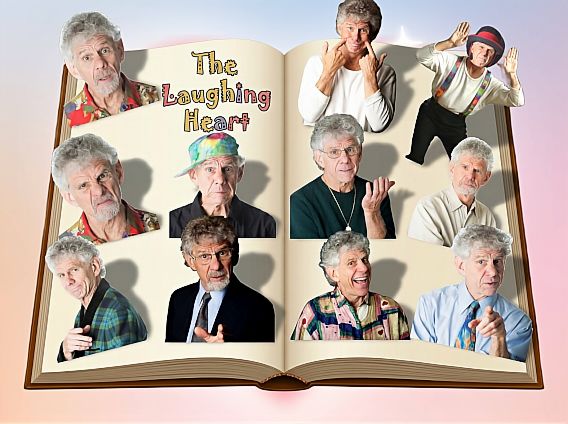

The Laughing Heart with Errol Strider
The Art of a Laughing Heart, Navigating 50 Years of Partnership and Marriage
In this episode of The Laughing Heart, Errol Strider and his partner Rochelle reflect on their 51-year journey together. They explore how humor, spiritual "willingness," and the release of past images serve as the foundation for a lasting and joyful relationship.
Errol and Rochelle emphasize that laughter has been a constant in their five-decade marriage, even during periods of "evolving together" that weren't always easy. They share that correcting each other is a common activity in their relationship, but they have learned to take their anger and expectations lightly. By looking back at past conflicts with humor, they transform potential friction into a shared joke, noting that growing older together allows for a unique retrospective fun.
A central theme of their discussion is the poem "I Don't Want to Change You," which the couple used to renew their vows on Mount Tamalpais. They discuss the "delusion" many people bring into relationships—the belief that they can change their partner to fit a specific image. Rochelle, who has officiated many weddings, observes that relationships often suffer when partners try to "foist" change upon one another. Instead, they advocate for releasing images from the past and accepting the partner as they exist in the present moment.
The couple also shares lighthearted anecdotes about their daily life in a clothing-optional community and their differing personality traits. While Rochelle values order and "decorating herself with fabric," Errol admits to being messy and frequently losing items like his phone. They treat these differences as opportunities for playfulness—such as Errol "finding" his phone after Rochelle calls it—rather than sources of resentment. They suggest that taking oneself too seriously is a major hurdle, recommending tools like using "silly voices" or puppets to express grievances, which makes the ego "too slippery" to hold onto pride.
To maintain a healthy connection, Errol and Rochelle introduce "The Four Willingnesses." These principles encourage partners to be honest, express needs without expecting mind-reading, and let go of the need to be "right." Rochelle notes that maturing has made it easier to abandon rigid positions that previously caused pain. They conclude by emphasizing that taking responsibility for one's own feelings—rather than blaming a partner for making them angry—is the key to retaining personal power and achieving emotional catharsis.
The episode serves as a testament to the power of humor and radical acceptance in long-term partnership. By practicing the "Four Willingnesses" and choosing to laugh at the "ridiculous" nature of the human condition, Errol and Rochelle demonstrate that love is not about changing the other, but about expanding one's own soul to allow another inside.
The Laughing Heart
Be kind - Support this WONDERFUL show
- and laugh a lot -
$5.99/mo or $9.99/mo
Click HERE
SUBSCRIBE TO TALK SHOW
The Laughing Heart--a podcast
Humor, story, and spoken word for insight, inspiration, and connection
Hosted by Errol Strider, poet, performer, and non-prophet.
[00:00] Speaker 1: (jazzy music plays) Welcome to The Laughing Heart. This is Errol Strider and I hope you have a laughing heart today. I'm always happy to share with you, but today we've got a special treat. My partner, Rochelle, has agreed to join us as we explore some of the things that makes, well, living together, especially for 50 years, funny.
[00:41] Speaker 2: Over 50 years.
[00:42] Speaker 1: Well, I'm corrected, which is one of the funny things about our relationship.
[00:47] Speaker 2: (laughs)
[00:47] Speaker 1: And (laughs) I don't know about your relationship, but correcting each other seems to be a fairly common activity.
[00:55] Speaker 2: Especially when I'm right. (laughs) ... the fact that our marriage has had laughter in it for all those 51 years.
[01:04] Speaker 1: But not without some effort. (laughs)
[01:07] Speaker 2: No, we've laughed. We've really laughed, except for the few times when I cried.
[01:12] Speaker 1: (laughs)
[01:14] Speaker 2: (laughs)
[01:14] Speaker 1: We've even learned how to take our, I wanna say, anger/expectations funny, especially at this point. There were times in our evolving together in which, well, it wasn't all so funny. (laughs)
[01:29] Speaker 2: No. But in retrospect, it became funny, and that's the fun- the funny thing about growing older together. (laughs)
[01:37] Speaker 1: We'd like to get started, jump right in here with a poem that I wrote that we've tried to live up to. A- as a matter of fact, didn't you use this poem... Rochelle, uh, facilitated a lot of weddings. Didn't you use the... this poem, uh-
[01:54] Speaker 2: I did. I did.
[01:56] Speaker 1: ... as part of their vows?
[01:59] Speaker 2: Oh, yes. But with their permission, of course.
[02:03] Speaker 1: Exactly. That's something that would good for couples to learn, not that we've ever really done it, but to lead off with, "With your permission, I would like to castigate you for being (laughs) for messing up."
[02:17] Speaker 2: (laughs)
[02:17] Speaker 1: "But only with your permission."
[02:19] Speaker 2: Oh, I think I'll use that from now on. "Errol, with your permission, can I put your socks someplace-"
[02:25] Speaker 1: (laughs)
[02:26] Speaker 2: "... other than the floor?" (laughs)
[02:27] Speaker 1: I think this is great. Here, right on this show, we've discovered a new-
[02:32] Speaker 2: (laughs)
[02:32] Speaker 1: ... uh, way of approaching our lives, uh, to bring more humor into it.
[02:35] Speaker 2: (laughs)
[02:36] Speaker 1: So you were there in the creative moment.
[02:40] Speaker 2: Wow.
[02:40] Speaker 1: Okay. Here's the piece. Uh, you wanna-
[02:42] Speaker 2: It's called-
[02:42] Speaker 1: ... alternate with it like we do?
[02:44] Speaker 2: You wanna call it?
[02:46] Speaker 1: Uh, yes. This is called I Don't Want to Change You.
[02:49] Speaker 2: And we used it when we, um, renewed our vows after 20 years on Mount Tamalpais.
[02:56] Speaker 1: Because our vows were kinda rusty and dated and kinda getting flimsy and now he's-
[03:02] Speaker 2: No, we forgot them. (laughs)
[03:03] Speaker 1: We for- (laughs)
[03:06] Speaker 2: (laughs)
[03:06] Speaker 1: Oh, right. That was our vows. (laughs)
[03:11] Speaker 2: (laughs)
[03:11] Speaker 1: (laughs)
[03:11] Speaker 2: (laughs)
[03:11] Speaker 1: Okay. Well, anyway, here's how the poem goes. I don't want to change you or make you into something else.
[03:20] Speaker 2: My image of what you should be.
[03:23] Speaker 1: Only images from the past.
[03:26] Speaker 2: I just want to be willing to be with you as you are in the now.
[03:32] Speaker 1: You can probably do without my sense of what you should be.
[03:36] Speaker 2: For in the perfect way you now exist, I'll just love you as you are. Oh, when I s-
[03:44] Speaker 1: What a far-reaching ideal.
[03:47] Speaker 2: When I said that just now, I had this big... my... felt... my heart got bigger.
[03:52] Speaker 1: I can see that. It was, like, kinda bursting through your outfit.
[03:55] Speaker 2: (laughs)
[03:56] Speaker 1: By the way, as a little side note, we live in a clothing-optional community in Northern California, and I like that option. R- Rochelle, on the other hand, is a, what? Kind of a... not a clotheshorse, but someone who decks herself out every day in some f- fabulous outfits.
[04:18] Speaker 2: I like to decorate myself with fabric, which is clothing and jewelry, and when Errol says, "If you didn't have to wear clothes, why would you?" And I say, "Because I love clothes." (laughs) And so I do, but we have a swimming pool here, we have a hot tub, and we have a sauna, and those require nudity. So if you hear this broadcast and you wanna come and visit us, just remember what you have to do to be here.
[04:47] Speaker 1: All right.
[04:48] Speaker 2: (laughs)
[04:48] Speaker 1: Not to get too distracted. Let's get back to the poem and start with it and see if we can unpack it. I love that concept of unpacking. It's become very popular. So there's a lot of unpacking. Now, when I was in high school, my parents had a gift shop, so I was a, a packer and I also was a wrapper. So when wrapping came up- on-
[05:11] Speaker 2: (laughs)
[05:11] Speaker 1: ... I felt right at home-
[05:13] Speaker 2: (laughs)
[05:13] Speaker 1: ... 'cause I had been a wrapper. Okay. Let's, let's go back to this poem. I Don't Want to Change You. (laughs)
[05:22] Speaker 2: Well, well, I mean, I officiated at lots and lots of weddings, and I would tell people, I would read this to them and let them know that these are really good, um, not rules so much, but ways to enhance your relationship. Every woman, and even some men, definitely thought that when they got married, they would change their spouses. (laughs) Make them into what they wanted them to be.
[05:50] Speaker 1: Talk about delusion (laughs) -
[05:52] Speaker 2: (laughs)
[05:52] Speaker 1: ... for people who enter a relation. "Well, he's not so ha- and he has these problems, but I can change that."
[05:58] Speaker 2: Yes. And there's this sense of power that goes with that, to know that, "I can change him. I can change her to the way I want them to be." And then you're disillusioned, and I think a lot of relationships separate because of that, because they don't realize that changing someone a-... into your idea of how they should be is not the way you have a relationship.
[06:20] Speaker 1: Plus, you have to factor in how many people like to change, especially when it's foisted on them. And, and I like the word foisted. It's just not a word that gets used a lot. Just say it, foisted.
[06:32] Speaker 2: And you can't see his face, but he makes a face when he says foisted and it's quite funny. (laughs) Foistered, foistered on them.
[06:40] Speaker 1: Foistered?
[06:41] Speaker 2: Well, I don't know about that, but I think anything you would foister on somebody is gonna make them uncomfortable because you need to ask people's permission.
[06:51] Speaker 1: So, I don't wanna change you. So, listener, stop and consider how many times, er, you may have wanted to change you. On the other hand, if the you that you're talking about is the one you're looking at in the mirror, hmm, that's a different thing. As a matter of fact, we're students of A Course In Miracles, which you may be familiar with, and one of the premises of the course is, uh, strengthening the motivation to change is the first step on the journey to transformation and self-realization.
[07:31] Speaker 1: So, the question-
[07:32] Speaker 2: And also, I... before you even think of changing somebody else into what you think they should be, you do have to change yourself. It's like, you know on an airplane they always tell you, "Put the mask on your face first before you put it on your child first." Love yourself before you can love other people. It's, it's really important to be the first one who makes a change. And I've noticed very often that if I'm willing to be neater, it can transfer over to my spouse.
[08:04] Speaker 2: Well-
[08:05] Speaker 1: Not very well. (laughs)
[08:06] Speaker 2: Yeah. (laughs) But in some ways, you know, I don't have to keep going, "Can't you put everything where they belong rather than just put them wherever you feel like?" (laughs)
[08:15] Speaker 1: You see, we're having a special challenge in our relationship because Rochelle likes things just so.
[08:23] Speaker 2: Yes.
[08:23] Speaker 1: (laughs)
[08:24] Speaker 2: Goldilocks.
[08:25] Speaker 1: (laughs) Right. And, and I tend to, like, well, be messy.
[08:33] Speaker 2: (laughs) To say the least.
[08:34] Speaker 1: But I like to think of it not so much as, as messy as much as I like to disperse things-
[08:41] Speaker 2: (laughs) Right.
[08:42] Speaker 1: ... so that I can practice what I do several times a day, you think I'd be good at it, which is finding things.
[08:49] Speaker 2: That's right. And in the 51 years we have been together, Errol has used this phrase at least once a day, if not more, and in many variations, as, "Where did I put that? I... It was just here. Rochelle, do you know where..." He-
[09:07] Speaker 1: Or, uh, "I coulda sworn." (laughs)
[09:11] Speaker 2: Right. (laughs) I don't know. Where did it go?
[09:12] Speaker 1: (laughs)
[09:13] Speaker 2: And so I think he makes things disappear, and my job is to make things appear.
[09:19] Speaker 1: W- Well, there's some advantage to it, like I probably lose my phone every day, but, you know, it gives us the opportunity for Rochelle to call me. (laughs)
[09:30] Speaker 2: (laughs) Which I do. Willingly.
[09:32] Speaker 1: But, but we never know which room it is, or that we have two rooms sort of, and, uh, so if the phone is ringing in the other room-
[09:40] Speaker 2: (laughs)
[09:41] Speaker 1: (laughs) ... I have to run outside-
[09:43] Speaker 2: Where the other room is.
[09:44] Speaker 1: ... before it stops ringing. And then there's this moment where I pick it up and I get to say, "Found it." (laughs)
[09:51] Speaker 2: Yes, and he likes that. He likes that a lot. But he reminds me all the time when I was thinking, when I was thinking of the man that I would like to spend the rest of my life with, I had certain requirements, like I wanted him to be a spiritual person, I wanted him to have... uh, to be a good dancer, I wanted him to be funny, I wanted him to, um... What, what, what, what did I want him to do that you were so good at?
[10:18] Speaker 1: Be in theater.
[10:19] Speaker 2: Yes, to be in the theater. And I got all those things, you know, so when he's messy he always reminds me that I didn't say neat.
[10:26] Speaker 1: (laughs)
[10:27] Speaker 2: Which is a chagrin. Okay. That's right. I didn't... and we can't do this over. (laughs)
[10:33] Speaker 1: O- One thing that challenges me that Rochelle does, now we're getting down to it-
[10:37] Speaker 2: Uh-oh. (laughs)
[10:40] Speaker 1: (laughs) I don't know what you call it when... She uses words like always and never and it's like... (laughs) a- anything that falls into that category. Look- and right now she's, like, lifting her head and, and, and what-
[10:52] Speaker 2: To me it seems that way. I mean, I don't mean to, um, to (laughs) say it's not always or it's not never, but it seems like that to me, so that's why I say it.
[11:04] Speaker 1: W- you know, she never told me that, "It seems like that," which reminds me of a little phrase that I came with which is, uh, what we have to do in relationships was coming apart at the seams.
[11:19] Speaker 2: (laughs)
[11:19] Speaker 1: As in S-E-E-M-S. Anyway, let's get back to the poem. What's the second line?
[11:26] Speaker 2: "My image of what you should be-"
[11:30] Speaker 1: Only images-
[11:31] Speaker 2: "... images from the past."
[11:32] Speaker 1: Yeah. Well, that's a challenge to project, uh, an image. Like, if you were expressing yourself the way I want you to be, this is what you would look like and this is how you'd behave.
[11:48] Speaker 2: Behave, yes. It is about behavior. I mean, because that's how we define ourselves, by what we do and how we do it. So, I worked with a lot of, um, women and women's groups over the years, and I realized that when you loo- when women- the women in my group would be looking at obliterating their bad habits, they were very upset because to do that-... would be to ruin their definition of themselves, which belonged to that. And if they got rid of them, who would they be? So it was a challenge all the time to realize that your being-ness didn't have anything to do with how you behaved, in that sense.
[12:39] Speaker 1: You know what that makes me think of is relationships.
[12:42] Speaker 2: Mm-hmm.
[12:44] Speaker 1: Relationships, especially long ones, are like r- rough-edged rocks that get rolled around and bang into each other over the years, and they get their rough sides smoothed out so that we become more slippery. As a matter of fact, I have this image or insight about the ego, and we can get into that later, what is the ego, uh, but when you can laugh at yourself, you're too slippery for your ego to get ahold of you.
[13:18] Speaker 2: Ah-hah. Well, that should be an addendum to the thing I have a, um ... What is it called that you put on the back of the car? (laughs) I just lost it.
[13:31] Speaker 1: A, uh-
[13:32] Speaker 2: Bumper sticker.
[13:33] Speaker 1: Bumper sticker.
[13:33] Speaker 2: I created a bumper sticker that said, "If we can laugh at ourselves, we'll have fun all day long." And that's the truth because we pretty much are ridiculous.
[13:43] Speaker 1: We used to do, uh, workshops, and often we would begin our workshops by having people say, "I take myself very seriously." And I picked that particularly because it's probably something that's true for m- most people. As a matter of fact, if you're listening here now, just say it and see if it rings true for you. And then, during the workshop-
[14:17] Speaker 2: We create a puppet with our hand. We hold the puppet and I ask people, we ask people, use the voice, a voice, a silly voice, and my puppet would say, "Rochelle takes herself very seriously." And you can't really take yourself very seriously when you say that. (laughs)
[14:37] Speaker 1: And then they would say it to each other. Eh, and I think that's one of the, uh, challenges and the fantastic benefits f- from being able to laugh at ourselves. Uh, and you know that it's difficult for you if you kind of go into a harrumph. A harrumph is like-
[14:56] Speaker 2: (laughs)
[14:57] Speaker 1: (laughs) Yeah. A harrumph.
[14:58] Speaker 2: What's a harrumph? (laughs)
[15:01] Speaker 1: A harrumph is, is, is the ex-
[15:03] Speaker 2: (laughs)
[15:04] Speaker 1: ... (laughs) the expression of pride. "Well, I do take myself seriously, and, and so should you. And, uh, I'm a serious person. And-
[15:12] Speaker 2: And how would we get anything done if we didn't take ourselves seriously? (laughs)
[15:15] Speaker 1: Right. And sure.
[15:16] Speaker 2: Because we're mostly human doers rather than human beings.
[15:20] Speaker 1: That's right. Okay. So we just finished, uh, I won't change you or make you into something else, my image of what you should be. Eh, let's focus on this, only images from the past. If we stop and think about it, many of the things we stumble over are just stuff from the past that we be- associate with things, or people, or discomfort, or pain that never got healed. And so that's what keeps pulling us back to the past. Doesn't it, Rochelle?
[15:52] Speaker 2: Well, yes. I mean, and I have friends my age, not many, but they, they're-
[15:57] Speaker 1: (laughs) Because they've all died off. (laughs)
[16:00] Speaker 2: Oh. (laughs) Maybe. But they, the thing is, they refer to the past, like what it was like then, what I was like then. And I'm aware that I'm the sum and substance of everything that's happened to me in the past. But living in the now, right here, right now, eh, knowing that who I am in this now, is, I don't have to go back and look at myself in the, in the past. All I need to do is see myself right here and right now.
[16:30] Speaker 1: And don't forget, it's never too late to be in the now.
[16:35] Speaker 2: (laughs) That's a good one, Errol. I like that. Are you gonna go over this thing again?
[16:41] Speaker 1: W- well, should we continue w- with the next line?
[16:44] Speaker 2: Uh, yeah. The next line is, "You can probably."
[16:48] Speaker 1: Oh, yeah. Go ahead.
[16:50] Speaker 2: "You can probably do without my sense of what you should be."
[16:54] Speaker 1: You can probably do. Think about that. Next time you're engaged in some kind of altercation, if you can catch yourself, uh, "You can probably do without my sense of what you should be." Talk about projection. Whoo. We do a lot of projecting, uh, of, "Y- m- m- you should live up to my sense of what you should be."
[17:19] Speaker 2: This should is wonderful. We, we did a series of, uh, Sunday morning services called The Gathering in Boulder, Colorado, and we always had a little entertainment and I would c- play a character called, um ... I've forgot. I'm, I'm 86 years old and I'd say the door to my memory has rusty hinges. Brighty, her name was Brighty. So Brighty was a wood nymph, and she lived in the woods, and, uh, she was also would advise all the little creatures that lived in the woods. And one day, these two little raccoons came up to her and they said, "We need your help, Brighty, because (sighs) I'm having a very difficult time with him because he should be doing this, and he should be doing that, and he should be doing it." And he said, "And she should be doing this, and she should be doing that." And Brighty said, "Ah. I know what's wrong with your relationship.
[18:15] Speaker 2: You have a shouldy relationship." (laughs)
[18:20] Speaker 1: Isn't that great? (laughs)
[18:22] Speaker 2: (laughs)
[18:22] Speaker 1: I've looked at... the whole should thing. And one of, one of the things I came up with, and I'd like to s- share this, is, is, uh, the different ways that we might share the following, could, should, and would.
[18:38] Speaker 2: It's the -ood family.
[18:39] Speaker 1: The -oods. (laughs)
[18:41] Speaker 2: (laughs)
[18:41] Speaker 1: They live in the neighbor.
[18:44] Speaker 2: (laughs) -ood.
[18:46] Speaker 1: -ood. So, I'm gonna do a little riff on it. Maybe you can join me, Rochelle.
[18:50] Speaker 2: Mm-hmm.
[18:50] Speaker 1: So, it goes like this, "I coulda. Ah, I shoulda. I woulda."
[18:59] Speaker 2: If (laughs) -
[19:01] Speaker 1: If.
[19:01] Speaker 2: ... you were different, I was different, the world was different.
[19:05] Speaker 1: And here's another one, and then Rochelle will do her version of I coulda, shoulda, woulda. All right? "Ah, I coulda. Hmm. Oh, I shoulda. Hmm. Ah, I woulda."
[19:18] Speaker 2: "Ah, I could've. I would've. Damn, I should've."
[19:28] Speaker 1: "I coulda. I shoulda. (crying) I w- I would've."
[19:35] Speaker 2: You poor soul. You have a shitty relationship with yourself.
[19:39] Speaker 1: Would you like to do one more?
[19:40] Speaker 2: No. (laughs)
[19:43] Speaker 1: (laughs) It's enough shoulda, coulda, wouldas.
[19:45] Speaker 2: (laughs)
[19:46] Speaker 1: You know, we have a few more minutes, and we'd like to introduce one of the main tools that we discovered in our relationship, uh, and that's the four willingnesses. And one of the things I learned is that a little willingness, and this is important, is all that's need for the higher, more aware part of ourselves to help us move from where y- we might be stuck and where we're caught up in images for ourself or others. And so, we came up with these four principles, and they are, the first one is, willing to be honest.
[20:28] Speaker 2: With myself and you.
[20:31] Speaker 1: And the next one is, willing to express my feelings and, and-
[20:38] Speaker 2: Its needs.
[20:40] Speaker 1: Needs.
[20:40] Speaker 2: Willing to express my needs.
[20:41] Speaker 1: See, there you go. Thank you for correcting me. That's another thing we work with in relationships. When you s- are corrected by your spouse, you can resist it, which is the, "Hmmph, hmmph, hmmph, hmmph, hmmph, hmmph, hmmph, hmmph, hmmph, hmmph," pride, or you can accept it. And, uh, her having just said this, I'm deciding which way should I go?
[21:03] Speaker 2: (laughs) You wrote it, so you better get it right. (laughs)
[21:06] Speaker 1: Right. Willing to state our needs, and that was important because I noticed when people attack each other or get upset or express their anger, uh, th- what's underneath that is a need that's not being fulfilled.
[21:20] Speaker 2: Right.
[21:21] Speaker 1: It's just that simple.
[21:22] Speaker 2: And I added something to that because I don't expect you to be a mind reader. I'm not a mind reader, and I, and counseled all these couples, um, who were getting married. I definitely told them that, that they shouldn't think that just because they got married, that he or she should know what he or she needs. You have to be able to say, "I need this." And-
[21:49] Speaker 1: Mm-hmm.
[21:49] Speaker 2: ... and one other thing. Like, it was, um, Errol told me once, "I love getting you things. I just don't know what to get you." And I realized, "Well, if that's what he needs..." So it was Valentine's Day, and there was this beautiful, um, heart and earrings to match that was being sold in some department store. And I cut it out of the, of the newspaper and put it on his sink. And, um, and then, it was gone. And what did I get for Valentine's Day?
[22:16] Speaker 2: (laughs) I got a beautiful heart-
[22:18] Speaker 1: You got a bowling ball.
[22:19] Speaker 2: ... and beautiful earrings.
[22:19] Speaker 1: I remember that.
[22:20] Speaker 2: (laughs) And he said, "It's so easy to get you what you want because I know what you needed."
[22:26] Speaker 1: So, it eliminates one level of surprise 'cause you didn't surprise her with something she didn't expect. On the other hand, it surprised her because she actually got what she wanted.
[22:37] Speaker 2: (laughs) That's right. And the-
[22:39] Speaker 1: What's the next thing?
[22:40] Speaker 2: ... the third one's, I'm willing to let go of any and all positions that separate us, and together, find a new position that we can both agree to.
[22:50] Speaker 1: I like the simpler version, "Willing to get off my position."
[22:55] Speaker 2: Well, let me tell you something.
[22:57] Speaker 1: Uh-oh.
[22:57] Speaker 2: My position has something s- (laughs)
[22:58] Speaker 1: When your wife starts off with (laughs) , "Let me tell you something."
[23:02] Speaker 2: I'm just about to tell you how important it is, has been in my life to be right, because if you weren't right, you were wrong. And when I was growing up and... It was terrible to be wrong. I mean, all sorts of shame when it... went with it, and I had to be right. So that was my position, my rightness. So to get off my position and come to some agreement, that hurt.
[23:29] Speaker 1: And who, who would you be?
[23:31] Speaker 2: Yeah, who would I be without my position? (laughs)
[23:33] Speaker 1: And without being right. (laughs)
[23:34] Speaker 2: Without being right. And so, it's taken me a long time, but it's much easier as I have matured, thank you, which I like to say about growing older, "I'm maturing." (laughs)
[23:46] Speaker 1: Right, I like it. (laughs) I like to say, uh, they say, "Are y- have you aged?" I say, "I'm aging. It's a process."
[23:52] Speaker 2: Yes. I like that one too.
[23:54] Speaker 1: By the way, I wanna put in a little plug for my cartoons. The last few months, I've been creating cartoons, and I have a series called If Words Could Speak.
[24:03] Speaker 2: (laughs)
[24:03] Speaker 1: And, uh, what I do is I treat the words as if they're personalities. For example, what you just reminded me of is the word right. And that's one of the words that comes into the word, therapist office. And these words have issues. And if you want to, uh, check some of those out, you can go to my, uh, website, our website, forgive me. And s-... go to cartoons and you'll see, uh, If Words Could Speak, and I hope they'll give you-
[24:34] Speaker 2: What is the, what is the website?
[24:36] Speaker 1: Oh, that.
[24:36] Speaker 2: (laughs)
[24:37] Speaker 1: (laughs) Here's the old brain going. Uh, the website is thelaughingheart.org, thelaughingheart.org. And not only will you find these cartoons, but you'll find, uh, videos of Rachelle and I in performance and some of the poems and the other things that we have written. So check it out, thelaughingheart.org.
[24:58] Speaker 2: You wanna say the last one now?
[25:00] Speaker 1: The last of the willing is-
[25:02] Speaker 2: Mm-hmm.
[25:02] Speaker 1: ... what is it?
[25:04] Speaker 2: I am willing to take responsibility for my feelings. No one is so powerful to make me feel what I am feeling. And I realize that some people will, you know, "You made me so angry." Actually, I got angry because of what you said, but you didn't make me angry. You, I'm not giving my power away to you. And when we realize that, we retain our power, and we take responsibility for our feelings, then we can have a catharsis.
[25:35] Speaker 1: There you have it. And if you want to get more detail or information about any of this, you can contact me at estrider, that's E-S-T-R-I-D-E-R, @gmail.com, estrider@gmail.com. I'd love to hear from you, and I know Rachelle would too. With the time that we have left, we wanna close with, uh, the love poem.
[26:01] Speaker 2: Hmm.
[26:02] Speaker 1: Don't we?
[26:02] Speaker 2: Yes, we do.
[26:03] Speaker 1: Okay. So... No? (laughs) That's all right. You can repeat after, (laughs) after me.
[26:10] Speaker 2: Okay.
[26:10] Speaker 1: It'll be like, uh, c- something they have in recall in churches. Anyway, here it is. Um, I cannot live out of love.
[26:22] Speaker 2: I cannot live out of love.
[26:24] Speaker 1: For only in love do I know myself.
[26:28] Speaker 2: For only in love do I know myself.
[26:33] Speaker 1: When I join with another, my soul drives forward with the hard earnest thrust of love's embrace.
[26:42] Speaker 2: Too many words for me to repeat.
[26:44] Speaker 1: When I join with another-
[26:45] Speaker 2: When I join with another-
[26:46] Speaker 1: ... my soul drives forward-
[26:49] Speaker 2: ... my soul drives forward-
[26:51] Speaker 1: ... with the hard earnest thrust of love's embrace.
[26:55] Speaker 2: ... with the hard earnest thrust of love's embrace. It's very masculine.
[27:02] Speaker 1: Yeah. Well, yes. (laughs) When I enter love-
[27:06] Speaker 2: When I enter love-
[27:07] Speaker 1: ... I come to know myself.
[27:09] Speaker 2: ... I come to know myself.
[27:11] Speaker 1: For in the eyes of my beloved-
[27:14] Speaker 2: For in the eyes of my beloved-
[27:16] Speaker 1: ... whether man, woman, child, or God-
[27:21] Speaker 2: ... whether man, woman, child, or God-
[27:25] Speaker 1: ... I see my soul enhanced.
[27:30] Speaker 2: ... I see my soul enhanced.
[27:33] Speaker 1: And as my soul beams back to me-
[27:36] Speaker 2: And as my soul beams back to me-
[27:39] Speaker 1: ... it brings with it another.
[27:41] Speaker 2: ... it brings with it another.
[27:44] Speaker 1: And my self is that much bigger-
[27:48] Speaker 2: And my soul is that much bigger-
[27:51] Speaker 1: ... for allowing two inside it.
[27:55] Speaker 2: ... for allowing two inside it. I just got teared up.
[28:01] Speaker 1: Yes, you teared up? When, when each of us gets teared up, we call it, "Are you having a Mildred?"
[28:08] Speaker 2: (laughs)
[28:08] Speaker 1: Because-
[28:09] Speaker 2: We had, knew somebody who would cry, uh, uh, uh, like that.
[28:13] Speaker 1: No, but we had, there was this actress from the '50s, I don't know, Mildred Natwick or something like that, and she would cry. Rachelle's looking at me, like, "Huh?"
[28:23] Speaker 2: I thought it was someone we knew, not, not an actress.
[28:26] Speaker 1: There's the memory issue.
[28:28] Speaker 2: (laughs)
[28:29] Speaker 1: It reminds me of that wonderful song from Gigi where, um, what was her name? Marie Chevalier and, uh, I forgot the other actress's name, and they, the song is, "Yes, I Remember It Well" (laughs) and-
[28:43] Speaker 2: Oh, yes, yes, yes.
[28:45] Speaker 1: That was-
[28:45] Speaker 2: Well, we've reached that point. You know, we have been growing old together, and that's very special.
[28:50] Speaker 1: It's been a delight, Rachelle. Thank you for being here, and thank you all for joining us, and I hope you found this, uh, informative and fun. And we're on every Sunday here at bbsradio.com, uh, 5:00 Pacific Time, and that's, uh, 24:00 (laughs) never mind, I'm being silly. Uh, 5:00-
[29:15] Speaker 2: You're always silly. (laughs)
[29:16] Speaker 1: ... Pacific Time. I had, someone said to me, "Errol, you're very silly." Oh, it was a seven-year-old, she said, he said, "You're a very silly guy." So with that, we're gonna leave you. Again, thanks for joining us. Rachelle, any closing remarks?
[29:32] Speaker 2: Well, how much time do we have? (laughs)
[29:33] Speaker 1: We have no time. (laughs)
[29:36] Speaker 2: Then I don't have any closing remarks. (laughs)
[29:37] Speaker 1: Okay, thanks again. (instrumental music plays) Loving you, my dear.
[29:41] Speaker 2: Loving you.
[29:43] Speaker 1: Okay, talk to you all next week.


