
Hollywood and Horsepower Show, February 12, 2026

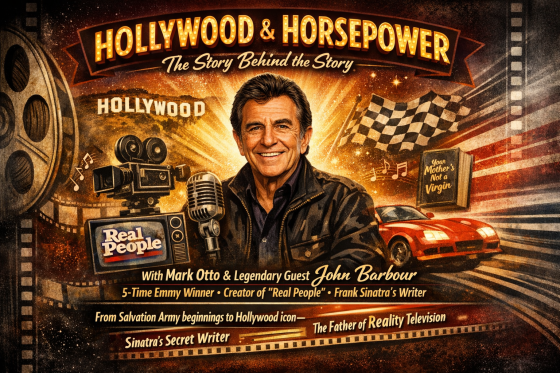

Hollywood and Horsepower Show with Mark Otto
Guest, John Barbour of Talking Movies and John Barbour's World https://johnbarboursworld.com/
Hollywood Legend John Barbour: The Bumpy Road from Canadian Dropout to Reality TV Pioneer
John Barbour: Hollywood & Horsepower
The Bumpy Life of the "Father of Reality TV" & Sinatra’s Secret Writer
Core Narrative
From a Salvation Army charity ward in Toronto to the heights of Hollywood, John Barbour’s career was built on "accidents" and raw wit. A high-school dropout and former Vegas gambler who became a 5-time Emmy winner.
"Television is the only industry in America where competition does not improve the product."
KEY MILESTONES
- • Created Real People (1st Reality Show)
- • 4.5 years as Sinatra’s private writer
- • Directed definitive JFK documentaries
- • Discovered/Mentored Pat Morita
LIFE PHILOSOPHY
- • "Better to be liked than talented"
- • Atheism at 12 (The "God's Will" debate)
- • Success through accidental timing
The Inner Circle
This interview explores the extraordinary life of John Barbour, the "Father of Reality TV," tracing his journey from a dysfunctional childhood in Toronto to the heights of Hollywood success. Barbour shares candid anecdotes about his "accidental" career, his time as Frank Sinatra’s private writer, and his groundbreaking work on the first reality show, Real People. The conversation also delves into his deep involvement in investigating the JFK assassination alongside Jim Garrison.
Detailed Summary
1. Roots of Resilience: A Troubled Beginning
John Barbour’s life began in a Salvation Army charity ward in Toronto in 1933, born into a severely dysfunctional environment. His father left to fight in WWII when John was six and never returned, later surfacing as a successful advertising executive in Scotland. Raised by an alcoholic mother in an abusive household, Barbour found refuge in two places: the local hockey rink and the cinema, where he developed a lifelong love for storytelling and movies. His early life was marked by poverty and minor delinquency, including stints in jail, which he balanced by spending his free time in libraries.
2. The Accidental Path to Fame
Barbour attributes his greatest successes to "accidents." At 17, he became a professional gambler after memorizing books on dice and cards, eventually winning enough to buy a suit and a bus ticket to the United States. A train delay led him to Lake Tahoe, where he witnessed the arrival of Frank Sinatra and mobster Sam Giancana—a precursor to his future role as Sinatra’s private writer for four and a half years. After moving to Hollywood, he transitioned from gambling to comedy, inspired by the conversational wit of Jack Paar.
The "Accidental" Career Timeline
3. Mentorship and the Comedy Scene
Barbour played a pivotal role in the careers of other icons, most notably Pat Morita. He encouraged Morita to embrace his Japanese heritage in his act, providing the specific cultural jokes that helped Morita find his unique voice in comedy. Barbour also shares a deep, lifelong friendship with Redd Foxx, whom he describes as his mentor. Despite his success, Barbour remained a "controversial" figure in the industry, often clashing with network executives and fellow hosts like Johnny Carson over creative integrity and political outspokenness.
4. The JFK Investigation and Jim Garrison
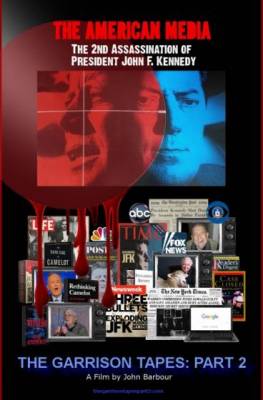
A significant portion of Barbour's later career has been dedicated to the JFK assassination. After reading Jim Garrison’s Heritage of Stone, Barbour became a close associate of the New Orleans District Attorney. He produced definitive documentaries on the subject, arguing that Garrison had essentially solved the case in 1967. Barbour remains a vocal critic of the official Warren Commission narrative, a stance that he admits has occasionally made him persona non grata in mainstream Hollywood circles.
Key Industry Connections
John Barbour's influence spanned multiple generations of talent.
Key Data
- Birth Year: 1933.
- Sinatra Collaboration: 4.5 years as a private writer.
- Peak Earnings: $23,000 per week during the height of Real People.
- JFK Special Date: November 22nd, 4:00 PM – 6:00 PM Pacific Time.
To-Do / Next Steps
- Read John Barbour’s autobiography, Your Mother's Not a Virgin, available on Amazon.
- Tune in to the live two-hour JFK special on November 22nd via BBS Radio/TV.
- Visit John Barbour’s website to view archival interviews with Redd Foxx and Frank Zappa.
- Research the "No Fallen Heroes" foundation to support veterans and first responders.
Conclusion
John Barbour’s story is a testament to the power of storytelling and the unpredictability of life. From a "Canadian dropout" to a television pioneer, his career has been defined by a refusal to compromise his wit or his search for the truth, whether in comedy or in the investigation of American history.
Guest, John Barbour
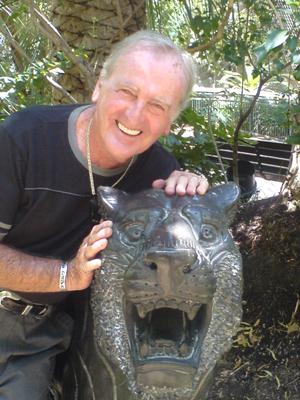
John Barbour is known as "the godfather of reality TV". He created, co-hosted, co-produced, and wrote 'Real People' the first reality show, which was number one on NBC for three years during the early 1980's. He originated the 'AM' show in Los Angeles, was the first newscast movie reviewer for KNBC, where he won 3 Emmys, was film critic for LA Magazine for a decade, won a Golden Mike for journalistic commentary, and was a successful stand-up comic in night clubs and on television.
For 30 years, he worked to tell the story of former New Orleans D.A. Jim Garrison, the man who tried to bring Clay Shaw to trial for his role in conspiring to kill John Kennedy. Barbour succeeded in the mid 1990's with his award-winning documentary 'The Garrison Tapes!'. John’s latest DVD The Last Word on the Assassination revisits the evidence presented in the Garrison Tapes along with a panel discussion of noted authors.
ABOUT The Last Word on The Assassination DVD by John Barbour...
Anyone who cares about what has happened to our country since the public execution of President John F. Kennedy, simply MUST make time to see 'The Last Word On The Assassination.' This utterly stunning, unforgettable event features 'The Garrison Tapes'...the definitive documentary on the horror that changed America and the world...followed by a fascinating panel of the most knowledgeable, brilliant writers in the field: Jim Marrs,Joan Mellen and Dick Russell. Along with Host and Garrison film executive producer, John Barbour, these searingly knowledgeable researchers present amazing and startling NEW material about the assassination which fills many crucial gaps in the story, shredding the vile, official coverup and leaving the viewer with the final answer to the question: Who killed John F. Kennedy?
This program is, truly, an essential, riveting piece of American history and presents a deluge of facts and revelations that have been withheld from the world since 1963.
About: JOHN BARBOUR THE LAST WORD ON THE GARRISON TAPES...
'New Orleans D.A. Jim Garrison, portrayed by Kevin Costner in 'JFK risked everything to tell his story bout his investigation into the murder of Pres. John F. Kennedy. The only person to whom he told the whole story of that investigation was John Barbour, Creator, Co-Producer and Co-Host of 'Real People.' 'The Last Word on the Garrison Tapes' is a must see for those who want to know the truth from a man who sacrificed everything for the truth he learned firsthand from Jim Garrison.
Hollywood and Horsepower Show


Through the relationships Mark Otto developed in Thoroughbred Horse Racing and Automotive Racing, during his global travels, the thing that most interested him was the story behind the story, with the famous people he was fortunate to meet. What was it that these people liked to do? How did they get into Hollywood or into Racing? These stories are fascinating! This is what encapsulates the “Hollywood and Horsepower Show”.
Bringing you along, we talk to so some of the most interesting people Mark met during his career. Don't be surprised if a few other guests stop by this show. This will be fun! It is where SNL meets The Tonight Show; a perfect mix of talk and comedy.
[00:00] Speaker 1: (instrumental music plays) Welcome to Hollywood and Horsepower, the show about the story behind the story. Today we are joined by a very special guest, um, John Barber. John really doesn't need any introduction, but I'm gonna give him one anyhow. John is an actor, he's a comedian, he's developed a lot of things, he's a host. H- his resume goes on probably longer than this show would. So I'm gonna dive right into it, it's an honor to have you with us today, John, and I can't thank you enough for doing the show.
[00:55] Speaker 2: Oh, Mark, I'm absolutely, absolutely delighted. I am enchanted by the way you do your show. It's an easy sit down talk show. I mean, the only reason I got into television, because my idol was Jack Paar, and, um, Jack... Uh, so anyway, I am delighted to be with you, and thank you for asking.
[01:19] Speaker 1: Well, I'm delighted to have you here, because I have to tell you, I'm, I'm a huge... You know, I've worked in Hollywood, I've been around the industry for quite a long time, and I'm a huge fan, and I... It's, it's just an honor to be talking to you. So what I really would like to do is go back and... You know, you grew up in Canada, and then obviously made your way to the States. What, what age was it that you caught the bug, or that you decided you wanted to do this?
[01:49] Speaker 2: Well, everything, Mark, that has happened to me in my life that turned out to be absolutely fantastic all happened to me by accident.
[02:02] Speaker 1: Like what?
[02:02] Speaker 2: And I just... Uh, well, there are too many... I would... We will get into that, uh, like, like many, many things. Meeting Jim Garrison, becoming Frank Sinatra's private writer for four and a half years, creating Real People, the most successful show in the history of television, the first reality show, doing the two definitive documentaries about the murder of John Kennedy, and chosen-
[02:31] Speaker 1: Yeah.
[02:31] Speaker 2: ... by Jim Garrison to do that over Oliver Stone, who made the fabulous film, the movie JFK. So but my-
[02:40] Speaker 1: And it's interesting, because you glossed over it, but you're credited with really being the father of reality TV, and I think a lot of people don't realize.
[02:49] Speaker 2: Yes, and that was... I, I was dubbed that by Gary Deeb, who was by far the greatest television critic, uh, in print in history. He was a t- uh, television critic for the Chicago Tribune back in the, uh, '70s. He said the smartest thing ever about television. He said, "Television is the only industry in America where competition does not improve the product." And-
[03:16] Speaker 1: That's true. (laughs)
[03:18] Speaker 2: ... I met him, (laughs) I met him back there, uh, when I was sent during the Christmas break to replace the guy that was hosting the morning show, which we will, uh, we'll get in the, into in a bit. Because after a little while, it was the show that Oprah Even- Winfrey eve- uh, eventually went to after leaving, uh, Cincinnati. But let me start with the beginning-
[03:45] Speaker 1: Absolutely.
[03:45] Speaker 2: ... as if it's a movie, okay? So, abortions were not available much in Toronto in 1933, so my mother was forced to have me at the Salvation Army Hospital Charity Ward. That's where I was born.
[04:04] Speaker 1: Okay.
[04:04] Speaker 2: And I was born into a very, very dysfunctional family, long before it was popular. And my mother and father fought so severely and brutally, that my father thought it would be a lot safer to join the Canadian Army and go and fight the Germans. Which he did, (laughs) he joined the Canadian Army in 1939 when I was six and left, and never came back.
[04:33] Speaker 1: Oh, wow.
[04:34] Speaker 2: And in 1959 and '60, I eventually tracked him down in Scotland, where he owned one of the most successful advertising agencies in the United Kingdom. But I don't wanna get to that, and get too far ahead. Um-
[04:50] Speaker 1: So he went to war and just never came back to Canada?
[04:53] Speaker 2: Yeah. And, uh, I, um, I was out on... And, uh, uh, my mother, whom I didn't know very well, uh, as a child, became more distant after my father left, because she got heavily into alcohol. And then she brought to our, our house, um, uh, like grapes, bunches of uncles I did not know, who came to bed with her, to booze with her, and mostly to beat her. And often, they would take her off to Buffalo, and me- leave me at home alone. So I spent most of my time, like a Canadian, on a hockey rink, because I really wanted to be a hockey player when I was a kid. Um, uh, then I spent the other bunches of time in a movie theater, the Manor Theater in Kingston Road, where I could see two movies for five cents, and it was five cents that I usually stole. I spent a lot of time, uh, (laughs) in the Main Street Jail, and then right across from the jail-... was the, um, uh, main street library where, when I got out of jail, I'd spend my time in, in, in the library.
[06:17] Speaker 2: So my dream, first dream, was to be a hockey player. But-
[06:23] Speaker 3: Like an American boy?
[06:23] Speaker 2: ... that was... Yes. But that was da- dashed out of me by an English teacher, her name was Ms. English, strangely enough. A beautiful young teacher. And we were in class one day, and she was asking all the students what they wanted to be when she grew up, when they grow up. And they all said doctors, or firemen, or policemen, or nurses, or farmers, or something like that, and everybody would applaud and cheer. And she got to me, and, "Johnny, what do you wanna be?" And I said, "A hockey player." And she booed me, and then the kids booed me.
[06:59] Speaker 3: Oh.
[06:59] Speaker 2: And she said, "Well, you can never make a living as a hockey player." So I stood up and I rattled off the entire Toronto Maple Leaf hockey team, beginning with Ted Kennedy, and the amounts of money that they made were, which were comparable to doctors and lawyers and the rest of it. And she told me to shut up and sit down, and I was so distraught by that. I wasn't gonna do that. My next little dream, Mark, was I read everything that I could. I mean, movies were my escape, uh, watching stories on the screen, listening to, uh, stories on radio with the, the greatest voice in Canadian radio, who went on to become Cartwright in Bonanza.
[07:51] Speaker 2: You, you probably know who that-
[07:53] Speaker 3: Oh, wow.
[07:53] Speaker 2: Lorne Greene.
[07:54] Speaker 3: Lorne Greene.
[07:54] Speaker 2: So, yeah, uh-
[07:55] Speaker 3: And he was a tremendous voice. He-
[07:58] Speaker 2: Yeah.
[07:58] Speaker 3: He was great.
[07:59] Speaker 2: So I... My next little dream is I read every one of the Edgar Rice Burroughs Tarzan books, and I thought, "Oh my God, when I'm 16," like Johnny Weissmuller, if you remember him yodeling as he would s- swing through the forest. "When I'm 16, I'm gonna go to Africa." So that was my second little, second little dream. But then I saw a documentary in the movie theater about a real Africa, and there were naked women suckling their babies by their breasts, and there were flies all over the breasts. Now, I certainly enjoyed being... Seeing the breasts and wanted to be one of those flies (laughs) , but those flies were never in the Johnny Weissmuller Tarzan movie, so that, that hope was dashed forever thereafter. The next hope was to be a gambler, and from the ages of 12 to 17, when I made my first illegal journey to the United States, I became a gambler, and I...
[09:15] Speaker 3: What was your game of choice? Or was it horses or...
[09:19] Speaker 2: Uh, no, no. I, I wasn't old enough to do horses. It was meeting with eight guys, the youngest guy was in his 30s. A couple of them were in the military, some were truck drivers, but I was the youngest one there, and I was always the first one to lose and the last one to leave. And I realized, Mark, that I wasn't there to make money. I was there to make friends. But who-
[09:46] Speaker 3: Sure.
[09:46] Speaker 2: ... would want to be friends with these kinds of people? Certainly, I didn't. And so I went to the library and I picked up two books. They were called Scarnie on Dice and Scarnie on Cards, written by a guy named John Scardini, and I memorized them. So in a matter of three months, I won over $700 and I was only 17 years of age at the time, so that was a lot of money at that time. And the first thing that I did, is that I went out and bought an expensive blue suit and if you see the cover of my book, uh, um, my autobiography is called Your S- Mo- Mother's Not a Virgin. It, that was inspired by a conversation with Jim Garrison, which I'll get to later, and the subtitle is The Bumpy Life and Times of the Canadian Dropout Who Changed the Face of American Television. And on the cover you will see me in that blue suit, but I have a Stetson on, and I'm standing on a...
[10:54] Speaker 3: Interesting.
[10:55] Speaker 2: And I'm standing in front of the old Flamingo Hotel in Las Vegas, and I put on a cowboy hat so that people would think I also had some cattle as well as money. And what I did is I decided that I was, I was such a movie junkie, and the movies that moved me the most were, uh, movies like Mr. Smith Goes to Washington with Jimmy Stewart. You know, anything by Frank Capra was something that I fell in love with, and at the end it said, "Made in M- Hollywood," and I thought, "Oh my God, that is just wonderful." But I was a gambler, and the gambling cap- capital of the world, of course, was Las Vegas. So I decided to go to Las Vegas, Nevada, and I had nothing in a knapsack. I took the bus to Buffalo and, uh, they asked, immigration asked me what I was doing there. I said, "I wanted to see the other side of the Falls." And they said, "Okay, so how long are you gonna stay?" I said, "For a day." I got on the train and I got a ticket to, uh-... Las Vegas, Nevada. But I never got to Las Vegas.
[12:16] Speaker 2: The train was stopped by some kind of accident, uh, in the north end of Nevada. So now, being, feeling guilty as being wanted by the law, which I was, I thought the RCMP, the Mounties, had called ahead and said, "You better stop that train. (laughs) We gotta get Johnny Barber off that train." So I got off the train and there was no place for me to go, and the nearest town was Lake Tahoe. So I got on a bus to Lake Tahoe. Now you can imagine this, I'm only 17 years of age, I get off this bus and I'm in front of the Cal-Neva Lodge and it was looking like a set built by MGM. And I expected Mickey Rooney and Judy Garland to step out any moment, and I walk in and I was just mesmerized and thrilled by the Technicolor look of it all and the people so magnificently dressed. And after I went around for a while, I got to the end of the crap table and I thought I'd make a few bets. And while I was doing okay, guys ...
[13:31] Speaker 2: people at the table began looking at me, and my fear was that they would know I was only 17 years of age and they were gonna turn me in. I got really, really nervous. But after a while, people at the bar started turning around and looking in my direction, and Mark, I realized they were not looking at me, they were looking at the front door. So I turned around and coming through those two glass doors, arm in arm, was Frank Sinatra and Sam Giancana. Arm in arm. With, uh, Sinatra with an overcoat over his shoulders like a, an Italian Su- Superman, and three Italian Praetorian Guard. Everybody got totally silent because they were, or he was, Sinatra, the king of entertainment.
[14:28] Speaker 2: We just-
[14:29] Speaker 1: He still is.
[14:30] Speaker 2: Y- yeah, he still is. And-
[14:32] Speaker 1: I'm Italian so I could be a little prejudiced or biased, but Frank-
[14:36] Speaker 2: Well- well-
[14:36] Speaker 1: ... Frank will ... is and will always be the chairman.
[14:39] Speaker 2: Well, I'll tell you one thing about Sinatra singing comp- compared to the others, then I'll get back to the story. I knew them all, Billy Eckstine, Sarah Vaughan, uh, Don Cherry, Perry Como, Dean Martin, friends with all of them, and listened to all of their records. But you can listen to only a half a dozen songs of even Perry Como or Billy Eckstine. Not Sinatra. You can listen to Sinatra for some reason-
[15:11] Speaker 1: Asleep.
[15:11] Speaker 2: ... 24 hours a day. That's why he's in so many Italian restaurants. Anyway, he walks by. Now, a week earlier, a week earlier, I'd been at the ... there was a movie at the Manor Theater called, So The Clouds Roll By, the Jerome Kern story, and you may recall this. He's in a white tuxedo standing on a white pedestal singing Old Man River. Do you recall that?
[15:41] Speaker 1: Yes, I do.
[15:43] Speaker 2: Unbelievable. Unbelievable. Now he's walking by me, this king of entertainment, and little would you know, that 20 to 25 years later, I would become his private writer for four and a half years. So anyway, the reason I stopped, uh, being in the, in, uh, Nevada as a gambler ... and I was doing quite well, but you can only ... my, my game of choice was blackjack, one deck, because it was relatively easy to remember the cards. But you can't gamble for more than an hour. There was only one movie theater, so there's no place to go, so I haunted all the, uh, shows. Lily St. uh, Cyr with, uh, Joey Lewis, her opening act, the greatest opening act of a comic ever, and then, uh, there was, um, uh, Noël Coward from England, and then there was Edith Piaf from France. I mean, I saw them all. Uh, so that's where I lived and I loved it, I loved it, I loved it. I didn't love gambling, even though I was winning.
[16:58] Speaker 2: So I think that was a-
[16:58] Speaker 1: Well, it's another world. It's-
[17:00] Speaker 2: It- Well, it is.
[17:01] Speaker 1: It's interesting to me. I was adopted myself-
[17:03] Speaker 2: And I-
[17:03] Speaker 1: And I ... It's interesting to me how many times I hear this story that there's this magnetic attraction to books and movies, and I, I think what it is, is it's another world, it's a better world, and it's a place where you can kind of get lost.
[17:21] Speaker 2: You're absolutely right. But for some reason or other, reading to me was like intellectual Viagra. I would get off on it. I just ... I read everything, I absorbed everything. That made me happy, seeing these shows, seeing these creative people. So I cashed in my chips, got on the train again, went to Hollywood, and never ever gambled again except on the golf course (laughs) because I don't think playing golf for fun is fun. You have to gamble a little. Now, if you would like to hear the story of my first deportation, I could get to that, or if you want to hear another kind of story of how I met S- listen, it's your show. Oh, I don't know.
[18:12] Speaker 2: I-
[18:12] Speaker 1: No, I love where you're going. I, I would love to stay on the timeline. You know, you go to Hollywood.... and then where did it go from there?
[18:20] Speaker 2: Okay.
[18:20] Speaker 1: I mean, you can breeze through whatever you want, but I, I really like the idea of kind of following your career.
[18:27] Speaker 2: Okay. Uh, uh, so to, to tell you this story, I have to te- (clears throat) pardon me. I have to tell you why at 12. I don't know why. I have a kind of wit that I do not understand. When I was in the ... Because I'm going to get to why I became an atheist at 12 when I really wanted to be religious. Uh, when I was in the eighth grade, we had an English teacher by the name of Hetherington, who was the only fat person I ever saw. You never saw fat, fat people in Canada or America back in the 40s, okay?
[19:12] Speaker 2: (laughs)
[19:12] Speaker 1: No. There wasn't enough to eat.
[19:14] Speaker 2: Yeah. It's not that. It was, there was no processed food, that's what did it. But then you-
[19:19] Speaker 1: No processed food. But I think too-
[19:21] Speaker 2: Yeah.
[19:22] Speaker 1: ... and there was also a mindset of portions, and, and there, I know my folks grew up in the 20s and 30s, and there just wasn't that much to go around.
[19:32] Speaker 2: Yeah. Well, the other thing is that those people who come from great backgrounds never have a sweet tooth. My son, who is now the, uh, co-executive producer of Criminal Minds, of ci- Criminal Minds, was so happy as a child, he didn't eat any chocolate bars or anything. Me, I got diabetic eating all that, because we just gorged ourself with sweets because we never felt happy anyway- anyway, uh, get back to, uh, Hetherington. The only other fat person I saw was Sydney Greenstreet, that great actor in the Bogart movies, okay? Warner Brothers.
[20:12] Speaker 2: So, um, I hope what I'm saying-
[20:15] Speaker 1: That was just before Orson got big.
[20:17] Speaker 2: Yeah. Yeah. That's right. (laughs) Yeah, that's so true and so sad. Anyway, um, uh, he c- he, he was so fat, he used to... They had to build, the carpenter shop had to build a special seat and special chair for him. He was a brilliant teacher, but he started off every, every, uh, uh, classroom with complaining about life, uh, complaining about his wife, complaining about his children, complaining about the government, complaining about everything, and it went through every single morning. And one day, he's there and he leans forward and he starts rubbing his leg. And he says, "Oh, God.
[21:03] Speaker 2: My ankle is swollen." And I pop out, pipe up from the back of the room, "How can you tell?"
[21:12] Speaker 1: Oh, no.
[21:14] Speaker 2: "Oh, my God. You never saw a fat man move that fast." He pushed aside chairs and kids and grabbed me by the ears and dragged me to the principal's office where they had capital bus- punishment and beat my hands with a, a whip until they bled. Now we get to this part. Because my father was gone and my mother was getting beaten up regularly by a guy named Garth. He was like Ernest Borgnine in From Here to Eternity. The guy who beat up Montgomery Clift all the time, the movie that remade Sinatra's life. Well, this guy used to beat up my mother and tried to murder me with a real bow and arrow one night, which is a great story in the book, but I'm not gonna get into that. But I was so lonely and so de- desperate. My only decent friend was a guy named Don Lee. And, uh, D- Don lived across from the Baptist Church from his mother and father, who were very religious. So, I just went up one day when my mother was in Buffalo with one of my uncles, and knocked on the door, and Mrs.
[22:27] Speaker 2: Lee answered and said, "John, what are you doing here?" And I said, "I want you to adopt me." She said, "I can't adopt you, for God's sake. You got a mother." I said, "No, I haven't." She said, "Yes, you do." I said, "Listen, you want to come to my house and I'll show you." Here's this snotty little kid. She said, "No, no. She'll be home someday." And I said, "Well, hopefully not." And I was shocked I said that, and she said, "Shame on you." And I said, "I need a family." And she said, "I can't be your family, but I can be your friend such you're, you're a good friend of my son's. Um, I'm gonna give you a book. Do you read?" I said, "All the time. That's my only company." So she hands me a book. I said, "What is this?" She says, "It's a Bible." And she says, "You, would you like to come with us every Sunday to church right across the street?" I said, "I would love to." Now, I wa- I wanted to because I wanted to be with them.
[23:25] Speaker 1: Sure.
[23:25] Speaker 2: And, you know, there's, as, as, as somebody who was adopted, you know, there's some kind of serendipity between you and me, honest to God. So-
[23:34] Speaker 1: Absolutely.
[23:35] Speaker 2: In any event-
[23:35] Speaker 1: Yeah. Yeah.
[23:35] Speaker 2: ... I go from, from, uh, Genesis to Revelations. I, I memorize it. Still know and quote tons of it. So, I went to with them every Sunday, and we had a minister who was very smart. Uh, uh, aside from the full prayer, he'd said, "Now we're gonna take out a private minis- minute so you can have your private prayer with God by yourself." So, it was a great idea, and I prayed always that my father would be home. After the, uh, service, uh, Mrs. Lee would invite me to the house for a sandwich. I'd say, "No. I gotta get home. My father's gonna be there." So for two or three weeks, I would run home and open the empty door and holler out, "Dad, Dad, Dad," and heard nothing but an echo, just an echo.... coming back to me. I did that for 13 weeks and decided this wasn't working. So on the 13th week, when he says, "It's time to do your minute prayer." I got up and walked out.
[24:40] Speaker 2: Now, everybody stopped and stared because here's this 12-year-old kid interrupting everybody, and I go outside and I sit on the concrete waiting for Mrs. Lee. Well, the minister sees me. So he comes out when it's all over, and there are a few people gathered around because they're all friends of Mrs. Lee. And the minister comes over and he said, "Johnny." That's the first time anybody called me Johnny. It sounded nice. And he put his hand on my shoulder, Mark, and I almost cried. It was the first time any- anybody touched me. And he says, "Are you okay?" And I said, "No, I'm not okay, sir." He said, "Why not?" And I said, "This isn't for me." He says, "What's not for you?" I said, "This praying business. I go home after every Sunday prayer and my Father's not there." And he says to me, "You must understand God's will." And out of nowhere, Mark, I say, "I don't think I'm in it." Well, people started to laugh. How could (laughs) such a kid say such a thing like that?
[25:52] Speaker 2: That's really funny. "You're not in God's will." So then he grabs my shoulder and again he said, "Don't let the devil take over your life." And I don't know where this came from, Mark, I said to him, uh, "Sir, pardon me, do you believe there is a devil?" Now everybody got still. And he said, "Absolutely. There is a living devil and you must avoid him." I said, "Well, is that not proof there is no God?" Well, I'm telling you, Mark, if there had not been people there, he would've struck me. And he said, "How dare you say a thing like that." And I said, "Well, if God is all-powerful, why doesn't he get rid of him?" That seems so obvious to me as a 12-year-old. And that's what I still think. And so that ended my relationship with the Lees, but then I met Don E. Lee 20 years later, and I'll tell you how. Now, do you wanna hear about the first deportation or would you rather hear how I became enamored of Jack Paar and got into television?
[27:05] Speaker 2: Do you want me to continue to-
[27:07] Speaker 1: Let's go right... Yeah, let's go right to Jack Paar, if that's okay.
[27:10] Speaker 2: Okay. Beca- that's-
[27:11] Speaker 1: Is that all right with you?
[27:13] Speaker 2: Yeah. That- that's ab-
[27:13] Speaker 1: I don't wanna limit you. I'll go any direction you want. I'm, I've, I'm enjoying this immensely.
[27:19] Speaker 2: Well, the, the story of the de- deportation is funny and it's sad. If I could tell it in five minutes, I'll, I'll try to. Would you like to hear-
[27:27] Speaker 1: Go ahead. Let's go that route.
[27:30] Speaker 2: Oh. Okay. So, um, I was arrested because I got into an argument with some guy. There was the Red Scare at the time in the United States-
[27:40] Speaker 1: Yes.
[27:40] Speaker 2: ... and McCarthyism was all over.
[27:42] Speaker 1: Yes.
[27:43] Speaker 2: The blockage was all over. I didn't understand it. I'm a Canadian, okay? And this guy that I got into an argument with, uh, he had a, a thing on his, uh, lapel, "Better red than dead." I said, "Who wants to be dead?" I said, "If you're alive you can change any color. You're dead, you're just gone, you're dust." Okay. That's obvi- Well, we got into such an, an argument, he called the, uh, he called the FBI and they came to the house and arrested me.
[28:14] Speaker 1: Uh-huh.
[28:14] Speaker 2: And, uh, they asked me, you know, uh, to show them, uh, my, um, my papers. And I said I didn't have any. And they said, "Well, how long have you, uh, been in the United States?" And I said, "A while." He said, "Well, how long were you supposed to be here?" And I said, "A day." (laughs) And then he said, "How many days you been here?" (laughs) I said, "365." "So you better come with us, young man." So they took me down to the FBI headquarters. They found out I was no threat to the American government as a Canadian commie. I was only a threat to some, uh, stores in Canada (laughs) where I'd been arrested for stealing so often, and turned me over to immigration. I was at a place called Terminal Island, which looked like Mira Lago for God's sake. It was just absolutely magnificent. No armed guards. Just guards. And I was on the third floor, and that's where they kept all the immigrants.
[29:09] Speaker 2: And they would never deport me right away, uh, because they would wait till they got two dozen, uh, northern geese, they would say, (laughs) and then they would fly them north. But they did say they would offer me what was called a voluntary departure. Now by this time... And it would only have cost $28 by bus. And by this time, I had totally deleted my family, forgot about my mother, but I was desperate. And I had to call Colette, to my mother. And the only reason my mother took the call was to insult me and call me a worthless abortion son of a bitch like my father, and that I should rot in prison, and she hung up. So I go back, I'm on the third floor, and my best friend is this Italian guy, uh, or this Latin guy, Mexico, who takes all the clothes and the laundry and the sheets and, and the towels, and throws them down a, a laundry chute. Uh, and he does that once a week.
[30:13] Speaker 2: So I- I'm there six months and I'm, I'm not gonna stay there, so I change the place and I realize on the Wednesday, the Wednesday is the busiest day, and I know that I could, if I got in that laundry chute and got down to the bottom, I could go out the door on the left, get on a bus and get to, uh-... Los Angeles, or I go, go to the door on the right, jump into the ocean and fly to w- uh, swim to one of the boats. That's what I would do. So he arranged for me to do exactly that. And on a Wednesday around noon, three me- three Mexicans (laughs) put me in this, drop me down. Now, as I'm going down this chute, I'm scared to death because I think, "Oh, if there are no clothes there, I'm dead." But I landed in a pile of clothes. I get up quickly, I rush to the door that's on the left. It's locked. I shake it and shake it. I left, rushed to the one on the right to the ocean. It's locked. I keep going back and forth, and I'm so tired, I sit down. And I'm ch- thinking and I fall asleep.
[31:23] Speaker 2: And somebody shakes me and says, "Hey, what do we have here? A live human being in the dirty clothes?" He said, "Who are you?" And I said, "I'm John Barber." He said, "What are you doing here?" (laughs) And I said, "Trying to escape." And he says, "Well, you're coming with me, young man," so he takes me to the office. He interrogates me, okay? Uh, five of them interrogate me. They want to know who my accomplices are, and I had no accomplices. They take me back upstairs, and when these three officers lead me in there, the 35 foreigners and Latins, and they all stand terrified that maybe I'd ratted. And when they see I didn't rat and they take me to my, to my bunk, the chief guard says, uh, I say to the chief guard, "Hey, listen, why were the doors locked on a Wednesday?" And he laughed, and he said, "Hey, it's July 4th." (laughs) An American holiday. So the... I... From that day on, the Latins called me Julio Quatro, okay?
[32:35] Speaker 1: Yeah.
[32:35] Speaker 2: But now, get this, get this. Uh, I was 17 at the time. 30 years later, when I'm making $23,000 a week as the creator and co-host of Real People, I get a letter that says, "Hey, you have to be that John Barber. I tell my wife and my kids and my neighbors, that guy is the guy that I hauled out of those very, very dirty clothes. Please send me a picture." So I sent him back an 8x10 glossy of me with Sarah S- Per- Purcell.
[33:13] Speaker 2: I'm in a $1,000 suit paid for by NBC, and I said, "I've been looking to him, for him for years because I wanted to thank him, because if it hadn't been for him, I would either be in jail or in the Merchant Navy." Now, the next update of this, in the show, if you remember it at all, we used to go through the audience, hand them a microphone, and have people, real people say, "We'll be right back with real people."
[33:43] Speaker 1: Yeah.
[33:43] Speaker 2: And I'm walking up the aisle one day, and I see this round face that looks familiar, and I hear this voice say, "We'll be right back with real people." And it's Don Lee at 40 some years of age. How is that possible? Now, so let's get to the business of, uh, uh, I was again deported a second time, but I'm not gonna get into that, uh, because of the blacklisting. It's in the book, which is just an unbelievable read.
[34:18] Speaker 1: And people need to read your book. I need to read your book, but I'm... I-
[34:21] Speaker 2: Well, I-
[34:22] Speaker 1: I am going to read your book.
[34:24] Speaker 2: Well, I'm gonna send you a special autographed copy, uh, because it's, was called by many not only the greatest book ever written about anybody in Hollywood, uh, uh, Europe's greatest writer, a lady named Alexandra Moltic said it's the greatest book ever written in America. And that's saying something, uh, I think.
[34:45] Speaker 1: And I can believe that. For people just joining us, I'm joined today by the, the none other than John Barber, actor and multitude of other facets. But, people, we're talking about his book right now, Your Mother's Not a Virgin. You have to pick it up. It's on Amazon. It's available in several different fashion. I'm sure it's available on the shelf at a lot of retail. But do yourself a favor and pick up this book. I plan to do it myself this weekend.
[35:15] Speaker 2: Oh, well, thank you so much. If you get it on Amazon, you'll be able to post a, a review, and all the reviews are five-star. And, uh, I will send you... uh, uh, uh, it'd be my honor to send you an autographed copy.
[35:29] Speaker 1: And I don't mind-
[35:30] Speaker 2: Now for Jack, now for Jack Paar. Um, I could not get over watching Jack Paar-
[35:41] Speaker 1: Yeah.
[35:41] Speaker 2: ... because he was such an engaging conversationalist, easy and relaxing like yourself. And he's introduced-
[35:51] Speaker 1: Just seemed natural. Yeah, I, I agree.
[35:54] Speaker 2: Totally natural, totally charming, witty, and f- I mean, unbelievable. I remember, you know, introducing Jonathan Winters, and if you go to it and you s- and, uh, Jack hands him a, a little stick, and you see the genius of Johnny, Jonathan Winters ad-libbing with a stick. And one of his greatest guests that nobody would have on was Oscar Levant. And at one time, Oscar Levant was detained in Los Angeles and sent for a month to the Camarillo Mental Institute. He was supposed to be there a month, and he was out, out, out a week.And Jack Parr calls him to be his next guest the next week, calling a guy that's in the loony bin. And they sit down next to one another, and Jack says to him, "Why did they let you out?" And he said... Oscar says, "I depressed the patients." Oh my God, that was it for real.
[36:58] Speaker 1: (laughs)
[36:59] Speaker 2: I mean, it was hilarious. So now, the other thing was that, that's what I wanted to do. And I wanted to be able to interview people and talk to people, because I didn't know that's what human beings did. I mean, in my house it was yelling, and screaming, and throwing beer bottles, and empty beer cans, and full beer cans. Anything you could
[37:24] Speaker 4: Mm-hmm.
[37:24] Speaker 2: And here was the people having really great conversations, for God's sake. And he was a comic before he was a talk show host. And he did the greatest opening monologue ever in history, better than them all. And I thought, "Oh my God, holy smokes, I wonder if could do that?" And I'm in my 30s. I don't even know if I can write. So what I decided to do is I decided to get all the comedy albums. And th- and there, uh, there's... is Mort Sahl, there's Lenny Bruce, there's Robin Williams, there's a 2000-year-old man.
[38:10] Speaker 1: Pretty cool guy, yeah.
[38:10] Speaker 2: There is Bob Newhart.
[38:12] Speaker 1: And Mad Russian. Oh my God.
[38:13] Speaker 2: Yes.
[38:14] Speaker 1: 1000-year-old man.
[38:14] Speaker 2: Shelley, Shelley B- Shelley Berman. I knew them all, and I have great stories about them in my book because I w- knew them all. But they were all very distinctive, and they had a great personality. I had no personality, and I had no distinction. I thought, "Jesus, what am I gonna do?" The only thing I could think of was that I was from Canada. "Well, what's so strange about that?" And I thought, "Well, you know, I could just talk about the slight differences in culture." And, uh, uh, the very f- And, and five minutes, I wrote a... pardon me for saying this, a brilliant five minutes of comedy, when I didn't know I could write. And the opening line is, "I'm being brought to you by the courtesy of the NAACP, the National Association of Canadian People." (laughs) Okay, so anyway, I end up auditioning at a club in Santa Monica called The Horn.
[39:19] Speaker 2: And I am the o- I'm the only, uh, comic they ever hired, uh, because the owner, who was a singer himself, hated comics, but he loved the fact that I was so soft-spoken, and my material was so funny. And I opened for this hillbilly.
[39:43] Speaker 1: (laughs)
[39:43] Speaker 2: And this hillbilly would talk about the, you know, moonshine up in the Ozarks, and how they'd make this kind of stuff. And he said, "We would entertain ourselves by playing the ukulele and a banjo and singing song. Do you mind if I sing this little ditty for you?" And everybody would cheer, because they would know what was coming. And the little... the ditty turned out to be Nessun Dorma sung by Jim Nabors.
[40:12] Speaker 1: Jim Nabors?
[40:14] Speaker 2: Yes. As... He was Pavarotti for God's sake. And the thing-
[40:19] Speaker 1: He really was. He had an amazing voice.
[40:22] Speaker 2: He did. And the day he was hired-
[40:24] Speaker 1: He was... It almost didn't fit him. Like, when you'd see him, it was like you'd look at him in disbelief. It's like, "How's this sound coming..." You know, which later became Gomer, you know? (laughs)
[40:35] Speaker 2: (laughs) Yeah. Well, the day he became, uh, Gomer, Mark, he came to me and he said, uh, he said, "John, you know, I'm really a fan of your stuff. Uh, some of it, um, really sharp political stuff." He said, "But I gotta tell you something. I ain't been in this town too long, but I will give you some advice. And I hate to give advice, 'cause it doesn't do any good, but the advice is this about this town of Hollywood.
[41:02] Speaker 2: It is better to be liked than to be talented." And he was so right, because-
[41:11] Speaker 1: 100%. Right.
[41:12] Speaker 2: ... I was not even on televis- I mean... Oh, but that led to my being on the Merv Griffin Show. Oh, I wa- no, it led to my, uh... Uh, Art Linkletter used to have a talent scout show.
[41:26] Speaker 1: Yeah.
[41:27] Speaker 2: And I was the only person ever to be brought back a second time. And then as a result of that, I got a call from, uh, the fellow... God, what's his name? The manager of Woody Allen. You know his name? Jack Rollins. Does that name ring a bell?
[41:51] Speaker 1: The name rings a bell, but I don't know it.
[41:54] Speaker 2: Jack Rollins was the guy that created Harry Belafonte.
[41:59] Speaker 1: Oh, wow.
[41:59] Speaker 2: Harry Belafonte was a jazz singer, just an ordinary jazz singer.
[42:02] Speaker 1: Yeah, Ha- I know. Yeah, he was very good.
[42:05] Speaker 2: Yeah, except that jazz singers are a dime a dozen. And Rollins took him to the uni- uh, uh, New York, uh, Library, got out a books ab- uh, ca- about calypso songs. And he said, "Do you know, you would be the perfect guy, Harry, to be singing Banana Boat." And Belafonte said... was gonna fire him. "Are you nuts? For God's sake, I'm a jazz singer. I'm not gonna sing Banana Boat song." And he was talked into singing it. It became his first million-selling record.And then after, uh, Belafonte became a huge star, he dumped, he dumped his manager. But anyway, his manager turned Woody Allen. Woody Allen did not wanna be a comic. I followed him into Mr. Kelly's in Chicago, and he was so unsuccessful. He turned around an did, did his wa- a- act to a brick wall, and he didn't want to keep doing that. And his manager said, "You keep doing that, and I will turn you into the movie maker that you wanna be." And that's exactly what he did.
[43:18] Speaker 2: Anyway, there was a club called The Bitter End owned by, um, a, a by, um, a fellow named Freddie Weintraub, who became my partner la- in later years when I did the Garrison tapes. And, um, and Rollins asked me if I would get up and do a set. Because I had just done an album called It Stuffed To Be White with liner notes by Dick Gregory. So, I do a set, and I'm a smash hit. He said, "Come to my office tomorrow because I'm gonna make you the next Jack Paar." "Oh, my God. I am beyond thrilled, are you kidding? Holy smokes." So, I go there, and he comes in. He was more interested in the racing form (laughs) than he was artists, but he was a brilliant, brilliant manager. And he found Nichols & Nay at, in the, um, in the, uh, the Russian Tea Room, but we'll get to that. I already mentioned that about Jack Paar also. But in any, in e- in any event, he says to me very sadly, he said, "John, there's no question you could be the next Jack Paar. No question about it.
[44:34] Speaker 2: You're likable, you're soft-spoken, you're engaging," all these nice words he says to me. "But I signed a guy a month ago that I think I could get there quicker, and his name is Dick Cavett."
[44:48] Speaker 1: Oh, wow.
[44:48] Speaker 2: And so, so he said, "Listen, I'll get you booked into some clubs," which he did. So, that's how I ended up in Mr. Kelly's in Chicago following, uh, following Woody Allen. Now, what happens is that because I was so successful as a comic, I'm get on Merv Griffin Show. And I'm so successful as a comic on Merv Griffin Show, I'm gonna be back there two or three times. And I'm gonna tell you a quick story about the birth of my son. I never wanted to be married because I did not know what kind of husband I could be, and I absolutely did not want a child. And so, um, my second professional engagement, I, I, I'm getting sidetracked a little bit, by the way. I, I, I'm gonna get back to Merv Griffin. So, I'm, I'm on with Merv Griffin. And Merv Griffin, you may remember, is signed by CBS to go to CBS to do a late night show.
[45:59] Speaker 1: Yes.
[45:59] Speaker 2: You recall that? Okay?
[46:00] Speaker 1: I do.
[46:02] Speaker 2: Okay. So, Westinghouse signs me to be his replacement, and, you know, my god, oh, Mike Douglas was great out of Philadelphia, but I would have this chance to be my Jack Paar taking over for him. So, I gotta put that on pause for a second. When I was, uh, my second professional job, uh, was in San Francisco at The Hungry i that created Mort Sahl. And I was a smash doing Kennedy material. It was 1963, early 1963. And I was so successful, they booked me to come back the end of November. So, I go back to Los Angeles, and I start writing a new act. And it's Friday, November 22nd, around one o'clock. And the news comes on that John Kennedy's been shot. Now, shamefully for me, I didn't know much about Kennedy except that I absolutely loved him. He was so charming, he was so bright. And I read his book a couple of times, Profiles in Courage. Loved the man, loved the man. And he was loved by the media. And all his peccadilloes, nobody knew about them because they were all kept, uh, secret.
[47:32] Speaker 2: So, everybody in the country seemed to worship the man. But I thought, "Oh, my God. I'm losing an act. I'm losing an act." So, I had to rewrite something. So, I go back at the end of November. I go back the end of November. And it's empty, the place is empty. Now, here's a little sidebar to this story as to how I met my wife. Uh, I followed a, uh, Black girl singer who was the first to wear a dashaki, which is the African garb, and the first to have the African hairdo. Her name was Amanda Ambrose. She was booed every night by supposedly liberal crowds in San Francisco. "Now, go back to Africa. Dress like an American." Now, like, she was crying, crying all the time. All the time. And she would come into my way, uh, my dressing room and she'd cry when I tried to comfort her. And one night, she comes into my dressing room and she's sobbing. And I thought, "Oh, my God. Did they start throwing darts at her, for God's sake?" She said, "No, look at this."...
[48:46] Speaker 2: she extends her hand, Mark, and in, on her hand on her finger is this huge emerald ring. I said, "What is that green thing?" She said, "That's an emerald ring." I said, "A real emerald?" She said, "Yes." I said, "My God, where did you ever get that?" She said, "This gorgeous brunette sitting next to the owner gave it to me. She call, she called me over and she says, 'Amanda, I want you to know that a lot of us appreciat- appreciate your talent and what you're doing. We've gathered up a lot of money to buy this ring, especially to you, and it will go with the outfits that you wear.'" Well, my favorite movie at the time was A Place in the Sun with Montgomery Clift. Do you remember that?
[49:34] Speaker 1: I do.
[49:35] Speaker 2: Yeah. Okay. And you would probably identify being adopted with Montgomery Clift. (laughs)
[49:43] Speaker 1: Definitely. (laughs)
[49:45] Speaker 2: As I had... (laughs) As, as I did, okay? And wanting to marry a rich brunette like, uh, like Liz Taylor. Well, that was my daydream, okay? So, right, I know that (laughs) it had to cross her mind. So I said to her, uh, "I, I would like, I'd like to meet her. I'd like, like to meet her." So she, uh, she walks across... The floor was like a chessboard, all black and white tiles. God, it was absolutely beautiful. And sitting with the owner of the Hungry i is this gorgeous Jennifer Jones lookalike brunette. And so Amanda goes over and whispers in her ears. And this lady, uh, her, her index finger just g- crooks it and tells me to come over. So I leap like I'm playing hopscotch on a checkerboard, and she laughs. Anyway, I'm introduced. Then Amanda says that she has to go someplace. And then the owner of the place has to go and be someplace, and Sarita was her name.
[50:51] Speaker 2: And she, uh, she said, "You know, you write the greatest stuff." And I said, "Well, thank you very much." And she said, "And as years go by, you'll become a better performer." (laughs) So I say to her, "Hey, you know, um, uh, would you, wha- would you like to have a late dinner with me?" Well, um, Banducci owned a, uh, a supper club. Uh, and so she said, "Well, I'll take you to Enrico Banducci's supper club where they know me, and we'll go up there." So we go up there, she walks in, everybody gets out of the way, leads you to this magnificent table, and we sit down. And I sit across from her 'cause I just wanna stare at her, she's so beautiful. And as we were walking across the room, she put her arm under mine. Oh my God, I froze. I had not been, I'd only been with one woman in my entire life for Christ's sake, and I'm in my 30s. Okay. Only been with one woman. Oh, geez, I couldn't... It was just glorious and scared the crap out of me.
[51:59] Speaker 2: So anyway, while we're sitting there, this guy in a, uh, Asian guy comes over to me and he says, "Oh, Mr. Barber, Mr. Barber. Oh, I just come whenever I can. I've come three times already to see your act." Uh, and I said, "Oh, that's, that's wonderful." And he said, "You know, I'm, I, I'm an IBM keyboard operator, and I really want to be a comic. Even though I'm Asian, I want to be a comic." And he said, "If you have time, would you come and watch my act?" And I said, "No, I do not have the time." So he said, "Oh, I'm sorry." And I said, "Listen, I'll tell you what. Why don't you just sit next to Sarita or stand there and just do one minute or two minutes of your act?" He said, "I can't do a, that. It's not funny." And I said, "Listen, I know it's funny. You don't need an audience, okay? I know if it's funny or not." So, uh, Sarita takes him by the arm and said, "Please, why don't you do that? Because this fellow writes the greatest jokes ever.
[53:11] Speaker 2: So he says, "Okay, this, this rabbi, this priest, get on a bus." And I stopped him. I said, "Hold it a second. That's your opening?" And he said, "Yes." I said, "Wait a minute. Where's the Japanese material?" He said, "I don't do Japanese material." And I said, "Wait a minute. Do you see Blacks doing white jokes, or Jew jokes, or Italian jokes?" He said, "No." I said, "Is there a Japanese comic?" He said, "No." And I said, "Well, be one." He said, "Well, I wouldn't know how to do it." I said, "Hey, hold it. Your mother and father are old country Japanese?" He said, "Yes." I said, "And you speak Japanese at home?" He said, "Yes." I said, "Well, what you have to do is you have to write jokes about growing up with them." He said, "I wouldn't know how to do it." I said, "Well, the culture is yet dif- different." He said, "H-..." I said, "I'm lost." I said, "Listen, in Japan on the calendar, there's no December 7th." Well, people started to laugh because they heard me talking to him.
[54:22] Speaker 2: And there's this, this movie with Susan Hayward called I Want To Live. And you could say you went to see it because you thought it was a kamikaze pilot who changed his mind
[54:32] Speaker 1: (laughs)
[54:33] Speaker 2: And people were howling. And I said, "Oh, by the way, what's your name?" And he said, "Pat Morita."
[54:42] Speaker 1: Oh, wow.
[54:44] Speaker 2: And he went on, when he became successful again-
[54:48] Speaker 1: He definitely went on.
[54:49] Speaker 2: ... he went on, okay? In the, in, in, in... And that's how these things happened to me. Anyway, with Sarita, I had, I had left my money in my wallet in the hotel, because I was wearing a tuxedo on stage, so I had no money and she had to pay for it. And so, I then boldly said to her, "Well, that means I have to buy you breakfast." And she said, "I guess it does." So I bought her breakfast the next morning when we left the hotel. She never left my side. She had millionaires, guys like Herb Caen, the most famous, uh, columnist in San Francisco aspect. The ho- the owner of the Hungry i. One guy bought her a house, one by... a guy bought her a car. And she ran off with me wearing a $35,000 mink coat. And I asked her one time, "Why on Earth would you run away with an unemployed comic?" And she said, "Because you're the only man I ever met who needed me. And those men I knew, I would just be like a female Rolex on their arms." It's that brilliant.
[56:03] Speaker 2: And if it had not been for her, there would've been no Real People, there would've been no, none of, uh, the Garrison, th- the, none of the, the Garrison tapes. And I gotta get to this, this story now, 'cause it's important. When I was on Merv's show, ABC called him and said, "We have a show here that would, we would like you to produce, and John Barber to host." And Merv said, "Oh, I'd be thrilled to do that. Are you kidding? I love this guy. He's my wife's favorite comic." And, uh, the show was called Connections. And, uh, uh, when I met with everybody to do it, I said to them, "I would do it on one condition. That I would do the show the way Johnny Carson did Do You Trust Your Wife?" Do you remember that show?
[56:55] Speaker 1: Yes, I do.
[56:57] Speaker 2: Okay. Tell the audience a little about it. I don't wanna dominate this conversation.
[57:01] Speaker 1: No, no, go ahead, 'cause I'll butcher it. I'd rather have you tell it. I love your storytelling.
[57:06] Speaker 2: Oh, okay. So, uh, uh, he, he had fun with the guests, and Groucho Marx had fun with, uh, the guests when they did the, that Groucho Marx, uh, quiz show, okay? And I said, "As long as I can interview these people," like Jack Barr, Johnny Carson, and Groucho, "and have some fun." So I did the pilot. I, I, I did the run-throughs. And, uh, to get an audience, they called secretaries from around the building. There was laughter and applause and cheering, and so they agreed to go forward with a pilot. And I would get $1,750 a week when I'm broke.
[57:44] Speaker 2: And, uh-
[57:46] Speaker 1: Wow.
[57:46] Speaker 2: ... so, and that was a huge-
[57:47] Speaker 1: That's when $1,000 was $1,000.
[57:50] Speaker 2: Oh, my God. It was s- it was huge at that time. So anyway, when it comes time to make it, these are the kinds of things that shape and change a person's life. And they're all accidental, and there may be some divine intervention in it. I'm sure there's divine in- in- intervention. There has been in my life. You'll read scores and scores of stories in my life where I'm at the bottom, and somebody out of nowhere, comes out of nowhere, and lifts my spirits and moves me forward. That's only divine intervention.
[58:28] Speaker 1: That's great.
[58:29] Speaker 2: While I'm not a believer, I believe, I believe in that. In, in any event, um, as happened, a guy that, uh, okayed the go-ahead for the pilot says, "We're not gonna have any of these long, funny interviews with Barber and the guests. We're just gonna get to the game." And I frankly said, "I'm not doing this." And the producer, the new producer says, "Well, John, you're gonna get $1,700 a week." I said, "I don't care. I'm not a traffic cop. I'm not at home. I cannot do that. I cannot function. It's too cold and stiff." And I said, "The, the game portion is lousy, but it is fun with the guests." So I come home. Now, my wife was the greatest tap dancer I ever saw outside of Ginger Rogers and Eleanor Powell, and she was a band singer for Earl Hines, the guy that discovered Sarah Vaughan and Billy Eckstine, and boy could she sing. So when I could come home every day, Sarita would open the door and sing and dance when Johnny comes I'm at home again.
[59:36] Speaker 2: I mean, it was (laughs) just thrilling the way she would greet me and grab me. But she noticed I looked sad. It's 'cause she thought, of course, I was gonna be a host and making $1,700. And I only married her... Or, I, I, I, I only, I only lived with her because when I said, "If you're gonna live with me and come with me," lived to, uh, I lived with her for three years before marrying her. Uh, hilarious story about her and her mother about that. But in any event, I'm not gonna get to that, but I said, "Listen, as long as you're not Catholic, and as long as you don't want a child." And she said, "Well, I'm not courageous enough to be a, a Catholic." (laughs) I'm an Episcopalian. "And I don't want children." So I said, "Okay, you can come with me." And so, she came with me. And it was hard. Never one complaint about her. We never had a TV set. We never even had a radio. We lived on potatoes, raw potatoes for weeks. She loved it. She just was having so much fun helping me.
[01:00:40] Speaker 2: So she looks at me and said, "What's wrong?" And I said, "I turned it down." Without missing a beat, she... Tears pop out of her eyes and she says, "That means we can't have a child."Well, I felt like a total asshole. I felt like, you know, the two worst kinds of human beings that a woman can be involved with are, first of all a comic, and second would be golfers. And I was both of them. Because we're so self-centered, we have to be to create the material that we create to do the things that we have to do. I mean, a golfer could be the biggest jerk in the world, but if he can put a ball in the hole, he can make a living, okay? And there are lots of them on the tour who would do that, huge jerks. But they make a living for their family, they make millions and often return and do a lot of great things. But I said to her, I said, "Listen, we tried it my way, honey, for three years.
[01:01:42] Speaker 2: Let's try it your way for three years." She said, "Hey, hey, Johnny." (laughs) She said, "Children are not an option. (laughs) They are forever. They're not for three years." (laughs) I said, "Okay, okay. You can have your child, and I will have my career. Does that bother you?" She said no. That afternoon, she got pregnant.
[01:02:08] Speaker 5: Wow.
[01:02:08] Speaker 2: Now, she did-
[01:02:09] Speaker 5: She was committed?
[01:02:10] Speaker 2: She did- Uh, yeah, yeah. I mean, so she's at Valley Presbyterian Hospital. Now, if you've ever been in a maternity ward, you hear all kinds of women screaming and cursing their husbands, and their priests, and their rabbis, and no man is ever gonna touch them again. My wife was so quiet, she never took a pill or anything. She kept telling our doctor, whose name was Faust, "I wanna feel the joys of giving birth to my son." And so, anyway, I waited in the waiting room. And what was I thinking of? I was now making $600 a week to replace Merv Griffin as a host on Westinghouse. I was going to be my dream, the next Jack Paar. That's what I'm thinking about while my wife was going through this fantastic moment. And she gives birth, and Dr. Faust comes out, and he says, uh, "Your wife, Sarita, asked me to tell you this. She just gave birth to the most wonderful eight-pound, nine-ounce host." When I heard the word host, Mark, it was the first time in my life I bawled like a baby.
[01:03:45] Speaker 2: I bawled and bawled and bawled over my selfishness that anybody could love me that much to think about me out here in the waiting room, and not think about that child. I mean, it was unbelievable. And-
[01:04:05] Speaker 5: Real love.
[01:04:05] Speaker 2: ... I was, uh, and I was told by one of the aging nurses while I was sobbing, said, "John, I'm gonna tell you something. I know you're in and out of show business, but you have no idea the blessing that this first child will bring to you." Because there's an- she was Italian. She's an old Italian saying that the first child brings joy and a loaf of bread. And you're gonna have more than a loaf of bread with this child, and I most, I most, uh, I most certainly did. So any- in any event, I end up, uh, m- I, I get a chance to, uh, fill in for Merv as the host, and I kill. And, um, uh, really successful. Really successful. But they use my ratings even for that one performance, William Morris does, because they, uh, uh, uh, represent this guy named David Frost.
[01:05:14] Speaker 5: Okay.
[01:05:14] Speaker 2: This Englishman.
[01:05:15] Speaker 5: Yeah.
[01:05:16] Speaker 2: And the owner of Westinghouse, a guy named McGannon, when he went to England, David Frost could take him to Den- to, uh, 10 Downing Street and Buckingham Pal- Palace. Johnny Barber can't do that. I can't take him to the president of the United States. (laughs) I can't take him anywhere. So they opt to hire David Frost. And so I'm out. But there's a, um, a fellow at, uh, Metromedia in Los Angeles who was the first g- time, first guy to hire, uh, Joe Pye, uh, uh, uh, uh, Joe Pyne. Do you remember Joe Pyne?
[01:05:59] Speaker 5: I don't.
[01:06:00] Speaker 2: Joe Pyne was-
[01:06:02] Speaker 5: Name's-
[01:06:02] Speaker 2: Joe Pyne was an ex-Marine, one-legged Marine, who had the biggest show on radio. He was the first attack jockey on radio.
[01:06:13] Speaker 5: Oh, wow.
[01:06:13] Speaker 2: The first screamer against anything. And he was so successful, one day, he calls up the manager-
[01:06:21] Speaker 5: Wait, before Stern?
[01:06:22] Speaker 2: Yeah, oh, my God. Stern wasn't an attack jockey at all. Not at all. I mean, Stern was filthy. He wasn't an attack jockey. Uh, this guy was. So he calls the, um, manager at the station, an ex-Marine himself, and say, his, his name was Chuck Young. He said, "Chuck, when are you gonna put on tele- put me on television?" And Chuck says, "When can you get over here?" So he puts him on television.
[01:06:49] Speaker 5: Wow.
[01:06:49] Speaker 2: And he becomes the most successful show in Los Angeles, and the most successful syndicated show in the country, in a thing called The Squawk Box.And if he got really peed at somebody, he'd say, "Why don't you all go home and gargle with razor blades?" Became one of the big, (laughs) greatest quotes in the country. Well, when I did my first, uh, album, It's Tough to Be White, very few people would book me, even though Dick Gregory did the liner notes. Joe Pine was the first guy, k- t- that guy to book me, and he had a table about 20 feet long and he'd seat me at the end of the table. And then when it was over, he just loved the interview, he loved the material and how it came about and all of that. He said, "I'm sorry to put you at the end of the table, but it's easier to hate somebody from a distance." That was what it was.
[01:07:42] Speaker 2: So-
[01:07:43] Speaker 6: It's always important to have a plan. (laughs)
[01:07:44] Speaker 2: Yeah. So, so Chuck Young thinks that David Frost is gonna bomb, so he calls me and he says, "Do you think you could do a Saturday night talk show?" And I said, "You mean, like Johnny Carson, like The, The Tonight Show thing?" He said, "Yeah, where you do a stand-up and you have guests." And I said, "Oh, my God, I would love that. I would love that." So anyway, he says, "You got it. You come, and you can have it." So, now I have to tell you a sidebar story. Um, how far are we into the (laughs) first hour?
[01:08:26] Speaker 2: Because I think you like-
[01:08:27] Speaker 6: No, no, we're good. We're good. We're just-
[01:08:29] Speaker 2: Okay.
[01:08:30] Speaker 6: ... gonna keep going.
[01:08:31] Speaker 2: So-
[01:08:31] Speaker 6: And-
[01:08:31] Speaker 2: Yeah. So, anyway-
[01:08:33] Speaker 6: ... everything's great.
[01:08:33] Speaker 2: Have you ev- oh, my God. Um, the, um, oh, geez, the... A guy, uh, who... Oh, God, what's his name? He, uh, he was one of the great, greatest science fiction wr- writers in the world. Oh, uh, and he had a great column, uh, had a great column in the, uh, the, uh, Los Angeles Weekly called The Glass Cheat. Oh, my God, I wish I could remember his name. He's very... He wrote The Terminator. Oh, my God. I, I, I'll, I'll get back to it. I'll get back to it. Anyway, he reviews me as the host, or possible next host, on, uh, Merv's show. And he calls me a fag.
[01:09:35] Speaker 6: (laughs)
[01:09:36] Speaker 2: Where did they get this fag? Because one of the guys I interviewed was the heartthrob of the world. He was a, a skater named Jean-Claude Keely, who was as popular as Errol Flynn with the women, one of the most handsome human beings in the world. And he thought I, sort of thought I belittled him a little bit or some-, and called me a fag, like I wanted to make out with him or something. I mean, it was a hilarious, hilarious review. So anyway, I get my show. And, oh, God, I wish I could remember his name. I, uh, it will come to me eventually.
[01:10:16] Speaker 2: So-
[01:10:17] Speaker 6: Um, well, you got J- James Cameron and then Gale Anne Hurd.
[01:10:22] Speaker 2: No, uh, oh, no. Uh, uh, okay. Oh, he... Oh, my God almighty, he was going to do... He was on my show a number of times, and he was going to do, uh, the introduction bud, abo- uh, about my book until he died, and Donald Jeffries replaced him. Oh, my God. Oh, my God.
[01:10:45] Speaker 6: This is one of those times when I wish we had Michael Blone on the show. He'd know right off the bat.
[01:10:49] Speaker 2: Yeah. Yeah. (laughs) Tha- that's-
[01:10:51] Speaker 6: (laughs)
[01:10:51] Speaker 2: That's funny. It, it, it, it w- Harlan Ellison.
[01:10:54] Speaker 6: Okay.
[01:10:55] Speaker 2: Harlan Ellison. Okay. So, uh, uh, Harlan Ellison called me a fag. Anyway, I'm, I'm getting ready to do the first show, and I know that television is the umbilical p- cord that could inform or destroy the world, as Edward R. Mur- Murrow so cleverly said when he was at, um, CBS. And they destroyed Ed Murrow. I won't get into why they destroyed him when he had to end up doing just a personality sh- show where he talked to celebrities. Um, um, uh, that's a great story in the book by itself. But in any event, I said to my producer, "You know what? I wanna have a guy on every week to talk about television, and I can't think of anybody better than Harlan Ellison. Would you call him?" And my producer said, "No, I'm not calling that guy.
[01:11:52] Speaker 2: He's vicious, for God's sake." (laughs) I said, "Then just call him."
[01:11:55] Speaker 6: (laughs) He chewed me up and spit me out.
[01:11:57] Speaker 2: "Who's he? Where does he live?" You know? Yeah, so I get the Yellow Pages, and I open it up to Harlan Ellison, and there is his phone number. "Whew," I said.
[01:12:07] Speaker 6: God, I'll-
[01:12:07] Speaker 2: Is that he? So I dial it. And that fast, the phone rings, and it was his voice, said, "Yeah?" Like that. And I say, "Evidently you're not that busy to answer with the first ring." And he says, "Who the F is this?" (laughs) And he says... And I said, "Johnny Barber." He said, "Oh, my God. What the eff do you want, for God's sakes?"
[01:12:34] Speaker 6: (laughs)
[01:12:34] Speaker 2: And I said, "Can I ask you a question?" And he said, "Listen, I'm not changing any of my thoughts about you. You're, you're a fag." (laughs) So I said, "Listen, the question is this, can you talk as well as you write?" (laughs) And he said, "Well, that's the dumbest effing question I ever heard. Certainly, I can. I speak at universities. I speak all over. I'm guests on a lot of shows." And I said, "Well, I- I'd like you to be a guest on mine."... said, "Are you kidding me?" And I said, "No," and I said, "And I'd like you to be on it every week for 10 minutes just to talk about television, because that's where people live now. They don't live in the movies. You'll get minimum, which is $78.
[01:13:23] Speaker 2: And would you do it?" He said, "Are you kidding me?" I said, "No." He said, "Who else are you gonna have on?" I said, "Well, one of the ones I'm gonna have on first is Redd Foxx." And he said, "You mean that, the filthy comic?" I said, "Yeah." He said, "How come?" I said, "Well, my wife was a band singer for Earl Hines and close friend of Dick Gregg who s-... did the liner notes from my re-... uh, for my album." And she said, "When I started," she said, "you must meet Redd Foxx, because while he is naughty," she called him na-... not filthy, but naughty, "he's the wittiest human being outside of Jackie Mason you will ever meet." And not only did I meet Red, he became my mentor and my only lifelong friend in show business.
[01:14:16] Speaker 2: And so I-
[01:14:17] Speaker 7: And, and you were on Sanford and Son.
[01:14:20] Speaker 2: Yeah. Uh, well, I, I, I'm getting to that story. So anyway, um, he agrees to come on, uh, and I'll get to Red's story in a second. So... And the show gets a terrific rating because everybody in town is gonna watch, because they know me as a struggling comic, but they know Harlan Ellison is this great writer. The Star Trek episodes that he w- wrote and, uh, the, um... Oh, God, the, uh... Oh my god, the, uh... (imitates percussion) What is that Rod Serling show that he wrote?
[01:14:58] Speaker 2: He wrote a lot of those-
[01:15:00] Speaker 7: Oh, gosh. Yeah, I'm trying to-
[01:15:01] Speaker 2: You know him, so-
[01:15:02] Speaker 7: ... find them. Rod Serling.
[01:15:03] Speaker 2: Yeah, so-
[01:15:04] Speaker 7: (laughs)
[01:15:04] Speaker 2: ... s-... Uh, yeah (laughs) , you and I are having a little fog at the same time. So in any event, uh, the day after the show, I get a call from Chuck Young, and he said, "John, congratulations. The show was absolutely fantastic." And, uh, he said, "We're so delighted to have you here because I'm sure that this Englishman's gonna bomb. And we'll have you, and you will definitely be the n- next Jack Paar on national television and not just local. Just believe me, I have that much faith in you." He said, "Oh, and by the way, you'll never guess who was just in my office." And, uh, I said, "Uh, who?" And he said, "Harlan Ellison." I said, "Oh, that's terrific. You gotta give him a show." (laughs) And Chuck starts laughing. He said, "No, I'm not gonna give him a show." And I said, "Listen, I'm telling you, look at how verbal and smart the guy is. And he knows everybody in town.
[01:16:01] Speaker 2: He could get everybody as a guest." He says, "No," he said, "the show he wants is yours because he thinks you're fat." (laughs)
[01:16:09] Speaker 7: Oh, gosh. You've been there trying-
[01:16:10] Speaker 2: But now they did-
[01:16:12] Speaker 7: It's Twilight Zone, by the way.
[01:16:14] Speaker 2: Uh, uh, what?
[01:16:16] Speaker 7: Rod Serling, Twilight Zone.
[01:16:18] Speaker 2: Yeah, Rod Serling, Twilight Zone.
[01:16:20] Speaker 7: Yes.
[01:16:20] Speaker 2: The Zone. Thank you so much. So anyway, from that point off, on, every single show I got... And you can see from being on my site, and I had dozens of them, I even had... I had two weeks late night on ABC against the guy that was on CBS, and I trounced him, and they still wouldn't give me a show 'cause I was too controversial. But every time I got a show, I... The first person I booked was also, was Harlan Ellison.
[01:16:51] Speaker 7: Oh.
[01:16:51] Speaker 2: And because I booked intellectuals like that, I would get phone calls from Frank Zappa. And Frank would call and say, "Hey, I wanna be on your next show." And (laughs) I did two or three shows, and Frank was, uh... And as a result of being, being on my show, he drew crowds to my shows, about quarter of a million people. Now, th- what was the story I wanted to get?
[01:17:22] Speaker 7: Redd Foxx.
[01:17:23] Speaker 2: Wanted to... So... Oh, yeah, Redd Foxx. So I book Red, and you know those sort of funny slacks that the Scots wear when they play golf? They-
[01:17:36] Speaker 7: Oh, yeah.
[01:17:36] Speaker 2: Th- uh, yeah, they're folded underneath with socks at the bottom. And they're called-
[01:17:42] Speaker 7: Yeah, they're, they're like knickers, but they're-
[01:17:43] Speaker 2: That's ex-... (laughs) You said it.
[01:17:45] Speaker 7: Yes.
[01:17:45] Speaker 2: You took the words out of Red's mouth. So Red c-... And, and then I'm going to tell you, he a-... He not only ad-libbed the funniest ad-lib in the history of television, uh, uh, he also told the stories, the greatest stories about his greatest friendship with Malcolm X when they both used to go to jail together. And you can see all of these on my website. But there's one story that I want to tell, is that he comes out, I introduce him. I say he's gonna open for Perry Como in Las Vegas. Bless Perry Como, the Italian, for booking the guy, even though he was naughty, but Vegas was the place to do it. And Como loved him. So anyway, he comes out with a cigarette in his hand, as he always did, wearing those knickers. And the audience is chucking, looking at him. And he pats them, (slaps legs) like that, his thigh. He says, "I was down South, and I was roaming around down South, and I saw these people staring at me all the time, saying that word." So he pats his leg again.
[01:19:02] Speaker 2: He says, "I thought I'd go up-"
[01:19:03] Speaker 7: (laughs)
[01:19:03] Speaker 2: "... and buy myself a pint." Oh my god, what a great story.
[01:19:08] Speaker 7: Oh, yeah. The room just levitated.
[01:19:10] Speaker 2: Oh, oh, they did. They did. They did. Now, I knew his act so well-And so, he sat down, and I wanted him to talk about Black power and white power, which was going on all over the place. He said he'd never go march in Black power. He said he'd take a taxi someplace. I mean, really very funny lines. And, um, anyway, I said to him... talked to him about that, and then he said that he only believed in green power. And-
[01:19:44] Speaker 1: (laughs)
[01:19:44] Speaker 2: ... I s- I said, I said, "Why is that?" He says, "You buy the places they hold the meetings, and you get the rent." I mean, he was just adorable. Now, this is where I thought I was going to screw up his life, because again, this popped into my head. I had no idea what he was gonna say, and I had no idea why I was saying it. And Mark, I said to him, "Red, have you ever thought of this?" And everybody got quiet. Even Red; he didn't know what was coming. Why is money colored green?
[01:20:19] Speaker 2: He did not miss a beat, and he says, "That's 'cause Jews pick it before it gets ripe." (laughs)
[01:20:27] Speaker 1: (laughs)
[01:20:27] Speaker 2: Oh, my God.
[01:20:28] Speaker 1: Did you ever hear the interview with Bob Einstein to Dave Osborne about Redd Foxx?
[01:20:37] Speaker 2: No. No.
[01:20:38] Speaker 1: Oh, my... It's one of my favorite stories. So Bob is working, at that time, for the Smothers Brothers.
[01:20:46] Speaker 2: Great.
[01:20:46] Speaker 1: And somebody tapped him, I think it was ABC, and they said, "Hey, we want you to go down and meet with Red about... He's got an idea for a show in Harlem." (laughs) And Bob said he goes down to the house, and he said, "This place is like a circus." And he said, "I swear on my life, I walk in, he's got a monkey in a cage screaming at the top of its lungs. He's got these dogs walking around that are all half-human, half-people." He said, "I think one of them had a cigar in his mouth."
[01:21:21] Speaker 2: (laughs)
[01:21:21] Speaker 1: So they go up to his office, sit down, and he says Red comes out of a, a bookcase that twirls like a Charlie Chan movie, and he's got white powder all over his nose. And he's like, "Red, you've got white dust." He goes, "It happens every time I eat jelly donuts in the morning." He goes, "Now here's my thing."
[01:21:38] Speaker 2: (laughs) Oh, my God.
[01:21:40] Speaker 1: "I want to do a variety show in Harlem." (laughs) He goes, "That's great." He goes, "Here's the thing. I don't live in Harlem, and I don't have a house near Harlem, so you'll find somebody, and, you know, it probably won't work for us." And he says, "Just as I say that, in comes Slappy White." You remember him, the comic?
[01:22:00] Speaker 2: Oh, yeah. Yeah.
[01:22:01] Speaker 1: 'Cause him and Red were great friends.
[01:22:04] Speaker 2: Yes, they were.
[01:22:06] Speaker 1: And he tells (laughs) Slappy, he's like, "Go down to the pool house, wait for me. When I get done with, uh..." And he said he always called him Blinstein. (laughs)
[01:22:14] Speaker 2: (laughs)
[01:22:14] Speaker 1: He took him and his partner's name and crammed them together. And he goes, "When I get done with Blinstein, I'll come down and meet with you." So Slappy goes down, and he said he's got cameras everywhere because of all the recreational things going on in the house, and he says (laughs) he watches on these, like, ABC cameras, Slappy get chased all over the yard and into the pool with his clothes on. And Red kind of looks at the camera and then just turns back to him and goes right back to the meeting.
[01:22:46] Speaker 1: (laughs)
[01:22:48] Speaker 2: Oh, my God.
[01:22:48] Speaker 1: He says every time he met with Red, the house was just an absolute circus.
[01:22:55] Speaker 2: Oh, my God. Oh, my God.
[01:22:57] Speaker 1: And I love... I mean, I love those guys. I always loved Redd Foxx. I mean, he was brilliant. In every show he did.
[01:23:03] Speaker 2: Oh.
[01:23:03] Speaker 1: You know, from the Dean Martin Roast to his standup to obviously Sanford and Son, he was just brilliant.
[01:23:14] Speaker 2: He was.
[01:23:17] Speaker 1: So you've-
[01:23:18] Speaker 2: I mean, is he still here?
[01:23:19] Speaker 1: You, yeah, you've done...
[01:23:20] Speaker 2: Well-
[01:23:20] Speaker 1: So you were, you were on his show several times, and then, you know, from there, where, where do you go? You know, when did you start working with Sinatra?
[01:23:31] Speaker 2: Uh, uh, that, uh, oh, God, I have great stories about-
[01:23:35] Speaker 1: Am I jumping too far?
[01:23:37] Speaker 2: I beg your pardon?
[01:23:38] Speaker 1: Am I jumping too far ahead?
[01:23:41] Speaker 2: Oh, no, no, no. I just, I just wanted to say that, you know, Sanford was Red's real name. His name was John Sanford, and he called himself Red-
[01:23:50] Speaker 1: Oh, wow.
[01:23:50] Speaker 2: ... because he loved his brother, okay? So Norman Lear sees him and then hires him to do Sanford, and Sanford was not original. It's an... It was an English show called Steptoe and Son.
[01:24:07] Speaker 1: I did not know that.
[01:24:07] Speaker 2: And they, they just adapted it. And I could tell you, my book is filled with hilarious stories because there were constant, constant fights between, between Norman Lear's, uh, partner, Bud Jorkin, and Red on the set. They were hilarious and sometimes almost too much.
[01:24:28] Speaker 1: I imagine.
[01:24:29] Speaker 2: And, uh-
[01:24:29] Speaker 1: And, and you know, that's another guy-
[01:24:30] Speaker 2: ... even the most.
[01:24:30] Speaker 1: ... who was just brilliant was Lear. I mean-
[01:24:33] Speaker 2: Yeah.
[01:24:33] Speaker 1: ... he started with so many things, ideas, and it's just amazing. Like, you know, I think of him, I think of Sheldon Leonard. It's amazing how many of these guys-
[01:24:42] Speaker 2: Oh, God. She- Sheldon was a blessing. You know, my son was a cau- a Caucasian, uh, Tiger Woods when he was four years of age. And Sheldon and Peter Falk and Billy Eckstein used to come out to the Studio C driving range to watch this kid hit golf balls. And I spent a half a million dollars on him, trying to get him on the 90 tour, but he couldn't put. I mean, playing in the, uh, The, uh, Open in Texas, uh, he would hit 18 greens and shoot even par-... and, uh, uh, uh, an- an- another guy named Justin, a professional golfer, Justin Lennon only hits five greens in 267.
[01:25:28] Speaker 1: Wow.
[01:25:28] Speaker 2: But my son kept a, uh, log and decided that he was just gonna go to Hollywood. Now, he was gonna go to Hollywood on his own because I was persona non grata as, uh, a critic for 10 years in Los Angeles Magazine and five years at KNBC. Um, I mean, listen, you're at two... I- I've got 18 to 20 hours of material. Now, uh, if you want to keep-
[01:26:02] Speaker 1: We're going to do more of this.
[01:26:04] Speaker 2: Okay, so, uh, listen, how much time have we done?
[01:26:08] Speaker 1: We're- we're right at 1:30 right now.
[01:26:11] Speaker 2: Okay, we got- we got a half an hour. I'm trying to think of what might be the most interest- the most interesting-
[01:26:18] Speaker 1: I actually have about 15 minutes. So, we- we need to... We got- we got time to go, but we will definitely do this again. And you know, another thing we want to talk about is we want to talk about your special that's coming out.
[01:26:31] Speaker 2: Oh, oh, oh, that's right, that's right, that's right. Let me- let me, uh, sort of leap forward to that. Uh, on, uh, November 22nd, Friday, from 4:00 PM in the afternoon to 6:00 PM in the afternoon Pacific Time, thanks to Don and Doug Newsom of PBS Radio TV, I am going to do the most interesting, entertaining, most thorough, informative live, two hours anybody will ever see about the subject of JFK and his murder. But more important than JFK is the story of Jim Garrison who actually solved the murder in 1967 when he arrested Clay Shaw when he could not arrested David Perry who just committed suicide twice by writing two suicide notes. Now, I, uh, I could tell you a great story about how I first met Garrison, which was an accident, because the stories lead and breed into other stories.
[01:27:56] Speaker 1: Yeah.
[01:27:56] Speaker 2: Now-
[01:27:56] Speaker 1: I'd love to hear about how you met Garrison and how you came to do the- the movie, the documentary.
[01:28:03] Speaker 2: Oh, yeah. I will- I will get to that qui- quickly, because, uh, the stories about, uh... You know, and because of my success as a comic, I was booked on the, uh, Tonight Show June the 8th- uh, June the 6th, 1968. Does that ring a bell to you?
[01:28:23] Speaker 1: Well, it should, but it doesn't. I apologize.
[01:28:26] Speaker 2: The day they shot Bobby Kennedy Jr., and Johnny Carson wanted to do a show, and that was the first time we had a fight. And there's more to tell you about Johnny Carson that you love that you don't know.
[01:28:38] Speaker 1: We-
[01:28:39] Speaker 2: How he tried to saba-
[01:28:39] Speaker 1: Yeah, we need to do another show on Carson, because I do... I love Carson, the transition, you know, between Jack to him and I would love... We could do a show about that.
[01:28:50] Speaker 2: Well, I wouldn't want to do a whole show because, to me, it's not a happy story, but, uh, he tried to sabotage me when Se- when Frank, Frank wanted me on his show, and how I eventually ended up on the Dean Martin- on the Dean Martin Road Show with Redd Foxx when the producer of that show didn't want me because I wouldn't let him sleep with my wife. I... Th- these stories are endless, but I'm trying to think of what-
[01:29:18] Speaker 1: This is Hollywood.
[01:29:19] Speaker 2: Yeah, these... Okay, so-
[01:29:21] Speaker 1: So, Jim Garrison, how did you two come to work together?
[01:29:24] Speaker 2: Oh, okay. So here it was. I, uh, um, I'm eventually, uh, uh, uh, they- they eventually canceled my Saturday night show on Channel 11, and Chuck Young hated to cancel it, but he said- but he said, "There's no way you can make it go national. You can't support it." And, uh, I'm working at material at the Icehouse, um, and there is, um, a, uh... The one thing that they had in those days was they had a fairness doctrine, but they had thousand- 20,000 people picketing in Los Angeles. The, uh, the Latin community was picketing because they were picking against ABC because they were challenging their, uh, their license. And, uh, they were gonna, uh, ABC was gonna cave in. They were gonna do a- a- a- a 90-minute news show in the m- morning, and Mario Machado, who does the most famous, the most handsome, and most beautiful voice in all of California was a Latin. So anyway, I'm doing, uh, uh, my stuff at the Icehouse, and I'm leaving, and there's Mario.
[01:30:42] Speaker 2: And he grabs me and says, "My God, you are funny."
[01:30:44] Speaker 1: (laughs)
[01:30:44] Speaker 2: He said, "I just left ABC. I auditioned for this guy named Brad Lachman because, uh, they're doing this, uh, morning show." And I said, "Well, you don't have to audition, 'cause the word is that you're gonna get it." He said, "Well, frankly, John," he said, "I'm a great announcer, but I'm not great on my feet." And he said, "All your stuff is political, which is hilarious, and you're great on your feet." He said, "You should give Brad Lachman a call." And I said, "No." He said, "No, here's his number, so ca- uh, call." So I call. And, to get th- to the point, I am hired over Mario Machado.... the one that everybody wants, including management, because I was so damn good at what, what I w- was doing. I was the first one to start reviewing movies on television, okay? I was the first one to take phone calls. So now, I am paying no attention whatsoever to the murder of John Kennedy.
[01:31:45] Speaker 2: Um-
[01:31:45] Speaker 1: Sure.
[01:31:45] Speaker 2: I'm th- I'm 37 years of age, and I'm a comic, and I end up doing this most important, uh, news show that they're going to be doing. But I read everything, and I read, um, The, uh, Rush to Judgment. Oh my God, what a book! I mean, holy smoke, Mark Lane absolutely destroys the Warren Commission. How wonderful. Okay. So I didn't think of book- uh, booking him, which would have been a great story. Uh, like everybody else, I believed the government when they said what, Oswald did it. But I'm in a bookstore on Hollywood Boulevard called Brown's Bookstore, and it's across from Musso Franks, where my wife and I dined all the time.
[01:32:31] Speaker 1: Oh, my favorite place.
[01:32:32] Speaker 2: Oh, my... And myself-
[01:32:34] Speaker 1: Ah, I love that book.
[01:32:35] Speaker 2: ... and Ste- myself and Steven Spielberg were the only two people that have credit cards at that s- that restaurant. So anyway, I pick up this book called Heritage of Stone, and the author is Garrison. So I stand for four hours and read it 'cause I can't believe what I'm reading. I'm reading that Garrison has to take Time-Life to the Supreme Court to get to the Zapruder sit- film, to show the j- jury. And when he gets the film, it's so foggy, he can't get it. So he sends Stephen Jaffe, one of his aides, to see Franco to get their copy of the Zapruder film. And then there's a forensic pathologist who said there was no autopsy. I mean, it goes on and on and on. And so, oh my God, I thought, "What a great story this is." I'm a storyteller. C- uh, mark whether I do it in a joke, whether I do it in a paragraph, or when I do it in a, a, a film, I am a storyteller. I grew up watching them. Now, I e- earn my living telling them. I... It keeps me alive.
[01:33:50] Speaker 2: And so-
[01:33:50] Speaker 1: Well, I think you would agree with me. My feeling... And I love comedy, admire comedy, I, I write some. Um, comics can become great actors. Great actors-
[01:34:03] Speaker 2: Oh, and they-
[01:34:04] Speaker 1: ... but they cannot become comics.
[01:34:04] Speaker 2: Oh, listen, they... That, that's exactly right. Uh, in e- in any event, I thought, "I'm gonna call this guy in New Orleans." Uh, so I get information, I call him, I expect to s- a secretary answer, and it's this bass-baritone voice, beautiful voice. And I say very, very quickly, "Oh, hi. My name's John Barbour. I'm calling from the television station ABC in Los Angeles. Is Mr. Garrison around?" He said, "This is he." Perfect English. I said, "Oh my God, Mr.
[01:34:38] Speaker 2: Garrison, I just finished reading your book, Heritage of Stone." Without really s- missing a beat, he said, "Oh, you must be the other guy." (laughs)
[01:34:47] Speaker 1: (laughs)
[01:34:47] Speaker 2: I only sold... (laughs) I only sold two copies. So I, I want to book him on the show, and he keeps turning me down. He says, "You'll never get away with it." I said, "Listen, I just won an Emmy. Uh, the Federal Communications Commissioner says that I am the greatest, most successful show and host that ABC has ever had. We got unbelievable ratings. We are live. I'll interview you for a half an hour, and then an hour, we'll just open phones, and you can talk." He says, "Have you ever seen me on television?" I said, "Once, when you were on Late Night because you had to sue NBC because they committed a crime by trying to get your principal witness, uh, Perry, out of your jurisdiction." In a shop in California, he says, "That's right." He said, "And the same thing will happen to you. You won't get me on your show." I said, "Listen, you must do it, okay? P- please, please.
[01:35:48] Speaker 2: I, I assure you, you will not be ha- hindered." And he said to me, "John, you know, it's just a few years after the Warren Commission. Do you know that 82% of all Americans do not believe that Lee Harvey Oswald, he did it or either acted alone?"
[01:36:05] Speaker 1: Yes, I think that-
[01:36:05] Speaker 2: I said, "Well, why aren't they out on the..." Well, I said, "Well, why aren't they out on the streets?" And he said, (laughs) "Well, you didn't see the second question." I said, "What was the second question of the survey?" "Would you rather see a deeper investigation in which the Central Intelligence Agency and the FBI are investigated?" He said, "How many people do you think wanted to see that?" I said, "65%." He said, "22%." I said, "Holy smoke, are you kidding me?" And I, I, I couldn't believe it. And so Jim says to me, "John, what does that say to you about the American people?" Without missing a beat, I said, "I don't know what it says to you, Mr. Garrison, but to me it says, I know what my mother and father do in the rumble seat of the car, or on the pool table, or in the bed, or wherever they do it, I know what they do to conceive me. But don't ever tell me my mother's not a virgin." Well, he howled and howled and howled.
[01:37:16] Speaker 2: He said, "My God, you sound like Mark Twain, my very favorite American writer, who said 100 years ago, i- if it made a difference-"... they wouldn't let us vote, which is so, so true. So in any event, that's how the title of my book came about. And then when-
[01:37:42] Speaker 1: From a distance, you look a little like Mark Twain in the cover of the book.
[01:37:46] Speaker 2: Oh, gosh. Thank you so much. Oh, and you know, sometimes I think I'm channeling Mark Twain, sometimes I think I'm channeling Bill Hicks, uh, or George Carlin, or Will Rogers-
[01:38:00] Speaker 1: Carlin is such a good ...
[01:38:03] Speaker 2: Yeah, I love these guys. And even Joan Rivers. I miss her, for god's sake. There are ... There's not one comic around that is funny. I mean, funny, funny. Funny is being able to quote a line that is funny or witty. No wit exists anymore in America. But no, that, that was ... Okay, so I, I book him and I'm fired immediately.
[01:38:34] Speaker 1: Oh, no. (laughs)
[01:38:34] Speaker 2: But I, I don't think it has to do with the fact that it's the government or anything. It's show business. You get a job for 15 weeks, you get a job for a year or a week, or whatever.
[01:38:45] Speaker 1: People get fired like a bodily function in Hollywood.
[01:38:48] Speaker 2: Yeah, and I didn't ... I only talked to him twice on the phone after that. Once was Watergate, when he talked to me about, uh, the names involved with the murder of John Kennedy, some of the names were the same. And, uh, when he talked to me after my appearance on The Tonight Show with Frank Sinatra, 'cause he wanted to borrow some of my jokes. And then I never got to actually ... Okay, so we only got a couple of minutes left, and then I'm going to tell you this.
[01:39:20] Speaker 1: But I think we're in a great place to-
[01:39:22] Speaker 2: Um, yes, we're great at it.
[01:39:25] Speaker 1: ... kind of wrap up and we get to plug the show.
[01:39:28] Speaker 2: Okay, so let me get, get to this. I am fired. Okay, it's 1970, I'm fired. 1979, I have the greatest show in history on, which is Real People, which I get on by accident. Magnificent story in the show. But the producer of the show, a guy named George Schlatter, is given another show, and they want to do a sort of a television version of Network. And he is bombing, bombing, bombing. And he asks me to help him do a story, and I say, "I won't." I read on page 13 of the L.A. Times that the House Select Committee finds a dic- dicta belt open from a motorcycle officer named H.B. McLean that records more than four shots. So they have to rule that it is a conspiracy. So I pick up the phone to call Garrison and ask him if he's vindicated, and he says, "John, I feel like a blind man who got a small black trophy in a very dark room." I mean, that's the brilliance of the way this man talked.
[01:40:36] Speaker 2: And I said-
[01:40:37] Speaker 1: Oh-
[01:40:38] Speaker 2: ... "I'm gonna come down and tell your story." He said, "I haven't told it in 10 years, but I will tell it to you." So that's where I'm gonna bo- leave it, because next time-
[01:40:48] Speaker 1: That's where it started.
[01:40:49] Speaker 2: Okay.
[01:40:49] Speaker 1: Well, and I'm going to remind people, you need to get John's book. We've been joined by John Barber, and his book is You're Mother's Not a Virgin, and it's by John Barber. Not hard to find. More important than that, John is going to be doing a special on this network ... well, on the BBS Network, and it is going to be on November 22nd from 4:00 to 6:00 PM. Correct, John?
[01:41:19] Speaker 2: Yes, absolutely. With call-in too.
[01:41:23] Speaker 1: At Eastern Time?
[01:41:23] Speaker 2: Uh, uh, uh, at Eastern Time, that'd be 7:00 to 9:00. I have the two do- greatest guests in the world, the best and last investigative journalist, uh, Wayne Madsen, who was hired by John Jr. before he was murdered to investigate the murder of his father, and Donald Jeffries, who knows more about the murder of John Jr., who wrote the forward to my book with the subtitle, The Bumpy Life and Times of a Canadian Dropout Who Changed the Face of American Comedy.
[01:41:55] Speaker 1: You have to, you have to ... You owe it to yourself to tune in. It's on bbsradio.com. What will be the name of the special, John, so that people can find it?
[01:42:06] Speaker 2: Well, you know, I haven't actually given it a name.
[01:42:09] Speaker 1: Okay.
[01:42:10] Speaker 2: A name. It-
[01:42:10] Speaker 1: You know what we're gonna do? And I'll make sure this is done. We're gonna put a link to John's special on the Hollywood and Horsepower page, that you'll be able to go to-
[01:42:20] Speaker 2: Oh, wonderful.
[01:42:20] Speaker 1: ... and find his special. I'll get with the network and we'll make sure that that happens. But, you know, get John's book, You're Mother's Not a Virgin. John, I can't thank you enough for joining us. It is an honor. And you have to promise me we have to do this again soon so that we can pick up on the story and continue.
[01:42:39] Speaker 2: Uh, yeah, uh, I, I would only do ... I would only do it for you, Mark, because you need to hear this story about your idols, uh, Johnny Carson. You need to hear the story-
[01:42:51] Speaker 1: Well, and you're one of them, so
[01:43:39] Speaker 1: ... "Do, do you think this is good?" And he'd say, "No." And they'd be like, "Oh. Oh, you know?" And he'd say, "No, no." And they'd know, and he goes, "Well, why do you have them on?" He goes, "Trust me, they're good." He goes, "Comedy is kind of like babies. All babies are ugly, except yours-"
[01:43:57] Speaker 2: (laughs)
[01:43:57] Speaker 1: "... until they get to be about a year old." And then-
[01:44:01] Speaker 2: That's funny.
[01:44:01] Speaker 1: ... it's like, oh my gosh, this is so great. It's the same baby. But he said, "You kind of have to live through that period," and that was... So I, and I'm kind of... I've learned a lot from that, that, you know, I, I try to look for, for it. I, I, I'm like you, I look back and I think, oh my gosh, that was a golden era. We're never going to see that again. But then I see people like, you know, David Spade and some of the other comics, and Jerry Seinfeld, and I think, you know, there, there's talent. It's different, but there's still... It's talent.
[01:44:32] Speaker 1: And-
[01:44:33] Speaker 2: Oh, hey-
[01:44:33] Speaker 1: ... I appreciate all of it.
[01:44:35] Speaker 2: Oh, if you wa-
[01:44:36] Speaker 1: I really-
[01:44:37] Speaker 2: If you... Do you remember Larson from The Far Side?
[01:44:41] Speaker 1: Oh, yeah. Yeah, exactly. (laughs)
[01:44:42] Speaker 2: Well, if you want to, if you want to see genius at work, you get this month's cover of Vanity Fair magazine. That's all I am going to say.
[01:44:52] Speaker 1: I will do that.
[01:44:52] Speaker 2: That is... If Larson were alive, that would be the, would be the cover that he would have designed about this election. It is genius at work.
[01:45:00] Speaker 1: That's fair enough.
[01:45:01] Speaker 2: But how can-
[01:45:02] Speaker 1: We've been joined by John Barber today. I can't thank you enough, John, for joining us. This has been Hollywood and Horsepower, a very special episode. We're tight on time, but I would be remiss if I didn't plug a couple of things. No Fallen Heroes is the only foundation we support. Take some time, go look at it. It helps veterans and first responders. And MB Gray Healthcare. If your company is in need of any type of benefit or insurance, re- you know, revisions or consultation, please take a moment and look at her. She is the best of the best. mbgrayhealthcare.com. John, thank you so much for joining us. (instrumental music plays) This has been Hollywood and Horsepower, and we will see you guys again next week. Thank you.