
Breaking the Silence, April 5, 2026


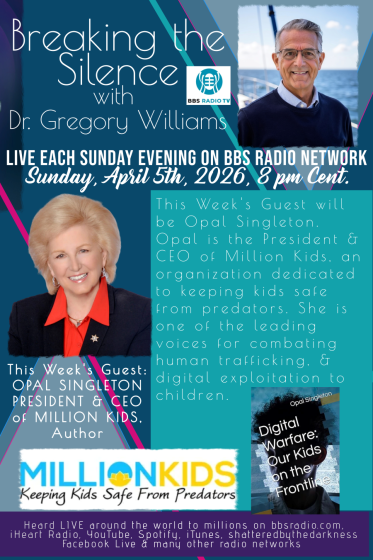
Breaking The Silence with Dr Gregory Williams
Guest, Opal Singleton, President and CEO of Million Kids and Author of "Digital Warfare: Our Kids on the Frontline"
This Week's Guest will be Opal Singleton.
Opal is the President and CEO of Million Kids, an organization dedicated to keeping kids safe from predators. She is one of the leading voices for combating human trafficking and digital exploitation of children.
To Find out more about tonights guest and their work, vist at their website: https://millionkids.org/
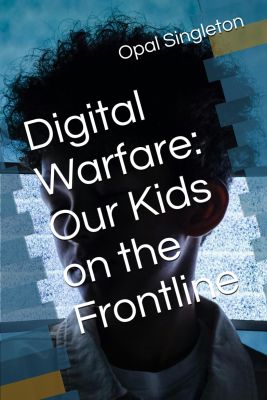
Don't Forget to check out our guest Opal Singleton's book: "Digital Warfare: Our Kids on the Frontline" at Amazon.com:
Digital Warfare: Our Kids on the Frontline: Singleton, Opal: 9798242545991: Amazon.com: Books
In this episode of Breaking the Silence, Dr. Gregory Williams hosts Opal Singleton, CEO of Million Kids and author of Digital Warfare, to discuss the invisible threats facing children online. The conversation highlights the shift from physical "mall-based" grooming to global digital exploitation, emphasizing the urgent need for parental "guardrails" in an era of AI and 5G connectivity.
The Shift to Global Digital Exploitation
The world changed dramatically with the advent of 5G and high-speed internet, connecting children to a global network of over 5.5 billion people. Predators no longer need to be physically present; they can operate from "scam farms" in countries like Nigeria, Pakistan, or Myanmar, reaching directly into a child's bedroom through games like Roblox or platforms like Discord. This connectivity has birthed a new era of "financial sextortion," where organized crime syndicates use AI and deepfakes to blackmail teenagers. Even high-achieving "superstar" children are vulnerable because their public successes provide predators with the information needed to build a convincing profile.
Establishing Emotional and Digital Guardrails
Dr. Williams emphasizes the concept of "guardrails"—boundaries designed for safety rather than restriction. For parents, this means moving beyond "thou shalt not" and becoming a "protector" rather than just a "best friend." Singleton suggests that the first generation of digitally native children must be trained as "internet leaders" rather than just users. This involves teaching "digital dignity" and "digital empathy," helping children understand that their online reputation is permanent and that what they do behind a screen has real-world moral consequences.
The Crisis of Sextortion and AI
The conversation delves into the horrific reality of pedophile rings, some of which have over 1.6 million paid subscribers sharing photos. Once a photo is sent, it can be duplicated and altered by AI, making it nearly impossible to fully "delete" from the internet. Singleton warns that "damaged goods" is a lie used by cartels to drive victims toward self-harm or suicide. Instead, families must foster an environment where a child feels safe coming forward after making a mistake, knowing that their dignity will be protected while they seek help from authorities.
The digital world is no longer a separate reality; it is a "front line" where children are being targeted by global cartels and predators. By establishing firm guardrails, fostering open communication, and educating themselves on the tactics of digital warfare, parents can protect their children's dignity and safety in an increasingly complex connected age.
Guest, Opal Singleton
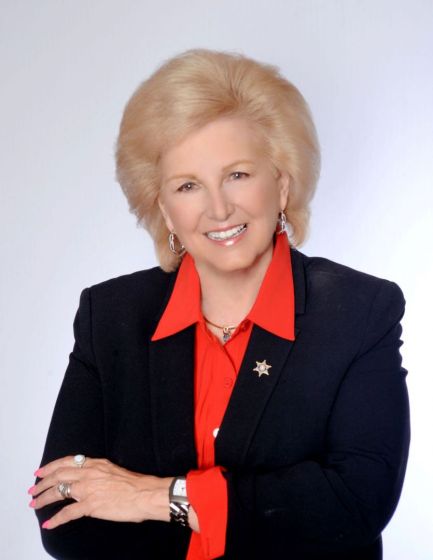
Opal has educated multiple hundreds of thousands of government and individual leaders as the keynote speaker, general presentations and workshop presenter on subjects of labor trafficking, foreign national trafficking, gang trafficking, child sex trafficking, sextortion, child pornography and social media exploitation. Opal has completed tens of thousands of hours of extensive research over the past fifteen years on those subjects.
Opal is the author of "Seduced: The Grooming of America’s Teenagers" (2015) and "Societal Shift: A World Without Borders... A Home Without Walls" (2019). She often appears on television and radio talk shows across the United States.
Opal is an Instructor at USC Price Safe Communities Institute and former co-instructor at the USC School of Social Work for the Los Angeles Police Department LEAD program.
She is an instructor at Los Angeles Fire Leadership Training Academy.
Opal hosts a radio show on KTIE 590 AM called “Exploited: Crimes and Technology” every Saturday at 3:00pm throughout Southern California. She also presents a weekly podcast called “Exploited: Crimes against Humanity”.
About Million Kids
Our mission is to PREVENT child exploitation by empowering every kid, and those who interact with kids, through education on predators and to INTERVENE by providing support services to those families and children in crisis.
Million Kids is dedicated to preventing sex trafficking, child sexual abuse materials, and online exploitation through comprehensive education and training. With thousands of hours spent researching and staying at the forefront of new technology, we recognize the dangers posed by the interconnected world, where artificial intelligence, cryptocurrency, and mass live streaming create ideal conditions for predators to groom, exploit, recruit, and blackmail innocent teens, young adults, seniors and vulnerable members of our communities. This convergence of technology is fueling a global surge in sexual exploitation crimes.
Our expertise is critical in safeguarding children. We research case studies to learn how predators work, so we can help you educate your family and others. We’ve trained hundreds of thousands, including members of government agencies, law enforcement, EMTs, fire departments, social workers, educators, and civic groups, on how predators use internet technology to target youth. Our programs empower children, parents, guardians, therapists, pastors, foster agencies, and community leaders to recognize and prevent online grooming and exploitation.
Million Kids also provides intervention services to families with loved ones who are victims of sexual exploitation. We support parents struggling with their child being recruited, blackmailed, or exploited and offer referrals to therapists and victim service providers. We receive tips from concerned citizens who don't know what to do. Additionally, we collaborate with local agencies to assist in locating missing or runaway teens, many of whom were lured by someone they met online. -Million Kids Website About Us
Breaking the Silence


“Breaking the Silence with Dr. Gregory Williams”
Now is the time for you to step out of your own personal darkness and break the silence that has been hidden and closed up inside of you.
“Breaking the Silence with Dr. Gregory Williams” radio program will offer the listeners a Road Map to Hope each and every week with keys to discover within yourself that ray of light to make your day better and brighter. Dr. Williams will not only discuss his own personal journey of overcoming the darkness of years of horrific sexual child abuse in the hands of his father and his father’s friends, but Dr. Williams will also feature special guests that have their own personal stories of overcoming obstacles in their lives and becoming victors instead of victims.
“Breaking the Silence” will also feature information from the professional and medical field that will dive into the important research involving Adverse Childhood Experiences (ACEs) and how to build Resiliency in yourself and in your children. Along with this information will be special guests from greatest minds in the United States to share their expert research and thoughts on this very important subject that each person needs to be aware of.
Now is the time to invest a few minutes each week with some awesome information to give you steps to HOPE and keys to HAPPINESS and PEACE. NOW is the time to Break YOUR Silence and breakout into a NEW and BETTER YOU! Join us each week beginning August 13, 2019 for “Breaking the Silence with Dr. Gregory Williams”. You won’t want to miss a single program. Heard around the world on the best radio network on the airwaves, BSS Radio Network available on iTunes, Google Play, iHeart Radio, Facebook Radio, Spotify and over 100 other high quality digital radio stations.
[00:11] Speaker 1: Welcome to Breaking the Silence with Dr. Gregory Williams. Dr. Williams is the author of the acclaimed book, Shattered by the Darkness: Putting the Pieces Back Together After Child Abuse. Dr. Williams is on the senior leadership team at Baylor College of Medicine in Houston, Texas. And, Dr. Williams travels the United States speaking and training professionals, parents, and victims about the importance of dealing with abuse and personal trauma head-on, and not being afraid to break the silence of your own personal pain. Feel free to call in to tonight's show at 888-627-6008 and speak with Dr. Williams and his guests live on-air. And now, your host, Dr. Williams.
[01:25] Speaker 2: Well, good evening and welcome to Breaking the Silence, and happy Easter to everybody. I hope you had a, just an absolutely awesome He Is Risen Day, and this is just, uh, one of my favorite days of the, the year, and just the significance of what this means to everybody that believes in Jesus Christ as their Lord and Savior. And, uh, that oughta be everybody, just between me and you. But anyway, just happy Easter, and I hope you had a great, great weekend. You can look behind me here at the medical center at Houston, Texas. Right now looks like the sun is just now fading down and we're going into dusk. So, uh, we are, I think, in the most beautiful city here in the world, and our guests tonight may challenge me on that, but I think Houston, Texas is the best place to be ever. Although here when I say amen at the end of this hour, I'm gonna be getting in the car and driving straight through 1,200 miles to Ohio.
[02:19] Speaker 2: Um, and I have a feeling it's about 30 degrees up there, and, uh, to be honest with you, I'd just soon stay in Houston. (laughs) I don't wanna go up to, to 30 degrees, uh, tonight. But I'm gonna be in a car about 16 hours, um, and then, uh, speak all day Tuesday from 8:00 to 5:00, and then hop in the car and drive straight back so I can be here to, to, uh, speak Wednesday night here back in Houston. So, we're gonna try hopefully just get in the car and say go and it's gonna take me. So that's what we're shooting for. Uh, so be thinking of me, if you would, uh, on the way to Ho- Ohio and back, and I think I'm going through the Little Rock way, and, and all of that. But it's just great to be able to, to be in a, a country to where we can go around and talk about our stories, share our stories, and try to help as many people as we can. And I know there's people whispering in my ear, and probably texting me right now, "What? Are you crazy? What are you doing this for?" The message.
[03:22] Speaker 2: It's not about the money, it's about the message, to try to help one more person, because I think there's so many people hurting, so many people that are confused that need to be able to get some kind of, um, foundation of what to rebuild a life on. And the folks that I'm gonna be speaking to in Ohio, um, deal with children, and, um, disabled children, abused children, and, uh, we're gonna have police officers there too. Hopefully it's a packed house and, uh, it's just gonna be a great day. But we need to provide hope, and I think our guest, I know our guest, is probably one of the, uh, most sought-after speakers right now, uh, in the market right ... in, in the world today and our country. So, this is gonna be a great, great evening. I had an awesome opportunity. Uh, if you remember, a couple weeks ago, I had, uh, Micah, uh, Lasserte and his ... then the following week, his wife, uh, Diana.
[04:25] Speaker 2: They were coming through Houston the other day and they called me and said, "Hey, would you wanna meet, uh, for some coffee?" And I said, "Absolutely." They were out by Hobby Airport, and, uh, I said yeah. So we sat out there and had a great time. Spoke for ... we talked for about an hour and a half, two hours, and folks, you wanna remember these two names, Micah and Diana Lasserte. They're going to change the world with their new TV program, Soul TV, and it's just absolutely awesome. It was great to be with them, and thank you Micah and Diana for your hospitality and, and just being able to greet you. Hear this Micah, this big old, uh, Hercules guy walks in and hugs me and he'd like to break me in half. But they're just great, great people.
[05:09] Speaker 2: I tell you what, as we, uh, prepare for the show tonight, we wanna let you know that you can, uh, get in contact with us during the program by calling straight to that, uh, Thomas's great radio voice, uh, where you say, "BBS Radio, how can I help you?" At 888-627-6008 and he will tap you and bring you right on through to our guest and myself, and you can comment. You can have a question, because I guarantee tonight's subject is something that if you don't wanna know the information about it, you will one day, because it's the most growing cr- crime, the most growing, uh, abuse, the most, uh, horrific, uh, intersection of our life with the thing we call cell phones and computers and what AI's doing to our children.... and also our adults, so we want to make sure, um, you con- you have that contact to be able to call in tonight. Or you can get on, um, Shattered by the Darkness Facebook page. I'm looking at it right now, it is absolutely running, uh, good, so you can comment on that.
[06:17] Speaker 2: Or you can text me at 8- uh, 832-396-6525. 832-396-6525, and when we take a commercial break at the bottom of the hour, I will check to see if there's any comments, and then I'll ask our guest, uh, that comment or that question that you have. Um, I almost forgot my own telephone number. I tell you what, see what technology's doing to us? Of course, at my age, I forget- I forgot where I parked my car a while ago, so I don't know where... (laughs) I'm gonna hopefully be able to find it.
[06:47] Speaker 3: Mm-mm.
[06:48] Speaker 2: Anyway, uh, as I'm thinking about the things that I learned this weekend, I think I'm gonna focus on things that I'm gonna be dealing with tonight. Uh, as I'm driving, hopefully, it's more than one lane each way traffic. I, I hate highways that only have one lane to drive in, that I like two or three lanes so you can pass the slow people and the tractors and all that. But I, I've noticed that when you're on a highway, um, there's something that is on each side of us in that pathway, in that journey, or in that adventure that we don't even recognize, but it's there for our safety. It's there for our protection, and it's called guardrails. And those guardrails are placed on almost every interstate and even when they're damaged, they'll have a sign up, uh, warning ahead there's a damaged guardrail just to let you know that, hey, pay attention, because this guardrail's not gonna help you.
[07:58] Speaker 2: And it made me think that the only reason that I really need to know those guardrails are there is if, by chance, at 3:00 in the morning when I'm driving, and that would be my sixth hour, and I kind of doze off and I go off the highway, that guardrail protects me from a large ditch, from trees, from in, uh, mountainous areas, uh, a cliff, and they're there to protect me from having any more damage to my body, to my life. We all need, I need you need, guardrails, boundaries, not only about your physical life but your emotional life, your sexual life, your technology life, your communication. Every part of your life has to have some type of guardrails, and a lot of people that are smarter than me calls them boundaries. And in that boundaries, we can allow people in or allow people to stay away, but a boundary is something you never want to apologize for, because it's your safety zone.
[09:23] Speaker 2: Now, what I want everybody to lean into the computer tonight and listen to is if you're a parent and you're allowing your child to go to bed with this device at night in their bedroom, you might as well on your way to bed go unlock the front door and throw it wide open, because in today's world, that's exactly what's happening. There's people, and we're gonna find out tonight, the devastating impact of allowing them to have unlimited access to your children through these devices, through these games, through these computers, through the telephones. We have to provide boundaries, and God gave us those children for you not to be their best friend but to be their protector, the person that puts up boundaries, guardrails around them. Why? For the same reason I'm gonna be passing miles of them, 1,200 miles of them here shortly, to protect them from going into the ditch, for protecting them from hitting a wall that's gonna damage them for the rest of their life.
[10:41] Speaker 2: So when you're listening to our guest tonight, and then I'm gonna shut up and just bring her on, I really want you to see and understand the evil, the wickedness, the devastation of what's going on in the dark places that some of us don't even understand, but our guest does. And TJ, go ahead and bring our guest, uh, up next to me so I'll hush up, but I want you to know that this person you're looking at on the screen right now is one of the most well-known experts in the field. And there is a book out that every parent, grandparent ought to buy, and I don't know if you can see it here or not, but I'll let her hold up the hard copy if she's got it. It's called Digital Warfare. She is the author of this, and it is an unbelievable, literally a money-back guarantee on this if you don't like it, because this one is gonna help you to understand.
[11:43] Speaker 2: Opal Singleton, she also is, uh, the CEO, the founder, the, the, the Queen Pubah of, uh, a, a company, an organization, a nonprofit called Million Kids, and there's so many things about her resume and her life that it would just take the rest of the 45 minutes that I have left. But Opal Singleton, thank you for being on the program tonight. When I read your book-
[12:07] Speaker 4: ... I reached out and said, "I have to have you on the show." Thank you for being with us.
[12:11] Speaker 3: Well, thank you very much, Greg. I really, really appreciate it. Must be the work of God. I feel like I've known you all my life.
[12:18] Speaker 4: Really?
[12:18] Speaker 3: And this is our first encounter, you know, so that's really cool. Um, I'd like to tell you a little bit about the book and the idea behind the book. To give you some background, uh, I started 15 years ago, in my retirement, of combating human trafficking. That's how I started. And as I got involved in combating human trafficking, I realized the role of technology in that grooming process. In fact, a long time ago, I wrote a book called Grooming the, um, Seduce: The (G) Grooming of America's Teenagers. And one of the things that I've studied over the time is the role of technology and how it's changing the crime of both, uh, child abuse and child, uh, online child abuse, as well as even sex trafficking. And that's why I wrote this particular book. Uh, I'll share with you that I get really excited, as you can tell, about this whole concept, because I believe we live at the most important time in all of history. And I'm not exaggerating that in any way.
[13:28] Speaker 3: If you think of all the things that have happened in history up until this day, wherever you are in life, whether you're a grandparent or a parent or even a young person, you are at one of the most changing times in all of history. You know, it kind of reminds me of when they invented cars. Because the world changed dramatically and especially in 2022, because, and, and we're all aware of it, but most people don't think about it. And what happened is, the entire world became connected by 5G high speed internet. We all know it. Only about 70% of the world is actually connected. But it changed everything for our kids, and yet so many of our kids don't recognize it, and most parents are absolutely oblivious to it. And, and it's interesting when you start to think about it. Not only is the entire world connected, now your child... You know, let me back up a minute. I'm on Facebook. I'm old enough to still be on Facebook, okay? My kids are on Facebook, so we talk.
[14:38] Speaker 3: But it's an interesting thing. I have 145 close friends, you know, but I kind of know who they are. When our kids go on Roblox or they go on Discord, on a video game, they're on there with 5.5 billion people and growing every day. And they, they don't realize the world they walked into. At the same time that we have this global internet connection, think of what happened in the last three years. Uh, yeah, we have AI, we have generative AI. We have deepfakes. We have the ability for someone to sit in Nigeria and gather up an entire portfolio, not only on you, but your children. Uh, you have geolocation software. They know where you live. Uh, you have global money transfer. It did not take long for people in developing countries who are very poor to realize that this technology puts them right in your kid's bedroom. And that if we don't train our kids, they're gonna be sitting ducks for this.
[15:45] Speaker 3: And it's an interesting thing, because, uh, you've probably picked up in my book, over 40 young men have tragically taken their own lives between the ages of 13 and 17. And it's sad, because when I talk to pastors, they go, "Oh, I don't want to bother them with this negativity because, you know, they're good kids." Every one of those kids were good kids. They were superstars. That's what made them vulnerable. You know, they're homecoming kings, they're, uh, they're getting recruited by some sports thing, they got a scholarship, and all that information's public. So, what has happened now is your kids go online, and now you have people all over the world that want to access them. And if you talk to your kid, it's really an interesting thing, how, how naive our kids are and how confident they are, because they are smarter than us when it comes to technology.
[16:41] Speaker 4: Right.
[16:42] Speaker 3: I get it all the time when I talk to them. You know, like, "You look like somebody's grandma." I am, okay? But they'll say, "Well, I'll know..." And the question is, how do you know? Tell me what your criteria is. That, you know, because we gotta change our kids' gut feeling. It's wrong anymore, because that gut feeling is based on living in a world of Facebook. That this is not the world. And they, we'll say, "How do you know?" And they'll go, "Well, they'll know me, and they'll probably know my friends." Well, if you're on Instagram and you're on, uh, Discord or you're on TikTok, they have a list of your friends.
[17:23] Speaker 4: Right.
[17:23] Speaker 3: And they also can develop a profile. One of the victims in these crimes said, "Mom, they knew everything about us. They had a picture of you and where you worked. They had a picture of my bedroom." Their house was on Zillow, and they hadn't taken it off. They had a picture of the house. Well, the house is on Google Earth. But it seems like they know you, and they have a list of your friends. So, when our team at Me and Kids discovered, uh, and especially, I read every one of those 40 some cases of these kids, and I listened to their parents, and every one of the parents will say, "I've never heard of financial sextortion." You know, and, or, "I would have thought that he would have come to me if he got in trouble." And so, we backed up a bit as a team, because we researched this all day long, and we said, "What can we do different?" Well, number one, we have got to make our kids understand, you live on the worldwide web now.
[18:25] Speaker 3: And I believe that it's, uh, you know, I'm not against filters. I'm not against setting boundaries. I'm not against saying, "You will not take that to bed." Okay? I'm not against any of "Thou shall nots."But I also think we have to put away the wagging finger, and as a family, sit down together and say, "You know, I just realized th- that our life's changed, and you're already smarter than me about this, but we need to talk because I need to understand and I need you to understand that now you're living on the World Wide Web where anybody can access you. And so, what I want to do is develop a strategy." And, uh, Greg, why this is so important is this is the first generation that has this situation. We gotta get this right. They're going to lead. It's like when cars were discovered.
[19:24] Speaker 3: They will lead all future generations, and starting with their younger brothers and sisters and cousins and whatever, but they will be the leaders and how we teach these young people to live in a globally connected world with all this advanced technology will set the stage for all future generations. And that's why I say it's the most important time in all of history. So, sorry to give you the- the-
[19:52] Speaker 2: Oh, are you kidding?
[19:53] Speaker 3: (laughs)
[19:53] Speaker 2: I loved every minute of it. Um, do you- do you feel that not only parents need to warn and educate and just communicate about it? Do you think also it needs to be a part of school? Uh, a part of-
[20:10] Speaker 3: Of state.
[20:10] Speaker 2: ... saying, "Hey, uh, this is new reality," and get experts to come in, uh-
[20:15] Speaker 3: Yeah.
[20:15] Speaker 2: ... and maybe invite the parents to come in too at the same time.
[20:19] Speaker 3: Right.
[20:19] Speaker 2: What- what do you- what do you think about the education and- of what's happening, besides a private conversation at home, which always ............................
[20:26] Speaker 3: Well, I- I believe with all my heart that we have to rewrite internet safety programs, and- and literally make them into internet leadership programs. I mean, I honestly think we have to talk about things like, uh, digital dignity-
[20:42] Speaker 2: Yeah.
[20:42] Speaker 3: ... digital empathy. I mean, uh, one out of six boys and one out of seven girls have sent a nude online, according to thorn.org, but at the same time, a large number of people are being violated because a deepfake has been made of them and- and they're running around school going, "That's not me. That's not me." And yet, a huge number of kids, even if they haven't sent a nude, will send somebody else's nude online. So, we're gonna have to start to talk about digital morality, your digital re- reputation. This is the area I believe that the faith-based organizations need to come in on. I think it's gotta start in churches, uh, and I think it needs to start in- in youth groups, but schools need to also back up. Their internet safety is a lot more than, "Don't get hacked." It's, uh, it literally is, now, anybody in the world can get your photo. Every one of us at some point in the future will be a victim of AI.
[21:47] Speaker 3: And, uh-
[21:48] Speaker 2: Mm-hmm.
[21:48] Speaker 3: ... you know, you can take that from images into even teaching your kids to question the truth, because already, you and I know, you get a- you get an article and you g- and it has all these wonderful words in it that get your heart going and you go, "What is this really trying to tell me?" So, that's another part of the conversation I think families need to have is, how on earth can I prepare you, son or daughter, to be able to discern truth, to have cognitive judgment, to s- think out? And- and where that takes me is, I believe that part of this conversation is sitting down with your kid and getting them to write down their values, define their values, know who you are and what you stand for. Uh, you know, uh, it's- it's an interesting thing because so many of the kids, uh, that are often victims, now not these 40-some kids that- that, uh, took their own lives, but so many of the victims have low self-esteem.
[22:51] Speaker 2: Yeah.
[22:52] Speaker 3: And I say, "Wait a minute. You know, these kids often think that self-esteem is, like, in the DNA and their family didn't get it." You know, self-esteem is a decision you make. It's a gift you give to yourself. Once you decide you're valuable, you're gonna look at all that trash on the internet and go, "Hey, I'm too good for that. I'm too smart for you. And I'm- and you're not getting me." And we have to start to stand up and- and work as a family to talk about values and- and, uh, morality. And, you know, understanding that what you do online is as important as what you do in person, because what you do online can go around the world in a heartbeat now.
[23:39] Speaker 2: Yeah.
[23:39] Speaker 3: And it- you will have a hard time changing it. So, I also ad- along with the digital empathy, I think we have to understand now what happens is somebody gets, uh, sextorted or blackmailed or, you know, then it's passed all around the school and the kid has to change schools. And I'm saying, you know, we need a new norm with our kids to say, "You're next." (laughs) With digital AI, you're next. I also think that it's very important when they're in video gaming. It- it's a fascinating thing. I did a survey with kids in a- in a church s- many years ago, and, uh, they all told me, one-fourth of their youth group told me, "The sin on the internet was not sin." And I'm like, "Well, I hope that works out for you." (laughs) But, you know, it's- it- the young people feel like, well, you know, if you look at a video game-... it's not real, so, you know... Except they process it. And I say, "Well, what if you kill a cop on a, on a video game, you know?
[24:48] Speaker 3: Is that okay, even though it's not real?" You know, what if you have sex with a prostitute and you kill her to get your money back? That's been going on for eight years now. Uh, is that okay? And that's why I think it's important to talk about digital morality, because of the fact that as you start to go into a world where you're connected to six, seven, eight billion people who want to violate you to make money, you know, you're gonna have to start to decide who you are and what you stand for. One of the things is, they'll know you and they'll... and you'll feel comfortable, and the next thing you know, they ask for a nude. And nowadays, kids see that as an invitation. Now, I'm of the generation that's crazy, (laughs) you know? But they... But if you're 14, that seems like a good idea at the time because you haven't defined your values, you don't really believe that's gonna be used against you, and you really think you're talking to somebody you know or cares about you.
[25:54] Speaker 2: Yeah.
[25:54] Speaker 3: All of that's gotta be changed.
[25:57] Speaker 2: Opal, speaking of people sending the nudes-
[26:02] Speaker 3: Hmm.
[26:02] Speaker 2: ... they do a lot of this, if I'm not wrong, uh, on Snapchat-
[26:08] Speaker 3: Hmm.
[26:08] Speaker 2: ... and then thinking that it automatically erases after 30 seconds or so.
[26:13] Speaker 3: Oh, that's wonderful. Uh-huh.
[26:13] Speaker 2: Does it really automatically, permanently erase?
[26:16] Speaker 3: (laughs)
[26:16] Speaker 2: It doesn't, does it?
[26:16] Speaker 3: No. Besides that, you know, uh, one of the things I... I will tell you, by reading my book, I will tell you, that's a hard book to read, okay? It is a handbook about how to keep kids safe online, and it's meant-
[26:30] Speaker 2: Yeah.
[26:30] Speaker 3: ... for professionals to work with, with these kids, but it's, it's an interesting thing how this happens. Now, prior to, uh, what we call financial sextortion coming out of... Uh, basically, those are coming out of people from Ivory Coast, Nigeria, Myanmar, and like that. They get the photo and they immediately change it with AI. So, even if you can get the original photo back, you can't get the, the, uh, duplicates that are out there. Originally, the crime is sextortion, as I identify in my book, was done for pedophiles, and, uh, it... and it is an amazing thing. You were... We were talking about Easter, and I... In the work that I do, I often think that we are not even able to barely understand why Christ died on the cross and what evil... how evil evil is.
[27:27] Speaker 3: And when you start to look at a world of pedophilia, and I know this is an area that you talk about regularly, but what will happen is pedophiles use the worldwide web to find each other and join large-scale pedophile rings to share photos. The last one they found had 1.6 million paid, uh, subscribers on it.
[27:51] Speaker 2: Wow.
[27:52] Speaker 3: So, two things to get out of that statement. One is, it's often organized crime that is now using pedophile photos, so th-... Because if you're paying $200 a year to belong to that, and there's more than a million of you, some organized crime is making literally tens of millions of dollars based on photos. The other side of that is if your child sends a photo to one of the people that are in that group, and it can be people in America as well as around the world, your child's photo can go to over a million people just like that.
[28:29] Speaker 2: Yeah.
[28:29] Speaker 3: And yes, we now have the Take It Down Act, and I'm very proud of that act, you know, and I'm very proud of the people that did it. But the problem is they can immediately be altered, and so the... only the initial photo gets back. And this is the conversations we need to have with kids. This is... I- I believe that... I mean, we would never drop our kids off at a strip club and go, "Let me know how that works out." And yet, every day we put our kids on the worldwide web without explaining to them the world we put them in, and giving them the equipment to make quality decisions when somebody starts to contact them. And so you have two sides of this argument. You have the kid going, "Ah, Mom, I'm gonna know," and you go, "Well, you may know, but the world changed, so let's sit down and start to talk about how it changed, and you can help me and I'll help you." Um, one of the things I recommend is that anybody who goes online, any child and minor...
[29:31] Speaker 3: By minor, I wanna make that clear, anyone under 18. Uh, first of all, putting a prepubescent child online is just insanity, in my opinion. But anyway, if... But you put your kids online, I believe you need a contract between you. And as I outlined in the book, you, uh, you have, uh, one, every app you have, I'm gonna have. Now, one of the things churches can do is get their young people to teach the old people how to use those app, 'cause a lot of parents have the app, but they don't know how to open it, (laughs) you know? So, okay, every app you have, I'm gonna have, because I care about you. And besides, I don't wanna be left in the Stone Ages. I wanna know... Um, uh, you know, every day it changes. I'm running to catch up with you. Uh, number two, that you'll never knowingly put something online that will cause you harm or harm to our family. Number three, you will never, ever, ever, never, ever go out and meet up with someone you met online.
[30:30] Speaker 3: I, I see these cases all day long, and it's just awful what happens there. And number four, you're gonna make mistakes. I believe in you. You're a smart kid, or else I wouldn't give you this, okay... I'm here for you, but if it goes wrong, I'm trusting you to trust me enough that you will come to me and we'll go through it together. You know, because kids will not ask for help because they think they're gonna lose the phone.
[31:00] Speaker 3: So-
[31:00] Speaker 2: Great information. I'll tell you what, we're gonna take our, uh, little commercial break. Um, on the other side of this break, Opal, uh, I would love to be able to find out, um, if the child, teenager, um, suspects that they have been sextorted. What's, what's the rule? What, what do you do? What's the first things you do?
[31:27] Speaker 3: Yeah.
[31:27] Speaker 2: And what's some of the things you don't do? You ex- you explained this and addressed this perfectly in the book, from my point of view. But I want the world to hear, uh-
[31:36] Speaker 3: Thank you.
[31:36] Speaker 2: ... tonight from you. From the author's mouth. Uh, 888-627-6008. We're gonna take a short commercial break, and that will give you time to get on Amazon right now and buy Digital Warfare. We'll be right back.
[31:49] Speaker 3: Our Kids on the Front Line, book it.
[31:51] Speaker 2: That's right.
[31:52] Speaker 3: Thank you.
[31:52] Speaker 2: Our Kids on the Front Line by Opal Singleton, right here. You get Kindle and it's $4.99, I think, on Kindle right now.
[31:59] Speaker 3: Yeah.
[31:59] Speaker 2: It's an awesome read.
[32:00] Speaker 3: Or, or you can also go to meandkids.org and get the audio version. And I read it myself.
[32:04] Speaker 2: Oh, I haven't, I haven't seen that. Okay, great.
[32:06] Speaker 3: Yeah, yeah, we did.
[32:07] Speaker 2: We're gonna take a short break. We'll be right back in about a minute and 20 seconds. So hang with us.
[32:12] Speaker 3: Okay.
[32:12] Speaker 2: We'll be right back.
[32:17] Speaker 1: (instrumental music) Get ready for a life changing journey. From the best-selling author of Shattered by the Darkness and When the Dark Clouds Come, Dr. Gregory Williams is back with his highly anticipated third book, Embracing Your Scars: Learning How to Turn Life's Pain Into Life's Power and Purpose. Have you ever wondered how to transform your struggles into strength? Do you want to stop hiding behind the pain, the heartache, and instead learn how to turn those scars into the very fuel that propels you towards greatness? If you do, then this book is for you. In Embracing Your Scars, Dr. Williams shows you how to take the negative experiences of your past and turn them into the very source of your future success. Don't miss out, because your transformation begins here. The book is available soon on Amazon, Barnes & Noble, and wherever great books are sold.
[33:41] Speaker 2: All righty. Welcome back and happy Easter again. He is risen. He is risen indeed. So it's just great to be with you tonight and appreciate you spending your Easter Sunday evening with us. I always have said since the beginning of the show that, uh, six or seven years ago now, uh, when we started this program, that, uh, if you give us 45, 55 minutes every Sunday night, we're gonna give you something that's gonna inspire you and hopefully educate you that you can use probably before the program's over, but at least in the next coming week. And tonight is no exception. Opal Singleton, I guess you got a book.
[34:16] Speaker 2: Show us the cover so it doesn't show-
[34:18] Speaker 3: Oh yeah.
[34:18] Speaker 2: ... on my phone, uh, it's kind of shiny.
[34:20] Speaker 3: Okay. Let me see.
[34:20] Speaker 2: There it is.
[34:22] Speaker 3: Yeah, there you go.
[34:22] Speaker 2: And this is absolutely wonderful book. And do you have the other one with you?
[34:27] Speaker 3: Uh, no, I don't. Uh, but-
[34:29] Speaker 2: Okay.
[34:29] Speaker 3: ... this one kind of supersedes the other ones anyway, and I cover a lot in it. So if they read this one or hear this one, uh, it will be-
[34:37] Speaker 2: Okay.
[34:37] Speaker 3: ... enough to help them.
[34:38] Speaker 2: Okay. One of the things that I, I loved about it, number one, you have so much information in it that it's not a hard read, be- it's a necessary read. I really believe every parent ought to have this. Every school ought to have this in their library. It o- it ought to be everywhere. Um, but what happens if an innocence of somebody that's on Roadblock, and I use this illustration all the time when I speak, is on Roadblock and in a chatroom. Uh, Julie 2012 shows up and says hi, and you say hi back.
[35:14] Speaker 2: And using a name like Julie 2012, it doesn't take a, a rocket scientist-
[35:19] Speaker 3: (laughs)
[35:19] Speaker 2: ... to, to go, "Hmm, they must be about 14, 15 years old. That's her birth year." Okay? It kind of gives you that indication. Hey, and then eventually they get offline and say, "Can I just text you instead of everybody else seeing this in the chat room?" And then you give them their number, and then they build this conversation and then they say, "Hey, you want to see a picture of me?" And then they send a picture of some naked girl, and automatically they say, "Would you like to send one of you to me?" And in that, Opal, what happens when that boy or girl sends that picture w- and the next phrase is, the next message back is, "If you don't send us $500 by noon tomorrow-
[36:11] Speaker 3: Right.
[36:11] Speaker 2: ... I'm gonna put this all over the internet."
[36:14] Speaker 3: Right.
[36:14] Speaker 2: What, what's a child to do? What's some of the things, "Oh, no." Because it's caused suicides, 'cause they don't know what to do.
[36:22] Speaker 3: Right.
[36:22] Speaker 2: We have to educate. Do that right now, Opal.
[36:25] Speaker 3: Yeah. Um, y- you really handle... I can tell you read the book. That's good. You really handle that well. The, um... One of the first things I wanna especially give parents is, how does it work?
[36:37] Speaker 5: Yeah.
[36:37] Speaker 3: And literally, the first thing that they'll do is they'll come on. Your first sign is that they will come on and they'll want you to... They'll move you from one app to the other. By the way, this is true of adult, uh, romance scams and even cryptocurrency scams. The first sign you're in trouble is they'll move you from one app to the other. If you're on a dating site, let's talk off s- offsite. If you're on, uh, say, Instagram, let's go to Snapchat. They're moving you to see if you're law enforcement. The other thing is, is if you're willing to follow. Then the next, uh, big sign... That's the first red sign, and most kids won't pick it up. They think any... They don't think anything of moving from one app to the other.
[37:20] Speaker 5: Mm-hmm.
[37:20] Speaker 3: Anyway, uh, so the next sign will be, "This is our little secret." And you got that exactly right, you know, the don't tell. That, every kid oughta understand, "Our little secret," is a huge red flag. I, I know I sound like a mother, but if you can't be proud of who you are and what you're doing, maybe you shouldn't do it, you know, that. That's a hint right off the bat. Okay, so they'll, they will, um, come in and they'll move you, and then they'll say, "Don't tell." So, all of those things will start to tell you when you're in trouble. If they want anything illicit, you're in trouble right off the bat. Run, baby, run. I put that in the book. Run, baby, run. That's your first instinct. Get the heck out if you see those two things. Now, if they've already found themself in some sort of trouble, and they may not have done a thing, it could be a deepfake, you know, that they're working with because this is happening all over. They... Anybody can create a deepfake of you.
[38:18] Speaker 3: And so, what do you do? The first thing you do is shut off the device. Don't negotiate. Okay? Uh, well, the first thing you do is stop right there, but don't delete anything, and go to a trusted adult. And I know that that's a hard thing for kids to understand.
[38:39] Speaker 5: Yeah.
[38:39] Speaker 3: But that is very, very important. Don't try to negotiate with them. There's all these cases where kids sent money. All they do is want more money. They try to negotiate. They try to be rational. They try to, to interact. They'll put it away for a while, come back, and then they're still there. These... What happens, and I really need parents to understand what is going on here, is financial sextortion started because overseas people can reach our kids. They are actually enslaving thousands of people. If you go onto YouTube and put in scam farm, if you wanna know where romance scams come from, cryptocurrency scams and your kids' extortion scams, put in scam farms, and they take poor people and enslave them. It is those people that get that profile that look like the first 14-year-old kid to our kid. And so, they're like the throwing out the, the, uh, pole and reeling it in for fishing.
[39:42] Speaker 3: Once a kid even starts to respond with something they can blackmail, it goes to cartels that are in Nigeria, Ivory Coast, Pakistan, Myanmar is famous for this. I mean, and we're just getting started. Just think, there's 30 more percent of the world. This is why this is so important. There's 30 more percent of the world that is very poor that has not yet come online. This is the way of the future for all of us. So, once they have something to work for with, the cartels set in. Of reading these 45 stories, one of the kids, and he was a great Christian kid, a fi-... He had already picked out his college, goal-oriented, everything going great. He got over a thousand texts in a 24-hour period. That's th- "You're, you're useless. Here's your nude." You know, "It's g- here's your list of followers, and it's gonna go out to everybody if you don't give me a lot more money." And even if he sent money, it wasn't enough money.
[40:42] Speaker 3: And the kid will say, "I, I'm gonna kill myself." And several of these kids, one kid showed him the gun, and they go, "Go right ahead. You're a dead man anyway." And they will, they will immediately... "You're damaged goods." One of the conversations to have with your kids is, "There is no such thing as damaged goods." Okay? I think that's the greatest fear of all mankind, man, woman, and child, is, "I can't be damaged. I can't do this." You know, God forgives. I forget, there is no damaged goods. But our kids need to understand, once you reach that point, go for help. Don't panic. Get a trusted adult. Shut it down. Now, for parents, here's what you do. You don't go in there and start screaming, "You lousy blah, blah, blah, blah, blah. Leave my kid alone." Okay? You don't do that. You do not notify them that you know. You do not continue cont- uh, conversation, but whatever you have there, do not delete.
[41:40] Speaker 3: In fact, screenshot it, because it's evidence, and your child is not the only victim. One of the things I want teenagers to understand is, even if you make a mistake, if you ask for help, you can help others, and you can help save many other people. You are not their only victim. So, the key is, don't let them win. Our kids get video games. Don't let them win. Hopefully you won't send it. But let's say it's a deepfake.... screenshot it, don't negotiate, don't continue to talk, don't go back on, but then take that informa- and don't alert them, take that information and the victim and go immediately to your local police department and ask for cyber crimes. Now, if you live in a small area, uh, where they don't have cyber crimes in your local police department, they can contact either Homeland Security, by the way, that doesn't have anything to do with immigration. Homeland Security has internet crimes against children, ICAC, and they are fabulous.
[42:45] Speaker 3: Those people are absolute saints and investigate and go after these pedophiles. They are really something. But, uh, also, the FBI has their group also.
[42:55] Speaker 2: Mm-hmm.
[42:55] Speaker 3: So, take your child, take the im- the, screenshot the information, do not show those photos to everybody else, that's your child's dignity, but t- tell your child, give them confidence, you know, we have to teach children and adults. One of these victims, the mother said, "He's 17 years old and six foot tall. I quit checking his phone. Never even occurred to me that this would happen." It can happen to anybody. So, at that point, you take everything and you go to law enforcement, and keep it off. Now, you should block and, and s- that, go into your profile, make it private, take ev- you know, go into everything you can to remove offline. Now, I'm gonna tell you that the farther this goes, 'cause we're just getting started, you know, in this, is the less information about you online, the better. I see people putting pictures of their little kids online. Now, I just had a new grandson born, you know, and everybody wants to share, and it's not online publicly.
[44:01] Speaker 3: You know, it's only between us, you're not posting this. And yeah, it can get hacked, but, but we have to think differently in this age, and that's why I call it digital warfare. Uh, uh, while I'm on a roll here, I wanna cover one more thing. It isn't just the cartels in Nigeria or Ivory Coast or Myanmar. We now have terrorist groups, we have, um, uh, geopolitical enemies, we have radicalized people on both sides, right and left, and those people are now reaching our children. And that's, I know that's somewhat extreme, but we have already had cases in the US of Group 764 and they've been arrested. And they are some of the people that talk to our kids. They'll take a kid that's on the edge and say, "Why don't you go blow up a school?" Or, uh, you know, the- these kids that are easily influenced, they will get them into doing all kinds of evil things. One sign that a- they may be engaged in that kind of thing is they'll cut, they'll cut letters and numbers.
[45:06] Speaker 3: And, and if you have a child that's cutting, they need help anyway, but if they're cutting letters and numbers, you need to get them to law enforcement, because they're being controlled, and they may not be willing to talk about it right off the bat, but, but that's real important. So-
[45:21] Speaker 2: Are you talking about self-harm? Self-cutting?
[45:22] Speaker 3: ... number one, watch out that they move you. Huh?
[45:25] Speaker 2: You're talking about self-cutting?
[45:27] Speaker 3: Yeah. Self, uh, self-harm, self-mutilation, that's one of the things-
[45:31] Speaker 2: Yeah. So they're, they're being, they're being prodded to, uh-
[45:34] Speaker 3: Right.
[45:34] Speaker 2: ... carve a, a seven or a, a number or something on their body?
[45:39] Speaker 3: Right. The group is called Group 764 or Group 764-Inferno. And, uh, you saw some arrests just a couple three months ago, you might wanna google it. Now, they're, they're a smaller portion of, uh, people that might be going after your child. But my point is, is once a child understands or, or a teenager understands, they're online with everybody in the world. Some are pedophiles, some are terrorists, some are just crooks, okay? And then there's a whole world of nice people, but it isn't gonna be the nice people that wanna bring you down. And this is the reason why we need to start to talk about things like digital morality, uh, to understand and know who you are and what you're willing to do! What about your digital reputation online? Because if you're posting these nudes, you know, sooner or later you're gonna try to get into university and they're gonna see that nude, you know?
[46:42] Speaker 3: Sooner or later, you're, you're, maybe you wanna go in the military or, you know, maybe you fall in love and your new mother-in-law sees that nude. (laughs) You know, that's gonna get tacky, but (laughs) anyway. Anyway, we have to think different because it's a global event now.
[47:00] Speaker 2: Right.
[47:00] Speaker 3: And it's a global event that can reach your child's bedroom.
[47:04] Speaker 2: D- is there a MO that they use, uh, uh, a, a game plan of how they start creeping in to a kid's life? I always, uh, when I, I train, uh, police officers and judges and, uh, people around the country, I always mention something about, you know, it used to be the days the, the human trafficker Romeos would be at the mall and they'd watch that low self-esteem girl walk past and then compliment her outfit and then walk by five minutes later and say something, "Oh, you're beautiful," and all that. Now, they do all this online. They don't need to go to the malls, they can do it right from their recliner at home or at a cafe in Nigeria. What's some of the things that... Do they, do they start glorifying them? Do they start, uh, talking down to their parents or, "Oh, are you're having a bad day?" You know, parents are just... Do they try to disconnect, uh, isolate?
[48:00] Speaker 2: How do they start playing the game to get them away to where they can start trying to, to get them involved in stuff that they may never wanted to be involved with to begin with?
[48:12] Speaker 3: Yeah. The, the-The ways they do this are many. I was thinking to myself, maybe I need to rewrite Seduced and bring it up to date, um, because, uh, because what you described is often how it would happen with sex trafficking. But now, a lot of the times, it'll be guys that are playing video games, and they're playing, you know, with literally, if you're on Discord, and Discord is one of the most common, uh, platforms that are out there. And by the way, Discord isn't good or bad, and, and I want to say that about technology. Technology is like a car. You can take it to university and get a degree, or you can take it to a strip club and get in trouble. It's how you prepare the driver of that car.
[48:54] Speaker 2: Very good.
[48:54] Speaker 3: And so, you get a kid that's playing, and this is why I talk about values in there, uh, you get a kid playing a video game, and you know, they're, they're playing with literally thousands of people they don't know, and they team up. They feel loyal to each other and like that. But a lot of times, there's things like skins and those kinds of things that you buy, uh, in a video game to increase your points, especially if you're not a good player. And so, these guys will get buddies with you. "Oh, let me buy you some skins," kind of thing. And you start to build a loyalty to them, and you see them as your friend, and so it can, it can simply happen that way, or it can come in on a, like dating sites, uh, you know, all these dating sites, and now dating sites have geolocation software on them. Uh, I knew of a case, LBGTQ case. Kid was, like, 12 or 13, and he didn't want to talk to his folks about what he was thinking, and so he went on Grindr.
[49:53] Speaker 3: And, uh, the guy came onto Grindr and, and said, "I'm only four miles from you because you have geolocation software." He said, "You don't have to tell your folks. I'll meet up, and I'll mentor you." And so, it can be any of those kinds of things, but it can also be based on fantasy. And that was what my first book was all about. The grooming process is really about a fantasy. You know, your 13-year-old girl shows up with a 23-year-old boyfriend in a pickup truck. I like pickup trucks. It's okay. (laughs) Anyway, but they do, and you're freaking out. You're saying, "You're grounded. He's too old for you," you know, and you're saying, "Clean up your room," and, and like that, and he's saying, "Hey, baby, you're hot." You're not really arguing with her or him. You're arguing with this fantasy that's going around in her head, and when a parent gets in a tug-of-war with the fantasy, they're gonna lose if they don't start to understand how to unpack that fantasy.
[50:54] Speaker 3: You know, and I'm no different than anybody else out there. I want what I want, darn it, (laughs) you know? And this is mine, and you're not getting it. And I get that, and our kids have that on steroids.
[51:06] Speaker 2: Yeah.
[51:06] Speaker 3: But what we do is we don't try to take it away. We try to start and sit back. I think you can, the antidote to that is to sit down. I just did my podcast on this this week, and, uh, on millionkids.org, by the way, but anyway, um, uh, sit down with your kid, and, and start to say, "How do we define a good relationship, and one that's abusive?" Because our kids go online to make relationships, every one of them, and they get all dolled up, and they do their twerking and all the stuff they do to try to look good to get somebody to like them. What is a good relationship? You know, what, uh, you know, is he doing all the demanding, and you're doing all the giving, or vice versa if she's a she, you know?
[51:55] Speaker 2: Mm-hmm.
[51:56] Speaker 3: Are they, are they, uh, restricting your life? Are they telling you no all the time? Are they trying to get you to, uh, just do something disrespectful to yourself, to cheapen yourself, something that would compromise you? And that's one of the things that I think is an important conversation with all teenagers.
[52:16] Speaker 2: Yeah.
[52:16] Speaker 3: If somebody's trying to get a photo from you, that isn't an invitation. That's an invitation to be compromised.
[52:24] Speaker 2: Yeah.
[52:25] Speaker 3: You know? And so, somebody who cares about you will not ask you to compromise yourself. I saw a case, it was a sex trafficking case, but he didn't reach out to her. She went on a, uh, tattoo site, and she liked his tattoos, and he liked hers. And pretty soon, in her mind, they're in love, and they live 100 or 200 miles apart. She actually raised money for an Uber to go up to San Jose and meet up with him, thinking he's going to marry her, because she created this fantasy based on the fact that they hadn't met. So, you start, you need to start to ask a lot of questions. What do I know about this person really, really? By the way, this works for adult romance scams too.
[53:10] Speaker 3: I can tell you, absolutely intelligent people who are lonely-
[53:16] Speaker 2: Yeah.
[53:16] Speaker 3: ... that start paying people money they have never met. And so, you have to start to say, "Wait a minute. Why is this person trying to compromise me?" Or, "Why are they getting something out of me?" That's not a relationship. I always say, "If they're doing all the demanding, and you're doing all the giving, that's not a n- a, a relationship. That's a negotiation, and you're losing." And I think we have to have those dialogues with our kids because-
[53:44] Speaker 2: Absolutely.
[53:45] Speaker 3: ... right now, our kids go online in a fantasy because it's not a real world.
[53:51] Speaker 2: And it's not gonna get any better, is it?
[53:53] Speaker 3: No, it's gonna get more and more difficult. That's the urgency of this book, okay?
[53:59] Speaker 2: Yeah.
[53:59] Speaker 3: It's understanding where we're at right now. Just think, if you have a 14-year-old boy that's online, and he has an 11-year-old sister, just think of the world the 11-year-old sister's gonna live in. We gotta get this right.
[54:13] Speaker 2: Yeah. Tell you what, I'm, I'm just scrolling through all the, the texts I've got, uh, during the program, and the last one I just got 'cause they know we're-... ran out of time. Said you have to have her back. And I wanna go ahead and invite you back. I have to have you back on, 'cause I didn't even, I didn't even touch, scratch the surface of all the things I wanted to talk to you about. But, uh, thank you so much. Hold up your book again.
[54:36] Speaker 2: Um-
[54:37] Speaker 3: Thank you.
[54:39] Speaker 2: And Opal, in the last minute, Digital Warfares: Are Kids on the Front Line?
[54:45] Speaker 3: Right.
[54:46] Speaker 2: Um, the last minute. Every parent in the world is looking at you right now. And what would your one response be of, "How do we stop this? How do we prevent this?" And you only had one statement you could make. What would that be? What's the key thing that needs to be done?
[55:12] Speaker 3: This is a call to the light of a lifetime for leadership. Never been here before and you're the parent or the grandparent or the leader. Get yourself educated. That's why I wrote the book.
[55:24] Speaker 2: There you go.
[55:24] Speaker 3: There's a lot there. Get yourself educated and start to understand that this is a tremendous opportunity. The converse of this is we're gonna lose a lot of kids if we don't. So do it. Let's get together, let's educate ourself, and do whatever God has called you to do, but do it with good knowledge.
[55:46] Speaker 2: Fantastic. I tell you what, if you read this book, buy this book, and, and digest this book, it is like a master's degree, and you will be so much far superior than most of the people in the world that has their head in the sand or their head just doing this, and, on TikTok or whatever.
[56:02] Speaker 3: Mm-hmm.
[56:03] Speaker 2: Get the book. You're gonna need it in your life, uh-
[56:06] Speaker 3: Thank you.
[56:07] Speaker 2: ... unfortunately with all the children. Opal, thank you for being with us online.
[56:11] Speaker 3: Thank you.
[56:11] Speaker 2: I wanna invite you back, and I, I'll be, uh, emailing you, uh, early part of the weeks ahead.
[56:16] Speaker 3: (laughs) .
[56:16] Speaker 2: Here's the dates I have available. Come on back, if you would.
[56:19] Speaker 3: I feel like I've known you all my life. (laughs)
[56:21] Speaker 2: Well, thank you for sharing your... Thank you for sharing your Easter Sunday night with us. I appreciate it so much.
[56:25] Speaker 3: Thank you. Thank you.
[56:26] Speaker 2: Keep up the great work. God bless you.
[56:28] Speaker 3: You too.
[56:28] Speaker 2: And may your, uh, book just go to number one and stay there for a long, long time.
[56:33] Speaker 3: Wow. Thank you. (laughs)
[56:35] Speaker 2: Goodnight. I appreciate it.
[56:37] Speaker 3: Goodnight.
[56:37] Speaker 2: As we do each and every week, I, I love, uh, the guests that we have, and to be honest with you, I only bring on guests that I trust, that I believe in, and that I think are doing the mission for the right reason. Uh, and Opal's one of them. Uh, she's all over the country, all over the world speaking about this, so we just heard from one of the best tonight. As you celebrate the final hours of your Easter weekend, just wanna let you know, if you're going through what we're experiencing right outside here, darkness, I wanna let you know the, the sun's gonna be coming up in the morning. There's always hope. Never give up on hope. And I want to invite you to give Jesus Christ a chance in your life, because he sure gave his entire life to you. Thank you for being with us tonight. Join us next week for another live edition from Houston, Texas of Breaking the Silence. God bless. Happy Easter. And he is risen. He is risen, indeed. Goodnight. God bless.
[57:50] Speaker 1: (uplifting music plays) Thank you for listening to Breaking the Silence with Dr. Gregory Williams. To contact Dr. Williams, dial 832-396-6525 or email him at shatteredbythedarkness@gmail.com. And don't forget to join us each Sunday night at 8:00 PM central time, 6:00 PM Pacific, on BBS Radio Station 1 for the next episode of Breaking the Silence.


