Skin Wars, March 21, 2026
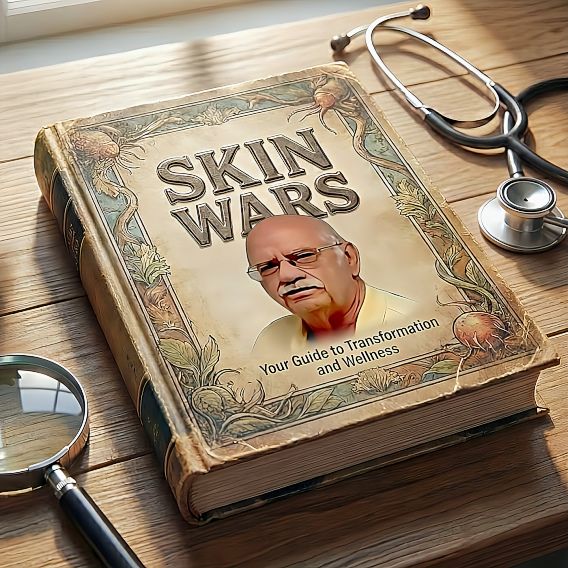

Skin Wars with Richard L Kuhns B.S.Ch.E., and co-host, Robin O'Herron
Holistic Strategies for Morgellons, Parasites, and Chronic Disease Recovery
This episode of the Skin Wars podcast, hosts Richard and Robin interview their expert guest, Nancy. The discussion provides a deep dive into the pathology of Morgellons disease, the systemic burden of internal and external parasites, and alternative protocols for immune recovery and cancer management.
Defining Morgellons and the Parasitic Environment
Morgellons is characterized by the body's production of abnormal filaments and fibers composed of collagen and keratin, which often fluoresce and appear in various colors such as white, blue, red, or black. These fibers are distinct from normal hair and are frequently found accumulating like lint in bedding. Symptoms are often severe, with 95% to 99% of sufferers experiencing intense itching, "biting" sensations that feel as though they reach the bone, and non-healing lesions. The speakers emphasize that infected individuals act as "walking parasite machines," shedding organisms into their environment and onto furniture, necessitating a rigorous approach to environmental cleaning and the treatment of pets to prevent constant re-infestation.
The "King Diet" and Nutritional Foundation
A cornerstone of the recovery protocol is the "King Diet," a highly restrictive nutritional framework designed to reduce the "fuel" available to parasites. Unlike standard paleo or low-sugar diets, the King Diet prohibits common healthy foods such as carrots, peas, asparagus, and most vegetable oils (including olive, corn, and safflower oils). The protocol limits intake to specific items like rice bran oil, real butter, ghee, animal fats, and cocoa. This dietary discipline is presented as the essential first step in reducing the biological stress on the body and making medical treatments more effective.
Medical-Grade Treatment Protocols
Nancy and Richard detailed a synergistic "Bundle" approach to eliminate the multi-layered burden of parasites and fungi. The protocol moves beyond simple herbal tinctures, which can sometimes feed certain parasites like Collembola.
-Lufenuron: Targets the formation of chitin, effectively neutralizing mold, yeast, and systemic fungal infections (like Candida) without affecting human biology.
-Nitenpyram: Rapidly kills external biting adults (fleas, mites) within 30 minutes.
-Fenbendazole: Disrupts nanotubules in internal worms and has shown significant potential in targeting cancer cells.
-Ivermectin: A broad-spectrum anti-parasitic used at specific dosages (12-24mg) to clear internal loads.
-Praziquantel: Included specifically for the removal of tapeworms, which are resistant to other anti-parasitics.
The Cancer Connection and Immune Realignment
Nancy shared her personal history of surviving aggressive cancer after being sent to hospice 12 years ago. Her recovery was attributed to alternative protocols, specifically the use of Fenbendazole and Lufenuron to strip away protective fungal biofilms from tumors, allowing the immune system to recognize and destroy cancer cells. A critical component of her "Beyond" protocol is Low Dose Naltrexone (LDN), which realigns the immune system rather than suppressing it. She argues that chronic parasite loads exhaust the immune system, leaving the body unable to fight off aberrant cancer cells.
The discussion highlights that Morgellons and chronic parasitic infections are not merely skin issues but systemic failures often exacerbated by environmental toxins and immune exhaustion. By combining the strict "King Diet" with a multi-drug approach (The Bundle) and immune-modulators like LDN, the speakers suggest that even those in "doomsday" health scenarios can reclaim their lives.
Skin Wars
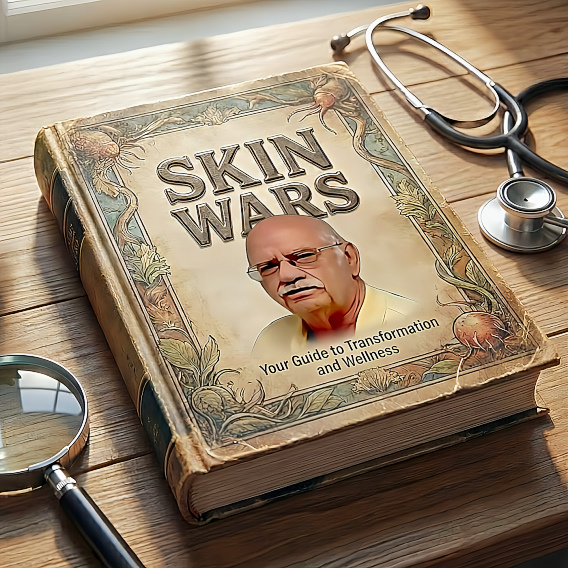
Skin Wars: Beating Morgellons, Chronic Lyme, and Other Skin Parasites
The Tools You Need to Get Your Life Back
1. The King Diet aka Morgellons Diet
How would you like to get rid of all the discomfort of biting and itching within just a few days?
Sounds too good to be true? Well, it’s not and the secret is the three phase Morgellons aka King Diet. Hundreds of others have successfully used this amazing diet to get their lives back – healthy for you and not so healthy for the parasites.
This diet, worth thousands, is totally free by providing your first name and email address in the form above. Sign up now and kick the parasites out of your life!
2. Nature's Gift® Debriding Soap
The sub-molecular particle size of this solution cleans not only the pores, but the cells inside the pores.
How it works: What happens when you get a pebble in your shoe? Answer: You must remove the shoe and get rid of the pebble. Here a tiny pebble weighing less than a gram dictates your behavior.
That’s how Nature’s Gift® Debriding Soap works – it irritates the parasites such that they must leave your skin. No other solution works as good or is as effective than Nature’s Gift® Debriding Soap.
3. Cleaning Your Environment
By now, you must know that the parasites have infested your furniture, clothing, bedding, automobile, and so on. We have proven steps to disinfect these areas to keep you from being re-contaminated.
4. Build Health & Immune Function
By now your health and immune functioning is probably compromised. Specific supplements are recommended to rebuild your health.
The FDA has not evaluated these statements. This information is for educational purposes only. Before starting the King Diet or implementing any recommendations consult with your attending physician to make sure that they do not interfere with any medical issues you have. This is information is not to be considered diagnosis, treatment, or cure or means of mitigation or prevention of any disease. Please see your physician for diagnosis and treatment. It is to educate you on how to clean your environment, skin, body, and how to improve your general well being.
[00:01] Speaker 1: Welcome, everyone. It is Sunday, March 15th 2026, and this is the Morgellons, what is it? Think pod, no, podcast (laughs) of the week. Oh, can we do this again? Can we start over? I'm sorry. No? Okay. Welcome, and, um, I'm Robyn, the co-host. I'm so glad to greet you here. Uh, this is the B, B... I can't do this, I'm so-
[00:31] Speaker 2: BBS.
[00:33] Speaker 1: ... BBS Podcast. I've been a little under the weather. (laughs)
[00:38] Speaker 3: Want me to start again?
[00:39] Speaker 1: Yeah, I would really like to.
[00:40] Speaker 2: Yeah, but everybody-
[00:42] Speaker 1: Welcome, everyone. It is Sunday, March 15th, 2026. I'm Robyn, the co-host, so this is the BBS Podcast for the Morgellons Think Tank of the Week. We're so thrilled to have Nancy as our guest today. She is an expert about different treatments using Lufenuron and Fenben, and she has a new book that I'm really excited to hear about. So, and, so at this time, I'm gonna turn the call over to Richard and Nancy, our amazing experts on Morgellons and other skin parasites.
[01:21] Speaker 2: Good afternoon, everybody. Thank you for, uh, tuning in. Uh, we're here every Sunday. Uh, we start now with a podcast for the first hour, and usually, uh, Carrie Ann is with us from Morgellons Uncensored. Uh, she may be joining us in a little while by audio, and I, I hope, uh, 'cause I definitely wanted her to connect with, uh, Nancy, 'cause I believe Nancy's experience is beneficial for every one of you, and especially Carrie Ann, uh, uh, from what I've been, uh, our communication's been about. Anyway, it is important to lay down the rules. The federal regulations, the FDA and the AMA. The AMA requires me to inform every one of you that none of us are medical doctors, and I don't think we want to ever be a medical doctor, but nevertheless, we are not. We are not trained. We are not schooled. We're not licensed. Don't wanna be. So, only doctors can diagnose or treat or mitigate or prevent disease, and we don't do any of that. We don't care about that.
[02:49] Speaker 2: What we care about is education, and that's what we're allowed to do. Yeah, we got one thing in there. We're allowed to educate you how to eat. Yeah, eat. Now, it's not the paleo diet. It's not the Mediterranean or the, uh, low sugar diet, or the whatever diets out there. No, this is a very specific detailed strict diet, the King Diet, uh, and those of you that have read the book and started the diet know what I'm talking about. I mean, can you imagine a diet where carrots and peas and asparagus and olive oil and all the other oils, corn oil and safflower oil, all of them are no good and not on the diet? Really, that's, that's it. Only, only rice bran oil, real butter or ghee, animal fat, cocoa, they're allowed. Now, the feder- the FDA requires me to inform you that none of what we state or have written have been evaluated by them. We don't have the money and the millions of dollars they charge to evaluate stuff, so they haven't evaluated anything.
[04:23] Speaker 2: But they do require that before you accept our recommendations, mine, Nancy's, Carrie Ann's, Robyn's, or anyone here, that you discuss them thoroughly with your medical doctor to make sure he will, they will not interfere with any health problems you're presently experiencing. Uh, so, now, we can educate you, as I said, to make this diet work. We can educate you how, y- you see, if you're on this call, it's because the itching has been driving you nuts, the biting sensations to the bone, the lesions don't heal, junk and crap is coming out of your skin. You're on this call because you're a mess, or you were a mess and are hopefully getting better now. Uh, so, that, that's kinda yucky stuff. Uh, that's why you're on this call. So, we can educate you how to clean your environment, because as I've always said, you're a walking, talking, breathing parasite machine. Yeah, get that in your mind. You are a walking, talking, parasite-breeding machine.
[05:51] Speaker 2: Everywhere you go, you are shedding these organisms or they are jumping off of you. Yeah, they jump. (laughs) Uh, that sounds like something out of sci-fi.
[06:06] Speaker 4: ... story for today-
[06:08] Speaker 2: That sounds like something out of sci-fi, doesn't it?
[06:10] Speaker 5: We've talked before about that.
[06:12] Speaker 6: No.
[06:12] Speaker 2: I- I think Carrie, Carrie, have you just joined us? Can you mute yourself? Can you mute, Carrie? She just joined us. Hi, hi, Carrie. How you doing?
[06:22] Speaker 5: Hey, Richard. Um, I'm gaining some strength here. I'm, I'm still working on it there. (laughs) Thank you.
[06:28] Speaker 2: Okay, fantastic. I'm glad you're able to join us. All right. So, as I was saying, we're walking, talking breeding machines, and if you had some- some way... If, if you had a way of looking at one of us who are infected with these organisms, you could... And had a- a camera that could see these things, you could actually see them jumping off of us. Where do we go? Off of our legs, off of our shoulders. And they're landing on the furniture, all the things around us. Well, this podcast is called Skin Wars because it is a war of the skin, particularly parasite war. And the first thing, because some of you may not be in my group or may not be in, uh, uh, Carrie Ann's Uncensored Morgellons, or even if you are, you might be wondering if you have Morgellons. So, let's kind of just repeat some stuff that we always repeat. According to Dr.
[07:42] Speaker 2: Savely, who wrote Morgellons: The Legitimization of a Disease, and I have no reason to doubt her definition, Morgellons means that your body creates filaments and fibers that are not normal. They're comprised of collagen and keratin, and they're not the same as the hair that grows from your skin. They could be of various lengths. They can be of various colors. Uh, they're said to be fluorescence. Uh, they can be various sizes. So, white, blue, red, green, black. Uh, some people describe them as long. I mean, you see a lot of pictures on Facebook. Uh, long, uh, yucky things. Some people claim that they move. Uh, they can be so tiny that you can't see them with the naked eye, unless you got maybe 20/15 vision. But you'll find them accumulating, like lint, like cotton-like substance in your bedding and clothing, and you're not wearing cashmere and you're not wearing wool. Wh- What's this stuff come from? So, that is the definition that you have Morgellons.
[08:52] Speaker 2: Now, people with Morgellons also experience other things th- that are going on. Uh, but not necessarily. I mean, I've had people with Morgellons who did not have any itching. But I'd say 95%, 99% of us with Morgellons experience incredible itching. Now, it's a degree of various proportions. Some people are affected more so than others. For some people, it's a living nightmare. For others, it's just, uh, an inconvenience. You know, they scratch and they itch a little bit and, you know, no big deal. They get a rash and it goes away, or an ulceration that goes away and it's no big deal. So, you have, uh, various... But it's always the filaments and fibers. So, 99% of us itch. And so, for some of us, it feels like shards under the skin. The itching is so... Can be so intense. Biting sensations. Oh, by the way, itching isn't only reserved for Morgellons. Itching can also mean mites. M-I-T-E-S. It can mean Columbola or Columbola, springtails. Uh, it can also mean fungus, skin fungus.
[10:20] Speaker 2: All right? So, the itching isn't just for Morgellons. Now, there are biting sensations that many people report, like feeling it going to the bone. Again, this isn't only just for Morgellons, but Columbola and skin fungus. The difference between the two is that with Columbola, the biting feels like it is into the bone and it won't move. It stays there. Whereas with skin fungus, you'll feel a biting at one place for a few minutes and then it'll move, uh, and go to another area on your skin. Uh, lesions, non-healing lesions. Typical with Morgellons. Oftentimes, the filaments grow right out of them. Now, lesions, non-healing lesions are not only for Morgellons. They can also be for Columbola. Uh, rashes. Well, rashes are generally not associated with Morgellons. It's more of a bacterial thing, can often be associated with Strongyloides auriculatis, or maybe even worms in your skin, perhaps. Okay. Now, things coming out of your skin.
[11:40] Speaker 2: Can you imagine a disease where you have barbs, like plastic barbs emerging from your skin? Uh, goo, gooky stuff coming out of your skin? Can you imagine a disease like that? Like here on my cover. You see that stuff? That's stuff that comes out of people's skin. The best book in the world, by the way, How to Get Your Life Back from Morgellons, Chronic Lyme, and Other Skin Parasites.Now, try this on for size. One lady took a picture, sent it to me of a spider. Now, how many legs did that spider have? Supposed to have eight, right? 16 legs. Now, I'm not saying everybody has 16-legged spiders coming out of their skin, but the point is that organisms come out of your skin, and this is typically associated with Morgellons or it can be myiasis, being bitten by a midge and then, uh... but usually, when you're dealing with, uh, this kind of thing, Morgellons is associated with it. So, the question is, do these problems, are, are they isolated?
[13:04] Speaker 2: Do you just get Morgellons or do you just get Columbola or do you just get mites? Oh, black specks, red specks, things like that in your bedding, that's generally mites. All right. Uh, now, mites can carry Morgellons, uh, so there's usually a hodgepodge. There is a questionnaire, and if you haven't completed the questionnaire, please do so and send it in. From that questionnaire, I can educate you as to whether you're dealing with Morgellons, Columbola, mites, even Strongyloides auriculatis and skin fungus. I can educate you as to which, and some people are fortunate and they're only dealing with one or two, and, you know, not too long ago, one of the participants, uh, that may be on today, she ended up with Morgellons, Columbola, mites, skin fungus, Strongyloides auriculatis, all of them. So, depends on how lucky we are, (laughs) you know. Uh, but nevertheless, misery is misery, and the first step is always the diet. The diet.
[14:29] Speaker 2: Now, I often say that, uh, Morgellons is like a chess board. (bell dings) The king, the most important piece but not the most powerful piece. You know the pawn can take the king? Yeah. If you're a stupid chess player, your pa- the, uh, your opponent's pawn can take your king, right? But we got the queen, we got the bishop, we got the rooks, and all those pawns. What are they? Well, our guest today, Nancy, from, uh, Mor- uh, shop4morgellons.com using the number 4 instead of F-O-R, is the expert on these other cofactors, which could be the, the king. You know, I spoke... ev- everybody's got their pet theory as to what Morgellons is, and there are people who believe, f- for instance, the Charles Follman Association, it's a ****** Lyme disease. It's a spirochete. Eh, that's bull. Maybe 20, 30% of people have Lyme disease. I had Lyme disease, but I didn't have Morgellons, all right? Lyme disease almost killed me.
[15:43] Speaker 2: I didn't get Morgellons until years after I got rid of Lyme disease, all right? Uh, then there are people who claim that Morgellons is a concrete-eating organism. Yeah, there's a website that says that. A concrete eat- that's what Morgellons is. Uh, then, uh, I spoke with a doctor in Europe and he was convinced that Morgellons are helminths, worms, nematodes. Definitely convinced. And then, uh, there's another fellow, uh, his name escapes me, he's convinced that it is fungal. And guess what?
[16:20] Speaker 7: (laughs)
[16:20] Speaker 2: I agree with him. It's fungal. Uh, a weird fungus, but it's fungal. So, we want to deal- (bell dings) Uh, Dr. uh, Jay Davidson, a parasitologist here in New Jersey, I watched one of his videos, and he claims that 100% of us, if you've got a heartbeat, you've got worms. Do you agree with that, Nancy?
[16:46] Speaker 7: I, I come darn close to that. Yes, I do. I, I, if you remember back, our grandparents lived on farms and they routinely wormed the kids, okay? I live on a ranch, uh, I know that dogs get worms, horses get worms, cats gets worms, chickens get worms. Why would we think that humans wouldn't get worms?
[17:07] Speaker 2: (laughs)
[17:07] Speaker 7: And yet we don't address or treat them any longer in this, in this day and age. So, yeah.
[17:13] Speaker 2: I think, I think the lowest estimate by an expert said 80% of us have worms. Dr. Jay Davidson says 100% of us have worms. How do you contract worms?
[17:25] Speaker 7: Uh, environment, just to start with. Any environment. Uh-
[17:30] Speaker 2: Food? With food?
[17:32] Speaker 7: Yeah. Yes, I think, yeah. Yeah. I mean, we come in contact with all sorts of things, and-
[17:39] Speaker 2: Walking barefoot outside?
[17:41] Speaker 7: Yeah. Uh, and, and as children we were barefoot and then never got treated for the worms any longer, so we probably had them all of our lives. All of our lives.
[17:50] Speaker 2: Yeah.
[17:51] Speaker 7: They are a burden and a drain on the, on the body and on the immune system and, um (bell dings) and whether the worms are the actual Morgellons or whether they just weaken the body enough that the Morgellons becomes really an issue, I don't know, but, uh-
[18:11] Speaker 2: Well, h- how about, uh, how about, uh, an infected, uh, uh, bathroom, uh, uh, knob? Did you pick them up there?
[18:19] Speaker 7: Oh, yeah.
[18:19] Speaker 2: ... y- anyway.
[18:21] Speaker 7: Y- yes, and especially when-
[18:22] Speaker 2: So-
[18:22] Speaker 7: ... when we expand the definition of worms. I mean, for instance, you mentioned, uh, mold and fungus. Those, those aren't necessarily worms as little wiggly things, okay, but they are a burden on the system that can be treated and can be gotten rid of, and can put out many of these symptoms, okay? So-
[18:46] Speaker 2: Now-
[18:47] Speaker 7: ... that's part of what I'm talking about.
[18:47] Speaker 2: ... when you say, when you say burden on the system, uh, y- you know, there is a theory that if your body is alkaline, nothing, no disease can live in it, an alkaline environment. That's a theory. However-
[19:02] Speaker 7: But I-
[19:02] Speaker 2: ... that's impossible to happen.
[19:05] Speaker 7: Yeah.
[19:05] Speaker 2: The pH is so close, but what you can do is you can eat to reduce the stress on your body to keep that perfect pH. And what you're saying is by reducing the worm... Now, what kind of worms are they? Can, can you give us a list of worms, pinworms, what else?
[19:26] Speaker 7: Oh, I wouldn't even know where to start. Whipworms, roundworms, tapeworms, pinworms, um, just on and on and on. And you listed a number of them, not just worms, but, uh, strongyloids, nematodes, uh, there are just a whole ton of them. And I talk to people every day and one of the things that I'm going to be talking about is, um, I tell them, "You don't need to name them. You don't wanna know what his name is. I can send you to the-"
[19:55] Speaker 2: (laughs)
[19:55] Speaker 7: "... entomology, uh, department of your university if you want to identify it, but I don't care what its name is or what it's called, I want it gone." Okay? And that's exactly what you finally developed your incredible, uh, morgellons bundles for, and I'm gonna be talking about that when we get a chance, okay?
[20:15] Speaker 2: And, you know, you and I are, are the same here. There's no... You don't care which worm it is.
[20:23] Speaker 7: I don't care what it is, I want it gone.
[20:26] Speaker 2: You don't care where it came from.
[20:27] Speaker 7: Right.
[20:28] Speaker 2: You don't care whether it comes from chemtrails or a bio lab going wrong or wherever the hell it came from. We know what to do about it.
[20:34] Speaker 7: Richard?
[20:35] Speaker 2: So why waste time figuring out where it came from?
[20:37] Speaker 8: Um, you're coming across, um, and we're not able to hear you clearly.
[20:43] Speaker 2: Oh.
[20:44] Speaker 8: On the line. Maybe turn on-
[20:45] Speaker 2: Am I, am I better now? Am I better?
[20:49] Speaker 8: Do a mic check, check.
[20:51] Speaker 2: Hello? Hello? Am I better? Is my mic better?
[20:54] Speaker 8: Mm-hmm. It's vibrating just a little bit. Like, it's muffled a little bit.
[20:59] Speaker 2: Strange. I was, I was fine till then all of a sudden it went haywire.
[21:02] Speaker 8: I, I think when you started raising your voice, that's when it started.
[21:05] Speaker 2: Oh, it could be. O- uh-
[21:06] Speaker 7: Oh, he's excited. He like, he, he is so thrilled with... (laughs) Sorry.
[21:10] Speaker 2: Yeah. W- it's like, we don't care what kind of worms they are, we don't care where morgellons comes from, we know what to do about it, and that's, that's what produces the results. So-
[21:21] Speaker 8: That's all...
[21:22] Speaker 2: ... uh, give us, give us an idea, what's, what is in your, uh, in your detox bundle? Your anti... Now, first of all, uh, some of you on the call may say, "Well, hell, you know, I can just go get some wormwood or I just go get some, uh, black walnut, the tincture, and that, that, that takes care of worms." True, it does. But (laughs) one problem, 90% of us with morgellons also have columbola. Columbola, springtails, snow fleas.
[21:59] Speaker 7: Yeah.
[21:59] Speaker 2: Guess what their food is? They love wormwood. They love black walnut.
[22:05] Speaker 7: Do they? I didn't realize that. That's a... Wow, okay. Uh-
[22:11] Speaker 2: So, by, by doing that, you're actually strengthening... Well, I mean, you may be doing good for morgellons, but you're just driving yourself crazy with columbola. So you... That's why we don't go that route.
[22:25] Speaker 7: It is very difficult and, um, I love the bundle that you, you helped to develop, uh, because back when Richard and I first started, um, and I had started working for this other company, uh, of three doctors, uh, that were selling the Lufenuron originally. Um, it didn't cover everything. It, it, it helped a, a majority of the people, no question about it, but there were still holes in the lineup. And so, uh, over time, we added the nitenpyram, which, uh, got external biting insects with ****** like mites, uh, chiggers, and things like that. And then we started adding the fenbendazole that gets most of your internal intestinal worms, roundworms, whipworms, things like that. We added the ivermectin, which not only gets the sa- some of the same worms, but also a variety of other worms, but does other things as well. And for the bundle, we added praziquantel, and praziquantel is specifically for tapeworms.
[23:38] Speaker 7: Neither the ivermectin nor the fenbendazole gets tapeworms, and the praziquantel doesn't get the worms that the ivermectin and fenbendazole get. It gets just tapeworms. They seem to be kind of a unique, uh, different species. So, that was the development of, of this bundle, and that's where it finally hit me when I was talking to customers, which I talk to all day long, um, is that we don't need to name it, we need to get rid of it, and the way to do that is to use safe and effective treatments for everything that we can find, and that's what this bundle does. It, it, it gets, it gets what ails you.
[24:17] Speaker 7: And-
[24:18] Speaker 2: Now, a lot of people use ivermectin.Do they overuse it? And how about the source of where they get it? They get it from Tractor Supply, places like that.
[24:28] Speaker 7: Well, I, I, you know, originally that's where I got it.
[24:31] Speaker 2: (laughs)
[24:31] Speaker 7: Uh, and, and I'm not sure who thinks that that's apple flavored, but I'm telling you, it's not apple flavored, okay?
[24:38] Speaker 2: (laughs)
[24:38] Speaker 7: Even, even the horses don't like it.
[24:42] Speaker 2: (laughs)
[24:42] Speaker 7: So, um, just the convenience alone of having the capsules, but because this, this website is background owned by doctors, okay, everything, everything is medical grade. Uh, we are so careful about it, and I don't think Richard would work with anybody who wasn't because his products are top of the line. No matter what he's got there, they are top of the line and he's, you know, he's had to explain it to me because it wasn't obvious at times what his different stuff did. Um, I don't have Morgellons, um, but I work every day with people who do have Morgellons, and my job is to get rid of their Morgellons, and that's what, that's where I am on what I'm doing. I'm, I'm, I'm here to help get rid of it. And starting with the bundle, the, there are several advantages to the bundle. One of them is that it gets everything that we know how to get, but a second one is it's got a 30% discount, uh, compared to buying all those products independently.
[25:47] Speaker 7: So being able to get it, get started with not only getting rid of everything that we can think of to get rid of, but, uh, getting a 30% discount just can't be beat. You know? Uh-
[25:58] Speaker 2: So, uh, now many people take ivermectin, they take ivermectin, they take ivermectin, they take ivor. Are they doing themselves a favor by just taking ivermectin, ivermectin, ivermectin week in and week out?
[26:13] Speaker 7: I, I don't think so. Uh, I, I honestly don't because they're expecting it to do the whole job, and it, it, it works, okay? It's, uh, 100% effective. It has won the Nobel Prize as a, a, a, a life essential medication. Uh, and yet, it is safe enough to be given away free in Africa for people who have the worms that destroy your eye, eyesight, and worms that make big, big trails under your skin and things like that. Uh, it's safe. It's safe. Uh, I don't know if people are doing a lot of damage. Uh, doctors only prescribe three milligrams. Three milligrams is worse than useless as far as I can see. Uh, less than 12 milligrams doesn't do the job. 12 to 24 milligrams does 100% of the job. And so although we do recommend that people, uh, uh, repeat a treatment even weekly if they want to, uh, it's probably the least useful one, uh, for worming once it has been used the first time.
[27:30] Speaker 7: After that-
[27:30] Speaker 2: Okay, so that, that is very important. The least useful once it's been used the first time. And so there's really no benefit for using it over and over and over.
[27:41] Speaker 7: We do not. We do not. No, it's-
[27:43] Speaker 2: And-
[27:43] Speaker 7: ... it's poor-
[27:43] Speaker 2: ... would, would you explain... Would you explain the bundle? Uh, there's, uh... How, how-
[27:47] Speaker 7: Yeah.
[27:48] Speaker 2: How do you take the, uh, the ivermectin and the fenbenzidol? When do you take them? When, uh, when do you start one and how much do you take, and then when do you switch to the next, and you have a one... uh, your first month thing, and then you have the second and third month thing? So would you-
[28:02] Speaker 7: We do... Uh, the full instructions come in your package with it, and are listed on the website where you can just read it. But if you get lost, if you get confused, you call Nancy, okay? Now, I don't need everybody to be my best friend (laughs) -
[28:17] Speaker 2: (laughs)
[28:17] Speaker 7: ... but I am available to, to answer questions. And, uh, I would start with, uh, the nolfurane. It stops mold, yeast, and fungus. Most of us, at some time in our life, have lived in a moldy environment and we, we might not have known that, but black mold is really deadly, and you carry those spores in your body, uh, perhaps for the rest of your life. I'm not sure how long, okay? But being able to get rid of the mold, yeast and fungus in your body is step one. Not only to get rid of it as a primary source, but as you were saying, as a secondary source, there are bugs and insects and parasites that eat fungus. They just do, okay?
[29:00] Speaker 2: Bongos. Great.
[29:00] Speaker 7: And that is a source of food for them. So getting rid of the fungus is more than just getting rid of the fungus in your body. It also can inhibit, uh, the type of parasites that eat fungus a- as a source of in- of ingestion, okay? The mold, black mold, uh, it, it gives us a low-grade inflammation. It's a constant problem, and people who live in mold are sick and they often don't know why, and doctors, I won't call them idiots here, but you guys have all had experience with them, okay? They don't know, okay? Yeast, yeast is really inter- interesting. I'm just absolutely fascinated by yeast because we have yeast in our digestive systems, okay? And, um, that yeast is not only of use, but is essential. When we were tribes and clans, we often had, uh, times when, when we had starvation, you know? Uh, there were feast and famine times always in ancient times, and ancient times aren't that so long ago. A thousand years is nothing in evolution, okay?
[30:16] Speaker 7: So we actually evolved yeast in our, in our, um, in our digestive systems because we also have a very important microbial biome, biomode, bio-Gut biome.
[30:32] Speaker 9: Biome.
[30:34] Speaker 7: Gut bio- Gut biome, thank you.
[30:35] Speaker 9: Right.
[30:35] Speaker 7: Okay. (clears throat) So, uh, we have a very important gut biome and if we are in a famine situation as opposed to a feast situation, uh, that biome would die off. It would have nothing to chew on. So, we actually developed yeast in our digestive systems to maintain that gut biome during times of famine. Uh, so it's essential but in today's society with the crap that people eat, unless you're on the king diet, um, then, then that, uh, candida, it's called candida albicans, that candida can really get into overgrowth. It causes a lot of problem, a lot of digestive problems. And so, the Lufenuron will take down that yeast to a normal level. It isn't gonna kill it all off, okay? So, mold, yeast and fungus with the Lufenuron, priceless. Good start, does, does a lot of healthy stuff for you. Uh, the second one that I really push strongly for those people that the just getting rid of that doesn't just cure your morbillons, um, is the Nitenpyram. And this gets external biting adults.
[31:48] Speaker 7: Uh, it gets fleas, chiggers, mites, um, all sorts of things that bite and make you itch. I don't know if you've ever lived in the South, but the chiggers are just deadly. Okay? You walk through a, a, a field of brush and you get chiggers and when I was a kid, we used to have to paint them with fingernail polish to try and smother them. And I think that was just so that you would scratch off the polish instead of scratching the spot when we were kids. But still, uh, the Nitenpyram, uh, kills those things. It was invented just as Capstar for fleas. It has expanded, as so many other things have, including Ivermectin into a whole nother range of, of things that it does. Okay? So, the Nitenpyram is, is essentially get rid of all the external parasites. Uh, the next one down is Fenbendazole and then Fenbendazole, um, has a unique mode of action that I just am absolutely fascinated by. It disrupts the formation of nanotubules.
[32:54] Speaker 7: Nanotubules are little tubes that allow nutrition to come into the, into certain types of cells. Okay? The nutrition comes in through these little tubes. If you disrupt those tubes and get them all screwed up, uh, that nutrition doesn't come into those types of cells. And the, the types of cells are most common in internal intestinal worms and in cancer cells, which I, I haven't figured out yet why those two cells are really primary for this, but they are. And by taking the Fenbendazole routinely at a low level, which is our 222 milligrams, which is a worming dose for a 10-pound dog, but we weigh, you know, 120 to 180 pounds, it's, it's minuscule to us. But on a constant low level dose like that, it just screws up the formation of nanotubules in the type of cells that we want to get rid of. So, that form of action is just really fascinating to me, that it just does it all by itself and that it, it targets the cells that we really want to target. Okay? Ivermectin is the next one.
[34:02] Speaker 7: Ivermectin gets internal intestinal worms also, most of the same ones that the Fenben gets, but it also gets some others that Fenben doesn't get. So, although they, they cross over, they are not identical. And so, we want to extend the, the range of internal intestinal worms that we can get by using both of them. Uh, the Fenben, we take at a low dose all the time. It is safe to take for the rest of your life daily at 222 milligrams. The Ivermectin, uh, we want to take it as a, as a one-time worming dose and that's at 24 milligrams, which is two of our 12 milligram capsules, unless you weigh under 120 pounds, in which case just use one or if you weigh over 220, 220 pounds, you take three of those capsules. Okay? Uh, we allow people to take it weekly. Uh, it won't hurt you weekly.
[35:04] Speaker 7: I think after a while when you have started to lower the reinfestation rate from your environment, which this will help do, as you get rid of these parasites, you're also getting rid of them reinfecting the environment. Okay? So- Qu- uh, ques- a question. Uh, how many, uh, uh, the bundle, how, how many, uh, of the Ivermectin do they get? Uh, for how many, uh, dosages 16 Ivermectins, which will treat you for eight weeks. Okay Eight weeks? Okay But the And so they, they start on that and then they switch to Fenben for 32 weeks or how does that work Nope. Nope. There are 32 Lufenurons, 32 Fenbens, um, and 32, uh Nitenpyram Yeah. Yes. The Nitenpyram. Those last longer than one month, too. Now, it's designed for just the first month Uh-huh But there's going to be a bunch left over. Okay? And, and as you start finding out what is really effective for you, you can go ahead and buy those independently on their own instead of Okay ... buying them as, as bundles if you don't want to.
[36:22] Speaker 7: But getting starting, started with a full first month bundle is just huge. Hit it hard, hit it in the beginning, clear it all out, don't, don't take anything to the entomology department. Don't name itDon't call it George, anything like that. Just... (laughs)
[36:39] Speaker 2: (laughs) And now, there's also Praxiquantal, right? And when do you take that?
[36:44] Speaker 7: Well, the Praxiquantal is only, only in that first month bundle. Okay? And the reason is, is that the Praxiquantal actually does have, um, toxicity levels possible. All right? And a lot of people are so desperate they, that they think that if a little bit is good, a lot is better. And in, on most of our products, that's just fine. You cannot hurt yourself with, with Lufenuron. You can't hurt yourself with this stuff. Uh, the Nytinpyram could be taken daily. Doesn't need to be. Uh, the Ivermectin could probably be taken daily. I had one woman call, and are you ready for this? She was taking nine (doorbell rings) capsules a day, three with each meal.
[37:30] Speaker 10: Wow.
[37:30] Speaker 7: And I said, "Oh my god, don't do that! Please don't do that!" You know?
[37:34] Speaker 2: (laughs)
[37:34] Speaker 7: And, um, and she did those ... just three a day, but she still didn't so much as hiccup, okay?
[37:41] Speaker 2: Wow. Wow.
[37:41] Speaker 7: And like I said, they do give it away free in Africa. I think it is, uh, extremely safe. I just don't see any reason to overdose things that you don't need to overdose. You got enough trouble already. Okay?
[37:54] Speaker 2: Right. Mm-hmm.
[37:55] Speaker 7: So the Praxiquantal does have safety issues, and those safety issues are a very high margin of error, but it is possible to take a toxic load of it. And so, um, we supply only 16 of those, and it is one capsule per 15 pounds of weight. So if you weigh 150 pounds, you're gonna take 10 of those capsules. All right? And you divide them into thirds, you take a third with each meal of the day. One day, it's over with. It's 100% effective. It will get rid of your tapeworms. Uh, we don't sell it separately. Uh, I mean, if, if necessary you can talk to us about it, but it comes only in the first month bundle as part of the bundle. We don't sell it as a separate product. Okay?
[38:46] Speaker 2: Great.
[38:47] Speaker 7: Um-
[38:48] Speaker 2: Uh, I've always wondered about mildew. Is that d- is w- is that a, a different kind of mold, or people that have-
[38:56] Speaker 7: Well, I mean, there's lots of different kinds of mold. In fact, uh, I had some cheese go really moldy in my refrigerator and I remember my dad telling me that blue cheese smelled like dirty feet, and it's from the, from ... I mean, cheese is made with mold, okay?
[39:09] Speaker 2: Right.
[39:10] Speaker 7: So there are lots of, and mildew I think is just one of those molds. I think it's closer related to black mold than most of our other molds are.
[39:19] Speaker 2: (clears throat)
[39:20] Speaker 7: Uh, but there are good molds and bad molds. There's good fungus. You can eat some of m- many funghi from the, um ... I don't know them apart so I don't go fungus hunting, but, uh, but I mean, you know, portobello mushrooms are wonderful. They're good protein and good, good everything else. So anyway, they, um, the, the Lufenuron does, does take down, uh, take those things down, and I'll explain how it does it if people are interested at some point, okay? Because I love the mechanism of how each thing works.
[39:58] Speaker 2: I, I wanted to ask you a question. According to Dr. Luna, uh, as I recall, leaky gut and you get the, uh, the worms, I mean, the worms can be in your skin, they can be in your joints, not necessarily from your intestines, but by just walking in mud or touching a doorknob. But when it comes to f- uh, Candida albicans, it goes, the leaky gut, the poor gut biome, and when it gets into the bloodstream, it goes into the organs as I recall, and there it converts to a more dangerous, uh, hyper form of, uh, uh...
[40:37] Speaker 7: It starts in the gut as a yeast, okay? As, as, uh-
[40:42] Speaker 2: (coughs)
[40:42] Speaker 7: ... Candida albicans. Just Candida, is all you need to say. Um, it starts as that, but when that yeast gets out of hand, it starts to form from a one-celled yeast to a multi-celled fungus. It gets little tentacles on it, and those tentacles invade the, the walls of the digestive system and can actually break through the digestive system, and that's what we call leaky gut. It leaks out of the gut. And when it leaks out of the gut, uh, as, and it is now a fungal form, not a yeast form, yeast is what's single-celled and fungus is multi-celled. In this case, um, uh, it's more complicated than that, but that's close enough. And, uh, it, it will invade other organs all around the body. It really will. Uh, it, it will invade ...
[41:34] Speaker 7: well, it can invade any of your organs and that-
[41:37] Speaker 2: The brain. (laughs)
[41:39] Speaker 7: Yes. The brain, in fact, yes.
[41:42] Speaker 2: Alzheimer's maybe? Dementia? (laughs)
[41:45] Speaker 7: Uh, well, yeah. I, I think that it can all add up. Okay?
[41:49] Speaker 2: Yeah. Not necessarily the cause, but a cumulative.
[41:54] Speaker 7: It is cumulative, and it's cumulative burden on the body. It's a cumulative burden the body doesn't need s- when it should be fighting the Morgellons and it ends up fighting all this other junk that, that-
[42:07] Speaker 2: No reserves. No reserves left.
[42:10] Speaker 7: No reserves. There's no energy left, and that's where the connection comes in with cancer. Becaus- cancer is a failure of the immune system. When we are young, we pro- or all of our lives, we produce aberrant cells. Our immune systems go in and take care of those cells, uh, and it isn't until the body gets burdened with, with, uh, parasites and yeasts and molds and things like that...... and the immune system is busy trying to take care of those other things that it starts losing its effectiveness against, uh, finding and destroying, uh, things like cancer cells.
[42:49] Speaker 7: And-
[42:49] Speaker 2: So, the, the Lefinuron then not only deals with excessive yeast, but it also, uh, gets into the organs and, and, uh, knocks out the, uh, uh, more dangerous forms of fungus, uh, from, that the candida has converted into?
[43:06] Speaker 7: Yes, it definitely can. And one of the questions that I get all the time is, "What about toenail fungus or fingernail fungus?" Once the fungus lifts the nail off the nail bed, it's no longer connected to your blood supply and the Lefinuron isn't going to kill off your toenail fungus. But vinegar does a wonderful job.
[43:25] Speaker 2: Vinegar?
[43:26] Speaker 7: Yeah.
[43:26] Speaker 2: And add some of our Nature's Gifts to it and, and uh, you got the answer. Absolutely. Now, uh, a few years ago, there was a big scare about this, uh, uh, superbug, Candida auris. Have you heard of that or have you, uh, have you, uh, heard of people using Lefinuron?
[43:46] Speaker 7: Yeah. Aurus means gold, uh, in Latin and, um, this is something that you usually catch at a hospital where you're-
[43:55] Speaker 2: Right. (laughs)
[43:57] Speaker 7: ... patient of mine.
[43:57] Speaker 2: One of the advantages of going to a hospital.
[43:59] Speaker 7: That's right, and you come home with it and, and, uh, I actually have that on one leg that pops up arbitrarily every few months. Uh, apparently, I still have it in my body. Um, uh, it's, yeah, it, it, it's, it, it's a, a real bear to get rid of. And, uh, and maybe if we can just keep people out of the hospitals-
[44:24] Speaker 2: (laughs)
[44:24] Speaker 7: ... where you get sicker rather than better, um-
[44:28] Speaker 2: Sure.
[44:28] Speaker 7: ... we'll be on our way to helping far more people, okay?
[44:31] Speaker 2: Oh, yeah.
[44:33] Speaker 7: Uh-
[44:33] Speaker 2: That's good.
[44:34] Speaker 7: Yeah.
[44:34] Speaker 2: Okay, uh, let's just, uh, before we move on 'cause I wanna move on to your, your new book which I think is, uh, revelationary. Uh, so I'd just like to find out if, uh, uh, Robin or Sharon or, uh, Kerry Ann, uh, who's joined us has any questions of you or anything they'd like to say before we move on?
[44:56] Speaker 4: I see one, Sharon. (laughs)
[45:00] Speaker 7: (laughs)
[45:00] Speaker 11: Of course. Um, hi, I'm Sharon Farberg. Thanks again for coming. Every time you, uh, come on our conference call, you always provide us with so much great knowledge. I even take some of the people I coach, "Barbara's on the call, get on the conference call." So, um, my question however is for the Naitpuram. Um, I have taken the Naitpuram. Um, first, your products are great, so thank you for that. Um, but the question I have is when is it time to stop taking it?
[45:33] Speaker 11: If you've taken it for X amount of time, i- is it a certain period of time where it's done all that it's gonna do for you and-
[45:41] Speaker 7: Okay.
[45:42] Speaker 11: ... you just move on to something else?
[45:44] Speaker 7: Two answers to that.
[45:45] Speaker 11: Okay.
[45:46] Speaker 7: If it is working, you continue taking it for at least one month, if not two months because it is only affecting the adult form of those insects. Okay? And you have eggs, larva and pupae in your environment that continue to hatch out and develop into the adult form. So three days later, you're being bitten again and you have to take it again. And three days after that, it's, they've moved into the adult form and you have to keep taking it again. But pretty soon what happens is if you take it every three days, two to three days, uh, pretty soon you will have cleared your environment of those eggs, uh, larva and pupae and they will not continue to hatch out into the adult form. And I can't tell you how long that's going to be because everybody is different, but if you find that you have stopped having this happen, that it's quit biting you, until you go back out in your garden again or get reinfected again, um, you can quit taking it.
[46:48] Speaker 7: It is totally, uh, the, the person's discretion of when you need it. If something's not biting you, don't take it. If it's biting you, take it. Okay? Now, the other thing, the other way of looking at that is if you are taking it and it is not stopping the biting, then that's not what you have. It it doesn't, it's not doing you any good to keep taking it after a month or so of giving that a try. Uh, we need to move on to something else. Okay?
[47:19] Speaker 2: Oh, yeah. Yeah, I understand that, uh, once you take it, within like 20 minutes, anything that is alive is dead? It kills it that fast?
[47:29] Speaker 7: Yeah. It, well, it does it within 30 minutes to maybe an hour.
[47:33] Speaker 2: Mm-hmm.
[47:33] Speaker 7: And if you give it to a dog with fleas, uh, the, it activates those fleas and these dogs are just scratching for 30 minutes. And then after an hour, there are no more.
[47:45] Speaker 2: It's gone.
[47:46] Speaker 7: It's gone. It's gone. They are-
[47:47] Speaker 2: Um, I'm glad you brought up dogs because I, I think, uh, mites are more of a problem with pets because pets particularly, if they are outside pets, inside pets, uh, you know, they, they could rub their noses on your skin. Uh, they, many ways of getting reinfected so you've not only have to deal with your own environment and clean it, but also where the pet goes. So looking outside, you need to lime your yard, you need to make sure that every time the pet goes out that that's disinfected and, and, uh, clean, uh, so that, uh, you're not gonna be reinfected, right?
[48:27] Speaker 7: Yeah. And, and in fact, uh, our most recent development on the Shop 4 Morgellons website, and that's a number 4, shop number 4 to morgellons.com.... is, um, is that we started dressing the pets as well because, um, one of the big revelations to me was on scabies, okay? And I think scabies can be classified in with Morgellons as well, but, but it's another bug that bothers people, okay? And they did research in Papua New Guinea and they took one village where they treated everybody with a 5% permethrin, that is the typical treatment from a doctor for scabies, and, um, they were relieved for a month or so but they found that after no more than 30 days, the scabies were back again, okay? They took a second village and they treated everybody with scabies symptoms with, uh, with the ivermectin, okay? And, um, and after about six months, the scabies tended to come back, maybe three to six months. It lasted a lot longer than the 5% permethrin did.
[49:42] Speaker 7: A third village they took and they treated everybody whether symptomatic or not, okay? And, um, a year later that village was still clear of scabies. Now this tells me that there are people who are asymptomatic and it's typically that the wives have Morgellons and the husbands are not affected. I don't know Yeah. (laughs)
[50:07] Speaker 2: It's a wife disease. (laughs)
[50:10] Speaker 7: It is. It is. And, and so, uh, it, it struck us and, and, uh, Richard and I talked about this, that you also have your pets in the environment and who says your pets can't get mites, you know? I have a number of people who, who buy the, the flea products because their dogs are scratching but they can't seem to find any fleas on them. Well, they probably have mites, okay? And if they have mites, we probably have ni- mites and some people, uh, feel those mites and some people are affected by those mites, but everybody in the household probably is reinfesting each other.
[50:48] Speaker 2: Right.
[50:49] Speaker 7: Okay? So we have started recommending that we treat the entire household, um, if at all possible. Uh-
[50:56] Speaker 2: Now-
[50:56] Speaker 7: ... it's a much longer term cure.
[50:59] Speaker 2: Now, time is slipping away. We only have seven minutes and I want a lot of time on your book. Tell us about your book, the title, and your, your life history and so forth.
[51:11] Speaker 7: I'll tell you real quickly is that, uh, I ended up with cancer because I took an immune suppressor for my multiple sclerosis and with my immune system suppressed, you get cancer, okay? Uh, in the short term with an autoimmune disease like multiple sclerosis, um, uh, fibromyalgia, chronic fatigue, lupus, rheumatoid arthritis (door chime) um, in the short term, if you listen to those ads on TV, it destroys the immune system and for a short time it works. The immune system isn't attacking you. But, the problem is that having no immune system in the long term, you don't have a long term, okay? You need your immune system. So this idea of the doctors destroying our immune systems, and I took a shot in the stomach every day for nine years. I was faithful to my doctor, and destroyed my immune system and ended up with very aggressive cancer. Um, I was, I was too sick and too scared and too much in pain to argue with the doctors. I went traditional.
[52:21] Speaker 7: I got massive amounts of radiation, more than a human body should absorb at any time. Uh, I took more than one series of chemotherapy even though I asked my oncologist, "If, if the only cells that are last from, that are here from the last time I took chemotherapy, why do I think that it's going to kill it this time?" Right over their heads. They had no explanation for it. So, um, I ended up, uh, then with a very botched surgery that destroyed all the nerves to my left leg. I have no use of my left leg. I'm right back into essentially a wheelchair again and it's all not from the cancer. I solved the cancer. Uh, it's from the cancer treatments and these cancer treatments will, will be after me for the rest of my life. Um, but, uh, this has been 12 years now and I don't have cancer, and the protocol that we worked with... Thank you, Sharon. I appreciate that because I feel exactly the same way.
[53:26] Speaker 7: The, the gratitude that I feel in having been given weeks, months and years that were not promised to me, and in fact they were not promised at all. I was turned over to hospice, told to put my affairs in order. I've got no time left, okay? And that's when, that's when I found, 12 years ago, the Lufenuron, okay? And, uh, it turns out that cancer tumors are not necessarily fungus, which some people claim, but Dr. Cima-chini in Italy claimed that when he would open a tumor, it would be white with cancer. Well, that's because cancer had moved in. As Richard was saying, uh, the tumor environment is very acidic (door chime) . It has a high reproductive rate. It's, it's throwing off lactic acid all the time, and when fungus gets there, it likes that environment. It thrives in that environment. It moves in, it produces a vi- a biofilm to protect itself from our immune systems. But since it's integrated into the tumor, it then protects our tumor from the immune system. Okay?
[54:36] Speaker 7: And so with the discovery of having something that would kill that fungus...... uh, you're able to get rid of the biofilm and get right back in there. And your immune system, if we can recover our immune system after what we've gone through from the traditional treatments, the, the immune system can get in there and kill a cancer tumor. I mean, how simple is that? Doesn't that just d- isn't that a forehead slamming moment?
[55:06] Speaker 2: (laughs)
[55:06] Speaker 7: Okay. So say, so say the-
[55:08] Speaker 2: It's a, it's a Pecknic condition. They don't use it on humans.
[55:11] Speaker 7: Oh my god, yeah. Yeah, oh, oh, yeah. Oh, yeah.
[55:15] Speaker 2: (laughs)
[55:15] Speaker 7: Don't, don't suggest it to people. And I have people today dying of cancer who will not try it.
[55:21] Speaker 1: Wow.
[55:21] Speaker 7: And so, I, I just have to figure that they are not, not ready. I don't-
[55:25] Speaker 2: Some of us would rather be dead than right.
[55:28] Speaker 7: Exactly.
[55:28] Speaker 2: We'd rather be dead right than, you know. What do I mean? (laughs) There you go.
[55:32] Speaker 7: Yeah, I know what you mean. Uh, no, but, but how they can worship their doctors to the extent that they do, because all of us are here on this call because our doctors failed us. If our doctors hadn't failed us, we wouldn't be here. Why would we search out something else? He'd have given us a little pill, uh, probably a, a pink one and it would have cured our Morgellons and we wouldn't be here.
[55:56] Speaker 2: With a pink Cadillac. (laughs) .
[55:58] Speaker 7: Yes, exactly. Well, that's-
[55:59] Speaker 2: Now, tell, tell us about low dose naltrexone.
[56:02] Speaker 7: Yes. Low dose naltrexone is huge. Low dose naltrexone recovers your immune system. It kicks your immune system back into working again. And so-
[56:11] Speaker 2: So did you do the Lufenuron first and then the low dose naltrexone? Or what, how, how did you do this?
[56:17] Speaker 7: I started with low dose naltrexone, uh, because I was taking low dose naltrexone for my multiple sclerosis. Okay? When, when the treatments from the doctors failed, I got on the internet and y- you know that's the six words the doctor wasn't, doesn't wanna hear, "I read it on the internet."
[56:35] Speaker 2: (laughs) .
[56:37] Speaker 7: They don't want to hear it, okay? But there, there was a whole community of people, very much like your Morgellons Uncensored, uh, of people who are, are doing it themselves. And they were recommending low dose naltrexone. My neurologist would not prescribe it for me and it turns out that she was getting a $400 a month kickback on the, the biologics that, like Humira, uh, uh, Copaxone, uh, Betaseron, Avontix. All of those all give kickbacks to the doctors to keep their patients on them and she probably had at least 100 patients at $400 a month. Add it up. Who wants to give up $40,000 a month?
[57:23] Speaker 2: Wow. Hmm.
[57:23] Speaker 7: If all, if all you have to do is give them a $10 a month prescription. Uh, my insurance was paying $5900 a month for that Copaxone that was doing nothing for me. It was putting me in a wheelchair. Why I didn't learn on just the L- MS, I don't know. When I got to the cancer, why I didn't get rid of them from the very beginning, I don't know. Uh, I only heard about-
[57:48] Speaker 2: Sometimes, maybe we learn in reverse.
[57:51] Speaker 7: Well, I was scared. And one of the things that I learned very powerfully is that if there were a cure for cancer, we wouldn't fear it. Okay?
[58:01] Speaker 2: No, definitely.
[58:03] Speaker 7: And yet, if you are diagnosed with cancer, your life is turned upside down. You are in turmoil. Y- you have no, no options, okay? And, and if, if the traditional treatments cured cancer, we wouldn't fear it like that, but we do fear it. And it is terrifying. I can guarantee you it's terrifying.
[58:26] Speaker 2: All right, we got like 25 seconds.
[58:28] Speaker 1: Oh, Morgellons.
[58:29] Speaker 7: Uh, the same thing... Real quickly, the same things that stop Morgellons, stop cancer. Okay? So one of the neatest things about your Morgellons bundle is we have a related cancer bundle that, uh, that, that stops cancer.
[58:48] Speaker 1: Wow.
[58:48] Speaker 7: Boom.
[58:49] Speaker 2: Great.
[58:49] Speaker 7: Now, there, there in a short form. Okay, so I wrote a book on, on my cancer journey on how to do this. Okay? And I originally called it from, From Hospice to Health, but Amazon tells me that I have to have the keywords in the title or they won't find me because nobody is looking for the word hospice or health.
[59:09] Speaker 1: (laughs)
[59:09] Speaker 7: They're looking for Fenbenzol and Ivermectin and you're going to be hearing about it lots more soon. Okay?
[59:17] Speaker 2: Okay, thank you so much. We have to close. We'll continue. All right, that concludes this portion of the program.
[59:25] Speaker 7: Hello.
[59:25] Speaker 1: Welcome everyone. It is Sunday, March 15th, 2026. We have just had an amazing podcast with Nancy from, uh-
[59:37] Speaker 2: (laughs)
[59:37] Speaker 1: ... shopformorgellons.com. And, um, if you ha- you need to look for her book on Amazon. It's just incredible. And at this point, after her talk, we're opening the, the call up for Q&A and, um, anybody who has questions, she's got the answers.
[59:57] Speaker 2: Well, welcome back everybody. I do want to thank Nancy. It was incredible. What is the name of your book again, so let's get that out there.
[01:00:05] Speaker 7: I am actually going to share, uh, my screen real quickly with, with, with y'all. Uh, that's Texan for everybody.
[01:00:16] Speaker 2: Oh, good.
[01:00:17] Speaker 1: (laughs)
[01:00:19] Speaker 7: Okay. Um, okay. And, uh, can you see my screen?
[01:00:22] Speaker 2: Yes, there it is.
[01:00:23] Speaker 7: Okay, it is now called Fenbenzol, Ivermectin and Beyond because we do more than that. We do the Lufenuron, we do the low dose naltrexone and, uh, with full protocols, explanations and sources. Okay? So, uh, How I Defied Cancer Death With Alternative Treatments. And I am publishing this under a pseudonym because I am more than my cancer.
[01:00:46] Speaker 1: Mm-hmm.
[01:00:46] Speaker 7: And I-I found that, that when, when I started helping people with the cancer, my whole life was taken up with that, okay? So, I have francie bice at google.com. I will answer emails to that. You can see F-R-A-N-C-I-E Bice, B-I-C-E. Bice is my maiden name. Uh, franciebice@google, @gmail.com, okay? And, uh, Richard actually has a copy of this book and I am more than happy to have him give away even on his website or, or we'll put it up on, on Shop for Morgellons if you like. Uh, I'll give away an e-book of it. It's a PDF copy, free. I'm fortunate that, that I have enough resources that I don't have to make money off this book. If this book doesn't sell, uh, you know, that's okay with me. All I'm here to do is that I need to pay it forward. I have 12 years ... See this hair here? This is, this is from when I was bald with chemo, okay? This marks my time.
[01:01:58] Speaker 7: And everybody marks their time differently, but, um, this is, I have 12 years that was not given to me, and not only was not given to me, but was guaranteed that I would not have it by my doctors, okay? And so, uh, I'm excited to even be able to give this away to people and if, if, I, I don't know how you want to handle that, Richard, whether you want to send out copies to people if they, if you've got their email.
[01:02:28] Speaker 2: Sure. I'll be glad to send it out and I'll send a copy over to Keriann and if, if she'd like to, she can also, uh, uh, send it out, uh, to her group. It's up, up to her.
[01:02:41] Speaker 5: Yes. We will make it available, absolutely.
[01:02:45] Speaker 7: It's, it's a name (inaudible) PDF copy. Now, I'll ask you Keriann not to do it right away because it isn't actually published on Amazon yet. Um-
[01:02:54] Speaker 5: Just letting you know.
[01:02:55] Speaker 7: I had no idea that there, that there was so much more to publishing a book than just writing it. (laughs)
[01:03:01] Speaker 5: (laughs)
[01:03:02] Speaker 7: There was a ton of it, okay, and, and giving the book away free, um, uh, we would hope that at some point I would like to contact those people once again and, uh, and ask for a review because reviews are how people find things on Amazon. If a book doesn't get reviews, it, it, it doesn't get listed. If it gets good reviews and gets good response, it gets listed, okay? So, I'm, I'm g- I'm, I'm pre-building my, my goodwill with people by letting them read the book, um, and it, it's, um, and, and Richard you can share it with Keriann and as soon as we get it listed on Amazon, uh, they can get it from there as well too. I'll probably list it as like $0.99 for the e-book and it will be available only as an e-book for the first 30 days and after that, then it will be li- listed as a, a paperback. I don't know if it'll ever come out as a hardback.
[01:03:59] Speaker 7: I don't know if I have-
[01:04:01] Speaker 2: No, you never have to do that. So, great. Okay, uh, Keriann do you have any questions or would you like to, uh, uh, share anything?
[01:04:11] Speaker 5: I do not. The only thing I was, uh, thinking earlier as you were talking about parasites and about 80% have them, I heard an interesting story the other day. This guy was talking about if somebody's laying in a bed and you do not move them, they get the sore and there's worms there. That worm does not walk across the street to that bed and get in your, you know, your body. So yeah, 100% we're all predisposed is all I think anyway.
[01:04:41] Speaker 5: (laughs)
[01:04:43] Speaker 7: I think one of the reasons that, that only older people used to, used to be the ones to get cancer and yet we are getting it younger and younger, partly because our environment is so very toxic, but also-
[01:04:56] Speaker 5: Yeah.
[01:04:57] Speaker 7: ... because, because our bodies are more invaded all the time and the crossover between Morgellons and cancer is that, uh, if we can, if we can get rid of the parasites and the huge load that our bodies have, our bo- our bodies then can fight the cancer in the same way that getting rid of the load of the parasites and things like that, it gives us a chance to get rid of the Morgellons. Our bodies are made to be healthy. We have evolved over millions of years to be what we are. If we were not a healthy, i- if, if evolution hadn't made us a healthy species, we wouldn't be here.
[01:05:39] Speaker 2: I-
[01:05:39] Speaker 7: Okay?
[01:05:40] Speaker 2: I read, uh, I read a resource some time ago and I have no reason to dispute it that cancer started, I believe, in England with the, uh, uh, chimneys, the chimney sweeps cleaning the soot, contaminant, and just as you, just as you said there, I mean, that's what we have. I mean, gosh, how many years have we been going through smog cities like, uh, LA was the smog city of the world, the smog center of the world. Uh, it used to be that if you walked down the street and trucks drove by, uh, you know, the, uh, smoke. Now, you don't get the smoke anymore, but you still get, uh, some of the other gases from all those vehicles and when I was a kid, maybe we had 10 trucks on the road. Today, we got a thousand trucks on the road, so we don't get as much from each vehicle, but accumulated, we get a lot of environmental toxins that we're breathing in every day.
[01:06:44] Speaker 2: Add to that the wonderful, beautiful company of Monsanto and Bayer putting out their crap-
[01:06:54] Speaker 7: That would be-
[01:06:55] Speaker 2: Uh, uh-
[01:06:55] Speaker 7: Yeah.
[01:06:56] Speaker 2: ... yeah. Uh, I see that they've just gotten a, uh, a presidential stamp that, uh, uh, they can continue making this crunk, uh, under the, you know... Trump has approved it, you know? He, you know... He, he's approved all the crap, uh, 5G. I mean, all this interplays to the perfect storm that Makes More Gallons, the, uh, perfect, uh, disease for the perfect storm.
[01:07:29] Speaker 7: Uh, you can see my chapter 11 here is the environmental connection. Uh, I give a whole bunch of suggestions on how you can, with little tiny steps, clean up your environment, filter your water, buy a Brita filter, okay? If you don't have an under-the-sink one. Um, you, you know, there are just a whole bunch of little things that you can do and each little step is just a step toward a healthier body, and a healthy body will cure you of the problems, okay? Richard's King Diet makes for a healthy body. It isn't the food that, that necessarily cures you. It's the body doesn't have to fight all the toxins from the other, other foods, from the, uh, processed foods, from the, you know, uh, from the toxic foods. Uh, we actually have, uh, in here as part of it, uh, your 12 most toxic fruits that, that should be bought organically. Now, you don't have to buy bananas organically or, or avocados organically because we peel them, okay?
[01:08:36] Speaker 7: But berries are not peeled and they are soaked in Roundup, um, and, yeah. You know, it's just, you know... So, uh, I do really push the, the stuff that we have on, on Shop For Morgellons, but notice I have bonus therapies. I, I didn't even get started on using all the alternative therapies that have proven to be a help. One of the most important things, however, is the same as in Morgellons, hit it from all sides, hit it at once, and, and get it over with. Don't, don't pick at it by taking a little bit of Lufenuron and then, and then taking a little bit of Bactefin or something like that. It, it, it doesn't work. The synergistic effect of getting on the diet and, and killing off internal worms and killing off external parasites and getting rid of mold, yeast, and fungus, those things all are part of, of a system, a synergistic system, uh, just a symphony of how to, how to do that sort of thing.
[01:09:47] Speaker 7: So-
[01:09:47] Speaker 12: I have a question, uh, that was mentioned earlier and I went on the website and can't find it. Uh, and, uh, it's... I'm talking to Nancy, right? You're still on the call?
[01:09:58] Speaker 7: I am, yes.
[01:09:59] Speaker 12: Yes. Okay. You had mentioned something that you're taking that supports your immune system.
[01:10:06] Speaker 7: Yes.
[01:10:06] Speaker 12: And I didn't, I didn't write it down and I can't find it on your website. What was that?
[01:10:12] Speaker 7: We call it LDN and it is not on our website because it is a prescription product that we can't sell over the internet.
[01:10:19] Speaker 12: Oh.
[01:10:19] Speaker 7: Um, and the letters for the London Airport, so you can remember it, that stands for low dose naltrexone, LDN, low dose naltrexone. And naltrexone, many of you will recognize as being related to naloxone and so forth that, that bring people out of overdoses. Okay? Because it occupies the opioid receptor sites and those opioid receptor sites are where heroin goes and where OxyContin goes and all of your opioids go there. And the, the overdose naloxone goes in and throws it out of those receptor sites and you come out of an overdose. Okay? But we take a very, very low dose. The high dose is between 50 and 300 milligrams. We take three milligrams, which is 1/100 the dose. And what it does is it occupies those receptor sites for a very short length of time, no more than four hours. And when... and while it is in those receptor sites, uh, those are also the receptor sites for endorphins. Endorphins are our happy hormone. Endorphins are a really good belly laugh. Endorphins are good sex.
[01:11:32] Speaker 7: Endorphins are all sorts of things that, that release endorphins. Okay? And, uh, and while the LDN is in those receptor sites, your body screams, "I don't have enough endorphins. Give me more endorphins." And so, when it, it leaves those receptor sites, the body ups the production of endorphins by about 300%. Those endorphins are your precursor to your immune system. Okay? So, that's the mechanism of how that works to improve your immune system. Uh, and it's, um, LDN, low dose naltrexone.
[01:12:09] Speaker 2: Now, you have to get-
[01:12:11] Speaker 12: Are you saying meltrexone like-
[01:12:14] Speaker 2: No.
[01:12:14] Speaker 7: No.
[01:12:14] Speaker 12: ... Melanie?
[01:12:15] Speaker 2: No, low. Low, L-O-W, low, L-O-W D-O-S-E nalt, N-A-L-T-R-E-X-O-N-E. You have to go to your doctor. You get a prescription for weight loss. It's used for a number of different things. You get a prescription for weight loss. You have to go to a compounding pharmacy. You find one in your area. You go on Bing or something like that and say, "Compounding pharmacies in Staten Island." Or wherever you live. You'll get a list. You take that prescription, you send it to the, uh, compounding pharmacy, you tell them you want it in a veggie cap with no fillers, uh, because we don't want fillers that are gonna mess up our diet.... and you've got low-dose naltrexone. I'm thinking it would be a very good experiment for many of us dealing with Morgellons to, to try it and see how it is.
[01:13:14] Speaker 2: You know-
[01:13:14] Speaker 7: And-
[01:13:15] Speaker 2: ... uh, 20 years ago, I did this with the glutathione, and it was amazing.
[01:13:20] Speaker 7: Exactly. Exactly, Richard. The glutathione is, is incredible for keeping the body healthy.
[01:13:26] Speaker 2: Hm.
[01:13:26] Speaker 7: The neat thing about writing my book right now, and one of the reasons that I was spurred to do it is, there is finally a woman doctor on the internet who sells it over the internet. You answer a questionnaire and she prescribes it and has it shipped from a compounding pharmacy. And this is at agelessrx.com. If you get the book, all of this information is in the book.
[01:13:50] Speaker 2: (coughs)
[01:13:50] Speaker 7: I see everybody writing it down. Ageless, A-G-E-L-E-S-S, rx.com. And, um, uh, but all of these sources are in the book. I mean, I, I'm, I'm not making a bunch of money off of this, although, uh, I get a small percentage of who just sells those, those bundles on (laughs) -
[01:14:13] Speaker 2: (laughs)
[01:14:13] Speaker 7: ... on Shop for Morgellons, um, so, uh, it doesn't hurt me at all. Uh-
[01:14:20] Speaker 2: Hm.
[01:14:20] Speaker 7: ... like I said, I don't particularly need it. But you can see here that I've recommended things like alpha-lipoic acid, repurposed drugs, hyperbaric oxygen therapy, uh-
[01:14:31] Speaker 13: Oh.
[01:14:31] Speaker 7: ... lots of, lots of really neat things on, on how to do things and go beyond. And I even have chapters as we get on through. I have a chapter here on, uh, what if my dog has cancer, not me. I actually have how to put your dog on it because the only thing that doctors are going to offer if you've got osteosarcoma, and you'd be amazed at the number of dogs with cancer now because they live in the same environment we do-
[01:14:56] Speaker 2: (laughs)
[01:14:57] Speaker 7: Um, they'll amputate the leg. That's all they've got.
[01:15:00] Speaker 13: Yeah.
[01:15:00] Speaker 7: They don't have anything to stop that tumor, you know? They'll, they'll go ahead and charge you thousands of dollars to put them on chemotherapy, but it isn't gonna work and you know it isn't. So don't waste all that money. So, uh, the... This is so simple. It is so simple. It's so available. It's less than 100 bucks a month, okay?
[01:15:23] Speaker 2: (phone chimes)
[01:15:23] Speaker 7: And I've got chapters in here where I had experience with a small private clinic, um, you know, a, a boutique-type cancer clinic. Um, cost me thousands of dollars. They, I, I maxxed out three credit cards because I paid the $17,000 to get started, only to find out the follow-up was $5,600 a month, okay?
[01:15:47] Speaker 2: Wow.
[01:15:48] Speaker 7: I didn't have $1,500 a month, okay? And I also had an experience with a mega cancer center. I don't name it in the book, but this is MD Anderson. Talk about a farce, okay? Talk about a huge business, huge, huge business. Um, and they're known as the t- top cancer center. It's in Houston and I'm in Austin. So we went there. I was desperate. I was willing to try anything. And, um, and I got nothing, nothing.
[01:16:20] Speaker 2: Mm.
[01:16:21] Speaker 7: And yet they, last year, last year alone, they made $1.2 billion in participating in cancer drug trials, not one of which has ever cured anybody. Not one. $1.2 billion just in running the trials.
[01:16:40] Speaker 2: Mm.
[01:16:40] Speaker 7: They can't have that work. What if it worked?
[01:16:43] Speaker 2: Right.
[01:16:43] Speaker 7: Where are their billions of dollars gonna come from? What if you could cure your cancer for $100 a month, okay? Which is why I'm publishing under a pseudonym and building an LLC to, to try and separate me from, from perhaps lawsuits, I would hate to think. I... My first edition of this, I named them and I thought, "Oh, shit, I..." Excuse me. "I can't name them." (laughing) They'll sue me out of existence. So anyway, um, I, I, I tried everything. I, I went the rounds until there was nothing left of my body, nothing left, and that's when I finally went alternative, and you see me here 12 years later. And I wanna share it with the world. I wanna share it with everybody. And Kerriann, you know that of those 14,000 people on there with Morgellons, at least half of them know somebody with cancer today.
[01:17:44] Speaker 13: Wow.
[01:17:44] Speaker 7: You know? Because, uh, 50% of people themselves-
[01:17:49] Speaker 2: (clears throat)
[01:17:49] Speaker 7: ... will have cancer-
[01:17:50] Speaker 2: (clears throat)
[01:17:50] Speaker 7: ... in their lifetime. And everybody will know somebody with cancer in their lifetime. And having a free book on how to treat it if they choose to, it's their choice. One of the things that I do warn is if they choose not to do this, you have to respect their decision. That's their decision, okay? Um, so, uh, any more questions, kids?
[01:18:15] Speaker 13: (laughs)
[01:18:17] Speaker 2: Robin.
[01:18:18] Speaker 1: Yes. So in your book, um, you talk about the, the treatment with the Bevacizumab and all of that. But did you do all of those other therapies also?
[01:18:30] Speaker 7: No. No. These are other therapies that have been proven under different conditions to have worked for people.
[01:18:37] Speaker 1: Oh, okay.
[01:18:38] Speaker 7: And, and I don't know whether they would work for people. I think that, that Richard's diet would be one of the first things, because I know that fasting is one of the best things that you can do for cancer.
[01:18:50] Speaker 1: Good.
[01:18:50] Speaker 7: And, uh, so, uh, and, and fasting doesn't have to mean not eating.
[01:18:58] Speaker 2: (clears throat)
[01:18:58] Speaker 7: Intermittent fasting is good, but also eating clean proteins, clean vegetables, and things like that-
[01:19:05] Speaker 2: (clears throat)
[01:19:06] Speaker 7: ... without the sugar is a form of, of fasting that can be really healthy. In fact, MD Anderson has a research station in Smith Hill, Texas, which is just outside of Austin, Texas here and I have a friend who was working at a health spa. And one of the researchers came to that spa and what he was working on at the time was injecting rats with human cancers. And his experiment at the time was finding out whether fasting, and in this case just to the form of starvation, whether that would cure cancer. And every rat that survived the starvation was clear of cancer.
[01:19:46] Speaker 14: Wow.
[01:19:47] Speaker 7: Okay. Yeah.
[01:19:48] Speaker 14: Yeah.
[01:19:48] Speaker 7: Right. But you won't see MD Anderson recommending diet changes of any sort.
[01:19:54] Speaker 1: I know.
[01:19:55] Speaker 7: No diets.
[01:19:56] Speaker 11: That, that's so ironic though because if for all diseases like diabet- diabetes and other things like that, they're restricted to a diet. So I mean, it, it shouldn't take a rocket scientist to figure out that diet plays a part in all of our lives. Um, and I don't remember-
[01:20:16] Speaker 7: And also-
[01:20:16] Speaker 11: Go ahead.
[01:20:16] Speaker 7: ... I wanted to mention another thing, um, or ask a question, um, regards to the naltrexone that you mentioned. Would that play also, uh, similar to the benefit of the, um, Stop Parasite formula? Are they kind of in the same realm?
[01:20:36] Speaker 14: No, I don't think she's familiar with the, uh, our Stop Parasite formula.
[01:20:40] Speaker 7: It isn't related to parasites at all. All it's related to in the form of parasites is that if you can clear your body of parasites, which most of us need to do, uh, it can free up your immune system to then work on really important things like clearing out the Morgellons and clearing out the cancer and clearing out other diseases. Uh, and it works on all autoimmune diseases. Okay?
[01:21:05] Speaker 11: Okay.
[01:21:06] Speaker 7: And that's because the philosophy, the doctor's philosophy, and once again, doctors are opposite, is that if you have an immune, autoimmune disease, your, your immune system is too strong and you got to take down the immune system. So all of the what are called biologics are designed to take down the immune system. And like I said, in the short term that works with an autoimmune disease. You don't have an immune system to, to continue attacking you, okay? But in the long term, it does not work. We don't live without a healthy immune system. So, uh, we, we improve the immune system and realign the immune system. We don't destroy the immune system. So, that's, that's why I can recommend it to people wholesale and why this, this doctor can sell it over the internet without anything more than a, a questionnaire. It's that safe. It isn't going to hurt you. It just isn't.
[01:22:01] Speaker 14: Great. Robyn?
[01:22:03] Speaker 1: Yeah. I, so, um, I, um, have multiple autoimmune diseases and a few years ago, I, after Lyme, I got Epstein-Barr, had no energy and, and I started on low dose naltrexone. And I also have this kind of ADD that I have the opposite effect from things. I forget what that's called. So I could only take naltrexone in the morning because it gave me so much energy. But I've been on it for three years and I love it. And I found a compound pharmacy in my state, it's mail order, and it has had an incredible effect. But, uh, and so, I recommend it to everybody.
[01:22:49] Speaker 1: Um, but I also-
[01:22:51] Speaker 7: Thanks, Robyn.
[01:22:51] Speaker 1: ... want to say, I want to say, you know, a year and a half ago, I came down with a really rare autoimmune disease. It's like six autoimmune diseases at once. And I shouldn't even be walking or alive, and I have found some alternative therapies. My rheumatologist says, "Wait, you're doing this with diet?" (laughs) And, and I found a lot of incredible solutions, but I'm really looking forward to your book, because I'm, I want to get really well, you know?
[01:23:27] Speaker 7: Richard, start with her, okay?
[01:23:29] Speaker 1: Huh?
[01:23:29] Speaker 14: Yep.
[01:23:31] Speaker 7: Say, Richard, start with her. Uh, yeah, send, send it to Robyn. I see, there's, there's your email. Right there, I can see it when I bring up your name here. So yeah, um-
[01:23:42] Speaker 1: Well, Jolene, I just want to thank you because, um, this gives so much hope. I'm so grateful. Thank you.
[01:23:50] Speaker 7: It's definitely inspirational. You can send my copy with my order of Fenben. I just want you to know. (laughs)
[01:23:59] Speaker 14: (laughs)
[01:23:59] Speaker 7: Just send mine back with my order. (laughs)
[01:24:03] Speaker 14: (laughs)
[01:24:03] Speaker 7: Yes, Sharon, um, uh, yeah. And, and Richard will talk to the coaches about, about the, the products and things too, um, when he gets a chance, okay?
[01:24:14] Speaker 14: Right.
[01:24:16] Speaker 7: Richard? Okay.
[01:24:17] Speaker 14: Yeah, there's a, there's a bonus for you guys.
[01:24:20] Speaker 1: Whoo-hoo.
[01:24:20] Speaker 7: There is.
[01:24:22] Speaker 14: So, uh-
[01:24:23] Speaker 7: You deserve more than a bonus if you answer half the number of phone calls that I answer. And I had vowed long ago that I will answer that phone every daylight hour, and summers get really long.
[01:24:36] Speaker 14: (laughs)
[01:24:37] Speaker 7: And then, and some people really do seem to want to be a best friend and I don't have time for that, but I will answer-
[01:24:44] Speaker 14: I know.
[01:24:45] Speaker 7: But I will answer endless questions.
[01:24:47] Speaker 14: Mm-hmm.
[01:24:47] Speaker 7: And I will do it basically, and I tell people, you know, buy the bundle, get started, uh, read the instructions, and then if you get lost, give me a call and I'll, I'll, I'll get you online again, I'll get you going again. And one of the interesting things, real quickly, about the bundle is that we give away boron for free. And I don't know if you guys can see my fingers?Okay. They're all, all crooked-
[01:25:12] Speaker 3: Yeah.
[01:25:12] Speaker 7: ... and distorted. That's arthritis. And I ta- ... I type for a living. There you go.
[01:25:17] Speaker 3: (laughs)
[01:25:18] Speaker 7: Um-
[01:25:18] Speaker 3: Wow.
[01:25:18] Speaker 7: ... I type for a living. Horribly painful, okay? And I started, I started taking the boron and it did not straighten out my fingers, okay? They're still distorted but they don't hurt. And, um, my, my brother-in-law came over yesterday and he was telling me that he's got this pain in the, in, in his lower back and in his hips. And he started taking the boron and it turned out that it ... the, uh, arthritis almost always is a simple boron deficiency. It's really that simple. It's a boron deficiency. And what do rheumatologists do? They prescribe horrible heavy duty pain relievers.
[01:25:59] Speaker 3: Yeah, I always say-
[01:25:59] Speaker 7: Nothing that gets to the root of the problem only, only stuff that they can keep you a patient for them.
[01:26:07] Speaker 3: Exactly.
[01:26:08] Speaker 7: Uh, I fired, I fired my neurologist when she wouldn't prescribe LDN for me, you know, back in 2009. That's how long it's been. Uh, I don't need a neurologist. What do I need with that?
[01:26:19] Speaker 3: No, you don't.
[01:26:21] Speaker 7: They don't.
[01:26:21] Speaker 3: They prescribe gabapentin like it's water. I mean, they just throw gabapentin out, "Here, take some gabapentin."
[01:26:27] Speaker 7: Gabapentin never did anything for me.
[01:26:28] Speaker 3: It takes it. I had boron and I didn't know how to take it Not easy
[01:26:32] Speaker 7: Well, uh, if, if you want to, okay, you buy 20 Mule Team Borax in the laundry aisle of your grocery store. Uh, it is not a detergent. It's not a soap. It's, it's a sodium tetraborate and it's essent- ... it's borax and it's essentially the same thing that w- that we have in the capsules. Capsules are so much easier, okay? But our gr- ... I remember my grandmother, many, many years ago, licking her little finger and putting it into the box of, of borax and licking it and she never had arthritis, okay?
[01:27:06] Speaker 3: (laughs)
[01:27:06] Speaker 7: But I never associated that. That just didn't come through to me. Uh, but if I can sto- ... start people with, with ... when they just have arthritic pain before they get distorted, before their fingers are too crooked to, to type and do things with, um, yeah, then, then, then I, I feel that they're ahead of the game. And because it's reasonably cheap, giving it away for free has actually made a fortune, because you wouldn't believe the peop- ... number of people who simply come on, they shop for Borgellons and buy borax, boron. They buy the boron capsules, okay? So, um, and, and I'm willing to share the, the information that you get at 20 Mule Team Borax, but they really like the convenience of the capsules in the same way that, yeah, you can probably get ivermectin cheaper, but ours is guaranteed human grade, number one. And number two, it's in a pill, in a capsule form. And you don't have to eat the apple-flavored paste or any of that other stuff that is, is even worse, okay?
[01:28:12] Speaker 7: So, anybody else got questions?
[01:28:16] Speaker 3: Anyone else? What-
[01:28:17] Speaker 15: I do. I do. I have a question.
[01:28:18] Speaker 3: Okay.
[01:28:19] Speaker 15: This is Cathy.
[01:28:20] Speaker 3: Hi, Cathy.
[01:28:21] Speaker 15: Hi. Hi. Uh, Nancy, so, um, I'm in, I'm in stage two thanks to you all. Thank you so much. And, um, I've, um ... over the past couple months, um, I've kind of just on my own altered the, um, Lufenuron and, uh, and Nighting Pyram amount that I'm taking. I'm not taking the Fenben anymore. I was taking that for, you know, also for almost a year and then I've been on everything else for more than a year. So recently, I'm now going back to the Nighting Pyram, uh, every, like, four days and then Lufenuron every other day. I was taking it, like, every day for about a year and a half. And I'm just wondering if you have any ... does that seem like a good thing or do you have any suggestions?
[01:29:03] Speaker 7: No. I, I'm ... No. I think it's perfect. I think it's perfect. I think that after the first month or so, you can lower the Lufenuron. One of the interesting things is, is that some people have gotten the bundle, but then gotten sidetracked and they say, "If I come back on, do I have to start at the beginning again?" And the fact is that if you have been taking the Lufenuron for a full month, it wi- ... it will stay in your system for up to a month after you quit taking it. Okay?
[01:29:30] Speaker 3: Mm-hmm.
[01:29:30] Speaker 7: So, that's, that's, that's a nice thing to know.
[01:29:33] Speaker 15: Oh.
[01:29:33] Speaker 7: Our, our products are so forgiving. They are so easy. There is no ... Y- ... you don't have to be regimented other than with the King Diet, okay? That's, that's for real. But the other stuff, first of all there is no real research on it, so we do the best that we can. We do what's worked for other people. And, uh, and for the first time, I, uh, I really am liking giving people their options and letting them make those decisions. If that's working for you, uh, that's wonderful. If it stops working for you, throw some Fenben back in, if that ... You know, if some- ... if, if, if taking the Lufenuron every other day stops being effective for you, up it back again. Uh, some people can take it every third day twice a week, all right, and still do just fine with it.
[01:30:26] Speaker 7: So also people-
[01:30:28] Speaker 3: That's probably the most important thing.
[01:30:28] Speaker 7: Yeah. People ask me about weight and the Lufenuron, um, and the low-dose naltrexone. We all pretty much take 3 milligrams. Uh, is that what you take? Um-
[01:30:42] Speaker 3: I, uh, I take 500 per day. It might be five. I can't remember.
[01:30:49] Speaker 7: Uh, you know, that's okay. And just recently, I've been not feeling very well and I've been taking 3 milligrams. My sister came over yesterday and I dumped all this on her and I felt so much better after I had somebody that I could just vent with. (laughs) Sometimes that's all I need is just somebody to complain about. And, uh, and she called me up this morning and she said, "Could that be your MS returning?"... you know, the lack of energy and the, the depression. And that's when I thought, "Darn." You know, the old stories about Dr. Bihari who originally discovered the use of LDN for autoimmune diseases is that his, a friend of his daughter was taking it for multiple sclerosis and she had it... she made a mistake one day and upped it from 3 milligrams to 4.5 milligrams and it was a huge plus for her, okay? And I thought, "You know what? I've been down at 3 milligrams a long time, I'm going to up to 4.5 milligrams." And I, I so, I so love being able to make that choice.
[01:31:52] Speaker 16: Right. Mm-hmm.
[01:31:52] Speaker 7: So I can, I can... I don't need a doctor to tell me whether I need to do that or not. And Kathy, you don't e- (laughs) you don't even need-
[01:32:01] Speaker 2: Uh, a question. A question for you.
[01:32:04] Speaker 7: ... um, I never talk to my patients until I tell them, so I'm lucky that way. They say, "I need a prescription for this," and-
[01:32:09] Speaker 2: In case anybody's wondering, does, uh, blufenuron have any activity with any other drugs or medications? Does it interact with any others?
[01:32:19] Speaker 7: It does not. It does not.
[01:32:22] Speaker 2: And that-
[01:32:22] Speaker 7: And that's because it, it affects the formation of chitin. Chitin is the hard shell on hard-bodied insects like fleas and, and beetles, right on up to the level of shrimp and lobsters. Anything that doesn't have a backbone, it, it needs to form its structure with a hard shell, and that hard shell is made of chitin. We don't make or use chitin, okay? So you could eat a bucket of blufenuron-
[01:32:48] Speaker 16: (laughs)
[01:32:48] Speaker 7: ... and it would not affect you in any way.
[01:32:50] Speaker 2: (laughs)
[01:32:51] Speaker 7: Now, we try to be careful with it because it will affect shrimp and lobsters. Don't pour it out, uh, you know, in, in the bay.
[01:33:01] Speaker 16: (laughs)
[01:33:02] Speaker 2: (laughs)
[01:33:05] Speaker 7: So I can't, I can't ship it to Norway because they protect their shrimp and lobster business. And, and, you know, everything gets into the environment. If it goes down the sink, it starts to be a problem. So, um, uh, we are safe taking it. Be careful about getting it in our environment, okay?
[01:33:23] Speaker 2: Now, one, one other question. Uh, on dopamine. Does dopamine play a role, a role in, uh, the parasai- parasites that, uh, worms, nematodes that w- that you work with?
[01:33:37] Speaker 7: Dopamine is in the brain and, uh, dopamine is, is for neural connections and, um, although I do put in the disclaimers in my book that I am not a doctor and I'm not, I have a lot of education and a lot of anatomy and physiology and so forth. I don't think dopamine... I, I haven't noted that it makes a difference in any of the worms or anything like that.
[01:34:04] Speaker 2: Okay. The reason, the reason I... Yeah, the reason I asked, someone e- earlier asked about the Parasite Stop formula, and that's if, uh, you didn't know what she was asking about. See, the type of parasites that we deal with, uh, the Morgellons, the Collembola, the mites, uh, dopamine feeds them. So there are medications that the doctors use such as ORAP, risperidone, uh, Abilify, these are all dopamine antagonists that, uh, uh, reduce the dopamine uptake in the brain. So many, for many years, uh, doc- well, they still do. Doctors send the patient with, uh, delusions of parasitosis to the psychiatrist. The psychiatrist, uh, prescribes ORAP, uh, primozide, which reduces dopamine uptake in the brain and the patient gets better. The psychiatrist is thinking it's a mental problem, but it's really a dopamine issue.
[01:35:06] Speaker 2: So-
[01:35:06] Speaker 7: That's right. That's true.
[01:35:09] Speaker 2: ... so, it, it... The interesting thing is for many years, I was sending people to doctors to get prescriptions for these medications not knowing why. And then about maybe six, seven years ago, uh, someone in the group sent me a, uh, a research project or a research paper where they found that these medications work because they reduce the dopamine uptake in the brain. And then one of the people in my group said, "Why don't you do that with herbs?" So we put together a group of herbs that reduce dopamine uptake in the brain that helps make the diet kick in and the paras- reduces the parasitic activity. So I was only wondering if the worms and nematodes had a thing going on with dopamine, too.
[01:35:59] Speaker 7: Uh, well, now you're sending me down another rabbit hole, okay?
[01:36:03] Speaker 16: (laughs)
[01:36:04] Speaker 2: (laughs)
[01:36:04] Speaker 7: Um, I shall re- re- re- search that and maybe get back to you.
[01:36:10] Speaker 2: Yeah. (laughs)
[01:36:11] Speaker 16: (laughs)
[01:36:11] Speaker 7: Uh, well, I love learning something new and that, that's, that's a brilliant observation. I mean, that's where we get all of this. The reason that blufenuron is used for mold, yeast and fungus when it was originally used for fleas, as birth control for fleas, is because they noticed that the dogs that were on this birth control for fleas, that their ringworm cleaned up, cleared up. And ringworm, of course, is a, is a skin fungus.
[01:36:37] Speaker 2: Mm-hmm.
[01:36:37] Speaker 7: And so just by noting these and starting to connect things, um, it, it's amazing what you can learn. Amazing what you can learn.
[01:36:48] Speaker 2: So, well, the, the thing is that many of our people are avid readers. So they'll go and they'll read an article and the article may say, "Pumpkin seeds are great anti-parasitics." So they think, "Oh, I've got to add pumpkin seeds to the diet." Of course, pumpkin seeds feed our kind of parasites, but they might not be good for your kind of parasites. So we, we constantly need to realize that worms and nematodes are a different animal and respond differently than the skin parasites do.
[01:37:24] Speaker 7: Yes. Yeah. I, I can see that. I can see that, um-I, I'll, I'll have to start being more careful but, uh, most people who call me just want to know whether they should take it before 3:00 or something. (laughs) So-
[01:37:37] Speaker 2: (laughs) yeah. Well, yeah. I send, uh, I send them to you because you're dealing with those kind of parasites and I'm dealing with the skin parasites. You're the expert, yeah.
[01:37:47] Speaker 7: And I, I send them back to you.
[01:37:50] Speaker 17: (laughs)
[01:37:50] Speaker 7: And I say, "Listen, he's got coaches."
[01:37:54] Speaker 2: (laughs)
[01:37:54] Speaker 17: (laughs)
[01:37:55] Speaker 7: So.
[01:37:55] Speaker 2: You need a few coaches. (laughs) They, they really lighten up my load. (laughs)
[01:38:00] Speaker 7: That's right. I know-
[01:38:01] Speaker 17: For sure.
[01:38:01] Speaker 7: ... my product, they know the disease. And I don't know the disease, I just know my products and so I try to stay within my realm of where I should be. But every time I talk to you, Richard, you, you have an insight for me that just really makes a difference, so.
[01:38:18] Speaker 2: Vice-versa. I mean, I'm so happy that we've connected and working together. Uh, e- explain, uh, can, can you go into the, uh, the interplay with Dr. Luna? Can we talk about him?
[01:38:31] Speaker 7: Dr. Luna owns a ... He has three doctors. He's just one of them but he's the one I'm in contact with. Own a charity clinic in Mexico near Cuernavaca, Mexico in, in, uh, Tampico, uh, state. And, um, I, I can't send people to him because he is profoundly deaf and so everything has to be in writing. Okay? Uh, otherwise he would be willing to answer things, but it's so much more cumbersome to be in writing, and once he taught me all the things that, that I, I have managed to retain from what he's taught me, I can share them verbally. So, um, they, theirs is an HIV and cancer clinic, uh, and that's where we came to it originally was, was through the cancer, uh, fungus, uh, luphenuron. It all started, you know, 12 or 13 years ago with the luphenuron. So, uh, he has expanded his use of things but it's a charity clinic and so, no, he does not take paying customers. And he's probably the nicest, most generous person you'd ever want to meet.
[01:39:43] Speaker 7: Uh, he, he just, he, he has so much compassion, that he's an inspiration to me all the time. So, that, that's who Dr. Luna is. He does spell it with two Ns. I noticed that on, on the website that, that we get it goofed up, because luna means moon in Spanish, but two Ns means Dr. Luna. (laughs)
[01:40:05] Speaker 2: (laughs)
[01:40:09] Speaker 7: Um, so, um, it, it's really supposed to be with two Ns but he doesn't care. He doesn't care at all. And-
[01:40:17] Speaker 2: He's not into ego.
[01:40:19] Speaker 7: No, he really isn't. He really isn't. He, his mission is to save people who can't afford it. Okay? And one of my chapters in my book was that I did, um, uh, in- international, uh, healing. What's it called? It's, uh, medical tourism. Medical tourism. Okay? Because I had uterine cancer to start with and I couldn't get any help here in this country. It was before Obamacare and, uh, I ... We were ranchers that had no insurance, and elderly. I mean, even at that time, 12 years ago, I was already over 65 years old so, uh, I'm old.
[01:41:02] Speaker 7: And, uh, and, and we couldn't get, we couldn't get any sort of insurance and so when the oncologist diagnosed my cancer, he said, "Now, I know a really great oncologist down in Nashville." And I said, "Well, you remember we don't have insurance." "Oh," he said, "In that case, maybe, uh, maybe you can go to the University of Kentucky Teaching Hospital."
[01:41:26] Speaker 17: Hmm.
[01:41:26] Speaker 7: "Maybe they'll help." And, I mean, that, that really was the attitude and, uh, and I did go to the University of Kentucky and yes, they, they confirmed that I had uterine cancer and I kept saying, "So how much will it cost? How much will it cost?" And he finally, at some point, said, "$1,500." And the nur- the nurse took me aside afterwards and said, "Listen, that's just his price. That doesn't cover the $25 Kleenex and the anesthesiologist and the cost-"
[01:41:59] Speaker 2: (laughs)
[01:41:59] Speaker 7: "... and, you know, all of the other stuff. It doesn't cover any of that." She said, "You've got to figure between $35,000 and $50,000." I said, "I can get my dog spayed for $400. What are you doing with the other $49,000?" (laughs)
[01:42:14] Speaker 2: Oh, my god.
[01:42:15] Speaker 7: They had no idea.
[01:42:16] Speaker 2: Really?
[01:42:17] Speaker 7: Well, I didn't have $50,000. W- we, you know, we lived on a farm.
[01:42:21] Speaker 2: Mm-hmm.
[01:42:22] Speaker 7: And so we did medical tourism and I can't recommend it highly enough and I've got links to ones that I recommend, uh, that I used and, uh, I, I was able to go to Mexico, stayed at a four star motel with three swimming pools for my husband because of course I'm having surgery and I can't use the pool. And, um, and a bilingual liaison that will pick you up at the airport, take you to the pharmacy, take you to your doctor's appointments, everything. Uh, we drove down because I needed to say goodbye to my mother and chil- children here in Texas, uh, because I was still very much in the, in the throws of doomsday thinking. If, if, if one ... It, it is a fatal diagnosis. Cancer kills people.
[01:43:10] Speaker 17: Yeah.
[01:43:10] Speaker 7: It does kill people every, every year. So, um, uh, the entire thing was $4,500 and we could afford that. Okay? I can't afford $50,000 that would have devastated our old age.
[01:43:26] Speaker 17: Mm-hmm.
[01:43:26] Speaker 7: But $4,500, I, I can borrow that off of somebody, you know. So, uh, so I've got chapters on medical tourism, um, I've got, uh, chapters on-I mean, I did everything wrong. (laughs)
[01:43:41] Speaker 4: (laughs)
[01:43:41] Speaker 7: E- ev- everything had to be learned the hard way. Uh-
[01:43:45] Speaker 4: Was there any other way to learn? (laughs)
[01:43:48] Speaker 7: Um, well, I'm, I'm hoping to make it easier on somebody, just anybody.
[01:43:52] Speaker 4: (laughs)
[01:43:53] Speaker 7: Um, and already, I, I have, um, I have well over a dozen people of my own friends and friends of friends-
[01:44:00] Speaker 4: Mm-hmm.
[01:44:01] Speaker 7: ... um, that I have actually given a cancer bundle for free. I paid for it from the, from the website and give them a, the first-month cancer bundle. They will know within one month whether it's gonna work or not, okay? If it's working, they buy the second month and they are more than willing to. 100 bucks a month, anybody can afford $100 a month, okay? So, um, uh, I, I, just, you know, Dr. Luna is an inspiration to me. He gives things away. He does.
[01:44:35] Speaker 4: Wonderful.
[01:44:36] Speaker 2: Thank you.
[01:44:37] Speaker 4: Thank you.
[01:44:37] Speaker 2: Di- he s- he uses the Fenben and the ivermectin routinely-
[01:44:42] Speaker 7: Yes, yes.
[01:44:44] Speaker 2: ... with his patients?
[01:44:44] Speaker 7: Yes, he does. Yes, he does. And he is finding, ironically enough, because I thought that ivermectin was going to be a farce, but, but, you know, maybe we could sell it and people would buy it anyway. Uh, he's finding that the ivermectin really does have good uses. It really does have good medical uses. So, I am no longer sneering at it-
[01:45:07] Speaker 4: (laughs)
[01:45:08] Speaker 7: (laughs)
[01:45:08] Speaker 2: (laughs)
[01:45:08] Speaker 7: ... and eating my words just a little bit, but I'm thrilled that it does have use, okay?
[01:45:15] Speaker 4: Yes.
[01:45:16] Speaker 2: You know, for, for years and years, uh, 'cause I've been, uh, communicating with people for, since the late '90s. That's a long time. And many, many people over the years say they were doing ivermectin, but they never got any benefit from it. And I, I just pooh-poohed it, you know? But it's because they didn't know how to use it or they got it at the wrong place.
[01:45:41] Speaker 7: Exactly. Doctors prescribe it at 3 milligrams, worse than useless. Uh, you know, they, they, they... Nobody had done the research and it wasn't until COVID that people started doing their research. And even then, I didn't believe things, but I know that they did huge research on nurses in Brazil, in Israel and India. Uh, those three countries did lots of research on the use of ivermectin as a prophylactic and as a, a, a, a treatment to shorten the duration of it, and found it very, very helpful.
[01:46:21] Speaker 7: But for so long, we've been told you can't trust your government, that, that-
[01:46:26] Speaker 2: (laughs)
[01:46:26] Speaker 7: ... I, I, I don't know anymore. I just don't know anymore. I don't-
[01:46:28] Speaker 2: I don't trust this government. (laughs)
[01:46:30] Speaker 7: I don't trust this government at all, not at all.
[01:46:33] Speaker 2: (laughs)
[01:46:34] Speaker 7: Uh, I, I, I vaccinate my dogs and I vaccinate my kids and I vaccinate myself.
[01:46:39] Speaker 2: I'm also getting rid of sugar. (laughs) But, uh, you know, and I'm also getting rid of Monsanto, but that turned around the opposite way I thought it would go.
[01:46:47] Speaker 7: (laughs)
[01:46:47] Speaker 2: Uh-
[01:46:48] Speaker 7: That I would have approved of getting rid of, certainly.
[01:46:51] Speaker 2: Yeah.
[01:46:52] Speaker 7: It's not, yeah.
[01:46:53] Speaker 2: (clears throat)
[01:46:53] Speaker 7: So, I don't want to really bring politics into this or anything.
[01:46:56] Speaker 4: They canceled all their, um, programs for drug addiction this week.
[01:47:00] Speaker 2: What's that?
[01:47:01] Speaker 4: They canceled, the government canceled all the programs helping addicts and opioid, in the opioid crisis.
[01:47:07] Speaker 2: Yeah.
[01:47:08] Speaker 7: Good.
[01:47:09] Speaker 2: Yeah. It's, it's, it's easier to send missi- it's easier to buy missiles to fly at Iran than it is to, uh, support our own people here, or, or even our vets. Our vets are getting screwed right and left.
[01:47:21] Speaker 7: Yeah.
[01:47:21] Speaker 2: Social Security being cut.
[01:47:23] Speaker 4: Right.
[01:47:23] Speaker 2: There isn't anything good happening for the general public. Well-
[01:47:26] Speaker 4: Well, I-
[01:47:26] Speaker 2: ... let's not get into this.
[01:47:28] Speaker 4: I-
[01:47:28] Speaker 2: Let's move on. Anybody have a qu- anybody have any questions for, uh, for Nancy?
[01:47:34] Speaker 4: I have one question.
[01:47:34] Speaker 2: Yes?
[01:47:36] Speaker 4: Richard, it's, um, hey, Nancy. It's Caroline.
[01:47:38] Speaker 2: Carol Ann, how you doing? Carol Ann, hi there.
[01:47:41] Speaker 7: How are you? Good.
[01:47:42] Speaker 4: I know you. I met you the other day and, and, uh, it, it's just been wonderful, um, getting your life back. That is a good name for your program because (laughs) we're all different. But, you know, you can piece all this together and, um, (laughs) I, I... Today, we went out to dinner after church, and, uh, they did the fish and, and, uh, the rice was steamed and the broccoli was steamed. No seasonings, nothing, but they put two hush puppies on my plate.
[01:48:16] Speaker 4: And so (laughs) -
[01:48:19] Speaker 2: They put what?
[01:48:19] Speaker 4: I thought, I thought, "Well..." Yeah.
[01:48:21] Speaker 2: What'd they put on, what did they put on your plate?
[01:48:25] Speaker 4: Two hush puppies.
[01:48:27] Speaker 2: Hush puppies?
[01:48:28] Speaker 7: Oh, how dare they? Oh.
[01:48:31] Speaker 4: And so, I thought, "Well, I'm a little bit better today." (laughs And, um... (laughs So, you ate those hush puppies (laughs)
[01:48:40] Speaker 4: So, I ate them and left just a teeny piece in the middle of them and thought, "Well, I did good," you know. Well, I'm itching and biting all of the fingers and toes. (laughs (laughs)
[01:48:52] Speaker 4: So, I go, I gave them a good feeding like so. (laughs) I know, like my coach, Robin Gillis, and used to tell me, "Oh, a party. Come to the party," and eat. (laughs)
[01:49:08] Speaker 2: Okay.
[01:49:10] Speaker 4: And then my, my daughter said, "Mom, what, what's happening?" I said, "The hush puppy." She said, "Man, they gotta find a cure for this disease." But, but the other question is next for Nancy, um, is the niacin pyrretro in those red capsules along with some of the Lisinurine, the, the Fleecemark for the-
[01:49:30] Speaker 7: Only on Fle- only on Fleecemark, yes. Yes.
[01:49:33] Speaker 4: Yeah.
[01:49:33] Speaker 7: That is a formulation form of niacin and niacin pyrretro.
[01:49:37] Speaker 4: Okay.
[01:49:37] Speaker 7: I've been talking...... to the lady who owns that site and seeing if we can go ahead and get capsules made. But the problem is, uh, you're gonna love this, the problem is the, uh, tariffs. We can't get, we can't get capsules in.
[01:49:52] Speaker 18: Oh, wow.
[01:49:53] Speaker 7: Uh, yeah and, and-
[01:49:55] Speaker 18: Oh.
[01:49:55] Speaker 7: ... I mean, even my stuff that we make, you know, the, the white-
[01:49:59] Speaker 4: You mean like the, like the red capsules?
[01:50:02] Speaker 7: Uh, yeah, the red capsules have both in it.
[01:50:03] Speaker 18: Antimicromycins pills.
[01:50:05] Speaker 7: The doctor ordered.
[01:50:05] Speaker 2: Hmm. Is there anything going right with this administration? Uh, okay. Now, we haven't heard from any new people. I'm sure there may be some new people, uh, that came on from Morgellons Uncensored that have never learned about this stuff before and may be overloaded and, uh, uh, let's hear from some new people. Any new people out there? We don't want you to feel left out or, or feel like, uh, you're, you're lost 'cause we all start this way, lost.
[01:50:36] Speaker 2: (laughs)
[01:50:36] Speaker 18: We do and we love hearing your story as well.
[01:50:40] Speaker 7: For sure.
[01:50:40] Speaker 18: But hey healthies- I have to leave guys, I have another meeting at 6:00
[01:50:44] Speaker 2: Okay, bye, thank you.
[01:50:45] Speaker 18: So good, thank you. I'll be in touch.
[01:50:48] Speaker 2: Hugs, hugs.
[01:50:50] Speaker 18: Bye Robbie.
[01:50:50] Speaker 2: Bye.
[01:50:50] Speaker 18: Bye.
[01:50:53] Speaker 2: Any new people out there? Any newbies?
[01:50:59] Speaker 7: Herbert's not new. He's not muted but, but I recognize him as a customer.
[01:51:07] Speaker 2: Anyone like to share or ask a question? Star six, two keys, the star key and the sixth key at the same time.
[01:51:15] Speaker 19: Hi, this is Anna. I'm not a newbie and I'm, uh, ever so grateful to all of you. Nancy is such an angel. Anyway, my question-
[01:51:22] Speaker 2: Congratulations.
[01:51:22] Speaker 19: ... is, um, yeah, I'm, I, I'm wanting to know about, um, Mendenzidol, how-
[01:51:27] Speaker 2: Fendendizol.
[01:51:28] Speaker 19: ... what's the differences... Yeah, Mendenzidol, um, versus the Fendendizol.
[01:51:33] Speaker 2: Oh, okay.
[01:51:33] Speaker 19: I understand they have different properties. Um, if you could expand on that, I'd appreciate it. Thank you.
[01:51:40] Speaker 7: My, my research and opinion is that they are identical, they're just marketed for different markets. And, um, like, like we have that in dog things where there are, um, oh, tick collars, one's called Preventic and the other one is called TickArrest. One is for veterinarians to sell and one is for pet shops to sell. They're identical collars. The ones from the veterinarians cost a lot more. Mebendazole and Nebendazole cost more, uh, Fenbendazole is gonna do you just fine. Okay?
[01:52:13] Speaker 19: Yeah, 'cause it's confusing, you know, uh, yeah, I'm just wondering. So they're pretty much the same then? Definitely.
[01:52:19] Speaker 7: They are, as far as I can tell, they're identical.
[01:52:22] Speaker 2: And what about Albendazole?
[01:52:25] Speaker 7: Same thing. Fendendizol-
[01:52:26] Speaker 2: Same thing.
[01:52:27] Speaker 7: They're renamed for different markets.
[01:52:29] Speaker 2: Okay, got it.
[01:52:31] Speaker 19: So, but Fendendizol is really, it's incredible because it's helped me with my executive function, so I'm gonna continue taking it every day and I'm v- th- I thank you so very much.
[01:52:42] Speaker 2: So there you got it, Albendazole, Men- Mendezidol and Fendendizol, same animal.
[01:52:48] Speaker 19: Same thing. Thank you again.
[01:52:50] Speaker 2: Same four legs, same two eyes, same hair, same thing, everything. Okay.
[01:52:55] Speaker 19: Yes, certainly. Thank you
[01:52:55] Speaker 7: It's close enough to be interchangeable, okay? I will go that far. And, um, a- and you know, I- I'm not gonna discourage the other kind, it's just costs more. If people wanna spend more, that's okay, that's, that's, that's their choice.
[01:53:09] Speaker 2: Your choice. You'll get the same-
[01:53:12] Speaker 7: But if you're-
[01:53:12] Speaker 2: ... you'll get the same s- same results if... Okay.
[01:53:15] Speaker 7: If you're hearing that from a doctor, take it with a grain of salt. Okay?
[01:53:18] Speaker 2: Okay.
[01:53:19] Speaker 19: Okay. Yeah.
[01:53:20] Speaker 2: Next question, anyone else? Anyone else?
[01:53:26] Speaker 4: Nancy.
[01:53:28] Speaker 7: Yes.
[01:53:30] Speaker 4: Um, it, you know, you brought up the body weight and I appreciate that because for those of us, uh, under 100, um, I had two more people that, um, have gotten... one got re-infected working in her garden and, uh, so should she do the Igramectin also about twice a week like we discussed, Monday and Friday? She only weighs about 94.
[01:53:58] Speaker 7: Uh, she can do that or she could take it even once a week. Uh-
[01:54:02] Speaker 4: Okay.
[01:54:02] Speaker 7: ... just one, one capsule at her weight. Uh-
[01:54:05] Speaker 4: Okay.
[01:54:06] Speaker 7: ... would be just fine. Um, the first week, you could take it twice, okay? And then take it down to on-
[01:54:13] Speaker 4: Okay. To once a week?
[01:54:15] Speaker 7: Yeah, re-infestation-
[01:54:16] Speaker 4: And for how long should she do it when the re-in- when she's re-infected?
[01:54:21] Speaker 7: Well, you gotta do it as long as you can stay re-infected. It can't kill what's not there, and when, when it does show up there, there's not, not a lot of residual in it.
[01:54:31] Speaker 4: Okay, so-
[01:54:31] Speaker 7: There's zero, yeah, zero res-
[01:54:33] Speaker 4: ... you could stay on it or she could just take it till her symptoms go away and then get back on it as she needs to?
[01:54:40] Speaker 7: Yeah, just take it weekly and then go, go work in the, in the garden and pretty soon the garden will be clear too.
[01:54:47] Speaker 4: (laughs) You got that right. I can't go out there. Though I love it, but I can't.
[01:54:53] Speaker 2: Sharon, I, I have to step away for a moment. Would you, uh, take, uh, questions?
[01:54:58] Speaker 4: Yes, sir. Where are we? Okay, do we have any other questions?
[01:55:07] Speaker 7: Well, I recognize, uh, some of the names here as people that, that have ordered before and, uh, I do want to emphasize that I'm available if you need me. Um, I, I, I'm happy to answer questions. It's, it's, it's what I do, it's part of my job, I get paid to do it. So, um, I, I am content with that, and in the same way of writing the book, helping people over the phone is, is a big help to me. Uh, there are times when I'm really tired and the, the MS or the, the residual cancer problems get to me.... and sometimes I don't answer the phone and I apologize for that. But call back later. Okay?
[01:55:50] Speaker 11: Yeah. (laughs) well, I know I am so appreciative to have you and I'm just glad that you and Richard can collaborate together and, and provide all these pieces to the puzzle to help everybody get their life back. I mean, that's why I pay it forward is because it is so important to me to help others like you, Richard, Robin, all our other great coaches have done for me. So, I mean, I, I, I, I'm always overexcited. It comes out in my voice because it's just, I'm so passionate about everybody getting better because I know it's possible.
[01:56:27] Speaker 11: I know how bad shape I was in-
[01:56:30] Speaker 7: (laughs)
[01:56:30] Speaker 11: ... and that I needed everything that Richard could throw at me. Um, (laughs) so I mean, I, I'm just ... I'm, I'm so dedicated to the cause and I see that you are as well and we wanna-
[01:56:42] Speaker 7: I am.
[01:56:42] Speaker 11: ... thank you for your care.
[01:56:43] Speaker 7: Occasionally, I get in the car, if I get depressed or something, I get in the car and in the center console, uh, my husband keeps dollar bills folded together in three of them at a time and I hand them out to, you know, beggars on the street. And it's not my job to ask what they're going to do with it. I don't care what they do with it.
[01:57:04] Speaker 11: Exactly.
[01:57:04] Speaker 7: It's for me. And, and-
[01:57:05] Speaker 11: Right, it's from your heart. It's your heart.
[01:57:07] Speaker 7: Yeah, the other day, I was coming home and I was pretty, yeah, I had pretty well, I, I was proud of myself that I'd given away almost all of that, and I'm stopping at the grocery store and the light is red, okay? And so, I let people exit from the grocery store. Lady behind me was just furious-
[01:57:26] Speaker 11: (laughs)
[01:57:26] Speaker 7: ... furious 'cause she was leaning on the h- and I thought, "Well, you know what?" (laughs) I thought, "I'll let ano- let another one go." And, uh-
[01:57:35] Speaker 2: (laughs)
[01:57:36] Speaker 7: ... so I just find that, that for me, uh, giving really gives back to me, uh-
[01:57:43] Speaker 11: It rewards you. It-
[01:57:45] Speaker 7: ... that nothing else has in the past and I'm getting into it more and more all the time. So, uh, so I, I, I make my husband keep my, my center console full of three, three dollar bills.
[01:57:59] Speaker 11: (laughs)
[01:58:01] Speaker 2: (laughs)
[01:58:01] Speaker 7: I don't know what they do with it.
[01:58:02] Speaker 11: Yeah.
[01:58:02] Speaker 7: But I, I have a son who was, uh, brain injured. When he was 21, he was riding his bicycle to college and a drunk driver ran over him.
[01:58:12] Speaker 11: Oh.
[01:58:12] Speaker 7: And he has lived in a nursing home. He's 56 now and has lived in a nursing home since he was 21.
[01:58:18] Speaker 11: Wow.
[01:58:20] Speaker 7: And, um, uh, uh, he hasn't been in the nursing home all of that time. Uh, he was out on his own for part of the time and he actually panhandled. He actually, uh, because he's paralyzed on one side where the, the brain was injured on the other side-
[01:58:35] Speaker 11: Mm-hmm.
[01:58:35] Speaker 7: ... um, you know, and, and people, people gave him money. And I thought, "You know what?"
[01:58:40] Speaker 11: Mm-hmm.
[01:58:40] Speaker 7: "You know, uh, that ... He, he, he deserved it. He didn't deserve to lose his life at 21 years old."
[01:58:47] Speaker 11: Yep. Right.
[01:58:48] Speaker 7: Okay.
[01:58:48] Speaker 11: Yeah, I always, I give when I have it in the car because you never know. You, and, and like he said, it's not what they do with the money, it's the fact that you gave it from your heart and, um, that's-
[01:58:58] Speaker 7: Not my business what they do with it.
[01:59:00] Speaker 11: ... what you're working.
[01:59:00] Speaker 7: That's right. Yeah.
[01:59:01] Speaker 11: Yeah. (laughs)
[01:59:02] Speaker 7: You know, somebody riding in the car with me and saying, "Well, they're just gonna spend it on booze or drugs." And I say, "No, not my business. Not my problem."
[01:59:11] Speaker 11: When I lived in, when I lived in Georgia, there was this guy and I thought it was so creative. He had a sign and the sign he had, he turned around, he flip it, and it said, "Why lie? Need a beer." (laughs)
[01:59:23] Speaker 7: (laughs)
[01:59:23] Speaker 2: (laughs)
[01:59:26] Speaker 7: Why not?
[01:59:27] Speaker 11: He said, "No need to lie. I just need a beer. Give me a dollar." (laughs)
[01:59:30] Speaker 7: I know, I'm sorry for him, you know.
[01:59:32] Speaker 11: People actually stopped to give him money. (laughs)
[01:59:36] Speaker 7: (laughs)
[01:59:36] Speaker 2: Well, anyone else have a question? Or like to share your experience?
[01:59:42] Speaker 7: Well-
[01:59:43] Speaker 20: Hi. Um, it's, it's Marris in Georgia.
[01:59:46] Speaker 2: Hi, Marris.
[01:59:46] Speaker 20: How you doing? Um, it, somebody, I think it was you, Richard, and it's just a curious thing. Um, mentioned something about, and I just scribbled this down, herbs and help with dopamine. But, but, uh, we weren't gonna talk about that or ... I don't even know what it, I don't know what it was. I just wondered what it was. It just sounded interesting.
[02:00:04] Speaker 2: I was just ex- I was just explaining how our Herbal Parasite Stop Formula works, which I'm sure you're familiar with.
[02:00:11] Speaker 20: No, I'm not.
[02:00:14] Speaker 11: Yeah.
[02:00:14] Speaker 7: That's on, on Richard's website. It's not in Stop The Vermore Gallons. We only sell the five products. So, Richard, you're gonna have to take that one and explain it a little bit.
[02:00:24] Speaker 2: The Herbal Parasite Stop Formula's a combination of herbs that reduce para- that reduce dopamine uptake in the, uh, receptors of the brain and that reduces parasitic activity. And people find that by taking it if they have trouble making the diet work, it helps make the diet work faster. There are other tricks that we use. I mean, you can, uh, take garlic, that'll help the diet work faster. You can take more of the Max-1 and that'll help make the diet work faster. You can, uh, cook your rice and food and put it in the refrigerator and then warm it up slowly and eat it, and that will help to make the diet work faster too. So, these are just different ways of making the diet work faster.
[02:01:08] Speaker 20: Oh, okay. And then, but the part about, um ... Wonderful.
[02:01:10] Speaker 7: (laughs)
[02:01:11] Speaker 20: Um, the part about dopamine, don't ... Why would we wanna stop dopamine? I mean, dopamine makes you happy, doesn't it?
[02:01:18] Speaker 2: Well, the, the parasites have a par- ... You know, a couple weeks ago, we talked about how when, if you itch your skin, it, it actually causes a lot of things to go on and that, uh, are counterintuitive of what you would think would be happening. It, uh, uh, causes the mast cells to expand and all kinds of things. So, the parasites have a, a special relationship with dopamine, and what we wanna do is we want to interrupt it.... reduce the uptake in the brain. It's not, we're not saying you shouldn't be happy and you shouldn't, you know, not, not that at all. Uh, it, it's just a chemical reaction, a biochemical reaction we're interested in.
[02:02:02] Speaker 20: Okay. Then, um, but, but th- uh, there again, I'm taking, uh, the Garcilia, the Max-1, and what was that third thing you said to take? Oh, gosh, I don't know.
[02:02:15] Speaker 2: Multiple vitamins. Um-
[02:02:19] Speaker 20: Mm-hmm.
[02:02:19] Speaker 2: I don't know.
[02:02:20] Speaker 20: I can't remember what I'm writing, but I just wrote-
[02:02:21] Speaker 3: Yeah, what are they?
[02:02:22] Speaker 2: So what, what is your question?
[02:02:24] Speaker 20: Um, so the question is, um, does anything else interrupt the uptake of dopamine?
[02:02:31] Speaker 21: (laughs)
[02:02:31] Speaker 2: No, that's why we have, that's why we have the Herbal Parasite Stop formula. I mean-
[02:02:35] Speaker 20: All right. Okay.
[02:02:36] Speaker 2: You, you can go to your doctor and get prescriptions for, uh, Orlistat, uh, Abilify and, uh, risperdone. Those medications do it if that, if ...
[02:02:50] Speaker 20: Hmm. I don't rather not do medications. I just, uh, glad to understand that. And your microphone is acting up. Um, my phone buddy, uh, gets, um, my, uh, migraines and, uh, she's new and she can't stay on the call because your microphone was hurting her. It was gonna give her a migraine.
[02:03:07] Speaker 2: Really?
[02:03:08] Speaker 20: Really, really. I mean, she had, it's, it's really bad migraines. So, it wasn't-
[02:03:12] Speaker 2: Uh, then she should put it on speakerphone then.
[02:03:15] Speaker 20: Puh, well, and I, I'm getting the bad, the noise too. Um, everybody but the, the coaches. Um, I mean, Nancy's coming through clear and everybody else is coming through clear. But I mean, I know-
[02:03:27] Speaker 2: How's that? How is that? I mean, apart from-
[02:03:29] Speaker 20: That's good. What, what did you do? Did you put the speaker behind you like you did another time?
[02:03:33] Speaker 2: No, I just moved the microphone, uh, another three or four inches beh- behind the, uh, computer. That's all.
[02:03:39] Speaker 20: Okay. Yeah. It's still reverbing a little bit, but it's, but it's better than, uh, you know, blasting our nervous systems.
[02:03:47] Speaker 2: Oh, yeah.
[02:03:47] Speaker 20: Thank you. (laughs)
[02:03:48] Speaker 2: All righty. Thank you.
[02:03:49] Speaker 20: Thanks.
[02:03:50] Speaker 2: Uh, who's next? Anyone else? One day I'll get the sound thing down right. Anyone else? Well, I-
[02:03:58] Speaker 7: I'm thrilled that, that people understood. I, I feel like we covered a lot of territory.
[02:04:03] Speaker 2: Oh, man. A to Z. Uh, thank you so much for sharing your, uh, Sunday afternoon, uh, with us here. It's been always very informative. I always learn. Uh, and we work so well together. We do a good job helping people.
[02:04:18] Speaker 20: Absolutely.
[02:04:19] Speaker 7: We do. We do.
[02:04:21] Speaker 20: (laughs)
[02:04:21] Speaker 7: Uh, it's totally worth it. Totally worth it.
[02:04:23] Speaker 2: Yep.
[02:04:23] Speaker 7: So, uh, thank you folks. Um, uh, I'm with shopformorgellons.com. Uh, if you're getting things from Chris, uh, and Richard, I don't know a lot about those things. Uh, you're gonna have to go back to them for that. And use your coaches. Use your coaches. Don't, don't be afraid to do it. Okay? It'll, it'll work so much faster to get it over with so much earlier if you'll just follow the rules, and that's what the coaches are there for.
[02:04:57] Speaker 2: Amen.
[02:04:58] Speaker 7: Okay?
[02:04:59] Speaker 2: Okay. So thank you so much. Have a great day. Uh, that concludes this portion.