PRQ TIMELINES with Q Friends, April 18, 2026


PRQ TIMELINES with Q Friends
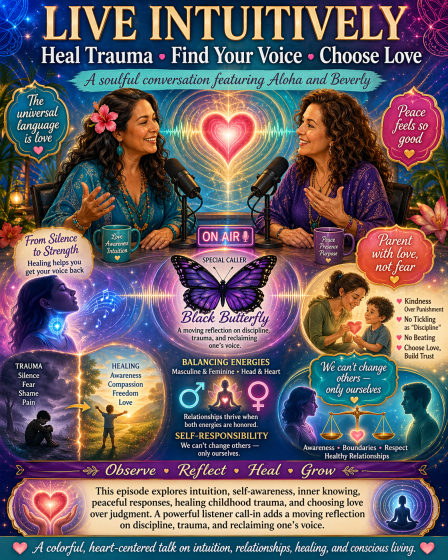
The Path of Intuition: Healing Trauma and Redefining Sovereign Relationships
PRQ Timelines: The Path of Intuition & Healing
Breaking generational trauma and reclaiming the "Inner Knowingness."
Core Philosophical Pillars
Living by Faith vs. Sight
Transitioning from reacting to external appearances to moving through "knowingness" and heart-centered intuition.
The Trauma of "Invisible" Abuse
A critical discussion on how non-traditional discipline (like forced tickling) causes deep psychological trauma and "takes the voice away."
Radical Self-Responsibility
Recognizing that we draw energy to ourselves; healing requires looking inward rather than pointing fingers at external actors.
THE "TICKLING" CONTROVERSY
- Often rationalized because "it leaves no marks."
- Causes extreme trauma and chronic stuttering.
- Used historically to strip dignity and silence the spirit.
Key Voices
"Silence is golden. You don't have to raise your blood pressure to get your point across. Peace feels so good to me."— Beverly
Relationship Shifts
This transcript captures a profound dialogue between "Aloha," Beverly, and a caller named Black Butterfly regarding the transition into intuitive living and the necessity of healing deep-seated trauma. The discussion centers on moving away from external "sight-based" reactions toward an inner knowingness that fosters empathy and breaks generational cycles of abuse.
Detailed Key Points
The Shift to Intuitive Living and Self-Reflection
The speakers emphasize that as "light beings," individuals have the opportunity to move away from living by "sight" or external appearances and instead navigate life through heart-centered intuition. This requires a high degree of self-awareness, where one recognizes that external irritations or judgments of others are often reflections of one's own internal state. By practicing presence and intentionality, individuals can move from being "puppets" reactive to their environment to sovereign beings who take full responsibility for the energy they draw into their lives.
The Reactive vs. Intuitive Framework
Driven by sight, external triggers, and past trauma. Focuses on blame and "puppet-like" responses.
Driven by heart-knowing, presence, and self-responsibility. Focuses on love and intentional silence.
The Trauma of "Invisible" Discipline
A significant portion of the conversation addresses the long-term psychological damage caused by unconventional forms of discipline, specifically "tickling" or pinching. Black Butterfly shares a personal testimony of how being tickled as a child was a form of "cruel punishment" that led to chronic stuttering and a loss of voice. The speakers conclude that such tactics, often used because they don't leave physical marks or "get the parent in trouble," are actually deeply abusive and instill trauma into the child's DNA, affecting their future relationships and ability to speak their truth.
Healing the Ancestral Cycle
Beverly reflects on her own journey of regaining her voice after being raised by a domineering mother. She highlights that many parents project their own unhealed trauma and jealousy onto their children, attempting to "stamp out" the confidence they themselves were never allowed to have. True healing occurs when an individual can look at their parents' stories with empathy rather than judgment, recognizing that everyone is operating from their own level of indoctrination. This self-healing is described as a prerequisite for "ascending" and becoming a part of the world's collective healing.
The Sovereignty of the Soul
"We are free spirits of light. No one owns another—not in marriage, not in parenting. When we release the 'contract of ownership,' we allow the heart to lead."
Redefining Relationships and Contracts
The dialogue challenges traditional societal structures, particularly the "ownership" model of marriage. Black Butterfly argues that the vow "until death do us part" can act as a "curse" because it binds free light beings into rigid contracts that often ignore personal growth and change. The discussion touches on the balance of divine feminine and masculine energies, suggesting that when these are balanced, there is no need for dominance or jealousy. The speakers advocate for relationships based on mutual respect and the freedom to evolve, even if that evolution leads to different paths.
Key Data
- Call-in Numbers: 323-744-4831 and 888-627-6008.
- Historical Reference: Beverly’s mother passed away in 2008.
- Timeline: Black Butterfly mentions being awakened to "Q" five years prior to the recording.
To-Do / Next Steps
- Practice Intentional Silence: Use silence as a tool to ricochet negative energy back to its source rather than engaging in arguments.
- Prioritize Self-Healing: Focus on internal healing before attempting to discipline children or resolve family conflicts, as unhealed triggers lead to overboard reactions.
- Request Research Files: Listeners interested in lawful (non-legal) marriage contracts and research on "sovereign relations" can email Black Butterfly at
blackbutterflyinsight@outlook.com. - Adopt the "Grandmother" Governance: Reflect on the Q-inspired concept that the world would be better governed by the wisdom and empathy of grandmothers.
Conclusion
The document serves as a call to spiritual maturity, urging listeners to move beyond the "indoctrination" of fear, control, and trauma. By reclaiming one's voice and operating from a place of love and "inner-standing," individuals contribute to the broader "ascension" process, ultimately aiming for a world free of darkness and grounded in the universal language of love.
PRQ TIMELINES with Q Friends


AND/OR
Subscribe via BBS Radio TV to support this show
$5.99/mo or $9.99/mo
Click HERE
SUBSCRIBE TO TALK SHOW
PRQ TIMELINES with Q Friends
[00:03] Speaker 1: (Instrumental music plays)
[02:03] Speaker 2: Aloha, aloha. I am ... We are so glad to be here together with all of us, with you, with Beverly, with all of us, and we're here today to just be together. Aloha, Beverly. How are you? So glad you're here.
[02:23] Speaker 3: I am ... I am wonderful, and so, so glad to be here today. So glad to be on this planet, in this dimension, learning all the things, and, oh wow, it's so beautiful, and every day and every way, um, wow.
[02:51] Speaker 2: (laughs) On actualizing the eye, it's, it's, it's, it's, it's wonderful (laughs) Oh, thank you, Beverly. We are always ke
[03:03] Speaker 3: Hey.
[03:03] Speaker 2: Uh-huh? We're, we're-
[03:05] Speaker 3: No, I'm, I'm, I'm just like feeling the energy period of the, of the oneness of the intention of us being here, doing this program, and sharing and, um, wanting anyone out there listening to share their experiences, and it's beautiful.
[03:40] Speaker 2: Do you have any phone numbers for, for, for us to call? To call us on? (laughs)
[03:47] Speaker 3: Okay.
[03:47] Speaker 2: Do you have the numbers out by chance? (laughs)
[03:51] Speaker 3: Let me ... Hold on and see, I think I ... The numbers that-
[03:55] Speaker 2: (laughs)
[03:55] Speaker 3: The numbers that we ... If they didn't move the numbers ...
[04:03] Speaker 2: (laughs) I usually have them note-
[04:06] Speaker 3: I always have them ... I always have the numbers, but I'm at the restaurant and they cleaned out-
[04:11] Speaker 2: Well, I do too, but I don't today. Let me look on my phone. It says if you would like to call in, call in at 323-744-4831 or 888-627-6008, okay. (laughs)
[04:31] Speaker 3: Oh, wow.
[04:32] Speaker 2: Uh, do I need to say that again? Okay. Okay, 323-744-4831 or 888-627-6008.
[04:44] Speaker 3: Yes, and anybody who wants to add or, you know, has something that they wanna say or interject or ... We would be so glad to hear it.
[04:59] Speaker 2: Yes, we would. So, Beverly, (laughs) thank you again for being here. Um, it just means the world to us for you to be here, and, um, we've been getting quite a bit of feedback, uh, about you being here and, um, sharing everything that comes to you intuitively. And it reminds me that so long ago, (laughs) and maybe not that long ago for some of us who used to go to church, the minister would say, "We live by faith, not by sight." And I used to, (laughs) so long ago, didn't ... I, I kinda knew what it meant. But now, as light beings, what we have the opportunity to do is live through ... Live in- live intuitively.To go about our day, go about what we do, uh, in all respects, intuitively from a knowingness inside, not necessarily how everything appears to be.
[06:23] Speaker 2: We get to observe those things, but we get to actually make our choices, make our decisions, um, whatever we do during the day, however we decide to do what we do, intuitively through our heart and from an inner knowingness that's inside, not necessarily outside of what we see. (laughs) Yeah. That's probably what you do all the time too. So many people that have been listening for five years, and three years, two years, and one years, we, we've all grown so, Beverly. Is, is that how you, um, move through the day, how you glide through the day?
[07:17] Speaker 3: Well, I've (laughs) over the years, I've learned so much about myself. You know? How I move through the day, how... The choices that I make, how I handle situations, how I handle interactions with people, whether it be my loved ones, my family, strangers. And it's changed so much, because I've learned that the universal language is love. And it comes in, like, different faces. However, it's helped me to relax, it's helped me to not judge, because when I see others, I see myself. When I see others acting, (laughs) acting a certain way at one time or... I just see myself. So that changes the game. So you no longer can be accusatory, you no longer can point your finger, because most likely all those things that you're seeing that's bothering you are in you. So, it helps you to move more intentionally, more present. However, for myself, that came with practice, okay?
[09:10] Speaker 3: Because when you're practicing, um, when you make certain moves, if you're not intentional, if you're not present, and you look back, and you be like, "Did I have to respond like that? Why was I so angry? Why was I so scared? Why did... not like that person?" O- Once you become present, you look at yourself. And a lot of times you'll come up differently than you did in the past, because usually you'll always have a reason why you did something. You'll have a reason why you said something. It'll be because of what someone else did caused you to do something. So you won't take responsibility for whatever you did that you know you were kind of like out of pocket, but then you can make a reason for that. "I acted that way because she acted that way. I did this because he did that." But when you become more intentional and more present, you have more love, more understanding, more empathy, and all of that. So that's how I've seen my life change.
[10:41] Speaker 3: It's helped me with my business, because I see... I don't... no longer see the people working for me as just employees. The people that work with me help me pull this off. I couldn't do it without them. And I act accordingly. And it's beautiful. So, using your intuition, um, that first mind, all of that, it's like you have to pause and reflect on yourself. Why are you acting this way? Why are you doing these things? Why are you upset? So once you sit with yourself and become present, you're gonna look at yourself. And you might call yourself silly, "That's... That was silly. That was dumb." Because now you have a chance to sit with yourself and not just react. You know? It's a beautiful thing, because you're taking responsibility and control for your own being.... instead of making it like, like you're some type of puppet or something, like somebody pulls the string and then you react. Somebody says something (laughs) that you think is mean and you have to respond.
[12:26] Speaker 3: Sometimes you don't have to do nothing. You don't have to say nothing. Just be. Push that energy back where it came from. Just, just silence. Silence is golden. Just that silence. A lot of times that's enough to make your statement. You don't have to raise your blood pressure and hoop and holler and, and get yourself heard and get your point across. I learned all these things. And sometimes you may have to say something, but the way that you do it is very, very important, because as you're doing it, you don't wanna lose control. If this is something you think you need to convey, it's how you do it. It takes practice. Some people are better at it than others. Some people really have a lot of work in that area. I had a lot of work in that area. I come from a mother-in-law who's kind of like a hothead. So you gotta cool down, gotta be peace. And when I learned how good that felt, I don't want that other, I don't need that other stuff anymore.
[14:16] Speaker 3: I don't wanna have problems with people, I don't wanna be... Uh, I, I don't need that in my life. I don't need that energy around me poking holes in my aura. I don't need that.
[14:27] Speaker 2: Um, let me-
[14:28] Speaker 3: I don't need that. It's like, it feels... Peace feels so good to me. When, at one time in my life, I could argue. I can't even do that anymore. My energy feel has changed. But I would probably get... The, the universe, she would let me know if I start acting up, because it would affect me in some type of way, if I caught myself getting my adrenaline up like that, 'cause that doesn't work for me anymore, and it feels so good. So, when I go about my day, I have many things to do, so I have to be intentional, but I have to be present, you know? And that way, you, you, you think before you speak, and you, and you can be a part of healing, being a part of healing the world. So, for those of us who it applies to, you have to get that chip off your shoulder. Ready for the next thing. I'm ready. Yeah. And that goes into a lot of things, Aloha.
[16:15] Speaker 3: That goes into a lot of things, to peel away those layers of what's eating us, and why we have triggers and what those triggers make us do, make us say. And it usually-
[16:38] Speaker 2: Right.
[16:38] Speaker 3: ... comes from the past, the past. It's the past, it's the past. All that has been built up, and then if somebody says something, you know, or does something, it may trigger you, you know?
[16:55] Speaker 2: Yes. And I noticed that it's also important to be able for us to say to ourselves, what is... How are we responsible for what is happening? You know, it's not always... You know, it's easy to just say, "That person did this to us," but a lot of times, you know, there's two playing... There's two, as you say, dancing, and so, (laughs) you know, it's not always somebody else's fault. There's something that we may have done that contributed to a situation. And so, it's very easy... It can, with practice, get easier to say, "What is... What did I do here that contributed to this? And look at that." Because it's so easy for me now to, to not look at another person and say, "They, they did this." I, I, I, I always have to say, "Okay, what did I do?" You know? Something happened here.
[18:04] Speaker 3: You always have to do that. You have to do that, because you drew that energy to yourself. If it's a relationship, you drew that energy to yourself.So, it's always you have to look at yourself. Or some things you say, "Could I have diffused this situation? What could I have done to diffuse it, or did I es-ascorbate it, make it worse?" So that right there is self-awareness. That's how you grow.
[18:46] Speaker 2: Yeah. It's, uh, it's interesting also because I've... You know, we can notice, uh, the people around us, and, and nowadays, we really do get to, to choose what experiences we wanna have and who we wanna have them with. And, um, our, our, you know, we, we can do that nowadays. We don't really have to be... After we recognize things and see what's going on and, and really observe and look at it, we can say, "Okay, um, you know, maybe that's not for me." And it was so interesting because sometimes I... We run into people who kind of, uh, it's very interesting. They don't do anything wrong, but they don't do anything right. They don't say anything wrong, but they don't say anything right.
[19:41] Speaker 3: (laughs)
[19:42] Speaker 2: And they keep this balance right in the middle of where they're not really doing anything bad or saying anything bad, but they're not saying anything right.
[19:56] Speaker 3: (laughs)
[19:56] Speaker 2: And, and that's been a very interesting personality (laughs) to experience as well, because... You're laughing, do you know what I mean by that? (laughs)
[20:07] Speaker 3: Um, I do, because some souls are balanced, so they don't, you don't get too much, like, like you said. They, they're just peace. So they're, they're not saying, quote-unquote, "What's right," which may be things that you enjoy or agree with or whatever. They're not saying anything wrong, which you could say or... Things I don't agree with or whatever. They're just in the middle. They're balanced. And how do you-
[20:45] Speaker 2: (laughs)
[20:45] Speaker 3: ... communicate? Some people, um, that person may just be being. They, they, they don't need to have an opinion right now. They don't need to take a stance or... They just, they just chill. They're just being. They're just cool.
[21:05] Speaker 2: (laughs)
[21:05] Speaker 3: Do you know how to interact with a person like that?
[21:08] Speaker 2: I don't. (laughs)
[21:11] Speaker 3: (laughs)
[21:12] Speaker 2: It was funny because there was a situation one time, and this is one of the... Of, of a, of ac- of an action that reflects this. So, a little child was doing something that, that, that, that, that maybe wasn't a good thing. So they didn't do anything bad to the child, to discipline them. But what they did do was they tickled them until the child couldn't stand it anymore. So if you tickle a person long enough, it starts to hurt.
[21:45] Speaker 2: But you can't get in trouble-
[21:47] Speaker 3: Exactly.
[21:47] Speaker 2: ... for tickling somebody. So you're not disciplining them in a way. You're tickling them, but it hurts so much. That a child's gonna report-
[22:02] Speaker 3: But that's a tac- that's a tactic. That's a tactic, okay?
[22:06] Speaker 2: Right.
[22:06] Speaker 3: Now-
[22:08] Speaker 2: That's where the-
[22:09] Speaker 3: ... go ahead.
[22:09] Speaker 2: ... that, that thing is where they don't say anything right, but they don't say anything wrong. They don't contribute. They don't contribute to anything, but they don't input or, uh, contribute anything bad. (laughs)
[22:26] Speaker 3: Okay. Now, let's take that situation.
[22:29] Speaker 2: Uh-huh.
[22:29] Speaker 3: Let's take that situation where they wanted to discipline the child. Is that what you said, right? They wanted to discipline the child.
[22:37] Speaker 2: Yes, yes. Yes.
[22:37] Speaker 3: All right, but they didn't hit the child. They didn't do anything like that.
[22:42] Speaker 2: Right.
[22:43] Speaker 3: But they tickled the child to a point that was very detrimental.
[22:51] Speaker 2: She'll get back at you.
[22:52] Speaker 3: Because that... It's better to put the child on a punishment, to me. If the child does something, you punish the child, or whatever you feel is necessary. But to tickle the child to a point that hurts is abuse, to me.
[23:15] Speaker 2: And they can say-
[23:16] Speaker 3: Because when you're tickling someone-
[23:18] Speaker 2: ... "Well, then you can't get in trouble for tickling." (laughs)
[23:20] Speaker 3: Say that again.
[23:21] Speaker 2: I'm like, okay. They feel that they can't get in trouble for tickling.
[23:26] Speaker 3: They can't.
[23:27] Speaker 2: They can't, yeah.
[23:27] Speaker 3: But they know, they know what they're doing. So-
[23:31] Speaker 2: Right.
[23:32] Speaker 3: ... when you're tickling a person, when you're tickling a person, at a point, you stop and they say, "Stop."
[23:39] Speaker 2: Right.
[23:39] Speaker 3: Because it starts out a little tickly, maybe a little funny. But after a while, it's not funny anymore.
[23:47] Speaker 2: Right.
[23:48] Speaker 3: Now, if you're going, if you're dealing with a child now, if you're dealing with an adult, they could probably know how to throw you off of them. But if you're dealing with a child, that's cruelty.
[24:00] Speaker 2: Right. Right.
[24:01] Speaker 3: Because you know-
[24:02] Speaker 2: So it's an interesting personality type. (laughs)
[24:04] Speaker 3: ... that you're ticking a child. Say that again. I didn't hear you.
[24:10] Speaker 2: I says, it's an interesting personality type when we are, you know, maneuvering and meeting people and, um, coming across different ways that people go about doing things.Um, we come across so many different personality types, and, um, through our observation, we get a chance to see these, and yet we're at a point to where we can say, um, to any situation, this is a situation or person that we can, um, have in our lives, or this is a, a situation or a person that we're not gonna have in our lives. And I've heard some people say, "If it's not a 10, even in a relationship, if it's not a 10, I don't wanna do it." And, and, uh, 'cause we all have our certain types of energies, so we get a chance when we're observing to observe and just to see how people are. And as we continue to elevate and grow, we seek out people who our energies are harmonious with to be around.
[25:33] Speaker 2: And so, as we continue to grow, you're in an, a perfect environment to, to meet so many, uh, personalities where they're, where they're continuing to elevate just by nature of the food that you have there. And so many of us over the years have changed, because we don't stay the same, but we change, and we continue to, to learn more and experience more and elevate more and get to know ourselves more as, uh, as energetic beings. And so it's so wonderful that you get to be at, uh, your place and meet so many people. I mean, so many people there at your place that are, that are just incredible, uh, to be around their energy.
[26:26] Speaker 3: Because they're, a lot of people that come to the restaurant are looking to grow, and not just be, like, complacent to where they've been, okay? They begin to start figuring some things out. And when one of the things that people wanna do when they're beginning to figure things out is, a lot of times, they start changing different things about their lifestyle. They start knowing, to get more oxygen into the body, they wanna exercise more. They know they should be eating more fruits and vegetables. They know they should stop eating sugar or eating a lot of sugar. These are the things that they start becoming present to, so that might lead them to come into the restaurant, because they f- see that certain things don't really serve them properly, so they start on their journey of exploration. They are not happy with everything the way that it is going, and something starts to dawn on them, because if you want different, you have to be different.
[28:01] Speaker 3: You can't blame your surroundings and say, "That's the reason why things are going sour for me." You drew in all your surroundings, but are you willing to take responsibility for that? Everything ... And we talk about this all the time, everything in the universe is organized. Whatever is going on is as it should be. Now, you may not like it. You might not like what's going on. You may say, "It's a mistake." You might say, "I got in that accident because I started to turn down 23rd Street and I turned down 22nd Street," but what it is, is you turned down 22nd Street. If your in- intuition told you to turn down 23rd and you didn't, but you turned down 22nd Street, so that's what it is. It's not a mistake.
[29:00] Speaker 3: So when-
[29:01] Speaker 2: And then here we are listening to our inner, in- our intuition, which is how we, as energetic beings, get to grow.
[29:14] Speaker 3: Yeah, and it's so beautiful when you really go within and start seeing that you have a lot of the answers that you're seeking, you have it, but you never went within to see what you have. You just, you just always outside of yourself, always searching for something, and when you go within, one thing that may happen, you may be taken to certain people, places, and things to help you-
[29:53] Speaker 2: We have Butterfly on the line.
[29:55] Speaker 3: ... on this journey-
[29:55] Speaker 2: Butterfly.
[29:56] Speaker 3: ... that you want to be on.
[30:00] Speaker 2: (laughs)
[30:01] Speaker 3: And you start seeing-
[30:03] Speaker 2: Beautiful.
[30:03] Speaker 3: ... that everything is as it should be, right?
[30:08] Speaker 2: That's beautiful. Yes. We... You have a caller, Beverly.
[30:14] Speaker 3: Oh, we have a caller? Put them on.
[30:17] Speaker 2: (laughs)
[30:18] Speaker 3: I'm excited.
[30:20] Speaker 2: (laughs)
[30:20] Speaker 3: Caller 2?
[30:22] Speaker 2: Hello? Hello? Hello?
[30:24] Speaker 3: Yes, this is-
[30:26] Speaker 4: Greetings, uh, this is Black Butterfly. How are you ladies doing, uh, this afternoon?
[30:32] Speaker 3: (laughs)
[30:32] Speaker 2: I'm fine, how are you?
[30:35] Speaker 4: I'm doing fine. I, I was listening to the two of you talking, and, uh, you mentioned about tickling children.
[30:43] Speaker 2: Yes.
[30:44] Speaker 4: Okay. And I was just listening, but I wasn't gonna call, and I was just listening, but when you mentioned that, I felt that it was important that I do call in, because as a child I was tickled, okay? Rather than to be beaten, although there were times I was actually beaten, but I was also tickled. And where the Bible says, "Spare the rod, spoil the child," that has been taken into a wrong... It doesn't mean what people think that it means. Uh, the word that is referred to as rod, and it's the Hebrew definition of that is, uh, to discipline with, uh, with, with love and show by example. So when, as you were saying a bit earlier, that some people don't do the wrong thing or say the right thing, and they try to stay in the middle ground, but when you discipline a child, you cannot discipline them by beating them or tickling them, because both methods cause trauma to the child. It causes extreme trauma to the child. I grew up as a chronic stutterer.
[32:16] Speaker 4: I could not speak because I was traumatized by both beating and tickling, and, and while I was being tickled, I was trying to say stop, and I couldn't put the words together to tell them to stop (beep) tickling me, because the traumatization of the p- and what they were doing to me, I couldn't speak. So I had a habit of when I was trying to speak, I could not put words together. I had to go into speech therapy class when I was in junior high school, and ironically, I became an o- ordained minister, and I was able to speak not only fluently, but to hundreds of people at a time. But I had to go through the healing process. So I would like to interject here to all the listeners, you should not tickle your child in order to discipline them in any way, form, or fashion, not even for a second. Do not tickle your child. Do not beat your child.
[33:21] Speaker 4: What you should do is find a way to discipline them in, in love and show them by example you can, you can correct a child in a proper way, but let's not go to the methods that we have been taught because we were tricked into believing certain things are the right way. Okay? So I'm speaking from a- a- by example. I know what I'm talking about, and if the listeners, you can take it or leave it, I don't bash anybody or tell anybody what they should or should not do, but as one who has experienced it, all the trauma and all the pain and anxiety, I share this with you all at this moment. Thank you.
[34:08] Speaker 3: Wow, that was powerful. Aloha.
[34:14] Speaker 2: Yeah, thank you for, for calling in. We're so glad you did. And, um, yeah, I wanted to bring that, that up about the, um, uh, l- uh, in this persona- with that personality trait of not saying anything nice, not saying anything wrong, and then how, um, this person would rationalize tickling as a way of doing things because you don't get in trouble. No one's gonna report you for tickling. And thank you for, uh, telling us your experience with tickling, because I didn't know that that was something, a widespread thing. I'd never seen it before or heard of it before, and I didn't know that it was something that people would do to be mean and to, to discipline children by tickling them. So thank you for telling us about your experience.
[35:16] Speaker 3: Well, I just wanna tell that... I don't know f- remember what his name was. Do you remember what his name was?
[35:24] Speaker 2: Black Butterfly?
[35:26] Speaker 3: That was Black Butterfly?
[35:28] Speaker 4: Who, me?
[35:28] Speaker 2: Yes.
[35:28] Speaker 4: Yes, Black Butterfly. I talked with you
[35:30] Speaker 3: I just want to say to you... And now, I remember now, I just want to thank you for that. That was so powerful. Um... Oh, wow. Because people have these ways of disciplining. Um, I had a friend that what she does is pinch, she pinches the child, okay? And, um, all of these tactics of abuse aren't looked at that way because these people have probably had experience with this being done to them. So, they don't look at it as anything wrong, like Aloha said, they don't, they can't get in trouble for it, um, but it causes trauma.
[36:26] Speaker 4: Yes.
[36:28] Speaker 3: And a lot of times-
[36:29] Speaker 4: It's causing-
[36:29] Speaker 3: ... it takes people's voice, it takes their voice away. And, um, it was done during slavery. They beat you so bad, they beat you till you couldn't stand up. They beat you so bad that they wanted to take your dignity away, your voice away. They wanted, when they got through with you, you were only a vestige, not even a vestige of what you used to be. And that's how they handled people who were confident, people who had a voice. You have no voice. And a lot of times people treat their children that way, and it causes such trauma that it follows them through their life, through their relationship, through their marriages, through their friends. But they don't even know why. They don't know why they can't speak up, or they don't know why they like go into rages with people. They want, some people wanna fight, some people cry, they just cry. Everybody has a different way.
[37:52] Speaker 3: And that's why I say the universal language when you are aware of these things, and it's usually because you probably experienced some trauma yourself and you worked your way out of it, you wanna have the universal, make the universal language love. Because you can love in a certain way that disciplines and revamps a person, and you don't have to lift your finger. You can change, change things without lifting a finger. And that, your testimony about the tickling is profound, because people don't look at tickling as abusive. Because usually if people tickle you, they do it for a minute or so and they stop. But when it's used as a tool for discipline, the person knows that it's going to give you some type of trauma.
[39:18] Speaker 4: And the whole idea-
[39:19] Speaker 3: Or again, maybe they don't know, Black Butterfly, maybe they don't know that it's gonna give you some trauma, but they do know that it's gonna cause you some hurt.
[39:28] Speaker 4: Yes. And that's, and that's the thing, uh, when you apply, when you do anything to another human being, another human being, even an animal, when you train a dog, and I know I've trained dogs, you don't have to beat them into submission and you discipline them. Dogs are so humble and they will do whatever you want them to do, but you don't have to beat them. I have trained the dogs to do all kinds of things, even to attack to protect me, without having to beat them. When you beat a human being, especially a child, you instill in their DNA, in their psyche, trauma that's there, it's going to be played out in all of their relationships, whether it be business or par- parenting or, or being in a marriage or, or some kind of, uh, uh, uh, uh, uh, arrangement of romantic, uh, regard, whatever the case may be.
[40:25] Speaker 4: Your partner is going to (sighs) is going to have to deal with your display of, of, uh, uh, of, of, of traumatizing them because it's in you and you don't know how to, you don't see it as being something wrong. But when you have a parent-
[40:44] Speaker 3: Exactly. Exactly. Exactly.
[40:48] Speaker 4: And when you have a parent that tickles the child rather than to spank the child, you're just as wrong as spanking them because spanking causes trauma. No human being should be struck unless under certain circumstances punishable by law, whatever. And I don't wanna get into that, that's another subject, but outside of criminality and, and, and, and, and, and, uh, uh, uh, what's the, uh, disciplining them in court, excuse me.
[41:15] Speaker 3: Treating them ill.
[41:16] Speaker 4: Penalizing them for crime, okay. A child does not commit a crime. Why do you have to beat them or tickle them? Because that is damaging to their spirit, to them, to their person who they gonna be, and they're gonna have to deal with that for the rest of their li- of their lives. And like I said, it took me much, uh, uh, uh, of, of, of, uh, therapy and, and discipline and, and counseling and so forth and so on to get out of it to where I became a public speaker. And public speaking is one of the most difficult things for people and their psyche to get to overcome. But not only did I overcome the traumatization that was caused by my parents, my biggest brother mostly, he did me the tickling. He's tickling me and throwing me across the room because he knew he shouldn't beat me, because I told my mother and father, "He's beating me.
[42:08] Speaker 4: When you're not here, he's beating me." So he said, "Okay, well, I'll just throw you acro- I'll tickle you, tickle you, tickle you, and throw you across the room and see where you land." You see? So, and, and, and raising children especially, you have to be careful how you deal with your children because they love you, they trust you, and they depend upon you, and they believe in you. And when you trespass that re- that, that line-And you, you invade into their innermost being, their, who they are, and you're damaging them, that's gonna stick with them for a long time, and they may not ever get over it. Many of us, I mean, I was one that was able through much, many, many years, decades of having to undo the damage that they did to me in the f- a- as they thought they were disciplining me. They were not disciplining me, they were cruel, cruelly punishing me.
[43:11] Speaker 3: Wow. Oh, wow. Th- now, oh, now like you said, that's a whole nother show to talk about discipline. Now, for me, I, see, I come from a place where there was some corporal punishment. Um, the corporal punishment, uh, wasn't so much the thing that was, that traumatized me, it was me not being able to speak, okay, about what the situation was and why maybe what my mother thought wasn't what was going on. So, it's a, it's a, a vast subject, um, as far as the discipline is concerned. However, what is the traumatizing thing, like you said, first of all, you have to know the child. You have to make the chastisement fit the crime, or the, what happened, but at the same time, you have to take into consideration. But you have to be in a certain place to do that. If you're in a place of trauma, if you're in a place where you're triggered and the child does something and you act too much above board, or you get a little crazy with it because you haven't healed, okay?
[45:04] Speaker 4: Yes.
[45:05] Speaker 3: So now, you're looking at it like, "They defied me. They did this and that and the other," and you get triggered, and then you may go overboard, and traumatize the, the person, traumatize the child. You have to heal yourself.
[45:24] Speaker 4: Yes.
[45:24] Speaker 3: And a lot of times, parents are not healed. So, but you know, you have different things. Like, I had a aunt that if you, for me, she'd lock you in the basement and turn the light off.
[45:39] Speaker 4: Hmm.
[45:40] Speaker 3: And it was cruel. So my, my thing is, when you go within and heal, you start seeing all of these things, Black Butterfly. But a lot of times, when people haven't healed, they feel, "It was good enough for me, and it's gonna be good enough for them."
[46:04] Speaker 4: Yes.
[46:05] Speaker 3: Okay? "That's how I was ... My parents, they beat me and all that. They beat me to death, and I, and I learned," and, and stuff like that. But no, you're angry. And that's why I bring up during slavery, because that's the tactic they used. And they usually did it in front of everybody, because, "Look, this is what you're gonna get if you think you have a voice. Do you see what I'm doing right here? You see what I'm displaying? This is what you're gonna get, so you better do what I say, and you better not do anything else." Trauma. And a lot of times, that trauma is gonna be taken away from there into their own life, into their own families.
[46:58] Speaker 3: So-
[46:58] Speaker 4: Black Butterfly, did you have something? Oh, sorry, Beverly.
[47:06] Speaker 3: No.
[47:06] Speaker 4: What was that?
[47:08] Speaker 3: Did you have something you wanted to say, Black Butterfly?
[47:13] Speaker 4: Um, well, I'm listening to Mother Beverly. Uh, she's making so much sense. Um, I, I, I just want to, uh ... When I see parents and I see parents with their children, and when I see them getting along with the children, it just raises my, my, it, it just brings out strong feelings of love and compassion and, and respect. And I would, and I would, and I would tell them-
[47:49] Speaker 3: (background noise)
[47:50] Speaker 4: Uh, I'm, I'm hearing feedback. Is there something wrong with this recording, I mean, this, uh, transmission?
[48:00] Speaker 3: Um, I can hear you. Maybe we can mute, we can do mute if we need to. Um, please continue.
[48:10] Speaker 4: Okay. Sorry. (laughs) I see parents all the time, many times in the, in the public park. In my community where I live, there's a big, huge public park, and I see parents with their children a lot, pushing them in strollers, carriages, walking. The child is running, they're on scooters, they're doing all kinds of stuff, and I'm watching the interactions with the parents and the children.And many times, I will commend parents for the way they- I- what I see. And you can tell by the children that these children are not beaten. And sometimes the child will be in a tantrum and the parents will pull them to the side and say, and talk to them like human beings that are, they're human beings. They're just little and they have not the awareness on how to deal with society as we do as adults. But in many ways, those children are a lot smarter than we are. We're going to learn that in this golden age, there will be times where children will be teaching their parents.
[49:15] Speaker 4: Q has told us that many times. But when I see children and relating with their parents and back and forth, and I even walk in the street, I see them with their children and I'll stop them and I'll tell them, "Listen," y- you know, I mean, like, uh, I commend them. I said, "Do, keep doing what you're doing. Your child needs you and depends on you. And there's going to come a time later on," I said, "Enjoy them now while they're young, because as they get older, they're going to have different ideas about what they want to do and what they want to, uh, develop a career out of, may not, it may be different than what you wanted them to aspire for. And you have to allow them, continue to support them, even if they want to do something different out of respect and love, because you cannot tell anybody what to do.
[50:07] Speaker 4: You cannot control anybody, every, we all, before we came into this human density, this, this world density, lower densities, when we came here, we were, uh, uh, uh, uh, uh, beings of light, 100% light. However, Source wants to experience what it's like to live in lower densities as a human being, so we chose to enter these bodies by choice. And during the course of that, uh, and, and during the course of which, we were, our spirit was e- electrified, or, uh, it was some kind of thing that the dark do in the transmission. And so when you get into this body, you don't remember anything. You're just here. And now you got to figure out, that's what duality is in this dimension or this density.
[51:02] Speaker 4: So, the reason why I'm going this way, and I didn't mean to go too far left or right, but these children have more light in them than we do by nature, because they have not come to the age where, and the DNA, which is programmed, and program, DNA is a program by the dark to take you away from the heart into, in- in- into the mind, and children, young children up to the age, seven, eight, nine, or 10 or whatever, Q used to talk about this, they have more light in them and, uh, uh, uh, we are interfering with them because we indoctrinate them because we're deceived and tricked by the media and education and politics and, and, and, and culture and religion, all these things, and then we try to instill that garbage into those little souls. And then when they don't do what we think that they should do or the way that we think they ought to do it, then we call, so-called discipline them. You don't have to disci- What is discipline?
[52:14] Speaker 4: That word rod, spare the rod and spoil the child, our pastors and preachers and teachers and so forth, they teach us spare the rod, but that word rod, if you look at the et- the et- et- uh, etymological root of that word in Hebrew, it means, okay, I don't have the information in front of me, so I'm just speaking from memory. It means to discipline in love and show by example. So when you take the child to the side and say, "Look, sweetheart, what you're doing, I would rather that you do it this way because this way will be better for you. Okay? Mommy will be happy, you'll be happy and everybody, everything will be just fine." And they will listen. But if you beat it into them or punish them or discipline them and, and, and not knowing what discipline really means, you're traumatizing them, you're punishing them and you're taking it out on them what is built up inside of you. You see? And so it's, when I tell parents things, they look at me in awe.
[53:21] Speaker 4: And I said, "Look, I have grandchildren." I said, "How old are you?" I said, "My granddaughter is older than you." I have grandchildren. I may even have great-grandchildren by now, but I don't know because I'm not in touch with my blood relatives because I choose to be who I am. And that's okay. We all come from a different planet or different wherever, and we're all here to have the human experience in the duality. And so when I hear you, Aloha, and you, Mother Beverly and others, there's so many of us who are friends of Q and we all started, whether it be five years ago, three, me, it was five years ago that I was awakened to Q. Some three years, some eight years or however long th- that has been. And here is the time of transition. He was a transition specialist. He laid out the road, the pathway for us to follow. And that's what you're bravely doing. You are co- to be commended. BBS Radio, (crying) or you...
[54:33] Speaker 4: (crying) I'm, I'm sorry, I'm losing it here, but I get emotionally tied into this because-I know what trauma is. And although I was able to overcome and to advance, I still remember. And so when you were talking earlier, I was listening to your conversation, and I was doing work on my computer. I said, "I'm just gonna listen." And when you mentioned this certain thing about the tickling, I said, "That's it. That is it. Get on the call, get into the call." And I thank you and appreciate you both for allowing me to speak, and on behalf, for the benefit of your listeners, the thousand thousand Jesuses that Q spoke about, a thousand times a thousand is a million. And there are more than a million of us now. So, as we're going through this ascension process, all these things have to be touched on. The way we eat, the way we feel, the way we think, the way we act and react, and so forth and so on, we have to get it together, or we're not gonna make that transition. That's the ultimate.
[55:57] Speaker 4: That's the ultimate. And, and, and so again, uh, respect other people, respect human beings, from little children to the elderly. Respect everybody. Don't demand anything. Find a way to deal with them in peace and love. And, and, and, and you will be doing what is necessary for you to convert to, to excuses, to recalibrate, and, and, and, and, and, and, and, re-, uh, what's the word? Uh, recalibrate and reconfigure our f- our beings. Our ... Get all of our light into our bodies. All of the light that we lost when we were electrified upon entry into the, into this density. And like other planets, this planet will have gone through an ascension, an ascension where we will be free of the dark and they will be eliminated, eradicated from this planet, okay? And so, and people have different views of that and everything, and that's okay. It's okay for people to have opinions and to have different views and, and to explore in the way that they can advance. And there's no judgment.
[57:25] Speaker 4: You can't criticize anybody for anything. And as you said a bit earlier, Mother Beverly, that when you criticize somebody, or you, you're, or, or, or you're looking at a reflection of yourself, something in you. That's the only reason why you would criticize somebody, because you are seeing the reflection of something that's in you that you don't like. Learn to love yourself. Love yourself first and foremost, and then you can love other people and express that love to all. I ... I will, I will stop there. Thank you.
[58:07] Speaker 2: Yes, thank you. Thank you. Beverly, are you still here with us?
[58:12] Speaker 3: Yes. I was gonna say to Black Butterfly that he, he has touched on so many things, and the one thing he touched on was what a lot of people, their go-to, which is spare the rod and spoil the child. Which the rod doesn't mean a stick. See, they take it literally, spare the rod, spoil the child means you're supposed to beat the person. And it's like, wow, it's like the reason, Black Butterfly, you were so ... You just have so much empathy and so much love, which is why you probably cried when you were talking about this, because you still remember how it felt. And when you go back and remember how it feels to be humiliated, how it feels to be hurt, and when you heal, you don't wanna do that to anybody. When you do these things to your children, um, some people like to embarrass their children in front of other people. Some people like to embarrass their mates in front of other people, see, because they want to hurt you. But they don't realize that they do this because they're hurt.
[59:40] Speaker 3: They do this because they need healing, because like you said, there's a way to discipline with love, and it works. It works. People think it doesn't work because they don't know how to do it. They don't know how to discipline with love. They know how to give you a tongue lashing, or, uh, or hit you, or embarrass you, or, and never to find out why are they acting this way in the first place. What's wrong? Let's get to the root of what it is. I'm working with a girl now, she has special needs. She's 20. She's older, and her parents are having some difficulties. But when I talk to them, I talk to the three of them together, and then I talk to her, but it's like healing the family.You can't just heal one person. You have to see what is the problem, what is going on with all the individuals in the family. What is triggering the mother? What is making the father upset? Why isn't the girl listening? So, because everybody has a voice.
[01:01:11] Speaker 3: So, you being able to speak now, Black Butterfly, is, I've been in something similar growing up, with a more of a domineering mother where I kind of lost my voice and became sort of a people pleaser. Not sort of a people pleaser, a people pleaser, because I was so confident as a child, um, I read everything, I wanted to be smart and everything, but that looked to my mother as something different, of me wanting to know everything, you think you know everything. So, I in turn started to act like I didn't know anything. That's how I acted. When people would be talking, I would act like I don't know what they're talking about, and I would know that plus more. I went through a period in my life like that. I got married under those pretenses I was that way. So, my trauma came differently, but I know what that looks like and how you can change the trajectory of a person just by your cruelty. And then, once I had... when my mother stayed with me in the last year of her life, I found out why.
[01:02:52] Speaker 3: Because that's when I actually got to know my mother. She was 80 years old. And now she's talking to me about her trauma.
[01:03:04] Speaker 5: Mm-hmm.
[01:03:04] Speaker 3: Then I'm starting to put everything together, and I see what, why she treated me that way. It was almost like a jealousy. Because I was showing her probably what she could be and wasn't allowed to be. So, like it was stamped out of her, she was gonna stamp it out of me. But due to my transformation, I got my voice back. I got my voice back and I was able to say what I disagree with, or I was able to say, "You have that opinion, but also, did you know that or did you know this?" Without being ridiculed, because I know something about that subject. I'm not trying to be this whatever, I'm young. I'm just, I just know, because I read everything I get my hands on. But when it's taken another way because of my mother's trauma, then I'm traumatized. So now, I act like I don't know anything. And then, once I went through my healing, I got my voice back. Okay? And my mother, who I couldn't speak up to, finally heard that voice.
[01:04:48] Speaker 3: That's before-
[01:04:49] Speaker 5: Mm-hmm.
[01:04:49] Speaker 3: ... she even came to stay with me. And she did not like it. She did not like it. But that's okay, because I was ready for what I had to do. And I love my mother, but I knew for me to grow, I had to speak up. I'm not being disrespectful. I'm not doing any of that. I'm just speaking up, that's all. But when she's not used to me doing that, it looks different to her. It looks like, really? Like, wha- what is this? But it ended up with me and my mom understanding one another. She stayed with me the last year of her life. And in all of my years, my mother never really complimented me, and then she started complimenting me. "Oh, Bev, you look so beautiful. Come here. Before you leave, let me look at you. What do you have on today?" Never before she said anything like that to me.
[01:06:09] Speaker 5: Mm-hmm.
[01:06:11] Speaker 3: And that was, like, my mother passed in 2008, so you know how long ago that was. However, me helping my mother, I remember my mother, and I have two, three other sisters, and then they were falling outs, and I remember saying to my mother, "Have you talked to Carolyn? Have you talked to Renee?" "They know where I'm at." I'm like, "Mom, just call them. Just call them. It's okay."So she calls them, but my sisters also have picked up this same type of energy. My bottom line was, I knew where my mom was and her health. I wanted my mom to shed these things. Shed the things, all this, all this baggage. Stop it. It's not worth it, Mom. Just call. Just, just say, "What are you doing? What's going on?" And she did do that. She had one conversation with my one sister. They didn't talk anymore. She had two conversations with my oldest sister. But it was so much, like, from her back past, that she brought into her children. She brought to her children all that pain.
[01:07:56] Speaker 3: But it, like for me, I could see my mom, and when she explained certain things to me about her childhood, I'm like, "Okay, I get it." So I'm a end by saying this about that subject, always remember this, everybody has a story. And when you start healing, like what you said, Black Butterfly, what you had to go through to get your voice back, when you start healing, you start more understanding why people act the way they do. And that stops the judgment and then starts the love and the empathy and the teaching. But you can't do that until you heal yourself. And all of us need healing. And if you think you don't, that's even more shows that you need healing, just the fact that you think you're fine. That even makes it more that you need healing. I went into a marriage without really having a voice.
[01:09:15] Speaker 2: (laughs)
[01:09:17] Speaker 3: And when I started, when my voice started coming back, my husband was a little shocked.
[01:09:24] Speaker 2: (laughs)
[01:09:27] Speaker 3: He was shocked. And I wasn't disrespectful or anything, but I was just becoming Beverly and not just this vestige of something that had been broken down, learned to go along to get along. I don't go along to get along. But what I have learned, this is what I have learned, I know how to get along. I know how to heal. I know how to make things better. I know how to do these... I have those skills now. It's helped me in the business, it's helped me in my personal life, it's helped me in day-to-day things. It's a skill that we're not taught. Now, if you have parents that taught it to you, you're blessed.
[01:10:23] Speaker 2: (laughs)
[01:10:23] Speaker 3: But on a regular, most people aren't taught how good it feels to love, how good it feels to- for things to work out, how good it is to not have to hoop and holler and argue, to fight, fistfight. These people now, they fistfight. Th- they just do, they're doing all kinds of things. You look on the internet, they're fist fighting, they're, they're doing all kinds of things. And then they wanna display it. They want you to see it. They're not ashamed of it. That's the feather in their cap that they don't take any crap off of anybody. "I'll beat you up." But we are here to, to, to like, it's, we're here to make our mark to help heal the world, and each soul doing their part. Wow.
[01:11:35] Speaker 2: So I, I wanna add something. (laughs)
[01:11:39] Speaker 3: Go ahead.
[01:11:39] Speaker 2: Because I've been enjoying listening. I ve- I, a lot of times when people, um, start to get emotional and upset and loud, I automatically just listen to them and I don't have anything to say and I'm just listening. I don't have anything to say. Then they think that they have succeeded in going off. (laughs) They're very proud of themselves for doing it. (laughs) And that's a very interesting thing too. And, um, when people are-
[01:12:26] Speaker 3: Well, silence is golden. You're doing silence. See, silence is golden. So a lot of times when they're doing all of that and you're not saying anything, there's two things that can happen. Like you said, they can take the kindness for weakness. They can think you're quiet because they, uh, did something and shut you up or... Yeah. But that's not for you to care about, because-
[01:12:59] Speaker 2: Yeah.
[01:12:59] Speaker 3: ... that silence-Trust me, a lot of times when they go away from you and by themselves, because what you did is you ricocheted that negative energy back on them. They don't know it yet. But all of that they thought they did and you were quiet, they think that they told you off and they shut you up. But what you did, you didn't receive that energy. That's going back to them. Now, hopefully, eventually, that energy is going to help them learn and wanna do something different. Now, maybe, maybe not, but a lot of times that particular type of energy, see, can bring them to a realization. And this is how some people change, by people like you who won't receive it. Who won't argue with them. See, the people that argue with them keep them going, keep them, like, in this state. But when you're quiet and you're just there being, you might give them a look of love. Whatever you decide to do, trust me, it's going to start piercing them eventually.
[01:14:45] Speaker 3: It may, it may come from them having something wrong with them, a high blood pressure, because of their behavior, because... Or, or they have some type of health issue, and then the doctor or somebody will say, "You have to calm down. You have to watch your stress levels. Just relax." You see? Because all that type of behavior is gonna take them is to the doctor's office, or they're gonna have some type of heart attack or some type of stroke, because the body is gonna get tired of the abuse. Every time you're negative and, and yelling and being mean, that's not the natural state of your being, so you're affecting your organs. Your gallbladder, your liver, your pancreas, your heart is getting weaker. So eventually, you're gonna wind up at the doctor's office for something, and then they're gonna try to tell you, you know, "Don't do this," or, "Don't do that," or, "Watch your stress." Maybe you'll learn, maybe you won't.
[01:16:09] Speaker 3: But that type of behavior that we display and we do it in our relationships. Black Butterfly, you said something very, very important, and what you said is, you don't own anybody. And let me tell you, it doesn't matter if you're married, you don't own anybody. It doesn't matter if it's your boyfriend or your girlfriend, you don't own anybody. And this is something in this society that people don't understand. In this society, if you're a outgoing person and you just love people, if you're a man and you're married, you probably aren't even allowed to speak to another woman or say something nice to her.
[01:17:10] Speaker 6: (laughs)
[01:17:11] Speaker 3: Innocently. Innocently. Because your spouse will feel they own you.
[01:17:17] Speaker 6: Yes.
[01:17:19] Speaker 3: And you are not allowed. Do you hear what I said?
[01:17:21] Speaker 6: (laughs)
[01:17:21] Speaker 3: When I use those words? You are not allowed. I don't allow you to say something nice to another woman, because if you do, you're gonna pay.
[01:17:35] Speaker 6: (laughs)
[01:17:36] Speaker 3: You're gonna pay. I might not speak to you, I might not sleep with you, I don't know, but I'm gonna do something.
[01:17:43] Speaker 6: (laughs)
[01:17:44] Speaker 3: 'Cause you're not allowed to say something nice to another, to someone of the opposite sex. Why not? Are you that insecure? Why not? Do you not believe that she loves you? What is it? Find out what's eating you. You see what I'm saying? Doesn't make any sense. Doesn't make any sense. And a lot of times people have to do this, uh, behind like, behind closed doors. That means if they're with friends of theirs, they may say, "Oh, she's a nice-looking woman." And what's wrong with that? What's wron- uh, what's wrong with it? I don't see anything wrong with it. And I think that the fact that we don't have a voice, you can't say that to your wife. It's like, you, you can't...
[01:18:51] Speaker 6: (laughs)
[01:18:51] Speaker 3: I, I don't know. It's crazy. It's really crazy the way we've been indoctrinated, because none of it is really real. It's all an illusion, because you think something that isn't really real.You think that your husband doesn't, or your wife doesn't think someone else is attractive, or someone else is interesting to talk to. You just can't do that, not in this dimension, not in this society, in this planet right here.
[01:19:27] Speaker 3: Now maybe there's-
[01:19:28] Speaker 2: And we-
[01:19:28] Speaker 3: ... other parts where they can, but where I'm at, in Philadelphia, that's off limits.
[01:19:39] Speaker 2: It's also interesting how eventually we'll, we'll come... And I'm sure we mentioned this, that we come to realize people can change if they want to, but we can't change people. And so, we can let them be, because they, they're the only ones that can change if they wanna change. But, but we can't make people change. So, I just let them go do, be however they are, do-
[01:20:08] Speaker 3: Well, that would be-
[01:20:09] Speaker 2: ... however they...
[01:20:09] Speaker 3: That would be the smart thing to do. But like I said-
[01:20:14] Speaker 4: Right.
[01:20:14] Speaker 3: ... like, when, when Black Butterfly was ta- People think that you don't own anybody. And what you do, a lot of times you push people further away from you. You push your spouse or your boyfriend or girlfriend further away from you because they can't be themselves. And they love you, but they have to act other than who they are when they're around you.
[01:20:39] Speaker 4: (sighs) Um, I, I remember, uh, Beverly, when I spoke with you on this same program, maybe two months ago, I'm not sure. And we got into this thing, the same subject matter that you just brought up about r- relationships with your significant other, I'll put it that way, whether you're married or not. And if you remember, I brought up about polygamy, uh, or those types of relationships. Um, and you said in this society, that's looked down upon, but there are different societal, uh, societal, uh, ideologies or cultures around the world, in the West and in the East. Um, so whether you have a contract with an individual or with individuals, because I... When I say... Uh, the contract with an ind- with another individual is mostly in the West where there's a man and a woman. And in some cases you have a man and a man, a woman and a woman. I'm not going, even gonna go there.
[01:21:57] Speaker 4: But in societies in the East where the man can have one or 50 wives, and I touched on this briefly in uh, in that conversation, whether it's in the East or the West, women are treated like second, like second class citizens, like they are owned by the man. Okay? And so, they're subject to even being, uh, uh, uh, um, executed in public. I'm talking about in the, in the East. Um, and I just, I just learned about this recently, and if anybody wants to look into it, I mean, this is my, one of my understanding is that Islam is not even a religion. Okay? It's a way of life, a struc- a life structure, but it is not even a religion. But that's another to- ti- topic. But whether you're a Christian or a Buddhist or a Judeo-Christian or a Jew... Or, or, or a Hebrew, Jewish, whatever, it's the man that always has dominance in the relationship. So whether... In, in our society here and in the West, whether you're married or not, the woman is always subjected to the man. And that's wrong.
[01:23:17] Speaker 4: She has been suppressed and oppressed because of her intuitiveness. And although the man and the woman both have the divine feminine and divine masculine in their DNA, in their heart, in their being, where if you're a male, it's more dominant, the divine, uh, masculinity is, is more prominent because that's just the way that it goes. But when we all come to the balance, both men and women with their femininity and their masculinity is balanced properly, you will respect each other and everybody else. Uh, women will not be looked down upon as though she's weaker. She may be weaker in, um, in muscles, but as far as intuit- in, in, intuitiveness and her spiritual level, man has always tried to suppress that. "Hush your mouth, woman." Because he's inclined to go with the brain activity, where she is more compelled to go with the heart. But when you get it balanced right, both the man and the woman, they will use those elements of their humanity in the proper balance.
[01:24:33] Speaker 4: Therefore, no woman is subjected to a man. And then you have a marriage contract, whether it's including the state or without the state. When I say, I'm talking about the state, the, the judicial system, the court system, that's the last (beep) kind of marriage contract you wanna have (beep) . And I can turn anybody on to contracts of marital relations or, or, or, or contracts without the state where they are just, it's under law, not legal, but that's another subject. But I'm... I wanna stick to the point here. Forgive me for going off a little bit here....but I am really perturbed by the way women are treated. And I was taught that a woman was weaker when I was growing up in my relationships, in my marriages, and so forth. I did not treat my wife, or my woman, or my girlfriend, or whatever the case may be. And even women in business, I did not see them as my equal, because of the way that I was, uh, uh, uh, uh, uh, indoctrinated.
[01:25:43] Speaker 3: Indoctrinated.
[01:25:46] Speaker 4: Yes, indoctrination.
[01:25:47] Speaker 3: You were indoctrinated.
[01:25:48] Speaker 4: And-
[01:25:48] Speaker 3: You were indoctrinated that way.
[01:25:51] Speaker 4: And then when you look at the educational system in the United States right now, and thank goodness, I mean, hey, huh, all praise to Source, and this administration that's in government now is of the light, and they're undoing all this stuff with education without ... Edu- educational system is teaching, uh, all kinds of, uh, things that are inhumane, like this thing with, uh, uh,
[01:26:17] Speaker 3: Yeah.
[01:26:18] Speaker 4: I, I, I, I, I, I mean, it goes against human principles. I mean, it just, it, it is so blatantly Black, dark, and, and, and despotic. But we're going through the transition, we're going through the ascension process, and I don't know if there's gonna be two Earths, and, and, and, and, and people have different ways of looking at that. But I wanna be where I am ascending. I am going back to being the type of being that was meant for us to be when we came here and we had two hearts in our body. Okay? Two hearts in our body. A lot of people are not aware of that, but look, look into it. Look on for the People of Dark Space, listen to what, what Q has told us. But they removed one heart, these be- these dark beings, and they caused us and our DNA to focus on thinking from the brain and reacting from emotions of r- r- all related to things of the past, keeping the past in the now, in the now moment, and that's where we all suffer duality and pain.
[01:27:31] Speaker 4: I mean, Mother Beverly, I'm telling you, I listen to you, you are a b- what I call, in all due respect, a badass woman.
[01:27:40] Speaker 3: Thank you.
[01:27:40] Speaker 4: And you too, aloha. Hey, I give honor to where honor is due. I don't have any problems with women. I listen to them and, and they listen to me, because why do they listen to me? Because I, they see that I am willing to listen and I listen intelligently, in a, in a respectful manner. Q says that if the world was governed by a group of grandmothers, we'd be bet- much better off. (laughs)
[01:28:11] Speaker 3: Wow. That's powerful.
[01:28:13] Speaker 4: That's what he said.
[01:28:13] Speaker 3: That's powerful. Uh, that's powerful, and it's really, um, something, the different things that you're talking about, because if certain things are a natural order of things, and when you look at the masculine and the feminine, um, in, in its natural state, you'll more inner-stand the way things are. And why, uh, since the beginning of I can remember, there's always been this element of called, uh, that people cheating on each other. Okay? "You're cheating on me." And I remember having a conversation with my sister, because she said something to the effect ... My mother and father had been separated, they never divorced. She said something like, "Daddy cheated on Mommy," and I responded with, "Somebody talk to me like Mommy talk to Daddy, I'll cheat on them too." That's what I told my sister.
[01:29:45] Speaker 4: (laughs)
[01:29:48] Speaker 3: I told my sister that, because when I was coming up and when I wasn't in my divine mind and my mother would be arguing with my dad, I thought it was funny. She would be calling names, she would be all, it was all kinds of things coming when she was angry. But at that time, I laughed. We would be upstairs, they would be downstairs and, and I would be laughing. But once I started healing and I remember her words that she would say, it was like it hurt me, because I also thought of how I used to look at it, you see? And that's what I told my sister, I said, "Do you remember? Would you want somebody to talk to you like that?" And what do you ... So I, I don't know what to tell you, but I don't have no problems with my father. That's where I stand with it.
[01:30:51] Speaker 3: And a lot of times in certain situations, if you feel in your relationship that there's something going awry or whatever, learn to talk about it in love and see what's going on instead of the anger, and the anger, and the resentment, and the fighting, and all of that, 'cause it's not gonna get you anywhere.That's not gonna get you anywhere. It's, it's this whole jumbled up mess that you have these vows you have to say. I remember, I got married when I was 20 years old, and I remember when I stood up there and I had to say certain things, and when I left the altar and going back to the car, because one of the things I had to say was that I had to do something till death do you part.
[01:31:52] Speaker 4: (laughs)
[01:31:53] Speaker 3: I was 20 years old, and I remember sitting in the car next to my husband saying to myself, "What did I just do?"
[01:32:01] Speaker 4: (laughs)
[01:32:03] Speaker 3: I, that's what I said to myself. Because when the, the, the minister said I had to do all of this until death do me part, death do us part, and I was thinking as I was walking back down the aisle, and I was 20 years old, uh, and, and, and now I know why I was thinking like that, because how do I know if it's gonna be until death do us part? I don't... And, and it, it wasn't. I was married for a very long time, but it wasn't until death do us part. But these are the things that we're indoctrinated to say, and, and eight times out of 10, it doesn't work that way.
[01:32:49] Speaker 4: Mm-hmm.
[01:32:50] Speaker 3: It, it is never, eight times out of 10, it's not gonna be till death do us part.
[01:32:56] Speaker 4: You know why? Well, my-
[01:32:59] Speaker 3: Go ahead.
[01:33:00] Speaker 4: My per- from my perspective, till death do you part is a curse, and I'm gonna explain. I'm going to elaborate. We live in the now.
[01:33:18] Speaker 3: Exactly.
[01:33:18] Speaker 4: The marriage contract, the marriage contract, when it says through, through, uh, rich or poor, through health and sickness, through whatever else, everything else is involved, which means a man can't look at another woman and a woman can't look at another man.
[01:33:34] Speaker 3: Right.
[01:33:34] Speaker 4: All, all of these things, until death do you part, that is a curse, and that's the reason why the majority of marriages end up in divorce. Now, let me continue. Now I'm gonna make this short, 'cause I know we're gonna run out of time. Anybody who's interested, I will send this to you for free. If you're interested, my email address, and I know I put out my email address, and this is the one separate from my others. It's called blackbutterflyinsight, one word, blackbutterflyinsight@outlook.com. Blackbutterflyinsight, S-I-N-S-I-G-H, uh, insight is A... Shoot, I'm sorry, I-N-S-I-G-H-T, insight@, um, outlook.com.
[01:34:30] Speaker 4: I will send you, I will send you a zip file of my research and findings and contract that I put together myself with help of others who have been studying this stuff for years, and who have come to learn that when you get married, you and the spouse and the state, the worst thing you could possibly do, when you say till death do you part, that's not in this marriage contract, but you are lawfully protected from any court or judicial system, from any lawsuits, from anybody coming against you. They cannot take from you, they cannot tell you who can have rights to visit the child and, and who has custody and, and what property or assets goes to this party or that party. Nothing like that. It is a lawful contract if those who feel that they need a contract. And you can be married in front of a priest and your family and friends and community and say your vows, whatever tho- those vows are, and you have the contracts and they are signed by witnesses.
[01:35:35] Speaker 4: Everything is corroborated and it's all lawful under law. This is a nation of laws, not l- not legalities. There's a difference, a big difference. But the thing is, getting back to until death do you part, you cannot make a vow to someone that you are going to willfully bo- vow yourself or bind yourself into this contract that you cannot live up to. Because you know how many people go on a honeymoon and th- during the honeymoon they are regretful that they even got married? And now they're gonna get a divorce. Well, at that point, you can have an annulment. But for people who pass the one-year stage when you cannot be, ha- have the, uh, the annulment applied to your marriage, then you have to go through the court system. And people are miserable because they feel bound. "I made a vow to you and you vowed to me, and you looking at that woman. You talking to that woman over there? You cheating on me." What is cheating?
[01:36:40] Speaker 4: We are indoctrinated to believe that if you go, if you go step one inch or iota out, out of that contractual vow, that you're cheating. You see? And, and so I've been married four times. I know what I'm talking about. And the first time I was married, I was 18 years of age because of my religion teaching me that I have to be married or go to hell. Well, marriage can be hell if you don't know who you are, what you are, why you're here, and what a commitment to another person really means. And, and I'll just say this one last thing-We have been taught that in romantic relationships, there can only be two parties. That is bullcrap, like everything else we've been indoctrinated. Now, you can look into these things. Polyamaly... Poly... I would get in trouble with this word when I was in last conversation with you, Beverly, I... Polyandromy.
[01:37:48] Speaker 4: It's a polyandromous, uh, relationship-
[01:37:51] Speaker 3: Poly... Yeah.
[01:37:53] Speaker 4: ... to have... P... Y- Y- Yeah. Well, i- it's, it's a-
[01:37:55] Speaker 3: Polygamy, polyamory.
[01:37:57] Speaker 4: Polyamory, yes. And you have religio- relationships in this country where there can be two men and three women, and they all trust each other and believe in each other. They don't, they don't cheat on each other, and they are all happy, and they know that any time that they feel they want to leave the relationship because they're growing ou- out of it, and we do grow out of relationship standards because we change. And over a period of time, we change. We have different insights and we want to explore something else, which we have the ability as light beings. Before we came into this density, we was able to freely explore and go wherever we want and do whatever we wanna do, and that's why we decided to come into these bodies. And when the body's spirit was electroshocked, electroshocked, and the dark beings have the ability to do that, when we came into the body and we forgot who we are. And so, I think that... I just wanna touch on that base.
[01:39:00] Speaker 4: When you, you trigger something, when you, when you say till death do you part, that's th- that's a curse, because nobody can live up to that. You cannot live up to that vow, because you are a free spirit of light, being of light. Even in this body, you are getting back your light. That's why we're here for this session. We're getting back all of our light, getting back all of our light, and we change and we grow and we advance and we have new perspectives and broad- broader, broader, w- uh, uh, innerstanding, and so forth and so on. And so it's a blessing to be human, to be here, but make it happy, make it fulfilled, make it exuberant. Make it loving and caring and sharing, and you can't hurt anybody and nobody can hurt you. And I'll leave it there. Thank you.
[01:39:54] Speaker 3: Thank you, Black Butterfly.
[01:39:58] Speaker 2: Yes, that was beautiful. We're so glad that you-
[01:40:01] Speaker 3: (laughs)
[01:40:01] Speaker 2: ... could stay with us today. Thank you for, for-
[01:40:06] Speaker 4: My pleasure.
[01:40:06] Speaker 2: ... being with us.
[01:40:10] Speaker 4: Thank you for having me.
[01:40:11] Speaker 2: Yes. Yes.
[01:40:14] Speaker 3: Are we-
[01:40:14] Speaker 4: Thank you, Beverly, for-
[01:40:16] Speaker 2: (laughs)
[01:40:18] Speaker 3: (Laughs) Yeah, it was beautiful, and I love calling when you, um, want to. We love when, uh, people call in and, and give their, uh, what's on their hearts.
[01:40:35] Speaker 2: Yes. Yes, we do. So maybe we have, uh, a minute or two left, and Beverly, did you want to say, say to us-
[01:40:48] Speaker 3: Hmm, not too much.
[01:40:51] Speaker 2: ... what you're feeling?
[01:40:51] Speaker 3: You wanna end?
[01:40:52] Speaker 2: Okay.
[01:40:52] Speaker 3: You want to, you wanna end it? It's like I'm full right now.
[01:40:56] Speaker 2: (laughs)
[01:40:57] Speaker 3: I'm like... It's like, uh, w- we covered a lot. A lot of it can be shocking to some people. Um, when you start awakening and the veil is starting to lift, things can sound awkward. They can sound, um, a little to the, to the, uh, strange because of the way we've been taught. But just open up and don't judge and just love. And understand that... Let people be, and don't judge it and don't think that your way is right or my way is right. Just be.
[01:41:47] Speaker 3: That's what I wanna-
[01:41:48] Speaker 2: Th-
[01:41:48] Speaker 3: ... end with. Aloha.
[01:41:50] Speaker 2: Yes, thank you. (laughs)
[01:41:51] Speaker 3: (laughs)
[01:41:52] Speaker 2: This has just been beautiful and wonderful, and, uh, I look forward to all of us getting together again. I wanna thank everyone for listening, and, um... (laughs) It was great. I wanna thank you for subscribing, um, all of you that have been kind enough and, um, to donate to our show. It helps us to continue to be here, so we sincerely and truly thank you for your generosity, your thoughtfulness, and your donations, and subscriptions. And we especially wanna thank BBS Radio. BBS Radio is, uh, our, our conductor on the train ev- our s- uh, every Saturday. A thank you for, uh, hosting all of our shows. Saturday is very special. Thank you, BBS Radio. And I love you. I love being here, and I love you, Beverly. I love you, Black Butterfly. And we will see you all on Saturday, every Saturday for two hours, where we can talk about anything we wanna talk about, and you can always call in and talk about everything you wanna talk about. Thank you. Mahalo. Aloha. And see you next Saturday.
[01:43:36] Speaker 2: (instrumental music)