
Hollywood and Horsepower Show, March 12, 2026

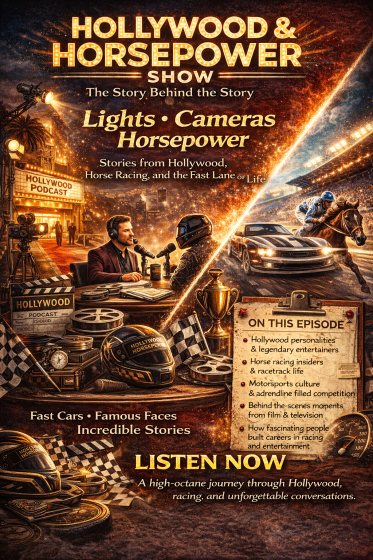

Hollywood and Horsepower Show with Mark Otto
Guest, Scott Spencer
Aviation, Horsepower, and the DIY Spirit: A Conversation with Scott Spencer
Hollywood & Horsepower: Scott Spencer
A deep dive into aviation, high-end resto-mods, and the "non-declining asset" lifestyle.
The Pilot's Perspective
"I'm a car guy trapped in a pilot's body."
- Delta Captain: 27-year career; emphasizes "quality of life" and being home every night.
- The Timing Factor: Career shaped by 9/11 and seniority; luck played a massive role in avoiding furloughs.
- Aviation vs. Passion: Views flying as a serious profession but builds cars for creative fulfillment.
Resto-Mod Philosophy
The Garage (Portfolio)
Secondary Assets
Strategy: Uses social media to encourage DIY builds and collaborate with top-tier industry names like Roadster Shop and Auto Metal Direct.
This document summarizes an interview with Scott Spencer, a veteran Delta Air Lines captain who has parlayed his analytical pilot mindset into a successful second "career" as a high-end custom car builder and social media influencer. The discussion explores the parallels between the precision of aviation and the craftsmanship of "resto-modding" classic American muscle cars.
The Flight Path: Career, Timing, and Tradition
Scott Spencer’s entry into aviation was heavily influenced by his father, a combat veteran and major airline captain. Unlike many "aviation geeks," Scott was primarily drawn to the lifestyle—the ability to be fully present at home without the lingering responsibilities of a corporate 9-to-5 job. His career trajectory was defined by "perfectly lucky" timing; he was hired by Delta at age 25, nearly a decade younger than the average hire at the time. This early start provided a seniority buffer that protected him during the industry-wide volatility following 9/11 and the 2008 financial crisis. Despite 27 years in the cockpit, Scott remains a "car guy trapped in a pilot’s body," viewing flying as a professional discipline while cars and watches serve as his primary creative outlets.
Pilot Profile: Scott Spencer
- Current Role: Captain, Delta Air Lines (27 Years)
- Hiring Age: 25 (Industry Avg: 34)
- Military Service: Air National Guard (Enlisted)
- Flight Philosophy: Seniority-based "Day Trips" to maximize home time.
The Art of the Resto-Mod
Spencer’s automotive journey began with a Factory Five Cobra kit car, built with almost no prior mechanical experience. Over the last decade, his skills have evolved from basic assembly to complex metalwork and self-taught paint jobs. He specializes in "resto-mods"—vintage aesthetics paired with modern performance. His builds, such as his '67 Camaro and '65 Mustang, often feature Roadster Shop chassis and modern GM crate engines (LS and LT4). This approach solves the primary issue with 1960s muscle cars: they look iconic but originally "drove like trucks." By integrating modern suspensions and powertrains, he creates vehicles that are as reliable and high-performing as contemporary sports cars while retaining their classic silhouettes.
Influence and the DIY Community
With over 500,000 followers across social media platforms, Spencer has transitioned from a builder who posts videos to a content creator who builds cars. His philosophy centers on transparency and encouragement; he intentionally avoids discussing specific build costs to prevent discouraging hobbyists with smaller budgets. Instead, he focuses on the "side quest" of partnering with industry leaders like Roadster Shop and Auto Metal Direct to showcase high-quality components. His goal is to demonstrate that with a detail-oriented mindset and a willingness to learn, anyone can tackle complex mechanical projects.
The Spencer Build Philosophy
Aesthetics100% Vintage Body
PerformanceModern Chassis/Crate Motors
The ResultReliable "Daily" Classics
Key Data & Metrics
- Social Media Reach: 500,000+ followers across all platforms.
- Aviation Tenure: 27 years at Delta Air Lines; 14 years remaining until mandatory retirement at age 65.
- Marriage: Celebrating 30th anniversary with wife, Kimmy, this September.
- Build Timeline: Approximately 2 years per complex vehicle (e.g., the '65 Mustang).
- Performance Specs: The Cobra build weighs only 2,400 lbs with 450 horsepower.
To-Do / Next Steps
- Complete the ongoing '67 Chevelle build, which features a 650-hp supercharged LT4 engine.
- Continue the "side quest" of collaborating with industry brands like Roadster Shop and American Autowire for social media content.
- Finalize the installation of the bedroom full of Chevelle parts to avoid "wasting resources".
- Explore potential offsite storage solutions as the home garage reaches maximum capacity.
Conclusion
Scott Spencer represents a unique blend of professional discipline and hobbyist passion. By applying the analytical, safety-first mindset of an airline captain to the world of custom car building, he has created a portfolio of vehicles that bridge the gap between history and modern technology. His success on social media serves as a testament to the enduring appeal of the DIY spirit and the "non-declining" value of craftsmanship.
Hollywood and Horsepower Show


Through the relationships Mark Otto developed in Thoroughbred Horse Racing and Automotive Racing, during his global travels, the thing that most interested him was the story behind the story, with the famous people he was fortunate to meet. What was it that these people liked to do? How did they get into Hollywood or into Racing? These stories are fascinating! This is what encapsulates the “Hollywood and Horsepower Show”.
Bringing you along, we talk to so some of the most interesting people Mark met during his career. Don't be surprised if a few other guests stop by this show. This will be fun! It is where SNL meets The Tonight Show; a perfect mix of talk and comedy.
[00:00] Speaker 1: (instrumental music plays) Welcome to Hollywood and Horsepower, the show about the story behind the story. Today, we are joined by a very special guest, somebody that I have been following for a while and find very interesting. Um, he is a captain for a major airline, flies regularly, he's still very active. And then he has a passion for high-end builds, which I'll let him explain on, on sports cars and watches as well as, you know, his family and his dogs. So, we're, we're really excited and honored to welcome Scott Spencer to the show. Scott, thanks for joining us.
[01:00] Speaker 2: Thanks for having me. I'm looking forward to it.
[01:02] Speaker 1: Yeah, likewise. So I, I want to jump right into it and kind of go back and I'm, I'm not going to, you know, spend as much time as probably most people think on aviation, because that's what you are known for. But, um, I'd, I'd be remiss if I didn't touch on it. So you grew up in Atlanta. Your, your dad was a commercial pilot.
[01:25] Speaker 2: Yep.
[01:26] Speaker 1: Um, you know, I've got aviation in my blood too, so it's interesting for me. I started out as a corporate pilot and worked my way through. And, you know, I, I was... would like to hear the story about when did you get the bug? Like, when did you get, get interested in it? Was it... Did you go on trips with your dad or just remember going to see him off at the airport or what got you started?
[01:49] Speaker 2: Yeah, you know, I just grew around... up around it. It was kind of all I knew. And, uh, I think honestly, like, his lifestyle away from work probably had a big influence on me as well because, you know, he made good money as a major airline captain as well. And, you know, we lived in an area where all my friends' dads, you know, made similar wages, but were in more traditional jobs. And, you know, there's this, there's this, uh, idea that airline pilots are gone all the time. Well, the beautiful part about the job is when you're home, you're home. You have no work responsibilities. So I had this amazing relationship with my dad. He ended up being the best man in my wedding. And, uh, you know, he was off. He was able to devote the time to me and my sister and my mom, and we had this great family experience. Whereas, you know, my friends' dads who were making similar incomes, you know, with nice jobs, uh, they were working all the time.
[02:33] Speaker 2: And when they were home, they were still working, as, as it is in the corporate world a lot of times. So, uh, that was probably a big influence on s- on me, as to what got me interested in being an airline pilot. Uh, and then as I went to college, I started flying and, uh, really found a passion for doing that and the actual flying part of it. But I would say the, the lifestyle probably influenced me more than the actual love of flying airplanes until I actually started doing it.
[02:57] Speaker 1: Yeah, I completely understand that. You know, quality of life, it's, uh, it's definitely a pay your dues industry. I mean, you got to work your way up. But it, it definitely has its rewards. Now you started flying, you know, like, as you said, in college. But you also did some time, um, with... Was it the Air Force or the Air Guard?
[03:17] Speaker 2: I was just enlisted in the Air National Guard when I got out of high school. Uh, it was nine... I graduated high school in 1992, and I... You know, my dad was an Air Force pilot. He flew 521 combat missions in Vietnam, uh, and then flew in the Air Force after that prior to coming to Delta Airlines. And so I wanted to be a military pilot also. And coming out of high school in '92, my senior year, I went down to Auburn University and talked to the ROTC, uh, detachment there. And that was coming off the first Gulf War and the military just had a huge surplus of pilots. And, you know, they said, "Well, you know, you can be in ROTC, but the chance of you getting a pilot slot when you graduate college does not look good." Uh, so then I found out about the Air National Guard down the road in Montgomery, Alabama. You know, each state is going to have an Air National Guard unit, similar to the Air Force Reserve if people aren't familiar with that.
[03:57] Speaker 2: It's, you know, two days a month and two weeks a year. And so I went down and talked to them and they said, "Yeah, you know, you can have an enlisted job and for two days a month. And, uh, you know, we're going to pay for your college basically. And you can do that. And then when you get your college degree, you can at that time apply for a pilot slot. And if you don't get a pilot slot or you don't want to pursue it at that point, you have no further commitment other than, you know, my six years I'm enlisted for." Uh, so that was my plan, to go through college and then try to fly. Uh, and then again, a lot of the aviation business is just timing and where you're at. Um...
[04:26] Speaker 1: Absolutely.
[04:26] Speaker 2: That was about two months bef- You know, about two months before I graduated college, the Guard unit had a pilot selection board. You had to have your college degree in hand to apply for the slot. So I missed that slot. Uh, concurrently with that, Auburn had developed a flow through agreement with the Delta connection carrier. Uh, so three weeks after I graduated college, I had enough flying time and stuff that I had amassed during college. I started at a regional airline. Uh, and then it was a year and a half later, I was still concurrently serving in the, in the Guard two days a month as my enlisted job. Uh, a year and a half later, by the time the Guard was having another pilot selection board, well, by that time, I had, you know, gained this airline experience and the, you know, the progression is go from a regional airline to a major airline. And, you know, I was, I was right, uh, you know, in the candidate pool for that.
[05:08] Speaker 2: So I just bypassed on the, on the chance to fly in the military again, because the timing didn't work out for me. Uh, and I got hired at Delta when I was 25. The average age of, you know, getting hired at Delta at that time is 34 years old. Um, so I was really young for the job and it just, my timing was perfectly lucky and, uh, I was, you know, very fortunate on that. You know, when I started at Delta in January 2000, uh, it was rolling along great until 9/11 happened and then, you know, we lost a decade in the airline industry more or less.
[05:35] Speaker 1: Yeah, there's no question. And, you know, thank you for your service. We appreciate it.
[05:40] Speaker 2: Thank you.
[05:41] Speaker 1: And, um, that's... You know, you hit on something that really is true. It's like, and I don't think most people realize this, the aviation industry is, is absolutely timing. You know, it does seem like it goes... the pendulum goes in both directions. It feels like there's either a surplus of pilots or they can't find anybody. And it...
[06:00] Speaker 2: Yeah.
[06:01] Speaker 1: It's, it's been like that as long as I can remember, and that was the same thing that I went through. You know, I kind of came out, you know, late 80s and there, there was just...... people sitting all over the place, you know, there was a surplus of guys. And then, you know, by the time, you know, things kind of picked up and went, I was already on to another career path, so completely understand-
[06:21] Speaker 2: Right.
[06:21] Speaker 1: ... what you're saying. And I kind of went through the same thing. So you got in pretty young. Was your dad still with Delta when you started flying for Delta?
[06:30] Speaker 2: Yeah, we had a couple years of overlap. And it's actually kind of interesting, Delta, for many years, had a very strict nepotism policy. Like, you could only have one family member working for Delta. So, you know, if your uncle was a mechanic, you couldn't be a pilot and stuff like that. Uh, in '98, '99, Delta bought the regional airline that I was at, and that basically nixed the, uh, nepotism policy just for that airline. And then about a year later, they got rid of it altogether. So there were many people over the years that were, uh, disadvantaged by their parent working at Delta that couldn't ever get a job. I was certainly one of the first benefactors and, uh, my peer group at Auburn that all went through all the flying with, like, I started at Delta in January of 2000. They mostly came over in, like, July, August, September range. So I was definitely, you know, a benefactor of that nepotism policy changing, one of the first ones.
[07:23] Speaker 2: Um, and it got me probably six to eight months ahead of the game versus my peers, which then when 9/11 happened, uh, was a substantial difference for us because they ended up getting furloughed for, you know, three, four years. Uh, and I ultimately did not get furloughed for 9/11. When Gulf War II happened in, um, 2003, 2004 range, I ended up getting furloughed then but it was only for six months. So, you know, that extra six months I was ahead of them made a substantial difference again and again, it was just timing. The timing in that career has been so lucky on my side for... You know, there's so many people are not lucky and I've definitely been lucky with it.
[07:55] Speaker 1: Yeah, and I've, I've seen both sides of that myself. In fact, you know, it's funny, you might have caught the episode, one of our episodes was with Ma- Matt "Whiz" Buckley. Matt was-
[08:05] Speaker 2: Mm-hmm.
[08:05] Speaker 1: ... a Top Gun pilot. He was actually, like, the real-life Jester from the, you know, Top Gun movies. He was the adversary.
[08:13] Speaker 2: Right, right. Yeah.
[08:14] Speaker 1: And he was similar situation. Tell you about timing, his first day to be an American Airlines pilot was 9/11.
[08:24] Speaker 2: Oh, wow.
[08:24] Speaker 1: And he was still in the Navy Reserve and he said he stood there in his bedroom looking at his American Airlines uniform and his Navy uniform, and he put the Navy uniform on and drove to the base. (laughs)
[08:36] Speaker 2: Yeah. Yeah.
[08:39] Speaker 1: Because he-
[08:39] Speaker 2: Yeah, I know, I know, you know, the same thing happened again with COVID. Like, I know guys, I know a guy in town here, he had got hired with United and then COVID happened and they just, you know, immediately stopped and he ended up never flying for United. And a couple years later, he, he was a military pilot also, and a couple years later he got hired by Delta and I was joking with him, I'm like, "Man, you should wear your United uniform to the first day of new hire class at Delta, it'd be hilarious."
[09:01] Speaker 1: (laughs)
[09:01] Speaker 2: And he goes, yeah, he goes, "Yeah, I literally never wore it."
[09:03] Speaker 1: Stack the wings, put the, put both wings on. (laughs)
[09:07] Speaker 2: Yeah. (laughs)
[09:10] Speaker 1: Well, I have to... So I have to ask the million dollar question. Did you ever get to fly with your dad?
[09:15] Speaker 2: I did not. You know, we were... We had that plan in place when, uh, 9/11 happened. He was flying international wide-bodies and he was going to come back and fly the 767 domestically his last couple years. And then I was in a position where I was going to go to 767. So we would have been one of the first father-sons to do that at Delta also but then 9/11 happened and, uh, I started going backwards and couldn't... You know, the seniority progression obviously stopped and went the wrong direction. So 9/11 blew that plan up. I did, uh, fly with him on one of his last flights, um, in the jump seat and, you know, I wore my uniform and we, we took some pictures up in the flight deck on, on the ground, not while the airplane was moving. But, uh, just at the gate, you know, so it would look like we're flying together but we really weren't. So that was a cool memory.
[09:56] Speaker 1: That's fun. No, that's really neat. So y- you go from there, you know, y- your, your career takes off, family. Um, tell us a little bit about your family, if you don't mind. I mean, you don't have to go into great detail, just whatever you're comfortable with.
[10:11] Speaker 2: Yeah, I met my wife Kimmy in college, uh, when we were sophomore year of college. We got married right as we were about to graduate, and we celebrate our 30th anniversary this September 7th. So excited about that.
[10:24] Speaker 1: Congratulations.
[10:24] Speaker 2: Uh, we never had children, so it's just the two of us. And, uh, we've always had golden retrievers, so we've got that. And I've got a sister who's got five girls, and they're, they're all now, you know, like 28 to a senior in high school. So, um, we're, we call ourselves PUNKS and PANKS, I don't know if you've ever heard that term, Professional On-the-Sgo Kid and Professional On-the-Sgo Adult.
[10:42] Speaker 1: Yeah. I was going to say though, I've seen your garage, it does appear that you have some children. (laughs)
[10:46] Speaker 2: (laughs) Yeah. Yeah, I do have a lot of toys out there if I was, you know-
[10:50] Speaker 1: You currently... At least he has dependents, let's put it that way. (laughs)
[10:53] Speaker 2: (laughs) Yeah. Ki- kids are expensive. I haven't buried that expense, so you might see more toys in my garage than the average.
[11:00] Speaker 1: Yeah, kids might be cheaper than your garage. (laughs)
[11:03] Speaker 2: (laughs) Might be, might be.
[11:05] Speaker 1: So then y- you know, when did you get into the car building? Was that something your dad did also?
[11:12] Speaker 2: No, I've always been, like, you know, a car guy and liked cars, and, um, my, my Uncle Jim, my mom's, uh, brother-in-law, he's a big car guy and a big builder. My dad, uh, he, he likes cars but he wasn't like a builder on them. He grew up extremely poor, you know, welfare type situation, single mother. Uh, so he was, he was... Even though he did really well professionally, he was just never one to spend his money on stuff like that, um...
[11:37] Speaker 1: Sure.
[11:37] Speaker 2: So I didn't really get it from him, I got a lot of it from my uncle. I was always interested, and then we moved, we moved... We lived up in Atlanta on the first 18 years I was flying, and then we moved back to Au- to Auburn, Alabama where we live now about 11 years ago. And I had the, the time, space, and money, and I literally just woke up one day and I was like, "Man, it'd be pretty cool to build one of those, like, Cobra Kit Cars." So I just, you know, did a Google search, like, "Cobra Kit Car" and Factory Five came up and I started researching it. And I had... literally had zero automotive, uh, experience.... you know, outside of, like, changing my oil s- my oil in high school, like, 25 years prior. Uh, and I said, I... you know, I read about these kits and I'm like, "I think I could build this." And, you know, Factory Five provides a great starting point for, like, a new builder and they have an awesome build community and a forum to help you out.
[12:20] Speaker 2: So I just ordered that thing up on faith that I'd figure it out, and I did, and I figured it out and was successful with that. And then I just, you know, continued on that car journey the last decade since, and then-
[12:29] Speaker 1: But it was first built. The first built-
[12:32] Speaker 2: Yeah, that was the first.
[12:33] Speaker 1: ... today?
[12:34] Speaker 2: Literally, like, literally I had changed my oil in high school 25 years prior to building that car, and then I was able to pull it off. So, um-
[12:42] Speaker 1: Wow. That-
[12:42] Speaker 2: You know, I'm pretty, I'm pretty, uh, detail oriented and analytical, so I'm good at figuring stuff out, and there was a lot of help available with that project.
[12:52] Speaker 1: So then what, what, um... Were you always more of a Ford guy over GM or really didn't matter, you just like cars in general?
[13:00] Speaker 2: Uh, I like cars in general. My first car was a '67 Mustang convertible. I bought that in high school. Um, so, you know, I've kind of always had more of, like, a Ford background probably, but, um, I've, I've got 'em all now. You know, my, my '67 Camaro I built, the license plate says Ford Guy on it, kind of as a joke, uh, which kind of riles up the Chevy people at times, but, uh-
[13:19] Speaker 1: The, the...
[13:19] Speaker 3: (laughs)
[13:19] Speaker 2: ... I, I, I like, I like all cool cars.
[13:22] Speaker 1: Does it have-
[13:22] Speaker 3: Sure.
[13:22] Speaker 1: Does it have a Coyote in it? I've seen guys do that too.
[13:25] Speaker 2: No, it, it's got an L- it's got an LS in there, but, um-
[13:28] Speaker 1: Okay.
[13:28] Speaker 2: ... you know, just a license plate. It's a little joke. It, it's, it gets a little bit of attention. It's kind of fun.
[13:34] Speaker 1: So, um, what was your hardest build? Like, of the ones you've done so far, what was the one that gave you the most curveballs?
[13:44] Speaker 2: Well, I will say that every car I build I try to make it harder than the previous one. So, like, you know, I did the Cobra, and then I did a '79 Porsche, then I did a, a '67 Camaro, then I did the '65 Mustang. And, like, you know, I've, I've... Uh, the '65 Mustang, I'm, I'm up to painting it myself. I've done the metal work. You know, I'm learning more skills each time. Probably the Cobra was the hardest because I had no idea what I'm doing and I... You know, I've been able to build my skill base every car moving forward. So each car I've done is significantly more complex, but I don't know that I would equate that to also being harder, because it was a different feel.
[14:19] Speaker 2: It's a little-
[14:19] Speaker 1: But it doesn't feel as... Yeah.
[14:22] Speaker 2: So were, were the others-
[14:23] Speaker 1: And, you know, and like... Kits, or were they, like, cars that you restored?
[14:28] Speaker 2: No, they were all, like, restorations and I do resto mods on them and stuff. So the, the Cobra was the only kit car, and then I got the '79 Porsche next, which, you know, was a decent driver condition Porsche and I basically just stripped it down to bare nothing, sent it off to a painter. I did all the mechanical work on it and, uh, I've just kind of gone from there. And then the Camaro was next, and that's where I started doing metal work, things like mini tubs and, and stuff like that to, to the point where I got to the Mustang where I painted it. That... I got, like, a blow-up paint booth down in my, uh, shop there, and I put that out in my driveway and blow it up there and paint it. So, uh, it's, it's been a fun journey. I like getting... You know, I like doing it each time and making it a little bit harder.
[15:05] Speaker 2: And, uh, I like, you know, presenting that content on social media also and just, you know, from the DIY perspective to try to encourage others just to, you know, jump in and make it happen.
[15:15] Speaker 1: Yeah, it's really fun. And for those just joining us, we're with Scott Spencer. He's a Delta captain, sports car enthusiast, you know, high-end builder and timepiece collector. And, um, you know, you, you've mentioned something on the resto mods. For people that don't know, you know, explain a little bit about what that is, because I know there's several different kinds of builds and for a lot of people I don't know if they know the difference.
[15:43] Speaker 2: Yeah, like, to me a resto mod is, is the car looks old with modern technology under it. So for example, the '67 Camaro I did, I basically used the body shell. And then, you know, there's a lot of different aftermarket companies that make, you know, more modern type suspensions. I personally believe Roaster Shop makes the best setup. Roadster Shop makes the full bolt-in chassis. Like, a '67 Camaro, for example, is a unibody car where the suspension bolts to the front and the rear of it, uh, and you can just take that all away and you're left with a body shell. Roadster Shop makes this entire chassis with modern components, modern differential, uh, shocks, coilovers, stuff like that. You put the body of the car on that. I put a brand new engine in it. You know, I ordered a GM crate motor, brand new, zero miles on it, and every mechanical component of the car is new with the old body on it. And the... So it's got, like, the old school look to it with modern performance.
[16:33] Speaker 2: And so to me, it's the best of both worlds, because I don't know if you've ever driven, like, a '60s muscle car, they drive horribly.
[16:39] Speaker 1: Oh, yeah, they driv- (laughs) they're-
[16:40] Speaker 2: They're fun, but, like, you know, relative to a modern car, they drive horrible. So you've got, now a-
[16:44] Speaker 1: Yeah, they drive like a truck.
[16:45] Speaker 2: ... '60s muscle ca- Yeah, you've got a '60s muscle car that drives like a modern performance car.
[16:51] Speaker 1: No, it's, it's very true. And I know this is, is... I agree. I feel the same way. It's like the best of both worlds, and that's why you see so many people doing LS engines. I know several vehicles I've had, I- I'm a big fan of the LS. I, you know, I'm kind of like you, I admire every kind of car, so I'm equally as impressed by the Coyote. I wouldn't say... You know, people always ask, you know, "Well, which one's better?" I don't know that I can say. I mean, I feel like they're both really good.
[17:18] Speaker 2: Right.
[17:18] Speaker 1: And it really comes down to just preference. Um, I, I can't say anything bad about either one of them. You know, they're just good engines. But I see it more and more, you know, we've... We had a, um, a, a guest that owns Velocity Motors in Pensacola, and they have actually created a, a... I don't know if you're familiar with them, but they have-
[17:39] Speaker 2: Yeah.
[17:39] Speaker 1: ... actually cr- like, a new line of resto mods. And it's, it's pretty impressive. I mean, it's basically-
[17:46] Speaker 2: Yeah.
[17:46] Speaker 1: ... a brand new, but it looks like a '67 Camaro.
[17:50] Speaker 2: Yeah. Yeah, they... And it's nice in dealing with the Fords and Chevys, I mean, those popular '60s cars, you can basically build a new one from scratch with the parts availability and stuff. So, you know, like, I'm doing a '67 Chevelle now, and, uh, I'm hooked up with Auto Metal Direct who does an awesome amount of, you know, sheet metal stuff. And I've, I've basically got, you know, two thirds of the original body is going to be brand new. Um, you know, and you got the purists that are like, "Oh, keep it original." And, you know, to me it's like, to each their own. If I'm going to put all the effort into it, I'm going to build it just how I want and make it for me. Uh, so not everybody's going to agree with that, not everybody's going to like the resto mod, but that's the great thing about the car world, you know, do it how you like to do it.
[18:25] Speaker 1: And I, and I feel the exact same way. I don't think there's a wrong answer. It really comes down to, you know, your personal preference and then sometimes I do believe it comes down to the car.
[18:35] Speaker 2: Yeah.
[18:35] Speaker 1: So I've had cars ... I'm a car guy too and I've had several, a lot of cars over the years. I, I raced Corvettes for many years, bought and sold many, and I've had some of them that I, I had one in particular, I bought a '46 Ford with the idea of resto-modding it and it was so original when we got looking at it, I couldn't do it.
[18:57] Speaker 2: Yeah.
[18:57] Speaker 1: So I ended up selling it to somebody else that was going to basically restore it back to original. I didn't have that passion. I didn't want to make it just a 1946 car, but I recognized that it was too r- it was too complete to, to tut it up. So-
[19:15] Speaker 2: Yeah, absolutely.
[19:15] Speaker 1: ... I think sometimes you... I've always looked at these things like, you know, on true resto-mods, it's almost like, you know, you're... it's fun. It's a project. I, uh, it's kind of like a new car. On some of the restoration of the real old ones, I almost look at it like we're just stewards of the car.
[19:32] Speaker 2: Yeah.
[19:32] Speaker 1: And we have to do what's right by it and then pass it onto the next guy. And-
[19:37] Speaker 2: And like, like for me, the cars I'm buying, I'm buying like body shells. Like the Mustang and the Chevelle haven't even had any dry paint, engine, transmission, nothing in them because I know-
[19:46] Speaker 1: Yeah.
[19:46] Speaker 2: ... I'm going to-
[19:46] Speaker 1: Feels perfect.
[19:46] Speaker 2: ... just get rid of all that anyway, so I'm buying a piece of junk-
[19:49] Speaker 1: (laughs)
[19:49] Speaker 2: ... that's like there's no value in restoring that to original condition. So it's like, you know someone will be like-
[19:54] Speaker 1: Yeah, and, and I agree.
[19:54] Speaker 2: ... "Oh, you're restoring a car." I'm like, "I'm go- I'm starting with a rusty piece of junk, man." Like, you know? (laughs)
[19:59] Speaker 1: 100%. I agree. I'm the same way. I mean, sometimes that's really i- i- you point, you touched on it, it actually makes it easier because you don't-
[20:08] Speaker 2: Yeah.
[20:08] Speaker 1: ... have to tear it down. It's already got the engine out of it. It's already got, you know, some components or maybe the interior's already missing and you're going to pull that stuff out and throw it away anyhow.
[20:18] Speaker 2: Right.
[20:19] Speaker 1: So it makes it actually easier. So tell us a little bit about the Chevelle. You're, you're working on that one now. I understand you had a little fire or something recently?
[20:28] Speaker 2: Uh, yeah. (laughs) Yeah, I just had a little welding accident. Uh, you know-
[20:33] Speaker 1: (laughs) .
[20:34] Speaker 2: You, you know they say the, well they say the best les- some of the, the best lessons are written in blood. Uh, I got away with that one a little bit. Um, should have been a little smarter in my process but, you know, corrected that and going forward, won't have that problem again. But, um, yeah, I've got a '67 Chevelle. Again, I'm using a Roadster Shop chassis. I'm putting an LT4 crate motor in there which is the, you know, 650 horsepower supercharged motor that was in the Z06, uh, couple generations back. Um, so it's a, it's a fun build but, you know, I'm about one year deep into that. Maybe not, maybe not, ten months deep into that and probably a couple years to go on it.
[21:10] Speaker 1: Wow. How... Which brings up a good question. How long does it normally take you b- beginning to end to build one of these?
[21:19] Speaker 2: The Mustang was right at two years. Um, they've all been a little bit different and like I said, as they get more complex, um, the, the Chevelle is definitely going to be the longest. And also, like, the more cars I get, the more time I have to devote to those other cars 'cause, you know, you always got proj- they're never really done. You always got little projects you're doing. I spent, you know, the other day, I, I just posted a video this morning of a, uh, upgrade I was doing on the Mustang. So it's like my time gets distributed a little bit more on the other cars, so it slows my progress on the Chevelle, um, as much. So it's a nice problem to have, you know. When I was building that Cobra, I didn't have anything else to drive, so I was just like 40 hours a week or whatever I could, I was down there all the time trying to get it done. And, you know, now it's like, "Well, it's a nice day today. I think I'll just go out for a ride and I'll get to the Chevelle tomorrow," or whatever.
[22:01] Speaker 2: So my, you know, my pace of progress is a little bit different than it used to be.
[22:05] Speaker 1: And you, you know, that touches on another point. You actually use these cars, like you drive them to work-
[22:11] Speaker 2: Oh, yeah. I drive-
[22:11] Speaker 1: ... drive them, yeah.
[22:12] Speaker 2: Well, I don't drive them to work because-
[22:15] Speaker 1: No.
[22:15] Speaker 2: ... would you leave any of those cars at the Atlanta airport? No. (laughs)
[22:17] Speaker 1: No.
[22:18] Speaker 2: But, uh, I dri- I try to drive them all every week, you know. So I, I do drive them, yeah, a lot. I love them.
[22:25] Speaker 1: You actually drive every one of them every week?
[22:27] Speaker 2: Well, I try but like, you know, the Cobra is very weather dependent, like I, you know, if it's freezing cold-
[22:33] Speaker 1: Sure.
[22:33] Speaker 2: ... if it's a bit below like 45 degrees, I'm not going out in the Cobra 'cause I don't need to go out there and freeze when I got the other cars, uh, you know. So basically, you know, a- all year round, you know, in Al- in Alabama, the climate's fine for winter driving so, you know, usually in the winter time, the depth of the winter, I may go two or three weeks without getting in the Cobra. But then we'll get a, you know, a day where it's 55 or something, I'll be like, "Ah, I'm going to go for a quick little spin." And, you know, I'm only going like, you know, 10 or 15 miles at a time, but it's just good to get them all out and exercise them.
[22:59] Speaker 1: So I know asking somebody this is a loaded question, but of your collection what's your favorite? And I know it's a hard question.
[23:09] Speaker 2: Yeah, it depends on the day. (laughs)
[23:10] Speaker 1: What... (laughs) Yeah.
[23:10] Speaker 2: Depends on the day, you know. I mean, the C- the Cobra, the performance of that car, I mean that car is like 2400 pounds with me in it and it's got 450 horsepower and the, and the, you know, the Mustang for example is, uh, is about 1000 pounds heavier so there's nothing that beats the performance of that Cobra and it's just so raw and so violent and you got to be careful with it 'cause it'll, i- i- you know, the short wheel base, it'll just come around and you go so fast.
[23:32] Speaker 2: So-
[23:32] Speaker 1: It'll walk away from you. (laughs)
[23:34] Speaker 2: Yeah. So when the weather is right, you know, you get a perfect weather day like, there's nothing beating the Cobra. But, you know, the perfect weather days probably aren't that often and, uh, it just, you know, depends on my mood, what I'm in the mood for. A- they... I love them all. That's the problem. I'm kind of a hoarder on these things. I'm running out of space and I'm like, "I can't..." You know, I got so much work in all of them I can't stand the, the thought of getting ready, rid of any of them. So when I get rid, done with the Chevelle, I've got a problem 'cause all of my garage spaces are going to be full. So we'll see what happens then.
[24:01] Speaker 1: So then it's ti- it's either time for a new house or an addition? (laughs)
[24:06] Speaker 2: Yeah, I got no, no new house. My wife loves this neighborhood so we're not... She's very understanding of my car hobby but that's where she draws the line when I'm moving so I can have a bigger garage. Uh, but I got a buddy in town that builds cars too and we've made some talk of like having offsite storage or something. (laughs) So we'll see (inaudible)
[24:23] Speaker 1: I know guys that do that. I know like-
[24:26] Speaker 2: Yeah.
[24:26] Speaker 1: ... Finnegan from Roadkill, he does that. He's got a, he's got his home shop and then he's got, you know, another shop down the road and...Yeah, a lot of (audio cuts out) a lot of guys do that and it becomes, you know, it, it gives you a place to acquire more. (laughs)
[24:42] Speaker 2: Yeah. Yeah, so we'll see.
[24:45] Speaker 1: So you get, you get into the cars and, you know, you're well into these. When did you start doing the, the watch collection? I have to ask you about those because I see the watches and they're-
[24:55] Speaker 2: Yeah.
[24:55] Speaker 1: ... pretty impressive. Equally as impressive as the cars.
[24:59] Speaker 2: I've kind of always been a watch guy. My first, my first nice watch, my wife bought me for our fifth anniversary. Uh, well, we always say she bought it. I picked it out, of course, because, you know, watches are so individual. It's hard to-
[25:09] Speaker 1: Sure.
[25:09] Speaker 2: ... get some, a watch guy something that... Uh, and so that was 25 years ago, so it's just kind of been a steady, uh, steady growth to where it's gotten a little out of hand again. I don't... I got more watches than anybody really needs, but, uh, I enjoy them, you know. (laughs)
[25:27] Speaker 1: No, but it is a f-
[25:28] Speaker 2: It seems to be popular.
[25:28] Speaker 1: It's a fun hobby 100%.
[25:29] Speaker 2: Seems to be popular in the videos.
[25:32] Speaker 1: Yeah. The, well, it's fun and then, you know, what's ironic? And I, I know several people that are into it as well and, you know, the watches have become very popular as, as collectors items and-
[25:44] Speaker 2: Yeah.
[25:44] Speaker 1: ... they actually appreciate quite well, a lot of them. So they-
[25:49] Speaker 2: Yeah.
[25:49] Speaker 1: ... they increase in value over time, surprisingly. Some of them shockingly. And-
[25:54] Speaker 2: Yeah.
[25:55] Speaker 1: ... it is fun, you know, and it is, uh, another piece of equipment that's very well made. You know, you have to kind of admire the craftsmanship when you look at a lot of those.
[26:04] Speaker 2: Yeah, that's my, that's my key phrase with my wife. It's that my non-declining assets. That's why I put all my, my cars in, my watches and all that stuff. (laughs)
[26:11] Speaker 1: Yeah.
[26:12] Speaker 2: It's kind of our-
[26:12] Speaker 1: They-
[26:12] Speaker 2: It's kind of our joke. I mean, there's, you know, there's reality to it, but it's also our joke.
[26:18] Speaker 1: Yeah, as long as you don't count your hours, I think you're probably spot on.
[26:22] Speaker 2: (laughs) That's right, that's right.
[26:24] Speaker 1: So what's next for you after the Chevelle? Where do you, where do you go next?
[26:30] Speaker 2: I have no idea. I mean, like I'm sort of focused on that project and, you know, I'm a million steps from being done with it. So for me it's just, um, it's just get... You know, when I get done with one car, I start getting the itch pretty quick to have another build going because I enjoy the build and the mechanical process, uh, as much as I do the driving process. So when I don't have a full build going on, I start getting a little restless. Uh, you know, the, the, the home based very, uh, inclusive hobby really suits me well because as I spent the last 30 years as an airline pilot traveling, I just don't like going many places, like outside of work.
[27:06] Speaker 2: Um, you know, so I'd-
[27:07] Speaker 1: Sure.
[27:07] Speaker 2: ... rather be home. And I do have a lot of off time now with my schedule 'cause our schedules are built on seniority and I'm, I got a nice schedule now, so I've got plenty of free time. So it suits me so well just to be at home with a, you know, a really deep home hobby that I can do without having to go somewhere else because it's like, you know-
[27:23] Speaker 1: No.
[27:23] Speaker 2: ... who wants... I don't want to hear it. I don't want to go to the airport on my off day. It's like, who wants to go to work on their off day?
[27:27] Speaker 1: Do you and your wife do a lot of, like, car type events? Like, you know, road rallies or shows or things like that?
[27:35] Speaker 2: No, we really don't. We're not like huge-
[27:37] Speaker 1: Okay.
[27:37] Speaker 2: I'm not a huge car show person, like we have a-
[27:40] Speaker 1: Got you.
[27:40] Speaker 2: ... cars and coffee in town once a month we go to but, you know, I, it's kind of small town here so after a few months it's like the same cars are there every time. And I just would rather spend my time either driving the car or, you know, building my car or helping my buddy build his car or whatever than staying around the parking lot looking at cars. We did go, we did go to the SEMA show this past year for the first time, so really enjoyed that, you know, it's cool to see. And something like that was cool.
[28:04] Speaker 1: Yeah, no, that is really cool. That's like the, the playground for car guys, no question about it.
[28:10] Speaker 2: Yeah.
[28:10] Speaker 1: And it's always fun to see like the pinnacle of custom. To me that's what you see there. You know, the-
[28:17] Speaker 2: Right.
[28:17] Speaker 1: ... stuff that's like next level, it's... Some of it's not even really drivable, it's just cool to look at.
[28:23] Speaker 2: Yeah. Yeah. (laughs)
[28:26] Speaker 1: But, you know-
[28:26] Speaker 2: This year.
[28:28] Speaker 1: It definitely is, is, is a really cool thing. So, you know, that brings up the, the n- the next question is like, so where do you go from... How much, how many, how much longer are you gonna fly?
[28:41] Speaker 2: Uh, I'm 51 and-
[28:44] Speaker 1: You have things to go to. So you got ways to go.
[28:44] Speaker 2: Well, I'm 51 and yeah, the... Well, the mandatory retirement age is 65.
[28:48] Speaker 1: 60.
[28:49] Speaker 2: You know, the, the thing about the airline industry is it's a seniority based system, so the, the longer you've been there, the better of a deal you're getting and the better trips you're getting and the better schedule you're getting. And by nature, me starting so young, I'm kind of with 14 years to go, where most guys are with, you know, four or five years to go. Uh, so it's, it's, uh, more of a situation where I don't know that I'll stop flying early, but I may only fly, you know, less and less as time goes on.
[29:15] Speaker 2: Um-
[29:15] Speaker 1: Do you think you'll ever go over to like Wide Body International or will you stay with what you're doing?
[29:21] Speaker 2: No. No. I have zero interest in the wide body stuff. My dad did that for his last 10 years and aged poorly and died young, uh, after he retired and I, I'm just not... I, I sleep at home every night, I haven't done a layover in like two years now. I do day trips, so I just, you know, leave Alabama, drive up to Atlanta, fly.
[29:37] Speaker 1: That's pretty impressive. Like-
[29:40] Speaker 2: Yeah, it's, it's not normal at all. It's not normal at all, but, uh, it works for me.
[29:43] Speaker 1: No, that's hard to do that. Most people don't realize how hard that is to do.
[29:47] Speaker 2: Yeah. Yeah, in fact, I'm, I'm sitting here working on my bid for next month and they've kind of reduced the number of day trips because of some staffing issues we have. And I'm like, "Dang, I'm not, I'm not going to be able to get a whole line of day trips next month. I might have to do something else." (laughs) And I'm like, you know, 27 years-
[30:02] Speaker 1: Yeah.
[30:02] Speaker 2: ... in at this job, er, 27 years in at Delta and I'm still, you know, fighting to get the schedule I want and stuff. So it, at one point it's like I'm senior and I'm, you know, I'm getting a great schedule, but at the same time it's like, "Dang, I'm still not getting what I want." Takes a long time.
[30:16] Speaker 1: Yeah, it definitely does and with... But I think that will probably improve for you over the next few years because it sounds like there's a lot of people coming up on retirement.
[30:24] Speaker 2: Yeah. Yeah, definitely.
[30:27] Speaker 1: So I have to ask, have you ever had any interest in like doing, um, like a small plane? Like a restoration, like on an old airplane?
[30:37] Speaker 2: No.I would-
[30:39] Speaker 1: Yeah. That's true.
[30:39] Speaker 2: ... never spend a pen- I'd never spend a penny to fly an airplane, like-
[30:42] Speaker 1: (laughs)
[30:43] Speaker 2: ... I- I- I get- I get enough of it at work and, and honestly too, like, all the way back to the beginning, I said, you know, my- my, uh, influence to become an airline pilot probably stemmed more from my dad's lifestyle and time off and pay and stuff. You know, I wasn't drawn-
[30:59] Speaker 1: That's great.
[30:59] Speaker 2: ... to the job just because I h- I loved everything about airplanes, I had to be in airplanes. Now, you know, as I got into it, it's been a great job. I feel like I do a good job at it. I'm very blessed to have the job I have. But like, I'm not like, I'm- I'm not an av geek by any means. Like, you know, when I leave work, I don't think about airplanes. You know, a lot of times on social media people are like, "Well, what's your favorite airplane?" I'm like, "I don't even have a favorite airplane." (laughs) You know? It's not that... I'm just kind of indifferent about it all. I'm very serious about my job.
[31:25] Speaker 1: No, I understand that. Yeah.
[31:26] Speaker 2: But like, I don't... Outside my job I just... I- I don't say I don't care about it, but it's like, aviation's just not my thing. I'm a car guy trapped in a pilot's body, is what I like to say.
[31:35] Speaker 1: No, and- and that's fair. I mean, I was just... The only reason I asked was I knew a lotta guys really got interested in some of the vintage aircraft and, you know-
[31:42] Speaker 2: Yeah.
[31:43] Speaker 1: ... a lotta... Even car guys do that. You know, I've known several guys that end up with like an old World War II era or something that they bring back to life or something. But-
[31:52] Speaker 2: Yeah.
[31:52] Speaker 1: ... no, very fair. I mean, I was kind of the other end. I mean, for me it was all about the plane. I was drawn to it and-
[31:59] Speaker 2: Yeah.
[31:59] Speaker 1: ... I always joked around. I originally went- tried to go Navy. I had kidney stones, couldn't fly for them. But originally I went NAVCAD Navy, and I always joked around that I would have joined the Girl Scouts if they had jets.
[32:11] Speaker 2: Yeah, yeah.
[32:12] Speaker 1: So it really didn't matter. (laughs) It really didn't matter to me. It was more about the plane. So-
[32:17] Speaker 2: Yeah. Oh, yeah. I- you know-
[32:19] Speaker 1: Any other collections
[32:20] Speaker 4: Sometimes I'm-
[32:20] Speaker 1: ... that grab your eye? I mean, you have some pretty cool collections. Anything else that interests you or are those the two main ones there, the watches and the cars?
[32:30] Speaker 2: Yeah, pretty much, pretty much that. I- I got enough car stuff to keep me busy for sure.
[32:35] Speaker 1: I would definitely say so. So, well, I really appreciate you taking the time to join us. It's been a lot of fun.
[32:43] Speaker 2: Mm-hmm.
[32:43] Speaker 1: I mean, you have a great collection. One thing I did want to talk to you about before we get outta here, social media. So how-
[32:49] Speaker 2: Mm-hmm.
[32:49] Speaker 1: ... did you get started in that?
[32:53] Speaker 2: Yeah, it's funny. I built that Cobra and I started, um, just kind of posting pictures on Instagram. Back within Instagram was basically just pictures and stuff and then I started doing little videos and, uh, I just... You know, I have a creative mindset, so I like creating the cars and I like creating the content on social media. Uh, and then it just kind of started growing and it, you know, at some point I was a- a car builder that posted videos and now it's kind of I've transitioned into I'm a video maker that builts cars almost (laughs) at some point. But, uh, you know, I've- I've just... The reach on there has been surprising to me and, you know, I'm not... I've got over a half million followers now across the pa- platforms I do. Um, and it's been, it's been rewarding to like, you know, I met a lot of friends through social media and done stuff. And, you know, there's a lot of negatives in social media but I try to just have a positive environment to encourage others, you know.
[33:41] Speaker 2: And a lot of people, you know, watch these builds and, you know, one of the most common questions I get is like, "How much does it cost?" Or, "How much is this?" And like, I never talk about money. Clearly I'm blessed and able to build, uh, a nice build. But at the end of the day I just want to encourage everybody to do the best they can with what they have available to them. And, you know, if I'm at a car show and I put 1,000 hours into building my car and it costs, you know, whatever, three times more than the guy next to me who put 1,000 hours into building his car and we have the same satisfaction, he has the same pride in his car as I have in my car, it's like, who cares what it cost, you know?
[34:14] Speaker 2: So-
[34:14] Speaker 1: 100%.
[34:14] Speaker 2: ... I try to take that equation out, and- and I feel like, you know, putting out large numbers, like, discourages people from trying. So, like, I literally, you know... I get, you know, I get hate comments like, "Oh, you're gatekeeping the information," blah, blah, blah. And I'm like, "Listen, that's just how I..."
[34:27] Speaker 1: Yeah, but-
[34:28] Speaker 2: ... I don't, I don't get into cost ever. Like, I want to encourage everybody to do the best they can with what's available.
[34:34] Speaker 1: It's also relative, like... But it's also a relative question that I always tell people. People will be like, "Well, you know, how much does it cost to build a car like that?" Well, depends on what you start with.
[34:41] Speaker 2: Yeah.
[34:41] Speaker 1: And then it depends on the components.
[34:43] Speaker 2: Exactly.
[34:43] Speaker 1: I mean, you could... It is such a... It's kind of like somebody saying, "Well, how much does a house cost?" Well, I mean-
[34:49] Speaker 2: Right.
[34:49] Speaker 1: It depends. (laughs) You know what I mean? You know what I mean? Where do you get to build it?
[34:53] Speaker 2: Yeah.
[34:53] Speaker 1: And so you make-
[34:54] Speaker 2: And every, every price, every part has 10 different price points, you know?
[34:58] Speaker 1: Absolutely. And you know what? I've always had kind of the same attitude. There's no right or wrong. It really comes down to... You know, it's kind of like, and it's... All of them are my likes, but it's kind of like comedy, food and cars. There are-
[35:13] Speaker 2: Yeah.
[35:13] Speaker 1: ... n- no... All three, you couldn't get more personal as far as interests or likes. So it doesn't-
[35:19] Speaker 2: Right.
[35:20] Speaker 1: There isn't... There really isn't any right or wrong. It's just kind of what you're in... I mean, look at it. There's, there's guys that build rat rods, there's guys that build absolutely pristine, back to OEM, you know, like a 1950 Chevy and-
[35:34] Speaker 2: Yeah.
[35:34] Speaker 1: ... you know, there's a lot of cars that... And I'm sure you're the same way. I watch these shows and I can appreciate it. You know, I wouldn't want to do it, and some of these I wouldn't have the patience to do it, but-
[35:47] Speaker 2: Absolutely.
[35:47] Speaker 1: ... I- I admire it. You know, I mean, I- I think it's cool that somebody did it and-
[35:53] Speaker 2: Yeah.
[35:53] Speaker 1: And I- I think the beauty of it is, and I've always said that, uh, I'm impressed by anything car, no matter what it is. I- I'm kind of one of the weirdos that I don't care if it's a 16-year-old kid that's got a car that he, that he's like tinkering with a little bit and he puts an exhaust on it. I kind of admire the fact that, you know what? There's- there's still guys getting into it. There's still a young guy out there that's starting to, you know, wanting to do something a little bit different. And I- I really encourage that. I mean, I think it's...
[36:25] Speaker 1: I agree with you-
[36:26] Speaker 2: Yeah.
[36:26] Speaker 1: ... you know? Whatever you're working on, just work on it. It doesn't-
[36:29] Speaker 2: Yeah.
[36:30] Speaker 1: ... matter, you know, how high-end or low-end. And, you know, and the beauty of cars is, I really believe, you- there's something for everybody.
[36:40] Speaker 2: Yeah.
[36:40] Speaker 1: So you could-
[36:40] Speaker 2: Yeah.
[36:40] Speaker 1: ... literally get into something really simple and low-cost, or you can get into something, like, crazy rare and high-cost. It's whatever your budget and your taste allows. And-
[36:53] Speaker 2: Yeah.
[36:54] Speaker 1: ... there is no wrong answer, you know?
[36:56] Speaker 2: Sure.
[36:56] Speaker 1: I mean, it's kind of... And one of the things, like I alluded to, that I've raced SCCA for many years. And that's one of the things I like about SCCA, is that there are classes that have cars that are, like, $2,000.
[37:10] Speaker 2: Yeah.
[37:10] Speaker 1: You can go out and buy, like, a stock Miata, and with a few modifications, put it on the track. And then there's classes that are hundreds of thousands of dollars. And, you know, there's, there's like NASCAR drivers that own those cars.
[37:23] Speaker 2: Right.
[37:23] Speaker 1: So it's like there's something for everyone.
[37:26] Speaker 2: Yeah.
[37:26] Speaker 1: So, uh, no, I agree. I think it's kind of a fun... It's a really cool hobby. It's something... You know, my dad was a car guy. I was... And he was just like your dad. My dad grew up in the Depression, never really spent the money on it. It was more of a thing that he admired. Um, he did hold onto a car that, that I got as a '41 Ford that we did with the cooperation of another guy to get restored, and the other guy has it now. But it was, um... And that, you know, that was an interesting build. The guy ended up bringing it back to life and never rebuilt the motor, transmission, or anything.
[38:02] Speaker 1: And it had sat-
[38:03] Speaker 2: Wow.
[38:03] Speaker 1: ... for 40 years. And it's now like a driver. It's not perfect, but it's a driver.
[38:08] Speaker 2: Yeah.
[38:09] Speaker 1: So, and I always encourage everybody, just, you know, just find something to play with and have fun with it.
[38:17] Speaker 2: Yeah.
[38:17] Speaker 1: Don't worry about what the car next to you has. And-
[38:20] Speaker 2: Yeah, for sure. And I think it's hard-
[38:22] Speaker 1: I'll say, I'll say one... Oh, go ahead.
[38:27] Speaker 2: Go ahead.
[38:27] Speaker 1: Go ahead.
[38:28] Speaker 2: I was going to say one-
[38:29] Speaker 1: I was going to say one-
[38:29] Speaker 2: One more thing about social media... That I like about social media is just, like, you know, I like having a goal that I'm working towards. And it's like, 'cause to me, it's like, if you're not working towards something, what are you doing? Uh, and I got to the point in my professional career where it's like, I don't really have anything else to achieve as an airline pilot, other than, you know, every flight, I need it to be safe, and like get the flight completed safely and do the best job I can for my customers. Uh, and you know, like...
[38:49] Speaker 1: Don't think we don't treat 'em well.
[38:51] Speaker 2: Yeah, and treat my crew well and everything, but, you know, honestly, like, you know, as from a work goal, it's hard for me to have much more to accomplish other than the same set goals each time. Uh, in the social media realm, I like the aspect of, you know, challenging myself to, like, find, you know, the best parts I want to use and then get in contact with these companies and, you know, give them a proposal, represent them. You know, and then, uh, I like these companies that believe in me to represent their products, you know, and I want to do a good job there. So, you know, it's kind of a weird thing, but for me, social media also gives me something to achieve towards. And it's like, you know, a lot of people are like, "Oh, I want to be an influencer and get rich." Like, I'm not really trying to influence anything, I'm just trying to encourage others.
[39:27] Speaker 2: Uh, but I do like the aspect of it, like, you know, how cheaply can I build this car because I can get other people to believe in what I'm doing and sponsor me to do it. So that's kind of a fun side quest for me.
[39:37] Speaker 1: Yeah, and I think that's really fun. I mean, it's... You know, the other thing I think that's really cool about that is that you expose people to options, just like some of the chassis that you were talking about. I'm sure a lot of people aren't even aware that things like that exist.
[39:54] Speaker 2: Absolutely.
[39:55] Speaker 1: You know, and I think that that's where things like that are really impressive. Are there, are there any of the companies that you represent you want to talk about? You're more than welcome to.
[40:05] Speaker 2: Well, I mean, I'm a huge advocate for Roadster Shop. This is the third car I've built, um, with them, you know, and the first, first car I built was the, uh, the Camaro chassis, Spec Series chassis. And, you know, I, I just bought that straight up. And the second car, I bought it full price. I mean, they aren't cheap things. And, you know, and I kept making all these videos. And finally, they kind of noticed me and I became friends with my salesman up there. And as I came to the third car, I said, "Hey, you know, I've kind of got this big following on social media, you know." And they're not paying me or anything, I just do it because I like to. And, you know, they give me a discount on some of that stuff. And, you know, Autometal Direct, I'm using them substantially on the Chevelle. They've been really popular with me.
[40:40] Speaker 2: But it's like, it's been cool to be, you know, to get to interact with some of the really good names in the industry, you know, like I'm doing stuff with American Autowire on this build, uh, Vintage Air, uh, Bowler Transmissions, you know, uh, uh, I... You know, Entropy Radiators. Like I've, I've gotten so many access to cool products. And it's like you're saying, you know, like the, the ability of social media, that's how I find a lot of the stuff I want to use, is I see what other builders are doing, you know, and I'm watching these builds and I'm like, "Oh man, that looks like a cool product. I'm gonna, I'm gonna get that," or, "I'm gonna look into that," and then, you know, reach out to those companies. So it's been a, it's, uh, been a fun, rewarding experience to get to work with those companies.
[41:15] Speaker 1: Yeah, I would agree. Now, do any of those guys ever use any of your cars for their social media?
[41:23] Speaker 2: Uh, you know, usually a lot of times what I'll do is I'll make Reels and they'll collaborate with them and they'll post them on their site. But, um, this last year, Roadster Shop actually called me up on my '67 Camaro I built. Um, they have developed a bolt-on, you know, headers all the way back, three-inch exhaust with, um, with valve mufflers, you know, the dump valves and stuff, um, for the Gen 1 Camaros. And they said, "Hey," they called me up last summer and they said, "Hey, we're, we've developed this and we'd like to come get your car. Pick... Bring it up to Roadster Shop there," they're out of Chicago area, uh, "Put this on your car, use it as our test bed, uh, and then, you know, bring it back to me." And I was like, "Yeah, I'm down for that," you know, 'cause I, I luckily have plenty of cars. So if they had it out of pocket for development for a little bit, it didn't bother me too much.
[42:06] Speaker 2: And they put the most amazing exhaust on there, I can't, I still can't believe they picked my car to use it. And, uh, you know, they're, they're still working on bringing that to market full force because, you know, there's some production stuff going on and so forth. But, you know, they've gotten to the point where I can talk about it and release it and do some videos on it. And so that was, that was super cool that they did that for me. And so, you know, I've got these one-off, this one-off system on my car that they, that, you know, I think they're some of the best hot rod builders in the world. So the fact that they touched my car and did something. Uh, and then they do a podcast as well that I went up on in November. And, you know, those guys, I, they're just kind of like guys I really look up to, Jeremy and Phil Gerber, the owners of the Roadster Shop, and Josh Henning's kind of their mark- their, uh...... right-hand man up there and I did the podcast with them.
[42:46] Speaker 2: And they were all so complimentary of my build and the quality of the build I had done and, you know, getting that feedback from a professional like that just meant the world to me. So, uh, it's neat, you know. And it's like just, I'm just a, you know, dude in Alabama working in his garage trying to build cool stuff and, you know, getting recognition from those guys that are top tier in the industry, uh, was pretty special to me.
[43:06] Speaker 1: That, that is really impressive. And you do a great job. I mean, you can tell the builds are very well done, quality. You take your time. You do them right. And, you know, that's a, that's a talent. I mean, there's ... 'Cause it is, it's definitely a commitment, but it's also like, you know, you, you have to enjoy the process because it isn't something that you're just gonna put together over a weekend and be able to use.
[43:30] Speaker 1: And-
[43:30] Speaker 2: Yeah. Yeah. For sure.
[43:32] Speaker 1: I think it's something that ... I think that's where a lot of people fall off. We've all seen the projects that are like, you know, 30% done sitting in the garage with a bunch of stuff piled on it.
[43:41] Speaker 2: Yeah. Yes. (laughs)
[43:42] Speaker 1: Literally, people, uh, most the time, I think they just kinda get burned out with it. And you have to really-
[43:47] Speaker 2: Yeah. I, I gotta, I got-
[43:50] Speaker 1: ... like that.
[43:50] Speaker 2: I'll get asked about, you know, "How do you ... What's your drive to finish these projects?" And my joke is kinda like, "I buy everything up front and then my only choice is to be successful or have my wife kill me for wasting all the money."
[44:00] Speaker 1: (laughs)
[44:00] Speaker 2: You know, I got a, I got a, I got literally a bedroom full of Chevelle parts downstairs that are done and here and ready to go, and so I got no choice but to build this car and get them all on there. Otherwise, it was a tremendous waste of resources.
[44:13] Speaker 1: That's hilarious.
[44:15] Speaker 2: Yeah.
[44:17] Speaker 1: Well, I really appreciate you taking the time to join us. It's been a lot of fun. And, you know, we'd definitely like to have you back again as you get new builds and do things.
[44:25] Speaker 2: Yeah.
[44:25] Speaker 1: If there's anything you want us to promote, you know, open door. Just let me know and we'll always push whatever you're doing.
[44:32] Speaker 2: Appreciate it. I enjoyed talking to you.
[44:34] Speaker 1: All right, folks. This has been Hollywood and Horsepower with Scott Spencer. We really appreciate you taking the time to join us. And we will see you all again next week.
[44:45] Speaker 2: All right. Take care.
[44:46] Speaker 1: Thanks, Scott. (instrumental music)