Hollywood and Horsepower Show, February 26, 2026

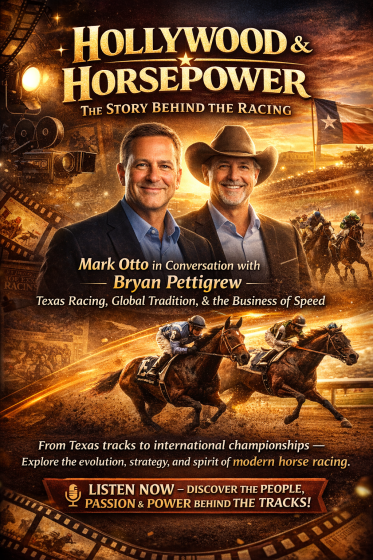

Hollywood and Horsepower Show with Mark Otto
Guest, Bryan Pettigrew, Vice President and GM of Texas Racing operations for Penn Entertainment- Sam Houston Park and Retama Park horse racing tracks
Hollywood and Horsepower: Brian Pettigrew on the Global Evolution and Texas Revival of Horse Racing
Hollywood & Horsepower: Bryan Pettigrew
A career retrospective on sports marketing, global racing traditions, and the Texas revival.
Core Perspective
"The Breeders' Cup is like the Olympics, World Cup, and Super Bowl all combined into one international championship."
Strategic Pillars
-
•
The "League Office" Model: Pettigrew pioneered the operational merger between NTRA and Breeders' Cup to market racing as a year-round national sport. -
•
The Texas Horse Society: Successfully attracting the 25-35 demographic by emphasizing fashion, networking, and "dressing to the nines." -
•
Legislative Strategy: Navigating the unique Texas biennial budget system to secure purse funding via the Horse Industry Escrow Account.
The Guest Profile
Career Roadmap
Key Tags
In this episode of Hollywood and Horsepower, host Marc Otto sits down with Brian Pettigrew, Vice President and General Manager of Texas Racing for PENN Entertainment. The discussion spans Pettigrew’s illustrious career—from his early days in Oklahoma to the international stage of the Breeders' Cup—and explores the current legislative and social efforts to modernize horse racing in Texas.
Detailed Point Summary
The Foundation of a Racing Career
Brian Pettigrew’s journey into the horse racing industry began somewhat unexpectedly during his junior year at the University of Oklahoma. Seeking a summer internship in sports management, he joined Remington Park, a facility then owned by the DeBartolo Corporation, which also held the San Francisco 49ers and Pittsburgh Penguins. This "crash course" in management exposed him to various equine disciplines beyond racing, including dressage and show jumping, providing a diversified foundation that would define his professional approach.
The Texas Expansion and Marketing Innovation
In 1995, Pettigrew moved to Sam Houston Race Park during the first wave of pari-mutuel wagering in Texas. At the time, the Houston market was largely unfamiliar with the betting side of the sport. Pettigrew led marketing efforts that utilized high-energy promotions, such as concerts and giveaways, successfully drawing crowds of over 25,000 people to the track. He emphasizes that horse racing is a multifaceted entertainment industry, encapsulating hospitality, music, and diverse equine disciplines rather than just the singular event of a race.
Career Trajectory: Brian Pettigrew
Internship & Early Mgmt.
Marketing Leadership
Global Strategy
"A career built on the intersection of sports, entertainment, and international hospitality."
The National Stage and International Diplomacy
Pettigrew’s career eventually took him to Lexington, Kentucky, the "heart" of the industry, to work for the National Thoroughbred Racing Association (NTRA) and the Breeders' Cup. This role elevated him to a global level, where he managed international sponsorships and recruited horses from Europe, Asia, and the Middle East. He shares unique anecdotes from this period, including meeting Queen Elizabeth II through a partnership with John Deere and facilitating equipment deals for Sheikh Mohammed’s Meydan Racecourse in Dubai. He describes the Breeders' Cup as a "World Championship" that combines the prestige of the Olympics with the excitement of the Super Bowl.
The Future of Texas Racing: Legislation and Youth Engagement
Now back in Texas with PENN Entertainment, Pettigrew is focused on two primary fronts: legislative reform and audience diversification. He spends significant time in Austin advocating for updated gaming laws to include sports betting and casino games, which would bolster the industry's economic viability. Simultaneously, he is championing the "Texas Horse Society," an initiative targeting 25-to-35-year-old professionals. This program leverages the social and fashion aspects of racing—such as the tradition of dressing up in fascinators and fedoras—to introduce a new generation to the sport in a way that feels experimental and outgoing.
Texas Racing: Strategic Pillars
- 🏛️ Legislative Advocacy: Pursuing gaming law changes in Austin to support industry growth.
- 🏇 Safety & Infrastructure: Investing capital to ensure tracks are safe for horses and jockeys.
- 🥂 Youth Outreach: The "Texas Horse Society" targeting the 25-35 executive demographic.
- 💰 Economic Model: Utilizing the Horse Industry Escrow Account for purses and marketing.
Key Data
- PENN Entertainment Reach: Operates 43 properties across 20 different states.
- Texas Racing History: Sam Houston Race Park was the first Class I racing facility to open in Texas in 1994.
- Economic Incentives: The "Horse Industry Escrow Account" in Texas redirects taxes on horse-related products back into race purses and marketing.
- Accessibility: Entry to Sam Houston Race Park remains highly cost-effective with tickets priced at $5.
To-Do / Next Steps
- Continue active engagement with the Texas legislature during their biennial sessions to advance gaming and sports betting laws.
- Organize and host the fifth Texas Horse Society event in Dallas to further expand the young professional fan base.
- Maintain ongoing capital investment in Sam Houston and Retama Park facilities to ensure top-tier safety standards for all participants.
- Promote the "Horse Country" farm tour model to increase public accessibility to Texas equine operations, similar to the Kentucky Bourbon Trail.
Conclusion
Brian Pettigrew’s career reflects the evolution of horse racing from a traditional pastime into a sophisticated global entertainment brand. By blending international prestige with local grassroots marketing and legislative strategy, he aims to position Texas as a premier destination for racing. His message is clear: whether through fashion, gambling, or the sheer beauty of the animal, the sport remains a unique and accessible American tradition that is ripe for a modern revival.
Hollywood and Horsepower Show
Through the relationships Mark Otto developed in Thoroughbred Horse Racing and Automotive Racing, during his global travels, the thing that most interested him was the story behind the story, with the famous people he was fortunate to meet. What was it that these people liked to do? How did they get into Hollywood or into Racing? These stories are fascinating! This is what encapsulates the “Hollywood and Horsepower Show”.
Bringing you along, we talk to so some of the most interesting people Mark met during his career. Don't be surprised if a few other guests stop by this show. This will be fun! It is where SNL meets The Tonight Show; a perfect mix of talk and comedy.
[00:00] Speaker 1: (instrumental music plays) Welcome to Hollywood and Horsepower, the show about the story behind the story. I'm your host, Marc Otto. This week, we are joined by a very special guest, Brian Pettigrew. Brian is vice president and general manager of Texas Racing for PENN Entertainment, which covers all of the racing venues in the state of Texas, and we really are excited to talk to Brian and learn a little bit more about what his career has been like. Which, if you were to look at it on paper, he has worked for almost every place you could ever dream you want to work for in the horse industry, and every time he moves, he seems to move onto an even better place. So Brian, thank you for taking the time to join us today. Welcome to Hollywood and Horsepower.
[01:09] Speaker 2: Thanks, Marc. Thanks, Marc. I'm glad to be here with you.
[01:12] Speaker 1: Well, you have had probably one of the most amazing careers in horse racing. I know a lot of people have some really great careers, but yours has been really impressive to me. I've been fortunate enough to work with you and know you, not only as a friend but as a, you know, working together for many years. And I'd like to take people back, because a lot of people probably are pretty familiar with your recent, you know, parts of your career. But going back, like, when you were a kid growing up, what was it that got you interested in horse racing?
[01:49] Speaker 2: Well, it was kind of interesting. I, I would say I grew up around horse racing, but I really didn't. My, my grandparents, uh, owned some race horses, uh, and quarter horses, uh, that they raced, and I remember being around it and my grandmother, uh, filling out their paperwork and, and, and creating names for horses, racehorses, and, uh, sending in her paperwork and sitting there watching the Kentucky Derby with her in 1978. And, um, I remember some of those bits and pieces as a youngster, but I never really, uh, uh, attended the races or, or, uh, was exposed to it until college. And, uh, some guys that I was in college with said, "Hey, do you want to go to the horse races?" And, um, I said, "Yeah. Yeah, sure, that sounds kind of fun." And, uh, so we left out and went to the races one Saturday at, uh, Blue Ribbon Downs in Sallisaw, Oklahoma, and that was kind of my first exposure to it.
[02:55] Speaker 1: That was home, grew up in Oklahoma. Um, did you ever see any of the big races in person as, as a kid? Or were you a little bit older before you were able to see them face-to-face?
[03:09] Speaker 2: Yeah. I was, I was older. Uh, I never saw one in, in person until I was, um, you know, like, uh, 21 years old, in college.
[03:18] Speaker 1: So you pursue a career, what I'm assuming is in sports, and where was the first place you were able to get a job?
[03:27] Speaker 2: So yeah, I was going to school at the University of Oklahoma, um, just outside of Oklahoma City, and, um, I wanted to work in sports. Um, just grew up playing, uh, football, baseball, uh, golf, boxing, did all kinds of different sports and, and loved, uh, athletics. And so, um, I kinda wanted to work... knew I wanted to work in sports, but I didn't really know how to get into it. Uh, and just a couple of things, uh, happened, uh, as I was, uh, a junior and, uh, my father said, "Hey, what are you gonna do for work this summer?" I was like, "Oh, I guess, you know, I gotta get a job." (laughs) And, uh, a friend of mine was applying for a job at, uh, at Remington Park, this brand new racetrack, and I read about it and saw that they also owned... Uh, the DeBartolo Corporation built Remington Park and they own the 49ers football team and, um, uh, in the NHL, they own the Pittsburgh Penguins. And I thought this might be my kind of way to get into sports.
[04:34] Speaker 2: And so I went and applied, uh, for a job and got a summer internship in sales, and, um, kind of the rest was history, I guess.
[04:46] Speaker 1: In... You're at Sam, Sam... Uh, I'm sorry. You're at Remington Park, and then after that, you got an opportunity to actually go to Sam Houston.
[04:56] Speaker 2: Yeah. So I was at Remington Park for about five, five or six years, and, uh, they opened this track, uh, down in Houston, Texas. And, um, you know, just like the rest of the industry, it was kind of exciting because racing was coming back to Texas, uh, and Sam Houston was going to be the first track to open in 1994, followed by Retama Park in '95, and then Lone Star Park after that. Um, so we were all reading about it as pretty exciting, and then we saw some of the, um, initial numbers and the initial public, uh, um, lack of, lack of support, I guess I should say, lack of support of racing at Houston. And the track, uh, there kind of, uh, you know, went into bankruptcy protection. They were restructuring their debt. And a lot of people soon realized that, you know, Houston is known for its rodeos and people loving horses in Texas, but they hadn't been marketed to on the betting side of it.
[06:01] Speaker 2: So...Um, as Sam Houston restructured their management team, um, they brought on some folks from Remington, and, um, and I was one of those, uh, managers that got the opportunity to come down and, and, uh, head up their marketing, um, at, at Sam Houston Race Park in 1995.
[06:22] Speaker 1: And that was really where you first got exposed to the thoroughbred industry, because it was from there that you and I
[06:28] Speaker 2: Well, we had thoroughbred racing at Remington Park, and I always tell people I had a very unique, um, uh, um, background at, at, uh, Remington Park because we had thoroughbred racing, we had quarter horse racing, uh, and we also, because Remington was new and it was a, a, a very large facility, they were open to all kinds of events. So, we did music events. We did, um, horse shows, and so I, I was then exposed from those horse shows to, like, the dressage and the hunter jumpers and the show horse industry. Um, and so I, I felt like I had a really kind of just my five-year crash course, um, in management at Remington Park. I got to see all the different breeds and the all the different industries, um, that, that the horses, uh, support. And so when I went to Houston, uh, we had thoroughbred racing and quarter horse racing, and we, you know, the... it was kind of a clean slate. We could try anything. So, we had horse shows, we had horse sales, we had concerts.
[07:37] Speaker 2: We had all kinds of things that I had learned at Remington Park. We were able to translate for, you know, and transfer those over to Sam Houston and say, "Hey, let's do a wallet giveaway. Let's do a T-shirt giveaway," and some of those kind of promotions. And we would get great crowds of 20,000, 25,000 people, um, coming to the races in Houston.
[08:00] Speaker 1: And that's an excellent point. I mean, for people just joining us, we're at Hol- we're on Hollywood and Horsepower, joined by Brian Pettigrew, Vice President and General Manager of Racing for Texas at Penn Entertainment. The thing that you just touched on that's really interesting to me, and I think it's one of the unique things to this industry, is how diversified it is in entertainment. So, it encapsulates hospitality and music and several different disciplines of the horse. I think a lot of people have the conception that, you know, horse racing is just like the Kentucky Derby, and that's what the tracks are.
[08:38] Speaker 2: Mm-hmm.
[08:38] Speaker 1: And I really encourage people to check it out, because it really offers a wide variety of entertainment in almost every venue across the country today.
[08:51] Speaker 2: Yeah, and, uh-
[08:51] Speaker 1: And that had to be something that interested you as well.
[08:55] Speaker 2: You know, it was, um, again, you know, coming out of Oklahoma City where that market had been marke- you know, had been taught how to bet from Ruidoso Downs and Louisiana Downs and, uh, Aksarben and Hot Springs, Arkansas, Oaklawn and, and Hot Springs. You know, all of those major horse racing, uh, venues would market to Oklahoma City and Tulsa and they, you know, it was in the newspaper, it was on the radio, the race replays and things like that, and the stakes race winner of the night.
[09:28] Speaker 2: Um, so they were being marketed to and they understood horse racing, and then here you come into Houston, a massive city, fourth-largest city in America, and, um, when I would go to luncheons, uh, and talk about horse racing as a, you know, I really didn't even ev- ever get to finish my lunch because once I said, "horse racing," everybody at the table would go, "Oh, tell us about it." You know, and they was, it was new to them, um, they hadn't had racing in a number of years in Texas, and, uh, so it's, you know, it was kind of fun to go to those luncheons because you could get up there and, and either on the podium and tell them what kind of promotions and marketing we're doing, um, and invite people out, and it was just new, uh, it was just a new sports, um, opportunity for so many Houstonians.
[10:20] Speaker 1: When did ra- when did horse racing start in Texas?
[10:24] Speaker 2: '94.
[10:26] Speaker 1: Wow, so they-
[10:27] Speaker 2: Like-
[10:27] Speaker 1: ... did not have horse racing before '94?
[10:30] Speaker 2: Yeah, they had it way back, you know.
[10:31] Speaker 1: Other than probably quarter horse or, like, fair circuit, that type of thing.
[10:34] Speaker 2: Yeah, exactly. They had, and then they had pari-mutuel wagering way back when, but then they abolished it and, and it took a number of years to get it back, uh, to a vote, and, and so, um, yeah, uh, in '94, Sam Houston Race Park was the f- was the first Texas track to open a class one racing facility.
[10:54] Speaker 1: That's amazing, and I'm sure a lo- that's a point that a lot of people don't realize. I didn't realize myself that you'd think of Texas as being such a big horse state, you just would assume that there had been racing there, you know, going back decades, but, you know, it's kind of amazing that it, it really isn't that old as far-
[11:12] Speaker 2: Oh, 100%.
[11:12] Speaker 1: ... as the pari-mutuel side of it goes.
[11:14] Speaker 2: Yeah. You're exactly right, and there's a, you know, a rich tradition in horse racing in Texas and a lot of owners, um, that, uh, from, from, you know, uh, Texas that race in the top level races like the King Ranch and the Trout Family that owns WinStar Farm, and the Bass family, and there's a number of, uh, Texas families that, uh, have operations in other states, but they, you know, they're from Texas, um, but they didn't have a racetrack until 1994 to call their own.
[11:48] Speaker 1: That's amazing. So, you're there from '95 to 2000. In 2000, you get the tap on the shoulder to go to National, NTRA, National Thoroughbred Racing Association. Tell us how that came about.
[12:05] Speaker 2: Yeah. So in, um, Texas, we were... You know, we were the new kids on the block, and we could, we could, uh, try so many different things. And, you know, I, um, was fortunate enough to, uh, to, uh, have folks, uh, that I could get in touch with, like, uh, Craig Dado or, um, Mike Ziegler. Uh, we, we brought in, uh Alan Gutterman from New York Racing Association, came in to consult us on our marketing. So, we were doing a lot of neat things in Texas and everything was, uh, going steady. And the NTRA was this new- newly formed group that was, uh, trying to get support of everybody, uh, around the country, and they came in to meet with us, um, and the, and the Texas horsemen and the racetracks in Texas.
[12:59] Speaker 2: And, uh, as I was showing them around, introducing them to owners at our races at Sam Houston Race Park, uh, I, I think we just kind of clicked, uh, with their ma- with the- their management team, and at the time, the commissioner, uh, Tim Smith, and, uh, Nick, uh, Nick Nicholson, uh, from Keeneland. We were, we were all, um, trying to promote NTRA and, and introduce them around and say, "Look, this is... We're starting a league office in horseracing." And I was taking them and introducing them to, uh, our suite holders and our Jockey Club members at Sam Houston Race Park and, um, just connected with them. And, and, and they came back to me and said, "Hey, have you ever thought about working at the league office and, uh, helping us, um, entertain sponsors, uh, sell, sell sponsors, um, you know, market the sport on a national basis?" And I said, "Oh, I think that'd be awesome." So, that's kind of how the- it started, the conversation.
[14:03] Speaker 2: And then, uh, I moved to Lexington, and, uh, you know, I believe there's like 35, uh, headquarters for, uh, equestrian sports or equine organizations that are headquartered in Lexington, which I didn't know at the time. And, um, but I- but I soon grasped that, you know, everything thoroughbred racing in, in the US comes... Kind of starts there in Lexington. And so, uh, we moved there and, and had a, had a great run for about five years at the NTRA, um, and, and, uh, working with tracks. And it was, you know, for me it was, uh, exciting because, uh, all these tracks that I had seen simulcasts were racing or, uh, I'd seen their promotions or I talked to them on the phone. Now, with the NTRA, I'm getting to go meet with them and meet with their horse owners in New York or California or Florida. Uh, and, uh, it...
[14:59] Speaker 2: That, that was a really, uh, rewarding part of my career, was getting to go around and see all of these tracks and, um, meet the management teams in horseracing
[15:10] Speaker 1: Yeah. And to your point, I was kind of similar. I wasn't real familiar with Lexington before I moved there. You know, I lived there for about five years, six years actually myself. It was actually where you and I met. And it, it is an amazing place. I mean, it's like, like you said, I think a lot of people feel... I mean, there's several opinions on where the horse (laughs) industry is based, New York, California, Florida, um, Louisville. But really, it, it really is Lexington. I mean, that really is the heart of it, and I don't think a lot of people realize how intense that area is for the horse industry. I mean, there's the horse farmers themselves, all the associations. You have Keeneland there, which is one of the most beautiful tracks in the country. And it's really just an amazing area. You know, I've described it many times as, it's kind of like Beverly Hills with horses.
[16:05] Speaker 1: You know, I think a lot of people have different conceptions of what Kentucky is, but regardless of what you think, if you ever have the chance, Lexington is definitely worth a visit.
[16:16] Speaker 2: Oh, I agree.
[16:16] Speaker 1: So, and-
[16:17] Speaker 2: We loved it there.
[16:17] Speaker 1: ... NTRA was-
[16:19] Speaker 2: Yeah.
[16:19] Speaker 1: It was a beautiful place. And, you know, it's amazing too, because it's kind of like a small town, but yet it has a lot to offer. So it was everything from, you know, you could be anywhere in 15 or 20 minutes and it had amazing restaurants, great shopping, great people, scenery, both inside and out of the city. So yeah, it was, it was a great place to live.
[16:43] Speaker 2: Agree. And it's a great place to raise our kids. Um, um, you know, uh, I remember being at dinner one night with my wife and a, a, a, a lady came up and said, "Hey, keep up the good work, you know, what you guys are doing in horseracing and so important to, to, uh, Lexington and, and to Kentucky, and we appreciate everything you're doing." And that was kind of one of those moments where I was like, wow, they, you know, everybody in the horse industry was, um... They knew us. They knew who all of these folks that had been assembled at the NTRA and Breeders' Cup to take horseracing, uh, into the future and, uh, to market it and promote it. Uh, they knew who we were and it was... Um, it... I agree with you. I think also the other thing that's helped the horse industry and in Kentucky, uh, is the bourbon industry.
[17:38] Speaker 2: And, uh, I bet this year alone I've had six or eight different friends and, uh, fr- friends, couples, uh, and one group of 10 people coming out of Texas that are going there for a, uh, for trips on the Bourbon Tour and to see the horse farms and, um, you know, they're going actually because they knew of the bourbon industry. But they're also calling me and saying, "Hey, while we're there, what should we see horse farm wise?" And, and, uh, I know Horse Country is a really neat, uh, establishment that was created to-...
[18:13] Speaker 2: kind of be like the bourbon industries, uh, the Bourbon Trail where you can get all the different-
[18:19] Speaker 1: The Bourbon Trail.
[18:19] Speaker 2: ... uh, you know, bourbon distilleries. Now you can do that with these horse farms and, um, why not? You know. It used to always be, uh, kind of very closed off of who could go on a horse farm tour but, um, uh, you, you've seen how they've definitely adjusted it, yeah.
[18:35] Speaker 1: It's definitely become more accessible.
[18:37] Speaker 2: Yeah, definitely.
[18:37] Speaker 1: And I think Old Friends was key in opening that door. So Old Friends is, become the poster child for aftercare thoroughbred retirement. In fact, it's interesting. This week they just announced that Big Brown was retired to the farm. Um-
[18:55] Speaker 2: Yeah.
[18:55] Speaker 1: ... Michael Blowen, mutual friend of ours, was the founder of that. And it really... I feel like they were the ones that kind of opened the door for farm tours. You know, it was like when they really s- took off, that was when you started seeing Horse Country come on and several of the other, like the Alltech tour, and... You know, it, it really is much more accessible than it used to be and much more welcoming. I mean the, the industry has always been very welcoming to people. That's one thing that I think was really interesting to me. And I've mentioned this last week's show that, you know, this is one of the few industries where you can go to a race and be standing on the rail and look over and here's, you know, Terry Finley with West Point Thoroughbreds, or here's somebody from Calumet or from Cleburne and, you know, there aren't too many industries that you have the ability to meet people at the top levels of the sport standing right next to you watching the same thing you are.
[19:58] Speaker 1: And that's one of the things that I think is kind of fun and unique about the industry, and that seems to b- have even expanded with these tours. And, to your point, I think what a lot of people don't realize, and the way it was explained to me is that, you know, the, the reason that bourbon and candy and the horses and even some medical and pharmaceuticals there is because of the water around Lexington. Because of the limestone in the ground and the way they refer to it as Sweetwater that it has properties and minerals in it that is only available in a few other places in the world. And the guys at Cleburne explained it to me one time that it goes all the way back to the original, like, surveyors that were surveying states, that they noticed their horses would recover quicker when they were in that area. So they started setting up camps there and it kind of grew from there where they realized there was something special about the water and the grass.
[21:04] Speaker 1: So it's, it is amazing that, you know, the bourbon is there, medicine is there. You know, there's so many industries in that area, even automotive. I mean, it, it's amazing how much industry and business surrounds Lexington.
[21:20] Speaker 2: Yeah. Yeah. I, I agree with you and it was, it was, um, coming out of there and starting to get to travel, um, to different racetracks around the country and, and even around the world as I was fortunate enough to go on trips, uh, uh, international trips and people were always asking about Keeneland and Fasig-Tipton and, uh, the sales and the farms and it was always kind of fun just to, to talk about that. And then I always encourage people when they're in Kentucky to, to, you know, make sure they just take a, a drive around, uh, the outside of Lexington. They will just be blown away by the beauty and the, the, the trees and the grass and the, the heritage, um, of Kentucky by just getting outside of the cities.
[22:11] Speaker 1: The history and the heritage is amazing.
[22:12] Speaker 2: Yeah.
[22:12] Speaker 1: Yeah. Th- that was one of the things that really impressed me when I first moved there was the history and the heritage of the area. You know, it was... And I think it's because there was so much of a European influence there and so many people that brought things with them. You know, even going to, like, antique shops and things there was like a trip through a museum. It's pretty amazing.
[22:38] Speaker 2: Yeah. Yeah. Agree with you.
[22:40] Speaker 1: So you're with NCRA. You know, that brings you up off and on, you know, you, you do a few different positions there and you went out on your own for a little while. Then it takes you to Breeder's Cup and that was a pretty amazing step for you, you know, and, and that kind of took you up to a global level with them, didn't it?
[23:02] Speaker 2: Yeah. So, you know, here the, the NCRA was this league office and we were starting, um, we had acquired the TV rights to all of the horse racing on TV, um, and working with the, the folks at Wintertime in Tulsa who had, um, the TV rights on ESPN and, um, we were acquiring TV rights and working to market horse racing basically year round. And, and one of our early supporters was the Breeder's Cup. So we were often in meetings with them, uh, presenting to their board of directors and, um, at some point, you know, some of the leadership in horse racing said, "Hey, why aren't Breeder's Cup and NCRA, uh, together?" You know, and so we, um, had an operational merger, uh, between the two companies and so I was actually in those early days of 2000 when NCRA was starting, we were merged with the Breeder's Cup and, um, and, you know, where they were marketing the greatest racing in the fall and the end of the year, uh, international championships, we were marketing horse racing year round.
[24:12] Speaker 2: So we just, uh, we had a good working relationship with them and exposure to, um, the people in the horse industry that can make a difference and that were supporting-... um, both the Breeders' Cup and the NTRA. And, uh, but yeah, as you mentioned, working for Breeders' Cup really was, um, uh, for me, as a, uh, sports fan and now getting to do some international travel and go to race, races, uh, you know, the premier (laughs) races around the world, uh, in foreign countries, Europe, it was fascinating, it was fun. Um, you got to meet some great people. Um, uh, we were also developing the sponsorships and the marketing plans, so we were seeing the best of the best in, in Europe, or, uh, in Asia, or South America. We were seeing how they marketed their sport, some of their traditions, um, and getting to bring all that back to the US and Breeders' Cup.
[25:15] Speaker 2: And, um, it was, you know, truly, uh, a, a dream come true to work for Breeders' Cup, and, and, um, and the management team there, and, um, and, and the board of directors. And just getting to, uh, be exposed to those level of, uh, executives and, um, families that had been influential in thoroughbred racing, you know, for 100, 150 years, you know. And, uh, it was, it was, uh, quite a, quite a blessing to work for them and, and, uh, all, all of their, um, constituents.
[25:52] Speaker 1: And, you know, for people just joining us, I'm with Brian Pettigrew, who's Vice President and General Manager of Texas Racing Operations for Penn Entertainment. Um, we're talking about Breeders' Cup and his career. M- explain for the, for the, our listeners, for people that don't understand, what Breeders' Cup is and a little about it, and, and there's a real reason why I ask this. Um, you know, to me, Breeders' Cup is one of the best races of the year. I mean, I've been to almost everything that there is in horseracing other than the Dubai World Cup. Um, I've watched it many times, but I haven't actually had the chance to be there in person yet. But, you know, Breeders' Cup, to me, is such a ... It's an international event. It's a very, you know, enjoyable day at the races, a r- relaxing couple of days at the races, and it, and it's just a really amazing experience.
[26:51] Speaker 1: So, maybe we could take people through a little bit about how Breeders' Cup came to be, because it's not that old, and it hasn't been around that long in the grand scheme of things.
[27:03] Speaker 2: Yeah. There was a, there was a gentleman named John Gaines, um, (smacks lips) and he, uh, you know, came up with the original idea and got together with some of the leaders in the horse industry and, and said, "Look, uh, as breeders of, of racehorses, we, you know, uh, we have to take a position and, and why don't we create an international championship day at the end of the year, uh, for horseracing?" There are ... You got all of these horses that run in California, or New York, or Kentucky, or Texas, uh, and they didn't have a one championship, uh, at the end of the year where they could all come together and, and compete against each other. So, that was the original idea of creating the Breeders' Cup. Uh, and then you had, you know, if you expand that out, you had Ca- Canada, and South America, and, uh, European horses that were all racing in their countries and doing great, um, but they really didn't have a end-of-the-year championship.
[28:08] Speaker 2: And that's where Breeders' Cup came in and, um, uh, put, put together a program-
[28:13] Speaker 1: This was about 1986, if I'm not mistaken, right?
[28:15] Speaker 2: Yeah, right around in the early '80s. And, um, and, and basically created, you know, a championship, uh, and put together programs to get those horses from Europe, and South America, and Canada to come into n- the US and compete against the top US horses. And I always tell people, it's kinda like the Olympics, um, and World Cup and Super Bowl all combined. You've got all these different countries that have great racehorses. And, and in horseracing, as you know, there's, there's grass racing or turf racing, and then there's dirt racing, um, and there's different distances for racehorses. Um, some horses are sprinters that go three-quarters of a mile. Um, some horses are long-distance runners at a mile and a half. And that doesn't sound like a, a long distance, but it- it, you know, that's about a half a mile longer, you know? And if you're not used to running that distance, um, uh, you know, that, that's, uh, could make or break you, so you might be a shorter-distance horse.
[29:19] Speaker 2: And so, those, um, you know, horses are, uh ... And then you've got, uh, um, colts and fillies, uh, the boys and the girls, and they, they typically run against each other and stay in their own divisions. But every now and then, you get a horse like a Zenyatta, uh, that wants to ... That's ... She's beat all the girls, and so it was time for her to come to the Breeders' Cup and take on the boys, and she won, um, beating all the boys, uh, at Breeders' Cup. And so, you know, it was ... Uh, the horseracing, uh, needed a championship day at the end of the year. The other thing I think was, was, um, really, uh, important was he was m- it was an event that could move around. So, the first one was held at Hollywood Park, and then it moved to other tracks around the country that could hold that kind of crowd.
[30:13] Speaker 2: And not only were you bringing the horse, uh, horses there from around the world, you were also bringing the owners, and the breeders, and the jockeys, and the best of the best from around the world were coming to the United States to race at the Breeders' Cup. And, um, so, a lot of people didn't realize that.... uh, also that that was part of our job throughout the year-
[30:35] Speaker 1: Mm-hmm.
[30:36] Speaker 2: ... uh, was recruiting horses that, and, and the owners and the breeders and the trainers and the jockeys that were in England and Canada and South America to come race in the US at, at the Breeders Cup in every November. Um, and, uh, so we... There was a team at Breeders Cup that, that specifically was in charge of that. But there were, there were others of us that were, um, entertaining sponsors or prospective sponsors for, um, promoting Breeders Cup and marketing Breeders Cup internationally. And so a lot of those times, we were at those same races internationally, uh, alongside Josh Christian at Breeders Cup, who was in charge of recruiting the horsemen. And, um, we would, you know, get to meet royal families, um, uh, that owned hundreds of horses, down to someone that this was just their one or two horses that they had, and they were, uh, had a, a great horse and they were going to be bringing it to Breeders Cup.
[31:42] Speaker 2: And we'd get to meet those people and hear their stories and, um, and then hopefully see them at Breeders Cup every, uh, November.
[31:51] Speaker 1: So I'd be remiss if I didn't ask, do you have any stories from when you were at Breeder Cup of meeting the royal families? Anything that was interesting that, you know, you could share with us?
[32:03] Speaker 2: Sure. I mean, we, you know, we would get to, uh, d- I would always tell people, "It depends on what country you're talking about."
[32:11] Speaker 1: (laughs)
[32:11] Speaker 2: Because we would, uh, if we were in, uh, Bahrain or, uh, Qatar or England, we were meeting the royal families, uh, that owned horses, um, and were, uh, interested in hearing about Breeders Cup. And, um, um, so we got to meet almost all of the royal families. And I will tell you, one of the fascinating things, uh, uh, we'd get asked a lot was about Queen Elizabeth and meeting her the first time. And it wasn't really about horse racing. We were with one of our sponsors in Europe, uh, John Deere Tractor Company, and, um, she wanted to meet the, the gentleman from John Deere. So we were, uh, summoned to come down to the paddock and meet the Queen, and uh, she was so gracious and nice to, to me, and, uh, it was really (laughs) it came because we were with the John Deere guys and, uh, it wasn't because we were at Breeders Cup or she didn't want to talk horses. She was wanting to just say hello to them.
[33:18] Speaker 2: And she, uh, and, and we, uh, later found out that John Deere in Europe uses the royal seal, uh, the royal family uses John Deere equipment at all of their, uh, castles and properties and, and, uh, racetracks. Uh, and so, uh, th- that was kind of a fun one, just being able to experience it with some of the, uh, US and, and Europe, uh, European John Deere representatives that day at the races.
[33:47] Speaker 1: That's really great. And I've heard that about her, that she was very interesting. I know several people around Lexington had had the opportunity to meet her different times that she was in and just an amazing lady. The, uh, the other one-
[34:00] Speaker 2: Yeah.
[34:00] Speaker 1: ... that I think that's really interesting and kind of along that royal line would be the Sheikh Mohammed from Dubai, who, you know, they were very active and they had... You know, it's interesting, they, you know, the, the first thoroughbreds actually traced back to his family.
[34:23] Speaker 2: Yes. And, and when he opened up Meydan, uh, in Dubai, um, we got a phone call that, uh, he was interested, back to John Deere, he was interested in some John Deere tractors, or his, his management team was. And we called John Deere in, uh, in Europe and they said, "Well, we don't ship to, to Dubai." And we're like, "Well, you need to figure out how to get these tractors to Dubai." (laughs) So, uh, uh, yes, he, uh, um, uh, he knew what, what great products they had and saw them at different racetracks around the world and, uh, made that phone call and we connected John Deere with the, the folks there at Meydan and, and brought in their new equipment. Um, another kind of side note to that was the Coolmore family, uh, in Ireland and them hosting John Deere, uh, uh, at their farm and, uh, their, uh, massive display of tractors. We took a picture.
[35:27] Speaker 2: We had the John Deere guys, I'm gonna say it was 30 tractors, uh, 30 John Deere tractors that they had lined up when we, uh, went on the farm tour at Coolmore in Ireland. And it was like no other presentation we'd ever seen at a farm. You know, we were... Thought we were just gonna get to see some horses, some of their great horses that stand there. Um, but then they said, "Hey, we've got something else special to show you." And we went around the corner and there's these tractors lined up.
[35:55] Speaker 2: Uh, and it was pretty neat, um, to have them as a partner and-
[36:01] Speaker 1: That's really cool.
[36:01] Speaker 2: Yeah.
[36:02] Speaker 1: Now, I had the opportunity to work with Coolmore with one of the companies I was with, the one... In fact, it was a previous company that you and I worked on together, um, when you were at Breeder Cup and NCRA and, yeah, they were great people. I had the opportunity to actually meet the Sheikh Mohammed too when he was in. It was interesting because he was so, um, like, so smart when it came to horses and so... Like, he would listen to every word anybody said. It really amazed me.... like, how astute he was and how ... I mean, not that you wouldn't expect that, but, I mean, it was amazing how, like, down to, like, breeding and details that he was involved in. And the same thing with the Queen. I've heard that about her, that she knew bloodlines and everything, you know, on a very intimate detail.
[36:53] Speaker 2: Yes. And, and, and, not to be remiss, I mean, when we were in the US and we would meet with the Phipps family or, or the Farish family, uh, and they were all very supportive of Breeders' Cup and, and, uh, NTRA getting started. And, um, m- m- those families who, you know, lead the racing industry in the US, they were astute and obviously knowledgeable, not only just about the horse industry, about business and helping us align and start, um, the Breeders' Cup and, and NTRA and start off on a good foot and have some good, sound, um, uh, business practices we were putting in place. And, and, uh, I, you know ... Again, it was one of those blessings of working with those, um, families that had been around horseracing for a long time and around business, and learning from them and working with them on how to make, uh, horseracing popular in the US.
[37:53] Speaker 1: And I think that's a very good point. I think that's, you know, that's something that's very common among a lot of the families that are involved in horseracing. You know, there's a lot of big name families, and you touched on many of them, you know, from the Phipps to, you know, the Farishes, the Trouts and Bass. Um, the interesting thing is how involved they are and how they are really focused on doing what's good for the future of the sport, not just what works today. And I think, you know, there was, there was none other than the Hancock family, when you go back and look at the history, you know, Bull Hancock was one of the first ones to import horses from Europe for the bloodlines. And I, I know that in an interview that he did way back, that, you know, he mentioned that, you know, financially, it was a losing proposition. But he knew that he had to do it for the good of the sport and the good of the bloodline, because he- they needed better bloodlines in the US.
[38:57] Speaker 1: So, I think that's something that's really impressive, is how many people have not only good foresight, but are good stewards of the sport and try to do the right thing. People hear the negatives, but there's a lot of positives and there's a lot of good people in this sport that genuinely care about the horse, care about the sport, and are trying to make it better every day.
[39:19] Speaker 2: Oh, I agree with you. You know, there are so many people, you just could ... Um, a lot of times, uh, we're sitting here reviewing, uh, uh, meeting materials and you see the people that are going to be on a conference call with you or in a meeting, and, and all, uh, dedicated to the, uh, wellbeing of the horses and the jockeys on the racetrack. And, uh, it is one of those, um, you know, challenges in, in every sport. Um, every sport has challenges, from NASCAR and Indy racing to NFL football and, uh, um, and horseracing's no different. You know, we have our challenges. Uh, we have some, uh, great minds that, uh, work in it and lead it and, uh, work together to make the sport better. Uh, and I just, I, I, I, I always kind of, uh, took the title, uh, and told people that, you know, I brought more people to the horse races, um, uh, because of my position in horseracing, where we're entertaining sponsors and companies and individuals.
[40:33] Speaker 2: And so, we might be pitching an individual, but then they come to the races or they come to Sponsor Horseracing and they bring 20, 60, 80 guests with them, and we're setting them up and we're taking them on farm tours and then we're taking them to the horse races and showing them how to read the program and the Daily Racing Form and, um, how to handicap and, and telling them the traditions and the history of the sport. And it's, you know, that's one of the things that I feel, uh, uh, best about is just how many people over my career I got to meet and introduce to the sport. I think it's a beautiful sport and, um, uh, with just long tradition and history. And, and it's ... They're a magnificent animal, whether it's a Quarter Horse or a thoroughbred or an Arabian. Uh, it's, it's, you know, it's a beautiful sport, fun to watch and, uh, be around people and, um, you know, couldn't, couldn't have asked for a better career choice.
[41:36] Speaker 1: No, and, and to your point, I, I agree 100%. And it, you know, it's interesting, I had ... Terry Finley was our guest last week with West Point Thoroughbreds, and Terry made a comment that really stuck with me. It's something that I really liked. Terry said, "You know, get involved." You know, everybody talks about, you know, the downside or the challenges that you have, but he said, you know, he, he can't encourage people enough to get involved. Join a board, join, you know, some volunteer- volunteer with something, but get involved and try and make a difference and, you know, try and help. The other thing that he and I talked about, and this is something I encourage people all the time, if you've never been to a race, take the time and go. Take your family, take a friend. If you're on a trip, take a little detour.
[42:26] Speaker 1: And, you know, there's racetracks throughout the country, and it's a great day- great way to spend a day, and it's something that used to be a big part of the fabric of America. You know, if you go back to, like, even the '70s and '60s-... you couldn't hardly watch a TV program or a movie without some reference to horse racing, either Santa Anita or, you know, Belmont. You know, something to do with horse racing. And it was just part of life. I mean, you know, we talked about Hollywood Park being the inaugural, um, home for Breeders' Cup. Hollywood Park, and I worked out in California and I know you spent a lot of time out there, that was one of the places that y- you know, it was almost like, you know, walking around the back set of Warner Brothers. I mean, you would see half of Hollywood walking around there in the afternoon.
[43:21] Speaker 1: And it was just amazing that whether it was a well-known actor, like Desi Arnaz or, you know, Jack Klugman, down to some famous director, they would be sitting there with a hot dog and a beer in a racing form just enjoying the afternoon. And that's the beauty of this sport is that it's very accessible. It's a sport that you can enjoy on any level from high-end owner suites, like you talked about, down to general admission standing on the rail with a hot dog and a drink. And I think that's one of the things that is really a lot of fun about this sport, and what... I encourage people to try it. Get out and see it. Even if you don't understand it, it's still a lot of fun.
[44:08] Speaker 1: And there's-
[44:08] Speaker 2: Yeah. I was-
[44:09] Speaker 1: ... a multitude of people that want to help.
[44:12] Speaker 2: Yeah. I was always taught too that no one ever really goes to the horse races the first time by themselves. But I think with this new, um, generation of videos and being able to see what to expect at a racetrack and that is kind of their introduction with, with, uh, the internet and with mobile phones. Y- you can kind of experience it. And I think, um, when we see some of our research and also some of the people we just talked to at the racetrack, um, they are more, um, uh, outgoing and, and experimental and, "Hey, let's go check this out." And, and they'll, you know... The older generations were not that, that, uh, exposed to horse racing maybe or you had to go to a horse race with a friend your first time and then you kind of felt comfortable and might come back and get more involved, uh, whether it's betting or owning a horse or just going for a leisure afternoon with your family.
[45:14] Speaker 2: But today with the, with the social media and the internet and the videos that are floating around out there, um, by influencers or just racing fans or the, you know, everyday, uh, person that just kind of likes to go to the horse races, they share those videos and I think people are... kind of know what to expect before they get there and, and we run into customers all the time that say, "It's our first time here. Never been to a horse race." You know? And, like, that's, that's exciting for horse racing, I think, is that, um, you know, people are, are more outgoing and experimental, uh, in nature these days because of video and, and, um, social media and they can kind of see something before they get to the actual event.
[46:03] Speaker 2: And, um, I'm amazed too, we, we have, uh, a, a program where we're working on in hor- uh, in, uh, Texas called Texas Horse Society, and these are all 25 to 35-year-old young executives or young people that are wanting to network or learn the sport and how many of them have never been to the races and they come out and they all have kind of different perspectives, uh, and different, uh, interests, uh, from either seeing the animal and being up close to the horses, uh, to... Or to gambling or to the fashion. Um, but we host these Texas Horse Society events and they always come dressed to the nines and, uh, just for a Saturday in, in January or February, they come decked out and they're like...
[46:54] Speaker 2: you know, they're excited to be there and they s- they tell us, uh, "There's no other sport where you really dress up like this." And, uh, they find that
[47:02] Speaker 1: And that's very true.
[47:02] Speaker 2: ... interesting, again, horse racing.
[47:03] Speaker 1: I've said that for a long time, that this is one of the last sports that people actually dress to go. And, you know, it's funny you mention that, because I, I think that's a great idea and that's... and that is something that happens at almost every track. I mean, you know, if you go to Keeneland in the fall is... or the spring, you know, people dress to go to the track. If you go to Del Mar for the November meet season of Bing, they dress up to go to the track. You know, Belmont, you know, Gulfstream. One of the things that I think is... and you touched on it, I think one of the things that's really unique about this sport that I like a lot is that it appeals to different people on different levels. So, it could be hospitality or gambling or fashion or food, um, the horse. You know, just being outside. And I think that that's something that's kind of unique to it, that it, that it is so unique in the sense that it offers so many different things.
[48:05] Speaker 1: And I think one of the things that's really positive is that more and more of the tracks are, are doing just what you're talking about, offering new things that attract people for different reasons. I've seen some of the racetracks that offer, like, you know, food trucks or specialty restaurants or, you know, specialty chefs, and it's just another way to attract people to the track and then expose them to what, you know, could become, you know, a really fun, you know, hobby, and then, in some cases, grows into ownership.
[48:41] Speaker 2: Yeah. Totally, totally agree with you. And, and, you know, there's, there's-... different tracks have different traditions, um, uh, like you'd mentioned, Keeneland, you have to wear a tie, uh, to get in the clubhouse, and I still get asked that all the time, and, um, and say that's one of their traditions and rules. And it's pretty cool to see people dressed up like that. Uh, you know, and then if you're out at Del Mar, uh, I would, you know... I, I don't think I've ever seen anybody with a tie on there.
[49:10] Speaker 2: You might have your jacket, uh, sports coat on, (laughs) but there's no tie required-
[49:15] Speaker 1: No.
[49:15] Speaker 2: ... in Del Mar. And, uh, um, and, and I, I've also been on the other side of it, where owners were coming in to race in a Win-in-Your-In Breeders' Cup race at Keeneland and they came in from California and they're saying, "Hey, we don't have to wear a tie to get in." I said, "Well, if you want in the clubhouse, you do." And they're like, "Wait a minute, um, we didn't bring one." And I said, "Well, they got ties." You know, they'll sell you a tie or they'll loan you a tie, but you have to wear a tie (laughs) to get into the clubhouse and, and, uh, you know, I've been sitting there with owners just, you know, mystified. I said, "That's the tradition here." You know? You, you know, and there's different traditions in different countries when you go to the races, uh, um, and, and that's one of those fascinating things, uh, to, to get to witness or to learn all the different traditions that take place at different tracks around the world.
[50:06] Speaker 1: And it really is an international sport that brings a lot of traditions and a lot of different styles from all different countries. And I think, back to Breeder's Cup, that's one of the cool things about Breeder's Cup to me, is that you see that all in one spot in one day. Everything from people from the UK, to the Middle East, to, you know, Japan, are all there with their horses and their fans and their owners and breeders, and it really is a cultural event, and it's, it's just a lot of fun. I mean, it's funny, you know, one of the things that attracts- attracted me to it early when I first started working around it, was just that, the culture of it, and the... kind of, it was like the last place in America where people still had some traditions. You know, I liked the fact that you dressed up to go to the track.
[50:59] Speaker 1: I liked the fact that, you know, you'd finish your day at the races and go down the street in Lexington to Malone's or go to Anthony's 84 at Gulfstream or go to King Umberto's in Bell- by Belmont and you'd be sitting there at a table and you could look around the room and spot the people that had been at the racetrack that day, and I just think that's really cool. I mean, it's like such a community and, you know, a, a group that is very welcoming, very open, and, you know, I really encourage people to check it out and try it and, you know, if you get a chance, go to a racetrack. You know, it's, it's well... it's a great way to spend a day. And, and you know, the beauty of it is, in a day where things seem to be increasing in price, you know, it's still a really cost-effective way for a family to spend a day.
[51:53] Speaker 2: Yeah. Couldn't agree with you more. That, that, uh, describes the sport to a T.
[51:59] Speaker 1: So we're gonna take a little break, and when we come back, we're gonna talk about what Brian's doing today, which is back at Sam Houston, and, you know, we'll get into a little bit more about what they've been up to and where they're headed from here. You're joining us today on Hollywood and Horsepower. Our guest is Brian Pettigrew, Vice President and General Manager of Texas Racing for PENN Entertainment, all of their racing, all their different disciplines. And after this break, we're gonna come back and talk about... a little bit more about Brian's career at Sam Houston. So we appreciate you joining us today. We wanna point out a few people that, you know, make this possible. King Umberto's in Howard Beach. If you're anywhere near that area, take a chance and try them out for dinner. If you're near Miami, the Palm Restaurant in Miami is my second home. Love that place. Mortarano's in Fort Lauderdale, and Anthony's Runway 84, you can never go wrong.
[53:00] Speaker 1: And we also wanted to take a minute to tell people that, you know, we don't very often talk about current topics, but there was a Hurricane Helene that went through the Southeast this last week, and there's a lot of people that have had some pretty tough times. So if you can do anything, we encourage you to try and help out. Simpson Race Products is a company that I've worked with for many, many years. You can find them online, simpsonraceproducts.com. They are a great organization, very trustworthy, and they are coordinating, you know, some help in that area. I know that the Earnhardt family is also helping out. You can check them out at Earnhardt Outdoors, as well as several other people in the industry. So if you can help, please help. You know, there's a lot of people down there that have been devastated, and, you know, anything helps. I mean, they need everything from the basics on. So we'll be back in just a moment. We appreciate you joining us.
[54:01] Speaker 1: This is Hollywood and Horsepower, and we've been joined today by our very special guest, Brian Pettigrew with PENN Racing in Texas. (instrumental music) (jazzy music plays) So, Brian, if ... You know, you had a couple of stops but then it brings us up to, you know, you're back to Sam Houston, PENN Entertainment. Tell us how that came about.
[55:14] Speaker 2: Yeah. So I got a call from Chris McErlane at PENN Entertainment and, uh, he and I have known each other for years, um, and, uh, he said, "Hey, you know, would you be interested in coming back to Texas and helping us with our Texas operations?" And this was just right after COVID, uh, and so the tracks in Texas were kind of rebounding from, uh, the pandemic and, and putting their, their teams back together and management teams back together. And he said, you know, "We've, we got through COVID in Texas but, uh, we need some new direction. And would you be interested in coming back and helping us run our operations in Texas?" Uh, and, uh, it, uh ... Sam Houston Race Park is in Houston where I was in my second stop in my career. And Retama Park was the track over in San Antonio and, uh, and, and we also have some other licenses here in Texas.
[56:18] Speaker 2: But he said, you know, "You'd be running those two tracks and helping us in Austin, trying, trying to, um, you know, meet with the racing commission and trying to change some of the gaming laws in Texas, uh, in advancing our, our, uh, our business there."
[56:35] Speaker 1: Okay. So, how's it going? You've been there now for a little while. It seems like there's been a lot of moving parts and obviously some challenges. But what do you guys see for the future? What's happening in the next couple of years in Texas thoroughbred racing?
[56:53] Speaker 2: So it's, it's been great since I've returned. A lot of the people that were here 25 years ago (laughs) are still here, uh, either at the tracks or in, in leadership positions, uh, in the horse industry. I'm back to working with the thoroughbred and the Quarter Horse, the Appaloosa and Paint and Arabian, uh-
[57:13] Speaker 1: Oh, wow.
[57:14] Speaker 2: Yeah.
[57:14] Speaker 1: I didn't realize there was that many-
[57:15] Speaker 2: We, we sell all types of breeds.
[57:16] Speaker 1: So they, they race all those breeds, all those disciplines?
[57:19] Speaker 2: Yeah. And, um, um ... So, uh, got back here and, um, just had a few things. You know, we've had to get our tracks back up to, up to speed, um, and, uh, putting a lot of capital into both properties, um, making them safe, one, for the horsemen, uh, and the horses and, um, uh, and jockeys. And so both the tracks here are very safe, and we've been, uh, fortunate to, to have great teams here that oversee the tracks and the facilities. And so we've just been building upon that, um, getting it all in, you know, in order, uh, for bigger and better things. And, uh, um, that's the operational side. And then for me, I've been focusing on how do we, um, get our, uh, state, um, to either pass some gaming laws that would involve horse racing and, and sports betting and casino games. Um, and, uh, w- what, you know, what do we need to work on strategy wise. Uh, I've been spending a lot of time in Austin, uh, working on that with our team.
[58:36] Speaker 2: And, uh, uh, we've got some great folks out of PENN Entertainment that, um, have experience. Uh, PENN has 43 properties in 20 different states.
[58:48] Speaker 1: Wow.
[58:48] Speaker 2: So, yeah, we operate in a, a number of regions and, uh-
[58:54] Speaker 1: What are some of those-
[58:54] Speaker 2: So you got that background and-
[58:56] Speaker 1: ... properties? They're probably-
[58:56] Speaker 2: That, that background and knowledge-
[58:57] Speaker 1: ... pretty well known.
[58:58] Speaker 2: Yeah, yeah. You have that kind of background and knowledge to help you going into Austin, Texas to try and make some changes here and, and improve racing in Texas. And, um, so, uh, it's, it's been, uh, uh, well received. Uh, we've, uh, we, we actually this year, uh, along with some other, uh, tracks and, uh, horse industry folks and gaming industry people, took the, the governor to the Kentucky Derby and were showing him and his staff the sport, uh, at the highest level in America.
[59:34] Speaker 2: And, uh-
[59:35] Speaker 1: And he had never been before?
[59:37] Speaker 2: No. Uh-
[59:38] Speaker 1: Oh, wow. That's amazing.
[59:39] Speaker 2: And then ... Yeah, yeah. Took him to a horse farm, uh, a Texas farm, uh, called WinStar Farm that's ... You're very familiar with-
[59:48] Speaker 1: Very familiar, yeah.
[59:48] Speaker 2: ... in Lexington. Yeah. And so the folks at WinStar were gracious enough to invite him to their, their VE party and, um, show him around the horse farm. Uh, explain the-
[01:00:01] Speaker 1: It is a beautiful farm. I mean-
[01:00:03] Speaker 2: Yeah.
[01:00:03] Speaker 1: ... for people that don't know, if you're ever in Lexington, Kentucky, you owe it to yourself to drive around a little bit. And probably one of the best drives is actually right up Midway Road from Midway going towards Versailles. And you drive right past WinStar and several other properties. But it is just amazing how beautiful these properties are.
[01:00:23] Speaker 2: Yeah. And, and we wanted, you know, we wanted him to see and, and meet some of his Texas residents that have horse farm operations in Kentucky. And we also wanted him, uh, and his staff to see what Kentucky has built. And, uh, you've got a massive state and Texas is number one state in America for horses. And just wanted him to understand the size and scope of our, um, industry in Texas. And, uh, it was a, it was a great meeting. He, um, uh...... was gracious and, uh, we took him all around the track, all around these farms.
[01:01:02] Speaker 2: Showing him Kentucky and saying, you know, "We can do this in Texas." Uh-
[01:01:06] Speaker 1: Yeah, absolutely.
[01:01:06] Speaker 2: ... we just need your support. And, um, so we, we've done a little bit of that. We've hosted our lieutenant governor at our races here, Sam Houston, he's a former sports guy. And, um, and just making sure, uh, again, saying the same thing is, uh, how important the horses are to Texas, uh, culturally, historically. Uh, and, and racing is here, and you've got a great pro- we have a great product in Texas and, um, supporting it and, and, you know, also being appreciative for what they've done for us, um, outside of not having gaming, um, and just explaining the, the business model to them and, and what we'd like to do, uh, going forward in making Texas racing the best in the United States.
[01:01:53] Speaker 1: I think that's really interesting. You know, something that a lot of people probably don't realize, um, you were explaining to me that the Texas legislature only meets every other year, and that's something very unique to Texas. So that's been another challenge in, in this process if I'm not mistaken.
[01:02:12] Speaker 2: Yeah, so you really, uh, they do, they meet every other year. Uh, they have to balance the budget before they leave. Um-
[01:02:20] Speaker 1: Not sure the rest of the country knows what that means. We might have to explain that.
[01:02:24] Speaker 2: Yeah. (laughs) So-
[01:02:26] Speaker 1: (laughs)
[01:02:28] Speaker 2: ... uh, it would probably be, uh, it would be great for the rest of our country to kind of, uh, operate like that. But that is one of, uh, Texas' um, you know, rules is that when they meet, they have to balance the budget. They have to make cuts or they have to, uh, make plans to spend if there's a, there, uh, there is a surplus. And, um, in Texas there's, they've been fortunate for the past few years to have a surplus and money that they're spending on, um, every, you know, everything you can imagine. But, uh, that is one of the rules. They have to balance the budget before they leave, and then they'll be back two years later, uh, to do it again.
[01:03:11] Speaker 2: So we're, we're in this-
[01:03:12] Speaker 1: And you were explaining to me that there was, like, a tax on certain agriculture products that created some of that surplus that actually went back into the purse money for thoroughbred racing. Is that correct?
[01:03:24] Speaker 2: Yeah.
[01:03:24] Speaker 1: I guess probably all breeding, not just thoroughbred.
[01:03:28] Speaker 2: Yeah, it's called the Horse Industry Escrow Account. It's in Texas, it's unique to Texas. It's a, uh, tax on products, uh, horse products and tack and equipment, uh, that comes back to us, uh, every year that is used for purses. It is used for marketing, um, horse shows, horse races. Um, and so, uh, each year we, that money comes back to us and we're, uh, able to divide it up between the, uh, three Class I horse tracks. And, uh, uh, then we have a Class III horse track, uh, in Texas and, and those tracks divide it up, and then there's, uh, marketing funds that we apply for. And, uh, alongside with the horse breeds and associations that are here in Texas, they apply for those funds, uh, to market, uh, to consumers and, uh, how to move the sport forward, or, or move the horse breeds forward, if you will.
[01:04:34] Speaker 1: So, you know, we're getting close to our hour, but I wanted to ... I always ask people, what is your favorite track? Now, that's probably a little bit of a challenging question for you, because you're in charge of several tracks, but, you know, based on, you know, experience, memories, you know, your travels around the world, what racetrack is the, is the one that has the m- m- best memories for you? Like, is your favorite?
[01:05:01] Speaker 2: I was always trained not to answer this question, because, uh-
[01:05:05] Speaker 1: (laughs)
[01:05:05] Speaker 2: ... we have constituents and ... (laughs) So I could say, uh, domestic or international or I could say what state. (laughs)
[01:05:14] Speaker 1: Well, I can always say, and is- is no offense to anyone because I have, I could probably go through a list of at least, you know, a dou- half a dozen that, of things I like. I've always been partial to Delmar and Gulfstream and, you know, I, I do think it is something that people should get out and experience, you know, take a day, take your family, get out to the track. It's a great way to spend a day, spend an afternoon. And there's a lot more to it than just, you know, racing. It's a very s- it's a very social thing. There's a lot of hospitality involved. It's a great way to spend time, and, you know, all the tracks have their own character. It seems like every track, even down to the small, like Ellis Park and some of those, they have, you know, just a unique feel to them. So I think that's kind of cool. So the next one would be, what's your favorite restaurant traveling around the US?
[01:06:12] Speaker 2: (laughs) Well, I'll answer my horse race- uh, horse track one.
[01:06:16] Speaker 1: Oh, you will answer. Okay.
[01:06:17] Speaker 2: Yeah, yeah, I'll answer.
[01:06:17] Speaker 1: I'm trying to bail you out.
[01:06:18] Speaker 2: I'll give you, I'll give you my five.
[01:06:20] Speaker 1: (laughs) I'm trying to give you a pass. (laughs)
[01:06:23] Speaker 2: (laughs) Well, uh, I appreciate that. I mean, uh, you know, ultimately Keeneland in Lexington, uh, and then on the West Coast would be, uh, a toss-up between Santa Anita and Del Mar. And on the East Coast, I love Saratoga, uh, and just the experience there. And then when I would be in Europe, uh, we got to see Goodwood and Ascot. Two totally different experiences-
[01:06:48] Speaker 1: Yeah, those are amazing.
[01:06:49] Speaker 2: ... and they were amazing. Uh, uh, Ascot, it was the royal family's racetrack, Queen Elizabeth, we would see her there. Got to meet her, uh, one time and, um-That was fascinating. And then in Ireland, we got to see the Curragh and Leopardstown. Two different experiences-
[01:07:07] Speaker 1: Wow.
[01:07:07] Speaker 2: ... but it was really just top-notch racing and hospitality, and, um, you know.
[01:07:14] Speaker 1: And Ascot is an experience of its own. You know, I- I-
[01:07:17] Speaker 2: Yeah, it really is.
[01:07:18] Speaker 1: ... experienced that as well, and that's, uh, it's, it's kind of like a trip back in time, but it's, it's like elegance meets tradition, and it's just, it's amazing to see it. It's, you're just kind of in awe the entire time, or at least I was. And it's interesting to me, too, you mentioned the Queen. You know, one of the things that I think a lot of people don't realize, obviously the royal family's always had horses.
[01:07:43] Speaker 1: But one, something that was interesting to me was how-
[01:07:47] Speaker 2: Yeah.
[01:07:47] Speaker 1: ... knowledgeable she was of the bloodlines and of the horses. She was probably one of the most astute horsemen that I've ever encountered. It was amazing to me how well she knew the bloodlines.
[01:08:04] Speaker 2: Yeah. She was, uh, you know, she, she would say she was a farm girl growing up and loved her horses, and, uh, uh, she of course raced at the highest level. And, and, um, uh, every year during Ascot and Royal Ascot, she would get to host leaders from around the world with the, um, you know, top thoroughbreds racing at her track. And, um, uh, and I always tell people, and she loved her John Deere tractors. Uh, John Deere was one of our sponsor- is still one of our longest standing sponsors in horse racing, and they're allowed to use the Royal Family logo on all their marketing material over in, in, uh, in, uh, United Kingdom.
[01:08:49] Speaker 1: In the UK. Wow.
[01:08:50] Speaker 2: Yeah. And, uh, she knew her tractors and wanted, uh, you know, wanted to meet the John Deere folks, uh, the year that we were there, uh, with them, uh, their, their European branch division. And, uh, so that was how we got to meet her, was through the John Deere guys.
[01:09:08] Speaker 1: Oh, really?
[01:09:09] Speaker 2: Mm-hmm.
[01:09:09] Speaker 1: Who would have thought that it would be John Deere that would open the door to meet the Queen?
[01:09:13] Speaker 2: Exactly. That's what we were always saying-
[01:09:15] Speaker 1: And you know what's interesting-
[01:09:16] Speaker 2: ... sitting there.
[01:09:18] Speaker 1: ... so, kind of a sidebar to this. So I was fortunate enough, uh, uh, due to Michael Blowen's kindness and graciousness, to be part of Old Friends, volunteered and helped out for a while on the board. And they had a horse by the name of Gulch that was one of hers.
[01:09:35] Speaker 2: Mm-hmm.
[01:09:35] Speaker 1: And when she, when the horse was retired to them, they actually had to sign an agreement, and I'm paraphrasing now, I don't know the exact words, but that she would have access to come and visit it.
[01:09:47] Speaker 2: Yep.
[01:09:47] Speaker 1: So Michael had like on royal letterhead from them an agreement where she could come and, and visit the horse. I don't know if she ever did, but it was kind of a neat, neat thing that happened that-
[01:09:58] Speaker 2: Mm-hmm.
[01:09:59] Speaker 1: ... you know, that showed how interested she was in her horses, that she even kept track of them when they retired. So it was, uh, that's another thing in horse racing, that if people are ever in Lexington, Georgetown, Kentucky area, definitely take the time to go see Old Friends. Like a living museum of horse racing.
[01:10:19] Speaker 2: Mm-hmm.
[01:10:19] Speaker 1: And there's nobody that's a bigger ambassador for the sport than Michael Blowen.
[01:10:23] Speaker 2: Yeah.
[01:10:24] Speaker 1: So you can-
[01:10:24] Speaker 2: And then, and then-
[01:10:24] Speaker 1: ... find him online.
[01:10:26] Speaker 2: Yeah. I agree. I agree. And when you're in, if you're in, uh, Lexington, uh, as far as a restaurant, I would say, uh, Malone's, and uh-
[01:10:39] Speaker 1: I would agree.
[01:10:39] Speaker 2: ... checking that out because of all their horse racing memorabilia and history that they, you know, uh, have on their walls along with Jeff Ruby's in downtown Lexington. And, um, and then I'm a Bob's Steak & Chop House guy.
[01:10:56] Speaker 1: Mm-hmm.
[01:10:56] Speaker 2: And I love, uh, Bob's.
[01:10:58] Speaker 1: Mm-hmm.
[01:10:58] Speaker 2: And, and I love his connection to horse racing and, and all of his fine, uh, artwork and, and memorabilia around his, uh, restaurants in, um, Dallas and also in Louisville.
[01:11:11] Speaker 1: Oh, wow. That's really neat. I've never been to one of those. I'll have to try that.
[01:11:16] Speaker 2: Yeah.
[01:11:16] Speaker 1: You know, it's, uh, it is interesting, and I was thinking about that earlier when we mentioned Malone's. So if anybody traveling to Malone's or going through Lexington, yeah, Malone's is a must, must go to. Malone's and Drake's in Lexington, but mainly Malone's. It's interesting that-
[01:11:30] Speaker 2: Uh-huh.
[01:11:30] Speaker 1: ... when you walk in, like a lot of places, you'll see a lot of memorabilia on the walls. And I get it, that it's in Lexington, so it kind of makes sense, but the walls are lined with, as you said, horse racing memorabilia and autographs from people in the industry. So like, you go to any other restaurant around the country, you know, you'll see NFL players, PGA players, you know, NBA players, artists, musicians.
[01:11:58] Speaker 1: And you go to Lexington at Malone's and you see like horse trainers, (laughs) and farm owners, and jockeys-
[01:12:04] Speaker 2: Yeah.
[01:12:04] Speaker 1: ... and silks hanging on the walls. So it's, it's a neat experience.
[01:12:08] Speaker 2: Yeah.
[01:12:08] Speaker 1: And a, and a great relaxed atmosphere. Great place to take friends. And that was, that was another place that was a, a normal stop after the races, right down the street from Keeneland, and if you didn't plan ahead you probably ate in the bar.
[01:12:23] Speaker 2: That's right. And, and like you said earlier, the people that you raced against that day are sitting right there at the next table. And, uh, you know, it's, uh, it's, it's like you just left the racetrack, uh, dining room and went to Malone's, and there's everybody you just competed against for the day.
[01:12:41] Speaker 1: And it is kind of a surreal experience, you know, for people, and it kind of goes back to that accessibility. There aren't too many places, too many other sports, where you're gonna go to a local restaurant and see like, you know, the owner of the Dallas Cowboys or- (laughs)
[01:12:57] Speaker 2: Yeah.
[01:12:57] Speaker 1: ... you know what I mean? You're, you just don't see that like you will in horse racing. It's not odd to go to a restaurant and look over-And here's one of the top trainers, a Hall of Fame trainer, you know, sitting there with his family or with clients. Here's, you know, some of the biggest farms in the world sitting there with their people and, you know, very accessible, very kind and gracious people. Everybody takes time to talk to you. It really is, you know, a- a neat sport. And, you know, it's- it's kind of one of the last places in America where people still dress to go to the races, and, you know, the hospitality is a big piece of it. It's just a- a great way to spend the day.
[01:13:39] Speaker 2: My- my last story, uh, Texas horse racing. Uh, we've- we've been working on a, um... Prior to me returning, uh, I was asked to help out with, um, a project and- and lend some of my marketing background and- and, um, to this project, but how to attract young people to horse racing and other horse sports, such as horse shows and polo and, uh, reining and cutting and all these different sports that horses compete in, um, in Texas. And, uh, we have been working on a project called the Texas Horse Society, and, uh, it's to attract 25 to 35 year olds to the sport. And, um, we've met with some prominent, um, horse families in Texas, along with some people that know other sports but don't know anything about horse racing, and, uh, we've had them, uh, out at the track, uh, on about four different occasions.
[01:14:40] Speaker 2: Uh, we're getting ready to host our fifth one up in Dallas, and, um, it never ceases to amaze me that all of these 25, these young adults, young- young executives that are just starting out their careers and they show up there, um, for a, you know, a day or a night at the races, and they're decked out and dressed up and they're... They- they feel great about themselves and they, you know, they're like, "We don't- we don't ever dress like this for any other, you know, sport that we go to. This is really fun to dress up and put on a hat or a fascinator or fedora and- and- and dress up." And we don't tell them that's what they need to do to come to the races. We just tell them, "Here's the date, and here's everything that you're going to get to experience while you're here." And, you know, we want to introduce you to the sport.
[01:15:35] Speaker 2: They- they pick out their own wardrobes, but it's amazing how they all come dressed up, um, looking, you know, uh, top notch and- and, uh, and, um, prepared for the horse races and they think that, you know, that... I'm like, uh, "You can be casual if you want," or... And they- and they all come kind of decked out, and it's kind of fun to see that younger age, um, customer and hopefully future fans, uh, come into the races.
[01:16:07] Speaker 1: I think that's great. You know, that's something that I've been an advocate of for quite a while, is how do we introduce new people to the sport? You know, it's, um, it's- it's a terrific sport. It's- it's a very interesting sport. It's one of the, you know, sports that has a lot going on all the time from, you know, both the hospitality side and the racing itself, and I think the more that people get exposed to it, and there's been a lot of... You know, I think that's amazing what you guys are doing, and I hope to see more of that around the country. I think that that's a great model to follow. Um, you know, I think... I encourage anybody to check out, you know, any place that's close to you, whether it's Saratoga, Oconee in Belmont, Gulfstream in Florida, Del Mar or San Anita, obviously Sam Houston and Lone Star if you're in Texas or close to it. You know, they're...
[01:17:01] Speaker 1: It's a great way to spend a day and it is one of the last places in America where you actually can, you know, dress for the day, enjoy, you know, enjoy it with your family. And- and, you know, it's one of those sports too that, like you said, it's very accessible and it's- and it's not excessively priced. You know, it's- it is a unique sport in the sense that you can enjoy it at any level, from the very high end to, you know, just a very comfortable casual day at the races.
[01:17:34] Speaker 2: Yeah. I agree with you and I think that's just getting that message out there, that, you know, some- some tracks don't charge a- a fee to get in to them anymore, and our- our track here in Houston, we have a $5 ticket, uh, to get in the track and it's not... You know, compare that to other sports and it's, uh, way, you know, way less expensive, uh, than- than all these other major league sports. So we're proud of that and hope they come in and have fun and, um, you know, whether they bet or don't bet, or if they just want to be around the animals and entertainment, uh, we have, you know, music and comedy shows and all kinds of car shows and things like that that we do at our racetrack here in Houston and San Antonio. Um, so we just, you know, want people to give us a- give us a shot and come out and check out the sport and the facilities and, uh, hopefully, uh, fall in love with it.
[01:18:31] Speaker 1: Well, I really appreciate you joining us today, and I agree. I want to encourage everybody to check it out. That's, uh, Brian Pettigrew with Sam Houston Raceway, PENN Entertainment. If you're in Texas, be sure to check out their racetracks. What's your website, Brian, so they can look you guys up?
[01:18:51] Speaker 2: SHRP.com is for Sam Houston, and retama.com. Retama is R-E-T-A-M-A park.com.
[01:19:01] Speaker 1: Okay, great. Well, we can't thank you enough for joining us. I really appreciate it. We're brought to you today by Valley Rose Farm, valleyrose.com, Malone's and Drake's in Lexington, Kentucky. And we always have to plug the Palm Miami, which is my second home. So I appreciate it, Brian. Thank you for joining us. This is Hollywood and Horsepower, and we encourage you to check us out online, bbsradio.com, and we look forward to talking to you next week. Take care, everybody. God bless.
[01:19:36] Speaker 1: (instrumental music)