
Hollywood and Horsepower Show, April 9, 2026

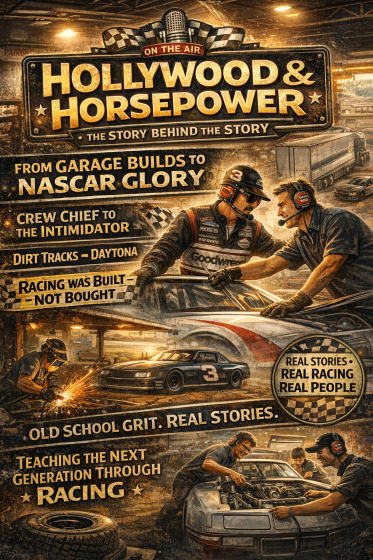

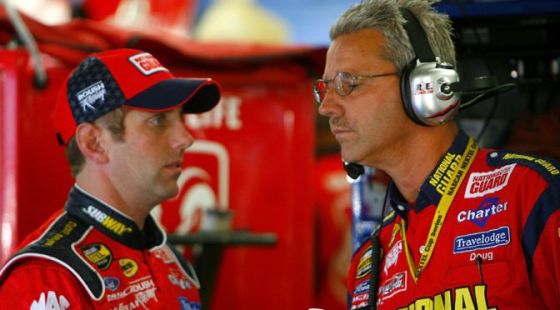
Hollywood And Horsepower Show with Mark Otto
Guest, Doug Richert, NASCAR Crew Chief - Youngest Crew Chief to win a Championship and did it with Dale Earnhardt Sr. In 1981
Horsepower and Heritage: The Life and Career of Doug Richert
Doug Richert: The Story Behind the Horsepower
NASCAR Legend, Championship Crew Chief, and Mentor
Career Evolution
Moved from California to Charlotte at age 17 in a converted moving van; pioneered the first two-car hauler on the circuit.
Became Crew Chief for Dale Earnhardt Sr. at age 20. Won the 1980 Winston Cup Championship—the youngest to do so at the time.
Known as "Duffle Bag Doug," worked with legends like Richard Petty, Darrell Waltrip, and Benny Parsons across multiple top-tier teams.
"I quit smoking in victory lane at Bristol in 1979... haven't touched one since."
— Doug Richert on his first win
Current Impact
Teaching kids with dyslexia math and physics through racing (tire pressure, radio ops, mechanics). Racing as a "different way to learn."
A Mooresville-based venture merging racing precision with wood/metal art, laser engraving, and custom powder coating.
KEY RELATIONSHIPS
This interview features legendary NASCAR Crew Chief Doug Richert as he reflects on his unconventional start in racing, his championship-winning partnership with Dale Earnhardt Sr., and his current dedication to automotive education and custom craftsmanship. The conversation provides a rare, "behind-the-scenes" look at the evolution of NASCAR from a family-oriented sport to a technological powerhouse.
From California Dirt to NASCAR History
Doug Richert’s journey began in Saratoga, California, where he spent his youth hanging out in local garages and helping friends with figure-eight and dirt racing. A chance connection through Rod Osterlind led to the formation of a racing team that would eventually move to Charlotte. During this early period, Richert was instrumental in mechanical innovations, including the design and construction of the circuit's first two-car hauler, which utilized a unique cable and ramp system. In 1977, at the age of 17, he made the life-changing move East to pursue a full-time career in NASCAR.
🏎️ Career Milestone: The Youngest Champion
1980
Championship Year
20
Richert's Age
#2
The Blue & Yellow Car
Doug Richert remains one of the youngest crew chiefs ever to lead a team to a NASCAR Cup Series title.
The Earnhardt Era and the "Intimidator" Bond
Richert’s career is indelibly linked to Dale Earnhardt Sr. They first teamed up in 1978 for a five-race stint to preserve Earnhardt's rookie eligibility for the following year. By 1980, after the sudden departure of the previous crew chief, a 20-year-old Richert stepped into the role, leading Earnhardt to his first Winston Cup Championship. Beyond the track, the two shared a deep personal bond; Earnhardt served as the best man at Richert’s wedding. Richert recalls Dale as a man who was "tough but sentimental," often helping others privately and finding solace in his "deer shop" and farm away from the media spotlight.
Transitions, Safety, and the Evolution of the Sport
Following ownership changes, Richert moved to Junior Johnson’s team, working with icons like Darrell Waltrip and Neil Bonnett. He eventually returned to the Earnhardt fold in 1995 to help launch the successful truck series team for Ron Hornaday. Reflecting on the 2001 Daytona 500, Richert discusses how that tragedy catalyzed a revolution in safety, leading to the HANS device, SAFER barriers, and structural reinforcements like the "Newman Bar." He notes that while modern racing relies heavily on data and simulation, his era was defined by "seat of the pants" driving and mechanical intuition.
🛠️ Current Ventures & Philanthropy
- 🌟 The Chandler School: Doug leads the ACE (Automotive) program, teaching math and mechanics to students with dyslexia through hands-on track experience.
- 🎨 Fast Wood Customs: A creative outlet specializing in laser-cut wood art, metalwork, and personalized powder-coated items.
- 🏁 Late-Start Driving: At age 65, Doug has begun his own driving career, piloting a road course Cup car.
Philanthropy and "Fast Wood"
Today, Richert focuses on giving back through The Chandler School in South Carolina, where he uses racing to teach math and life skills to children with dyslexia. He also operates "Fast Wood Customs," a business born from his love of fabrication, producing everything from live-edge tables to laser-engraved acrylics. Even at 65, his passion for the sport remains undiminished as he begins a new chapter behind the wheel, proving that in the world of horsepower, the story is never truly finished.
Key Data
- 1977: The year Doug Richert moved from California to Charlotte to start his NASCAR career.
- 20 Years Old: Richert's age when he won the NASCAR Winston Cup Championship as a Crew Chief.
- 1979: The year Richert quit smoking in the Bristol victory lane after his first team win.
- 39 Years: The duration Richert has lived in his current home in Mooresville, NC.
To-Do / Next Steps
- Visit FastWoodCustoms.com to view Doug's personalized wood and metal craftsmanship.
- Support The Chandler School (chandlerschool.org) and their ACE program for students with learning disabilities.
- Follow the Hollywood and Horsepower social media pages for updates on the Chandler School project and upcoming guest announcements.
- Explore the No Fallen Heroes organization to support veteran suicide prevention efforts.
Conclusion
Doug Richert’s story is a testament to the "golden age" of NASCAR—a time of innovation, fierce competition, and lifelong friendships. From welding tailpipes with Richard Petty to mentoring the next generation of mechanics, Richert remains a pivotal figure whose influence stretches from the history books to the modern garage.
Hollywood and Horsepower Show

Through the relationships Mark Otto developed in Thoroughbred Horse Racing and Automotive Racing, during his global travels, the thing that most interested him was the story behind the story, with the famous people he was fortunate to meet. What was it that these people liked to do? How did they get into Hollywood or into Racing? These stories are fascinating! This is what encapsulates the “Hollywood and Horsepower Show”.
Bringing you along, we talk to so some of the most interesting people Mark met during his career. Don't be surprised if a few other guests stop by this show. This will be fun! It is where SNL meets The Tonight Show; a perfect mix of talk and comedy.
[00:00] Speaker 1: (intro music playing)
[00:21] Speaker 2: Welcome to Hollywood and Horsepower, the show about the story behind the story. Today, we are joined by a very special guest, Doug Richart. And I apologize, Doug, if I butchered your name. You'll have to correct me. Doug-
[00:37] Speaker 3: (laughs)
[00:37] Speaker 2: ... is a amazing guy, he's got a tremendous story. Crew Chief of NASCAR, started out in dirt racing. Probably most well-known for being Dale Earnhardt Sr.'s crew chief, at least, you know, among Dale Earnhardt Sr. fans. I'm sure there's a lot of other fans that know Doug from many other things. But, Doug, welcome to the show.
[01:01] Speaker 3: Hey, uh, glad to finally make it on here. I know we've been working for a long time to, uh-
[01:06] Speaker 2: Well, I really appreciate-
[01:06] Speaker 3: ... to make this happen.
[01:07] Speaker 2: ... you even joining me. And, and, and correct me so I know, how do you pronounce your name?
[01:14] Speaker 3: It's Richart.
[01:15] Speaker 2: Okay. Rich-
[01:16] Speaker 3: You pronounce the-
[01:16] Speaker 2: Okay.
[01:17] Speaker 3: ... R-I-C-H and then the ert, E-R-T.
[01:19] Speaker 2: Okay, perfect. I apologize. So Richart and-
[01:23] Speaker 3: No problem.
[01:23] Speaker 2: ... it is an honor to have you join us. Um, you know, I, I know what the history says about you. But what our show is, (clears throat) is we try to bring things that people might not know about you. So we all know what the, what the history books say. We know what Wikipedia, what NASCAR, everybody else writes down. What I'd like to do is go back to where you started. And I be- and I believe you, you had an interest in dirt racing in the beginning.
[01:55] Speaker 3: Well, uh, when we, when we lived in the neighborhood there, and it was in Saratoga, California. And there was a group of us that all kind of, you know, the local neighborhood guys all gathered in Ken Neighbor's garage. And he was-
[02:11] Speaker 2: Yeah.
[02:11] Speaker 3: ... into figure eight racing and stuff. So we started going down there hanging out with him. And, and of course one thing led to another, and the next thing we know we're going to the track, and we're helping him put cars together and, and do all that. So that's, that was where the dirt racing part of it came in, you know, more from just a mechanical side. But as that progressed along, uh, one of my friends, um, started dating a girl in high school, and it just so happened to be Rod Osterlind's daughter.
[02:45] Speaker 2: I have read that.
[02:46] Speaker 3: And so ... Yeah, so the, so the connection was ki- I guess any kind of normal connection. This one just led to a path of, of NASCAR racing. (laughs)
[02:57] Speaker 2: And that was what took you to Charlotte?
[03:01] Speaker 3: Yeah. Yeah, well, m- so once they met and then ... And there was another key, um, key element in the whole thing too, and that was Roland Wolontarik. Um, everybody that was Roland, uh, from out here, being the general manager, and, you know, the manager of the team and doing all that. Well, Roland had been laying carpet and stuff for Rod Osterlind's, uh, construction projects. So that, and he also ran a modified at San Jose Speedway. So the whole thing kinda just circled around and kinda encompassed, you know, all these people's players, and everybody decided that they wanted to go racing. So a little, uh, uh, Roland Wolontarik and Rod talking about it, and then getting involved with Jeff Prescott, was the one that was, that dated Lana, uh, was her name. And kind of swirled around and said, "Okay, we're gonna start a team." And that's really how it happened. We ended up buying a ... Our first car was one of Lennie Pond's old cars.
[04:09] Speaker 3: It was, uh, number 54, I think it had Pepsi on the side of it or something like that. Uh, we, we got that, we worked with it. Roland was a motor guy, uh, you know, for his modified and stuff like that. So he started building a motor right there in a little stand. And, and, uh, finally we had to have a hauler, so we bought a empty moving van, 53-foot hauler trailer. Uh, and then Roland and his dad designed the mechanical aspect of the ramps at the time. And when they designed it, we designed it to haul two cars. And that, that hauler was the first two-car hauler on the circuit at the time.
[04:57] Speaker 2: Oh, wow.
[04:57] Speaker 3: So we, we put all that together. And, you know, we built the ramps, and welded, and cable systems. It's not like the elevator style like we all know now in, in racing. But it was a ramp, uh, that you pulled the car up on the, the ramp, and then the ramp came up flattened out, put a crossbar in it, and then you load the car, uh, other car right underneath it. But as far as the cabinets and all that stuff in the trailer, we sat there and, uh, Heliarc'd nuts into the, the frame, the metal framework of the trailer, to where we could bolt our cabinets up on the wall. You know, and of course, hard to Heliarc, you know, working up on a wall. But, you know, Roland was up there with the, with the rod and the handle for the, for the Heliarc, and I was down on the floor pushing the pedal. Uh, and he goes, "Okay, a little more, little more. Okay." You know? (laughs) That was our, that was our by wires throttle system now, like we all know.
[06:06] Speaker 3: (laughs)
[06:06] Speaker 2: Wow.That's amazing. So you literally-
[06:11] Speaker 3: So that was ...
[06:13] Speaker 2: ... started out with friends-
[06:14] Speaker 3: Yeah. That was, that was kind of the start of everything, you know. It just, that's, that's really how everything started to become, like, "We're going to go racing." And then, of course, you know, when we got the truck done, we got a car ready, and I think we went to Ontario. Roland Wolatko was the driver. And, uh, we went there, oh, gosh, and we didn't end up very good. I think something happened to our motor or something like that. And, you know, our first outing wasn't real spectacular, but, you know, we continued to work on it like everybody, and then we ended up moving east.
[06:53] Speaker 2: What year was this? Like, what year, what year was the first year you really went racing?
[06:59] Speaker 3: Uh, well, we came out here in ... We, I think it was '77.
[07:05] Speaker 2: Okay.
[07:05] Speaker 3: 1977. And that's when we made the, made the trip, because I remember turning 17 driving through Texas. Because I was born in '60, so that was the break then. Six and seven, you know, right there is when, when we came out here, and, gosh, I've been back here since.
[07:25] Speaker 2: That's amazing. I mean, talk about timing. I mean, to be at 17 going into NASCAR, and, and then, you know, with some of the top people by a lot of people's estimation, before you're even 20, is just amazing.
[07:41] Speaker 3: (laughs) Yeah, I know. I was, uh, you know, leaving home so early, there was some, you know, medical concerns and stuff, you know, me being on my own at a underage person. You know, my mom had to create this letter and have it notarized and all that stuff, just so that Roland Wolatko and Ford would give us a crack at it.
[08:01] Speaker 2: So somebody could help you if they needed to. Yeah.
[08:04] Speaker 3: Right. They had, they had medical-
[08:06] Speaker 2: That is something you don't think about.
[08:08] Speaker 3: Yeah. And I still, I have that letter on my, on my, um, my, uh, refrigerator right now.
[08:16] Speaker 2: Wow.
[08:16] Speaker 3: It's still sitting there. (laughs)
[08:19] Speaker 2: So who were the guys that really inspired you?
[08:21] Speaker 3: Just in case I get hurt, they know who to call.
[08:22] Speaker 2: Like, who were the guys you looked up to back then that really made you want to chase this dream?
[08:29] Speaker 3: Well, I think every, you know, all the, uh, let, let's say all the old school guys. The Richard Petty, Cale Yarborough, David Pearson, um, Buddy Baker, Benny Parson. And I worked with about all, uh, about every one of those I just mentioned, I ended up working with.
[08:45] Speaker 2: I was just gonna say, it had to be almost surreal for you when, a few years later, you're standing in the garage, looking at these people.
[08:54] Speaker 3: Yeah. I remember, I remember some days, and, you know, Richard Petty's always, you know, he's, he's the king.
[09:02] Speaker 2: Sure.
[09:02] Speaker 3: Well, we went, one of the trips, when we were at Darlington, you know, we kept, we had a thing where we, we liked to make contact with the wall there.
[09:13] Speaker 2: (laughs)
[09:13] Speaker 3: And we did several times. (laughs) And, you know, during ...
[09:16] Speaker 2: Leave your mark, so to speak. (laughs)
[09:19] Speaker 3: Yeah. You know, you got to, we, we were trying to earn our stripes.
[09:23] Speaker 2: Yeah.
[09:23] Speaker 3: Um, so as, as we'd hit the wall and we'd bend the tail pipes, and eventually, you know, I had to sit there and try to weld them back together. And I just remember one day I'm at the holler, and all I had then was a oxyacetylene torch. And here comes Richard Petty, he says, "Son, can I give you a hand?" (laughs) And I was like, "Well, I, I don't know." (laughs) I just, but, you know, he was just a nice guy, just wanted to help.
[09:53] Speaker 3: And, uh, uh, it's just like with-
[09:53] Speaker 2: I was going to say, one of the nicest families in racing. And I mean, nicest guy, but I still-
[09:58] Speaker 3: Still is.
[09:58] Speaker 2: ... went past him, his son is, you know, Kyle's amazing. The whole family is just the nicest people.
[10:06] Speaker 3: Yeah. Yeah, no, it was good. Um, but that, that's-
[10:10] Speaker 2: And, you know, you've tell- you touched on that, and that is something that, you know, I raced SCCA for many years, like 21 years.
[10:16] Speaker 3: Ah.
[10:16] Speaker 2: And that's something that's always impressed me about racing, is that, as a whole, I've seen guys take parts off their cars to let somebody else have it to keep them going.
[10:28] Speaker 3: (laughs) Yeah, I know. I got a funny story about that. Um, so here lately I've been working with a guy named Dana Blackhurst-
[10:38] Speaker 2: Okay.
[10:38] Speaker 3: ... and his wife Jan. And his nonprofit is he runs a school for dyslexic kids in Greenville, South Carolina.
[10:48] Speaker 2: Oh, nice.
[10:48] Speaker 3: It's called the Chandler School. So I've, I got involved with him, and, you know, and he wanted me to get involved with the kids. So I started doing, I, I, I kind of took over the ACE program, which is the automotive side of the school. And what we do is we take, we take kids, you know, the, between like sixth, seventh, uh, graders, things like that, and then we'll take them to the track.
[11:15] Speaker 2: Oh, that's nice.
[11:15] Speaker 3: And we kind of take learning, you know, we've, everybody's got their learning disabilities, or how, how they function, and what they need to be able to do their math, and, and, and do those things properly. And Dana is great with these kids, as far as figuring out what they need to know. So we've got a group of kids that we actually take to the track, and when we go to the track, they're doing air pressure, they're, they're t- figuring the air splits and builds, and they're running the radios, they're jacking it up, they're changing the tires, and I just have them do all the stuff we can. And it kind of is just a different way to learn, because a lot of racing is math. It is equations.
[11:59] Speaker 2: Yeah.
[12:00] Speaker 3: You have to, you have to deal with situations that are unplanned, and, and things, and it really gets you out in the, in the world to-... help make those decisions, and I-
[12:12] Speaker 2: Yeah, don't-
[12:12] Speaker 3: ... and, and it's very fun.
[12:13] Speaker 2: ... you know, and before we get, before we get off it, how can people find this school if they want to help?
[12:21] Speaker 3: You know, the, the Chandler School-
[12:23] Speaker 2: Is there a website?
[12:23] Speaker 3: ... I think you can just look it up online, uh-
[12:25] Speaker 2: What's the name of it?
[12:25] Speaker 3: ... it should be chandlerschool.com or something.
[12:28] Speaker 2: Chandlerschool.com?
[12:31] Speaker 3: I believe so. Yep.
[12:32] Speaker 2: Okay.
[12:33] Speaker 3: You can't... Uh-
[12:34] Speaker 2: We'll find it-
[12:35] Speaker 3: ... and, and we'll put it up on Instagram under Hollywood and Horsepower's page. We always like to support- Awesome
[12:40] Speaker 2: ... you know, we supported a lot of different nonprofits, and anything like that, I know Ray Everham does a lot with the Autistic Society and, you know, we support that, and we support No Fallen Heroes, so we're more than happy to help, you know, push Dana's project.
[12:54] Speaker 3: Right. Well, that's, that's great because, you know, we have a lot of, a lot of, uh, good people, neat people involved with the program, but, you know, everybody... The response from the parents and things like that, they're saying, "Man, it's, that's really great what you're doing," and blah, blah, and, and it's satisfying, you know. I've worked with people a lot in my w- whole career, but now it's almost twofold, right?
[13:19] Speaker 3: I remember starting-
[13:20] Speaker 2: Yeah, it's another level.
[13:21] Speaker 3: ... and I got all the help from the Richard Pettys and all, so... (laughs) But where I was going with it-
[13:26] Speaker 2: Well, and I think that's what racing has always been is... And, and, and I don't... I'm not bashing, I mean, I'm not trying to talk old versus new, but I feel like, and I hope it still goes on today, but I feel like it, there was always people willing to give advice, lend a hand, even for somebody they might be competing against, and I always thought that was a cool part of racing, just in general. Um.
[13:50] Speaker 3: Right.
[13:51] Speaker 2: You know, I've always liked that. It is... You know, to your point though about how people learn, don't you wish back in school they would've said in geometry and algebra, "Hey, if you're ever interested in race cars, you're gonna need to know this, and this'll apply"? I don't think I would've slept through as many of those classes if they just said that. You know? (laughs)
[14:09] Speaker 3: (laughs)
[14:09] Speaker 2: Things if they tell kids, "Hey, you know what? If you pay attention, you might be able to be a crew chief at some point." (laughs)
[14:18] Speaker 3: (laughs) That's right. Yeah, you never know. It's like you, you know, never plan your path, but, but, but where I went with this story with the kids, I wanted to just tell you that because when we were at VIR, uh, we had a issue with Dana's, uh, TA2 car, where we lost a bolt out of the alternator bracket, and we had to look around. We didn't have extra bolts. We didn't have all this stuff, and talk about, you know, camaraderie, it was, it was...
[14:49] Speaker 3: We ended up going through the garage, looking for a bolt, anything they had, and this guy says, "Hey, I've got a bolt that holds the winch in my trailer."
[15:01] Speaker 2: (laughs)
[15:01] Speaker 3: "And that might work." And I look, I say, "Yeah, that's long enough. It's actually too long." So we took the bolt out. We go outside. They had a, a garage at the entrance to VIR. We go over there. We get him to cut the bolt. We thread it on in, and we go in the garage, we put it in there, put it all back together, and he's out there running around again. You know, so it's just like talking about full circle stuff, where I was getting all the help, I go do the garage, now I'm getting help from these guys. And I think that was a... I don't, uh, I don't think it was SCCA, but it was a NASA group I believe.
[15:41] Speaker 3: So-
[15:41] Speaker 2: Yeah.
[15:41] Speaker 3: So I'm-
[15:42] Speaker 2: And I think that that is the heart-
[15:43] Speaker 3: ... there putting it all back together.
[15:44] Speaker 2: ... and immediately, that's the heart of racing. I've heard stories about that. I've read stories about, you know, Ralph Earnhardt and Dale Ear-... you know, Dale, Dale f- early days doing stuff like that for people. Um. It's, it's just nice, you know. I, I like that part of it, is that it, you know, I think it was more like that back years ago because it was, you know, it was a family sport. You know, the whole family went to the track. Everybody knew everybody else. A lot of the kids went to school together. It was... It seemed a little tighter than it, than it probably is today, just by, just by growth. I mean, not a negative, just the way it was.
[16:25] Speaker 2: It seemed like NASCAR back then was pretty much-
[16:26] Speaker 3: Well, the growth and the technology part of it, you know.
[16:30] Speaker 2: Yeah.
[16:30] Speaker 3: The technology-
[16:31] Speaker 2: Absolutely.
[16:33] Speaker 3: You know, you tend to sit more and computate through computers and things like that, where before, it was seat of the pants, you know, what's the other guy doing? Uh, oh, I can do it that way. You know? It's what you, what you see and what you watch and all that is how, how you worked on your cars, but let me, let me tell you one, uh, and then we'll get back to the racing side. (laughs) So all these years, you know, I've worked on race cars, and you know, that's all I've ever done. Well, Dana has gave me the opportunity since he had an old Kyle Petty car, we were talking about Petty.
[17:13] Speaker 2: Oh, wow.
[17:14] Speaker 3: Uh, a, a gentleman donated a road course car to the Chandler School. So I started... He needed some help, and I met Dana and Jan through some other people that I worked with in racing, and I, I started trying to help him while I was working on his race cars and stuff. And he says, "Here, you want to try it?" "Sure." Well, I kind of just took over the Cup car, and he said, "You, here, you run it. Do what you want with it." And I'm like, "Wow, this is cool." You know? I've never had a chance just to go out and run as hard as I want to run. And so now I'm 65, I'm going to start working on my driving career.
[17:56] Speaker 2: Oh, that's so cool.
[17:58] Speaker 3: (laughs)
[17:58] Speaker 2: You know, it's amazing too how many guys I've, I've met that have done that. I mean, you, you probably know Ray Everham really well.
[18:06] Speaker 3: Yep.
[18:06] Speaker 2: You know, he still runs all different types of cars, the most famous one being the Ghost.You know, I think it's cool that, you know, Jeff Gordon jumped back in a car few years ago, the Porsche Series. I mean, it's just kind of cool to see guys doing that, 'cause, uh, in a way, uh, to me it's full circle. All of us started out racing or wanting to race, and then you go through your career, and you come back to where you started.
[18:33] Speaker 3: That's right, yeah, and here I am. But it's, it's, it's been fun. You know, it's something different, right? I haven't-
[18:40] Speaker 2: Probably-
[18:40] Speaker 3: ... done them. I'm teaching kids and driving.
[18:43] Speaker 2: ... probably never would've left back then. So, you, so you, this takes you to Charlotte. I know we're jumping around a little bit, but you know, so how does the path lead you to, to join up with Dale?
[18:56] Speaker 3: So, so here's ... Now, I, I know I jumped off full circle to Kernell-
[19:01] Speaker 2: No, I love that part.
[19:02] Speaker 3: ... and everything.
[19:03] Speaker 2: This show's got no format.
[19:05] Speaker 3: But, I- (laughs)
[19:06] Speaker 2: (laughs)
[19:06] Speaker 3: Well, good. I have no rhyme or reason. (laughs)
[19:09] Speaker 2: I've always said, the part that I'm most proud about this show is that Jerry Seinfeld thought he did a show about nothing with Seinfeld. This is a show about truly nothing. We just talk-
[19:20] Speaker 3: Yeah.
[19:20] Speaker 2: ... and wherever the conversation leads us, that's where we go.
[19:23] Speaker 3: (laughs) So anyhow, so when I was turning 17 driving through Texas, we were on our way to Charlotte, Charlotte being the hub, you know, which central, uh, central located to all the racetracks that, you know, was on the schedule and, and all that good stuff. So we got here. We left with the hauler, and we had a truck pulling a fifth-wheel trailer, and that was our home. So we got out here. Uh, we landed in, right in the Charlotte area there.
[19:57] Speaker 3: We started working in a shop that we shared with DK Ullrich when he-
[20:04] Speaker 2: Oh, wow.
[20:04] Speaker 3: ... was over at Charlotte Motor Speedway out there, when, uh, DK had a shop. And then Buddy Baker ran out of a shop out there with Harry Renier and Wado Wilson and them, uh, and it was just right there on the corner. Um, but, so we got here, and I lived at Frog Creek Campground, and that was inside the Carowinds park, (laughs) 'cause they had a, a camper facility there. And, and that's where, that's where home was. So we would drive back and forth from there. We'd come out, work in the shop there, you know, and that's how really everything got started until we bought the ... until we bought that shop on 8424 Old Statesville Road that we actually had, and we used, and we rent- you know, when we were ... won the championship and, and did all that stuff.
[21:01] Speaker 2: So at what point did you join up with Dale? Or did Dale join up with you guys?
[21:08] Speaker 3: Well, Dale kind of came over to us. So, uh, we were at Charlotte, and, um, and every ... When, when we did the, um, the Dale ... uh, the JR Downlow deal on Becoming Earnhardt-
[21:23] Speaker 2: Oh, yeah.
[21:24] Speaker 3: ... um, I learned a lot of stuff on that, that, you know. At the, at the time, in those years, you know, I was a mechanic. Mechanics weren't in on all those technical meetings, right? It was, it was just, uh, I'd work on the car, and that was it. Well, I, I, at the ... I was told that Humpy Wheeler knew about Dale Earnhardt, and Dale Earnhardt ... Uh, I mean, Da- uh, Humpy Wheeler was telling Rod Oshulin, said, "Rod, you need to hire this guy." And I think at that point, um, they made the connection. They made a deal. And then in 1978, he ran five races for us. And the reason it was five is because, uh, if you were gonna run for rookie of the year, you couldn't run over five races for the following year.
[22:24] Speaker 3: So-
[22:24] Speaker 2: Oh, okay.
[22:24] Speaker 3: ... '78, he ran five races with us, and at that time, you know, we were running Dave Marcus and Roland Mladika both. We were-
[22:35] Speaker 2: And then I would say, then that-
[22:36] Speaker 3: And I-
[22:36] Speaker 2: ... kind of before Dale Earnhardt was known as Dale Earnhardt.
[22:40] Speaker 3: Right, right. So-
[22:42] Speaker 2: The, the Intimidator hadn't come along yet.
[22:45] Speaker 3: Oh, no, that wasn't even started yet.
[22:47] Speaker 2: That was way later.
[22:48] Speaker 3: Um, (laughs) but so '78, he ran the five races, and then he got his full, first full-time ride, and that was in, in 1979 obviously.
[23:00] Speaker 2: What car was that?
[23:03] Speaker 3: Uh, that was ... He was driving the Mike Curb Productions car.
[23:08] Speaker 2: Okay.
[23:08] Speaker 3: That was even before we got Wrangler.
[23:11] Speaker 2: Yeah, that's what I figured. No, yeah, that's why I asked. I was wondering what it was.
[23:15] Speaker 3: Yeah, when we won the championship, it was Mike Curb Productions.
[23:21] Speaker 2: And was that really the first time that you guys ... Did you kind of notice something in him right off? 'Cause I know you and him-
[23:29] Speaker 3: Oh, we noticed it in-
[23:30] Speaker 2: ... got really close.
[23:32] Speaker 3: We noticed, we noticed it in 1978 when he ran those five races.
[23:37] Speaker 2: He just, uh-
[23:37] Speaker 3: You know, he just, he just jumped in and, and, and started rolling with it. I think he sat on the ... Like, in the first year in '79, I think he sat on the pole at, at Riverside one time, and we won our first race in, in 1979 as a company, which was, which was kinda cool. Another, another health note, I decided to quit smoking with the first race we won, so I quit smoking in victory lane at Bristol in 1979. So I always have that day embedded in my head.
[24:13] Speaker 3: (laughs)
[24:14] Speaker 2: That's kind of funny. So did you kind of tell yourself, "Hey, if we win a r- with the first race we win, I'm quitting"?
[24:21] Speaker 3: Yeah. I told the guys, I said, "I, I'm going to quit smoking first race we win," and I haven't touched one since.
[24:28] Speaker 2: Good for you.
[24:30] Speaker 3: (laughs) But anyhow, that, I, now-
[24:32] Speaker 2: It is so funny how things like that you remember.
[24:33] Speaker 3: ... away from the health and stuff. (laughs) It's just, sometimes it's kind of the corny stuff. But, anyhow, you know, everything and just, it just moved along, moved along, moved along. And you know, the whole time then, Jake was with us, r-right? Jake came on board, uh, in '79 and we won Rookie of the Year, did all that. And, uh, 1980, you know, we start out, we're doing good. We're moving along, and, um, and, and everything was going well. I mean, s- we won races and all that. (clears throat) But at s- at one point there, Jake, he just decides to fly the coop, and he did, and, you know, I was always one of the ones that was just right there along with Jake and along with Dale, and, and listening, talking. "What are we going to change? What are we going to do?" And that's, that's how I became the crew chief, just like that, overnight.
[25:36] Speaker 2: How did Jake, did Jake just get burned out or did he have a better offer or what, what happened?
[25:41] Speaker 3: I think Jake had a kind of a reputation of change anyhow.
[25:45] Speaker 2: Oh, okay, so he was kind of-
[25:47] Speaker 3: Um, you know, Pullman and Mooney-
[25:49] Speaker 2: ... he liked moving around.
[25:50] Speaker 3: Dale, you know, worked with Darrell Waltrip at different times and, you know, I'm not quite sure of his, of his true path, right? But he, he had jumped around quite a bit, and I think something happened, I don't know, between Roland or something happened between Rod, or... Well, whatever the case may be, it's, "Ah, that's enough. Gone." Well, we just decided that I'd do it. So, not really knowing what the heck I was probably doing, right? I just, I still wore a radio, I still worked on the car. Uh, except now, I talked to Dale and we discussed what we wanted to change. We both discussed it. It wasn't like a, "Dale, we got to run this." How am I going to do that? I've been, woo, one year experienced.
[26:39] Speaker 3: (laughs) And, uh-
[26:40] Speaker 2: Well, and it had to be-
[26:40] Speaker 3: ... and that's kind of how we rolled with it.
[26:42] Speaker 2: And it had to be kind of... I mean, I'm not trying to speak for you, just of what little I knew him. I'd met him a few times, I was around him a little bit at, I, I've worked in branding and sponsorship and couple of the companies that I worked for, one was 3M, so I had some exposure to him. And of all the guys I've been around, it felt like he knew every nut, bolt and screw on the car. I mean, he didn't feel-
[27:10] Speaker 3: Well, he-
[27:10] Speaker 2: ... like the typical driver. He definitely felt like he knew and understood the car from the ground up.
[27:18] Speaker 3: And he did, because all his dirt racing that he was doing and stuff like that, you know, he rinsed it, he worked on it, he worked in the shop with his dad.
[27:27] Speaker 2: Yeah, I was going to say, probably grew up working with his dad.
[27:31] Speaker 3: Yeah. And, um, and so that was, you know, a lot of the old school guys, that's how they came up, you know. They all worked on their cars, they were running two, three times a week. They had to work on them, they had to know what was going on. That, that's what, yeah, that's what made Darrell Waltrip so successful. He knew all the parts and pieces, and he comes in, "You know what? We need to drop that track bar just a little bit more." I, I, you know, he knew what he needed to feel. And just like that one year, we won 11, 12 races or something, when I was working with him at, at Juniors. Just phenomenal, you know. So, knowing the cars then and now, it's a lot different, you know?
[28:22] Speaker 2: I was going to say.
[28:23] Speaker 3: Everybody-
[28:23] Speaker 2: It has to be a lot different now because there's, as you said earlier, you know, there's so much data and technology involved in them now. It's, I'm not trying to downplay it, but it, you know, it was more of a machine, I feel like back then. And not that it isn't now, but there's just so much technology on them now.
[28:47] Speaker 3: Well, it's just, it's advancement, you know. It's like anything, you know. How does Elon Musk send a rocket and-
[28:53] Speaker 2: Yeah, and I'm not saying it's better or worse.
[28:55] Speaker 3: And-
[28:55] Speaker 2: I'm just saying it's just different-
[28:57] Speaker 3: Yeah.
[28:57] Speaker 2: ... you know. And it's, uh-
[28:59] Speaker 3: It is, and it's just different ways, right? You use technology to the fullest, so-
[29:04] Speaker 2: Yeah, you look at guys-
[29:06] Speaker 3: ... you know.
[29:06] Speaker 2: ... today and there's a lot of talent out there, you know, Logano and, you know, there's a lot of guys you look at and, you know, you got to give credit where credit's due. These guys definitely stand out. I'm not going to put them in Dale's class because, and I'm probably a little bit biased there. I mean, I think like Dale and Darrell, those guys were... That was, to me, as, you know, I've been a driver. That, that's a harder race back then. The car, you know, you drove the car. There, not that you don't now.
[29:35] Speaker 3: Oh, you had to.
[29:36] Speaker 2: Yeah, not that you don't now. And I'm not trying to minimize it. I know there's a lot goes into a race. I know it's demanding, I know these guys work their tail off to get to a championship. But, you know, those things were, (laughs) were kind of like a, you know, a r- a really, uh, you know, they were, they were a powerhouse a- and you had to drive the car.
[29:58] Speaker 3: Yeah. And a lot of it was too, (clears throat) in the day, the parts and pieces couldn't be run at 100% either.
[30:07] Speaker 2: Sure.
[30:08] Speaker 3: Right? I mean, if you ran as hard as you could run, you'd fail something.
[30:13] Speaker 2: Yeah, exactly.
[30:14] Speaker 3: You know, or, or it breaks, or it would wear out.
[30:16] Speaker 2: Yeah. It's part of why you had the car, was conserving the car, making sure you kept it together to make it through the race.
[30:23] Speaker 3: ... that's, that's correct. So there was a lot more variations in the drivers then that, you know ... Now, of course, everybody runs 100% every lap. You know, that's just ... And it makes it very, very close, 'cause everybody can do that now, so. And then, you know, and then, then the strategies come into play, and then when you pit, and how soon you pit, (laughs) just, uh, all of that stuff combined, it's, it's a, it's a big, big undertaking now, so. But that's technology. It, it changes. It, you just go about it a different way.
[31:01] Speaker 2: So you're, you know, 1980, you're not even 21 yet.
[31:10] Speaker 3: No. (laughs)
[31:11] Speaker 2: You're, you're 20 years old and you want to go get your-
[31:11] Speaker 3: I couldn't even go to the bar after practice.
[31:14] Speaker 2: That's so crazy.
[31:16] Speaker 3: (laughs)
[31:17] Speaker 2: And you and Dale-
[31:18] Speaker 3: I remember-
[31:18] Speaker 2: ... are getting pretty close.
[31:22] Speaker 3: I'm sorry, say that again. I'm miss-
[31:23] Speaker 2: You and Dale Sr. are getting pretty close.
[31:27] Speaker 3: Yeah, I just, yeah, um-
[31:27] Speaker 2: At this point, you've had quite a few races together. Things are starting to click.
[31:33] Speaker 3: Yeah, you know, and, and we just had fun, right? I wasn't married at the time. Um, I didn't get married till 1985. But, you know, we got ... We bought us a pair of dirt bikes and we would go run through the woods and over pipes, and under his dock when the water went down at the lake.
[31:53] Speaker 2: (laughs)
[31:54] Speaker 3: And just whatever, right? We were, you know, the how the old kind of just more careless, carefree, just do whatever. A- and that's kind of what it was like back then. We didn't have all that national exposure.
[32:09] Speaker 2: Well, and it was interesting too, 'cause one of the things that I always noticed with him, you know, he loved racing, but he also loved his, his off-life, the farm, the fishing, the hunting-
[32:21] Speaker 3: Yep.
[32:21] Speaker 2: You know, it was, you know, he truly enjoyed it all, you know.
[32:26] Speaker 3: Mm-hmm.
[32:26] Speaker 2: And, and I couldn't say he loved one more than the other, but it was kind of cool that he did have such a rounded ... You know, he, and he was just as passionate about everything.
[32:40] Speaker 3: Oh, yeah. That's why he ended up with all those big bulldozers and stuff. He had to have, have a big one. You know?
[32:46] Speaker 2: I know. (laughs) And the farm-
[32:48] Speaker 3: Many, many times-
[32:48] Speaker 2: And, and he loved ... You know, I've heard him talk about it. He loved the farm, he loved doing stuff and working on things and doing it himself.
[32:57] Speaker 3: He did. And, you know, that was an escape, too. You know, when you-
[33:01] Speaker 2: Yeah, I could see that.
[33:02] Speaker 3: When you start-
[33:03] Speaker 2: That had to be ... You probably needed that, right? Something to decompress, something to take your mind off of it for even a little bit.
[33:10] Speaker 3: Yeah. Well, and he, you know, he, he had his deer shop. Y- you've always heard about the deer shop. It's still there-
[33:17] Speaker 2: Yup.
[33:17] Speaker 3: ... to this day, hasn't, hasn't even been stepped in a- since he's passed. But that, he could go in there and do what he wanted to do, and not get chastised on the media side of things. He could go on the farm. I, uh ... Many times, when I was there in '95, I started that truck team for Ron Horner day, and that's when the trucks first started in, in NASCAR. I built the team for Ron, but several times, I'd bring people over, and then I'd go through the gate, and I'd drive around the property, he had a road going around. We could look at the deer and you could look at the cattle, whatever else (laughs) he had roaming around. It was like going to a little nature park back there, which was kind of cool.
[34:03] Speaker 2: Did they ... Who has it today? Does Teresa still have that, or does the family get it?
[34:09] Speaker 3: Uh, Teresa, I think, is still, still owns everything out there.
[34:12] Speaker 2: Okay.
[34:13] Speaker 3: Um, far as I know-
[34:14] Speaker 2: Do they still have-
[34:14] Speaker 3: ... everything's still there.
[34:15] Speaker 2: They still have a working farm there now?
[34:18] Speaker 3: I bel- ... You know, I don't know how much they're working the farm aspect of it, um, I don't ... 'Cause he had chicken houses, and y- you know, he had his carpenter, who did all his work.
[34:30] Speaker 2: Yeah, I mean, at one time he had, he had a pretty big operation there.
[34:33] Speaker 3: Yeah, he did. That's a, that's a, that's a big spread deal, so. Especially once he built the Taj Mahal garage there, you know, that was, you know, impressive, and still is. (laughs) When you drive by, it's pretty impressive.
[34:48] Speaker 2: And you were saying about the deer garage, nobody's been in there since he passed?
[34:52] Speaker 3: Nope. No.
[34:57] Speaker 2: That's something.
[34:58] Speaker 3: That's what they say, I mean, of course. I haven't, haven't been there every day, but-
[35:01] Speaker 2: Is that still there, the farm?
[35:02] Speaker 3: ... that's what they say. No- nobody's been in it. It's not been untouched.
[35:07] Speaker 2: Yeah. You know, it's still something to this day that's tough, you know, it's tough to even think about.
[35:13] Speaker 3: Yeah. I, I will, I will tell you a, a little farm story. Um, him and Neal Bonnett, you know-
[35:21] Speaker 2: Oh, yeah.
[35:22] Speaker 3: ... had a great friendship. Well, Neal had always stocked his little lake with, with catfish or something. I, I don't know how that came about, but (coughs) I just remember going back there at certain times. We'd go back, and he said, "Doug, come on. Let's go feed the fish." (laughs) And we ... He had a little dock, you know. And you'd throw food out on that thing and you would think that thing was l- full of piranhas.
[35:50] Speaker 3: (laughs)
[35:50] Speaker 2: Oh, my gosh.
[35:52] Speaker 3: There was so many fish in there, just "Whrrr, whrrr," trying to get to that food. And I always thought that was kind of funny. Another one of those weird things you remember, right? (laughs)
[36:05] Speaker 2: Yeah, it is, you know, it is amazing. So you guys are in 1980, things are starting to click, you start moving up, then a few years later, um, you know, the, the ownership changes, and that's where Richard comes along.
[36:22] Speaker 3: Yeah, so what happened on that deal ...And the reason for the split was in ... So everything was going along. '80, we win the championship, all good. We get Wrangler. They come on board for '81, and we're just moving along. And all of a sudden there's a team meeting, and here comes JD Stacy walking in. And they introduce him as the new owner to everyone, including Dale. And it didn't set well with him. Like, nobody said nothing about it, right? Just like you, like you were a herd of cattle and somebody just sold you and said, "Here you are. Here's your new owner." And it didn't set well with Dale and, and all that. So in saying all that, he decided he didn't want to be there no more. So myself, Dale, Rick Peters, Steve Blackwell, and I think one other, we decided we were going to leave, and we quit.
[37:30] Speaker 2: Oh, wow.
[37:30] Speaker 3: And that's when, that is when we went to Childresses for half the year in '80, would have been '81. Uh, and that's when Childress quit driving, because Dale came along. But it was only-
[37:49] Speaker 2: Was that really-
[37:49] Speaker 3: ... for six months.
[37:50] Speaker 2: Was that kind of what prompted him to quit driving?
[37:54] Speaker 3: Yes. Yeah, it was Dale coming in. But now in saying all that, there wasn't things in place to keep Dale there from that point on, because at the end of '81, Dale, that's when he went to go drive for Bud Moore.
[38:12] Speaker 2: Yeah.
[38:12] Speaker 3: Took Wrangler, did all that with him over there. And then I left-
[38:17] Speaker 2: You guys kind of split-
[38:18] Speaker 3: ... Childers's and-
[38:18] Speaker 2: ... for a bit.
[38:20] Speaker 3: I'm sorry?
[38:21] Speaker 2: You split then, because at that point you went, uh, you went a different route.
[38:28] Speaker 3: I went to Junior Johnson's and started working with Mike Hill and, and Jeff Hammond with J- uh, Darrell Waltrip as a driver. I was with Darrell and them there when we had the Pepsi Challenger and the Mountain Dew car. And then we moved. You know, when we progressed, we went to a two-car team, and that's when Neil Bonnett came on board. And then I moved over and became Neil Bonnett's crew chief. And we had the, the flip-flop color scheme Budweiser cars.
[39:01] Speaker 2: Yeah.
[39:01] Speaker 3: The 11 and the 12. But then I, you know, I spent four years there with Junior, but then J- you know, Dale, he went to Bud Moore's. But from that time, I think that Ricky Rudd drove for him, I think some, too, uh, with Piedmont. Was it Piedmont Airlines or something like that?
[39:22] Speaker 2: Oh, I remember that.
[39:24] Speaker 3: Um, and then I think it was after that is when obviously Dale and Childress must have been talking, because that's when they, you know, gathered up and ended up getting the Goodwrench sponsorship and stuff like that together. And that's when he came back to Childresses.
[39:46] Speaker 2: So did you ever join up with him again after that?
[39:50] Speaker 3: No. Well-
[39:51] Speaker 2: You guys never really crossed paths-
[39:53] Speaker 3: Yes.
[39:53] Speaker 2: ... again other than friends?
[39:56] Speaker 3: Well, no, I worked for Dale, because I started the truck team for Hornaday in '95.
[40:03] Speaker 2: Okay.
[40:04] Speaker 3: I went off and, you know, I did that with them, uh, with, um, you know, Junior Johnson stuff. And I had a spout of, I was making ... I felt like, I felt like Jake, you know. They called him Suitcase Jake. So I started moving around. It's like, "Well, I guess I'm Duffle Bag Doug." I started moving around doing different stuff, and you know, it just, I ended up back at Dale's. Uh, and that's when I, I ... In fact, I worked out of his Deerhead shop.
[40:36] Speaker 2: Okay.
[40:36] Speaker 3: That's where we started the team out. Uh, and then I was there for, uh, almost a couple years. We won some races there with, with Hornaday. We were leading the points there, uh, would have been '96. And then there all of a sudden had to be a change, and I got the short straw. So we departed. That's the only, that's the only team that I, I ever got gone from leading the points. (laughs)
[41:10] Speaker 2: Oh, geez.
[41:11] Speaker 3: That's when you ...
[41:16] Speaker 2: Was it conflict or financial?
[41:19] Speaker 3: Uh, it was conflict.
[41:21] Speaker 2: Ah.
[41:21] Speaker 3: Internal. Some things were rub- wrong. And you know, the, there's a, there's a lot more stuff that surrounds a driver than a crew chief. If you got rid of the driver, then you would have had to change postcards and driver uniforms and all that. It was much easier just to get rid of me. That, that left a little sour taste in my mouth.
[41:44] Speaker 2: Yeah, that would do that. (laughs)
[41:47] Speaker 3: But, not to say, we still, we still were friends.
[41:53] Speaker 2: Yeah.
[41:54] Speaker 3: As, as my wife told me, uh, told Dale one day when we were over there just walking around his shop, and we went in there to take a picture in front of the, the championship trophy picture that they have hanging in the lobby there. And Dale grabbed Robin, that was my wife, and said, "Are you mad at me?" And she said, "No, I'm just disappointed." (laughs)
[42:20] Speaker 2: Oh, God. I'll bet that bothered him.
[42:24] Speaker 3: Well, you know, there was-
[42:25] Speaker 2: Because he was-
[42:25] Speaker 3: ... a lot of talk and ...
[42:27] Speaker 2: He was more-
[42:27] Speaker 3: ... a l- you know-
[42:28] Speaker 2: ... sentimental than I think people give him credit for.
[42:32] Speaker 3: Yeah, I mean, no, he don't wanna hurt no one. You know-
[42:34] Speaker 2: Right.
[42:34] Speaker 3: ... he helps a lot of people that people don't even know about, and stuff like that. But, you know, and that ... I wasn't gonna hold a grudge. I mean, he was the best man in my wedding.
[42:45] Speaker 2: Yeah, I was gonna say, you had the most famous best man in history.
[42:48] Speaker 3: (laughs) And so, you know, I, I can't complain. And, uh, we had a lot of good times together. And it was, you know, we, we always stayed in touch. I mean, we were always still in touch, whether I was working there or not, even after that.
[43:04] Speaker 2: I mean, he was one of those guys, it was hard not to like him. At least, I don't know. I mean, I know he had ... You either loved him or you didn't, I guess. But, 'cause I have heard people grumble about him. But, I will say, I mean, I, I just, maybe I saw a different part of him or something. But to me-
[43:22] Speaker 3: Yeah that can, that could be.
[43:23] Speaker 2: ... he was, he was tough. But he was, he, he was one of them guys you got the feeling he'd give his shirt off his back for somebody.
[43:31] Speaker 3: And, and he did. You know, he helped me at different times, uh, with different things. And, you know, not asking for it or anything, it just, it just happened. And, you know.
[43:42] Speaker 2: Yeah, I mean, I imagine it's all perspective. I mean, I'm sure if that black car pulled up behind you on the track, you were about to have a pretty bad day. (laughs)
[43:51] Speaker 3: Well, that's how he got the Intimidator.
[43:53] Speaker 2: Exactly. (laughs) But-
[43:54] Speaker 3: Right, you'd seen him coming.
[43:55] Speaker 2: But, you know, I never got the impression that it was ever malicious or personal. It was just, you're between him and the finish line, and he's there to win.
[44:05] Speaker 3: Right. Yeah.
[44:06] Speaker 2: And it was ... He'd ... I've, I've said this to people many times, he was a different type of racer, and I think that came from how he started. You know, when he started, it's no secret, he had to win. There was times-
[44:21] Speaker 3: Right.
[44:21] Speaker 2: ... when it was, it was, you know, could have been critical if he hadn't won, financially.
[44:26] Speaker 3: (laughs)
[44:26] Speaker 2: So that, that was a different drive to you, when you're in that position.
[44:31] Speaker 3: Oh, yeah.
[44:31] Speaker 2: And I don't think that ever left him. I don't think regardless of the net worth or anything else, I think he always drove that way.
[44:39] Speaker 3: Right. It's just like how hard he tried to always win the Daytona 500, and finally did.
[44:44] Speaker 2: Yeah.
[44:45] Speaker 3: (laughs)
[44:45] Speaker 2: And that was, that was a, that was just strange, wasn't it? I mean, it was like-
[44:49] Speaker 3: Yeah.
[44:49] Speaker 2: ... the one thing that kind of eluded him for a long time, which always blew your mind. And not, you know, just fluke stuff. You know, everything from failures to just getting him out, but-
[44:59] Speaker 3: Getting a flat going into turn three on the last lap. (laughs)
[45:03] Speaker 2: Yeah.
[45:03] Speaker 3: I mean, what's the odds? (laughs)
[45:06] Speaker 2: And then to have it end there, is almost, it's like that, that was the-
[45:10] Speaker 3: Even worse.
[45:11] Speaker 2: Yeah, it really was.
[45:12] Speaker 3: With one of your, with one of your own cars that you own wins the race, and he loses his life.
[45:19] Speaker 2: Yeah.
[45:21] Speaker 3: Wow.
[45:21] Speaker 2: And, and what he ... You would recognize it better than anyone, a strategy that he set up and orchestrated.
[45:31] Speaker 3: Yep.
[45:32] Speaker 2: To put those two-
[45:32] Speaker 3: Yep.
[45:32] Speaker 2: ... in front of him.
[45:35] Speaker 3: Yeah.
[45:36] Speaker 2: It's just, just horrible. And, and the thing is, and I'm sure you've seen it a million times, I was watching it. We've all seen him wreck. It didn't seem like the worst one.
[45:47] Speaker 3: Wouldn't think nothing about it. Yep. Yeah, it wouldn't be. It just ... Didn't even appear to be bad, right? That's what-
[45:55] Speaker 2: No. And I mean, I'm not an expert like you are, but I was looking at it thinking, more like, "Oh, shit, would have been cool to have one, two, three, but, you know, least he got ..."
[46:05] Speaker 3: Right.
[46:05] Speaker 2: So I knew what it meant to him to get those two to the front. You know what I mean? So I, I knew that was huge. It-
[46:14] Speaker 3: Yeah.
[46:15] Speaker 2: It just sucks that it was so overshadowed. I felt ... I actually felt really bad for Michael, too, because I, I -
[46:23] Speaker 3: No, I know. Yeah, I'll tell you.
[46:24] Speaker 2: ... knew, you know ... I know that they were close. I mean, that's a hard one, too, but I also know that Dale, he wouldn't have been where he was if it wasn't for Dale.
[46:37] Speaker 3: No, and that was, that was a shame. You know, a lot of stuff. You know, you know, did it, did it start a lot of safety work in NASCAR? Absolutely.
[46:48] Speaker 2: Well-
[46:49] Speaker 3: You know?
[46:49] Speaker 2: ... it's ironic, you know, I'm pretty good friends with Ryan Newman. And Ryan was part of that committee. And, you know, not, nothing, and he's very quick to tell you this, it's not anything that he orchestrated, but one of the things that he was involved in from Dale's accident actually saved his life in his accident. And it was the Newman bar over, overhead.
[47:21] Speaker 3: Right. Yep. Yeah, absolutely. Yeah, I agree.
[47:24] Speaker 2: So it's ... It's kind of funny. And that was, you know, on a personal story, I, I don't ... Today, I don't watch too many of them. I'll go back and watch the recap. But I saw Dale, and then I was, I was l- watching when Ryan, you know, had his accident, and that was the last one I really watched live, 'cause I just thought, "I, I can't do this." I mean, you, you know, you get ... You know these guys, and to watch that happen scar- ... I mean, with Ryan, it looked bad.
[47:57] Speaker 3: Oh, gosh, yeah. Especially getting hit after the fact, too.
[48:00] Speaker 2: That was one of the most horrific wrecks I've seen somebody come out of okay.
[48:05] Speaker 3: Yeah. Especially-
[48:06] Speaker 2: Well, I mean, the other one is probably M- Mike, Michael Waltrip's wreck. That famous one where he clips the guardrail, takes the car in half.
[48:16] Speaker 3: Oh, my gosh. Yeah. And then have, uh ... Oh, that, that other driver that did almost exactly the same thing. Um, I forget his name now. But, the, when you talk about wrecks, it's just ... The ones that stand out to me, Jeff Bodine in the truck that went through the gar- the, the fencing on the front straightaway there. That was bad.... and then Dillon's wreck.
[48:42] Speaker 2: Well, and, and Ray Evernham did that with, uh ... I don't know the exact ... I know I'll butcher this. It wasn't a- an Outlaw car, but it was kind of like that. But he had one like that. His real bad accident went through and flew off the track.
[48:58] Speaker 3: Oh, I didn't know that. Huh. Yeah, that's ... We were sort of involved with that one. I was with, uh, when I was with BK Racing, we had, um, Matt DiBenedetto, and he was driving the 83 car, and that wreck with, with Dillon, when he went up and got in the fence and the motor came out?
[49:22] Speaker 2: Oh, gosh.
[49:22] Speaker 3: When I got back to the shop, the top halo bar at the top of the windshield was sliced open where that motor went over the top of that car.
[49:34] Speaker 2: Wow.
[49:36] Speaker 3: I mean, a little lower, coming in the window.
[49:40] Speaker 2: (sighs)
[49:40] Speaker 3: Right? It was ... Just thinking about stuff like that and seeing it, then thinking like, "Oh my God. What if that was three inches lower?" It would have went to the bottom side of that bar, it would have been in his lap.
[49:54] Speaker 2: Well, and you think even back on some of Dale's previous wrecks, there was a few of those that were far more scary. I mean-
[50:03] Speaker 3: Yeah, yeah. You look at the-
[50:05] Speaker 2: You know.
[50:05] Speaker 3: ... the Rusty Wallaces, the Darrell Waltrips, even. When Darrell's arm was hanging out the top of the cage at Daytona. I don't know if you remember that one.
[50:17] Speaker 2: Yeah, I do.
[50:18] Speaker 3: I think that was in the, in the '90s. Rusty Wallace, I think, had the bad one at Talladega, flipping and all that. I don't know. There's a lot ... There's a few that just stand out in my mind, like those, that you're just flip, flip, flip, flip, flip. And then the current one, the four ... Was it the 14 car, round priest? The la-
[50:39] Speaker 2: Yeah.
[50:40] Speaker 3: ... at Day- at Daytona? That was big. And he walks away. (laughs) It's just crazy.
[50:48] Speaker 2: No, it's definitely come a long way. And you know what? I really credit, I mean, all these committees, and then guys like you. I mean, there's so many crew chiefs that have contributed to advancements in the sport, not just mechanically, but safety wise. It's, it really is one of the cool things about the industry is that it does continue to evolve, and it is one of those things where it's, you'd like to think it's safer today than it's ever been. Probably is.
[51:20] Speaker 2: You know, it seems like cars-
[51:20] Speaker 3: Yep, I think in, in a lot of ways, in a lot of ways. Um, and they made, they're still ch- they're still changing stuff all the time, you know. That new car was just too stiff when it came out, and they, you know, they just totally, all the time, changing something, because little wrecks like Kurt Busch, for instance, add poker.
[51:41] Speaker 2: Yeah.
[51:43] Speaker 3: I ... That was, that was ... That could ... That's almost a, a career-ending slide.
[51:50] Speaker 2: Well, I think it basically-
[51:50] Speaker 3: Because again, it looked like nothing.
[51:52] Speaker 2: ... I think it basically was. It seems like he really never came back from that.
[51:57] Speaker 3: No. And but you know, I ... Did I not read right that ... Isn't he going to be in the Daytona 500, trying?
[52:05] Speaker 2: Yeah. I did read that. So I mean-
[52:07] Speaker 3: (laughs)
[52:08] Speaker 2: ... it'll be, it'll be interesting.
[52:10] Speaker 3: Yeah.
[52:12] Speaker 2: Um-
[52:14] Speaker 3: Yeah. I mean everybody always wanted to come back to-
[52:15] Speaker 2: And you know, I think that's great. I mean I, I like to see ... It's just like Dale Junior. I think it's cool that he still jumps in a car a few times a year. Although he's, you know, he's young. I don't see him as like one of the real senior guys. But I mean-
[52:28] Speaker 3: Right.
[52:29] Speaker 2: ... it is cool to see guys still get out there. Um, you know, I ... You know, one of the ones that I'd love to see more of, and you probably would agree, would be Carey Earnhardt. I always thought he was-
[52:42] Speaker 3: (laughs)
[52:42] Speaker 2: ... and I've had him on this show, he's ... I always thought he was a really good driver.
[52:49] Speaker 3: Well, you know, I think it's like anybody. You gotta have all the right breaks.
[52:55] Speaker 2: Exactly.
[52:55] Speaker 3: (laughs)
[52:55] Speaker 2: No, everything's got to ... There's a lot of pieces to the puzzle, right? And also-
[53:00] Speaker 3: Yup.
[53:00] Speaker 2: ... you've gotta, you've gotta, you know ... Carey, he had a family. I think it was hard. You know, it was ... It's just timing. I think it's a combination of you have to have all the pieces, and you have to have the timing in your own life. And-
[53:15] Speaker 3: Yeah.
[53:15] Speaker 2: ... I can't say it's right or wrong. I mean, Carey's done very well. He's a tremendous guy. You know, I, I re- just think the world of him. It's more of a selfish reason that I, I'd love to see him drive, because I always thought he was a really good driver. I don't ... My personal opinion, you'd know more than I would, but I never felt like it was any lack of his talent. I felt like it was more like he just didn't want to. Like he had kind of wanted to pursue other things, and ... Because there was ... He was a good driver, and I think a lot of people could see that. Because I've heard other people say the same thing, they'd love to see him. He, he seemed to be ... He seems to have a little bit of that, you know, not just physically, but there is something to him that reminded me of Dale.
[54:06] Speaker 3: Well, that's ... I was getting ready to say that Carey would be one of the guys, if you look across the garage area, side view, wearing a pair of goggles.
[54:19] Speaker 2: Oh, God. Oh, yeah.
[54:20] Speaker 3: You would say, "That was Dale standing there." And-
[54:23] Speaker 2: Oh, no, there's no question. I look at him, and it's almost eerie. I mean, he-
[54:29] Speaker 3: But-
[54:29] Speaker 2: Yeah. He's Dale. Anybody-
[54:32] Speaker 3: I don't know.
[54:32] Speaker 2: I've had ... I've heard people say, and I've actually said this, people say, "I wonder what, I wonder what Dale would look like now." I just say, "Look at Carey."
[54:40] Speaker 3: Yeah. That's right. That's right.
[54:42] Speaker 2: (laughs) That's what Dale would look like now.
[54:45] Speaker 3: Well, what's funny about Ca- I mean, not funny, but with Carey, he's got a lot of the same temperament, you know, the personality trait, uh, the, the wittiness, pick at you.
[54:59] Speaker 2: You know, and I don't know him obviously as well as you do, but what little, and I was fortunate enough that he did this show and I got to talk to him, and then I know, we know a lot of mutual people together, the same people. I feel like he is, he is a lot like his dad, but better. Like a, like, he's got the same temperament, same drive, same wittiness, same, super sharp and a little bit, co- a little softer. A little nicer.
[55:32] Speaker 3: Right.
[55:32] Speaker 2: I don't mean soft in a bad way. I mean soft in a good way.
[55:35] Speaker 3: Yeah.
[55:35] Speaker 2: Like, good person. And not that Dale wasn't, but Dale was in a different position, you know?
[55:41] Speaker 3: Right.
[55:41] Speaker 2: He was still fighting to grow and build something for his kids and, you know-
[55:45] Speaker 3: Oh, yeah.
[55:45] Speaker 2: ... it was a different, different situation. But yeah.
[55:53] Speaker 3: Yeah. No, I agree.
[55:54] Speaker 2: He's, he's an interesting guy, and you know, you see a little bit of it with his son Jeffrey, too. I think Jeffrey's a good driver.
[56:02] Speaker 3: Yep, yep. He's got a lot of the looks, too.
[56:05] Speaker 2: Yeah. Not only-
[56:05] Speaker 3: Worked with Carey, too. I mean, you know, Dale-
[56:08] Speaker 2: He's definitely better than Earnhardt, but Carey, oh my gosh. He's, he's definitely ... you know? It's, it's a ... I like it. I smile every time I see him, because, you know, I, I always looked up to Dale. I've always thought the world of him, and it's, it's cool to see his family continue. I love to see what Dale Junior and Kelly are doing. I like seeing what Jeffrey's doing. I just think, I hope somewhere, some place, Dale's able to look down and see this and smile.
[56:41] Speaker 3: Yeah, and still be happy that the, that the legacy and, is, is still carrying on, and with, um, you know, Dale Junior and, and his, his interest in, in the old days, right? How was it? What was it like? What did they do? What were they thinking? I like listening to that stuff as he digs into it.
[57:04] Speaker 2: I do, too. I love that stuff. That's part of what inspired this show, was I like going back and kind of talking to guys and, and hearing how it really was, and what, what brought them into it, and you know, what, what, how it really evolved. The story behind the story.
[57:24] Speaker 3: Yeah, that's, uh, you know-
[57:25] Speaker 2: And we touched on it, but I do think that's another point, too. What Dale and Junior and Kelly are doing is just amazing. I mean, he has built such a phenomenal company, and he's such a nice guy. And he's, he's just one of those guys that I think is better for the sport. Like, he, he gets along with everybody. He seems to do so much to help further things. Is just a really good guy. And super smart. I mean, he just seems like he sees things and gently kind of guides his way through it.
[58:10] Speaker 3: And it's, uh, all that stuff's in- interesting, so.
[58:15] Speaker 2: Yeah, it really is.
[58:16] Speaker 3: There's, uh ... You know, it's neat-
[58:18] Speaker 2: So, I'm gonna break this up.
[58:19] Speaker 3: ... it's neat to talk about it.
[58:21] Speaker 2: It is fun to talk about it. So, where, what, what are you doing today? What are you into these days? You talked a little bit about your driving. What else you working on?
[58:32] Speaker 3: Well, um, you know, I've got some welders and stuff in my, in my garage, and a sandblaster, and I've been doing some powder coating. Um, done a few sets of wheels for people. Kind of trying to get that going a little bit. I built my own oven. I don't know, I've always been one of them people, I like to get all my own stuff so I can do it when I want to do it. And I've done that now. And it's starting to pick up a little bit, we're getting a little here and there. Um, I've got a laser, uh, a CO2 laser that's making trinkets and acrylic, uh, night light type things, and um, it's, got a website going. It's called Fast Wood Customs.
[59:22] Speaker 2: What's your website?
[59:24] Speaker 3: It's fastwoodcustoms.com.
[59:28] Speaker 2: Are you guys in Mooresville?
[59:28] Speaker 3: We have both metal art ... Excuse me?
[59:33] Speaker 2: Are you guys in Mooresville, or where you at?
[59:37] Speaker 3: Yep, I, I live in Mooresville.
[59:39] Speaker 2: Okay.
[59:39] Speaker 3: In the same house now, almost 39 years, I think.
[59:47] Speaker 2: So, that's fastwoodcustoms.com?
[59:51] Speaker 3: Yes.
[59:52] Speaker 2: Definitely worth checking out for everybody. And you're involved with-
[59:56] Speaker 3: Yeah, I've got, uh, unique stuff.
[59:57] Speaker 2: ... Dana Blackheart's school.
[59:58] Speaker 3: Personalized stuff.
[59:58] Speaker 2: His chandler school.
[01:00:02] Speaker 3: It's a lot of, a lot of different stuff. Um, metal yard art to live edge wooden tables to acrylic signs, wood signs. Uh, metal art stuff cut with the lasers and powder coated. I've got flags on there. Uh, you know, just unassorted stuff, right? (laughs)
[01:00:30] Speaker 2: I have to ask, talking about unassorted stuff, and for anybody who's just joining us, we're with Doug Richart. It is backwoodcustoms.com is his website. What is the coolest piece of history that you have?Guys that have come through this, the one thing I've always seen is everybody picks up things along the way. What, what is it that you've kept that is like your, the one thing that you look at, or one of many things you look at that makes you smile?
[01:01:03] Speaker 3: Oh, man. You know, I, I, I've got a lot of stuff, you know, just from the years, right?
[01:01:10] Speaker 2: Sure.
[01:01:10] Speaker 3: But as far as something that you ... I, I, I guess when, when we all, we all did the exhibition thing at Indianapolis Motor Speedway, I was with Darrell Waltrip at the time, and they, they arranged that deal to have, I don't know, Rusty Wall, uh, several, several people go there for like a little exhibition deal, and it was NASCAR first time on historic, um, Indianapolis Motor Speedway, never been done, da da da da. So when we went there, I got a inaugural Indy thing, Indy test deal shirt, and I had every driver that was driving there sign it, and then I put it into a frame, and I have it on the wall in the, in the office. But also, you know, Indianapolis went through their transformation too when they went from bricks to asphalt. Well, I just, I happened to find as walking down pit road, at the end of pit road, I found a piece of the original brick from the Indymo- Indianapolis Motor Speedway.
[01:02:31] Speaker 2: Oh, wow.
[01:02:32] Speaker 3: And I, I think I have them in my attic. (laughs)
[01:02:36] Speaker 2: That's so funny.
[01:02:38] Speaker 3: But I mean, I don't know, maybe there'd be more exciting things than that, but it just, you know, I- that's what stands out. Of course I've got my championship belt buckle and, um, that kind of stuff, you know?
[01:02:53] Speaker 2: Oh, the rings and all that.
[01:02:54] Speaker 3: Championship rings.
[01:02:54] Speaker 2: Yeah, I'm sure.
[01:02:55] Speaker 3: Yeah. No, and that's kind of like a-
[01:02:58] Speaker 2: That's stuff, I think that stuff is so cool, and I'm the same way. I've been kind of a pack rat and kind of going the other way, I've kept stuff all over the years. I think one of my favorites is I have, uh, the Goodwrench Number Three, the black, white, and red swoosh hat of Dale's, not of Dale's but of the team hat from that era, and hangs in my office. (laughs)
[01:03:24] Speaker 3: Yeah. Yeah, I'll, I'll tell you what I did not long ago was all, all through the years, you know, in talking with Dale and all that, I ended up with the Craftsman pit crew, um, trophy when we won the championship. We won the Craftsman-
[01:03:44] Speaker 2: Oh, wow.
[01:03:44] Speaker 3: ... pit crew one too. So I had the trophy over here, and Dale always said, and told Robin that, "Anything ever happens to Doug, I want that back." Right? So, of course, we lost Dale before me, and I thought it would just be appropriate to give that to Dale Jr., so I did.
[01:04:09] Speaker 2: Oh, you took it when you did his show?
[01:04:12] Speaker 3: Yeah. I gave him-
[01:04:14] Speaker 2: Oh, that's so cool.
[01:04:14] Speaker 3: I gave him that, uh, to have, but I also went, I had bought Dale's dirt car to run at Metrolina Speedway, and we got it ready to go and all that, and I didn't have a uniform. So Dale gave me one of his, one of the early, early generic, had Firestone on the back, and it had his name on it, and that was about it. So I, I had that ever since then. That was in the '80s, because I remember, uh, I mean, this is kind of funny. The first race I ever drove, I went to drive a, his car at Metrolina Speedway, and it was during the Martinsville race. So we're there practicing, and me, and Dale, Bobby Allison, jumped in Bobby's airplane, fly to Charlotte, get out, go to the racetrack. Guys that I worked with at the team got the car, took it to the track. I went out there, drove the car.
[01:05:23] Speaker 3: I ended up running over my own bumper after (laughs) I hit the wall-
[01:05:28] Speaker 2: Oh, geez.
[01:05:29] Speaker 3: ... and knocked it off, and (laughs) and we loaded back up in the airplane and flew back to M- to Martinsville. (laughs) But that was also the first time I ever did a roll in an airplane, was with Bobby Allison.
[01:05:47] Speaker 2: Really?
[01:05:49] Speaker 3: Yeah. Another one of those little things that always pops up when someone talks about it. But I also gave, I also gave Dale Junior that uniform that I had, um, just for the fact that, I mean, I'm 65 now. I just didn't want it to go to the wrong place, and I knew, I knew when I sent him a picture of it one night, I was just, we were, me and Robin was going through some stuff, and, and I ran across the uniform. I, I took a picture of it, uh, of me holding it up, showed his name on it, and I sent it to Dale Junior, and I bet it wasn't 15 seconds later, Junior sent me a picture of Dale standing next to a late model car with that uniform on.
[01:06:45] Speaker 2: Wow.
[01:06:47] Speaker 3: (laughs) But that's just Dale, Dale Junior and his history, right?
[01:06:52] Speaker 2: Yeah. No, and that's, uh, that's something that's always been amazing. And I love that, that he liked that. I like that, you know, several of his things he's done. Another thing I've always liked is his graveyard that he, that he finds, keeps, and holds onto some of those old cars. I think that's cool.
[01:07:12] Speaker 3: Yeah. You know, I, I've never really toured all the old car part of it. Uh, yeah, I just, I haven't had the opportunity to do it, or nothing like that. I've been over there, but for a, you know, for a different event in the, in the little town. 'Cause how I met my wife was... My wife, Robin, was working with Shawna Robinson.
[01:07:37] Speaker 2: Oh, wow.
[01:07:38] Speaker 3: So- Shawna Rob- Shawna Robinson was involved with Dale Junior in creating the town. And then when, when Sherry Pollocks, um, passed away, they had the, they had the, the memory, you know, thing that they put together, and they had it over there in the little town, because I built a cedar box for them, for all these things that people can sign. It's like a Jenga set, almost. And people that came to that event, instead of signing the guest book, they could sign the pieces of wood, and then those pieces of wood were put in the box that I built, and then they were given to the family.
[01:08:28] Speaker 3: And it was-
[01:08:29] Speaker 2: Oh, that's really cool.
[01:08:29] Speaker 3: ... it had the signatures and, and notes of whatever for that. So, it was kind of cool. But yeah, that's how I met my wife, was through Shawna, so...
[01:08:38] Speaker 2: That's so funny. And another tidbit that I read, where you guys actually waited and scheduled the wedding 'til after the season, so that Dale could stand up with you.
[01:08:49] Speaker 3: Yeah. Yeah, he said he wanted to do it. I didn't have to ask him. He, he said, "I, I'm gonna, I'm gonna be your best man." "Okay."
[01:08:58] Speaker 2: That's pretty cool.
[01:09:00] Speaker 3: Which at the time-
[01:09:01] Speaker 2: It tells you what he meant, what you meant to him, because, you know, he was kind of one of those guys where he would, you know, he'd do anything for the people he cared about, but, you know, you, you knew, you knew where you stood with him.
[01:09:12] Speaker 3: Oh, yeah. Let me tell you a little story on this, that one. That, so, we got married December 21st, and it was right at Christmastime, of course. Crowded roads, and all the way down in Charlotte to when we got married, and all that stuff. So, at the time of the wedding was supposed to start, the only people out there in the, in the pews, was our group, Dale, Teresa, uh, Junior, and Flossy. And (laughs) and then how did I get to the wedding? I borrowed Junior and Flossy's car to leave.
[01:09:54] Speaker 3: (laughs)
[01:09:55] Speaker 2: Oh, that's funny.
[01:09:55] Speaker 3: They gave me their cars so I could leave.
[01:10:00] Speaker 2: That's hilarious.
[01:10:02] Speaker 3: (laughs) So yeah, another, another marriage story.
[01:10:06] Speaker 2: I love those stories.
[01:10:07] Speaker 3: Yeah.
[01:10:07] Speaker 2: You want to hear another Dale... You might know this story too. So, I don't know the exact date, race, whatever, or even series, but back when Ray Everham was driving, way back, before crew chief days, he didn't, he either didn't have, or couldn't afford, I don't know what the story was, but he needed a fire suit. He went to Dale in the garage, and he said, "Hey, I, I really need a fire suit. Do you have an old one I could buy?" And he said, "What are you going to do with it?" He said, "I'm gonna wear it." He said, "I got one you can have." So, he gave him one, and it had Dale's name on it. He didn't... I don't know if he didn't have the money, or if he had the foresight, or what it was, but he didn't take Dale's name off. He had a patch made with his name, and put it over Dale's name, and went racing.
[01:11:03] Speaker 2: Today, that fire suit-
[01:11:05] Speaker 3: (laughs)
[01:11:05] Speaker 2: ... hangs in his office, and it's got the Ray Everham partially peeled off, and you can see the Dale Earnhardt underneath it. And it's so cool.
[01:11:15] Speaker 3: (laughs) Man, that's cool though. Yeah.
[01:11:19] Speaker 2: That is cool. I mean, I thought that was just... I mean, it's funny, when I met Ray and got to his, I was at his office several times, and I got, he showed me around. Of all the cars, of all the helmets, of the rainbow car sitting there, all that stuff, and not that that stuff isn't cool, that was the one thing that I just stood and stared at. It was just like, "Wow." That's like-
[01:11:42] Speaker 3: I know.
[01:11:44] Speaker 2: ... you know.
[01:11:44] Speaker 3: Hey, it's all, that's, that's-
[01:11:45] Speaker 2: Felt like Indiana Jones looking at the art.
[01:11:46] Speaker 3: ... it's all about the memory, right?
[01:11:48] Speaker 2: It is.
[01:11:48] Speaker 3: You got to know the whole story behind it-
[01:11:50] Speaker 2: And it's also-
[01:11:51] Speaker 3: ... to know exactly what it means.
[01:11:52] Speaker 2: ... to me, it was like cool, because it was like, you know, one racer helping another. You know, kind of was where-
[01:11:57] Speaker 3: Yeah.
[01:11:58] Speaker 2: ... it took you back. You know, I mean, he, he didn't want anything, he just wanted to help somebody else out.
[01:12:05] Speaker 3: It's all about the story.
[01:12:07] Speaker 2: Absolutely. Well, Doug, I appreciate-
[01:12:10] Speaker 3: (laughs)
[01:12:10] Speaker 2: ... you joining us. We're going to have to wrap it up here, but I'd love to have you back again. I, I... Again, there's a million stories, and I could talk to you all day long. I can't thank you enough for taking the time. I know we've taken a little bit of your time. For anybody that wants to check out what Doug's doing today, it's called backwoodscustoms.com. Take some time-
[01:12:31] Speaker 3: No, Fastwood.
[01:12:32] Speaker 2: ... take a look at it. Sorry?
[01:12:34] Speaker 3: Fa- It's Fastwood. F-A-S-T.
[01:12:38] Speaker 2: Oh, I'm sorry. Yep.
[01:12:40] Speaker 3: Fastwood Customs.
[01:12:43] Speaker 2: It's, it's... Yeah.
[01:12:43] Speaker 3: Fastwood Customs. I had to, I had to try to introduce my racing career with wood, so I've been running fast with race cars, and I'm making wood products.
[01:12:55] Speaker 2: So it's Fast Wood Customs for people who want to look it up, and we'll put it out on, on social media. And then, you know, take a minute and look up the Chandler School, Dana Blackhurst School that Doug's working with. You know, if you ... You know, I always tell people, you know, we gotta help those that can't help themselves and if you can't do a lot, do what you can. The other-
[01:13:20] Speaker 4: That's right.
[01:13:21] Speaker 2: ... organization that we always support here is No Fallen Heroes. If you get a chance, take a look at it. No Fallen Heroes was started by a Top Gun pilot, Matt "Wiz" Buckley, and they do a tremendous job helping veterans, trying to prevent veteran suicide. He's definitely making a difference and anything we can do to help them. Oldfriendsequine.org for thoroughbred race horses that need a place to retire. They're the best in the business. If you're ever near Lexington, Kentucky, take your family, take some time. It's definitely worth the trip. And if you own a company or have employees, I guarantee you have healthcare issues. So if you need help with your benefits, there's nobody better in the business than MB Gray. Check out mbgrayhealthcare.com. And we are supported by roctournaments.com. Take a minute and look them up. They do a lot for a lot of people, including No Fallen Heroes, so we appreciate them. But Doug, we appreciate you. Thank you very much for joining us.
[01:14:30] Speaker 2: It's been an honor and I, I really appreciate you sharing the stories. It's, it's always fun.
[01:14:36] Speaker 4: Well, I'm sorry it took so long, (instrumental music plays) but, uh, I'm glad we finally did it and, uh, I hope everybody out there has a great new year this year. That's what we need right now.
[01:14:45] Speaker 2: I do too.
[01:14:46] Speaker 4: Hopefully our lives change and everything is good.
[01:14:50] Speaker 2: I get down to Mooresville on occasion. I'll give you a bump and love to shake your hand.
[01:14:55] Speaker 4: All right, buddy. Yes, definitely do that. Thanks, guys.
[01:14:58] Speaker 2: All right. Well, thanks for joining us everybody. If you're in New York, go to King Umbertos. If you're in Miami, go to The Palm, Our Second Home. And thank you for taking the time to listen to us today. This has been Hollywood and Horsepower. We'll see you guys again next week. Thank you. (instrumental music plays)