
The Church of the Souls Evolution, April 11, 2026


The Church Of The Souls Evolution with The Reverend Blake Rubie (Ordained Minister)
Guest, Preston Dennett, Cosmic Evolution and A dialogue on ET ancestries
On this episode of The Church of the Souls Evolution, a profound conversation between Reverend Blake Ruby and UFO researcher Preston Dennett. The dialogue explores the intersection of extraterrestrial visitation, the spiritual purpose of life on Earth, and the urgent need for humanity to evolve beyond its current state of conflict and environmental destruction.
The Universal Humanoid Template and ET Origins
Preston Dennett posits that the various extraterrestrial beings reported by contactees—including Grays, Pleiadians, and Mantis types—are not necessarily distinct species in the biological sense we understand. Instead, they represent different "ancestries" sharing a common heritage. The humanoid form appears to be a universal template, and many contactees receive the message that "we are you, and you are us." These beings are not merely advanced in technology but are also psychically and ethically superior, with some civilizations reportedly being millions or even billions of years ahead of human development.
Earth as a "Difficult School" for Soul Evolution
A central theme of the discussion is the concept of Earth as a high-intensity "spiritual school." Reverend Ruby and Dennett discuss the idea that spirits choose to incarnate on Earth, often accepting a state of amnesia to maximize the learning potential of this difficult environment. The goal of this "curriculum" is to increase the "wattage" or light intensity of the soul. By navigating the challenges of a physical, often violent world, individuals gain wisdom, empathy, and spiritual maturity that cannot be acquired in the higher, more harmonious realms.
The Thiaoouba Prophecy and Divine Intervention
The conversation highlights the case of Michel Desmarquet and his book Abduction to the 9th Planet. This account describes a highly advanced race of nine-foot-tall, hermaphroditic beings who act as spiritual guardians for lower-evolutionary planets like Earth. According to this narrative, these beings have historically intervened in human affairs—such as during the time of Moses or the life of Jesus—to prevent humanity from self-destructing. They emphasize that while they provide guidance, they cannot solve all of humanity's problems due to the laws of free will and karma.
The ET Agenda: Warnings and Non-Interference
Modern UFO sightings, particularly since 1947, are linked to the dawn of the atomic age. Dennett explains that ETs are deeply concerned with our ability to extinguish life on the planet. However, they operate under a principle of limited interference. They provide "healing, guiding, teaching, and warning," but they insist that humanity must take responsibility for its own greed, corruption, and environmental destruction. They view humanity as "kids with matches" who are not yet spiritually mature enough to handle advanced technology without weaponizing it.
Accountability and the Afterlife
Drawing from Near-Death Experience (NDE) research, the speakers discuss the "life review" process. In this state, individuals do not just witness their past actions but feel the emotional impact of those actions on others. There is no "eternal hell" in a traditional sense; rather, individuals find themselves in "dark places" of their own making due to ignorance, addiction, or self-centeredness. Spiritual progress is defined by the ability to move toward love and truth.
The dialogue concludes that humanity is at a critical juncture, walking a "razor's edge" between self-destruction and spiritual awakening. While extraterrestrial beings provide a quiet guardianship and occasional warnings, the responsibility for peace and evolution rests solely with human choice. The ultimate purpose of the earthly struggle is the refinement of the soul, moving from the darkness of conflict toward the brilliance of universal love.
Guest Name, Preston Dennett
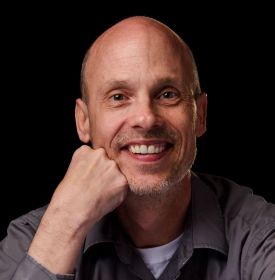
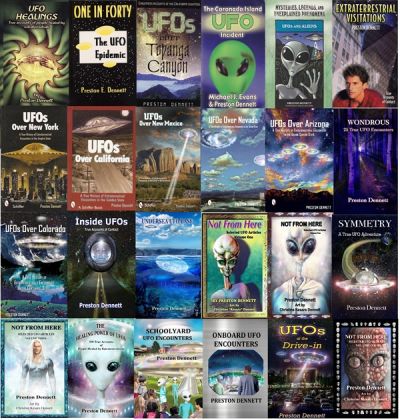
I have written 32 books and am able to speak on many aspects of UFOs & The Paranormal.
Books by Preston Dennett
Aliens and UFOs Chelsea House, 2008
Bigfoot, Yeti and other Apemen Chelsea House, 2009
California Ghosts Schiffer Publishing, 2004
The Coronado Island UFO Incident Galde Press, 2007
Extraterrestrial Visitations Llewellyn Publications, 2001
Ghosts of Greater Los Angeles Schiffer Publishing, 2010
The Healing Power of UFOs Blue Giant Books, 2019
Human Levitation Schiffer Publishing, 2007
Humanoid and High Strangeness Blue Giant Books, 2023
Inside UFOs Blue Giant Books, 2017
Not from Here: Volume One Blue Giant Books, 2016
Not from Here: Volume Two Blue Giant Books, 2017
Not from Here: Volume Three Blue Giant Books, 2018
Not from Here: Volume Four Blue Giant Books, 2022
Not from Here: Volume Five Blue Giant Books, 2024
Onboard UFO Encounters Blue Giant Books, 2020
One in Forty: the UFO Epidemic Kroshka Books, 1997
Out-of-Body Exploring Hampton Roads, 2004
Schoolyard UFO Encounters Blue Giant Books, 2019
Supernatural California Schiffer Publishing, 2007
Symmetry: A True UFO Adventure Blue Giant Book, 2022
UFO Healings Wild Flower Press, 1996
UFOs at the Drive-In Blue Giant Books, 2020
UFOs over Arizona Schiffer Publishing, 2016
UFOs over California Schiffer Publishing, 2005
UFOs over Colorado Schiffer Publishing, 2017
UFOs over Nevada Schiffer Publishing, 2014
UFOs over New Mexico Schiffer Publishing, 2012
UFOs over New York Schiffer Publishing, 2008
UFOs over Topanga Canyon Llewellyn Publications, 1999
Undersea UFO Base Blue Giant Books, 2018
Wondrous: 25 True UFO Encounters Blue Giant Books, 2021
Preston Dennett Biography
Preston Dennett began investigating UFOs and the paranormal in 1986 when he discovered that his family, friends, and co-workers were having dramatic unexplained encounters. Since then, he has interviewed hundreds of witnesses and investigated a wide variety of paranormal phenomena. He is a field investigator for the Mutual UFO Network (MUFON), a ghost hunter, a paranormal researcher, and the author of more than 30 books and more than 100 articles on UFOs and the paranormal. Several of his books have been Amazon UFO bestsellers. His articles have appeared in numerous magazines including Fate, Atlantis Rising, MUFON UFO Journal, Nexus, Paranormal Magazine, UFO Magazine, Phenomena Magazine, Mysteries Magazine, Ufologist and others. His writing has been translated into several different languages including German, French, Portuguese, Russian, and Icelandic. He has appeared on numerous radio and television programs, including Midnight in the Desert with Art Bell,Coast-to-Coast and also the History Channel’s Deep Sea UFOs and UFO Hunters and Ancient Aliens. His research has been presented in the LA Times, the LA Daily News, the Dallas Morning News and other newspapers. He has taught classes on various paranormal subjects and lectures across the United States. He currently resides in an unknown forested location on planet Earth.
The Church of the Souls Evolution
The Church of the Soul's Evolution with The Reverend Blake Rubie (Ordained Minister)
There is no only son of God. Jesus taught us to pray, "OUR Father, who are in Heaven..." We are all God's children.
We are here on earth to develop spiritually. We came from Heaven and will return to Heaven, eventually. As the brain is to the body, so the soul is to the spirit. As spirits of light, the Creator has created darkness to help us learn from the darkness and increase our light. In this show, there is much to learn about spirituality. The subjects range from the creation, the Original Creator, Co-Creator Gods of Solar Systems and Galaxies, reincarnation, the nature of our spirits, planets throughout the universe, near-death experiences, extraterrestrial intervention in our past, angels, who Jesus really was and more!
[00:00] Speaker 1: (instrumental music plays) Good afternoon, everybody. This is Reverend Blake Ruby. Welcome to my show, The Church of the Soul's Evolution. By the way, I am a reverend with the Universal Life Church. And if you're interested, Google all the famous celebrities who are reverends with the Universal Life Church. Uh, one of them I... uh, yeah, uh, and one of them is Lady Gaga. I can't remember some of the other ones, but they're famous people. Anyway, I just thought I'd mention that and everyone please help me welcome to my show Preston Dennett. He was on my show before. He's a, a UFO expert and... Preston, are you there?
[01:23] Speaker 2: I'm here.
[01:25] Speaker 1: So, uh, maybe, um, calling him a UFO expert isn't the, the perfect way to describe him, but I've watched his videos and you won't find a more detailed, meticulous, articulate accounting of some encounters that people have had in the past over the years. And thank you, Preston, that is, uh, quite a work that you've done there, all the different videos and the encounters, all the different species. So many different species. How many would you say, from all the videos that you've done, um... how many species would you say have visited, or presently are visiting, our planet? And by the way, thank you for being on the show, Preston. Good to have you back.
[02:17] Speaker 2: Hey, it's a pleasure and an honor. Thank you. Uh, yeah, I mean, it, it's a good question, because it seems like it's almost endless. Uh, I mean, I get reports of grays, human-looking ETs, praying mantis, tall whites, little blue beings. It goes on and on. But, yeah, kind of a trick question, because from what I've understand coming from... the information coming from contactees is that they're really not different species, as we would think of them. They're different ancestries. Uh, very much like we have here on our planet, we all look quite different depending on where we live and who our parents were. Uh, but the message that contactees are getting is that we all share a common heritage, we and all the different types of ETs, and that the differences are basically due to our environments, though all are essentially human, certainly humanoid.
[03:23] Speaker 2: This is why we see-
[03:25] Speaker 1: Ah.
[03:25] Speaker 2: ... that the humanoid form appears to be the universal template throughout the universe. Uh, and yeah, we... This is one of the messages they'll... contactees will get, is something along the lines of, "We are you, (laughs) you are us, we are one." And I think that's exactly what the evidence is showing us. So, while grays might look a little different from us, and praying mantis types and others, they're not as different as you would, you know, expect from, quote, "alien species." Uh, they're more like us, I should say, than different. So, I think that we... it's a mistake to separate us from them, but essentially we're dealing with people who are very much like us, and in fact, some exactly like us. But, yeah, the variation is amazing.
[04:19] Speaker 1: I've heard of the different types of human beings, you know, the shorter ones, the taller ones. Of course, these extraterrestrials with their spaceship technology are far in advance of our own, and they know how to warp time-space and, and travel, some travel inter-dimensionally, which we, we don't know much about. We can't do that ourselves, not at this stage in our evolution. I, I would venture to say that most of these extraterrestrials that people encounter are from planets of the superior category of evolution. Would you say that's true?
[05:04] Speaker 2: Oh, yeah. I think this is one of the few things that most researchers agree upon is that we are dealing with people who are far in advance of us, not only technologically speaking, but psychically, uh, morally, ethically. I am not sure how far advanced they are from us, but it's not a matter of hundreds or even thousands or even hundreds of thousands of years. I think we're looking at least million, according to some reports, it's even more than that, because people have asked this question of the ETs, and the response, for example, from one lady I interviewed, Dolly Safron, uh, she's one of my favorite contactees. She was told that they are essentially billions of years ahead of us.
[05:51] Speaker 1: I believe that, because, in my opinion, the universe began with a big bang all those years ago, and the center of the universe, from my research, is approximately 15 billion light years from here.So if the universe began forming itself one solar system at a time, and then after so many solar systems, a galaxy is formed, and a new galaxy, uh, was created and began forming itself one solar system at a time, it's safe to assume, I think, that some of these extraterrestrials on these original solar systems or the first solar systems have been traveling in outer space millions of years even before our galaxy was created.
[06:35] Speaker 2: Yeah, it's very hard to say. Um, I don't think science, mainstream science has gotten it right in terms of the age of our universe. Uh, this is... Again, I'm not speculating here. I'm drawing on information taken from firsthand accounts from people who've had direct contact, and from what I understand, our universe is far, far older than even mainstream science has, you know, presented. So for example, the Big Bang, and there's some mainstream scientists who are beginning to, uh, reverse their opinions on this. Not sure it ever happened. (laughs) The universe is, in essence, eternal, and it's been growing for... since the beginning. And really there is no beginning.
[07:28] Speaker 2: (laughs)
[07:28] Speaker 1: Do you think there are other universes? Like, are we living in a multiverse kind of environment?
[07:34] Speaker 2: I do. Yeah. Um, it's... Because the whole concept of infinity is almost impossible to wrap our minds around. Uh-
[07:44] Speaker 1: It is.
[07:45] Speaker 2: (laughs) I mean-
[07:48] Speaker 1: And eternity too.
[07:49] Speaker 2: That is what... Yeah. Th- that is what contactees have been told, that there are multiple universes, uh, which is just so mind-boggling. I don't even know how to approach that. (laughs)
[08:01] Speaker 1: Well, I think that's a good way, a good way of stating it, um, because of your dedication to what you do and, and the knowledge that you've gained, that's probably a better answer than most people could come up with.
[08:16] Speaker 2: Yeah. What, what's amazing to me is it just shows how much we still have to learn. I mean, just looking at what the web telescope is bringing back images of. (laughs) Uh, you can pick a tiny little section of sky, a postage stamp size section of sky, and you're seeing hundreds of galaxies. And we have our Milky Way galaxy, and God only knows how many civilizations are here in our own galaxy. So-
[08:46] Speaker 1: Right.
[08:46] Speaker 2: ... it's just amazing to think of how much is actually out there.
[08:52] Speaker 1: I might have asked you this before, and forgive me if I did, but there's one book I'm very interested, and I've read it several times. Uh, as per what the author said, that everyone should read it several times. It's called Abduction to the 9th Planet, also known as The Thiaoouba Prophecy or The Golden Planet. According to him, he was abducted by these extraterrestrial human-like beings back in the late 1980s when he was living in Australia. He since passed away a few years ago. And he was taken to their planet, which he said was technologically and spiritually one of the three most advanced in the Milky Way galaxy. And they're hermaphrodite, meaning kind of transgender, and nine feet tall, and just extremely brilliant and intelligent, you know, and their spaceships were circular. Now, they weren't always, but now they are, and they're about 70 meters in diameter, and they can move dimensionally, definitely more than several times the speed of light.
[10:01] Speaker 1: And he was on their planet for ten days, and they taught him a lot of things to include, uh, to, to prepare himself for when he got back to write this book. And they apparently are guardians, like a lot of the superior races are of the lower evolutionary planets. And they've had some direction, divine intervention in their path to include Moses' time and parting the... The Star of Bethlehem was one of their probes, apparently rendered luminous. And that whole plan was to put the world on a path, because apparently at that time, there was a lot of evil going on, for lack of a better way of putting it. And even 2,000 years ago, it was possible, because there was a lot of war and killing and sexual immorality, that the world could have destroyed itself back then. And so the time was right for divine intervention of a very special kind, and that was the plan. Uh, not, not to mention, as I said, about Moses and all that happened with him, but with Jesus especially.
[11:14] Speaker 1: And it's in the book, there's a chapter that says Who was Christ? And really super interesting to me. And have you heard of those bo- that book?
[11:26] Speaker 2: I have. Yeah. It's an interesting book, and it has parallels to a number of other cases. Very interesting because if you look through ancient history, you see a lot of parallels, I mean, of what we call angelic visitations to extraterrestrial visitations or-
[11:45] Speaker 1: Yeah.
[11:46] Speaker 2: I think in some instances people have a tendency to interpret their experiences through the lens of their own culture. And we know that many, you know, eons ago, people weren't really thinking of extraterrestrials, or certainly hundreds of years ago. Uh, it really wasn't part of popular culture.
[12:06] Speaker 1: Right.
[12:06] Speaker 2: So some of this might have been misinterpreted. Hard to say for sure. (laughs) We weren't there.But it's certainly fascinating to hear these accounts, and it's amazing because I think it shows that the motivation of ETs or these other beings, however you want to look at it, angelic or otherwise, coming to help us is very consistent. Uh, and I think that is very encouraging when you hear about people's... having frightening stories of being taken onboard and having a very difficult time with it. I've come to realize really that the ET agenda, for lack of a better word, is really one of healing, guiding, teaching, informing, warning. And it's interesting to me because we have the modern age of UFOs beginning in 1947, thereabout, which coincides pretty much exactly with the atomic age, pretty much exactly when we reached the point to have the ability to extinguish all life on this planet, pollute our planet to an irreversible degree.
[13:20] Speaker 2: This is when people started getting these messages about the warnings of nuclear proliferation, um, warnings against greed and corruption and war and aggression, pollution and the destruction of the environment. I do think that they've been helping us for a very, very long time, and we see this in very ancient writings and we're seeing it today. So I think ultimately, (laughs) it's good news for us. I know there's a lot of fear surrounding the subject, but I'm not sure it's warranted because they've been around forever. We know this. And they're... Clearly, if they were going to take over, I think we would know it by now. So yeah, it's very interesting to hear these ancient writings and compare them to m- modern day cases.
[14:09] Speaker 1: Yes. Per the book, the elders, because I can't think of another word to describe them, they're also known, in the book, they called them the Great Psyori, which are some personages who... There's several of them, and he visited them, and they're... He found them in, like, a lotus position, and they were able to levitate themselves up, and they were shining from within. And they told him some, some really enlightening information about Planet Earth, and just really fascinating what, what he experienced when he was there. And, um, he, they told, told him everything they knew, I think, just about. Um, they might have held some stuff back, I don't know. But they said, in the beginning, it was nothing but darkness and silence, and the Spirit. And the Spirit, by the power of his/her will, I imagine the Spirit is both male and female, because I think this is a universe of, of alpha, omega, yin, yang, positive, negative that we're living in.
[15:18] Speaker 1: Even though The Bible says there's only a Father God, I still can't believe that there's not a Mother God. You know, here on Earth, in the physical realm, you need a mother and a father to create children. And, and we are the children. We were... Our, our spirits were created, I believe. You know, that, that song by The Police, 1981, We Are Spirits in a Material World, does it perfectly, you know? And they were way ahead of their time to talk about that. But we are spirits i- in a physical body, and we use these bodies to traverse this lifetime, were born into this world, and we're made to forget in order to utilize this extremely difficult learning environment. And I've heard it said that Planet Earth is one of the most different, difficult schools in the universe, in the university of the universe. And we come here to develop ourselves spiritually, but because we're made to forget and we can stray off the path, uh, it is said that we are, we are...
[16:27] Speaker 1: we plan our lives before we're born into, uh, this planet, everything to include our parents and people we're going to meet, friends, peers, accidents that we're going to have.
[16:44] Speaker 2: Right.
[16:44] Speaker 1: And we come here and then stay on that path that we planned, more or less, and learn on the way, as much as we can, about who we are and where we came from, about the universe, about the creator of the universe. And going back to what I was saying, the creator apparently, if I understood it correctly, wanted to grow and expand and, and feel itself in another way, and therefore commanded the four forces of the universe; the first force that created the sun and the planets and the moon, the second force created the plants and animal life, the third force created all sentient life, all the sentient beings that are out there, all the different variations, thousands and thousands, and there is an intergalactic federation of sovereign planets too, by the way. And then there is the fourth force, which inserted a piece of the creator's life, because the creator is a being of light, pure light.
[17:56] Speaker 1: And we have that little spark of the creator's divine essence in our souls, which I believe is the brain, is the brain of the Spirit. So then by the, the creator imagined everything that would be down to the smallest detail, all the objects that would exist.And then by the power of his or her will, we... Well, then, you know, that's if you believe in the Big Bang, then everything began forming itself in accordance with the creator's plan. And that's in that book. And when he visited those, those great Kaioai, those, like, elders there, th- they told him a lot about planet Earth and our past and our future. Anyway, I got a little bit off, sidetracked there. I don't... I think it's still fascinating.
[18:58] Speaker 2: Yeah. No, it's very... I- it's interesting stuff, because these are kind of the messages that people are getting from their near death experiences or mediums or Native American elders or enlightened masters. Uh, we are part of source, and I think it's an absolute wonderful gift to be alive here in the third dimension where we do feel like individuals. But in a sense, I think that's a little bit of an illusion, because we are all absolutely interconnected.
[19:35] Speaker 1: Yeah.
[19:35] Speaker 2: And I think we have this tendency to think about things like astral projection and leaving our body. It's a bit of a misnomer, because we're actually projecting down here from source, which is our true home. We're here for a short time. And I agree with you, (laughs) this is, you know, I think Robert Monroe, a very well known astral projector, talked about earth being a very difficult school, and that those who complete it are very well respected on the higher plains, uh, (laughs) which kind of made me laugh, because it is a difficult school.
[20:10] Speaker 2: Uh, and I'm not sure-
[20:12] Speaker 1: Yeah.
[20:12] Speaker 2: ... I'm not entirely convinced we're supposed to come here with complete amnesia. Uh, I feel like we've k- lost our way a little bit, and that we're really supposed to remember who we are and where we came from, and that we're now really trying to get that back, uh, which I think we're, we're beginning to see definite steps towards that with people showing a lot of interest in these kinds of subjects. I think that's one of the agendas of the ETs as well, to remind us that we are, in fact, eternal beings who survived death, that death is really an illusion, that we are eternal and immortal, and that all of us are very much connected to each other. But yeah, it's an absolute fascinating thing to think about, that we are eternal beings. (laughs) And, really, uh, and like I said, what a gift that is just to be alive in this universe.
[21:17] Speaker 2: It's, yeah-
[21:18] Speaker 1: Yeah.
[21:18] Speaker 2: ... incredible to think about.
[21:20] Speaker 1: Did you watch the, the moon shot with the, uh-
[21:23] Speaker 2: Of course I did. Yeah. (laughs)
[21:27] Speaker 1: Yeah. Th- that was-
[21:27] Speaker 2: Very cool.
[21:29] Speaker 1: ... actually pretty cool technology to be able to do that, you know, for, uh, to say the least. And it reminds me of Edgar Mitchell when he came back from the moon, I think he was on Apollo 16, and he had an epiphany where he said he felt at one time coming back from the moon, he would look, uh, he looked over at the sun, and, and Eugene Cernan did too, and I'm kind of combining both of them, but I guess Edgar Mitchell did see the, the flaming disc of the sun because it doesn't look round, uh, when you're out there in outer space, but then the velvety blackness of outer space interspersed with brilliant diamond-like stars of, of even larger size than we can see in our night sky. And then the cobalt blue world pla- (coughs) excuse me, I'm gonna take a drink, planet Earth, you know, just floating like a ball in outer space, a beautiful creation. He said it was really, he felt like we're all, like you said, we're all interconnected. We're all part of everything.
[22:40] Speaker 1: We're made of star stuff, you know? And the sun, we- we've got the same molecules as the sun in our bodies.
[22:49] Speaker 2: Yeah.
[22:49] Speaker 1: And the stardust, yeah.
[22:53] Speaker 2: Yeah. Oh, it's really amazing to see all the astronauts, uh, and how they were transformed by going to the moon. Almost all of them had some sort of spiritual enlightenment from it. And we're seeing it with our latest four astronauts who just did a press conference. They were giddy-
[23:10] Speaker 1: Oh. (laughs)
[23:10] Speaker 2: ... with excitement. It was really just a joy to watch them and see how it affected them so profoundly.
[23:17] Speaker 1: Yeah. I've got to see that. I was in a Toastmasters speech contest this afternoon as a judge, and so, um, we got up early this morning and headed out. It was about a... almost two-hour drive from San Antonio up north close to Austin. And so we just got back, and I'll catch up, I'm sure, you know, on TV they'll be broadcasting that later on. And, yeah, I'd like to see that-
[23:42] Speaker 2: Yeah, absolutely.
[23:42] Speaker 1: ... how it affected them. And, uh-
[23:45] Speaker 2: And I'm excited to see what the next missions are like-
[23:48] Speaker 1: Yeah.
[23:48] Speaker 2: ... because, uh, humanity is definitely taking some step forward that we've never done before.
[23:54] Speaker 1: I'm glad we're doing it too, you know. I mean, I think we lost our explorer spirit. I mean, Christopher Columbus sailed across the ocean. They, they told him it was flat and he was going to fall over the edge. But did that stop him? No. He had the courage to do it because he felt, thought, maybe dreamed that there was a land on the other side of the ocean, you know, that would have riches. Because that was pretty motivating back then, you know, bring back gold or whatever, spices, and, and become wealthy that way. But more than that, he was someone who was, I think, um...... inspired by, who knows, the dreams and maybe other people w- would talk with him and said, "No, the world's not flat, it's round," you know. And he proved it and other people proved it afterwards.
[24:44] Speaker 1: And then there must have-
[24:45] Speaker 2: Yeah. (laughs)
[24:45] Speaker 1: ... been four spirits, you know, it seems. 1972.
[24:49] Speaker 2: There's still some people, (laughs) there are still people around who feel like the Earth is flat. And hopefully this recent moon mission will at least enlighten some of them.
[24:59] Speaker 1: (laughs)
[24:59] Speaker 2: But, yeah. (laughs)
[25:01] Speaker 1: Oh, well, you know, uh, some people even believed, uh, we didn't land on the moon, or th- that, uh, the jet didn't crash into the Pentagon. I talked with one guy, and I liked him, he was a very nice man, but he believed that, that the Pentagon wasn't hit by a commercial airliner. So some people are like that, and that's okay. If you want to be that way, you know, then you won't have to deal with that on, uh, that day, that judgment day in, into the future, hopefully far into the future, because every day's a gift, you know. The more we stay here on planet Earth, the more we get a chance to learn and grow our souls, you know, 'cause I believe that we're born into this world, uh, we might already have a few lives, past lives underneath our belt, so to speak, and some more than others.
[25:57] Speaker 1: And the goal is to increase the, the light of our souls, that apparently when we get to the spirit world or heaven, we're going to see that a- a lot of different spirits like us shine with different levels of intensity. And the, the brighter your light, the more evolved you are apparently. And then when you get to the, the spirits that made our souls and our spirits, then obviously they shine with a light that is so bright that it, it's almost impossible to withhold, and that shines over us with glory and brilliance. Unless we're sufficiently developed spiritually, we won't be able to withstand that brilliance and glory. And so I've, just as I've talked about this on my radio show before as an example, let's say we're born into this world with a 60-watt bulb intensity soul, then our goal is to, during our time here on Earth, is to increase the intensity of that light to a higher wattage, maybe a 100 watts or more.
[27:08] Speaker 1: And so when we move to o- over to the other side, you know, the, um, the afterlife, then hopefully we'll shine with a brighter light than when we were born into this world, and that, and it's all about learning, you know. And the learning continues there, from what I've heard.
[27:28] Speaker 2: Yeah, I mean, that rings true for me. Uh, I think that's exactly why we come here, to gain wisdom and experience, to build our awareness. And funny you say that about light, because there's the Betty Andreasson, uh, extraterrestrial contact case. Uh, she was-
[27:48] Speaker 1: Oh, really?
[27:48] Speaker 2: ... taken onboard with her husband, and, uh, they told him that he didn't have enough light to continue to a higher level or an upper dimension that his wife did, and that she was more advanced than he was. (Laughs) Uh, which I thought-
[28:06] Speaker 1: I see.
[28:07] Speaker 2: ... was just interesting confirmation in a way of what you're saying. Uh, but I absolutely do think that that's exactly why we're here, and I think that this is one of the reasons ETs are working so hard to wake us up to all of this, because that is a big part of why people are taken onboard. They're healed, now they're given warnings. But if you talk to contactees, it's amazing to see how many of them experience things such as astral projection, or hands-on healing, or even levitation and precognition, and all kinds of things like these. Which I think are, you know, we think of them as supernatural abilities. I'm not so sure they are. I think these, these are natural abilities. In Butler's Lives of The Saints, I, you know, which outlines the lives of hundreds upon hundreds of saints, they, many of them had all of these abilities, superhuman strength, immunity to fire, uh, communication with animals.
[29:13] Speaker 2: Almost all contactees, this is a question I always ask them now, "Do you have any interesting animal stories?" And almost without exception, it's amazing to hear the connection they have with the natural world. And I think this is something we're all striving for, and this is what we came down for, to really learn how to do these things, to build our awareness, to, you know, as you say, uh, turn our 60-watt light bulb - I liked where you put that - to a much brighter one. Uh, and yeah, gain wisdom. I think that's really what it's all about.
[29:48] Speaker 1: Yes. And I saw you had one video where a boy was able to travel, astral project his spirit and was able to travel around. Well, let me ask you a question, Preston. What do you think about what's going, about what's going on, uh, with, um, the United States, and over there in Iran, and people that are being killed in, in the Gaza Strip? And, and there in Iran, uh, there's been about 4,000 people that have been killed over there, over 250 children. And, and then in Ukraine, of course. I mean, y- I would have thought... I'm part Jewish myself, and I know that six, over 6 million Jews were killed in World War II. You would think that we would-... and be more, put a higher value on life and be more sensitive to people just like me and you, who are over there getting killed, but we, we, um, we have more money than they have, and that's a big difference, I think. And so, they don't really think twice about it. They... We've become insensitive. Uh, we've become numb to the killing.
[31:05] Speaker 1: Well, what do you think about all this war that's going on, especially with what Mr. Trump has been saying about Iran, and...
[31:14] Speaker 2: Yeah.
[31:14] Speaker 1: ... all that.
[31:14] Speaker 2: I mean, it's, it, it, it's heartbreaking. I think people all over the world, we all want the same things. We all just want to live our lives in peace, be with our family, have enough food, a roof over our heads. People all over the world are the same. And to know that there are people who are in a situation where they, their rights, (laughs) I mean, they have no rights. And th- they're... don't have enough food, and th- they're not in a safe place. It's, it's terrible. There's no reason for it. All the divisiveness and hatred and all the, you know, hmm, things that are going on in the world are unnecessary, because there's truly enough resources and food for everybody.
[32:04] Speaker 1: Yeah.
[32:04] Speaker 2: And I think it's time to take action. We really need to start w- uh, moving to a place where all people have the right of freedom, the right to pursue happiness. We need to reach a place where we don't have wars anymore. And if that takes some conflict to get there, you know, it is what it is.
[32:26] Speaker 1: Yeah.
[32:26] Speaker 2: But ultimately, we really do need to s- embrace the fact that we are all one. We're not that different from each other. There's just one race on this planet. Racism is not a true word. There's discrimination, perhaps. But, you know, judging someone from the color of their hair, or their weight, or their skin, or, you know, what religion they are, it, it's ridiculous, because we... Again, I think we all really just want the same thing, and most people on this planet are good.
[32:58] Speaker 2: They will give you the shirt off their back once you get to-
[33:01] Speaker 1: Yeah.
[33:01] Speaker 2: ... know them, you know, e- then everything changes. So I just want to... You know, what the ETs must think of us? I think this is why they're coming down in such large numbers, to get this message to us, because we need to really move to a place of peace and prosperity. The budget that's being spent on weapons of destruction is-
[33:26] Speaker 1: Yeah.
[33:26] Speaker 2: ... just-
[33:26] Speaker 1: Yep. The war machine-
[33:27] Speaker 2: ... unbelievable to me. Uh, and the fact that we have companies who are basically selling weapons to both sides, and that war is intentional.
[33:39] Speaker 1: Yeah, the military does seem like-
[33:41] Speaker 2: Yeah. We need to move away from that. At some point, we need to stand up to evil, and if someone's being mistreated, something has to be done to make that stop. So I support, you know, anyone who stands up for those who are downtrodden, and we got... We need to move up to a place of love. If everyone would just allow love and truth to guide their actions, the world would change overnight.
[34:09] Speaker 1: Yes. And, uh, I've heard that... I mean, I'm always very interested in near-death experiences, and I've seen so many of them. I've, I heard one recently, a woman. She, um... I'm trying to remember how she died for a short while. Might have been in a car accident. But she said, and, and I've heard it over and over again, but this time, it really ma-... It all depends on the person that's relating the story, you know, and how they can... And I know they're chosen for that reason, the way they could, they can articulate exactly what they experienced, and what they felt, and what they saw. And she said, "It's love. It's just, it's all love there." You know? I don't... And it, it confuses me at times whether or not there is a hell down below the surface of the Earth, you know? Maybe it's like a rehabilitation, because I don't believe there's eternal damnation, in my opinion, you know.
[35:10] Speaker 1: If we are created, if we are the children of the Creator, then certainly, um, I think the Creator takes into consideration how we were brought up, whether we were abused. Someone like Hitler, for example. You know, maybe he was sexually abused, uh, as a child, or maybe he had, uh, some kind of mental issue. I know he was in World War I, and I know that he was angry that the Germans had lost the war, and, and how they were treated afterwards by the Allies. And you put all that together, and there was somebody, you know, who's bent and determined to take over the world and kind of seek revenge. But is he really a bad person? Is he in, in hell right now? Could we ever find forgiveness for someone like that, you know, in our hearts? Is it up to us to find forgiveness?
[36:04] Speaker 2: Yeah, I... You know, from what I understand, we all bear the responsibility to do the right thing, and those who choose evil will be held accountable for it. And we're our own worst judge. And if you look at... I love the near-death experiences, because they really dive down deep into this with the whole life review aspect of a near-death experience. I interviewed one gentleman who had a near-death experience, and he really didn't want to describe anything except the life review he went through. Told me he was not a good man. He hurt a lot of people. Uh, he had made some very poor decisions, and in his near-death experience-He had to relive all that. And not only did he relive it, he felt the pain he inflicted on every single person he hurt. And he said it went beyond that, 'cause those he hurt ended up hurting others, and he felt that.
[37:04] Speaker 1: Hmm.
[37:04] Speaker 2: Yeah, so there was a ripple effect. Uh, if people knew how profoundly our own actions affect everyone around them, I think they would, you know, hmm, be a little more careful about how they act. Uh, and yeah-
[37:20] Speaker 1: Yes.
[37:20] Speaker 2: You know, life on Earth is not easy. There's a lot of people who've been abused, but I'm not sure that we can use that as an excuse, 'cause we all know what's right. We all have to lift ourselves up out of ignorance and delusion and bad thinking, and ultimately take responsibility for our own actions.
[37:40] Speaker 1: Yeah. Go on.
[37:40] Speaker 2: And from what I understand, yeah, reading the near-death books, I don't- I don't-
[37:46] Speaker 1: Yeah. I-
[37:46] Speaker 2: ... think that there's a hell with that either. I think that people end up in a dark place because of their own ignorance, because of their own addictions-
[37:57] Speaker 1: Yeah.
[37:58] Speaker 2: ... because of their own self-centeredness or evil actions. And it can be very, very difficult to rise above that. But we're all certainly given the opportunity to do it.
[38:10] Speaker 1: Yes.
[38:10] Speaker 2: But those who don't are going to find themselves in quite a fix.
[38:15] Speaker 1: Yes, I agree that, I, I agree. I, I, I can't see how someone could, like, um, kill a lot of people and then wind up on the other side in, in a beautiful light-filled place, you know, in a meadow of beautiful flowers and grass and, you know, trees of life. Uh, say, "Oh, you know, I made a mistake. Well, um, I made so many mistakes, but I'm, I'm here in heaven." I, I think I agree with you, you know, we are held accountable for our actions and, and I think the universe is like that too. For example, in that book, it talks about on its way to their planet, they took them to a planet called the Remo X3, which had had a nuclear war and all the plants and animal life was wiped out, and the only food they could get was from the, the seas, the oceans. And even then, they were tainted with radioactivity and they were eating these sea cre- sea life, you know, um, crustaceans and fish, so on. And they were having horrible birth defects and, and they were like a Polynesian race.
[39:29] Speaker 1: And, and we were shown that, and they were... and because of the radioactivity, some insects were mutated. Ants were like the sizes of cows and, you know, with their mandibles, they were killing these human beings. And, but they were surviving and they were kind of like thrown back to the Stone Age, but they had been at one time a very advanced civilization, and they couldn't resolve their differences peacefully. So they were... I don't know if they got some guidance from the creator of the universe, but they decided to help them, although they said they couldn't actually, um, give it to them on a silver platter, if you know what I mean. But they were able... they wiped out those insects and I think there was also some huge praying mantises that they wiped out. And those are very vicious insects too, you know, the way they eat their prey. And so over the course of several centuries, then they got back to normal.
[40:28] Speaker 1: But in between that time, it was really rough for them and, I mean, this horrible birth defect like with a, a mouth on, in the forehead and, and, and misshapen arms and legs and... it's just terrible stuff. So they had to pay the price, you know, for what they did. They started-
[40:50] Speaker 2: Yeah.
[40:50] Speaker 1: ... a nuclear war with another civilization and, and they had to deal with it afterwards. But they were helped, um, they... the ETs did bring in some vegetation, plant life, and helped, you know, started growing that again. But it took several centuries to get things back to normal. We can learn from that, you know, ourselves. There's not just the, you know, killing thousands and millions of people with the blast and the radioactivity, um, afterwards also killing people, but the, the effect on the plant and animal life and, and future generations and birth defects and it's just, it's a, a nightmare scenario for any civilization afterwards.
[41:38] Speaker 2: Yeah.
[41:38] Speaker 1: You know?
[41:39] Speaker 2: We're kind of facing that ourselves. It's very interesting because this is something we hear from the ETs. There was a case I was looking into about two teenagers who were taken on board at Lake Champlain in 19... gosh, I think it was 67 thereabout. And one gentleman, Michael was his name, I believe that's a pseudonym, but at any rate, he was speaking with the ETs, they were grays, and he said, "Why don't you just come down and help us? We have people starving on this planet. Children are starving." And they explained to him that, "We have free will here, and that we made poor decisions that are, is causing this. And that they can't just come down and solve our problems because it would end up much worse for us, and that it's up to us to solve our own problems because we have been given the gift of free will." So I think this is why we see a lot of suffering on this planet, because of our own doing. The ETs do come down and they will heal people.
[42:45] Speaker 2: I've had hundreds of cases of people who've been healed. Will provide all kinds of wisdom and guidance, but ultimately, we have to do the work.There was another case I investigated in Sedona, Arizona, where a couple was brought onboard, and the husband was cured of carpal tunnel syndrome and some problems with his knees. And the wife again asked the ETs, "Why don't you just come down? We think you could do a lot better job than our own governments (laughs) are doing." They said, "No, we can't do that. We are helping those who help others. We can only help to a limited degree." And they brought up the word karma. I've heard that word come up in a number of contact cases, and free will, which is really interesting, because this is certainly what we hear in various spiritual disciplines, uh, that ultimately, you know, we do have free will. We are learning lessons here that can be very difficult, and if we don't make right decisions, we're going to suffer the consequences.
[43:49] Speaker 2: But that's the only way to learn. So, I don't think we can count on ETs necessarily to rescue us from, say, a nuclear war, because they haven't. You know, we've gone through some horrible things on this planet, and hopefully we've learned from it. Uh, and I think we are. We're definitely making some progress in terms of the whole civil rights movement and treating people more equally, so I think we are getting there (laughs) with baby steps. But yeah. You know, having other examples, that gentleman was blessed to be able to see that and bring that message back to us, because it's an important message. And, uh, from what I understand, this is not the only time we've had trouble on this planet. There are previous advanced civilizations that essentially destroyed themselves, and we're on that pathway again.
[44:48] Speaker 2: So, hopefully we can reach a point where we just grow spiritually, at least keep up with our technological development, because we are alw-
[44:59] Speaker 1: Yeah.
[44:59] Speaker 2: Every time we get technology, we weaponize it, and that's why ETs would never hand over any technology to us, because we're not ready. We're like kids with matches.
[45:09] Speaker 1: Yeah.
[45:09] Speaker 2: We're gonna burn the whole place down. (laughs)
[45:13] Speaker 1: Yeah.
[45:13] Speaker 2: It's real unfortunate.
[45:15] Speaker 1: Uh, but going back to what you said about, um, not helping us, you know, they know the military mind. Have you seen the movie The Day the Earth Stood Still?
[45:26] Speaker 2: Oh, sure. Classic.
[45:28] Speaker 1: Yeah, so, but I, I wonder, and I don't want to question them. They know what they're doing. They're, they're more advanced, um, than I am in their souls, and they've got, might have had the benefit of living many more lives than I have, and, and some brilliant guidance from even higher sources. But I wonder, I mean, we had divine intervention before in the past, and I know they can look into the future to a certain degree. I don't know, not unlimited, or n-not to a, to infinity or to eternity, um, I think that's more correct, but they can... The ones I was telling you about from the planet Thiaoouba, apparently they can look 100 years into the future.
[46:18] Speaker 1: So, if they say, if they were able to forecast the self-destruction of our species in a nuclear war, which they say really isn't the greatest sin, um, the love of money is, is worse than that, but-
[46:35] Speaker 2: Right.
[46:36] Speaker 1: ... since they have in- intervened in our past before, with Moses, you know, all those miracles that he performed and then parting the Red Sea, and then with Jesus, you know, all the miracles that Jesus performed to include the resurrection, the ascension, you know, which I believe they were in constant communication with him and had the benefit of the technology, um, available to him at, at any time to prove to the people that he wasn't just some ordinary person, and, and something that would last to where we are today, you know? And, um, for that reason, the people needed to see those miracles. But if they intervene then, I mean, maybe it's not that bad yet, but I know we're walking the razor's edge right now. We've got I can't remember how many nuclear weapons, and all it would take is for one to fly and then it could be an Armageddon, you know?
[47:40] Speaker 1: I don't even like talking about it, because I don't wanna put those words out into the atmosphere or change anything-
[47:49] Speaker 2: Right.
[47:50] Speaker 1: ... in a negative way, if you know what I mean.
[47:53] Speaker 2: Yeah, it's so unfortunate because, you know, as individuals and citizens here on this planet, a lot of us, I think, feel real powerless to be able to affect change, and I feel like we're dealing with en- enormous amounts of corruption at high levels within our own governments, so it's very difficult. But I always take hope in the fact that we are immortal beings, and we are going through a sort of tough school lesson here, and while it can be unpleasant and frightening and confusing, ultimately, we're gonna be just fine, uh, because-
[48:31] Speaker 1: Amen.
[48:31] Speaker 2: ... nothing can truly hurt us. The universe, ultimately, is a very safe place. Uh, so, yeah, it's just a difficult place to be right now. (laughs) Uh, and, uh, I just hope at some point... Because I don't think we've ever had peace on Earth, ever.
[48:49] Speaker 1: No.
[48:49] Speaker 2: At some point, we do need to get there or else we will never progress.
[48:54] Speaker 1: Yeah. Well, you know, in, uh, all fairness to humankind-We're living on a very violent planet where animals eat each other, and there are many other ways to die, being struck by lightning, tornadoes, hurricanes, volcanoes exploding, tsunamis. Not to mention, you know, we're not at the top of the food chain for, for human beings, you know, and then there's poisonous snakes and insects. And the atmosphere's weigh- weighs down on us, the barometer's rising and falling. You know, we have to get eight hours of sleep, try to get eight hours of sleep each day or else we won't function properly. We have to eat the right foods. We have to exercise. All this weighs heavily on our psyche, you know, and, and might force us or prompt us to do things we normally wouldn't do, like, like hurting somebody or worse.
[49:51] Speaker 2: Yeah, there's a little bit of a fight through for survival, and as I grew up, I was kind of surprised by this. I'm like, "This is a brutal world. What kind of a world have I found myself in?" But ultimately, I think it provides us the opportunity to cooperate with each other. And yeah, I mean, there is an aspect of survival of the fittest. But again, there's empathy and sacrifice and all these wonderful lessons that we can learn, gratitude and forgiveness and loss. These are... A lot of the things that we learn here, we don't have the opportunity to learn these things on the other side, the higher planes. So it brings a whole new perspective that I think will be very valuable in our spiritual progress.
[50:43] Speaker 1: And that learning continues when we're over there. As you said, being here in a physical body is, is the challenging part that can really advance our souls, enlighten our souls. Well, we're running out of time, Preston. Thank you so much. I will contact you by email if you'd like to do this again in the future. It'd be, it'd be, it'd be an honor and a pleasure to have you. Thank you so much for being here today. And that's it, everybody.
[51:13] Speaker 2: I-
[51:13] Speaker 1: I'm sorry, go ahead, please.
[51:15] Speaker 2: Yes, thank you very much. Yeah, I, I appreciate it. Anytime.
[51:20] Speaker 1: All right. Goodbye, everybody. Talk to you next week. Lots of love, and my God bless us, everyone. Bye-bye. (instrumental music)