
From Trauma To True Love, September 24, 2025
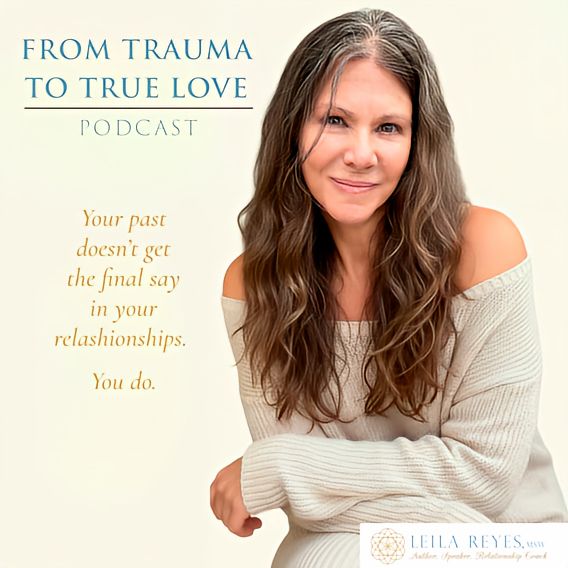

From Trauma To True Love with Leila Reyes, MSW
S2E5, Disclosure
From Trauma To True Love
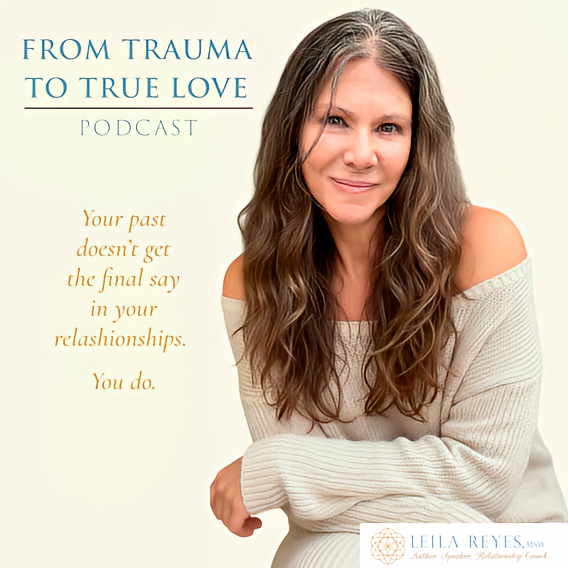

Break Free from the Past and Create the Relationship That Actually Fits You
Creating a healthy, fulfilling partnership isn’t about luck, timing, or trying harder. It’s about understanding how early experiences—especially those that shaped your sense of safety, worth, and attachment—are still influencing who you choose, how you show up, and what you tolerate in relationships.
On From Trauma to True Love, I speak to successful, self-aware women who have done the therapy, read the books, and still find themselves repeating familiar dynamics: unavailable partners, self-doubt, over-giving, or settling for less than they want—without fully understanding why.
As a relationship coach and trauma-informed guide, I help you identify how early trauma continues to live in the nervous system and relational patterns—and how to interrupt those patterns gently, without blame, fixing, or endless self-analysis. This work is about reclaiming self-trust, confidence, and choice so you can create a relationship grounded in safety, consistency, and authenticity.
Your past doesn’t get the final say in your relationships.
You do.
Welcome back to From Trauma to True Love, the podcast where we look at how early trauma impacts our lives and relationships and how to break free from the impact that it has. Today's episode is about taking a very important step on the healing journey, talking about it. If you've never shared about what happened, then I'm here to encourage you to take that step. With telling comes getting help to free yourself from the terrible impact that abuse has on your life. So I'm gonna talk about what makes disclosure so difficult, and I'm gonna share how that was true for me.
And I also wanna inspire you to start sharing because telling is absolutely a turning point on the journey. And after listening, I hope that you have the resources and information that you need so you can take this very, very important step in a safe and supported way. For many survivors, silence has been a survival strategy, and it can feel safer than taking the risk of not being believed, of being blamed, or of facing rejection from those closest to you. And if nobody has ever modeled how to tell, then we don't even have the words often. In general, when we're children, when the abuse happened, children don't understand what happened to them from a true perspective.
They perceive what happened from inside of that child's mind that simply does not have the capacity to correctly name what happened to them and instead take on an identity, Something like what I did, I don't matter. And if you believe that you don't matter, then you're not going to speak up because you believe, at least unconsciously, that what you have to say won't matter either. So we grow up really slowly inside of the meaning that we made, that when we become adults, we still believe what we decided the abuse meant about us and our value. So it's really hard, even as adults, to speak about what happened to us. The missing words can feel like this ball between us and the life that we long to live.
The relationships, the healthy relationships that we long to have. There can also be a deep loneliness of carrying something like this in silence, carrying it all alone. And for years, many survivors may believe that they're the only one that this has happened to. I certainly thought that I was all alone in what happened to me. And I say, I really believe that's why the Me Too movement a few years ago was so powerful, because it gave us this collective voice.
When one person spoke up, another did, and then another. And all of a sudden, the isolation just cracked open and millions of women and men realized that they weren't alone in their suffering. That shift helped people find the courage to finally speak out, to speak up. And if you haven't already taken that step, then I'm here to encourage you to go for it. Before you share what happened to you, It can feel like you're living in a dark room, not knowing if anyone else is there.
And then when one person speaks, it's like this light flickers on and suddenly you can see you were never alone. Others are in that room with you, and together it doesn't feel quite as dark anymore. Today, I can speak about being sexually abused by my father pretty easily, but it really honestly wasn't always like that. When I was an adolescent and my mother asked me what was wrong, you know, asked me to speak to her because she knew something was wrong, I couldn't speak. I couldn't say the words.
I didn't have the words. My whole body was frozen in that moment. And I was scared and I felt responsible, and my whole being was filled with shame. When I did end up sharing, I did so with a lot of force that pushed people away from really hearing me with compassion. Today I understand that that was my insecurity and an awkward way of protecting myself from rejection when I told.
My uneducated logic was that if I push people away first, then they can't reject me. But that only left me feeling alone, creating the very thing that I didn't want because I didn't know how to tell in a way that actually created connection. But over time, therapy and speaking what happened over and over and over and over again, it ended up becoming so easy to tell that that's one of the ways that I wrote my book, one of the ways I found found my way into writing a book about my experience. And in my book, Freedom from Trauma, Forgiveness, and Healing from Sexual Abuse, this isn't a memoir, it's a how to book. A how to get free from the impact abuse has on your life.
So everything that I share in it is proven to work. It worked for me and it works for my clients. And so what I want most want you to know about disclosure, about telling, is that it isn't just about telling your story. Underneath telling your story, it's about choosing yourself. It's about choosing freedom.
It's about taking that brave step towards creating a different future. One way you're no longer trapped in the shadows of secrecy, when you're no longer trapped in the dark room of shame. And if you're listening right now and you're thinking, I don't know who I could tell, I want you to know you have many, many options and here are some safe places to start. There's a national security assault hotline, which is RAINN, and it's confidential. It's available 20 fourseven, and it's in The United States.
It's 50673. If for some reason that number changes between now and the time that you call, just know that you can look up National Sexual Assault Hotline. And then one of my personal favourites, because I went through quite a bit of clinical depression in my earlier years here. The National Suicide Prevention Lifeline, you can share what you want. The number is simply 988 in The United States, And that's for immediate emotional support.
And then of course, always, always you have therapists to call. Trauma informed therapists are a really good first choice, trauma informed. And the reason that this is a good choice is because they can help you not only process, but also create a roadmap for healing. And if you go the route of hiring a therapist, then I really want to, if you've never worked with a therapist before, it's a great option, but I want to encourage you to not stop with the first one if it doesn't feel like a fit for you. You're really looking for a good fit between you and the therapist that you choose.
Not all therapists are the same caliber, so keep searching until you find one that can really hold your healing with you. So that's along the first line of defense here, first line of freedom. I also really love support groups that are in for me, I'm of the camp of restorative justice programs like Parents United that involve the entire family, or something like Hidden Waters, which is a peer led support group. These can help with when healing includes everyone. Local survivor groups or online communities can also be a lifeline.
And I really, really love restorative practices because they provide a place for everyone to heal. It doesn't mean you have to take the people, the person that hurt you or anyone involved with or aware of what happened to you with you, but you will get a very global picture of everyone involved, impacted by the abuse. And I write about restorative practices in my book as well. I've really dedicated my life to helping people get free of the impact that abuse has on their adult lives. So if you've already gone the route of a therapist and feel you've done a good amount of healing, but patterns are still happening in your life and relationships, they're still kind of in control.
This is where I can really help. I can help with your initial sharing, of course. But where my where I'm really my gift really lies here is with real life integration of the changes that you want to make to identify another identity that is more true to who you really are. So keep that in mind as you think about the direction that you want to go in. And if it feels like a good fit to reach out to me, please, please do so.
I am absolutely here for you and ready to support the resolution of the impact that has on your life. So in support of your freedom, as I was preparing this, even though we're going to have a really short call today, really short episode, as I was preparing this, I was thinking like, how can I help you help people who want to really speak up? And maybe it's for the first time. So if it's not, we can definitely go deeper. But I'm going to I'm I'm offering based on on this idea that to be able to speak up and say what you want to say, tell your story for the first time, I'm going to be offering a monthly call.
It's called Freedom to Break the Silence. And this is where you can share your story, whether it's for the very first time or if you want to speak it out loud to get more comfortable talking about it, this will be a compassionate nonjudgmental space and completely anonymous. So all you have to do is just reach out to me at leylawell, no, mycoachingworksgmail dot com. So this is a space to let the words out, to feel less alone, to walk away with resources that can help you in your path to freedom, and it's actually free. Freedom free.
Free freedom. Think of it as a gentle doorway that you don't have to walk through the whole house today, but this can be a first step that opens the door to start creating something new. So it's called Freedom to Break the Silence. It's about honoring your courage, reminding you that your voice matters and showing you that freedom is possible when you take that step. So if you're interested in joining me for that, then email me at mycoachingworksgmail dot com and I can give you more information about when those calls are held.
So remember, really remember that telling your story, telling what happened, isn't just about releasing the past. It's about taking responsibility for the future that you want to create. If you found yourself in unhealthy or unhappy patterns, whether in relationships, work, or your self esteem, telling what happened opens the door to change. And I'll always, always remind you that you're not responsible for what happened to you, but you are a 100% responsible for what happens next and for the future that you create. And that begins with telling the truth to yourself and then to someone that you can trust.
So again, this is a very short episode today. We're going to end very, very shortly here. But as we close today, I want you to remember this: you're not alone. What happened to you was not your fault and you don't have to carry the weight of it by yourself. Reaching out, speaking up and getting support are brave life changing steps.
Whether it's calling a hotline, talking to a therapist, joining a support group, or sharing your story in a safe place like the freedom calls that I'm going to be offering. Each act of telling breaks down the walls of shame and opens the door to healing. Beyond healing, actually, not just healing. The place where I'm going is way beyond healing and into really manifesting the life and love that you look for. You don't have to have all the words.
You don't have to know exactly how it will go. You just need the willingness to take that first step. Your voice matters. Your healing matters. And there's a whole community of people, myself included, who care deeply about you finding freedom, love, and the future you long to create.
So reach out to me at mycoachingworksgmail dot com. There are many other episodes here that you can listen to and get information and support and encouragement towards your own freedom from the impact abuse has on you. And so until next time, you can reach out to me and start getting some support and I'm wishing you all the best on this journey towards your freedom. All right, I'll see you next time. Thank you for joining me on this episode of From Trauma to True Love.
I honor your courage for being here taking steps towards the love and connection that you truly desire. I've been there too stuck in painful patterns longing for love but unsure how to create it in a way that felt safe, real, and lasting. You don't have to figure it all out on your own. If you're ready to explore what's been holding you back and discover what's truly possible for your relationships, I would love to support you. Visit Leila Reyes, l e I l a r e y e s, Leila Reyes, and schedule a call today.
We'll take the first step together toward the deep, meaningful love that you were born to have. I can't wait to connect with you. Until next time, take good care of yourself and know that real, lasting love is within your reach.


