
From Trauma To True Love, November 5, 2025
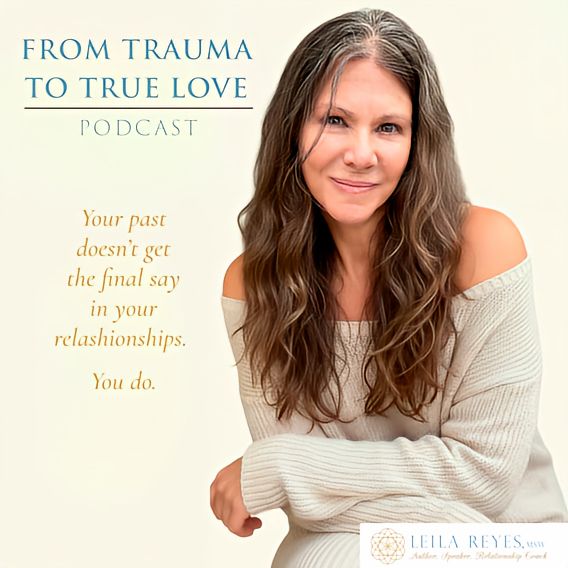

From Trauma To True Love with Leila Reyes, MSW
S2E8, Trauma and the Brain: How Healing Rewires Love
From Trauma To True Love

Break Free from the Past and Create the Relationship That Actually Fits You
Creating a healthy, fulfilling partnership isn’t about luck, timing, or trying harder. It’s about understanding how early experiences—especially those that shaped your sense of safety, worth, and attachment—are still influencing who you choose, how you show up, and what you tolerate in relationships.
On From Trauma to True Love, I speak to successful, self-aware women who have done the therapy, read the books, and still find themselves repeating familiar dynamics: unavailable partners, self-doubt, over-giving, or settling for less than they want—without fully understanding why.
As a relationship coach and trauma-informed guide, I help you identify how early trauma continues to live in the nervous system and relational patterns—and how to interrupt those patterns gently, without blame, fixing, or endless self-analysis. This work is about reclaiming self-trust, confidence, and choice so you can create a relationship grounded in safety, consistency, and authenticity.
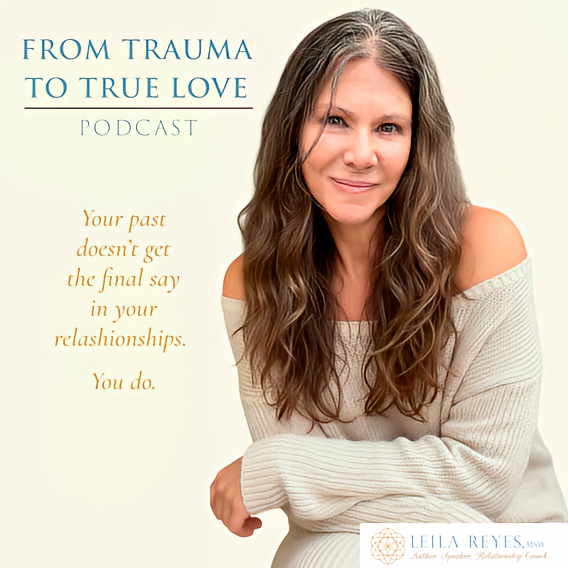
Your past doesn’t get the final say in your relationships.
You do.
Hello, and welcome back. I'm Leila Reyes, author of Freedom from Trauma, Forgiveness, and Healing from Sexual Abuse. And to all the incredible women listening who survived childhood sexual abuse and who now long for a healthy, committed partnership and keep asking yourself, why can't I create that even though I've done so much work? Well, welcome. Welcome.
Welcome. If you find yourself repeatedly settling for someone unavailable or reacting in relationship in ways you don't understand or feel stuck in shame or unworthiness even though on paper everything looks fantastic, then neuroscience offers a powerful insight into today's episode, Trauma in the Brain, Neuroscience Insights on How Trauma Rewires the Brain, and What That Means for Your Relationship. Learning how trauma changes your brain and nervous system isn't a weird sideline. It's actually central to understanding why we stay stuck and, more importantly, what we can do about it. And I'm gonna be drawing on seminal work from doctor Bessel van der Koch's, the body keeps the score, and doctor Bruce Perry in Oprah's book, what happened to you, to look at what actually happens inside your nervous system when you've lived through trauma and why understanding it can help you make different choices in your relationships.
The value of this discussion is to translate the science into relational life and then tie it back to the transformational work that you're doing or the work that you will do to raise the quality of your relational experience. So by the end of this episode, my intention is that you understand that your brain isn't broken. It has adapted, and that adaptation can be lovingly repatterned or rewired again so you can finally feel safe to love and be loved. You know, when something terrifying or violating happens in childhood, the brain doesn't just remember it. It reorganizes around our survival, which is brilliant.
Like, we don't have to think about it. It just happens. And Van der Kolk describes the the functional chemical changes in the emotional brain, including the limbic system and the brain stem. Like, what are those changes? Well, it's your brain's alarm system called the amygdala.
And the amygdala, what it does is it scans for threat. In someone who experienced early abuse, the amygdala may become hypersensitive. It may overreact even when the present moment isn't dangerous. For example, Van de Kolk writes that trauma results quote, results in a fundamental reorganization of the way mind and brain manage perceptions, end quote. And when we say when I say trauma rewires the brain, what I really mean is this.
If you've survived childhood sexual abuse or another traumatic event or another trauma in childhood that overwhelms your experiences, your brain and nervous system has to adapt in order to keep you alive. Even if it wasn't a literal keeping you alive, that's what the body is trying to do, keep you alive by and it adapts to do it. It's a brilliant thing to do. Adaptation is smart. But the flip side is that your brain and body stay in threat mode long after the danger passes.
And when you move into you start having adult relationships that should feel safe, your body and brain just don't know how to respond. So now let's look at your hippocampus. This is that area of your brain in charge of placing your memories in time and context, helping you decide if something's real or not. When trauma happens, which was real, the hippocampus can stop working or it can work differently. So when something in your adult life consciously or probably more often than not unconsciously reminds you of a past danger.
Like, let's say your partner is angry about something, then your brain will fire as if some abuse that happened in the past is happening now. And then, of course, you'll feel threatened even when you aren't being threatened. And let's say that this situation is something completely innocuous. Let's say your partner's emotion is because he stubbed his toe, and he's he's not directing his anger towards you at all. Well, your reaction to that is a is a result of the hippocampus working in this different way around time and, you know, placing that memory.
And then let's look now at the prefrontal cortex. This is the part of your brain that does your thinking. This is this part of your brain considers new information and then decides what behavior to take. So this is really the rational part of your brain that regulates how you respond to situations. So in trauma wired brains, that prefrontal cortex is a bit weaker, and it can go offline during stress.
So your thinking brain might not know that your partner stubbed your toe their toe, but your survival brain just screams, run. And your flight, fight, freeze responses to normal healthy relationships can dominate dominate the space and dominate the relationship. So then the last thing, add to this the automatic, nope, autonomic nervous system. I'm gonna probably say that wrong a million times. The autonomic nervous system.
This is where your body stores the trauma, and then it gets expressed through an elevated heart rate or hypervigilance or even disconnection, disassociation. So one of the things that Van de Kolk says is that, and this is another quote, trauma is not just an event that took place sometime in the past. It is also the imprint left by that experience on mind, brain, and body. And this is really important to stay to say again that that the the trauma imprints it imprints on our mind, brain, and body. And then we don't even know that that's what's happening because it's since it's an imprint, you're not aware that it's that it's, you know, from a different time.
So if we if you understand that your autonomic nervous system is constantly shifting between fight, flight, or freeze, and there's another one, I believe, fawn, you might be able to see more clearly why relationships can feel like walking through a minefield. It's because the body of someone who has experienced trauma can't always tell the difference between what is safe and what is dangerous. Doctor. Perry writes that the brain's development is directly influenced by the quality of early relationships. And so early traumatic or neglectful experiences can structurally and functionally change the brain, rewire the brain.
Honestly, if the people who are supposed to protect you also hurt you, then your brain probably learned that closeness equals risk. And so, yes, trauma rewires the brain. But let's clarify that word and challenge the assumption here that you can't rewire it again for healthy relationships because you can. Let me explain. The word rewire kinda makes it sound like something's broken and then needs to be fixed, but that's not what it means.
It means your system adapted to help you survive. The challenge now is that once you kept yourself safe, you know, that that this once kept you safe, it now keeps you stuck. And I really believe that the the I've just seen this so much that the brains of us who experienced early trauma adapted. And it did what was a bit what it was built to do, to keep you alive in an unsafe environment. And the problem is is that adaptation then ends up becoming a pattern.
So even when we move into a into our adult life with more choices, we can't see those patterns. And many of my clients come to me with that belief. They're believing I'm I'm broken, and I'm always gonna be broken in relationship. There's nothing I can do to change this. This is just how I am.
This is just what happens. I'm doomed to this repetitive, experience, and that's wrong. Because of new another term here, neuroplasticity, your brain can change. And I know this to be true for myself and my clients. And, you know, I've been able to shift a lot of what my experience was around all of this and and have healthier relationships today.
And so today and that's what I do. I help people rewire their brains. I mean, that's not what I call it. We're we're talking about rewiring your brains. That's not what I call it, but that's actually what's happening.
And then what happens when that rewiring takes place, we get free of the automatic trauma responses. Or if something really big happens or we're activated in a again, the trauma happen or the gets reactivated, we then have the skills to be able to catch it really quickly and do something different so that that response is just like a a moment, you know, that we make a shift, conscious shift, and we're able to to get to the truth of what's happening here instead of the unconscious, whatever that is telling us. So this is what it what brain changes mean for your relationships and and where neuroscience really meets real life. So let's take all that I've shared, and I'm not a you know, I I haven't like, this is the work of this the neuroscience and everything that that's happening around that is not my work. I'm bringing that here, and I'm kind of overlaying it into the work that I do and seeing the the truth of it and the the the way that it kind of integrates with my work.
So let's take everything that that I shared and overlay it onto your relational world. If your brain stays on high alert, all and it's all the time on high alert, scanning for danger, scanning, looking for, like, what what's wrong what's where am I gonna get hurt, then calm, available love would feel wrong or maybe even dangerous. You might find yourself pulled toward emotionally unavailable partners because your nervous system recognizes familiar danger more easily than unfamiliar safety. And that's why a gentle, consistent partner can feel boring while the one who keeps you guessing can feel magnetic. And I had this experience when I many years ago, probably, I don't wanna say forty some odd years ago, where I was dating a couple of two men, and one of them was that familiar danger, and the other one was the unfamiliar safety.
And boy, oh, boy, it was like the familiar danger, somebody cheating on me, somebody not really showing up, not caring for my needs, not not interested in my life. You know? And I found my way of just focusing everything over towards him. And this person who is bringing this unfamiliar safety, you know, consistent with me, respectful, providing opportunities for healthy love, and I didn't trust it. There's no way that I that I could trust it without having the what I'm bringing to you today and the understanding of what was happening.
I didn't know it. It was I was reacting and chose. You know, I had to make a choice. Who am I going to align with? And it was the familiar danger.
You know? It felt safer to me. That's the truth is it just felt safer to me. And it was like the the that unknown, that unfamiliar. I remember having the thought, I'm sure you know, I don't know how this person's I know how this familiar danger, how he's letting me down and disappointing me and hurting me, but I didn't know how that unfamiliar safety, you know, that person who is bringing that, I was sure it's gonna sound funny probably, but I was positive that they that this person was an axe murderer.
Like, why would anybody show up in this really loving, caring way with me? Well, that was because my brain had been rewired. And so I'm speaking to this today from having had this experience and now being able to understand it and and also working with the the tools that I work with, like all of the things that I write about in my book and everything that I've been able to integrate into my own life that leaves me today choosing the familiar safety because I've been able to create that today, and you can too. So if this is showing up in your life in this way, then just know all is not lost and there is a pathway, and I'd be happy to share I mean, that's what I'm here for. I'd be happy to share it with you.
So and here's a way to share what what I know about it. So your amygdala associates unpredictability with excitement, and your dopamine system lights up chasing the very pattern that keeps you suffering again and again and again. And then when your prefrontal cortex goes offline under stress, now that now you're, you know, in this adult situation, you might say things or withdraw in or many other ways of showing up in ways that you later regret. And then when that happens, you know, and the the danger's over, the situation is over, then shame can hit, reinforcing that early wounding belief about yourself. And beliefs like I'm too much, I'm not enough, I'm unworthy of love, I'm not wanted.
You know, mine, as I've mentioned before, is I don't matter, like the core one, and it goes on and on. There are these beliefs that we automatically go to. And in my book, freedom from shame, I write about how these loops can feel impossible to escape. But the truth is these are not moral failures. They're neural pathways.
They are not moral failures. They're neural pathways. And neural pathways, neuroplasticity, neural pathways can be rewired. So let me share a little bit about a client of mine. I'm gonna call her Elena, and she's a brilliant executive.
She could command any boardroom but deferred when her partner asked her what she wanted, whenever her partner would ask her what she wanted, something she would never ever ever do in the boardroom. But in the bedroom, she would say, whatever you want is fine. That's fine. Whatever you want. It's okay.
Whether it was okay or not, whatever you want. Whether it's what she wanted or not, whatever you want. And we once we got that her brain was taking over, you know, this rewired brain, this trauma response brain, I gave her some practices that helped her to start soothing her nervous system. Soothing your nervous system is a skill that you can develop to rewire your brain. And within weeks she was what what used to end in her resentment because she never got what she wanted ended up becoming moments of deep connection.
And she discovered how much her partner wanted to please her when she started asking for what she wanted. That's what's possible when you understand how the brain rewires and then how to rewire it again for healthy relationships. And again, the how to rewire it for healthy relationships is a process. It's learning something new. It's a skill development.
It's a practice. And, you know, it's not a cakewalk. You know? It's not something that is just something that you do one time and it's over. It takes it takes integrating all of that into your daily life, practicing it, showing up in different ways and getting feedback, recalibrating, and then slowly over time that your brain rewires.
So if you are a a highly accomplished woman who has had a lot of success in your life, but your relational world feels like you're always chasing what you can't have or waiting for crumbs when you want the feast, I'm gonna just say very clearly with full conviction, there is nothing wrong with you. It's the wiring. And so here's what happens when trauma rewires the brain. There can be a safety versus availability mismatch. So your if your nervous system learned safe equals danger, even though that, like, logically doesn't make sense, but but this is what happens, maybe unsafety disguised or lack of safety disguised as love as love or maybe deferring as a way of protecting yourself from being rejected, being abandoned.
So when you meet someone truly available, your system might still be scanning for threat, like in like what happened with me forty years ago. And and then what does that do? Cause you to withdraw or test them. And so then you test somebody, and then and then you don't trust them if they pass the test. Right?
So this is this is one. The next one is you may have difficulty with emotional regulation. So your prefrontal cortex I know I'm using all of these terms right now. I and but you get the energy of it and the sense of it. Your prefrontal cortex might not always catch up with your amygdala, so you might feel triggered intensely.
And then shame about feeling triggered. And then you you shame question yourself, why do I overreact? Why can't I be calm? Why do I keep acting in this way? Why do I keep doing this, keep repeating this pattern?
Why can't I? Why do I? And maybe you interpret not being able to regulate your emotions as weakness or brokenness, but, again, you are not broken. You are not weak. Your relational brain is just trying to protect you, but it's an outdated protection and you need a new way to protect you.
And I can show you how to do that. I would be happy to. Many people who have experienced childhood sexual abuse or early trauma also have trust and intimacy challenges. Why? Not because they're broken.
It's because their brain wiring expects patterns of unavailability or danger, so they engage someone unavailable, familiar, even though on paper you're ready for real commitment. And when someone is available, you may unconsciously sabotage because your brain doesn't know how to integrate safe partner and old patterns. And then many survivors of early trauma experience a body reaction before they have time to think. It's it's like flooded. It'll flood your whole system.
Why? Again, not because they're broken. It's because their body is trying to protect them by giving them signals. Outdated signals, but signals. Signals that don't always don't work anymore in in healthy situations, but signals like, your body would give you a signal of a pounding heart or a stomachache or maybe an intense urge to leave to get to get out of a space.
And this all happens before your mind consciously registers whether you're safe or not. If this happens to you, then you know basically it's misinterpreting your body's alarm system, misinterpreting your body's alarm system as something is wrong with the relationship or something is wrong with me instead of what's actually true here is your nervous system is reacting from that old wiring. Yeah. So let me share another story about another client of mine, and these I've changed the names here, so just for the privacy of my clients. So Kyla is an enjoyable, outgoing woman who has a lot to say and even more to contribute.
And she first came to me because she really wanted to be married. She had no problem getting dates. Everyone was energized, you know, and and mesmerized by her energy. Everything was fine leading up to the date. You know?
And no no red flags, no body sensations, nothing going on that rewiring of the brain, but something shifted the moment that she arrived, the moment that they they met in person, and nobody asked her for a second date. So this is a pattern that just kept happening. They would just disappear. Gone one date, and then they're gone. Gone one date, and then they're gone.
No chance to develop a relationship to fulfill her desire to be married and have a family. The minute she saw her date and move and he moved closer to her body, like, as soon as he started to get close, her body would tighten. She'd go quiet, and she'd pull inward. Was she broken? No.
This was the result of her brain being rewired earlier in life, and she was getting those signals confused. I gave her some relational experiments to work with and over time she began to feel safe in her body with a safe partner and her brain gradually rewired. And yes, today she's married and she has two children. This is why you and your brain matter, not just your partner, not just the person on the other side that you're relating to. You can't just get the right man and expect everything to shift magically.
Your brain, your neurobiology needs time to integrate new relational reality, and it takes some work. It takes some time, but you can do it. And so when you're you know, the the question that I get asked a lot is then how do we do that? How do we rewire the brain? How can I rewire the brain and body for safety and connection?
And there are four pillars that I wanna share with you. Pillar one, maybe I kind of spoke about them, but it will be even more clear here. So pillar one is safety and nervous system regulation. Healing starts with regulating the nervous system. You cannot build intimacy on top of an activated alarm.
So let me say that again. If your nervous system is on high alert, you'll struggle to connect in relationship even with a committed partner. So practices like breath awareness, grounding movement, noticing micro signals like your throat constricting or shallow breath or or the absence of breath, shoulders tightening, these are all signals that you're that you're they all signal your brain that you're, you know, that you're safe or not safe. Right? The this signals whether you're safe or not.
So you have that throat constricting. It says, I'm not safe. And then once but once you have the awareness of that that that's what's happening, that these signals are saying that you're not safe, you take a moment and pause. You have to slow it down. Sometimes it takes a while to even build that skill of pausing.
And it's okay. It takes time, but you can do it. Once you have that awareness, you take that moment to pause. And then Van de Kork, we're going back to his work, it's such a great book, such great work, He reminds us that, quote, trauma is not the story of something that happened back then. It's the imprint left by that experience on your mind and body.
Right? So we're I'm saying that again, the imprint the imprint the imprint. They imprint. So I wanna I want to remind you of that, that this is what's happening. So each time you calm your body, instead of automatically reacting So you're taking a new behavior.
You're bringing awareness instead of automatically reacting to whatever know, in that from from, you know, that response trauma response, you stop and calm your body. Every time you do that, you're sending a brain your brain a new imprint, a brand new imprint, giving it the message, the danger's over. And and so you have to get that message a lot in order for that imprint to stick. There's no danger here. And you you're not gonna lose the the, you know, taking that pause.
Maybe that maybe it is dangerous. Maybe there is danger. Right? We don't wanna, you know, we don't wanna, like, push that under to the side or sweep that under the rug. But taking the pause is going to give you the space to make that determination of whether there is danger here or not real danger.
And if there is, then you can make another choice to get yourself out of that situation. Most often, it's not. There is no danger. And so this is a skill that everybody can learn is to slow that process down so that you can respond from consciousness, from awareness, from who you are today, from this day and time, and not a memory. Right?
And so I I also wanna say, you know, talk therapy is wonderful. There's a place for it. I've benefited from it. I have a lot of respect for it. But I also wanna say that talk therapy alone can miss some of this because if it is focusing on the thinking brain, you know, because the auto alarm system is activated and still operating, and so we need our way into the body, which, I'll be honest, I avoided that for many, many years.
I for me, the response was to the auto response was to dissociate, so getting back into my body and staying in my body long enough to to be aware of these things, to even take the pause. You know? It took some time for me, and that's okay. Right? If it takes time, it's okay.
The point is is whatever time it takes to be able to get to that other side so that you can create healthy relationships. Alright. Let's look at the second pillar. It's relational relearning. So we're looking at safe attachment, new pathways.
Because early relationships shaped your brain, new relationships when they're when you're consciously showing up in new ways can reshape it again. And Carrie and Infree Winfrey emphasized that consistent safe connection is what rewires traumatic brains. So makes sense. We need to be we need to find ourselves in consistent safe connection and then that over time will rewire our brains. So that means allowing yourself to receive care, to ask for needs, to stay present when someone offers genuine affection.
You know, it really means going against the urge to protect. And and there's a like, sometimes sometimes you do need to protect yourself. So the skill is is being able to discern even. That's another skill to learn is when do I need to protect myself and when do I need to just stay open. Right?
So every time you do this, you bring wires safety to intimacy, to real healthy intimacy. And by intimacy, I mean connection. I mean heart to heart connection, real authenticity. And those early relationships, you know, when there's trauma, they wire the brain's safety template, but now today as an adult, you get to choose different relational experiences. And, you know, in in doing that, in you can you you can learn to accurately interpret cues of availability, take appropriate relational risks to ask for what you need, to set healthy boundaries, to have an expectation that you're cared for and treated well?
Absolutely. Each new relational experience sends a signal to your brain, this is safe. I belong. I matter, and over time this becomes the new wiring. The third pillar is connected in a way.
It's it's it's an integration of the mind body brain. Healing is holistic and the research in The Body Keeps the Score, what Vander Koch has done, shows that trauma affects both brain structure and body responses. So to include movement, yoga, breath work, other body based practices can really be very, very helpful. In my own journey I discovered that until I included my body in healing, my mind just rehearsed pain instead of releasing it. So these are really great, you know, that integration is really important.
And then the fourth pillar is repatterning through real relationship practice. So it's like in real time bringing it to your life, to the people around you, to whoever you might be dating or to a relationship. And so and to do it over and over and over and over again. Because our brain changes through repetition every time you choose to pause instead of react, every time you choose to speak a boundary instead of collapse, every time you choose to receive love instead of deflect it, you know, literally, you're rewiring those neural pathways. And and, again, I can't emphasize this enough.
It's not quick, but it is boy, is it effective. If you've been settling for crumbs, you can rewire your brain to take a stand for what you want and get it. If you've been chasing unavailable men, you can rewire your brain so you're pursued by someone wired for commitment. In brain terms you give your system new information and each time you act from your regulated self, which is another skill to learn, how to regulate yourself, you produce new neural pathways for safety, worthiness, and authentic presence. But you have to learn the skill of regulating yourself, and then that's how the brain rewires, not magically but through repeated new relational experiences.
Understanding how your brain frees you from shame, right, it really frees you from shame. When you understand how all of that works, then you have one of the keys to freedom. I've I say this in my book and I really stand by it is you have to have awareness to make changes. So having awareness around how your brain is impacting your relationships today or how you're showing up today, it frees you from, you know, we have to do this without shame. But under if you don't understand it, the only place you can go to is what's wrong with me.
Right? And so when you understand it, getting free from the shame means that you can stop asking that question, what's wrong with me, and start asking better questions. Like, for example, what happened to me, and how can I create a new healthy experience today or starting today? When you bring compassion to your experience, when you bring compassion to your nervous system and maybe even appreciation for how it has protected you, and and not not giving up saying, okay. It protected me, so I'm gonna just stay this way.
No. When but when you can bring compassion to all of that instead of shame, your capacity to do the work to transform your relationships, transform the quality of your relationships increases. And in that process, the thing that that leads to that is you learn how to stop chasing love from fear and start enjoying love from safety. Possibility, excitement, all of those things. I love bringing everything I can about relational mastery to my clients, to you, to anyone who will listen, quite honestly, because I'm here on this planet to help survivors of childhood sexual abuse and trauma get free of the impact that that trauma has on their lives and adult relationships.
If you've ever thought I'm too damaged to have healthy love, hear this clearly. No. You're not. Your brain can change and so can your relationships. You don't just need a good partner.
You need a rewired nervous system and a brain that knows how to create safety for yourself and others, that knows your inherent value, and knows how to make new choices and take new actions and generate the happy, healthy love that also wants you. And if you don't know it now, what I want to promise you to I mean, I can say this with a lot of confidence, you can learn how. You just have to be willing. So your brain must resolve the old wiring before you can fully live into a person who is ready for for true love. You've been wired for survival, for performance, proving your worth.
I mean, that's why you're so successful. Right? There's a there you you there's a compensation that can happen to prove value, and, honestly, that's a good thing. A benefit that came from that early wounding or from a commitment that you made to yourself. But if that commitment also came with something around, I'm gonna protect myself, and I can never have what I want.
And, no, this is this is a misunderstanding and misinterpretation. You get to have it all, but you have to do the work and rewire your brain to also include for belonging, authentic connection, healthy partnership. And in the context of attracting a committed available partner. This is someone, you know, that you don't have to chase. They pursue you in a healthy way.
So this that this is available to you. You can learn how to create that. So just to recap, trauma doesn't live just in your mind, it lives in your brain and your body, and that's why relationships can feel so hard even when you've done the work. Trauma changes the brain, but it doesn't have to be forever. It can be rewired again.
The same neuroplasticity that helped you survive can also help you thrive. It did help you survive, but that neuroplasticity can now help you thrive. Why? Because your brain is built for connection. Wow.
Okay. So that's that's what I have to say to you and share with you today. It's so exciting to be able to pull all of these pieces together and really see this place of of how our brain works. And so I just wanna thank you for being here, for doing this work, for choosing to thrive, for showing up. And if this episode spoke to you, share it with a friend who might need hope today.
Share it with a friend who might need, some support today to hear this message. And don't forget to download your free gift. I I have on my website, leilareyes.com. That's leilareyes,leilareyes.com. You can download your it's a guide, love signals, five minutes to recognize a relationship ready partner.
And if you want support, you can always reach out to me there as well. I wanna thank you for listening. I thank you for showing up and for choosing your freedom. I'm Leila Reyes, and remember, you are not broken. You are becoming.
Thank you for joining me on this episode of From Trauma to True Love. I honor your courage for being here, taking steps towards the love and connection that you truly desire. I've been there too, stuck in painful patterns, longing for love but unsure how to create it in a way that felt safe, real, and lasting. You don't have to figure it all out on your own. If you're ready to explore what's been holding you back and discover what's truly possible for your relationships, I would love to support you.
Visit Leila Reyes, l e I l a r e y e s, Leila Reyes, and schedule a call today. We'll take the first step together toward the deep, meaningful love that you were born to have. I can't wait to connect with you. Until next time, take good care of yourself and know that real, lasting love is within your reach.