
From Trauma To True Love, June 4, 2025
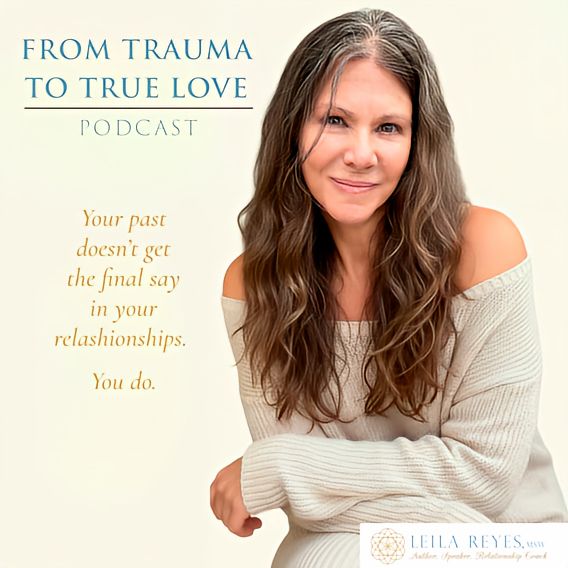

From Trauma To True Love with Leila Reyes, MSW
S1E17, Spontaneous Brilliance Through Radical Responsibility With Guest Sandra Cavanaugh
From Trauma To True Love

Break Free from the Past and Create the Relationship That Actually Fits You
Creating a healthy, fulfilling partnership isn’t about luck, timing, or trying harder. It’s about understanding how early experiences—especially those that shaped your sense of safety, worth, and attachment—are still influencing who you choose, how you show up, and what you tolerate in relationships.
On From Trauma to True Love, I speak to successful, self-aware women who have done the therapy, read the books, and still find themselves repeating familiar dynamics: unavailable partners, self-doubt, over-giving, or settling for less than they want—without fully understanding why.
As a relationship coach and trauma-informed guide, I help you identify how early trauma continues to live in the nervous system and relational patterns—and how to interrupt those patterns gently, without blame, fixing, or endless self-analysis. This work is about reclaiming self-trust, confidence, and choice so you can create a relationship grounded in safety, consistency, and authenticity.
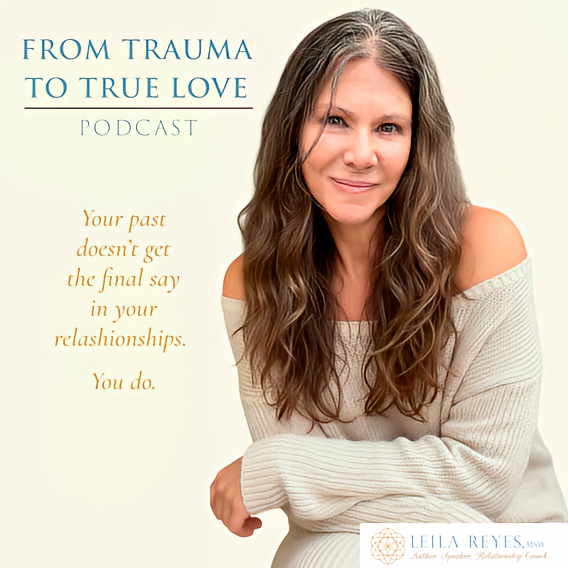
Your past doesn’t get the final say in your relationships.
You do.
Welcome to Courageous Conversations. I'm your host and author of the book Freedom From Shame. I created this podcast to discuss one of the most sensitive and challenging topics, finding freedom from the impact of sexual abuse. In this podcast, we'll bring to light the stories of survivors, share valuable insights from experts, we'll hear from brave people who are willing to take responsibility for the harm they've caused, and we'll explore various aspects of healing and recovery. Together we'll navigate the complexities of overcoming trauma and finding the strength to reclaim our lives.
So whether you're a survivor seeking solace, an ally eager to understand, or someone simply looking for inspiration, you've come to the right place. You found a safe place where courage meets compassion and where the journey towards healing takes flight. This podcast is for informational purposes only. We talk about childhood sexual abuse, and the content may trigger memories or bring up difficult feelings. So please take care of yourself and get support from a professional if you experience any emotional distress.
I'm Leila Reyes and I want to welcome you to Episode nine. Today, we're diving into a profound topic that's really close to my heart, taking responsibility for your life even when bad things happen. As a survivor of abuse and someone who has dedicated my work to helping people create happy, healthy relationships in the aftermath of childhood sexual abuse, I've seen firsthand that it's not the trauma itself that continues to hurt us, but the meanings we make about what happened to us. And I'm excited today to introduce my guest, Sandra Cavanaugh. She's the visionary behind spontaneous brilliance, and she shares a powerful belief that everyone possesses a natural brilliance.
By embracing a 100% responsibility for our lives even when bad things happen, we can tap into that potential and truly thrive. Sandra's an amazing woman. She's an award winning veteran of the entertainment industry as a writer, director, actress, producer, singer songwriter, speaker, artistic director, and teacher of acting and improv. I could go on and on. And Sandra's developed techniques to help people find the clarity and courage and creativity and communication skills that they need to turn obstacles into opportunities, to take inspired action and unleash the power of their creative genius.
On a personal note, I've known Sandra for many years, maybe maybe ten years now, and I'm a huge fan of hers and and of her mission, which is to create a world where everyone's unique creative creative genius is shared and respected. And she's developed her belief that everyone is brilliant. This is a quote. Everyone is brilliant. We have no shortage of brilliance on this planet, just a reluctance to offer it and a resistance to accepting it.
So today, we're gonna have a heartfelt conversation about how embracing responsibility can turn pain into empowerment and help us heal and grow. Cassandra, thank you so much for being here and sharing your insights with us. Oh, thank you for having me, Darlin. And it's been about six or seven years. I feel like I've known you my whole life.
And me too. Yeah. I'd like to start, if you don't mind, just having you share a bit about your journey and how the concept of spontaneous brilliance came to be. Well, I will try to nutshell it as much as possible. I started out many years ago as an actress in New York and London, and then I became a teacher of of acting and improv, as you said, and a director.
And I worked all over the country, and I was teaching, acting, and improv. And finally, one day I listened to myself saying over and over again in acting class after acting class enacting is in life. This is true. And improv is in life. This is true.
And then I, I finally realized, hey. Maybe that's not just a pretty piece of poetry when mister Shakespeare said all the world's a stage and all the men and women merely players. Maybe it's actually a thing. And that that became the foundational, metaphorical, inspiration. For me, starting to create a way of working with people that I applied improv and acting technique straight to their lives.
And so about fourteen years ago, on top of all the other things I was doing in the entertainment industry, I started coaching people and started consulting in, in groups and in schools and in business situations and a lot in the educational, areas. And when I was working with kids in education and applying these things, I would find well, at I found it in adults in colleges that they were more worried about getting an a than they were about playing and discovering and thinking about what their own imagination could do. I do that. Was more worried. I do that.
I was more worried about getting the a. I I couldn't stand to get a b. It really limited my expression. Yeah. And then then I realized that, young kids had it, that as soon as we start putting kids into the education system, we start telling them when they can have an idea and what that idea should look like, what framework it should fit into.
And then I started working with kids with special needs and kids that were essentially nonverbal. And, and when I started working with them, the teachers, the administrators did not believe that they could write two paragraphs, let alone write maybe a full length play. And in the course of about three years, I had two students who were thought to be, incapable of, as I say, writing a paragraph, write complete plays and submit them to the Kennedy Center and win national awards and go to the Kennedy Center. And I have come to learn through all of those experiences that the only reason we don't know that everyone is brilliant is because we expect brilliance to show up in a certain package. And we're not expecting to find and nurture the brilliance in one another.
Yeah. But we also don't expect it in ourselves. We think that, you know, there are brilliant people out there that we're just supposed to admire and respect and try to emulate, but to think of ourselves as being unique and creative and geniuses would somehow be almost sacrilegious in a lot, you know, in a lot of our ways of thinking about them. Yeah. And in the context of what I write about and the work that I do around sexual abuse, there's there's a way that what one of the things that I've noticed in myself and clients that you know, there's a there there's a limitation there in we we feel disempowered.
And somehow that is connected to I think it's connected to not taking responsibility for the future because we're blaming or making, you know, what happened wrong with us or the reason for why we can't. There's always a reason why we can't. You know, just like these kids, they didn't have somebody showing them the pathway. So what does taking a 100% responsibility mean to you, and how did you come to kind of embrace that philosophy in your role? I, I am a, a huge fan of the notion that nothing happens to us.
Everything happens for us. That when I teach people about improv, I teach them that there are only three things in an improv you're ever doing. You're either offering, you're accepting, or you're blocking. That's it. You're making an offer.
You're accepting an offer or you're blocking an offer. And so since life is a 24 Wait, let me jump in right there because that is, that is, you know, I, you know, I'm looking with this lens of the, of, you know, trauma. Right? And so you're either accepting an offer, blocking an offer, or what was the one? You're either making an offer Making an offer.
Accepting an offer Offer. Or blocking an offer. Offer. And so since every you know, one life is a twenty four seven improv by definition. So the same thing that's true for improv is true for life.
And, and when we step into a situation, when I say we have a 100% response ability for our lives, I always put a hyphen in the middle of that word. We have the ability to respond to every offer in our lives as we choose. And again, within my metaphor, actors are 100% responsible for their performance, their choices. You know, the great acting teacher, Stella Adler used to say your talent lies within your choice. How you choose to respond to what you are offered.
Yes. Is what continues the Yes. And I not only consider us actors in our own lives, but the playwrights of our own story. We are writing this story as we're living it. Yes.
And so how how we choose to show up is how the story develops. Exactly. So for a lot of people, taking responsibility for their lives, especially after a traumatic experience, can be daunting. Right? And so how would you define that define responsibility in that context?
If you've been given this experience in your life, you know, and people, I mean, myself included, people who have been sexually abused, the perspective or the way that this happened to me, Mhmm. And and how do you really you know, like, especially someone just starting on the journey that that doesn't realize this, that, okay, this happened for me. Like, that's a hard pill to swallow. Right? Absolutely.
Absolutely. And part of it is we we confuse responsibility with fault or blame. Right. Good point. And there is no way, no way that there is a fault in you being present in a situation that is horrifying.
That's not a fault. That's not a flaw. And it's also not something to be blamed for. And so since it is not something to be blamed for, it is not something that we want to carry the guilt of. And how do we release the guilt?
We change our response, and we make a conscious choice to shift our perspective on the role we play in this moment. Right. Which is how you respond to what happened to you. Not Yes. Not even connected to the actual like, that it's it's not happening now, but what are you doing with it?
Right? Yes. And I I'm gonna tell you a little story about my daughter. I have I have five daughters. One I gave birth to, three I adopted, and one I never legally but five altogether.
All of the girls that I adopted, especially the two I adopted from foster care well, and the private adoption as well. They, they experienced extreme abuse in their birth families, extreme two of them, very extreme, sexual abuse. My, my one daughter, that I adopted when she was nine, she had experienced just horrific sexual abuse repeatedly from very, very, very young. And it created a lot of mental illness in a very young child and, and came out as violent behavior toward others from her. And when she was about 12, she and I were in a car.
I was taking her back to a mental health facility where she was staying, and we did this a lot in her life. And I will just tell the good news is she is now where is she? She's about turned 30 this fall. She is. She was diagnosed with sociopathy at an extremely young age, diagnosed as a homicidal sociopath, very young.
Wow. And she is now the most compassionate, kind, generous, loving, marshmallow of an individual you would ever want to know. But it took twenty years for me to help her see the person in her that I saw. Yeah. But when she was sitting there at 12 years old and she and she knew what she was like and how scary she could be.
And she said, she said, mom, I know that you don't believe in regrets, but really even anything I've done, you don't even regret me? Oh. Oh. I know. I know.
That's the I was like, oh my gosh, honey. Okay. of all, I don't know. I don't believe that I am wise enough to know in the great cosmic perspective what I would be giving up if I changed anything. I would not go back and change anything because I actually love the people we're becoming.
And I can honestly say that now about everything that all my girls and I have been through Yeah. Which has been extraordinary and extreme. Yeah. But we are all we are so tight, and there is not a problem we cannot transcend. Right?
Because we're still breathing. We're still here. Well, you know, being a survivor of of sexual abuse, you know, from what I know about that myself, is that, boy, to have somebody that can love you unconditionally is huge, huge part of the healing process. And can really relate to that feeling of, you know, I'm a mistake, I'm bad, there's something wrong with me, I'm unlovable, I don't matter, I'm not wanted, you know, all of those kinds of meanings that we make. And I really believe that it's the meaning that we make about the abuse that causes the the harm long after the abuse is over.
And so it really sounds like from what you what that you were able to guide your daughter in in loving her unconditionally and then guiding her to take responsibility for her life and what she's gonna do with her life. And so that's what I hear and what I know about you too. But how how does that when we put it in bigger context, how does that lead to uncovering and harnessing someone's natural brilliance? Like, taking responsibility, and then how do you know, how does that open that up for us? It's taking responsibility for what you're offering into your life in this present moment.
And this is such a gigantic subject that we could be here for a long time. But, but I would say in brief that, that it's about following those steps that an actor follows in performance, right? They can be working their way through a horrific thing and just to be a little woo woo for a Okay. And you can stop me if it's too much woo, but but Keep going. Woo.
When I look at the when I look at the metaphor, right, that all the world's a stage. Yes. Then I really take that to the perspective that our souls are the player here playing this character as us. This egoic self, this personality, this character that is here has that egoic perspective. We perceive ourselves as this person.
Right. And we forget that we are a soul, right? Living as this person. And so that's the player and the ego, we have this strange thing that happens when we're born. Then immediately we have, you know, role amnesia.
We forget that we are actually that player here playing the role. And our ego starts to kick in. And I don't mean ego in a bad sense. I mean, the ego itself, that, that what Doctor. Sue Mortar calls the protective personality, right?
That protection starts to kick in and we learn what to be afraid of. And fear makes us habitually block. And so when we are blocking, that is when we are not taking responsibility. And our ego doesn't mean to do anything bad to us. Quite the opposite.
It is protecting us. It knows that there's something scary over there. There's something scary out there. All people have the potential to be bad to me because I learned that from a really young age. Right?
So I'm not going to stick myself out there. I'm not gonna put out my ideas out there because maybe when I was a small child, if I spoke up and drew something I thought was really pretty and showed it to somebody in my family, maybe they hit me. Right? Or they ripped it up or they set it on fire or they ridiculed me or they whatever. You know?
Right. But it almost doesn't well, I don't think even almost. It doesn't matter what the event was. Our response to it is where the trauma stays with us from. In other words, like like, you know, we don't need to judge each other's event because somebody who's coming to this podcast that had an event happened to them or some kind of abuse happened to them, that was maybe less dramatic or extreme than somebody else's.
They don't need to judge themselves as not being worthy of having some extreme pain from that, some extreme fear from that. Because the fear is is very real, regardless of what caused it. And when we are in fear, we are in a knee jerk response of wanting to doubt. Yeah. And so we hold back our offers.
And spontaneous brilliance, the reason I came up with that name is because of our brilliance lies within the ideas that we have, and we have, like, 60,000 ideas a day. Right? And so at least one of those 60,000 ideas has to be freaking brilliant. Right. Right.
Right. But but we spend most of our time judging it. Our response is to not accept the offer that's coming from our own soul or our own mind or our own heart. Right? But that fear is there.
If that's you know, like, the fear and and so there's this protection. What would be some practical steps or practices that you could recommend for people to start, even if it's baby steps in in you know, when they're faced with challenging or traumatic situations to really step onto that world stage? Right? What would what would be something to just nudge somebody? Because when you have that fear, it can be debilitating.
Yeah. It can be. So so one thing that I would say is, you know, I always say one way of embracing the obstacles, in other words, the way of embracing that conflict, that fear, is to recognize that the possibility, just recognize the possibility that it is there as an offer from your life to you, an opportunity for you to learn, transcend, grow through something. And so if it wasn't done to you and it was done for you, then to say very simply, what if, what if this fear is here to strengthen me or teach me in some way? What is the other side of it?
What might that be? And can I just, you know, I ask my clients to just write it down, you know, write down what it might be? What might be the gift in this? I know you know, when I think about that, when when I was going through what I've gone through to come to this point of working with people and writing this book, it it was hard for me to even imagine this book being published or this, you know, having a a career helping people. And and so it can, you know, I I use that word debilitating.
Like, if to really not believe it. You know, to really not believe it. So when you're recognizing the possibility, I'm trying to think back to going for me, recognizing the possibility was I found that I think in my desire to make a difference, you know, the possibility, like I wanted to, I didn't want the sexual abuse to be what defined me or I didn't want the sexual abuse to be what limit, like this is now the limitation of my life and everything, you know, that's happening as a result of that event back then. I, and, and I wanted, I felt like, to do something with my life to make a difference in the world was honoring the pain that I went through. Right.
That's exactly that's exactly it. That when you're saying, what if this was here to bring me to something else? Yeah. Yeah. What if this obstacle because again, when we play when we play a character in a video game, we pick a character and we pick a a video game that's gonna have challenges and things to climb over.
As our character gets stronger, we feel like we've just, you know, had this massive success. If you think about it yeah. And if you think about it, it's that it's that trauma. It's that it's that struggle that makes us feel that the character is great. Right?
And so if we think in terms of contrasts, If we have no contrast in our lives, right? If we have no conflict in our lives, then we're just sitting on the couch, eating Cheetos, watching other people have an adventure in their lives, watching other people, you know, on television, through something or go through something. But the reality is that those stories on television, the reason we watch them is because they make us they they give us an opportunity to sort of vicariously go through that emotional journey or scare ourselves or whatever and not have to suffer the consequences afterwards. But for somebody who's experienced trauma and and that huge conflict in their own life, then they have to take on that role of playing the lead in their own life and recognizing that everything that came before this moment is just backstory. Right?
It's just thought. It is just a thought now. And the power that it has and the status that it has in this moment, that is your response ability. That is your ability to choose the amount of power that you allow that thought to have in controlling what is the future of the story that is your life. Yeah.
And I think that there's a that I just had an insight around while you were sharing about that, that there's, like, the perspective of being a victim to childhood sexual abuse or a survivor of childhood sexual abuse. And just using those two words has an impact on our psyches, our bodies. I'm a victim. I'm a survivor. Wow.
One speaks to it's true. Like, the truth is is you were a victim. If you've been sexually abused by someone, you're you were victimized by that person, but you're here today. So which perspective do you wanna take? You're a survivor of that experience.
And so now that you're a survivor, when you're relating to it as you're a survivor, then now you get to talk and know yourself as someone who has strength and possibility for something else. And that brings me back to my daughter, Andy, she was When she asking me about her choices, she knew my perspective that our souls play a role in choosing our lives. Right? And and and deciding who to be born to and where to be born, sub circumstances to be born into. And she was like, why would I do that?
You know? What? How can, how can I believe that? Why would I do that? And I said, honey, do you understand how brave and how generous your little soul had to be to be willing to put yourself into that circumstance, knowing what you were going to go through to because she was like, why couldn't I just apply you?
And I was like, because then we would not be here in this situation. And you not only provided that opportunity for yourself, but look at the opportunities you gave them to choose differently. Those people who were your birth family, they did not choose well. Yeah. But you gave them the opportunity.
Right. And the fact that they flunked and you still kept going and you're still here and you're still trying, that's huge. That's humongous. That's a glorious victory already. Yeah.
And and she has you know, she's really had to work with the difference between forgiveness Mhmm. And saying something's okay. You know? That forgiveness is happening for her, that she's giving it away. She's just letting go of that having the power in her life instead of thinking that that is in any way surrendering to saying, oh, okay.
Well, you know, I have I have to have a positive perspective on them or respect them as human beings or whatever. She doesn't. You know, she let them go from the story of her life, like just wrote them out of the story. That's a level of responsibility right there in in being able to choose forgiveness for your own sanity, for your own peace of mind, for your own health, you know, and well-being. Because whether you forgive someone or not, that's not necessarily I mean, can make a difference.
Forgiveness can make a difference in someone's life that's receiving that forgiveness, but it doesn't necessarily you know, you hold on, you don't forgive, and that's not necessarily not gonna make a difference in their lives. It's just gonna make you miserable. Right. Because she's never going to speak to them again. You know?
They don't know whether she forgave or not. They have no knowledge of this. You know? So it doesn't have anything to do with them. It's it's truly about her, and it's truly about her going, that is not my life.
Yeah. I get to I get to stand up from this. You know, when we were going through real horrific You made one thing one point that I wanna highlight here and make sure that it doesn't get, like, overlooked because it is important. I mean, hugely important for survivors of sexual abuse that you said it forgiving doesn't mean that what happened is okay. No.
Can you speak a little bit more about that? Because I I think that's hugely important for people to hear. Absolutely. So, again, going back to that improv thing, there's offering, there's accepting, and there's blocking. And accepting can be a misunderstood phrase in that exchange.
You know, an offer is any thought, word, or deed that you put out into the world. Accepting doesn't mean surrendering to somebody else's offer or saying somebody else's offer is right or okay. It means acknowledging that that offer exists. Yeah. And so what?
This happened. This happened. No. It's receiving that. Yes.
And so when you can allow that incidence or those incidences, that experience, or those many experiences to have been offers into your story that you by acknowledging that they exist and acknowledging that they are there for you to do with what you will. Right? Because they can either run you over or they can be there for you to do with what you will. And that's a way of, like, standing up, you know, out of it and saying, okay, from here forward, I control what that meant. Yeah.
That's powerful. That that right there is worth its weight in gold when you when you're making those decisions around what the impact it's gonna have on you. Because if we don't if we don't offer, if we don't offer back, right, if we don't accept that, acknowledge that it's there, and then offer back to it, then we are blocking our flow. We're not blocking them. They'll go offer to somebody else.
Do you know what I mean? It's got I do. So then when someone feels stuck, this kind of makes me think of, you know, when you're stuck in your trauma and you're struggling to move forward, there there that in the context of what you're talking about, it almost feels like that's blocking. It is. Right?
And so, how what advice would you give somebody then that's in that's stuck in that trauma, and they and they just don't see they they they they're not, you know, not aware of that they're blocking this and that they're standing in their their the way of their own brilliance? Well, I would say, take a look in the mirror Mhmm. And look there for something that that person looking back at you wants. Mhmm. And then make an offer, however tiny.
You have to that. To give them. Say, I want to not feel bad about myself. Now that's not something that I would typically say because I always say to people, you can't play a negative. You can't play something you don't want.
Right? Right. Right. As an actor, you can only play what you do want. But but we typically, when we look at ourselves, we will look and see, I don't want to look like that, or I don't want to feel like that.
When I say, tell me something you want. I don't want this. That's a lot of times the answer I will get from someone that is struggling. And so I'll say, what's the, how do we flip that into a positive? Okay.
So if you say, I I don't wanna be scared. Okay. So then what do you want? What is the converse of that? What is the flip side of that?
What can you play in this scene in your life? Because you can't play. I don't want that. That's just gonna be blocked. I do want to feel powerful.
I do want to feel in control. I do want to feel empowered. I do want to feel beautiful. I do want to feel creative. I do want to feel whatever it is.
Okay. So when you can name that, when you can name what it is you do want, then just think of and write them down. Five courageous steps you're going to take. Five offers you're going to make, and they can be easy. When I say courageous, I don't mean big and gigantic and, you know, riding the white horse in into the town square.
I'm not talking about that because courageous can be stepping out the front door two feet if For me is terrifying. Was like, it I I believe that writing my book was a courageous thing to do. Me too. And but to just say, want to write a book. Like, you're saying, look in the mirror and see what you want.
I want I want to write a book was was I mean, just the wanting. It it took a lot more effort to write the book, like physical effort and time to than to just say, I want to write a book. But looking in that mirror and saying, I wanna write a book, that was the that was that actually did feel like it took more effort than actually writing it. Yeah. Yeah.
And then the time you say to someone, I'm writing a book. Oh my gosh. Right? And it's huge. So that's what I mean about a courageous act.
Got it. Right? It can feel like it can be an easy to do or picking out your favorite pen or opening the laptop and at least typing the title or page one or, you know, little itty bitty steps, but a step. And the reason there's five of them is because I think we think in threes, we tend to think in threes, we tend to go, you know, through through processes of threes. But if we go to four and we go to five, then we have really stretched outside our comfort zone.
So if we require five, we've moved past default into making breaking habit. Right? And so we're we're coming out of that. Good point. Five.
Right? And then if you do five every day, they'll get bigger because you'll run out of things to be afraid of. The more that you offer, the less you will block because fear, when we are in fear, we're necessarily blocking. But if we treat the fear as an offer, okay, what am I scared of? Right?
By the day, you're looking in the mirror and you're going, okay, what are you scared of? Okay. Now I'm gonna pick one of the things I'm scared of and take a look. Know? Right.
Right. And I call that in my book, I write about this with it being like you're collecting evidence. Each time you take one of those steps, you're collecting evidence that you're not you you didn't disintegrate. You know? You lived through that one.
You lived through that courageous step. Now take the next one. Right, right. I'm still here. I'm still here.
And I actually feel better, not worse. Right? Yes. And and we we do end up feeling better. It's like, you know, when you what's that thing in that Indiana Jones movie where he had to he had to step out on what looked like nothing, right, over the precipice in order to know that there was something there?
It's like that. You know, we step out there. What do we do? We go, right? And we we suddenly fill up with air, and we stand a little bit taller.
That's that we made it one step. Right? Yeah. Well so, Sandra, what are some some common barriers? We might have already spoken to it in a way, but what are some common barriers that people face when trying to take responsibility and how can they overcome those obstacles?
Well, I call them presets, right? And we get them from basically the evidence in our past. Right? So we have preconceived notions. We have expectations.
We have justifications. Right. And we have limiting beliefs. And those come from our observed experience. So we start to develop things like expectations are ill never work.
Right. Or they're gonna be they're gonna be mad. Right? And how did we get that expectation? Because we've seen them get mad at somebody else or they've been mad at us in the past or whatever.
Right? And so it stops us from offering, but the they that we're responding to habitually probably isn't in our life anymore. Right. Right. Right.
Right. That's So we're letting that person that set up that expectation, set up that preconceived notion, set up that limiting belief, write our story right now. Yeah. Yeah. So the step We start carrying that through.
We start free. It's not even happening to us any longer and we start doing that to ourselves. So when we're taking response ability, the thing we have to do is notice. What we're noticing, notice what we're feeling, notice what it is that is that belief, you know, say the sense that would help shifting the shifting people's mindset from being a victim of circumstances to being empowered to take control of their lives. This would be a really good way to do that.
So yes, about how to do that. When you can, you know, all of those preconceived notions, all of those expectations, all of those judgments, they become limiting beliefs when they become habit, right? When they're a habit of thought, there, then they're a belief. And then we're just churning them out over and over again deeper into our psyche. Yeah.
And so we forget that we even have any choice in it. We treat it as a fact. We treat it as the mythology from which then we make our choices. The protective personality knows that's true. And ain't going there.
Right? We're not going anywhere near it. So when we are working to flip the script and write a different story and know that we are in powered, we are empowered to make the choice to take the response ability. We have the ability to change every moment from this one forward. They're all within our power.
And so when we notice, okay. I where do I have fear? Where is it in my body? What do I think that came from? And if we can identify it, then we can say, do I want Ricky to run my life?
Do I want Estelle to have that power over me? Do I want them to write my story or do I want to write my story? And one exercise that I have done with, with teenagers that were basically told by teachers that, you know, they couldn't, or they shouldn't do X, Y, or Z. Right. And they, they somewhere along the line, either from teachers or from family members got the idea that they weren't creative.
So I had them write that person out of their story. In other words, write their life. That was not there. Wow. How do you do that?
You literally go back and write the story and write what it would be if they were absent. They just write it down like that. Write a story like it's a fiction, but it's your life. Yeah. So you're writing your life without that in there, and it is wildly empowering.
Yeah. Feel that. Huge laughter explosions when people are writing it because they've annihilated somebody. You know? They've, like, taken all of that power away.
They have made it not that. And what they what they found is it literally wound up changing their perspective on who they were Yeah. Before they wrote the story to after they wrote the story. They were a different person because their past was different. Yeah.
I do that with with some of my clients, and I found it very, very powerful to where you go in and you you like, through a meditation. So I would do it with a meditation. And and I would you I would have their current self go in and stop the abuse. So you'd bring forward, like, everything, like the abuse was, you know, leading up to it. What was there?
What were you wearing? What did it look like? What did it smell like in the room? What were the sounds? All of this stuff, and really get very connected somatically to the experience, and then have your adult self, your current self come in and stop the abuse before it happens.
And that all that has been a hugely empowering exercise as well. So it's along the same line. Yeah. It is. It is.
And the the thing is that we are all our imagination is constantly engaged and our imagination is our creative superpower. It's, you know, it's how we visualize what we want to manifest. It's how we bring about that connection between the soul and this physical reality is through our imagination. Our imagination is remarkably powerful and we apply it to the past as well as to the future. In fact, most of it, most of us spend a lot more time applying it to the past in terms of.
Of kind of reworking and reworking and reworking the stories that we want to have, that we want to find reason to. And then when we apply it to the future, we tend to apply it to the future in negative ways, imagining what could go wrong. Right? Okay. So if we, if we ask our imagination to basically just go where we're sending it instead of where where, you know, it it goes if the if the protective personality is just flinging it around.
Right? If we actively rewrite the past in positive terms, in other words, this happened. Oh, I can see so that this happened. Yeah. I can see so that this happened and look where I am now.
And now I'm imagining that that means that because that happened and this moment happened, wow, look where I'm headed. Yeah. That's exactly right. I was gonna ask you as we wrap up, what's the most important message that you want our friends to take away regarding the power of responsibility in their lives? But I think you just named it.
All right. It's like really like very important that you have you do have the power to do that. But is there any are there any last kind of, important messages that you would want our friends to know? I would just say, remember that your life is happening for you, that the universe never blocks, that if you're feeling blocked, most of the time, it's us blocking ourselves out of fear that something will repeat or something will not go as well as we want it to. So when when you're in doubt, make an offer into your own life.
Because if you're in doubt, you're probably blocking. If you're scared, if you're frustrated, if you're in doubt, if you're sad, you're probably blocking. So make an offer. And if you can make five courageous offers every day into your own life, something new. Yeah.
And so blocking is a way of not taking responsibility and blocking is saying no to whatever is there and whatever is coming up for you. And making the offer is taking responsibility for where you're headed. Wonderful. Sandra, where can people learn about Spontaneous Brilliance and connect with your work? At spontaneousbrilliance.com or sandrakavanaugh.com.
Either one will take you to the same place, actually. And my book Spontaneous Brilliance is is available all over in paperback and in audiobook. And my podcast Spontaneous Brilliance podcast is available anywhere you get your podcast. Yes. And I have to say that I have read your book and I highly recommend it to anyone who wants to take responsibility for reaching their potential.
And I've listened to your podcast also, and it's really good. So people would do well to go there and hear hear you speak. And it is always easy to just go to my website and jump on my calendar and have a strategy session, a laser coaching session with me. Wonderful. Wonderful.
Wonderful. It's absolutely free. Okay. We're going to send people to you. Absolutely.
So Sandra, thank you so much for sharing your incredible wisdom with us today. Your insights into taking responsibility and discovering our natural brilliance are so inspiring. And your compassion, your dedication to helping people transform their lives shines through in everything that I know about you. And I know anyone listening will find your guidance invaluable as they navigate their own journeys of healing and empowerment. It's been an absolute pleasure to have you on this podcast, and I'm deeply grateful for the powerful conversation that we've had.
So thank you for being here and for the amazing work you do in the world. Thank you, Layla. And same right back at you. It weren't for you, I don't think I'd be here doing what I'm doing. You're the most beautiful, wonderful, inspirational coach ever.
Thank you, my dear. I'm very grateful for you in my life. Yes. Right back at you. All right, everyone.
That's it for now. We'll see you next time on Courageous Conversations with Leila Reyes. Of participate in these conversations makes a difference. Healing is a journey and you're not alone. If you're in need of support, please reach out and I'll do whatever I can to help.
Until next time. This is Leila Reyes signing off with a commitment to support you in getting free from the impact of sexual abuse.