From Trauma To True Love, June 18, 2025
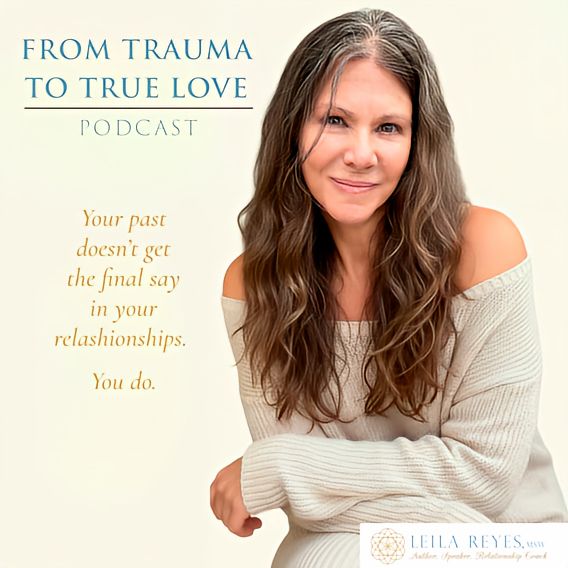

From Trauma To True Love with Leila Reyes, MSW
S1E18, The GAP Of Transformation
From Trauma To True Love
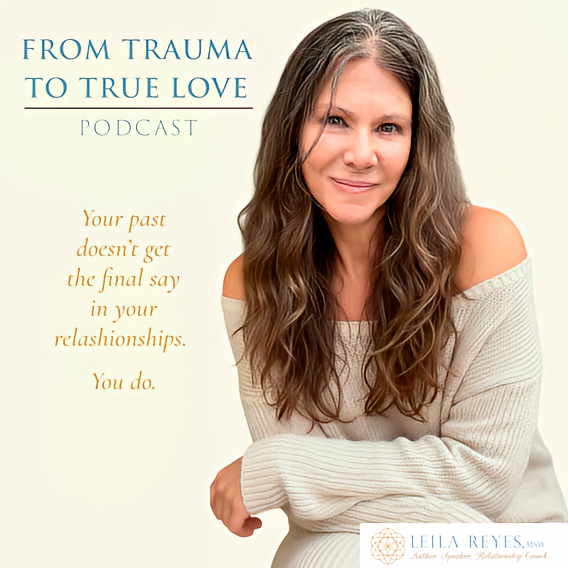

Break Free from the Past and Create the Relationship That Actually Fits You
Creating a healthy, fulfilling partnership isn’t about luck, timing, or trying harder. It’s about understanding how early experiences—especially those that shaped your sense of safety, worth, and attachment—are still influencing who you choose, how you show up, and what you tolerate in relationships.
On From Trauma to True Love, I speak to successful, self-aware women who have done the therapy, read the books, and still find themselves repeating familiar dynamics: unavailable partners, self-doubt, over-giving, or settling for less than they want—without fully understanding why.
As a relationship coach and trauma-informed guide, I help you identify how early trauma continues to live in the nervous system and relational patterns—and how to interrupt those patterns gently, without blame, fixing, or endless self-analysis. This work is about reclaiming self-trust, confidence, and choice so you can create a relationship grounded in safety, consistency, and authenticity.
Your past doesn’t get the final say in your relationships.
You do.
Welcome to From Trauma to True Love, the podcast where we break the cycle of painful relationships and build deep, lasting love you can trust. I'm Layla Reyes, a relationship coach, speaker, and author of Freedom From Shame, Trauma, Forgiveness, and Healing From Sexual Abuse. I'm here to help you release the invisible wounds from your past that may be holding you back from the love you truly desire. In each episode, we'll uncover the hidden patterns shaped by early childhood trauma, explore how they impact your relationships today, and guide you toward creating the partnership you were born to have. Whether you're looking to attract the one, deepen an existing connection, or finally feel safe in love, this is a space to discover what's possible.
Let's dive into your journey from trauma to life. I'm your host, Leila Reyes, and today we're diving into a profound concept from my book, freedom from shame, trauma, forgiveness, and healing from sexual abuse. We're exploring the gap, which is this powerful uncomfortable place between your past and your future. It's a place where transformation happens. It's actually the only place.
It's when you're trying on new things. So the gap, it's not just a concept. It's a living, breathing journey of reclaiming your power and creating a life beyond the shadows of childhood sexual abuse. So let's start with what Abraham Maslow so beautifully articulated. One he says one can choose to go back towards safety or forward toward growth.
Growth must be chosen again and again. Fear must be overcome again and again, end quote. So you step into the gap when you make the decision to break free from the past and transform your life. You're stepping out of your known reality where it can feel relatively safe and secure even if it's not. This is because the familiar often gives us comfort where the unknown can make our stomachs a little queasy.
So the gap is that place where you actual actively choose to shape your future, to free yourself from the the pain and shame of your past. And it's a very courageous space where hope transforms into reality through your determination and a willingness to embrace new perspectives and to try doing things differently than you have in the past. Living in the gap means stepping away from the familiar even when it's unhealthy and stepping into new ways of thinking and being. This transition can feel daunting because it involves challenging your old beliefs about yourself and the world around you. Yet it's in this space that you begin to gain a more accurate interpretation of your past and to relate to your past from a more empowered perspective and from a more, from the reality of what actually you know, from the your belief system around it.
It's important to remember that change happens slow. And so when you're in the gap, you know, change is gonna happen very slow in there too. And that gravitational pull of familiar patterns, familiar ways of being is very strong. But as you consciously make new choices and take new actions, you'll start seeing evidence of the life that you desire. It this is the essence of living in the gap, doing things differently even when it feels uncomfortable.
It's absolutely necessary. So take a moment to reflect on the various areas of your life where you might feel stuck or you might be in a repetitive cycle. You might want to grab your journal and and write about these patterns, and you can always pause the recording later to take as much time as you need to name them. But really reflect on the areas of your life where where the same thing keeps happening. And what you're gonna write about is or what are the old beliefs that you're holding on to?
So as you write about the patterns that keep happening, then then and then notice what the what beliefs you are holding that are connected to these patterns. What do you believe about what's happening to you and in your life? What new choices can you make to start shifting these patterns? So these are these are really going to be very powerful to identify what it is that you can do. So let me share just a a short personal story about my own experience with the gap.
A few years ago, I found myself at a at a crossroads in my life, and I was successful on the outside. But internally, I was struggling with feelings of inadequacy and had this this fear that was rooted in my past. So I was stuck in this cycle of self doubt, and I was always seeking external validation, and I feared rejection, nonstop constant. So one day, realized that these patterns were holding me back from truly embracing my potential and living authentically. So in stepping into the gap, even though it felt it was incredibly uncomfortable, I started by identifying the old belief that I was not good enough unless others approved of me.
And this belief had, shaped have been shaped by years of trying to please everyone around me, and it's a survival mechanism from my early childhood. So that belief that I'm not good enough brought about a lot of very a lot behaviors to compensate for the feeling that I wasn't good enough. So I would overgive. I would overdo. I would, you know, quit if I wasn't if something wasn't perfect.
So this is kind of where perfectionism can be part of the pattern. It's not a healthy pattern for sure. So I began to make conscious choices to challenge that belief that I wasn't good enough, and I started small. I started voicing my opinions even when I fear fear judgment or abandonment. And, gradually, I built up the courage to make bigger changes.
So I started setting boundaries to protect my time and energy, and I started pursuing projects that genuine genuinely resonated with me rather than those that merely earned approval from other people. And this wasn't an easy journey. There were definitely moments of intense fear and discomfort, but I persisted. Slowly but surely, I began to see evidence of the life that I longed for. My confidence grew.
My relationships became more authentic, and I felt a deep sense of freedom and and empowerment. And, yes, it's true that some some of those old relationships fell away, absolutely, when they no longer were resonated with me. And, yes, that was a difficult thing to let go of, a difficult def definitely a difficult part of the discomfort of being in the gap, but the willingness to transform. So living in the gap taught me that transformation is a process, and it requires patience and determination and a willingness to embrace that discomfort. But I want you to know that the rewards are immense.
Really, the reward on the other side of that is a life of authenticity, freedom, and true empowerment. So I hope that this resonates with you and inspires you to take those courageous steps into the gap. And please, please remember that it's a journey and every single small step that you take is a victory. Let it be a victory. So let's talk a little bit about that journey of transformation.
Feeling insecure, which I did a lot, uh-huh, and out of your element, which I did a lot. It these two things, feeling insecure and out of your element is a clear sign that you're in the gap. It's that space where you have no choice but to stretch beyond your comfort zone or go back to the old ways. Your beliefs about yourself will evolve as you see the positive outcomes of your new choices, And this growing consciousness will help you realize that you're no longer that wounded child but a capable adult with the power to heal and to transform your life, to change everything about it so that you're not impacted by at least to the extent you have been by the past. In the gap, you'll learn to ground yourself in authenticity and presence, and this means showing up as your true self even when it's challenging.
It's about letting go of who you think you are supposed to be and embracing who you truly are. This is what, Brene Brown calls authenticity, the daily practice of letting go of who we think we're supposed to be and embracing who we really are. This practice of cultivating authenticity is vital as you navigate the gap. It requires courage and a commitment to be present, to face your fears, and to engage fully with your experiences. So it really does require courage because the truth is that to be authentic means that not everybody's gonna like it when you are.
But when you really think about it, when you really get underneath it, would you rather people, you know, change yourself, you know, move yourself into a pretzel and and so that people like you for that mask that you're wearing, or do you want people to really like you for who you really are? You cannot be unconditionally loved when you're wearing a mask. It's only when you're willing to be yourself and let people that you let and really let people see you that you'll find, who truly, truly loves you for who you really are, and you then you really don't need to wear any mask at all. Living in the gap means that you're willing to take that risk so that you can know who loves you for you and not that mask that you've been wearing to try to keep people from leaving or whatever other strategies that whatever you're trying to avoid. For me, it was to keep people from leaving.
And that's what I did, and I'm so glad that I stopped. To start getting comfortable with the uncomfortable, you have to start small. And so here's a powerful very simple but powerful practice to start living in the gap. What I suggest is that you set aside some time each and every day. It can just be a minute or two for an authenticity check-in.
And you'll just take some time to reflect on situations where you may have been inauthentic and ask yourself how it felt, how did that feel, what fears were you drive were driving your actions, and then write down just one tiny step that you can take the next day or the next time that happens to show up more authentically. So here's the the practice is to set time aside each day for authenticity check-in and to ask yourself with, situations where you were inauthentic, how did it feel, what fears were driving your actions, and one small step that you can take to start showing up more authentically. So let me share another short story from my journey. For most of my life, I really struggled with being truly authentic in my relationships. I often found myself agreeing with others to avoid conflict, suppressing my own needs and desires to keep the peace.
And this pattern really rooted in the fear of rejection and abandonment was something that I learned early in life when I came home from school one day to find that my mother had moved out without telling anyone. Well, today, I know that it what that wasn't my fault. But until I started living in the gap and taking risks to be authentic, I did think that it was my fault. And if I just went along with what my partner wanted, if I just went along with what other people wanted, then they wouldn't leave like my mother left. Well, that didn't stop anyone from leaving.
So there was this pivotal pivotal moment that changed everything for me. I was dating somebody that and knew that this old fear was getting in the way of expressing my true needs and feelings. And one evening after a particularly insightful authenticity check-in, I realized I was once again compromising my own happiness and well-being to avoid potential rejection. So determined to change this. Again, remember, start small, so I decided to take a small but very significant step.
I chose to have an honest conversation with my partner about my feelings and the fears that were holding me back. And at that time, this was incredibly scary. My heart was pounding as I spoke, and there was a part of me that thought I was gonna die in in in bringing this much authenticity to the conversation. But I knew that it was necessary for my growth, so I took the risk of rejection. To my surprise, my partner responded with understanding and and support.
I mean, it was like a shock surprise. In the beginning, that's what it can feel like. Today, I expect it. But at that point, it was like, woah. This this actually works.
So and and to be quite honest, it doesn't work with everyone and all the time, but you have to take the risk. And that's why it's a risk is because there's no guarantees that you'll get that understanding and support. So in this situation, I started collecting this evidence that being authentic will bring about, greater connection. And so that conversation really marked the beginning of a new chapter in my dating relationships where I felt more comfortable being myself and expressing my needs. It wasn't always easy, and there are still moments of discomfort and vulnerability.
But each time and each step I take each time I take steps towards authenticity, it brings me closer to people and deepens the connections that I have. And, honestly, it's it's it's quite remarkable. I love it. And this experience taught me that authenticity is crucial in building healthy, fulfilling relationships. I don't think you can have any intimacy without that.
You cannot have I'll just say it. Not I don't think. I know you cannot have authenticity without you cannot have intimacy without authenticity in your relationships. When we hide our true selves, we miss out on the opportunity for genuine connection and intimacy. And by regularly checking in with myself and choosing to be authentic, I continue to cultivate deeper, more meaningful relationships in my life.
So I remember a time when I couldn't even tell my partner what I wanted to eat for dinner. And on some unconscious level, looking back on this, that experience of my mom leaving me leaving left me thinking that everyone would leave, so I better not make a fuss. So over the past twenty plus years of working as a relationship coach to get free of helping people get free of the of the impact, that the past has on them, I've learned that making a fuss is not what makes people leave. Good news. Good news for all of us.
So I wanna encourage you to take that small step towards authenticity in your relationships. It might be as simple as expressing a true feeling or need to a loved one, and each step you take will bring you closer to living authentically and and build stronger, more authentic connections. And the the other benefit of this is that as you take this, as you practice this, you'll start to get more comfortable living in the gap. It won't be that scary place of the unknown. Even though it's the unknown, it won't be the scary place of the unknown.
So I hope that that what I'm sharing with you will inspire you to begin to embrace your own authenticity in deeper ways and take those courageous steps in your relationship. So remember, authenticity is a journey, and every small step counts. So let's explore some practical steps and exercises to help you navigate the gap and embrace your journey of transformation. So living in the gap does involve practical steps. It's about creating a healthy relationship with your feelings, setting boundaries, and understanding your positive qualities, really getting to know them.
And the journey requires you to be present, to stay connected to your body and your surroundings, and to breathe through these challenging moments instead of react to them. And let me just mention some of the barriers that might get in the way, like dissociation and codependency. And these are survival strategies that have served many trauma survivors, during the trauma, but they hinder our progress in our adult lives. So recognizing these patterns and learning to stay present is crucial. One effective way to stay present is through grounding exercises, focusing on your breath, feeling your feet on the ground, becoming aware of your surroundings.
This practice can help you stay connected to the present moment and reduce that automatic, habit pattern of dissociation. So throughout whenever you're, feeling overwhelmed, just take a few minutes to ground yourself. Close your eyes, and you take those deep breaths, and you focus on the sensations in your body. And notice the feeling of your feet on the ground and the air entering and leaving your body, leaving your lungs. So this is another daily practice that you can engage in maybe even more than once a day.
But to just take a moment, take a few breaths, check-in with your body, feel your body, feel your feet on the ground, and, you know, then then you'll get more and more connected to your own body. So let me share, just how grounding helped me navigate a challenging moment in a relationship with a family member. Several years ago, I had a heated argument about it, and there was a misunderstanding. I was misunderstood. The tension was high, and I felt my anxiety rising, my thoughts racing, and my body tensing up.
In the midst midst of this emotional turmoil where I wanted to fight and scream and defend myself, I realized that I needed to ground myself before I could continue the conversation constructively. So I told my family member that I needed a moment, and I stepped away to find quiet space. And I closed my eyes, and I took several deep breaths, and I focused on the air entering and leaving my lungs and softening my shoulders so that they weren't up around my ears. And I felt the coolness of the air as I inhaled and the warmth as I exhaled. And then I directed my attention to my feet on the ground and continued to breathe slowly.
And I imagined roots growing from the soles of my feet anchoring me firmly to the earth. I wiggled my toes and felt the texture of the floor beneath them reminding me that I was safe and supported. Even if it's just supported from the ground beneath my feet, I'm supported. So as I continued to breathe deeply and focus on these sensations, I felt that over the overwhelming emotions started to subside. My heart rate slowed down.
My mind started to clear, and I was able to return to the conversation with a calmer, more centered presence. When I was when I rejoined my family member, I was able to express my feelings clearly and listen attentively to her perspective. And the so this grounding practice not only helped me manage my anxiety in that moment, but also allowed us to resolve the conflict more effectively and with greater empathy than if I was in that reaction place. So I want to encourage you to try this grounding practice the next time that you feel overwhelmed in a relationship challenge. It's really is a powerful tool to help you stay present and composed, enabling you to navigate difficult conversations with greater ease and understanding.
And to be honest, it doesn't guarantee that things will always turn out the way you want them to. But you'll be clear headed, and you have more of a chance of it turning out the way you want than if you're just in the reactionary place where, reaction begets reaction. Understanding begets understanding. Openness begets openness most of the time. And not all the time, for sure.
But you but being closed down all the time doesn't give you an opportunity to move forward with or to find that connection. So I hope that this helps you to make that choice to really consciously choose to incorporate some grounding practices into your interactions, into your daily life, especially during challenging moments. It really is small but a very powerful tool that can make a significant difference in how you handle stress and and how you can create healthy relationships. Another key aspect is setting boundaries. Oh, that's a big one.
I think setting boundaries might be one of the biggest topics to discuss because with early trauma or childhood sexual abuse, our boundaries were crossed, and most often, we couldn't do anything about it. It's probably more common if you were abused as a kid that you didn't have anyone showing you how to set healthy boundaries. Instead, many of us, myself included, learned to be codependent and didn't have any boundaries as we grew into adulthood. But setting boundaries and learning to say no and protecting your your personal space is is important, and it's about understanding where you end and others begin and really essential for well-being. I had a particularly scary situation in a community pool at a hot spring several years ago before I learned how to set boundaries.
I was in a pool with some friends. It was a a big, big pool, so there's room for a lot of people. And I saw this man entering the pool kind of out of the corner of my eye. And I didn't even look over in his direction, but but I felt you know, I felt it like this intuitive place that something told told me that this man wasn't safe. And inside, I froze.
Well, he made his way over to our group, and he surprise, surprise, he ended up standing right next to me. When he put his arm around me, all I did was just was smile. But inside, I was a wreck. Inside, I was I couldn't move on the outside. And inside, it was turmoil, and I was my heart was racing.
It was very scary for me. I just went into this trauma response, and and it completely froze. Lucky for me luckily for me, a friend intervened, so I was okay. But, I knew that I needed to make some changes here. I need to get my voice back.
And this was kind of an extreme situation, and I share it because our early traumas impact how we show up in our adult lives. With our capacity to protect ourselves, we're not. So we have to learn how to set boundaries. We have to learn how to protect ourselves. We have to develop our capacities to, to respond appropriately to situations instead of smiling.
You know? He probably deserved a different kind of reaction for invading my space like that, and I let him. So I have to take responsibility for my own space and letting people in or not. So today, if the hairs on the back of my neck go up, I've got a voice, and I know how to use it. And I want you to be able to set boundaries for the many moments in your life that are neither too loose or too rigid but appropriate for the situation.
To do that, we have to do the emotional work to get free of the impact that the abuse has on our lives. So we have to do the the these practices that I'm giving you are all part of it. They're all part of it. And there are several exercises in my book, freedom from Shame, Trauma, Forgiveness, and Healing from Sexual Abuse, to help you on your journey of setting boundaries. But for now, I want you to take a moment to just think of a recent situation where you felt your boundaries were crossed.
And, again, you can pause this recording to write a little bit about what happened and how it made you feel and then identify an action that you can take to set a clearer boundary next time. So I'll say that again because the more you practice this, the closer you'll come to being able to set great boundaries. And practicing doesn't mean perfect. Right? Practice means the more you practice it, the better you'll get at it.
And so, you know, the first learn to ride a bike, you fall down a few times probably. I did. And so, you know, to to just stay with you know, to really stay with it. So take a moment and think of a recent situation where you felt that your boundaries were crossed. Then write what happened, write how it made you feel, and then identify the action that you can take to set a clear boundary next time.
And, you know, when I say to you know, you write this down, well, the next time you you might not set that boundary, but you're on the pathway to it because now you're bringing more awareness, more presence, more awareness to the pattern. And so even if you're not, again, you know, practice not not perfection, and and you'll get there. So you have to start somewhere, and it and, you you know, it might be a little messy. Changing patterns and setting boundaries can be a little messy, especially when because we don't know how, we haven't been taught how or or the fear is, you know, we need the evidence that we're not gonna be completely abandoned by every single person. And so, yeah, let's let me share a little bit about a powerful visualization that I experienced that deeply impacted my relationship.
I was struggling with feelings of insecurity. And, you know, I've said this a few times. Right? I'll say it a lot. That fear of abandonment in my relationships, it really ran me, really ran like like, this was the thing that made me work was the fear of abandonment in my relationships.
So I often found myself doubting my worth and constantly seeking reassurance from my partner. It was a very painful cycle that I knew I needed to break, and I didn't know how to. But one day, I decided to try a future visualization exercise. And I found a quiet place, closed my eyes, and took a few deep breaths to center myself, and then I imagined my life five years from that moment. And in my mind, I was able to see a version of myself who was confident, secure, and deeply connected with other people.
And this future me had embraced the gap and let go of the old fears and insecurities. I visualized my partner and I communicating openly and honestly without fear or hesitation, and I I saw supporting each other's growth and celebrating each other's successes. And I felt a profound sense of love, trust, and mutual respect. And as I continued this visualization of I felt a wave of calm and assurance wash over me. And this place, I mean, with lots and lots of of practice and after, you know, writing everything down that I had seen and felt, this visualization became a guiding light for me.
So whenever I felt overwhelmed or insecure or fearful, I would return to that image of my future self and draw strength from it. And over time, I started to embody the qualities that I had seen in my visualization, and all my relationships improved as I became more secure and authentic. And most importantly, my relationship with myself is the the the my primary relationship that has completely transformed because I honestly, today, I I'm, if there's a fear of rejection in in here today, it's it's more like a little mosquito bothering me than than And let's take a few more deep breaths together. Inhale and hold and exhale. See yourself in this future living a life that's fulfilling and aligned with your deepest values.
Visualize the changes that you've made. Perhaps you see yourself in a loving, supportive relationship where you feel completely secure and authentic. Imagine the deep connections that you have with others and and that are built on trust and mutual respect. Notice the details of your surroundings in this future vision. Notice where you are and what your home looks like and who the people are around you.
Really take in the sights and sounds and even the smells of this future moment. Feel the emotions that come with this vision. Give yourself permission to experience the joy, peace, contentment of living a life true to yourself. Notice how secure and confident you feel and how free you are from the shadows of your past and allow yourself to fully immerse in these feelings. And now focus on the specific changes you've made to get here.
What old patterns have you released? What new what beliefs have you transformed? What new habits and practices have you embraced? See the daily actions that have led you to this transformed life. Life will still bring you challenges in this new place, but see yourself handling these challenges with grace and resilience.
Feel yourself grounded and present using the tools and practices that you've learned to stay centered and authentic. Spend a few more moments in this future soaking in the positive changes and the profound sense of fulfillment. Know that this future is possible and within your reach. Now when you're ready, slowly bring your awareness back to the present moment. Wiggle your fingers and toes.
Take a deep breath, maybe stretch. Gently open your eyes. And then take a moment to jot down what you saw and felt during this visualization. Write down the changes that you've made and the emotions you've experienced. Doing so will help you keep this vision alive and guide you as you continue to navigate the gap.
So I hope that this visualization really inspires you to embrace the journey ahead with courage and determination. And remember the life that you envision is always within your reach, just one step at a time. And, you know, just a little note, you can listen to this visualization again and and, pause it and take as much time as you need to. But what I also want to mention is that not everybody visualizes in in this way. And so if that's you, do not let this deter you.
There are different ways of getting connected with the future, with with who you are in the future and with this, you know, that that is totally in within your reach as well. So if you need support with that, please reach out to me and let me know. We'll give you some other ways of connecting with that future. So as we wrap up today's episode, remember that living in the gap is a continuous journey of growth, absolutely continuous journey of growth. It's about reclaiming your power, reclaiming your life, getting free of the the patterns that keep you stuck.
It's about embracing your authentic self and creating a life of freedom and joy. I encourage you to take time for reflection and really engage the gap work exercises from my book. And journaling, contemplation, and experiential exercises are powerful tools to integrate what you've learned and to and to con to help you continue with your transformation. So thank you very much for joining me today. And remember, your desire to change must be greater than your desire to stay the same, greater than any fears that you might have.
So keep moving forward. Keep embracing the gap, and know that you're not alone on this journey. Until next time, stay strong, stay courageous, and keep your eye on thriving. Thank you for joining me on this episode of From Trauma to True Love. I honor your courage for being here, taking steps towards the love and connection that you truly desire.
I've been there too, stuck in painful patterns, longing for love but unsure how to create it in a way that felt safe, real, and lasting. You don't have to figure it all out on your own. If you're ready to explore what's been holding you back and discover what's truly possible for your relationships, I would love to support you. Visit Leila Reyes, l e I l a r e y e s, Leila Reyes, and schedule a call today. We'll take the first step together toward the deep, meaningful love that you were born to have.
I can't wait to connect with you. Until next time, take good care of yourself and know that real, lasting love is within your reach.