
From Trauma To True Love, July 30, 2025
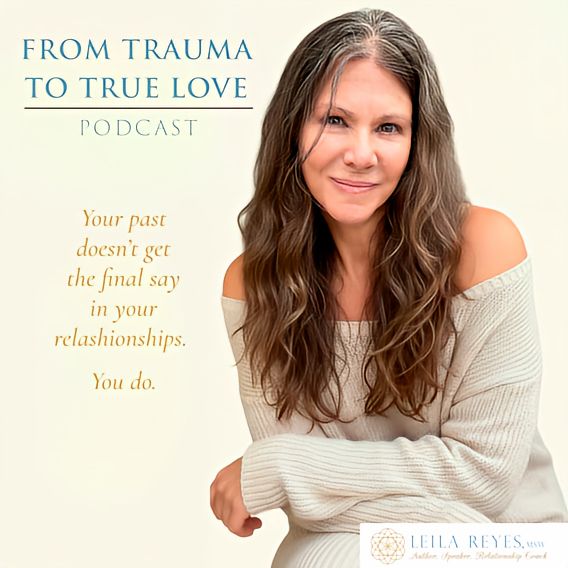

From Trauma To True Love with Leila Reyes, MSW
S2E1, Breaking The Cycle Of Abuse Myths And Realities
From Trauma To True Love
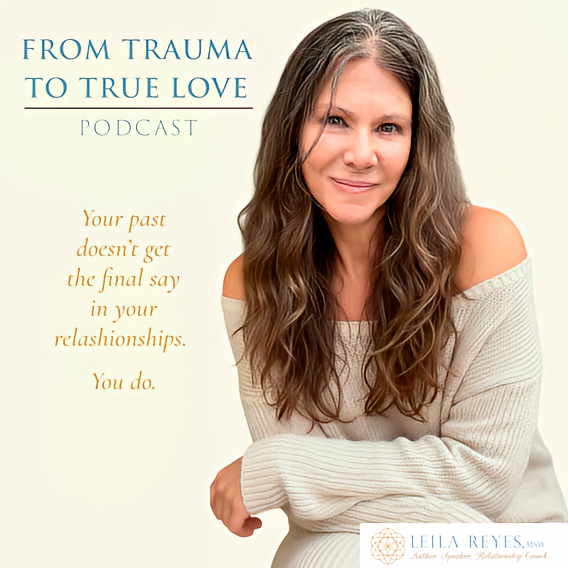

Break Free from the Past and Create the Relationship That Actually Fits You
Creating a healthy, fulfilling partnership isn’t about luck, timing, or trying harder. It’s about understanding how early experiences—especially those that shaped your sense of safety, worth, and attachment—are still influencing who you choose, how you show up, and what you tolerate in relationships.
On From Trauma to True Love, I speak to successful, self-aware women who have done the therapy, read the books, and still find themselves repeating familiar dynamics: unavailable partners, self-doubt, over-giving, or settling for less than they want—without fully understanding why.
As a relationship coach and trauma-informed guide, I help you identify how early trauma continues to live in the nervous system and relational patterns—and how to interrupt those patterns gently, without blame, fixing, or endless self-analysis. This work is about reclaiming self-trust, confidence, and choice so you can create a relationship grounded in safety, consistency, and authenticity.
Your past doesn’t get the final say in your relationships.
You do.
Hi everyone and welcome back to From Trauma to True Love the podcast where we explore how early trauma shapes our adult lives and relationships and how we can liberate ourselves from those old patterns to live and love with authenticity. I'm your host Layla Reyes. I'm a trauma informed coach, author of Freedom Trauma, Forgiveness and Healing from Sexual Abuse and someone who spent decades walking this path personally and professionally. Today's episode Breaking Myths and Realities About Abusers is going to stretch us. Not because the topic is abstract or academic but because it cuts very close to the bone for survivors, for families and for the systems that are supposed to protect us.
We're diving into a conversation that's often avoided. The questions that we ask are you know that I'm asking here are who are abusers really and what if the stories we tell about them while emotionally satisfying are actually standing in the way of ending abuse altogether. If you felt a jolt in your body just hearing that, you're not alone. So many of us, myself included, had to fight for years just to be believed, let alone healed. And yet it's because I've walked that road that I'm ready to say, We need a new conversation, one that dares to hold both truth and nuance, one that continues to hold survivors at the center while refusing to simplify the story.
In her seminal work, Trauma and Recovery, psychiatrist Judith Herman wrote that society tends to alternate between traumatic reality and societal denial. In other words, we either look away completely or we lock trauma into a rigid binary narrative, villain and victim, good and evil, monster and innocent. But abuse rarely lives in that black and white space, and the longer that we pretend it does, the longer we delay real solutions. When we oversimplify who causes harm, we blind ourselves to the subtle warning signs, the quiet cries for help, and the moments where intervention is still actually very possible. So this episode, really, it is not about exoneration.
It's not about softening the truth. It's about expanding it so that we can face what's real and build a future where fewer people are harmed. So today I want to break down the myths we've been taught about abusers, not to defend them, but to better understand the ecosystem of harm and what it's I think it's actually going to take to stop it. So, I'll share some research. We'll explore a little about what professionals, survivors, and even dissenting voices have to say, those people that completely disagree with me.
And I'll share stories from my own life and work that show just how deeply this myth making runs and what happens when we begin to tell the whole truth instead. So here's what we're going to cover today. Number one is why myths about abusers persist and how they get in the way of figuring out how to cut this epidemic. And yes, it's an epidemic. The research tells us that one in four girls and one in thirteen boys experience sexual abuse before the age of 18, but it also says that less than thirty percent of these cases are reported.
Most abuse, it says over ninety percent, is committed by someone that the child knows and trusts. You know, but in my experience, these numbers are an intense understatement because whenever I tell someone that I was abused by my father, nearly every single time someone tells me that this happened to them, too, or they know somebody who it happened to. This doesn't just happen once in a while. It's almost every single time. Childhood sexual abuse is an epidemic of staggering proportions, one that remains hidden in plain sight because of shame, silence, and systemic denial.
And we're not even talking about all the other types of abuse or types of things that happened in our childhood. I'm just naming one thing here that is my own personal experience. So we'll also talk about the realities backed by research and professional experience. I'll break down different types of offenders because this is really important to be able to understand and why abuser is not a single profile. It's just not one thing, abuser and then, you know, victim.
So, you'll hear why most people who harm others weren't born violent but were shaped by unresolved trauma, shame, and unmet needs. The other thing that we'll talk about briefly is the invisible group of people who don't want to harm others, but they don't know where to turn. And these people exist. They're trapped in silence. They're afraid to speak because there's no place to go that won't destroy their lives.
And again, I'm not defending. Maybe lives need to be destroyed. Certainly, there's this idea that I have of destruction before creation. So things need to fall away. Things need to change.
We'll also talk about what survivors really need to hear in this conversation because this isn't about minimizing harm. It's about making meaning of it and reclaiming power from it. Finally, we'll explore a path forward where we hold both accountability and compassion and then build systems that prevent abuse from happening in the first place. So you might feel uncomfortable as you listen today. You might even feel angry.
And I just want you to know that that's totally okay. I'm asking you to please stay with me and to let's move through this discomfort together. Because the truth is we won't end abuse by hardening our hearts. We'll end it by expanding our capacity to face what's hard to look at without flinching. So let's begin with one of the most persistent and dangerous myths that we hold about abusers, and that is that they're monsters.
They're evil, inhuman, beyond redemption. And this narrative is everywhere. It's in the it's in the media. It's in casual conversations. It's even in some trauma informed spaces.
And I understand why. It gives us this sense of safety, of control, of moral clarity. It lets us imagine that abuse is something done by them, people out there who look a certain way, who act a certain way, and who are easy to spot. But here's the truth. Most abuse is not committed by people who look like monsters.
You can't pick them out in a crowd. It's committed by people who were once children themselves. Children who were not protected, not how taught how to regulate, not taught what love really is. And some of them not all, but some grew into adults who then reenacted harm rather than transforming it. So let me be crystal clear about this.
Excusing behavior. I'm not excusing the harm people have caused, not in the least. But what absolutely matters here is really about whether we care about prevention or not. Because that's what I'm looking at in the long run, you know, is around prevention. And as long as we keep imagining that abusers are monsters, we'll continue to miss what's actually happening in homes, in schools, in spiritual communities, and even in our own families.
In my case, the person who abused me was my father. He was not a monster in the eyes of the world or even in my own eyes. He was a functioning adult capable of charm and community. But underneath that surface, was a man carrying deep unhealed trauma of his own, trauma that he had never named, never addressed, and never interrupted. And, well, until later when I interrupted it.
You can listen to another podcast around that. But when I tell people this story, what I hear again and again is that they've been through something similar. A coach, a stepfather, a stepbrother, a father, a priest, a neighbor, you know, a parent, mother even. What makes their trauma even harder to process is this confusion, the betrayal. The question that this young mind asks and internalizes this instead of, you know, how could someone I love do this to me?
It's like we internalize it and say, what did I do to cause this? So let me share a short story from somebody that I worked with. I'll call her Maria. Maria came to me because she was struggling in her adult relationships and on the surface she was thriving. She had a successful career, a loving circle of friends, and a deep commitment to personal growth.
But something kept sabotaging her closest connections. Intimacy would trigger her. Safety felt foreign. And underneath it all, there was a gnawing sense that she wasn't lovable. In one of our early sessions, she told me something that she hadn't said out loud to anyone in the past.
When she was nine, her older cousin began tickling her at night when they shared a room during family vacations. He was gentle. He never used force, and he always acted like it was a game. He even gave her extra attention the next day, making her feel special, chosen, and seen. And for years, she told herself, it this was not abuse.
He wasn't a monster. He was a teenage boy, not much older than her. He didn't hurt her, and he made her feel wanted. That confusion between affection and violation haunted her. And because he didn't look like an abuser, she never felt justified in calling it abuse, which is what it was.
When Maria finally did mean that something completely just completely cracked open, she realized that she spent most of her adult life either proving she was safe or punishing herself for not being able to relax into a hug. The healing didn't come from labeling her cousin a monster. It came from naming what was real without the myth getting in the way. And here's the thing. She's not alone.
For many survivors for many survivors, they never come forward, not because they're unsure about what happened, but because the person who didn't did it to them didn't and doesn't fit the script. And if they don't fit the script, we tell ourselves it must not really be abused. And it was and it is. And the more that we rely on the caricatures of evil, the more we delay the real work of healing and the work of prevention, which is really what I'm, you know, my long term goals here are is around prevention. But this is why the myth is so harmful is survivors begin to question their own reality.
If the person who hurt me wasn't a monster, was it really abuse? Maybe I was overreacting. Maybe I was misunderstood. Or maybe it was my fault. Like, I caused this.
It's very common. I know that was one of my core reactions is it certainly, my father didn't do anything wrong, so I must have done something to cause him to do this, which is absolutely not true. We can't be responsible. We are not responsible for an adult's behavior. They are.
Whether they've been abused in the past in their own childhood or not, they're still responsible for their behavior, for their actions. The second thing is that communities become blind to red flags. We think we know what an abuser looks like, so we overlook the signs when it doesn't match the script. And then also, those who are struggling with impulses that they don't understand are driven deeper into silence. Because if only monsters abuse, then what does that make me if I'm somebody who is either thinking about, you know, abusing has an impulse or has abused, then now we're moving into the shame, which then silence is even more and we don't get help, that kind of thing.
So, it's very, very important to understand these points here. This last point that I made is one of the most hidden costs of the monster myth. It traps potential offenders in that shame and secrecy. They become trapped, and it makes it almost impossible for someone who hasn't harmed yet but fears that they might to ask for help. Or somebody who has harmed to ask for help.
I mean, that just makes, you know, the silence is really fertile ground for abuse to grow and to keep it. And when you start feeling trapped inside of that silence with nowhere to go, you can't get help. Whether you're just thinking about it or whether about harming somebody or whether you've actually harmed someone, Very important to find our way out of that trap, for sure. James Gilligan is a psychiatrist who spent years working with violent offenders in prisons. And he said this: The most destructive emotion is not anger, it's shame.
Shame that's unacknowledged, unprocessed, and unbearable often turns outward as violence. I'm going to say that again. The most destructive emotion is not anger. It's shame. Shame that's unacknowledged, unprocessed, and unbearable often turns outward as violence.
I want to say that we're talking I'm talking about that in the context of an offender. But what about the context with the book that I wrote, Freedom from Shame, as a survivor, that shame that's unacknowledged, unprocessed, and unbearable turns inward as violence. We hurt ourselves with what we're thinking, what we're telling ourselves, and we need to get free of that as well. So we need to break the bonds of that the shame bond, if that's I don't know if that's a word. But here's the thing.
If violence is not the expression of what if violence is not the expression of strength but the collapse of an unhealed inner world? Right? Here's where Judith Lewis Herman's work becomes so vital again. She writes that society has a deep resistance to facing trauma because it reveals truths we would rather avoid. It's easier for us to call someone a monster than to ask what happened to this person who failed them.
And when we and when did we miss the moment to I'm looking for intervention here in this, you know, in talking about this topic. I also want to include a voice that doesn't entirely agree with me around this because it's not a really, it's not a simplistic conversation. Doctor. Anna Salter, who's worked extensively with sexual offenders, really gives us a warning. Some abusers are manipulative.
I don't know, some. There's some manipulation on one level or another, maybe in all of them. But she says some abusers are manipulative. Some know how to use therapy language, trauma narratives, and cultural compassion to avoid accountability. She's absolutely right to sound that alarm.
In her book Predators, she shows how dangerous charm can be, and we need to be awake to that reality as well. But here's the nuance that I want to hold and share with you. The problem isn't that we understand too much about abusers. It's that we stop trying to understand too soon. We go as far as he's a monster and then we stop.
We don't ask what shaped him or her, honestly. We don't ask what systems failed. We don't ask where the early interventions could have been. And when we stop short of those questions, we don't get prevention. We just get punishment after the fact and and deep, deep denial of of the person who caused harm from the person who caused harm.
I believe we need a better framework, one that includes offenders in the conversation, not to justify their behavior, but to extract the knowledge that can stop harm from repeating. We need to ask questions like what's the pattern? What did they believe about themselves? What trauma did they carry and never face? What were the warning signs that no one understood?
When we start asking better questions, we get better answers. We can develop better tools, and the better tools we have mean fewer survivors in the future because they haven't been they will not have been abused. And if we're serious about ending abuse, and I am, we have to let go of the idea that monsters are rare and obvious. The truth is harder and more urgent. Most abuse is committed by ordinary people who have never healed their own pain.
So let's hold that truth not to let people off the hook, but to finally take the hook out of the cycle. That's what we're doing here. So let's talk about what we actually know based on research, clinical data and years of professional experience about the people who cause harm. And like I said, most people think abusers fit a single mold. They imagine a man in a van, a lurking predator, a socially isolated outcast.
But that image is not just misleading. It's dangerous. It distracts us from what most where most abuse actually happens in our homes, in our families, in our communities, by people who look trustworthy, who are trustworthy in other areas of their life. And that complexity is what makes it so disorienting for survivors. And the research confirms it.
There are different types of offenders and different types of motivations And yes, different opportunities to intervene before abuse happens if we're willing to stop lumping everyone together. One of the most well established models comes from Knight how do I say this name Knight and and Prentke. They developed the MTCCM3 typology, a system used to understand patterns in child molesters, and it identifies key categories. The first one is for fixed offenders. Typically, fixed offenders are attracted to children persistently, often starting in adolescence, and their abuse is often premeditated but tied to developmental arrest.
This is really important. We can talk about that even more in another podcast. The second is regressed offenders, and these are primarily people who are attracted sexually attracted to adults but under stress revert to children as a maladaptive way of coping with failure, loss or emotional collapse. And I want to just briefly mention that this is the category that my father fit into. And I didn't understand that, and he didn't understand that until we read the research.
And then it was like, oh, now once we have understanding, once we have awareness, then we can do things to change, to, you know, to move beyond that when we understand instead of just being in that chain. The third is opportunistic offenders, and those are people who abuse not from preference but from impulse, access and distorted rationalization. There are more nuanced classifications like the Marshall and Barbary model of 1990, which considers how biological impulses interact with psychological deficits, like poor emotional regulation, impaired empathy, or unresolved trauma. Of course, that's always in there. So now I want to take you from this what I want you to take from this is not the jargon but the truth behind it.
Not all people who commit abuse are pedophiles, and not all pedophiles abuse. And that distinction, it matters deeply. Because when we assume that anyone who harms a child must have a fixed sexual preference for children, we first misdiagnose the drivers of the behavior so we can't help them. We miss the opportunity to intervene when the behavior is trauma driven, not preference driven, and we can't help them. I don't know if you can hear the car in the background, but oh, wait one second.
And then third, we overlooked the significant number of people who would not have offended if they had support with their emotional world. Right. So then here we have more offenders. Let me give you a little clinical definition of pedophilia. Pedophilia is a persistent sexual attraction to prepubescent children.
But child sexual abuse can happen for a range of reasons that have little to do with this diagnosis: shame driven reenactment of one's own abuse emotional immaturity and lack of peer bonding power, control or disassociation from the impact on the victim and in some cases, a desire for connection distorted by early developmental trauma. And when we collapse all of this under one label, pedophile, we not only flatten the complexity, we undermine prevention. Because if we believe abuse only comes from monsters with a specific diagnosis, than what we do with this with the teacher who is grieving his divorce and crossed the line. What do we do with that person? What do we do with the teenager who's reenacting something that happened to him three years ago?
We lose a lot of the information that we need to actually help specific people. And I have to reiterate this, that none of what I'm saying takes away accountability. Let me say it again clearly. None of this makes abuse okay. Doesn't mean I'm not condoning it.
But it does give us a clearer lens on how to stop it. So let's take a look at another myth, and just break that down a little bit. Stranger danger. This idea that abuse comes from a random man in the bushes has been so baked into our public messaging that we've neglected to prepare children for the more likely reality. The research shows us, and probably your own lived experience if you're listening, that most abuse is committed by someone the child knows and trusts, a parent, a sibling, a babysitter, a family friend, a youth leader.
And this means that prevention can't be about scanning for creeps. It has to be about recognizing unhealthy dynamics. It has to be about educating children on body autonomy and safe touch. And yes, about teaching adults how to regulate their own impulses before they turn into harm. And that brings us to one of the most overlooked areas in the literature, which is the barriers to help seeking among those who are at risk.
There was a groundbreaking study published in Archives of Sexual Behavior back in 2016 that looked at individuals who were aware they had harmful sexual thoughts but desperately wanted help. And what they found was heartbreaking. These individuals weren't predators trying to justify their actions. They were human beings terrified, absolutely terrified of their own minds and too afraid to tell anyone. Why?
Because the moment they admitted their struggle they risked everything losing their job, losing their children, facing legal action, being socially exiled, and even being reported just for asking for help. So, here's the cruel paradox around that is we say we want to protect children, but when someone tries to prevent harm before it happens, we have absolutely no infrastructure or very little to support them. No hotline, no treatment centers, no trauma informed intake process. We wait until someone has already been abused, and then we punish the offender, pour resources into survivor recovery, and call it justice. But real justice?
Real justice is preventing the abuse in the first place, don't you think? What if our prevention model started there? What if instead of waiting for harm, we created safe, contained, professionally guided places for people to say, I'm scared of what's going on inside of me and I don't want to hurt anyone. This is not a pipe dream. In Germany, there's a government funded program called Prevention Project Dunkelfield, I think it is.
Prevention Project Dunkelfield. And it offers complete anonymous treatment for people who recognize that they're at risk but want to help before they act. No legal consequences. No shame based language. Just help.
And you know what? They've had success. They've prevented harm. They've helped people reclaim their humanity before their silence turned into devastation. I'm asking, why don't we have that here?
Why don't we fund a prevention program like that for those who haven't harmed but are asking for help? I think that's the blind spot we have to name. Because if we were truly committed to ending abuse, we would need a model something like that, a model that addresses everyone in the cycle, not just those who survive it, but those who have already crossed the line. We need a model that understands that harm doesn't begin with action. It begins in isolation, distortion, and deep, unresolved pain and shame.
There are some programs that are out there, like I my father and I, back forty years ago, forty five years ago, something like that, it was called I don't think it's out there anymore Parents United, where everyone in the family was everyone impacted by the abuse could come and get support. And that's one of the things that really helped me, my father, and our family for him to take responsibility and to change, to really have deep internal shifts and not abuse again. Of course, that's the whole point here. So this isn't just theoretical. Let me tell you share a story that reflects something that I've seen echoed in research, in case studies, and in quiet confessions that never make the headlines.
So, I'm going to call this person Michael. He was a client of a therapist colleague that I deeply respect. And while I didn't work with him directly, his story really stayed with me because it clearly illustrates what happens when we don't have systems for early intervention. Michael was 35, married. He was a new father.
On the surface, his life looked stable, but privately he'd been struggling for years with intrusive sexual thoughts about teenagers, not children, not young children, not previpassant, but still clearly, clearly inappropriate. And these thoughts terrified him. He wasn't fantasizing. He wasn't acting out. He wasn't committing explicit consuming explicit content.
But the thoughts would show up, especially when he was stressed or emotionally disconnected, and they filled him with shame. He wanted to talk to someone. But he was also a father now. He was afraid that saying the wrong thing could mean losing his daughter, losing his marriage, getting reported, being misunderstood, isolation. So instead of reaching out, he withdrew.
He became irritable at home, detached, started avoiding social events. He avoided kids birthday parties. And the more he pulled away from life, the more ashamed and isolated he became. Eventually he broke. He called a crisis line not because he was going to harm someone, but he was afraid.
He was afraid that he might harm himself. And so through a web of referrals and persistence, he eventually found a therapist who could hold it all, who didn't flinch, who didn't reduce him to a label or jump to conclusions. And through that process, he began to uncover the root of it all, his own abuse, his own unresolved grief, his own inability to connect with adults emotionally because he never learned how. And the unspoken belief that his pain would always make him dangerous. Always make him dangerous.
Now, Michael never harmed a child. But imagine if he hadn't found that therapist. Imagine if he had kept spiraling. Imagine if we had a system, any system that made it easier for someone like him to say, I'm not okay. And I don't want to cause harm.
I think that that's where the prevention really begins. So now that we've heard Michael's story, let's talk about this invisible group of people who live in the shadows of this conversation, the ones who desperately want to be part of the solution but are treated as if they already belong to the problem. These are the people who have intrusive thoughts they don't want, fantasies that they're ashamed of, have crossed boundaries and want to stop, or fear that they might cross the boundary if they don't get help soon. Here's a heartbreaking truth: there's almost nowhere safe for them to turn because we live in a culture that says, If you're even thinking about this, you're a monster. If you're struggling, you're dangerous.
If you speak up, we'll report you, roam you, isolate you. Right? There's no nuance, no path to repair, no on ramp for people who recognize that they need help before someone gets hurt. And what happens in that silence? The shame vestures, the isolation grows, and eventually over time, the risk of them offending escalates.
So I want to pause here and say that it's really uncomfortable to hear. It challenges our sense of safety. If we care about protecting children, and I know you do, then we have to talk about this part of the cycle too. Because shame doesn't just silence survivors. It silences those who are at risk of becoming abusers.
And when shame becomes silence, silence becomes the danger. But it doesn't have to. In fact, there are models out there that show another way. Like I mentioned before, but I'll go a little deeper into Germany's prevention project. This program allows individuals who are aware of the sexual interest in minors but have not committed a crime to access free, confidential and anonymous therapy.
There are no police reports, no forced disclosures, just clinical support to help people understand and manage their thoughts and stop the cycle before it starts. And it works. It works. Studies show that participants in this Germany Dunkelfield program experience a decrease in sexual preoccupation, increased emotional regulation and stronger motivation to live in alignment with their values. They're not being excused.
They're not being treated before they I'm sorry. They are being treated. They're not being excused. They're being treated before they are. Why don't we have that here?
Why don't we have that here? We need something like this here. We're willing to pour millions into criminal justice and victim services after abuse happens, but we won't fund systems that prevent it from happening at all? Let me be really clear. Those systems have to be trauma informed, accountability centered for sure, and clinically rigorous, not feel good programs, not loopholes, not free passes.
We're not talking about letting anybody off the hook. I would never, ever, ever do that. I'm not talking about letting people off the hook. I'm talking about making sure that no one ends up on the hook again, no one ends up on the hook to begin with. And this is a blind spot in our current prevention model.
We wait for harm to occur. Then we respond with outrage, incarceration, and survivor support. What about the years before the harm happened? What about the internal conflict someone carries long before they act? Those years are the window.
That's the opportunity. That's the place where we have a chance to intervene with support that prevents the need for punishment at all. So I ask again, if the goal is truly safety, why are we so afraid to fund prevention for those who haven't harmed yet? And what would it take to change that? If you're still here with me and you're a survivor, thank you.
Truly, you for your courage. I know this conversation isn't easy. We've gone into uncomfortable territory. We've talked about people who cause harm, not just to hold them accountable, but to understand how to stop the cycle. And I want to take a few moments now to speak directly to you because I know what might be coming up.
You might be wondering, why are we talking so much about them? Does understanding their trauma mean I'm supposed to have compassion for them? Am I betraying myself to even be part of this conversation? So I want to say this as clearly as I can. No, you're not betraying yourself.
You're honoring yourself by facing the truth of what happened to you and the systems that allowed it to happen in the first place. Understanding what leads someone to abuse does not mean minimizing the harm you experienced, the harm I experienced. It means we're willing to look at the full picture, not just the pain, but the patterns that caused it. And in doing that, we reclaim our power. So here's the truth.
The more that we understand why abuse happens, how it happens, the more equipped we are to stop it from happening to someone else. This isn't about letting go of our anger. I'm outraged. It's not about letting the person who harmed you define the rest of your life. And maybe, just maybe, it's about transforming that pain into insight, into contribution, into protection for the children who still need someone to speak up for them.
You don't owe forgiveness. I'm not telling you that. You don't owe compassion. I'm not telling you that. But you do deserve to live in a world where your trauma makes a difference, where your voice builds bridges that stop others from falling.
That's what I'm here doing. I'm letting my trauma make a difference, my voice to be the bridge to safety for our children, Right? So this is really what researches I talked about this on my last the last week's podcast, you want to listen to it, I talked about it briefly, post traumatic growth. Post traumatic growth is the process of healing that doesn't just restore what was lost but creates something entirely new. It's when survivors move from asking why me to what now.
It's when you realize that your pain, while never deserved, can still give birth to meaning, purpose, and transformation. It's absolutely what has happened to me and continues to live it in my own life. When I first began to face my own story, my father's abuse, the silence in my family, the internalized shame, I was afraid that if I ever tried to understand him, I'd lose me. That if I let go of the rage, I'd let go of my truth. But the opposite happened.
The more I understood, the more grounded I became. The more clear I became in my boundaries. The more fierce I became in my love for myself and others. Understanding didn't make me weaker. It kind of made me a little bit unstoppable.
And I want that for you too. So wherever you are in your healing journey, just starting decades in or somewhere in the messy middle, I want you to hear this. You matter. Your story matters. Your voice matters, and your ability to see the full complexity of this issue isn't betrayal.
It's a gift. And that can shift our culture. That can change systems and maybe protect someone else from having to live through what we lived through. That's what this conversation is about. Not excusing, not minimizing, but transforming together.
So now that we've pulled apart the myths, explored the research, listened to the stories, and held space for both survivors and those silently struggling, what do we do with all of this? Where do we go from here? I don't have all the answers. This isn't a five step fix or a tidy policy proposal. But what I do know deep in my bones from years of working with survivors and from my own healing is that what we're doing now is not working.
We live in a world where we wait for harm to happen before we respond, where survivors carry the burden of healing while systems keep repeating the same patterns, where shame is weaponized instead of transformed, where our solutions begin after the damage is done. And I believe it's time to change that. I believe we need a new kind of prevention model, one that doesn't just punish harm after the fact but interrupts the very patterns that lead to it. This is a model that includes trauma healing, trauma healing for sure not just for survivors but families communities and people at risk of causing harm because trauma isn't healed because trauma that isn't healed becomes trauma that's repeated. Second is education about boundaries, consent and emotional literacy, not just in schools but in homes, in parenting classes, in faith communities, in every place where relationships are being shaped.
Third, we need early intervention for those at risk, systems that are confidential, clinically guided and non punitive so people like Michael from the story earlier have somewhere to go before a life is ruined. Not just one life, a whole lot of ones. Support the fourth thing is support for survivors without shame or blame so that they don't carry the legacy of someone else's wounds alone so they can not only survive but thrive. And then last but not least, and maybe I have more after this, but professionals trained to hold need to be trained to hold complexity, not just compliance. You need teachers, therapists, judges, caseworkers, community leaders who aren't afraid to hold this contradictory truth that someone may be both deeply wounded and deeply dangerous.
And the truth, true accountability starts with facing the whole truth, not just the part we're comfortable with. Maybe most of all, we need to change the questions that we're asking. Instead of asking, How do we catch predators? We should be asking, Where are the moments we missed? The moment a child was violated and no one asked what happened?
The moment a teen began disassociating, which is what I did, but was just labeled as acting out. The moment a man started noticing harmful thoughts but was too ashamed to say anything. The moment a survivor tried to tell the truth but was silenced, doubted, or blamed. Those are the moments where prevention lives, where prevention is possible, and we don't get there by locking more people up. We get there by creating a culture where people are safe enough to tell the truth before it becomes tragedy.
And this isn't just institutional, it's personal. It lives in how we talk to our kids, how we listen to our partners, how we notice changes in behavior, how we respond when someone tells us something hard. This kind of prevention doesn't start with policy. It starts with presence, with listening, with breaking our own silence so that others know it's safe to break theirs. And it takes courage.
Because to build a prevention model like this, like I'm proposing here, you have to be willing to stop looking only for monsters and start recognizing the missed moments of intervention in the people around us, in our communities, and sometimes even in ourselves. This is not weakness. That's wisdom. That's what liberation looks like. It's time to stop patching up wounds after the fact.
It's time to start letting silence and shame to stop letting sorry. It's time to stop letting silence and shame write the story. It's time to build something new together. So, wow. We've covered a lot today.
And if your heart feels full or heavy or somewhere in between, I get it. These are not light conversations, but they're necessary ones. I want to leave you with a few questions to carry with you, not for judgment but for reflection. If you're walking, maybe slow your pace. If you're driving, just let these questions move through you.
And if you're sitting, maybe place a hand on your heart and ask yourself, what myths about abusers did I grow up believing? What beliefs have I inherited from my culture, my family, or my profession that I've never questioned? How might those beliefs be limiting my ability to see what's really going on? What would it mean to view abuse not as a random act of evil, but as a preventable outcome of unhealed pain? And what role can I play?
Not in fixing it all, but in interrupting the silence. Because here's the truth. Whether you're a survivor, a parent, a therapist, a teacher, a community leader, or just a human being who cares, There is a role for you in this conversation. You don't have to be an expert. You don't have to have the perfect language.
You just have to be willing, willing to question, willing to stay in discomfort, willing to hold two things as true at once. That's called complexity. And that, you know, the two things that willing to hold two things as true at once is, one, that what happened to you should never have happened, and two, that the person who harmed you may not have been may also have been shaped by harm too. It's not betrayal. That's clarity.
That's not weakness. That's power. And it's the kind of power, the kind rooted in truth, not control, that builds the world we want to live in. So as we close today, I want to say from the bottom of my heart, thank you. Thank you for staying in this conversation.
Thank you for listening with your heart and not just your ears. Thank you for daring to imagine a world where prevention doesn't start in a courtroom, but in classrooms, in kitchens, in therapy offices, on a podcast, in our own nervous systems. You can find resources for survivors, for people who want to help them, help before they harm, and for professionals who are ready to expand their understanding on my website at leilareyes.com. And if this episode stirred something in you, if it challenged or inspired or activated you, I'd love to hear from you. You can reach out, leave a comment or just share this episode with someone you know, someone you trust, someone who you believe needs to hear this conversation as well.
But let's keep the conversation going. And if you're looking for help for yourself, support for yourself, I'm always available. I'm a coach. That's what I do. I help people transform their lives from abuse, from trauma to true love, like really getting free of that impact.
And I want to say one other thing, one last thing. Because you're here, you're already part of the solution. So until next time, be kind to yourself, stay present, and never, ever, ever stop seeking what's true. Thank you for joining me on this episode of From Trauma to True Love. I honor your courage for being here taking steps towards the love and connection that you truly desire.
I've been there too stuck in painful patterns longing for love but unsure how to create it in a way that felt safe, real, and lasting. You don't have to figure it all out on your own. If you're ready to explore what's been holding you back and discover what's truly possible for your relationships, I would love to support you. Visit Leila Reyes, l e I l a r e y e s, Leila Reyes, and schedule a call today. We'll take the first step together toward the deep, meaningful love that you were born to have.
I can't wait to connect with you. Until next time, take good care of yourself and know that real, lasting love is within your reach.