
From Trauma To True Love, July 16, 2025

From Trauma To True Love with Leila Reyes, MSW
S1E20, More Than Survial Post - Traumatic Growth After Childhood Sexual Abuse
From Trauma To True Love

Break Free from the Past and Create the Relationship That Actually Fits You
Creating a healthy, fulfilling partnership isn’t about luck, timing, or trying harder. It’s about understanding how early experiences—especially those that shaped your sense of safety, worth, and attachment—are still influencing who you choose, how you show up, and what you tolerate in relationships.
On From Trauma to True Love, I speak to successful, self-aware women who have done the therapy, read the books, and still find themselves repeating familiar dynamics: unavailable partners, self-doubt, over-giving, or settling for less than they want—without fully understanding why.
As a relationship coach and trauma-informed guide, I help you identify how early trauma continues to live in the nervous system and relational patterns—and how to interrupt those patterns gently, without blame, fixing, or endless self-analysis. This work is about reclaiming self-trust, confidence, and choice so you can create a relationship grounded in safety, consistency, and authenticity.
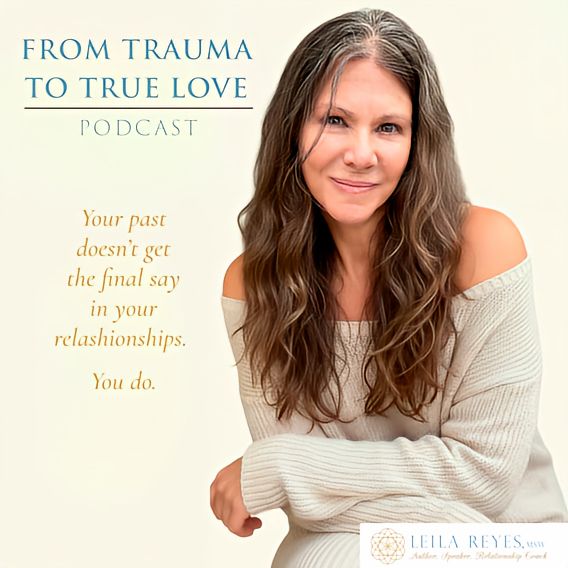
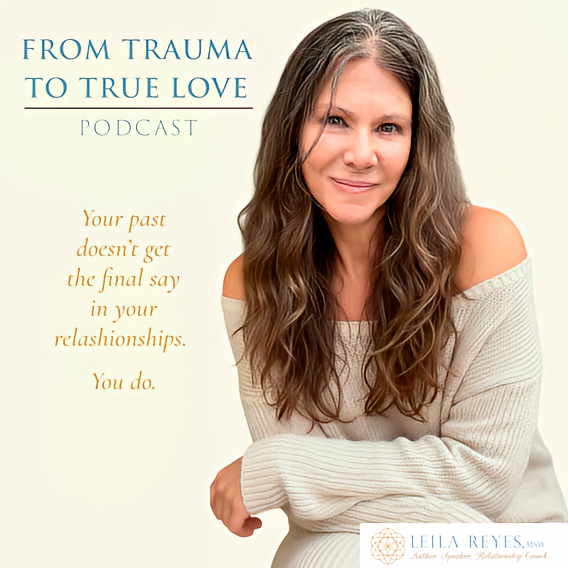
Your past doesn’t get the final say in your relationships.
You do.
Welcome to From Trauma to True Love, the podcast where we break the cycle of painful relationships and build deep, lasting love you can trust. I'm Layla Reyes, a relationship coach, speaker, and author of Freedom From Shame, Trauma, Forgiveness, and Healing From Sexual Abuse. I'm here to help you release the invisible wounds from your past that may be holding you back from the love you truly desire. In each episode, we'll uncover the hidden patterns shaped by early childhood trauma, explore how they impact your relationships today, and guide you toward creating the partnership you were born to have. Whether you're looking to attract the one, deepen an existing connection, or finally feel safe in love, this is a space to discover what's possible.
Let's dive into your journey from trauma to love. Hey there. Welcome back to the podcast where the conversation is centered around getting free of the impact early childhood trauma has on our adult lives. Today's episode is tender, deep, and I believe speaks to one of the most important perspectives that can help us get free of the impact of childhood sexual abuse. It's about how we relate to this terrible experience from the past.
It's the difference between living as a victim of what happened to us versus being a victor over what happened. I'm talking about post traumatic growth. Post traumatic growth is the positive psychological change that occurs as a result of struggling with highly challenging life circumstances, and childhood sexual abuse definitely qualifies for that. Post traumatic growth is about what becomes possible when survivors of childhood sexual abuse not only survive but begin to reclaim their power, their voice, and their future. We cannot simplify post traumatic growth as something like everything happens for a reason.
It's definitely not that. We can, however, turn what happened into something pretty fabulous. And it's not about denial. It's really about transforming it. If you've listened to previous episodes or read my book, Freedom from Shame, then you know my story.
You know that I lived through childhood sexual abuse that nearly broke me. And for years, it shaped how I saw myself, how I loved, and how I showed up in relationships. But eventually, something shifted. I began to realize that the abuse didn't get to decide who I was or how my story ended. Of course, in the beginning, you know, when I first began my journey, I just wanted to stop hurting.
But as I engaged with therapists and coaches, as I read books and took classes, over time I stopped just wanting to heal. I was hungry for freedom. So today we're exploring the result of the choice to become free. What does it look like? Not to just survive trauma but how to grow beyond it.
And I'll be honest, this is a choice for those of us who are courageous enough to leave behind our known ways of being, our known ways of thinking, to let go of old identities of how we relate to what happened to us, how we personalize what happened to us, and to truly live in the present moment. So let me define post traumatic growth in a little bit more detail so that we have a mutual understanding of what I'm referring to and what I'm wanting to share with you. Post traumatic growth is the concept that came out of the work of psychologists Tadeshi, I think that's how you say his name, and Calhoun. They share this idea that some people, not all, and not easily, experience personal growth in the aftermath of trauma. I personally believe that we all have the capacity to experience personal growth after this type of trauma, that we all have that capacity.
But we need a foundation from which to orient ourselves and our choices. So we need to shift the way that we're interpreting what happened to us. I'll share a little later about how you can receive my support in making this shift or to continue your journey in a more precise and impactful way. So as I was researching this topic, some of the experiences that the researchers observed in study participants were a deeper appreciation for life, stronger and healthier relationships, a sense of personal strength, a spiritual awakening, and a reevaluation of what really matters all wonderful things to experience in the aftermath of early abuse. Now I want to make an important point about growth, that any type of growth doesn't mean that you're over it.
It doesn't mean that the pain didn't happen or that you're finished working through layers. Like, I don't think there's an end game here. I might say that again later. I'll say it over and over again. There's no end game.
But again, if you've read my book, then you know that in my circumstances, my father took responsibility for what he did to me. And as a result, he restored integrity, he repaired our relationship, and ultimately became one of my best friends. Now, on the surface, you might think that this restorative experience with my father freed me from the impact of the abuse and all. My relationships were wonderful. Not so.
The impact on my life continued until I made the choice to turn what happened to me into something valuable. And that's when my journey really began. So growth means that in spite of it all, you are here. You're showing up. You're speaking your truth.
You're choosing your life. Right? And to me, that is sacred. You don't have to love what happened to you. Certainly, I don't know anyone who would.
I certainly don't love what happened to me. But you do get to love who you're becoming. You know, there's a fork in the road with that. You can be disappointed in that or you can be upset about it and have it impact you in negative ways, or you can make this choice to grow and become all of who you can be. You have to include that experience.
You can't exclude it because it happened. If you're steeped in the victimization of what happened and the impact on your life, if you don't currently love who you are but want to, then you might be at a crossroad that leads to your own post traumatic growth experience. So let me share a little bit. There are two studies that absolutely floored me when I read them. The first is a 2016 study published in the Journal of Child Sexual Abuse that interviewed six women who self identified as having grown after the abuse.
These were not women who said, oh, I'm fine now. No, no, no, no. These were women who said, I've been through the fire and I carry the scars. But I also carry the wisdom and the strength and a story that can help others. These women talked about how their growth didn't erase their pain.
In fact, many of them still struggled with things like self worth or body image or intimacy. But over time, they started to shift how they saw themselves, how they related to themselves, how they experienced themselves. Without post traumatic growth, one's identity is something like I'm damaged goods. And I've got to tell you, I certainly felt like I was damaged goods for many, many years even when I began my journey and far into it. But the research showed that those who experienced post traumatic growth didn't see themselves as damaged goods.
They saw themselves as resilient, purpose driven, whole. If you're here today, you're resilient. If you're here today, you're whole. Now I don't know if you're purpose driven, but that could be the next step to be consciously moving towards something that you wanna create. One of the most powerful themes in the research was that these women became what the study called wounded healers.
And now personally, I believe that we can move beyond the wounded part in wounded healers and just embody the identity of healer. I fully believe that. These healers in the study used their pain to help others. Some became therapists. Others started nonprofits.
And some simply lived more intentionally with kindness, with clarity, with depth. I personally became a coach dedicated to helping others get free of the impact abuse has on their adult lives and relationships. And so this is available for all of us who's been through this experience. And if you're listening and thinking, Well, I'm not there yet, that's okay. It's totally okay.
It's totally fine. Growth isn't a race. It's a relationship, a relationship with yourself. What really struck me about the study wasn't just what these women overcame, it was that every single one of them at some point made the decision, This story isn't over. My story isn't over.
They picked up a pen and started writing new chapters in their life. And you can do this too. You can do this too. Abuse has real life implications and us survivors can feel responsible for what happened to us, what was done to us. And I want to say very clearly, very clearly that what happened to you was not your fault.
But at some point, if we're going to get free of what happened, of the impact of what happened to us, we have to, we must choose what to do with what happened to us. So a question to ask ourselves is, will this past abuse keep defining me or will I define what comes next? Will I define who I am as a result of this experience? And honestly, this choice doesn't come easy. I know firsthand what it feels like to be stuck in cycles, attracting people who can't fully love you, sabotaging the good that comes, shrinking so you don't get hurt.
But I also know what it's like to come out on the other side, to realize that I do matter, that I'm not too much, that I'm not broken. Right? And you can, too. To realize that you can have real safe love, that you can feel good in your body, and that you can stop chasing people who don't choose you. And you can create a life, relationships, friendships, even a career that reflects the truth of who you are, not the pain of what you've been through.
That's what growth looks like. Not perfection, but authenticity. Not erasing the past, but including it to own your future. And because of the abuse, I really, really believed for many years that I didn't matter. So of course, I treated myself like I didn't matter and I chose people in my life who treated me like I didn't matter.
If someone did treat me like I mattered to them, I questioned their motives. I didn't trust them. So for me, growth started with one thought. What if I really do matter? And I started asking that question, and I found new answers.
I realized that the abuse didn't have to define my capacity for love or for joy or for intimacy. But I had to unlearn a lot. I had to stop waiting to be rescued. I had to start taking radical responsibility for how I was showing up and the choices I was making. I don't want to deceive you into thinking that there is an endgame.
Remember I said that? There's no endgame. I'm still learning and growing every day into who I'm becoming. And I had to learn how to trust myself, how to treat myself like I mattered, how to learn I had to learn how to teach other people to treat me like I mattered. I had to develop my capacity to believe I mattered to others in my life.
I still practice asking this question every day. Being here today writing my book, offering this podcast, many of the things that I'm choosing to do with my work is a result of being centered in an identity around my inherent mattering that has nothing to do, that can't be impacted by the abuse. Only my thinking can be impacted, and what I make up in my mind about it says limits me in knowing my inherent mattering. So while I have what I have to say might not matter to everyone, it will matter to someone. And these are the people that I'm looking for.
That what I have to say matters to you and brings you to the post traumatic growth that you're yearning for. And that's why I do this work, because I want you to know that you're not alone and you're not beyond hope and all of the things that might be happening in your current life and experience that may be impacted by the abuse. But you can get beyond that. You can grow beyond it. And if I can, you can.
So if anything, the fact that you're listening right now tells me that you're already growing, even if it doesn't feel like it, in the minutiae of it. But just being curious about what's possible, that's the doorway to post traumatic growth. So I know this is a very short episode here, and I just want to leave you with a few questions to consider, which points you in the direction of your growth. What has grown in you because of what you've lived through? You might want to write these down.
What has grown in you because of what you've lived through? That's the first question. What has grown in you because of what you've lived through? The second question is, what truth are you ready to tell yourself today? This is a truth that's bigger than the hurt or bigger than whatever meaning you made up about what happened, about the abuse.
What are you ready to tell yourself today? Instead of I'm broken, you know, I'm resilient, for example. That's a bigger truth because you're here, so we know you're resilient. And then the so this question again, what truth are you ready to tell yourself today? Maybe this is a truth that you long you might not recognize it as a truth right now, but it's like, what do you long to know about yourself?
Right? The truth of who you really are. And then the third question is, if you stopped believing you were broken you can fill in the blank here. If you stopped believing blank you were broken, didn't matter, were unsafe you know, if you stopped believing this thing you've told yourself, what would be different in your life? And maybe journal around these things.
Now, your growth doesn't have to look like mine. Your growth doesn't have to look like anyone else's. It's unique to you. It doesn't need to be loud. It doesn't need to be like, you know, this big, loud thing.
Sometimes growth is just waking up and saying, I'm choosing differently today. So if this episode moved something in you, if you want to learn more about your own post traumatic growth and how to engage with it, how to enter into it, I'd love to hear from you. Reach out. Leave a review. Share this with someone who needs to know that they're not alone.
And then I said that I would share some resources with you if you're ready to engage more fully with getting free from the impact of early abuse. The first, of course, always, is you can get my book, Freedom Trauma, Forgiveness, and Healing from Sexual Abuse. You can get it on Amazon. But I prefer that you order it from your local bookstore if you can. And if you want to explore the possibility of working with me privately, I do have a few openings on my calendar.
You can reach out to me on my website at leilareyes.com. That's leilareyes.com. And I work with people who are ready to take full responsibility for what they want to create in the aftermath of early abuse from someone who tells it straight but with love and compassion. So as we end for today, I want you to remember one thing from all of everything that I've talked about. The bottom line that I want you to remember is that you are not what happened to you.
You are who you choose to become. And I'll see you next time. Thank you for joining me on this episode of From Trauma to True Love. I honor your courage for being here, taking steps towards the love and connection that you truly desire. I've been there too, stuck in painful patterns, longing for love but unsure how to create it in a way that felt safe, real, and lasting.
You don't have to figure it all out on your own. If you're ready to explore what's been holding you back and discover what's truly possible for your relationships, I would love to support you. Visit Leila Reyes, l e I l a r e y e s, Leila Reyes, and schedule a call today. We'll take the first step together toward the deep, meaningful love that you were born to have. I can't wait to connect with you.
Until next time, take good care of yourself and know that real, lasting love is within your reach.


