
From Trauma To True Love, August 27, 2025

From Trauma To True Love with Leila Reyes, MSW
S2E3, Shattered Trust and Our Capacity to Create Safety
From Trauma To True Love

Break Free from the Past and Create the Relationship That Actually Fits You
Creating a healthy, fulfilling partnership isn’t about luck, timing, or trying harder. It’s about understanding how early experiences—especially those that shaped your sense of safety, worth, and attachment—are still influencing who you choose, how you show up, and what you tolerate in relationships.
On From Trauma to True Love, I speak to successful, self-aware women who have done the therapy, read the books, and still find themselves repeating familiar dynamics: unavailable partners, self-doubt, over-giving, or settling for less than they want—without fully understanding why.
As a relationship coach and trauma-informed guide, I help you identify how early trauma continues to live in the nervous system and relational patterns—and how to interrupt those patterns gently, without blame, fixing, or endless self-analysis. This work is about reclaiming self-trust, confidence, and choice so you can create a relationship grounded in safety, consistency, and authenticity.
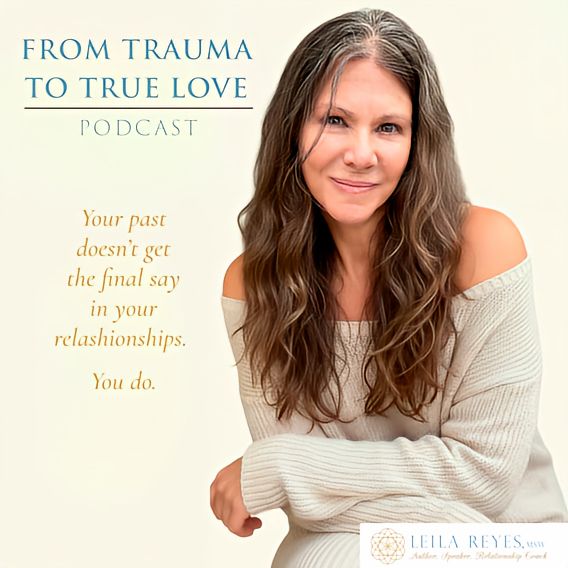
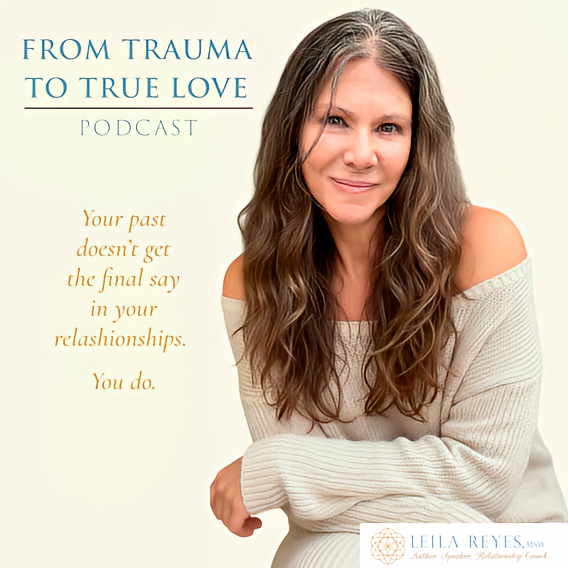
Your past doesn’t get the final say in your relationships.
You do.
To Drum Thomas with True Love. I'm Leila Reyes, and I'm so glad that you're here with me. This podcast is where we have courageous conversations about the impact of childhood sexual abuse, conversations that I'm intending to make a difference. It's where we can learn that even with the deepest wounds, it's possible to break free from the past and create the love and the life that you've been working so hard to create. Today, I wanna talk about trust.
When trust was shattered in childhood by someone who should have protected us, everything changes. Trust is one of the most common impacts that I've noticed that survivors face, myself included. And I wanna clarify that trusting means that we might not trust enough. Like, there there's that element of not trusting enough, but there's also, the flip side of that is that we might trust way too much. And either way, we lose our ability to trust ourselves, to trust other people, and even to trust life.
And it makes complete and total sense with what we've been through. And so that place of not trusting enough, gets us into trouble because there are trustworthy people in the world that we if we trust, then we're gonna be able to have a really wonderful experience. Where we're trusting too much, we're gonna end up getting hurt. We put ourselves in situations because we don't trust ourselves. We put ourselves in situations that, are really not in our best interest, and we might not even be aware that we're doing that.
When we trust the people who were supposed to take care of us, but then instead they hurt us, well, that doesn't make any sense to the nervous system and especially to a young developing mind, an innocent child who the only thing that they usually want is to be loved, to be cared for, to be, you know, to really be cared for. What often happens, in the aftermath of abuse is we grow up and then we lose trust in ourselves. We may inadvertently believe that we we are the ones that did something wrong and then blame ourselves, or we can end up living our lives in a hypervigilant way protecting ourselves from any possibility of being hurt again. In that process, we end up cutting ourselves off from healthy connections as well, or we might ignore the danger signs and get ourselves into situations where we get hurt over and over again and never understanding why. So that's really the the two pathways here is trusting not trusting enough and trusting way too much when someone hasn't earned their trust.
When abuse happens, the lines of trust and betrayal get blurred and can seep into every single corner of our lives. You might feel that or and and recognize it. You would recognize it in these ways if you're always second guessing yourself. Or or maybe you're letting someone get too close and or you are a fear, very afraid that if you let them get too close, you're gonna be taken advantage of. You're gonna be hurt.
So it can feel terrifying. Maybe you find yourself waiting for the other shoe to drop because safety never is never never feels guaranteed. So if any of this sounds familiar, I want you to know that it's a very common experience for survivors of childhood sexual abuse. And I want you to know absolutely that you're not alone in feeling any of these ways. I've personally experienced the impact of this of abuse on my life and the loss of trust.
Many years ago, I pushed someone away because they were treating me really well. I didn't believe that anyone who's nice to me didn't have some sinister intent behind their goodness. And so in in when when that was happening, I I told my friends and for many years that, well, I thought this person was an axe murderer. I said it as a joke, but there was a part of me that really believed that they could have been out to kill me. So that with that trust button broken, right, it's completely broken, it's almost impossible to discern between someone's, good intentions and ill intent.
I've since repaired that button for myself, and I've been helping fix others' buttons, trust buttons, for over twenty years now. In this episode, we're gonna explore a little bit about why childhood sexual abuse impacts trust so profoundly, how it shows up in our adult relationships, and most importantly, the the most important part is that we can learn how to trust ourselves in ways that create safety. I'm gonna say that again. We can learn how to trust ourselves in ways that create safety. Once we've done that, the result is then we can create healthy relationships.
Those are connected. So while trust may have been broken in devastating ways, it can be learned, relearned, not overnight, but step by step with compassion and the right support. It's absolutely possible to learn how to trust yourself again and make decisions and choices from that. So let's dive in. When I talk about trust, I'm not just talking about whether or not you can believe someone's words.
I'm referring to something much, much deeper. Trust is that ground beneath our feet. It's what allows us to feel safe enough to be ourselves. It's what allows us to feel safe enough to love, to connect, and to build a life with others. But for survivors of childhood sexual abuse, that ground was broken early on.
It's like the rug being I I've had that experience of feeling like the rug being pulled out from underneath me. It can really feel like there is no ground beneath us or that we're on this, you know, the shifting sands. Nothing really to ground ourselves in. And abuse is always a betrayal. And when it happens to a child, it's usually by someone you should have been able to count on.
This could have been a family member, some trusted adult, or someone in a position to care for you. And that betrayal cuts to the core. It actually cuts into our identity, and it shifts who we know ourselves to be as a human being. For example, before abuse, I'm lovable. I am lovable.
I'm this is the identity. I am someone who is lovable. After the abuse can end up cutting that and creating an I'm unlovable identity, then living our lives through that kind of distorted perception of ourselves because of the abuse, then we start doing things that are gonna collect evidence of that belief system of I'm unlovable. Before abuse, here's another couple more examples. Before abuse, maybe the belief.
And with children, this isn't something It's not intellectual at all. It's a felt sense. I'm worthy. You know, children kind of show up as the as being in the center of the universe. Right?
There's an inherent kind of knowing that they're worthy of taking up space, of of existing. Right? But after abuse, the distorted view is I'm unworthy, and that's a distorted identity. Again, if you live your life through the belief I'm worthy, there's going to be all these actions, behaviors, thinking that comes from the belief I'm worthy. And if you're living from the belief I'm unworthy, you have a whole other set of ways of showing up with yourself and in the world.
Before abuse, the belief, and this was one of my really core beliefs, that that I matter. I'm I felt like I really mattered to my parents, to the people who loved me. And then after abuse, it was like that just completely disappeared, and I started living my life through the broken belief, the distorted belief that I don't matter. And if you just take a minute to kind of, like, imagine what that's like for yourself or for any of these beliefs, And what would how would you talk to other people if you knew that you mattered versus how would you talk to people if you believed you didn't matter? How would you treat yourself if you believed you mattered versus how would you treat yourself if you believed that you didn't matter?
And so these are really, those core beliefs that we have about ourselves that we come into this world with, an inherent sense of our own mattering, gets completely distorted after abuse. And then the one of the the one of the core ones that I think kind of, like, lives underneath all of it is before abuse, there's this sense of safety in the world that just feeling safe and taken care of. And after abuse, there's kind of like a the the the belief is I'm not safe, so then there's a vigilance that can take place around that or even the behaviors that support the belief, that reinforce the belief I'm not safe. Like, putting yourself in situations or connecting with people who are unsafe, being in relationship with people who are unsafe. So abuse teaches us without words that the people who are supposed to protect us hurt us.
And it teaches us that our feelings don't matter, that speaking up could make things worse, and there's a whole slew of things we could talk about for sure around what abuse does to how we end up showing up in the world. And so the message doesn't just disappear when we grow up. It gets hardwired into how we see the world. At this level of identity, we begin to relate to ourselves as unlovable and unworthy and, like, we don't matter. We relate to ourselves this way.
And just a little shout out, by the way, a lot of there's some of the this what I'm talking about is is in the lexicon, and people are talking about it. And Catherine Woodward Thomas is creating a a very, synced, way to transform so that we can come back to the, truth of who we are, the core of our lovability mattering worthiness. And so I'm kind of speaking to that a little bit, and I'll share a little bit more about that later, in another podcast as I'll be working with people to unravel this, these core identities in some work I'm doing with Catherine and some training that I think will be is very exciting for me and, very helpful to people who want to come back to the core truth of who they are. So what keep an eye out for that. So let's look at how this shows up as we become adults.
Again, we're right back to trust, not trusting yourself, doubting your own instincts. You second guess your choices. You feel disconnected from your gut feelings altogether. And I shared in the last episode when a man joined a group that I was in and made his way over to me, the hairs on the back of my neck stood up on alert, screaming danger, danger, danger, but my body was in freeze mode. And I didn't trust myself to move away.
I I wanted to. Like, there was an element of knowing this is really dangerous, but I couldn't move. And this is part this is one of the impacts that abuse can have on us. Number two, this can show up as not trusting other people. So, for example, you want closeness, but then when it arrives and it's there, it can feel very dangerous.
You might find yourself pulling away or even choosing people who aren't really safe, like I've been mentioning, because that feels more familiar than having someone in your life that is actually safe. So instead of for me, my my experience of this was that instead of choosing a partner that offered all of the safety and closeness that I wanted, I chose to be with someone who had already hurt me. And from that hurt child perspective, I believed that it was safer to be with that person. So and and it wasn't, for sure, but but the again, here's the impact showing up in real time. And then third, sometimes it's not about people at all.
It's about not trusting life itself. And you might catch yourself waiting for things to fall apart, living in a state of hypervigilance, always scanning for the next sign of danger. For me, that showed up in being someone who always deferred to the other person. I disappeared my own needs. I focused solely on the other person.
And in that process, I lost all sense of my own needs. And I mean that literally. I couldn't even choose what to eat for dinner. So and then just to, you know, shout out again the you know, this, idea of how we are being in life with with ourselves, with others in life is part of the work that I'm doing with Catherine Woodward Thomas, and I'm just really excited to share that with you in the upcoming months. So if you recognize yourself in any of this, I want you to know something really important.
You're not broken. If if you struggle with trust, you are not broken. You learned to protect yourself in the only ways that you knew how without being taught. It was intuitive, and those strategies helped you survive. So there is an element here that's really important to acknowledge that this was a good thing at one point in your life, but survival strategies that helped us survive don't help us thrive.
So what worked then doesn't work today. It actually creates the opposite effect. So part of the journey of getting free of the impact abuse has on life is letting go of those survival strategies and building trust in your body. And trust isn't about blind faith. It's about learning how to discern.
It's about learning how to listen to yourself really deeply and how to build new habits that lead to deep internal trust. So it's just a matter of being able to to make a decision. Yes. This works for me. No.
That doesn't work for me. This is safe for me. This is not safe for me. And there's a there are actions to take in that process of learning this new way of being with yourself. So let's look at some common patterns that survivors experience when trust has been broken.
And I'm gonna I'm naming this over and over and over again in just a little bit different way and and repeating myself. I'm very aware that I'm repeating myself, but I think that we need to hear things more than once. And so if you walk away with one thing that I've said three or four or five times today that, you know, really resonates with you, then I think that that's a little, you know, what I'm seeing the the little crumbs on a path, right, that what was where we follow the path. So it's a it's a it's a piece that can lead you to the freedom that I know that I wanted, took a long time to get, and I'm assuming that you want that too. So, again, one of the most common patterns that I see is a deep trust in oneself.
So if you felt this and you've second guessed your choices in relationships, in work, and if you're like me in everyday decisions, you might wonder, can I really trust what I feel? That little voice of doubt can get so loud that you end up feeling frozen or you make choices that don't serve you all to avoid the risk of being wrong. Right? I didn't and wrong being wrong is I didn't trust myself. I didn't make the right decision.
So I either have a right decision or wrong decision. It's a little bit more complex than that. Every decision that we make can lead us closer to the life that we're wanting, so it's not a matter of right or wrong. It's a matter of really being in alignment. Right?
So the other pattern shows up in relationships, longing for closeness. But when someone gets too close, there's an internal panic attack. Your body suddenly feels unsafe even if the person has done nothing to make you feel that way. For the survivor then, this can show up as pulling away, shutting down, starting an argument just to create space. Right?
Other times, it shows up in choosing partners who are emotionally unavailable or unsafe because as painful as this is, it can feel more familiar and it can feel more safe than opening up to someone who might actually treat you well. And then there's this pattern of testing the people around you. Maybe you found yourself watching carefully for the first sign that someone will hurt you or betray you. You might push them away or hold back parts of yourself waiting to see if they'll prove you right. And when they eventually disappoint you because, you know, here's here's the truth.
All humans do at some point. We will get disappointed. But when someone disappoints you, it can feel like confirmation that people can't be trusted or that you can't be trusted. Right? You can't trust myself to make a decision around who to let close to me.
That is a skill to learn, by the way. So this is not just about romantic relationships. Survivors often carry this into their friendships, into work, even into how they relate to authority or institutions. So if you've ever felt reluctant to ask for help or you've thought, if I speak up, no one will believe me, that's part of this trust wound too. And here's the thing.
None of these patterns means that you're incapable of trust, incapable of trusting yourself, incapable of discernment. All it means and I'm, you know, I'm minimizing this. All it means, it's actually a pretty big meaning, is that your nervous system learned early on that trust was dangerous. And it makes sense that you've carried that lesson into adulthood if that's what you're doing. I wanna pause here and say, if you're recognizing yourself in these patterns, please don't add shame on top of it.
These are survival strategies, and I'll say this again. They were brilliant at the time. They kept you safe as a child, and now as an adult, we get to gently look at them and ask, do these patterns still serve me? Is there a new way forward? I wanna share a story about a woman that I worked with.
I'm gonna call her Joanna. And like so many other survivors, Joanna longed for closeness. What she wanted more than anything was a partner that she could truly count on. But every single time that she got into a relationship, something would happen. In the beginning, she'd be excited and hopeful.
But as soon as things started to get deep, she'd feel a wave of panic. And instead of leaning in and checking out what was going on, asking questions, right, to to deep for deeper discernment, she'd start pulling away. And sometimes that looked like shutting down emotionally, so she would stop talking. She would not contribute to the relationship, to the conversation. And other times, it looked like creating distance by picking fights about little things that didn't really matter just to create and the the whole thing about creating distance underneath that is I'm trying to create some sense of safety for myself.
But what was really happening was that her body didn't feel safe with closeness. There was like there you remember when I talked about the hairs on the back of my neck going up? This is this is it. It's like, oh, something's dangerous here, and I can't trust myself. Like, is this really dangerous, or is it not?
So this is this is a really big thing that people who have had their the betrayal, that early betrayal happened, really need to learn how to navigate those choppy waters. So with Joanna, on the flip side, when she wasn't pulling away, she was settling. She'd choose partners who were emotionally unavailable, people who couldn't really meet her where she longed to go. Like, they're just a little bit off or a little bit out of sync. And as painful as that was, it felt more comfortable to her nervous system to be with people who didn't show up fully.
Why? You know? Why? Why? Because if you've grown up learning that people will hurt you or disappoint you, part of you would rather choose someone you already know can't show up than risk being vulnerable with someone who might.
It's a way of avoiding feeling that devastation all over again, and it makes total sense to me. For Joanna, the work that we did together wasn't about fixing her, and she wasn't broken. It was about helping her notice the patterns with compassion, self compassion, and starting to build trust with herself first. And that meant slowing down, listening to her body, and learning that she could both set boundaries and open up when it felt safe. So this really involved tracking the new behaviors that she was taking over a period of time.
And little by little, she began to take small relational risks, like sharing something vulnerable and noticing that the world didn't collapse when she did. She didn't get in trouble. She didn't get hurt. People actually started showing up. People actually started responding to her requests.
And so with my help, she discovered that trust didn't have to mean putting herself in danger. It could mean discerning, listening to her own body's signals, and choosing who truly earned the right to be close to her. Truly earned the right the the earned the the trust that she had to to bestow upon someone. So the question here is when if trust was broken so early, how do we begin to rebuild it? Because rebuilding trust is not about flipping on a switch and suddenly feeling safe with everyone.
You can't go from I don't feel safe, I'm not safe, to I am safe. It doesn't work like that. It's not about ignoring the past or forcing yourself to just get over it. No. Trust after trauma is about discernment, and that happens over time.
It's about slowly learning who and what is safe and, most importantly, knowing that you can learn to trust yourself to know the difference. So let's look at some of the pathways that make this possible. The first is trusting yourself again. So this first step isn't about other people at all. It's about learning to listen to yourself.
And when abuse happens, when you're a child, you learn to doubt your instincts. Maybe you felt something was wrong, but no one validated it, or you were told to stay quiet, to be polite, to be nice, to to go along. And over time, that creates a deep split between what you feel and what you believe you're allowed to feel. So rebuilding trust starts with gently repairing that split, learning how to listen to your body in a different way for the signals, more accurate signals, noticing when you feel anxious or when something feels off, and giving yourself permission to believe it and to explore it a little bit more deeply. And along the way, you collect evidence of what you're experiencing as you take these risks to show up differently.
So you rebuild that self self trust moment by moment, choice by choice, and it can be really helpful to, you know, get feedback along the way. The second thing is to create safe containers because healing doesn't really happen in isolation. We need spaces where we can be seen, believed, supported, mirrored back what what is happening, and that might be therapy. It might be coaching a support group. It could even be one safe friend who can hold space without judgment.
These containers give us practice in being vulnerable and experiencing that vulnerability doesn't always lead to harm. Someone have having someone support your journey validates the changes that you're making. In the beginning, this can be really helpful. It was for me, and it is for my clients. So the third one is taking small risks.
Trust doesn't return all at once. It's rebuilt in little steps. Maybe it's sharing a piece of your truth with someone that you already feel relatively safe with. Maybe it's setting a boundary and then noticing that the world didn't collapse when you did, Or maybe it did collapse. Like, maybe some maybe you set a boundary and something you know, they somebody didn't respect that boundary.
That's that's part of it too because now you have the information when you set a boundary and see what happens. Each small act builds a kind of muscle memory that says I can trust myself and I can choose people who respond to me with care. The fourth is, boundaries are a foundation of trust. So sometimes survivors think that boundaries means that you're shutting people out, but boundaries are actually the foundation of real trust. I recently heard someone explain the difference between laws and boundaries, and I think it's it's really applicable here.
A law is about someone else's behavior, and you can't control that. For example, a law would be telling someone how they need to treat you. Right? You can't talk to me like that. Don't talk to me like that.
Don't do that. Right? That's a law. You're telling somebody else how to behave, and that never that rarely works. A boundary, on the other hand, is about your behavior, which always you always have power over.
So, for example, a boundary you know, a a law is don't don't do that. Don't say that to me. And a boundary is if you say that to me, I'm going to hang up or I'm not going to talk to you or I'm not gonna be in relationship with you. See if you can recognize the difference. A law is I'm telling you how to act.
I'm telling you how to behave, and a boundary is this is what I'm going to do when this happens in my life. Very, very valuable distinction, I think. When when you know that you can say no and protect yourself, it becomes safer to say yes. So boundaries teach your nervous system, I'm not a powerless child anymore. I can protect myself today.
And from there, trust begins to feel less like a risk and more like a choice that supports the kinds of relationships that you wanna have. And then number five is to really redefine what trust means. Trust doesn't mean doesn't have to mean giving someone, all of you, right away. I would highly recommend against that. This is where you let people earn your trust over time.
So that requires you to pay attention to the difference between someone's words and their consistent action. Trust isn't about perfection because everybody makes mistakes. I I do, you do, every single person does, so it's not about perfection. But trust what trustworthy people do differently is that they repair, they apologize, and they continue to show up. So they change their behavior.
They pay attention to it. Right? And they pay attention to the boundaries that you set. When survivors begin to shift into this new way of relating to trust, something really incredible happens. They stop living from survival mode and they start living from possibility.
They begin to feel what it's like to stand on solid ground, and this comes from inside of someone. It comes inside of us. If you want a relationship, this this is what makes healthy love possible. If you want a healthy relationship, it's what makes healthy love, healthy relating possible, whether it's love for yourself, love and friendships, or love in an intimate partnership. I know how heavy it can feel to carry the weight of broken trust.
It is it it it is very, very heavy and takes a while. At least for me, for my clients, it's taken a it takes a while to get free of that. And you may have moments where you wonder, will I ever be able to fully let my guard down? Will I ever trust myself to choose wisely? Will I ever find someone I can truly rely on?
These are really human questions, and you are not asking them alone. You're not alone in asking them. What I want you to know is this. Trust can be rebuilt, again, not overnight, not in a way that ignores the pain you've been through, but step by step in a way that honors your story, honors your experience. Each time you listen to your intuition, each time you set a boundary, a real boundary, not a law, each time you open up a little bit and see that it's safe, you're laying down the new tracks.
Or each time you open up a little bit and make a different choice when you noticed it notice that it's not safe, Either way, you're teaching your nervous system. Things are different now. I can choose differently. I'm learning how to keep myself safe. And as this happens, the world starts to open up.
Relationships begin to feel less like a minefield and more like a place where real love, intimacy, and connection are possible. It's not about pretending that the past never happened. It's about showing yourself that you're more powerful than what happened. And your journey is your own, and it unfolds at your pace. And so, really, I really want you to know that trust is possible, love is possible, and most importantly, you are possible.
You living fully, authentically, and free. So before we close today for this episode, I'd love to invite you into just a moment of reflection. Ask yourself where in your life do you most long for trust right now? Is it in trusting yourself, another person, or trusting life to hold you? So take a breath and just notice what comes up for you.
And while we're not doing anything with that right now, I'd like to invite you to take a gentle step forward. I've created a simple tool to support you. It's called Love Signals. I created it for people who are actively looking to be in a healthy relationship, but you can use it if you are in one. It can you you can use it just if if it's not about relationship, but just around how you're showing up in the world, how you're being to to build this trust.
It's a a free guide that will help you begin tuning in to the subtle cues that show you when someone is truly relationship ready. And, again, it doesn't have to be about intimate relationship. But at the same time, the main goal of this tool is it strengthens your ability to trust yourself again as you pay attention to the signals. Mhmm. So think of it as a little pocket compass for your heart, something you can carry with you as you practice listening to your inner wisdom and building trust one step at a time.
And you can download love signals at leilareyes.com. That's leilareyes.com. It's my gift to you as you continue your journey back to trust and toward the love and life that you long for. So remember, you don't have to do this alone. Trust can be rebuilt, and love can become safe, real, and lasting.
And sometimes the smallest step, like choosing to trust yourself and downloading the guide, can be the beginning of a whole new way forward. Step by step, as you learn to trust yourself, you're not just surviving. You're navigating your way toward a future where love, safety, and true connection are possible. And it's my heartfelt intention that along this journey, you come to know just how worthy you are of trust and how possible it is to create a life that truly feels safe, nourishing, and authentic to you. Thank you for being here with me today, and I will see you next time.
Thank you for joining me on this episode of From Trauma to True Love. I honor your courage for being here, taking steps towards the love and connection that you truly desire. I've been there too, stuck in painful patterns, longing for love but unsure how to create it in a way that felt safe, real, and lasting. You don't have to figure it all out on your own. If you're ready to explore what's been holding you back and discover what's truly possible for your relationships, I would love to support you.
Visit Leila Reyes, l e I l a r e y e s, Leila Reyes, and schedule a call today. We'll take the first step together toward the deep, meaningful love that you were born to have. I can't wait to connect with you. Until next time, take good care of yourself and know that real, lasting love is within your reach.