Sound Healing, March 14, 2026
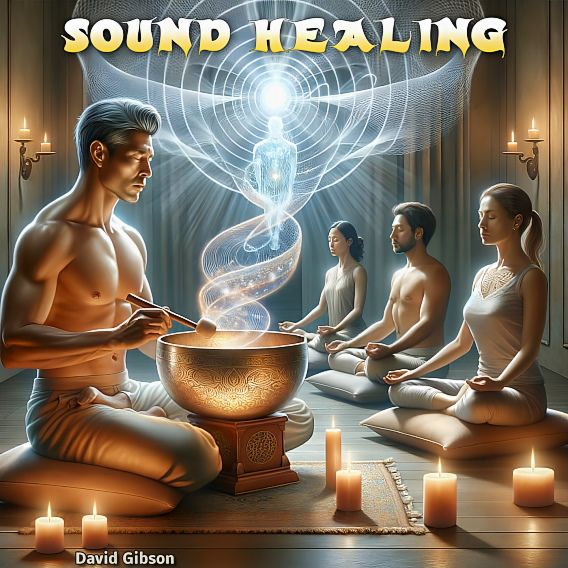

Sound Healing with David Gibson
Chakras and the Full Range of Chakras
This session, led by David Gibson of the Globe Institute, provides a comprehensive overview of the sound healing landscape, ranging from institutional education and clinical research to the practical application of vocal toning. The discussion bridges the gap between traditional musical theory and intuitive frequency therapy, offering a roadmap for using sound to achieve emotional and physical balance.
The Sound Healing Ecosystem and Institutional Resources
The Globe Institute stands as a unique, state-approved college in the U.S. dedicated to sound healing, offering certificates both in-person and online. This educational pillar is supported by a broader ecosystem including a specialized store featuring over 400 instruments, a Research Foundation with a database of over 1,000 clinical papers, and the Medical Sound Association, where doctors collaborate on treatment protocols. Notable achievements include a $100,000 grant to integrate sound curriculum into Montessori schools and successful dementia protocols implemented in Northern California facilities.
The Art and Intuition of Chakra Toning
The core of the practice involves resonating the body's energy centers through specific vowels, Sanskrit syllables, and "Tibetan warrior" sounds. While various traditions assign specific sounds to each chakra—such as "Lam" for the Root or "Yum" for the Heart—the speaker emphasizes that intuition should supersede textbook rules. The goal of vocal toning is to find the specific resonance that feels "right" for the individual on a given day, using the voice as a diagnostic and healing tool to clear stagnation or over-activity in the chakras.
The toning process moves from the Root (grounding/abundance) up to the Crown (spiritual connection). Techniques vary from the deep, low-frequency "Oo" for the Root chakra to the powerful, explosive "Wo" for the Solar Plexus—which the speaker notes has been used in extreme cases to support recovery from physical illness. The Heart is often accessed through the "Mmm" hum of love, while the Crown is uniquely associated with the resonance of silence.
Frequency Theory vs. Musical Notes
A critical distinction is made between traditional musical notes (the C to B scale) and pure frequency ranges. While many systems use a linear C-major scale for the chakras, the speaker argues that frequency (Hz) is a more accurate measure of resonance. For example, a large, bass-heavy gong might resonate the Root chakra regardless of its musical pitch. He proposes a "full-spectrum" approach where every frequency is viewed as a nutrient, leading to the development of meditations that use octaves of a single note to ensure harmonic alignment across all energy centers.
Sound healing is presented as a bridge between physical science and spiritual intuition. By understanding the specific frequency ranges of the body and utilizing vocal toning, individuals can move toward a state of "bliss" and internal harmony. Whether through academic study at the Institute or personal meditative practice, the goal remains the same: to achieve a state of peace where the "song" of the body is in perfect alignment with the universe.
Sound Healing
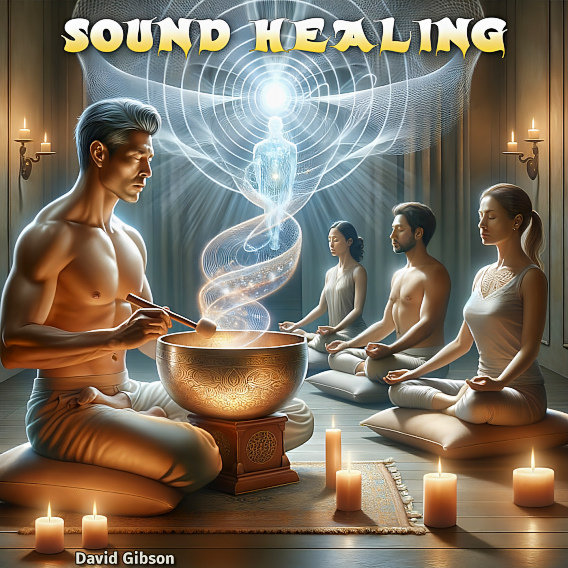
Study the effects of sound on the body, psyche & spirit LIVE with the Founder and Director of Globe Sound Healing Institute. Using the Voice for Sound Healing, Inner Sound Awareness & Transformation of matter and consciousness, and to connect to Spirit.
The radio shows on this site will explore the full range of techniques and technologies used in the field of Sound Healing. Although the field is commonly called Sound Healing, it is also about maintaining health, raising consciousness and connecting to spirit. The show is a sound combination of discussion and experience including the following topics: Toning, Chanting and Overtone Singing - Root Frequency Entrainment - Sound to Improve Learning -Disabilities - Using Sound to Connect to Spirit - Tuning Fork Treatments - Voice Analysis Technologies - Chakra Balancing - Sound to Induce Desired States of Being - Tibetan/Crystal Bowl Massage - Electronic Nerve Stimulation - Water Sound Infusion Systems - Sound Visualization systems - Infratonics Holographic Sound - Scalar wave EESystem Drumming and Rhythm - HydroAcoustic Therapy - Neurophone Bio-Tuning - Sound Surgery - Cymatics Frequency based therapeutic devices - VibroAcoustic Sound Chairs and Tables
[00:00] Speaker 1: (Music) At the Sound Healing Center, we have four main things going on, the Institute, the Sound Healing Store, the Sound Therapy Center, and the Sound Healing Research Foundation. At Globe Institute, we offer two sound healing certificates and one audio recording certificate. All of them are also offered online, as well as in-person here in Sausalito outside of San Francisco. We're the only state-approved college in the entire United States that offers sound healing. David has created the number one selling books in the field of audio recording and sound healing. In recording, there's The Art of Mixing and The Art of Producing, and in sound healing, The Complete Guide to Sound Healing. He's also written a book on sound-loving relationships, Creating Harmony and Loving Relationships, including many sound healing techniques. It's all about being whole on your own, heart open. The Sound Healing Store has over 400 sound healing instruments and technologies.
[01:18] Speaker 1: We also have a physical store where you can experience everything. In the store, we've got over 100 CDs and downloads. We've got all of my books. We have a full range of instruments including crystal bowls, Tibetan bowls, didgeridoos, gongs, drums, rattles, tuning forks, and a full range of melodic instruments. We also have a wide range of consciousness-raising technologies, including sound chambers. We have sacred geometries and pendants, color and light therapies. We also have our brain wave assessment kit software, and the voice analysis software. We got a contract with the largest dementia company in Northern California, and we've created eight different protocols that have been implemented there for the last two years, and it's transformed the place dramatically. Check it out at soundfordementia.com. And we've got a full range of vibroacoustic tools. We make sound lounges, sound tables, sound vests, sound pillows, sound dolphins, and bass straps.
[02:30] Speaker 1: All of these are excellent for a wide range of physical and emotional issues, and just getting you relaxed and blissed out. At the Sound Healing Research Foundation, you can find over 1,000 clinical and student papers categorized for easy searching. You will also find the Medical Sound Association with over 1,000 doctors and sound therapists meeting bi-monthly to create treatment plans for a wide range of issues. These 30-page treatment plans are an excellent resource if you're working on a specific issue for yourself or a client. Check out medicalsoundassociation.com, where you can also join and attend our bi-monthly meetings. At the Sound Therapy Center, we have a list of over 40 issues and all the things that we offer for each issue. These include music and frequency CDs or downloads, treatment plans from the Medical Sound Association, and treatments we offer in-person and online in the Sound Therapy Center for each specific issue. Finally, we have the Sound Education Association.
[03:36] Speaker 1: We got a grant for $100,000 to bring our curriculum into two Montessori schools. With over 100 teachers and administrators, we've created over 2,500 exercises for kids from three months up to 18 years, all based on the books on brain development. We're now expanding the curriculum and creating schools around the world. Check out soundeducationassociation.com, where you can also join for free. You can find everything at soundhealingcenter.com. You can also email us at david@soundhealingcenter.com, or call 415-777-2486. Now enjoy the podcast. Hi there. I'm David Gibson. Let me tell you about some things going on at- at the Institute. We've got our open house, uh, tomorrow, uh, Sunday, March 15th, from 1:00 to 5:00 here in Sausalito. If you happen to be in the area, come on over. It's all about how sound works physically, mentally, emotionally, and spiritually. And everybody gets to go on the sound table and get blissed out. And we also do many heart-opening meditations.
[04:48] Speaker 1: We also have a online open house coming up March 29th from 10:00 to 1:00 Pacific Time in the morning. And, uh, you can find the link, the, uh, Zoom link at soundhealingcenter.com/events. Uh, we also have, uh, I'm doing an open hou- uh, I'm sorry, a open, uh, a sound bath, uh, this Friday, March 20th. And, uh, everybody lays down. I do all different instruments. We have some background tracks that are really cool as well. And I do voice and people get blessed out. Blessed out. It will change your life forever. That's this Friday, March 20th, here in Sausalito. And then we also have, uh, our certificate program in person. Uh, semester's already begun, but you could jump in in person here in Sausalito. It's Tuesday and, uh, or Monday and Wednesday nights. Half of it's online, so you can, uh, join the online part anytime.We also have our summer intensive, which is June 9th to the 19th, 10 days, 10:00 to 9:30 every day.
[05:57] Speaker 1: It's still only half of the program, so you can start the online part anytime. We also have the full program online if you can't make it out at all, and that starts about every week or two weeks. And, uh, you can find all of this at, uh, soundhealingcollege.com. Uh, you can also do individual classes as well. Our recording program's coming right up. Actually, uh, the, uh, music theory part is starting March 21st, but the recording, full recording program starts March 31st, completely online, all about how to do recording, mixing, and producing. We also have our Mount Shasta retreat that we're now, uh, taking on, um, people to sign up. That's August 1st and 2nd in Mount Shasta. Oh my god, we go up on the mountain and we do a whole day at Crystal Tones' shop. It's, uh, you, you will be blissed out. You may never come back. We also have our voice analysis software we sell. Our next training is next Sunday, uh, March 22nd.
[07:03] Speaker 1: So, uh, you need to get it by March 20th if you wanna join, and it's, uh, it looks at exactly what frequencies are missing in your voice c- that correspond to different, uh, diseases and different organs. Uh, again, you can find everything at soundhealingcenter.com. So, today, we're actually going over... Let's see. We're going over (clears throat) chakras, the full range of chakras. Let me share my screen again here and show you. So, with everything, you can actually look at chakras from all different perspectives of vibration. You can look at it as a frequency or a pitch. You can look at it as a timbre, which is simply different instruments that are used for different chakras, and different syllables, which we're gonna go over. We're gonna go over the syllables today, and we're gonna go over the frequency and pitch. You can embl- even look at chakras based on musical intervals.
[08:21] Speaker 1: Uh, I know, uh, one of my students actually created a book, uh, that, uh, compared different chakras for different issues. So, you could actually bring the heart chakra through the voice, through the throat chakra, to, to be able to express yours- express love. And so, she looked at combinations of chakras for different issues. And then, there's the music of different chakras, uh, so music that brings out the energy. I mean, there's like, you know, bass D, uh, like rap or, or even house music might be more for the root chakra, whereas, you know, we're looking more high frequencies or something more angelic for the crown chakra. So, I always notice what, um, chakra a, uh, piece of music is really, um, affecting me in. Right? And that's really interesting. And then, there's energy of the chakras. So, you can bring that energy of the chakra to any frequency or any aspect of vibration and work with it that way. So, let's talk about the actual syllables of the chakras.
[09:35] Speaker 1: Uh, we've gone over all the instruments, and another time, we'll come back to that at some point. But here are all the syllables. Here's the main thing about sh- syllables and frequencies and pitch. No one (laughs) agrees with anybody on anything for any of this. Right? The, there are different traditions, and people often go, "Oh, this is the vowel for this chakra." Right? But there's so many different possibilities that people have come up with. So, what I like to do is give you the full spectrum and let you choose what you resonate with. But even better to actually think about intuitively going in for each chakra and finding your own vowel for that chakra, and w- your own frequency, and your own pitch for that chakra. I mean, why subscribe to what somebody else says?
[10:39] Speaker 1: Ultimately, with everything with sound, and (laughs) really with the whole universe, is the whole trick is to get more and more peaceful until you're more and more blissed out and one with the universe, where all is known. Just like the shaman who can hear the frequency of the plant and the song of the plant, and sing it, and you get its medicine. They're not looking it up in a book. Right? They've just gotten to a level where they hear it. Right? That's the whole deal, to really trust your intuition more, and more, and more. Having said that, all of these different vowels and frequencies and pitches, they could be cool. Right? I'm not a baby tosser, as I say. I never throw any babies out with the bathwater. So, they're worth checking out and playing with until you get intuitive enough to find them there yourself. But also, what we can do is when we go through this, pay attention to which one f- resonates with you the most.
[11:47] Speaker 1: Some days, I found different ones resonate more than other days, or a different vowel will, will work one day, another day, a different vowel. But just notice today what resonates with you for each of the chakras. Okay? So, let's go through the different vowels.Let's start with the root chakra at the base of the spine. It's really about grounding. It's about you, uh, connection to earth. It's also about wealth and, and abundance. Um, there's a lot of other details different people come up with, but it's really at the base of the spine, or even lower at the perineum. So, tune into that area. And I really like to use the Sanskrit word for that chakra and actually bring that into the chakra. So, everybody, if you like, say, "Muladhara, Muladhara," and bring that sound, Muladhara, into your root chakra and see how it feels. Muladhara. You can say it at any pitch you like. You don't have to match mine. And you can say it any way you like. Muladhara. Muladhara. Muladhara. Muladhara.
[13:03] Speaker 1: Muladhara. Uh, I like that one. Then Jonathan Goldman has come up with the A. A can be said two different ways. You can do it as, ah, a short, ah, ah, or you can do it elongated, ah. So, again, try it at any pitch you like and bring that sound in, into your root chakra. Ah, ah, ah, ah, ah, ah, ah, oh, ah, ah. All right. It's always good to check in, in each chakra and see if it's stagnant, if you can even feel it. Sometimes I have to really work it until I can feel my root, or, or if it's over activated, or if it's kinda buzzing and, and, and staticky, right? Okay, then there's lam, which is the basic Sanskrit for the chakra, the root chakra. Bring that, enunciate the L, too. Lam, lam. Feel that in your root. Lam, lam, lam, lam, lam, lam. Kay Gardner and Gardner-Gordon like the eh. Bring that into your root. Eh, eh, eh, eh, eh. The ancient Tibetan warrior syllable, which is pre-Tibet, actually, is zah. Bring that into your root and see how it feels. See if the...
[14:54] Speaker 1: how well it resonates. Say it out loud if you can. Zah, zah, zah, zah, zah. I really like the oo. It's my favorite. And the reason I like it, it's because oo is one of the easiest vowels to do at a really low frequency. It's way easier to go low with oo instead of E. So, try a oo at a low frequency. Oo, oo. I really like that one, yeah, 'cause I can get really low. Okay. Okay. Now, tune into your second chakra below the bellybutton and bring in svadhisana. Svadhisana, the Sanskrit name for that chakra. Say it over and over, svadhisana, and feel it below your bellybutton. Svadhisana, svadhisana, svadhisana, svadhisana, svadhisana. Then there's oo. Oo. It's nice. And then the Sanskrit is vam. Vam, vam, vam, vam, vam, vam, vam. Kay Gardner's oh. Oh, oh. Again, notice how well each one of these works for you. And then there's ram. Ram, ram, ram. For the third chakra, we've got manipura at the solar plexus. Bring that into your solar plexus.
[16:59] Speaker 1: Manipura, manipura, manipura, manipura, manipura. I like the explosiveness of the pura for the third chakra. Pura, it's like power, power. Um, it almost, uh, sounds like power. Pura. (laughs) And then Jonathan Goldman's oh. Oh. Feel that in your solar plexus. Oh, oh, oh. I like ram because ram actually creates movement, and often people get stuck with different emotions in the third chakra 'cause the third chakra's often about emotions. Second chakra, by the way, is often about sensuality. Third chakra's about power and also emotions. So, ram creates movement. Ram, ram, to get things flowing. Ram, ram, ram. Then there's ah om. Ah, and that creates a lot of movement. I feel it from the out to the in. Ah om, ah om, ah om.Aah Om. Aah Om. Nice. I've always felt though that you should be able to do a really loud powerful sound for the third chakra since it's about power. So, let's do, wo. Let me demonstrate. Warning, warning, I'm gonna get really loud. Okay? Here we go. Wo! (laughs) Okay.
[18:43] Speaker 1: So imagine you have a tiger attacking you and on, uh, you've got the power with your voice to stop it in its track. So on three, which is always four, we're gonna do a really loud wo, just like that. Okay? (laughs) Okay. One, two, three. Wo! I, I had this one woman with throat cancer and she could only do, "Wo, wo." Right? And finally after about a year, I finally got her to be able to do it with full power and her cancer went away. Yeah. It's very cool if, if you're not feeling good enough or insecure to do it full power, just scream it, right? Don't hurt your voice though. Heart chakra. Bring Anahata into your heart with love. Anahata. Anahata. Anahata. Or common one is Ah. Ah, feel it in your heart with love. Ah, Ah. Yum is Sanskrit. Yum. Yum. Yum. Yum. It's interesting that all of the Sanskrits, uh, end with M. Yum, right? Lum, Vum, Rum, Yum. Yum. M's a good, uh, M's the secret vowel. (laughs) M is like the only consonant, one of the main consonants that you can actually elongate.
[20:29] Speaker 1: Okay. Then there's the ancient Tibetan warrior syllable which is, uh, oh, I'm back, let me move my thing. Hung, H-U-N-G. Hung. Hung. Again, try it at any pitch you feel comfortable with. Hung. Hung. Hung. My favorite is the MMM, just humming. Mmm, I mean, we often express love with a MMM. Mmm, mmm, mmm, mmm, mmm, mmm. Feel that in your heart. Mmm, mmm, mmm, mmm. (laughs) That's a good one. Okay. Then there's the throat chakra. Sanskrit is Vishuddha. Bring that into your throat. Vishuddha. Vishuddha. Vishuddha. Feel it right in your throat. Vishuddha. Vishuddha. Vishuddha. Vishuddha. Jonathan Goldman does the AI. AI. Feel that in your throat. AI. AI. AI. AI. Sanskrit is Hum. Hum. Hum. Really enunciate the H. Hum. Hum. Or the Ooh. Ooh. Good to find a pitch that, or frequency that fits the throat chakra. Ooh, or thyroid for the endocrine gland. Ooh. Ooh. Ooh. There, so there it is for me. Ooh. Oh, yeah. And then there's Om. Om. Om. Om. Om.
[22:39] Speaker 1: My favorite for the throat chakra is Ah, but done as a sigh. Ah, with a lot of air. Ah. Ah. Ah. Oh my god, it's so good. Okay. Third eye, Sanskrit Ajna. Feel that in your third eye just inside your forehead. Ajna. Ajna. Ajna. Ajna. Ajna. Or A. AI. AI. AI. AI. AI. Or Sanskrit is Sham. Sham. I like the S sound for the third eye. Sham. Sham. Sham. Or Om, you can even do it high frequency too. Oom. Oom. Or just MM, little hum. Mm. Mm. The Tibetan warrior is Ah. Ah. I like E because you can do E at a really high frequency really easily. Eee.I especially like doing overtone singing for the third eye and the crown. (singing) Yeah. Now, we getting up into the frequencies where those are. For the crown, Sanskrit is sahasrar. Sahasrar. Bring that into your crown, which is often thought of as the pineal gland in the middle of the head, or even above the head. Sahasrar. Sahasrar. Sahasrra. Sahasrra. Or the E. (singing) Or Om. (singing) My favorite for the crown is silence.
[25:17] Speaker 1: Let's do silence and open your crown. (silence) Mm. It's interesting. When you're in a group of people, I can always feel other people opening their crown in my crown. It's really interesting. Right? So again, notice which one of these vowels resonate with you the most. And if you just randomly make a sound for a chakra and find its frequency or note, don't worry about what vowel it is. Just whatever comes out. Just whatever comes out. And maybe, again, you need different vowels for different chakras on different days. You might not only like different ones, you might need different ones. So sometimes, a lot of people say that when you find one that you don't like, it's best to work with that one so you can get comfortable with it and not have any resistance to it anymore. It's nice to work with the ones you love too. Just when you're feeling good, um, work with the ones that are, are hard when you're not feeling good. (laughs) Just go for the nicest feeling. Right? Okay.
[26:36] Speaker 1: So these are the different timbres, which are the different vowels and, and syllables for the different chakras. I wanna play for you one of my songs, which is, uh, a short version of Chakra Journey. So in this short version, I do one minute for each chakra, starting at the root and going up to the crown, and I go up oc- octave by octave, as you'll hear. So enjoy this one. This is on the NutraEnergetics album. It's called Chakra Star.
[27:18] Speaker 2: (Instrumental music playing)
[30:27] Speaker 3: (music)
[35:39] Speaker 4: Nice. Okay. So, next I wanna talk about the actual notes of the chakras. The traditional is the C to B thing. So, we start with C for the root, (piano note plays) D for the second, (piano note plays) E for the lower plexus, (piano note plays) F for the heart, (piano note plays) G for the throat, (piano note plays) third eye is A, (piano note plays) and then B is the crown. (piano note plays) It always bugs me that the crown isn't ta-da, (laughs) right? It's the musical seventh.
[36:27] Speaker 4: (piano notes play)
[36:32] Speaker 1: ... stable, uh, interval, right? It also bugs me that the actual, um... All of these notes together don't really sound good. (piano music plays) Right? Also, what's interesting, in other cultures in, uh, China, they actually, instead of using the whole note- notes, they actually go up by musical fifths. So, first chakra, second chakra, third, and so forth. And so, when you play them all together, they actually do sound really good. Right? They sound beautiful, musical fifths. Also, in other cultures, they've got different notes for the root chakra. So, in Tibet, they used A for the root chakra. In China, they used F for the root chakra. Around here, at The Sound Healing Institute, we believe that your root chakra is your home note of your metabolism that we find, uh, uh... That we, we do a test for, which is simply the average of your heart rate when you're at peace and brain wave rate when you're at peace, because that note there is, for me, is a B-flat.
[37:56] Speaker 1: That's the most grounding note of all. If I wanna ground, I always go to my B-flat to really ground into my root chakra. So, I believe everybody's got a different note for the root chakra. Right? I'm not a baby tosser, so it's good to check out all different ideas here. Then there's also the frequency of the chakras. I prefer frequency over notes way more, because we've got... I mean, ba- basically, what that means is low frequencies are root chakra. High frequencies are, uh, up towards the crown. So, it's oh, all the way up to eee, right? Who cares what note it is? I mean, we've got a 42-inch frosted crystal bowl at our, uh, institute, and it's really bassy. And it happens to be the note of A, which would be the third eye. It's not the third eye, though. It's totally the root chakra. We've got a 44-inch gong that's a, a G. Right? It's, it's not the, the actual throat. It's, it's the root, because it's got so much bass in it.
[39:10] Speaker 1: And then we've got little chimes and bells that are really high frequency. Who cares what note they are? They're just really high. They work really well for the upper chakras. So, I actually prefer to work with frequencies. And I've actually mapped out here all the different frequencies that, uh, the chakras would be, uh, 'cause I know my frequencies really well from being a recording engineer. So, 20 to 60, oh, is for the root, 60 to 150 for the second, oh, and 150 to 250 for the, uh, solar plexus, oh, and then heart, oh, and then up to, uh, about 3, 400 for the throat, oh, and then 500 to 5,000, I can't go that high, right, with my voice. Uh, I, I can't even... I can go to 1,000, eee, but I think of the third eye even higher than that. So, the voice doesn't even go up there. So, when... Normally do, the third eye, we're gonna do around 500 or something like that. Eee, right? Although, it's really higher than the voice goes.
[40:21] Speaker 1: And then I think of the crown as 10,000, which is way higher than I can sing. Right? So, these are the different frequency ranges for different chakras. And again, there's a whole range of different people that, that believe in different frequencies for the chakras. The best is to just tune into it and find it yourself. Um, so, what I've done... There's another s- thing that's really weird about the notes and that is, the notes only cover one octave. There's a school of thought in sound healing that every frequency is a nutrient. Therefore, you need the full spectrum of frequencies from low to high. Well, if you only got one octave, that's such a small part of the full spectrum. Right? So, what I've done is I've created a meditation that actually goes through all the frequencies. So, the root chakra is the lower octave of C, it's all C. The second is, uh, second octave of C. Third octave is the third chakra. And then fourth for the th- uh, for the heart, and throat, and so forth.
[41:33] Speaker 1: Right? So, what's cool about this is when you play them all together, it sounds really good. It's totally harmonious. And you get the full spectrum and every nutrient of every frequency. And in this meditation I wanna play for you, we c- we're also gonna tune in to multiple chakras at the same time, all of them at the same time. And that's really cool, because that takes you into another dimension when you tune into multiple things at once. So, there's one other thing that's really cool about this. It's a five-minute slow fade. So, enjoy. There's some cool visuals with it as well, if you happen to be watching on video. Okay. Be careful, though, driving. Okay. And you, you need headphones. Headphones will be better for this, because there's a lot of bass in here. Okay. Enjoy.
[42:42] Speaker 5: Tune into the root chakra, your grounding, and connect your root chakra to the lowest frequency you can hear in this music. Bring that frequency into your root.
[44:07] Speaker 5: Now tune into your second chakra while keeping the frequency of the first chakra going. The second chakra is your emotions and sensuality. The second chakra is an octave higher. Hear both frequencies, the lower and the higher. Both chakras at the same time, humming.
[45:33] Speaker 5: Now tune into the third chakra while keeping the first and second present and humming with those two frequencies. The third chakra is your will and your internal power. Hear that frequency in the music. First chakra. And second, third chakra. All three going at the same time now.
[47:03] Speaker 5: Now tune into your heart chakra and connect it to... First chakra. And second, third chakra. Your heart chakra. All going at the same time now.
[48:36] Speaker 5: Now tune into the fifth chakra, the throat chakra.First chakra. And second. Third chakra. Your heart chakra. Fifth chakra. All five chakras at the same time now.
[50:05] Speaker 5: Now tune into the third eye, where you find your intuition. Hear that frequency in the third eye. First chakra. And second. Third chakra. Your heart chakra. Fifth chakra. Third eye.
[51:34] Speaker 5: Now tune into the crown chakra. First chakra. And second. Third chakra. Your heart chakra. Fifth chakra. Third eye. Crown chakra. And tune into all seven chakras at the same
[52:35] Speaker 5: time.
[55:01] Speaker 6: (ominous music)