
Inspired Radio, March 31, 2026

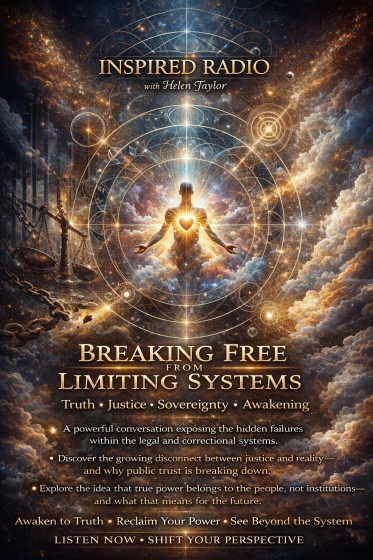

Inspired Radio with Helen Taylor
Guest, David Woods
In this episode of Inspired Radio, host Helen Taylor speaks with David Woods, a former police officer and prison guard, regarding the systemic failures within the Australian legal and correctional frameworks. Woods shares his unique perspective on the disconnect between judicial sentencing and public safety, while outlining his ongoing efforts to draft a new constitution that returns sovereign power to the citizens.
Detailed Summary of Key Insights
The Disconnect in the Correctional and Judicial Systems
Drawing from his extensive experience in the Victorian prison service and police force, David Woods describes a system that he believes has become increasingly focused on the offender at the expense of the victim. He notes that while the 1993 shift toward rehabilitation was intended to lower crime, the reality is a high rate of recidivism where repeat offenders often receive lenient, concurrent sentences that do not reflect the gravity of their crimes. Woods highlights a significant "gap" between how the courts perceive justice and what the general public expects, leading to a loss of faith in the legal system.
Prison Classification in Victoria
Class A - Most Secure (e.g., Barwon)
Class B - Medium Security (e.g., Port Phillip)
Class C - Lower Security (e.g., Dhurringile)
Movement between classes is determined by offender behavior and court assessment.
Constitutional Legitimacy and the "Corporatization" of Government
A central theme of the discussion is the alleged "corporatization" of Australian government departments, courts, and police forces. Woods argues that the removal of the oath of allegiance to the monarch in the year 2000 was an unlawful act that effectively turned public offices into corporate entities. He contends that many state constitutions are technically invalid because they bypassed the mandatory referendum processes required by constitutional law. According to Woods, this shift has allowed politicians to act as the highest authority, ignoring the fact that the people collectively hold the true sovereignty in Australia.
A New Framework for Public Governance
To rectify these systemic issues, Woods and his associates are finalizing a new constitution (currently 88% complete) based on the "law of nature." This proposed framework aims to mandate referendums for all legislative changes, ensuring that the public has a direct say in governance. Key features include the implementation of all Royal Commission recommendations, strict accountability for politicians, and a radical restructuring of the Victims of Crime service to provide compensation parity with workplace injury payouts.
Proposed Constitutional Pillars
Direct Democracy: Mandatory referendums for all law changes.
Victim Parity: Crime victim compensation up to $500,000.
Accountability: Criminal liability for politicians breaching the constitution.
Natural Law: Rights based on inherent human dignity, not corporate statutes.
Legal Rights and Remedies
Woods also touches upon specific legal remedies available to citizens, such as Habeas Corpus, which can be used to challenge unlawful detention in jails or mental health facilities. He warns against the "Sovereign Citizen" movement, noting that while he respects the sentiment, the legal application is often misunderstood; true sovereignty, he argues, is a collective right of the people rather than an individual's ability to opt-out of all laws
Key Data
State Debt: Victoria is reportedly in 188–190 billion of debt 39:03.
Proposed Compensation: Victims of crime to receive up to $500,000 for permanent injuries..
Project Status: The new constitution for the people is approximately 88% complete..
Historical Precedent: The Annotated Constitution of the Commonwealth (1901) is cited as the primary ignored authority for state referendum requirements
Inspired Radio


BREAKING FREE FROM LIMITING SYSTEMS AND EMBRACING OUR INFINITE POTENTIAL – WELCOME TO INSPIRED RADIO with Helen Taylor.
This is where souls come together for inspiring conversations that open hearts, shift perspectives and spark real change.
On Inspired Radio we explore new and uncharted ways of building, thinking, loving, and relating. It’s about embracing the discomfort of transformation and collectively creating Heaven on Earth.
Each week, my guests share their stories, powerful journeys of overcoming change and stepping into a better life. Through storytelling, we connect deeply, learn from one another and ignite the courage to walk our own path.
This show embodies the spirit of love, respect, and compassion. Join us for authentic conversations that will inspire you to live more freely, more fully and more connected.
INSPIRED RADIO with Helen Taylor – Because change begins with a conversation.
00:02
Speaker 1
Okay.
00:03
Speaker 2
Oh, thank you.
00:03
Speaker 1
Good afternoon, Melbourne, good afternoon, Australia, and good day or evening to all our international listeners, too. I'm Helen Taylor. Welcome to my show, Inspired Radio. I'm here with you every Wednesday, 12 noon, Melbourne, Australia time, and Tuesday, 7:00 PM Central Time for US, for conversations and stories to inspire you. This is the BBS Radio TV platform, and we're going live to over 190 outlets worldwide. Firstly, before we get started, thank you to our sponsors, to the ones that sponsor the show. You're my foundation, and you keep the show alive, so thank you very much to each and every one of you. Inspired Radio is all about change and getting uncomfortable and shaking up the status quo, because we're breaking free from limiting systems and embracing our infinite potential, what we're capable of.
00:59
Speaker 1
My guests are here to tell their story and to reveal how they have overcome change and made better lives for themselves, and of course others, and to inspire you with their stories, because storytelling is creating the new world. So let me introduce today's guest. I've got David Woods, a man with firsthand experience on both sides of the justice system. David has served as a police officer, and also worked within the prison system as a guard, giving him a unique inside perspective on how law enforcement and corrections really operate in Australia. So we're gonna dive into some big and controversial topics, from the structure and legitimacy of our state constitutions across Australia, to questions around policing, courts, government departments, and the systems behind fines and enforcement, because we should all know how this stuff works. So welcome, David. Good to have you here.
01:58
Speaker 2
Thank you very much, Helen. And it's a-
02:00
Speaker 1
Yeah.
02:00
Speaker 2
Welcome to all of the listeners.
02:02
Speaker 1
Yeah, yeah.
02:03
Speaker 2
And I hope you enjoy with what I will disclose.
02:07
Speaker 1
(laughs)
02:08
Speaker 2
Um-
02:09
Speaker 1
That sounds ominous. Da, da.
02:10
Speaker 2
They're very interesting topics for the can be- I'll try and keep it as simple as possible, not get into the so-called legal jargon, um, because that's not good for anybody.
02:21
Speaker 1
Thank you.
02:21
Speaker 2
But hopefully it's an enjoyable session for you all.
02:24
Speaker 1
Thank you. Thank you. So can we start firstly, let me talk about 10-year-old David. Did he know he was in for all of this?
02:33
Speaker 2
No, it's, uh, um, due to, uh, experiences I had as a child, um, including, um, dying and coming back to life when I was very, very, very young, only about three months old. So the will to live and the will to assist people, even, um, as a young child, uh, has grown into the adulthood.
02:56
Speaker 1
Right.
02:57
Speaker 2
Um, you certainly learn a lot from the teenage to adulthood, uh, about respect. Um, I always wanted to be a- a police officer, but, um, started in the, uh, prison service in 1996, and, uh, in the state of Victoria, in Australia. Uh, and then, uh, different areas of corrections, including the prisons, the courts dealing with prisoners, uh, who are in the prisoners dock for a jury trial or to be sentenced, uh, to go to jail or so forth.
03:33
Speaker 1
Mm-hmm.
03:33
Speaker 2
Uh, then moved into, uh, policing, um, uh, where it was a total- meant to be a total service to the whole state, all- all- anyone coming into the state of Victoria, which it is, uh, but not fully. And the prison system taught me, um, you- you certainly grow up, because you learn the other side, uh, of life.
04:01
Speaker 1
Can you tell me-
04:01
Speaker 2
And so-
04:01
Speaker 1
Can you tell me what you mean by that? Because that's- it's- I've got a curiousness about that. What is the other side?
04:08
Speaker 2
Yeah, the other side is the criminal nature, the cr- the aspect of the other side of life with, um, either whether you're, uh, poor or whether you- you've got the intention, uh, whether you're reckless, um, to do crime or harm people in any way, whether you're being silly or not-
04:26
Speaker 1
Yeah.
04:27
Speaker 2
... which is alcohol, drugs, et cetera-
04:29
Speaker 1
Yeah.
04:29
Speaker 2
... uh, or just the whole intent behind it. Um, you- you certainly, uh, dealing with, um, criminals who actually have harmed-
04:41
Speaker 1
Mm.
04:41
Speaker 2
... from murderers, rapists, pedophiles, et cetera, et cetera, drug addicts, psychs, psycho- um, psychiatric, um, people who've got their, um, psychiatric disorders, uh, who- who certainly go, um, out of control.
04:59
Speaker 1
Mm.
05:00
Speaker 2
Um, you learn to be quick-witted, um, because they can, um, play- they will play games with you.
05:08
Speaker 1
You need to think on your feet, David.
05:10
Speaker 2
Correct. Absolutely. Um, and you need to be in control of any emotions. Uh, otherwise, because certain parts of the jobs can get you down, um.
05:24
Speaker 1
Yeah.
05:25
Speaker 2
And there's always a support service if you ever need it.
05:28
Speaker 1
Mm.
05:28
Speaker 2
And rightly so, um, because even in the prisons, you'll see assaults, you'll see deaths, um, et cetera. Um, there's some good prisoners who, uh, just want to do their time, and that's what you want from them, and hopefully they- um, the main thing- main aim is for them to rehabilitate themselves. Um, in Victoria, their rehabilitation process, uh, was put in, in 1993, by two lawyers, which on the outset, in the beginning of it, it- not good enough.Um, it ame- they, um, wanted to amend, um, their Sentencing Act in ni- in 1991 in the state of Victoria, which they did to reflect more, uh, rehabilitative measures for people who harmed or what the courts would believe that, uh, should, um, go to, um, to complete programs, et cetera.
06:33
Speaker 1
Well, that has to be the, the focus, doesn't it?
06:36
Speaker 2
Correct. Um, but I, I'd like it to go further. Knowing this side of things, and they didn't get it right, and, uh, since 1993, it's all about the, the offenders and I'm telling you the truth, the whole truth, and nothing but the truth, which is part of the, um, oath.
06:54
Speaker 1
Mm-hmm.
06:54
Speaker 2
Um, because that is true. It's not about the victims, uh, not about people who've been harmed at all. It's about the vic- um, the offenders, and that can be proven beyond doubt. I've witnessed it so many times.
07:08
Speaker 1
What do you mean by that? I don't understand that. What do you mean?
07:11
Speaker 2
Yeah, the, um, when you go into the courts, um, yes, they'll treat you fairly or what you think they will, um, behind their little disguise, et cetera, the way they do things. They play tricks. Um, the sentencing, if they get f- if someone gets found guilty, uh, of a serious crime or even a medium-size, uh, criminal crime where harm is caused, the sentences is all about the offender on how they, they will rehabilitate, but with a- or without proof or showing that their chance of rehabilitation will be, um, affected because most of them say or their lawyer will say, uh, "Your Honor, um, yeah, my client will, uh, adhere to all the, um, instructions by the court, do their programs," whatever it is, "for rehabilitation." Some of them will do it not fully. Very few will fulfill all this and be re- rehabilitated, come back in the community and be a worthwhile, worthwhile individual. Most of them will re-offend, in other words, or be a recidivist, repeat offender in other words.
08:27
Speaker 1
Mm-hmm.
08:28
Speaker 2
Um, and they get lenient sentences, even in the first batch 'cause most of the courts will do what is called concurrent sentencing, and that's around the world. Not in all countries. Uh, concurrent sentencing is whether you, if you're char- if you're being charged and found guilty of multiple criminal offenses, doesn't matter what it is, they'll merge them all into one and you'll just get one sentence, even those they might sentence you to all of them, but then they just do an average.
09:03
Speaker 1
So tell me, w- what's the, what's the focus of the court? What are they looking for? What are they-
09:10
Speaker 2
Uh, the co- the courts are totally corrupt in Victoria. Um, but all around even around Australia, the sentencing, um, for a lot of serious crimes or heinous crimes or, um, felonies in America, which they still use in New South Wales and others, we use serious indictable, um, which is f- the same thing technically in Victoria, um, is not relative to what community wants. M- most people want-
09:41
Speaker 1
So there's a big gap between what, how the court-
09:42
Speaker 2
Correct.
09:43
Speaker 1
... how the court sees it and how the public sees it.
09:47
Speaker 2
Correct.
09:47
Speaker 1
Nobody's listening to the public, are they?
09:50
Speaker 2
Correct. Yeah.
09:51
Speaker 1
And you got to see this firsthand by working with them.
09:53
Speaker 2
Correct.
09:54
Speaker 1
Right.
09:55
Speaker 2
Um, I can tell you for a fact, um, uh, sitting on, um, uh, sitting with, uh, prisoners, um, next to them to make sure they won't g- go out of the, um, the court or so forth or escape from custody i- inside the, um, court, uh, underneath the cells with the courts, um, it's, it's all about the offender and it needs to come back to both, all about, uh, people who have been harmed as well.
10:31
Speaker 1
Yep.
10:31
Speaker 2
They, they need a lot more services if they want it. So and I'll tell you when we get to that point with what we're doing, the Victims of Crime will, if people want this stuff, uh, receive a lot more.
10:46
Speaker 1
Are you saying that the system, the court system is all about the offender more?
10:50
Speaker 2
Correct.
10:51
Speaker 1
Holy cow.
10:52
Speaker 2
Oh, yeah. It, it's all about the offender. I've had, uh, and I'll name her, 'cause I'll indict her, in other words charge her with serious offenses if she wants to play. Elena Popovic was a magistrate, um, and in, on the 21st of June 2007, I had a repeat offender, uh, a mother who was a drug addict. I won't say where. I was the police officer who charged her with two separate offending, off- offending from a supermarket, then went into another suburb and tried to steal things from a car. The, the victims in the suburb where they were, she was trying to steal things from their car wanted to deal with her. You can understand.
11:38
Speaker 2
We, um, managed to, because of the second criminal offense, able to get a bail justice who has the authority to, um, put the individual into a jail cell-
11:52
Speaker 1
Mm-hmm.
11:52
Speaker 2
... or put them on bail. We managed her to put her in jail until the next court hearing, which wasn't, w- a, a day or so after.
12:01
Speaker 1
(laughs)
12:02
Speaker 2
Which was good, so hopefully she wouldn't continue to re-offend, but-
12:07
Speaker 1
So your goal as a police officer was what?
12:11
Speaker 2
The police are to keep people safe, but that's-
12:13
Speaker 1
Yeah.
12:13
Speaker 2
... an oxymoron sometimes.
12:15
Speaker 1
Sure.
12:16
Speaker 2
Um, because, um, police are not there to punish what they do unlawfully, but you're there, they're there under the UK monarch and you give your oath of allegiance to the UK monarch to serve the people and to pre- prevent crime, et cetera, but also to, um, help people in all different ways because the UK monarchs can't do it. That's why the courts are there, the attorney general, the law officer of the monarchs, who is a barrister in parliament, they're there to provide solely for the welfare of the people because the monarch from England can't do it. That's in very, very basic form.
12:58
Speaker 1
But if you're saying to me that as a police officer you were seeing that the court systems were just looking at the offender and not the victim, h- h- how do you keep doing your job?
13:08
Speaker 2
It's, it's frustrating.
13:10
Speaker 1
Right.
13:10
Speaker 2
Um, I can tell you a story. It was in, it was at Sunshine Magistrate's Court. Oh, actually, I better, better get back before with, um, uh, Alana Popovic, that magistrate. She said regarding that lady who was a drug addict and did two separate criminal offenses and the second offense, or both offenses were thefts, in other words a dishonesty offense-
13:35
Speaker 1
Right.
13:35
Speaker 2
... where you're being dishonest to obtain property or so forth.
13:38
Speaker 1
Yep.
13:39
Speaker 2
She said, "Oh, well, theft is a minor offense." And I'll never forget it. But I didn't know what is called the Cable principle in Australia.
13:48
Speaker 1
So what was she essentially saying?
13:51
Speaker 2
That theft is a minor offense to her. She-
13:54
Speaker 1
And that means what?
13:55
Speaker 2
And that means she, she would like the Crimes Act or criminal codes in other states that deals with all the serious crimes changed to say that theft, which has been around for centuries-
14:09
Speaker 1
Yep.
14:09
Speaker 2
... is only a minor offense when it's actually a very serious criminal offense.
14:13
Speaker 1
And does that mean she wanted to take it off the table?
14:17
Speaker 2
Yeah, technically.
14:18
Speaker 1
Wow.
14:18
Speaker 2
And the Cable principle in 1996, Gregory Wayne Cable versus New South Wales, he allegedly mur- which he did, he murdered his wife and started threatening witnesses whilst in jail. The Supreme Court tried to ass- just in basic words, they tried to assist the victims to say that hopefully he wouldn't continually threaten them. So technically the Supreme Court acted as the parliament, the High Court here in Australia laid it out. Well, they're not the parliament, the Supreme Court. There's you go, there's your Cable principle, the Supreme Court's not a parliament. Like anybody, you're not a parliament. Only the parliament can legislate, in other words create a bill, debate it, and it should be checked, which none of, nothing is, and that's how it's unconstitutional but that- that's another story.
15:07
Speaker 1
And where are the people in all of this? I mean, none of us-
15:10
Speaker 2
Correct.
15:10
Speaker 1
... none of us are getting asked anything or none of us are privy to any of this at all.
15:16
Speaker 2
Correct.
15:16
Speaker 1
There's only a chosen few that are making changes and decisions. Gosh.
15:22
Speaker 2
That is absolutely correct, Helen, because... And that's not the way it should be.
15:27
Speaker 1
Mm-hmm.
15:28
Speaker 2
If, if people want, when we get into it, the way it will be, I can tell you because the people need more say, um-
15:37
Speaker 1
Well, is that getting back to the town square with the stocks? (laughs)
15:40
Speaker 2
Oh, well, that- that's corporal punishment and, um, if they, if you use, uh, in Section 8 of the Bill of Rights, Section 8, 16, 88, 89 is you can't have cruel or unusual punishments.
15:57
Speaker 1
Okay.
15:58
Speaker 2
Which they've (overlapping dialogue) -
15:58
Speaker 1
Tomatoes grounds. Okay. (laughs)
16:01
Speaker 2
Yeah, so, but otherwise there's people I know that will agree to this and in some ways it's, it's got its right place, but all you need is the people voting in a referendum, all people, to say, "Yes, we want this."
16:16
Speaker 1
Yep.
16:16
Speaker 2
And then it has to be done. Um, and that might be a matter of time. Uh, another example I'll give you just very quickly, um, a magistrates court, which is the lowest court, or in New South Wales they call it a local court, magistrates actually come from England.
16:32
Speaker 1
Mm-hmm.
16:32
Speaker 2
Um, et cetera. Um, a gentleman, he's not a gentleman actually (laughs) , he was, um, an Islander bloke, um, Samoan or something like that.
16:46
Speaker 1
Mm.
16:47
Speaker 2
Um, he was only young. He did what was called an armed robbery. Armed robbery, or robbery in itself is when I take something from, just say yourself, Helen, if I use that, um, as an analogy. I take it from you from force, whether it's a necklace, whether it's your handbag, whether it's your purse, whether it's a watch, anything I buy force, money, um, but if you use a pen to a nuclear bomb, whatever it is, doesn't matter what level it is, to threaten or damage in order to get what you want, um, that's called armed robbery.
17:22
Speaker 1
Okay.
17:23
Speaker 2
And he did this on, I think it's a service station from Montgomery, and they heard it in the lowest court rather than the middle court, which is the County Court, another term from England.
17:34
Speaker 1
Mm-hmm.
17:34
Speaker 2
Um, it should have been in the County Court 'cause it's a minimum, it's a maximum of 25 years. If I get my way, it'll be minimum 25 years. Uh, and then we'll see how many offenders wanna offend because you won't wanna be spending minimum 25 years to life in jail. Um, so they, they heard it, I don't know why, um, the police accepted it. Did they inform the, uh, victim who was obviously, um, hurt by the armed robbery with the threat or the actual commission of it where they obtained what they wanted to obtain or the alleged, um, attempt where they tried to obtain what they wanted to obtain from the people?
18:23
Speaker 1
Sure. Yep.
18:23
Speaker 2
Um, they heard it in the lowest court, the Magistrate's Court at Sunshine.He got four years. No, actually, no, no, it was, uh, four months, yeah, that's right, four months, for an armed robbery.
18:37
Speaker 1
Right.
18:38
Speaker 2
But I think, uh, it was a knife. Or if not, it was something similar to that from my memory. And, um, and when he went back, I escorted him back to the cells underneath the police station and the court. He laughed his head off.
18:57
Speaker 1
(laughs)
18:57
Speaker 2
And as, uh, I, and y- you just want, as a police officer, let alone that, you just wanna do something to him. But you can't, 'cause there's all cameras.
19:05
Speaker 1
Mm-hmm.
19:06
Speaker 2
But it just shows you, and even with the spate, and I don't wanna talk about it too much, uh, with the, um, the teenagers, uh, even one today on the news, uh, doing, uh, aggravated burglaries. All, uh, uh, burglary is in itself is what called a home invasion, what the media say.
19:27
Speaker 1
Mm-hmm.
19:28
Speaker 2
Um, or someone coming into your property without your consent, in other words, to do a theft, to assault someone, in other words, hit you, however you wanna cause harm, deceive you, um, et cetera. And when you know someone who is present, just say I went into your house, Helen, which I'd never do without your consent, but just say I went in there, I broke in, um, however I need to, whether it's either a finger or a foot through the door, window, roof, whatever it is, there's the intent to do it.
20:04
Speaker 1
Right.
20:04
Speaker 2
So if I know that you're home or I've, uh, I've made an inference that you're home and I'm still gonna do it, there's your aggravated burglary. Because you're there to do harm, whether it's just take things, whether it's damage things, whether it's assaults you, deceive you in any way, there's your higher offense. 'Cause burglary, they say it's 10, 15 years maximum, uh, aggravated burglary is like armed robbery, maximum 25 years should be minimum.
20:36
Speaker 1
Well, am I right that I'm hearing you say that through your own experiences, you've seen the injustice of this system.
20:44
Speaker 2
Correct.
20:45
Speaker 1
And you've seen it get worse, not better?
20:48
Speaker 2
Correct.
20:49
Speaker 1
Mm-hmm.
20:50
Speaker 2
Um, it'll be interesting to see whether they do a Royal Commission on things like this. Um-
20:57
Speaker 1
But people are so used to hearing even that term. And, you know, from the, if you look at the history of Royal Commissions, what are the outcomes of them?
21:05
Speaker 2
Yeah, that's all gonna change. Like, we're doing this and this in the constitution that me and my brother are doing it. I can tell you, they must put all recommendations in. If not, you breach, and they will be held accountable. There's gonna be an efficient prosecution for politicians and all that.
21:22
Speaker 1
We'll get in-
21:23
Speaker 2
You name it.
21:23
Speaker 1
We'll get into that concept.
21:24
Speaker 2
Yeah, that's right. That's right.
21:25
Speaker 1
Right? But what I'm hearing from you is, is that through your own experiences, you have seen that the system is focused on the offender, that rehabilitation is probably poor, if not not working at all. Is that right?
21:42
Speaker 2
Correct. For most people, it doesn't, 'cause they choose not to stop offending and start living their life, et cetera. Some people actually do it, and well, and well done to them. Take my hat off to them that they're rehabilitated.
21:57
Speaker 1
Because what I was hearing from you earlier, you, as a police officer, you were being asked to e- evolve yourself, to learn and educate yourself. You had to be able to read body language. You had to know-
22:10
Speaker 2
Right.
22:10
Speaker 1
... the mental states of people. You had to be-
22:13
Speaker 2
Correct.
22:13
Speaker 1
... on guard and focused. So you had to train yourself and educate yourself.
22:18
Speaker 2
Yeah.
22:19
Speaker 1
So what-
22:19
Speaker 2
The prison service helped me with that, I can tell you.
22:22
Speaker 1
Yep.
22:23
Speaker 2
Uh, to, because otherwise, a lot of police don't know that aspect of it. Um, you get to investigate different crimes, et cetera. That's great. But able to communicate with someone-
22:36
Speaker 1
Mm-hmm.
22:37
Speaker 2
... is a learned skill.
22:38
Speaker 1
Mm-hmm.
22:38
Speaker 2
Some people have it straight off the bat. But that's very, very few.
22:41
Speaker 1
Yeah.
22:41
Speaker 2
Because communication, you know, as you very well know, body language is around about 85, 88%, and the rest of it's communication in different ways.
22:52
Speaker 1
Mm-hmm.
22:52
Speaker 2
So, but, uh-
22:55
Speaker 1
So what we-
22:56
Speaker 2
... most people are-
22:56
Speaker 1
... how, how can we, how can we encourage offenders to wanna be better? How, how do they do that right now?
23:05
Speaker 2
Well, I don't know the updates, uh, with it.
23:10
Speaker 1
Mm-hmm.
23:10
Speaker 2
I've known, I've noticed that, uh, uh, in some ways, it's got worse, officers leaving, prison offices, I'm talking about, leaving.
23:16
Speaker 1
Yeah.
23:17
Speaker 2
Um, prison officers just doing their job 'cause they want a job, um, et cetera.
23:22
Speaker 1
Mm-hmm.
23:22
Speaker 2
There's a gentleman I worked with, but his sister-in-, uh, sister-in-law, I think it is, was the one who was working at, uh, Port Phillip, a jail down in Laverton in the west side of Melbourne in Victoria.
23:36
Speaker 1
Yep. Mm-hmm.
23:37
Speaker 2
And she was the one, the poor one, where they were offering, um, prisoners hot drinks and sugar, um, in their cells. And, um, which will be banned, I can tell you, uh, which it shouldn't be the case anyway. I don't know-
23:54
Speaker 1
Why would it shouldn't be banned? Is, does that have a sedative sort of effect or a calming effect?
23:58
Speaker 2
Oh, no. The other effect is they misuse it. Some of them, some prisoners will do the right thing by just drinking it, et cetera.
24:06
Speaker 1
Well-
24:06
Speaker 2
And-
24:07
Speaker 1
... you know.
24:07
Speaker 2
... en- enjoying their cuppa, right?
24:09
Speaker 1
Yeah.
24:09
Speaker 2
Uh, uh, this offender obviously was playing up. Uh, the prison officer lady, uh, handed them, uh, what I, what I know of, the cup, sugar. They took it, put the sugar in their cup, mixed it up with their little plastic little stirrer, or-
24:25
Speaker 1
Yep.
24:26
Speaker 2
... um, et cetera, or spoon. Um, they don't have metal spoons in there, they have plastic.
24:31
Speaker 1
Sure.
24:31
Speaker 2
Which is sometimes a problem as well 'cause you can make weapons out of them. Um-... then actually threw it at her.
24:39
Speaker 1
Oh.
24:39
Speaker 2
So the sugar still cooking in the hot water-
24:42
Speaker 1
Right.
24:43
Speaker 2
... seriously burnt her.
24:45
Speaker 1
Mm-hmm.
24:45
Speaker 2
Um, they don't know the process. In Victoria, and like it is with most states, and other countries as well, they have a victim's service. Um, and I don't know how much help the lady has got. Uh, and I, I've heard that she's got post-traumatic stress syndrome-
25:04
Speaker 1
Yeah.
25:04
Speaker 2
... uh, from it, and doesn't work, um, et cetera, which is-
25:07
Speaker 1
But you said before that a lot of the officers are either leaving the system or they're just becoming very complacent and just doing their job.
25:16
Speaker 2
Most of them will be on call, uh, where they will, uh, make sure that the prison's safe and secure, which is the role of prison officers-
25:24
Speaker 1
Yep. Yep.
25:24
Speaker 2
... uh, for the good or- and they, they say good order and management of the jails, and the police cells as well.
25:31
Speaker 1
Yep.
25:32
Speaker 2
Um, but some of them will be, "I just wanna do my job," for sure, 'cause they get sick and tired of it. I've met different people who've left the prisons. Um, there's some people I know who are still in there, uh, who I used to work with. Um, but others have certainly left. And it's, it's not a job that- for everybody. It's not the glor- and they, thankfully they tell you in, in interviews, what I've heard from people who went for it and then chose-
25:58
Speaker 1
Yeah.
25:58
Speaker 2
... not to do it.
26:00
Speaker 1
Well, a lot of people-
26:01
Speaker 2
(coughs)
26:01
Speaker 1
... like to see achievement in their job pla- (laughs) their workplace, don't they? They want to see that they're, they're making the, the world a better place in some way, shape, or form.
26:10
Speaker 2
Yeah, correct. The, um, there is a lot of re- uh, there's different research, uh, 'cause they've looked at different countries, sometimes different states, in relation to the prisons as well as different, um, different areas, uh, of, um, accountability. But the Texas system, with wearing pink uniforms, et cetera, and their rules in relation to what prisoners do is actually quite good. They're fairly, um, it's a fairly, (sighs) it's a secure prison. Um, but it's not the most secure because they, the prisoners know who are there.
26:54
Speaker 2
Um, you're on a, you're on a reasonable good wicket, if I can use that analogy-
26:59
Speaker 1
Mm-hmm.
26:59
Speaker 2
... to say that if you stuff up, you're gonna go into a harsher jail.
27:03
Speaker 1
Okay.
27:04
Speaker 2
That's a, a, quite a good system that I know of. And it has positives. Whether they-
27:11
Speaker 1
And it's been crucial because they think they've got a little sense of freedom and w- and movement, yeah?
27:19
Speaker 2
Yeah, correct. And, uh, it's similar, but it's like, um, you've got the, our harshest jail in Victoria, which is not too harsh, but it is, it's at Barwon down Geelong-
27:30
Speaker 1
Mm-hmm.
27:30
Speaker 2
... area. They got Margonette now which is, uh, they call them A class, B class, and C class jails. A is your most serious jail, uh, which is Barwon down Geelong. Your B class is, um, Margonette, which is a bit less than Geelong, and the Port Phillip Prison down at Laverton.
27:52
Speaker 1
Mm-hmm.
27:53
Speaker 2
And the Metropolitan Prison at Truganah, which is very close to each other anyway-
27:57
Speaker 1
Yep.
27:57
Speaker 2
... in, in distance-wise for people overseas. They're B class jails 'cause they're secure, um, with wire fen- wire, uh, fences, et cetera. Um, and it's only one way in, one way out, in other words, uh, through locked doors and all that. Um, where you've got Daredevil up at Seymour in the north of Victoria, that's a C class jail.
28:23
Speaker 1
Mm-hmm.
28:23
Speaker 2
Uh, you've got Loddon is, I think could be a C class jail, where you got a bit more freedom. Um, and the- you're able to
28:34
Speaker 3
(knocking)
28:34
Speaker 2
... want to, able to roam a bit, the prisoners. And so then it depends on your attitude, of course. If you are well-behaved, you do your time in jail-
28:46
Speaker 1
Mm-hmm.
28:47
Speaker 2
... um, you get to stay there and you do your sentence and you finish off your jail sentence at that particular prison.
28:54
Speaker 1
Yeah.
28:55
Speaker 2
Um, and, and then-
28:56
Speaker 1
And misbehave, then you go into s- harsher conditions, like-
28:59
Speaker 2
And that can be the s- the way. That's correct. It used to be the, the governor who was in charge of the jails would determine it.
29:07
Speaker 1
Right.
29:07
Speaker 2
Now more so it's the courts, which it should technically be 'cause it's technically a punishment, (smacks lips) uh, will decide whether, no, you deserve to go to, uh, whatever jail, or where, um, the availability is. Some of them might be quite packed out. Or that the offender, um, may not be able to go to a particular, uh, jail-
29:32
Speaker 1
Mm-hmm.
29:33
Speaker 2
... uh, because of certain things. Uh, what happens in Victoria, you'll go to an assessment prison, which is in Spencer Street in Melbourne, in the city of Melbourne, um, called the Melbourne Assessment Prison or the rem- Remand Center, the same thing.
29:48
Speaker 1
Yeah.
29:49
Speaker 2
And, um, that is very sec- or quite secure I should say, with an analogy.
29:55
Speaker 1
Well, can I-
29:55
Speaker 2
And they assess you.
29:56
Speaker 1
Can I ask you a question there?
29:58
Speaker 2
Yes.
29:58
Speaker 1
I mean, you know, up till now, uh, people now know a hell of a lot more about our prison systems than they ever knew before. I certainly never knew all of this. Um, they certainly know, you know, the structure. And thank you for, for sharing, like, all of that with us as well. So if, I mean, I think everyone listening is not gonna find themselves a part of that system.
30:20
Speaker 2
No, and I hope not, 'cause it's not good.
30:21
Speaker 1
That's certainly not what they're aiming for.
30:23
Speaker 2
No.
30:23
Speaker 1
But if they had to visit somebody, like, what are our rights? What, what can we do if we need to... Can we, um, go in and see people? Can we send them messages? Can you phone somebody because-
30:35
Speaker 2
Yeah.
30:36
Speaker 1
... I'm watching at the moment with people that are starting to look at self-governance and looking at different ways to live, that sometimes they're, they're, you know, arguing with the system, they're pushing back on the system, and they're finding themselves getting arrested for not paying a fine or for, for not-... getting breath tested and things like that.
30:55
Speaker 2
Correct.
30:56
Speaker 1
So-
30:56
Speaker 2
The, um, the, uh... We're adhere, we're keeping a lot of things with this new constitution we're doing. It'll be reciprocated through all the states.
31:06
Speaker 1
Mm-hmm.
31:07
Speaker 2
Um, but I can tell you, you have a right to go into the jails. You will be, um, screened, like any jail. Doesn't matter what country, and some of them are, are quite serious. Um-
31:18
Speaker 1
And what does screened mean?
31:18
Speaker 2
... they've been doing-
31:19
Speaker 1
Does it mean getting a pat-down and-
31:21
Speaker 2
You will be pat-down. You'll get a, an electronic screen when you walk-
31:25
Speaker 1
Yep.
31:25
Speaker 2
... through, like the airports nowadays.
31:27
Speaker 1
Like the airports. Mm-hmm.
31:28
Speaker 2
Um, which is fair. So you don't have weapons, drugs-
31:31
Speaker 1
No.
31:31
Speaker 2
... or any other thing that, that could, um, um, prevent the safety of the jail; prisoners, staff, et cetera, contractors, counselors, doctors, et cetera, et cetera. Teachers, um, and all that. So, which is only fair. They've been doing eye scans, which is unlawful.
31:50
Speaker 1
Mm.
31:51
Speaker 2
Um, I had mine done at, um, the metropolitan remand center in Truganina in 2007, '8. I didn't know at the time-
32:01
Speaker 1
Even back then?
32:01
Speaker 2
Yes.
32:02
Speaker 1
Wow.
32:02
Speaker 2
The politicians have exceeded their duty, or the, um, commissioner for the prisons, uh, has exceeded their duty. Uh, and it's all, it's-
32:12
Speaker 1
Wait, 20 years ago, eye scans?
32:15
Speaker 2
Yep. And it's apparently still occurring, with what I know of, with some people who tried to go into prisons and they were asked to do it. Uh, uh, um, and they, and they were told, "If you do go in, you must, even as an employee, do it." An eye scan. So we don't know where they're keeping the information, and because doing the eye is linking partly to the DNA-
32:38
Speaker 1
Hmm. Mm-hmm.
32:39
Speaker 2
... uh, that's the troubling thing. Um, it's gonna be unlawfully, uh, it's gonna be banned, uh, and has to be possibly inquired if people want to see whether or not-
32:49
Speaker 1
Well let's get back to our rights in going to visit somebody. So, we get scanned, we get a pat-down, but we're allowed to go in there. Are we allowed to-
32:57
Speaker 2
Yep.
32:57
Speaker 1
... call them? Are they allowed to take calls? Because I've heard-
33:00
Speaker 2
Yep.
33:00
Speaker 1
... of some people, um, being denied those things.
33:04
Speaker 2
Correct. Uh, it's up to the, um, management of the jails, or police cells, et cetera.
33:10
Speaker 1
Right.
33:10
Speaker 2
Uh, if they're police cells, it'll be the sergeant or the inspector. In the jails, it's the governor. Or if was the governor, it might be the commissioner. It doesn't matter. They're in charge in management of the jails.
33:21
Speaker 1
Right.
33:22
Speaker 2
And also the senior prison officers who will, um, you go by the rules, um, that you must obey the rules whilst on site.
33:32
Speaker 1
Yep.
33:32
Speaker 2
And, uh, which is that, um, you don't cause harm, uh, to either a prisoner or bi, uh, any, anyone on, in, on, uh, in the jails. Um, you will be screened, not just physically, but your name, your date of, uh, you were born, but not birthed. Um, the address, associates will be, uh, be asked of you. Uh, that is much detail-
33:58
Speaker 1
People... Associates being they need somebody who knows-
34:01
Speaker 2
Friends, families, people you hang around with.
34:04
Speaker 1
And what if-
34:04
Speaker 2
They'll do a history check.
34:06
Speaker 1
... what if you don't, what if you don't wanna do that?
34:08
Speaker 2
Uh, well then, they can refuse you entry.
34:10
Speaker 1
Mm-hmm.
34:11
Speaker 2
All right? And tha- and that's up to them, because technically you're going into the place. It's like a home. They give you-
34:15
Speaker 1
Well you're going into their jurisdiction, aren't you, really?
34:19
Speaker 2
Correct. Correct. That's right. So they can do, other than the eye scan, that's unlawful, but the rest of it, they can technically do. You used to have, um, the prisoners have, or used to have, a prison, prisoner's information management number. A PIN, um, for short.
34:39
Speaker 1
Right.
34:39
Speaker 2
Um, and the visitors all have a similar, uh, acronym and name, and you'll have a di, identity number when you go i, if you re-go into the prison to visit prisoners, et cetera.
34:52
Speaker 1
Mm-hmm.
34:53
Speaker 2
And it doesn't matter for contractors and et cetera, um, uh, priests, et cetera, et cetera, et cetera. Everyone gets checked, or should be checked. That's a, that's a thing. Should be, to make sure that they're not, um, uh, um, doing anything that might harm the jail or the staff, et cetera.
35:11
Speaker 1
Yep.
35:11
Speaker 2
The management of them, in other words.
35:12
Speaker 1
Are they a risk or not? Yes.
35:14
Speaker 2
Correct. Correct. Um, with the jails, so, um, very rarely in the police cells. That's 'cause you can't. But, uh, in the jails, you'll have family visits, or in other words, an open visit, where you get to physically touch, et cetera, your family member. Uh, kiss, whatever you wanna do. Talk.
35:34
Speaker 1
Mm-hmm.
35:34
Speaker 2
Otherwise, you've got, like most jails have, you'll have your secluded visit area. And the poli, and the police cells are the same. Um, you'll have a secluded area. It, uh, it'll be glass or it'll be something that's secure between you and the visitor.
35:52
Speaker 1
Yep. We've all seen that on the movies, David-
35:54
Speaker 2
Correct.
35:55
Speaker 1
Mm-hmm.
35:55
Speaker 2
And that's correct.
35:56
Speaker 1
Yep.
35:57
Speaker 2
Um, and it's still the same. Um-
35:59
Speaker 1
So, so, so, sorry to butt in.
36:02
Speaker 2
No, no.
36:02
Speaker 1
But, you know, I wanna get to your constitution and what you're talking about there-
36:06
Speaker 2
Yep.
36:06
Speaker 1
... as well, right? And we got 20 minutes to go, so I'm gonna-
36:10
Speaker 2
Well, we'll, we'll hurry it up anyway.
36:11
Speaker 1
I, well, I just wanna ask the question, are, you know, people in the police force and in the pris, prison system, like the guards, et cetera, are they open to change? Are they open to, um, your, like things like your constitution and things like that? Because-
36:28
Speaker 2
Yep.
36:28
Speaker 1
... you know, um, if we're gonna-
36:30
Speaker 2
So, some of them, to, to sl- you know, some of them are, but some of them are just so ignorant. Um, and there's an un, there's a rule of law called ignorance of the law is no excuse.
36:42
Speaker 1
Right.
36:43
Speaker 2
And there, the, that's subjective, but it means that it's constitutional law, of course. It's the law of nature, which is even higher.
36:53
Speaker 1
Hmm.
36:54
Speaker 2
Uh, 'cause you can't beat it.
36:56
Speaker 1
Yep.
36:56
Speaker 2
Um, but, or any so-called statute or-... act law if you want from a parliament is for everyone to obey. No one's meant to be above the law. Um, so with police and in the state of Victoria, they've corporatized everything including police. So that's a- a serious charge against every police officer. They've corporatized the courts. They've removed the oath of allegiance for all lawyers incl- which is the courts themselves because they're barristers are in 2000, the year 2000 after we in Australia, we had a commonwealth or a national referendum to keep the UK monarch and to change in the commonwealth constitution, um, two main sections. The people said no. So what they did is they couldn't care less about what the people the- thought in Victoria. They removed the oath of allegiance for lawyers under the Courts and Tribunals Further Amendment Act September 2000 Section 3, oath of allegiance no longer required and they're all ignorant.
38:06
Speaker 1
So who is the allegiance to?
38:09
Speaker 2
Just an oath of office under the Supreme Court and that's the other oath that they do. So they only do that.
38:15
Speaker 1
And by removing it, what does that mean?
38:18
Speaker 2
That's a treason indictment. But we have to, um, put a better definition in because eh- most of the politicians either federally in Australia and around the states have just put harming the monarch or the monarch, UK monarch, queen, king, or their families is treason. Yes, that's-
38:39
Speaker 1
They're all still-
38:40
Speaker 2
... one minor part.
38:40
Speaker 1
... under the Brit- we're still under British rule in- in that, yeah.
38:43
Speaker 2
We are in certain ways, but not fully because of, uh, unlawful processes and I go into it today.
38:51
Speaker 1
Mm-hmm.
38:51
Speaker 2
Um, but generally they've corporatized everything including government departments which is absolutely unlawful.
38:58
Speaker 1
Mm-hmm.
38:58
Speaker 2
Probably because the state is in so much debt. They technically should be bankrupted.
39:03
Speaker 1
Yes.
39:03
Speaker 2
They're in 188 to $190 billion dollar debt which they advertise on their own websites. Economists have all gone through it. Forensic accountants have already gone through it and they confirm that.
39:16
Speaker 1
Yeah.
39:16
Speaker 2
So technically why aren't the liquidators or the administrators in? Because-
39:20
Speaker 1
Yes. Yeah, if it was any of us and if we were running a business-
39:23
Speaker 2
Correct.
39:24
Speaker 1
... we'd be done. We'd be gone.
39:25
Speaker 2
Correct.
39:25
Speaker 1
We'd be gone.
39:26
Speaker 2
Yep. We're going to ask, we're doing a new constitution for this state because they don't have a valid constitution act. Just in brief, the states were meant to put a referendum process for all people of the state.
39:40
Speaker 1
Mm-hmm.
39:41
Speaker 2
They should have done it before 1901.
39:44
Speaker 1
Yeah.
39:44
Speaker 2
1901.
39:46
Speaker 1
Mm-hmm.
39:46
Speaker 2
There's a book written in 1901 which the High Court have backed up over 182 times. It deals with the Commonwealth as the federal, um, government. It deals with the colonies who became states, which is fair enough. It deals with the territories within Australia.
40:13
Speaker 1
Mm-hmm.
40:14
Speaker 2
This book is totally ignored in the States. No court has referred to it other than the High Court in Australia, which was in Canberra. The, um, on page 990 of the, um, this book called the Annotated Constitution of the Commonwealth-
40:36
Speaker 1
Mm-hmm.
40:37
Speaker 2
... by John Quick, the Victorian barrister, and Robert Garran, a New South Wales barrister. It's a lot of work. It would have been a lot of work back then.
40:48
Speaker 1
Sure.
40:48
Speaker 2
Um, they said that on page 990, the referendum process relates to the federal government, which is the Commonwealth and to the states.
41:00
Speaker 1
Mm-hmm.
41:01
Speaker 2
And the state of Victoria I think is still a state.
41:04
Speaker 1
Mm-hmm.
41:04
Speaker 2
They never put one in nor did New South Wales, South Australia. These are different states of Australia. Tasmania, Victoria, Tasmania, and South Australia are all the same, all unlawful in the in constitutional law. Uh, and New South Wales technically as well. Queensland, oh my gosh, they're even worse. They overthrew their checking house which is called the Legislative Council because you're meant to have two houses of parliament from England. And there was an 1850 Constitution Act that Queen Victoria, the, uh, reigning monarch at the time passed which in- in, uh, um, said to follow English law which is also two houses of parliament. You've got a lower house for the allegedly the people and the upper house is a checking house to make sure that the lower house is doing their job and to make sure that things are- are constitutionally valid and they don't override it. But they've never done it properly or they don't even do it anyway.
42:08
Speaker 2
And then Queensland in 1919 said to the people, "We want to v- have your vote through a referendum, um, to see whether we want to remove the upper house." People said no and it's clearly on the Parliament's website and the Electoral Commission website in Queensland that they had a referendum and the people said no. In 1922, the alleged governor which is meant to be the Queen's or King's representative of England within the state of Queensland just organized with the Parliament and they just said, uh, created an act of parliament and said, "We're removing the Legislative Council."
42:48
Speaker 1
Well, I think- I think-
42:49
Speaker 2
... states' *******.
42:49
Speaker 1
... I became very, very cynical decades ago because I used to watch whatever got put forward to the Victoria, the state of Victoria, to the people. Um, y- you know, I would watch, and I would see that it was being, um, put to everybody to vote on or to acknowledge or whatever. And I started realizing that as soon as that would happen, it didn't matter what the outcome was-
43:14
Speaker 2
Correct.
43:16
Speaker 1
... for people. It was only gonna be a matter of months or a little bit of time before it would happen anyway.
43:22
Speaker 2
Correct. The, um-
43:22
Speaker 1
I started getting very cynical watching all of that. (laughs)
43:25
Speaker 2
Correct. You're totally correct, Helen. The politicians believe they're the highest authority or sovereign.
43:32
Speaker 1
Yeah.
43:32
Speaker 2
That is t- total misleading, or in other words, uh, a lie.
43:37
Speaker 1
Yeah.
43:37
Speaker 2
The people collectively in Australia are the highest authority.
43:43
Speaker 1
Mm-hmm.
43:43
Speaker 2
And that was created from 1900. Okay? We're being totally lied to. Politicians will continually tell you that, "We're sovereign," and that's the way they act and will do whatever we want. Even Victoria, like one or two of the other states, they play like they're England.
44:01
Speaker 1
Yeah.
44:01
Speaker 2
The powers of the English Parliament. That is an absolute fraud or, in other words, deception on the people because it, uh, the- the state of Victoria, like all the other states, had previous, um, constitutions where they have to, they- they can't, um, override. They've all from England. Uh, Victoria and New South Wales have got in 1855 one, Queensland, 1867, um, Tasmania, I think it's 1856 if I'm remembering.
44:36
Speaker 2
Um, in those constitutions, and from English law-
44:41
Speaker 1
So are you saying that every state and territory has its own constitution?
44:45
Speaker 2
Yes. Um, that's correct. Um, a constitution enables the parliament to act under it and not override it, that it's got all its powers within that constitution. Like the Commonwealth in a, in, in federally here, in Australia, they've got Section 51 which, uh, outlines all their powers that they've got. There's no other powers, and they breach it anyway as well. (laughs) We'll deal with them. Um, they didn't-
45:15
Speaker 1
How, how, how is, how, if you're... Okay. I mean, you've, you've, you know, we could do hours on this. You've got tons-
45:21
Speaker 2
Correct.
45:22
Speaker 1
... of knowledge, tons of knowledge from research and personal experience.
45:26
Speaker 2
Correct.
45:27
Speaker 1
How is your constitution that you're working on now, how are you gonna implement that?
45:34
Speaker 2
Yes. Um, we're bringing a, uh, a constitution for the people for the first time because of the corruption, the amount of corruption. In the, um, Australia, in Australia, we've got a referendum process which w- they've brought it in from Switzerland, which was good, but they've never adhered to how Switzerland do it, which is typical. If they did, we'd be having a lot more referendums. You will be having a lot more vote by all people called a referendum to, uh, formalize any change.
46:07
Speaker 1
Yes, which is how it should be.
46:09
Speaker 2
New or to remove things.
46:10
Speaker 1
Yeah.
46:10
Speaker 2
Remove, change, or, uh, which is alter-
46:14
Speaker 1
Yeah.
46:14
Speaker 2
... or create, et cetera. Um, uh, the, you, it's gonna... The constitution is for the people.
46:23
Speaker 1
Correct.
46:23
Speaker 2
Uh, there's, it's absolutely honorable. Um, people are more than welcome to have a copy. We're about 88% done. Um, just have to put some more human rights in that are not in our Human Rights Act in Victoria, uh, to, and we're doing it in accordance with na- uh, law of nature.
46:42
Speaker 1
Correct.
46:43
Speaker 2
Um, and with, and the lesser laws is, uh, laws from parliament. Uh, the customary laws from the Indigenous people are the same level as the laws from parliament only because there's abuse in their laws. Some of their customary proced- um, uh, uh, aspects, what they do with the Indigenous Aboriginal is very honorable.
47:05
Speaker 1
Mm-hmm.
47:05
Speaker 2
But some of it, it's not good. It's harm. So that part we don't want.
47:10
Speaker 1
Mm-hmm.
47:10
Speaker 2
Uh, we're trying to work with them as well. But this constitution will go over. There is a Section 109 that relates to all states and the territories are, it relates to them as well because we had a referendum in 1977 that said, people said, "We want actually territories to become states." They ticked the box. Yep, it was agreed to, formalized. So they're technically states. And the High Court in Australia, our highest court here, have reaffirmed it eventually, eventually. So under Section 109, it's called the invalidity section or to invalidate something between a federal act, which is a constitution, uh, or any federal Commonwealth act, and any state act, which is including a constitution.
48:05
Speaker 1
Mm-hmm.
48:06
Speaker 2
Um, if I use a quick analogy by, uh, the Chief Justice of the High Court, uh, one of the original ones, was Samuel Griffiths. In 1900 and, um, when was it, 1904, yeah, New South Wales versus the Commonwealth, I think it's from 1904. He says on the top of page two, talking about the Commonwealth Constitution, but it's the same with the state constitution or previously as a colony constitution. It doesn't matter what country you're in, most of them have got a constitution act which the politicians and people must obey.
48:44
Speaker 1
Mm-hmm.
48:45
Speaker 2
He says the Constitution is an act of Parliament. Correct. And it's important on the terms, it's an act, it's a statute, it's a law of Parliament.
48:54
Speaker 1
Yep.
48:55
Speaker 2
So when you come to section 109 of the Commonwealth Constitution, it's an Act of Parliament. The state constitution, colony constitution previously within, uh, all the states in te- in colonies as they were, is an Act of Parliament. So if one act is inconsistent with the federal act, it's invalid.
49:19
Speaker 1
Yep.
49:19
Speaker 2
And we use it that way. And section 109 in Australia doesn't say that we have to go to a court.
49:26
Speaker 1
Well simply put, what comes first has the power.
49:30
Speaker 2
Correct. Oh, in that way, it's ... If you use that analogy, there's an analogy called the first in time best in law that really p- pertains to property law, um, land, et cetera. But it can related to constitutional law and, and natural law, et cetera, and so forth. So we're gonna use section 109, 'cause they've the High Court in two different cases, but it's only one justice each.
49:55
Speaker 1
How do you invoke it?
49:57
Speaker 2
Um, just by using section 109. And if we have to, we'll go to the High Court, um, to do it-
50:05
Speaker 1
Excellent. That's smart.
50:05
Speaker 2
... um, to invalidate it. 'Cause the High Court's a bit corrupt too. Their registry's got CEOs in breach of the powers of the parliament federally. They've had it since even 2007.
50:16
Speaker 1
It's been corporatized as well.
50:18
Speaker 2
Yeah, in the registry part-
50:21
Speaker 1
Okay.
50:21
Speaker 2
... of it. Which is not good, and the High Court haven't even dealt with it. The same with the Federal Court in Australia, Family Court in Australia. The law ... And it says it in their acts, the CEO. It's absolutely unlawful.
50:32
Speaker 1
Yep.
50:33
Speaker 2
Because federally are limited in relation to corporation power. The states are not, but the states will be limited. Because a corporation, doesn't matter what country you're in, including the United States, I can tell you. Because the High Court here in Australia, our highest court have confirmed U- United States Supreme Court cases, which is their highest court, in the United States and other Supreme Court cases, that a corporation is made up, in basic terms, made up of all people under the name of the corporation. So you can't have human rights, 'cause the corporation itself, the building, the name, the organization, whatever you wanna call it as, can't have a right of a man, woman, et cetera.
51:20
Speaker 1
Because it's made up. Yeah. (laughs)
51:22
Speaker 2
Correct. So you're artificial in law.
51:26
Speaker 1
Mm-hmm.
51:26
Speaker 2
A, a lovely, um, uh, um, justice in the High Court, become the Chief Justice before he become the first Australian Governor General in 1931 was Isaac Isaacs. He was part of the convention or the parliamentary debates in the 1890s. And, um, he has said a lot of good quotes.
51:48
Speaker 1
Yep.
51:48
Speaker 2
And, um, he certainly says about the role of a politician in Horne versus Barber 1920, High Court case, which the politicians just ignore. And he outlines it brilliantly. It's based on a man at the time, but that ... I'm not gonna worry about man, woman, et cetera, even at the time. But what he says, it's been backed up six times by the High Court, his quote. Um, the-
52:15
Speaker 1
Well definitely. I mean, 100 years ago or even 120 years ago-
52:19
Speaker 2
It's still relevant.
52:20
Speaker 1
... we had some incredible thinkers, didn't we?
52:24
Speaker 2
It's still relevant. I can tell you, the High Court here used 1,500 year cases with Lord Coke or Cook and Ameri- a lot ... Some Americans will know that gentleman. Or na- should kn- know, know of him because, um, he was seen as a v- very high intelligent, um, barrister.
52:45
Speaker 1
Mm-hmm.
52:46
Speaker 2
Um, they, they will ... They use 1,600, 1,700, 1,800 cases. They even use 1,300 cases. I can tell you, they, uh, use ... They deal with, uh, the law of fraud, the Statute of Frauds 1666. They, they use, they cite, uh, or refer to the Magna Carta, which is not for the people. Um, th- th- but that's 1215 where King John ... We know he sold out to the Vatican back then. Um, in 1225, they decided to make it a, an official Act of Parliament.
53:26
Speaker 1
Mm-hmm.
53:26
Speaker 2
In Victoria we use 1297 amended version.
53:30
Speaker 1
Mm-hmm.
53:31
Speaker 2
It's still very relevant.
53:33
Speaker 1
Mm-hmm.
53:33
Speaker 2
And as per one justice in the High Court, in ... Uh, quoted it both times in different cases, Lionel Murphy who died in 1995. He said they're silent constitutional principles, all holding English laws. And he's correct.
53:54
Speaker 1
Mm-hmm.
53:54
Speaker 2
They're not officially in a constitution, but they are referred to. And they still refer to old laws such as if we were talking before about the prisons. If you wanna get out of jail, et cetera, on, back on bail where you have a surety to say that you will appear at court, you can use habeas corpus, H-A-B-E-A-S, and then the second word's C-O-R-P-U-S.
54:23
Speaker 1
Mm-hmm.
54:23
Speaker 2
And a lot of other countries use it, so don't worry. Oh, yes. (laughs) The US use it, I can tell you. Um, to get out of jail and get back on bail or without any restrictions. So you get out of jail for that. Um, and they can ... That relates to also if you're being, um ... the court has ordered you to go into a mental facility.
54:44
Speaker 1
Ah.
54:44
Speaker 2
You can use-
54:45
Speaker 1
That's an interesting one.
54:45
Speaker 2
... habeas corpus to get out of that.
54:47
Speaker 1
That's an interesting one. Yes, people take note of that because you call yourself a sovereign anything these days, and I think the police and others are being educated to put a red flag on anybody-
54:58
Speaker 2
Yeah, but the sovereign citizen movement is ... As much as I respect them, it's wrong.
55:03
Speaker 1
Okay.
55:04
Speaker 2
R- you're not sovereign by yourself. Under the Bibles and other things like like, y- you are sovereign in yourself, but it goes a lot more, right? In Australia, like, similar to America, but America's different. You can't really, um, go off America. They're totally different and that's what they wanted in the 1890s.
55:26
Speaker 1
Mm-hmm.
55:26
Speaker 2
And the High Court have discussed it that we're not like America. We didn't- we wanna be different, but we use some parts of the, of the American Constitution in the Federal Constitution.
55:38
Speaker 1
What I think I'm seeing is that, that you know, you can invoke habe- habeas corpus if you, you know, you're being, um, um, looked at by the authorities as having a mental issue or something like that.
55:50
Speaker 2
Correct. And it's already been said, and the- when the courts stop playing games, they will say, "Well, no one's a doctor-"
55:59
Speaker 1
Mm-hmm. Absolutely.
55:59
Speaker 2
"... or medically trained to say that you deserve to be going to a mental facility."
56:04
Speaker 1
Absolutely. Yeah.
56:04
Speaker 2
And now there's been court cases in different states in Australia that says that, which is correct. Um-
56:10
Speaker 1
Yeah, but hang, hang on, I'm gonna pull you back there. I'm sorry, we've got a minute and a half to go.
56:16
Speaker 2
Oh!
56:16
Speaker 1
And I... Yeah, and we've got off the topic of your constitution, but essentially you-
56:21
Speaker 2
Uh, this I can tell you, Helen, it's absolutely honorable. We'll certainly supply a copy. It's for the people, uh, you'll have a lot more referendums, royal commissions, I can tell you with all of them, about 30 years ago, must be implemented. Um, the courts will be checking all bills. If they don't, people are gonna be held accountable, you will be going to jail. There is no recourse, et cetera. There's a lot more, um, um, justice for people. Victims of crime will get like, um, accident compensation victims or workplace victims who have been killed or s- a total inj- a total injury where you have permanent injury, up to $500,000, they get that. So why aren't victims of crime getting that?
57:05
Speaker 1
Yep.
57:05
Speaker 2
Up to $500,000 without having to take civil action to get money. Or-
57:10
Speaker 1
Well, you're saying that your constitution that you're writing is going to give the power back to the people.
57:15
Speaker 2
It will, because the politicians will be forced, and I'll outline constitutional law and then et cetera, and all these so-called law professors and all that, or barristers, because they haven't done their jobs.
57:27
Speaker 1
Yep.
57:28
Speaker 2
I'll outline it 'cause it was, Victoria State Constitution was 1975, they just went to the Privy Council, as I said earlier, they're the Queen's so-called ministers in a court-
57:39
Speaker 1
I'm gonna have to, I'm gonna have to just pull you up there too 'cause we've got now 15 seconds to go. All right.
57:45
Speaker 2
Uh, but I- I thank everybody for listening.
57:47
Speaker 1
Yes.
57:48
Speaker 2
There is a lot to know.
57:50
Speaker 1
Yeah.
57:50
Speaker 2
Um, you'll deal with your birth certificates being traded and all that, which it is, I've got evidence that it is traded, worth tens of hundreds of millions of dollars.
57:58
Speaker 1
Yep.
57:58
Speaker 2
Um, but it's only circumstantially 'cause you, we need a bit more proof, in other words.
58:03
Speaker 1
Mm-hmm.
58:03
Speaker 2
But we're doing a, a, a royal commission on anything traded, including the share market.
58:07
Speaker 1
David-
58:07
Speaker 2
Just to make it fair.
58:08
Speaker 1
... you've got, you've got everyone thinking. I know that this, this show has got everybody thinking, it's given them a lot to consider.
58:17
Speaker 2
Yeah. Uh, uh, I can tell you, Helen, it's gonna have animal rights, we're gonna hope to do, if people want animal sanctuaries, we'll work with the indigenous, the-
58:26
Speaker 1
Yeah.
58:27
Speaker 2
... um, about all the land and all access.
58:29
Speaker 1
So people can read this. I know that you've got a website, you're getting it up and going.
58:33
Speaker 2
E- and it's gonna be on there sh- soon.
58:36
Speaker 1
Yeah.
58:37
Speaker 2
Um-
58:37
Speaker 1
So it's called Australiansforabetterfuturetogether.com.au. Yeah?
58:45
Speaker 2
That's correct.
58:46
Speaker 1
Everybody take note of that website 'cause it is going up, and they'll be able to get access to the constitution that you're drafting.
58:52
Speaker 2
You'll get a, you'll get, um, things in relation to the state of Victoria first, and the new one, and then when we redo the other states, which will be virtually the same but they'll just have minor differences-
59:07
Speaker 1
Yep.
59:07
Speaker 2
... 'cause what we're gonna do is, and people want, a lot of people want it, not all, because they have to be educated, but all laws to be the same throughout Australia. Only very minor differences like with Queensland, they've got the Great Barrier Reef.
59:19
Speaker 1
I gotcha you, but I'm gonna have to cut you off there too.
59:21
Speaker 2
Yeah.
59:21
Speaker 1
I'm so sorry, I wish we had more time.
59:24
Speaker 2
Eh, that's okay, that's okay. Um-
59:26
Speaker 1
It's been a pleasure, David. It really has been a pleasure. I've enjoyed this conversation very much. Thank you so much for-
59:33
Speaker 2
You are, well, most welcome. And thank you to the listeners. Uh, you might go, you might have got something out of it, but I can tell you, you will get a lot out of it in different way, but it doesn't matter what country you're in, there's certain things that you can do to effect change lawfully without harm. Uh-
59:49
Speaker 1
That's a great place to finish. Thank you so much, David.
59:53
Speaker 2
And thank you very much yourself, Helen. And, and to the, uh, listeners as well.
59:57
Speaker 1
Thank you, David. Okay.
59:59
Speaker 2
We'll be in touch. Bye-bye.