
Hollywood and Horsepower Show, March 19, 2026

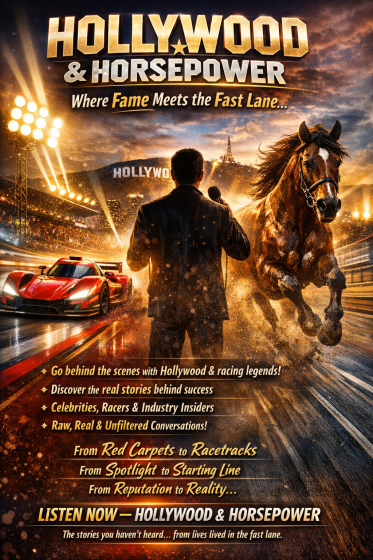

Hollywood And Horsepower Show with Mark Otto
Guest, Harris Auerbach
The Legacy of Unusual Heat and the Evolution of Equine Aftercare
Hollywood & Horsepower: Auerbach Stables
The Story of Unusual Heat, California Royalty, and the Evolution of Horse Aftercare
The Legacy Timeline
Family patriarch claims Bravo Bravo. A furniture manufacturing background (Hippopotamus) funds the initial "itch" for racing.
Claimed Unusual Heat for $80,000. Despite injuries, the stallion became the #1 sire in California, producing 10 winners from his first 11 starters.
Madeline Auerbach founds KARMA. Introduced the 0.33% opt-out funding model, raising over $10M for retired thoroughbreds.
"Madeline is the matriarch of aftercare funding; Michael Blowen is the patriarch of aftercare facilities. Together, they made it fashionable to do right by the horse."
Stallion Spotlight
- Acclamation: Champion Older Horse
- Unusual Suspect: Grade 1 Winner
- Legacy: Elite Broodmare Sire
Key Insights
Auerbach Stables moved operations to Kentucky (Valkyrie Stud) due to CA's racing contraction and KY's healthier breeding ecosystem.
This episode of Hollywood and Horsepower features Harris Auerbach of Auerbach Stables, detailing his family’s journey from the furniture business to becoming California racing royalty. The discussion centers on the legendary stallion Unusual Heat, the strategic shift of their operations to Kentucky, and the pioneering work of Madelyn Auerbach in establishing sustainable funding for retired racehorses.
From Furniture to the Winner's Circle
The Auerbach family’s entry into horse racing was unconventional. Harris’s father, a Brooklyn native who grew up watching races at Aqueduct, eventually founded a successful furniture manufacturing company in Los Angeles called "Hippopotamus". In 1977, he claimed his first horse, Bravo Bravo, for $8,000 after promising his wife he would only do so if he could fund the purchase through his wagering winnings. The horse won its next start at a higher level, and the family never looked back, eventually growing their stable to over 100 horses.
The Phenomenon of Unusual Heat
The trajectory of Auerbach Stables was forever changed by Unusual Heat. Claimed for $80,000 by trainer Barry Abrams, the horse suffered a career-ending injury shortly after. Despite initial difficulties in finding a stud career due to regulatory quirks, he was eventually stood at a small farm in the Inland Empire. His first crop produced unprecedented results: out of 11 horses that made it to the races, 10 won their first start. Unusual Heat went on to become a six-time leading sire in California, known for "moving up" lesser-quality mares and producing versatile champions like Acclamation and Unusual Suspect.
The Unusual Heat Legacy
91%
First-Crop Debut Win Rate
6x
Leading Sire in California
5
Grade 1 Winners as Broodmare Sire
"A perfectly balanced horse who outcrossed with everything."
Strategic Migration and Industry Challenges
As the California racing circuit began to contract in the late 2000s—reducing racing days and closing iconic venues like Hollywood Park and Bay Meadows—the Auerbachs made the difficult decision to move their breeding stock to Kentucky. Harris notes that Kentucky offered a healthier business model due to legislative support and alternative gaming revenue. Today, the family focuses exclusively on their broodmare band at Valkyrie Stud, having opted out of the high-risk farm ownership side of the business to "stay in their lane".
Pioneering Equine Aftercare: KARMA and TAA
One of the most significant contributions of the Auerbach family is the establishment of KARMA (Knights of the Round Table of Master Aftercare). Spurred by the retirement of their star horse Lenny from Malibu, Madelyn Auerbach recognized a lack of guidance for retiring racehorses. She championed an "opt-out" funding model where 0.33% of owners' purse earnings are automatically donated to retirement funds. This model raised nearly $10 million and served as the blueprint for the national Thoroughbred Aftercare Alliance (TAA).
The KARMA Funding Model
A sustainable mechanism designed to support horses beyond the track:
- Automatic Contribution: 0.33% (one-third of 1%) deduction from owner purses.
- Placement Program: Direct assistance for owners and trainers to rehome retiring athletes.
- Grant Distribution: Funding doles out to vetted sanctuary and retraining facilities across California.
- Industry Impact: Served as the operational foundation for the national TAA.
The Cultural Shift and the Future of Racing
Harris and Mark reflect on the fading connection between Hollywood and the racetrack. While the mid-20th century saw stars like Bing Crosby and Desi Arnaz as fixtures at Santa Anita and Del Mar, modern racing has struggled to maintain that mainstream "cool" factor. Harris emphasizes that the industry’s survival depends on national collaboration and protecting critical hubs like Gulfstream Park in Florida, which serves as the primary training ground for 80% of the country's two-year-old thoroughbreds.
Key Data
- Initial Claim: Bravo Bravo was claimed for $8,000 in 1977.
- Unusual Heat Claim: Purchased for 85,000 with tax).
- Aftercare Funding: KARMA has raised nearly $10 million for retired thoroughbreds since 2007.
- Stallion Longevity: Unusual Heat lived to age 27 and stood at stud until age 26.
To-Do / Next Steps
- Follow Harris Auerbach on X (formerly Twitter) at the handle
@unusualheat - Visit or to learn more about the stable's history and current stock
auerbachracing.comhorsepower.co - Support equine aftercare by visiting or
karma4horses.orgoldfriendsequine.org - Explore the "No Fallen Heroes" group for veterans' support through equine therapy.
The story of the Auerbach family is a testament to the impact of a single "lightning in a bottle" horse and a commitment to the welfare of the animal. By prioritizing the horse's needs—both during and after their racing careers—the Auerbachs have not only built a lasting bloodline legacy but also created the financial infrastructure necessary to protect the sport's equine athletes for generations to come.
Biography
https://www.auerbachracing.com/harris
Harris Auerbach is the Managing Partner of M.Auerbach, LLC. He is an owner/breeder
who manages the bloodstock, marketing, social media, historical data and farm coordination of approximately 50 horses in California and Kentucky. He himself is a Cal-bred born in 1969 in Van Nuys, CA and has been interested in thoroughbred racing since his childhood in the 1970s.
Hollywood and Horsepower Show

Through the relationships Mark Otto developed in Thoroughbred Horse Racing and Automotive Racing, during his global travels, the thing that most interested him was the story behind the story, with the famous people he was fortunate to meet. What was it that these people liked to do? How did they get into Hollywood or into Racing? These stories are fascinating! This is what encapsulates the “Hollywood and Horsepower Show”.
Bringing you along, we talk to so some of the most interesting people Mark met during his career. Don't be surprised if a few other guests stop by this show. This will be fun! It is where SNL meets The Tonight Show; a perfect mix of talk and comedy.
[00:00] Speaker 1: (instrumental music plays) Welcome to Hollywood Horsepower, the show about the story behind the story. Today we are joined by a very special guest, a gentleman I consider a friend and would... Probably, I'll, California royalty when it comes to horse racing, Harris Auerbach. And I met Harris through old friends through aftercare. They have, you know... Obviously, everyone knows them for Unusual Heat, a phenomenal stallion. And those of you that don't know horse racing, that was the number one stallion in California horse racing, possibly of all time. So, Harris, welcome to the show.
[01:04] Speaker 2: Thank you, Marc. Thanks for having me.
[01:06] Speaker 1: I really appreciate you taking the time to join us. And I wanted to jump right in, and I wanted to have you on, because I feel like you guys have an amazing story and I think it's a really interesting story how you got into racing. So, a lot of people know you and your mom for what you guys do today. I kind of wanted to go back to where your family started, you know, and, and where... how you got into horse racing and kind of come up full circle. So if... You know, going back mi- and, I mean, I've heard derivatives of the story, but I- that was part of the reason I wanted to have you on the show, was to hear the actual story from you.
[01:49] Speaker 1: So-
[01:49] Speaker 2: Right.
[01:50] Speaker 1: My understanding is that your family, you guys didn't really grow up in horses.
[01:56] Speaker 2: Yeah. It, it, it's interesting. Um, my parents were from very diverse backgrounds. And my mom, she was born in London and grew up in Houston and always kind of liked the horses as animals, but never had any exposure to horse racing, uh, being from, uh, a more modest family. And so, uh, her exposure was limited. My dad, on the other hand, was born and raised in New York City, in Brooklyn, and he was also of modest means, but one of his favorite pastimes was, uh, playing a little hooky from school and heading over to Aqueduct to watch the horses run. And he not only loved the, the betting and the excitement, but fell in love with the animals.
[02:46] Speaker 2: So it has-
[02:46] Speaker 1: And it was such a fabric of the city, right? I mean, it was, it was funny, I had, um, Big A, Anthony Stabile on last week, and, you know, he's... When I think of New York horse racing, you can't help but think of him. And, you know, he's kind of the same way, it's like such a part of the city, and probably especially when your dad was growing up.
[03:05] Speaker 2: Oh, absolutely. You know, when he was growing up, uh, he was born in the 1930s. The two biggest sports in the country, other than Major League Baseball, were, uh, horse racing and boxing.
[03:18] Speaker 1: Yeah.
[03:18] Speaker 2: And so-
[03:18] Speaker 1: A lot of people don't realize that. I- and if you go back and look at old Hollywood, they reference Belmont, Aqueduct, and Santa Anita in, in so many shows you c- you can hardly count them going back, you know, into the 30s, 40s, and 50s.
[03:35] Speaker 2: Absolutely. And so he just... He fell in love with the sport and the game. So as he got older and met my mom and had a family in the 1970s, um, he started making a little bit of money and was first able to afford a couple box seats at Santa Anita, um, when they were impossible to get in the mid-1970s, and really got the itch at that point to own his own horse and he wanted to claim one.
[04:02] Speaker 1: And what were they doing? Didn't your family have a b- like, you did furniture or something, correct?
[04:07] Speaker 2: Yes. Uh, he had started a furniture manufacturing business. He had been in the industry before. He had been in several industries and... Including, at one time, he was a, a vice president of International Industries, the parent company of IHOP, before they exploded. Uh, in fact, he was one of the people, if not the person responsible for the franchising idea of IHOP.
[04:34] Speaker 1: Oh, wow.
[04:34] Speaker 2: So he later left, uh, International Industries because he was not a corporate type and went into business for himself and started a small furniture manufacturing company here in Los Angeles, uh, which went under the name Hippopotamus, uh, which was a great marketing tool and ploy, and started making a little money. And at that point went to my mom with the idea, "Hey, I'd like to claim a thoroughbred." And she was, uh, hesitant at first because here she is, uh, with a family, with three young kids and, uh, a house and bills to pay, and told him, "If you can make enough money through your gambling," through whatever they had budgeted for his wagering over at Santa Anita, "he could claim a horse." Sure enough he did, and claimed a horse named Bravo Bravo in 1977 for $8,000, and two weeks later double jumped him to the $12,500 claiming level. Bravo won the race, and we never had less than six horses after that.
[05:47] Speaker 1: Oh, that's so funny. Now, did Bravo get claimed by somebody else then?
[05:52] Speaker 2: Not after that race, but down the line he did get claimed, and he-
[05:56] Speaker 1: Okay.
[05:56] Speaker 2: ... was a good hard-knocking claiming horse and... Which was really what we had for the majority, I would say, of my family's first, uh...... uh, 15, 12 to 15 years in the business before-
[06:09] Speaker 1: So they started as kind of racing horses-
[06:10] Speaker 2: ... we not only had climbing horses, but got into some better stock too.
[06:15] Speaker 1: And then when, when did they actually decide to get into, um, breeding and, like, raising them?
[06:22] Speaker 2: You know, they, they, they had a brief dalliance in it in the early '90s with no success with a group of horses with a friend at the time and it wasn't a serious business. Uh, the real, uh, dip into breeding really came with Unusual Heat and, um-
[06:39] Speaker 1: So he was really the start of it?
[06:42] Speaker 2: He was the start of it. And that y- and that was ... When they claimed Unusual Heat, uh, Barry Abrams, rest in peace, came to my dad at the time and said, "I want to claim this horse for 80,000." With tax it was, like, 85 or whatever at the time, and that was more than my dad generally went in for. Even in partnership, you know, the 40 and 50 level was really tops and our bread and butter was really between 16 and 25 at the time. So it took a little convincing of Barry and he put together the group and they claimed him, and part of the allure of Unusual Heat was here's this regally bred son of Nuryev, he's a whole horse. People in South America would love to have him as a stallion, so even if it doesn't work out, we'll be able to sell him. Um, we got two races out of Unusual Heat. The first one, he ran in the Shoemaker Mile. Unfortunately, his normal jockey who was Laphit Pynkai was committed elsewhere and Chris Antley rode him and, um, they, they didn't...
[07:52] Speaker 2: he didn't run too poorly, but he didn't have his best effort and-
[07:57] Speaker 1: Hm, didn't finish.
[07:57] Speaker 2: ... ran sixth in that. At the time, it was a Grade Two for three quarters of a million dollars back in '96 and, uh, then he ran two weeks later in a $125,000 claiming race and at that point, he won the race with Laphit on him, but didn't make it back to the winner's circle. He had bowed at 10:00 in it and-
[08:21] Speaker 1: Ah.
[08:22] Speaker 2: That was the risk with him. Everybody kind of knew that he had some issues there, so we sent him to the farm and spent a full year trying to bring him back and he was never able to come back to racing. It's about time he-
[08:36] Speaker 1: So he really just ... he didn't have a real long career racing before he went to stands?
[08:43] Speaker 2: Yeah. He, he ... We claimed him as an older hor- ... He only had, I ... Off the top of my head, I think, about 14 races. So he was-
[08:51] Speaker 1: Wow.
[08:51] Speaker 2: And it was spread over a good amount of time. The interesting thing about him, he was a quarter of a million dollar Barrett's, uh, two-year-old and at the time, he was the highest priced horse ever sold at Barrett's, an ox.
[09:08] Speaker 1: Wow.
[09:08] Speaker 2: So he was, he ... Everybody knew who he was in California and, um-
[09:14] Speaker 1: So it wasn't hard to book him when he went to stands?
[09:18] Speaker 2: No. It, it actually was. What happened, the story goes, so we spent a year trying to bring him back, Mark, and then at that point, he was unable to run and Barry then contacted all the people he knew and Barry knew a lot of international agents and things and found out through some quirk in the regulations that he really couldn't be exported to South America, that he was not a graded stakes winner. He was a listed stakes winner, but he didn't quite have the credentials for that sort of sale and so Barry went to my dad and the other partners and everybody figured, "Well, you know, if we could stand him here ..." Uh, we had three or four mares coming off the track who they weren't well pedigreed or great mares but they were productive racehorses most of them and, uh, Barry had one or two and another partner had one and, uh, Walter Greenman, the late Walter Greenman, who was a longtime Southern California trainer, had a small farm out in the Inland Empire, it was almost like a backyard
[10:26] Speaker 2: operation, agreed to take him. We sent him there and he was able to get 13 mares with almost no publicity or fanfare or anything else and, um-
[10:40] Speaker 1: And what year was this?
[10:40] Speaker 2: When the babies were ... This was in 1998.
[10:45] Speaker 1: Okay.
[10:45] Speaker 2: And-
[10:45] Speaker 1: His, that's his first year.
[10:47] Speaker 2: That's his first year and, uh, when the babies were born, Walter Greenman, uh, told Barry, "You have something here," and recommended that Barry bring Doug Burge, who was at the time new at CTBA as the president, out there to come look at the babies and Doug went with Barry and they immediately called up Buddy Johnston at Old English Rancho. It was still located at that time in Ontario, uh, California. It's now the site of probably the largest shopping mall in the Western United States-
[11:22] Speaker 1: I hope so.
[11:22] Speaker 2: ... Ontario Mills, but Buddy came out and loved the babies and agreed to stand Unusual Heat at Old English Rancho and at the time too, uh, we hired a booking agent named Pete Cristofi who was well known by all the dairy farmers-
[11:39] Speaker 1: I know him.
[11:39] Speaker 2: ... and all these small breeders in California and Pete helped book him and Unusual Heat was on his way to getting better books. The whole thing depended on how the first crop would do racing and out of the 13, 11 made the races and out of the 11, 10 won their first start.
[12:01] Speaker 1: Wow.
[12:01] Speaker 2: The only one-
[12:02] Speaker 1: And that, that has to be somewhat unprecedented for a person-
[12:05] Speaker 2: Yeah.
[12:06] Speaker 1: ... who tried to have-
[12:06] Speaker 2: The only one who didn't-Yeah, the only one who didn't mark was Lenny From Malibu who turned out to be the best horse in the crop. He was the star.
[12:14] Speaker 1: That's funny.
[12:15] Speaker 2: Yeah, so-
[12:16] Speaker 1: So what's interesting, we're joined by Harris R. Eiblick. You know, for those just, just tuning in, we're talking about his family's, you know, barn and especially Unusual Heat. And, you know, in, in reference, you know, CTB is California Thoroughbred Breeders, correct?
[12:33] Speaker 2: That is correct.
[12:34] Speaker 1: It's the governing agent. So when you have a crop like that, and that many ... That has to be almost unmatched. I mean, was there ... Has there been another stallion that had that many that finished first out of their first group?
[12:49] Speaker 2: Uh, I'm sure there have been but in California-
[12:52] Speaker 1: Yeah.
[12:52] Speaker 2: ... it was, it was unprecedented. And to this day, it's still shocking and I often joke with people, only a few of them ran at two. Most of them won in their three-year-old year.
[13:06] Speaker 1: Okay.
[13:08] Speaker 2: Uh, the fascination currently in horseracing is with first crop sires and early success and all that. And I tell people, "We would have been done if that was the metric for us." Because Unusual Heat was, like, sixth leading first crop sire in California even though he wa- turned out to be the best by far of any of those sires. But in regional breeding programs, that's not quite as important. What's important is that people see winners and production and people saw it and then started breeding to 'em. The early breedings we had listed stud fees but they were always complimentary and as time went on, we were able to develop it into a business. And we always tried to keep, um, the stud fees within line with what the market beared and with what people were able to afford in California. It served us very well. He got very healthy support here and, uh, I always say as a stallion owner and from that perspective of the business, we could not do it without the breeders.
[14:17] Speaker 1: Yeah, there's no question. And it was ... It's interesting. I mean, he was ... I mean, I know this isn't what people look for, although they may look for it partially, but he was such a majestic looksh- looking horse. I mean, he was just a really, really regal-looking horse. And-
[14:35] Speaker 2: Well, he wa-
[14:36] Speaker 1: How much of that plays into it? Does, does it catch people's eye? Or does it really just come down to performance?
[14:43] Speaker 2: I think it really comes down to performance. He, uh ... You're right, Mark, he was ... He's a perfectly balanced horse. What we like to always-
[14:52] Speaker 1: Yeah, he's just a .
[14:52] Speaker 2: Yeah, he was perfectly balanced. You could put him in a bubble and all the parts fit. He was dark bay but black, which is not a recognized color in thoroughbreds in appearance, and we always called him the black horse.
[15:07] Speaker 1: He also . Not in markings, but there's something about him that reminds you of Sunday Silence.
[15:13] Speaker 2: Yes, very similar, similar coloring and, um, you know, similar sort of rags to riches, uh-
[15:21] Speaker 1: Yeah.
[15:22] Speaker 2: ... appeal to him and he just ... He was such a well-balanced horse and all that. And later on, as his stud fee increased and all that, people would scrutinize that a little bit more and be more on board because he had those looks. But early on, it was, "Can the babies run?"
[15:41] Speaker 1: There you go. And obviously they did. So then-
[15:45] Speaker 2: Yeah. They-
[15:46] Speaker 1: ... you know, he starts building and h- h- so you get ... This had to literally change, you know, your family's focus. It's like you now have this, you know, star in the barn basically. You had to be like ... It, it, at what point did you guys see that this, this isn't just another stallion?
[16:08] Speaker 2: Well, I, I'm ... What I can tell you is ... So backtracking to after the first babies were born, um, my dad, uh, struggled with illnesses for many years and, um, unfortunately, he passed away in July of, uh, 2000, um, and never got a chance to see the babies run. He just missed-
[16:32] Speaker 1: Oh, that's too bad.
[16:33] Speaker 2: ... being able to see them run, and so I was actually at the first race. We still had Hippopotamus. I ... At that point-
[16:42] Speaker 1: Yeah.
[16:42] Speaker 2: ... I had really taken over the business. Uh, my mom was still active in a support role and she would never let go of the financials. Anybody who knows my mom knows that to be the case. But we were-
[16:56] Speaker 1: Yeah.
[16:56] Speaker 2: ... partners in, in the business. We drove down to Del Mar and I actually, um ... It was the first Unusual Heat baby starting. Her name was Frankie Eyelashes. She was named after a friend of my dad's who was not only a pit boss at Caesars Palace for many years. At one time, he was Frank Sinatra's bodyguard. And so we drove down to watch-
[17:22] Speaker 1: What, what, what-
[17:22] Speaker 2: ... Frankie run and she won that day at Del Mar. She was the first starter. And you began to feel the momentum and within a couple of years, um, the furniture business had changed and I had sold the company. And Madelyn, at that point, she was full-time with the horse. She knew. And she was devoting ... She was going to the farm every few weeks to look at babies, to check in on Unusual Heat. By that time, Old English Rancho had moved up to the Fresno area, to a town called Sanger, California, along the Kings River. And so she would go up there and once I was able to finalize the sale of the business and shutting down operations, uh, I joined her in it. She appreciated the help and-Uh, before we knew it, we had a herd of over 100 horses.
[18:21] Speaker 1: Wow.
[18:21] Speaker 2: Uh, became a, a, a full-time business, really I want to say about 2004 or '05 for us.
[18:30] Speaker 1: That's amazing. So then his... Was... What are some of the standouts of his prodigy that have really risen to the top?
[18:41] Speaker 2: Well, uh, I will always argue, and on paper the best horse he had was a horse named Acclamation-
[18:48] Speaker 1: Okay.
[18:48] Speaker 2: ... who is to this day still standing at stud in California. He wa- won the Pacific Classic at Del Mar. He was a champion, uh, older horse of, uh, 2010 nationally. Um, he probably got robbed of being champion turf horse. He finished second to another horse who was, uh, uh, a little more embedded in the Kentucky establishment at the time, uh, but he was an awfully fine runner, uh, and he was a horse that could go any distance, but was really good going a mile and a quarter, a mile and a half on grass or synthetic and he was really a fine horse, Acclamation. Uh, there's one other son still standing at stud prominently. His name is Unusual Suspect. He's another millionaire. He probably resembled Unusual. He... Like a smaller version of him color-wise and size-wise and he's down standing in New Zealand right now.
[19:54] Speaker 1: Oh, wow.
[19:54] Speaker 2: He, he ran in the Melbourne Cup as an older horse. He won the Grade One Hollywood Turf Cup, uh. He won stakes races from anywhere from six furlongs to a mile and a half. So he was a very versatile horse and, uh, um, they, they were probably his two most accomplished runners. His most talented runners, in my opinion, were fillies. Um, one we owned named Lethal Heat was... She was an absolute superstar. Uh, she had the unfortunate, uh, timing of running in the Distaff division in California when Zenyatta was prominent and, in fact, almost beat her twice, and, um-
[20:39] Speaker 1: That's a, that's a big step.
[20:41] Speaker 2: Yes. So she was, she was a wonderful, uh, race mare and her family is still a family we're-
[20:48] Speaker 1: Is she *******? I'd like to see that.
[20:49] Speaker 2: Yeah, we're still highly invested in Lethal Heat's family. Um, um, we had another, Majestic Heat, was probably the best looking horse he ever threw. She was a beautiful mare, Grade Two winner. Um, Barry trained her at first and then later on when he could no longer train, Richard Mandella was in charge of her. Those are just a few of the standouts. And he's also, as a broodmare sire, um, he's done wonderful things. He's had five Grade One winners and, uh, uh, he has a couple stallions at stud off of the broodmare side and just, uh, a lot of legacy carrying on.
[21:39] Speaker 1: That's pretty amaz-... And it is, it's really interesting to me how you see some of these evolve and they become known as the broodmare sire or different things, even though they started out, in my mind, very successful. You know, his first crop takes off, kind of a win, you know, that's, that's pretty impressive, and then as they go on, you start to see that their, their prodigy off the broodmare side is just, you know, another step up and it's-
[22:09] Speaker 2: Absolutely.
[22:10] Speaker 1: ... it's always interesting.
[22:12] Speaker 2: You know, the, the interesting thing about it is that there weren't a lot of great sons of Nuryab at stud. He was a wonderful sire, but most of his accolades were on the dam side and were producing fillies. And, um, when you talk about Meesesken and horses like that, with Unusual Heat, the secret sauce to him was that he had a very, very strong dam side. His dam, uh, was, uh... And you'll excuse me if I draw a blank here, Rossard, she was a Danish mare. She was the first horse ever to win a Group One in Europe and then a Group One in the United States, winning the Flower Bowl at Belmont, uh, Park many years ago. And she was why Unusual Heat was so strong as a sire and has really passed it on to his female side.
[23:14] Speaker 1: That's impressive. No, he's an amazing horse and I mean, I was, it was, it was interesting reading about him, you know, some of the records that he holds, an Eclipse Award winner, Horse Of The Year, Pacific Classic, six time Grade One, you know, I mean, black type, you know, too many to list, you know, he, he's just very impressive and then when you start going down of what's come from him, it's, it's even more amazing.
[23:43] Speaker 1: I guess it's-
[23:43] Speaker 2: Yeah.
[23:43] Speaker 1: ... always been impressive to me like how the bloodlines start to spread out and then how, you know, not... When you look at this, it's not that far back. I mean, you're talking, you know, 2000, late '90s that this started, and you look at the impact that he's had on California and really North America bloodlines.
[24:05] Speaker 2: Yeah, it's-
[24:05] Speaker 1: It's pretty impressive.
[24:07] Speaker 2: To me, to me it's fascinating. He did not have... And you look at most of the sires in Kentucky now, who within the first four crops will have as many foals as Unusual Heat had in his lifetime.
[24:20] Speaker 1: Yes.
[24:20] Speaker 2: ... because the books are so much bigger, and they're filled with more quality mares. His secret sauce was he moved up, uh, mares that a lot of people didn't even think should have been in production. And so the impact he's had, he's created sort of... And there's other stallions who have done this too, and this is what we look for in our breeding program currently, stallions that outcross with everything that aren't from necessarily the Sadler's Wells or the Storm Cat or the Danzig lines. Uh, the, the more popular to where there's a lot of mares and a lot of stallions by those lines standing, to where we have the ability with our broodmares, being by Unusual Heat or his sons or even other sires. We still have a Jade Hunter mare. We've had mares by Fairy King, and just other not as common lines in the United States, and it's allowed us to produce really good quality babies moving forward.
[25:27] Speaker 1: So that was actually where I was going to go next, and that was a question I had for you, but I'm sure... Well, I know I've always been curious about. And you have to keep in mind, with our show, it isn't all just horse racing people. We have a lot of people from all different types of racing.
[25:42] Speaker 2: Mm-hmm.
[25:42] Speaker 1: So I'm joined by Harris Auerbach, Auerbach Stables, and we wanted to talk a little bit about what do you look for? Like, what... Like, when you were breeding Unusual Heat, what was it that you kind of figured out that, look, this is kind of going to be the best match for him? And, like, what do you kind of target at his prodigy today? Do you... Is there a certain pedigree that you say, "Hey, this is probably going to make a runner"?
[26:13] Speaker 2: You know, when he was young with Unusual Heat, what we targeted was anybody who wanted to breed to him. Uh, we-
[26:21] Speaker 1: Yeah.
[26:21] Speaker 2: ... we took all comers. And it worked really well in that what, uh, we discussed earlier, he moved up mares. So we looked for-
[26:30] Speaker 1: Now, when you did that, though, did you notice a pattern? Did you kind of notice that, hey, you know, if he breeds with a mare that's a descendant of this stallion, it seems to really take off?
[26:41] Speaker 2: Well, we always thought that certain bloodlines would work better. But the, the proof and the actuality of it, Mark, was that it, it was a grab bag. Some of the mares we thought would be his best producers were not. Uh, and vice versa, some lesser pedigreed mares we bred to him threw off unbelievable offspring. I was talking about Majestic Heat earlier.
[27:08] Speaker 1: Yeah.
[27:09] Speaker 2: Uh, her sire was Ole, who... He was a very expensive young horse, but never did anything on the racetrack, never did anything in the breeding shed. Yet, that's one of the mares that crossed the best with Unusual Heat. He did well with, um, Seattle Slew lines. He did, uh, very well with, uh, Blush and Groom descendants. Um, he also did well with very turfy ones. Uh, the, the mare who produced the most by him was a mare named Pen Pot. She was a Crested Wave, w- who was a New Zealand sire, a very nondescript one. She was a mare by Crested Wave, and she threw a couple Grade One winners and a couple other stakes horses. So, um, go figure. Uh, a lot of that was just trial and experiment. And then, as he got older and we got more selective with the mares that we let breed to him, because we wanted to preserve him as long as possible, we only tended to go with proven crosses or with, uh, mares that had a resume and a physicality that we felt matched best with him.
[28:27] Speaker 1: How, how many mares would he breed to towards the end? Like, how many would you do per year?
[28:33] Speaker 2: Uh, per year, at the- at the very end, like the last year, we only sent 18. But the last-
[28:39] Speaker 1: Oh.
[28:39] Speaker 2: ... five years before then, it ranged between 30 and 50s per year.
[28:44] Speaker 1: So very selective.
[28:45] Speaker 2: When he... Once he, once he got into his 20s, that was the limit we set on him.
[28:51] Speaker 1: Yeah.
[28:51] Speaker 2: When he was in his late teens, he would get up to 80 or 90 mares, but never more than that.
[28:58] Speaker 1: So begs the question then, are there sons of his that are starting to stand or have already standing and produce really well?
[29:07] Speaker 2: Well, uh, that's where we talked about Acclimation and Unusual Suspect, and they've both thrown some fine runners and, uh, graded group winners. But there's no real heir, heir apparent to him. As good as those young stallions are, they do not have the secret sauce of being a direct descendant of Rossarte. They're not Rossarte's son.
[29:31] Speaker 1: Okay.
[29:32] Speaker 2: You know? So, um, really, the strength in Unusual Heat living on is through the broodmares.
[29:39] Speaker 1: That's wow.
[29:39] Speaker 2: And he's had some really, really, really good runners. Mo Forza is a Group One winner. Um, Group Two, Spanish Love Affair, and Spanish Love Affair, um, has a, a, a sister who's a Group One winner whose name is escaping me while we're on the podcast. But she was a very fine runner for Eclipse Thoroughbreds and won the Grade One Del Mar Oaks. Spanish Queen was a Group One winner of the American Oaks. Uh, we, we bred Doctor Dorr, who won the Grade Two Californian for Bob Baffert. He was a very, very good second in the Hollywood Gold Cup to a champion, Accelerate.So he was a fine runner. Prince Earl was a Group Two winner at the Del Mar Mile. Uh, I could go on and on with all the success of the, of the daughters, uh, babies.
[30:33] Speaker 2: (laughs)
[30:36] Speaker 1: That's really cool. I mean, it's so interesting to me. And it's interesting to me how, as you said, you know, him being a son, he had the secret sauce, but then his sons don't, but his daughters seem to.
[30:49] Speaker 2: His daughters-
[30:50] Speaker 1: I mean-
[30:50] Speaker 2: And, yeah. In fact-
[30:51] Speaker 1: You know, the group one-
[30:52] Speaker 2: ... the Group One winner I was thinking of was Spinderella. I apologize-
[30:55] Speaker 1: Okay.
[30:55] Speaker 2: ... for not remembering her name earlier. She was a fabulous race horse and, uh, um, won her group races at Del Mar and Keeneland and all the exciting places you hope to win races at.
[31:11] Speaker 1: And unfortunately, we lost him. And, you know, he was an amazing horse, but, now since Unusual Heat, where, you know, where are you guys at now? Who's your top stallions today?
[31:29] Speaker 2: Well, what happened is the business model in California started changing anyway. In 2009, we went from five days a week racing at Santa Anita and Hollywood Park down to four. Uh, same thing happened in the north at Golden Gate Fields. Bay Meadows closed as a racetrack, and Del Mar went from six racing days a week to five when they're open.
[31:54] Speaker 1: Oh, yeah.
[31:55] Speaker 2: So we started to see this contraction here, and at that point, we were at the height of what we had in terms of broodmares. At one point, we had 27 of them, 25 in California and two in Kentucky. And about three or four years after that, Madelyn and I made the conscious decision that as Unusual Heat was aging, and he did live to be 27 and stood at stud till he was 26. But at that-
[32:24] Speaker 1: Amazing.
[32:24] Speaker 2: ... point we made the decision to start moving his daughters to Kentucky. Not only was it a better business model in terms of the breeding itself to where they could go to more established sires and, um, uh, be raised, but we saw the arcs from two programs racing-wise were going on where Kentucky had begin to become a much healthier circuit due to legislation and alternative gaming, and California was headed in the opposite direction. So I fast-forward to today where we do not have a single horse in California. I have, uh, six broodmares in Kentucky. A couple of them are older and we'll look to retire them in the next couple years. And when we do with our broodmares, they just stay at, uh, the place we have everybody at Valkyrie Stud, and they live out their days there.
[33:21] Speaker 1: That's nice.
[33:23] Speaker 2: Uh, and, um, uh, at this point in time, we, we own a stallion share in a stallion called Modernist. He's at Darby Dan Farm, and we've had other stallion shares and, um, lifetime breedings and things like that, but in terms of being in the actual stallion business, we hit the grand slam home run. We had the lightning in the bottle already and made the very smart decision to stay out of that ball game and leave it to the people with much deeper pockets, who owned farms and, uh, we've, we've, we've solely focused on broodmares.
[34:04] Speaker 1: That's probably wise. Was it ever a temptation to buy a farm to start do- doing it on your own, or was it just you always kind of knew that wasn't your space?
[34:14] Speaker 2: Uh, you know, from having owned, uh, another business in another industry and dealing with things like workers' comp, like the Air Quality Management District, uh, like the IRS, like everything else-
[34:30] Speaker 1: (laughs) Yeah.
[34:31] Speaker 2: ... it, it... And the one thing that Madelyn and I both did, we both spent a tremendous amount of time at the farms here in California and realized the, the challenge involved with owning and managing and maintaining a farm.
[34:48] Speaker 1: Oh, yeah.
[34:48] Speaker 2: It never became a desire of ours to own a farm. We were more than willing to pay retail and to let the people who knew what they were doing do it.
[35:01] Speaker 1: Yeah. I could, I would, I could see that. I mean, it does seem like, you know, like the old saying, "If you want to make a small fortune in the thoroughbred farm business-"
[35:12] Speaker 2: Mm-hmm.
[35:12] Speaker 1: "... start with a large one." So it's an easy way to lose money (laughs) if you're not, you know, things don't go perfectly.
[35:20] Speaker 2: Absolutely. So we just-
[35:21] Speaker 1: So we've all seen this before.
[35:22] Speaker 2: ... we stayed in our lane, so to speak. (laughs)
[35:25] Speaker 1: So as things progressed, you know, to, to shift a little bit-
[35:29] Speaker 2: Mm-hmm.
[35:30] Speaker 1: So as things progressed, you know, Unusual Heat is kind of staying, going his career path, you've got many other broodmares, it, at what point was it that you and Madelyn started getting involved in the California Breeding Association and, you know, AfterCare and some of those things? 'Cause I know that you guys have been very influential and involved in that.
[35:53] Speaker 2: Well, it really started with Mom, uh, when she, uh... After we sold Hippopotamus and, uh, uh, I consulted for a few months with the, the new company which bought the brand and bought our inventory, uh, after that and I started doing a little bit of management f- work for her on the race horses and taking that pressure off and started appearing at the, at the racetrack on a lot of mornings and making my presence known at the farms.She was approached by John Harris, who owns the biggest farm in California for many years, Harris Farms. He also owns Harris Ranch, which is, uh, the largest cattle producer in California, and a produce company. And John's always been very politically involved and all that, and he approached her with the idea of running for the Thoroughbred Owners of California Board.
[36:51] Speaker 2: And at first, she was hesitant but then he said, "No, you've got this very prominent sire-"
[36:57] Speaker 1: Hmm.
[36:58] Speaker 2: "... and are becoming a big force in the business, and have some great ideas, and, uh, we'd love to have you representing the breeders on that board." And so, he helped her get the signatures and she ended up winning election to the TOC board. And almost in the first meeting, um, they all almost fell over, that she was not a wallflower, that she was nobody's puppet, and that she was going to make her voice heard. And one of the first items she tackled, probably a year or so after she had been on the board was, what happens to these horses once they're done racing? And it was really spurred on by our star, Lenny from Malibu, not being able to make it back to the races after an injury. He needed to be retired and sh- there was no guidance from anywhere what to do with them. "Oh, you just give them to a pony boy," is what people would say, and, or you have to call... There were a couple of retirement farms, but they were really under-funded and didn't have room, and all that.
[38:07] Speaker 2: And that's the genesis of her forming the idea for KARMA. And her pulpit on the TOC board helped her gain access to another influential person in that, John Ammerman. John was on the California Horse Racing Board at the time, who's the regulator here in California. And John helped her champion and get the funding for KARMA, which is an optional one-third of 1% that owners can choose to donate to horse retirement, and it's a fund that's managed by an independent organization, ca- that's what KARMA is, and doles out grants to the various retirement farms in California. Um, and the smartest thing they did, they made it an opt-out program, meaning every owner in California was automatically put into KARMA and the amount was so small, at 3/10 of 1%, that most owners went along with it and did not mind doing it, and it helped get the basis to get started with it. And at that point, um, she was able to hire a one-person staff.
[39:25] Speaker 2: Uh, she ended up, uh, she was part-time, Lucinda Lovett, who is still at this point in time, 20 years later, the executive director of KARMA.
[39:35] Speaker 1: What year was this, Harris? What year did this start?
[39:38] Speaker 2: Uh, I want to say it's 2007 when KARMA-
[39:42] Speaker 1: Okay.
[39:42] Speaker 2: ... started. Um, and, uh, at that point, uh, to this point, they've raised, I think, close to $10 million for retired thoroughbreds, not only through the purse account deductions. And at first, unfortunately, a lot of the big owners, and I won't name any names, but they were a lot of the bigger, more prominent owners in the sport, when they came to run in California would not participate. Um-
[40:09] Speaker 1: No, I saw. As you know, a very mutual friend of ours, Michael Blowen-
[40:14] Speaker 2: Mm-hmm.
[40:15] Speaker 1: I, I tell people the story that I've, I've been following Michael around since the days that he could part the crowd like the Red Sea. Today, he's like the fifth Beatle. When I first-
[40:25] Speaker 2: Right.
[40:25] Speaker 1: ... met him, people would turn and run the other way. (laughs)
[40:29] Speaker 2: (laughs)
[40:30] Speaker 1: And it's-
[40:31] Speaker 2: Yeah.
[40:31] Speaker 1: ... funny because some of the very people that were probably the most, kind of, negative against it have become some of the biggest supporters today. And I, again-
[40:41] Speaker 2: Sure.
[40:41] Speaker 1: ... I won't name names either, but it is interesting to me that... And, you know, see, I underst- fair, I think you'd agree, there have been many groups that I don't know what their intentions were, but the results weren't that great. So I think some aftercare groups left a bad taste in some of the owners' and breeders' mouths.
[41:04] Speaker 2: Right.
[41:04] Speaker 1: And then, when you have good organizations come along, like Old Friends, TAA, KARMA, I think it, it took a while for people to see that, oh, these guys really are doing what they say they're gonna do.
[41:18] Speaker 2: Yes. I mean, uh, you, you're 100% correct on that, Mark, that people have to gain a certain level of trust in the organization, and it took a little while for it happen.
[41:29] Speaker 1: And it also had to be a, an organization that support racing, right? I mean, that was the thing that always kind of confused me, was that some of the... And I hate using the word rescue, but some of the "retirement or rescue farms" were actually, like, verbally against racing.
[41:49] Speaker 2: Yep.
[41:49] Speaker 1: And it, it never made sense to me because I'm, I'm thinking, well, this is the very industry that you're supposed to be part of, and you don't support your own industry, what's going on? But, uh, that was, uh, that was one of the things I always liked about Old Friends and KARMA and TAA, was that, and I'm sure there's many others, I'm, I'm just naming a few, but, you know, the thing that I really liked is that they are supportive of racing and that they are part of the industry, not against it.
[42:21] Speaker 2: Absolutely. In fact, uh, uh, w- with KARMA, once they, kind of early on, gained the trust, the next thing that happened was Stacey Clark-Rogers...Who is now the-
[42:33] Speaker 1: Yeah.
[42:34] Speaker 2: ... um, ex- uh, sh- for all intents and purposes, she runs the TAA.
[42:39] Speaker 1: She's the head of the TAA.
[42:40] Speaker 2: Yeah.
[42:40] Speaker 1: I don't know what her title is, but I would agree. She's... For all intents and purposes, she's the head of it. Her husband, Mike Rogers, is part of Stronach Group, is just an amazing support as well.
[42:50] Speaker 2: Yeah. What happened was Stacy... And through Stacy and with Mike, they ended up getting, uh, the Stronach Group, which was still under Frank at the time, to do matching funds to Karma for any of the races run at either Santa Anita or Golden Gate Fields.
[43:10] Speaker 1: Wow.
[43:10] Speaker 2: And it was a big boost to the program and, in addition, they started doing fundraisers with Karma and all that. Now, I'm not sure if you know about this, Genesis, but when Stacy and Jack Klar- uh, Jack Wolfe and, uh, Mike Moiser and a lot of the people... And they recruited Madelyn to start the TAA, it was based off the model of Karma that they were just-
[43:37] Speaker 1: Like it-
[43:37] Speaker 2: ... going to be a funding mechanism and not gonna do the rescue, they're not gonna do, uh, the rehoming. They are just going to fund the people who do that. And it's a model that's worked very well here in California, and the TAA has done an excellent job of simulating it.
[43:58] Speaker 1: Yeah, I would agree.
[43:59] Speaker 2: And we, we, we'd all prefer that it become less of a thing where we didn't have to hold as many bake sales as we did where more of the funding becomes mandatory from the industry, but, uh, those are just baby steps we still have to take with some of the powers that be in the industry. And so-
[44:20] Speaker 1: And I, I agree. I think it, uh... You, you have to, uh... And my... And I always tell people, I feel that I'm kind of on the outside looking in. I didn't grow up in horse racing and, you know, all of you have forgotten more than I know. I would say I'm just been sitting in the audience watching the show for quite a while. But one of the things I've noticed is, it has definitely become much more, um, accepted and supported in the industry. Now, it may not always be for the right reasons, as Michael Bowen says.
[44:54] Speaker 1: Some of it's because it's almost become unpopular not to support it, but-
[44:59] Speaker 2: Right.
[44:59] Speaker 1: ... regardless, high tide raises all boats. And when you look back even 10 years, there's been a lot of advancements made. I mean, we're, we're, we're definitely headed in the right direction, it's not to say that there isn't work to do, but I d- do feel that Aftercare, even in the time that I've been around racing, is so much more accepted today than it was. I mean, when I-
[45:22] Speaker 2: No question.
[45:24] Speaker 1: Even, like, I'm talking about not that long ago, I mean, 2010, you know, it was kind of, uh... You know, I wouldn't say the mo- majority of owners were behind it. And don't get me wrong, it doesn't mean that they were... They didn't care about the horse. I think what it was is they were just concerned that... You know, quite frankly, some of these people may have meant well, but, you know, it was kind of like, you know, Mrs. Hattie's Home For Wayward Horses.
[45:59] Speaker 2: Right.
[45:59] Speaker 1: And, you know, that's not really what people are wanting to support. And they definitely didn't want to support somebody who was against them. It was... You know, it's interesting, another mutual friend of ours, Bob Baffert, Bob, for a long time, had never been to Old Friends. And then eventually, you know, he ended up with a bunch of his horses there. So he and Jill came. And one of the things that he said, and I'll never forget this 'cause it just hit me, he says, "You know, I've... I, I always want... You know, I always supported this." And he has, him and Jill have been tremendous supporters of Aftercare. A lot of people don't realize that. Probably on- one of the biggest supporters that I'm aware of is, from a trainer. And he said, um, um, "You know, it's not that I don't support it," but he goes like, "I really was concerned that I was gonna come and just see a bunch of old..." You know, and I'm paraphrasing, but old, kind of worn-out horses.
[46:53] Speaker 1: And he said, "They look terrific." He said, "It's actually-"
[46:56] Speaker 2: Right.
[46:56] Speaker 1: "... it makes me feel good to see 'em like this, you know. They're, they're enjoying life, they look healthy, they're out." So it was interesting to me and I... And that really hit me. I thought, you know, that, that's the reservation people have. You know, people are kind of like, you know, "Yeah, we need to do something, but I, I don't wanna take the horse from one bad situation and put him in another one." Because we've all seen the pictures of some of these rescues that, quite frankly, you wonder, is, is the horse really in a better spot?
[47:27] Speaker 1: (laughs) You know-
[47:28] Speaker 2: Yeah.
[47:28] Speaker 1: ... he doesn't look all that bad.
[47:30] Speaker 2: Yeah, no question about that. And, and to follow up on with Bob and with Jill, I know, um, a big part of it was seeing, visiting Michael's farm, visiting Old Friends, seeing the horses. And another part was having a friend like Madelyn, who they trusted-
[47:48] Speaker 1: Yeah.
[47:48] Speaker 2: ... tell them, "This is where the money you donate is going, and this is how we're doing it." And y- uh, having Karma, who, at the most, at one point, had two full-time employees, it's back down to one, and the reason they had two was when they were starting what's called the Karma Placement Program, they needed someone to come in and help. And the original person who did that is, uh, is, uh... was Tessa Walden, who's the wife of Will Walden. She was not at the time. She was living in California and helped get it started. And, um, at that point, they had built it up, and now Lucinda runs the program herself out here. But people like Bob and Jill and other people involved in the industry trust where their money is going and how it's being, uh, spent.One of the important things for the, with the TAA was a trip for the Breeder's Cup, and I want to say it was the 2000, um, it was either the 2011 or 2012 Breeder's Cup, it's Santa Anita. I forget which one.
[48:55] Speaker 2: Where Jack Wolfe and Stacey and a bunch of TAA people came out and actually got to see the difference between California retirement farms and those in Kentucky. And say what you want, but you have some wonderful old friends and new vocations and, uh, Rerun and some other really, uh, second stride, some really fine places on the East Coast, full of green grass and beautiful fences, well-supported. While you come out to California, in a lot of the retirement farms, there is no grass. They are more dirt pens, and it's more what you would, uh, figure the Old West being in.
[49:39] Speaker 1: Yeah.
[49:39] Speaker 2: To really get a sense of how much work they had to do in that arena, and I know it motivated and energized everybody on that board to where the situation today is completely different than it was 15 years ago.
[49:55] Speaker 1: And it's, and it's, and, you know, and it's improved, in all fairness. I mean, people see the Old Friends of today and they just... And it, and it looks beautiful. It's a state-of-the-art farm, very professional. I mean, they have event centers, a museum, gift shop. I remember when it was very small and very, you know, hand to mouth. And you remember, as well as anyone, the ups and downs that Michael and Diane went through.
[50:24] Speaker 2: Sure.
[50:24] Speaker 1: And it was, you know, so it... And people don't, you know, realize this has been a work in progress for everywhere. I don't think... I really don't look at it like anyone has it completely figured out. I think Michael would be the first one to agree with that. But hopefully we're better this year than we were last year, and hopefully we'll be better next year than we are this year.
[50:47] Speaker 2: Absolutely.
[50:47] Speaker 1: And we just keep moving forward. And I, I really do think that the more that we all work together, you know, East, West, North, South, you know, even other, other venues, you know, like South America and stuff is like... I think that that's, that's the key because, yeah, I agree, there's, it, there... You know, we can't focus on the negative. You know, you always hear the stories about the, the situations that go bad, and we've, we've heard them all.
[51:15] Speaker 1: And I don't even like repeating them because I don't like giving America-
[51:19] Speaker 2: Right.
[51:19] Speaker 1: But, you know, I really tell people, "Focus on the positive."
[51:24] Speaker 2: Right. No, there's no question about that, and through the positive, we've been able to do things KARMA was, at least under Madeline's leadership. Developing the placement program, which was a way for owners and trainers with thoroughbreds coming off the racetrack to approach KARMA, and for a one-time donation, help get the horses placed at one of the partner farms. And that horse received some special funding through a separate fund through KARMA and the placement. We did things like the Thoroughbred, uh, uh, Horse Shows afterwards, which KARMA ran and sponsored through yet another grant, not through general money, uh, to where it showcases, uh, retired racehorses and some of the activities they can do after their time, uh, on the racetrack.
[52:20] Speaker 2: Uh, like the programs-
[52:20] Speaker 1: Well, and, and I think that's important to highlight because I don't think a lot of people realize, many of these horses go on and have a, a pretty large second career as-
[52:30] Speaker 2: Right.
[52:30] Speaker 1: ... an eventing horse or a jumper or, you know, a lot of different... Track pony, a lot of different things.
[52:37] Speaker 2: Yeah. Therapy horses, the horses that work with veterans, what KARMA has, and TAA has partners who do that, and just a lot of very useful careers. So with Madeline, what that pulpit did, and between that and being she was vice chairman for many years at the TOC, it propelled her, I want to say in about 2012, to be appointed by Governor Jerry Brown to the California Horse Racing Board and try to bring some sense to the regulations of racing in California. Most notably, the medication reform was something she really worked on and, uh, worked very closely with both the racetracks and stakeholders on that. And at the same time, just about, she was, uh, inducted as a member into the Jockey Club, and that was actually a little beforehand.
[53:33] Speaker 2: That was really to help with their push with the Thoroughbred Aftercare Alliance, since they were-
[53:39] Speaker 1: Huh, does she still do that today?
[53:41] Speaker 2: ... totally supportive. She is still a member of the Jockey Club. She's not as active anymore in it. She's actually still on the executive board of the TAA. She actually served out her first term and then spent a couple years on the sidelines, and Stacey asked her to come back. She has, and she's winding down kind of on her term on that, and she's still, um, she's not on the executive board of KARMA. She's kind of called the founding member, but does some oversight and talks to Lucinda, uh, a couple times a month and attends all the board meetings and just provides, uh...
[54:25] Speaker 2: She's like a consigliere for them-
[54:28] Speaker 1: Yeah, a little bit so-
[54:28] Speaker 2: ... at this point.
[54:30] Speaker 1: ... you know, advisory.
[54:30] Speaker 2: So the, the president of KARMA now is Billy Koch, a Little Red Feather, who is, his main focus is fundraising and keeping it going and I, I don't think they could have a better person in charge.
[54:43] Speaker 1: That's right.And it really is the people that make this industry great. You know, that's been the thing that I've noticed is like, you know, the- the people that genuinely care, it- it, whether it's a trainer, an owner, a breeder, somebody who works at the track, backstretch worker, or somebody in aftercare, it really is the combination of everybody that makes this such a great industry.
[55:06] Speaker 2: Absolutely.
[55:07] Speaker 1: I mean, I really, I enjoy the people, made some great friendships, and I really liked that. So what- is she- is- are you guys still involved in, like, the legislature side of things?
[55:18] Speaker 2: No. What that- Well, Madelyn was obviously, when she was with the Thoroughbred Owners of California, was on the legislative committees and did a lot of work with that, then was on the actual regulator, the CHRB, so had to step away from being involved with the legislature. I was personally involved. I spent, uh, almost six years on the board of the California Thoroughbred Breeders Association. I was vice chairman for four of those years. Um, I spent a lot of time with lobbying efforts and all that. Eventually, uh, there were a couple reasons I left the board. Number one, I was a bit of a disruptor on there, and I'm happy to admit it.
[56:01] Speaker 2: Uh, I was for some pretty radical changes, and as you know, in this business, Marc, nobody likes changes, but I felt we needed them to survive as a breeding industry in California, and unfortunately, uh, I'm going to be proven right in the next couple of years, um, uh, with the rapport mares bred shrinking every year in California, and only going to get worse, not better, at this point. But that's neither here nor there. We did our best working with legislators to figure out solutions, and, um, uh, so I s- I served my time, and also I left the board there because our business had really focused when we moved all our stock to Kentucky, and we kind of knew that once our racing stock petered out, that we would no longer be producing horses here in California, and I should not be representing people who did at that point.
[57:03] Speaker 1: Well, and I mean, I appreciate everything you guys have done. Do you s- do you see yourself becoming part of the Jockey Club at some point? Like (overlapping speech)
[57:14] Speaker 2: Well, the Jockey Club is by invitation only, and like I said, I'm a bit of a- I'm a bit of a maverick. Madelyn was too, but she's a little bit different than I am, and I'm not sure they have the appetite for some of my opinions on things. I think the Jockey Club does wonderful work and is a great organization, but there are always ways we can improve things and make the game healthier and represent some different people who don't have voices at the table. Um, as far as serving on industry boards, I'm always open to listening, and if I feel- I actually was asked on a couple occasions by some different organizations to either serve on the board or to volunteer time. I chose not to, because I didn't feel I was a good fit for that, and I always want to make sure that my time is being spent well, and that the people- I'm really representing the people of that organization.
[58:12] Speaker 2: So I'm always open to it, and if we don't give back to it as people who have enjoyed success in the business, we can't expect anybody else to.
[58:23] Speaker 1: No, I would agree, and I appreciate what you do. I would encourage you to keep going, because I think the, uh, quote-unquote "disruptors," (laughs) if you will, are good for the industry, you know what I mean? And I'm not saying- it's ki- you know what it i- it's- you c- you've got one side that's like, "We do this because this is the way we've always done it," and then you have the other side that's like, "No, we need to change this," and I- I think it's- and it g- I know it gets exhausting, I know it gets tiring and frustrating that, you know, I keep bringing up ideas and they keep getting shot down, but I feel like if there aren't people like yourself, like Michael Blowen, and, you know, people that put a voice out there even when people don't agree with them, we're never gonna evolve, you know?
[59:08] Speaker 2: That's right.
[59:08] Speaker 1: So it's a constant, you know, trying to keep pulling forward and, you know, I guess it's hard. At- in times you look at it and think, "This is so frustrating, we're not accomplishing anything," but then you look back 10 years, and it's like, "No, we've actually- we've accomplished some things." So-
[59:26] Speaker 2: Absolutely.
[59:26] Speaker 1: ... it- I do think it's worth it, you know? I think it- and- and believe me, I completely understand. I've been part of that frustration when you feel like you're the only person in the room that's speaking English, (laughs) and-
[59:38] Speaker 2: Right.
[59:38] Speaker 1: ... trying to get other people to understand where you're coming from.
[59:42] Speaker 2: Mm-hmm. Yeah. Sure. I- I- I know the feeling, Marc, and, uh, I actually, you know, um, this is interesting. Your podcast is called Horses in Hollywood, and uh-
[59:52] Speaker 1: Hollywood and Horsepo-
[59:54] Speaker 2: Hollywood and Horse. I- n- it- it's very interesting to me, because we've had so many wonderful partners who are connected to Hollywood and the entertainment industry, and, uh, one of the points we've talked about, we never got those people to the point where they could be our faces and to where they could tell our stories and all that. We had, Jack Klugman was a partner of ours on Horses.
[01:00:19] Speaker 1: Oh, yes.
[01:00:19] Speaker 2: And everybody loved Jack.
[01:00:21] Speaker 1: And that was, you know, it's interesting you say that. So where this evolved from, I was obviously a guest on several different programs, and then I was approached and somebody said, "You know, would you consider doing a show of your own?" And I said I would do it, but I don't want to be just another talking head in sports, because ev- you know, there's so many people like Steve Bich and Mike Penner, they- they forgot more than I know. I'm- I'm not that person.
[01:00:46] Speaker 2: Sure.
[01:00:46] Speaker 1: ... but what I have always been enjoying, i- i- interested in and enjoyed is talking to people and learning their story. Well, I started out to be, way back, and this is a long, separate story, but to be a, uh, Navy fighter pilot. Went through NABCAD, Class of '89. My call sign was Hollywood. I've always been interested in the connection between Hollywood and horse racing, and part of that is because I'm such a huge fan of old Hollywood. I mean, if you go to my house, the walls are lined with black and white photos going all the way back to, you know- you know- you know, Errol Flynn photos and things, you know. I- I've always been fascinated with Holly- old Hollywood, and I worked out there a lot, and then, you know, it became interesting when I started working with horse racing. So yeah, to your point, I agree completely. I feel like we should leverage that more, and it- it's a shame that in the heyday, you know, you had, you know, Desi Arnaz was a huge horse player.
[01:01:52] Speaker 1: Mm-hmm Jack Klugman, Dick Van Patten. I mean, there's just... The list was endless. I mean, Michael Blowen actually had some of the best stories about that because when he was an entertainment writer for the Boston Globe, he would be out there to interview people, and they would take off and go to Hollywood Park or Santa Anita
[01:02:14] Speaker 2: Right. No, I mean, you- you go back just 15 years, and you would have Mel Brooks and Dick Van Patten and Jack and, uh, just the people. Even we had John Ortiz was a partner on a horse, and, uh, David Milch.
[01:02:31] Speaker 1: Yeah.
[01:02:31] Speaker 2: And everybody used to come hang out at the racetrack. It was cool and fashionable, and the industry never capitalized on that. Uh, it did, uh, uh, I'll take that back. In the '40s and '50s and '60s, sure. But in modern times, they kind of let that go, and, uh, it was very... It was always very... There's a Yiddish term called freylekh. It was very, uh, very festive, very cool to be at the racetrack, and a lot of that in California, unfortunately, has disappeared over the years, and the major blame with that really lies on the racetracks and stakeholders. But letting even the man who is the, uh, chairman of the Del Mar Thoroughbred Club, Joe Harper, he's Cecil B. DeMille's grandson.
[01:03:23] Speaker 2: I mean-
[01:03:23] Speaker 1: I did not-
[01:03:23] Speaker 2: ... it doesn't get any more regal than that.
[01:03:27] Speaker 1: I did not know that.
[01:03:29] Speaker 2: Yes, Joe was-
[01:03:30] Speaker 1: Yeah, that's a Hollywood rule.
[01:03:31] Speaker 2: His mother's Sicilian, um, and, but they were very involved in horse racing, obviously. Talk Del Mar, you talk Bing Crosby.
[01:03:40] Speaker 1: Bing Crosby, yeah.
[01:03:42] Speaker 2: And, uh, Fred Astaire used to go, and as you said, Desi Arnaz and Lucille Ball, and, uh, it's always been a magic... You still go to Del Mar, and they still have days. I was there with, uh, uh, the Wilson brothers one day, Owen and Luke Wilson, and, um, and, uh, spent time in the winner's circle with sports celebrities, like Drew Brees and Dick Enberg and, uh, Brooks Robinson. So it's always been-
[01:04:10] Speaker 1: Well, Joe Torre owned part of Game On Dude, Queen Anne's Lace.
[01:04:14] Speaker 2: Yeah.
[01:04:14] Speaker 1: You know, Toby Keefe, and his daughter owned horses. His daughter still does.
[01:04:18] Speaker 2: Jason Werth with Dornoch-
[01:04:20] Speaker 1: Yeah.
[01:04:21] Speaker 2: ... this last year. So it's, uh, it's something that we need to, with- with horse racing, need to capitalize on when we have those partnerships with, uh-
[01:04:32] Speaker 1: But I have a question that you might be able to answer.
[01:04:35] Speaker 2: Mm-hmm.
[01:04:35] Speaker 1: To that point, and I've always wondered this, if you go back and look at any movie, and maybe it was just because of they enjoyed it, but, or was it more than that? You would see references to Santa Anita, occasionally Del Mar, but especially Santa Anita, in all kinds of television programs and movies. Was that just because it was such a fixture of life, or was that a partnership between Santa Anita and Hollywood?
[01:05:09] Speaker 2: I- I think it, uh, a little bit of both. I think it was just more mainstream-
[01:05:14] Speaker 1: Okay.
[01:05:14] Speaker 2: ... racing was at the time, and going to the racetrack, and let's face it, when life was not quite as urban as it is now, people had more of a connection to horses. And I think-
[01:05:29] Speaker 1: Sure.
[01:05:29] Speaker 2: ... that's what's lacked a lot lately.
[01:05:30] Speaker 1: And you were currently a generation where their parents had grown up with horses.
[01:05:35] Speaker 2: Right. To where now a lot of these kids born in the cities, even their grandparents have never been around a horse, and never had any feel. I was very fortunate as a kid, to where I always took horseback riding lessons, and we went to dude ranches, and went on family vacations and we'd occasionally do trail rides, and was always very involved with them. So I've always-
[01:06:00] Speaker 1: Well, is there...
[01:06:00] Speaker 2: ... had an appreciation for the horse.
[01:06:03] Speaker 1: I read something recently that said, you know, for people that are under 50, you're in the first group of people who are more than two generations from a family farm.
[01:06:20] Speaker 2: Yep.
[01:06:20] Speaker 1: So going back to people over 50, you may not have grown up on a farm, but probably either your parents or grandparents did.
[01:06:30] Speaker 2: Yeah. And- and even if they didn't, like, I- I can't trace any of my relatives back to being farmers, but even if they didn't, horses were the main mode of transportation.
[01:06:44] Speaker 1: Sure.
[01:06:44] Speaker 2: And horses were more valuable, and the word... Not that they're ever not valuable, but they were more valuable to the everyday living.Let me put it that way.
[01:06:56] Speaker 1: Well-
[01:06:56] Speaker 2: They are now.
[01:06:58] Speaker 1: I'm in my late 50s, not to date myself too much, but I could remember as a kid, there was, and I guess it was one of the very last ones, and I was a young kid, but grew up in Detroit before we moved... I grew up on a beef farm when I was a little bit older, it's a long story, but moved out to be closer to my grandparents, and my grandparents were the farmers. My father was a Detroit vice cop. So we grew up on the outskirts of Detroit. The milkman on our street still, when I was a kid, now later it became a truck, but when I was a kid, he still had a one horse like, you couldn't really call it a wagon, because you could kind of step on and off it, but I remember the horse would just consistently walk down the edge of the street and he would walk to the house and drop off the bottles, drop off the fresh ones, pick up the empties, walk back to the truck and shuffle it around, walk back up, the horse never stopped moving. He just kind of plowed his way along down the street.
[01:08:05] Speaker 1: (laughs) And that horse knew his job so well, and I can remember like hor- policemen on horses downtown.
[01:08:12] Speaker 2: Sure.
[01:08:12] Speaker 1: And, you know, I know we still have that a little bit like in New York City and Central Park and stuff like that, but you're right, it's just not a fabric like it was, you know, 75 years ago.
[01:08:24] Speaker 2: Yeah, I'm, uh, you know, I'm only a couple years younger than you, and, uh, uh, I, I remember those things and, in fact, growing up, one of my favorite movies was a horse racing movie, it was KC Shadow with Walter Matthau and being from the west and growing up in California like I was, I was not only enamored when my parents got thoroughbreds, but with the whole quarter horse game and we had, we'd go to the LA County Fair every year and watch not only the thoroughbreds but the Appaloosas run, and there were all sorts of other horse-related activities, the LA County and it's the Ventura County Fair. I live in Ventura County still to this day, and, um, a lot of that has disappeared, so people have less exposure to horses in every discipline and it's been a major obstacle for the race tracks to overcome and quite frankly, they've done a pretty lousy job of it, at least here in California.
[01:09:27] Speaker 1: Yeah, I don't think we've leveraged it like we should. You know, another one, speaking of famous movies out, and there's several, but one, the two actually that stood out to me was Riding High with Bing Crosby.
[01:09:40] Speaker 2: Mm-hmm.
[01:09:41] Speaker 1: And I always, if you haven't seen it, it's worth digging up. It's an old black and white, and it was basically, you know, now I won't kill it, but he had a, a horse that rags to riches story, and I would, I don't know this, you might know it if you looked at it, I think part of that was shot at Del Mar. I think it was-
[01:10:03] Speaker 2: I think so, if I remember the story.
[01:10:05] Speaker 1: Yeah, if it was, I think it was the early days of Del Mar, which is interesting to me, because when you look at it, it's just, I mean, nothing like today. It's like there's nothing around it. It's just in the middle of nowhere and it was-
[01:10:19] Speaker 2: Oh, here's the thing, I, I have to tell you when we started going to Del Mar in the '70s, Mark, and we spent the whole summer of 1978 down there in a condo in Solana Beach. Um, you know all those beautiful town homes and condominiums and all that, that you see from the grandstand at Del Mar?
[01:10:39] Speaker 1: Yeah, going up the hill? Yeah.
[01:10:41] Speaker 2: Yeah, up the hill. None of that was there. Uh, it was all just empty mountainsides, and you could buy those condos there for, uh, a buck and a song when they were built in the-
[01:10:54] Speaker 1: And they're probably mil-
[01:10:55] Speaker 2: ... late '80s and early '90s.
[01:10:58] Speaker 1: You know another guy that was notorious down there was Desi Arnez. He had a place somewhere almost walking distance over on the beach.
[01:11:09] Speaker 2: Right.
[01:11:09] Speaker 1: And they said he was a regular fixture over there.
[01:11:13] Speaker 2: Yeah, you'd, you'd see celebrities even as recently as, like I said, 10, 15 years ago, at all the major tracks, all the time in Southern California. Those numbers have disappeared as we've lost people, um, to none, but they haven't been replaced, and I realize the culture's changed and where a lot of celebrities now have business managers and other, uh, agents and people who won't let them get involved with it because there's not an incentive for them to do it, uh, and it's just, it, it's a cultural shift that we haven't adjusted to in the best manner.
[01:11:51] Speaker 1: Well, it's a cultural shift, and I also think we're in the first, maybe the second generation of people who didn't grow up with their parents taking them to the track.
[01:12:04] Speaker 2: Sure.
[01:12:04] Speaker 1: Like, most people our age or older, they know, they have stories of going to the track with Dad or going to the dad track with Grandpa, and that, th- th- those aren't out there anymore other than for people like us that are kind of in the industry and we took our kids, like my kids grew up going to the track because I worked around it, but it wasn't-
[01:12:28] Speaker 2: Great timing.
[01:12:29] Speaker 1: ... um, something that was fabric as far as like, you know, like, like my dad did because back in the day, Detroit fairgrounds raced. In fact, it's a funny story, Secretariat was first seen there by, by a trainer that told, reported back to... Not Secretariat. I'm sorry. (laughs) Seabiscuit was first seen there and reported back to Mr. Howard about him.
[01:12:56] Speaker 2: Yeah, I mean it's, it's um, you can look at it probably... N- one of the, and growing up in Los Angeles and always the premier event of the year and sports here and probably to this day still is the Rose Bowl, but you go back to the 1970s maybe the biggest sporting event of the decade was when Seattle Slew came to Hollywood Park undefeated after winning the Triple Crown and they had close to 80,000 people that day-
[01:13:28] Speaker 1: Wow.
[01:13:28] Speaker 2: ... crammed into Hollywood Park. It took... We were there. My parents took us. It took two hours to get into the parking lot, two hours to leave afterwards, and just e- everybody... Uh, forget about the race, everybody just wanted to catch a glimpse of Seattle Slew. And I, I can't think of, you know, right now another sporting event like that.
[01:13:53] Speaker 1: No. And you know, you talk about Hollywood Park, that was my favorite racetrack. I... So before I was ever involved with horse racing, I worked for a company where I worked in California and I was out there a lot. And Hollywood Park, just because of the history, was such an iconic place, and I was very fortunate with the help of some friends in the industry, some that you know, I actually have a couple of Hollywood Park saddle claws and a couple of race claws. But it was just such a... It, it was like just you felt like you were going back in time. It was such an iconic place.
[01:14:32] Speaker 2: Well, just even-
[01:14:34] Speaker 1: But Santa Anita also, but Hollywood Park was just special. There was something about it.
[01:14:39] Speaker 2: It, it, it was just even the story from how it started, to how it grew to, to where you go back to the '80s and even the mid-'90s, it was the premier racetrack in the country, let alone California, uh, with the races they ran, with the programs, with the innovations that started at Hollywood Park. And it's just a sad tale of woe to where if a facility falls into the wrong hands and, uh, every- uh, uh everything becomes about highest and best use and real estate and all that, how something so special-
[01:15:14] Speaker 1: Yeah, we're still seeing-
[01:15:14] Speaker 2: ... wonderful can go away.
[01:15:15] Speaker 1: Yeah, we're still seeing that. We're- See that unfold right now
[01:15:20] Speaker 2: Oh, yeah, we're seeing that with Gulfstream Park. They're... In my opinion, there is no better use for that land than Gulfstream Park.
[01:15:27] Speaker 1: No, in fact, I'm... That's where I am at right now. And it is very sad because, again, I will preface this by saying people like you have forgotten more than what I know. But looking at it from the outside, Gulfstream Park always impressed me, and I've told people for many, many years I've felt like this was the model. It was a great idea to have restaurants and shops with the track along with a casino because it draws people here, it exposes more people to the sport.
[01:16:02] Speaker 2: Right.
[01:16:02] Speaker 1: And it just seemed like it's gone from just what was, like, could have been the crown jewel to today it kind of looks decrepit and falling apart. It's actually sad.
[01:16:13] Speaker 2: Well, it's because the current ownership, and I won't be politically correct here, has sort of allowed it to be and they are under... Y- I'm not sure if you're a Star Wars fan. They're under the control of the Dark Lord of the Sith-
[01:16:26] Speaker 1: (laughs)
[01:16:26] Speaker 2: ... that's outside right now, who is currently putting very bad ideas into her head. There is plenty of land there to do what they want with hotels and casinos, and there are plenty of companies-
[01:16:41] Speaker 1: Oh, yeah. They never fill those parking lots. Never fill them.
[01:16:43] Speaker 2: There's, there's plenty of companies that would love to come in and do something and either buy it or partner or whatever, but they are looking to squeeze every last dollar out. And there's no regard for history, the horsemen, for the current businesses and all that, and I'm just... I'm a little annoyed with the Florida legislature right now that they're buying this nonsense when those licenses were originally granted to support an industry that employs so many people. And it's, it's become all about, you know... A- a- and the worst part about it, you look at Hollywood Park is fully developed, just about, now it took a while but it is. But there are other... Look at Arlington Park, what's happened there. It's, it's there, vacant land for no reason at this point.
[01:17:34] Speaker 1: And there was no reason that that couldn't have been saved. It was kind of sad, but that was another area you just saw the decline. And I knew that area very well, at one point I, I worked around Chicago a lot and, you know, it just... You could, you could see that coming with Arlington Park for 15 years. It's just like there's no way this survives, you know?
[01:17:57] Speaker 2: Yeah.
[01:17:57] Speaker 1: And unfortunately, I get the same feeling here. And I hope I'm wrong, I really do, because it is such a hub for not just Florida. I mean, this impacts Kentucky and New York, so many other states because it's, you know, the winner home and it's the two-year-olds.
[01:18:18] Speaker 2: Yeah, I, I think-
[01:18:19] Speaker 1: You know, it's just... A huge impact.
[01:18:22] Speaker 2: A- a- as someone who is a California stalwart, even I will recognize that priority number one in the business is not saving Santa Anita, it's saving Gulfstream Park. It's more important to the overall health because of the two-year-old, uh, programs in Ocala, because of the winter racing in the Eastern United States which is flourishing. California is sort of an island under its own, and it was always sort of the thing that made it great and sort of the thing that's probably, uh, uh, accelerating the downfall that we're so far away geographically. And we... The cost of business is so much more here than any place else, that it helps speed up.... some of the issues we've had, and I just, I hope, uh, there's a solution at Gulfstream sooner rather than later.
[01:19:12] Speaker 1: I do too, and I think, I really think it's going to take more exposure and more involvement from owners nationwide, like yourself, because I feel like at this point, there are a lot of people that don't understand what's going on, and there's a lot of other people that are looking at it thinking, "Oh, well, it's just a Florida problem." And it's like, no, it really goes beyond that. Yeah, it definitely impacts Florida, there's no question, but this is going to be far-reaching because if, if Gulfstream collapses, I don't know what that means. I mean, you know, some people are like, "Well, they could always race at Palm Meadows," and I'm like, "That would never work." You know what I mean?
[01:19:54] Speaker 1: That's just-
[01:19:56] Speaker 2: Well, um, the- the big part of Flo- uh, Florida is it's the Ocala is the horse capital of the world for many disciplines, but 80% of thoroughbred athletes are initially trained as two-year-olds in Florida.
[01:20:12] Speaker 1: Yeah.
[01:20:13] Speaker 2: So...
[01:20:13] Speaker 1: No question.
[01:20:15] Speaker 2: We need to keep Florida-
[01:20:16] Speaker 1: That's what I'm saying, though. People... -healthy for the health of the whole industry. They think, "What's Capitol?" They say, "Really? Two year olds?
[01:20:21] Speaker 2: Yeah. In fact, that's one of the problems California has right now, all the training farms have disappeared. There's only two or three left in the whole state at this point, so...
[01:20:33] Speaker 1: Even Cali- 'Cause I know a lot of California owners' breedership to Ocala to get their two-year-olds started, and then they take them back-
[01:20:41] Speaker 2: Yeah.
[01:20:41] Speaker 1: ... if their son, if it's somebody that's going to run.
[01:20:45] Speaker 2: Yeah, absolutely.
[01:20:46] Speaker 1: 'Cause I know Bob does that, and I know a lot of other people do that. It's, yeah, it's, it's a concerning situation, and it... Not the same reasons, but it, it does give you that feeling kind of like Hollywood Park in Arlington, like we're just not headed down a good path here. And, as an industry, we can't just continue to lose space, and that's what it feels like is happening. I mean, you know, in a, in a strange way, you know, Brian Pettigrew, another good friend of ours, you know, terrific guy, and he's doing great things, but, you know, Texas has almost become an island because of some of the, you know, changes that have been made. And then, as you said, you know, California's a little bit of an island, and, you know, some of that's due to logistics and shipping and whatnot, but, you know, at some point, we really got to start working together as a, as an industry.
[01:21:45] Speaker 2: Yeah, well you look at California alone-
[01:21:47] Speaker 1: Because there's no way we're going to survive.
[01:21:48] Speaker 2: ... and we've lost irreplaceable facilities in Hollywood Park, Golden Gate Fields, Bay Meadows, um, those are just the top three, but we've lost the, the Los Angeles County Fair, we've lost Vallejo, we've lost Stockton. I mean, the list goes on and on and on, and, um, for the first time-
[01:22:10] Speaker 1: And you're future is in need of it.
[01:22:11] Speaker 2: Yeah, for the first time in 100 years, there will be no racing in the northern half of the state of California this year, so...
[01:22:19] Speaker 1: That's crazy. And you think about the horses that came from there, and it's like, there's so much history with that, and to, you know, the, the point you were talking about earlier-
[01:22:28] Speaker 2: Well, the irony is, the irony is, too-
[01:22:29] Speaker 1: ... I feel like with that-
[01:22:30] Speaker 2: ... you take away-
[01:22:31] Speaker 1: Go ahead, I'm sorry.
[01:22:33] Speaker 2: You take away San Francisco City County, and most of that state, uh, part of the state still has a big agricultural influence, and people still really do love horses from Fresno to Sacramento and the northern part of the state and even on coastal California, and heck, you know, even down here. Mark, I, uh, I, my first home that I owned was right down the hill from the Ronald Reagan Library. Um, that it's just a big part of our culture and fabric, and it's, uh, it's a shame. We all have to do whatever we can to help save it.
[01:23:12] Speaker 1: Yeah, I agree, and I think the, the, to that point, and I, I really don't get involved in politics on this show, but I do like the sport, and I want to see it continue, and... Like I say, people have forgot more than I know, but the one thing I do think we've got to do as an industry is put aside our differences and work together. I feel like too many times-
[01:23:36] Speaker 2: Absolutely.
[01:23:36] Speaker 1: ... there's a East versus West or state versus state, and, you know, we really have to get past that, you know? It's, it's not healthy for the sport. It's not healthy, you know, for anything. And I can tell you from the outside, people that I talk to, you know, 'cause I interact with a lot of people outside the sport. When they see the inner-industry bickering, for lack of better words, it's really viewed as, you know, "I don't know what's going on, but I don't really want to be involved."
[01:24:09] Speaker 2: Right.
[01:24:09] Speaker 1: It's, and it was, it p- it pushes people off, and I think that their horse-
[01:24:13] Speaker 2: Nobody wants to be in a food fight.
[01:24:16] Speaker 1: Yeah, and I think we're h- we need to go back to where, like, what we were talking about earlier. You think about Hollywood and horse racing, not to leverage our show, but it's, you think about it, and, you know, what was it that attracted people? And I... And it's cliché, but, you know, in the Seabiscuit movie, you know, Jeff, you know, Bridges made a comment that it was in the narration that I really liked. He said, "You know, this sport," and I'm paraphrasing, but he said, "It was a place to escape reality. Have a hot dog and a beer. Take the chance of turning $2 into $10. You know, just take an afternoon and think about something besides whatever you were thinking about." And that, I think, was the original appeal for the public....
[01:25:08] Speaker 1: and I feel like the more we could attract people, that's what was, I was kind of excited about Gulf Stream, was I thought, "This is a great idea because for people who aren't from horse racing, this is an easy way to get exposed to it." Come and have lunch, hang out, watch a few races, and you know what? You never know. You might just get interested and wanna come back. I mean, you look, look at your family. Had your dad not been involved in handicapping, there may not have been, you know, a business with Unusual Heat.
[01:25:47] Speaker 2: No question about it. That it was a casual fan interest he developed as a young boy that led to us being involved in horse racing and breeding and being intricately involved in the business. We need to get more people involved in that manner.
[01:26:08] Speaker 1: And it, I agree. Because it's, I hear this story over and over. You know, Michael Bowen is another one. You know, people look at Old Friends and they think that this must have been a huge collaboration, which it has been a collaboration, but it started with one guy that loved horse racing.
[01:26:29] Speaker 2: Right.
[01:26:30] Speaker 1: And he wanted to learn more about it. And in learning more about it, he learned more about it, both good and bad. And seeing some things that he didn't like, he wanted to make a difference. And that was really what started it. But at the core of it was a guy who liked handicapping and I always loved hearing him tell the story. He will tell people, I mean, no bones about it, he goes, "I love horse racing because I like the drinking, the gambling (laughs) and the excitement." (laughs) And I always think that's funny, but, but it, that's what attracted him. And if it hadn't been for that, who knows where Aftercare would be, because much like your mom, you know, Madeline, that, you know, he, he is one of those people that just was a real game changer in Aftercare. He kind of showed the industry that, you know, we, we'll, we'll, we wanna support you. We're, we're, we're very interested in this. And it's interesting because your mom obviously had a vested interest.
[01:27:34] Speaker 1: Your Madeline had an interest that, you know, as an owner and a breeder, to do the right thing and do what's right by the horse and, you know, it's good for the industry. Michael was kind of like a neutral party. You know, he-
[01:27:48] Speaker 2: Right.
[01:27:48] Speaker 1: ... he went and he owned some small horses, but overall, you wouldn't consider him an owner and a breeder. He was a guy that just loved horses.
[01:27:57] Speaker 2: Yeah. No, and I, I think the perfect, you know, description I would have of both of them, Madeline is the matriarch of horse aftercare funding, where Michael is the patriarch of Aftercare Facilities and she's providing the stake, the funding, and what Michael has done is amazing. He has provided sizzle. He has made it fashionable. He has made Old Friends a place that has to be on every, whether you're a fan of thoroughbreds or any discipline of horses, a must visit in Kentucky to see these retired stars, and Michael also has a lot of regular workmanlike horses on the farm too.
[01:28:41] Speaker 1: Oh, li- more of them, actually.
[01:28:44] Speaker 2: Yeah.
[01:28:44] Speaker 1: You know, out of the probably five or 600 horses that live on the farm right now, there's probably 40 of them that people know their name.
[01:28:52] Speaker 2: Right.
[01:28:52] Speaker 1: The other ones were f- they worked just as hard, they just didn't get, get into the winner's circle as often.
[01:28:59] Speaker 2: Yeah.
[01:28:59] Speaker 1: And that's one of the things Michael really prides himself on is that, "You know, we treat them all the same, and we give everybody, we let a horse be a horse." One of the things I really, and very well said, and I couldn't agree with you more. That's actually perfectly said, and you're absolutely correct. I mean, Madeline really created the funding and the blueprint and the, the s- you know, the framework for Aftercare, which l- as you point out, you know, developed into TAA and beyond. Michael, what I saw, and I saw this firsthand, there was two things that he would say over and over again. It has to be fun. Nobody wants to come somewhere and hear a sad story or see a, you know, something horrible.
[01:29:49] Speaker 1: So this-
[01:29:49] Speaker 2: Right.
[01:29:49] Speaker 1: ... has to be fun. We have to be, uh, you know, it has to be f- you know, you can't be telling stories about how this animal was mistreated. You gotta tell stories about how great this animal was and be excited. You know, excitement breeds excitement. And number two, you let a horse be a horse.
[01:30:07] Speaker 2: Right.
[01:30:07] Speaker 1: You know, he said, "Look, the, the more that we let a horse be a horse, a lot of their problems correct themselves." And he's absolutely correct. You, you take some of these horses that have a few health problems, and from just age, no, not, not that anybody mistreated them or anything. It's just, just age. And, you know, but it's funny, you get them out to where they can walk around on the grass, they can graze, they can breathe, they can run if they want to, it's amazing how much better they start looking, you know?
[01:30:40] Speaker 2: Right.
[01:30:40] Speaker 1: And it's, it's just kind of been interesting to me to watch those two core things that Michael has always believed. More than anything, he believes that, you know, we have to make it fun, we have to make it interesting, and number two, it, th- we need to let the horse tell us what they wanna do. That's why he doesn't, he doesn't ever take the horses anywhere. He has offers every day to s- and for s- many times large amounts of money, to bring the horse somewhere.... and he has said, "No. These horses are retired. They've," you know, they've done the last thing anybody's going to ask them to do. Today, we let them tell us what they want to do.
[01:31:23] Speaker 2: That's, you know, it, it goes along with the, the theme that Madeline's had, that she's imparted on me and I tell everybody in this business, number one, we always do right by the horse. And if you-
[01:31:39] Speaker 1: Yeah, and Michael says the-
[01:31:40] Speaker 2: ... follow that basic principle, everything else will follow the line.
[01:31:46] Speaker 1: Yeah, it's absolutely true. And it is interesting to me that, um, a thing that's really been really interesting, just again, as an observer, is some of the biggest support and help has come from outside the industry.
[01:32:05] Speaker 2: Right.
[01:32:06] Speaker 1: You know, he's been on the Today Show, Good Morning, Good Sunday Morning. He's been on countless interviews, countless podcasts, radio, you know, this show, numerous other guests all over the place, and over the years, the real needle movers have been people that had nothing to do with horseracing.
[01:32:26] Speaker 2: Right.
[01:32:26] Speaker 1: And that's something that's always been kind of impressive to me.
[01:32:30] Speaker 2: Well, it's, it, it's interesting too, Mark. A lot of people have asked the story of me, and we recounted a good part of it on this podcast. You know, how did, you know, basically medium to small size breeders like yourselves be able to gain such stature and traction in the industry? And I always said, and it starts and ends with Madeline, uh, that because her motive was always about the horse, and people recognized that, and she never asked to be on the board of the TOC, and she never asked to be appointed to the California Horseracing Board, and she never asked to become a member of the Jockey Club. When people recognized that what she was doing was not for the good of herself, but was for the good of the horse, and that propelled it, other than a lot of people I talked to who desperately want to be members of the Jockey Club or be on some of these decision-making boards and never achieve that, because their motives aren't that pure.
[01:33:45] Speaker 1: That's very true. And, you know, the other thing I would add, and I think it applies to many people but not enough people, is that people are always open-minded and gracious, those are the people that seem to really further the sport. And for me, that's been evident with, you know, the way I met Michael was through s- as many people know, I, I worked in sales marketing for company, different companies, and, you know, the company I'm with now is like, when I was with Red Brandets Fencing, and, you know, I had a dealer tell me, he's like, "You know, you need to go meet Michael Ball." I think they figured that we were a lot alike and we'd hit it off. And they were right. We both worked in Hollywood, we had a lot of things in common. And I just drove in the driveway, and it wasn't, I mean, he just met you with a big smile, a handshake, and he was just beyond gracious. And he didn't know me from Adam, I'm absolutely nobody, and he took the time to talk to me.
[01:34:50] Speaker 1: He's always taken the time to help me with anything that he could help me with. And what's interesting is, to that same point, the first time I went to Del Mar, he told me, "You need to look up Madeline and Harris." And he said, "You know, tell them, tell them I sent you." And I did, and that was how you and I met.
[01:35:12] Speaker 2: Right.
[01:35:12] Speaker 1: That's how I met Madeline. And you guys, again, didn't know me from Adam. I, you know, I'm nobody. There's nothing I could really do for you. And yet, you were beyond gracious and kind to me, and always have been every since then. And, you know, Terry Finley is another one that's always like that to me. Bob Baffert, I mean, Bob, I was always kind of a fan of Bob's, more s- in the sense that, you know, I just was kind of amazed watching him. And then to have a chance to meet him, it was amazing. But what was more amazing was, he was the most down to earth, everyday guy, and he, again, always been kind to me, always given me time, and for no apparent reason, you know.
[01:36:00] Speaker 2: Right.
[01:36:00] Speaker 1: Thi- there's nothing I can do to help Bob Baffert. There's nothing I can do to help Harris and Madeline. But yet, you know, everybody's very kind. And I think that actually helps the sport, because it, it makes more people interested, you know?
[01:36:14] Speaker 2: Mm-hmm.
[01:36:14] Speaker 1: It is, it's that openness and that hospitality that makes people kind of get drawn to it.
[01:36:23] Speaker 2: Yeah, I agree. I mean, it's, one of the things, I am not at the track as much as I used to be unfortunately, because we don't have a racing stable here, I don't have the season box at Del Mar anymore, but that was always one of my biggest pleasures, hosting people who weren't necessarily, uh, embedded in the sport or were just fans, and if I wasn't there, giving them my box, or if I was there, "Please, come sit with me for the day," or whatever. And it was, it's, it's one of the biggest ways you can give back by helping to promote the sport and let people learn about the animals.
[01:37:02] Speaker 1: Mm-hmm. Yeah, and it really is-
[01:37:04] Speaker 2: I've always enjoyed that aspect.
[01:37:05] Speaker 1: ... and I think it's that attitude, and that's kind of my point, is that it's that openness and that attitude that draws people to it, and also, you never know where it's going to lead.
[01:37:17] Speaker 2: Right.
[01:37:17] Speaker 1: You know, so in, you know, you just never know. I mean, and, and to, you know, you cut to today, you know, I've helped a lot with fundraising, I've helped a lot with, you know, promoting events and hosting events. And you know, not that I do a lot, but it's like y- you know, from that first time that Michael and I met, he could have just as easily said, you know, "Yes, yeah, I'm kind of busy, but if you want to stop up to the office, we do two or three times a day."
[01:37:46] Speaker 2: (laughs) Right.
[01:37:47] Speaker 1: But he didn't. He was, you know, really gracious, treat you kind, and it's, uh, interesting to me how the top people, or what I consider the top people in the industry all have that in common. You know? It's, it's, it's very, you know... Terry Finley is another one that comes to mind. If you, if you called Terry, more chances than not, he's going to answer the phone and, and give you the time to talk to you. And I just think that's something that... I never take that for granted. I always appreciate people like you and Michael and Terry and Alan taking the time and it, it means a lot. And I think it's good for the sport, and I think you guys are good for the sport. I think you guys are all really good ambassadors for it. I hope we continue to grow and evolve and do and, you know, I, I really want to see this continue. It is... I tell people all the time, horse racing is unique. You know, I've been involved in many different sports in my career. Um, NFL, NBA, you know, you name it.
[01:38:49] Speaker 1: One thing I will say, though, that's unique about horse racing, it's one of the few sports that is very accessible. So you don't have to own $5,000 seats to be able to get up close to, to the sport, you know?
[01:39:06] Speaker 2: Right.
[01:39:06] Speaker 1: For a general admission ticket, you can go stand at the rail, and, you know, people will stop and talk to you. And you never know, but it isn't uncommon to be standing there and look over and here's an owner or here's a trainer, and more times than not, they will take the time to talk to you. And I think that that's really unique to our sport. I don't see that in other sports. If you go to an NFL game, unless you have some access or you're willing to spend a substantial amount of money, you're probably not going to bump into one of the coaches or players.
[01:39:44] Speaker 2: Right.
[01:39:44] Speaker 1: You know? You're definitely not going to get within 10 feet of them, and you do with horse racing. And I, I tell people, it's a great way to spend an afternoon. You don't have to be a big gambler. You don't have to... You know, th- that's the beauty of the sport. It brings a lot of different things. If you want to sit upstairs and have lunch and just have a great view, you can do that. If you want to stand out on the rail and be up close and personal to the horses, you can do that. But it... There's kind of something for everybody. And I, I really encourage people to take an afternoon, take your family. It's a great way to spend the day, and I don't think you'll regret it.
[01:40:29] Speaker 2: I agree 100%, Mark.
[01:40:32] Speaker 1: So, I really appreciate you joining us today. I can't thank you enough. We're gonna have to wrap it up here. We're kind of coming... (laughs) We've gone a little over, but fortunately, we've got plenty of time. I have to ask you because I ask everybody, what are some of your favorite restaurants? The other half of this show is we love talking about restaurants.
[01:40:52] Speaker 2: We love talking-
[01:40:53] Speaker 1: So where would you take people who go to Santa Anita?
[01:40:56] Speaker 2: Well, if they go to Santa Anita, you obviously have to go to the Derby and experience that. Uh, sort of, uh, George Wolfe was the original proprietor of it, and it's still has got a lot of the memorabilia. They are rebuilding it right now, but it's in a temporary location, and still one of the great places to go. Now, if you're going to Del Mar, uh, two places. Number one would be the Pamplemousse, owned by my friend, Chef Jeff Strauss, probably the best restaurant in all of San Diego County.
[01:41:33] Speaker 2: Very high-end-
[01:41:34] Speaker 1: Wow.
[01:41:34] Speaker 2: ... eclectic, um, American and continental food. And then right next door to him is Red Tractan's, owned by Tracy Tractan and the Tractan family. It's been around forever. Known for their prime rib of beef and their Thursday night, uh, uh, every Thursday's Thanksgiving dinner. And, um, those are just around the race tracks, and then out here in California, probably, uh, where I live, I live in the Westlake Village, Agoura Hills, Malibu area, we have nothing but five star restaurants. But my wife and I just sort of (laughs) trend to the little local cantina we go to and other places for dinner.
[01:42:19] Speaker 1: You know, I, I have to add a couple to your list. One of my favorites, when out in Santa Anita, must stop is Musso & Frank's. I always tell everybody, you owe it to yourself to go. It's funny, I, I think there have been more movies put together in that restaurant than any place else I can think of.
[01:42:37] Speaker 2: Musso & Frank-
[01:42:37] Speaker 1: The other one is-
[01:42:39] Speaker 2: ... is terrific.
[01:42:40] Speaker 1: ... Castaway up in Burbank, up at the top of the hill.
[01:42:45] Speaker 2: Mm-hmm.
[01:42:45] Speaker 1: And then West. So, you know, the West, you know, Gary West, one of Bob's clients, they have a restaurant in Carlsbad, and it's great. I've always enjoyed going there, or at least was there. Is it still open?
[01:43:01] Speaker 2: I am not sure, but I could... I, I didn't know we were expanding it to beyond the tracks in the area. I, I can give you a couple more here-
[01:43:08] Speaker 1: Okay.
[01:43:09] Speaker 2: ... in Los Angeles. Uh, Old Los Angeles in West Hollywood, Dan Tana's.
[01:43:15] Speaker 1: Oh, yeah.
[01:43:15] Speaker 2: It's an Italian restaurant, and a lot of race trackers actually do go there. I know, uh, the Wellman family-... um, Mike and Aaron, who, uh, is the managing partner of Eclipse. They're regulars there, and it's a wonderful place to go. A place we go to every year, um, we used to go to a lot after the races at Hollywood, is Lawry's, The Prime R- The Prime Rib. It's, um, owned by the Lawry's company which makes the seasoning salt.
[01:43:47] Speaker 2: And it's, uh-
[01:43:48] Speaker 1: Okay.
[01:43:48] Speaker 2: ... a fancy prime rib, they carve it at your table, um, and that's what the menu is, prime rib and the accompaniments.
[01:43:58] Speaker 1: Oh, wow.
[01:43:58] Speaker 2: For... And-
[01:43:59] Speaker 1: That's amazing.
[01:43:59] Speaker 2: ... you try to go for... During Christmastime, you have to book a reservation two months in advance to get in.
[01:44:07] Speaker 1: Wow.
[01:44:07] Speaker 2: It's one of the best restaurants on Restaurant Row. And then, um, you know, we have the trendy LA places, the Nobus, the Mastro's, and all them we go to every once in a while. But like I said, we're just, uh, we're casual people, so if we can go to, uh, we got a little place called the Latigo Kid we go to every Friday night, which I'll look forward to again tonight-
[01:44:34] Speaker 1: That's nice.
[01:44:34] Speaker 2: ... for some tacos and a margarita and just to chill out.
[01:44:40] Speaker 1: Those are the best places. I love those places too, like a little hole in the wall. Well, I can't thank you enough, Harris. Thank you for joining us, I really appreciate it. And for anybody who has ever thought about spending an afternoon, you know, looking for something to do, go to your local racetrack, you know, there's tracks all throughout the country, you know, look them up. If you're not sure where to go, um, uh, probably one of the best places to look is NTRA, they have track listings. I'm sure there's other state associations that are probably even better. But, you know, take your family, take an afternoon, go to the races. You'll be happy you did. I can't thank you enough, Harris. Give our best to your mom. I really appreciate you guys. And next time I'm out there, we'll have to get together and try one of these restaurants.
[01:45:26] Speaker 2: Absolutely, Marc. And thank you for having me on. And, uh, anybody who wants to learn more about this or follow, uh, me, I'm on X, uh, and my handle is unusualheat.
[01:45:42] Speaker 1: Should be easy to remember. And you guys still have your website, correct? The, uh-
[01:45:48] Speaker 2: Yeah, uh, we, I have two websites.
[01:45:51] Speaker 1: Hourback Racing.
[01:45:52] Speaker 2: Hourbackracing.com and we also have horsepower.co. But hourbackracing.com is, uh, where we have just a lot of the information on the horses and what they've done and what we've done with them. And it's a fun website.
[01:46:09] Speaker 1: And then obviously Karma.
[01:46:13] Speaker 2: Yeah, karma4horses.org. That's Karma, the letter 4, the number 4, excuse me, horses.org. And that provides information on Karma and has links to all the great, uh, rehoming and sanctuary facilities here in California. And even Old Friends is listed as they have California horses and receive grants from Karma.
[01:46:40] Speaker 1: Yeah. And that's... And, and, you know, it isn't a competition, everybody works together, for people that hear us talking about both. But, you know, we always promote oldfriendsequine.org on here as well. And another one that you touched on, you know, for the veterans, we have a veterans group that we support called No Fallen Heroes. So for anybody who is looking to get involved, you know, Karma, oldfriendsequine.org, or No Fallen Heroes. I tell people, if you can't do a lot, do what you can. Everything helps. If you can't afford to donate money, donate your time. But, you know, there's a lot of organizations out there that do a lot of good. Another group that I really try to promote is mbgrayhealthcare.com. MB Gray is the best of the best when it comes to benefits consulting. If you have employees, you have benefit headaches. You owe it to yourself to get somebody that will help you and your employees. Mbgrayhealthcare.com is the place to go.
[01:47:48] Speaker 1: If you're in Kentucky, go to Tony's Steak & Seafood. If you're in N- New York, King Umberto's. And if you're here in Miami, go to the Palms. Thanks for joining us. I really appreciate you taking the time, Harris. We've enjoyed this very much and hope to see you again soon. (instrumental music)