
Hollywood and Horsepower Show, April 30, 2026


Hollywood And Horsepower Show with Mark Otto
Hollywood and Horsepower: A Guide to Derby Week, Bourbon Trails, and F1 Shifts
Guest: Bob Baffert
In this episode of Hollywood and Horsepower, host Marc Otto and guest Buck Wilson dive into the high-octane intersection of the Kentucky Derby and F1 Miami. The discussion explores the cultural depth of the Bourbon Trail, the technical artistry of elite racing, and the personal stories behind legendary horse trainer Bob Baffert.
The Kentucky Derby: Beyond the Two-Minute Race
The hosts emphasize that the Kentucky Derby should be viewed as a comprehensive travel experience rather than a single event. They recommend exploring both Lexington and Louisville, highlighting landmarks such as the Louisville Slugger Museum, the Kentucky Derby Museum at Churchill Downs, and the "Old Friends" equine retirement farm. For those visiting the region, staying centrally in Georgetown provides easy access to the Bourbon Trail, though they strongly advise hiring a driver for distillery tours. Local culinary staples like Riccardo’s in Versailles and the historic Talbot Tavern in Bardstown—famous for its preserved Jesse James shootout room—are noted as essential stops for any visitor.
The Craft and Lore of Bourbon Culture
The conversation provides a deep dive into bourbon production, noting that the mash bill must be at least 51% corn to qualify as bourbon. Buck explains the nuances of aging in charred oak barrels, where the spirit gains its color and flavor from the wood over a minimum of three years. They discuss the "Angel's Share"—the portion of whiskey lost to evaporation—and the unique "Rickhouse" storage systems that give distilleries their ethereal scent. The hosts also share industry trivia, such as the story of "Larceny" bourbon, named after a rickhouse master who used his keys to build a secret fortune, and the global popularity of Blanton’s, sparked in part by its appearance in the John Wick film franchise.
Global Shifts in Spirits and Racing
The dialogue shifts to the international market, noting how political tariffs have impacted liquor availability in Canada while creating a surplus of American brands like Bud Light and Buffalo Trace in Mexico. Buck, serving as a bar commander in Sonora, Mexico, observes a growing expat demand for premium bourbons. Transitioning to automotive racing, the hosts discuss the historic move of Lewis Hamilton to Ferrari for the 2024 season. They highlight the "mystique" of the Ferrari brand, exemplified by their partnership with Richard Mille watches, which creates a level of "European high-dollar class" that remains unparalleled in the racing world.
The Philosophy of Elite Horse Training
Marc Otto offers a personal defense of trainer Bob Baffert, describing the serene and professional atmosphere of his stables. Unlike the chaotic environment often found on the backside of racetracks, Baffert’s operation—supported by his wife Jill and assistants Jimmy and Dana Barnes—is characterized by a calm demeanor that reflects in the horses' behavior. Marc recounts observing Baffert with Triple Crown winner American Pharoah, noting how the horse mirrored the trainer’s quiet focus, a testament to the deep strategy and conscientiousness behind their success.
This episode serves as a sophisticated roadmap for the year's most prestigious racing weekend. By weaving together the technical requirements of bourbon, the evolving landscape of Formula 1, and the psychological nuances of horse training, the hosts illustrate that these "accessible sports" are defined as much by their rich traditions as by their high-stakes competition.
Guest, Bob Baffert
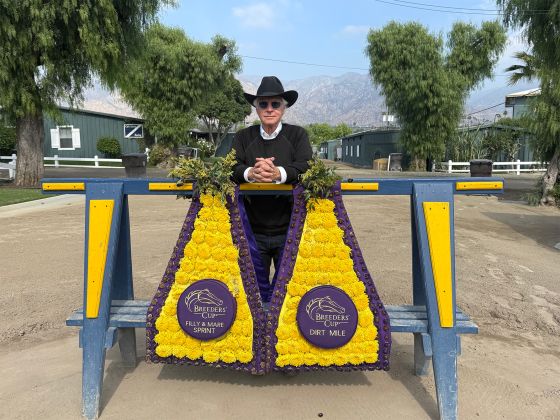
"The Most Charming, Engaging, Articulate, Horsemen”
Multiple Eclipse Award-winning writer, William Nack from GQ magazine
Bob Baffert is widely recognized as one of the most successful trainers in the history of horse racing. Throughout more than three decades of training Thoroughbreds, Bob has registered nearly seven hundred graded stakes victories and holds the record for Grade One wins in North America.
Bob Baffert is not only the all-time leading trainer by wins at Del Mar, he also boasts the most stakes victories at the seaside oval, including 18 triumphs in the Del Mar Futurity (two of which came with future Hall of Famers Silver Charm and American Pharoah), 10 in the Del Mar Debutante, and seven in Del Mar’s crown jewel, the $1 million Pacific Classic. Additionally, Bob is the all-time winningest trainer at Santa Anita Park with over 1,200 triumphs at “The Great Race Place” where he also boasts the most stakes victories. These include nine wins in the Santa Anita Derby – the prominent local prep for the Kentucky Derby – as well as six wins in the prestigious Santa Anita Handicap. Even before Bob’s Triple Crown success, His talents had earned him induction into the National Thoroughbred Racing Hall of Fame. Despite all of his awards, nothing speaks louder about Bob as a trainer and person than his two long-time clients, Mike Pegram and Hal Earnhardt, who have been with his stable for over 40 years dating back to their time in the Quarter Horse industry.
In addition to his many accomplishments as a trainer, Bob has been honored by industry turf writers for his leadership and commitment to enhancing media coverage of racing.
Hollywood and Horsepower Show
Through the relationships Mark Otto developed in Thoroughbred Horse Racing and Automotive Racing, during his global travels, the thing that most interested him was the story behind the story, with the famous people he was fortunate to meet. What was it that these people liked to do? How did they get into Hollywood or into Racing? These stories are fascinating! This is what encapsulates the “Hollywood and Horsepower Show”.
Bringing you along, we talk to so some of the most interesting people Mark met during his career. Don't be surprised if a few other guests stop by this show. This will be fun! It is where SNL meets The Tonight Show; a perfect mix of talk and comedy.
[00:10] Speaker 1: (swing music) I've been down roads from Churchill to LA. Met kings of speed and stars along the way. They got stories that the cameras never show. Yeah, the truth behind the fame is what we know. From the saddle to the silver screen glow. Fast lanes and punchlines on a late night show. You think you've seen it all but you don't know the half. Till the curtain lifts and we all have a laugh. It's not just who they are. It's how they came to be. A little horsepower. A little mystery. It's Hollywood and Horsepower, baby. Take a ride where the legends laugh and the engines never hide. From the track to the spotlight, stories unwind. Yeah, the truth's a little wild and one-of-a-kind. Hollywood and Horsepower, where the real ones show. Every twist and turn is a tale you didn't know. So pour a drink, sit back, enjoy the show. Where the fast and famous let it all go.
[01:34] Speaker 2: Welcome to Hollywood and Horsepower, the show about the story behind the story. We are joined today by a very special guest, and guy that's like family to me, ongoing guest, Buck Wilson. We're gonna talk about a lot of things today, it's a pretty exciting week, pretty full, full week. I mean, we're Kentucky Derby week, Formula 1 Miami, we're into spring baseball. People are starting to make their summer plans, and we never miss a show without talking about old Hollywood and restaurants that we love. So, Buck, welcome to the show.
[02:13] Speaker 3: Hey, Mark. How you doing?
[02:14] Speaker 2: Good. How's your week going? I appreciate you joining us again, it's always a good time. Sometimes I feel like we talk more on the air than we talk off the air. (laughs)
[02:25] Speaker 3: (laughs) Oh, this week is going about normal. Um, dinners to take care of, um, houses to keep, uh, (laughs) keep in order somehow. The weather, though, here has been really, really good. And the big, uh, like you said, the big thing for this week is, uh, Pelican Beach Condos on Saturday. We're having a, uh, Kentucky Derby party. So all the elements of that getting together.
[02:52] Speaker 2: Well, and that kind of gears us in, and I, and I mean, I will preface the show, and I've always said, Hollywood and Horsepower is about the story behind the story. So we don't... We're not, we're not gonna give you guys tips for who to bet on. I'm not even gonna pretend to tell you who I think's gonna win. Um, don't really have a feeling, and I... That's not who we are. But I will say, and for people that have ever thought about it, you know, I know everybody always says Kentucky Derby's a bucket list item. You know, obviously Buck and I have both been and, you know, it is an experience, there's no question about it. But, you know, it's also more than just the actual derby. You know, I would encourage you, if you're ever thinking about going, take the time and spend some time both in Lexington and in Louisville, and do more than just the derby. Like, you know, go to the derby, maybe go to one or two of the events leading up to it.
[03:54] Speaker 2: And then, you know, there's, there's everything from the Louisville Slugger Museum right there in town to Fourth Street Live with great restaurants, bars, and live music, to, you know, Old Friends over in Lexington, the Horse Park, obviously the Kentucky Derby Museum right there at Churchill. So I mean, you know, Buck and I have both spent a lot of time in Kentucky. It's kind of a, you know, special place for both of us, I think. What... I mean, give me some of your highlights, Buck. I mean, you've been, been around there as much as I have. What, what are some of the high, high-water marks? Like if, if you were telling somebody who had never been, what are the must dos?
[04:35] Speaker 3: (sighs) The mu- the must dos. Um, I would go into Georgetown, Kentucky would be a great place to be centrally located to get, uh, lodging. And then you could go to, um, um, Old Friends. You could go to, um, the tours. When I say the tours, I'm talking about the Bourbon Trail Tours. And the way to do that, without exception, is to get a, um, a hired car, for obvious reasons. And-
[05:09] Speaker 2: (laughs)
[05:10] Speaker 3: ... um, uh, Versailles, Kentucky is not very far away, and you can go to Buffalo Trace. Uh, Bardstown, um, is a must do because you're gonna have-
[05:22] Speaker 2: You know, speaking of Versailles-
[05:24] Speaker 3: Three pillars right there.
[05:25] Speaker 2: Not to inter- Not to interrupt, but we talk over each other the whole show, so it's nothing new. Um, the ver- Speaking of Versailles, anybody who's ever in Versailles, and I think you'll agree with me, you have to go to that Riccardo's restaurant.
[05:40] Speaker 3: Absolutely.
[05:41] Speaker 2: You're, you remember that place? It's on the point that's like an old train depot. Um, the food is absolutely amazing. I, I'm not even sure how to describe it. It's like, kind of like Southern... It's kind of like Southern food meets like a, a distillery thing. But the food is-
[05:59] Speaker 3: Mm.
[05:59] Speaker 2: ... absolutely amazing. The people are amazing. I mean, I really, I... That's one of my favorite places.
[06:06] Speaker 3: Absolutely. Um, and if you're in Bardstown, I can't remember the name, um-
[06:11] Speaker 2: Talbot Tavern.
[06:12] Speaker 3: ... but that's the place is... Is that the place that Jesse James shot the place up?
[06:16] Speaker 2: Yeah. I'm glad you brought that up. So if you're in Bardstown, Talbot Tavern is one place they, is an absolute must-go-to. So, Talbot Tavern was a true tavern with a hotel upstairs, and there is actually a room that they have preserved that Jesse James got in a shootout in, and there's bullet holes in the wall, and there's all kinds of pictures and things. So evidently, he had kind of laid low there, and they caught up with him there and had somewhat of a shootout upstairs and, obviously, he got away. In that same town, there is another place called the Rickhouse. And it's not Rick like R-I-C-K, it's R-I-K. It's the rick like rickhouse for bourbon barrels. So there's the Rickhouse restaurant that was actually an old rickhouse. So for those who don't know, rickhouses are where they store the bourbon barrels while they age 'em. So, bourbon is created and, and put in, you know, b- barrels.
[07:27] Speaker 2: Buck could give you more details than I could, he's forgot more about this stuff than I know but, but basically you, um, you know, you would go through... And you have to let it age anywhere, so what is it Buck, 7 to 10 years or longer?
[07:42] Speaker 3: Actually be bourbon it needs to be... The requirements are the grain bill, the elements that you put into the mash that actually wind up making the bourbon needs to be a minimum of 50, it needs to be 51% corn. Then you can go with whatever else.
[07:57] Speaker 2: Mm-hmm.
[07:57] Speaker 3: If you get one that's got more rye, it's got a little bit spicier taste, like a Jim Beam. If it's wheated, it's a little bit calmer. Um, Woodford makes a really good wheated as an example. Um, it's all about the water. Once it gets into a charred oak barrel, it goes in at about 151% alcohol. Then it sits in the barrel, three years would be about minimum for a good bar- bourbon. Um, then it extends out for there all the way up to... The most famous one you'll have heard of is Pappy Van Winkle. They make a 17, a 20, and a 23 year, and you get ever-greater amounts of the oak. The stuff it goes in is called white dog liquor. It's the 151, it has no color. And to perfectly honest, it has virtually no flavor. W- the oak does all the rest.
[08:47] Speaker 3: And you can, you can about-
[08:49] Speaker 2: It's already gone down, now it's coming up.
[08:50] Speaker 3: Absolutely. Once it sits in there, you've, now you've got what can either be called a bonded, because it's coming off at heavy proof, or they start mixing it down with, uh, purified water until they get the flavor and the percentage just the way they like it, and then that's the stuff that goes into the bottle. It might be a mix of different years, it might be a d- mix of different batches, but they get that taste, and it's the one that they want to go with, that they're known for, and that's the stuff that winds up in the, in the bottle. But a rickhouse, he's talking about rickhouses, if you ever walk in a rickhouse, the smell inside the place is absolutely ethereal. It is. They lose maybe 25% of a barrel over a long age, uh, to evaporation.
[09:37] Speaker 2: The angel's share.
[09:37] Speaker 3: It's called the angel's share.
[09:39] Speaker 2: Yeah.
[09:39] Speaker 3: The angel's share, absolutely. And that smell, and that thing, it's, it's all part of the, it's all part of... The tour I'm talking about there are um, all these parts of the experience that, uh, are always absolutely worth doing. And, uh, there in Bardstown, one of the distilleries is, uh, Horse Heaven Hills and, uh, that's, that's a really, really good, good tour to go on. Um, also I would say Maker's Mark is probably the most beautiful one, especially 'cause you can dip your own... The top of it is u- very unique on a Maker's Mark bottle if you don't know, because it's, it's dipped in wax, in a very, very bright red wax.
[10:18] Speaker 2: Yeah. It's like red-
[10:18] Speaker 3: And you can dip your own bottle, um, but if there's one-
[10:23] Speaker 2: I think, you know, we did... So we've done many partnerships, you and I, with different bourbon companies. And you remember, we worked, we helped old friends do their, you know, limited bourbon bottles with Maker's Mark, and that was one of the unique things-
[10:39] Speaker 3: That's a good one.
[10:39] Speaker 2: ... that I got to see because they actually did the wax to match the horse's colors. So for those people that didn't, weren't aware of it, that, gosh, when was this Buck? Like 17, 18, maybe 16, 17, 18, we did, we worked with old friends and did limited edition bourbon bottles that were horses that old friends had that had won one of the Triple Crowns, like Kentucky Derby or something. Um, a lot of them were actually Bob Baffer's horses, you know, like War Emblem, um, Silver Charm. I believe they did an American Pharoah. And then the bottle was made with the color of the silks, including the wax. It was really cool, and it was a limited run. There was only like 400 bottles each year.
[11:31] Speaker 2: Which I'm assuming-
[11:32] Speaker 3: How many-
[11:32] Speaker 2: How many bottles are in a barrel?
[11:34] Speaker 3: Oh, my goodness. That's a great question. Um, I can't tell you how many... If you go... Let me see, uh, maybe I can backtrack it. Hang on a second.
[11:43] Speaker 2: I was just gonna say, I'm actually shocked. We, we actually stumped Hemingway. I mean, for those listening, you understand now why I say that talking to Buck is like having lunch with Hemingway. He knows... He's forgot more than I know about almost any subject. (laughs)
[11:59] Speaker 3: I'm gonna say there's probably somewhere in the area of 200, 200 fifths.
[12:04] Speaker 2: Okay.
[12:06] Speaker 3: Base, by just backtracking it. The reason I say that is because they have a program at Maker's Mark where you can-... I was explaining about how important the wood is. Well, you can adjust that. You can use different oak, you can use French oak. You can use light char, you can use heavy char. So there's a program at Maker's Mark where you can go in, tell 'em what kind of taste you're looking for. They'll put er- a few bottles together, pour something out and say, "Is this what you're talking about?" And they know how to make that. So when you make your own taste, they'll build the barrel that will create that bourbon. Make it, age it, and when it's ready and the, uh, uh, distillery master says, "This was ready to go," you can buy the entire barrel. And, um, the price on it the last time I checked was $5300, so if you back that up from an estimated cost, that would be somewhere about $225 maybe. Somewhere in that range.
[13:07] Speaker 2: Oh, wow.
[13:08] Speaker 3: It's ... Yeah. It's a, a ... Speaking of Maker's Mark again, I mean, uh, you've been there. You go through that entryway that, uh, the ceiling is all Chihuly glass, um, it's an absolutely beautiful tasting room. It's very ... It, it's incredibly manicured place. It's been there a long time and, to be perfectly honest, it's a, it's a really good bourbon. It is really smooth.
[13:31] Speaker 2: You know, the other one that I really enjoyed, and I think you'd agree, was going to Woodford Reserve.
[13:39] Speaker 3: Oh, yeah.
[13:39] Speaker 2: So it's small, you know, it's not real big and it isn't as elaborate, but it was just, you know, it's such a, you know, for those that have never been there, Woodford Reserve is right outside of Versailles, Kentucky, just outside of Frankfurt and Lexington, Kentucky. And it's literally o- out in the middle of the horse farms. Like, you're, you're driving along and just about the time you're positive you took a wrong turn, there it is. And it's just a beautiful place. I mean, the building ... I think you'd agree. It's like, it just looks like something out of a magazine.
[14:16] Speaker 3: It's beautiful.
[14:17] Speaker 2: And-
[14:18] Speaker 3: Absolutely.
[14:18] Speaker 2: ... I know that, that's, that's like ... The, the Woodford wheat ... I mean, Buffalo Trace, and, and for anybody that knows me, I'm the most namby-pamby drinker there is. But it was actually you that got me to figure out what I like. The Buffalo Trace is probably my go-to. But, you know, for a special occasion, Woodford Wheat is a favorite. And I think that that's one ... I would encourage anybody to try that if they've never tried it. It is different than Woodford and it, it's very unique. Um, you know, we're talking with Buck Wilson, my ... You know, I'm your host, Marc Otto. You know, we're at Derby Week, Formula 1 Miami Week, and talking bourbon, travel, restaurants, and ... You know, I mean, that's one that always stood out to me that you got me to try, was the, the Woodford Wheat.
[15:11] Speaker 3: Oh, it is. Uh, when you wa- when you eat the bourbon, it gets a s- it gets a softness, but it also picks up this grain ex- ... Uh, you can tell that there's something in there. It's got a softness to it and it's got a, a grain flavor that causes a sweetness. Um, it's w- it's wonderful. Another one, back to Versailles and Buffalo Trace, if you're kind of a masochist and kind of the sort of person that likes to play golf, um, when you are at, um, uh, Buffalo Trace, um, get in the gift shop and buy a bottle of Blanton's.
[15:49] Speaker 2: Oh, yeah.
[15:49] Speaker 3: The reason I bring that up is there's an old tradition in Kentucky about Blanton's. The, uh, the cork on the bottle has got a small sculpture on it of a jockey riding a race horse. Well, there are ... Marc, is it seven or eight? Three corks.
[16:06] Speaker 2: I believe there are seven, and it's a series from-
[16:10] Speaker 3: Uh-huh.
[16:11] Speaker 2: ... the beginning of the race to the end.
[16:14] Speaker 3: Yep.
[16:14] Speaker 2: So it starts out with a horse walking.
[16:15] Speaker 3: And the, the payoff on that ...
[16:17] Speaker 2: Uh, it, then it goes to a full sprint, and then it goes to walking away.
[16:22] Speaker 3: Yeah. And what you wind up doing is getting a picture and there's a ... They had a paper with all of 'em on it that you can track that over the years of drinking Blanton's ... And by the way, Blanton's, if you ever saw a John Wick movie, that's what John Wick is drinking. Got really, really popular.
[16:41] Speaker 2: A- and that's a really-
[16:42] Speaker 3: And it's a really smooth-
[16:44] Speaker 2: ... like easy to drink bourbon. It isn't strong, it isn't real chemically. You know, I'm, I'm gonna be the guy that dumbs it down for everybody because I don't ... I, y- you know, you understand the ins and outs and ups and downs of it. I just know what I like and what I don't like. There's some of it that isn't fit to clean paint brushes in my opinion, and then there's some of this stuff that's actually very smooth. Blanton's, Buffalo Trace, Woodford Wheat, those are the ones that to me are like really smooth.
[17:15] Speaker 3: Absolutely. Um,
[17:17] Speaker 2: And I ... One point ... that's really good Right. So what's interesting is ... So I have the full collection. I have a bourbon rib out of an actual, um, Blanton's barrel and it has every one of the stoppers on it. And then so another thing that's kind of fun with that ... And it's, it's another one. So there's one that's called ... Is it Cask and Key? And they have-
[17:44] Speaker 3: Cask and Key.
[17:44] Speaker 2: ... like a skeleton key on the neck of every bottle and they're numbered one to five. If you collect all five, you get a personal inside tour of the distillery.
[17:58] Speaker 3: I did not know that.
[18:00] Speaker 2: That's ... And that's kind of like the ... What made me think of it was the Blanton's thing and I think that's really fun how there's like kind of like things inside of the, the industry that are, that are kind of fun like that. You know, it's like ...... you know, you've got the Blanton's product, but then, you know, the stopper collection. And I've seen multiple ways that people collect those. There's another display that looks like a big wooden horseshoe that has all the stoppers on it.
[18:32] Speaker 3: Yeah. It's, um... I mean, and then you wind up sitting in bars, and you'll see a bottle of Blanton's up there that's starting to get low, anywhere in Kentucky, you know, and ask the bartender, "Is that, uh, stopper, uh, spoken for?" You're probably going to wind up being, like, the fifth or sixth, or the five or 600th person, um, that's asked that question. And they've got a list somewhere of people that they took dibs on that cork because they're trying to complete a set.
[19:00] Speaker 3: Um, there's a, there's one question-
[19:02] Speaker 2: The interesting thing, I will tell you this, this is something I've learned is, since we're kind of a nationwide audience, people will probably understand this, the, um, the, the ones that I have picked up, I've picked up a lot of them outside of Kentucky. But I mean, several times in our travels, just what you're describing, I'd be sitting there, and they would have a drizzle left in the bottle, and I'd say, "Hey, is there any chance I could have that bottle?" And they, "Yeah, absolutely." They were probably going to throw it away. So it is kind of funny that, you know, if anybody is a bourbon aficionado, or a follower, or just enjoys horse racing and likes a unique collectible, you know, if you're ever in a restaurant or whatever and you see a Blanton's bottle, don't be afraid to ask them. You might be surprised.
[19:49] Speaker 3: Hm. Yeah, there... If you ever saw the John Wick movies, he's always drinking Blanton's, and there's a trivia question, because in the second John W- Wick movie, the Blanton's bottle has a green label, and that wound up shooting around, "Hey, where do I get one of the bottles with the green label?" It just happens that he was in Rome. The Blanton's that they ship overseas comes with a green label. That's what that was.
[20:15] Speaker 2: Oh, really? I never knew that.
[20:17] Speaker 3: Yeah.
[20:17] Speaker 2: So that's another piece of trivia.
[20:20] Speaker 3: Yep. Oh. But we have, uh-
[20:22] Speaker 2: Well, there's another connection there that made me think of that. You know Weller? So Weller-
[20:26] Speaker 3: Yep.
[20:27] Speaker 2: ... is kind of from the same family as, as Blanton's Buffalo Trace. That-
[20:32] Speaker 3: Yep.
[20:32] Speaker 2: ... has a green label.
[20:34] Speaker 3: Yep. Yep. It's, uh-
[20:36] Speaker 2: And that's probably another one on our list.
[20:37] Speaker 3: There's just strange little things like that.
[20:39] Speaker 2: I love that stuff. And that's probably another one on our list of ones that, you know, it actually is a pretty smooth tasting one that I, I really like-
[20:50] Speaker 3: Mm-hmm.
[20:51] Speaker 2: ... because it's just not overpowering.
[20:54] Speaker 3: Yep. Or you'll, another one that comes out of that same area, um, around Bardstown is, um, Larceny.
[21:01] Speaker 2: Oh, I've heard that.
[21:02] Speaker 3: It's, it's called Larceny. The story about Larceny, if you ever buy a bottle of it, the label that's on the front of it has an image. It looks, uh, strangely, like a, uh, keyhole, like the kind that would take an old skeleton key and an old hotel door. Well, the story goes that, um, there was a, uh, guy who worked there who was, uh, the rickhouse master who was, you know, of not no means, but he wasn't what you'd call wealthy. And then someday somebody figured out that he was the largest landowner in the county, and he didn't have money, and he didn't have a big salary, but what he did have was the keys to the rickhouse.
[21:40] Speaker 3: So-
[21:41] Speaker 2: Wow.
[21:41] Speaker 3: ... they pretty much figured out (laughs) how he came by the money. So (laughs) they named it Larceny, and that keyhole got put on the label, and-
[21:49] Speaker 2: That's hilarious.
[21:49] Speaker 3: ... it's another one that is, is absolutely, it's wonderful. That's another one. If you're sitting at a bar and you're, you're looking for a bourbon that's up there, Michter's with the green label, that would be one of the first ones that always jumps out. Maker's Mark would be one. Larceny would be one. Buffalo Trace would be one. All of those, and Woodford, even if it's not the, uh, wheated Woodford, which is...
[22:14] Speaker 3: Usually that doesn't turn up in a lot of bars until you hit-
[22:17] Speaker 2: Yeah.
[22:17] Speaker 3: ... Kentucky, since everyone does anywhere. But Woodford is another one. I can tell you, uh, part of my duties down here in the yacht club is I'm bar commander, and, um, I, I introduced a bunch of bourbons in there, and, um, I'm in, I'm in Sonora, Mexico as I speak, and coming up with a lot of American bourbon down here is not the easiest task in the world. But, uh, I got one of the local places that has, uh, distribution out of the capital city of Hermosillo, um, to start feeding some bourbon down here, and they can't, now they can't keep Buffalo Trace in stock.
[22:59] Speaker 3: And another one-
[22:59] Speaker 2: Rod Seager.
[22:59] Speaker 3: ... I had to bring down was Wood- Woodford, and Woodford goes out faster. We've got a large expat community here, and those are the two that just keep blowing out. So now they're out looking for more bourbons because it's gotten more popular.
[23:14] Speaker 2: I'll... You know what? I'll be- and it's inter- not to get into politics, but we might as well. So I wonder how much it's affected the availability for you, because I have heard that Canada has all but shut off US liquor because of the tariffs. So my Canadian friends-
[23:33] Speaker 3: Uh-
[23:33] Speaker 2: ... are telling me that they cannot get anything up there from America because they've basically... Unle- you know, it's, the, unless it's currently in inventory, the stock is dwindling. They're not bringing anything new.
[23:50] Speaker 3: I have been seeing some news reports about that too, and I didn't think about it until you just said something, but again, not talking about anything too directly, but when Anheuser-Busch and Bud Light have been, had their little difficulty a while back-
[24:06] Speaker 2: (laughs)
[24:06] Speaker 3: ... all of a sudden, all of a sudden, we got absolutely flooded down here with Bud Light.
[24:12] Speaker 2: That makes sense.
[24:12] Speaker 3: Absolutely flooded with it.
[24:13] Speaker 2: I mean, I almost wonder if you're benefiting by proxy from the political challenges-
[24:18] Speaker 3: (laughs)
[24:19] Speaker 2: ... to the north.
[24:20] Speaker 3: Hey, I'm gonna tell you, Bud Light has turned up in a lot of places. I'm talking is, uh, in farther south, or one of the five border states, but it's turning up, uh, down as far as, uh, Guadalajara. So you may be onto something there and, you know, good. That's good news. (laughs) If there's anything-
[24:42] Speaker 2: I'm curious to what they're doing. They're trying to offset the loss in sales to the north, and I know that, you know, if, uh, to take that Bud Light, you know, derailment, for lack of a better word, they, um, the, the, the story was the further north you went, the more damaged their sales became. You know, I think, so it would not surprise me that Canada shied away from them as well.
[25:10] Speaker 3: Makes good sense. I can tell you, if in the pockets around, um, around Mexico, uh, Guadalajara would be one. There's one in Nayarit, uh, Mexico City, um, um, uh, over, uh, where Playa del Carmen area, uh, the Yucatan, if all of a sudden it got easier or it got more pro- prolific that we had access to, to bourbon, and we had access to, uh, uh, US, uh, wine outta Washington, outta Napa, um, that would be, that would be nothing but good news for us down here. Now, don't get me wrong, um, Baja, California, um, qu- um, Guanajuato, um, they're making some absolutely wonderful wine down here. They are. Okay? But there's, uh, we've got a market for here as well, and it could expand out. So if that's what, if that's what's causing this to happen, it's making my life easier, yeah, I'm all for it.
[26:13] Speaker 2: You know what's interesting? Speaking of that, that's another hidden gem in Kentucky. So Kentucky has developed a group of vineyards that are growing in popularity, you know, and that's kind of inter- I mean, trust me, I don't even pretend to know wines. You forgot more than I know. But I, just in hearing people talk, it's interesting to me when you get these pockets like northern Michigan and Kentucky and some of these other areas, like, like you're talking about in Mexico, where non-traditional regions are producing some pretty popular wines.
[26:52] Speaker 3: Oh, there-
[26:54] Speaker 2: Have you-
[26:54] Speaker 3: One of the best ice wines-
[26:55] Speaker 2: Have you experienced that with some of the Kentucky ones?
[26:58] Speaker 3: Uh, not Ken- not Kentucky, but I've... Let me think. One of, some of the best ice wines-
[27:05] Speaker 2: There's a, like, Equis One is one that jumps to mind, and you hear a lot of people talk about it and it's a vineyard there, and, you know, they're just... I mean, I mean if anybody's listening, if you're curious on trying a new one, I would tell people, you know, take a look at it, because I'm not... I mean, Buck is almost a wine savant. I'm not, I mean, I barely, you know, I pick wine based on the bottle, but, you know, it's like, you know, I know- I've heard a lot of people say a lot of positive things about Kentucky wine.
[27:36] Speaker 3: Well, hey, you never know. Uh, I'll give you, this is my example. Uh, Sonora, the state of Mexico that I live in is basically a desert, okay? I mean, that's basically it. Okay, so imagine somebody said, "Hey, we've got a wine that's made in Sonora." You're going to be immediately suspicious. However, what you don't know is that the, uh, about halfway through the state, pretty much in the middle is Sonora. It's the capital. If you go north of there, you're going to hit an area where there are vineyards that go on, I mean, literally it's, it's like wheat fields, it's like, uh, wheat fields in Kansas. It just goes on and on and on, and you find out in the Western United States, in the last 10 years, if you've eaten a table grape, this is where it was grown. This is where they come from.
[28:31] Speaker 3: This is where-
[28:31] Speaker 2: I didn't know that.
[28:32] Speaker 3: ... the big supply, uh, the big supply of table grapes, this is where it comes from. So somebody said, "Well, if we can grow those grapes, what else can we do?" There is a, um, a wine that is called, uh, Cuatro Sierra is the label, it means four, four hills, and they are growing their own varietals. We're talking about like, um, Grenache and Mourvedre and Syrah, and the wines are good. I mean, they're good wine. This, this is just good wine and you wouldn't have expected it. So there's really, if no one would have thought, if you say, "Hey, I got wine from New York," it, "Ooh, really? Wow." But some of the best ice wine made, okay, is made in the northern part of New York.
[29:19] Speaker 2: Yeah, and that's-
[29:20] Speaker 3: Um.
[29:20] Speaker 2: ... what I was, what I was gonna say, so there's a, up in the Hudson Valley and then over towards Finger Lakes, I know that there's some vineyards up there that a lot of people really are very popular.
[29:31] Speaker 3: Absolutely. And the ice wine is made because the grapes have frozen, that's why it's called ice wine. There's an increase in the sweetness, and they make feel, make like a Sauternes, a, a dessert wine, um, and-
[29:46] Speaker 2: After that, do they-
[29:46] Speaker 3: ... it's very thick. It's usually-
[29:47] Speaker 2: ... still, they get a frost before they harvest them?
[29:50] Speaker 3: Yep. That's how it's made.
[29:53] Speaker 2: Yep.
[29:54] Speaker 3: And it absolutely comes out. It's usually sold in the smaller split bottles that are 375 milliliter, and it's the kind of thing that you would get a glass of to go with, like, a pound cake for dessert, and they're wonderful.
[30:08] Speaker 2: Oh, wow.
[30:08] Speaker 3: They're absolutely wonderful.
[30:10] Speaker 2: So kind of like, uh, you know, like a dessert wine.
[30:15] Speaker 3: Yeah, exactly.
[30:17] Speaker 2: That's amazing. You know, it is interesting as we talked about this, um-... you know, another thing that dropped this week was more tariff, per, you know, comments. And again, as much as we don't give you a horse to pick on, I don't get into a lot of politics, but, you know, along these lines, what is reflecting from this stuff, and I think a lot of people don't realize this, you know, the tariffs aren't paid by these other countries. So every time we say, "Oh, we're putting this on here, and they're gonna have to pay that," that really doesn't work that way. The American companies end up paying it, and it's really affected a lot of industries. I know it's affected the bourbon industry. I know it's affected a lot of the imports to other products, and it just... It's kind of interesting the misconceptions, if you will, that go along with some of this stuff. But it is... It, it's also interesting that, you know, like, everyone (...) another open.
[31:16] Speaker 2: So, you know, maybe the opportunity is that, you know, it expands into other regions like Mexico and, you know, Central America that have had a hard time getting some of those products in the past.
[31:29] Speaker 3: Proba- I... Like I said, um, if you want to buy the most inexpensive six-pack in all of Sonora, Mexico, it'll be Bud Light. So-
[31:39] Speaker 2: That's funny. Now, is it, is it popular?
[31:43] Speaker 3: Uh, you know, to be perfectly honest, it can't be, it can't be not popular. It can't be frowned upon or not being drank because the stack outs were there and then the stack outs were gone. So, but again, I can... Le- let's put it this way. If you go in and buy a six-pack of, uh, the most popular beer would be Tecate Light. Um-
[32:11] Speaker 2: Okay.
[32:11] Speaker 3: ... Tecate... If you buy a six-pack, you're probably paying, at the Walmart in Guaymas is about 13.5 pesos a can. Right?
[32:22] Speaker 2: Yeah.
[32:23] Speaker 3: Um, when they put the Bud Light out, it's going for, like, 10. And given the exchange rate if you don't know, 10 pesos is about 50 cents. 50 cents a can. So, you know, it, it was... Remember when we were... You know. You remember Schaefer Beer?
[32:42] Speaker 2: Oh, yeah. I would never-
[32:44] Speaker 3: Yeah.
[32:44] Speaker 2: ... have thought of it, to be honest with you. That's an old one.
[32:46] Speaker 3: Ok- yeah. Schaefer, and the, you know, the one to have when you're only ha- when you're having more than one. That was their, their call tag. Okay. Well, when I was in college, you could buy a six-pack of Schaefer Lights for if... I remember it was like 3.99 at the market off Balboa Island in Newport Beach, California. And that was the stuff we drank. So, you know, if they're going to put it out at 10 pesos a can, even if it doesn't have a following, it'll have one.
[33:15] Speaker 2: (laughs)
[33:16] Speaker 3: Absolutely guaranteed. They moved-
[33:19] Speaker 2: I remember another one like that. Do you remember one called Wiedenmann Beer?
[33:23] Speaker 3: No.
[33:25] Speaker 2: It was... It would come in a 24-pack cardboard case, and it was these little weird, like, almost barrel-shaped bottles with a bottle cap on top, and I remember, like, you know, in high school, uh, a girl that I dated, her, (laughs) her dad would literally have one of those sitting next to him, and, and the claim to fame with this beer was the case was, like, dipped in wax or treated or something, so you could dump ice right. In the case and, and kind of use it like a makeshift cooler. But I re-... It was the same thing.
[34:05] Speaker 2: It was, like, something stupid, like 4.99 for a 24-pack, and I think probably tap water had a higher alcohol content-
[34:14] Speaker 3: Yeah.
[34:15] Speaker 2: ... but... Especially if you drank it in Michigan, you know, Flint water or wherever. But it was like, um, just kind of amazing. It is... It always cracks me up, some of those old labels that were just almost like, you know, sewer water filtered through a sock. (laughs)
[34:36] Speaker 3: O- well, in Michigan, you'd have had... This is the difference, okay, between Southern California and, um, and Michigan where you were. You'd have had Old Style. You'd have had Schlitz. You'd have had-
[34:51] Speaker 2: Yeah.
[34:51] Speaker 3: ... Rolling Rock. You'd have had-
[34:54] Speaker 2: The big one-
[34:54] Speaker 3: ... all of those-
[34:55] Speaker 2: ... was actually Stroh's, you know. Stroh's was in Detroit.
[34:58] Speaker 3: Stroh's. Absolutely. Okay. Where I was in Southern California, the beer... If you were just going on price, we had... That Schaefer Lights that were out. We had, um... The big one would have been lots of Coors Light, lots of, um, uh, Miller Lite, and what got really popular in college was... I believe the first one was the Safeway chain of grocery stores came out with their own beer that just had a stripe on the can and it just said beer. That was it.
[35:37] Speaker 2: Wasn't there one that-
[35:38] Speaker 3: This was-
[35:38] Speaker 2: ... was called Stripe or something like that? Wasn't there one that had a label like that, that that was their name?
[35:45] Speaker 3: This was actually Safe-... The one I'm... Now, I don't remember that one, but there was actually just a Safeway beer. We just got beer, okay? And it wa-... You know, if, if they were... That beer, if, if it was given away for free, um-
[36:02] Speaker 2: You're overcharged.
[36:04] Speaker 3: ... you were overcharged. You were overcharged, absolutely. So by the time we got towards... I mean, the first thing out of school... You probably remember this. The first thing we got out of school where you knew you were a little bit better off than you were before is when you had gone all the way up to something like, um, Miller High Life.Now, you say that-
[36:27] Speaker 2: Oh, yeah. The one for, the one when we were in school was if somebody got their hands on, um, one of the, like, what we considered, like, the exotics. So what was the one that had, like, the foil top? Lowenbrau?
[36:45] Speaker 3: Lowenbrau, absolutely.
[36:46] Speaker 2: Which was, yeah, kind of like the fancy-pants beer. And then there was another one, not Natural, 'cause there was nothing natural about the Natural.
[36:55] Speaker 3: (laughs)
[36:55] Speaker 2: But it was, like, kind of like... God, I'm drawing a complete... I was not a beer drinker, as you can tell. But it was like I could, I could picture this bottle and it had like a gold foil top on it, and it was, like, kind of a little bit more expensive. So if somebody had a couple extra, you know, shillings in their pocket and they were looking to have a good weekend, that was usually what showed up. But as with most college and high school guys, you know, it came down to economics. So it was whatever you could get the most of with what you had.
[37:30] Speaker 3: Yeah. I just remembered, I just remembered a story. Okay, do you remember, uh, in the movie Jaws, Flint sitting in his chair? He has a beer, he cracks it, he downs it, he crushes it, and then, uh, Richard Dreyfuss folds up the paper cup. Remember that?
[37:48] Speaker 2: (laughs) Yeah.
[37:50] Speaker 3: Okay. That beer, okay, literally was something we chased in Southern California for years. Literally for years, we chased after that beer because all we had... Now, think about the timeline on this. Until it came to where you could had a D- uh, a VCR, and you could stop it, pause it on that moment, you could never... All you could do was watch it go by in the s- in the theater. But when, once the VCR was there, you could get a look at it, but you can't really read it, you just have a general idea of what it looks like. And there was no technology in there where you could go in and show it to somebody, so you just had to walk into stores and say, "Hey, did you ever see Jaws? You know that can that he's got?" And you've got some guy behind the counter who couldn't care less and nobody's of any help. So eventually, you get into college and you forget about it, right? But in, this is in high school, so don't hold it against me. Nonetheless, cut to, I'm not making this up.
[38:53] Speaker 3: This is the first time I was in Saratoga when we were working the horse industry. And I'm sitting at a bar by myself, and this is th- one of the nights before I was going to meet, uh, Big A and the people from HRRRAD.
[39:09] Speaker 2: (laughs)
[39:09] Speaker 3: Okay, I'm sitting at the bar, I've got a, I've got a drink, and I've ordered food. I think I ordered a burger. A guy sits down a chair away from me. He says, "Hey, give me a Narragansett." And I say, "Okay," and the guy walks over and puts it down. I happened to be looking in that direction, and that's the beer. And that's the beer.
[39:29] Speaker 2: And what's the name of it?
[39:31] Speaker 3: Name of the beer is Narragansett.
[39:34] Speaker 2: Okay.
[39:36] Speaker 3: Right? Okay, and you talk about when you finally get the story, because I make a complete idiot of myself. I pick the guy's beer up, okay, and I look at it and I go, "Oh my God, this is it!" Okay? And the guy's looking at me (laughs) like, you know, somewhere between, "Do I run for a punch? What's wrong with this guy?" And I go, "No, this is the beer from Jaws." And the guy takes the beer from me and he goes, "Well, yeah." And I go, "You don't understand," and I tell him the story about chasing it.
[40:05] Speaker 3: And he says, "It's only sold in this area." Okay, so seriously, I drank Narragansett-
[40:11] Speaker 2: I'm gonna make that entire time (laughs) you was there, that's the best story.
[40:14] Speaker 3: ... the entire time I was there, I was drinking...
[40:17] Speaker 2: Go ahead.
[40:18] Speaker 3: No, I was drinking Narragansett the entire time I was there. So I tell the story (laughs) that I just told you to Big A when we get there. And Big A's like, "Oh my God. Really?" (laughs) I just-
[40:32] Speaker 2: That's Blackwater? Yeah.
[40:34] Speaker 3: Yeah. Okay, I don't even can tell you, think I can tell you what it tastes like. But I was so delighted to, after all those years, to have found that beer. Um, I figured I'd just drink it the whole time I was there. Got it out of my system. But yeah, spent, God, it was, would have been at least 30 years looking for that beer, and I finally found it.
[40:56] Speaker 2: Oh, wow. Hey, we gotta... Speaking of Big A, we have to take a minute and plug this. So Big A is throwing a derby party in Saratoga. So anybody that's in the Hudson Valley, anywhere in Upstate New York, or if you feel like taking a weekend trip, Saratoga National Golf Course is hosting a derby party. Derby day at Saratoga National with the Big A. They still have tickets on sale. It is a great place to spend the day. They're gonna have wagering on site, food, concessions, all kinds of things. Obviously, live, you know, live simulcast and everything. So, you know, for anybody who's interested, check it out. Just do a search for Saratoga National. It'll pop up. Take a minute, check it out. If you're looking for something fun to do, that's a great place to go. We gotta plug a couple other things here for a minute. Um, mbgrayhealthcare.com. If you have employees, I guarantee you have employee benefit challenges.
[42:03] Speaker 2: The person who can get you out of it and make sense out of it, and especially now with healthcare costs starting to climb and everything going, going up, deductibles going up, coverage going down, mbgrayhealthcare.com. She's the best in the business. She can uncode it for you, put together a package that will help you and your employees.No Fallen Heroes is a charity that we support here. It was founded by Matt Wiz Buckley. Matt is an absolute advocate for veterans and first responders. If you get a chance, take a look at their website. We don't take a penny for promoting them. We do it because we believe in what he's doing. So it's nofallenheroes.com, and he is a great guy. Look him up. If you can't do a little, do what you can. Oldfriendsequine.org is the old friends that we were just talking about. So, you know, take a minute, check those out. If you're anywhere in Central Kentucky, you definitely wanna check those guys out. So back to the show.
[43:11] Speaker 2: Um, that stuff to me is always fascinating. I love those trivia, like, side pieces like that. So pivoting a little bit and staying on the East Coast, what are your thoughts on, you know, F1 Miami? Have you looked at it at all? Or do you get too excited about it or not especially?
[43:32] Speaker 3: Um, I haven't, I haven't looked at it. Um-
[43:37] Speaker 2: So it's 5,000-
[43:37] Speaker 3: I haven't really followed it.
[43:38] Speaker 2: The formula one in the United States continues to build, and it's like it gets more popular every year. And it's interesting to me that... And I'm not knocking anybody, I'm just making an observation. F1 Miami falls on the same weekend as Kentucky Derby every year. As you know, you and I, we, we like both, automotive racing and, you know, horses. The thing that is inter- impressive to me is how they do it. And I think one of the things that's gonna be interesting this year is the world-renowned Lewis Hamilton, who was with AMG Mercedes for so long, you know, top of the leaderboard every time he turned around, is in the Ferrari car 44 this year. And that's a big change. So he's dressed in red come Saturday, and I think that's gonna be one to watch. I'm not giving predictions. I just know that Lewis is a heck of a driver, and it's really gonna be interesting to see how he does in the Ferrari car.
[44:51] Speaker 2: I mean, Ferrari's got a longstanding history with F1, and they've always done very well with it. So this is kind of interesting. I mean, this is kind of like history unfolding. You've got kind of like the best driver with one of the most historic teams, and it'll be fun to see what they do.
[45:11] Speaker 3: Well-
[45:11] Speaker 2: I don't know about you.
[45:12] Speaker 3: ... I can tell you this, Ferrari, Ferrari's a fun... Like, it's just one of those companies that, to me, you can't help but be kind of intrigued by it. Don't you agree? Ferrari? Oh, absolutely
[45:24] Speaker 2: Not just the street car. I mean, the racing history, everything that they've done. Um, and, and maybe it's just because I'm Italian. I don't know. I mean, it's like... But it's always been kind of one of those... I mean, everybody's seen the movie Ford versus Ferrari and, you know, it, it really was interesting to read and, and see how Enzo went. You know, it was so important to him, F1. So it's, it's kind of fun to see where this thing goes. Who do you generally like? I mean, who are some of the guys that you like to... When you get into like some of the, you know, McLaren, AMG, F1, you know, I mean, you know, who are, you know... We even have Tony Stewart involved now with Haas. You know what I mean? Who, who are some of the ones that you kind of like?
[46:13] Speaker 3: You know, when it, uh, when it comes to F- F1 racing, um, you know, um, I married a gal from Indiana.
[46:22] Speaker 2: Oh, yeah.
[46:23] Speaker 3: Yeah. So when it, you know, when it comes to-
[46:25] Speaker 2: But you find people, like, from Indiana, they're big Grand Prix F1 fans.
[46:31] Speaker 3: Well, they are, but I mean, the race that I, I ha- um, wind up watching every single year, the one that is, is, uh, the Indy 500.
[46:38] Speaker 2: Sure.
[46:38] Speaker 3: That's kind of the big tradition.
[46:40] Speaker 2: Really big event.
[46:41] Speaker 3: But as far as, uh, from the stuff that I'm interested that's really, would be important, uh, definitely the Ferrari team is the ones that wear the, um, uh, the custom-made-for-them Richard Mille watch. Um-
[46:56] Speaker 2: Oh, wow.
[46:57] Speaker 3: ... the RM, uh, 46, the RM43, and that, it just... Everything about Ferrari, and there's... Even down to, down to the street cars, okay? There is a mystique. There is a class about it. I mean, an RM43 is gonna be about 1.2, $1.3 million, and they've got them down-
[47:20] Speaker 2: Wow.
[47:21] Speaker 3: We're in the car- we're in the carbon fiber models, and they're the spokesmans for it. You can't... The class that comes off of that is just, it, it, it's not perceived. I mean, it has got the, oh, a European high-dollar class badge that just pops on anything you put it on. And-
[47:41] Speaker 2: I didn't know that.
[47:42] Speaker 3: ... you're seeing history on top of it. Oh, yeah. Yeah. If... When you, when you get a chance, go ahead and, and Google that, about an RM43 Ferrari. Okay? And if you're somebody who loves watches, this is, this is... You know, it's, it's not... It, it just, it's its own signature piece. Okay? When you get into that kind of thing, you're talking about somebody who is really committing, um, to that, to that, uh, that badge. There are watches... I mean, you know, when, when a Rolex... Um, you've got every one of the watches along the way.
[48:21] Speaker 3: You've got a Seamaster, you've got, uh, the, uh, uh, sports watches-
[48:26] Speaker 2: Datejust.
[48:27] Speaker 3: ... from, uh, Omega. Omega.
[48:29] Speaker 2: Yeah.
[48:30] Speaker 3: You've got, uh, Patek Philippe. You've got, uh, the AMP watches, especially...... you know, the ones that are the, the C mound. But the RM pieces are very, very large. They've got a huge signature to it. And Ferrari went to the, the lengths. They outfit the entire, uh, th- the racers in these, just as a, a brand manager. It's, uh, you look, it... See the picture. You'll, you'll get the point. It's-
[48:56] Speaker 2: Yeah, that's (overlapping conversation)
[48:56] Speaker 3: ... it's absolutely spectacular.
[48:59] Speaker 2: You know, I think the other one to watch here, uh, that's worth mentioning is Cadillac, Sergio Perez in the 11 car. He's gonna be another one that I think is kind of an unexpected, um, wild card here, if you will. Not, not that he's not very capable, but I just... You know, I think sometimes Cadillac gets overlooked, and there's been a lot of talk about them, and I think it'll be interesting to see where they fall on the board this year. Kind of a nontraditional one, you know what I mean? It's not exactly a company you think of when you think of F1, but I know that they have put a lot into their program. You can't overlook Austin Martin, ever, and McLaren, obviously. And then, you know, the kings of the, of the field is always AMG. I mean, Mercedes, they just seem to dominate year in, year out. It's really gonna be interesting to me what effect Hamilton has on the Ferrari team, because he's just so good behind the wheel.
[50:07] Speaker 2: I mean, you can give the car credit, but I mean, AMG was never in the winner's circle as often before Hamilton as they were with Hamilton.
[50:16] Speaker 3: Hmm.
[50:18] Speaker 2: Kinda interesting.
[50:18] Speaker 3: Well, somewhere between, somewhere between everything going on at the Kentucky Derby party, I'll see if I get to see the race.
[50:25] Speaker 2: Yeah. You know, if you, if you guys have an extra TV, it might be worth trying to dial that one in somewhere off to the side, if you have-
[50:32] Speaker 3: For sure.
[50:32] Speaker 2: ... multiple screens running. You know, the funny thing is, so another piece this year is our good friend Bob Baffert is back, and he has two horses in this year. So, it'll be interesting to see. And once again, I'm not trying to give predictions or anything else, but I will say, you know, I'm probably a little bit biased. I'm always gonna be Team Baffert. I really like Bob. I think he's one of the best in the business. Um, I think he is probably one of the nicest guys in the horse industry. And quite frankly, I think he's also, um, um, one of the best horsemen.
[51:13] Speaker 3: Oh, record speaks for itself.
[51:13] Speaker 2: Uh, when you agree.
[51:16] Speaker 3: The record speaks for itself. Absolutely.
[51:18] Speaker 2: Well, and I will tell you, and, you know, it is... I know there's... So, he has, you know, two horses in this year, and, you know, Citizen Bowl and Cesar Arias, um... I'm sure that's correct, but anyhow. Um, I'm not trying to give courses to watch, but I will say, you can never overlook Bob. And I think more important than wherever he does this week, number one, is the return. You know, I think that that's historic. I mean, as we know, if he wins, he breaks a record for the most Kentucky Derby wins, I believe. Correct me if I'm wrong. I think that if he wins, he becomes the most winning trainer in history for Kentucky Derby. And, you know, it's funny, because everybody always says, as you said, you know, record speaks for itself. Which it does, but I think the part, and, you know, going back to, like, American Pharoah, and as you know, I mean, Bob was gracious enough that he allowed Michael Bloughn to tag along.
[52:28] Speaker 2: And Michael was gracious enough that he let me tag along, and I was able to experience, kind of firsthand, his operation and his team. You know, Jimmy Barnes, Dana Barnes, you know, his, George, his, his wife Jill, obviously, is a huge part of that team. Um, you know, Bob, obviously, runs the entire organization. And for people who don't understand, you know, Bob will generally have between, uh, and, and, I mean, these aren't exact numbers, but at any given time, he'll have, you know, well over 100 horses in training. In fact, it's probably closer to 140 horses at times. So, you know, it's not like he's just got one or two horses, you know, that he is focused on. He's focused on everything from young horses at farms, to stallions that are in breeding, to actually horses that are retired that he still supports. And I will tell you, this is unsolicited and unendorsed. Bob doesn't, did not know that I was gonna talk about him. I kind of took this on myself.
[53:34] Speaker 2: I've asked Bob to come on the show, and Bob's, you know, reluctant, but he doesn't... He tries to stay out of the press as much as he can. But he, um, I, the one thing I noticed being close to his operation was just how calm he was, and how calm the operation was. You know, it was kind of funny, when you'd go in the barn, the horses were just relaxed. The people were relaxed. I mean, it was not like there was a bunch of tension. It was not like there was a bunch of chaos. And I'm not gonna mention names, but I can tell you, from walking around the backside, and you've been with me. I mean, as much as we've been around the barns, you know what I'm talking about. There's a lot of barns that all you hear is screaming and yelling and horses, you know, just about kicking the walls in. And, you know, I, I really believe that there's something to the tone that's set by the team. It was interesting, American Pharoah, you know, he's a Triple Crown winner.
[54:34] Speaker 2: I remember this clear as day, and I don't remember why it stood out so much, but...... I believe it was the day before, I think it was Friday, at Belmont, you know, kind of gearing up for it. And we were at the barn, and I just remember Bob was at the far end of the shed row, past the horses. Mm. And he was just kind of standing there with his arms crossed, thinking. I'm sure he's contemplating everything leading up to this moment. But what was, hmm, interesting to me was every one of the horses was just standing there calmly, almost exactly like him. And I... It was one of those moments you just remember, you know what I mean? It's like one of those moments in time that just kind of stood out. And it's like, you, you... I'm no expert or anything, you know, but it did make you wonder. It's like, you know, you have to think that somehow his personality and his demeanor beats, you know, they, they kind of look to him. Like, if he's relaxed, they're gonna be relaxed.
[55:37] Speaker 2: So it was, it was kind of one of those telling moments. And I think the other thing that was telling for me was, like, one barn over from where we were, you could hear people yelling and screaming, horses going crazy. And, and it was just kind of, like, one extreme to the other type of thing. But I, I will say this, and it, it really was the most telling thing for me, kind of following along and being kind of a, just an observer, how much thought... Not that every trainer isn't gonna obviously put a lot of thought into their training. But it was not just like, "Oh, you know, do this and do this." There was a lot of talk about previous horses that Bob had had and how they had trained them and what they had done, and that really stood out to me about how much... You know, it's like, man, there's a lot to this. It's like there's a, there's a lot of strategy, there's a lot of...
[56:35] Speaker 2: And at the same time, you know, he was getting a lot of pressure put on him, you know, to bring this horse to New York and do this with it and do that with it for publicity reasons. And he's got to balance that with what he feels is best for the horse. And, uh, and that's something that really stood out to me, and that's one of the many, many, many, many things of why I think that he and Jill and Jimmy are some of the best horsemen in the industry. I mean, I'm not giving anybody a prediction about the Derby. I won't do that. But I'm just saying that as a horseman and as a person, I don't think there's anybody in the industry that is, uh, more conscientious and cares about his horses and his team than Bob Baffert. I mean, I've, I've been around him quite a lot. I know there's a lot of controversy there, I know there's people that won't agree with that. You can stop writing your letter right now, 'cause I'm not gonna read it anyhow.
[57:36] Speaker 2: But I'm just, personal opinion, I think he's, he's one of the greats for multiple reasons. So that's my, that's my soapbox for the day, if you will. So we're kind of- I, I would- ... up against the hour here, Buck. They're gonna be rolling me out. But before they do that, we wanted to plug King & Berdos. If you're in New York, you have to go to King & Berdos. If you're in Miami, go to The Palm. Tony's Steak & Seafood if you're in Kentucky. And obviously Frank & Dino's if you're in Kentucky. You can never go wrong. No Fallen Heroes, MV Gray Healthcare, and if you're anywhere near San Carlos, Mexico, you gotta go to the yacht club and check out Buck's Derby party on Saturday. I'd appreciate it. It's members only. No, no, no. Just tell them you know the Commodore. (laughs) There you go. Tell him you know the Commodore. And the beauty of it is it's the only yacht club you don't have to have a yacht to get in. (laughs) That's a unique, neat feature.
[58:38] Speaker 2: Well, I can't thank you enough for joining us, Buck. You know we always enjoy it, and I know we didn't get to our movies. We'll have to do that again, uh, you know, next week. But, you know, I hope you guys have a great party. I hope you guys have a great weekend. And thank you everybody for joining us, and we will see you again next week. This is Hollywood and Horsepower: The Story Behind the Story. And wishing everybody a safe and fun weekend, whether you're going to the Derby, watching it on TV, following F1, watching that on TV. There's definitely a lot of fun things to do this weekend. So, don't let the weather put you off. Get out there, enjoy something. And as I tell everybody all the time, if you're ever looking for a fun experience that is very accessible in sport, go to a horse track, go to a horse racing. Big or small, you can have fun anywhere you go. And, you know, I think Buck would agree, it's the most accessible sport of, of, of any sport.
[59:42] Speaker 2: It's the most accessible of any sport, and it is actually a really fun time. I mean, you can take your kids. It's, it's not... It's definitely not what you will picture. I think there's this image in people's heads of, you know, a guy with a racing form and a cigar and, you know, half in the bag. It, there, there is... You know, I'm not gonna say you're never gonna see that. But I will say this, um, you'll see more of that at an NFL game than you will at this. And I think that one of the things that people don't realize is just how accessible the sport is. So, thank you for joining us, Buck. Thank you for joining us, everyone, on Hollywood and Horsepower, and we will see you again next week. Take care.
[01:00:25] Speaker 4: So stay awhile. You're in the driver's seat. Where the road and the rhythm finally meet. Stick around. You never know who's next. And trust me, they got a story worth hearing.