Hollywood and Horsepower Show, April 16, 2026

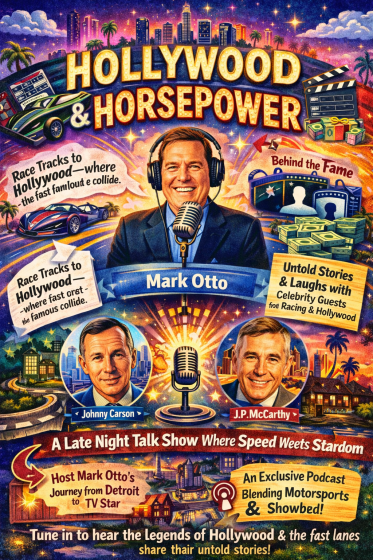

Hollywood And Horsepower Show with Mark Otto
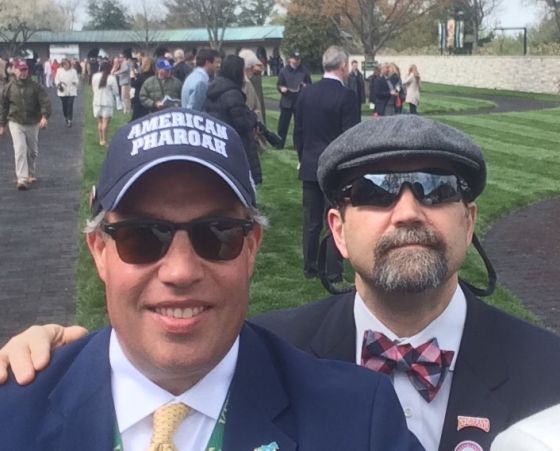
Guest, Buck Wilson - a longtime friend of mine. He is a world traveler he is one of the most well-traveled people I know. I describe Buck as having lunch with Hemingway.
Hollywood and Horsepower: A Journey Through Legends, Travel, and the Turf
Hollywood & Horsepower
Podcast Abstract
The story behind the story: A journey through speed, fame, and the legendary diners that fuel the fast lane.
The Core Premise
"A show about absolutely nothing." — Inspired by Seinfeld, focusing on the untold human stories behind sports, travel, and careers.
Foundational Influences
- ✦Johnny Carson: The master of rolling with the punches and turning failures into bigger laughs.
- ✦J.P. McCarthy: "The Great Voice of the Great Lakes" who brought unpredictable, high-low guests together.
- ✦Urschel Ellis: The legendary storyteller of the horse racing world and a primary inspiration.
The Guest: Buck Wilson
Ex-Navy, world traveler, and yacht club volunteer currently based in San Carlos, Mexico.
Legendary Pitstops
Horse Racing Heritage
Introduction
Host Mark Otto reflects on the roots of his show, "Hollywood and Horsepower," drawing inspiration from Detroit’s legendary broadcasters and the art of storytelling. Alongside guest Buck Wilson, the episode explores a lifetime of global travel, the unique culture of horse racing, and the culinary landmarks that define their journeys.
Detailed Summary
Origins and the Art of the Interview
Mark Otto opens the show by introducing a new theme song and reflecting on his upbringing in Detroit. He credits his fascination with talk shows to legends like Johnny Carson and local Detroit icon J.P. McCarthy, "The Great Voice of the Great Lakes." Otto emphasizes that the show's goal is to uncover the "story behind the story," much like McCarthy did by bringing on a diverse array of guests from cardinals to athletes. He describes "Hollywood and Horsepower" as a show about "absolutely nothing"—a Seinfeld-esque platform to discuss whatever is interesting, from restaurants to career paths.
Global Footprints and the Philosophy of Travel
Guest Buck Wilson, an ex-Navy traveler living in Mexico, joins the conversation to discuss the transformative power of travel. Citing Mark Twain, Otto notes that travel is "fatal to narrow-mindedness." Wilson shares his most memorable locations, specifically Cape Town, South Africa, for its game meat and Belgian ale, and Rome, Italy, where he felt an immediate, inexplicable sense of belonging. The duo discusses how history and heritage shape the personality of different regions, from the Scandinavian influence in Minnesota to the "Appalachian migration" that defined the relationship between Kentucky and Detroit.
🌍 Memorable Travel Landmarks
The Magic of the American Racetrack
The discussion shifts to the unique atmospheres of legendary racetracks. Saratoga is described as "summer camp for adults," where CEOs and factory workers mingle as equals in the picnic grounds. Del Mar is celebrated for its "Keep it Cool" tagline, founded by Bing Crosby as a refuge from the California heat. Otto also reminisces about Hollywood Park’s heyday as a celebrity escape where stars like Desi Arnaz walked freely among fans. Despite the charm of the coasts, both speakers agree that Lexington, Kentucky, remains the "Beverly Hills of horses" due to its unmatched tradition and etiquette.
Culinary Traditions and "The Story Behind the Steak"
For Otto and Wilson, travel is inextricably linked to food. They recount a long list of "must-visit" establishments, from the legendary shrimp cocktail at St. Elmo’s in Indianapolis to the deep-dish pizza at Geno’s East in Chicago. The conversation highlights how certain restaurants, like The Palm in Miami or Tony’s Steak & Seafood in Lexington, become the anchors of their memories. Wilson jokingly describes Otto’s dining style: arriving "on two wheels," ordering four appetizers and three entrees, and leaving halfway through to find a taco stand two hours away.
🏇 The Racetrack "Vibe" Guide
| Track | Defining Characteristic |
|---|---|
| Saratoga | Tradition, picnic grounds, "Summer Camp." |
| Del Mar | Ocean breeze, "Keep it Cool," Bing Crosby. |
| Lexington | Etiquette, class, "Beverly Hills of Horses." |
| Hollywood Park | Celebrity escape, entertainment history. |
Horse Racing Anecdotes and Clichés
The episode concludes with a humorous look at the "clichés" of the track. Wilson shares the ubiquitous story of being "still alive in the pick five" until a last-minute disaster strikes, while Otto recalls Michael Blowen’s mother-in-law winning more money by picking horses with "cat" or "kitten" in their names than the experts did with their racing forms. These shared experiences, from the smell of the stables to the thrill of the wager, form the "song line" of their lives.
Key Data
- Friendship Duration: Mark Otto and Buck Wilson have been associates for 20 years.
- Temperature Differential: Del Mar was founded because it is typically 15 to 20 degrees cooler than Arcadia/Burbank.
- The "7-Mile Bridge": A key landmark mentioned in the drive to Key West.
To-Do / Next Steps
- Visit Old Friends Farm: Check out oldfriendsfarm.org when in Lexington to support retired racehorses.
- Dining Recommendations: Visit Tony’s Steak & Seafood (Lexington/Cincinnati/Bowling Green), Malone’s, or Frank and Dino’s.
- Healthcare Review: Employers should visit mbgrayhealthcare.com to explore potential benefit savings.
- Support Veterans: Look into "No Fallen Heroes" led by Matt "Wiz" Buckley to support veterans and first responders.
Conclusion
This episode of "Hollywood and Horsepower" serves as a nostalgic tribute to the intersections of life on the road and life at the track. Through the lens of two seasoned travelers, the show reinforces that while the horses and the destinations are the draw, it is the shared stories, traditions, and local flavors that truly endure.
Hollywood and Horsepower Show
Through the relationships Mark Otto developed in Thoroughbred Horse Racing and Automotive Racing, during his global travels, the thing that most interested him was the story behind the story, with the famous people he was fortunate to meet. What was it that these people liked to do? How did they get into Hollywood or into Racing? These stories are fascinating! This is what encapsulates the “Hollywood and Horsepower Show”.
Bringing you along, we talk to so some of the most interesting people Mark met during his career. Don't be surprised if a few other guests stop by this show. This will be fun! It is where SNL meets The Tonight Show; a perfect mix of talk and comedy.
[00:00] Speaker 1: (singing) I've been down roads from Churchill to LA. Met kings of speed and stars along the way. They got stories that the cameras never show. Yeah, the truth behind the fame is what we know. From the saddle to the silver screen glow. Fast lanes and punchlines on a late night show. You think you've seen it all but you don't know the half. Till the curtain lifts and we all have a laugh. It's not just who they are. It's how they came to be. A little horsepower. A little mystery. It's Hollywood and Horsepower, baby. Take a ride where the legends laugh and the engines never hide. From the track to the spotlight, stories unwind. Yeah, the truth's a little wild and one-of-a-kind. Hollywood and Horsepower, where the real ones show. Every twist and turn is a tale you didn't know. So pour a drink, sit back, enjoy the show. Where the fast and famous let it all go.
[01:34] Speaker 2: Welcome to Hollywood & Horsepower. This is your host, Mark Otto, and we're gonna take a little bit different path today. We're gonna have a guest, a very special guest of mine, but he's gonna join us a little bit later. We're gonna start out and talk a little bit about how Hollywood & Horsepower came to be, what it's really about, and for those that are regular listeners, you will notice, first off, this is the first week with a new intro music line, and that song was written specifically for the show by our producer at BBS Radio, Don Newsom, and we couldn't thank him enough. I mean, they do tremendous work. They've done everything they could to make us stand out and make what I do a lot better. I wouldn't be anywhere without those guys, and I really appreciate 'em. You know, it's really been an honor to host this show and it's kinda been, uh, somewhat of a dream of mine because, you know, I, I grew up on the West Side of Detroit. My dad was a Detroit vice cop.
[02:39] Speaker 2: Later on we moved out, you know, to Mid Michigan, but most of my childhood, anything that was influential in my life, I always point towards Detroit. Um, you know, you, you stop and think about how you get to where you're at and it's, it's interesting to me, even in my own path, how the people that I looked up to, the people that I really found fascinating were really like radio and TV talk show hosts. Obviously like Jack Paar, Johnny, Johnny Carson, I mean, but then, you know, on a local level, or semi-local level, there was a voice in the Detroit area that many of you will recognize, was J.P. McCarthy. J.P. McCarthy, dubbed The Great Voice of the Great Lakes, was a morning host at WJR 760 in Detroit. WJR still goes on today and i- it has always been a powerhouse of an AM station. The difference that J.P. brought that I had never seen before that was really fascinating, was that he had unique guests on every week. You never knew who he was gonna be talking to.
[03:53] Speaker 2: He could be talking to anyone from, uh, high-up cardinal in the Catholic Church to one of the Detroit Lions to one of the LA Lakers to somebody local that had a restaurant, and it was all really interesting and it was something that you didn't know. He took you to a place where you just didn't recognize, you know, you, you didn't know that about them. You might've known something about them, but you didn't know what he was gonna bring you, and that's what made it fascinating, and he was the master at doing this, week in, week out. One of the guests that I'm working on getting is actually his son, Jamie McCarthy. And I'm hoping that Jamie will join us in the next few weeks and, you know, we can talk a little bit more about that. But I wanted to take a little trip and kind of bring you guys up to how Hollywood & Horsepower came to be. You know, growing up, I was always fascinated by talk shows.
[04:51] Speaker 2: Johnny Carson, to me, was probably the legend of all legends, and I know that's nothing unique. I mean, I think anybody who's interested in comedy or, you know, any type of media, is, looks up to Johnny Carson. But I always watched Johnny Carson even as a kid and, you know, how he carried himself, and, you know, the, the things that he did were so unique and so much different than anyone else. I mean, even down to, like, if a joke bombed, he was great at, you know, just rolling with it or making another joke out of it, which I always thought was just amazing. I mean, compared to like, you know, some of the, you know, people that you see on air that, you know, if, if they have a joke and it doesn't go well, they're, they act like they're so bullet-ridden they can't even admit it, and, you know, Carson never did that.
[05:51] Speaker 2: If something bombed, he made a joke out of it, laughed with the audience, and he actually would generally get a bigger joke out of the failure than he would've out of the actual, you know-... writing that he had planned on doing. So those were some of the ones that I grew up on. And, you know, as a kid, growing up in West Detroit, one of the things I remember was, my dad had, my mom and dad had a radio on the kitchen table and that thing was on at least in the mornings, almo- every day. And they would listen to JP or they would listen to other stations, but it was always fascinating to me how this, you know, box took you around the world. You know, it took you to different places, and I loved listening to the shows. And then later as I got older, you know, I started traveling for work. You know, my career has been, you know, something of a, you couldn't really even write it.
[06:48] Speaker 2: If you wrote my career and took it to s- to, um, a p- you know, a studio, they would probably tell you it's too far-fetched. But I started out as a pilot, flew for a while, had kidney stones, w- had an opportunity to get out of flying and go into marketing and consumer products and I did that, but, you know, it's interesting. Through my career, and, you know, hopefully our guest can join us today, but he, he and I have been together for 20 years. And, you know, the travel was a big piece of it, and it's amazing. You know, Mark Twain said it best, you know, "Travel is absolutely fatal to narrow-mindedness, prejudice, and bigotry." And it really is true. The more you travel, the more you realize we're all the same. There isn't that much of a difference. And, you know, there are great people in all corners of the world. I don't want to get into politics. Please don't start writing letters.
[07:47] Speaker 2: I will just say that I've met people from almost every continent on the, on the globe, and I find them fascinating. They're interesting. I love learning about their culture. I love learning about their, their foods, their people. And, you know, I'm not gonna get into who's better or who's not, but I've been very, very impressed by many, many countries around the world. It's always interesting to me in my travels, you know, you think of the movie Planes, Trains, and Automobiles, that pretty much, that is pretty close to what I've lived. I mean, I've kind of had every type of travel you can imagine. I, you know, hundreds of thousands of miles by air, hundreds of thousands of miles on, on the road, you know, every possible thing you can imagine. In doing that, you see and learn a lot, and what's interesting to me is that, you know, it doesn't make you feel like you know more.
[08:45] Speaker 2: It actually makes me feel like there's so much more to learn, and it makes me so much more curious about the world that's out there. In doing my job, I would put together sponsorships, programs, still do this today, and, you know, part of that was being a guest on radio or TV, and, more times radio, and talking about whatever it was, whether it was the Kentucky Derby, which we have coming up here shortly, or, you know, Formula 1 Miami, which is also coming up here shortly, or, you know, some sort of, you know, sport horse event or some sort of golf event. Whatever the sponsorship was, you would get on the air and talk about it. Well, I got asked several times to come back because they found, probably, my lack of knowledge to be interesting because I would ask questions of the other guests that were on the show that were probably similar to what the average guy would ask.
[09:53] Speaker 2: In doing that, I eventually was asked to guest host once in a while, and then eventually I got approached and, you know, a gentleman in Florida said, "You know, have you ever thought about doing your own show?" And I said, "You know, I would, I would be interested in doing a show, but I would like to do a show that is not just about sports." I've always said, one of my prep- People say, you know, "What are you the most proud of when it comes to this show?" And I say, you know, the thing, the thing I'm the most proud of is Jerry Seinfeld thought he did a show about nothing. Hollywood and Horsepower is a show about absolutely nothing. You know, we talk about whatever we want to talk about, restaurants, travel, people's careers. The story behind the story is really the premise of the day and it's, it's the same thing every week.
[10:50] Speaker 2: We always want to go and find that story that hasn't been talked about, and I, and I always have found that to be interesting to me You know, M- Mel Brooks had a comment one time talking about comedy that he said, you know, "Generally, if you find it funny, if it tickles you, other people are gonna find it funny." I have found the same thing in, in the show. If I find it interesting, chances are there's a few other people out there that are gonna find it interesting as well. So that's what we've tried to focus on, and, you know, I've been very fortunate to do this. I'm very grateful to do it. I appreciate what everybody does that makes this possible, you know, between sponsors and, you know, the network, and all the work that Don and Doug do at PBS, you know, it's, it really is something that I have the easiest part of the, the show.
[11:52] Speaker 2: You know, I feel like everybody else does the heavy lifting and I get to come in and do the fun part, which is sit, sit down and talk to you guys and talk to our guestsAnd I've, I've always enjoyed that. And hopefully we'll be able to continue that, and hopefully we'll be able to bring you programming and guests that, that are interesting. And that, that really is our goal. You know, some of the people that have influenced me along the way, um, you know, there's another network that was really influential, I did a lot of stuff with them, and that was HRRN, you know, Mike Pena. Um, he, he does a great job and I've always enjoyed his programming. I've always enjoyed his shows. And I love being a guest on his shows. And I was even fortunate enough to work with him briefly. Um, they're great people. But, you know, he was one of the guys that I just really liked his style. He's very relaxed, he's very easygoing, and, you know, that was one of the people that influenced me along the way.
[12:58] Speaker 2: You know, Urschel Ellis on Horse Tales was a huge influence. And, you know, I even hesitate to say that in the sense that I don't even pretend to be on the level that Urschel is, but Urschel, to me, is a legend in the business. If there was a Johnny Carson in the radio world that, you know, was, you know, on the horse world especially, it would be Urschel. You know, Urschel was a great storyteller. He, um, unfortunately has had some health, health issues as of lately, and we, you know, definitely Urschel's in our thoughts and prayers and, you know, as well as his wife Jackie and his family. But, you know, a- truly a legend in this industry, and really probably one of the best storytellers I've ever listened to. I mean, to this day, I listen to some of his stories over and over again. He's written books, he's produced CDs, he has a weekly, um, s- show that's sponsored by Taylor Made, um, he's just a very, very interesting guy and, you know, I don't know how long he's been on the air.
[14:15] Speaker 2: I- it's, it's a very long time. I think probably longer than I've been alive, but, you know, the, the interesting thing to me is he's just a very ... he's a great storyteller, and I mean that in, in the highest praise sense that, you know, he has been so close to horseracing and his father was in horseracing that he can tell you stories about stuff that nobody else that I've met has ever, has ever experienced. I mean, he can take you back to some of the Kentucky Derby winners and Triple Crown winners and history of Kentucky and, you know, just different things like that that, to me, is very interesting and I really enjoy, uh, (voice distorts) . Oh, awesome. Well, thank you. We are joined today by a very special guest, Buck Wilson. Buck is a guy that has been with me for the better part of 20 years, and when I describe him to people, I describe him as like having won two Hemingway. (laughs) Buck has been everywhere. He's traveled around the world.
[15:27] Speaker 2: He's probably been to every continent on the globe. One of the most interesting guys I know, smartest guy I know, and the most well-traveled guy I know. And Buck, welcome to the show. Hello, Marc. Thank you for having me. All the way from San Carlos, Mexico. How are you doing? Well, I just got out of a meeting that we had in preparation of having a meeting. So- That's not so bad. ... if you remember what that was like back in the day- This is the guy that gives retirement the worst possible name. So he allegedly retired, and somehow he's involved in meetings and board groups and committees and, um, everything short of being a commandeer in a parade. So, you know, he's, I'm, I'm sure there (laughs) this one is another one connected to the AKA yacht club there in San Carlos. Oh, yeah. Absolutely. Being an ex-navy guy, you know that navy action is an acronym for never again volunteer yourself. It was- Yeah. ...
[16:27] Speaker 2: never more true than down here, trying to run a simple little yacht club where, out of 100 members, only 21 have boats. In, in- This is literally- ... a beach town- Yeah, it- ... on the Sea of Cortez- It's like having a- How could it go wrong? ... yacht club in the middle of the Sahara. (laughs) Yeah. We're talking about a, a, a little beach town at the edge of a desert next to a sea. How could this get complicated? But we got more than three people involved, so it got complicated. And now- And you hit the nail- ... we now- ... on the head, you know. ... have to plan the new- Never again volunteer. (laughs) . You know, but the, but the way the volunteer system works, the way it always worked in the navy, the way it works in most committees that I've been involved with or boards, it isn't so much that you take a step forward as everyone else takes a step back. (laughs) Yeah. The world is divided into two groups.
[17:22] Speaker 2: People that are willing to help and people that are more than happy to let them do it. Yeah, that's- That's right. (laughs) That's it. Truer words have never been spoken. So one of the things I wanted to talk about today, because it's one of the things that I've always enjoyed is, you know, travel and, you know, I know we've, you and I, have countless stories of both good and bad travel, and (laughs) , you know, sometimes that's the most interesting stuff to me. But what are some of the most memorable places that you've been to? Because you're, you're one of the most well-traveled guys I know. Okay. Um.
[18:05] Speaker 3: ... as far as memorable is concerned, the place, two places that jump out for me. One is Cape Town, South Africa-
[18:12] Speaker 2: I knew that would be- (laughs)
[18:14] Speaker 3: ... and the thing, the other one, the one that always, uh, when you asked me where, where would it be if you were, y- you, you were gonna eat your last meal, where would you eat it? And that would be Rome. I don't know-
[18:25] Speaker 2: Okay.
[18:25] Speaker 3: ... what it was about Rome, but the minute my feet hit the ground, when we got into Rome away from, uh, uh, from the airport, we got out of the cab, the minute my feet touched the ground, I knew where I was. It's-
[18:40] Speaker 2: Isn't it amazing how that happens?
[18:41] Speaker 3: It's hard to explain, but the whole-
[18:43] Speaker 2: No, completely understood.
[18:44] Speaker 3: ... but the place stays too.
[18:44] Speaker 2: Yeah, that's how I feel in the Keys. That's how I feel in Miami. I feel like I've been there my whole life.
[18:53] Speaker 3: Yeah, absolutely. Yeah, I was, I was sitting on the steps, on the Spanish Steps with a beer. And I had a guy come up and ask me in Italian if I knew where the Trevi Fountain was. So I don't know if I looked Italian or what it was, but I speak Spanish, not Italian, but I understood what he said, and I just pointed. And it turned out I pointed in the right direction. And-
[19:21] Speaker 2: Yeah, and you do look Italian.
[19:22] Speaker 3: It's like six foot-
[19:22] Speaker 2: I've always said, I know you're very proud of your Irish heritage. You look, you look Italian. You know, I'm, I'm Italian, for those that are listening. I'm very proud of being Italian. But Buck, Buck looks as Italian as I do. (laughs)
[19:36] Speaker 3: (laughs) But, uh, that's the place, I mean, being down on the, what was it called? The Alfred and Victoria Wharf in Cape Town, um, drinking Belgian ale, and I think I was eating seafood. It was wonderful. That's just a moment that you remember, and that's a beautiful area with the Stellenbosch and the wine country. And, um, you wouldn't think a, that place would have a huge restaurant scene, but it does. Um, the one I remember most is a place called Mama Africa, and it was kind of like, um, it was like a Brazilian steakhouse setup, but it was all African game meat.
[20:15] Speaker 2: Oh, wow.
[20:15] Speaker 3: So you could have the, you could have the warthog and the Cape buffalo and the kudu, uh, with or without a baked potato. It was bizarre. You know, the BLT comes with warthog bacon. That place sticks out in your mind. It really does. And all the food was delicious. Those are the two places I remember the most, I think.
[20:36] Speaker 2: I think, you know, and I'm, I'm, I know it's really gonna probably make me seem even more simple, as you've always described me as a simple organism, but I think my favorites are, are still Miami and, and the Keys. There is something about that city that just has an energy of its own. And I, I love the fact that there's every possible culture within blocks of each other, every possible restaurant within 10 minutes of each other. And you experienced this because we've gone to several of them in one night.
[21:13] Speaker 3: Mm-hmm.
[21:14] Speaker 2: And (laughs) you know, I don't, I don't know. There's just something about it. And like, you know, you and I were in Key West not that long ago, and, you know, it's, there's like an energy to it unless it's just me. But, I mean, every time I walk those streets, I think of, like, Hemingway and Buffett and, you know, the people that have, that have called that home and the people that really shaped it for what it is. And it, it's just amazing to me. I mean, it's like, you know, as, as you well know, Hemingway is probably one of the ones that I look up to the most.
[21:46] Speaker 2: And, you know-
[21:47] Speaker 3: Yep.
[21:47] Speaker 2: ... I just find everything he did fascinating. And, and I know he wasn't exactly a prince, but, I mean, uh, you know, the guy was very interesting, very remarkable, brilliant in his own, you know, right. And I don't know, I just, there's, there's certain... You can kind of feel his ghost there still today.
[22:08] Speaker 3: Oh, definitely. Yeah. Well, Hemingway was not, definitely not, uh, a saint, but I don't remember who said it, but a man with no detractors has no accomplishments. Yep.
[22:18] Speaker 2: Fair enough.
[22:19] Speaker 3: That, that stands up. He's, he's proof positive. Um, read, I probably along the way have read almost everything he ever wrote, and that time we were down, uh, that time we were down in the Key- uh, in Key West, um... Yeah, you're right. I mean, along with everything else, I couldn't stop laughing on the way down. Uh, Jimmy Buffett and, uh, who was it? Clint Black? They've got a song called Honky Tonkin', and taking that drive down there, there's a line in that song where he says, "Somewhere in the middle of the Seven Mile Bridge," he said, "Bella, do you want to see the rest?" It, I can't stop laughing. Where would you have gone other than to Key West? That's the beauty of that.
[23:03] Speaker 2: Exactly.
[23:03] Speaker 3: If you've never taken that drive, you don't know how funny that is, 'cause he's basically, you know, absconded with this girl and, you know, in the middle of the Seven Mile Bridge, he says, "Hey, you want to keep going?" (laughs) Sure, sounds great, 'cause-
[23:17] Speaker 2: But, you know-
[23:17] Speaker 3: ... ******* 'cause I don't know.
[23:17] Speaker 2: ... this is a good example on human nature, and I think this is where you and I differ for most. You'd be amazed at how many people I've met that have been to Esmeralda or even Marathon and never been to Key West. And I just look at them like, I couldn't look at them more surprised if they had two heads. I'm like, "You were within seven miles and you didn't go?" (laughs)
[23:44] Speaker 3: Yeah. Oh, those, how many times have we talked about it? Those are the people that were headed west in a wagon train, got to Nebraska and said, "Oh, this is good."
[23:56] Speaker 2: Or Ohio or Indiana. (laughs)
[23:59] Speaker 3: Or Oha- Iowa.
[24:00] Speaker 2: Iowa. (laughs)
[24:01] Speaker 3: Yeah, or Kansas.
[24:02] Speaker 2: Iowa's, (laughs) Iowa's horrible. You know, it's true.
[24:05] Speaker 3: Yeah.
[24:05] Speaker 2: And, you know, what's funny is I have pointed that out to you, and, you know, it's one of the things that I've always found... You know, you and I have, uh, you've traveled immensely more than me. But, I mean, I've traveled a lot, and you and I have traveled a lot together. It is amazing to me how when you start thinking about how the country was settled...... how it was populated, how it also kind of makes sense for why people and places are the way they are. And I'm not knocking anybody. I'm just saying, if you look at it, it, it's amazing. I mean, even, you know, one of the places that's near and dear to both of us is Kentucky, and even Tennessee.
[24:44] Speaker 3: Oh.
[24:44] Speaker 2: Tennessee as well. We both love both of them. But as you look, it was really the guys that were doing the surveying, like Army Corps of Engineer guys, that came back and said, "No, (laughs) I'll take this piece of property for my payment." Because they recognized that of all the places they've been, nothing compared.
[25:07] Speaker 3: Mm-hmm. Definitely. Totally.
[25:09] Speaker 2: And it, it... That stuff, to me, is fascinating.
[25:13] Speaker 3: Well, think about the places, just go through the places that I've lived, okay?
[25:17] Speaker 2: Yeah.
[25:17] Speaker 3: If you wanna know why everybody... if you've ever been anywhere in Scandinavia, anywhere, okay? It explains why in Minnesota everybody's name is Jorgen, Bergen, or Jorgenson, or Johnson, or-
[25:29] Speaker 2: Exactly.
[25:29] Speaker 3: ... something along those lines.
[25:31] Speaker 2: Yeah. (laughs)
[25:31] Speaker 3: Those are people that got there in November, and it was only four degrees, and they said, "My God, this weather is wonderful."
[25:38] Speaker 2: Heat wave. (laughs)
[25:39] Speaker 3: "Holy mackerel, we, we can be out without the extra parka on. We want to stop here." Because no one who wasn't from there would have stopped there.
[25:52] Speaker 2: Well, yeah. I mean, it's very similar to, like, you know, you look at some of the commercial fishermen and stuff. They, you know, bunch of Norwegian guys that gravitated over, and they just, you know, settled up in the Northwest. And it is kind of-
[26:07] Speaker 3: Yeah.
[26:07] Speaker 2: ... amazing how, you know, you see that, and it's like there's certain areas which are far more, like, you know, and you and I have been to them together. It's like, you look at some places and they're very, you know, they're very, you know, consistent and safe, and, you know, very planned out in what they do. And I'm trying to be kind. And then-
[26:28] Speaker 3: Mm-hmm.
[26:28] Speaker 2: ... you look at the other places, and they're very innovative, and they're very, you know, driven and, you know, it's interesting because it is funny how history is created, is, you know, I remember when I first moved to Kentucky. In fact, it was before I even lived there. I was working there a lot, as you know. And I remember there was an old guy, really nice guy that I worked with, one of my clients, and he said to me one time, "So how are you liking Kentucky?" And I said, "I'll be honest with you, it's not what I expected," being a kid that grew up in Michigan, and I was trying to be nice. I didn't want to insult the guy, and I said, "You know, I, you know, uh, they weren't real complimentary of Kentucky, to be honest with you." And he said, "No, that..." He goes, "That's actually kind of fair." And I said, "Really?" And he says, "Yeah." He says, "You have to understand something." This is a guy that's, like, in his 80s. He's a Kentucky colonel.
[27:23] Speaker 2: And he says, "In the '50s and '60s, even the early '70s, if you got in trouble in Kentucky, the judge would a lot of times give you a choice. You could either leave town, or you might do a few months in jail." Well, everybody knew at that time that if you went to Detroit or Cleveland or even, like, Erie, you could find work almost immediately because of the automotive and aviation industry. So, he, as he described it, it was the Appalachian migration. And he said, "Unfortunately," he said, "you probably did not get the best representation of us," he says, "because a lot of these guys were the ones that were told to leave town." So he said it, it kind of fits why some people have a different view of certain areas.
[28:16] Speaker 2: And it was, it was interesting to hear that, because it kind of-
[28:19] Speaker 3: That's cool.
[28:20] Speaker 2: ... closed the circle, at least for me. It's like, okay, that makes sense, because as you know, our experience with Kentucky is some of the nicest people I've ever met. I've described it as Beverly Hills of horses. You know, (laughs) it's, it's one of the last places people still dress to go to dinner, still seem to have some class. You know what I mean? (laughs) It's like, you know, there and, like, any place... You know, that's one of the things I think that attracted both of us to horse racing. It's like one of the last places that still has some tradition and, and manners and etiquette to it.
[28:58] Speaker 3: Mm-hmm. Uh, Le- I, I remember, remember now, and I'm gonna qualify this, I remember Hollywood Park as a kid. And-
[29:08] Speaker 2: Oh, yeah, I love Hollywood Park.
[29:09] Speaker 3: ... Hollywood Park was like, it was like Oz. It was completely Oz, be there. Uh, and I was a kid, and I was playing horses, and it was all big and loud and wonderful. So I remember it with the eyes of a guy who, at the most, was 12 years old, right? Um, no, but Lexington, um, there's no place like Lexington. You pick any-
[29:32] Speaker 2: But, and I agree, but going back to Hollywood Park-
[29:35] Speaker 3: ... any other track and I'll throw every one of them into Santa Anita, Del Mar, Gulfstream, definitely Saratoga, throw anyone up against them, I'll pick Lexington every time. Those times when we were up in the Jockey Club playing ponies, um, those were some fantastic times. Anybody hasn't-
[29:53] Speaker 2: Absolutely.
[29:53] Speaker 3: ... been to Lexington, they, they wouldn't know. They just wouldn't know. But from the patterns-
[29:58] Speaker 2: No, I agree. And, you know, going back to-
[30:00] Speaker 3: ... from the, from the stables-
[30:00] Speaker 2: ... Hollywood Park, I think what people don't realize about Hollywood Park that in my mind set it apart... So I got to Hollywood Park right at the end. And I didn't really experience it, like, in its heyday. But I've talked to a lot of people who have. You know, mutual friends of ours, Michael Blowen. Michael actually went there a lot, and he did go in the heyday. And the thing to me, and I've always been a huge fan of Hollywood Park. I have Hollywood Park saddle cloths hanging in my office. I have, you know, all kinds of stuff from Hollywood Park. And one of the things that always stood out to me was, it was like an escape-... for the entertainment industry. Like, the thing that most people talked about was, you could go there on any given day in the afternoon and there's Desi Arnaz walking around, or Dick Van Patten or, you know, Jack Klugman. I mean, and, and there was kind of a sense that they weren't ...
[30:58] Speaker 2: They were celebrities, don't get me wrong, but it wasn't like they had a horde of people around them getting autographs. They were just there to enjoy the races like everybody else.
[31:07] Speaker 3: (coughs)
[31:07] Speaker 2: And that was kind of a place where people ... It didn't matter who you were, what you were, where you came from, for one afternoon, you were all there, you know, kind of on the same level. And, and you know what's interesting to me? That's what I noticed about Saratoga. You and I have been there and the thing about Saratoga that's th- the most interesting is that some people have been coming there for their entire lives. Th- they came there with their grandad or their dad or an uncle or whatever, but, you know, it didn't matter if they were a mailman or a CEO, a multimillionaire or they worked in, uh, a factory, everybody in that picnic ground there was the same for that, m- race meet. You know?
[32:00] Speaker 3: Absolutely.
[32:01] Speaker 2: And nobody w- ... It was, it was, uh, interesting to me that nobody even really talked about what they did.
[32:09] Speaker 3: No, absolutely not. You know, the backyard at Saratoga, best description I ever heard was, it's summer camp for adults. And, and sometimes-
[32:17] Speaker 2: It's, and it's absolutely true, and I don't mean that derogatory. I mean, I absolutely mean that with the highest of praise.
[32:23] Speaker 3: No, no.
[32:23] Speaker 2: I've always, I have always been impressed by the fact that people gather there. And you know me, I'm probably more of a West Coast guy than East Coast, so, I mean, even though I'm a Miami guy, Del Mar, uh, uh ... You talk about Rome, you know, when you step foot in it and you feel like you're at home? The first time I went to Del Mar, I literally felt like this is the home that I've been searching for my whole life.
[32:48] Speaker 2: You know, you walk the halls-
[32:50] Speaker 3: Mm-hmm.
[32:50] Speaker 2: ... and here's Bing Crosby and Desi Arnaz and Lucille Ball and, you know, Cary Grant pictures. It, it was just amazing. And, you know, you're right on the ocean, it's all open air and y- you know me. I mean, you grew up in Southern California. To me, I probably always wished that I had, but it was just remarkable. But with that said-
[33:14] Speaker 3: Mm-hmm.
[33:14] Speaker 2: ... Saratoga is the one place where I've always kind of taken my hat off and just been i- impressed by the loyalty, the traditions. I, you know, I mean, uh, I think you and I were together when we met the two guys that slept in their car and came there every year. They came every single year and I think, if I'm not mistaken, they came from, like, Washington, the Beltway area, someplace like Maryland or Washington, DC. This was their vacation.
[33:44] Speaker 3: Mm-hmm.
[33:44] Speaker 2: They would take a vacation once a year, they would drive to Saratoga, they'd camp in their car, go to the backyard in Saratoga early in the morning and get their picnic tables, same one every year.
[33:57] Speaker 3: Mm-hmm.
[33:57] Speaker 2: And that was th- for a week, and they could not have been happier. And it was just-
[34:03] Speaker 3: No.
[34:03] Speaker 2: ... so cool-
[34:04] Speaker 3: (laughs)
[34:04] Speaker 2: ... to hear all the stories. I mean, guys that were going there since they were kids.
[34:08] Speaker 3: You know what I remember most about those two guys? What I remember most about those two guys is they were both married and didn't bring-
[34:16] Speaker 2: Yeah.
[34:16] Speaker 3: ... their wives, and slept in their cars. okay?
[34:18] Speaker 2: Yeah.
[34:19] Speaker 3: It was ... Yeah. This is our, our two weeks. This is our two weeks, absolutely. And it-
[34:25] Speaker 2: And I'm sure their wives did not-
[34:26] Speaker 3: They were double book-
[34:26] Speaker 2: ... fight them to sleep in the car. But ... (laughs)
[34:29] Speaker 3: (laughs) Yeah. Probably their wives-
[34:31] Speaker 2: But it was ama- ... But you're absolutely right. This was a tradition that they had done since they were kids and I'm ... and I can't remember if it was an uncle or a grandfather that, that they started going with, but it was just amazing to me that, like, how those traditions built. And that's something, to me, that was unique to Saratoga. Del Mar has a little of that. You know, for those that don't know, Del Mar Racecourse, the thoroughbred club at Del Mar, was started by Bing Crosby.
[35:03] Speaker 2: It was started for the sole purpose to get the horses out of Arcadia in the fall because, for people that aren't familiar with California-
[35:15] Speaker 3: Oh.
[35:15] Speaker 2: ... it gets pretty warm in the valley, up, you know, by Burbank and Arcadia, it gets really warm, uh, really warm. And it's, uh ... In fact, it's really too warm to race the horses safely. So they started looking for a place that was cooler and they found this valley north of San Diego, little beach town called Del Mar and ironically, it would be 15 to 20 degrees cooler than Arcadia during the day. So this day, the tagline for Th- for Del Mar is Keeping It Cool, or Keep It Cool, and it was, it was ... That wa- ... What they're referring to isn't the Cool like Fonzie, it's the cool like the temperature, 'cause that was what originally started it.
[36:00] Speaker 3: Hmm.
[36:00] Speaker 2: Bing Crosby bought the property, developed it, created the track and, and there's actually pictures of him taking tickets on opening day. And, you know, those are the kind of stories that I just absolutely love. But it's interesting because Del Mar had a little bit of it. Where I was going was, there's a little bit of the, "We've been going to Del Mar every year and we stay at this particular place," but it's not as summer camp-like as Saratoga is. You don't have the ... You remember sitting on the, the, you know, at, at the Annes Washington Inn, you know, Joey Bokun's place. Great place too.
[36:41] Speaker 2: If you're ever up there-
[36:43] Speaker 3: Yep, yeah.
[36:43] Speaker 2: ... and you're looking for a place to stay, Anne's Washington Inn is a must-go.... but, um, you know, sitting on the porch listening to people tell stories, you know, the parties, there's something every night. There's just an energy to Saratoga that's really unique.
[37:01] Speaker 3: Oh, definitely. What was the name of that place up there that had the fried chicken?
[37:07] Speaker 2: Oh, gosh.
[37:08] Speaker 3: I used to be better with names. But they had that awesome fried chicken up there. I-
[37:14] Speaker 2: I know which one you're talking about, and I can't think of the name. It isn't, it isn't Ciros, is it?
[37:19] Speaker 3: No.
[37:20] Speaker 2: 'Cause, you know, the Ciros in New York-
[37:20] Speaker 3: They have wonderful food, and they have a truck.
[37:26] Speaker 2: The one, the one-
[37:28] Speaker 3: Oh, sorry.
[37:28] Speaker 2: Speaking of food up there, the one I remember the most-
[37:31] Speaker 3: Mm-hmm.
[37:31] Speaker 2: ... is Lobster Roll Truck under the grandstand in Saratoga.
[37:37] Speaker 3: Oh, yeah.
[37:37] Speaker 2: And that was actually one of the places that I would go first every time I got there.
[37:46] Speaker 3: Mm-hmm. Hmm.
[37:46] Speaker 2: The fried chicken, and then I'm trying to think. You know, there was a few oh, the Stewart's, um, malt shop place, soda shop. Michael Blowen turned me onto that, and we would always go there and get ice cream or get, like, some sort of a float or something, and that was an amazing place. And then there's countless places downtown for dinner and stuff. But it, but to your point, it's the little traditional places that really set that place apart, and it is ... That's something else that's interesting to me, how closely tied restaurants are to our travels and to events. I mean, have you noticed that? It's like people talk about ... And I don't care what it is. I don't care if it's the Super Bowl or if it is, you know, an annual vacation or a road trip, but it's amazing how many times people talk about, you know, in connection to, "Oh, we always go to this restaurant," or, "Oh..." And you and I are the same way.
[38:48] Speaker 3: Yep.
[38:48] Speaker 2: I mean, think about the places we go, you know, the Palm, Miami. You know, we wouldn't feel like a trip down there is complete if we didn't go to the Palm.
[38:58] Speaker 3: Mm-hmm. Oh, absolutely. We gotta, we gotta go in and get the, uh, house bourbon.
[39:04] Speaker 2: (laughs)
[39:06] Speaker 3: Um, get the steak, get at least three appetizers, you know?
[39:11] Speaker 2: Still a drink. (laughs)
[39:13] Speaker 3: If they're people listening to this, if th- if there are people listening to this that have never actually had a meal with Mark Otto, let me help you out. I can, I can paint it for you right now. We're gonna come into the parking lot on two wheels. He's already picked out which table he wants before we get inside. We're gonna get four appetizers and three entrees. We're gonna take about four bites of each. Then he's gonna pour the last of his drink into my glass and say, "Hey, finish that.
[39:37] Speaker 3: I know a place two hours from here that makes great tacos."
[39:40] Speaker 2: (laughs)
[39:40] Speaker 3: That's no joke. That's the way a meal goes, okay? And in the meantime, uh, we've gotta stop for soda water and, you know, I ... Can we get beef jerky and, uh-
[39:56] Speaker 2: 5 Hour Energy. (laughs)
[39:56] Speaker 3: ... cheeseburgers. 5 Hour Energy shots, absolutely. Um-
[40:02] Speaker 2: The rental car, (laughs) the back seat of the rental car will be riddled with 5 Hour Energy bottles. (laughs)
[40:09] Speaker 3: Huh. Oh, well (inaudible) .
[40:13] Speaker 2: But you have to admit, we do find cool places.
[40:17] Speaker 3: We do.
[40:19] Speaker 2: And you know what's funny? And I love that story. That's probably one of the best, and I was hoping you were gonna tell it because I love the ... I'd, I'd never thought about that, never even occurred to me until you and I were at Mortorano's in Fort Lauderdale, Steve Mortorano's place, another must-go.
[40:37] Speaker 3: Yep.
[40:38] Speaker 2: And I think you were talking to Trina, (laughs) and you mentioned that we were on, like, our, our second or third dinner. (laughs)
[40:48] Speaker 3: Yeah. Well, I mean, we-
[40:54] Speaker 2: Anthony's Runway 84 is another must mention, Fort Lauderdale.
[41:00] Speaker 3: Yep.
[41:01] Speaker 2: That's a, that's a, that's a go-to, but-
[41:03] Speaker 3: There's a place in Lexington.
[41:05] Speaker 2: Oh, the Malone's. There's a, there's several, actually.
[41:09] Speaker 3: Absolutely.
[41:09] Speaker 2: Tony's, Tony's Steak & Seafood. We gotta mention Tony. Very good friend of ours, friend of the show, Tony's Steak & Seafood, and he's in Lexington, he's in Cincinnati, Bowling Green. Look him up. He's, he's well worth the trip. Malone's, part of the Bluegrass Hospitality Group, that, that place we've been to more times than we could count.
[41:30] Speaker 3: (laughs)
[41:30] Speaker 2: And then, of course, Carlos's place, Frank and Dino's.
[41:34] Speaker 3: Oh, yeah.
[41:36] Speaker 2: You can't go to Lexington without hitting those three.
[41:39] Speaker 3: Oh, yeah.
[41:39] Speaker 2: If you have to stay an extra day, do it so that you can hit all three of those places.
[41:46] Speaker 3: Frank and Dino's is the one in the downtown that's by the Thoroughbred Association, right?
[41:51] Speaker 2: Yeah. And it's got, like, the, it's like a bank. It used to be a bank. Like, you walk in and it's all marble lobby.
[41:57] Speaker 3: Oh, yeah. Okay.
[41:57] Speaker 2: And it's got all the, um, black and white pictures of Frank.
[42:02] Speaker 3: Yep.
[42:07] Speaker 2: There's so many, I mean, must-haves, and then, you know, that brings me full circle to, like, all of our travels, you know, and work-related stuff. So in and out of Chicago, in and out of Orlando, I mean, we've, you know, the, the list is long. Like Chicago, we both have had kind of a longstanding connection, love-hate relationship with.
[42:29] Speaker 3: Mm-hmm.
[42:29] Speaker 2: But what are some of your favorites there?
[42:34] Speaker 3: In Chicago?
[42:35] Speaker 2: Yeah.
[42:37] Speaker 3: Let's see.
[42:38] Speaker 2: I mean, we always hit some of those-
[42:40] Speaker 3: Um, the only other th-
[42:40] Speaker 2: Like, when we were downtown for the McCormick at the Ace Show and some of those. I mean, the one that comes to mind was Bob's favorite.
[42:48] Speaker 3: Yeah.
[42:48] Speaker 2: That Erie Cafe where they have the, the steak-
[42:50] Speaker 3: Do they?
[42:50] Speaker 2: ... the size of a pot roast.
[42:52] Speaker 3: Yeah.Yeah. The Erie Café was a good one. When I was in Chicago, I always said that was, again, um ... Chicago, when I hit it the first time, I was about 21 years old. It was for the National Hardware Show and all I was doing was set up and tear down. But, hey, we were on expenses, right? So it was, um, uh, jukebox Saturday night and, uh, mothers with the places, uh, that we got taken to would be like Gina Giorgetti's and, uh, the Parthenon in Greektown.
[43:28] Speaker 2: Okay.
[43:29] Speaker 3: And they took us to the Como Inn out in Cicero, Capone's place. Um, there used to be a place called Boston Blackie's. It was right there on-
[43:39] Speaker 2: Yeah, I know where that is. Yeah.
[43:40] Speaker 3: Michigan, down under me. They made the best-
[43:43] Speaker 2: Yeah. Exactly.
[43:43] Speaker 3: ... best French dip in the world.
[43:46] Speaker 2: But, you know, Rosebud-
[43:47] Speaker 3: Uh-huh.
[43:48] Speaker 2: ... and everybody thinks of the Rosebud on Rush, but the real Rosebud was out on Taylor. I was in Little Italy.
[43:56] Speaker 3: Yep.
[43:58] Speaker 2: And I remember going out there one time.
[44:00] Speaker 3: What was it like?
[44:01] Speaker 2: And we're not ... This is pre-U- This is ... Now we're gonna date ourselves. We're p- This is pre-Uber days. So we took a taxi out there and we could not ... We waited like an hour to get a taxi to pick us up to go back downtown, 'cause that'll give you an idea kind of how rough the neighborhood was. (laughs)
[44:24] Speaker 3: Yeah. Well, one of the things I like about Chicago was I grew up with-
[44:28] Speaker 2: In other words, we got it back to- Go ahead.
[44:32] Speaker 3: ... Geno's East.
[44:35] Speaker 2: Which one?
[44:36] Speaker 3: Geno's East at Roosevelt and Auburn.
[44:38] Speaker 2: Oh, absolutely. You have not had pizza until you've had Geno's East. In fact, when we would work there, I knew exactly where to call from on the skyway so that the, the Geno's delivery guy would be at the hotel by the time we got to downtown. We would usually get to downtown and about five or 10 minutes later, the Geno's guy would show up.
[45:04] Speaker 3: (laughs)
[45:05] Speaker 2: Oh my God. And then going there was an experience in itself, you know. You know, if you've never been to Geno's, it's a little bit different now. The original Geno's was over on Wells, I believe. Wells, it was Wells and Ontario. Now it's over on Superior. And it's still a great experience, but it, it is like everything, you know, it changes a little bit. I mean, even the Palm Chicago isn't where it was. It moved to the lobby of a hotel right on Wacker, right, right by the river. Uh, beautiful place, but it's still, you know, it just isn't quite the same. That's one thing about the Palm Miami, I will say that building has as much to do with the experiences as the food does. There's something about going to these places that are still the same that it really just makes you feel like you're at home.
[45:58] Speaker 3: Yeah, true.
[45:59] Speaker 2: And, and it's, you know, you hate to see that kind of stuff go away, but, you know, it's, it's sad, but true. It is. You know, the other place we'd be remiss without mentioning is Indianapolis. Your favorite. One of your favorites.
[46:15] Speaker 3: St. Elmo's. St. Elmo's Steak House. Yeah.
[46:20] Speaker 2: Definitely a, a milestone in your world.
[46:25] Speaker 3: Yeah. My wife and I got married in the, uh, wine cellar. That was, um, that place and, uh ... Oh, what was the name of that, uh ... We went to that bar that's an all-glass front. That place was awesome.
[46:41] Speaker 2: I know exactly what you're talking about. Oce- Not Ocean Air, is it?
[46:47] Speaker 3: Yeah, that's it.
[46:49] Speaker 2: Ocean Air?
[46:50] Speaker 3: Yeah.
[46:51] Speaker 2: It's the one that had like the blue lights and stuff?
[46:54] Speaker 3: Yeah, that one.
[46:56] Speaker 2: Yep. Ocean Air Seafood Restaurant. It's couple blocks over from, or maybe four or five blocks over from St. Elmo's, but it was, um, great. It sounds ... A- and you know me, I'm a little picky. I would not recommend seafood in Indianapolis, Indiana, but that place is amazing.
[47:17] Speaker 3: It was excellent, excellent.
[47:20] Speaker 2: The other one that I always think of, another touchpoint is The Standard. Remember when we'd go to, um, Saratoga. And the reason I bring it up is there was another one, and I can't think of the name of it in Indianapolis and it's gone now, but it was very similar. And The Standard was literally all decorated Rat Pack, all black and white. It literally felt like you went to a '50s supper club.
[47:51] Speaker 3: (coughs)
[47:51] Speaker 2: The only thing missing was a live orchestra and a dance floor.
[48:01] Speaker 3: I don't know if I was ever there.
[48:03] Speaker 2: I think we were. I ... It was in Albany. It was just off of Saratoga. I ge- I'm, I'm almost positive you and I went.
[48:17] Speaker 3: Did we leave early or late?
[48:17] Speaker 2: That's another one. That's another one we need to do again is Saratoga. We're overdue for that.
[48:25] Speaker 3: Yeah, absolutely.
[48:28] Speaker 2: So what are some of your favorites, like around, you know, you ... Seattle, you know, you get ... You've been everywhere.
[48:40] Speaker 3: Well, I haven't been anywhere in quite a while. I mean, I've been, I've been down here in Mexico for five years and the town that I live in is, uh, about the size of your place in Michigan. Okay?
[48:51] Speaker 2: (laughs)
[48:51] Speaker 3: So it downsized a little bit. Um, Seattle used to have ... I haven't been there in so long. I haven't been in Portland. Um-... if I swing around, swing around, swing around, um, the last time I was over, um, for a friend's birthday party, a friend of mine turned 70 and we drove to get there. It would have been in Dallas, and it was the YO Steakhouse.
[49:23] Speaker 2: Okay.
[49:24] Speaker 3: And it, it jumped out at me because, um, I ordered, uh, the rib eye, and the rib eye came out on its own plate.
[49:37] Speaker 2: Wow.
[49:38] Speaker 3: The po- the potato, the vegetables, uh, which was asparagus, but the rib eye they brought me was on its own plate. And they really, they really nailed it. It was absolutely charred right. It was not overcooked. It came with a horseradish sauce. Um, it had just the right amount of fat content. It was seasoned perfectly. Um, that steak really jumped out at me. The other thing is, I was reading the bar menu, and I'd ... I always check bar menus. I, I was a bartender, so I'm always looking for something new, something different or whatever else. And the guy, uh, at the bar said, uh, "You're reading that like the dictionary." And I said, "Yeah, because the name of the bar is the YO. It's a brand, Y and Y and an O," right?
[50:32] Speaker 2: Yep.
[50:32] Speaker 3: So I said to him, "You need to come up with a drink for this place, a signature drink, and it's gotta be strong. It's gotta be a Long Island iced tea, or a fog cutter, or a, a zombie, something really strong, and name it the YOY, as in, 'Why, oh, why did I drink three of these?'"
[50:50] Speaker 2: (laughs)
[50:51] Speaker 3: "And then you put a limit on it for maximum of two served to everybody. That way, everybody will want a drink free. You sell more. They eat more. They tip more. Everything's great." And the bartender said, "That's a (laughs) great idea." He says, "If I wind up getting them to do that, I'll give you one for free." I said, "Yeah, you're welcome." But no, that was ... That trip had a couple of restaurants in it. One is called, um ... And this is in Fort Worth. It's called, um, oh, is it Joe Etext. Hang on a minute. I think it was Joe Etexts. Uh, let me see. Looks, he looks, he looks. Uh, it was Joe T. Garcia's. Joe T. Garcia in Fort Worth, Texas is, um, just the epitome of all things Tex-Mex, but they really do it right. Everything about it was right. Okay? The margaritas were real margaritas, blanco tequila, Cointreau, and real, uh, squeezed lime. No nonsense. The beans were perfect. The, uh, totopos, uh, excuse me, the corn chips were perfect.
[52:09] Speaker 3: And it's those little details when it comes to Tex-Mex. You gotta get the tortillas right. You've gotta get the tamales right. If, uh, if you're gonna make carne asada, make carne asada. It's supposed to be charred and it's supposed to be smoky. This place really does it right. Uh, I was really impressed with that place.
[52:30] Speaker 2: You know, I love those kind of stories too. I love the stuff that just stands out, you know. You know, one that always came to my mind in ... I don't know if you've been there or not. There's a place outside of Honolulu, Hawaii called the Outrigger. Do you remember that place, Outrigger Canoe Club?
[52:46] Speaker 3: I don't think I've ever been there.
[52:48] Speaker 2: What?
[52:50] Speaker 3: I don't think I've ever been there.
[52:52] Speaker 2: So it was ... What made this place ... put it on the map actually, without name-dropping, was Tom Selleck. So when Tom was just getting ready to do Magnum-
[53:03] Speaker 3: (laughs)
[53:03] Speaker 2: Actually before Magnum, when they were doing the pilot, he didn't ... You know, without going deep into the details, he was like, you know, in between jobs. Magnum hadn't really started. The, the writers went on strike. And he was already out there in a rented house. The Outrigger, somebody told him to join. It would give him something to do. And the r- the reason this one comes to mind is, there was a famous drink, and I'm probably going to butcher it. It's called a Pua Olena. It's P-a, P-U-A O-L-E-N-A, and it was a drink created by their bartender, Bob Melton. And there was a steakhouse there at the Outrigger, and he created this thing. There was a, a long-standing tradition, like there is in a lot of places at sunset, you know, the golden hour, just like we've done a million times in Florida, different places, you know, so you set the golden hour.
[54:08] Speaker 2: But at the Outrigger, they always claimed that if you were, if you were watching right as the sun went down, there was, like, a green flash. Everybody I've ever talked to has said they've never seen the green flash. So most people blame it on this drink. (laughs)
[54:25] Speaker 3: Oh, it was.
[54:26] Speaker 2: They claim that this drink (laughs) is so strong you'll see a green flash (laughs) no matter where you are. But-
[54:33] Speaker 3: Yeah, green-
[54:33] Speaker 2: ... I always love those kinds of stories because-
[54:35] Speaker 3: ... green flash, green monkey.
[54:36] Speaker 2: Exactly. Yeah, but I, I love those kind of story ... I mean, it's like, there are so many of those places around the travels and, you know, the trails, and you know, you think about, like, you know, the ... Speaking of monkey, do you remember the Monkey Tail in, um, Hol- Hollandale Beach, right there by Gulfstream? There was a sushi-
[54:57] Speaker 3: Oh, yeah.
[54:57] Speaker 2: ... place called the Monkey Tail, and that, that was another milestone. It's gone, long gone now. It was kind of like the Monkey Bar in New York. It was very similar to the Monkey Bar.... yeah, a lot of good memories at those places. It is funny too, how many of those ... You know, going back to where we started, it's like, you think about the travels, and then, you know, what really paints the picture from Grandpa's Steakhouse (laughs) to the Palm Miami-
[55:30] Speaker 3: Yeah.
[55:31] Speaker 2: ... to Erie Cafe-
[55:32] Speaker 3: Yep.
[55:32] Speaker 2: ... to the place in Fort Worth, it's like, you know what, what kind of ties the song line together is the restaurants and the places along the way.
[55:41] Speaker 3: Oh, yeah, for sure.
[55:42] Speaker 2: You know, whether it's Pink's Hot Dogs in Hollywood, all the way out to, you know, the Erie Cafe in Chicago.
[55:52] Speaker 3: Yeah, it has been ... You always can mark it with a smell, mark it with a taste, a sound, a face, something that puts, uh, puts that memory where you tie an emotion to it, and it's a memory that you keep. Um.
[56:07] Speaker 2: Yeah, and like you-
[56:08] Speaker 3: You get something about food and booze.
[56:10] Speaker 2: ... said, like Lexington.
[56:10] Speaker 3: Come on.
[56:10] Speaker 2: Yeah, you think about like Lexington, it felt like all we did was, you know, eat, we were either eating or driving to the next place we were going to eat. (laughs)
[56:22] Speaker 3: Well, if it seems like you remember all we did was eat, drink and gamble, that's because all we did was eat, drink and gamble. (laughs)
[56:29] Speaker 2: (laughs) I didn't do much gambling though, I did more watching. Based on my skill set-
[56:37] Speaker 3: Uh, I don't know.
[56:38] Speaker 2: ... of, you know, picking, picking horses by the length of their tail, you know. (laughs) I was surrounded by guys like you and Michael that actually knew how to read the form and put something together. I never, I never ... To this day, in fact, it's kind of funny, I was talking ... When we started this show, part of what I talked to the, you know, our listeners about was, how Hollywood and Horsepower came to be. You know, I talked a little bit about like, Ursel Ellis and, you know, J.P. McCarthy and some of the things that influenced me, and, and brought me to this point. And it was like, when they approached me and said, "Hey, what would you think about doing a show of your own?" One of the things I said was, "I, I don't want to just be another talking head in sports. I don't know ..." You know, people have forgot more than I know.
[57:24] Speaker 2: You know, but, you know, I, I do enjoy it, and I think the part I enjoy is the hospitality side is much, or more than I do the, the, the actual, you know, handle and wagering side. And I know for you, it's both. You know, you, you get into it, you read it, you research it, you put some thought into it, and it, it makes for a fun day. But it is, it is hilarious too though, because it's, how many times have we heard, you know, "Stop the race, I'm still alive in the pick three." (laughs)
[57:57] Speaker 3: Oh God, yes. Absolutely. That one, that is the one that whenever anybody says something about horseracing, I always ... That's the one that I always tell them. Hey, I can remember it like it was yesterday, Hialeah, '84, spring event. I'm one of four people still breathing air in the pick five.
[58:15] Speaker 2: Still breathing air. (laughs)
[58:16] Speaker 3: If I'd have had one dime for every time somebody has started up with that story, and almost always unprovoked.
[58:24] Speaker 2: We needed to make this back. We need to-
[58:25] Speaker 3: I didn't ask them, "Hey, are you alive in the pick five?" No, they just volunteered this information.
[58:29] Speaker 2: We need a, we need a shirt that says, "I'm still alive in the pick five."
[58:33] Speaker 3: Yeah. Just, uh, where do they come from? They find me. How do they find me? But every track we've ever been at, somebody had a story about the horse stumbled, the jockey fell off, there was a foul, there was a protest, um-
[58:49] Speaker 2: "He went too wide."
[58:50] Speaker 3: And yeah, I love doing the-
[58:51] Speaker 2: "He ran his race before they left the gate." (laughs)
[58:55] Speaker 3: Yeah. Okay. Or, "He had a problem with the gate, it opened." Uh, yeah, the, I do enjoy going through the forms and doing all the handicapping and all of that, and I still lose (laughs) most of the time. So it just-
[59:10] Speaker 2: Well, I've always-
[59:10] Speaker 3: ... how, how can you not have fun at the track? Come on.
[59:12] Speaker 2: ... hey, and again, there, there's another one. You'd always hear somebody in the crowd yelling, they knew the winner on Tuesday, and it's Saturday.
[59:19] Speaker 3: Oh, yeah.
[59:22] Speaker 2: (laughs)
[59:24] Speaker 3: Yeah. Yeah.
[59:24] Speaker 2: But it is true how many people ... I mean, I love, I think that's another thing that makes it so much fun, is all the little clichés. And one of these days, just for fun, we should start writing them down. And we really should create a T-shirt that says, "I'm still alive in the pick five." Because-
[59:43] Speaker 3: You know-
[59:43] Speaker 2: ... I've heard that once. I know you're the same way. We've heard it a million times. And you'd always hear some guy walking around with a fist full of tickets, a tattered racing form and a pencil on his ear, you know, staring out at the track, walking the aisle going, "And I'm still alive," you know? And it's like, he looks like a guy going through an IRS audit with a bunch of receipts.
[01:00:04] Speaker 3: Yeah.
[01:00:05] Speaker 2: But it's like, (laughs) it, it's, it's just, it's, it's, it's what colors the sport, and it's actually, it's so funny. You know, I, I love those stories. I mean, I love ... Michael Bowen tells a story one time that he took his mother-in-law to the races on an impromptu ... You know, his mother-in-law lived with him and, him and Diane for a brief period, and he took her to get her out of the house, give his wife a break. So he loads her up, they go to, you know, they decide to go to the track, and you know, just for something to do. His mother starts picking horses based on the, um, name. So she's picking horses, anything that had cat or kitten in its name, which to you will make sense, because Kitten's Joy, Storm Cat, any derivative of that is probably a pretty good horse.
[01:01:01] Speaker 3: Yep.
[01:01:01] Speaker 2: She won more money than Michael did by the end of the day. And all she was picking (laughs) by was their names.
[01:01:09] Speaker 3: Uh-huh. Yep. For sure.
[01:01:12] Speaker 2: You know?
[01:01:13] Speaker 3: For sure. Yeah.
[01:01:13] Speaker 2: Those are the things that make the memories. And, you know, those are the things that, you know, like you said, it's like, you'll never forget those days at Keeneland, or Mr. Bones at Churchill Downs, or, you know, all those guys-
[01:01:27] Speaker 3: (coughs)
[01:01:27] Speaker 2: ... we've met along the way, that, that really paint the picture. You know. (laughs) Trying to drive the sales up at a art auction in Lexington, you know.
[01:01:41] Speaker 3: Oh, God. Yeah.
[01:01:41] Speaker 2: Inside jok- inside baseball in there. (laughs)
[01:01:47] Speaker 3: (laughs) Yes. Right. My famous date in Lexington, Kentucky, yes, I remember clearly.
[01:01:54] Speaker 2: (laughs) Remember clearly. Well, we've come to the end of our show today, my friend. But we have to do this again. And I can't thank you enough for joining me. I've been wanting to do this, and we need to do it more often. But, you know, this has been Hollywood Horsepower, with our very good friend, Buck Wilson. I've always said Buck is like having lunch with Hemingway. There probably isn't any place he hasn't been or isn't going. What's next on the trip list for you guys?
[01:02:26] Speaker 3: My next trip, I'm going to Impalmay to buy shrimp.
[01:02:30] Speaker 2: Nice.
[01:02:30] Speaker 3: It's about 40 minutes from here.
[01:02:32] Speaker 2: Don't you guys have a trip south coming up, with, uh, like, that, that tour thing again? Or did you already do that?
[01:02:41] Speaker 3: Oh, no, we went down to Oaxaca, the state of Oaxaca down south, the Puerto Escondido, the surfing capital of Mexico. We were down there for two weeks, uh, to get away from the bad weather. I don't know what that's about, I play along. We never had bad weather here. Nonetheless-
[01:02:58] Speaker 2: (laughs)
[01:02:58] Speaker 3: ... um, no, I'm here for, uh, I'm here until probably June. And then, um, might be taking a run up into, uh, Texas. If I do take a run up into Texas, we'll figure out how to turn that, uh, I, I can use it as a reason why I couldn't go to Indianapolis to visit Trina's relatives. So-
[01:03:23] Speaker 2: Absolutely.
[01:03:24] Speaker 3: ... um, something needs to happen in Lexington or Miami or something. Make sure when you call me, make it sound like it's urgent.
[01:03:33] Speaker 2: Absolutely. As you realize, we just put this out in the air, but we'll get past that somehow. But, no, we'll put that together for sure.
[01:03:39] Speaker 3: Yeah, but nobody, nobody in Mexico can hear this.
[01:03:41] Speaker 2: (laughs)
[01:03:42] Speaker 3: It's an NBC regulation.
[01:03:44] Speaker 2: Fortunately, our listeners go to the edge of the curb. (laughs)
[01:03:47] Speaker 3: (laughs)
[01:03:48] Speaker 2: Well, I can't thank you enough for joining us. We got a few people we got to plug along the way. We always like to tell people about our friends at Old Friends, and Buck's a very big supporter to them as well. You know, if you ever have a chance, if you're in Lexington, check out oldfriendsfarm.org. Best place to go. You'll never regret it. The, um, the place that I like to, to stop at, a must see there, is Tony's Steak and Seafood in Lexington. That's a must. You know? Don't ever miss that. If you're in town, you got to do Malone's, Frank and Dino's. Of course, if you're in Miami, go to The Palm. If you're in New York, you got to go to King Umberto's. And a very good friend, MB Gray, if you have employees, I guarantee you have benefit problems. Look at mbgrayhealthcare.com, she can save you money. She will pay for herself, and she will give your employees a better plan.
[01:04:47] Speaker 3: Right.
[01:04:47] Speaker 2: If you're trying to help people, we support No Fallen Heroes. They support our veterans and the first responders, and it's an actual Top Gun pilot that runs the show, Matt "Wiz" Buckley. Thanks for joining us, everybody. This has been Hollywood and Horsepower. We appreciate you and we'll talk to you guys again next week.
[01:05:06] Speaker 4: So stay awhile. You're in the driver's seat. Where the road and the rhythm finally meet. Stick around. You never know who's next. And trust me. They got a story worth hearing. (instrumental music)