
The Beyond Earth Show, April 4, 2026


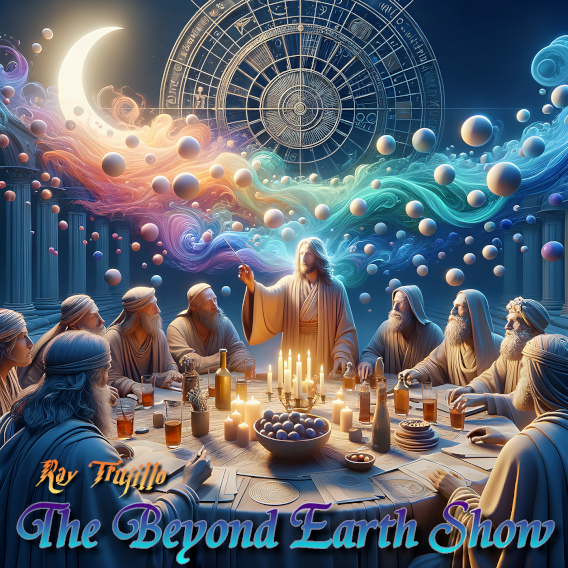
The Beyond Earth Show with Ray Trujillo
Metaphysical, Spiritual, and Psycho-emotional Dimensions of Easter
In this reflective and deeply spiritual discourse, Rae Trujillo explores the metaphysical and psychological significance of Easter, particularly focusing on the resurrection of Christ as a symbol of inner transformation and renewal. The talk emphasizes that resurrection is not merely a historical or religious event but an ongoing alchemical process within each person involving the death of the old self and the rebirth of a renewed, illuminated self. Trujillo discusses the challenges faced during this transformative journey, such as wrestling with inner darkness, psychological struggles, and emotional pain, framing these as part of a sacred initiation akin to Christ’s sacrifice. She highlights the importance of forgiveness—both divine and self-forgiveness—and encourages listeners to embrace their worthiness, undergo introspection, and align with divine love and clarity. The talk also touches on the importance of spiritual practices like prayer and meditation for facilitating this transformation, emphasizing that this rebirth leads to a higher state of consciousness, clarity, and light. Ultimately, Easter is presented as a cosmic and personal invitation to rise beyond suffering and limitation, embodying divine love and the Christ consciousness in daily life.
Resurrection as Metaphor for Inner Transformation:
The resurrection story is used as a profound metaphor for psychological and spiritual renewal, where the “death” of old habits, fears, and ego structures allows a new enlightened self to emerge. This ongoing process mirrors Christ’s three days in the tomb as a period of alchemical transformation.
Free Will and Spiritual Warfare:
Human free will allows for the coexistence of light and darkness within, necessitating vigilance and “shielding” against negative influences, whether understood religiously or psychologically. This suggests an internal battlefield where spiritual growth occurs.
Death is a Threshold, Not an End:
The concept of death is reframed as a liminal state—an essential phase for shedding outdated self-identities and making space for rebirth and spiritual growth. This death is primarily psycho-spiritual and symbolic rather than physical.
The Role of Forgiveness in Healing:
Forgiveness, especially self-forgiveness, is highlighted as a vital step toward liberation from guilt, regret, and emotional stagnation, enabling the individual to move forward in their resurrection journey.
Integration of Mind, Heart, and Spirit:
True transformation requires coherence between intellect, emotions, and spiritual intuition, allowing one to transcend fear and align with unconditional love, which is the core of Christ’s message.
Spiritual Practice as Energy Regulation:
Prayer, meditation, and devotional practices serve not only as spiritual disciplines but also as mechanisms to regulate nervous system energy, release psychic tension, and foster coherence in the light body.
Embodiment of Divine Light:
The resurrection invites believers to embody the “Christ consciousness” — a state of being where human and divine awareness coexist harmoniously, enabling one to live with clarity, grace, and renewed purpose despite worldly challenges.
Alchemical Transformation and Resurrection:
Easter’s resurrection symbolizes the continual process of inner alchemy, where old egoic patterns, emotional wounds, and limiting beliefs “die” to allow for a rebirth into a higher state of consciousness. This process parallels Christ’s death and resurrection, serving as both spiritual metaphor and practical guide for personal renewal.
Inner Tomb and Dark Night of the Soul:
The “tomb” represents a place of introspective stillness, grief, and transformation. This inner sanctum is not punishment but a sacred space where one confronts shadows, integrates pain, and prepares for renewal. The dark night of the soul is a universal stage in spiritual awakening that tests faith and resilience.
Free Will as a Gift and Challenge:
Human free will enables choice in the spiritual journey. While it allows for growth toward light, it also opens the door to internal conflict and external opposition. Spiritual “soldiers of light” must consciously choose love, faith, and forgiveness over fear and egoic resistance.
Forgiveness and Atonement:
Forgiveness, especially self-forgiveness, is critical to the resurrection process. It frees the individual from guilt and self-condemnation, allowing emotional and spiritual healing to occur. This aligns with Christ’s message of grace and redemption, offering multiple chances for renewal.
Mind-Heart-Spirit Coherence:
True spiritual awakening requires alignment among thoughts, emotions, and spiritual intuition. This coherence dissolves fear (false evidence appearing real) and nurtures faith, hope, and love—the foundational energies of the Christ path.
Spiritual Practices as Tools for Transformation:
Prayer, meditation, and devotional rituals quiet the mind, regulate nervous system energy, and facilitate the flow of divine energy through the “light body.” These practices anchor the individual in the present moment and support their resurrection journey.
Dual Awareness: In the World, Not of It:
The ideal spiritual state is to live fully engaged in the world while maintaining detachment from its limiting influences, embodying both human and divine consciousness simultaneously. This balance reflects the resurrected Christ’s teaching and offers a model for spiritual maturity.
Clarity and Decalcification of the Pineal Gland:
The pineal gland, the “third eye,” symbolizes spiritual clarity. Decalcification and awakening of this gland represent the removal of obstacles to higher perception and deeper connection with divine wisdom, facilitating the resurrection of consciousness.
Energy and Consciousness Upgrades:
Spiritual awakening involves energetic recalibration akin to an “upgrade” in consciousness. This process may feel challenging or overwhelming but ultimately leads to greater coherence, empathy, and embodiment of divine light.
Worthiness and Divine Love as Foundations:
Central to the resurrection journey is the recognition of one's inherent worthiness and the unconditional love of God. This realization fuels perseverance, courage, and openness to transformation despite hardship.
Rae Trujillo’s message emphasizes that Easter is a profound metaphor for the psycho-spiritual journey of death and rebirth within each individual. The resurrection of Christ serves as a model of endurance, sacrifice, suffering, and ultimate renewal that mirrors the human experience of transformation. This process involves confronting inner darkness, surrendering old identities, seeking forgiveness, and emerging into a new state of clarity, illumination, and coherence with divine love. The speaker encourages embracing this ongoing inner resurrection through prayer, meditation, self-reflection, and faith, affirming that every person is worthy of grace and capable of spiritual awakening in alignment with the cosmic and divine order.
The Beyond Earth Show

Support my show
$5.99/mo or $9.99/mo or more
Click HERE
SUBSCRIBE TO TALK SHOW
A Subscription is NOT REQUIRED to listen to my shows,
but it is greatly appreciated!
The Beyond Earth Show with Ray Trujillo
Are We Really Alone?
[00:06] Speaker 1: (Instrumental music playing)
[02:54] Speaker 2: Greetings, and welcome to the Beyond Earth Show. I'm your host, Rae Trujillo, and I wish all of you a most beautiful Easter this weekend, and I hope you all had a good Friday. And there's much to discuss today in relevance of Easter and how it applies to our own inner sanctum, our own inner lives. And also, there are a lot of ... There's some prophecies to discuss intermittently with the Star of Regulus and with placements astrologically and also astronomically and ... So we're in the quickening, and we're also in the fourth turning on global scales, but also in the divinity of ourselves. We are in the true awakening, and the awakening some may perceive as, oh, it's one grand event, a culmination in one, in one collective sphere, right? But in essence, it's not just one event. It's more or less a buildup of sequences and events in a random world with free will, that God gave us the gift of free will.
[04:17] Speaker 2: Yet when we are working in tandem with the obstacles in which the dark side, Satan, and the enemy, so forth, what we have to kind of shield up as soldiers of Christ and light workers against the persecution of the dark side. And this goes into also in the psychoanalytical aspect of how even if one does not believe in God or believe in anything, but it also applies in the psychological spectrum of that we do wrestle with our thoughts, right? We wrestle with our subconscious. So those of you that walk the path of Christ, or you're Buddhist or you're ... you believe in a higher power, you believe in the cosmic consciousness, or you believe that God is the cosmic consciousness.
[05:10] Speaker 2: However it lands for you, whatever is respective for you, and those that don't believe, we can all agree though that we are psychologically and emotionally affected by our own transmissions on the inner realm of our deep sphere of our experiences from our birth up until the halfway point, the midpoint, who knows what is the midpoint of each of our respective individual lives. Our cycles are all different here on this planet, yet when we look at the construct of how we go through renewal and how we go through our own inner rejuvenation, our own alchemical transformation. And so when I speak today upon the resurrection of Christ, and also perhaps the parallels that might exist through history, let's say ancient Egyptian times-We can parallel some of that together. And Christ had spent his time in Egypt. And... But we are in reflection. We are remembering. We are honoring the sacrifice that Cre- that Jesus Christ had taken up the cross and given up his body and given up all of that.
[06:32] Speaker 2: And in the realm of... There's just not enough words, I guess, to properly describe, but all of that, to be in this world, but not of it. And so we're in the reflection of, how do we take up our crosses? How do we make our own sacrifices? How do we go through the peril? And how do we get through it? And h- how do we survive, and how do we see? And also, when, when we come out of our own cocoon, our own tomb, when we roll our own tomb, how do we reemerge from that? And so speaking to all of us in some way, in one way or another, it's the alchemical process that we go through on a daily basis. And going through the world where things are random, where in this third-dimensional realm, the wrench gets thrown in.
[07:34] Speaker 2: And the opposition we face, the negative forces that we face, the archonic, however you want to look at it, um, if you're going through your own dark night of the soul, if you're having an existential crisis, or if you're in the jubilee years of yourself and you're going through the transcendence where it was dark and now it's light, wherever you're going through, whatever pattern, wherever direction that you feel as if it's aligned with you, interpret this however you wish for yourself. But I will say that just as a, I would say, like, a preface that death is not the end. So before I get into it, death is not the end. It's a tr- threshold. It's a, it's a liminal state of being. So the old element of yourself can die, but the new element of yourself can be rebirthed. So if you are wanting to commit to the dissolution, let's say, like how Christ and the dissolution of the body, right?
[08:46] Speaker 2: And if you go into your own dissolution of your old ways to recompartmentalize and to go into your inner tomb and to sit in that stillness, to sit in the unknown and the unconscious field, your ego is dissolving metaphysically and also emotionally. And so I can get into all of that, um, but I do want to say that death is not the end, and it is essentially the way to pave through to the death of your old self, the death of your old habits, the death of your old patterns, the death of who you miss about yourself. You can grieve an aspect of yourself. And I'm speaking of death in the metaphorical and emotional and psycho-spiritual aspect, not in the actual, uh, physical death of the self, but the death of oneself in the psycho-spiritual state and the emotional state while we're still living in this vessel.
[09:49] Speaker 2: Because in the inner constitution of each and every one of us, some of us want to have that opportunity to let an old self of our self die off to make room for the new self to emerge and to be in that illumination, to be in that new awareness, to see life through a new set of lenses, right? To see life in a new perspective and to relish in the grace and the promise of God that God gives us. And so, (clears throat) if we look at what is meaningful for you during this specific time, many of you have your own beliefs and many of you have perhaps your, in your personal sphere, what parallels with you that is in accordance to your set points of belief that's externalized, but then you magnetize it backward and inward, and then it relates to you on a very deeper process. And so we see our patterns, we see the faces of the patterns, we hear the voices of the patterns, and we go through the forces that are within us 'cause we can be a force of our own nature at times, right?
[11:12] Speaker 2: So I, I'll just begin and get into the metaphysical aspect of how I'd like to just present that in Easter, what, how we know it to be historically, biblically, religiously, that if we go into the metaphysical aspect of it, the mystery of the metaphysical of Easter, or the resurrection, that we go into the cosmic energy of it, the cosmic pattern of it, all of the spiritual laws of divinity, and we see it as a living initiation because Christ died, Christ has risen, and He will come again. However, when we, again, discuss that death is not the end, Jesus showed us that, that even though he died on the cross, but he rose again. And in the three days of that alchemization..... when he enters the tomb. And the metaphysical and all of the, you know, the biblical realizations and the, you know, theological interpretations are, you know, well-known.
[12:30] Speaker 2: But I want to just discuss it on a metaphysical plane here with all of us that we go through where we can see it as, wow, that's a punishment, right? When we go into our own tomb, is it truly a punishment? Is it that dark night of the soul? Is it that stillness to sit in the quiet where nothing is moving, nothing is disturbed, but there's a sacredness in that tomb? There's a sacredness in that cocoon. There is that opportunity for the alchemical transformation process to be adhered to, or to give it that proper space and that, in that devotional realm, let's say. So, when we go into, I would, the, uh ... If we look at the tomb and we look at the stillness, what's going on behind that tomb? And we can look at a fellow friend or a fellow colleague or family member and/or ourself, right, and say, "What's going on within our inner vessel, our inner sanctum, our inner tomb?" And we say, "Is this a punishment," right, "or are we going to roll away the stone?
[13:50] Speaker 2: And is it by force or is it by fulfillment? And is it by, you know, with the promise of returning to light?" So, we're in that silence and we're in that stillness. We're hidden away, we're tucked away, and if we feel that introversion at times, the hermetization, let's say, of that moment in which we are in that metaphysical death, that we're in that metaphysical stagnation where things feel heavy perhaps, or we're in a state of deep contemplation or rumination, right? What is it that we want to internalize? What is it that we want to externalize? What is it that we want to draw in and invoke and change within the self? So, when we go into the inner sanctum and it's on a intellectual, philosophical, psycho-spiritual, um, in the heightened sense of your own psychic awareness, your intuition, and where you, your soul, you're listening to the Christ consciousness.
[14:59] Speaker 2: You're listening to your highest soul's embodiment of all knowing, and you're not listening to the, where we have the angel and the devil on each shoulder. Sometimes we do listen to the negative. Sometimes we do listen to that, you know, negative, fear-based separative ego that is like the devil sitting on your shoulder saying, "No, you can't do that. You could never win. You could never accomplish. You'll always be stuck like this. You'll never forgive yourself. You'll live with guilt for the rest of all eternity." Right? You know what that voice is. All of us know that voice. And so, when we are in the tomb of ourself and we're reflecting in the echo chamber, we go through, "Wow, I shouldn't have done that.
[15:43] Speaker 2: I should have done something different." Uh, you know, you want to go through atonement, and if you're writing on the cave wall, if you're writing your own hieroglyphics, if you're writing on papyrus, or if you're mentally writing a paper, like telepathically to someone, you're just sending a prayer and you're just asking for atonement. You want to make amends to those that you have wronged for whatever it was that you did, whatever transgressions. And that can be your inner tomb as well, or if you've been hurt, if you've been persecuted, if you have been slayed emotionally or even physically in many ways, you're in that tomb. And you're truly just trying to allow the integration of that alchemical process, whether you're aware of it or w- or if you're, uh, not aware of it. But your body, your soul has a deeper comprehension than sometimes our own mind.
[16:39] Speaker 2: And our heart might scream out for, "This is so necessary, this is so needed right now," but the mind can always be easily swayed and so can the heart. So, when the heart and the mind has a convergence and an alignment of this is a time for rest and this is a time for the intuition to know beyond the logic of ourself, for the awakened heart within where we can look at the heart from the place of how grief can take over, right? And can we integrate it and go deeper into the spiritual divinity, the laws of comprehension and come out of it with a revelation, right? And so, we are ... Sometimes we can come out of this cocoon almost not completely recognizable. So, when Jesus exited the tomb, it was Mary Magdalene that first saw him as witness, and it was spoken that Christ is risen. And so, you know, even John and many saints, the apostles, did not recognize him. He was in a very different light.
[17:59] Speaker 2: Christ was in a very different light as such as in shape-shifting and, um, it's in the way of like a reflection of- that we are not Christ ourselves, but that we have the body, we have-... the spirit of Christ within us, and so it's a reflection of the inner living God within each and every one of us that if we choose that path. And so, when we go about our Father's business and when we go about in the walk in the path of Christ that we are living embodiments of the path and passage of Christ, representatives here on Earth to just carry out the will of the goodness and also the majesty of being as good as we can. And we are never perfect, but to be as good as we possibly can. And then if we fall off that we aim to get back up and to continue onward and upward and to learn from our mistakes, and to know that we carry our crosses, and that we can come down and have life given to us again, second, third, fourth chances.
[19:21] Speaker 2: But in that atonement of the self when we're seen in a new light, sometimes we might not recognize our own self in that light. And so, it's essentially like initiation in... Because if we're in the darkness and we're in the domain, we're in that dark night of the soul, we might feel like, "What have we done? Who is against us? Am I against myself?" You know, all of those inner dialogues that, uh, anyone that's living today has gone through at some point or know someone who's gone through. But we go into... in the transfiguration of ourself where sometimes our self, our ego is killed off, right? Or maybe our feelings are killed, perhaps our emotions are killed, and we are truly in suffering in that way, and we want to not run away but lighten ourself. We can't flee but we have to ground ourself and we have to integrate in a certain way where we can prosper and fortify our strengths and reinforce.
[20:37] Speaker 2: And so, when we see the body beheld and we see the endurance and the everlasting love and the tenacity and the sacrifice, there's that reminder that we have the strength to keep on, that we have that willfulness within us to continue forth and to be our best self and that we are worth it. When we see the, the image, the vision of Christ upon the cross, we are reminded that you are worth it, we are worth it, and that forgiveness is the blessing afforded to each and every one of us. And that the atonement and the grace seeking that everlasting life through Christ, through the body, through the Holy Spirit, that is the ultimate gift. And if we strive for that or if we strive for even in the path of making yourself a better human, even if you don't believe, you know, you're still working on yourself, right?
[21:56] Speaker 2: So, what I mean by all this in the transfiguration is that through Christ's resurrection and the inner self within each and every one of us that we go through a revelation in the archetype of perhaps our, our ways in which we want to defend, the ways in which we want to change, improve, the ways in which we are resistant or stubborn, the ways in which we might not know what it is that we need to let go of, but we know we need to let go of something And so, when we go into moments of that stillness and we let the externalization process begin and we sit with that and we're not distracted by anything, we're literally sitting with our own mind, and that can be so difficult to do, that can be very difficult and challenging. Most of you may be very well-learned on, you know, meditation, uh, prayerful meditation, yogic practices and so forth, and some of you might not, uh, or you're interested but you just weren't able to or it's hard to focus. So, it's very common to encounter that.
[23:17] Speaker 2: But that is where the mind can be in our enemy state at times, right? Where if we can allow ourself to know and have the faith and give it to the higher power of God to surrender any of our earthly anchors, the chains that behold us to our own negative fear-based ego, and we can say subconsciously, ride it out or speak it out saying, "Well, these are the things that I don't like about the world. These are the things I don't like about that person, that person," then we get to the truth, "Oh, uh-huh, dare I look in the mirror, what is it that I truly don't like about myself? What is it that I'd like to change?" And I'm not speaking about aesthetics or on the superficial scale of appearance. I'm speaking about the inner constitution, the archetype of your pers-...
[24:17] Speaker 2: Perhaps it's the persona, perhaps it's the tone of voice, or perhaps it's a bad habit, or perhaps one might be in a, uh, dominating a conversation, never listening, never taking the time to listen to their childrenAnd if they could just learn how to listen a little better, they might have a little better communication with their children or even their grown children. That's just an example, right? So, um, let's say that it's something that, "Wow, I actually didn't realize I did that." Like, "How dare you tell me I do that?" But then I actually go in the inner mirror and I'm like, "Wow, I do do that." Or, "No, I actually don't. Um, I'm sorry that I'm being misunderstood, but I did listen to every single word. I can repeat it back verbatim. I just might not give you the appearance that I'm listening, but I am listening." Right? So, that's a time for correction, um, or accusation correction. But that's where the defenses can come up easily, right?
[25:12] Speaker 2: So, when one is being accused for claiming to be the savior of the world or the king, of course, you know, there's no comparison to that to, "Oh, you know, you're a human making these lowly mistakes." But that is the representation that God sent His only begotten Son to us to show us that we will go through these trials and tribulations on a microcosm scale and on macrocosm. So, on the micro and the macro we're gonna be faced with these, you know, tribulations, transgressions, these, uh, cataclysmic events in our life, uh, or, you know, these catastrophes of the psyche that we all go through, and the grief, and loss, and mourning, and worries, and anxiety, and concerns. And Jesus Christ Himself would have severe anxiety, so much where the night before His persecution, He knew... In the Garden of Gethsemane, He knew what was coming, and He knew that He would be betrayed by Judas. He knew that He would be summoned and captured and arrested. And He knew...
[26:34] Speaker 2: And even, "Dear Father, let this cup pass from me," right? That in the physical body of Jesus holding the spiritual, holding the sacredness of Himself, that He Himself had the humanistic, of course, anatomical responses, the physiological responses to stress knowing every single feeling that we as humans go through, because to know one and to understand one is also how to help one. So, when He would have His moments of deep anxiety and deep agony, He would actually suffer from that anxiety so much where that His pores would bleed, and there are true written accounts of that and... So, in the way in which we might... Some people might say, "Oh, well, you know, He didn't suffer. He didn't go through anything because He's God's Son and it was just an illusion." No. He actually took on all of the anatomical and physiological responses on such a heightened scale and threshold.
[27:51] Speaker 2: And even when Saint Longinus pierced His side, who was also partially blind, upon postmortem right at the moment of when Jesus died on the cross on Golgotha, then that is when that the water and the blood pierced from out and healed Saint Longinus. Well, actually he's a saint now but, but he was a Roman soldier who was healed and he said, "This is, this is indeed the Son of God." And then went out, and He was persecuted and murdered, beheaded because of his... He knew. He was a witness, a testimony to the living miracle of Jesus Christ, so He became a saint. And so if you hear of the Spear of Longinus, and I can get into that another show, but, um, anyhow... So, when we see the agony, we see the suffrage, we see the... in the body that the suffering happened, that was for all of us. That was for all of us 2,000 years later and the future beyond.
[28:57] Speaker 2: So, when we question, "Are we worth it?" we are worth it because God knows each and every one of our souls before we're placed in our mother's womb and we are known beyond into our cycles of destiny and the hall of records of the divinity and beyond. So, each and every one of our existences matters. And so when we see the inner realm and we go through our own anxiety, our own grief, we are not alone because Jesus and the Holy Spirit, God understands that we're gonna go through that, but we have the free will. We have the gift of free will to endure those feelings, but the transformation from it. When we go through that... Let's say we see the effects and we look upon, wow, He suffered for us. He died for us. He returned back for us to show us the promise of eternal life.
[30:06] Speaker 2: So, in the deepest truth, when we go through the loss, we go through the void, we go through the testimony, we go through that there's a return of ourself yet is also a transformation, that when we're in our own resurrection of ourself that we're in a deep relationship with our old self, our old archetype.And we're in the relationship of what we're grieving, and sometimes we can grieve the person we know we can be, right? So, let's say if we have an addiction. Let's say that if we have a negative habit. Let's say that it's just something that has... You're just riddled with guilt about something, right? It could be something 50 years ago, or 40 years ago, something. Well, this is a moment to say to yourself that, you know, Christ loves you. Sometimes we don't know how to love ourselves, but if we know that how much God loves us... And on the cross, you know, the good thief, you know, Jesus forgave him and said, "You will join me in paradise.
[31:16] Speaker 2: Tonight, you will join me in paradise." There's always opportunity for forgiveness. So, if God can forgive us, why can't we forgive ourselves? And that is the question. So, oftentimes, if we have the grief within us, if it's the regret, if it's non-forgiveness, if it's seeking atonement for ourself or if we blame ourself for something maybe we did or maybe we didn't do, or we think we did, that's all part of what can keep us submerged and keep us in our own state of that quicksand, in which we are not allowing ourself to be able to experience the alchemical body and the light body, that we are in that revival of the self and we can ascend into a higher state of being. Because sometimes, in that archetypal place, we can see the alchemical process where that integration can be there. There's a opportunity for the integration of the body and the spirit, right, and the vessel of ourself. If we are...
[32:27] Speaker 2: If we consider ourself as, each and every one of us, a, a sacred being living in a human experience, right? So, how do we seek that attainment to be more in the path of illumination, to know Christ more, to know the Christ consciousness more, to know that cosmic celestial kingdom more, that we are supported? So, having the faith, having the faith in the self, having the hope, having the love, having the pursuit of love, having the pursuit of hopefulness, having the pursuit of the promise that is afforded to each and every one of us. So, we look at the matter within ourself, our materia, the physical body. We look at the emotional construct, how it affects our physical body, how... Let's say, like guilt can corrode the body, right? And, or emotions can corrode the body. Stress is a killer, right? So, anxiety is a killer, and we all go through it at some point or another.
[33:36] Speaker 2: But if we look at how fear is the opposite of love, fear is false evidence appearing real, and if we see how God comes from the construct of that supernatural love, the path of Christ is supernatural love, it's just unconditional love. And, yes, of course, there's times where Jesus was angry. See him with the money-changers and see him at the tabernacles. Like, you know, if you hurt children, if you hurt the innocent. But at the end of the day, though, the eternal presence is that there's this unconditional, unwavering love. And for those that seek the path of atonement or to seek the path of their own forgiveness and their own amends, or to improve. And so, this is what I mean by, every day there's an opportunity for resurrection within the self, for no matter what happened before, there's always a way. And through God, there's always a path, there's always a way. And so, especially during this time of year, and with this... If we see how we're coming out of winter, right?
[34:53] Speaker 2: The dissolution, we look at the dissolution of Christ, we look at the death and the seasons, and we're in spring. We're in... The spring equinox are going into summer soon. We're going into, wow, like, I am not who I was before, right? And that sense of I do not want to be who I was before, I want to be a better version So, we go into the old identification, the old identities, um, our own self-proclaimed identities. And we can feel that emotional fatigue, the emotional heaviness. Introspection is hard work, but it doesn't have to be hard all the time. It can also be seen with a sacredness, and seen with a sacredness. So, those of you that are prayerful and those of you that are in your, your prayerful studies, those of you that are prayerful and meditating and all of the above, you know, this is one of those where you understand the construct when you grab your rosary, or you grab the Bible, or when you speak your prayer from your heart, right?
[35:57] Speaker 2: Um, however it is, when you go to church, or if your church is in your heart, however works for you, but we look into the stillness. So, we go into the void. We go into that void of stillness, and what is the quietness? Where is the quietness? This, this is part of the prayer. So, we seek that quiet prayer. We seek that chatter of the monkey mind to cease. We look at the beginner's mind. We look at the mind emptied out. We see the clarity. And Jesus Himself had to go in privacy and solitude at times to pray... and to have, and be in the desert alone for 40 days, 40 nights. So, even if we can't ourself go into the desert alone, in the tangible, physical desert for 40 days, 40 nights, we can go through our own version of our pursuit in a way that is working in accordance with your lifestyle, but also with your goal. So, meeting your goal that is attainable for you, even if it's five seconds a day to think about a goal, 50 seconds, one minute, right? Who has the time, right?
[37:18] Speaker 2: People always, they don't have time, but who can make the time? But if you have one minute of the day, you can certainly do a lot with that and it can grow, because your threshold, your capacity can grow. And so if we look at also how we can look in the light body, right? And we all have our own light body. We are all born with a beautiful, um, our intercellular, our, our frequencies, our consciousness, our chakras, our pineal gland. We all have crystalline structures within that God gave us, and in our physiology, and just as in the resonance in how we have these abilities to have interpretations, to have that intuition, to have that discernment, to have that Holy Spirit wisdom discernment, to have the gift of knowing and to seeing, and the psychic abilities, the telepathic abilities when they're used for good, that's all a gift from God. And so we see that in our light body that we are all divine, we are made divine. And so we are made in the image of God in that divinity.
[38:34] Speaker 2: And so when we go deeper into that divinity and we look at the aspect of ourselves that is made conscious, then aren't we a true miracle? We are all miracles. And what better way to honor and serve the miracle of our living being that we are, and how to honor it more so than to literally look at whatever it is that's not serving us, right? Whatever it is that we want to break away from ourself to walk into a newer, more streamlined, more polished version of ourself in our spirit, in our intellect, in our psycho-emotional state, and also in our soul, in our soul's fullest embodiment form, right? So, we can also look at how our energy, um, at times can... Sometimes we have energy that is just kind of waiting to be spent, but then we can spend it on other things that are kind of mind-numbing or dulling, because there's this frenetic essence that can occur in which perhaps we have unprocessed energy that we just don't know what to do with it.
[40:00] Speaker 2: So some of you, of course if you work out a lot or if you, um, are extremely active, you know, you might not feel it as much, or maybe you feel it sometimes in a different way. But what I'm referring to is that there's a stagnation in that frenetic energy in your light body that sometimes wants to come out. So when you go into deep prayer, when you go into action, you're gonna feel that energy come out in a certain way that is in a good way, where it's an energetic release from your soul star, from your own inner divinity going outward into the world. So, sometimes that is your energy in a refined state of coherence where it matches with the frequency of, in the ethers.
[40:50] Speaker 2: So, if you're praying and you're hoping to send a guardian angel to someone over in Africa or in Hawaii with the floods, or in Australia, you know, right now, all over the world, you know, Iran, Iraq, the whole Middle East, whatever it might be, whatever you're praying for, whatever is going on, um, at any point, or even your neighbor, or someone adjacent to the office building next to you, however it is, that an animal that you see that's injured, in that essence, that energy is utilized and it's being spent. And sometimes when you pray you can feel, wow, I can actually fall asleep right now, or part of my nervous system is regulated where I'm a little calm. And that is part of that refined state of energetic coherence applied with the spiritual coherence within the self. So, when we look at that, that's also part of in the illumination of the body, and that's also part of that alchemical process, as... And again, that inner resurrection.
[42:08] Speaker 2: And so when Christ comes out of the tomb and he's seen by the first witness, Mary Magdalene, and then, you know, there's the gardeners, of course, but let's say, you know, He is the Son of Man, you know, He is the Son of God, and we are men, we are women, and we are children of God, but we are also in the human body. So for us, in our illumination of that, our own inner resurrection, what do we seek... right? What is the outcome of it? So, it's the clarity, clarification, where we can see clearly. It's like a decalcification of the pineal gland. Our pineal gland is the eye within, the third eye within that we're all born with and if we actually look at when our- when we are in utero, our eyes are actually like the- the, um, sprouts from our brain stem, that are the eyes are the window to the soul, right?
[43:13] Speaker 2: So, um, (clears throat) if we consider that, our two eyes and then our third eye, the hidden eye in the pineal gland, and it's calcified by this third dimension that we live in with the toxics and the poisons and the chem trails and, you know, the atrazine in the water and all that stuff, and what they put in the foods and everything, and how, you know, um, there's been purposeful things in the '50s and '60s placed in the water to kill off our pineal gland to shut off our psychic, you know, abilities that are a gift from God. But when I speak of our own pineal gland in a normal state, and there are things you can do to decalcify, there are many types of things people can find out, but I'm speaking in a normal sense. So, if we have a semi, not so calcified pineal, or even a calcified pineal, or if our pineal's not calcified, there's the clarity that we are in deservance to seek and to qualify and to redeem for ourself, right? We are worthy of redeeming clarity.
[44:25] Speaker 2: We are worthy of the qualification of clarity, and we are worthy of seeking, finding, and attaining, and then holding it for us, for the clarity. And with that clarity, that energetic pathway, that energy comes back, that energy that we are in a new body, but we're in the same body, but we're in the new version of the renewed body, but it's more in that precision, that's more in that state of element of, I am deserving to be in this new body, right? And so, I'm deserving to be in more of a- a stable, uh, relational. It's- When I say stable and relational, a lot of the times we can go through our nervous system feeling dysregulated, and that's part of our survival mechanism, and sometimes we just want to feel more stable, right? We want to feel less ruled by fear. We want to have more of, um, a state of that life is an adventure, that we are in the adventurous aspect, that life is, you know, loving, life is sustaining, life is the sustenance, right?
[45:52] Speaker 2: And so, if we go through more of that energy returning and the clarity, then most of the time we can feel like, wow, I feel more of myself than I've ever felt before. And why is that? Because it's the stabilization, it's the returning of your light body, reintegrating in. And so, if we look at, um, again, the heart and the mind dialogue, the coherence of the heart and the mind, sometimes when we're in that devotional state we look at the Christian mystics, we look at the saints, we look at, um, throughout history when those that were in a devotional state, and also too when there are CT scans of monks, right, um, when they're in their devotional states in their temples, or they're practicing states of divinity and honoring God, honoring Buddha, honoring... So, there's that own alchemical response in the brain and the body. And so, the theta waves respond in such a beautiful, sincere way. So, it's the alchemical forces again.
[47:11] Speaker 2: So, we look at how things are not by force, but by the heart, the heart's coherence. And so, if you also want to look more into how in the resurrection it's not leaving the world, but it's remaining in the world, but in a different way, right? And again, as Christ said, "To be in this world but not of it," there is a symmetry there. And so, when we're holding onto both human awareness and the awareness of divinity at the same time, all at once, so human and divine awareness all in one vessel. So, if we see how we were entangled in the suffering prior to that, and then we're still here in the present, we're bypassing, you know... We're- we're not bypassing, but we're bypassing in a way because we've worked through it, transcended it. So, we're not dismissing and bypassing the emotions without reflecting on it, we're now moving through it and letting the triggers essentially be the guides to get through to the other side, right?
[48:32] Speaker 2: So, when we're here in the presence, just to be in this world but not of it, but less entangled in that suffrage, right, and we're simultaneously in this pattern of holding the human awareness, the divine awareness. And that's, I would say-... so much in the parallel of the resurrection, because the presence and the loving and the supernatural power of all of that love for all of us was no longer bound by the limitation. All the limiting forces, the stop, right? The, the halting. Nothing could be in the way of Christ returning. Nothing could stand in the way of his return. And so we can also go into that place of our own process where we may desire the simple way, we may desire the easy path, but when we're heightened in the sensitivity of knowing and also the awareness within, then we know that we're in that initiation phase. Right?
[49:49] Speaker 2: So many of you may understand, of course, and comprehend that the initiation phase of seeking your own true light, seeking your soul's highest embodiment, seeking your own ascension, right? Well, so sometimes we have that sensitivity to environments, to he- other humans, uh, animals. We can feel the feelings. The empathy is rising up. The empathy is just completely spotlighted and it's in its own initiation period where it's like an upload, it's like a, a upgrade. Right? So, you know how we upgrade our computers and phones, right? Well, this is an upgrade in consciousness. And right now, as we speak, there's an upgrade in consciousness collectively as we go on and on, right? But these are not random. Again, these are all intentional, and they're also devotional because when you feel that something within you is rearranging, re-compartmentalizing, it's a recalibration, that's when you know that you're in that deep integration process. So sometimes it's like...
[51:06] Speaker 2: If you think of it this way, and maybe perhaps this is one of the takeaways, that you cannot carry, essentially, your old self into your new light body. Right? So when Christ comes out from a tomb, he is marvelous. He is, you know, unscathed and is in a new body. And so when we're in our own tomb, in our own way, in that... Uh, even if we're in withdrawal, and can we come out, do we have to carry our scars with us, right? So essentially, we are blessed with the free will to choose what we wish to do for ourselves, and if we see that we're not in stagnation, but it's essentially a, like a recalibration, energetic reorganization, um, if you feel like... When people say they feel heavy, right? They feel heavy and they're frozen. That's part of the nervous system. Feeling frozen, not wanting to move because you're not sure if you're gonna make a mistake, right?
[52:14] Speaker 2: So you go through what belongs to you right now, what's necessary to you right now, seeking your own inner resurrection, the clarity, and then looking at that you are worth it, that you are worth this integration process, and that the ultimate sacrifice has been given to you, given to each and every one of us. And so, um, for the remainder of this weekend, perhaps for each and every one of you, maybe it would be whatever feels ideal or suitable for you to contemplate, to think about further, to implement or to take an action that would serve yourself, serve someone else, serve yourself and others combined. But just take a look at how, whatever path you believe or don't believe, but whatever you wish to work on for yourself, see the patterns that you'd like to work on. See what you'd like to invoke. See the new self that you'd like to carry in for yourself. And one element of, that I do want to express, is sometimes we can override an emotion.
[53:39] Speaker 2: Sometimes we're like, "Oh, wow, I'm having an epiphany. Something's coming my way." But then we can often sometimes interrupt our own process. So some advice before closing. Just let your body be still without trying to fix it, but just recognize that a reorganization is occurring. And then just saying I allow this transformation that I wish to occur. Right? Just however it is that works for you. And it never hurts to pray more, it never hurts to meditate more, it never hurts to read the Bible more, it never hurts to study more, it never hurts to exercise more and take care of yourself. So you're worth it is essentially the, the takeaway, is that each and every one of you, you are worth everything, and your lives are so meaningful and so profound. And so I hope all of you have a joyous Easter weekend, and I hope you all have a beautiful cosmic reconfiguration within yourself. And it's always a joy and a pleasure to be here wi- with you.
[54:53] Speaker 2: And again, this is your host, Rhea Trujillo of the Beyond Earth Show. Thank you for joining me today and always, and I'll be back in two weeks' time.Thank you so much again. Bye.
[55:13] Speaker 3: (outro music)