
All Things Good, March 20, 2026



All Things Good with Queen Missy
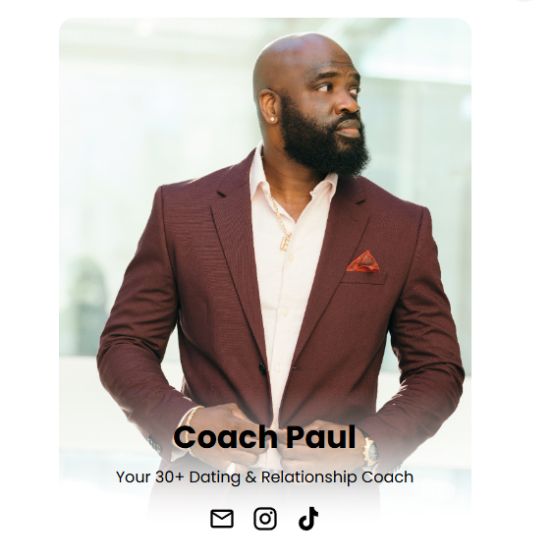
Guest, Coach Paul Bryant - Relationship Guy, https://paullbryant.com/
Navigating Modern Love: Strategic Dating and Relationship Insights
The Modern Dating Blueprint
Expert Insights from Coach Paul Bryant on Intentional Relationships
The 4 Pillars of Vetting
Strategic Frameworks
- ✔The DTR Milestone: Define The Relationship at the 90-day mark to avoid over-investing in the wrong person.
- ✔Boundaries vs. Rules: Boundaries govern your behavior; rules attempt to control others. Enforce nos early.
- ✔The Vetting Proxy: Women should introduce partners to one trusted male figure early to bypass manipulation.
Key Metrics
"You don't get premium access to somebody that's on a trial period."
— Coach Paul Bryant
Avoid "Institutionalization"
Beware of treating new dates like spouses immediately after long-term marriages. Collect data before committing.
In this episode of the Queen Missy Talk Show, relationship specialist Coach Paul Bryant shares his expertise on the complexities of modern dating. He discusses the shift in dating dynamics, the importance of maintaining personal boundaries, and practical strategies for finding a committed partner in a "new age" landscape.
Detailed Key Insights
The Evolution of Dating and the "Institutionalized" Mindset
Coach Paul Bryant, an Amazon bestselling author with over 12 years of experience, notes that modern dating often fails because people prioritize finances over character and leadership. A significant hurdle for those re-entering the dating pool after long-term marriages or relationships is what he calls being "institutionalized." These individuals often mistakenly provide "spouse-level benefits" to people they have just met, failing to realize that the dating landscape has changed significantly and requires a slower, more data-driven approach.
The Four Pillars of Connection
Before committing to exclusivity, Coach Paul suggests vetting a partner across these four critical dimensions:
Are you both looking for the same thing now?
Do your fundamental beliefs align?
Is there a natural spark and connection?
Are they truly free to meet your needs?
Boundaries vs. Rules
A core theme of the discussion is the distinction between boundaries and rules. Coach Paul defines boundaries as "I" statements that govern one's own behavior and what one will tolerate, such as refusing to accept disrespect or lying. Rules, conversely, attempt to control others. He emphasizes that women, in particular, dictate the pace of a relationship by enforcing these boundaries; a partner who cannot respect a "no" early on is often revealing narcissistic or incompatible traits.
The Timeline of Commitment and Vetting
Intentional dating requires a structured timeline to avoid emotional over-investment. Coach Paul suggests that while a man often decides his intentions within 6 to 10 dates, a formal "DTR" (Define the Relationship) conversation should occur no later than the 90-day mark. He also advises a unique vetting strategy for women: introducing a potential partner to one trusted male figure (a brother, uncle, or friend) early on. Men can often detect "player" behavior in other men more effectively than female friends might, providing an essential layer of protection.
The 90-Day Vetting Strategy
- 📅 Days 1-30: Focus on "Collecting Data" and identifying core values.
- 🤝 Early Stage: Introduce to ONE trusted male relative/friend to check for "player" red flags.
- 💳 Mid Stage: Discuss financial stewardship and credit as the relationship deepens.
- 📣 Day 90: The DTR (Define the Relationship) milestone—ensure exclusivity before meeting the wider family.
Key Data
- Experience: Coach Paul has been coaching for over 12–13 years.
- Decision Window: Men typically decide their path with a person within 6–10 meet-ups.
- The 90-Day Rule: The maximum recommended time to wait before defining the relationship (DTR) to avoid wasted emotional investment.
- The 30-Day Guide: A specific workbook designed with daily exercises to prepare individuals for intentional dating.
To-Do / Next Steps
- Define Core Values: Before dating, identify your non-negotiables and core values to use as a vetting tool.
- Establish "I" Boundaries: Determine specific behaviors you will not engage in or accept (e.g., "I do not accept being yelled at").
- Implement the "One Male" Rule: Select one trusted male in your life to meet a potential partner early in the courting process.
- Avoid "Premium Access": Do not give spouse-level emotional or physical investment to someone still in a "trial period."
- Visit Official Website: Access the 30-day workbook or the "Five Tips to Dating Success" e-book at
paullbryant.com - Resist the "Ex" Trap: Avoid returning to failed relationships, as people often only get better at hiding their unchanged patterns.
Conclusion
Successful modern dating requires a shift from emotional impulsivity to intentional vetting. By establishing firm boundaries, aligning on core values, and adhering to a clear timeline for exclusivity, individuals can find meaningful commitment while minimizing frustration and wasted time.
All Things Good

Support my show
$5.99/mo or $9.99/mo or more
Click HERE
SUBSCRIBE TO TALK SHOW
Welcome to the vibrant and uplifting world of "All Things Good with Queen Missy," your go-to destination across radio, TV, and now podcast platforms!
Join me, Queen Missy, as we shine a spotlight on the bright side of life. While we might occasionally touch upon challenges with the intention of finding the positive lessons within, our primary focus is celebrating the good in the world - from inspiring stories and joyful moments to uplifting conversation and practical positivity.
Get ready to fill your ears and screens with a dose of optimism and connect with a community dedicated to embracing all that is truly good.
[00:02] Speaker 1: ("Yeah" by Frank Ocean) Yeah. Oh. Yeah.
[00:14] Speaker 2: Good day, good day. Welcome to the Queen Missy/Tina Turner's Talk Show. As you guys probably know me on Facebook, Tina Turner, but I am Queen Missy and actually, I have a special guest today, calling all the way from Texas. He is a specialist. He's a coach. He's a relationship coach, and I would like to welcome him, welcome him on the show. Yeah, I got the bloopers, but that's just a natural thing that happens sometime. Hello, Coach Paul. How are you?
[00:48] Speaker 3: Hey, how you doing?
[00:49] Speaker 2: I'm fine, Coach Paul. Welcome to, uh, the Queen Missy's talk show. We actually, we spoke, uh, maybe about two years ago. You came on the Facebook Live, and we were ab- Okay, we spoke on the, uh, Facebook Live, and you talked about relationships. A lot of people was going through after the pandemic, didn't know what to do, how to do it, and you were so nice. You were able to come on and talk to s- people about, um, is it the digital dating?
[01:24] Speaker 3: So, so yeah, so a little bit about everything that comes to, uh, dating and relationships is what I specialize in.
[01:30] Speaker 2: But I wanna say welcome. Welcome to the show. And so, you're-
[01:33] Speaker 3: Thank you for having me.
[01:35] Speaker 2: Thank you. So you're on the TikTok as well.
[01:40] Speaker 3: Correct.
[01:40] Speaker 2: Tell, tell us what you do on the TikTok 'cause that's where I found you at. (laughs)
[01:45] Speaker 3: So basically, uh, I actually started coaching probably about a little over 12, 13 years ago. I actually started out, uh, coaching based upon, um, I had my, my, my, my, my nieces. I wanted... I wrote a book for my nieces because I was once a player, and I didn't want my nieces to fall into the trap of dealing with men that would come in and just waste their time, take advantage of them, and, you know, just take them down the wrong road. So I wrote my first book on relationships back in 2014. After that, um, book what was, was released, it was an Amazon bestseller, so I started, you know, getting a lot of invites and invitations to speak and questions from women about dating and relationships.
[02:23] Speaker 3: And, um, I coached for a while, you know, for probably about five years after the book release stopped, and then ended up going to TikTok one day and, and doing a video, and the video went viral, and it's ever since then, I've been back into coaching and helping women and men find their person with, uh, less, uh, frustration an- an- and, and less time spent dealing with the wrong person.
[02:46] Speaker 2: Wow. So can I ask you this here, Coach Paul? In this day and age, why is it so difficult for people to find that special someone?
[02:58] Speaker 3: I think a lot of it has to do with this, uh, new age way of identifying your person. I think, um, it's a lot of focus, in a lot of cases, on finances more so than, uh, character of a particular person. I think women have a lot of problems when it comes to dating just because I feel like w- with women, you know, you give away too much too soon and commit too, too soon to a particular person that you don't know if he's, if he's, he is, he's committed to you. And when it comes to men, I think, I think that, I think we've, I think men have really lost, uh, what it is to really, you know, be a man and what it, what, what we bring to a relationship in a lot of cases. You know, there was a time when we had the elder generation that would sp- you know, kinda like guide us and teach us on, you know, how we should... W- what, what it, what it was to be a man. You know, there was a rite of passage. You couldn't just call yourself a man back in the day.
[03:53] Speaker 3: You know, there was a rite of passage and things that had to happen, and you had to show up a certain way to call yourself a man. And nowadays, it's, it's, you know, it's, you know, whatever, whatever, it's, it's, everything is accepted, and I think that there is really no, uh, requirements when it comes to, uh, uh, leadership and what it means to be, to lead a relationship when it comes to a lot of these situations that we see happening today.
[04:15] Speaker 2: Wow. Okay. So, um, can you... Okay, what are the top three mistakes that people, m- you know, make, um, in, in this day and age of the, of dating? Can you name about three things that people, um, make? The, the three-
[04:34] Speaker 3: Well, I, I think what ha- what happens is... Le- le- let me, let me be clear on this. I think what we gotta realize first and foremost is that men don't dictate how this thing is done. Women do.
[04:44] Speaker 2: Wow.
[04:45] Speaker 3: Okay. And that's, that's a very, that's a very controversial statement a lot of times, but it's, this, it's the truth that we don't, we don't dicta- I think, I think moral value has, has lessened. I think what, uh, women allow when it comes to men, um, has kinda like gotten to a place to where men can come in and just pretty much just offer you, you know, whatever, and, and a lot of women will accept it. You know, there's a lot of emotional unavailable people that's out here trying to date, you know, and I always say that a lot of times what'll happen is people who seem emotionally available enough to get their needs met not to meet yours, and we gotta be very, very careful about people that we're dealing with and just taking our time. I think things move really, really fast nowadays. Uh, we go from zero to 100 real quick.
[05:30] Speaker 3: If you make me feel good or if I like you or you make me laugh or you're attractive, then you a person I wanna commit with, and when there's no, there's no preparation in the beginning. You know, I s- I like you so I'm gonna go with you and I'mma figure things out as, as we go, and that's always the wrong way to approach, uh, dating and getting to know anyone.
[05:46] Speaker 2: Okay, so let me ask you, the red flags. Wh- should women and men look for red flags in a relationship when they're connecting?
[05:56] Speaker 3: Oh, most definitely. I think anybody who's dating with intention should be, should be on the lookout for red flags. What I don't think we need to become exper- experts, as we are on red flags. I think the negativity aspect of it-... for. But most of the time when I ask people or talk to people, man or woman, about green flags, you know, I can't, I don't get a lot of answers, you know. I get... Whenever I ask you about red flags, in most cases, most people are experts on red flags. You know, you could tell me everything that's a red flag. When I ask about green flags, in most cases, most people are not... really are as in, in, in-depth when it comes to, uh, green flags with a particular mate. So, but, but red flags is definitely something everybody need to be looking out for, but we also need to be equally, uh, looking out for the green flags that come along with a person that we're getting to know.
[06:39] Speaker 2: Well, thank you Coach Paul. So we got another person which started out, out with me from day one from the radio station, and always, they're always, uh, there to help me out. So on a man's point of view and perspective, 'cause we have Coach, he is the man, and I have been following him for a while, and I love the way how he goes at it and how he, he connects with the audience and he's teaching them. So welcome, King Al, is one of my, uh, co-hosts from back in the day, and he's always willing to sit in with me. Al?
[07:15] Speaker 3: What's happening, Missy? It's cold, here.
[07:17] Speaker 2: (laughs)
[07:17] Speaker 3: How's it going? How you doing? How you doing, man? Hey. (laughs) Everything is real, man. Hey, from, from what I hear, man, you the doc-, the root for the situation. (laughs) Plus you can help me through some inevitable complications. (laughs) I appreciate it. Hey, I was, I, I was following you, man. Um, and was just looking at a lot of your posts and, and everything, man. And you know, I've, I've been in the game married, man, for, for years. And, you know, it's that closed mind that refuse to allow light to shine in, and they usually suffer from it. So, like I said, I've been married for a while, and I'm still learning. And, um- Mm-hmm. ... you know, you, you, you've made some contributions towards my education as well, so I thank you on that note, sir. Thank you. No problem. I'm glad I was able to help.
[08:09] Speaker 3: (laughs)
[08:09] Speaker 2: Okay.
[08:09] Speaker 3: Yes sir, yes sir. Dang.
[08:11] Speaker 2: I'm gonna jump in.
[08:12] Speaker 3: Um- Go ahead. No, no. I was... Go ahead. Go ahead, Missy.
[08:16] Speaker 2: I'm gonna jump in because Coach Paul has a, actually, he has a workbook. And so what he does, he goes through this lesson or counseling with each individual to help them understand what it, you know, how to date in this new age dating. So Coach, okay, I, I'm gonna say this here. I remember when you came on to, to the Facebook. Uh, friend of mine, she's in her late 60s, she actually took your advice. She went on, and now she's two, or going on three years in the game with this relationship.
[08:51] Speaker 3: Wow.
[08:51] Speaker 2: So I wanna, you know-
[08:52] Speaker 3: Wow.
[08:52] Speaker 2: ... give you congratulations, and that's what made me continue to wanna talk-
[08:56] Speaker 3: Wow.
[08:56] Speaker 2: ... or listen to you because she's... Oh, she's on TikTok, huh, babe? (laughs) And they're doing it. So I want you to tell me a little bit more about your workbook, and then I'm gonna give it back to Al.
[09:11] Speaker 3: So the work- workbook, I, I, I, I, I created to be able to help, uh, anybody that's dating, and you're dating with intention to be able to, um, you know, of course find, find your person. You know, I, I talk about a lot of things in this workbook. It's actually a 30-day guide and workbook, so you have 30 days of exercises and questions and things that you have to do, um, to prepare you. I feel like the preparation is everything, to prepare you to begin it, b- begin to get out here and start dating. What I find with most people, especially people that's been in long-term relationships, right? If you've been in a marriage for a long period of time, or if you've been in a, just a committed relationship for a long period of time, I call these people institutionalized.
[09:48] Speaker 3: And then they get out, when they get outta these relationships, whether divorced or widowed or just a breakup, you get out and you start meeting people, and everything you do is from the institution of, uh, health, a long-term relationship, institution of marriage, an institution of commitment. So when you meet people, because you're in- institutionalized, you start giving everybody a wifey, girlfriend, uh, benefits, and that shouldn't happen. So one of the things I talk... And this, and this is prepa- just preparing people, because if you, if you've been in a relationship for five, six, seven years, the dating landscape ha- has changed. Everything nowadays is different, it changes really, really quickly.
[10:24] Speaker 3: So this workbook is to help people to prepare to get out of the mindset of just fun- functioning as a, a committed individual, and to get out here to know, understand what it is to, to meet people, how to move, how to take your time, how not to overly invest too soon, and, and just to prepare you to be able to meet your person. So there's a, there's 30 days worth of exercises and questions to help you get in a position to, uh, to meet the person that you, you desire to be with.
[10:49] Speaker 2: Okay. So I think that a person should have a workbook. Go ahead, Al.
[10:55] Speaker 3: Yeah, that's, that... Okay, that's, that's cool. Everybody needs to, uh, get in on that. How can they... First of all, how can they get the workbook? So I have, I have... My workbook is on my website. It's, it's paullbryant.com, paullbryant.com. Once you go to that website, you'll see the, uh, there's a tab that you can press to, to get the, uh, 30-day guided workbook. I also have a e-book that I released, it's called Five Tips to Dating Success. The e-book is a little bit different. The e-book is more so for people who are actually dating currently, you're getting to know somebody, and it's a quick reference guide. Because what I wanna do is help women and men to understand, like, different practices that you can, uh, uh, uh, put in place to be able to, to g- getting to know someone, right? What I, what I tell people all the time is that you don't get premium access to somebody that's on a trial period, right? You don't get premium access to somebody that's on a trial period.
[11:48] Speaker 3: For instance, if I join Netflix and I'm on a trial period, there's certain movies and certain act- certain things I'm not gonna be able to do, because I haven't invested enough.
[11:57] Speaker 2: Wow. Right.
[11:57] Speaker 3: Too many times I see in relationships where people connect, and, and, and a lot of times it's women, where you give a lot to a par- particular person that hasn't really even shown you that they gonna invest yet, right? So it's, it's, it's teaching you how to slow things down and to pace yourself, and to look for, for...... four of the top things I like to talk about. Number one, you wanna make sure that the person is on the same readiness scale as you. Number two, you wanna make sure your core values align. Number three, you wanna make sure that, um, there's chemistry and connection. And num- and number f- and number four, you wanna make sure that the person is emotionally available. Those are the four type- top things I feel like anybody should be paying attention to when you're preparing to get to know somebody. And I always call it get to know, I don't call it date.
[12:38] Speaker 3: I call it, in the beginning, it's all about collecting data to make sure that you get to a place to decide if this person is the person that you wanna kind of like commit to and y'all are gonna be exclusive.
[12:47] Speaker 2: Okay. Let me say-
[12:48] Speaker 3: Okay. Okay.
[12:48] Speaker 2: ... this here as a female. As a female. Okay, so females-
[12:51] Speaker 3: No.
[12:51] Speaker 2: ... we love to talk. So why is it that when we meet a person, we wanna tell them everything about us and we feel comfortable letting them know everything about us? So where is the part where we're supposed to like, "Okay, you know my name. I know m- your name." We go out to dinner. "So what do we talk about if we don't talk about (laughs) my life or your life? What should we start off talking about?"
[13:13] Speaker 3: I think, I think you wanna make sure-
[13:15] Speaker 2: The list. (laughs)
[13:15] Speaker 3: ... that you kinda like going out and identifying core values. Core values are every- everything. Because at the end of the day, you shouldn't be in any type of relationship, you shouldn't even, you shouldn't have a, you shouldn't even be an employer- an employee on a job that doe- doesn't align with your core values. You shouldn't be in a relationship that doesn't align with your core values. Necessarily, uh, uh, uh, a dating relationship that's in line with your core values. So one of the things I always tell women to do before you even start, men and, men and women, before you even start to get out the door. Number one, understanding what your core values are because this, you're gonna vet from a place of core values. Next, you need to understand what your boundaries are. I, there, there, there's so much confusion when it comes to boundaries with, with men and women, right?
[13:52] Speaker 3: Because typically, in a lot of cases, when I was a player, it was rare that I met a woman that had boundaries.
[13:58] Speaker 2: Wow.
[13:59] Speaker 3: Basically, if, if, if I wanted to do anything that was no, that... I didn't really get a lot of nos back in the day. And typically, in a lot of relationships when it comes to women, they don't give a lot of nos. Nos speaking of enforcing boundaries, that's what I'm speaking of. That work, to being able to enforce your boundaries will tell you a lot about the person you deal with. Because if you-
[14:17] Speaker 2: Mm-hmm.
[14:17] Speaker 3: ... a- actually tell that person no, a person who's spoiled, a person who's narcissistic, used to getting their way, they can't handle the word no.
[14:26] Speaker 2: Right.
[14:26] Speaker 3: Meaning that they don't respect your boundaries. If you're dealing with someone that doesn't respect boundaries, this is a person you probably don't, don't wanna move forward with.
[14:32] Speaker 2: Mm-hmm.
[14:33] Speaker 3: But understanding who you are, your core values, what makes you show up in the world like you do, what, what, what motivates you, all these things are necessary when it comes to a relationship. Because if, if you're dealing with somebody you don't have shared values, you already kind of like putting yourself in a situation where, where it's gonna be a lot of struggle, a lot of conflict, a lot of, uh, uh, back and forth because we don't... We, we're just not aligned, uh, like we do.
[14:56] Speaker 3: Most of the time people, people deal with people based upon the fact that, "I think you're cute."
[14:59] Speaker 2: Mm-hmm.
[14:59] Speaker 3: Or, "I think you're attractive." Or, "I think you're sexy." But there's no alignment in our values.
[15:04] Speaker 2: Okay. So-
[15:06] Speaker 3: Huh?
[15:06] Speaker 2: ... with that being said, and you said boundaries. Okay, so you set these boundaries, you know, what you don't wanna, what, what they don't wanna, what you are able to accept from them. Then you guys go on and you, you go out, you date, you guys like each other and that right there's the honeymoon. And then you guys get into the part where you, it gets serious. You might wanna maybe move or move to the next level with that person. So, and if you do, how about the part when you do, do get married and th-...
[15:36] Speaker 2: Is it, is it still, you supposed to still hold onto the boundaries because people feel-
[15:40] Speaker 3: Oh.
[15:41] Speaker 2: ... that they must drink your juice in the fridge (laughs) when you ask them not to because you might get upset about it? Do you go on from that or what? Tell me about that part.
[15:50] Speaker 3: You can... B- listen. Let, let, let's, let's, let me explain to you what boundaries are.
[15:54] Speaker 2: Okay.
[15:54] Speaker 3: Boundaries really are, boundaries are, are what you put in place to govern your behavior.
[16:00] Speaker 2: Okay.
[16:00] Speaker 3: Right? It's, uh, I think we get boundaries and rules confused. Right? Boundaries govern my behavior. These are things that, these are more so I statements, things that I'm not gonna allow or engage in when I'm dealing with someone.
[16:14] Speaker 2: Mm-hmm.
[16:15] Speaker 3: Rules governs the other person's behavior.
[16:18] Speaker 2: Mm-hmm.
[16:19] Speaker 3: Boundaries are so important because as I'm moving forward, right, if there's certain things I don't do and I put it out there, whether we're, whether we're getting to know each other or whether we're the, we're in a committed relationship or whatever, whatever, my boundaries are still the same. These are things that I don't, I don't accep- I don't accept disrespect. I don't accept you calling me out by name.
[16:39] Speaker 2: Right.
[16:39] Speaker 3: I don't accept you, uh, uh, uh, uh, raising your voice at me, lying to me.
[16:43] Speaker 2: Mm-hmm.
[16:43] Speaker 3: And when you put boundaries in place, this is als- this also follows you into that relationship. Hopefully that the person honors your boundaries enou- boundaries enough when you're getting to know each other that when you move into a committed relationship or marriage or whatever, whatever, your boundaries are already established and you understand one another so there's no crossing of the boundaries.
[17:01] Speaker 3: But if it happens to come to a point to where boundaries-
[17:04] Speaker 2: Mm-hmm.
[17:04] Speaker 3: ... are being crossed on a regular basis, you have to address that and decide if this is a place that you really, really need, that you really need to be. Boundaries are very, very important and you should never, uh, uh, uh, uh, uh, lower yourself to accepting any type of behavior once you've already decided this is not what I'm gonna put up with.
[17:22] Speaker 2: Absolutely.
[17:23] Speaker 3: Right.
[17:23] Speaker 2: Because there's certain things-
[17:24] Speaker 3: Why?
[17:25] Speaker 2: ... mwah, do not accept. And then you have to say, "Next." (laughs) Going on, going on to your next. So go ahead, Al. You was gonna say something. I, I used, uh, the orange juice because I didn't wanna talk about the other things, but I know Al wanna talk about a little bit of that. Go ahead.
[17:42] Speaker 3: Well, um, I'm gonna just shoot from the hip with a couple of questions that I want to ask as well. Um, how long do you think is a safe margin to even start thinking about being exclusive? Ooh, that's a good question. (laughs)
[17:58] Speaker 2: (laughs)
[17:58] Speaker 3: That's a good question, man. So, so what I typically, uh, advise, uh, people that I date is that 30 days in... So, so they say on average, it takes about, it takes a man on average about 6 to 10 meet-ups before he understands or he decides what he wants to do with a particular person. Right? If he's getting to know a woman, 6 to 10 dates, he decides it. If-... if I wanna be with you in this way or, or if not. Maximum 90 days. I always tell people that I'm coaching is, by the time you get to the 90-day mark, right, 30 days in, uh, three and a half months in, you should be doing the DTR. A DTR is we're defining the relationship. Defining relationship means that I'm, I'm, I'm actually coming to you and I'm saying, "Listen, I really appreciate you. I like you, I like what we've been having, I like what's going on. I could see myself being exclusive with you.
[18:54] Speaker 3: Do yours- do you see yourself being exclusive with me?" And what you, uh, you, you have to allow yourself to ask that question at this particular point, because I feel like going any further than that... A lot of people say go six months, seven months. I don't agree with that because by this time, especially for a woman, most of the time as a woman you've invested so much of yourself, so much em- em- emotional investment that if you go, if you go past this point and you find out this man doesn't want you the way you want him, it's hard for you to pull away from that situation. So, all I usually say about 90 days in, 30 day... uh, 90 days in, uh, uh, uh, three months, excuse me, not three months in, you do a DTR, find out if you're on the same page with this particular person. They need to give you a direct answer because you don't wanna assume that just because they're hanging out with you or y'all are spending time together that they see you like you see them.
[19:38] Speaker 2: Goodness.
[19:38] Speaker 1: Right. Okay, okay. So, how important is credit in a relationship?
[19:43] Speaker 2: Did you say credit? (laughs) Did you say credit? (laughs)
[19:47] Speaker 3: Credit. Yeah, like a credit report.
[19:48] Speaker 2: Are you talking about-
[19:49] Speaker 3: Go ahead, Angela.
[19:49] Speaker 2: Excuse me. Are you talking about like, the... Are you really talking about credit-credit, like buying a house credit or are you talking about credit to credibility-
[19:57] Speaker 3: Yes.
[19:57] Speaker 2: ... to move on to the next level?
[19:58] Speaker 3: Yes, sample facts.
[19:59] Speaker 2: Okay, go ahead. (laughs)
[20:00] Speaker 3: (laughs) I think it's, I think it's super important. I think at, at, at end of the day that aligns what your values. If one of my values is I wanna, I wanna deal with somebody that, uh, you know, has good, good financial stewardship, this is something that needs to come up in conversation. Now, listen, I think there's certain things need to happen at certain times. I don't want you to open the door of asking a person about their credit.
[20:22] Speaker 3: I don't think that's wise
[20:24] Speaker 2: Right.
[20:24] Speaker 3: You know. But I think as time moves forward and you start to see that you and this person are really connecting and it could be... and it's moving, it's moving in a good direction and it's evolving into a relate... a real relationship, there's a three-month, uh, process that I talk about is that you really need to start talking about deeper things. In the beginning where you're, you're dealing with some of your, um, non-negoti... I mean, uh, uh, uh, uh, deal breakers when it comes to your non-negotiable. Now, and I interchange non-negotiable with a value is the same thing.
[20:49] Speaker 3: You're dealing with some of your deal breakers and you're talking to people, but as you move forward, you're starting to meet family, you're starting to meet friends, you're seeing the environments you're gonna be in, and you wanna start to find out if this person is, uh, th- th- that they're a good steward over to what, what they have, if they're financially in a good position, especially for, especially for a woman, because I'm a, I'm a little old school. I gotta admit that. I'm 50 years old. I'm a little old school. I believe that there's certain things that a man should do when he's talking about leading a family. Not just always financial, uh, financial in, in, uh, aspect, but I do think a man needs to come to the table with some certain things to be able to really, really be respected as a leader. I'm not... M- it's one thing to call yourself a leader. It's another thing to be respected as a leader, right?
[21:32] Speaker 3: So, so finances need, and, and credit score and all those things need to come up in the conversation as we move forward into a deeper commitment.
[21:39] Speaker 1: Yeah. Okay. You just led me right into my next question-
[21:43] Speaker 2: (laughs)
[21:43] Speaker 1: ... which is, um, when do you think is a good time to start introducing someone new into your circle, your fi- you know, your friends, your families, and mainly your kids if you've got kids?
[21:57] Speaker 3: That's a good question, man. You must've, you must've set it up on me or something.
[21:59] Speaker 2: Yes, he did. (laughs)
[22:01] Speaker 3: (laughs)
[22:01] Speaker 1: (laughs)
[22:01] Speaker 3: That's a good, that's a good question. So, so, so this is one of the things I say. I think two s- first of all, let me say this to the ladies. Just because a man takes you around his family or around his friends does not necessarily mean what it used to mean back in the day. Back in the day that meant something. "If I bring you around my family and friends, that means that I'm, I'm really serious about you." Today, it don't really mean that. I could bring you around my family and friends today just to brag that I got somebody on my arm. "I'll bring you to family events or whatever, whatever." Because family is not necessarily in a lot of cases gonna come to the individual and tell her, "You know, girl, you need to get out of here." They're not gonna do that.
[22:34] Speaker 2: Right.
[22:34] Speaker 3: "I'm showing you off, you, you know what I'm saying, whatever. I just wanted people to see I got a different woman." I would suggest that anytime you start meeting family and friends, it should be at the point of exclusivity. Once we decide that we are exclusive, that's when we should start kinda like meeting family and friends. Before then, what I suggest, especially to women, every... Women, you should bring your, your, your person around at least one male individual that you're close to.
[23:02] Speaker 2: Mm-hmm. Okay.
[23:03] Speaker 3: Right?
[23:03] Speaker 2: You said male. Okay.
[23:03] Speaker 3: One male individual. It could be your brother, your, your best friend, your uncle, somebody that really, really cares about you. Um, bringing him around your whole family in the beginning I don't think is wise, but one male individual. And I don't recommend women bringing men around other female friends. Men, especially if they're players, they're used to manipulating women anyway. So, I don't care about you bringing me around other females. But I... but it's gonna be very, very difficult for me to manipulate another male, especially if he's a solid male and he knows what to look for. He's gonna be the tail. You tell off gate if this particular person is, is out here to play games. I suggest every woman have a, a, a, a strong male presence in their life that they can bring a particular person if they're getting to know around, uh, uh, in the early stages of, of courting and getting to know this particular person.
[23:49] Speaker 2: Because you know what? You s-
[23:50] Speaker 3: And just one... Just, and just, and, and just one person. Don't... I'm not saying bringing them around your family. That comes a little bit later. But in the beginning, one person that you could bring him around and, and no, and no more than that.
[24:00] Speaker 2: When you just said-
[24:01] Speaker 3: And that-
[24:01] Speaker 2: ... something. Hold on one second, Al. When you just said about bringing them around, uh, peop- uh, the other person's family, if they have something off the rocker or their, their mental state is not right, you know, some people wanna... they wanna get that brother, uncle out of the house, so they're not even gonna tell you that something's (laughs) wrong with that person. They want them to go, to move in with you, and so they're not gonna be telling you that. And so, when you were just saying, Coach Paul, to let another male, you know, have the opportunity to meet that male to kinda, um, you know, connect with them, you know, that would be, you know, one of the things that us women should do.
[24:40] Speaker 3: Let me tell you something. Men, men act differently with a woman that they know she has males, males in qu- close proximity to her. And it can, it can be something like this. You could, you could say this to a ... You could ... Uh, as a woman, you could say this, "Listen, I want you to come out, come out and just, you know, I want you to meet one of my uncles," you know, da da da da. If this man is playing a lot of games or if he's not there for you for real, then he's not serious about ... He's not gonna w- wanna meet that person. He's gonna make all kind of excuses of why he can't do it or whatever, whatever. That's a, that's a sign to you as a woman that you probably wanna kinda, like, look at this man, you know, a little bit closer. Because if ... Anybody that doesn't have anything to hide, especially if it's a man, has no problem. Let me, let me, lemme give you this example. With me, when I met my ... And I'm ... 'Cause I'm engaged.
[25:24] Speaker 3: When I met my fiance, one of the first pers- people I wanted to bring her around was to meet my sisters. One of my sisters in ... 'Cause I, 'cause I knew my sisters were gonna say ... I mean, one of the things about it is, a woman know a woman-
[25:35] Speaker 2: Yeah.
[25:35] Speaker 3: ... like a man know a man. Right?
[25:37] Speaker 2: Mm-hmm.
[25:37] Speaker 3: So bringing those people. If you, if you are a woman dealing with a particular man and you bring him around another man, I'm n- a man ain't gonna be able to pick up on that because we're not ... Listen, we ... I'm not there to, to appease to him, I'm there for you. I'm not there to appease to him, I'm there to tell you exactly what it is. You bring him around, I can pick up from the, from the door if I'm a man, who this person really is. I'ma say, "You know what? You wanna watch out for this.
[25:57] Speaker 3: I don't, I didn't really feel good about that."
[25:59] Speaker 2: Mm-hmm.
[25:59] Speaker 3: And this is what we need to do. Typically, what happens is this. When a woman meets a man that she really likes, what usually happens I- is she pulls ... He, he either does it or she does it, pulls herself away from all of her, her friend group, family group and everyone, and she, and she makes her whole world about this particular guy.
[26:18] Speaker 2: (laughs) Yeah.
[26:18] Speaker 3: Nobody sees you anymore.
[26:20] Speaker 2: Right.
[26:20] Speaker 3: All the people you used to go out with and hang out with, they don't, they can't get in contact, you ain't call no more. Why? Because everything now is about Billy. You and Billy spending all your time together. And the next thing you know, you in a situation with Billy where Billy ain't really giving you what you really need but y- y- ... But if you would've brought him around people that love you or somebody would've s- would've, would've been able to identify Billy, somebody would've helped you. But we kinda, like, pull ourselves away when we start liking a person a lot, and that's the wrong thing you wanna do. This is where I talk about us investing ourselves into the situation too quick. You're not just trying to find a person you're compatible with, you're trying to make sure this person is going to commit. You know? (laughs) And I can go, I can go ... If you go to the ... Let me tell you something. If you go to a job right now, right?
[27:01] Speaker 2: Mm-hmm.
[27:01] Speaker 3: The first thing they're going to ask you on a interview, they wanna find out what was your last employer's, how long were you there?
[27:07] Speaker 2: (laughs)
[27:08] Speaker 3: Because ... You understand what I'm saying? Because they are trying to find out, are you a person that's willing to commit? We don't wanna get into a relationship with you if we find out you are not a person that can commit. We wanna find out, how long was your longest relationship? That's what I tell women, men that ask all the time. How long was your longest relationship? Why do I need to answer that question, Coach Paul? Because you're trying to find out if this person has a pattern of commitment. When you put a ... When you go to a job interview, they're gonna ask you, "Your past employer, how long were you there?" If you start telling these people, "I was there one, one job for six months. I was there for seven, seven days.
[27:41] Speaker 3: I was there for 20 days," these people are not gonna hire-
[27:44] Speaker 2: Okay, so-
[27:45] Speaker 3: They're not gonna hire you.
[27:45] Speaker 2: Okay. So-
[27:46] Speaker 3: They ain't gonna want a relationship with you.
[27:46] Speaker 2: I just wanna say thank you and I wanna say thank you because-
[27:49] Speaker 3: Yeah, they're not gonna do that.
[27:50] Speaker 2: Okay, I'm gonna, I'm gonna have to stop you. I'ma sa- say thank you, but I'm gonna have you again on the show. And, um, I would like to one day talk about ghosting. So maybe the next episode of the Queen Missie's Talk Show, I would love for Coach Paul to come back again. And I thank you for being on because we're ... Our time is running out and you have given some-
[28:11] Speaker 3: Thank you. (laughs)
[28:11] Speaker 2: ... great pointers and I'm, I'm glad you came on. So give- I got, I got, I gotta ask Coach Paul one more question. Coach, you ... But we gotta wrap this up quick, too. Should you ever, ever go back to a failed relationship
[28:28] Speaker 3: I, I ... You know what? I s- I usually say no. Going backwards usually never works. Uh, there's always exceptions, but I say typically, in most cases, don't go backwards, because typically people don't change, they just become ... They become better at hiding. And then, usually when people go back, it gets worse than it was the first time. So I usually say no, but everything, you know, is, is always exceptions, you know. You gotta weigh everything out differently. But on average, I would say no.
[28:52] Speaker 2: Well- Ladies and gentlemen, you just heard it from Coach Paul. I wish I had the sound effect thing going on, but, uh ... (laughs (laughs We don't need it. I'm giving you my clap right now. Okay. Thank you, sir. Well, thank you, Coach Paul. Uh, from the others, from the studio, they're telling me that I have to get off the line and I wanna say, would y- would you come back again? Wanna ask you- Definitely, mo- anytime. Anytime. Okay. We're gonna see if we can set up something in Chicago, you guys. So thank you for c- coming on and being a part and, uh, Al, for being a- on, a part of this here. I wanna thank Allen. And we're gonna sign off. And you guys know we give the Most High, Yah, his glory, his honor. And you guys, if you're having a bereavement, we're gonna ask the Most High to deal with it. If you're celebrating any type of birthdays, anniversaries, you already know. Till next time, thank you for being a part of the Queen Missie's Talk Show. Thanks. (upbeat music)
[29:48] Speaker 1: (singing) Yeah. Yeah. Yeah.