
Reclaiming Authenticity, May 6, 2026
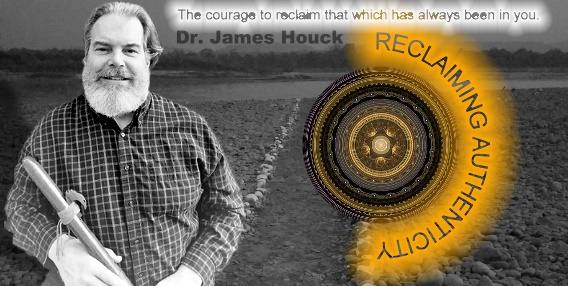

Reclaiming Authenticity with James Houck PhD, LPC, CCTP
Inferiority's tug of war with the soul - being attached to your inner weakness
Reclaiming Authenticity: From Inferiority to Soul Consciousness
Visualizing Key Highlights...
In this broadcast, Dr. James Hauck explores the integration of spirituality and mental health, emphasizing that our authentic selves are already present within us. By examining the nature of fear, the "inferiority complex," and the eternal nature of the soul, he provides a framework for moving from a state of woundedness to one of healing and divine realization.
The Philosophy of Inner Potential
The core premise of reclaiming authenticity is the belief that every individual already possesses the answers and the giftedness they need for a fulfilling life. Dr. Hauck posits that people often live from a place of "woundedness" or victimhood due to traumatic experiences, which leads them to hide their true value and dignity. However, true healing involves going deeper to rediscover the "soul" that remains whole despite external circumstances. This internal reality is far more significant than any past or future events.
Experience is often limited by our five senses, which provide only empirical, temporary evidence. We frequently trap ourselves in the illusion that what we see or touch is the ultimate truth, failing to realize that the most transformative experiences must touch the soul. Divine love, unlike human emotion, is unconditional and eternal; it serves to purify the mind by recognizing the divinity in everyone.
The "Namaste" Philosophy
"Because I see myself as a soul of light, this allows me to greet your lighted soul... even if you don't see it in yourself."
Fear and the Tug of War with the Soul
Fear is often a primary obstacle to authenticity, functioning as "False Evidence Appearing Real." Dr. Hauck notes that people frequently avoid what they fear, even if that thing—such as change or self-discovery—is ultimately good for them. Quoting Marianne Williamson, he suggests that our deepest fear is not inadequacy, but our own power and light. We often "play small" or cling to a victim identity to avoid the responsibility that comes with realizing our full potential.
This struggle is further explained through the lens of Alfred Adler’s "inferiority complex." Rooted in childhood dependency, this complex manifests as low self-esteem, a constant need for validation, and a tendency to overanalyze criticism. While these feelings can motivate some to achieve, they often lead to a distorted self-image that keeps individuals bound to their perceived weaknesses.
Signs of the Inferiority Complex
- 🔹 Internalized Shame: Persistent feelings of unworthiness.
- 🔹 Validation Seeking: Constant need for external praise.
- 🔹 People Pleasing: Sacrificing authenticity for acceptance.
- 🔹 Projected Insecurity: Making others feel small to feel bigger.
Metaphors for Transformation
To illustrate the relationship between the soul and the physical world, Dr. Hauck utilizes several powerful metaphors:
- The Genie and the Lamp: Unlike the genie who is tethered to his lamp, the human soul is not tethered to the body for its existence. The body is temporary and gives form to the formless, but the soul is eternal and vast.
- The Donkey and the Tree: Just as a donkey might believe it is tied to a tree even when the rope is gone, humans often believe they are bound by limitations (addictions, toxic relationships, or "isms") that are actually illusions of the mind.
- Butter in the Milk: God or the divine presence is like butter hidden within milk. It is not visible on the surface, but through the "churning" of the mind, heart, and soul—inner work and reflection—that divine presence eventually manifests.
Social Implications of Soul Consciousness
When individuals begin to see themselves as souls, they naturally begin to see others the same way. This shift in perception has the power to dissolve social "isms" such as racism, sexism, and ageism. These prejudices cannot survive the "language of the soul" because they rely on outward appearances and ego-driven divisions. By looking inward, humanity can transcend physical and psychological suffering to reclaim a collective sense of inherent value and dignity.
To-Do / Next Steps
- Visit www.bbsradio.com/reclaimingauthenticity or www.reclaiming-authenticity.com to leave comments or find more information.
- Access the show archives or download podcasts via iTunes, Audible, Spotify, or Amazon Music if you missed the live broadcast.
- Engage in the process of "churning" your own mind and heart to discover the divine presence within.
- Practice seeing others as "souls of light" to help dissolve personal biases and "isms."
- Use the upcoming Mother's Day weekend as an opportunity for forgiveness, whether for others or yourself.
Conclusion
Reclaiming authenticity is a journey of "de-superimposition"—removing the distorted templates of fear and inferiority to reveal the eternal soul underneath. By recognizing that we are powerful beyond measure and that the divine is already within us, we can transform our personal woundedness into a life-giving force for ourselves and the world.
Reclaiming Authenticity
Support my show
$5.99/mo or $9.99/mo
Click HERE
SUBSCRIBE TO TALK SHOW
A Subscription is NOT REQUIRED to listen to my shows,
but it is greatly appreciated!
Reclaiming Authenticity: The courage to reclaim that which has always been in you.
No matter who we are, where we were born, and into what family we were placed, ours is a world full of relationships. Indeed, we are social beings who spend our lives making sense of our world by trying to find our place in the world. As social beings, it is often within the context of relationships that we experience tremendous pain and suffering. From overt acts of betrayal and cruelty that someone may have inflicted against us or vice versa, to simply being in the wrong place at the wrong time, many people bear the scars of physical, psychological, emotional, and spiritual wounds. And yet ironically, just as we experience our woundedness in relationships, it is also within the context of healthy relationships that we find our healing and authenticity. The difficulty, then, is often finding the courage to discover that which has always been in you.
For over 25 years, Dr. James Houck has been helping people discover their authentic selves by integrating spirituality into their mental and emotional health. As people are able to integrate these disciplines, they often discover core issues that have been keeping them wounded in relationships.
00:00
Speaker 1
(music) And now, with over 25 years of experience integrating mental health and spirituality, the author of Reclaiming Authenticity: When Ancestors Weep, and Redeeming the Bereaved. Here is Dr. James Hauck.
00:24
Speaker 2
(music) All right. Good evening, everybody. Welcome to Reclaiming Authenticity, helping you find your courage to reclaim that which has always been in you. In fact, let's take it a little bit deeper, you know, helping you reclaim that which you have always been and are. Very happy to be with you here tonight, and every other Wednesday evening at 9:00 PM Eastern Standard Time, 6:00 PM Pacific Standard Time. 'Cause, you know, each and every week, uh, these broadcasts are dedicated to integrating spirituality and our mental health, all within the context of our relationships with ourselves, with others, and certainly with God or the divine. I am Dr. James Hauck, and if you would like more information about me, or if you just wanna leave me your comments about tonight's show, I invite you to visit those websites. The first one is www.bbsradio.com/reclaimingauthenticity, and the second website is www.reclaiming-authenticity.com.
01:46
Speaker 2
Either way, I will get your comments, and I love to read the comments. I really appreciate the feedback that I get. And if, uh, you would like to call in and be part of this show, that number is 888-627-6008. That's 888-627-6008. And I will be taking your calls after the break. Now, just in case, just in case you cannot spend the entire hour with me this evening, this broadcast will be posted on BBS Radio's website, so you can go back and listen again, or you can even go back and check the archive for previous shows. And these podcasts are also available for download on iTunes, Audible, Spotify, and Amazon Music. Well, for people who might be tuning in for the first time, I would just like to say thank you. And, uh, I just wanna share with you and everybody else just two deep seeded beliefs that I've always share, uh, through these broadcasts that have helped shape my outlook on reclaiming our authentic selves as soul.
02:55
Speaker 2
In fact, this same philosophy is what I share with clients regarding how I work with them the way that I do. And the first one is that I believe that people have the answers within themselves, because you know the kind of life you want to live, you know how you feel, and you know what brings you peace, and the joy and the hope, as well as you know what doesn't. And sometimes, we're just simply in the wrong place at the wrong time and something traumatic happens to us, or we thought we've dealt with an experience in our past, only to discover later that unresolved issues keep popping up over and over again and again, or we keep making those same mistakes over and over. But now, we have to go back and go deeper in our healing. And, uh, I kind of like the way that the famous poet and writer Ralph Waldo Emerson, you know, puts it. He says, "What lies behind us and what lies before us, these are tiny matters compared to what lies within us." Okay? So that's the first one.
04:06
Speaker 2
Second deep seeded belief is that I believe that everybody comes into this world with what they already need in this life in terms of their giftedness, or their talents, and their skills, their graces, if you will, personalities, and so forth. So in other words, the very best parts of who you are, as well as the potential for knowing yourself as a soul. You see, even though we may have had some pretty awful traumatic experiences, we may tend to stop believing that we are full of value, and dignity, and worth, as well as hiding our giftedness so that others will not exploit it. Well, either way, we end up going through life thinking from, and speaking from, and living from a place of woundedness, instead of from a place of healing, and grace, and love, and peace, and wholeness. But how often do we live our lives from this place of victimhood, a place of limited understanding of who we truly are?
05:12
Speaker 2
And the reason for this is that with all of our experiences, all of them, they're all taken in through our five senses of sight, sound, taste, touch, smell, but these are all limited. You know, they're empirical evidence, let's just say, that we can measure. You know, how often do we see this? Or how much does this weigh? You know, and so forth. And all of these experiences, you know, taken in through our senses, then are interpreted through our mind, and as a results, based on our experiences, we just might convince ourselves that, "Well, if I see it, then it must be true. And if I can hear it, well, then that must be true.
05:58
Speaker 2
And if I can touch it, well, then it must be true," as well as other sensory-related experiences, or again, empirical evidence that we believe to be the end-all, be-all truth.And yet, as I just said, these sensory perceptions are limited and temporary, because once what is taken in, it reaches the brain, you know, the mind interprets what we have seen, heard, tasted, and touched, and smelled, based on our limited experiences, unaware that the holiest and most transformative of these experiences have to touch the soul. So, don't get trapped in the illusion that you have to go in search of something that you already have, that you already are. Godly and/or divine love is a love that's not entangled in the human emotions of the mind. I mean, that's often where the battles begin, is like we think something is true, but then we just go and run with it, and then we're just, like, being, you know, just caught up with our assumptions.
07:02
Speaker 2
But divine love is eternal, it's not conditional, and it helps others to purify their minds. It helps us to purify our minds by recognizing only that which is divine in all. Again, like I said, don't go off searching for something that you already are. Discover who you are and be that soulful presence in the world. And as I've said many times on this broadcast, this is what reclaiming authenticity is really all about. It can be summed up in just one word: namaste. Which, my rough translation is that because I see myself as a soul of light, this allows me to greet your lighted soul of who you are, even if you don't see it in yourself. And therein lies the importance of realizing who we truly are.
08:01
Speaker 2
Now, the author of the best-selling book The Alchemist, one of my favorite books, that's like one of my top five, uh, Paulo Coelho says that, "The energy of hate will really take you nowhere, but the energy of forgiveness, which is manifested through love, can change your life for the better." And I can certainly attest to this. (clears throat) So like I said, I'll be taking your calls after the break, because I really want to hear what's on your heart regarding tonight's show, Inferiority's Tug of War With the Soul. One of the themes that, you know, keeps coming up for people who continue to struggle is coming to terms with their fears. I mean, most of the time people deal with their fears not by facing them, but instead they avoid them or they escape from them. Now, for example, a person who fears flying or fears crashing will probably never get on a plane. Okay? A person who fears drowning will probably never go into the ocean. Okay? And so on and so forth.
09:14
Speaker 2
You know, just avoidance is just a very strong behavior when you have this fear. But what if what a person fears turns out to be something that's actually good for them? Okay? F- follow me on this. That is, their fears actually can be understood as a means of focusing on an illusion. Okay? Or as a friend of mine likes to put it, "Fear is false evidence appearing real." Fear, false evidence appealing, uh, I'm sorry, appearing real. So for instance, earlier this week, I saw a quote from Brian, uh, Weiner, or Weiner, sorry if I'm butchering your name there, Brian, but I love the quote. He says, "If you're afraid that books might change someone's thinking, well, basically, you're not afraid of books, you're afraid of thinking." Good point. So what does fear teach us, not only about ourselves, but also something deeper in our lives that needs to be healed and overcome? Like what's behind all of it? What's, what's deep within once we get below the surface of this thing that we call fear?
10:35
Speaker 2
After all, you know, we're a lot stronger than we have perhaps been told about ourselves, you know? But on the other hand, what if your fear involves something that's related to your potential? Okay. It takes a little bit different here. What if your fear involves something that is related to your potential? So let's take, for example, a famous quote by author Marianne Williamson. (clears throat) She writes, "Our deepest fear is not that we are inadequate. Our deepest fear is that we are powerful beyond measure. It is our light, not our darkness, that most frightens us. We ask ourselves, 'Well, who am I to be brilliant, gorgeous, or talented, or fabulous?' Actually, who are you not to be? You are a child of God. Your playing small does not serve the world. There's nothing enlightened about shrinking so that other people won't feel insecure around you. We are all meant to shine, as children still, and we are born to make manifest the glory of God that is within us.
11:54
Speaker 2
It's not just in some of us, it's in everyone. And as we let our own light shine, we unconsciously give other people permission to do the same. As we are liberated from our own fear, our present automatically liberates others."Well, as I said, that's from author Marianne Williamson, and that quote comes from her book, A Return to Love: Re- reflections on the Principles of A Course in Miracles. Okay? So, what is it about change that people fear the most? Is it a fear of letting go of something that no longer serves them in order to take on something better? Or, could it be that in terms of the self-discovery, that there are more layers involved, that with self-discovery, there also lies within it a sense of greater responsibility? Or, perhaps it involves more about the fact the majority of people would rather stay comfortable with living as a victim, to not have to take responsibility for their lives. I mean, granted, what a person has gone through is real and painful to them.
13:07
Speaker 2
I get that, but perhaps they're looking for something that, well, lets them be lazy and avoid being held accountable for anything in their life, or perhaps seeking secondary gains, such as pity. You know, the only person that could answer, you know, those kinds of questions is the person themself. Everybody has to do that. What do I fear about change? So, exactly what is it about being a victim that can be very appealing to another person, that they're gonna fight tooth and nail to hang onto that wounded-ness, that they just can't let it go?
13:48
Speaker 2
Again, in the words of Marianne Williamson, "It is our light, not our darkness, that we fear the most." And I tend to agree with her that people fear their greatest potential, that is, fearing the light and staying helpless or vulnerable, and I- I hear this all the time, namely, you know, that, "There are a lot of other people out there worse off than me." Be- but you know, it's, you hear that enough, and, you know, I can't help but wondering if that, like, that sounds a lot like self-pity clothed in a false humility. I mean, either way, "Your playing small does not serve the world, and that there's nothing enlightened about shrinking so that other people won't feel insecure around you." That's more of the quote from Marianne Williamson. Well, in the world of mental health, one of my favorite people, Alfred Adler, who was actually a contemporary of Freud until they had, you know, a little spat, and then, or, you know, they- they part ways.
14:54
Speaker 2
Well, Alfred Adler, he faced his own sense of vulnerability, personally and professionally, and understood overcoming inferiority as a means of grasping one's potential, and one of the major accomplishments of living an authentic life. You know, for instance, you know, Alfred Adler, he was born in 1870, and, you know, for lack of a better phrase, he was a sickly child. He developed rickets, which kept him from walking until he was about four years old, and around age four, he developed pneumonia, and he overheard a doctor say to his father, "Your boy is lost," and along with being run over twice and witnessing his younger brother's death, his sickness contributed to his overall fear of death. Well, from these and other experiences throughout his life, young Alfred rallied back from the grave, so to speak, and proposed that every person experiences feelings of inferiority.
16:06
Speaker 2
In fact, he was the one that coined the phrase inferiority complex, which originated in early childhood when we naturally are dependent on others for everything, okay? If you've ever taken care of a newborn, you know exactly what I mean, you know, they are totally dependent on you for everything. But, you know, basically, an inferiority complex is rooted in feelings of inadequacy, and it really does affect your self-worth, as well as your relationships. And this condition can arise from really a combination of either real or imagined weaknesses, and often leading to distress, or let's even go so far as to say it's a distorted self-image in both social and relational context. Now, if you're not, uh, familiar with, you know, inferiority complex, you know, here are just a few signs of- of what shows up when a person struggles with inferiority.
17:05
Speaker 2
You know, they- there might be displaying signs of low self-esteem, you know, the feelings of not being able to meet expectations from either parents or other caregivers, you know, teachers and so forth as a child. There might be unresolved trauma and/or internalized shame, and that- that's just to name a few. And then, there is a tendency to overanalyze compliments and criticisms. "Am I really worthy? The person said that I'm a good person. Really? Do they really know me? Are they really happy? Can I really trust that?" You know, that kind of back and forth. And then, there's this persistently looking for validation and praise from others. I mean, constantly, constantly, or being a people pleaser instead of being your authentic self and pursuing what brings you joy and pleasure. And- and just lastly, just, you know, just a few here, attempting to make others feel insecure to make up for feelings of your own inadequacy.
18:07
Speaker 2
Now, ironically, these feelings of inferiority can actually serve to motivate children to develop skills or overcome challenges and maybe even attain their own goals.... because remember, it's not where you begin in life, it's where you end up. I mean, just ask Alfred Ed- Alfred Adler, okay? However, I'm also convinced that we need at least one person in our lives who believes in us, and will not let us settle for anything less. I mean, who was that person for you? Was it a parent? Was it a teacher who saw the potential in you, and believed in you so much that they would not let you settle for anything less until you saw that potential in yourself? Well, sticking with Alfred Adler, you know, a- another story goes on to say that young Alfred, well, he was not particularly a good student in school, let's just say, okay?
19:13
Speaker 2
And, uh, at one point Alfred came home from school with a note from his teacher, addressed to his father, saying that, uh, well, Alfred should not set his sights too high, you know, as he would be better suited to become a cobbler. You know, now, nothing wrong with being a maker, a repairer, and a seller of shoes, okay? But in his father's eyes, his son was not going to settle for failing to live up to his potential. I mean, if Alfred wanted to be a cobbler, okay, be the best cobbler that he can be, but he saw something deeper in his son, and he says, "You know what? You're not going to do that just because you didn't try hard enough." And as a result, his father basically kicked his butt into doing better in school, and lo and behold, Alfred went on to become a psychiatrist and the developer of a theory that really empowered people to heal from their feelings of inferiority, and be their best in life.
20:18
Speaker 2
And speaking of being your best in life, has anybody out there ever heard of TOMS Shoes? Well, the story behind that company's success is that it stemmed from a vision that Blake, uh, Mycoskie had after visioning- visiting Argentina, and somewhere around, I think, 2002. And- and he was competing in the second season of The Amazing Race with his sister. Now, you can look it up on YouTube. And he noticed that people who could afford them wore alparoticas. I- hopefully I said that right. It's a simple canvas slip-on shoe that was very popular in Argentina, and I said, you know, for people who could afford them, 'cause he saw a lot of barefoot people, and especially barefoot children. And he returned to Argentina while he was on vacation in 2006, and there he met a woman who was volunteering to deliver shoes to children.
21:16
Speaker 2
Now, Mycoskie offered to help, and through that experience, he was further inspired by the shoeless children that he encountered to start his own company with the understanding that for every pair of shoes his company sold, one pair would be given away to people who had no shoes, and the rest is history. And they are comfortable (laughs) , if I can give a little plug there. They are very nice, okay? Well, okay, now let's, uh ... If you're a fan of Disney movies, which I am, you know, my favorite being The Lion King, and I've spoken on this program before about why that is. But one of the more memorable scenes in the Disney's movie Aladdin is when the genie tries to explain to Aladdin that being a genie isn't all that it's cracked up to be. Okay? You know- you know the story.
22:10
Speaker 2
Aladdin was banished into the Cave of Wonders only to discover this dust-covered lamp, and so when Aladdin wipes it off and puts a shine to it, out pops the genie, who says he'll grant him three wishes, along with a nice little song and dance. I mean, after all, it was the voice of Robin Williams (laughs) , so of course you're gonna get a little song and dance, okay? Now, despite his awesomeness and the power to grant wishes, the genie appears to be sad, stating to Aladdin that, yes, he has phenomenal cosmic powers, but since he's tethered to his lamp, he's confined to an itty-bitty living space. So in other words, without the lamp, he cannot exist. That is, unless somebody wishes for him to no longer be a genie. Y- But, you know, the story of the genie, Aladdin, and the lamp reminds me of who we are as embodied souls.
23:13
Speaker 2
I mean, yes, we are souls living in a body, but where I disagree with Aladdin, okay, is that although the genie is tethered to his lamp for existence, we're not tethered to the body for ours. Did you get that? Although the genie is tethered to his lamp for his existence, that's not true for us. We are not tethered to our body for our existence, you know, and we often forget this fact because we tend to place more emphasis on the physical than the soul. But the truth is that we are so much more than what we have become so far, and therefore, we have yet to fully realize that we are eternal and we are vast. We're a soul. But yes, it's true that the body needs rest and food and water and exercise and, at times, medicine, but again, our true self is the soul, eternal, immeasurable, and without form.... but it is the body that gives form to the formless soul. And the body is temporary, whereas the soul is eternal.
24:34
Speaker 2
And here's the deeper lesson in all of this so far, it's like when we're able to truly see ourselves as souls, and ultimately when we are able to realize ourselves as souls, and we begin to see others as souls, we're gonna find out that we are no longer willing to accept relating to people as anything less than them also being souls. And I see this quite a bit in counseling people who identify themselves with their problems or their illnesses, they're not aware of being more than what they have become so far, so they often accept this distorted template that is laid over their perspective. And as a result, people tend to beat themselves up for making the same mistakes over and over and over again in their choices and in their relationships and in their life. So what if the illusion of being in prison, so to speak, is an illusion?
25:36
Speaker 2
Now I don't want to come across as one who minimizes another person's pain or problems or struggles, but how might we be empowered if we saw ourselves as the solutions to our problems? By removing the layers of conditioning, or again, this template, the distorted template that keeps us tied to our problems. I mean, what keeps us bound to toxic relationships? And what's that all about? What keeps us thinking that there's nothing more to us because we've been told this all about ourselves all of our lives? You know, in other words, if you think you're weak, you're gonna become weak, and if you think of yourself as a victim, well, then you're gonna stay a victim. Most people have accepted their inner weaknesses to the point that they are attached to them.
26:31
Speaker 2
They don't want to come out of their self-created illusions, and maybe, just maybe, by looking at ourselves more closely and examining our motives, our assumptions, and definitely our limited perspectives, we just might realize the first step towards lasting transformation that it is to acknowledge that the illusion of oppression is all in our minds. We might be in a physical prison, but if we find our true nature, if we discover that, that we are eternal souls, then no amount of earthly limitation can convince us that we are limited, inadequate, or restricted. Well, I would really love to hear what's on your heart about this subject, okay? So again, if you wanna call in, that number is 888-627-6008, and I'll be taking your calls after this break. Again, you are listening to Reclaiming Authenticity, and I'm your host, Doctor James Hauck. I'll be back with you in one minute. (flute playing) All right, welcome back.
28:58
Speaker 2
I'm Doctor James Hauck, and you are listening to Reclaiming Authenticity. Well, earlier in the show, the first half of the show, I was talking about inferiority's tug of war with authenticity, right? And, uh, in India c- culture, there's a story about a donkey who has been deceived into thinking that it was tied to a tree without ropes. I've shared that story. It's one of my favorite Indian stories of all times, because it really teaches us something about ourselves. It's a classic story, indeed, and it- it's often used to demonstrate how a donkey that is free all the time thinks it's tied to this tree, and the analogy then, on a metaphysical level, let's just say, is that we as souls believe we are bound to the body, that our soul is captive, and that seems to be the concrete truth.
29:53
Speaker 2
And at a physical level, we're bound to an endless desire to really acquire things such as beauty or spiritual experiences or knowledge or wealth and fame and success, as well as the enjoyment of those acquired things, which also includes avoidance of the negative things in our lives, such as bad relationships or financial problems and so forth. Now the issue is that we are deceived into thinking that external things will take care of all our internal struggles and our pain and our remorse.... and why this is important, an important distinction to make is that, as my Indian friends explain it to me, that people are already in a relationship with all things, they're already in a relationship with all people, and they're already in a relationship with God. They just don't know it yet, because people walk in ignorance of who they truly are, and therefore, it is a matter of realizing that we are souls that are vast and formless.
31:02
Speaker 2
In fact, I've, I've had many conversations with my friends in India. Uh, you know, we've had interesting conversations about sin and ignorance and oneness. You know, because for, let's just say for example, in Western spirituality, the concept of sin tells people that they're wrong, or they have done something wrong, and therefore, they need to eliminate sin to be in a right relationship with God and others, okay? And whereas others see sin as bad or evil, my Indian friends believe that people act out of ignorance of, of who they are. They just don't know who they are, and therefore, they're gonna commit evil acts because they have not realized themselves and others as souls. They just don't have that awareness yet. Yet once they have fully realized, you know, the grip of this illusion and, and are transformed by it, they clearly see the dynamic between wounding and healing, because every thought, every word, and every action has this potential to heal or hurt, to nurture or wound.
32:18
Speaker 2
And let's not forget about the echo metaphor, okay? Whatever we send out comes back to us in one form or another. It's the same thing whether you call it karma or what goes around comes around, or so forth, okay? And, and for us, regardless of religion, it is truly a matter of understanding how we live our lives with, let's just call it superimposed notions or distorted templates, that we are all bodies and minds. Yes, we have bodies and minds, but we may tend to believe that that's all there is to us, and that someday, well, hopefully, we'll get to heaven, and I've seen this in Christianity, I've seen this in other major religions, that people are afraid to walk in the newness of life because they still believe that they're tied to the tree, so to speak. You know, going back to the story of the donkey. (clears throat) But didn't Jesus once say that the Kingdom of Heaven is in you, okay?
33:25
Speaker 2
We just haven't realized that yet, you know, because when we fully grasp it, we're gonna walk differently, we're gonna treat ourselves differently, we're gonna treat others differently. But for now, perhaps we just don't know how to embrace it, let alone walk in a newness of that life and in the newness of relationships. But what a difference it would make in our lives and the lives of humanity if we see the illusion for what it is, okay, and we untie the so-called limitations of the donkey mind, dissolve the ignorance of who we are, and walk in the freedom that's always been within. I mean, herein lies a great lesson in recognizing and embracing and accepting and living out who we are as souls, because on this level there are illusions that have been superimposed.
34:23
Speaker 2
You know, we all think we are a particular body with a set of feelings and thoughts, uh, taking in the internal ex- I'm sorry, the external word, world around us, and ours is a world in which we are constantly familiar with our superimposed images, okay? Uh, and basically, to superimpose, it means to place or layer over or above something on another image. I mean, the true image is underneath, but when something gets superimposed on it, th- uh, okay, which one is really the true image? And photographers are familiar with this term, and they even use this technique all the time, and in musical, or sorry, music recordings, there you go, it's, it's also called overdubbing, uh, which is also known as layering. It's a technique in which pre-recorded audio tracks are played back and then incorporated into another track. We hear this all the time, you know, just in different music that we listen to.
35:25
Speaker 2
So when we believe that there's nothing more to us than a body and a mind, or that we define ourselves according to our wounds and scars and experiences, we're actually reinforcing this template or this superimposition of this illusion over top of who we truly are. Now, removing this illusion that we are separated from God and all people and all things and realizing the underlying reality of oneness, that's actually called de-superimposition, okay, the removing the illusion of what we believe to be real and discovering God in the most unlikely places, especially within ourselves. Well, another one of my favorite stories that, uh, my Indian friends told me is looking for the butter in every bowl of milk, okay? You see, there once was a man who, you know, mm, he was quite rich, okay? He was very, very wealthy, okay, and this man, you know, used to pray a lot, a... every day, he used to pray. In the morning, mealtimes, and even at night, he used to pray.
36:45
Speaker 2
But one day, a thought came to his mind, and he said, "You know, I, I pray to God, I always think about God, but where is God? Where does God live?" So, he sent out a message to all the people that, "If anybody can tell me where God is, I will give him 100 gold coins." Well, the news got out that the rich man was going to offer 100 gold coins to anybody who could tell him where God is, and everybody wanted to try and tell him. You know, they would, they would tell this rich man that, "Oh, okay, you know, yeah. I can tell you where God is. God's in the mountains. God is in the sky. God is in the heavens. God is in the sea. God is in faraway countries." Well, this wasn't exactly what the rich man was looking for, okay? And then this one very humble man came up to him, and he was a very quiet man, but he was a very wise man, and everybody knew him as just a quiet, very calm, and very humble person. And he said, uh, "Dear sir, I know where God is." The wealthy man said, "Really?
38:07
Speaker 2
Please, tell me. Where is God?" And the wise man said, "Well, before I, I say that, I just need you to bring me a bowl of milk." Now, the wealthy man didn't understand how that would help, but it seemed to be easy enough, so okay, okay. Let's go fetch a bowl of milk. And after the milk arrived, the wise man said, "Now, I want you to put your hand into this bowl of milk." (clears throat) So the rich man puts his hand in the milk, and this wise man asked him, "What's in the milk?" "Well, come on. There's nothing in the milk. It's just a bowl of milk." So, he asked the rich man again, "Are you sure there is just milk in there?" "Now," said the rich man, "There's nothing in the milk. It's just a bowl of milk." So, the wise man said, "Okay. I want you to stir the milk with your hand." So, the rich man, he stirred the milk, and he stirred it, and he stirred it, and he stirred it. He stirred so hard that he had to take a rest for such a long time, his hand probably cramped up.
39:20
Speaker 2
But after he rested, he started to stir again, and he stirred it, and he stirred it, and would you believe that from the same bowl of milk, eventually there was cream. And then the more he kept stirring that, there was butter. You know, these things came from that same bowl of milk. And the rich man looked at the wise man, and he goes, "I don't understand. What, what's the point you're trying to make here? You know, I asked you to tell me where God is, and you just got a bowl of milk and you made me stir it, and yes, I can see the cream that came out, and then it turned to butter, but where is God?" The wise man said, "Sir, God isn't far away. God is inside you. And what we have to do sometimes is to churn ourselves. We have to churn our mind, our hearts, our feelings, our soul, and slowly, over time, we see that God is inside of us.
40:28
Speaker 2
Just like butter is inside the milk, God is inside of us." Well, the rich man, when he thought about it, fell to his knees, and he bowed to the wise man, and gave him 100 gold coins. You know, when I first heard this story, l- uh, little did I realize, uh, that, you know, hearing the story for the first time, just how important it is to understand that the presence of God or the divine can be seen in everybody, especially in ourselves in everyday life. I mean, on the surface, we might find this teaching difficult because when we look at ourselves or when we look at somebody else, all we see is that there's just so much physical pain or emotional wounds or psychological suffering or expressions of anger and violence or lust or jealousy or brokenness and so forth. But can we also see the potential for God's presence to transform these wounds into life-giving means of creating the healing that we truly want to see in this world? Can we explore the potential to transform milk into butter?
41:50
Speaker 2
Let alone, how can we transform dimensions i- into, uh, higher spiritual awareness? Yet, how many times do we struggle to see God in this world because we're unwilling to shift our focus, let's just say, or maybe we're too busy to quiet ourselves to listen for God's still, small voice? Or, and let's take this one step further, how many times do we wrongly assume that in order to see God, we must make God conform to our vision, our philosophy, our worldview, our prayers? That if God wants a relationship with me, then it's gonna have to be on my terms. This is simply not the case. (clears throat) You see, God is not akin to the genie in A- Aladdin's lampWe don't obtain these things simply by rubbing the spiritual lamp hoping to get three wishes, or if you don't have a, a, a spiritual lamp, you know, rubbing a rabbit's foot until all the fur is flying in all directions. Okay.
42:56
Speaker 2
So how do we see God more clearly, or, or how do we, let's just say, fall in love with God more dearly or follow God more closely every day? Well, let me, let me just propose this idea, okay? Perhaps before we ask the question of how, perhaps a better question would be for us to first understand from where inside the soul these desires come. You know, perhaps the desire to see and to love and to follow God actually comes from a deep place in us that words just can't express, because you see, as we heal from our psychological and our emotional and our physical and our spiritual wounds, we begin to look at ourselves and others differently, and this is a very good beginning, very excellent beginning. However, when we're able to see what we are truly made of and who we are, that is light, soul, we begin to understand the true meaning of seeing the butter in the bowl of milk.
44:09
Speaker 2
Though it may not be there at first glance, but as we develop our relationship with God or the divine, we heal from our woundedness and then all of a sudden, "Ah, there it is. Now I see it." And here's the irony in all of this. When we're truly able to see ourselves as souls, and ultimately when we're able to realize ourselves as souls, we're gonna begin to see others as souls, and we're no longer willing to accept relating to people as anything less than them also being souls. I mean, how many times do we hear over and over again or see over and over again people f- calling for an end to violence and crime and poverty? And interestingly, humanity has always struggled with these issues, but has never looked for the answers in the right places. All too often, the focus has been on the externals that have caused such division in humanity since the beginning of measured time, and it, it's these externals that have produced the isms in the world today. Uh, we could rattle them off here.
45:21
Speaker 2
There's sexism, there's racism, there's ageism, there's classism, there's egoism, and so on and so forth, but when we focus on the soul of the person, I mean, and we really get serious, and, and the soul of the person is ultimately what we see, our focus, all of these isms fall away, because they simply cannot follow the language of the soul, because the soul is always found by looking inward, and we find that there is no more sexism. There is no more racism. There is no more ageism. There's no more egoism or any kind of ism, 'cause it just doesn't have a voice in matters of the soul. We're all beautiful souls made in the image of God, full of inherent value, dignity, and worth. Don't let anybody out there in your life, your relationships, and the work that you do tell you any different. And yet, granted, we may struggle to accept this truth because our attention is often diverted to focus solely on outward appearances and behaviors.
46:38
Speaker 2
Yeah, in other words, we all live with some degree of ignorance of our soul consciousness. Yeah, we may get glimpses of it, but we wonder, you know, "Am I really going to fully get it?" Because our physical, emotional, and psychological issues cloud our vision of who we truly are. So yes, diseases and illnesses do afflict us in the body. We do feel physical, mental, and emotional pain with so much intensity at times that, like, "I can't take much more. It's gonna break me in two." And at times, our lungs may struggle to take a breath, a single, single breath. Or what about hunger and diseases that can cause our stomach and intestines and bones and muscles and blood to scream in agony? Yeah, these experiences might make us question whether or not we are the soul whom God has created.
47:38
Speaker 2
However, the solution lies not in the suffering and the pain and the agony we experience, but rather it's in our perception that there is nothing more to us than an emotional, intellectual, and physical body, and indeed, physical and emotional and mental pain and suffering can temporarily drown out the cry of our soul, but our soul is never silenced. I mean, furthermore, the truth is that the greatest strength of who we are as souls lies in our ability to transform and transcend any physical, emotional, and psychological limitation. For as much as history has shown us the horrific crimes against humanity that it commits against itself, there are just as many stories out there of humanity rising above such tragedies to heal and to reclaim their soul. Perhaps your life could be one of those. I'm Dr. James Houck, and you've been listening to Reclaiming Authenticity. Thank you again for spending this hour with me. I really do appreciate.
48:48
Speaker 2
Drop me a line and just, uh, you know, tell me what you thought of this, n- not just this broadcast tonight but other broadcasts, and so, u- until we, uh, talk again, let's just say, uh...... that, uh, everybody just have a wonderful week. Don't forget Mother's Day weekend, you know? Just don't do it, because if you forget Mom on Mother's Day, you're gonna hear it for Memorial Day, Fourth of July, Labor Day, Thanksgiving, Christmas, New Year's Eve. I mean, you, you'll (laughs) she'll never forget, okay? So, treat Mom, you know? And if your mom just happens to be one who has passed on, um, remember who she is and how she lived her life, and there may be some things that you just might need to forgive her for, or some things that you just might need to forgive yourself. But as you do that, um, you know, over time, you are more able to walk in gratitude and, certainly, love of all people. So again, everybody, do take care and, uh, we'll talk in two weeks. Good night.
49:59
Speaker 1
(Flute playing) For an answer or just to leave a thousand comments, or prodding around to buy a book by Dr. Houk, it's all there. Just wander over to reclaimingauthenticity.com and click around, and we'll see you next Wednesday at 9:00 PM Eastern Time, 6:00 PM Pacific, on PBS Radio TV.