Reclaiming Authenticity, April 8, 2026
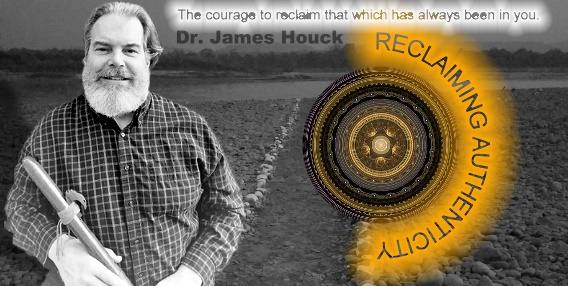

Reclaiming Authenticity with James Houck PhD, LPC, CCTP
The Power of Transformational Presence
This episode of Reclaiming Authenticity features Dr. James Hauck exploring the profound integration of spirituality and mental health. The discussion centers on the concept of "accompaniment"—the moral act of walking alongside others in their suffering—and addresses the existential doubts faced by first responders and caregivers in a broken world.
The Conflict Between Ego and Divine Love
Dr. Hauck posits that our mental health is often compromised by the ego, which interprets the world through a limited, self-centered lens of past trauma and social conditioning. This "lower-level consciousness" fosters unforgiveness, grudges, and conditional love. In contrast, "Divine Love" or the concept of Namaste recognizes the "lighted soul" in every individual, regardless of their current state. By suppressing the ego and embracing this oneness, individuals can transform their personal wounds—and those of others—into life-giving, eternal connections.
The Framework of Authenticity
Conditional, Limited, Time-bound, Self-centered
Eternal, Unconditional, Oneness, Soul-centered
"Reclaiming authenticity is seeing the lighted soul in yourself and others, even when it is hidden."
The Philosophy of Accompaniment
Drawing from the work of Dr. Paul Farmer and Henri Nouwen, the broadcast highlights "accompaniment" as a foundational way of living. It is the moral responsibility of a healer to step inside a patient's experience and stay for "as long as it takes." Dr. Farmer’s legacy in Haiti serves as a primary example: he rejected the "socialization of scarcity," refusing to accept a lack of resources as an excuse for inadequate care for the poor. This model emphasizes that healing is not "magic" or an impersonal "zap from the sky," but a deeply human process rooted in intimacy and shared mortality.
Finding Meaning in Crisis and Service
A significant portion of the dialogue addresses the "crisis of purpose" experienced by first responders, who now make up nearly 40% of Dr. Hauck's caseload. When faced with horrific situations, these individuals often question if their daily efforts truly matter. Dr. Hauck utilizes Viktor Frankl’s Logotherapy to argue that while suffering cannot be eliminated, it can be transformed into a "human achievement." Whether it is a paramedic stabilizing a patient for a brief moment or a bystander saving a single starfish, every act of service contributes to a larger transformative process that ripples through generations.
The Healer's Perspective
- ✨ Presence over Results: The value of a brief encounter can be life-altering.
- 🤝 Shared Mortality: Healing requires recognizing the human face in every person.
- 🌱 Resiliency: Suffering is a space for humanity's strength to emerge.
Justice and the "Voices of Courage"
The episode also touches on institutional abuse, specifically the Bessborough Mother and Baby Home in Ireland. Dr. Hauck expresses support for the Bessborough Council for Missing Children, who are fighting to prevent the redevelopment of land where 859 children remain unaccounted for in unmarked graves. This serves as a sobering reminder of the need for advocates who refuse to "look away" from graphic or uncomfortable truths.
Key Data
- 859: The number of missing children unaccounted for at the Bessborough Children’s Home.
- 35-40%: The estimated percentage of Dr. Hauck’s current caseload consisting of first responders and healthcare workers.
- 1946: The year Viktor Frankl published the seminal work Man's Search for Meaning.
To-Do
- Visit the official website at www.reclaiming-authenticity.com to leave comments or find more information.
- Listen to the "Voices of Courage" link on Spotify regarding survivors of institutional abuse.
- Read Viktor Frankl’s Man's Search for Meaning to understand the transformation of tragedy into achievement.
- Practice the "Starfish Principle" by focusing on making a difference for "that one" person in your immediate reach.
Conclusion
Ultimately, reclaiming authenticity is the journey of discovering that you are already a "vast and eternal soul." Whether in the role of a professional healer or a supportive friend, the simple act of showing up and being a "soulful presence" is what continues the healing process in a broken world.
Reclaiming Authenticity
Support my show
$5.99/mo or $9.99/mo
Click HERE
SUBSCRIBE TO TALK SHOW
A Subscription is NOT REQUIRED to listen to my shows,
but it is greatly appreciated!
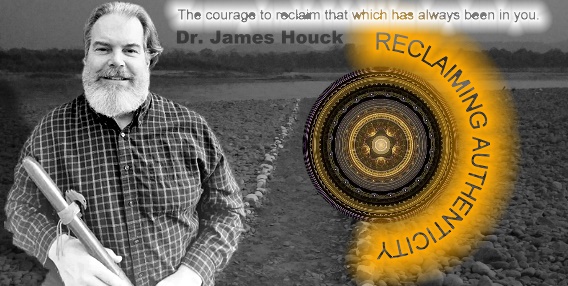
Reclaiming Authenticity: The courage to reclaim that which has always been in you.
No matter who we are, where we were born, and into what family we were placed, ours is a world full of relationships. Indeed, we are social beings who spend our lives making sense of our world by trying to find our place in the world. As social beings, it is often within the context of relationships that we experience tremendous pain and suffering. From overt acts of betrayal and cruelty that someone may have inflicted against us or vice versa, to simply being in the wrong place at the wrong time, many people bear the scars of physical, psychological, emotional, and spiritual wounds. And yet ironically, just as we experience our woundedness in relationships, it is also within the context of healthy relationships that we find our healing and authenticity. The difficulty, then, is often finding the courage to discover that which has always been in you.
For over 25 years, Dr. James Houck has been helping people discover their authentic selves by integrating spirituality into their mental and emotional health. As people are able to integrate these disciplines, they often discover core issues that have been keeping them wounded in relationships.
00:00
Speaker 1
(Music) And now with over 25 years of experience integrating mental health and spirituality, the author of Reclaiming Authenticity, When Ancestors Weep, and Redeeming the Bereaved. Here is Dr. James Hauck. (Music)
00:42
Speaker 2
All right. Good evening, everybody, wherever you are in the world currently. Welcome to Reclaiming Authenticity, helping you find your courage to reclaim that which has always been in you, in fact, helping you discover who you are as that beautiful and vast soul. Okay. Very excited to be with you, everyone, here tonight, and every other Wednesday evening at 9:00 PM Eastern Standard Time, 6:00 PM Pacific Standard Time. And each and every week, uh, every other week I should say, these broadcasts are dedicated to integrating spirituality with our mental health, all within a context of our relationships with ourselves, others, and God or the divine. I'm Dr. James Hauck, and if you would like more information about me or to leave me your comments about tonight's show, I invite you to visit that website. It's www.bbsradio.com/reclaimingauthenticity. Again, that's www.bbsradio.com/reclaimingauthenticity. That's all run together there. Or the other website, www.reclaiming-authenticity.com.
02:02
Speaker 2
Either one, you can leave your comments, and I certainly do read them. And, uh, if you would like to call in and be part of the show, that number is 888-627-6008. That's 888-627-6008. And I will be taking your calls after the break. Okay. And, uh, I am really interested in your insights or your thoughts, uh, tonight, on, uh, this particular theme. Uh, the show is entitled The Accompaniment of Transformational Presence: One Life at a Time. Okay. Now, just in case you cannot spend the entire hour with me this evening, no worries. This broadcast will be posted on the BBS Radio website, so that you can go back and you can listen to again, or you can check the archives for previous shows. And these podcasts are also available for download on iTunes, Audible, Spotify, and Amazon Music.
03:07
Speaker 2
Now, speaking of Spotify, a good friend of mine in Ireland who is a member of the Bessborough Council for Missing Children, if you recall over the last couple of broadcasts, I've been, uh, highlighting the work that they're doing over there and the protest about selling the ground or selling the land of which the Bessborough, uh, uh, Children's Home is, is still there, although it's not in use. But the story goes that there's over hun- 859 missing children that continue to be unaccounted for, okay? And, um, she's doing great work over there along with members of the other Bessborough Council for Missing Children. And, um, she sent me a link that's entitled Voices of Courage: Special Advocate for Survivors of Institutional Abuse. And again, this is on Spotify, so, uh, just I invite you to click on it. It's, uh, very powerful. Voices of Courage: Special Advocate for Survivors of Institutional Abuse.
04:12
Speaker 2
And, uh, throughout history or even throughout these, uh, broadcasts, you've heard me talk about institutional abuse, uh, not only in Ireland, but other places as well, here in the United States and then especially in Canada with the industrial homes, uh, just tremendous, tremendous history of, uh, abuse, uh, you name it, mental, emotional, physical, spiritual abuses, sexual abuses, just horrific things done to the children. But, uh, the Bessborough Council for Missing Children is near and dear to my heart, because I was actually over there in Ireland, and, uh, the members of this council took me around and, uh, we stood on the grounds of the Bessborough Home for Children. And, uh, they took me all over the grounds and just showed me where it is believed that the unmarked graves are, or mass graves as it will, uh, you know, as it were. Uh, and it was just, uh, very sobering to, to be there.
05:14
Speaker 2
However, uh, now the big fight is that, uh, they're trying to stop the land from being sold and then it's gonna be converted into apartment complexes, and they're afraid that, you know, these 859 missing children will never be accounted for, because these apartment complexes are gonna be built right over top. And so the ground will never be, uh, excavated. So again, uh, tune in to Voices of Courage: Special Advocate for Survivors of Institutional Abuse, right there on Spotify. I really encourage you to check that out.
05:49
Speaker 2
Now, uh, as you know that, uh, this particular show, um, you know, Reclaiming Authenticity, uh, always emphasizes, uh, an integration of our spirituality and our mental health, and this is very essential, because quite often w-Our minds interpret what we take in through our senses, and based on previous experiences or education levels, or upbringing, and so forth, our mind's interpretation fails to capture a more accurate understanding of, let's say, deeper lessons or realities, and greater truths, because our egos get in the way. You know, our egos are very self-centered and very limited. They, the ego wants to come in, take over, and keep us from knowing ourselves as vast and eternal souls, and living in forgiveness, gratitude, bliss, and love. Because it is our egos that lead us astray with all kinds of thoughts and selfish pursuits, and I like to call it a, a lower-level consciousness, if you will, which is always bound by time and space and causation.
06:59
Speaker 2
And yet, how often are we, let's just say we're guilty of not paying attention to our ego, and our mind's distorted templates for teaching us something more about ourselves, and showing us where our healing and transformation is still needed? You know, things like, where is unforgiveness? Where do we hold grudges? Have things turned into bitterness in our lives? What about a lack of gratitude or harshness as we treat others? Or what about mean-spiritedness, or an overall hatred for others, and perhaps even ourselves? Because when you, when you break it all down, there's a huge difference between worldly love, which is probably most familiar to us, and godly or divine love. Now, uh, according to my teacher and dear friend, we often use this term, "I love you," but such love is conditional, because it's temporary, and it changes. It goes back and forth with c-conflicting emotions of the mind such as envy, jealousy, and even hatred. And how can that be?
08:16
Speaker 2
But you see, on the other hand, godly or divine love is a love that's not entangled in the human emotions of the mind. It doesn't have an ego. Divine love is eternal, and it's not conditional, and it helps us, really, and h- and others to purify our minds by realizing our oneness in relation to all people and all things. And this is really what reclaiming authenticity is all about. You know, summed up in one word, say it with me everybody, namaste. Which roughly translated means, because I see myself as a lighted soul, this allows me to greet your lighted soul of who you are, even if you don't see it in yourself. And this integration of spirituality and our mental health begins here, because whenever we examine and implement a oneness integration, we will certainly come face to face with our deepest s- physical, emotional, psychological, even spiritual wounds in our relationships.
09:25
Speaker 2
And even, you know, in addition, you know, we may believe that we're gonna find happiness and joy and contentment, however, only to discover that the larger we allow our ego to become, the greater the sorrows are being sown. Because eventually, our egos bring us back to coming to terms with the relationship in our lives, especially our woundedness within families, or woundedness from coworkers, or woundedness with our friends or other relationships. But godly, or divine love, heals and transforms those wounds into something more life-giving, tangible, and eternal. And this transformation is especially needed for the people whom society deems as unlovable, unreachable, and untouchable.
10:21
Speaker 2
But when we do the work of integrating healthier ways of suppressing the ego by embracing our values and dignity and worth as souls, as well as embracing others' values, dignity, and worth as their soul, we transform, and we also transform others through our presence, our grace, and understanding, with forgiveness, gratitude, and love. Or let's put it another way, uh, the Dutch priest and professor Henri Nouwen, he puts it like this. He says, "Just by paying attention to what's going on around you, you will discover that there are people who heal each other's wounds, forgive one another's offenses, share their possessions, foster the spirit of community, celebrate the gifts that they have, and live in a constant anticipation of the full manifestation of God's glory." So don't get trapped in this illusion that you have to go in search of something that you already have. And don't get trapped in the illusion that you have to go in search of something that you already are.
11:37
Speaker 2
Discover who you are, and be that soulful presence in the world. Well, again, thank you for spending this time with me. Uh, again, the, uh, theme for tonight is the accompaniment of transformational presence, one life at a time. Well, over the past few years, I've noticed that I've been counseling more first and secondary responders than ever.... firefighters, police officers, paramedics, search and rescue workers, and not to mention the number of people I'm counseling who are presently serving others as healthcare workers, military veterans and their families, hospice volunteers, Red Cross workers, and recovery and other trauma responders, and so on and so on. In fact, I would say that since COVID, since 2020, my caseload now includes up to anywhere from 35 to 40% of people who are in human services and helping relationship fields in one form or another, and it could be higher, that was just a quick glance.
12:55
Speaker 2
(clears throat) Now, to be honest, I've never met a person who works as a first or a secondary responder, a professional or a volunteer in the medical field, a caregiver in a helping relationship, or anyone who serves to alleviate the pain of another, who hasn't thought or said at one time, "Am I making a difference in what I do? Am I making a difference in what I do? With so many needs in the world, does it really matter showing up day in and day out?" Well, the short answer is obviously yes, it does matter, but what I hear on a deeper level in questions like these is really a cry from the soul to perhaps see immediate life changing results. Yes, in an emergency and traumatic situations, time and safety are of the essence, or as my crisis supervisor once told me, uh, "Rule number one, in any situation is that you must survive the crisis." And this came from a trauma responder who used to talk people down from jumping off the Golden Gate Bridge, and he schooled me well (laughs) .
14:19
Speaker 2
I learned, uh, more than what I cared to learn regarding crisis counseling, but he lived it, and so anything that he shared, uh, was, uh, just, uh, very much, uh, appreciated. So hats off and deepest gratitude is to be expressed to those individuals who place themselves in harm's way to save or rescue the lives of others, and in fact, it does take a special person who knows that he or she is not gonna be afforded the right to look away when the rest of us are tempted to quickly cover our eyes during graphic situations. Am I making a difference in what I do? With so many needs in the world, does it really matter showing up day in and day out? And how do I know that I'm not just simply shoveling garbage against the tide? All good questions.
15:23
Speaker 2
But, you know, these questions typically lead to wrestling with one's calling to become a doctor or a paramedic, a nurse, nurse practitioner, a firefighter, a trauma specialist, Red Cross volunteer, hospice worker, and so forth, because I have never met anyone who has been working at the hands-on level and is doing it just for the money. I mean, people are always talking about a higher calling, (clears throat) one that begins at a young age or takes shape after a devastating experience. You see, it's what comes after, uh, that we need to start asking, where do these questions come from? Because too often people lose sight of the fact that transformation, to one degree or another, takes time. It's not rushed, and the reason for this is that, you know, the care, the healing, and the transformation are often processes that occur over time, heart to heart, life to life, soul to soul.
16:34
Speaker 2
Now, if you recall that powerful scene at the end of Schindler's List where Stern and Oskar Schindler have this discussion, uh, discussion about his effectiveness, and whether or not it was more than enough. I mean, Oskar replies, "I could've done more. I really could've done more. If I only would've made more money then I could've bartered it for, uh, another person, two more people," and so forth, and he breaks down in tears, (clears throat) to which Stern replies, "You have done so much." And it's symbolized in the ring that he gave Oskar with the inscription from the, the Talmud, "Whoever saves one life saves the world in time." Well, this saying actually comes from the Mishnah, which is a written collection of Jewish oral laws and teachings that really states, "Anyone who destroys a life is considered by scripture to have destroyed an entire world, and anyone who saves a life is as if he or she has saved an entire world." So regardless of the saying, the sentiment is accurate
17:56
Speaker 2
because it's grounded in the recognition of the value of human life. You see, to have a positive impact on the life of another does involve deep engagement on many levels that humanize sharing our mortality, our vulnerability, our empathy.... and our compassion, affecting not just one person, but many, many generations to come. And this is what, uh, Dr. Paul Farmer, uh, he was a global health pioneer, and he's actually the founder of Partners In Health. This is what Dr. Paul Farmer refers to as accompaniment, in that one who engages in alleviating the mental, emotional, the physical, and the spiritual suffering of others, who never takes for granted even the simplest act of service, no matter how great the adversity.
18:54
Speaker 2
And in an article entitled Paul Farmer and the Audacity of Accompaniment, the author, Arthur Kleinman, uh, he, he writes this article and he states that there is a moral responsibility of the healer to step inside patients' experiences, and accompany them through the worst moments with empathy and expertise, compassion and care, for as long as it takes. Now, this idea of accompaniment wasn't just an intellectual ideal that Dr. Farmer preached. Uh, he also lived it, because furthermore, in this article, Kleinman goes on to say that Dr. Farmer could be found walking distances and crossing streams and climbing hills in his everyday care for his patients. You know, Dr. Farmer, at one time, he, uh, served the people of Haiti, and, uh, that was during the HIV/AIDS crisis and tuberculosis and any other communicable diseases, and he didn't wait for people to come to him.
20:03
Speaker 2
He went to them, and he also followed them, even if that meant getting little sleep so that he could stay in better contact with his patients and friends who were ill in different villages and neighborhoods and even on different continents, and Dr. Farmer modeled accompaniment for many others as a way of living that's more foundational to medicine and healthcare systems than this dominant emphasis on organizational norms and economic, uh, efficiency. I mean, he would not accept the, this notion of the scarcity of resources as a reason that the poorest of the poor could not receive technologically adequate care, and he repeatedly showed that the necessity of resources could almost always be found and mobilized, and, and when he did this, he rejected this socialization of scar- uh, of scarcity, which is ordinarily built into public health training and work. And to do so, he drew on a social theory for both critique and social action.
21:20
Speaker 2
So, what intrigues me the most is when people start asking questions such as, "Am I making a difference in what I do? With so many needs in the world, does it really matter if I show up day in and day out? How do I know that I'm not just simply shoveling garbage against the tide?" I hear something much, much deeper than just a person on a slippery slope to compassion fatigue. Instead, as I said before, I hear an intense cry from the soul. I hear people grappling with their call of purpose, or a crisis of purpose.
22:03
Speaker 2
It's a disillusionment coming from being in a helping relationship or as a caregiver, or a first or secondary responder, and so forth, when the more you can be embroiled in the disgruntledness that one receives from distrusting and ungrateful people sometimes, because th- this is really an underlying mental, emotional, spiritual burden that people, first responders, secondary responders, and the like, often bear in silence because of the work they do, and that often goes missed. That often goes missed, and there's an old saying out there that a person becomes a profound healer because he or she has gone through tremendous loss and suffering themselves only to health and give back to others as a healer in one capacity or another. So, it is, you know, because the person has gone through such experiences, maybe these experiences have awakened in them a profound life wisdom that healing involves immersing yourself in relationships.
23:25
Speaker 2
Now, for example, let's say a paramedic certainly does more than stabilize a person and get them to the hospital so that further treatment can be provided, okay? After that, the paramedic will most likely never see that person again. There are exceptions, but is there an underlying, often subtle connection that a first or secondary responder, in this example, that they have with people that they rescue, serve, or heal? Well, yeah. The, the, the, the answer is profoundly yes. One of the things that I've always found, I mean, just, I'm just like, "Wow, I've never seen this before, but the more I read, the more I see it." That we have more stories in the Gospels about people who encountered Jesus once.... and then we never hear from them again.
24:21
Speaker 2
You know, whether they were healed, or their sins were forgiven, or they were part of a greater teaching, one thing's for certain, people showed up one way, but they left totally transformed on some level, because it did not matter how much time they spent with Christ. What did matter was what occurred during that time. And the same is true for people in any field of emergency or trauma-related service work, because never underestimate the value of your presence in another person's life, no matter how brief. Now, I also like the way that, uh, Dr. Daniel, uh, Solmassi, uh, he was a Franciscan monk and a physician, and, uh, he puts his book, he puts it this way in his book, The Healer's Calling. He says, "There is a difference between magic and healing. Magic, in a sense, is a zap from the sky. Healing is deeply human. Magic is impersonal, but healing involves intimacy and relationships.
25:37
Speaker 2
True healing takes place when the healer and the one healed are in a relationship through, in, and with the transcendent, God. Or let's put it another way, healing requires a recognition of the human face each person, you know, has that- that sets out to heal, as well as a communication of that message, that both the healer and the healed share a bond that ties them to each other through their humanity, their mortality, and the God-given soul that lives in each of them." You see, all in all, I truly believe it's okay to ask the question, "Is what I do making a difference in the lives of others?" so long as you ask another question, "What prevents me from seeing the face of the transcendent, what prevents me from seeing the face of God in myself and in every person in need?" Uh, yes, healing involves rescuing the person to a certain degree, and even a person who performs CPR or uses an AED on someone in- in a physical distress does so until the paramedics arrive.
26:59
Speaker 2
You know, every person who does that is a healer, and then at some point, they're going to hand off the person to the next level of their healing. So no work is ever to be considered as insignificant. It doesn't matter what role that you have in responding to the needs of others, professionally, or volunteer, and so forth, what you do matters, and healthcare professionals do this all the time. Each healthcare worker has specific roles based on their education and training and experience, okay? Some work is more physically invasive than others, but they all certainly share in being part of a larger transformative experience within themselves and in the others they serve. Well, as I said at the beginning of the show, I would really love to hear what's on your heart regarding this matter. So if you'd like to call in, that number is 888-627-6008, and I'll be taking your calls after this short break. Again, you are listening to Reclaiming Authenticity, and I'm your host, Dr. James Houck.
28:17
Speaker 2
Be back with you in one minute. (hawaiian flute music) Okay. Welcome back, everybody. I'm Dr. James Houck, and you're listening to Reclaiming Authenticity. Well, earlier in the b- broadcast, I was talking about the fact that I've never met a person who works as a first or a secondary responder, a professional or volunteer in the medical field, a caregiver in a helping relationship, or anyone else who serves to alleviate the pain of another who hasn't thought or said at one time or another, "Am I making a difference in what I do? With so many needs in the world, does it really matter me showing up day in and day out?" Well, I read, in the first half of the show, an article entitled Paul Farmer and the Audacity of Accompaniment.And this is, uh, you know, a phrase that, uh, Dr.
30:29
Speaker 2
Paul Farmer coined, accompaniment, but he used it in a very specific context, and Arthur Kleinman, who wrote this article, he states that there's a, a moral responsibility of any kind of healer to step inside, uh, patients' experiences and accompany them through the worst moments with empathy and expertise, compassion and care, for as long as it takes. And this is something that Dr. Farmer, who died in 2022, this is something that he lived. He didn't just preach it, he lived it. And this is the incredible part, 'cause he, he lived, and he served in just the poorest of the poorest of the poorest countries, and he made it work. He made it work. You know, um, Dr. Farmer could be found walking long distances, and crossing streams, and climbing hills in his everyday care for his patients. I mean, that was a fact. You know, a lot of people saw him do that. They witnessed it. They were transformed by it, you know?
31:42
Speaker 2
And he also followed his patients, even if that meant getting a little sleep so that he could stay in better contact with patients and friends who were ill in different villages and neighborhoods, and even on different continents. And there was one story that just really struck me as, as like, wow. I mean, this d- d- you wanna say dedication, but it's- it's so much more than that. He really lived accompaniment. It was a story in which, uh, he ended up treating, uh, a man who lived a great distance from the village, and he was treating him for tuberculosis, and he was on medication, and he noticed that this patient hadn't shown up in a while. And so instead of just waiting for the patient to show up at this clinic, Dr. Farmer grabbed his medical supplies and everything and headed out to the village, and it took him probably a couple of days, you know, just all- all kinds of brush and everything else, jungle and crossing, streams, and- and so forth. Well, he finally found his patient.
32:44
Speaker 2
He finally found this man who has tuberculosis, and you know what he said to this man once he found him? He said, "Here. Take your medication." See, Dr. Farmer modeled accompaniment for many others as a way of living that is just very foundational. You know, do no harm. Do all that you can. I mean, he wouldn't accept th- you know, this, this excuse of, "Well, we just have a scarcity of resources," as a reason that, you know, the poorest of the poor couldn't receive adequate care. And he showed time and time again the necessity of resources could almost always be found and utilized. Well, I thought that in the second half of this broadcast that we might also explore more deeply a common existential theme that all people must come to terms with, meaninglessness. Now, basically, existentialism, it's- it's- it's a philosophy that explores a person's struggle to lead an authentic life, right up my alley, okay?
34:05
Speaker 2
It's a philosophy that, uh, explores the person's struggle to lead an authentic life, especially in what it means to exist as an individual human being in a universe that we don't quite understand, and especially in the face of an absurd or incomprehensible existence. It emphasizes the nature of human existence, and it- it focuses really on matters of freedom, and choice, and the search for meaning. Well, perhaps one of the most noticeable existentialists in his day was Viktor Frankl. Uh, Viktor Frankl was born somewhere around 1905 and died in 1997, and, uh, uh, Frankl was an Austri- Austrian psychiatrist, and he was also the founder of logotherapy, okay? And he approached the problem of suffering and meaninglessness not only as this clinician, but also as a person who survived a concentration camp in Auschwitz. And back in 1946, he published his most recognizable work. It's a book entitled Man's Search for Meaning. If you've never read it, you have to read it.
35:32
Speaker 2
Put that on your 100 books that you have to read before you die. Put it on there, because it's transformative, and you get a clear, clear picture of what Dr. Frankl was doing, and how he survived, and how he gave back. And in this book, Man's Search for Meaning, really highlighted his understanding that the will to find meaning in one's life is a fundamental driving force of humanity. Now, the frustration of not finding meaning is what he would call being in an existential vacuum, which he considered a cause of many mental and emotional problems, and ultimately, the suffering that we see in modern times. You know, this existential vacuum.An an- an important and ongoing debate among existentialists actually concerns, you know, whether we are asking meaning-seeking or meaning-creating questions, because in the end this question is often theological in the sense that it's connected to a person's basic worldview about beliefs and, you know, and their- his or her relationship with God.
36:54
Speaker 2
And regardless of this debate over whether we seek to make meaning in our lives or whether we create it through our lives, I believe that we are fundamentally meaningful, and our life's purpose is to discover this meaning. Okay, so let's just take an example here. Uh, many people who consider themselves religious or spiritual may believe that, you know, you shouldn't impose your values on others, that this is risky because everybody must come to terms with their own discovery of meaning, especially in their work. And I think an important thing to keep in mind is that what Dr. Frankl did was, first of all, he didn't promise that in the search for meaning that you would find the elimination of suffering. I mean, he offered, you know, something more important.
37:52
Speaker 2
He says, "You can't do away with suffering, but you can transform the tragedy into a human achievement, especially in the face of the most difficult challenges." And I like that, the transformation of tragedy into a human achievement. May not be obvious right away. I mean, tragedy is tragedy, but over time, you begin to see the potential to transform this tragedy into something even better, something even stronger, a way that a person can give back because they've been healed. And first responders, secondary responders, anybody who works in the medical field, hospice volunteers, Red Cross vol- anybody, anybody, they're part of this transformation at the early, early, early stages, that getting one person here to another to, you know, help them further on their- either their recovery or to live. Transformation of that tragedy into a human achievement begins with them, especially in the face of the most difficult, horrific challenges.
39:15
Speaker 2
So for the person who questions whether or not they make a difference in the work that they do as a first or secondary responder, healthcare worker, and so forth, it's true, the healer must step inside another person's experiences and accompany them through the worst moments with empathy and expertise, compassion and care, for as long as it takes. That's accompaniment. And for Frankl, meaninglessness is really not a prison sentence. It's not the end-all, be-all. Instead, it's a challenge, you know, and- and that suffering is not a dead-end, but it can actually be a space for humanity's resiliency to emerge triumphantly. I mean, even if a person believes that he or she has nothing, they always have this opportunity to find meaning, and as a result, they maintain their human dignity. And really, when you break it down, that's what people want to, uh, know that they have, know that- that- that's who they are. "I am a value- I'm a person of value, dignity, and worth.
40:32
Speaker 2
Can I see that in myself? Do other people see it in me, and can I see it in others?" One day, a young girl was walking along a beach upon which thousands of starfish had just been washed up the night before du- due to just some terrible storm, and she was just out there walking along, and when she came to each starfish, she would pick it up, she would look at it, and then she'd throw it back into the ocean. And people who were watching her from a distance, they were intrigued about this, uh, just as they watched her pick up one starfish after another and throw it back into the ocean. Well, she had been doing this for some time when an old man approached her (laughs) and he said to her, "Little girl, why are you doing this? Look at this beach. You can't save all these starfish.
41:25
Speaker 2
You can't begin to make a difference." And the girl seemed emotionally crushed by this comment, but after a few moments, she collected herself and she bent down and she picked up another starfish and she hurled it as far as she could into the ocean, and then she looked up at the man and said, "Well, I think I made a difference for that one." And soon the old man looked at the girl curiously and thought about what she said, and he was inspired, and he joined the little girl in throwing starfish back into the sea, and soon others joined in to the point where all the starfish were saved. Do you honestly believe that what you do in service for others doesn't matter? Well, I remember years ago, uh-I was watching an off-Broadway version of The Laramie Project in Philadelphia.
42:35
Speaker 2
Now, The Laramie Project is based on the tragic events of October 6th, 1998, for so – some time ago, and this is the date when Matthew Shepard was brutally beaten and left to die in Laramie, Wyoming, because he was gay. And the play, and eventually the subsequent movie, became a witness to the people of Laramie and their responses to this hate crime, and also what followed, you know, the movement for LGBTQ rights. Now, the narrative was based on interviews with residents of Laramie, and other individuals who witnessed the attack. You know, it certainly highlights the impact of the crime on the town, and the broader implications for the fight against hate crimes. And I remember sitting there watching this play, which is just, it was moving. And, and sitting there, something struck me as I sat there.
43:43
Speaker 2
You know, there were many storylines woven throughout the play, and you had to pay attention 'cause they just kept coming in and out, and in and out, but every now and then there appeared a boy who we later on learned was the one who actually found Matthew's body in the first place. This boy kept emotionally struggling with himself, and he kept asking, "Why did I have to be the one who found Matthew that day? Why? I never ride my bike down that road, so why did I do it that day? Just look at the mess I've caused. Everybody's in a panic. The whole town is in an uproar. Why me?" And throughout this play, the boy appeared on stage wrestling with himself over being the one who found Matthew that day. I mean, he would, his character would come out, and then he would go back and then he would come out, and, you know, but he kept asking these questions, "Why me?
44:46
Speaker 2
Why did I have to be the one?" And finally, at the end of the play, when the convictions were handed down by the court, and all the news media had left town and the community was trying to return to some semblance of normalcy, I mean how can you return to normalcy after that? Again, this boy who found Matthew Shepard walks out on stage by himself. However, this time his face was not distraught, but actually appeared peaceful and calm, and he smiled, and he spoke very calmly, "I now know why I was the one who found Matthew that day. It was to begin the healing process." Have you ever stopped to consider the search for meaning questions you raise as a first or secondary responder, or maybe you're that one emergency or trauma specialist, a volunteer or helping relationship worker, that maybe it's not so much about, "Am I making a difference in what I do?
46:08
Speaker 2
With so many needs in the world, does it really matter if I show up day in and day out?" Perhaps the greater focus ought to be on understanding yourself as the one who continues the healing process in a broken and often unforgiving world. Does it matter what you do? Yes, it matters. It matters to many, especially to those who have yet to be born. I'm Dr. James Hauck, and you've been listening to Reclaiming Authenticity. Thank you again for spending this hour with me and, and don't forget to leave me your comments on tonight's subject. I always love to hear from you.
46:52
Speaker 2
So in two weeks, uh, join me again right here on bbsradio.com station 1 at, uh, Wednesdays at 9:00 PM Eastern Standard Time, 6:00 PM Pacific Standard Time, and so until we speak again, everybody behave yourselves, everybody be safe, and do not be discouraged, and do not minimize the value of your presence in your life, the life of your family, the life of your town, the life of your state, the life of your nation, the life of the world. Good night.
47:37
Speaker 3
(Flute playing) For an answer or just to leave a thousand comments, or prodding around to buy a book by Dr. Hauck, it's all there. Just wander over to reclaimingauthenticity.com and click around, and we'll see you next Wednesday at 9:00 PM Eastern Time, 6:00 PM Pacific, on BBS Radio TV.