
Reclaiming Authenticity, April 22, 2026
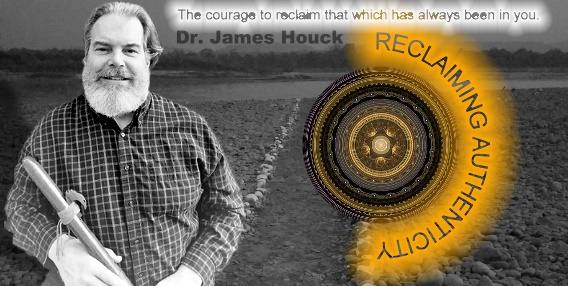

Reclaiming Authenticity with James Houck PhD, LPC, CCTP
Reclaiming Authenticity: The Breath of Transformation and the Power of Narrative
Visualizing Key Highlights...
In this landmark 200th broadcast, Dr. James Hauck explores the profound intersection of mental health, spirituality, and the journey toward the authentic self. He challenges the "silence is golden" proverb, offering instead a path to healing through the breath, neurobiological understanding, and the transformative power of narrative therapy.
Detailed Summary of Key Insights
The Courage to Reclaim the Authentic Self
Reclaiming authenticity is not a search for something new, but a courageous act of remembering who one has always been. It requires significant inner strength to transition from the comfort of the known to the potential of the unknown. This process involves confronting "hindrances" such as unforgiveness, bitterness, and old emotional wounds that cloud our vision. True authenticity is found when we acknowledge our spiritual nature and stop seeking temporary pleasures to soothe permanent sorrows.
Breaking the "Golden" Silence and the Concept of Han
While silence is often praised as a virtue, it can become a prison for victims of trauma and oppression. Dr. Hauck introduces the Korean concept of Han—an unfathomable wound or "rupture of the soul" caused by systemic injustice and repeated abuse. When pain cannot be given a voice, it cannot be healed. This is particularly prevalent in mental health, where the stigma of conditions like depression forces many, especially men, to suffer in silence rather than seeking the strength found in vulnerability.
The Anatomy of Unspoken Pain: Han
A Korean concept describing a deep, unrelenting ache in the soul.
Abuse, exploitation, and unavenged injustice.
A rupture of the soul that transcends words.
The Neurobiology of Traumatic Memory
Trauma often blocks the brain’s access to language, making it physically difficult to "just talk about it." When a sensory trigger—like a specific smell—resembles past trauma, the thalamus signals the amygdala to trigger a disproportionate emotional response (anxiety or fear). Healing involves a "psychological shift" between the amygdala (emotional response) and the hippocampus (autobiographical memory), allowing the individual to move from feeling the trauma to processing it as a story that can be told.
Healing Through Breath and Narrative Therapy
The breath serves as the bridge between silence and sound. By changing the vibration of the breath through chanting, humming, or song, one can transform the energy of trauma. This is complemented by Narrative Therapy, which views the person as separate from their problems. Instead of identifying as a "victim," individuals are empowered to rewrite their life stories, reframing their past through a lens of value, dignity, and potential rather than just their wounds.
3 Benefits of Narrative Therapy
- ✅ Integration: Places untold moments into current experiences.
- ✅ Connection: Links emotional content with both head and heart.
- ✅ Perspective: Develops new insights to reframe the life story.
Intergenerational DNA and the "Drop of Blood"
Dr. Hauck recounts a pivotal lesson from a Native American elder: a single drop of blood contains the DNA, personalities, struggles, and triumphs of all ancestors. Recognizing this connection allows individuals to see themselves as part of a vast, eternal lineage. Healing one’s own trauma creates a "starburst of energy" that heals generations across time and space, both those who came before and those yet to be born.
Key Data
- Experience: Dr. James Hauck has over 25 years of experience integrating mental health and spirituality.
- Milestone: This episode marks the 200th broadcast and the 6th year with BBS Radio.
- Prevalence: Depression affects nearly 16 million Americans every year.
To-Do / Next Steps
- Audit your storytelling: Listen closely to the tone and words you use when telling familiar stories about your past to see if they are rooted in bitterness or healing.
- Practice perspective-shifting: Try telling your story by inserting a healthier perspective, such as viewing those who hurt you as wounded individuals themselves.
- Wish for healing: Instead of wishing pain upon those who have caused you misery, consciously wish for their healing as a way to transform your own narrative.
- Engage with the community: Visit www.reclaiming-authenticity.com to provide feedback or explore further resources.
Conclusion
Authenticity is not a destination to be reached, but a state of being to be reclaimed through the courage to speak the unspoken. By understanding the neurobiology of our triggers and the ancestral depth of our blood, we can move from the "grooves" of old schemas into a transformative grace that heals not just ourselves, but the generations surrounding us.
Reclaiming Authenticity

Support my show
$5.99/mo or $9.99/mo
Click HERE
SUBSCRIBE TO TALK SHOW
A Subscription is NOT REQUIRED to listen to my shows,
but it is greatly appreciated!
Reclaiming Authenticity: The courage to reclaim that which has always been in you.
No matter who we are, where we were born, and into what family we were placed, ours is a world full of relationships. Indeed, we are social beings who spend our lives making sense of our world by trying to find our place in the world. As social beings, it is often within the context of relationships that we experience tremendous pain and suffering. From overt acts of betrayal and cruelty that someone may have inflicted against us or vice versa, to simply being in the wrong place at the wrong time, many people bear the scars of physical, psychological, emotional, and spiritual wounds. And yet ironically, just as we experience our woundedness in relationships, it is also within the context of healthy relationships that we find our healing and authenticity. The difficulty, then, is often finding the courage to discover that which has always been in you.
For over 25 years, Dr. James Houck has been helping people discover their authentic selves by integrating spirituality into their mental and emotional health. As people are able to integrate these disciplines, they often discover core issues that have been keeping them wounded in relationships.
00:00
Speaker 1
(Flute playing) And now, with over 25 years of experience integrating mental health and spirituality, the author of Reclaiming Authenticity, When Ancestors Weep, and Redeeming the Bereaved. Here is Dr. James Hauck. (Flute playing)
00:40
Speaker 2
Hey. Well, hey, everybody. Good evening, good evening, good evening, eh, eh, wherever you are in the world at this time. Welcome to Reclaiming Authenticity, helping you find your courage to reclaim that which has always been in you. In fact, helping you find your courage to discover who you've always been, and to remember who you are. I'm Dr. James Hauck, and if you'd like more information about me or to leave me your comments about tonight's show, I invite you to visit that old website there. It's www.bbsradio.com/reclaimingauthenticity. That's all one word there. Wa- so it's www.bbsradio.com/reclaimingauthenticity, or if you want to leave me, you know, your comments at my oth- other site, it's www.reclaiming-authenticity.com. 'Kay, and I do in- just really enjoy reading feedback from the listeners out there, really enjoy it.
01:46
Speaker 2
Yeah, so, if, uh, any time you would like to join in, in the conversation for this evening, you know, I'll tell you that toll-free line, you know, call in and, uh, it's 888-627-6008. That's 888-627-6008, and as usual, I will be taking your calls after the break. Now, just in case you cannot spend the entire hour with me this evening, no worries. This broadcast will be posted on the BBS Radio website. Then you can go back and listen again, or you could even check the, in the, the archives for previous shows. And, uh, these podcasts, just a little reminder here, but these podcasts are also available for download on iTunes, Audible, Spotify, and Amazon Music. Well, hey, everybody. I just wanted to share some ex- exciting news for you. Uh, didn't know, but, uh, I realized this the other week that, uh, I'm excited to announce that this is my 200th broadcast in my years with BBS Radio. Time does fly.
02:50
Speaker 2
Not bad for doing this part-time, and I remember that, uh, when I wanted to get into it, and, uh, called up, uh, people at BBS Radio and just said, "I got an idea." And, uh, like, uh, you know, I know how to talk, I know how to share, I know how to (laughs) ... I can, I can work a crowd. But, uh, and like the nuts and bolts behind the scenes, and they said, "No problem, we'll take care of that." And, hey, the rest is history. So welcome to the 200th episode, or I should say the 200th broadcast here. I'm not movies. But, uh, yeah, the 200th broadcast, so, uh, very excited to share that with you. And, uh, yeah, it's just, uh, been, been a wild ride. Wild ride. So thank you for those who may, uh, you know, still with me after all those years. Uh, you know, and I think I said last time, I'm in my sixth year with BBS Radio, so yeah, really, really a joy, you know, these- this time together and just, this is just a lot of fun for me to share with everybody.
03:51
Speaker 2
And for, uh, the people who are just, you know, w- w- wandering around the- the dial, and, uh, you happen to land on me, you know, welcome to the show, you know. And, uh, just something that's, uh, you know, crystal clear, uh, that I always wanted to keep in the forefront of these, uh, of these shows is this dedication that I have to integrating spirituality with our mental health issues. Because, you know, I get asked all the time, "Well, how do you reclaim your authenticity? You know, how do you know what it is? How do you know when you found it? How do you know you gotta keep searching? You know, just what is it?" And, uh, I have to say that, uh, you know, to reclaim your authenticity, it does take a lot of courage. It also takes a lot of inner strength to really change from what we know and what we get comfortable with to exploring what is fresh and new, let's just say. Eh, because when you think about it, you know, that which is unknown often contains our greatest potential.
04:56
Speaker 2
Like, we may not even be aware of it, but we know there's more to it, and to seek our potential by, um, risking change is the path of really, you know, we can just say it's really true greatness, you know? That we just have to risk change in order to find that potential. Because, you know, when we do, that action brings about just a tremendous sense of joy and untold blessings. But, you know, with- to arrive at your authentic self, you- you do have to come to terms with everything that has been hindering your awareness, uh, of just, "I don't know who I am. I don't know my authentic self. Is this all there is?" You know, but you- you have to come to terms with everything that- that hinders that awareness, namely unforgiveness, ungratefulness, bitterness, old spiritual and emotional wounds, and- and so forth. These really have a way of just clouding our vision as to like, you know, who are we truly?
05:58
Speaker 2
What do we have to work through in order to discover that there is so much more to us than what we have become so far? And, you know, what are these issues that we've wrestled with in life, or we've struggled with, or, you know, just-Things that have been done to us or things we've done to others. You know, what are these issues that, in a, in a way, they, they keep us satisfied with the illusions of who we think we are, rather than, like, I know there's so much more to me than what I have become so far, so how do I tap into that? And, you know, we have to go inward. So it does take great courage and a lot of inner strength to ask some really tough questions of ourself, uh, but it's growth, it is a process. But, but stay with it, because discovering your authentic self as that soul is just so rewarding, so rewarding.
06:52
Speaker 2
Now, uh, to be quite honest, uh, you know, we often don't see, you know, courage in ourselves, because maybe, you know, we want to hang on to the past, or we can't imagine something better in our lives, let alone discovering who we really are. So in tonight's broadcast, okay, I'm, I'm using courage as the strength that we possess which empowers us to let go of negative attitudes and distorted perceptions that no longer serve us, but those things have a way of keeping us wounded or victimized, and, you know, what are those things we have to let go of in order to take on something better, something more life-giving, and more authentic to who we truly are and who we have always been? Or, as my teacher likes to put it to me time and time again, you know, he says that until there is an acknowledgement of our spiritual nature, we will not do the work necessary to eradicate this ignorance that binds us.
07:55
Speaker 2
In fact, he says, uh, we're gonna continue experiencing the changing joys and sorrows that are often associated with temporary and false states of consciousness, and unfortunately, we will seek gratifying pleasures that only soothe our sorrows. So don't get trapped in the illusion that you have to go in search of something that you already have, and in fact, who you already are. Discover who you are and be that soulful presence in the world. Remember, this is, you know, you can sum up reclaiming authenticity with one word, namaste. You know, which means my lighted soul greets your lighted soul, even if you have yet to see it in yourself. Or as T.S. Eliot, one of my favorite authors, says, that, uh, "Let us not cease from explorations, because for all of our exploring will be to arrive at the place where we started and know it for the very first time." So indeed, uh, we, we go on a journey when we go inward to find out who we are.
09:05
Speaker 2
And, you know, not just what we do, but really who are we? Who, who, who am I as this soul? Who am I as this eternal soul, this vast soul? Who am I? What does that look like? How then should I live out as that, uh, you know, lighted soul, and so forth? Okay? Well, again, welcome to tonight's show. Uh, hopefully you get a kick out of it. It's, uh, entitled Go Fly a Kite: The Breath of Transformation. We're gonna be talking a lot about the breath, and, uh, eh, kite flying and, and so forth, okay? Well, uh, to get things started, uh, let me just say that, you know, I'm sure at one point or another you've heard the expression silence is golden. But have you ever stopped to consider exactly what that means? You know, now, I'll give you a textbook definition of this expression, you know, like silence is golden, which means, you know, you really just wanna close your mouth (laughs) , you know, and that's often referred to as a great virtue.
10:08
Speaker 2
Or, you know, as in, don't tell anybody else about this, because silence is golden. And although, actually the, the very precise phrase was first recorded way back in 1848, which is, uh, you know, part of a much older proverb that, uh, says, "Speech is silver and silence is golden." Well, you know, at first, it appears to be very good advice, but it's not a universal truth, because it's not always advantageous for us to be silent, especially if you've ever been forced into silence, you know, or told not to tell anybody, or threatened to keep quiet. And this is one of the aspects that, uh, victims are often told by their abusers or the oppressors, that if they talk, there will be consequences. And as a result, many people are made to believe that there is no alternative but to suffer in silence, and then bear the psychological, emotional, and physical, and spiritual pain all by themselves. So how many people suffer in silence?
11:20
Speaker 2
You know, this isn't just a cultural expression or just something that rolls off the tongue, but, you know, but, but rather how many people, you know, suffer from let's just say mental health illness or trauma, and they're just forced into that silence because, let's say they, they don't know how to put into words the depth of their pain and suffering and even relentless misery. Well, my encounters, my experiences with, you know, and understanding silence have really expanded over the years since I first started researching intergenerational trauma. And, uh, as I was engaged in this phenomenon early on, I was very fortunate to come across a word in the Korean language, uh, referred to as han, H-A-N, han.
12:09
Speaker 2
And within the Korean language, uh, within that context, this word captures not just feelings of sorrow and oppression, but also unavenged injustice and isolation, which is actually hard to truly explain, you know, because there really isn't an American equivalent to this word, you know, it has to be understood in the Korean language. But...... han also expresses this, uh, continuous, relentless anguish of a people as a whole, you know, especially people who are powerless and vulnerable in society. And an example of this can be seen as, uh, one group of people or a power comes in and attempts to erase everything, you know? "We're not just gonna defeat you, but we're gonna erase your language, your culture, your identity." You know? And han has that, you know, "Well, if I don't have those things, who am I?" You know? But it's this relentless oppression, just, it- it doesn't cease. It just, you know, wants to beat a person down, you know?
13:16
Speaker 2
And, um, you know, the one, uh, kind of side definition, if I could say that, the one side definition I came across that describes han that I really like is that it describes han as this unfathomable wound, or as one other person puts it, it's a rupture of the soul that's caused by abuse or exploitation or injustice and even violence, because when an aching soul is wounded again and again by external violence, the victim suffers a deep, unrelenting ache, and the wound produced by such repeated abuse and injustice is found in the depths of the soul. You know, it's this cry of the soul that is just so desperate to be heard, and- and although our society has improved over the decades and so, you know, society still tends to victimize its victims.
14:15
Speaker 2
And there is a profound writer, uh, Dorothee Sole, and, uh, you know, she has something to say about pain, um, just very prominent in her work, uh, especially on women's issues, and she says that pain that cannot be given a voice is pain that cannot be healed, and so she's worked with a lot in her research of the strength of- of women is found in their voice, because whenever they can give voice to their pain, that's healing for them. That's their strength. So, what do you do when your woundedness goes beyond words? You know, that your native language, whatever it might be, your native language does not have the words to get at the relentless suffering that you face. Well, first, I think, let's- let's be clear about something. You know, the- the- the people who are wounded, they cannot easily forget their pain and grief.
15:22
Speaker 2
You know, in fact, uh, according to Andrew Sung Park, he's actually the author from the book From Hurt to Healing, of where I got the word han from, you know, he writes that forgiveness involves an angry and sorrowful period, and depending on the offense, this phase can last a very long time, you know? And as a result, it is necessary for wounded people to express the sorrow or weep in response to a tragic injustice and- and evil, you know? Again, pain that cannot be given a voice is pain that cannot be healed. So, let's take for example in the area of mental health, let's just, let's talk about depression, okay? Depression affects nearly 16 millions Americans every year, and the stigma attached to mental illness like depression is very real, and it- it causes many people to suffer in silence. They just don't wanna talk about, "Well, I've been diagnosed with depression." They almost wanna whisper it. It is especially true for men, you know? Come on, guys.
16:32
Speaker 2
You know, these are real issues. You know, there is no shame in depression. It is a condition. It is not who you are, and ... but as a result, you know, many men and women, they're told to keep it inside, you know? "Hide your feelings. Don't show weakness, and keep a- a stiff upper lip." And- and yet, that's so counterproductive, because it certainly takes courage to openly talk to others about your suffering, because other people may perhaps see you as being vulnerable, because generally it takes a lot of motivation and tolerance to pull through in a period of suffering or hardship, however you want to describe it. However, I don't think suffering in silence is sustainable, nor does it need to be that way. You know, something both th- that psychologists and psychiatrists are well-aware of is that typically trauma and silence almost always go hand-in-hand.
17:33
Speaker 2
It's not easy to talk about, you know, out loud about the thing that is hurting us, because most of the time if an experience becomes traumatic and overwhelming, it actually blocks the brain's access to language. You know, c- because for the most part, people who experience something stressful or traumatic, you know, they're encouraged to talk about it. I mean, how many times has somebody, you know, in just said this to you, you know, "Let it out. Talk about it. You'll feel better," as if, you know, we- we try to make sense out of what happened to us, and we're just, we're not there yet, okay? Now, depending on the severity of the experience, you know, some people have extreme difficulty putting into words what has happened to them, you know, and this may be related to something life-threatening or to being overcome with an emotion. You know, people really struggle with telling their story, putting it into words, that, "I don't even know what I'm gonna say.
18:35
Speaker 2
I don't even know how I'm gonna say it."What if I get started, that I don't know how to stop? What if I can't control my emotions? And all of that, you know, just runs through our minds as we're just wrestling with, you know, these traumatic experiences, and we want to tell these stories, but we just don't know, how do you, how do you begin? Well, quite frankly, the purpose of telling and retelling our stories is to trigger, uh, what I like to call a, a psychological shift between the amygdala and the hippocampus in our brain. You know, for example, let's say, all, all the information comes into our brains from what we see, hear, smell, taste, touch, and intuitively, okay? And this information enters the thalamus, you know, a little organ in the brain, uh, which relays it to the brain's prefrontal cortex, you know, right in the, you know, right in the front there. And the only sensory information that is not relayed by the thalamus is information related to smell, okay?
19:42
Speaker 2
And that's key when it comes to trying to remember experiences, let alone put those experiences into words. Because if this experience is new to us, okay, like we've never been through this before, or we've never seen this before, or never heard this before, the thalamus will determine whether or not what we're seeing, or feeling, or experiencing, or whatever, it's gonna determine whether or not it's a threat, and then the prefrontal cortex will determine the best course of action, like, "Okay, now what do we do?" But if the information closely resembles, say, a past trauma, then the thalamus is triggered to interpret it as a new traumatic event through the lens of the past, and this is where, you know, that word, Korean word han comes in.
20:30
Speaker 2
You know, because past traumas may be anything related to a life-threatening experience, or, uh, you know, the untimely death of a loved one, or being bullied in school or at work, or feeling shame or guilt for not living up to another's expectations, and so forth. Because if a memory of, of a past trauma is triggered by a certain smell or an odor, well, then this is where the hippocampus comes in. The hippocampus relays this information, okay? And it's gonna send a signal to the amygdala, which is, like, right next door to it in the brain, and the amygdala regulates our emotional response to any experience appropriately, such as, let's say, feeling happy eating our favorite food. Now, if what we, you know, have, are seeing, if the information is viewed as trauma, the amygdala will have a disproportionate emotional response, such as anxiety, fear, dissociation, or whatever.
21:33
Speaker 2
So, let's say if a person has had a traumatic experience around seeing or smelling blood, any new experience surrounding blood might trigger the amygdala to elicit these traumatic feelings, okay? So again, the hippocampus is responsible for creating new memories, uh, especially our autobiographical memories, but it's kind of, you know, the hippocampus and the amygdala can get into a tug-of-war to see which one is gonna control the memory. Is this gonna be trauma that we can't put into words? Are we gonna always struggle this, with this? Are we gonna feel it? Or can we move it on to processing it, uh, in a healthy way, put words to it, and find our healing, okay? Well, you know, it's just interesting, just how memories come up in us, you know? And this could be positive memories, or it could be not so positive memories, okay? The amygdala and hippocampus work the same way, um, but we see it more involved with, you know, traumatic experiences, okay?
22:51
Speaker 2
And, um, you know, but again, you know, let's all just keep in mind, no pun intended, that beneath the words that we find, you know, or we choose to say, you know, is, you know, governed by breath, okay? Whatever we speak, we are breathing out, you know? We can't suck in air, let's just say, and try to form words. It just doesn't happen that way, okay? But the, the breath is one directional. It, it goes out from us, and where there is breath, there is vibration, because behind the sound, yes, there is vibration. And, and where there is silence, there's also vibration, and with any vibration, there is energy. And so to heal trauma that cannot be expressed through words, you know, we certainly have to first transform that energy, and, uh, a powerful means of doing this is through the breath that produces sound. Hmm? Well, anybody out there ever watched, uh, the movie or read the book The Kite Runner? You know, a great, great story.
24:04
Speaker 2
If you haven't seen the movie or read the book, I highly recommend it. You know, this story is about the friendship between two boys from different social classes in India, and the, uh, annual kite-fighting tournament is where the story begins. And in this tournament, you know, boys try to, as they're flying their kites, they try to cut each other's kite strings with their glass-covered strings, and then when the kite falls, the kite runners chase after, and they try to find the kite and bring it back.You know, that's, that's their role in this. Well, in this movie, through a series of traumatic events, the boys' friendship begins to suffer, which causes the boy from the lower social standing to move away with his father, and as they get older, each of the boys' paths take an interesting direction.
24:56
Speaker 2
Now, I'm not gonna give away the ending, but also keep in mind that there is a subtle metaphor of wind or breath that carries the story along with an understanding of redemption and transformation. Well, as I mentioned earlier, you know, this discovery of what lies within us, you know, mainly governed by the breath, governed by sound, governed by vibration and governed by energy, you know, is just one of my deep-seated beliefs. You know, that everybody comes into this world w- well, you know, already gifted with skills, and talents, and personalities, and so forth, in order to discover, cultivate, and use these gifts, use these strengths for the benefit of others, because as long as we have breath, we can heal. You change the vibration of the sound or change the vibration of the breath through toning or chanting or humming or song, and you've changed the energy.
25:59
Speaker 2
And down throughout history, the greatest spiritual teachers out there and the gurus are often the ones who enable us to discov- discover, I should say, the potential for our healing within. Now, traditionally, a guru is a very reverential, uh, figure to a s- to a student, you know, with the guru serving more as a, a counselor who, who hope- helps, uh, mold values and shares experiential knowledge as much as literal knowledge, you know, um, but they're often seen as an inspirational source, and helps in the spiritual evolution of a student, you know? And so, uh, guru can also be one's spiritual guide who helps, you know, a person to discover the same potentialities that the guru has already realized. So whether in Western or Eastern cultures, effective teachers and mentors and leaders throughout history have been characterized by their ability to bring out the very best in others.
27:04
Speaker 2
In fact, they've helped us to be healed and empowered to tell our stories differently from the way we've been used to telling our stories. And the reason why they're able to do this is that they're not gonna allow anybody to settle for mediocrity, okay? Even if there's resistance on the part of a, a student, you know, let's just say ... ... patient, knowing that everyone is on their own spiritual journey, uh, their own journey of discovery, who I am, what is this authenticity that I'm in search of, and so forth. But, you know, everybody arrives at their truth sooner or later, so remember who you are. So yes, effective teachers, mentors, leaders always empower others to discover greatness in themselves and other people. And the one thing I love, love, love about effective teachers and mentors and leaders is that they never, ever seek to control others. That's a red flag right there. If they wanna control you, uh-uh, that's not good, okay?
28:16
Speaker 2
But an effective teacher, mentor, and leader is not looking to control others. In fact, they seek to release, and they hope that this person has the courage to embrace that freedom. They empower them, you know, because, you know, the teachers and mentors and leaders, they can do this because they themselves have discovered how to live in forgiveness and gratitude and love on a daily basis. Again, it's very experiential for them. But, you know, sometimes we find an effective teacher, mentor, or leader, and we often become complacent, believing that all we need to do is just hang around them and ask for one more blessing after another, but, okay, let's not kid ourselves. We have our own spiritual inner work to do in cultivating our own forgiveness and our own gratitude and love in our daily lives. So, but we do have to listen to, let's say, our teachers and gurus and mentors and leaders, not only to what they are saying, but also to their method of imparting truth to us.
29:25
Speaker 2
And oftentimes, the most effective means of teaching comes from people who are and were great storytellers. You know, through plots and narratives and analogies and irony, storytellers have shared ancient wisdom that has often ignited powerful transformation in those who have ears to hear, you know, so to speak. And, you know, nothing really touches our hearts as when a great teacher shares a story, because storytelling is one of the most basic yet powerful means of imparting truth, because we take in those stories not necessarily through our ears, but we take in these stories through our hearts and in our souls. You know, it's, it's, it's those moments that we often feel whereby the moral of the story has reached in, grabbed us by the soul, and never lets go. Well, perhaps maybe you remember what it was like when you were younger, and, or mother or father or somebody else read a story to us. (clears throat) Okay?
30:35
Speaker 2
And we sat there listening intently to the words, you know, allowing those stories to form images or colors or sounds and other fantasies in our minds, okay? Uh, in fact, how often did we sit on the edge of our seats, or in some cases, uh, lying in our bed, just anticipating what would come next... you know, the, the images were just so vivid to us. Well, nowadays, you know, I've, I know kids who have an Echo or a Siri (laughs) to tell them a story, uh, kinda like a, a built-in babysitter, you know? Well, storytelling and listening to stories are not just for the young, because how many of you out there enjoy listening to podcasts at night, or while driving, okay? I'm certainly guilty of that too.
31:26
Speaker 2
Like if-
31:26
Speaker 3
Yeah.
31:26
Speaker 2
... I have a long trip ahead, I wanna, I want a story. I wanna keep my mind occupied. I don't wanna be bored on the trip. Okay? Well, I'm gonna keep going. I'm gonna forego the, uh, the, uh, uh, break, uh, because, uh, it seems like I have a lot to, to cover and I just wanna be able to do that. So I'm just gonna work right through the break, so. But if you feel the, the need to call in, uh, please feel free to do so. Yep. Uh, well, as a, a mental health clinician and a, a pastoral professional, I often find that storytelling and listening to stories often go hand-in-hand. You know, some people are better storytellers than others. You know, some stick to a, a well-rehearsed script, making sure every little detail is shared, and others are kind of all over the place with their thoughts, you know, leaving out important details and making up others. And then, there are some people who have never shared the story of their lives with somebody else.
32:35
Speaker 2
In fact, some people have never been given the chance, or never been given the permission to share stories that lie deep within themselves, you know, underneath emotional wounds and scars, hidden from the rest of the world. And when this occurs, helping people find their narrative powers empower them to also find their healing. I mean, I've talked about this kind of therapy before, but it, uh, what I'm talking about now is narrative therapy. A narrative therapy is a style of therapy that helps people become this intuitive expert, let's just say, in their own lives. They become storytellers, you know, because in, in narrative therapy, there is an emphasis on the stories that we develop and carry with us throughout our lives, and narrative therapy is a form of therapy that views people separate from their problems, and I like that, 'cause how many times do, are we tempted to jam all, all of it together?
33:39
Speaker 2
You know, like, "I'm nothing more than something I'm going through." Or, you know, um, I often hear this when people introduce themselves. They might say something like, you know, "Hello, my name is, and I'm an incest survivor." Well, that might be true, but is it certainly appropriate? Do you really wanna lead with your wounds? Okay? So, yeah, narrative therapy really helps people, you know, because, you know, who are you, apart from what has happened to you? There may be some influence there to a certain degree, but again, what has happened to you is not the end-all, be-all of who you are. Okay? So, an example of this would be helping a person separate what has happened to them from their, let's say, their interpretations, or their assumptions, and from who they are as a person with value, dignity, and worth. And, um, it's really ...
34:45
Speaker 2
I think, I think it's a cool form of therapy, because there's actually three benefits to this approach, and the first one is to place any untold or unspoken moments in a person's life into their current experiences. So again, let's say a person's never had the opportunity to talk about something that happened in childhood, but how does that affect them today, you know? What keeps them from being social? What does that mean, you know, in terms of, uh, of being, you know, uh, trusting or transparent in your relationship? Okay? So secondly, you know, this narrative therapy also helps people connect to the emotional content and to retell their stories from both the head and the heart, because you see, we could be very good at, uh, you know, telling and retelling stories, and just leave out all emotional content, and that just ends up being, you know, boiled down to, well, now we're reporting. We're not really s- telling a story.
35:48
Speaker 2
And, and lastly, you know, narrative therapy helps people develop new perspectives and insights in relation to how they tell their stories. Okay? (clears throat) And again, going back to what makes effective teachers and sages and gurus and leaders is that they know how to enter another person's life story. They know how to become part of it, and they help them embrace who they are, and the potential to be something they may not even realized yet. Okay? So again, I, I very much love narrative therapy c- because it has a way of just helping us tell our stories more effectively, and especially helping us reframe how we tell the stories. Okay? Because you see, you may have done some awful things in your life, but that doesn't make you an awful person, does it?
36:50
Speaker 2
Uh, you're a person who came into this world already equipped and graced with everything you need, but perhaps you have not recognized and embraced your fullest potential.Therefore, you are a person with value, dignity, and worth, but there are times when you act in ignorance of it, and part of healing from our past involves not only telling our stories, but also reclaiming our empowerment to rewrite those stories in ways that are now life empowering and affirming, very positive, and, and I'm not saying that we achieve this, you know, um, empowerment from, like, the times when we can just embellish our stories, or we have some delusional view that neatly ties stories up in a bow. I mean, this isn't Grimm's Fairy Tales here, okay, you know, where they lived happily ever after. Um, I think that comes into, well, uh, my story should reflect that, and again, that's just simply not the case, okay?
37:53
Speaker 2
But actually, you know, healing through storytelling, it begins with being very mindful of how we tell our stories and with what parts we identify with. So let me explain it this way. You know, many times, we may think that our problems are just simply caused by somebody else, you know? If that person wasn't that way, well, then I wouldn't be this way. If that person didn't do that, well, then I wouldn't have done this, you know, and so on and so forth, so we think that our problems are caused by somebody else. N- not always the case, you know, but we wanna believe that at times, you know, 'cause we, you know, one of the hardest things to get us to do is to look inward and take on responsibility that is ours, okay? And when we think that our problems are caused by somebody else, this is actually the mind's doing as our minds are often weakened by absorbing negative thoughts, okay?
38:51
Speaker 2
So this is how it shakes out, you know, because let's say, say if you think you're weak, you're going to become weak, and if you think you're a victim, well, you're gonna become a victim. And most of the time, people accept, you know, this inner weakness to the point that they become attached to whatever definition that's gonna keep them in place. In fact, many people don't even want to escape their self-created illusions in this area, you know, so telling stories from a place of woundedness and listening to stories told from that place of woundedness often reinforces a pattern of weakness and helplessness and despair, you know? And, you know, if you're like me, you know, I, as a boy, I remember listening to the same family stories at picnics and holidays and other family gatherings. I mean, I heard my family accounts of stories so often that by the time I was a teenager, I could recite them word-for-word. So get ready, folks, because picnic weather is coming, okay?
40:03
Speaker 2
(laughs) That's what I used to do as a kid, all right, you know, just I could recite them word-for-word, and like, oh my gosh, let's get some new experiences here, people, but they didn't. They told the same stories, and now, with the benefit of hindsight, I also understand that not only did these details of these stories not change, but the storytellers in the family, you know, that they had their interpretations, and their attitudes remained the same. In fact, there was always this underlying tone of helplessness and bitterness and sadness and resentment that shaped the way the story was told. I mean, it was kind of ironic that it was almost as if the story was not being told correctly if these negative emotions were absent. I mean, it was just really uncanny when I first clued into this, like, oh my gosh, I know the facts and figures, but do these people actually listen to themselves tell these stories and how negative they sound or how hopeless they sound, you know?
41:08
Speaker 2
So the first thing that, you know, leads us to healing in this area is to listen to how a story is told, listen to how we tell stories that have been so familiar to us, and yes, facts and figures, names and places are important, okay? But what's even more significant is how we tell our stories, you know, and the words we use are often filled with symbolism and metaphors and positive and negative and, and affirming words and frightful words. They're filled with emotion and other powerful images, you know, and, uh, so I see this in counseling, you know, others struggling with intergenerational trauma. I've noticed that when people have not been able to transform this negative energy around tragic events, their stories are often told the same each time, every time, but when healing occurs within the greater context of generations, people tell their stories much differently from a, a healthier, more holistic perspective.
42:19
Speaker 2
And the reason why we can tell our stories differently is that much of the healing involves becoming aware of those former negative perceptions and negative self-talk that no longer serve us, like, "Why am I telling my story that way? You know, I'm no longer a victim. I've healed from so much, but yet why do I tell my story the same way?" So a- another aspect or, you know, to us and, you know, is we also need to recognize how these cognitive schemas, okay, have been draining our energy and distorting our perceptions and diminishing our potential for healthier relationships.And so basically, to understand what a schema is, is, you know, uh, if you've ever owned a record player and you break out the 45s or old school 78s or the 33 1/3, you see the little grooves in there. That's a schema, you know, and we can get stuck in a groove where we just keep going round and round and round, same old story told the same way, and we're just stuck around and around.
43:32
Speaker 2
But we have to, you know, make an effort to get out of that rut or to get out of that groove or get out of that schema, you know, because it does, it drains our energy, it distorts our perceptions, and it, it just really diminishes our potential for healthier relationships, because when we replace these negative schemas with more transformative and life-giving perspectives, this starburst of energy heals all generations across time and space. So yeah, we can tell our stories of what has happened to us as long as we tell the rest of the story. You know, where have we healed? Where did we find hope? You know, we can say this and such and all this stuff when I was much younger, but ... and there's always a but, and then listen for the healthier way, the stories that are told from a much healthier place in us and no longer being told from a place of, you know, being the victim, okay?
44:40
Speaker 2
So, you know, all in all, what really happens, you know, to us when we find our voice, when we can change the energy behind these stories, which changes the vibration, which changes the breath, which changes the words and so forth. You know, eh, eh, what happens in the ordinary, you know, allowing room for, let's just say, the extraordinary acts of God in the ordinary, you know, the everyday aspects of our lives. Do we have a chance to tell those stories as well? And this gives heat for us to really pay attention and to have this awareness and to have this understanding, because when we discover these unhealthy perspectives and these attachments or these schemas and so forth, we can perhaps also discover the root that causes our unforgiveness, or we might discover the root that has caused us all this pain and bitterness or, or woundedness. And this is where the inner work of unforgiveness and, uh, just the lack of gratitude and bitterness begins.
45:51
Speaker 2
It has really taken root, but all is not lost, because you can heal from these experiences. Now, when we begin to heal, you know, as I said, our stories are told from a much healthier perspective, a place of one's inner peace and wholeness. I mean, think about your own stories here for a, a minute, okay? Think about how you say them. Think about, who do you tell? Who knows your story? And think about the people who have caused you pain and disappointment or misery and heartbreak. Listen to the tone that you use when you tell that story about the people in your life who have wounded you, or how you have wounded them. Has anything changed from when you first started telling that story? You know, what if you told your story differently, what would change? I mean, obviously we can't go back and rewrite history, but what if we could change how we tell the story by inserting a different, healthier perspective or wish, what would happen? Okay, just follow me on this, folks.
47:08
Speaker 2
What would happen if thinking about the people in our stories who hurt us or we hurt them, that we also saw them wounded as well? What if, what if, okay, we can see that instead of wishing for them pain, that we realize that they must have had pain, you know, in themselves at one point. What if we ... and what if instead we wished them to heal? Yeah? Isn't that what they need? Is this not what we need? So how then would we tell our stories? And I imagine we would be telling those stories from a more intuitive place, okay? Within ourselves, one that is awakened and blessed by its own taste of transformative grace. Well, ironically, and I've shared this story with you before, but, you know, for people who are tuned in for the first time, I'll share it again. You know, ironically, I had such an experience that was a tremendous catalyst for me to transform my own intergenerational trauma, okay? And actually, it all started with a drop of blood.
48:26
Speaker 2
I was visiting, you know, my Native American Indian elder, a friend and a teacher of mine, who noticed that I cut myself on his wooden chair. You know, it was, it was one of those things that splintered, and then, whoop, there you go. And in all seriousness, it was a deep splinter from a rough board, but in the end, it turned into a life-changing lesson, because before I could wipe away the blood from my finger, my teacher grabbed my hand, and he told me to take a long look at that trickle of blood.And I'm sitting there thinking to myself, "Does everything have to be a lesson? I mean, seriously, can we just sit here? Could I get a Band-Aid?" But no, it had to be turned into a lesson, and I'm so glad that he did that, okay? Because he asked me, he goes, "Well, now just, you know, tell me, what do you, what do you see when you look at your blood?" "I don't know what you mean," you know, I replied. So he said, "Look more closely at your blood.
49:29
Speaker 2
What do you see?" Again, I just, I didn't know what he was talking about, so I replied superficially, "Uh, I, I see O positive?" And (sighs) I wasn't getting anywhere. (laughs) I just wasn't getting the lesson. But I noticed how his tone softened, and he looked directly at me and he goes, "Look again at your finger. Look again at your blood. Who do you see?" "Ah." I was beginning to understand, but I still struggled to put into words what he meant. You know, and we sat there in silence for what seemed to be an eternity, you know, but finally, (laughs) you know, finally, you know, he explained. He goes, "Look, there is life in your blood. Not just your life, but also the lives of all your ancestors and your relations, generations and generations whose DNA and yours are all right there in a single drop of blood." I listened to his words. Uh, then I still struggled to let them sink in.
50:44
Speaker 2
So like many of my moments of profound insight, the most lasting lessons often begin in the midst of confusion and pain, you know? (laughs) I'll have to share with you sometime how I got a scar on my left thumb. You know, there's some things it's like, "Oh gosh, how can I make it any more clearer to you?" I just, like, might be slow on the uptake at times. Well, ironically, I, of course, had to get below the surface of my bloody finger, let's just say, and actually understand something that I had never been taught or trained or even told to consider. "What, what, what do you, wait a minute, what do you mean my relations? What do you mean my generations? Ancestors? Just by looking at a single drop of blood?" You know, and my mind took me back to my high school days when we looked at blood under a microscope in biology class. You remember those days. But since I typically didn't carry a microscope around with me, I had to rely on my teacher's years of the skilled perception of the soul.
51:48
Speaker 2
He goes, "Now, (clears throat) with all of that in mind, look again at your blood, and tell me, who do you see?" Well, thinking I understood now, you know, (laughs) what he meant, I said, "Well, I see my parents, I see my grandparents, I see my great-grandparents, and my great-great-great-grandparents." "Is that all?" he asked, pushing me a little bit further. And I said, "Yeah." I mean, after all, (clears throat) I explained to him, like, this is about as far as that I, what I knew about my genealogy. And, um, at that point I knew that, like, that was not the thing to say. You know, he curled his lip and he raised one eyebrow. (laughs) And from his expression, I knew I was just not getting this lesson. And he says, "Do you not see the generations of generations of those who have come before you, right there, and whose blood, your blood, carries the DNA of their lives and, and yours? You know, more than just every characteristic of genes, can you also see their personalities?
52:59
Speaker 2
Their character flaws? Their strengths? Their struggles? Their fears? Their triumphs? Their joy and mistakes? Can you see their souls when they took their very first breath here on Earth? Can you see them before what we call time? That instant when the creator dreamt them, and even you?" I mean, at that moment, folks, my head was spinning, and in that moment I felt like I was in a dream state. So sensing I could handle more of this revelation, you know, my teacher finally added, he goes, "Look, once you can see those who have come before you, you will also be able to see those who will come after you. Those who are alive but are yet to be born. You're all there in that single drop of blood." That's my story. That's how I got started in all this, over a single drop of blood and a deep, deep, deep lesson that showed me to look beyond what you see, look beyond what you know, look beyond what you understand, and look for the deeper meaning of the language of the soul. I'm Dr.
54:27
Speaker 2
James Hauck, and you've been listening to Reclaiming Authenticity. Again, thank you, just from the bottom of my heart. Thank you for joining me tonight. And may you also continue to share stories with one another, noting that how you tell your stories indicates where the grace of God can enter your past understandings and certainly bring healing to your woundedness. Have a good night.
55:09
Speaker 4
(Flute music playing) For an answer or just to leave a thousand comments, or prodding around to buy a book by Dr. Hauck, it's all there. Just wander over to reclaimingauthenticity.com and click around. And we'll see you next Wednesday at 9:00 PM Eastern Time, 6:00 PM Pacific, on PBS Radio TV.


