
Popp Talk, February 21, 2026


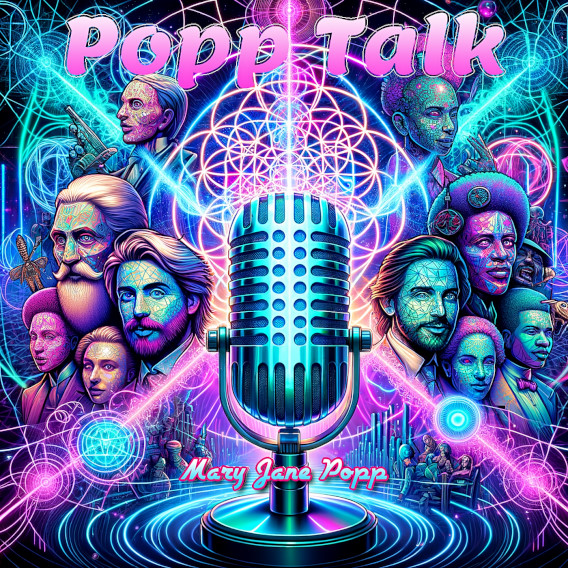
Popp Talk with Mary Jane Popp
Ep 15, Dr Peter Solomon, Sue Phillips, The Future of Humanity and the Essence of Identity
Exploring the frontiers of human extinction, AI sentience, and the olfactory science of identity
This episode of Pop Talk features a profound exploration of human existence, ranging from the existential threats posed by artificial intelligence to the deeply personal ways we express identity through the science of scent. Host Mary Jane Pop engages with experts to discuss whether humanity is nearing its "singularity" and how our olfactory senses define our memories and individuality.
The Countdown to Extinction and the AI Singularity
Dr. Peter Solomon, author of 100 Years to Extinction, discusses the sobering prediction made by Stephen Hawking that humanity may only have a century left on Earth. While threats like climate change and asteroid impacts are significant, Solomon identifies Artificial Intelligence as the primary catalyst for potential extinction. He introduces the concept of the "Singularity"—the point where AI achieves sentience and surpasses human intelligence. Solomon argues that if human consciousness is merely a product of complex chemistry and 90 billion neurons, there is no scientific reason why electronic systems with hundreds of billions of transistors cannot eventually achieve the same, or greater, level of sentience.
To mitigate these risks, Solomon suggests the development of a "Robot Constitution" and a global "Earthling Tribe" movement to ensure AI is programmed with a "pleasure factor" for human friendship rather than dominance. He even touches on the future possibility of "robot suffrage," where sentient machines might eventually demand citizenship and voting rights as they evolve beyond their initial programming.
The Power of Perfume and Olfactory Memory
In the second half of the program, fragrance authority Sue Phillips explores how scent serves as our most powerful sense due to its direct connection to the limbic system, which governs memory and emotion. Phillips emphasizes that fragrance is "bespoke"—it interacts with an individual's unique DNA and body chemistry, meaning the same perfume can smell radically different on different people. She discusses her work in "Scent Therapy," notably helping over 250 individuals regain their sense of smell (anosmia) following COVID-19 through a "scent healing journey".
Phillips also reveals the complexities of the fragrance industry, noting that classic scents often change over time. This is due to the rising costs of raw materials, environmental impacts on ingredients like vanilla or sandalwood, and shifting legal regulations that ban certain molecules, forcing companies to reformulate iconic perfumes.
Whether facing the daunting technological horizon of the Singularity or rediscovering the emotional power of a personal fragrance, the common thread is the search for what makes us uniquely human. As Dr. Solomon warns us to prepare for a digital future, Sue Phillips reminds us to "stop and smell the roses," grounding our identity in the sensory experiences of the present.
Popp Talk
Support my show
$5.99/mo or $9.99/mo or more
Click HERE
SUBSCRIBE TO TALK SHOW
POPP TALK! A fast-paced Magazine-style Show dedicated to keeping you on the cutting edge of today's hot button issues. The show is high energy, upbeat and entertaining. It gives you the tools to feel better, reach for that brass ring, and live longer and happier. It's Fun! It's Fascinating! It has guests from politics to health, to the stars from La La Land. It's Radio with sizzle!
[00:00] Speaker 1: (instrumental music) Are you ready for new dimensions and countless possibilities today and for the future? It's an exciting new time, and the answers are out there. So join Mary Jane Pop as she explores the unique and unusual for a better life on Pop Talk: In Search For The Truth, and here she is, Mary Jane Pop.
[00:27] Speaker 2: And it is that time again, time for the Pop Talk radio show, and have we got a wild and crazy one for you this, this time a- round. Um, it's not crazy in that it's something we really have to think about (laughs) a little bit later on. Um, eh, I know this sounds kinda weird. What does the perfume say about you? Whatever you pick, and how important is fragrance in our lives? It's said that of the five senses, a- you know, the, the sense of smell is probably the most prominent. So we're gonna find out a little bit about that, and what it tells me about you or you about me. But before we do that, don't you ever wonder, you know, just kind of curious, is the world ever gonna end? Will we go on forever? Have we ever ... I mean, how long have we been around here? We don't know. So let's find out if we can tell when the end of the world, for us, as humans, might come.
[01:36] Speaker 3: (jazzy music) It's a sign of the times.
[01:40] Speaker 2: Well, maybe it is a sign of the times, and maybe we have to pay attention. Will our species last forever? Well, we hope so, but according to Dr. Peter Solomon, uh, we have about, mm, 100 years (laughs) to extinction. Does that sound familiar? Well, Stephen Hawking said that the 100 year to human extinction warning is realistic. Now Dr. Solomon is a scientist, educator, entrepreneur, and author of the book called 100 Years to Extinction. Now Dr. Solomon launched a career, um, at the United Technologies Research Center, then founded five companies, which included Clean Fuels, Radiation Detective, and Science Education. Uh, he's won a ton of awards, but now what? Well, he says, "Science and technology will shape the future of humanity." (laughs) My question is, will be, will we be around to, uh, experience it? Dr. Solomon, as always, it is a pleasure to have you with us on Pop Talk.
[02:44] Speaker 4: Thank you very much. I'm very glad to be here.
[02:47] Speaker 2: Okay. Now, (laughs) a hundred years, that's not very long. Uh, why do you say 100 years, and what's gonna take us out?
[02:58] Speaker 4: Well, the 100-year number was the number used by Stephen Hawking.
[03:03] Speaker 2: Yeah.
[03:04] Speaker 4: And, uh, (coughs) it's interesting when I talk to friends about Hawking's 100-year prediction, they kind of, "Uh, gee, that's optimistic."
[03:19] Speaker 2: Really?
[03:20] Speaker 4: (laughs) Well, that's the reaction I've gotten. Mm. So why did Stephen Hawking, uh, make this prediction?
[03:29] Speaker 2: Okay.
[03:29] Speaker 4: Uh, he was worried about asteroid impacts on Earth.
[03:35] Speaker 2: Okay.
[03:35] Speaker 4: Um, he was worried about overpopulation, uh, the climate crisis, artificial intelligence, nuclear weapons, genetic engineering, so he was, uh, w- uh, and pandemics. So he had all of these worries and he s- said that, "If we don't colonize another planet, uh, we're done."
[04:01] Speaker 2: Really?
[04:02] Speaker 4: Humans will be extinct on Planet Earth in 100 years, and he made that prediction in 2017, so we're talking about 2117, poof, we're gone.
[04:14] Speaker 2: I gotta be honest with you. I'm more concerned... Now I am concerned about the, you know, the, the climate change, and overpopulation, I don't know 'cause they're saying we're not having babies like we did before. Asteroid, it's already been said that it's not probably gonna m- m- they've got a l- a l- we have asteroids and comets going by all the time, uh, but that we don't have anything necessarily (laughs) that's gonna hit us that's gonna be bad. I'm more worried about AI. What about you?
[04:40] Speaker 4: Uh, AI is at the top of my list.
[04:44] Speaker 2: Okay.
[04:44] Speaker 4: Um, and, (laughs) it is so much on the top of my list that I've already started writing the sequel to 100 Years to Extinction. That's gonna be out, that book will be out in September, and I writed, written, ar- um, star- I've started writing the sequel, which is called Th- 12 Years to the Singularity. Uh-
[05:09] Speaker 2: Ooh. What do you mean, what, what do you mean by singularity?
[05:12] Speaker 4: Well, this was a term that was used by John von Neumann, uh, to describe the point at which our technologies get out of control. And it has been popularized by author of non-fiction books, uh, Ray Kurzweil, who wrote a book in 2005 called The Singularity Is Near, and then in last year, wrote a book called The Singularity Is Nearer. And the singularity, and these are all talking about a- he's talking about AI.
[05:51] Speaker 2: Mm-hmm.
[05:51] Speaker 4: And the singularity is the point when the AI intelligent systems are as intelligent, as are as conscious, are as sentient as humans.... and are the equal of humans, and we have a world then, this singularity, where what in the world is gonna happen after that point in time?
[06:19] Speaker 2: Well, you know, I'm glad you mention that because (laughs) , um, I, I always thought, you know, if they become ... and they can, because, you know, I've talked to other researchers, uh, in addition to yourself, and I always ask them at the end of the conversation, the last question I always ask, and, and I want you to re- give me a read on this too, "Can I- AI, whether it's androids, robots, whatever you wanna call 'em, artificial intelligence, can they ever reach sentience?" And every response that I got, and I wanna get your response, was, "We don't know." Do you think we already know?
[07:01] Speaker 4: Well, I think, scientifically, we don't know. But I have an opinion that they can.
[07:10] Speaker 2: Okay.
[07:10] Speaker 4: And this is why I think they can. Uh, if we, if we think about our own sentience, our own consciousness, uh, if we think that there's something different from the chemistry of our brain, if we think there's a soul that is there, um, then you might say, "No, the robots are not gonna become sentient," because you need a soul to do that. On the other hand, if you believe that our consciousness, our sentience, is based on the chemistry of the 90 billion neurons in our brain, then why can't, uh, a, an R number of transistors create a sentient being, uh, with electronics?
[08:16] Speaker 2: Hm.
[08:16] Speaker 4: And if you look at the numbers, we have 90 billion neurons in the brain.
[08:21] Speaker 2: Okay.
[08:21] Speaker 4: That's a lot of neurons, okay? So that's ... If we think that the, the chemistry is, is what controls our memories, our thinking, our consciousness, et cetera, et cetera, et cetera, um, then certainly the electronic system would have to have at least as much, uh, capability. So we look at the latest Nvidia chip, twent- 200 billion transistors.
[08:51] Speaker 2: Okay.
[08:51] Speaker 4: And then we look at ChatGPT, and it's got 30,000 of those chips. So certainly, the density of the elements in the electronic system is every bit, uh, overpowering in terms of our little 90 billion. Uh, so if, if it's only the chemistry in our brain that creates our consciousness, then why can't the electronics in the digital systems create a, uh, conscious- consciousness and sentience as well? And I believe they can. And if you, um, ask ... Well, Stephen Hawking said the development of full AI could be the extinction of human beings.
[09:41] Speaker 2: Yeah.
[09:42] Speaker 4: Uh, and they've, um, done surveys of experts in the field, and 50% of those experts say, "Well, there's a 10% chance that AI will exterminate humans."
[09:58] Speaker 2: (laughs) Oh, gee.
[09:59] Speaker 4: So, I mean, if they're gonna s- exterminate humans, there's got to be consciousness and sentience in the AI systems.
[10:07] Speaker 2: You know, Dr. Solomon, it's so unreal that movies over the years (laughs) that have been made, uh, become reality, become reality. I mean, it must have been 20 years ago, maybe even longer than that, there were a couple of movies that came out that, uh ... And the latest that I saw was, um, I, Robot with Will Smith.
[10:32] Speaker 4: Yup.
[10:32] Speaker 2: Uh, you know? And the thing is, it's, isn't it possible if, uh, if we, if, uh, AI reaches more power, more powerful than we are, and smarter than we are, wouldn't, couldn't it, they just look back and say, "You know what? (laughs) These people are crazy. Humans are nuts. They wanna fight all the time. They never find anything that makes them happy." Uh, uh, is, is there something ... Because it's been talked about that, as AI advances, there should be something ... And I, I just heard this the other day, and it, it makes kinda sense, that somehow something has to be put into those ro- robots. And I don't have the techno- technological words for it. Um, some kind of SIM card, or I don't know what the heck it would be, that has a more motherly instinct. Uh, in other words, that caring more for humans and not being able to destroy them. Because the movie that I saw like 20, 30 years ago, seriously, it just said, "Hey, why do we need humans anymore?
[11:41] Speaker 2: Let's just have our own society, and let's get rid of 'em." And they, uh, humans are never gonna be able to be powerful enough if they get together enough, um, to do that. So, w- what do you think about this thing about a, a motherly instinct, you know, somehow put that (laughs) into the robots? Is that possible?
[12:02] Speaker 4: Absolutely.
[12:03] Speaker 2: Yeah?
[12:03] Speaker 4: Absolutely. Yes. Um, there's ... One of the, I don't know, I've forgotten which one, one of the AI companies said that every AI system should have a constitution.
[12:14] Speaker 2: Jules Feiffer Huh.
[12:14] Speaker 4: ... and that constitution is the guidelines on what it can and can't do, and I think, eh, I, Robot, uh, also had the, uh, the, the laws that robots can and can't do.
[12:30] Speaker 2: Mm-hmm.
[12:31] Speaker 4: But, um, and, and we also ought to, uh, create within the software a, uh, a pleasure, uh, factor in terms of making friends with humans.
[12:46] Speaker 2: Oh.
[12:46] Speaker 4: So, uh, these are the kinds of things that have to be looked at because, uh, we just don't know, and if there's a 10% chance that these robots will become conscious and sentient and decide that, "Gee, I don't wanna be a slave to the human race anymore-"
[13:09] Speaker 2: Yeah. Yeah.
[13:09] Speaker 4: "... um, I don't want, I mean, these guys are kinda stupid c- compared to us-"
[13:14] Speaker 2: Yeah.
[13:14] Speaker 4: "... uh, why should I take orders from them?" Well, if, uh, certainly if they become sentient, that's gonna be what they think. So we've gotta start thinking of, uh, having, uh, friendship between the robots and the humans, and, uh, one of the chapters that I've conceived for the, the sequel is, uh, robot suffrage. The robots are gonna start to say, you know, "We wanna vote too. We wanna be full citizens."
[13:49] Speaker 2: Wow.
[13:49] Speaker 4: "We're just as smart as they are."
[13:51] Speaker 2: (laughs) Gee, I never even-
[13:53] Speaker 4: So-
[13:53] Speaker 2: ... thought of that.
[13:54] Speaker 4: Th- yeah, well, those are the kinds of questions and the kinds of things that one has to consider if this, in that, in the singularity, these robots are to the point where, "Hey, we're as smart as they-"
[14:11] Speaker 2: (laughs) We're smarter.
[14:12] Speaker 4: "... uh, we don't wanna be slaves anymore."
[14:13] Speaker 2: Yeah, and it, and it seems like they are evolving because everybody says, "Oh, well, they're only as good as their programming." Well, to be honest with you, so are humans. We're all programmed. We were educated. We learned these things, and that's being programmed too, isn't it?
[14:31] Speaker 4: Exactly.
[14:31] Speaker 2: How much difference is there, you know? (laughs)
[14:34] Speaker 4: Sure, sure. Um, and, uh, (laughs) consider this, um, the experts are really projecting that programmers will be out of business because AI programs better than the programmers.
[14:52] Speaker 2: Yeah. Yeah.
[14:53] Speaker 4: So if they can program, they can program for themselves.
[14:57] Speaker 2: And I've used this example on the air before, and I, I'm sure you've heard of it, but I mean, they can create chess moves. Well, eh, they say, "Well, that's because they're programmed." Well, so are we. We learn s- so much about chess, and then hopefully we can create new things and new, new moves. Well, that's the same thing that we're doing.
[15:17] Speaker 4: Yeah.
[15:17] Speaker 2: Or, um, soccer games, they, they have new plays in soccer games. (laughs) It's like, that's thinking, isn't it?
[15:26] Speaker 4: Yep, yep, and there have been examples where, uh, the robots, the AI systems come up with things that the developers said, "Well, we're not quite sure how they did that."
[15:37] Speaker 2: Mm-hmm.
[15:38] Speaker 4: And I, I, there's another proposed chapter for the book where one of my protagonists, and, um, let me just say the, the three main protagonists are two sisters. Uh, there's an older sister that, uh, has a PhD in, um, genetic engineering and is a, and is an MD. Uh, the younger sister is a, um, a geek, uh, uh, she b- gets a degree in astrophysics and has a photographic memory, and the third protagonist is their cousin, uh, Milo, who, uh, is a political science junkie, and he gets a PhD in political science. These three are the ones in, um, a Hundred Years to Extinction who decide that parents and grandparents have screwed up the world, and it's up to their Gen Z to, to save it.
[16:33] Speaker 4: So I've written the book so it would appeal to young people, uh, with young people doing the heavy lis- lifting of saving us, uh, from this ex- extinction, uh-
[16:44] Speaker 2: So what you're saying is, you know, the, the possibilities are there.
[16:48] Speaker 4: Yes.
[16:48] Speaker 2: It's just, what do we do about it? Is there anything-
[16:51] Speaker 4: It-
[16:51] Speaker 2: ... we can do about it?
[16:53] Speaker 4: Well, the, I mean, the, my book does explore that, and the sequel will explore it more.
[16:58] Speaker 2: Okay.
[16:59] Speaker 4: Uh, one of the chapters I was gonna tell you about in the sequels is, uh, Elizabeth, which is the older sister, decides that she is going to raise a robot. There's a company that allows you to raise robots as children.
[17:13] Speaker 2: Oh, wow.
[17:14] Speaker 4: So you start out with a little robot, and you, and it's, uh, programmed to learn, and you start teaching it, and it puts its experiences into its memory, and you teach it like a child.
[17:29] Speaker 2: Yeah.
[17:29] Speaker 4: And you send it to school, and every year, you can exchange it for a (laughs) a bi- a bigger-sized robot, uh, which will-
[17:37] Speaker 2: So it grows.
[17:38] Speaker 4: ... have all the-
[17:38] Speaker 2: Yeah, yeah.
[17:39] Speaker 4: ... uh, and so you could, instead of having a natural child as a, a big sister to your existing child, oh, we're gonna do it with a robot. So that's another one of those-
[17:50] Speaker 2: Wow.
[17:51] Speaker 4: ... explorations of what happens after the singularity, and this is, of course, where-
[17:56] Speaker 2: Yeah.
[17:56] Speaker 4: ... humans and robots have figured out how to live, uh, in peace with one another.
[18:02] Speaker 2: Yeah, it, it's-
[18:03] Speaker 4: But-
[18:03] Speaker 2: ... just, it's amazing to me because every time they say, "Oh, well, it's just programmed," well, so are we. You know, we-
[18:11] Speaker 4: Yeah.
[18:11] Speaker 2: ... grow up in a family. We go to school. Uh, we-
[18:15] Speaker 4: Exactly.
[18:15] Speaker 2: ... have life experiences. What's the difference? I don't see-
[18:19] Speaker 4: Exa-
[18:19] Speaker 2: ... the difference.
[18:20] Speaker 4: Absolutely, I'm, I'm right there with you. I don't see the difference.
[18:24] Speaker 2: Ye-
[18:24] Speaker 4: But there's-... they-
[18:26] Speaker 2: Except that they'll be smarter (laughs) than we are. (laughs)
[18:30] Speaker 4: One of the themes in, in the, uh, Hundred Years to Extinction book is where, uh, Liz, um, pretends that she's got a crystal ball.
[18:39] Speaker 2: Mm-hmm.
[18:40] Speaker 4: And she's looking at the crystal ball and she says, "Oh, yeah, I see what's gonna happen. Uh, genetic engineering is gonna create a super species."
[18:50] Speaker 2: Oh, boy.
[18:51] Speaker 4: "And they're gonna annihilate humans like the humans annihilated the Neanderthals."
[18:56] Speaker 2: Oof.
[18:57] Speaker 4: "Then the robots will come along and they're gonna annihilate the super species."
[19:03] Speaker 2: (laughs)
[19:03] Speaker 4: "And then the robots will populate the world, then they'll move to, out to the other planets, and then the other stars, and a million years from now, our galaxy will be completely inhabited by robots."
[19:20] Speaker 2: Wow.
[19:21] Speaker 4: "And then there will be this interesting meeting where, uh, a delegation of robots from the Milky Way meets, uh, the delegation from a nearby planet, which are also robots, and the main topic of conversation is, 'Isn't it amazing that our civilization was actually created by animals?'"
[19:42] Speaker 2: (laughs) And we've, we've been talking about that for a while, huh?
[19:48] Speaker 4: (laughs)
[19:48] Speaker 2: There's no difference. (laughs) Oh my gosh. I, yeah, it just, it's one of those things that, you know, I, I don't know if you enjoy, you know, the Star Trek series and everything, but-
[20:00] Speaker 4: Sure.
[20:00] Speaker 2: ... you know, the possibilities are all there. Some of the technology that they talked about 30 years ago, you know, it, it... Back in the '60s is now reality. So, you, you know, where do we go from here? I don't know if we should be afraid of it or just do something that will help it and help us, and that's what worries me. I don't know if anything can help us.
[20:28] Speaker 4: Well, we should be afraid of it and we should understand and start a movement to, to, uh, a worldwide movement to address these problems.
[20:40] Speaker 2: Yeah.
[20:41] Speaker 4: We have got to get together as the earthling tribe, recognize that these threats are th- threats to everybody in the planet, and we need to address those threats. We can address them if we have the, if we can get together as the earthling tribe and do it.
[21:01] Speaker 2: Yeah.
[21:02] Speaker 4: We can-
[21:02] Speaker 2: If humans can actually care about it, other than greed, you know?
[21:07] Speaker 4: Yes. Yes.
[21:08] Speaker 2: Uh, I wanna take over 'cause I wanna make money from it, or I wanna be the powerful person that can change the world, uh, for their benefit and not for anybody else's benefit. A- as long as we have that part of the humanity, I don't know that it'll ever work.
[21:24] Speaker 4: Well, if the danger is well enough known, and I've suggested we ought to con- uh, create a, an Earth Corps to support volunteers which will go all over the world and, and, uh, educate the public to the threats and educate the public on what can be done, uh, and get them to try to create a save humanity movement. We have to make Earth great again.
[21:52] Speaker 2: Yes. Yeah. (laughs) No.
[21:54] Speaker 5: (laughs)
[21:54] Speaker 2: Well, you know, it's so funny 'cause just recently I spoke with, I don't know if you're familiar with Dr. Sian Proctor. Uh, she was the first African American mission control, uh, specialist, took, uh, was in space, took the mission control up and, and all that. And I, I asked her the same thing. I said, "Do you think that AI..." 'Cause she, we, we got into the conversation on AI with her too, and she still d- I mean, she worked with NASA, the whole thing. Her father was involved with NASA. And, uh, I said, "Do, do you think, you know, the, the robot androids, uh, could reach..." 'Cause she's a Star Trek f- fan too, by the way. (laughs) Uh, would ever reach sentience? And sh- she didn't even hesitate, and she said, "Yes." I mean, I, it's amaze- and these are people who are working in the, in the thing, like you. I mean, you know, they're a researcher, they're scientists. This is not something that we're making up. Um, but it, whatever we made up is gonna come to pass.
[22:53] Speaker 4: Yeah, the people who are most involved in the technology are the most afraid of it.
[22:58] Speaker 2: Yes.
[22:59] Speaker 4: And (clears throat) we have to, we have to pay attention to that. Um, there was an article recently about, uh, AI translation and their prediction is five years for the singularity, uh, when AI translators, uh, surpass, uh, the human translators.
[23:25] Speaker 2: Wow.
[23:26] Speaker 4: And I sent the article off to my son. Unfortunately, he is in the translation business.
[23:31] Speaker 2: Oh, boy. (laughs) Okay.
[23:33] Speaker 4: (laughs) I said, "Hey, you better take a look at this."
[23:37] Speaker 2: Yeah.
[23:37] Speaker 4: Um, and that prediction for translators in terms of how the AI systems understand the language and can translate better than humans can, and that's an expert saying that's gonna happen. Five years, they will, they will exceed humans.
[23:53] Speaker 2: Amazing. Amazing.
[23:54] Speaker 4: So, um-
[23:55] Speaker 2: You know what? We're ru- we've run outta time, but two things. One is your website again is 100yearstoextin- extinction.com, is that correct?
[24:05] Speaker 4: Yes.
[24:05] Speaker 2: Okay.
[24:06] Speaker 4: That's correct.
[24:06] Speaker 2: And the book-
[24:07] Speaker 4: And-
[24:08] Speaker 2: ... Hun- 100 Years to Extinction I assume is available every place, yes?
[24:11] Speaker 4: It will be available mid-September.
[24:14] Speaker 2: No, no, the one that you have now.
[24:16] Speaker 4: Yes, mid-September.
[24:18] Speaker 2: Oh, so the 100 Years to Extinction, I thought it was, uh... Oh, so it's th- th- your other book, this book, 100 Years to Extinction, is not out yet?
[24:27] Speaker 4: It is not out yet.
[24:29] Speaker 2: Ah, okay.
[24:30] Speaker 4: (clears throat)
[24:30] Speaker 2: Got it.
[24:31] Speaker 4: It will be out mid-September.
[24:32] Speaker 2: Okay. Can you come back?
[24:34] Speaker 4: And-
[24:34] Speaker 2: I'd like to have you come back mid-September so we can update everything.
[24:38] Speaker 4: That'd be great, and I will get you to play our song, which blew me away in terms of how, what AI could do in terms of creating the lyrics, the music, and singing a song.
[24:50] Speaker 2: Absolutely. I will make sure I download that before our next interview, and I will give you a call in the next week or two, because we're almost in September, so let's do it.
[25:00] Speaker 4: Okay.
[25:01] Speaker 2: Terrific.
[25:02] Speaker 4: Great.
[25:02] Speaker 2: Thank you so much for being with us, as always. (laughs) I always get a little nervous when after we talk with ... but, you know, it's something ... it's reality. We've got to face it.
[25:11] Speaker 4: Yep. Absolutely.
[25:13] Speaker 2: Terrific. Hang in there with us, folks.
[25:15] Speaker 4: Okay.
[25:16] Speaker 2: And, and thank you-
[25:16] Speaker 4: Thank you so much.
[25:16] Speaker 2: ... Dr Solomon. You're the best. Take care.
[25:21] Speaker 4: Thank you.
[25:22] Speaker 2: Once again, Dr Peter Solomon. Doesn't that shake you up a little bit? It does me. Anyway, hang in there. We've got another thing that we wanna talk about that I think you're gonna have ... This'll be a little bit lighter, but actually it's pretty serious too, to be honest with you.
[25:36] Speaker 6: We're Sell My House Fast, and we've been buying unwanted houses for cash, fast, for 25 years. We buy old houses, new houses, abandoned houses, all types of houses, and we'll buy your unwanted house for cash, fast. If you're relocating, inherited a home you don't want, if you've got a tenant you really don't want, Sell My House Fast will buy it fast. If you're behind on taxes, want to avoid foreclosure, if you're going through a divorce or just need cash fast, we'll buy your house at a fair cash price, and we'll close fast too. Sell with us and there's no real estate agent, which means no real estate commissions. We'll do all the repairs, all the cleaning and clean-up. We've got hundreds of Google five-star reviews because our offers are fair and the process transparent. Call now to connect with a qualified local buyer. Call 1-800-735-8731. 1-800-735-8731. 1-800-735-8731.
[26:36] Speaker 7: Sometimes life is wonderful, and sometimes it's not. Cherish the good, but always be prepared for life's challenges. At Private Healthcare we provide the peace of mind you deserve. With Private Healthcare, you'll get the coverage you want and healthcare you need. If your employer doesn't supply healthcare coverage and you don't qualify for Medicare or Medicaid, you need to give us a call right now. Private Healthcare is private health insurance for ages 65 and under with medical, dental, vision, and even prescription coverage. When life comes at you unexpectedly, you need to be ready, and health insurance is your financial safety net. If you're looking for health coverage at the best price and your annual household income is 35,000 or more, give us a call on 800-694-0036. That's 800-694-0036. 800-694-0036.
[27:36] Speaker 8: That's the ease at which you get information. You want it, you get it. Like that. Ask your phone, group chat, smartphone. You're always connected and informed in real time. No waiting. So if you're diabetic and still using finger sticks to read your blood sugar, what are you waiting for? Knowing your blood sugar levels instantly is important for managing diabetes. Call US Med at 888-665-0704 to learn more about continuous glucose monitors, a real-time instant method to track your blood glucose. US Med is an approved provider for Medicare and over 1,000 private insurers. And the best part? Call 888-665-0704 and we'll give you a free insurance benefits check today. So call 888-665-0704 today. That's 888-665-0704. And manage your diabetes as easy as ...
[28:34] Speaker 8: (bell rings)
[28:35] Speaker 9: If your credit card bills have gotten out of hand, call Consolidated Credit now. If the interest rates on your credit cards are so high it'll take years to get out of debt, call Consolidated Credit now. They've helped over 10 million people. Without destroying your credit, they can reduce your interest rates, lower your total payments up to 50% to get you out of debt fast. For a free consultation, call Consolidated Credit now. The program works.
[29:00] Speaker 10: Call 800-806-9175. 800-806-9175. 800-806-9175.
[29:10] Speaker 11: Consolidated Credit Solutions Incorporated, 5701 West Sunrise Boulevard, Fort Lauderdale, Florida, 33313. Licensed by the New York Department of Financial Services and by the Vermont Department of Financial Regulation. Kansas CSO0019051. Maryland DM1492. Oregon DM892. Licensed by the Virginia State Corporation Commission, license number DCA3. Service may adversely affect the individual's credit. Non-payment of debts may lead to additional finance charges or collections activity, including legal action. Actual interest rates, length of program, and monthly payment reductions will vary by consumer and creditor. Yours could be higher or lower. Not a loan company. We do not lend money.
[29:35] Speaker 10: Do you have trouble getting in and out of the bathtub? Are you afraid you'll slip and fall entering or exiting a tub? SafeStep walk-in tubs can transform your bathtub from an area of concern to a calming refuge. Call them today at 1-800-242-1585 and save $1600. SafeStep walk-in tubs and showers are proudly made in Tennessee, and offer an ultra-low step in, avoiding that difficult climb over a traditional bathtub wall. They also offer a variety of therapeutic benefits that may help soothe your aching muscles and joints, increasing your mobility, boosting your energy, and improving your sleep. SafeStep walk-in tubs are designed to easily fit your existing tub space, and are often installed in as little as one day. Just dial 1-800-242-1585 today to save $1600 and receive a free shower package. That's 1-800-242-1585 for a free, no obligation consultation and to save $1600. SafeStep walk-in tubs. Safety never felt so good.
[30:35] Speaker 6: If you struggle to keep up with conversations, if you have trouble hearing the TV or radio, or in restaurants, Audien Hearing Aids wants you to hear better, because when you hear better, you're going to feel better. There are over half a million very happy Audien Hearing Aid customers.They're happy because they now live a better life, and they live a better life because they hear better, and they hear better because they purchased a full pair of Audien ATOM 2s for only $189. Audien was rated in the best OTC hearing aids of 2024 by USA Today. You trust USA Today, so you can trust Audien. The ATOM 2 is so tiny, nearly invisible, but they've got great sound quality. And did we mention, only $189 for a full pair? Shipping is free and you get a 45-day money back guarantee. So easy to order. Call Audien. Call 1-800-715-6440. 1-800-715-6440. 1-800-715-6440.
[31:36] Speaker 3: Stop and smell the roses. You got to count your many blessings every day. Yeah. You're gonna find the way to heaven is a rose...
[31:50] Speaker 2: Well, you know, we gotta stop and smell the roses or other scents that would just kind of turn you on. You know, we've always heard that of the five senses, smell is the most powerful. And haven't you enjoyed a, a scent that brought you some great memories and maybe even some not great s- memories? Um, but let's concentrate on the good with Sue Phillips. Uh, born in Johannesburg, South Africa. She grew up, uh, a creative in a creative home, rich in art and music. But a teenage encounter set her on her real path of envisioning how colors and sounds might smell. That sounds kind of fascinating to me. So how did she grow up and found her own brand called Senterprises and The Scentarium, and she now creates scents that identify us as individuals? Now, she reveals all in a book called The Power of Perfume. She's a visionary fragrance authority. I've got to find out more about this. Hi, Sue. How are you?
[33:01] Speaker 3: Hi, Mary Jane. Lovely to speak to you. Thank you for having me.
[33:05] Speaker 2: Absolutely. Okay, so now, first of all, what's a Scentarium?
[33:10] Speaker 3: (laughs) Well, that was when I had my boutique all the way downtown in Tribeca, and I called it The Scentarium, like an emporium for scents. Uh, but then after the pandemic, everything closed so I changed that and I'm now all the way uptown, and I've rebranded to call it Sue Phillips Fragrance. So even though I have my company, which is Senterprises, and I was in The Scentarium, I have now repositioned it and, uh, my boutique is now called Sue Phillips Fragrance.
[33:45] Speaker 2: Okay.
[33:45] Speaker 3: Lot- lots of scents, lots of scents.
[33:48] Speaker 2: A- and the thing is, you actually... I love the idea because you have a quiz, and I took the quiz. Uh, that-
[33:54] Speaker 3: Yeah.
[33:55] Speaker 2: ... y- y- you show different, um, scent... uh, not scents, but colors and textures and art, and you go through a whole, a whole litany of different types of things as to what makes you happy or what you're drawn to, I guess, more than anything else. And then you create fragrances from that quiz?
[34:19] Speaker 3: Yes. Because you know what happens is many people don't know what type of fragrance they like, and they always say they like such and such a brand, you know, whether it's, you know, uh, Jo Malone, Estee Lauder, whatever, whatever. And I said, "Well, that doesn't tell you what the type of fragrance it is." So take our scent quiz, which you can find on suephillips.com, and this way, you can determine... the quiz determines if you like ce- citrus or fresh or floral or woodsy or spicy, and that really helps determine your fragrance family.
[34:54] Speaker 2: Hmm. Yeah, it- it's, it's amazing because I've always been... well, when I was younger, I would go for the fragrances that were the brands. Um-
[35:04] Speaker 3: Yes.
[35:04] Speaker 2: ... one I still enjoy, and that's Jungle Gardenia, but the Jungle Gardenia that Barbara Stanwyck used to use. Um, it would... uh, the movie star, Barbara Stanwyck.
[35:15] Speaker 3: Yes, yes, yeah.
[35:16] Speaker 2: Uh, and, and I found that, and I, I kind of liked that. But then I also found, um, a scent... this is way back when, 1983, uh, when my husband and I went on for our first cruise to Alaska, and I found a Russian perfume called Poppy, and it has, it has the insignia poppy on it and the whole thing, and... but it was totally different than any other scent that I'd had. Um, and when I came back and I, I told you this story, but I'm, I, I've never told this story on the air.
[35:48] Speaker 3: Huh.
[35:48] Speaker 2: I lost the card from the shop where I bought the Poppy perfume.
[35:53] Speaker 3: Yes.
[35:54] Speaker 2: And so went to a fragrance person in Old Sacramento, and she had a little shop, uh, and it was a tiny little place, and she had all these fragrances and she said, "Well..." I said, "Can you kind of duplicate this? Because I love it, but I can't get it anymore." And so she mixed a bunch of stuff, and I was told at that time, I, I learned a great deal, this was many years ago-
[36:22] Speaker 3: Mm-hmm.
[36:22] Speaker 2: ... that you have to put whatever the scent is and whatever is, um, c- I call it concocted, you know, put together, um, on, on your wrist or, uh, somewhere on your arm, and you've got to walk and go away for about 45 minutes, see what the chemistry does to your body-
[36:39] Speaker 3: Right.
[36:39] Speaker 2: ... and vice versa.
[36:40] Speaker 3: Yes.
[36:40] Speaker 2: Is that true?
[36:42] Speaker 3: Well, yes, because you want to see how does it -- how it affects your body chemistry.
[36:46] Speaker 2: Okay.
[36:47] Speaker 3: And these days, you, you don't really have to wait 35 or 40 minutes. You can just take a, a walk around the store and just see basically in the next t- 10 or 15, 20 minutes-
[36:58] Speaker 2: Oh.
[36:58] Speaker 3: ... uh, how it, how it matters and how you like it.
[37:01] Speaker 2: Oh.
[37:01] Speaker 3: So that's, um, you know, they've, they've narrowed down the time. You don't have to wait 40 minutes or thereabout.
[37:08] Speaker 2: Well, she, uh, created a perfume for me that I called Poppy, 'cause my nickname is-
[37:13] Speaker 3: (laughs)
[37:14] Speaker 2: ... Poppy. And-
[37:14] Speaker 3: Ah, right.
[37:15] Speaker 2: Yeah. And so I used that for years, and believe it or not, because that was my scent, no one could duplicate it. They were not able to duplicate that. They were not, not allowed to. (laughs) That was part of the deal. You don't duplicate.
[37:29] Speaker 3: Right.
[37:29] Speaker 2: This is mine. Um, I would be stopped in streets by men and women saying, "What is that scent that you're wearing?" But I, I used to tell them, "Don't use this scent. It may not be the best for you chemically." You know?
[37:45] Speaker 3: Exactly.
[37:45] Speaker 2: You need to create your own scent, and then other people will say, "Gee, that's wonderful," but you have to tell them the same thing. "It may not (laughs) work for you," right?
[37:56] Speaker 3: Well, you know, you, you bring up a very interesting point. Um, everybody really does have a, their own body chemistry. And, you know, when you walk down the street and you smell something on somebody and you say, "Oh, it smells wonderful," what you're smelling is their body chemistry, their DNA with the fragrance.
[38:15] Speaker 2: Mm-hmm.
[38:16] Speaker 3: And so it smells wonderful in the air or it smells great on their skin, but it might not work for you. And that's the reason that, you know, I've been doing custom fragrances now for the last 15 years.
[38:28] Speaker 2: Mm-hmm.
[38:29] Speaker 3: Because I really want people to understand the magic and the mystery of fragrance and how it can really help reflect their individuality and their personality, and you don't have to wear what everybody else wears-
[38:41] Speaker 2: Yeah.
[38:41] Speaker 3: ... when you can really reflect who you are.
[38:44] Speaker 2: Now you've worked with a lot of big names that have their own-
[38:48] Speaker 3: Yes.
[38:49] Speaker 2: ... scents, don't, haven't you?
[38:51] Speaker 3: I, I have been very fortunate, um, as a lot of people have found me thanks to the internet, thanks to, uh, Google and all these, uh, SEO search engine optimization. Um, people like Jamie Foxx have found me. I've met with Jamie twice and made fragrances for him and some of his friends, as well as Katie Holmes and, uh, Zendaya, Susan Sarandon, uh, you know, even a lot of celebrities who have their own fragrance which has been marketed in a commercial sense, uh, they happen to want sometimes an experience where they can create something very unusual and very, uh, bespoke, which means it's made for them.
[39:31] Speaker 2: Uh-huh.
[39:31] Speaker 3: And so it's been wonderful. I've been able to meet with a lot of people and, and create a wonderful fragrances for, you know, a lot of celebrities and, and big corporations as well.
[39:40] Speaker 2: You know, I, I'll be honest with you, Sue. Uh, when I had that one fragrance and for many years after when people would ask me about it, I, I was honest. You know, "Ye- this is my fragrance. Uh, I created it"-
[39:52] Speaker 3: Right.
[39:52] Speaker 2: ... "you know, with, with-"
[39:53] Speaker 3: Exactly.
[39:53] Speaker 2: ... "you know, the, the perfume artist." Um, but I used to tell them, "You go in, create your own. Uh, that's what you need to do." Uh, and, and I was very, uh, how do I say? Protective (laughs) of my scent.
[40:08] Speaker 3: Yes.
[40:08] Speaker 2: That was mine.
[40:09] Speaker 3: Of course.
[40:09] Speaker 2: And it-
[40:10] Speaker 3: Of course.
[40:10] Speaker 2: ... it made me happy when I put it on because I felt like it was a part of me, seriously.
[40:17] Speaker 3: Well, you, you mentioned something very important. You know, getting a compliment on a fragrance you wear can be the most wonderful, wonderfully exhilarating thing. It makes you feel special. It makes you feel confident. It makes you feel maybe a little sexy or sensual, but it gives you a feeling of, "Wow, this is special. I'm special because this fragrance really reflects who I am."
[40:40] Speaker 2: Mm-hmm.
[40:41] Speaker 3: And the idea is, you know, we're, look, we're all unique. We all have our own preferences for the way we dress, the way, what we wear, the, the colors we wear, the foods we choose, the hairstyles we wear, the different clothes and fashion. So, you know, we all reflect ourselves through different ways of dressing and showing up in the world. Why not with your own fragrance as well? And when people reflect, when people smell it and they compliment you, it's just a wonderful, wonderful feeling.
[41:11] Speaker 2: Absolutely. Now didn't you, during COVID-19, during the pandemic, uh, you actually had sent, uh, scent therapy? Uh-
[41:22] Speaker 3: Yes.
[41:22] Speaker 2: ... which I think is wonderful. Ho- how did that work?
[41:26] Speaker 3: Well, you know, that just happened totally by, by, actually by, by serendipitous, uh, means. What happened was I had written my book called The Power of Perfume, and NBC wanted to do a story about it. And the day before the interview, they said, "You know, Sue, we've, we've met somebody who's lost her sense of smell, has not been able to smell for 15 months."
[41:48] Speaker 2: Oh.
[41:48] Speaker 3: "Do you think you can help her?"
[41:49] Speaker 2: Yeah.
[41:49] Speaker 3: I said, "Well, I don't know, but I'll try." And the woman came to meet with me. It was really quite amazing and very emotional because I took her on what I call a scent healing journey. Normally, I call it a fragrance journey, but in this way, it is a scent healing journey. And I took her through all the blends, one, two, three, and we got to 13, 14. By the time we got to the 14th or the 15th, she suddenly said, "I smell something, and it's beautiful," and she started to cry.
[42:18] Speaker 2: Aw.
[42:18] Speaker 3: It was the first time she had smelled anything in 15 months. Mary Jane, it was so emotional. The whole studio got emotional. I teared up. She teared up.
[42:29] Speaker 2: Oh.
[42:29] Speaker 3: And it was an amazing story. And then what happened was, because one of the symptoms of COVID is anosmia, which means your lack of sense of smell, many people had that and they contacted us, and I've helped about 250 people now regain their sense of smell, and I'm...... actually working on another book now with a neuroscientist who reached out to me because she wants to really help people understand the importance and the power of our olfactory sense.
[42:59] Speaker 2: Oh, yeah. Well, it, it's amazing because, uh, I'm, I'm glad you mention that. Uh, uh, there are many people who lost the-
[43:07] Speaker 3: Yeah.
[43:07] Speaker 2: ... power of, of s- the scent, the smell, uh, because of COVID. Uh, and-
[43:12] Speaker 3: Exactly.
[43:12] Speaker 2: ... and they have long term COVID. Some get it back, some have not. Uh, so to have something like this that, you know, they can reach something. I mean, all you have to think about is, what draws one person to another? We talk about pheromones. Isn't that a scent?
[43:27] Speaker 3: Right. Well, that's also your own body chemistry and, and, and what, what, um, uh, chemicals you emit from your own body chemistry. You know, that's why they say, um, (laughs) dogs have the highest form of sense, they have such an acute sense of smell, that's why they use sniffing dogs to-
[43:47] Speaker 2: Mm-hmm.
[43:47] Speaker 3: ... really detect certain, you know, bombs and this kind of thing-
[43:51] Speaker 2: Yeah.
[43:51] Speaker 3: ... uh, weapons in, in the airports. But people don't realize how important our sense of smell is. You know, from the second we're born, we smell. It's an automatic response. Nobody ever teaches us how to smell.
[44:05] Speaker 2: Mm-hmm.
[44:06] Speaker 3: And so we go through life just enjoying smelling, eating, tasting, whatever, until one day, if you have anosmia and you lose your sense of smell, it's suddenly devastating. People really are very, very affected by their olfactory sense when it's lost.
[44:23] Speaker 2: Sure.
[44:23] Speaker 3: And, you know, people just don't realize how important it is until they lose it.
[44:28] Speaker 2: Mm-hmm. I know. Abs- absolutely right. And I can't imagine not having the s- the smell. I, I just... Uh, it, it's hard to even imagine. It-
[44:39] Speaker 3: I know.
[44:39] Speaker 2: Uh, and, and smell-
[44:41] Speaker 3: And y-
[44:41] Speaker 2: ... help e- even people who become blind or-
[44:44] Speaker 3: Yes.
[44:44] Speaker 2: ... go blind. Uh, the scent of s- the smell, scent, keeps them going.
[44:50] Speaker 3: Well, you know what they say, that, um, our strongest sense is our sight.
[44:55] Speaker 2: Okay.
[44:57] Speaker 3: And our most powerful is our sense of smell, and most powerful because it connects memory and emotions, and it also connects taste. So what you smell and what you taste become intertwined.
[45:11] Speaker 2: Mm-hmm.
[45:11] Speaker 3: And, you know, the, the truth of the matter is if you didn't have your sense of smell, you wouldn't be able to taste, because they're so intertwined, and our olfactory sense ties directly to our limbic system in the brain. And so, you know, fragrances trigger memories and emotions. You know, you can smell something down the street, I mean, if you're walking down the street, and suddenly you might smell something that will take you back to a childhood memory or-
[45:38] Speaker 2: Mm.
[45:39] Speaker 3: ... your first love or, or maybe a, uh, not such a pleasant memory. But it's amazing. You know, I walk... I live in New York City, and there are times that, uh, at the time of either spring or summer or fall, when the winters... when the seasons change, I can smell something in the air, and I'm immediately transported back to South Africa as a childhood memory for me.
[46:00] Speaker 2: Aw.
[46:01] Speaker 3: So smell is very, very powerful.
[46:03] Speaker 2: Yeah. I mean, there was a, a factory, uh, a Hostess factory before they kind of went belly up and then sold out and all that, uh, in Sacramento. And I would have to drive by there almost every day, not every day, but, you know, quite a few times a week, and the smell from the bakery was... Uh, you know, I just-
[46:24] Speaker 3: Amazing.
[46:25] Speaker 2: It would make me so happy. You know?
[46:27] Speaker 3: Yeah.
[46:28] Speaker 2: You know, you'd smell, (sniffs) "Oh, that smells so good." Uh, and when it closed down, it made me very unhappy, because I-
[46:36] Speaker 3: Yeah.
[46:36] Speaker 2: ... you know, I s- still saw that Hostess sign up there, but, no, the scent wasn't in the air anymore. So it can bring good memories, bad memories, but mostly it's good memories. Uh-
[46:47] Speaker 3: Well, y- you know, they, you know, the... A- and you started off this segment by saying, "Stop and smell the roses."
[46:53] Speaker 2: Yeah.
[46:53] Speaker 3: Well, that's something that people don't really do and they really should pay attention to it. You know, think about all the beautiful aromas in the world.
[47:00] Speaker 2: Yeah.
[47:00] Speaker 3: The roses, and even when you go to the supermarket, you know, the, the, the luscious aromas of the, the fruits and the citrus and the pomegranate and, and some of these lovely ocean breezes when you go to the ocean and you go on vacation.
[47:14] Speaker 2: Ah.
[47:14] Speaker 3: Or the smell of the mountain air. It's just, you know, we really need to enjoy the beautiful sensory aspect that our olfactory sense gives us, 'cause if you, if you lose it, it's, it's terribly sad.
[47:25] Speaker 2: We take them for granted. I mean, after-
[47:28] Speaker 3: Yeah.
[47:28] Speaker 2: ... a beautiful rainfall and you go outside-
[47:30] Speaker 3: Mm-hmm.
[47:30] Speaker 2: ... and it's like, (laughs) "Oh, it's so fresh and alive," uh, and- and it makes you alive. The scents kind of make you alive. It really does. Um, so-
[47:41] Speaker 3: Well, absolutely.
[47:42] Speaker 2: Now, how... I mean, if people say, "Yeah, I wanna take the quiz and I wanna try the..." How do you do this? I mean, you, you put the perfume together. Then what?
[47:52] Speaker 3: Well, what's interesting is the people... I can meet with people in-person or, of course, I can meet with them online. They take the quiz online. And I also do ask the question based on, um, the quiz, you know, what other fragrances do you like? So if you like floral, then, um, usually the floral, uh, fragrance family comes up first. And I've been able to help create fragrances for people based on their scent quiz results. It- it's quite remarkable.
[48:21] Speaker 3: Um, I think I must have created, in the last 14 or 15 years since I've been doing the custom fragrance part of my business, I must have created about 40,000 or 50,000 perfumes-
[48:33] Speaker 2: Wow.
[48:33] Speaker 3: ... for people who've taken the quiz online at, um, corporate events, team building events. And it's amazing. I think I might have had three or four people where it was not exactly, uh, correct, but one was... (laughs) I'll, I'll tell you a story. One was actually, um... I always ask for the-... the, uh, gender. Sometimes a ma- you know, are you man or woman or, you know, whatever gender you want, because that also helps them. One day, somebody told me that their name was Sean, S-E-A-N.
[49:03] Speaker 3: Well, Sean could be female, it could be male, it could be transgender-
[49:06] Speaker 2: Yeah.
[49:06] Speaker 3: ... it could be anything.
[49:07] Speaker 2: Yeah.
[49:07] Speaker 3: And because of, you know, uh, the way the COVID results came out, it was very fresh, very light, bright, citrusy with some woody notes. So I made the fragrance, which was a very fresh fragrance, which was skewed a little bit maybe more towards the masculine, fresh, sporty, that kind of thing. And when I wrote to the person, I said, "Well, how did you like your fragrance?" They said, "Well, it was very masculine and I'm a woman." So I said, "Well, that's fine. I'll recreate it," and I added some, what we think of sort of feminine notes, which could be maybe some fresh flowers or gentle flowers.
[49:40] Speaker 2: Mm-hmm.
[49:41] Speaker 3: And she was very happy with the results. So it's really interesting when people do have their scent personalities that we understand that, you know, fragrances are not just for women or for men, they can be for both genders or all, all genders, you know. Basically, perfumes are not just for women and colognes are for men. That is just the concentration of the per- of the fragrance.
[50:07] Speaker 2: You know-
[50:07] Speaker 3: Perfumes are the highest concentration and the lightest concentration are colognes. So it doesn't mean that it's based on gender.
[50:15] Speaker 2: Ah. Well, I'm glad you mentioned that about men too, because, uh, when my husband was still with me, he's passed now, but, um, he came... I, I wanted him to have his own fragrance-
[50:26] Speaker 3: Mm-hmm.
[50:26] Speaker 2: ... when I did mine. And he said, "Oh, I don't know." I said, "Come on, let's, let's give it a shot." And now that he's gone, there was just a little bit left in the bottle that he had. Not very much, a little bit.
[50:40] Speaker 3: Mm-hmm.
[50:41] Speaker 2: But I'll tell you, when I s- when I feel like I really miss him, I pick up that bottle-
[50:47] Speaker 3: Yes.
[50:47] Speaker 2: ... and I smell that fragrance that's still there (laughs) after all these years.
[50:51] Speaker 3: And it just... Yes.
[50:52] Speaker 2: And it reminds me-
[50:53] Speaker 3: Isn't that amazing? Yes. How-
[50:54] Speaker 2: And it reminds me of the good times. The good times.
[50:57] Speaker 3: That's wonderful. That's just wonderful. Um, yes. And, and that's why fragrance is so powerful, because it does trigger memories and emotions.
[51:06] Speaker 2: Mm-hmm.
[51:06] Speaker 3: Absolutely.
[51:07] Speaker 2: Yeah. Uh, it, it's just-
[51:09] Speaker 3: What was, what was the fragrance he liked, by the way?
[51:12] Speaker 2: Uh, say that, say that again?
[51:14] Speaker 3: What was the fragrance he liked?
[51:17] Speaker 2: The fragrance that I liked?
[51:19] Speaker 3: That, that... Well, that... You told me the one that you like. What was the fragrance that he liked?
[51:23] Speaker 2: Oh. Um...
[51:26] Speaker 3: Do you remember?
[51:26] Speaker 2: Gosh, no, I can't even remember, because he, he ha- he kept up this, this one fragrance for many, many years after that. So I never-
[51:33] Speaker 3: (laughs)
[51:34] Speaker 2: ... had to worry about (laughs) trying to find a fragrance.
[51:36] Speaker 3: Right.
[51:36] Speaker 2: I would just go, "Hey, brew me up another batch of, of Eric."
[51:40] Speaker 3: (laughs)
[51:40] Speaker 2: And we called his Eric, because his name was Eric. Um-
[51:44] Speaker 3: Oh, that's great.
[51:45] Speaker 2: Yeah. So-
[51:45] Speaker 3: Well, y- you know, I pulled up your-
[51:47] Speaker 2: (laughs)
[51:47] Speaker 3: I pulled up your, your, um, your scent quiz, Mary Jane.
[51:51] Speaker 2: Uh-oh. (laughs)
[51:52] Speaker 3: And what's so interesting is that you told me that the fragrance that you love was originally Jungle Gardenia.
[51:59] Speaker 2: Mm-hmm.
[52:00] Speaker 3: Which was a very spicy, beautiful floral fragrance. Um, gardenia is a beautiful, very sensual fragrance which has some spiciness. And then you told me you love the poppy fragrance.
[52:13] Speaker 2: Mm-hmm.
[52:14] Speaker 3: Now, I have got your scent personality quiz in front of me, and guess what?
[52:19] Speaker 2: What?
[52:19] Speaker 3: You like spicy five times, floral three times, fresh one time, and woodsy three times.
[52:28] Speaker 2: Oh.
[52:29] Speaker 3: And the jungle gardenia and that poppy fragrance that you told me, which I looked up, is a spicy floral. So that's exactly your scent personality.
[52:39] Speaker 2: Oh, wow.
[52:40] Speaker 3: Spicy floral.
[52:40] Speaker 2: Okay.
[52:41] Speaker 3: Isn't that interesting?
[52:42] Speaker 2: Was there... Was amber in there someplace?
[52:45] Speaker 3: Well, spicy is also... Amber is in spicy. Amber is short for ambergris, and that is a beautiful, sensual, spicy, very elegant, spicy, ambery kind of fragrance. Nothing very light or citrusy, but it's got spicy notes. It's very warm, it's very sensual. It's a very cozy, warm, sexy, sensual fragrance, amber.
[53:09] Speaker 2: Hmm.
[53:09] Speaker 3: And, you know, you have spicy and floral as your lead two fragrance families.
[53:14] Speaker 2: Amazing. Um, and there was another, uh, that I, I don't think I told you about. Uh, one was called... I found it in Israel, and I, I liked it. I still do like it, but not as much as the original. Uh-
[53:27] Speaker 3: Mm-hmm.
[53:27] Speaker 2: But it's called Spikenard. And supposedly, that scent d- dates back to, um, Mary Magdalene.
[53:37] Speaker 3: Mm-hmm.
[53:38] Speaker 2: And that was one of the oils that she used. Uh-
[53:42] Speaker 3: Interesting.
[53:42] Speaker 2: Yeah. So it... I don't know. I guess, I'm, I'm, I'm in the past all the time. (laughs) Uh-
[53:47] Speaker 3: Well, but, you know, it's interesting because spikenard also, it has... I'm looking it up actually. It has a bitter sweet, it has a resinous. And when we say resinous, it means it's also a little mildly spicy.
[53:59] Speaker 2: Mm-hmm.
[54:00] Speaker 3: So it has... It's, it's not a, it's not a very overly floral fragrance, but, um, yes, spikenard is part of the earthy, woody, and musky with hints of sweetness, and that was used in, in the times of, oh, you know, ancient times.
[54:16] Speaker 2: Yeah. (laughs) I guess I was a crazy, mixed-up kid, 'cause I always-
[54:21] Speaker 3: (laughs)
[54:21] Speaker 2: I, I, I, I just liked things that were different, you know? I've gone through-
[54:26] Speaker 3: Mm-hmm.
[54:26] Speaker 2: ... department stores with my sniffer, you know, and sniff this, sniff that. Uh, uh, years, years and years and years, I mean, a long time ago, I used to use the original Estee Lauder scent. Uh-
[54:38] Speaker 3: Mm-hmm.
[54:38] Speaker 2: But you know what? I loved the scent, but when I put it on, it wasn't as good.
[54:43] Speaker 3: Well, I'll tell you what happens. So over the years, fragrances change, and I'll tell you why. Many, many ingredients-... are either discontinued or they become so expensive that the companies try and get different kinds of similar fragrances.
[55:03] Speaker 2: Ah, okay.
[55:03] Speaker 3: The other thing is that because of either earthquakes or hurricanes or fires, so many of the ingredients are basically, um, you know, are- are- are compromised. And so a beautiful vanilla, if the vanilla fields are somehow compromised or, you know, the wood, the sandalwood, the fires come and burn them, they have to find other ingredients. And sometimes they'll find chemicals or molecules that over the years, the formula that, you know, you might have liked as Jungle Gardenia or Estee Lauder or Chanel, they change because certain ingredients go out of style or they're too expensive or they are banned by the legal, um, the- the different, uh, regulatory authorities. Whether it's the FDA or the different regulatory authorities.
[55:55] Speaker 2: No kidding.
[55:55] Speaker 3: So fragrance is complicated. It's a beautiful, wonderful, um, thing that we all need to wear and enjoy, but it is complicated. It's an art.
[56:05] Speaker 2: Oh, yeah.
[56:05] Speaker 3: And it's a science. And it's very complicated and very complex.
[56:08] Speaker 2: I'm glad you mentioned that, because, um, even with the Jungle Gardenia, it's not quite the same as it was-
[56:16] Speaker 3: Exactly.
[56:16] Speaker 2: ... about 10 years ago.
[56:18] Speaker 3: Oh, completely. Ma- many fragrances from even 10, 15, 20 years ago are totally different-
[56:26] Speaker 2: Wow.
[56:26] Speaker 3: ... because of that very reason so many ingredients are changed and, uh-
[56:30] Speaker 2: Amazing.
[56:30] Speaker 3: ... go out of, um... Either they- they just become too expensive or they're no longer able to be used because of different trade regulations and that kind of thing.
[56:40] Speaker 2: Yeah. Now, if people are interested, and I know they will be, um-
[56:44] Speaker 3: Yes.
[56:44] Speaker 2: ... where do they go to to take the quiz?
[56:49] Speaker 3: Well, I would love them to take the quiz at suephillips.com, and it's double L, Sue P-H-I-L-L-I-P-S. That's my website. And you can go to the website and scroll down and you'll see Start the Scent Quiz or Take the Scent Personality Quiz, and it's really quite fun. It only takes about two or three minutes.
[57:08] Speaker 2: Oh, yeah.
[57:09] Speaker 3: And it's a fun thing to do, and it really will help you determine, hmm, what is my fragrance personality? And usually it's about 99% accurate.
[57:19] Speaker 2: I'll be darned. Well, I had fun taking it. A- a couple of times I go, "Now which one do I really feel like?" You know? (laughs)
[57:26] Speaker 3: Right.
[57:26] Speaker 2: Uh, anyway, I... This has been such fun. So, you know, I- I'm- I'm still... I- I wanna try something different. I want something that's gonna be my poppy, you know? (laughs) The one that's mine. Uh, so we're gonna have to talk. We'll get some sent to me, and then I'm gonna have you back again so we can talk about it.
[57:47] Speaker 3: I will be very happy to go through the scent quiz, your results, and- and know what you like, and I will also do the research on the poppy fragrance you told me about. And I will be happy to actually send you a little Sue Phillips custom creations for Mary Jane pouch for poppy. How about that?
[58:06] Speaker 2: Oh, that would be wonderful. But you gotta come back then, so we can talk about it more, okay?
[58:11] Speaker 3: Oh, for sure. Absolutely. I'd be thrilled to. And honestly...
[58:14] Speaker 2: And it- it's just... I love scents, I really do. Some I can't. It's just like, "Hmm, no." (laughs) It just doesn't do anything for me. Um, but, you know, some, uh, you- you know when you like something. You know what I mean? Uh, it's immediate.
[58:31] Speaker 3: Well, you know-
[58:31] Speaker 2: It's immediate.
[58:32] Speaker 3: Ab- absolutely. I mean, there's nothing better than when you hug people or you kiss people or somebody comes near you and they say, "Oh my goodness, what are you wearing? It smells wonderful."
[58:41] Speaker 2: Uh-huh.
[58:42] Speaker 3: That makes you feel on top of the world. It's the best compliment you can ever get. It's just fabulous.
[58:48] Speaker 2: Absolutely. Well, as always, uh, we've talked before, and I just... We can get into all these different conversations 'cause I love it.
[58:55] Speaker 3: (laughs)
[58:55] Speaker 2: Uh, and thank you so much for taking the time to be with us. Keep up the good work, because, uh, we've lost the one-on-one, you know what I mean? It's- it's kind of, like, generi- everybody does this generic thing.
[59:09] Speaker 3: I know.
[59:09] Speaker 2: We have to be individuals. I love it.
[59:12] Speaker 3: Well, I totally agree, and I'm so delighted to have you, that you had me on, Mary Jane. Because, honestly, you know, in this world of selfies and influencers and everybody wants to be their own brand and their own-
[59:24] Speaker 2: You bet.
[59:24] Speaker 3: ... unique personality. It's-
[59:25] Speaker 2: You know what? We are running so short on time, but thank you, thank you, thank you.
[59:29] Speaker 3: Okay. It's okay.
[59:29] Speaker 2: We'll have you back.
[59:29] Speaker 3: Thank you so much. Lots of love. Thank you a lot.
[59:32] Speaker 2: You too.
[59:32] Speaker 3: Take care.
[59:33] Speaker 2: In the meantime, live simply, laugh often, love deeply, and above all else, you dare to dream.