
LaGrave Live, April 19, 2026
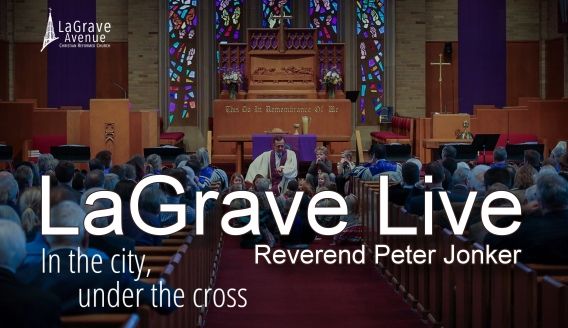

LaGrave Live
LIVE Evening Worship Service - Tips for the Tightrope
About The Service:
Pastor Jonker will lead us in worship and we will welcome missionaries Dan and Priscila Cummings, who will give an update on their medical ministry in Kalukembe, Angola.
Order of Worship:
https://lagrave.org/wp-content/upload...
About Us:
We are a traditional CRC church in the middle of Downtown Grand Rapids, MI, worshipping at 8:40am, 11:00am, and 6:00pm. (10:00am and 6:00pm during the summer months)
We'd love to hear from you:
Connection: https://www.lagrave.org/contact
Let us pray for you:
Prayer: https://www.lagrave.org/prayerrequest/
Listen on the go:
Amazon Music: https://bit.ly/LGPodAmazonMusic
Apple Podcast: https://apple.co/3tuOdwQ
Google Podcast: https://bit.ly/LGPodGoogle
Soundcloud: / lagravecrc
Spotify: https://spoti.fi/3yXDFaT
Follow us!
Facebook: / lagravecrc
Instagram: / lagravecrc
Website: https://www.lagrave.org
#LaGrave #LaGraveCRC
This evening service at La Grave Avenue Christian Reformed Church centers on the metaphor of life as a challenging journey or "tightrope." Through scripture from Philippians 4 and insights from a long-term study on happiness, the service explores how prayer and joy provide a divine "fortress" of peace amidst life's inevitable crosswinds.
The Journey and Global Mission
The service opens with a call to worship from Psalm 125, emphasizing that those who trust in the Lord are as unshakable as Mount Zion. This theme of a "journey" or "ascent" is woven throughout the liturgy, mirroring the Psalms of Ascent used by Israelites traveling to Jerusalem. A significant portion of the service is dedicated to a mission update from Daniel Cummings, a medical missionary serving at the Kalu Kembe hospital in Angola. He describes the stark reality of serving in a region where subsistence farmers earn roughly $15 a month and spiritual needs are as pressing as physical ones, yet emphasizes that the same "living Savior" worshipped in Michigan is at work in Angola.
The Illusion of Advantage: The Harvard Happiness Study
The sermon introduces the "Harvard Happiness Study," a longitudinal project spanning nearly 90 years that tracked 268 undergraduates to determine what makes humans flourish. Surprisingly, the study revealed that even highly advantaged individuals—Harvard graduates—frequently struggled with depression, addiction, and mental illness, with one-third of the cohort facing mental health issues by age 50. This data serves as a backdrop to the biblical reality that life is a "tightrope walk with a strong crosswind," where worldly success and "righteousness Olympics" fail to provide true stability.
The Fortress of Prayer and Transcendent Peace
Focusing on Philippians 4, the sermon redefines prayer not as a tool to change circumstances, but as a means to enter a "safe room" of peace. Paul’s promise is not necessarily the removal of obstacles, but that the "peace of God" will guard the heart like a soldier protecting a fortress. This internal sanctuary allows believers to remain steady even when "storms" of disease, loss, or worry rage outside the perimeter. The sermon notes that while prayer may not solve every problem, it connects the believer to a peace that "transcends all understanding."
Joy as a Rooted Reality
The final movement of the service distinguishes between "happiness" and "joy." While happiness is an "above-ground phenomenon" dependent on favorable weather and circumstances, joy is rooted in the unconditional love of God. Using the illustration of a grandchild’s unconditional embrace of a grandparent, the sermon explains that joy does not depend on skill or status; it is a "wild, wonderful overflow" of grace. Believers are encouraged to live under this "waterfall" of love, which holds them steady on the tightrope of life.
The service concludes with a reminder that while the "tightrope" of life is difficult for everyone—regardless of their advantages—believers are not left to walk it alone. By inhabiting the "safe room" of prayer and rooting themselves in the unconditional joy of Christ, they can find a peace that remains unshaken by the world's crosswinds.
LaGrave Live
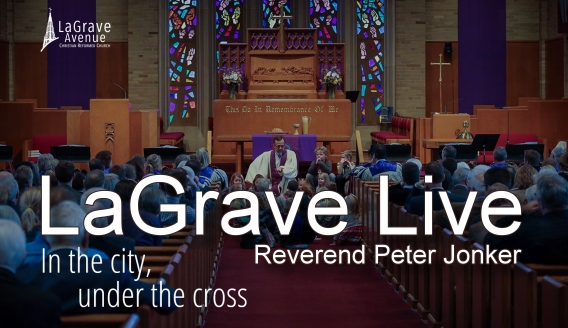

If you’re looking for a warm church that commits to an intensely pertinent Gospel in the Reformed tradition of the Christian faith, we invite you to worship with us. Our 1,800 members come from across West Michigan and gather weekly in our sanctuary for relevant Biblical preaching, beautiful music, and inspiring worship. We expand our worship through intentional outreach in our community and world, attentive care for our members, and plenty of spiritual enrichment and social opportunities for everyone.
We focus on a living Savior who provides genuine solutions to the deep needs of a hurting world. We are committed to need-meeting ministry in His name, and we are committed to being real people who enjoy real life and who cry real tears. Because we are a fairly large and diverse group in terms of age, occupation, marital status, lifestyle, and physical ability; our members create many accessible opportunities for community service, Bible study, and small social groups.
We worship God, the Almighty Creator of heaven and earth, and we enjoy expressing our vision of His holiness through traditional music and formal liturgy.
Music plays an integral part of our weekly worship gatherings. Congregational singing—of both traditional hymns and newer ones—is typically supported by our pipe organ. Vocal choirs, handbell choirs, small ensembles, instrumentalists, and vocal soloists provide additional music offerings.
Led by the Holy Spirit, we seek to worship and serve God in all of life, transforming His world and being transformed to reflect the character of Christ.
Founded by 36 Dutch immigrants on February 24, 1887, LaGrave Avenue Christian Reformed Church has always been deeply committed to both this local community and worldwide missions. God has seen fit to guide and bless these commitments with sustained growth, spiritual gifting, and a continual stream of new work for our members.
[00:00] Speaker 1: (instrumental music plays)
[06:09] Speaker 2: (organ music plays) (background noise)
[08:40] Speaker 3: Our call to worship tonight are these two verses from Psalm 125. "Those who trust in the Lord are like Mount Zion, which cannot be shaken but endures forever. As the mountains surround Jerusalem, so the Lord surrounds His people both now and forevermore." Thanks be to God.
[09:14] Speaker 2: (Organ plays) (background noise) (organ music plays)
[11:04] Speaker 2: (background noise Come to us, ye lovely stranger:Congregation of God who meets us in this place tonight, is also the God who walks with us, who walks with you every step of your journey. And he greets us saying, "Grace, mercy, and peace to you from God the Father, from Christ His Son, through the mighty and powerful work of His Holy Spirit." Amen. Welcome everyone to our evening service at La Grave Avenue Christian Reform Church. It's good to see you all here tonight, bathed in sunshine. Welcome to you if you're a visitor in our midst. We're really glad that you are here too. Uh, welcome especially to a special visitor, uh, visitors, right now it's only a visitor. Dan- Daniel Cummings is here right now. Later, his wife Priscilla will join him. She's busy informing another church of their work, but she'll be here later. And Daniel will give us greetings and tell us a little bit in this service about his work in Angola, which he, he and Priscilla have been doing for many years. And then after the service, they'll give a more extensive report down in our fellowship room. That will include a meal. You are more than welcome to join us and to hear about this good work that has been going on for so long. Another thing that you should know if you're a visitor, is that this, the end of this service will be a little different, um, than some. Uh, a lot of people will stay here during the postlude, and that's because after this service is over, we will complete our morning meeting, and we will draw the names of those who will be chosen to serve on our council for the next three years. Uh, that'll happen after the service and I will lead that, and so will Chuck, Damon, and, and Ruth West. Uh, for those of you who are visitors, you're welcome to stay for that, it's not that exciting, uh, but you, you, uh, you can also leave and we won't be offended. Tonight's service, uh, will focus on, uh, the image of journey, um, of travel. That image will come up again and again. And so for my reading, I've chosen one of the Psalms of Ascent. Psalms of Ascent, of course, were psalms that were prayed by the Israelites as they were on their way to Jerusalem, as they were walking the road to Jerusalem for one of the festivals. And it focused their hearts and their minds on the Lord, from whom their help came. Listen to Psalm 121. "I lift up my eyes to the mountains. Where does my help come from? My help comes from the Lord, the maker of heaven and earth. He will not let your foot slip. He who watches over you will not slumber. Indeed, he who watches over Israel will neither slumber nor sleep. The Lord watches over you. The Lord is your shade at your right hand. The sun will not harm you by day, nor the moon by night. The Lord will keep you from all harm. He'll watch over your life. The Lord will watch over your coming and your going, both now and forevermore." Thanks be to God. (singing)
[16:14] Speaker 4: To the hills I lift mine eyes. When shall help for me arise? From the Lord comes all I need. To the heavens and earth are singing. In the power of his arms. Will deliver his servant from. He who saved his people keeps. And his slumbers never sleep. From the hand and grace of the Lord. Saved from you, he made a point. In his sun, the moon shines bright. Clouds and fire cannot hide. He will ever be their soul. By the one he will control. In the hope and light of faith. All that made you great, God save.
[18:07] Speaker 3: Heidelberg Catechism is, of course, a summary of what we understand the Bible to be teaching us. And in its treatment of the end of The Lord's Prayer, it says some good words about God's presence for us in our journey, and how h- that journey will surely have a good end. Let's rise and say these two questions and answers together.Congregation, what does the sixth petition mean?
[18:38] Speaker 4: And do not bring us to the time of trial, but rescue us from the evil one, please. By ourselves we are too weak to hold our own, even for a moment. And our sworn enemies, the devil, the world and our own flesh, never stop attacking us. And so Lord uphold us and make us strong with the strength of Your Holy Spirit so that we may not go down to defeat in this spiritual struggle, but may firmly resist our enemies until we finally win the complete victory.
[19:23] Speaker 3: And what does that little word amen express?
[19:27] Speaker 4: Amen means this shall truly and surely be. It is even more sure that God listens to my prayer and that I greatly desire what I pray for. (instrumental music plays) When we walk with the Lord, in the light of His Word, what a glory He sheds on our way. While we do His good will, He abides with us still, and with all who will trust and obey. Trust and obey, for there's no other way to be happy in Jesus, but to trust and obey. But we never can prove the delights of His love until on the altar we lay, for the favor He shows and the joy He bestows are for those who will trust and obey. Trust and obey, for there's no other way to be happy in Jesus, but to trust and obey. When we fell on His knee, we were safe at His feet, walked along by His side in the way.
[21:19] Speaker 4: What He says we will do, where He sends we will go, never fear only trust and obey. Trust and obey, for there's no other way to be happy in Jesus, but to trust and obey.
[22:43] Speaker 3: At this time I'd like to invite Daniel Cummings forward to have him give a brief update of his work in Angola. Welcome Daniel.
[22:52] Speaker 5: Thank you. Well, it's a beautiful afternoon to be, uh, speaking with you, uh, the light coming through the- the windows here is just gorgeous, so um, really delightful to be here. Um, we've been with the Henry Beatts Mission Society f- uh, boy, over a decade, and, uh, my wife and I, Priscilla, we are working as doctors, as medical missionaries in Angola, in a small mission ho- well, not a small, but 200-bed hospital called Kalu Kembe, in a part of the world you probably are not so familiar with, but it's still a part of the world where there are still more witchdoctors than there are surgeons for our patients, and a part of the world where our neighbors still only make around $15 a month as farmers, so barely making their margins as subsistence farmers. And in a world where there's so much spiritual and physical need, it's a world that really hits us hard with the realities of, like, how do we, uh, interact with our neighbors and our community as followers of Christ?
[24:02] Speaker 5: Um, but it's amazing how God's Word opens up to us and even to our patients when we share with them how we have a risen Savior who gives us hope for this life and for the world to come, and a greater picture of our world in that. And I w- just wanna share with you, uh, just from Psalm 146, of how He's even speaks to us in words that says, "He upholds the cause of the oppressed and gives food to the hungry. The Lord sets prisoners free, but gives sight to the blind. He lifts those who are bowed down. The Lord loves the righteous. He watches over the foreigner and sustains the fatherless and the widow, but frustrates the ways of the wicked." And we wanna share with you tonight a little bit more in detail after the service how God has really done that, how God has taken care of orphans in our midst, how God has cared for the sick and how He has raised up, um, those who are bowed down.
[25:01] Speaker 5: So we raise, uh, we, uh, praise and we worship a living Savior just as we can praise and worship Him here, and we can praise and worship Him in Angola as well. Thank you. (instrumental music plays)
[25:20] Speaker 3: Thank you, Daniel. Now let's, uh, turn our hearts, open our hearts together and come before the Lord in our evening prayer. At the end of our evening prayer, we will sing Hear Our Prayer, O Lord. Let's pray. Lord God, the journey of our life is full of wonder. It's full of delight. This is a good and beautiful world that you've made, and we know it. Especially in the springtime, we know it. You filled this world with wondrous things, the rocks and trees, the skies and seas. Your hands, these wonders have wrought. And our own journey through life, Lord, is filled with good things, with friends and family members who love us, meaningful work for us to do, and most of all, Lord, undergirding all these things, strong promises that you give us through your son, Jesus Christ, our Lord, in his death and his resurrection. That's a gift beyond price. But Lord, even with all these good things, you know that our journey is full of many dangers, toils, and snares. It's a complicated journey.
[26:39] Speaker 3: All of us endure loss and uncertainty along the way. All of us sometimes lie awake in the middle of the night worrying about our lives, about people we love. All of us has felt the weight of the world's trouble. And sometimes as part of our journey, you even call us to move towards this trouble. That's certainly true of Daniel and Priscilla. Father, you called them to do medical work in a really challenging place. Every day they care for people who are deeply in need, and who have need not only of body, but of soul. Bless Daniel and Priscilla as they heal both the physical and the spiritual side of the people who they meet every single day. Continue to bless their work, give them endurance, give them a deep sense of your presence with them as they go. And help them as they carry not only their own stories, sorrows, and worries, but the worries of so many other people too. Father, we also pray for the worries that are on our hearts, the worries that we're carrying.
[27:53] Speaker 3: We have before you many names in our bulletin. We pray for Ellen recovering from her knee surgery, Dan, who right after his mission trip is having so much back pain. We're thankful that both Bill and Jack have come out of the hospital and we ask that you help them get all the way back to strength. We pray for them because they have a journey ahead of them too. We pray for Deb Goris, 'cause her journey is taking her through the valley of the shadow of death in the loss of Dan. Bless the whole Goris family this week as they say goodbye. Pray for others who are in hospice, near to death. For Sylvia and Bev and George. I pray for all those living with longterm cancer and fighting it every day. Joanne Arnoise, Dan Beamers, Marsha Hahn, Andrea Hackman, Renee Kuiper, Lloyd Ten Holt, Sharon Van Houten, Barb Bosco, Steve Palazzolo. Lord, I pray for Jan Gersbenk's granddaughter, Zoe. And I pray for many others, many, many others living with this disease and fighting it.
[29:11] Speaker 3: Surround them on their journey. Surround us too. We have plans for this week. We think we know where we will go, but we also know that our road will take turns that we do not expect. For the things and tasks we know we have, and for the unexpected work that you'll give us, make us strong and ready and hopeful. Help to, us to face it all with faith, hope, and love, and the deep abiding sense that we are utterly in your hands. Through Jesus Christ, our Lord, we pray. Amen.
[29:51] Speaker 4: (worship band plays) Hear our prayer, O Lord. Hear our prayer, O Lord. Be finally to us. And grant us our needs. Amen.
[30:34] Speaker 3: Our Bible reading tonight is from Paul's Letter to the Philippians. Gonna read from Philippians 4, and I'll read verses 1-9. I know it only says 2-9 in your bulletins, but I wanna add verse 1 as well. I apologize to our livestream listeners. You'll have to listen rather than read. Here's what Paul says to the Philippian church, "Therefore, my brothers and sisters, you whom I love and long for, my joy and my crown, stand firm in the Lord in this way, dear friends. I plead with Euodia and Syntyche to be of the same mind in the Lord. Yes, and I ask you, my true companion, to help these women,"... since they've contended at my side in the cause of the gospel, along with Clement and the rest of my coworkers, whose names are in the Book of Life. Rejoice in the Lord always. I'll say it again: rejoice. Let your gentleness be evident to all. The Lord is near. Do not be anxious about anything, but in every situation, by prayer and petition, with thanksgiving, present your requests to God.
[31:46] Speaker 3: And the peace of God, which transcends all understanding, will guard your hearts and minds in Christ Jesus, your Lord. Finally, brothers and sisters, whatever is true, whatever is noble, whatever is right, whatever is pure, whatever is lovely, whatever is admirable, if anything is excellent or praiseworthy, think about such things. Whatever you've learned or received or heard from me, or seen in me, put it into practice. And the God of peace will be with you. This is the Word of the Lord.
[32:25] Speaker 4: Thanks be to God.
[32:27] Speaker 3: I think it was, um, almost 20 years ago, uh, maybe closer to 15, that I first heard about the Harvard Happiness Study. I think I read about it in, uh, in an article in The Atlantic magazine. And I don't know, maybe you've heard of this study by now too. It's quite a well-known study. Um, it, it's, um, it's been going on for more than 70 years. Actually, probably close, almost close to ... I think it's done now, but if it was still going on, it'd be 90 years. Back in 1937, a group of psychologists at Harvard University decided that they were tired of, uh, studying what was wrong with people, and they wanted to study what made people right, what made them thrive, what made them flourish, what made them happy. And so they set as- they, they, they designated, they found 268 undergraduates. It was way back in 1937. And they said, "We're gonna follow these guys." They're all men, unfortunately.
[33:23] Speaker 3: They were gonna follow them all the way through their lives, and they're gonna track their lives and, and, and interview them and talk to them and determine what made them happy, what worked, what were the, the habits that led to flourishing, and what were the habits that did not lead to flourishing? And these were, these, these 268 were picked because they were, they were healthy physically and they were healthy mentally and they, they looked really promising. Tracked them for, for, uh, the rest of their lives, interviews, the whole thing. A massive amount of data. Several books have been written. The results of this study were surprising in many ways. Um, you know, what would you expect would be the life arc of 268 well-adjusted Harvard graduates, right? You'd expect success. You'd expect these people to rise up to the top of their p- profession. You'd expect them to fly up the ladder of success. And of course, some of them did.
[34:24] Speaker 3: But there were many of them for whom life was not so easy. There were many of them who, who limped through life, a lot of depression, anxiety, divorce, drug use, lots of alcoholism. A couple of ... You know, out of only 268 people, a few of them died of their alcoholism. By age 50, fully one-third of this cohort was dealing with mental illness. One interesting case was case number 141. The psychologists back in 1937, when they, um, when they started the study, wrote some notes about this guy, and they were, they were gushing about his potential. They said, "The following participant, the quality- has the qualities of a superior personality, stability and intelligence, good judgment, health, high purpose, and ideals." They thought this guy was gonna make it in the world. In his 30s, he divorced, became bitter, became an alcoholic. He dropped out of life, smoked dope, lived on a houseboat, and died young. You never know.
[35:33] Speaker 3: It's a great study, and there are a lot of interesting books about it. There's never been anything quite like it. And there's all kinds of conclusions you could make from it, but the conclusion I bring to you tonight is, the study shows us that life is really hard, even if you are mightily advantaged, right? Harvard graduate, even if it seems like you have all the advantages in the world, walking through life is not an easy thing to do. It is like walking a tightrope with a strong crosswind, even for those of us who have many advantages. The apostle Paul has not, uh, conducted a longitudinal study of human behavior, but by the time he writes the book of Philippians, he spent some days on the tightrope. Paul's walked the tightrope by now, and he's walked that tightrope in some pretty strong crosswinds.
[36:32] Speaker 3: And now he's talking to the Philippian church, and he's trying to help them do the same, trying to help them to follow Jesus, do the road of life in the face of everything that they're facing. And you can see that, uh, throughout the book. And so far, he's given them quite specific advice. Like, he said, um, "Don't walk the road of pride and success. I tried that." This is in chapter three. "I tried that. I tried to be a Hebrew of Hebrews, right? I, I tried to win the righteousness Olympics. I tried to be more righteous than all my other Pharisee brothers. And, uh, that was the wrong road. That was miserable." So don't try to walk the, the upward ladder of pride. Instead, chapter two, you remember, he says, "You should try the downward road of Jesus."Right? Who didn't consider equality something with God to be grasped, but made himself nothing and took on the form of a servant. Humility. Self-emptying.
[37:29] Speaker 3: Now, in our passage, Paul's sort of wrapping up that argument, and he's starting to get real specific, and he's talking about specific qualities and specific virtues that help you as you walk along that difficult road of life. Here's how you stand firm in the Lord. Here's how you walk the tightrope. Here's what you do. These are the practices that will keep you stable up there, even when the wind is blowing hard. And as you heard, when I read it, there were a l- a lot of things in there, probably more than enough for one sermon. So today, I just wanna focus on two things, right? Two things. One quality and one virtue that keep you stable on the tightrope. And just to be clear, right? When I preach these things, this is not the two habits of highly effective people, okay? Right? This is not, "Do these things and you will get rich and you will be happy." Right? This is not what that is, okay?
[38:25] Speaker 3: What Paul is saying is, "Do these things, and they will help you stand firm in the Lord," which is where true life is meant to be. Two things. The first of these things is prayer. "In everything, by prayer and supplication, make your requests known to God. And the peace of God, which transcends all understanding, will guard your hearts and minds in Christ Jesus, your Lord." Regular personal prayer is key to spiritual health, says Paul. It keeps you steady on the tightrope. Now, I know that sounds so utterly basic coming from the pulpit, right? Okay, a preacher's gonna tell me to pray. Uh, it's like my dentist telling me to floss. It's like my, my mechanic telling me to change my oil. I've heard this before. But don't think that. Listen to what Paul is saying, because if you listen carefully, there's something profound and deep in his words about prayer here. I mean, the first part is straightforward. "Pray to God," says Paul, "with thanksgiving and supplication." All right?
[39:37] Speaker 3: So do it, pray, and then the two parts of prayer, thanksgiving, and supplication. Right? He asks us to do it. But then he starts talking about the expected results of that prayer, and here's where it gets interesting. Paul says, "Make your requests known to God and..." And what do you think is, what do you expect to come after the "and"? Make your requests known to God and he will deal with your requests. Make your requests known to God and he will take care of your needs. Make your requests known to God and he will move the obstacles out of the way. That's what maybe you expect. It's not what he says, right? "Make your requests known to God. And the peace of God, which transcends all understanding, will guard your hearts and minds in Christ Jesus, your Lord." That's what he promises. The peace of God.
[40:31] Speaker 3: Not that your diseases will be healed, not that your problems will go away, not that your marriage will suddenly get better, not that your kid will suddenly turn around, not that your financial situation will suddenly improve. Simply that the peace of God, which transcends all understanding, will guard and keep your hearts and minds in Christ Jesus, your Lord. I think this is the center of prayer. Now, don't get me wrong. I think prayer also is answered by God. And when we pray, God does things. And when we pray, often, He does help us with our problems. And that's really important, but I do not believe it is the center of prayer. It's certainly not the center of prayer in this prayer, in this passage. The center of prayer in this passage is that we get to the place in our prayer where God guards and keeps our hearts and minds in Christ Jesus, our Lord, and keeps us in the peace which passes understanding. There's a kind of a picture here. You should take that word guarding literally.
[41:42] Speaker 3: The word that Paul uses to say, "Guard and keep your hearts and minds," that's the word you use for a soldier that would guard a fortress or a soldier that would guard a person and would not let, absolutely not let anything happen to it. So, the image is that God is guarding. He's establishing a perimeter around your heart, and he's not gonna let anything happen in that place. So, in your life, there is this place, there's this place where God guards and keeps your hearts and minds in Christ Jesus, your Lord. It's not the whole of you. Outside of this perimeter that is guarded and kept by God, all kinds of things can happen. Disease can come. Troubles can come. Doubts, temptations, worries, fears. There's can, it can storm outside of this perimeter. But inside, in this place, God has preserved like a safe room, a sanctuary. And in that place, your heart is guarded and kept in Christ Jesus, your Lord, and nothing can get in there. Our prayers do not create this inner fortress.
[42:51] Speaker 3: God made it, and God guards it. But when we pray, we can come out of all the storms that we're in and we can inhabit that safe room and find that place of peace, no matter what is going on in our life. Do you see the picture? This is real. Many of you can attest to this, and I've seen it too.My previous congregation, for example, there was a family attending our church. I started out in youth ministry. Their daughter was in my youth ministry for a few years. And then as soon as she graduated, the family left the church. And I don't know if that was my fault, but it's a thing that happened. I ran into her about 10 years later at Sam's Club. And she was a young woman, she had a kid in her shopping cart, and I greeted her warmly and she was excited to see me. It was a really pleasant conversation. And I asked her how she was doing and she got a little teary, she said, "My, my mom just died a month ago." And said... And I remembered her mom, and I said, "Oh, I'm so sorry about that.
[43:56] Speaker 3: I'm so sad to hear that. What happened?" And she told me. She got cancer two years ago, and it had metastasized and they fought it, and it was going... It looked like it was going well, and then as it goes, it's back and forth and then finally she, she died. And at that point, I think I said something like, "I'm really sorry. Cancer is so hard to beat." And she said, "Well, we think that she did beat it." You understand what she means by that, right? Obviously, she doesn't mean that she was cured. She means that through the whole time that the cancer was going on, no matter what was storming out here, in that place, she was guarded and kept and she knew it. And that the cancer and all the evil that comes with it was beating against the walls of that fortress, but it never got in. And her heart and her mind were preserved in the peace that passes understanding. Prayer will not solve all your problems. Right? It won't.
[45:02] Speaker 3: But when the wind is blowing and when the troubles come, it will absolutely put you in that place of perfect peace. The second thing that Paul emphasizes in this passage that I want to bring up to you is joy, right? And that's right up front. Paul is very adamant that we should rejoice. "Rejoice in the Lord always. I'm going to say it again: rejoice." He doubles down on joy. In fact, Philippians is an epistle of joy. It's mentioned, I believe, 14 times in the book. Paul is really, really interested that we be joyful people. What does that mean? What exactly is Paul recommending? Well, it's not happiness or cheerfulness. Sometimes in the world out there, maybe in pop culture, maybe in the way movies portray us Christians, they portray Christians as sort of happy-clappy people, you know, super bubbly, smiling all the time, like that's who we are. That's, that's totally false, right? That's not who we are. The New Testament actually refers very little to happiness.
[46:12] Speaker 3: Doesn't talk much about happiness at all in the New Testament. The New Testament doesn't seem to be very interested in happiness. New Testament is very interested in joy. Very interested in it. What's the difference? Couple things. Joy is different in its source. Happiness depends on the day's weather. Happiness needs sunshine and a little bit of warmth and a pleasant breeze and good circumstances. Joy can live in any weather. Happiness is an above ground phenomenon, right? Things need to be good outside. Joy is about roots and what you're rooted in and where your roots go down into. Or to put it another way, joy comes from that place I was talking about earlier, that place where your heart is guarded and kept in Christ Jesus, your Lord, with a peace that passes understanding. Joy is rooted there, in Jesus. Joy is different in its source. It's also different in its expression. There are different ways that people can make you feel good in this world.
[47:19] Speaker 3: For example, um, maybe you're a teacher, uh, a middle school teacher, high school teacher. And five years after you have a student, a student comes up to you, sees you at D&W and says to you, "Oh, Mrs. Vandersma, it's so good to see you. I loved you as a teacher. You were absolutely wonderful. I learned so much and you made me feel so good." Oh, that feels good, right? You hear that and it lifts you up and you feel, I would say, you feel... That makes you happy. That makes you happy. Now compare that to this different experience which also makes you feel good. You're a grandma, and you go over to visit your granddaughter's house and you come and as soon as you come in the door, your two-year-old granddaughter comes running towards you and says, "Grandma, grandma, grandma, grandma," and throws yourself, herself into your arms in excitement that you are here. That makes you feel good too, but I think that goodness is joy. Both instances are good.
[48:17] Speaker 3: They're both a blessing, but the second one is better than the first. The first lifts you up for a moment, right? "Oh, I'm a good teacher." And you feel happy for a bit, but then you realize, oh, okay, you know, I gotta, I better, I better go back and start preparing my next lesson plan, 'cause I gotta keep that standard up there. It's dependent on your skill, right? Right? The good, the, the, the nice thing that was said was dependent upon you and your skill. Say, "I gotta keep it going." The second good feeling doesn't depend on you at all. You didn't do anything to deserve it. All you did was exist. All you did is exist as a grandma. It was an unconditional expression of love by your granddaughter, and that does not go away very easily at all. That just keeps going and going and going. And it keeps going and going because it is unconditional love. And unconditional love is the love, as you know, at the center of God, right? Between the Father, Son, and the Holy Spirit.
[49:18] Speaker 3: That is unconditional love.... in the heart of God. And that, that love flows out of the heart of God sometimes. It overflows. Um, it did it at creation and it did it especially, of course, massive overflow in the death and resurrection of Jesus. So when Paul says, "Rejoice in the Lord always. I say it again, rejoice," he's saying, "Let that wild, wonderful overflow of, of God's gracious, unconditional love, live close to that. Live under that waterfall every single day. Let it fill your heart." And he imagines churches where that sort of unconditional love will flow between us. He wants that for Philippian church, he, he wants that kind of unconditional love in La Grave Church. And what will that look like? Are we gonna start greeting each other like a two-year-old greets his- her grandma, right? Is, is- are we gonna ask Ken Crusinger when he greets to come running up to you and give you a hug, like you're the- he's so glad to see you? I'm sure Ken would do it.
[50:24] Speaker 4: (laughing)
[50:26] Speaker 3: We're not doing that. That's not what we mean. But if in some way we can communicate to each other that we love each other, that has nothing to do with our status, and nothing to do with our achievement. If we can communicate our affection and trust for each other that goes well beyond all our differences and disagreements and our status, that love will live in us too. The study of Harvard grads concludes with all kinds of advice of things you can do to live a flourishing life based on the study. And those are worth listening to. I'm not gonna mention any of them here. I don't wanna tell you what you need to do. I wanna tell you what you already have in Jesus Christ. You are surrounded by the unconditional love of Jesus Christ, your Lord, and God has created for you a place, a transcendent place, where the peace of passes understanding lives. Congratulations. You are blessed by that. Let that hold you steady when you're walking the tightrope. Amen.
[51:47] Speaker 3: Thank you, Lord Jesus, for your word. Thank you for its promises. Thank you for the gift of prayer. Thank you for the peace that passes understanding and keeps us close to you. We pray that you will help us to live out of that place and live out of that peace this week as we walk our tightrope. Amen. (organ music)
[52:32] Speaker 4: (singing) Rejoice, O you delight. Rejoice, give thanks, and sing. Your quest no longer denied. The cross of Christ for thee. Rejoice, rejoice, rejoice, rejoice, rejoice, give thanks, and sing. Yet some cruel life's long path. Still gently as you go. From youth through age, by night and day. In gladness and in woe. Rejoice, rejoice, rejoice, rejoice, rejoice, give thanks, and sing. At last the work shall end. The weary one shall rest. The pilgrim's time here, home at last. Jerusalem, the blest. Rejoice, rejoice, rejoice, rejoice, rejoice, give thanks, and sing. Praise God, all creatures high. The Lord to whom be the glory. The Father, Son, and Holy Ghost. One God, now and evermore. Rejoice, rejoice, rejoice, rejoice, rejoice, give thanks, and sing.
[55:07] Speaker 3: Receive God's blessing for your week. The Lord bless you and keep you. The Lord lift up his face to shine upon you and be gracious to you. The Lord turn his face towards you, smile upon you, and give you his peace, both now and forevermore.
[55:30] Speaker 6: (organ playing)
[59:50] Speaker 6: (choir singing)