
Financial Fitness with The Money Doctor, July 26, 2026

Financial Fitness With The Money Doctor with Frances Rahaim, Ph.D. "The Money Doctor"
Financial Fitness - Guest, Senator Brown; How Broken IS DC?
What happens when someone gets inside the halls of Congress—and still can’t vote?
In this FinFit Special Edition, Frances Rahaim, Ph.D. (“The Money Doctor”), sits down with former U.S. Shadow Senator Michael D. Brown for a raw conversation about dysfunction in Washington, the cost of political theater, and how ordinary Americans are left holding the financial bag.
Real talk about power, poverty, and the people still trying to fix it.
Learn more at HugYourMoney.com
How Broken Is DC?
Frances Rahaim and Jay Dean speak with Senator Michael D. Brown about young people losing hope, food insecurity, public service, Washington dysfunction, civic empathy, and how local action can reveal what national politics often forgets.
Guest Spotlight: Senator Michael D. Brown
Senator Michael D. Brown is introduced as a returning guest and former U.S. Shadow Senator for Washington, D.C., who spent eighteen years fighting for representation. In this conversation, he reflects on humble beginnings, work ethic, young people’s loss of hope, Washington dysfunction, food insecurity, generational differences, and the need to understand people across political and cultural divides.
A Special Edition on Politics, Poverty, and Personal Perspective
In this episode of Financial Fitness with the Money Doctor, Frances Rahaim and Jay Dean welcome back Senator Michael D. Brown for an unscripted conversation that moves beyond ordinary political commentary. Jay introduces Brown as someone who calls things as he sees them and “makes good trouble,” while Frances frames the episode as a wide-ranging discussion about food insecurity, federal dysfunction, personal triumphs, and political theater. The tone is conversational, reflective, and grounded in the human consequences behind public policy.
Humble Beginnings and the Value of Work
Senator Brown begins by describing a childhood shaped by financial struggle but also by support, neighborhood care, and early responsibility. He says he started working at fourteen, loved having his own money, and tried to help his family. Looking back, he says that early work gave him a strong work ethic that served him throughout life. He contrasts that with what he sees in many young people today: a growing loss of hope, which he says concerns him deeply.
What Brown Would Tell His 21-Year-Old Self
Frances asks Brown what he would ask his younger self, and he says he would ask what is really important in life. He imagines his younger self would have given a materialistic answer, because at twenty-one he was focused on getting ahead without fully understanding what that meant. Brown reflects that with age he has learned that importance lies less in getting what one wants and more in wanting what one already has: children, relationships, friends, associations, and meaningful experiences. He also discusses dropping out of high school, earning an equivalency diploma, going through community college, completing a four-year degree, and eventually earning a master’s degree while working.
The Food-A-Thon and Local Action That Feeds Neighbors
The conversation then shifts to Jay Dean’s North Quabbin Food-A-Thon, which he and his brothers began in 2004 to help local food pantries. Frances describes her first experience helping with the event as twelve hours of people giving money to feed neighbors they may never meet. Jay explains that the effort supports six local pantries, with money raised locally and distributed directly back into the community. He reports that the event raised about $42,000 in twelve hours, though he notes the funds may only last the pantries about three months.
Grassroots Unity Versus Washington Dysfunction
Frances uses the Food-A-Thon as a contrast to national political dysfunction, asking how the spirit of neighbors working together can be bridged with Washington’s distractions and conflict. Brown says history suggests Americans often come together most powerfully during crisis or disaster, citing World War II and New York after 9/11. He says feeding people creates a direct human connection, and once people “touch each other,” they remember their common humanity. For Brown, most Americans share more than they realize, even when they vote differently or disagree politically.
Seeing From Another Person’s Position
Brown repeatedly emphasizes the importance of perspective. He describes working with co-hosts across political, regional, and generational divides, including a conservative Republican woman from the West Coast and a 21-year-old co-host named Liberty, who is fifty years younger than he is. He says Liberty sees the same world very differently, which makes the exchange valuable. Brown quotes the idea that “what you see depends on where you stand,” and argues that people need to stand in one another’s position if they want to understand each other.
Democracy, Self-Interest, and the Limits of Capitol Hill
The discussion turns toward Congress, policy-making, term limits, Donald Trump, immigration, and the way political self-interest can distort national priorities. Brown says the theory of democracy is beautiful, but the practice resembles sausage-making because noble ideas are often reshaped by survival, ambition, and institutional pressure. He argues that congressional pressure and policy ideas often come from outside the walls of Congress, which means citizens can still have influence if they pay attention and participate. At the same time, he says unity is harder on Capitol Hill because elected officials and political actors often follow their own self-interest, causing the general welfare to get lost.
Common Humanity, Party Differences, and Closing Reflections
In the closing portion, Brown compares the ease with which children bond across differences to the difficulty adults have doing the same once politics, identity, and self-interest get in the way. He discusses the difference between Democrats and Republicans through the old saying that Democrats “fall in love” while Republicans “fall in line,” then recalls conventions, party divisions, Bernie Sanders supporters, Hillary Clinton, Sarah Silverman, and Will Rogers’ joke about belonging to no organized political party because he was a Democrat. The episode ends with contact information for Financial Fitness, including 413-773-3333 and HugYourMoney.com, along with underwriting information from Franklin County Technical School.
Guest, Senator Michael D Brown
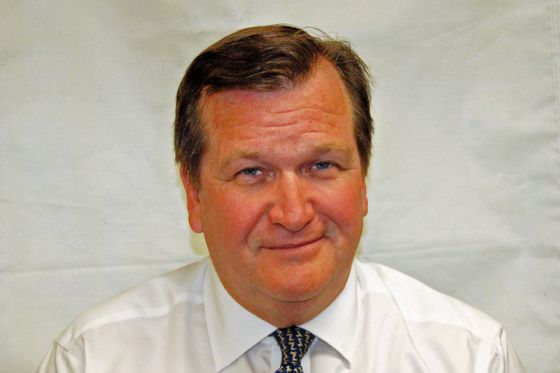
Over the past 33 years Senator Brown has been involved in many national and local political campaigns, including six Presidential campaigns. He has also been involved in the past ten consecutive Democratic National Conventions including being an Obama super-delegate in 2008 and 2012. Last November he was reelected with 207,000 votes, that's more votes than eight other United States Senators who are now serving in congress. In addition, he was on the staff of the Democratic National Committee and was a community activists and neighborhood commissioner in his hometown of Washington, DC. Senator Brown is a graduate of the University of Maryland. In 2008 Barack Obama said that, Even without a vote, Senator Brown has always been a strong advocate for the rights of DC residents. As a shadow senator, Brown receives no pay from the government, receives no budget from the government, and cannot vote on matters before the Senate. While he does not have an office in the United States Senate, the Government of the District provides him with an office in City Hall. His office is totally funded by contributions from DC taxpayers. Brown lobbies the United States Senate and the United States House of Representatives on behalf of the citizens of the District in their attempt to gain full representation in Congress, self-determination, and eventually admittance to the union as a state. As shadow senator, Brown also works with the District's delegate, mayor, and council to advance the interest of local residents on Federal issues. Brown is a member of the Democratic Party.
Financial Fitness with The Money Doctor


Support my show
$5.99/mo or $9.99/mo or more
Click HERE
SUBSCRIBE TO TALK SHOW
A Subscription is NOT REQUIRED to listen to my shows,
but it is greatly appreciated!
“Financial Fitness with The Money Doctor” is a weekly, hour-long National radio show devoted to helping individuals and small business owners better understand their finances and the psychology involved in why we make the decisions we do, how it affects our relationships, our sense of self-worth, and most importantly what we have the power to DO about it! Even prior to this current, highly timely expansion including with BBS Radio TV, which is syndicated to every major audio portal on the world wide web (150 locations reaching every corner of the world), including iHeart, Google, Apple, Amazon, Alexa, etc..., the show enjoyed long-term success in Western MA, Southern VT and NH on WHMP, WHAI, BEAR Country and other SAGA stations, with Dr. Rahaim as a sought-after guest and contributor on News and other talk programs.
Dr. Frances Rahaim’s loyal audience loves her no-nonsense, diplomatic, if sometimes controversial approach to helping sort out difficult issues surrounding effective debt management, successful budgeting, and truly holistic retirement planning and beyond. She has an uncanny ability to translate financial jargon and confusing topics into every-day easy language, engaging her listeners and disarming the stigma around talking openly about money. Rahaim, and her cohost Jess Tyler, Program Director/Morning Show Host WHMP Northampton, banter passionately about real-life, everyday money matters. Nothing is off limits! College, student loan crisis, 401k dos and don’ts, marriage, divorce, insurance, going solar, buying a car, starting a business, you name it. It’s all fair game -- political, economic, and social topics that affect us all, and ALWAYS, what you can DO to give yourself the edge.
In 2008 Rahaim started PowerDownDebt, Inc. right in the middle of the housing bubble. Four years later, she formed HUG Your Student Debt, Inc. to address the crisis not only for students but for parents struggling to retire under the weight of their children’s and often their own college loans still. At 43, with 20 years of experience as an Independent Broker / Registered Investment Advisor, Frances developed a way to address the elephant in the retirement room – becoming 100% debt-free including mortgage, student loans, credit cards, every type of debt, has broad reaching effects on RETIREMENT! Nest-eggs grow faster and last longer without the burden of debt. Today, Dr. Rahaim’s fully dynamic HUG Your MoneyTM software is patented, and she is continuously working on new developments and financial tools to help the public.
What led a top Investment professional to shift her focus toward debt? $10,800 monthly going out in mortgages and business loans, throwing extra money at it and still no real light at the end of the tunnel. In solving her own problem, she found the missing link to retirement planning – the one thing no advisor wants to talk about. The key element that changes everything you THOUGHT you knew about retirement -- liabilities. Now, financial advisors train with her to utilize this path to retirement dollars and help clients, even ones who thought the ship had sailed, get a second chance to reach their goals.
Frances doesn’t just talk the talk, she LIVED this stuff and her listeners get that. They FEEL it! Their comfort level with her non-judgemental approach and down-to-earth demeanor invites questions you never thought you’d hear anyone admit to or ask on the air!
Whether her listeners are interacting or listening in on their neighbors’ stories, this lively show holds their interest and fosters a loyalty rarely found in radio. Part financial, part domestic, part political, part entertainment, always ear-opening, informative and pragmatic.
Speaker Identification
Speaker 1 - Program / Announcer
Speaker 2 - Frances Rahaim, host, Financial Fitness with the Money Doctor
Speaker 3 - Jay Dean, co-host / contributor
Speaker 4 - Senator Michael D. Brown, guest, former U.S. Shadow Senator for Washington, D.C.
Speaker 1 - Program / Announcer
Financial literacy and the human condition.
Welcome to Financial Fitness with the Money Doctor, Dr. Frances Rahaim. The woman gets none of my social references. I talked into my Apple Watch. I said, I feel like, I feel just like Dick Tracy. And she got a blank look on her face.
Yeah, what's the difference?
Yeah, has no idea what I'm talking about.
So, it's been an adjustment, but I'm lucky. She's a brilliant student. Hi, it's Francis. I just wanted to take a minute to thank you for watching this video. If you're catching us on YouTube, please help us help others by clicking like, subscribe and all notifications so you don't miss any videos. And check back for the next video. I think you're going to love it. Thanks again. For more information, you can visit us at HugYourMoney.com.
Speaker 3 - Jay Dean
Welcome to Financial Fitness. I'm Jay Dean, along with the Money Doctor, Frances Rahaim. What's going on? We're going deeper than politics as usual. We have a returning guest, Senator Michael D. Brown, who spent 18 years as a U.S. shadow senator for Washington, D.C. fighting for representation. Can you believe this? And, of course, raising the roof whenever it was necessary.
So, he's been really outspoken on the barriers that young people face today, as well as a number of other issues. And I like him because he calls things like he sees them. He makes good trouble.
Yeah, makes good trouble. Exactly.
So, he recently shook things up a little bit by teaming up with a 21-year-old woman co-host on his podcast, Shadow Politics. And I just had the pleasure of joining them.
Speaker 2 - Frances Rahaim
So, today we're flipping the mic back around. And I have to say, this is completely unscripted in case you can't tell folks. That's how our shows always are. And we're going to talk about everything we can cram into one special edition from food insecurity to federal dysfunction and personal triumphs to political theater.
So, let's dive in. So, welcome back, Senator. Thank you for coming. Oh, I'm so happy to be here. You're so much fun to talk to you for the same reason that you call them like you see them. And I appreciate that. Thank you very, very much. You know, you've been in public service a long time. Wait, did I say that? Did that make you sound old? A long time. Okay. And you have seen power up close, right? I have. But you came from really humble beginnings.
I think that's fair to say, right? I hope you don't mind me saying that.
Speaker 4 - Senator Michael D. Brown
No, I mean, I think what I had was an advantage as a kid. I mean, I started working when I was 14 years old. And I did come from a background where we were always broke. But I grew up in a white middle class kind of working class neighborhood. There were a lot of people around me that cared about me. And, you know, I had a lot of support. And when I was a kid, I loved working. I loved working. I loved having my own money and, you know, and, and trying to help my family out,
which is what I did. And, you know, back in the days, I tell my kids all the time, all these things I did. But then I think back and I say, you know, gas was 28 cents a gallon when I pumped it. And you got a free glass. If you got eight gallons of gas. Now think about that. That's about two bucks worth of gas. You got a free glass and we watched your windows and put air in your tires and whatever else you needed.
So, yeah. And, and, and so I could live on $2 a week. But I think the thing that was beneficial for me is that it built in me a really strong work ethic. You know, and I always worked hard. And I think that came in handy. And I think that the one thing that distresses me most when you want to talk about young people right now is that I see a lot of them giving up hope. That's the thing that bothers me most. It is about choices for sure. I mean, we do, you know, here.
That's what we do is help people figure out what their priorities are and, and fund those. But for instance, you have been living in Washington, D.C. Now you're moving to an island off the coast of Maryland with Mrs. Brown and hosting this Shadow Politics podcast with a 21-year-old woman named Liberty. So there's a few changes here. You know, when, you know, that might sound a little bit like I'm spotlighting your successes. But as we know, you've had hard times.
So when we talk about, you know, young people feeling this way, I brought this topic up when we were talking on your podcast with Liberty that they're not the first generation to face tough times. They won't be the last probably.
So, so, okay, here's a question for you. If you could turn the clock back and ask a question of your 21-year-old self, what would the question be and what would his answer be?
I would ask my 21-year-old self what was really important in life. And I think my 21-year-old self would probably give some lame answer to that question, like some material thing or some, you know, not understanding that there are much deeper, more important things in life than what you own and what you have. And let me just tell you that, you know, because I grew up in the 1960s, so I was, you know, we were all about consumerism. I mean, we all hugged each other and we were tied to T-shirts
and sankum by a, but the truth of the matter was that when 1970 rolled around, we all copped out, got jobs, bought houses, you know, did whatever. And I think that I was much more focused on getting ahead in those days and really didn't understand what getting ahead was, you know, it's not, it's really not so much getting what you want. It's more wanting what you've got. You find that out as you get older and what's really important, my children, relationships,
friends, the associations you build, the experiences you have in life. And it's hard to see that at 21. I dropped out of high school. So going to college was a big deal for me. I got into a community college because of equivalency diploma and they, I got a degree so that four-year college took that and I got another degree. So I went on and got a master's degree, but that was very important. I was really consumed by it at that time because I worked as well as went to college.
That's another thing. I always had an objective and I would say that that's so important when you're young is not to be rudderless. That's another thing that I think by 21-year-old self wouldn't have known is that you really have to follow what your passion is, right? Whatever that is. And politics was my passion. What do you think he would have said back to you if you'd said any of those things? Something really stupid like, really, man, I get it.
Even though I didn't. Yeah. I had a brilliant sister. I had a brilliant sister with a lawyer and I used to drive her crazy with stuff like that. She said something to me I got really. I was kind of a punk. So I had a chip on my shoulder. And it wasn't until I started getting in trouble and realized that badass wasn't really a profession that I was going to be good at, so that I should turn into a nice guy or it just wasn't me. I wasn't a tough guy that I tried to be.
Well, you certainly directed your badass self into politics, right?
Well, and I had help. I had a sister, you know, an older sister who saw everything for, you know, I thought about going to law school one time. And she said, she looked at me and she said, you can't go to law school. She said, you'll never make it to law school. You won't make it to the first semester. Because you can't buy the textbook. So I'll never forget this. She said, you can't buy the textbook two weeks before the semester's over. Okay. Yeah.
So, so I didn't go to law school. And she was right. I went into graduate school. And she was, by the way, she was very proud of me when I got my master's degree in social science and political science. Somebody asked her what my degree was in. And my sister said, I just gotten a degree in the study of the obvious. She thought there were two types of people in the world, lawyers, which she was, and people that weren't smart enough to be lawyers. And I became brain surgeon through something.
Yeah. And she was wrong. And it turned out that you found out.
Yeah, you found your path in something great. Speaking of finding a path in something great, Jay has been doing this North Quabbin food athon for 22 years. He and his brothers actually started it. And they feed through six pantries. They raise enough money through six food pantries locally to feed a district to help feed a district, right? And so it's gotten bigger and bigger every year. And he can tell you a little bit about that. But this was my first experience with it.
Jay asked me to come in and help interview a few people. And I was happy to do that. But it was 12 hours of people feeding their neighbors, right? They don't know who they're feeding, but they're digging deep and they're coming out with money to feed their neighbors. I tried not to get political about this, but we did have two politicians that were interviewees while I was there. And they both gave great answers to things. But I just couldn't help but think.
Meanwhile, Washington's tangled up in these headlines from Trump's trial to the big beautiful bill that, dare I say, might throw a bunch of a boatload of people. It's passed the house by one vote. Big, beautiful bill.
Speaker 3 - Jay Dean
Boy, we will be back with part two of financial fitness. This is so interesting with the money, Dr. Francis Ram. I'm sure people have questions. Can we get your phone number?
Of course, they can reach us at 413-773-3333. Or as always, go to HugYourMoney.com. Financial fitness with the money doctor is underwritten by Franklin County Technical School. We build futures. Visit fcts.us or call 413-863-3951. How are we going to bridge that gap between something like the grassroots action that the Food-A-Thon that Jay is involved in? And I would love it if he can give a better description than I've given. And national distractions.
So Jay, I'll ask you first to give us a little background on it.
Well, the Food-A-Thon itself, we just started in 2004 to just try to do something every year that would make a difference. And everybody was saying it would be nice, Senator, if we didn't have to do this again, well, of course, as you know, I'm sure that's not going to happen. So it's been going on since 2004. And thankfully, we get a guest every year in the name of Jim McGovern. And he always comes on and proclaims, and I believe him, that this problem is
fixable. We can fix it. And then at the same time, he told us how the House Rules Committee meeting, their hearing, was going to start at one o'clock in the morning, anyway. So it was so ironic that we had him on, Senator, at 8.30 in the morning, and then he was back on doing his duty. He had one o'clock in the morning, holding the hearing.
Yeah, I mean, we wanted to do what we could do, and we asked people this year to kick in a little bit more if they could, because this effort brings in money locally and gives it right back out locally to these six pantries. There's no rigmarole in between. It goes directly to them. And, you know, thank the Lord and the community that comes forward, as of this moment, it's $42,000 we raised in 12 hours. But it'll probably last three months in these pantries. And now with these,
depending upon what the Senate does with his bill, the big, beautiful bill, you know, I don't know. Well, you got a better chance in the Senate of having something happen. You know, the House is just, there's an old saying in politics that a Democrats fall in love and Republicans fall in line. And the House has certainly shown that they're just going to line up behind this guy no matter what he wants to do, no matter how absurd he is. How long do you think we could
supply those pantries, Jeff? We turned into $400 million jumbo jet that the president just received as a parting gift from his Arab friends. And first, let me say, thank you for what you're doing. That's great. I know personally what a great feeling it is to feed hungry people because for 12 years, I took my children to a soup kitchen once a month during the soup, during the school year. And I can't tell you anybody that's out there that's listening do this. It's especially if you have
kids, my kids fed homeless women and realize that the one thing you could say about homeless women that you can't say about everybody else is that they're homeless. There's nice ones, there's mean ones, there's happy ones, there's sad ones. They're just like everybody else. They just need to be fed and they need to be taken care of. And it demystifies it for them. My kids have all grown up to be adults that really care about the people around them. And I really give a
lot of credit for that to the fact that there was a program that they could get into where kids fed these women at a shelter here in town. That kind of story that I was just telling about, you know, everybody had one common goal, it was just to feed their neighbors. What do you think it would take to bring that kind of nonpartisan collaboration to Washington and is it even possible anymore? Well, unfortunately history tells us that to make that happen in America, you need some kind
of political crisis or disaster, right? Do you never had a greater spirit of patriotism and cooperation in America than you did during the Second World War? I mean, not for all groups of people, but in general. And we saw New Yorkers who are notoriously right, they have a reputation for being somewhat short tempered and grumpy. We saw them all come together after 9-11, didn't matter who they were. We tend to pull together when there's some need, like you saw
at feeding people. That's the thing that brings us together. And then once we touch each other, we realize our common humanity, right? Which we all have to think in common. I don't care if you voted for Donald Trump. I'm willing to bet you love your children, just like I love my children. You know, I don't care if you voted for Donald Trump. I would be willing to guess that you're glad you live in the United States. You're glad to be an American. You're glad, you know, just like
I am. You know, there are a lot of things that we have in common. There's more, we have more in common than separations. And that's why, for example, on my podcast, my first co-host, my long-term co-host was a Republican woman from the West Coast. The idea was that we would show that this liberal guy, this little Democrat from the East Coast, and this conservative Republican woman from the West Coast, even though we weren't alike, we had a lot in common. And that's why I continue
on the show with Liberty. I mean, I told you this when we talked, when you were on the show, it hurts for me to even say it. But Liberty is exactly 50 years younger than I am. So it's like a whole, she has a whole, she looks at exactly the same things I look at and see something totally different. And that's really an important thing is, right? We have to try to see from each other, we have to see try to walk a mile in the other person's shoes to quote,
you know, to use an old quip. But I would tell you, if I had to leave five pieces of advice to my children, one of them would be what Einstein said, that what you see depends on where you stand, just opposed to what you're looking at. So I think to bring us together, we all need to try to stand in the other person's position. And you know, I've been in many of those positions. Again, I think I was benefited by the fact that I was close, that I could see poverty, that I could,
I know people that were impoverished, but I myself was never impoverished. I was, I was broke a lot of the times, but I always had everything on you needed to get by. So it's easier for me, I think, to emphasize with other people, because I come a long distance in my life, I've seen a lot of, I've worn a lot of different hats. And I think that's what we have to do. We have to understand where people are coming from, you know, it's, yeah, it's crazy, you know, and, but it's been an
adjustment dealing with this, The woman gets none of my social references, you know, and like, like I have an Apple watch and I was taught we were at an event and I looked at my, because she, she worked for me for a while and I looked at my Apple watch and I said, I talked into my Apple Watch, I said, it really, I feel just like Dick Tracy, and she got a black look on her face. Yeah, what's, it was interesting. Yeah, has no idea what I'm talking about.
So it's been an adjustment, but I'm lucky she's brilliant student and it's been an interesting, it's been interesting miss, but that's what we have to do. We have to understand where these people are coming from. Like, look, a good example for me was this, was this football player, Kaepernick, who refused to stand during the national anthem. Okay, lots of people in Washington supported his First Amendment right to express himself. And I certainly understood that,
but I come from a veteran family and I also understand why people were offended by it, you know, and that's what we have to do, you know, we have to, we have to try to understand where people are coming from. And we don't. There's a guy named Jogger Habermas, Jurgen Habermas, a German philosopher that says, there's always a gap between theory and practice. And you know, the theory of democracy is really, really beautiful, but the practice of it is, you know, what we say in Washington, you shouldn't watch people make policy or make sausage,
you know, because the process is pretty much the same. And what turned, what starts out maybe is a very noble idea very often gets turned into something else because of the self-serving nature of our political system. You know, these people are all worried about surviving. I love people that talk about term limits, you know, they want to put term limits on people. Every congressman has a two-year term limit. If you don't like them, don't send them back.
And you may not, you may think that he's in there forever, but he never thinks that. He always worries about what's going to happen in two years. He always worries about the pressure. One of the first things that my colleague Eleanor Holmes Norton, who is in the House of Representatives told me when we had our first meeting was nothing is ever generated from inside the walls of Congress. Everything comes from outside. All the pressure comes from outside, the ideas come from outside,
the policy starts from outside. And so that's the one place where we can have an effect. But unfortunately, we don't pay a whole lot of attention to politics, you know. And we have a complex system that requires intelligent input. Basically Trump has gotten away with this because he tells us what we want to hear. There are a lot of people that out there that want to hear. It's not your fault. The economy is doing bad, but it's not your fault. It's the fault of all
these people sneaking over the border and stealing your jobs, which we all know isn't true. Right? But the guy that goes to McDonald's to order something and can't understand the person on the other end of the, you know, the little mics that he orders through because she's got a heavy accent. He says to himself, ah, there you go. You're stealing our jobs. You know, now I don't know when we start worrying about the Canadians sneaking over the borders, stealing our jobs,
or the New Zealanders, you know, this has gotten crazy and out of hand. And what I think this guy is trying to do is just create chaos. And if he does that, he assumes that he can rebuild the government in his own image. You know, we're all getting ready for the big parade here in Washington. Oh, yeah. 40 million dollars to say happy birthday, Todd. So, yeah. You know, I have to ask you, I mean, having had that experience at the Food-A-Thon, I watched people
from all political backgrounds working side by side with one goal in mind. How do we feed people? Nobody asked who you voted for or anything like that. I didn't hear anything that was sharply political anywhere. You almost can't avoid some stuff these days, but it was all just, how can I help? So why does that kind of unity vanish when we get to Capitol Hill? Because, you know, everybody's following their own self-interest and this is a problem. I mean,
I would say the same thing to you, um, with kids. If you have kids, you know that you can take five, seven year old kids, different sexes from different backgrounds from different countries, and you could put them in a room and they'll bond in five minutes. I don't, you know, right? Another, they'll be running around playing with each other, loving each other, hugging each other, but adults can't do that, right? Because of all the stuff that, all the stuff that gets in the way.
The kids are single-minded. They want to play. That's what they want to do. You know, we want all sorts of different things. So you get up there to Capitol Hill and everybody's following their own self-interest and really the general welfare gets lost often in the process. And Karl Marx said this about capitalism. He says capitalism and democracy can't work because everybody following their own self-interest will never promote the general interest. In America,
we've been able to change that dynamic by little things like put the constitution in place and give them minority rights and give it, you know, and things like that. And all the stuff they're trying to get rid of right now, DEI, you know, all the other intervening things that we've put to try to straighten out that process where it turns out to be a survival of the fittest in a capitalist democracy. I think we're a real turning point now. Can we translate this feeling? I think
you could have the experience that you had, Doc. I think you could have in a lot of different contexts. You could have had it at a little league game. You could have had it at some kind of event where people were coming in a disaster relief event. When you get down to one-on-one with people, it works a whole lot better. And that's really the trick is trying to translate that into natural policy into competing ideas and motivations. What was that delineation between Republicans
and Democrats again? Democrats want to get along? Democrats fall in love. Fall in love. Yeah, and Republicans fall in line. And that's true, you know. I mean, look, I've been a super delegate for many, many conventions for nomination for nominating. I've been to 13 nomination conventions for the nomination for president. I went to one where Hillary Clinton was the nominee. She had won the nomination before she went to the convention. She had the requisite number of delegates to win. And for the first two days of the convention,
people chanted Bernie Sanders. Bernie Sanders. Bernie, Bernie, Bernie, Bernie. Until somebody, until Sarah Silverman actually came on stage and pulled him shut up. They shut up. It's over. But you never see that in the Republican party. We never see that. I mean, you know, we shoot ourselves in the foot a lot as Democrats. You know, that's another great quote from Will Rogers. Will Rogers. And this is the most real thing I've ever found about policies.
There's never been true or spoken. She said, I belong to no organized political movement on the Democrat. This is really enjoyable talking to Senator Michael Brown. I'm sure people have questions. Can we get your phone number? Of course they can reach us at 413-773-3333. Or as always, go to HugYourMoney.com.
Speaker 1 - Program / Announcer
Will you help us spread the word about financial fitness? Please like, subscribe, and choose all. Thank you.