The Care Compass, March 26, 2026
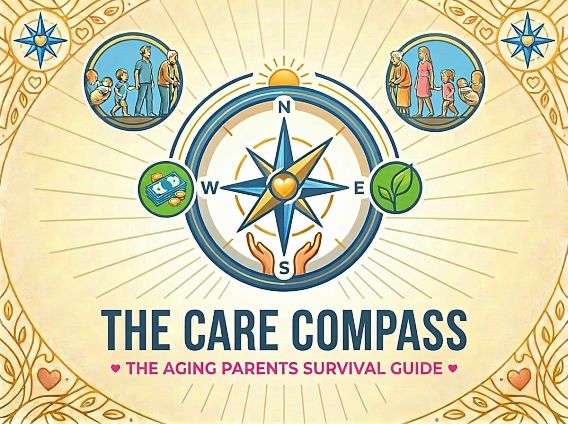

The Care Compass with Nicole Brandon
Practical Safety, Mobility Solutions and Innovative Tools for Connection and Comfort
In this introductory episode, host Nicole Brandon shares her deeply personal and "roller coaster" journey of caring for her parents—one battling cancer and the other Alzheimer's. The show serves as a guiding light for caregivers, offering expert resources, practical safety tips, and the emotional support needed to navigate the complexities of aging and medical advocacy.
The Heart of the Journey: Advocacy and Recovery
Nicole’s mission was forged in the fire of personal crisis: her father was diagnosed with cancer the same week her mother was diagnosed with progressive Alzheimer's. Her narrative centers on a pivotal moment two years ago when her mother collapsed during an award ceremony, falling into a coma and losing the ability to speak or move. Despite medical skepticism, Nicole’s relentless advocacy led to a "miracle" recovery where her mother regained the ability to talk, walk, and eat, eventually reuniting with her husband of 66 years. This experience underscores the core philosophy of the show: never let your parents just become "a number" in the system; instead, fight for choices, alternatives, and specialized care.
Practical Safety and Mobility Solutions
A significant portion of the discussion focuses on preventing falls, which Nicole describes as one of the "greatest things" caregivers must manage. She highlights the importance of selecting the right equipment, noting that standard walkers are often inadequate for tall individuals or varied terrains. Beyond equipment, she emphasizes environmental modifications—such as using baby-proofing rubber strips on sharp furniture corners and doorjambs to protect fragile skin during a fall. Nicole also advocates for "vestibular balance therapy" and specific physical therapy prescriptions tailored to the exact issues observed, such as a "right foot shuffle" or leaning to one side.
Innovative Tools for Connection and Comfort
To bridge the gap created by cognitive decline, Nicole introduces specialized technology like the RAZ Picture Phone. This device allows seniors with Alzheimer's or dementia to make calls simply by pressing a photo of a loved one, eliminating the need to remember numbers or navigate complex menus. Furthermore, she discusses the rise of "assistive clothing" featuring magnets and Velcro instead of buttons, and weighted silverware designed for those with arthritis or tremors. These tools are presented not just as conveniences, but as essential components for maintaining a high quality of life and dignity in the later stages of aging.
Nicole Brandon concludes by reminding caregivers that they are "the care compass pointing hearts back home". While the journey of elder care is often lonely and fraught with "locked doors," she promises to help listeners find the keys through expert advice and shared experience. Her mother’s return to health serves as a powerful testament to the impact of persistent, compassionate advocacy.
The Care Compass

Support my show
$5.99/mo or more
Click HERE
SUBSCRIBE TO THE SHOW
The time has come to tell my story and to open my heart. Its been a crazy four years with my parents care. I have learned so much. I have learned about senior living and I have learned about myself. I never knew the true definition of care. I now truly know what the word care means. I could never have imagined deep love. I have loved before. Not like this, love is a deep well that never ends and always there is the light shining through. The smile, the laugh, the touch, the wink, the hand held tightly, fingers wrapped and never letting go. It is the unspoken thanks you-s and the tears behind the fears. It is the angels that surround you and the breath, and the kiss that seem like the first kiss and the last kiss at the very same time. It's appreciating each moment, each second, each day, each sunset, each nightfall, each song, each memory in a brand new way. It is life appreciated and a life of gratitude that we are together. I have stepped outside myself for this journey, I actually stepped away from my life, yet I dove in without question, inside this world I never knew called parents and child love. It has been extraordinary and many of you have been by my side for the ride. Thank you.
So many days and nights I would talk to myself inside my head, questions, no answers, no one to talk to, no where to turn. My Dad's Cancer, my uncle's Parkinson's, my mom's Alzheimer's and her stroke, the uphill battle to keep them together, the journey thru home health and hospice, hospitals and assisted living, caregivers and therapists, doctors and heroes. My friends that sang to my parents, those that came by to say hello, those that sat in the hospital next to me, and said close your eyes, rest, I've got this and knew when I was ready to fall. Each mountain; insurance, Medicare, long term health, feeding tubes, oxygen, wheelchairs and walkers, medical supplies, transportation and days to just cherish another milestone - birthday, anniversary, and new year.
Lately I have been compelled to share. I'm heading back on the radio. To create a podcast for other me-s. Other children my age whose parents are aging and need help. I wish someone, anyone would have given me some direction or help. I have been my own compass and guide. If I can help even one person not have the tears I shed, or the sleepless nights, and the fears I endured, then I have gifted my journey and shared that little light. I now want to share what I've learned and open doors and ease hearts in anyway that I can. It's an extraordinary journey. This thing called Life.
My new Podcast "The Caring Compass" The Aging Parent's Survival Guide, will launch next week. If you would like to be a sponsor, or a guest please reach out to me directly. If you are on this journey and you have a question, feel free to reach out. Anything that I can share or anyway that I can help, I have reached the top of the mountain and I can say, this is how you climb.
For those looking for miracles, my mom is back with my Dad. Yes, I moved her in on Wednesday. She fought her way back to him. (For those that remember; two years ago she spent months in the hospital - unable to move, walk, or to talk) she was in limbo and we would talk to her and whisper in her ear trusting she was inside. Her love for my dad brought her home. This week, the miracle, Now she has returned. She’s walking, and talking, laughing, and hugging, and she can tell you she loves you. That’s the power my parents have together. When she came through the door, she kept saying; Oh God! Thank You! Thank You! Thank You! Oh God! Thank You! There wasn't a dry eye in the house, the entire facility was crying happy tears. It is a path, it is a journey, it is one step and then the next. Hold my hand and I will walk with you. Steady and together we will stand. See the light, it's there, ….just one step forward. Yes! …. and together we will walk towards love.
*****
"It is with pride and pleasure that I submit this letter of endorsement for Nicole Brandon. For more than two years I have witnessed her demonstration of caring, dedication, commitment and advocacy for her parents' geriatric increasing needs and care, as well as for their peers, at two seperate assisted-living communities.
Nicole would be an asset to any entity fortunate to gain her employ."
Rochelle S. Stephens, Reitired Executive Director of Public Houstin Authority.
*****
"I have had the opportunity to witness Nicole in her role as a caregiver to her parents over the past two years, and her commitment to their well-being has been nothing short of extraordinary. She has made significant personal sacrifices, including putting her professional speaking and travel on hold, in order to be fully present for their care. These sacrifices have come at great personal, financial, emotional, and physical cost.
Despite the strain, Nicole continues to show up for her parents with unwavering dedication. She routinely cancels appointments, business opportunities, and social engagements at a moment’s notice to drive the seven hours from Prescott, Arizona—where she lives part-time—to Newport Beach to attend medical appointments, coordinate insurance matters, hire and supervise caregivers, manage household and medical bills, and advance funds when payments were delayed or interrupted. She has also spent countless hours advocating for her parents on the phone with doctors, providers, and insurance companies.
As a caregiver myself, I recognize the level of responsibility and emotional endurance this requires. Nicole has gone far beyond what is expected to ensure her parents receive the highest possible standard of care. Her devotion, integrity, and selflessness are unmistakable, and I am proud to offer my full support and testimony on her behalf."
Claudia Hartman
*****
"To Whom It I am in awe of Nicole’s ability to care so deeply for her parents, she literally changed her mother’s prognosis. When I initially observed her mother, she had no sitting balance and was dependent on her aide for all self-care. Through Nicole’s guidance the treatment team continued to pursue goals that seemed unreachable. As a result, her mother is fully ambulatory and able to assist in all self-care and feeding herself. I have never seen so much progress as an OT for over forty years!
Nicole is simply amazing at encouraging her mother’s treatment team in all aspects and her mother’s progress is the result."
Kim Binder, Occupational Therapist
*****
"I am writing to recommend Nicole Brandon to host a radio show in senior care, or in any space in the senior community.
Nicole is a great example of someone who is compassionate, caring, and dedicated.
You will find Nicole to be someone who not only is dedicated to any role she is given, but she displays professionalism, passion, and true selflessness.
We had the opportunity to work together when I held a Walk to End Alzheimer's event last October. Nicole was eager to help and so kind throughout the process. As our Keynote Speaker Nicole made an impact with those attending by her heartfelt personal connection to Alzheimer's. Her profound commitment to her parent’s care was inspirational to others especially to those who are facing similar challenges, life changes, and triumphs.
I am honored to know Nicole and all that she brings to our community in so many ways. This is evident in public speaking, supporting others, or just being a great example of being a kind individual."
Malena Peraza, Community Engagement Coordinator
*****
"I am writing to offer my recommendation for Nicole. As her father’s physical therapist, I have had the opportunity to work closely with her and to witness firsthand the dedication and advocacy she brings to every aspect of his care.
Nicole is proactive and persistent in coordinating her father’s medical needs. She advocates on his behalf. She is determined when navigating through insurance issues. Which, anyone who has dealt with insurance companies knows how necessary that trait is to get anything done. Her determination and follow-through have made a meaningful difference in his access to services and overall quality of care.
Beyond medical coordination, Nicole ensures that her father’s daily needs are consistently met. She oversees his caregiving support, maintains his schedule, and remains closely involved in his social and emotional well-being. Her approach is thoughtful, organized, and compassionate, reflecting a holistic understanding of what quality elder care truly entails."
Maria Valencia PT, DPT, Clinic Director
*****
"I've had the pleasure of knowing Nicole Brandon for over a decade. Year after year, I have watched her walk through the clinic doors, expertly navigating the complexities of caring for her aging parents. Her level of patience and empathy is truly admirable. In a world that often moves too fast for our seniors, Nicole is the person who slows down.
In our clinic, Nicole is more than just a daughter. She is her parents' fiercest advocate who ensures her parents are never overlooked or unheard. Whether she is meticulously managing their medications or providing a gentle word of comfort, she does it all with grace.
Nicole is the embodiment of what it means to honor our elders. Her reliability is the bedrock of her family's well-being. Nicole is a beautiful exan1ple of selfless care. I am honored to recommend her for this recognition and her dedication deserves to be celebrated. Thank you for your consideration. Please do not hesitate to contact me."
Gregg Feinerman, M.D. F.A.C.S.
*****
"On Behalf of Coastal Heights Senior Living Community, I would like to express my sincere gratitude and appreciation for the exceptional care, compassion, and dedication that Nicole Brandon consistently shows towards her aging mother and father within our community.
It is evident that in every interaction that she surrounds them with genuine care, and unwavering support, and deep love. As an adult daughter, the responsibility of caring for an agin parent can carry significant emotional and personal weight. It is a role that often requires strength, patience, and selflessness, and she embodies these qualities with grace.
While this journey can be challenging, having the support of a compassionate community and devoting varegivers helps ease that burden. Her partnership withour team allows her mother to feel safe, valued, and truly at home, while also offering the peace of mind that comes from knowing she is surrounded by people who care deeply about her well-being.
We are honored to be part of this journey with Nicole and are grateful for the trust she places in our community. Her devotion does not go unnoticed, and it is a privilege to witness the love and advocacy you provide each and every day."
Catherine Ratelle, Executive Director, Coastal Heights Senior Living
*****
[00:00] Speaker 1: Oh yeah, you are the care compass pointing hearts back home, turning quiet, lonely rooms into places they belong. To the elderly, the wise, you give your steady light. Careful care, caring compassion in the soft hours of the night. Ah, ooh. Well, hi. It's Nicole Brandon, and welcome to the Care Compass. I'm so glad to be doing this show and to be able to help you navigate whatever your own personal journey is with your parents as they are going through the different stages of aging. It's a different journey for each and every person, and we all have questions and, um, things are new. They're... Every day is a new day, and it, it's constantly unfolding. I was drawn to create this show because I have gone through an incredible journey. I feel like I've been on a roller coaster for the past four or five years. For those of you that follow me, my dad was diagnosed with cancer the very same week my mom was diagnosed with progressive Alzheimer's.
[01:33] Speaker 1: And while I was with him in chemotherapy treatments, we were putting doors on alarms and bells to make sure my mom didn't wander, and navigating those two journeys simultaneously, and then through the myriad of hospital stays and agencies in Medicare and insurance and rehab facilities and hospice and home health and medical supplies and, and on and on. And I, um, came up against a lot of challenges, a lot of walls, a lot of unknowns, a lot of frustration, and, um, months and years of tears, and, um, sadness and elation at the same time. And I've learned so much that... But I didn't have anybody to talk to when I was going through this. It was me, myself, and I, and I would have these conversations in my head, and I wished that just one person would've held my hand and helped me take a step, or make a decision, or make a direction.
[02:36] Speaker 1: And so I've been so absolutely compelled to create this show for you, because if I can help you go through anything that I went through, and if I don't have the answers, I have met the top experts in the world in almost every field of medical care right now dealing with the aging, and, um, we'll bring them on for you. So just send me an email, post right to the station, and just let us know, "I'm really looking for, you know, a geriatric doctor," "I'm really looking for an oncologist," "I'm really looking for a gynecologist who's a urologist," "I'm really looking for someone that's dealing in this, this specific field of this type of cancer," or this type of anything that you're going through of questions of stroke, or dialysis, or rehab, or what is the right equipment, or somebody that's fallen and broken their neck, and, and, and bed rails and sofa rails, and, and pads, and diapers, and whatever it is that you need, we can bring the very top expert in for you in whatever that field
[03:40] Speaker 1: is that you are looking for. Um, I wanna share something that's been a personal journey. This weekend was a very, very, very, very, very emotional weekend. If you follow my Facebook, I, I write on my Facebook for no other reason than it's almost like my diary or my journal. I'm trying to get it out. Whatever is bottled up inside I put it out, because then I'm, uh, I'm no longer holding that emotion, or, or holding that confusion, or holding that ball, or holding whatever that is. And so I, I put it out there, and hopefully, um, it touches someone and somebody learns and someone's elated from it. And if not, then for me, it, it saves me from, you know, the, the strings and the stress inside just to be able to share. And, um, this weekend, uh, was... I, I was an, an emotional wreck. I wish I could tell you I was something different than that. But I was honored once again.
[04:41] Speaker 1: I won, um, the Martial Arts Hall of Fame, an undefeated world champion award, and I have been inducted into the Martial Arts Hall of Fame 13 times now? 14 times now? I w- I hold the one and only Humanitarian Award, which I'm incredibly proud of, and the Martial Arts Hall of Fame, um, Actress Award, Stunts Award, but two years ago, I was winning, um, a Living Legend Award, which was probably the most important award that I've ever won, and the most significant award that I've ever won. And I invited my parents. And so often my parents have not been able to watch me win prizes and awards because a lot of the competitions that I have been in, whether it be in dance, in acrobatics, in martial arts, whatever I've competed in have been around the world. So maybe I was in Austria, or maybe I was in Norway, or maybe I was in Brazil, and so my parents haven't been able to be with me. But this was here, and it was not that far from their home.
[05:47] Speaker 1: And, um, my dad was in his tuxedo, my mom was in her fanciest dress, and it was a very big night to have my parents with me to watch me win a Living Legend Award. Um, my father's cousin flew in from the East Coast to be there, and, um-We were proudly there at our table, and my mom collapsed. She collapsed right in front of me. And you could hear the cries and the wails from the room, and then the sirens and the firemen and the paramedics. And they were taking her away in the stretcher, and I jumped in the ambulance in my gown, and off we went to, um, the hospital. And my entire life changed that day. I didn't know it, but my entire life changed that day. And, um, we were in the hospital for months, literally for months. And needless to say, I never had the opportunity to, um, go up and get my award, because before they even called my name, the ambulance came, we were taken, and we were in the hospital.
[07:09] Speaker 1: And so, this Saturday night, this past Saturday night, I won another award from the organization as an undefeated world champion. And it was so bittersweet, because here it is, two years later, and in those two years, I've changed so much. I've been through so much. I've experienced so much. But the most amazing thing has been my mom. Because my mom, when she collapsed that day, she went into a coma, and she had rolling seizures for days and days and days and days and days and, and weeks, and they put her in one of the very few brain rooms, I guess, that's in the state of California where they attach her brain to the wall. And every time that she has a seizure, uh, bells ring and people come running in and they try to figure out what's happening. And she lost the ability to speak. She lost the ability to move her hands and feet and to talk and, and to, um, uh, she was, she was in there, I know. But from the outside, it looked like we had lost her. And, um, we would talk to her.
[08:36] Speaker 1: The doctors would say, "She could hear you. She's in a coma." And after months and months and months and months, my mom was laying there, incapacitated, hadn't been moving, and one of the nurses sneezed. And my mom said, "God bless you." The very first thing my mom said after several months of not speaking at all was, "God bless you." And I went, "Wow, she's in there. That sweet woman, she's in there. She's still there." And slowly, she started coming back. She started opening her eyes. She started to smile. She could see. There was a light in her eye. She started to move her hands and her feet. And, uh, we went through rehab, and then she almost died in rehab. We brought her back to the hospital. We went to another rehab. They brought her back to the hospital. We put her in hospice. We took her out of hospice. We put her in home health. And she fought. Boy, she fought. And she learned to sit up. She learned to start to talk.
[09:50] Speaker 1: They had her finally in a wheelchair with a catheter, with a Foley, and after almost six months, she was able to ex- explain to you that she needed to use the restroom. And so I went and I got her a urologist that was a gynecologist, and we worked with her so she didn't need the catheter and the Foley anymore, and if she was able then to be taken to the bathroom, then she was able to sit, and she was able to stand, and we taught her to sit, and we taught her to stand, and we taught her to sit and stand and then how to move her feet, how to move her arms, and, and we started getting her stronger. And we had her in PT, and the PT people said that they weren't coming back anymore, that they had done as much as they could do with her and she wasn't going to go any further, and I knew that wasn't the case, because my mom was such a fighter.
[10:41] Speaker 1: And so I explained to them, "Well, she has sundowners, and so in the afternoon we lose her, but in the morning, she's sharp, and you have to come back and work with her in the morning." And they came back to work with her in the morning, and she started to respond, and she started to respond in one-pound weights and two-pound weights and three-pound weights and four-pound weights and five-pound weights, and then she wanted to hand you weights so you would exercise with her. And she started doing squats, and she started to learn how to walk again, and then she could walk herself to the bathroom, and then she started to read, and she started to write, and she started to laugh. And we had a feeding tube in her, because she had forgotten how to swallow, and so if she was doing all of this, I fought to be able to get a speech therapist in to teach her to swallow again, and it took me 14 phone calls and several months to get somebody in, but finally, they did.
[11:42] Speaker 1: They came in and they taught her to eat again, and they taught her to swallow, and once she was able to swallow, it went from thickened liquids to less thickened liquids all the way down to water to juice to them taking the feeding tube out, and just a couple weeks ago, we finally, finally, after all this time, we were able to move her back to be with my dad, because they had been married 66 years, and when she got the feeding tube, they were separated They wouldn't let her live in the facility anymore, because it's a lifesaving device. And having to deal with his grief of being separated from her, and then transporting him every day to see her and what that looks like. So if you... If any of this journey is part of your journeyPlease reach out because I, I want to be able to help you, whatever those steps are, and to let you know that there is another side.
[12:37] Speaker 1: And so here it is, two years later, and I'm walking to the podium, and I remember that the award that I won, the Living Legend Award, because I left before my name was called, they mailed it to me. And I remember when the award came that I just cried in a puddle of tears because I knew it was that night that I was winning the Living Legend Award that my mom collapsed, and my life would never be the same. I didn't know if she was ever gonna wake up. I didn't know if she was ever gonna see me again and see my dad and know who she was, and there was so much emotion that was attached to it. So this time when they called my name, I walked up to the podium, and you have to remember, this is the Martial Arts Hall of Fame. So the room is f- filled with champions. I mean, champions from around the world in every modality of martial arts, and boxing, it is a room of the most stellar, strongest, most gifted, gifted martial artists and physical artists in the, in the world.
[13:54] Speaker 1: And all I could think of to say when I got up there was to talk about my mom, to say, "Two years ago tonight when I was winning the Living Legend Award and I was here with my parents, my mom collapsed. Many of you were here. Ambulance came, firemen came, paramedics came. They threw me in the back of the ambulance. My life has never been the same. And here it is two years later, and we just moved my mom back with my dad, and she's talking, and she's walking, and she's laughing, and she's eating, and she can tell you she loves you." And so, the greatest champion in my world is my mom. The greatest champion I know is the woman that gave me life. And it has been an incredible journey.
[14:57] Speaker 1: And what I found was when I was getting offstage, all these people came over to me and said, "Oh, my gosh, I went through this journey with my mom," or, "I went through this journey with my dad," or, "I was the caretaker of my parents," or, "For three years, I moved in with my parents," or, "Oh, my dad just had a stroke," or, "Oh, this just happened to me." And I realized I'm not alone. I felt completely alone for the past four years of my journey. Every step, every stage, every doctor's appointment, finding the right oncologist, going through the tests, going through blood work, whatever the MRIs, the CAT scans, the feeding tube, finding the right caregivers, having horrendous caregivers, and we're gonna have somebody come on and talk to you about what to look for in a care agency. It might not be the things that you expect, but boy, oh, boy, is there a difference in care agencies and how you find those care agencies. And then there's so many devices.
[16:04] Speaker 1: We have somebody coming on, one of our guests is a mobility expert that's dealing with walkers and dealing with wheelchairs and home safety devices. And I can tell you from my own personal experience, my mom is 5 feet, 5'1", maybe, you know, a little bit s- shorty than she used to be, 5'2", but... And she has a little, little walker, and she's only 97 pounds now, and her little 97-pound body with her little, little walker, and she loves her little, little walker, a- and she moves it, and she's really able to move quickly with it, and it's terrific. My dad, on the other hand, is 6'2". And what I have learned, yes, I should, if you want to invest in a product or project, what I have learned is there are thousands, and when I say thousands, there are thousands upon thousands upon thousands of thousands of walkers for everyone, for everyone from every country. Everybody makes walkers. And the walkers they make, you could buy them in Walmart, in Target, in medical supply stores.
[17:14] Speaker 1: You can get them at hospitals. You can get them online at Amazon. You can get them, you know, at swap meets. There are walkers everywhere you could buy walkers, at a thrift store. You could buy walkers at Goodwill. There, walkers are very easy to come by. But a walker for somebody that is over 6 feet, there are only a few companies that actually make walkers if you are tall, if you are that tall. And what happens is, if you are a tall person, man or woman, holding onto a small walker, and you are hunched over and leaning over, now you are creating back problems. Now you are creating spine problems. Now you are creating neck problems. You're creating problems you did not have before you used this walker for stability. And so there's only a couple companies in which are the companies that actually make the proper... And then, there are all-terrain walkers as well.
[18:13] Speaker 1: If you are outside and you are on gravel, if you live in areas that you have sidewalks, you're going to the shopping malls, or what are you doing? Or are you just navigating halls in a memory care unit or in an assisted living facility or in a nursing home? That's a very different surface than if you're going outside and you're going to the park and you're going to concerts and you're...... doing your life, or you're going to your grandchild's soccer game, or you're gonna be on a baseball field, you want a different walker that actually has different tires and, and is able to... or wheels that, that is able to deal with that. Also, and the walkers, there are walkers if you were wider. Because I know even from my dad, the walker that he had was so narrow and i- his feet would get caught up in it. And my dad is not a big, a wide man, but just the fact that the, the walkers that are standard walkers are not made, you know, for a man's physique.
[19:10] Speaker 1: And so, you wanna be able to have a walker that, that is in that place where you can stand. And if you ha- do have any weight on you, and many seniors do have weight on them, because very often what happens is even if people are, have all the money in the world and they, they have chefs, or they have either cooking for themselves, and they go out and they buy food, and they have breakfast, and they have lunch, and they have dinner, whatever, and then they move to an assisted living place, what happens is when you move to an assisted living place, it's like going on a cruise ship. It's unlimited food. You could have ice cream every night, you could have cake every night, you could have a double helping of mashed potatoes and french fries and pancakes and waffles, and whatever you want. And so very often, when people move in to assisted living, their weight goes up, at least initially the weight goes up.
[20:01] Speaker 1: And sometimes, how do you talk to the assisted living place and say, "Can you please make sure that my parents are getting fruit? Can you please make sure that my parents are getting salad or vegetables?" Because they might not order that. I know even from my dad, you know, they would say, "Would you like some fruit?" And he'd say, "No, I'm okay." They'd say, "Would you like a salad?" "I'm okay." You know, and he'd order a steak and, and an ice cream, and hamburger and french fries, or whatever it was that he wanted. And then he ended up having to take vitamin pills because he didn't have calcium, and he didn't have zinc, and he didn't have C, and he didn't have D. And I would say, "Dad, you don't wanna take all these pills. You keep saying you're taking too many pills.
[20:40] Speaker 1: All you need is an apple and a banana, and you sh- (laughs) you just need to eat fruit and vegetables." But if you can talk to the center, wherever they are living, even if they are in their own home and they have somebody that's tending to them, or you have daycare, or you have nightcare, and say, "Please make sure that they are having this amount of calcium or this amount of protein, or that they are having these vitamins and nutrients," then there's a way to ask for it, and there's a way to measure it, and there's a way to be able to help them get the food they need. But if they have gained weight or if you have somebody that has more weight on them, a lot of times they sit in the, the walker in the, their little sling seats, and the, the, the walker will collapse into them, and then it's very difficult for them to get out of the walker because they're in sort of like this hammock in this little sling.
[21:32] Speaker 1: So you want a walker that has a sturdy enough seat, and you want a walker that actually has like a, a armrest to help them propel to get up. So when we have the mobility expert, we're gonna talk about that, or for the sofa, for the chair, they have the bars that you can get that you just, it's just stands, right, and so you could put a magazine rack. They have them with magazine racks, or with the remote controls, or whatever that is, but just so you're getting up from the sofa, or you're getting up from your favorite chair, and you have something to grab onto to help you stand up, uh, something stable to be able to do that. So if somebody doesn't get up and fall and lose their balance, because very often when you have low blood pressure or high blood pressure, when you get up is where you're off balance, and that's very often where the falls will happen.
[22:23] Speaker 1: The same as the right bed rails, having the proper bed rails for someone to be able to get up, but you also wanna make sure the bed rail is not something that's going to bruise them, because very often when you bruise, all of a sudden they bleed very easily or they bruise very easily, so you don't want them to try to get out of bed and bang into a bar, and then all of a sudden you've created havoc or you've created a problem. Um, falls are very, very, very tenuous with aging parents. That is one of the greatest things that, you know, uh, you're dealing with is how to prevent falls. So one of the things I can tell you right off is that we fired two caregivers, two caregivers. Both of them, when they were hired, they were hired because my dad's balance was off, and I saw them, and they were walking ahead of my dad. They were walking way ahead of him, and I'm thinking, "How is that helpful that they're walking ahead of him?
[23:23] Speaker 1: We need someone next to him, or we need someone behind him so if he falls, if he goes off the sidewalk, or he steps, or all of a sudden he loses his balance, they're there to catch him." Walking ahead is not helpful at all. They could be the greatest caregiver in the world, they're not the, the right caregiver for him. So what are your needs? Is it, is it somebody that has stability problems? Then what are you doing about those stability problems? So I can tell you for myself, my dad had taken several really difficult falls in the bathroom, and one of the falls that he took, he just woke up on the bathroom floor. He doesn't remember going in the bathroom that night, he doesn't remember falling, but his ribs were absolutely purple, his shoulder, his neck was purple. He doesn't know what happened, he doesn't know how he fell, he doesn't remember falling.
[24:17] Speaker 1: We had to have MRIs, we had to have X-rays done to see if he broke his ribs, or fractured his ribs, and to put on a brace, and it was s- so much when he just woke up on the floor and didn't know it happened. And then we had several other falls in the bathroom as well, was he would go to sit down on the toilet, and all of a sudden he would fall backwards and he fell, right? So what we did was-Um, I went online, me, myself, and I again, and I'm here to help you because nobody helped me. Nobody helped me. This was me having to figure all of this out on my own, and I figured it all out on my own. But I'm telling you, if I can help you even an ounce of the way, I wanna help you. So, I went on Amazon and I ordered, um, strips of rubber that you have.
[25:08] Speaker 1: There's corner rubber that you can get for babies, that you could put around tables that go around the corners of the table or whatever that is, so the baby doesn't bump into it, and that's what I got, was the little corner rubber that you have in the baby safety stores they have it, or just go on Amazon and look for that corner rubber and this, this, this safety rubber. It's, uh, a game changer, and I went ahead and, and we got the rubber and put the rubber along the bathroom sink and around the corners of the bathroom sink so there was rubber all the way around there. And then, and the doorjamb, when you come in, you know, the... So, because he could just bang right into the corner of the, where the door comes in, right? So, on the doorjamb, put rubber all the way down on every corner of every wall that had a corner, in the living room, the bed, anywhere that there was a corner of a wall, rubber so he didn't fall into the corner, right?
[26:17] Speaker 1: And then as far as the grab bars, if they are in an assisted living facility, if they are in any kind of rehab facility, they'll put them in. You, but you have to ask. You have to say, "Hey, you know, can we have two more grab bars here? Like, he's getting out of bed and he's falling forward, and, and, you know, he's banging into his bedroom wall because he comes out and he wobbles and he grabs the bedroom wall, and is there any way that right on the other side of the bed, on the bedroom wall, you could put a grab bar here? Or outside the shower, not just inside the shower, can we take away this towel bar, this fancy towel bar? He doesn't really need a fancy towel bar. Is there any way you could put a grab bar here so when he steps into the shower, comes out of the shower, there's a grab bar? Is there any way where the toilet is, that there could be a grab bar coming out of the wall?
[27:10] Speaker 1: Is there any way that the toilet seat, that there could be grab bars?" Wherever it is that you need it, you can ask, or there are people that can help you, and so when we bring in somebody that, that, that's a mobility expert that can explain all of that to you, but if you have questions, if you are going through this, if you don't know, "What do I get? What do I use? What's a better brand? I see, you know, I, I would order products and they would come in and I'd go, "Oh, no, that's never gonna work. That's too flimsy or that's dangerous or that's too slippery. You know, they're gonna touch that and their hands are gonna slide and they're gonna fall, and this is supposed to prevent falls, and who was smart enough to think about this?" I mean, Amazon must hate me because I kept ordering things and sending them back saying, "No, no, that's not the right thing," but in the picture, I didn't know. In the picture I need a grab bar. In the picture I need rubber.
[27:59] Speaker 1: In the, in the picture I need... So, if it, it's helping you go through all of that and say, "This is the one you wanna order," or something like this, similar to this, and this is why this particular product works, and this is why it's safe, and this is why it's been a lifesaver, this is why it makes a difference, this is why I, I, I feel completely s- safe. All of those things are vitally important when you're dealing with falls, especially when you're dealing with falls. Also, counting is really important. So, any time that anybody is a fall risk, you want them when they, let's say they're laying down. When they sit up, you want them on the edge of their bed to count to five, one, two, three, four, five, and then to stand up, and when they stand up, again, one, two, three, four, five, and at that point, they're stable enough to move forward.
[29:02] Speaker 1: But if they just swing out of bed and get up, they can fall right over, especially with the low blood pressure, high blood pressure, whatever, that, that people can just in the middle of the night, or they're getting up in the morning, and that is when those falls happen So, if the practice is the count, if the practice is the one, two, three, four, five, stand, one, two, three, four, five, move, if it's that simple, it could save a life. If it's that simple, it can make a difference.
[29:32] Speaker 1: And so, things like that, that are part of the aging process, and if there are ways that you understand or physical therapy and, and what kind of vestibular balance therapy is different than other kind of physical therapy, and you ask the doctor, say, "You know, my dad or my mom, their balance just really seems to be off," or, "They're dragging their right foot," or, "It really seems like they're shuffling right now," or, "Really-" What, whatever that is that you are noticing, you're gonna notice it first, because you have been watching them walk your whole entire life. For myself, I'm a super fast walker. I mean, w- men that I date, people are like, "Oh, my God, can you slow down? Why are you walking so fast? Don't you wanna walk..." I walk really fast, but I walk really fast because I have a tall dad. So, my dad, one of my dad's steps were like 10 little girl steps when I was a kid. I was always chasing him, right? Like, "Wait, wait, wait for me," right?
[30:32] Speaker 1: So, I'm a fast walker, but I've been watching my dad's stride since I was, right? Since I learned to walk, I watch him walk. You walk, right? So, the same as my mom, I know their walk So, if all of a sudden it looks like they're l- not lifting their foot, all of a sudden they're dragging their feet, all of a sudden they're shuffling, all of a sudden going to one side, all of a sudden when they get up you see that little wobble, whatever that is, you wanna reach out to your doctor and you want to be specific"Hey, you know, I notice that they're shuffling their right foot. Hey, I notice when they get up from the sofa, it's a little- doesn't seem to happen when they're getting up from the bed, when they get up from the sofa. So, I don't know if the sofa's lower than the chair or the dining room..." You know, whatever that is.
[31:15] Speaker 1: "But I do notice that when they're getting up in this particular way," or, "I do notice when they get up in the morning." You know, or, "I do notice later in the afternoon that it seems like their balance is a little off," or, "I do notice," whatever that is, "that when they turn too quickly," or, "I do notice if they're trying to step on an elevator or step off a sidewalk, there's a little shuffle when they step off the sidewalk, or it seems like they fall forward, have-" Whatever it is you notice, be specific, because then that doctor is going to be able to reach out to the physical therapist and say, "I want physical therapy for the r- uh, to work on this right shuffle. I want physical therapy because they're leaning to the left.
[31:54] Speaker 1: I want physical therapy because they're, you know, up and down, falling, having trouble with sidewalks, having trouble getting on and getting off a tr- getting in an elevator, shuffling before things are too quirky, getting off a particular chair, getting off a soft chair, getting off a sofa." Because then the physical therapist will work specifically where they're having problems and strengthen that area, so there's no longer a danger in that area. Just sending somebody to physical therapy, physical therapy is great. We should all go to physical therapy. We'd be terrific. We'd be strong. It's like having personal trainers. They're awesome. But you want a physical therapist that is specific for what you are seeing, what you're- Don't wait until the fall. Don't wait until the broken neck, which- Don't wait until the wheelchair. Don't wait until the rehab. Don't wait.
[32:48] Speaker 1: If you see something, if you see something, they have been your parents your entire life, if you see something is different in the gait, in the way they walk, in the way that you go- they go to shake hands with somebody, and maybe they don't squeeze so tight. Maybe they have arthritis, and it hurts, and they don't ever tell you that it hurts, but you see that they're not really shaking hands with people or- or whatever that is, or you see they're not wearing their jewelry or something, they're not even in their prayers or whatever it is that you see that is different, it is up to you. It is up to you to be able to step up and say something. Don't be afraid to say something. Don't be afraid to fight for your parents. Don't be afraid to- to make noise and say, "Hey, something's not right here. You know, I know ev- Uh, th- you tell me they're doing great, uh, but I'm watching them walk, and this is what I'm seeing.
[33:54] Speaker 1: And can you give me a prescription for physical therapy to be able to work on this particular thing?" You know, my dad, um, fell. He broke his neck, and he fell outside of an elevator, and of course, the- the place that he was living at says, "Oh, there are no, uh, cameras there, so we don't know how he fell." Of course, of course, there were cameras there. Uh, that's not true, right? Of course, there were, and- and if I was a- a fisticuffs fighter, I'd, you know, go to court and get the videos. But of course, you know, it's a- a senior center, and then if everybody sued them that fell, they'd probably be out of business. So, they say, "Oh, no, there's no cameras there," right? But all I know is the elevator door opened. People saw him on the floor, um, didn't know what happened. Ambulance came, took him to the hospital, and he broke his neck, C4 and C5. Now, he was incredibly lucky because he wasn't paralyzed, because usually C4, C5, you would be paralyzed.
[34:58] Speaker 1: So, he's, my God, is he lucky. But he was in a neck brace and in a wheelchair. And not only did he break his neck, he hurt his back, he hurt his hip, he hurt his knee, whatever that fall was. It was devastatingly painful for him, devastatingly painful. And he was in the wheelchair, and he was crying, and he was in pain. And, uh, he kept saying he was never getting out of the wheelchair, and, "This is the," uh, you know, "old people, I'm gonna be in a wheelchair the rest of my life." And I said, "Dad, that's not true." I said, "The day before you fell, you were jitterbugging and you're fine. You fell. You fell, and you're gonna be okay. You fell, you've gotta wear the collar for however many weeks they tell you to wear the collar, and you're gonna be okay. They're gonna just send you to PT, and you're gonna be okay." And he kept saying he's in a wheelchair for life, and I kept saying, "No, you're gonna be jitterbugging by your birthday," or, "No, you're going to the," you know.
[35:55] Speaker 1: And when he would go to PT, he would go to stand up in PT, and he would start to squinch and he'd start to cry, and it was so painful for them to stand him up out of the wheelchair, just the pressure on the knee and the pressure on the back and the pressure in the hip was so unbearable that he didn't even want to stand up, and he just was like, "Um, that's it. I'm just in a wheelchair for life, and I'm in pain, and my life is over." And I called the doctor, and I said, "Hey, hi. It's Nicole. And, uh, is there any way that you can give me a prescription for water PT?
[36:38] Speaker 1: Because I've done a lot of research, and I do know from research that warm water therapy takes the pressure off the joints, and my dad loves to swim, and he's been swimming since he was a little boy, and swimming is one of his favorite things, and I think that he would enjoy being in the water, and if we put him in the water and do the exercises in the water, then he'll get strong again, and I think we can get him back."And the doctor said, um, "I don't usually write prescriptions for warm water physical therapy, but if you think it'll help, sure, let's give it a go." And they gave me a prescription for him for warm water physical therapy, found a warm water physical therapy place, took him there. They wheeled him in, put him in a little wheel- wheelchair thing, dropped him in the water with a water collar now since he had a neck brace, but they had one that they would put on when he went in the water to be bathed. And they used that one in the pool, and they put him in the pool.
[37:39] Speaker 1: And they sent me a picture of him with the neck brace in the little wheelchair thing in the water, and he had the biggest smile on his face. He wasn't crying, he was smiling, the fact that he was in the pool, he was loving being in the pool. And we sent him several times a week, and all of a sudden, he got stronger and stronger, and within less than a month, my dad was standing in the pool. And then in just two months, my dad was out of the wheelchair and using a walker, and then my dad started to dance again. Even though he was in the collar, he started dancing again. They kept him in two rounds in the collar, which he hated. He kept saying, "How much longer am I gonna be in this thing?" We kept telling him how blessed he was and how lucky he was that, you know, that he was okay, that he just had to wear a collar. Luckily, he's not paralyzed. And the collar finally came off, and now my dad is dancing again and walking again.
[38:42] Speaker 1: He doesn't even remember his back and his knee and everything and the pain that he went through. It's like he's just blocked it out, and we've continued with the warm water therapy and his exercise, and he is strong. He's stronger by the day, his balance is better, his entire life is better. Um, it's absolutely remarkable. But I fought. I did not say, "Oh, okay, he's in a wheelchair for the rest of his life. He's in pain. He cries every time you try to stand him up. I guess it's what's happening." No. That it's not okay. You know, don't let your parents be a number. Don't let your parents just be in the system. If you are listening to this and you are caring about their care, care enough to find choices, find options, find alternatives, find the right diet, the right nutritionist, find the right resources, find the right wheelchairs. There are wheelchairs that actually can stand you up so you can get your d- I mean, change light bulbs, do whatever it is.
[39:50] Speaker 1: There are even beds that actually turn around and stand you up. (laughs) There's, there's so much technology today, and there's so many resources, and that's what I want this show to be for you. I don't want you to hit walls, because I kept being hit by walls, and I refused to keep banging into walls. So I just, it was like in a house of mirrors or whatever, I just kept trying to find, in the maze, my way out. Okay, so if he's crying when you stand him up, if he's in pain and he's yelping and he's screeching and he's, he's saying, "That's it, I'm done for the rest of my life," but you know in your heart, you know in your heart that that's not the case, right? I mean, right now, they, they finally took the neck brace off. The doctor was so much fun. He took the neck brace and he threw it like it was a basketball and it landed in the trash can and the hoop, and he said to my dad, "You're done. You're done with the neck brace." Then he turned to me and said, "It's not healed.
[40:50] Speaker 1: The neck is still fractured, but that's the best we can do. If he were younger, we would do surgery, but that's not gonna happen. We're not gonna do surgery, so there's still a couple fractures in there, so we just have to be very careful. It's, it's as good as it's going to be for now." But you don't want him getting his hair done in the hair salon and for them to put him in a neck bowl. That's not gonna be good for him. You don't want him, when he goes to the dentist, for them to put his head back, make sure they put a pad behind his neck when they're cleaning his teeth. Like, there's a way, there's a workaround. Don't put your head in the shampoo bowl. Don't put the head back when you're getting your teeth cleaned. Do a pad, whatever that is. Do a dry cut when you're getting your hair shampooed. And these are exercises, we're working on vestibular so he doesn't fall, we're making all of the precautions so he doesn't fall, right?
[41:49] Speaker 1: And he's happy, and he's walking, and he's dancing, and he doesn't know he has a fracture in his neck. He's, to him, he's good, he's great. He's just, you know? So, (laughs) what can you do for that quality of life? What can you do to make sure that they are safe? What can you do to make sure they are happy? What can you do that is the very best on any given day? And it's not easy. I mean, I got a phone call my dad broke his neck. I was out of town, I was on the very next plane within an hour. You know, I was at an airport and I flew in, and what do you mean he broke his neck? Like, it's, y- you know, we get those calls. We, we get the call, you know, "My mom had a stroke," or, "She's in a coma," and, and we have those moments that our life never goes back to the life that we know, that, that is, it's never the same, but there are ways to navigate this journey, and there is help. There are resources. There are things that you can do.
[43:05] Speaker 1: Um, one of the people I would love to bring in is a company called RAZ. I believe I talked about it in my little intro. It's R-A-Z, RAZ is the company. And RAZ, gosh, I should buy stock in this company, but RAZ makes picture phones.Picture phones. Th- that is correct, picture phones. So my mom, with her Alzheimer's, um, forgot how to use a phone. She didn't know how to dial me, how to dial somebody, right? So, she didn't remember how to look up her daughter's name, or look up her son's name, or look up someone's name, or look up to call or to check her voicemail or... That skill just disappeared, just one day. She didn't know how to use a phone anymore. But she wanted the phone. She kept asking for the phone, and she kept... You could see her frustration in wanting to call her friends. You could see her frustration when her friends called and she didn't know how to answer the phone, or how to... And, and, and her frustration to, to watch would tear you up inside.
[44:19] Speaker 1: There is no words to describe what it's like to watch someone not remember how to do something, and they know they're supposed to know how to do it, and it- it's just... It's heartbreaking. And so, RAZ, awesome company, RAZ has picture phones. So, you put in the picture of the person you want. So, you know, if I'm daughter Nicole or whatever, then I put in my picture in the phone, and it could be a picture of me and my mom, or picture of me and my mom and my dad, or just a picture of me with my dogs, or just me by myself, whatever. I put in my picture, whatever picture I want, that I want to put in, and I put "daughter Nicole" on it, whatever that is, you know. You know, "best friend Mary," whatever that is, and put in Mary's picture. You know, "childhood friend," whatever that i- is, you know, "Charlene." Put i- whatever those pictures are, the n- the name is that you want to do, you know? "Brother Steve," "Sister Lisa," like, whatever the, the, the n- whatever that is.
[45:29] Speaker 1: And the only people that can call are the people that are in the phone, so no spam calls, never ever ever any spam calls. Unless your number is programmed in the phone, you cannot receive a phone call from them. And when the person calls, the picture comes up, and it says, "Daughter Nicole," and you don't even have to push any buttons. You can just say, "Hello," and it'll just start to talk, and you can talk to the person. Y- the voice activates the phone to be able to answer. And if you want to call someone, it has everybody's picture on the home screen, that's all it is is the, uh, the pictures, and you push the picture of the person you want to talk to, and they would push, she'd push my picture and it would say, "Daughter Nicole," and it would ring me. "Sister Sally," it would ring Sister, whatever that is. And all you do is they push the pictures. There's no numbers, there's no dialing, there's nothing they have to do.
[46:37] Speaker 1: When somebody calls, the whole screen becomes that person's face. It tells you who that person is, "Sister Sally," and then Sally says, "Hello," and you say, "Hi," whatever, and it, you just talk. You don't have to push any buttons. They have home phones, you know, landlines as well as cellphones like this, and then there is a feature on it for the caregiver, or for the nurse, or for the family member. And so, you could put it on a silent mode, so if that person's taking a nap, from your own phone you could put it on silent, or you could put quiet hours that you don't want anybody to call between 01:00 and 03:00, and the phone won't ring between 01:00 and 03:00. You can say, you know, that you want to increase the volume. You can de- decrease the volume. You can set times. You can do it however you...
[47:33] Speaker 1: There are all these different settings, and you can also get a log, so I can look and see, oh, Sister Sally called this person, called or whatever, or she missed a call from her brother, and let me help call, because I guess she wanted to call her brother today and she was trying to call and must have gotten a machine, so let me see if I can't help her make that call, because she must be missing him today. So, I can see and help with that. So, that is RAZ. You know, there is so many different, um, ways to help. There- there are ways to help, and there are tools to help, there are guides to help, there are exercises, and music, and puzzles, and games, and companion toys, and clothing that is assistive clothing, clothing that is Velcro clothing, clothing that is snaps, clothing so somebody doesn't have to fumble with buttons if they have arthritis, or if they don't remember how to dress, this is all of a sudden, you know, you could have a- a designer jacket.
[48:45] Speaker 1: It's not like, not nice clothing. The, the designers are making these clothes right now, so you can have a designer jacket, and all of a sudden, it closes by magnets, or all of a sudden, it... You know, th- the companies are aware that there is this whole world of aging right now, and they are working to be able to give you clothing, to be able to give you shoes, to be able to give you cars, to be (laughs) to give you furniture, whatever that is in your house, that literally is steered and geared towards the aging. And so, if you know where to go, it makes your life so much easier if you know silverware that's weighted...For somebody that is, has arthritis or if you, somebody that's learning how to use tools again or, or a way that it's easier, or plates that are easier to get, scoop food off of, or cups that are easier to swallow than just a glass cup. And, and you wouldn't know because it looks like a fancy wine glass, or it looks like ...
[49:54] Speaker 1: But, it's designed for someone that aspirates, so even though you might be drinking out of a fancy wine glass, only a little bit of liquid is coming out at a time, or only whatever it is that, that you were looking for. And so, let me help you. I am happy to help you because I did it. I've been going through it and I wished and I prayed and, that somebody along the way would have, would have helped me. Would have had answers, would have said, "Hey, what if you did this?" Or, "Did you know this was available?" I remember that I read a book many years ago about families' rights and at that time I read that book, I thought, "Oh, that's not true. People have rights once they have aging parents." I was really young when I read the book and I remember it saying if somebody wants a corned beef sandwich, you know, why would you not give them a corned beef sandwich if it's, like, the last week that they're there? You know?
[51:03] Speaker 1: Or that you don't have to weigh people that are dying or that you don't have to wake somebody up to give them medicine if they're finally asleep and they're fi- And they're like, "What are your rights? What do you know?" What you ... And at the time that I read the book, I thought, "Oh my gosh, that's ridiculous," and now that I've been through it, I realize how important it is to know your rights, to know you can ask for water physical therapy, to know you can say, "If you do not come and you do not do this speech evaluation, you know what? I'm gonna change companies because I really think that she can speak and if you don't wanna come check it out, then I'm gonna change companies," right? And amazing next day, after 14 phone calls, after I said that, somebody showed up to do an evaluation. They don't wanna lose your business, right? So, (laughs) um, so starting next week, we're gonna have live guests.
[51:51] Speaker 1: I'm super excited so reach out to me, reach out to the station, give us your questions and I will find the very best specialist. If I don't know the answer, I may know the answer because I've been through it, I've been doing this. I have climbed every mountain, I have forged every hurdle, I have banged against every wall, I have come across every locked door and I have found the keys, and so I believe I can help you, but if I can't, I promise you, I will find someone that can because I don't ever want you to have to experience what I experienced and I want you to know the joy of being on the other side as I am right now. The fact that my mom is back with my dad, which is a miracle indeed. So we look forward to seeing you next week on The Care Compass and, uh, thank you for being with me on this journey and just know you are not alone. You are supported. I am standing right next to you. I am holding your hand. We are stepping forward, one step at a time.
[52:55] Speaker 1: We are stepping forward and we are stepping towards love. Be kind to yourself. Take care of you. You have to take care of you so you can take care of others, and just know I'm with you on this journey and, uh, you are appreciated. You are loved. And, uh, you're doing an amazing job and I look forward to talking to you next week. Until then, this is Nicole Brandon with The Care Compass wishing you love. You are the care compass, pointing hearts back home. Turning quiet lonely rooms into places they belong. To the elderly, the wise, you give your steady light. Careful care, caring compassion till the dark turns into light.