
The Care Compass, April 9, 2026
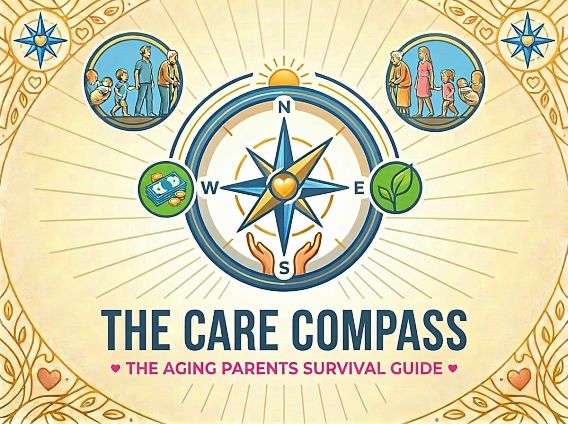

The Care Compass with Nicole Brandon
Navigating the Complexities of Elder Care, Navigating Healthcare, Veteran Benefits, Protecting Parental Rights and more
In this episode of The Care Compass, host Nicole Brandon shares deeply personal and professional insights into the challenging journey of caregiving for aging parents. The discussion covers essential strategies for navigating legal hurdles, managing medical insurance, and addressing the emotional and physical shifts associated with aging and cognitive decline. By highlighting available resources and advocacy tactics, the program aims to ensure that caregivers feel supported and empowered rather than alone.
Legal Advocacy and Protecting Parental Rights
Caregivers often face daunting legal and financial challenges, especially when dealing with fiduciaries who may not act in the parent's best interest. It is vital to recognize that you have the right to file claims against elder abuse or financial mismanagement through organizations like Adult Protective Services, state assemblies, and specific departments within Medicare and Medi-Cal. If a parent is no longer capable of managing their affairs, you can apply to become a representative payee through Social Security to help navigate their financial waters. Protecting parents often requires staying "in your heart" while firmly addressing injustices that diminish their dignity or independence.
Navigating Healthcare and Veteran Benefits
Managing Medicare and Social Security requires strategic timing and preparation. For instance, calling Medicare during off-peak hours can lead to more attentive service when selecting drug plans or reinstating lost coverage like Part B, which covers ER visits and medical equipment. Furthermore, veterans and their spouses have access to a vast "world of services," including legal aid, service dogs, and even potential payment for family caregivers. It is essential to proactively ask the VA for support, as these benefits are often available even decades after service.
Safety, Mobility, and Cognitive Health
Transitions such as "relinquishing the keys" should be handled through "carefrontational" conversations that prioritize the parent's heart and independence while ensuring public safety. Alternatives like consistent transportation services or service dogs—matched specifically to a parent's lifestyle—can help maintain a sense of freedom. When cognitive shifts occur, such as those seen in Alzheimer’s or dementia, resources like the Alzheimer’s Foundation offer support for managing behavioral changes and practical issues, like using Instacart to prevent repetitive grocery shopping. Monitoring tools like Ring cameras or baby cams can also be used ethically to ensure caregivers are attentive and that medical protocols, such as oxygen use or fall prevention, are strictly followed.
Nutrition and Holistic Wellness
Maintaining health in assisted living or home care involves navigating nutrition and mental activity. Caregivers should monitor for weight changes and coordinate with facility kitchens or nutritionists, especially for specialized needs like pureed diets. Beyond food, holistic approaches such as Lion’s Mane supplements, Tai Chi, and keeping the mind active through music or puzzles are recommended by specialists to support brain health. Emotional health is equally critical; seeking grief counseling for parents who have lost peers or siblings can prevent profound isolation.
Caregiving is an arduous journey, but it is one that can be navigated with grace by utilizing the vast network of available resources. By shifting from confrontation to "carefrontation" and staying vigilant regarding legal and medical rights, caregivers can protect their parents' dignity. Remember, you are not alone; every "dent and bruise" you experience is shared by a community dedicated to pointing hearts back home.
The Care Compass

Support my show
$5.99/mo or more
Click HERE
SUBSCRIBE TO THE SHOW
The time has come to tell my story and to open my heart. Its been a crazy four years with my parents care. I have learned so much. I have learned about senior living and I have learned about myself. I never knew the true definition of care. I now truly know what the word care means. I could never have imagined deep love. I have loved before. Not like this, love is a deep well that never ends and always there is the light shining through. The smile, the laugh, the touch, the wink, the hand held tightly, fingers wrapped and never letting go. It is the unspoken thanks you-s and the tears behind the fears. It is the angels that surround you and the breath, and the kiss that seem like the first kiss and the last kiss at the very same time. It's appreciating each moment, each second, each day, each sunset, each nightfall, each song, each memory in a brand new way. It is life appreciated and a life of gratitude that we are together. I have stepped outside myself for this journey, I actually stepped away from my life, yet I dove in without question, inside this world I never knew called parents and child love. It has been extraordinary and many of you have been by my side for the ride. Thank you.
So many days and nights I would talk to myself inside my head, questions, no answers, no one to talk to, no where to turn. My Dad's Cancer, my uncle's Parkinson's, my mom's Alzheimer's and her stroke, the uphill battle to keep them together, the journey thru home health and hospice, hospitals and assisted living, caregivers and therapists, doctors and heroes. My friends that sang to my parents, those that came by to say hello, those that sat in the hospital next to me, and said close your eyes, rest, I've got this and knew when I was ready to fall. Each mountain; insurance, Medicare, long term health, feeding tubes, oxygen, wheelchairs and walkers, medical supplies, transportation and days to just cherish another milestone - birthday, anniversary, and new year.
Lately I have been compelled to share. I'm heading back on the radio. To create a podcast for other me-s. Other children my age whose parents are aging and need help. I wish someone, anyone would have given me some direction or help. I have been my own compass and guide. If I can help even one person not have the tears I shed, or the sleepless nights, and the fears I endured, then I have gifted my journey and shared that little light. I now want to share what I've learned and open doors and ease hearts in anyway that I can. It's an extraordinary journey. This thing called Life.
My new Podcast "The Caring Compass" The Aging Parent's Survival Guide, will launch next week. If you would like to be a sponsor, or a guest please reach out to me directly. If you are on this journey and you have a question, feel free to reach out. Anything that I can share or anyway that I can help, I have reached the top of the mountain and I can say, this is how you climb.
For those looking for miracles, my mom is back with my Dad. Yes, I moved her in on Wednesday. She fought her way back to him. (For those that remember; two years ago she spent months in the hospital - unable to move, walk, or to talk) she was in limbo and we would talk to her and whisper in her ear trusting she was inside. Her love for my dad brought her home. This week, the miracle, Now she has returned. She’s walking, and talking, laughing, and hugging, and she can tell you she loves you. That’s the power my parents have together. When she came through the door, she kept saying; Oh God! Thank You! Thank You! Thank You! Oh God! Thank You! There wasn't a dry eye in the house, the entire facility was crying happy tears. It is a path, it is a journey, it is one step and then the next. Hold my hand and I will walk with you. Steady and together we will stand. See the light, it's there, ….just one step forward. Yes! …. and together we will walk towards love.
*****
"It is with pride and pleasure that I submit this letter of endorsement for Nicole Brandon. For more than two years I have witnessed her demonstration of caring, dedication, commitment and advocacy for her parents' geriatric increasing needs and care, as well as for their peers, at two seperate assisted-living communities.
Nicole would be an asset to any entity fortunate to gain her employ."
Rochelle S. Stephens, Reitired Executive Director of Public Houstin Authority.
*****
"I have had the opportunity to witness Nicole in her role as a caregiver to her parents over the past two years, and her commitment to their well-being has been nothing short of extraordinary. She has made significant personal sacrifices, including putting her professional speaking and travel on hold, in order to be fully present for their care. These sacrifices have come at great personal, financial, emotional, and physical cost.
Despite the strain, Nicole continues to show up for her parents with unwavering dedication. She routinely cancels appointments, business opportunities, and social engagements at a moment’s notice to drive the seven hours from Prescott, Arizona—where she lives part-time—to Newport Beach to attend medical appointments, coordinate insurance matters, hire and supervise caregivers, manage household and medical bills, and advance funds when payments were delayed or interrupted. She has also spent countless hours advocating for her parents on the phone with doctors, providers, and insurance companies.
As a caregiver myself, I recognize the level of responsibility and emotional endurance this requires. Nicole has gone far beyond what is expected to ensure her parents receive the highest possible standard of care. Her devotion, integrity, and selflessness are unmistakable, and I am proud to offer my full support and testimony on her behalf."
Claudia Hartman
*****
"To Whom It I am in awe of Nicole’s ability to care so deeply for her parents, she literally changed her mother’s prognosis. When I initially observed her mother, she had no sitting balance and was dependent on her aide for all self-care. Through Nicole’s guidance the treatment team continued to pursue goals that seemed unreachable. As a result, her mother is fully ambulatory and able to assist in all self-care and feeding herself. I have never seen so much progress as an OT for over forty years!
Nicole is simply amazing at encouraging her mother’s treatment team in all aspects and her mother’s progress is the result."
Kim Binder, Occupational Therapist
*****
"I am writing to recommend Nicole Brandon to host a radio show in senior care, or in any space in the senior community.
Nicole is a great example of someone who is compassionate, caring, and dedicated.
You will find Nicole to be someone who not only is dedicated to any role she is given, but she displays professionalism, passion, and true selflessness.
We had the opportunity to work together when I held a Walk to End Alzheimer's event last October. Nicole was eager to help and so kind throughout the process. As our Keynote Speaker Nicole made an impact with those attending by her heartfelt personal connection to Alzheimer's. Her profound commitment to her parent’s care was inspirational to others especially to those who are facing similar challenges, life changes, and triumphs.
I am honored to know Nicole and all that she brings to our community in so many ways. This is evident in public speaking, supporting others, or just being a great example of being a kind individual."
Malena Peraza, Community Engagement Coordinator
*****
"I am writing to offer my recommendation for Nicole. As her father’s physical therapist, I have had the opportunity to work closely with her and to witness firsthand the dedication and advocacy she brings to every aspect of his care.
Nicole is proactive and persistent in coordinating her father’s medical needs. She advocates on his behalf. She is determined when navigating through insurance issues. Which, anyone who has dealt with insurance companies knows how necessary that trait is to get anything done. Her determination and follow-through have made a meaningful difference in his access to services and overall quality of care.
Beyond medical coordination, Nicole ensures that her father’s daily needs are consistently met. She oversees his caregiving support, maintains his schedule, and remains closely involved in his social and emotional well-being. Her approach is thoughtful, organized, and compassionate, reflecting a holistic understanding of what quality elder care truly entails."
Maria Valencia PT, DPT, Clinic Director
*****
"I've had the pleasure of knowing Nicole Brandon for over a decade. Year after year, I have watched her walk through the clinic doors, expertly navigating the complexities of caring for her aging parents. Her level of patience and empathy is truly admirable. In a world that often moves too fast for our seniors, Nicole is the person who slows down.
In our clinic, Nicole is more than just a daughter. She is her parents' fiercest advocate who ensures her parents are never overlooked or unheard. Whether she is meticulously managing their medications or providing a gentle word of comfort, she does it all with grace.
Nicole is the embodiment of what it means to honor our elders. Her reliability is the bedrock of her family's well-being. Nicole is a beautiful exan1ple of selfless care. I am honored to recommend her for this recognition and her dedication deserves to be celebrated. Thank you for your consideration. Please do not hesitate to contact me."
Gregg Feinerman, M.D. F.A.C.S.
*****
"On Behalf of Coastal Heights Senior Living Community, I would like to express my sincere gratitude and appreciation for the exceptional care, compassion, and dedication that Nicole Brandon consistently shows towards her aging mother and father within our community.
It is evident that in every interaction that she surrounds them with genuine care, and unwavering support, and deep love. As an adult daughter, the responsibility of caring for an agin parent can carry significant emotional and personal weight. It is a role that often requires strength, patience, and selflessness, and she embodies these qualities with grace.
While this journey can be challenging, having the support of a compassionate community and devoting varegivers helps ease that burden. Her partnership withour team allows her mother to feel safe, valued, and truly at home, while also offering the peace of mind that comes from knowing she is surrounded by people who care deeply about her well-being.
We are honored to be part of this journey with Nicole and are grateful for the trust she places in our community. Her devotion does not go unnoticed, and it is a privilege to witness the love and advocacy you provide each and every day."
Catherine Ratelle, Executive Director, Coastal Heights Senior Living
*****
[00:00] Speaker 1: Oh yeah. You are the care compass. Pointing hearts back home. Turning quiet lonely rooms. Into places they belong. To the elderly, the wise. You give your steady light. Careful care, caring compassion. In the soft hours of the night. Oh. Ooh. Hi, it's Nicole Brandon, and welcome back to Care Compass. It's always such an honor and such a privilege to be with you here. Um, it has been a crazy week, and today I am traveling, so I'm speaking to you remotely. But I actually, um, spent some time in court this week protecting my parents, and so, w- in future shows, I would love to talk about the probate and estates and trusts and, um, elder abuse, and all sorts of things that you may come across as you are on this journey of, um, watching your parents take the next stages in their life. And there are things that you can do. There are organizations that can help you. There are all sorts of ways that you can be supported when you feel like you are completely alone.
[01:30] Speaker 1: I did not know that when I started this journey, and so I carried the weight of the world on my shoulders, and several other worlds on my shoulders, as I've been trying to navigate these waters. Um, I can tell you that, uh, we had, uh, my parents had a fiduciary that just did not have their best interest at heart whatsoever, and managed to close accounts that their, um, Social Security and Medicare were attached to. And so they ended up, uh, losing Social Security and losing Medicare, and the Medicare people have been phenomenal, and we will have the Medicare specialists on teaching you everything you wanna know about Medicare in 20 minutes, as well as being able to answer every question that you have about Medicare. And I can tell you, they helped me navigate really choppy waters. Hey, we've got puppies here today. But they've helped me navigate really choppy waters in being able to know when to call.
[02:31] Speaker 1: You know, recommending to me to call Medicare and what hours to call Medicare, and, and what to say, and how you can navigate, and how do you get them Medicare back. And, and I have now been to Social Security umpteen times, and what you need to do at Social Security if your parents have lost their Social Security, or if they are having trouble with their Social Security, how do you get this Social Security back? How do you talk to them? How do you get back pay for Social Security or Medicare or Medi-Cal? And if somebody is inappropriately, um, handling finances and your Medi-Cal or your Medicare or any service is interrupted or disrupted, you, there are ways to file with Medicare. There are ways to file with Medi-Cal. There are ways to file with, uh, Adult Protective Services. There are ways to file with your state assembly. There are ways that you can file, um, against the fiduciary. So you always have rights.
[03:35] Speaker 1: You always have a way to step up and to protect your parents, and there are always people that are available to help guide you. And I know the help that I received from the Medicare rep was so fantastic, because even when they had a drug plan that was no longer a drug plan, that stopped being their drug plan this year just because they weren't continuing the plan, and being able to say, "How do I decide? What is the best drug plan and what are the very next steps?" And they said to me, "You want to, first, you want to have a list of all their medications and their pharmacy, and you wanna put in the list of their medications, and you wanna put a list in their pharmacy. And then you wanna match that." And they talked to me about the deductibles, and they talked to me about everything that I would need. So how do you do that?
[04:28] Speaker 1: You wanna take a list of all of your medications, and I am going to tell you, take a list of all of the medications that your parents are taking, your mom's taking, your dad is taking. And you wanna, say, if, if they're using, whatever that pharmacy is, that's their local pharmacy, their hospital pharmacy, their facility pharmacy, you wanna put that pharmaceutical information into the computer or into your list. And then that is going to tell you your options and your deductibles and what they need, if they have generic medications. So everything that's available for you, everything that's feasible for you, is absolutely essential in saving you time, energy, effort, um, your sanity. Because w- what did I do? I got a sheet of paper that said both my parents' Rx plans, their medical plans, their, their prescription plans were expiring as of January 1st. And then all of the different plans to pick from, and how do you know? It's like one potato, two potato, three potato, four.
[05:40] Speaker 1: It's like throwing a dart. But I called Medicare, and Medicare said, "This is what you wanna do. This is the time that you want to speak to somebody. You don't wanna call at this time of day. You wanna call at this time of day, and this is the best time to be able to get someone to really sit and care about you and listen and take that time to go through with you."And both my parents' Medicare, the part B, got lost, which meant that you don't even know what's included in Medicare Part B. Medicare Part B was all of the emergency room visit, all of their doctor's visits, a lot of the medical equipment. When that was lost, the transportation, it cost upwards of a c- $100,000 for that loss, and then having to get it back, and then having to go after the fiduciary who went ahead and close the accounts that they were attached to.
[06:31] Speaker 1: Um, when you close accounts that are attached to medical supplies, oxygen, feeding tube, uh, 24-hour care, anything like that, how do you, how do you get that back? How do you get that reinstated, and then how do you get reimbursed if you have long-term insurance, and it was lost? How do you get back for those months that were lost? How do you file? What do you do? And, uh, you know, if your parents lose their Social Security or if your parents are not capable of handling their Social Security, you can go to the Social Security and be made rep for them to be able to help them navigate the waters. And so, all of these things, all of these, um, doorways are open to you. I did not know that I had doorways open to me. So I was constantly banging up against walls, banging up against doors. "What do you mean their Medicare was lost?" "What do you mean their Social Security was lost?" "What do you mean the doctor won't see them because the Medicare isn't going through?
[07:32] Speaker 1: Of course they have Medicare." If this is something that you are going through, please feel free to, to write to me personally. Send me a private message. Send me a question. And the experts that helped me navigate that, whether that was at Social Security, whether that was at Medicare, whether that was somebody saying, "These are the organizations. This is how you file a claim with Adult Protective Services," or, "This is how you file a claim with your state assembly," or, "This is how you file a claim with Medi-Cal or with Medicare. This is how you get to the other side," and it is possible to get to the other side. Even in licensing, I don't know how many of you, but I am guessing that many of you that are listening to this show today and a- always have parents that maybe shouldn't be driving anymore.
[08:22] Speaker 1: But sometimes, when is the right time to take away their driver's license and, and when is the right time to have that conversation, and how do you have that conversation when they are sure they are okay to drive and they want that independence, but they're running over mailboxes or people or whatever that is. And, and what is, uh, there is a word that, that we coin and we use, and it's one of my very favorite words. It came from Steve DeNunzio from Mission Driven Advisor, and I always wanna give credence to words and to any information. And Steve would say the word carefrontational, which I loved. Instead of confrontation, it was carefrontation. And when you carefrontation, when you have a carefrontational conversation, it means that you're going to care enough about that person to say, "I care about you. I love you, and because I care, there's a conversation I need to have with you.
[09:29] Speaker 1: Because I care, because I love you so much, I need to have this conversation or I'd like to have this conversation with you." So it's not confrontational. It's not about wrong-making. It's not about doing anything bad. It's not about would or should or something they shouldn't be doing at a certain age. I know that the DMV has if you're a certain age, you shouldn't be driving, and it's, it's not about protocol. It's about the hearts of your parents. If your parents feel that they are independent enough to drive, and maybe they are, and if they are, bless them.
[10:05] Speaker 1: But if you feel that they're not, if you know that their vision is not sharp enough to be driving, if you know they're having trouble with night vision, if you know that they're having trouble with perspective, something like that, that they, you know, all of a sudden are hitting things or knocking on the side of the car, or they tap other cars in the process, or they go over, you know, um, speed bumps, whatever that is, how you have those conversations about, um, relinquishing the keys to the car, and maybe having a service take them. There are lots of services that you can use that some of them are, are free services. They're community services. Other services are companion. You can just pay somebody for an hour to, to take your mom or your dad shopping or to take them to the doctor's and to sit with them at the doctor's so you don't need full-time care. You're just saying can they give them a ride to that party? Can they give them a ride to church?
[11:04] Speaker 1: Can they whatever that is and be with them and be their companion? But there's a way to do that. If they are living in a senior living facility or an assisted living facility, very often transportation is included. There is also the Medicare transportations and call and get the best prices for the Medicare transportations, and you want people that are consistent. That when they pick your parents up, whether they're in a wheelchair or a walker or they're just in a limousine, in a sedan, that it's the same faces that they see over and over and they develop a relationship, so it's not like Uber that they're getting a new driver each time. It's someone they can rely on though, and they see it's their friend, and they know they're gonna get somewhere safely. It makes them feel better about relinquishing their own keys and independence when they have a friend that they're going with and they will see that person as their friend. And that's very valuable, and that's very important.
[12:01] Speaker 1: Very often, you can ask if the caregivers that you're hiring, if they have the capability of driving.And then you also, if you're dealing with driving with your parents, sometimes if you have a caregiver, or sometimes if you're using a car service, car services are too low for someone to get into, or too high for them to get up to, or they don't have a big enough trunk for the wheelchair. So, what are the questions? How do you ask those questions? And we will have somebody here from MedCare Transport that will go through each and every one of those items for you. But everything is feasible. Everything is doable. It doesn't have to be crazy expensive. There's so many free services. There is services that, that Go Go Grandma or something, where you can literally call them and they pick you up. They'll take you to the supermarket, they take you to the doctor's, they take you to rides. There's a little number you can call. They'll bring you groceries. They know what your medicine is.
[13:05] Speaker 1: Make life easy for yourself. Don't be stressed. Don't let yourself get stressed because all of a sudden your mother or your father is getting in a car and they're headed off somewhere (laughs) . And they're, you know that you're gonna be tied up in knots just because they pulled out of the driveway, or because they wanna put their grandchildren in the car with them, and you don't think that's safe to have your kids in the car while they're driving. And then, how do you have that conversation? How do you decide how to move from one stage or one step to the next? And then, do they still need IDs? So, they're no longer driving, do you need to go get a state ID? That they would need some sort of identification, or their passports as an identification, and what does that look like?
[13:56] Speaker 1: And no, you don't have to make an appointment if somebody's in a wheelchair, if somebody's in a walker, they can put 'em in a lane just as if they had an appointment, and they will fast-track those people at DMV. Or you can call ahead and just schedule a time for an appointment if you don't want them in line or you don't want them sitting. But there are quick ways to do it. The hard way to do it is to be anxiety-ridden. The hard way to do it is to be frightened because your parents are driving. The hard way to do it is to have a confrontational conversation with your parents when they are not ready to relinquish their independence. The hard way to do it is to keep hiring car services that are expensive or van services that are expensive, and you're seeing that money diminish, and you're thinking, gosh, that money can be used for so many other wonderful things for them, other than just driving around. Yes, there are services available.
[14:51] Speaker 1: Also, if your mom or your dad, um, if they're people that have served, VA... I am fascinated. I am just diving into and learning about all of the VA services, even to be paid as a caregiver if your parent is a vet, how that works. Legal aid, legal services if they're a vet. If there is any abuse charges th- if they're a vet, the vet services, there's so much more. And your mother or your father may have served in the military. They may have served in the Army or in the Navy or in the Air Force. They may have think, "Oh, it's been 40 years since I've served." It's been whatever that time is, and they don't realize this entire world of services are available to them. And so you, as the child, call 'em. Call, ask the services, just ask, you know, "Can you help me with this? Can you help me with this?
[15:55] Speaker 1: My mom or my dad is a vet and I'm looking for legal aid," or, "I'm looking for medical care." "I'm looking for a service dog or a companion dog for my parents." Whatever that question might be, your VA can help you. They are tremendous. They are open-hearted. They are just remarkable, remarkable people that wanna help and make a difference. So again, let them welcome you. Let them coddle you. Let them swaddle you. Let them shake your hand and open your heart and put Band-Aids all over your little body and soul and say, "It's gonna be okay. Every little dent and every little bruise that you're going through right now, it's going to be okay, and we can help you." Also, one of the other greatest resources that I have found is in the Alzheimer's Foundation. So, if you have a parent that is, um, having difficulty remembering, and you will know when that happens, you will...
[17:07] Speaker 1: The, the shifts are subtle, but when they happen, they happen like a arrow in your heart, because the way they happen is so off-kilter from the norm of what you would know your parents to be doing or saying. And that's when things shift and change. It's not about forgetting names. It's not about forgetting apples. It's, it's nothing, uh, like that. I mean, I'm sure that there are people that you say, "Oh gosh, they're, you know, their memory's going. They're really having trouble forgetting names or forgetting dates," and there are standard things that you can look for. But for me, myself and I, I had shared this on one of the previous shows, and it's still just shattering for me. But, um, my father always bought Valentine cards for me, always made a big deal on Valentine's. And the first Valentine, that my dad didn't even realize it was Valentine's, and then when he did, and, and-There was no card.
[18:15] Speaker 1: And, and I, my heart hurt so bad because I knew that things ha- had changed, that he didn't remember, and it wasn't something that he went ahead weeks in advance to look for the perfect card for me. And, and not every daughter gets a Valentine from their dad, but I did. And so, for me, that was my change. For my mom, it was the hostess with the mostess, who would make, you know, anybody that would stop by, she could have food for an army. And when I had a friend that was coming over to talk to my dad about his cancer, and my friend's saying, "Gosh, I just got to town. I'm really hungry." And I said, "Don't worry about it." You know? "You're coming to our house. I'm your mom. Soon as she sees you, we'll be making a five-course meal for you." And he came in, and my mom sat on the sofa, and that was the first time, but I'd never seen that happen in my life. And that's when I knew that things had changed.
[19:09] Speaker 1: Um, taking my mom to, uh, the bathroom in a department store, and there were so many stalls that she couldn't find the right door to exit. That was a change, that she didn't know how to leave a bath. So, what are those changes for you? What are those things that you know something's different? And when that happens, call the Alzheimer's Foundation. They're a phenomenal resource, and they will help you with anything that you need. They'll talk you through things. They'll tell you ways to handle it, ways to deal with things. They give you comfort, care. They can send you brochures. You can go to live support groups. It's a, a resource that I can't talk enough, as they have done just such amazing, amazing, amazing work. And then, their, your parents might be getting angry. They might be getting upset. They might be getting testy. There might be behavior changes.
[20:19] Speaker 1: There might be sexual changes, where all of a sudden, they say inappropriate things or they touch themselves or touch other people. There are different signs of dementia and Alzheimer's, and it varies for each and every person how it shows up. But I can guarantee you whatever symptom you're seeing, it's not the first time the Alzheimer's Foundation has seen that symptom. And they're specifically designed and trained in each and every aspect, not only with the information to, but to be able to help you and your family go through this, help stand by their side, understand, and be able to communicate in a way that you really feel listened to, heard, comforted, cared, and empowered in the process. And I think that's so valuable to be able to do that. The Alzheimer's Foundation also has the Walk to End Alzheimer's. They have events where people come, and they get together, and they walk. And it's for every stage.
[21:34] Speaker 1: It's if you know somebody or if you have a loved one that is diagnosed or somebody that is living with the disease. It's if you yourself have Alzheimer's at any stage in your life. It's for those that have passed, that have had a family member pass from Alzheimer's. And then it's in support of research, that it's not something that we have in the future, that we don't even need to be having walks because this is something that no longer exists in this planet, in this world. And when you are there, and you see the support, and you see the multitudes and multitudes of people, and you know that you are not alone. And there's so many resources, you know? And there are things like the music or puzzles, books, games, dolls, um, real pets, stuffed animals, activity aprons. There's a hub, I believe, that's in Ireland that they have in a senior retirement living center, and it's for people that have sundowners. And it, it's wonderful.
[23:00] Speaker 1: They go just as if they would normally go to their pub with the darts and the pool table, whatever that is, but they have non-alcoholic beverages. But it looks just like the pubs they would've gone to. And so, that continuity, that schedule every day that people follow, that things that are familiar. 'Cause very often, the spaces get much smaller because you want people that have Alzheimer's to have things that are familiar around them. And, and sometimes change or things that are big or different can rock somebody's world. And, and then there are others that are completely comfortable with new and exciting, and they're happy to see. And so, reach out. Reach out. Know that you have resources at Medicare. You have resources, resources at Social Security. You have resources with the Alzheimer's Foundation. You have resources if you are looking for a service dog.
[23:54] Speaker 1: And I, oh my gosh, I had the sheer pleasure and opportunity to watch the service dog training and the service dog and the guide dog graduation and the pairing of how they pick. I can't wait until we have the service dog, uh, you know, associations on as our guests, and they explain...... this extraordinary process of picking the right service dog with the right person. And so, if I love opera, if I love ballet, if I like Broadway shows, if I wanna go to the library, if I wanna go to a baseball game, if I like going out to the concerts, if I like taking walks in the park, if I wanna get tacos or hotdogs at a vendor, if I wanna go to five-star fancy restaurants, if I wanna walk the stairs of the library, if I wanna take an elevator to, you know, the 100th floor of a building, if I wanna go sailing and feel the breeze on my cheeks and my chest and in my hair, and I wanna be out on the water, or if I wanna be in a convertible and feel the wind whip on me, or I wanna walk on the beach with
[25:09] Speaker 1: the sand on my toes and to feel the waves just sort of just lapping up my feet, and life, and what that feels like to be in the ocean. Or if I wanna swim and I love to swim, or I wanna play the piano, or I wanna play the drums, or I want to be a captain. Whatever it is that you wanna do. And if you can't hear and you can't see, or if you have, um, Parkinson's, or you have balance issues, or you have PTSD, or anything that would require assistance, how they match the right service dog for you to take you to the Broadway shows, to take you to the beach, to take you to the park, to take you sailing, based on your life, your activities, the things you love and enjoy, the things that bring you passion and pleasure and happiness and keep you alive and keep you well. And so, how you go ahead and share that information of who you are and then how that information is matched with the right dog.
[26:15] Speaker 1: How that dog then is then trained for that individual, and then how you're matched together, and then how your mother or your father learn to trust that animal to get them on a bus, to walk them out into the middle of a busy street, to take them on a boat. Whatever that is that, that trust factor, teaches them to trust, and when they graduate, the beauty of them working together as one unit. And then, what are your rights? Can service dogs be in restaurants, in theaters, in movie theaters? And, and can your parents be denied going anywhere if they have a service dog? No. And, and what are your rights knowing that? And so, if your parents are at that stage that you think a service dog would be wonderful for them, we will have a way for you to be able to connect with those service dog organizations and the service dog trainings. And I'm happy to share that with you, because I think it's so important to be able to have all the resources at hand.
[27:20] Speaker 1: You don't want your parents, as they are aging, to be stopped from their life at any point. You don't want them to be stopped from experiencing the people that they love and doing the things they love. If they love hearing music, you want them to hear music. If you
[27:38] Speaker 2: Mm-hmm.
[27:38] Speaker 1: ... they love dancing, you want them to dance. If, whatever it is, they want to travel, you want them to be able to travel. And so, I'm, I'm thrilled, I'm excited, I'm elated to be able to do that with you. But I just want you to know that you are not alone. But I do wanna talk about the filings.
[28:00] Speaker 2: (laughs)
[28:01] Speaker 1: You can go ahead and file. If you have problems and you feel that there is elder abuse, either with a POA, with a fiduciary, with a care service, with a nursing home, with, uh, physical therapy, occupational therapy, hairdressers, nail people, doctors. If you feel that your parents are not getting the best care and somebody is taking advantage of them, at any level, you have recourse, and you have ways that you can stop it in its tracks. And I know that, um, for myself, I was very leery to use baby cams, and I was very leery to use Ring because I felt like I'm invading the privacy of my parents to put a camera into their home. And then, when the cameras were installed, I was able to say, "Hey, that caregiver's busy texting their friends and they're not looking at my parents at all. They're not taking care of my parents' needs.
[29:18] Speaker 1: They're not even paying attention when they get up to go to the bathroom and they could fall, and, and I need to get rid of the caregiver immediately." And so, it gave me the same way as if you had a babysitter with a newborn baby. It wasn't about invading their life. It was about protecting them and protecting their rights, and making sure that anyone that is with them and anyone that is taking care of them is with them and taking care of them. That they are the priority, that they are the need, that if you hire a night caregiver because your parents need nighttime care, I, myself, didn't wanna pay for someone to be sleeping through the night. Why would I pay somebody a extravagant amount of money, which I was at that time, at least that's what it seemed to me at that time, for the night caregiver as we first went in because my mom had lost her extended care insurance. She had lost her Medicare, and so we were paying out of pocket until we could get things reinstated.
[30:21] Speaker 1: And I would watch as the night caregiver would sleep.... on the couch, and my mom or my dad would get up, and they wouldn't get up, and there was nobody to take care of them, so I was just paying for somebody to sleep. No, I needed somebody that was there, so when they got up to go to the bathroom, or they got up and so they didn't fall out of bed, or so that they didn't aspirate, or if they took the oxygen mask off, that somebody came and made sure their oxygen level was good and the oxygen ma- uh, you know, -mask immediately went back on within seconds. And whatever those problems are, whatever those things that you come across, you make it easy for yourself. For me, it's easy because, all of a sudden, if there's movement at two o'clock in the morning, I know there's movement at two o'clock in the morning.
[31:12] Speaker 1: And if I see my parents getting up at two o'clock in the morning and there's no one to assist them, and I'm paying for night care and I'm not seeing another person (laughs) to get up to assist them anywhere, then I know that there is a problem and I need to make a change. Last week, we talked to PP Cruise, which is a service I use now, and they are f- not- they are amazing. I mean, I, uh, really attribute my parents' care and their growth and, and how well they are doing to that care service. But I went through nine care services before I got to PP Cruise, but I can tell you now, it's different. I can tell you how attentive they are. I can tell you the difference. I can tell you any need that my parents have, and they let me know before there's a problem. They let me know everything in advance. So, you know, they seem a little off today, they seem a little groggy, their skin's a little dry, whatever that is, they let me know so I can jump on things.
[32:12] Speaker 1: I don't wait till there's an infection. I don't wait till they're sick. I don't wait until something happens. I don't wait till they need diapers. I don't wait till they need food. I don't wait till they need toilet paper or a doctor's visit or their toenails clipped or their hair done. I know in advance this is what they need because the care service is so on top of their every need. And do you have a caregiver that does that? Do you have a care service that can actually create that for you? (instrumental music plays) We were just talking about care services and how you have one care service over the other care service. And I can tell you, we were talking about this last week, that one of the care services that I had hired, uh, th- the caregiver would walk a mile in front of my dad when he has a walker, and I would say, "Why are you walking ahead of him?" The reason we have a caregiver is to make sure he doesn't fall. He has a fall risk. You have to walk, work with him.
[33:51] Speaker 1: And so, uh, being able to communicate with those caregivers is absolutely essential and having that care. But as we're talking today about the different agencies and the people that can help you, care does not just come from somebody that's holding their hand or bathing them or doing physical therapy or taking someone to the doctor. Care is when you call Medicare and they say to you, "This is the best time to call, when they're not really busy, and you're gonna get somebody that is gonna talk to you, and this is the questions that you wanna ask, and this is how you pick the right pharmacy, and this is how you pick the right medicine, and, oh my gosh, have you seen this list? And these two medicines are kinda the same thing, and you sure that they should be doing that? You might wanna call the doctor and just check to make sure they're not being overly medicated." It's somebody saying, "Have you checked their zinc levels?
[34:42] Speaker 1: Have you checked their vitamin D levels?" You know, I know a lot of times (laughs) when people move into assisted living facilities, we talked about this on the first show, it's like they move into a place like being on a cruise ship and there's just unlimited food, just absolutely unlimited food. And people will very often gain weight, or there are people that will lose weight because they're no longer s- m- cooking meals for their family, and they're no longer serving, and all of a sudden, their body starts to diminish. And so, how do you navigate their nutrition? Do you hire a nutritionist? Do you talk to the kitchens in the care facility? Do you talk to the caregivers? How do you do that? What is the very best way for you to navigate their health, their wellness without you sitting there chopping apples, without you sitting there pureeing food, without you sitting there making protein shakes? And it's great if you wanna make protein shakes every day, bless you.
[35:42] Speaker 1: If you wanna go ahead and you are, are cooking and you are living with your aging parent and you are creating the meals, I wanna hear. If you have recipes, share them with me. I will share them with other people. I absolutely... You know, my, uh, mom right now, my parents are in a facility, they're in assisted living, that provides food, and they have been fantastic. As the caregivers say, "We need chicken, we need salmon, we need green beans," whatever that is, and then they puree them because my mom is on a puree diet.... but they are cooking for her, although they do not puree in the kitchen, they do not do mechanical in the kitchen. Mechanical is when they chop it up in little bits. But if you are caregiving your parents and you are cooking, or you do have some great ideas as far as nutrition and keeping weight on or taking weight off at those stages, please let me know because I wanna share your secrets.
[36:42] Speaker 1: I've learned a lot and I'm trying to share everything that I've learned, sort of like a- a tidal wave from both my parents over the past four years, and I wanna know what you've learned as well. And so, I ... it was excruciating being in court this week for me, I'm exhausted, that's why you're not seeing my beautiful face and you're hearing all sorts of things in the background as I am traveling back today. But I can tell you, having to fight for the rights of your parents ... but what I have learned in fighting for the rights of my parents is to stay in your heart. You don't want to go into the boxing ring as another boxer, because what you're saying is, "I love my parents. I am taking care of them.
[37:35] Speaker 1: I wanna continue taking care of them, and I wanna get this sorted because I care about them, and this is harming them in some way, this is hindering them in some way, this is diminishing them in some way, this is taking their dignito- dignity away in some way, this is taking their independence away in some way." Whatever it is that you feel is the injustice or the wrong, just stay- stay in your heart and know that there are resources to help you, and there are people to help you. And your parents, even though they might not be able to assist in the process of you helping them, maybe they don't really understand what's happening, that somebody is taking advantage of them, or maybe they don't really understand that the caregiver's sleeping at night and that's not a good idea because they're sleeping, why wouldn't the caregiver sleep? Maybe they don't really understand that the needs are greater than what they can communicate. I, um ...
[38:44] Speaker 1: one of my most horrifying experiences, and I think I'll never, ever forget it, um, that kind of shattered my w- world in the moment was, um, my dad fell and he broke his neck, which was scary enough that he fell and he broke his neck, and he broke hi- his C4 and C5, and just, you know, by God's blessing, um, he was not paralyzed. He was in a wheelchair and then finally we got him to stand again, but he, um, had a neck brace, and he had to wear the neck brace for six weeks, and at the end of the six weeks, the neck had not healed at all, and he had another six weeks. And, um ... they said to never take the neck brace off, because even if he turned his head just, like, a tiny centimeter, that that fracture alone could paralyze him.
[39:44] Speaker 1: And so, he had to wear the neck brace and then th- they put something over it when he showered so it was waterproof, and of course, he did not want to be wearing a neck brace, and of course, it was uncomfortable, and there was a caregiver that was with him, and my dad said that, you know, it was bothering him, the neck brace, and he wanted to take it off, and they took it off him because he said that it was annoying him. And in the moment they took him off, he could have been paralyzed for life. Part of having the care service at that time, for me, the reason I had gone originally to 24-hour care was to make sure that he never took the neck brace off because I knew that he could be paralyzed if he did, but yet the caregiver listened to him when he said, "Oh, this is annoying me. I wanna take it off." And they took it off him And luckily, I was able to see it on the camera, and within minutes I had the owner of the care company on the line, and I said, "That person needs to be out.
[40:51] Speaker 1: They need to be out. I want them out. I want them out in the hall, I want them out of the room, I never wanna see them again." And called somebody from the facility to come stay with them until the new caregiver could be deployed. But I never forgot crying like that, shaking like that, um, being so worried that I was gonna watch him die or watch him be paralyzed or whatever. And so, um, the caregivers have to know the yes and the no. You know, "Yes, we can do this." Or "No." Or "Let's try to do this later." Or "Let's do this in this way." Or try to modify something for somebody to keep them safe as well as to keep them happy and to fulfill the needs. And so, the listening aspect, and it's not about making wrong, it's about making right. It's about changing, oh, you know, why are they sad? Why are they crying? Oh, they're missing their friend, or their friend passed away, or whatever that is.
[41:55] Speaker 1: It's not saying, "Oh, don't be sad that your friend passed away." Or, "Don't be sad because you can't climb that mountain today." Or, "Don't be sad because, you know, you're huffing and puffing or your little feet hurts." Or ... It's not about don't do anything, it's about, "Here, let's see if this can make you feel better. Does this work?" Or, "Why don't we do this instead?" Or, "Wouldn't this be fun?" And, and changing directions in that moment... or doing something in order to comfort, to care, to listen, qualifying listening, saying, "Oh, I can see that must be really annoying. I would be really annoyed by that too. But it's only for a week." And, "Oh my gosh, aren't you lucky that you only have this for a week? And at the end of the week, you can jitterbug again," or whatever that is. Um, what's a week, you know? It's six more days and, you know, so.
[42:49] Speaker 1: And however that caregiver, however that person is working with your parents to really steer them in the direction, and to steer yourself in the direction of listening. You know, they are gonna be upset some days. They are gonna be sad. They are going to be, um... My dad lost his younger brother, his younger brother of 10 years, his younger brother that he helped raise, he lost. And the grief was profound, and he couldn't understand why he didn't go first. And I'm sure that many of you have parents that either have lost a child or have lost friends that were younger, and they had that experience of, "I'm older, and I should have gone first." I was able to get a grief counselor.
[43:44] Speaker 1: I went to the facility and said, "Can anybody talk to him?" The same as a rabbi or a priest, or call somebody that you know that's a practitioner or a psychologist, a psychiatrist, and get them somewhere to talk, whether it's a support group or just an individual that's caring enough to listen or that's adept in what they are going through. Never negate that, you know, "Don't be sad, don't feel, don't cry, don't be frustrated." If they are, they are. If you are, you are. I've been sad, I've cried, I've been frustrated. Nobody could tell me not to be sad and not to cry and not to be frustrated, so why would I ever tell that to my parents? And the changes in behavior are chemical, and there are so many things that we can do nutritionally. There are things that we can do with supplements. There are things like lion's mane. There are things... I know my dad's, um, urologist said, "Take lion's mane, do tai chi, play ping pong." (laughs) He doesn't give him more medicine.
[44:48] Speaker 1: He's saying keep the mind active, keep the body moving. Exercise, take a supplement, something that's gonna be good for your brain or lubricating. And so each and every door that is in front of you, behind it is someone that cares. Behind it is someone that is helpful. Behind it is someone that can love you. Behind it is someone that can support you. Behind it is somebody that is on your side and can champion you. You are never alone. And so I wanna do a little mini recap because we had so many distractions at the top of the show. But I, I certainly hope that the words that I do share and that you do get to hear are words that go into your heart and words that can help you. So if you have somebody that is, um, abusing your parents in any way, you can call the Adult Protective Services. You can call your State Assembly. If it's, has to do with Medi-Cal or Medicare, call Medi-Cal or Medicare or go online.
[46:03] Speaker 1: There are resources that you could file a form, file a complaint, and get immediate assistance. If it's something that is associated with care in a facility, you can also call Adult Protective Services, but there are also elder websites that if somebody is being abused in a facility, or if somebody is being abused with physical therapy or occupational therapy, whatever that you feel that somebody is taking advantage of your parents in any way, or hurting them in any way, not caring for them, not bathing them correctly, not changing the diaper, they're getting bedsores, they're not being turned, they're not being listened to, they're being shouted at or demeaned or belittled in any way, they're not being given the food they want, the music they want, the TV show if there's a caregiver that's watching, you know, war movies and gunshots when it's something that disrupts their nervous system and they wanna watch cartoons or they wanna watch Hallmark, whatever it is that they wanna see, a
[47:16] Speaker 1: romantic comedy, or they wanna watch sports, they wanna watch a football game, and the caregiver is, you know, watching music videos or something, y- you have rights for everything. You have rights. And so the first place to begin as a child of somebody that is aging is first to take stock of yourself, and to say, "Whatever I do, I'm gonna do with love." And if you do it with love, and you do it with care, it's always gonna be your very best, and it's always gonna be right. So no wrong-making you. No saying to yourself, "I should've done this," or, "I should've done that." That does not exist. It just doesn't exist. You are doing the very best you that you can in being there to help and assist your parents. You wanna look at safety first. As we talked about, when is the right time not to be driving?
[48:21] Speaker 1: And how do you have those carefrontational conversations?How do you be able to have a conversation about a walker or cane when somebody does not want a walker or cane, or they do not want a wheelchair and they wanna walk, and they don't wanna be like old people, and they don't want a walker or cane? How do you have those conversations? How do you navigate that? How do you switch over to being able to have safety? How do you put safety rails on a bed? How do you put a safety rail on a couch so they can get up? How do you put safety rails around a toilet or rubber around the sink or rubber around the walls so people don't get banged, and they don't fall, and they don't bleed easily? And, and do you put bells on the door for somebody that wanders? Do you put sensors? Do you put baby cams? Do you put Ring cameras? What is the safety level? Do you have caregivers 24 hours a day? Is it something around the neck that they push a button if they fall? What are the resources?
[49:24] Speaker 1: If you have a wheelchair, does the wheelchair come apart? Does the walker fold to get into a car? If you are getting into a car, is the seat too low? Is the seat too high? How are they gonna get there? Who's gonna drive them? They're all stages that you do just one stage at a time, just one stage at a time. Today, you know, you're gonna think about, "Okay, what happens when they're not driving anymore, or they're already not driving?" You're thinking about, "What's the very best way? Can I have someone that is a service, that it's the same person all the time, so it's like a friend? Do I need someone all the time, or can I just hire someone a couple hours a week to run those errands or to take them?" Also, one of the signs for Alzheimer's, one of the things I went through with my mom, which is funny now, at the time, it was maddening.
[50:19] Speaker 1: But my mom would go to the supermarket, and she'd do a big shop, and then she would come home, and she would forget that she went shopping, and she'd go back to the supermarket and buy all the same items again, and then come home and forget she went shopping, and then she'd go back again. So, you know, we had, like, three refrigerators worth of food, you know, at the same time, and food would go bad, and it was majorly mega expensive to do that each and every time, and just triplicate and, and quadruple of things. And I called the Alzheimer's Foundation, I said, "I don't know how to stop this. She just, she's going shopping, and then she comes home and she forgets, and she goes back 'cause she thinks she needs all those items that are on her list." And they had suggested Instacart, to go online and to order what she needs on Instacart, and not to let her to the store anymore, not to have her go to the supermarket. Well, great.
[51:18] Speaker 1: That worked fantastic, and it changed our lives to be able to have Instacart. But at the same time, she also likes feeling things and seeing things, so we go to a farmer's market occasionally so she could pick up an apple or pick up a cantaloupe. And, and so those sensorial things that were associated with her with choosing food, not taking away completely, but taking away the experience of going to the supermarket, and not taking it away, but just transferring it into another way of food shopping that became safer, that made more sense, that wasn't expensive, that wasn't maddening. And then, when she did go to a farmer's market, or she went somewhere where there was fruit or food, or that she could pick or that she could see, that occasional time was enough, and then we learned. Do we do that every three weeks, to how often does she need to hold an apple? And can she just hold an apple in her house?
[52:30] Speaker 1: Or is it important she goes and there's a basket of apples, and the person, and that she has that interaction with people and talking and the colors of all the fruit all laid out? And so, you learn those things. You, you, you- thank you. You learn those things, and you work with them. You work towards a goal. So call me, write to me, ask me your questions. We will have the top experts in the world on the very field that you are asking here on the show. And, uh, today it was lovely to be with you as I was traveling, as I had this arduous week in court. But I'm glad I had this arduous week in court, because it made me realize how many resources are out there.
[53:18] Speaker 1: And if there's anything that you need along the way, and there may be many things that you need along the way, we wanna help you and share our resources with you so it's seamless, it's easy, it takes less energy from you, and you could put the energy that you have into the love and the joy and the laughter and creating new memories with the parents that you love. So this is Nicole Brandon from The Care Compass, and we look forward to being with you on our next episode. And my heart is with you. I am proud of you for stepping on this journey, and I am offering you love and light and strength and courage and comfort and care. And know that you are just a phenomenal child, and your parents do appreciate you and your love and your care, and, uh, all that you're giving and all that you're doing, and just you being here. I know that you care, because you are learning and growing and stepping into their world, and expanding your own in the process. So I'm walking by your side.
[54:32] Speaker 1: This is Nicole Brandon from Care Compass, and love to you and to your family always. You are the care compass, pointing hearts back home. Turning quiet, lonely rooms into places they belong. To the elderly, the wise, you give your steady light. Careful care, caring compassion till the dark turns into light.