
Breaking the Silence, June 21, 2026
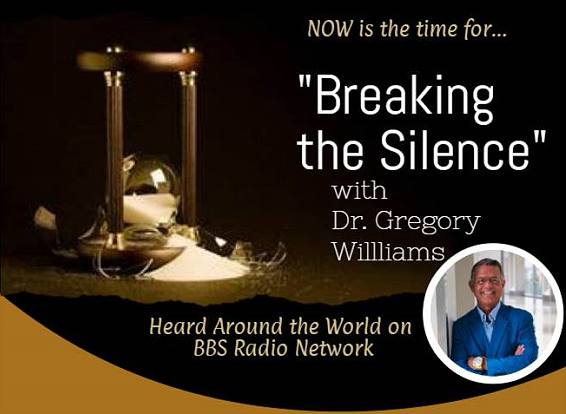


Breaking The Silence with Dr Gregory Williams
Unconquerable: Chief Matt Antkowiak on Trauma, Resilience, Faith, and Becoming a Protector
Guest, Chief Matt Antkowiak, Former Police Chief, Detective, Author and Survivor
This week's guest is Chief Matt Antkowiak, Author and Survivor
Scoop was conducting an interview with Chief Matt, when something amazing happened.
You Will NOT want to miss this life-changing program!
A Father’s Day Conversation About Resilience and Hope
In this Father’s Day episode of Breaking the Silence, host Dr. Gregory Williams welcomes Chief Matt Antkowiak for a deeply personal conversation about childhood abuse, trauma, resilience, law enforcement, faith, and the mission to protect vulnerable children. Dr. Williams opens by reflecting on his recent visit to a juvenile detention center, where many young people had experienced abuse, trafficking, foster care, fatherlessness, and serious criminal charges. He uses that experience to introduce the theme of resilience, stressing that children need adults who teach them how to recover, adapt, keep moving forward, learn from failure, and believe that there is always hope.
Learning Resilience the Hard Way
Chief Antkowiak explains that resilience is not simply something people are born with; it must be taught, modeled, and practiced. He says he did not learn healthy resilience as a child, but later encountered it in the military through drill sergeants who taught him that each step forward is a choice. He describes how, as a young person, he dealt with trauma through hiding, shame, drinking, fighting, and suppressing pain. Looking back, he says he was leaving “breadcrumbs” and wanted someone to notice, ask the right questions, and help stop what was happening, but the adults around him did not respond in the way he needed.
Abuse, Silence, and the Need for Protectors
Much of the conversation centers on the silence that surrounds childhood abuse and the urgent need to equip parents, teachers, pastors, coaches, and other adults to recognize warning signs. Chief Antkowiak says most abusers are known to the child, often occupying trusted roles within families, schools, churches, sports, or community circles. He argues that society must shift from merely responding after abuse happens to building protectors on the front end. For him, breaking the silence means removing shame from survivors, asking better questions, teaching children what trusted adults look like, and understanding that the shame belongs to the abuser, not the victim.
Law Enforcement, Human Trafficking, and Searching for Justice
Chief Antkowiak reflects on his long career in law enforcement, including military service and decades as a police officer and chief. He explains that working sex crimes, child abuse, and human trafficking cases gave him a way to pursue justice for others, even while he had not yet publicly spoken about his own abuse. He discusses major investigations, including the Blakemore human-trafficking case, and says that catching offenders did not fully heal him because he was still searching for justice for himself. Over time, he came to understand that his pain had become part of his purpose and that his experience helped him connect with survivors while also understanding the behavior of predators.
The Moment the Silence Broke
One of the most powerful parts of the interview comes when Chief Antkowiak describes publicly revealing his own abuse during a media interview connected to a school-related abuse investigation. He says an investigative reporter recognized that the case seemed deeply personal, and Antkowiak unexpectedly disclosed that he had been abused as a child. Moments later, he repeated that disclosure in a press conference, realizing only afterward that he had broken a silence he had carried for decades. Rather than stopping, he returned to the work, but the moment forced him to begin processing what he had long buried.
Faith, Healing, and Taking Back What Was Stolen
Chief Antkowiak also speaks openly about faith, therapy, forgiveness, and his belief that God was present with him even in the darkest moments of his life. He recounts a life-threatening incident as a Dallas police officer in 2000, when he survived being dragged by a car and badly injured, and says his young son’s comment that “God went to work with my dad” changed the way he understood God’s presence. He connects that experience to his later healing, saying he has come to believe that God did not create the abuse but was with him through it. He also shares how a trafficking survivor once told him about Jesus and reminded him that God loved him, a moment that deeply affected him.
Team Unconquerable and the Call to Expose the Darkness
The episode closes with Chief Antkowiak describing his developing movement, Team Unconquerable, and his upcoming book, Unconquerable, which he says is planned for a Black Friday release tied to reclaiming the anniversary of one of the hardest moments in his own story. His mission is to expose darkness, speak up, and build protectors who can recognize abuse, support survivors, and prevent harm. Dr. Williams thanks him for the conversation and says he wants to bring him back for another episode. He closes with the show’s recurring message: survivors are not alone, healing is possible, the silence can be broken, and there is always hope.
Guest, Matt Antkowiak
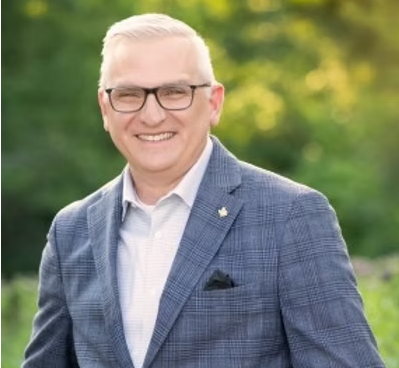
Biography from Matt's website: www.mattantkowiak.com
I'm Matt Antkowiak.
I am a husband, father, grandfather, survivor, protector, author, speaker, and co-founder of Team Unconquerable. My life has been shaped by a simple belief: darkness thrives when good people remain silent, and lives change when ordinary people choose to stand and protect others.
As a child, I was sexually abused by a trusted family friend. Like many survivors, I carried the weight of that trauma in silence for decades. The abuse stole part of my childhood, shaped how I viewed trust, and left wounds that would follow me into adulthood. For years, I searched for ways to outrun the pain. Instead, God used it to forge a purpose.
I spent the next forty years pursuing the very darkness that wounded me.
My journey of service has taken me from the United States Army, where I served first as a Military Police noncommissioned officer before commissioning as an Infantry Officer serving with the 101st Airborne Division, to the fire service as a firefighter and EMT, and ultimately into law enforcement. Along the way I served as a patrol officer, detective, human trafficking investigator, police chief, and school safety leader. I have worked major criminal investigations, led crisis responses, helped expose institutional failures, and dedicated my career to protecting children and vulnerable communities.
I am also an 8th Degree Black Belt, Krav Maga Grandmaster, and lifelong student of the warrior mindset. Through martial arts, leadership development, and public safety service, I have spent decades teaching others how to prepare for adversity, face fear, and protect those entrusted to their care.
I am the author of Unconquerable, a memoir that tells the story of a sexually abused boy who spent the next forty years hunting the very darkness that wounded him. It is a story about trauma, justice, faith, healing, and redemption. More importantly, it is a call to action.
My story is not ultimately about what happened to me. It is about what God can do with broken things. My abuse became my purpose. My pain became my platform. My story became my mission.
Today, that mission is clear:
Protect the Vulnerable. Expose the Darkness. Build Protectors.
MY MISSION
Building a Generation of Protectors
For most of my life, I thought my story was about survival. I was wrong. Survival was only the beginning. The truth is that millions of children, families, educators, churches, and communities are facing the same darkness that shaped my childhood. Predators continue to exploit the vulnerable. Institutions still place reputation above truth. Good people often remain silent because they are afraid, unprepared, or simply don't know what to do.
I know this because I have seen it from every side. I am survivor. I was a police officer and investigator. I was a human trafficking task force member. I have seen it as a school safety leader.
I have seen it in churches, schools, homes, and communities. The faces change. The locations change. The circumstances change.
The darkness does not.
That is why my mission is larger than a book, a speech, a training program, or an organization.
My mission is to help build a generation of protectors. People often ask why I continue to speak publicly about child abuse, exploitation, institutional failures, school safety, and the difficult realities that most people would rather avoid. The answer is simple. Because someone should have spoken for me. Someone should have recognized the warning signs. Someone should have asked the difficult questions.
Someone should have protected the child.
Too often, they did not.
Today, I have the opportunity to be the adult I needed when I was eleven years old.
That responsibility drives everything I do.
Through speaking, writing, training, private investigations, consulting, leadership development, and the Team Unconquerable movement, my goal is to equip ordinary people to do extraordinary things when it matters most. I want parents to recognize grooming behaviors before a child is harmed. I want educators to understand their responsibility as outcry witnesses. I want churches to create environments where abuse cannot hide. I want leaders to choose truth over reputation. I want men and women to develop the courage to confront evil rather than ignore it.
Most importantly, I want people to understand that protection is not someone else's responsibility. It belongs to all of us.
That is my mission. That is our mission. And that is why we fight.
OUR METHOD
My life's work can ultimately be summarized in three commitments.
Protect the Vulnerable.
Every child deserves a safe adult. Every victim deserves a voice. Every vulnerable person deserves someone willing to stand between them and harm.
Expose the Darkness.
Evil survives in secrecy. Predators depend on silence. Institutions fail when they choose reputation over truth. We must be willing to confront difficult realities and shine light into dark places.
Build Protectors.
The future will not be secured by spectators. It will be secured by prepared, courageous men and women who are willing to serve, lead, protect, and act when others cannot or will not.
I cannot change what happened to me.
But I can dedicate the rest of my life to ensuring fewer people have a story like mine to tell.
Today, I speak to schools, churches, law enforcement agencies, parents, educators, and community leaders across the country about child protection, institutional accountability, school safety, crisis leadership, faith, resilience, and the responsibility we all share to defend the vulnerable.
Together with my wife, Stephanie, I co-founded Team Unconquerable. Our mission is simple: to equip people to wage spiritual warfare, win physical battles, and live lives of courage, purpose, and service. Stephanie leads the spiritual development, discipleship, and wellness side of our mission. I lead the protection, preparedness, leadership, and warrior development efforts. Together, we are committed to helping others become unconquerable.
This mission extends beyond physical protection. Together with my wife Stephanie, we believe people must be equipped for both spiritual warfare and physical challenges. While I focus on protection, preparedness, leadership, and developing protectors, Stephanie leads the spiritual formation, discipleship, and faith development side of our mission. We believe lasting transformation happens when people are prepared to fight both the battles they can see and the battles they cannot. That belief became the foundation of Team Unconquerable.
We are building a movement dedicated to helping people live with courage, purpose, faith, resilience, and responsibility. We want to develop strong families, strong communities, strong leaders, and strong protectors. We want to help survivors find healing, equip leaders to lead with integrity, and challenge ordinary people to step forward when others step back.
Breaking the Silence
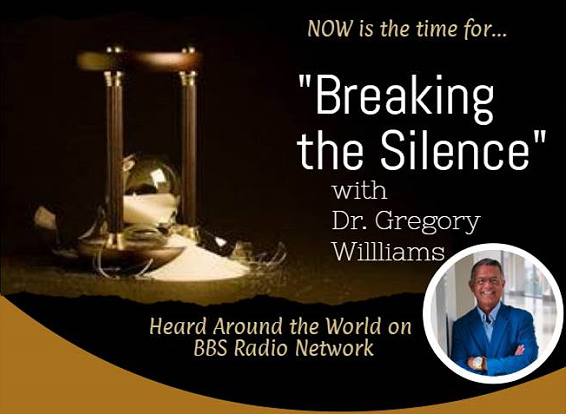

“Breaking the Silence with Dr. Gregory Williams”
Now is the time for you to step out of your own personal darkness and break the silence that has been hidden and closed up inside of you.
“Breaking the Silence with Dr. Gregory Williams” radio program will offer the listeners a Road Map to Hope each and every week with keys to discover within yourself that ray of light to make your day better and brighter. Dr. Williams will not only discuss his own personal journey of overcoming the darkness of years of horrific sexual child abuse in the hands of his father and his father’s friends, but Dr. Williams will also feature special guests that have their own personal stories of overcoming obstacles in their lives and becoming victors instead of victims.
“Breaking the Silence” will also feature information from the professional and medical field that will dive into the important research involving Adverse Childhood Experiences (ACEs) and how to build Resiliency in yourself and in your children. Along with this information will be special guests from greatest minds in the United States to share their expert research and thoughts on this very important subject that each person needs to be aware of.
Now is the time to invest a few minutes each week with some awesome information to give you steps to HOPE and keys to HAPPINESS and PEACE. NOW is the time to Break YOUR Silence and breakout into a NEW and BETTER YOU! Join us each week beginning August 13, 2019 for “Breaking the Silence with Dr. Gregory Williams”. You won’t want to miss a single program. Heard around the world on the best radio network on the airwaves, BSS Radio Network available on iTunes, Google Play, iHeart Radio, Facebook Radio, Spotify and over 100 other high quality digital radio stations.
Welcome to Breaking the Silence with Dr. Gregory Williams.
Dr. Williams is the author of the acclaimed book, Shattered by the Darkness, putting the
pieces back together after child abuse.
Dr. Williams is on the senior leadership team at Baylor College of Medicine in Houston,
Texas.
And Dr. Williams travels the United States speaking and training professionals, parents
and victims about the importance of dealing with abuse and personal trauma head on and
not being afraid to break the silence of your own personal pain.
Feel free to call in to the night show at 888-627-6008 and speak with Dr. Williams
and his guests live on air.
And now, your host, Dr. Williams.
Well, good evening.
Happy Father's Day to all the dads out there.
And it's just great to have you with us this evening.
8 o'clock here live Central Time in Houston, Texas, and right behind me is the beautiful
Texas Medical Center.
The sun's going down.
You're going to see right about over here in a few minutes.
It'll be completely down and to get dark.
And it's just great to be here.
We've had all kinds of exciting things.
I think it was yesterday.
I looked out my window and there was orange or pink shirts everywhere waiting for the
athletes to all be escorted in.
And because right across the street, there's the big soccer tournament that's going on
the World Cup.
And it's been an exciting time here in Houston.
And I know our guests is from the Dallas area and they're doing the same thing up in
that town.
And then a couple of other guests we had, one not too long ago, Micah in Diana from
Kansas City.
They have a tournament going on up in there.
So it's all around the country.
But I think about 500,000 extra people are in town right now.
And I really haven't noticed it until yesterday.
It was like, wow, now they're just like getting kind of crazy.
But it's a great week.
We had some rain this morning, but it's beautiful this evening.
So it's just great to have you.
We're just going to set back, grab you a dive mound or a cup of coffee or some sweet
tea and just enjoy the program tonight.
But I think you're going to want to make sure you have a notepad and a pencil because
I try to each week.
The guests that we have on are and tonight is no exception.
He's going to lay you out.
We'll be able to give you some information that over his years of experience, you're
going to want to know and you're going to want to jot this down and you're going
to want to know his new book that's going to be coming out probably around Christmas
time is going to be a great Christmas gift to everybody that you know.
But you're going to want to write some things down to be able to get involved with some
things and facts that he's going to know from his experience.
So you want to get involved tonight.
I would love for you to call in at 88-627-6008 and you can talk right to Thomas or better
known as TJ at the radio station.
He'll pass you right through to our guests and myself live.
So feel free to make a comment to our guests tonight or you can get on and looks like we
are on.
Shatter by the darkness Facebook page and we're live there or you can text me right
here at 832-39-66525 and I've already been getting text just saying, hey, we're looking
forward to the show tonight.
If you have a comment at the bottom of the hour we're going to take a little short commercial
break.
We'll read all these texts and come back and ask your question or comment if you don't
want to talk live.
Some people will shy to be on I guess live radio all the way around the world and I
burn.
I think TJ what?
So 66 countries tonight right now live.
So that's just awesome.
I'll tell you what.
I am being Father's Day.
I got the privilege and our guest knows all about this way more than me, but I got the
privilege to spend an entire morning in a juvenile detention center and I spoke to every one
of the youth there that have been placed there for capital murder, drug charges, assault,
robbery, and they're 10 years old to 18 years old and I walked in those rooms I'm thinking,
look at their eyes.
It's just unbelievable to think that these young children could be in the situation that
they're in and some of them were, had the look of hopelessness and I got to share my
story with them, but I heard theirs and then asked the question that I thought was very
appropriate even now that it's Father's Day.
How many of you were raised in a single family home where the mother was the only one around
and probably half of them were foster care so they didn't have either mom or dad, but
every person of all four groups raised their hand that they did not have a father around.
And I think as we look at Father's Day, I think that's important that I think it's time for
us to get the bandwidth in our country, in our families to be able to have that father
figure in the presence of our most valued treasure, our children.
And there's a, there's a, the most precious gift that I believe that we can give our children
is the ability to be able to learn how to build and discover.
They don't have to go and learn it.
It's already inside of them, but to kind of brush off the dust of a word that I know
our guest knows a lot about them.
When he comes on the screen here, we're going to ask him about that, probably right out
of the shoot, resilience.
How did children that have gone through, well, I've gone through our guests tonight and probably
all of these children, they've said they were being sexually abused, they were being trafficked
before they got into the juvenile detention center, but helping them build that resistant
resilience is a huge present, a gift that we can give them.
And resilience is not the absence of difficulty because that's never going to happen in this
life.
Even God's word tells us that you're going to have troubles when you have not if, but
when you have troubles, when you have trials, this is how to respond.
But it's the ability to be able to recover.
It's the ability to be able to adapt.
It's the ability to be able to keep on keeping on moving forward through all of life challenges.
Now, from both of our stories, and you want to hear mine tonight, because you're going
to hear our guests tonight, you're going to find out that we probably did it wrong.
We probably hit it away, put it in the box and hope nobody ever found that box.
And that that's not the way we probably should have handled it.
And we're going to find out his response to that also.
But we need to understand that as children deal with challenges, they need the ability
to face those challenges head on.
A lot of parents rush in, fix it for them, and never teach them anything.
We'll get out of the way, kid.
I'll take care of this for you.
And you know, when you're a dad, you know, and I know our guest in his book mentioned
G.I. Joe a lot.
I had G.I.
Joe's and I played with a lot.
And I don't know if you remember a map, but with the arm would snap off.
You could hardly ever get that arm back on because it's that tight little elastic band
inside and dad always had to fix it.
So I was going to run into dad and say, dad, can you fix this?
And he get out a little thing and the screwdriver and fix it for me and say back and hand it
back to me.
And it's dad's job to fix things.
But it's not the parents job to always rush to fix it.
I wish he would have said, son, this is how to do it and show me.
It was so much easier for him just to fix it and hand it back.
And I had to learn that ability through my own grit and endurance and determination and
hard headness of learning how to do it.
But parents sometimes step back, watch them and then teach them how to get through the
challenges that they're facing and then encourage them to do it again.
You can do this again.
You can do this on your own.
This is how to do it.
This is the best way to do it.
And then teach them and train them to have a mindset of growth.
Hey, every time you fall, every time you fail, every time you slip and smack dab on your face,
you got to get up, brush yourself off and don't give up, but learn to do it again.
Keep trying till you learn how to do it and helping them understand that these failures,
these falters, these speed bumps or potholes can help them grow in their life and improve
through practice, through extra effort.
And children need to learn that setbacks are temporary, not permanent.
And in that they learn resilience.
Another way is to allow that failure to become a teacher.
What did you learn from this?
What would you done different instead of yelling, screaming, spanking?
I had a lot of that in my household of downgrading me, downgrading your children.
Failure is not the opposite of success.
It's just part of the journey to be able to reach the destination of success.
And when a child fails, what did you learn from this?
What would you do different and celebrate the efforts that they actually did that was
different than the last time that they failed?
Also teach gratitude.
I think that's something that our generation today don't really understand.
I think maybe half the adults don't either, but teach them how to find something positive
and something to be thankful for in each and every day.
And I think that would be an important help for resilience.
And then most of all dads model that resilience yourself.
Show them what you can do through it, how they should handle it, be their model, and
the children are watching you 100% of the time.
And they have that BS detector on them and they know when they're lying to it.
They know when you're misleading them, they know and it's like, hey, don't do what I say
or don't do what I do, do what I say.
It doesn't work with kids.
They need to see it modeled in their life.
And there's probably five phrases that every child ought to hear from your lips and then
will come to our guest.
One is I love you.
Men, don't be afraid to tell your kids you love them.
They need to hear that.
They need to hear you tell your spouse that you love them too.
Also, hey, son, hey, daughter, I believe in you.
I believe in you.
I think probably one of the most devastating words that we hear on this story, on this
radio show, probably every other week, is when they finally told their parents about
what happened to them, what traumatized them, what abuse they went through, probably
75% of the parents say, I don't believe you.
Are you kidding me?
You need to believe in your children and tell them, I believe in you.
Three, you can do the hard things.
You can do this.
You got this in you.
You can do it.
I know you can.
Four, mistakes help us learn.
We learn from our mistakes.
It's not failure.
It's another chapter that will put us at another level if we can just learn how to deal with
it.
Five, without, and I have no problem getting religious, tell them that God has a plan just
for them.
They are wired, wired, especially for a God divine game plan blueprint that he has destined
just for every person on this earth.
We're all unique.
We all have different gifts for a reason so we can do exactly what God wants.
And then there's a bonus that I always end the program each and every week is no matter
what.
No matter what you've done.
And I told the kids this in the detention center a couple of days ago, it doesn't look
like it, but there's always hope.
There's always hope.
Well, you still have breath.
There's hope for you and I'm going to believe in you.
That's all I got on that.
I wanted to keep that short today, but I want to bring in our guests today and TJ, if you
could go ahead and bring Chief Matt right here to us.
Chief Matt and Kovac.
Very good.
Hey, good.
Chief, welcome to the program.
And thank you for being here.
We are waiting for the investigative reporter from what's the station?
WFA.
Hey, is that up in Dallas?
It is.
It is Dallas.
I met a scoop.
Jefferson and Emmy award winning reporter investigative reporter.
If he comes in, he's supposed to be with us tonight, but he kind of brought us all
together.
I wanted him to kind of be there to tell his side of this, but chief, welcome to the program.
And I'm so looking forward to hearing what you had to say.
And we will just fill in for scoop no matter whether he's here or not.
How you doing?
I'm doing great.
I'm doing great.
I really appreciate you.
What do you think about resilience?
You know, it's resilience is an interesting thing.
It's learned.
I think too often we think that all the things we need to be successful life or are innate
inside us.
But what I've learned in my life is that's just not that's just how it works.
You have to be taught resilience and, you know, growing up in a situation I grew up in, there
wasn't resilience for me.
And it wasn't until quite honestly, I got in the military and there were intentional instructions
by drill sergeants about how to how to get I knew how to deal with trauma.
I knew how to deal with abuse.
I knew how to hide things and it had to lie real well.
I needed to walk around with shame and guilt.
But what I sure didn't know was how to how to deal with things in a healthy way.
And so in my teens, it was drinking.
You know, I got into a lot of drinking early in my in my teenage years.
I got into fighting.
I wanted to physically fight everybody.
Part of that was probably trying to take back what was taken from me in a lot of ways.
And the drinking was probably in a large part trying to suppress some of the pain that
was there.
And really what I did, Doc, is I just buried it.
I just I wanted to pretend like it didn't happen.
Even though there was no way I could avoid the horrors that I replayed in my life all
the way to this week at night.
Sleepless nights because of the abuse that for years that I went through.
But probably the best advice I got from a drill sergeant was you have two choices, young
men.
You can get up and live in spite of this pain that you're in or you can lay there.
It's choice.
And when he kept pounding this in their heads constantly, there's drill sergeant slayer,
which is great.
What a great name for a drill sergeant, by the way, that was his government name, Slayer.
But he would tell us every every step in front of you is a choice.
And you're either going to go left, right or down the middle.
And he says, I hope you get on the middle.
And that was probably the greatest lesson with resilience is it doesn't matter how bad
you hurt.
Just put one foot in front of the other.
But I didn't have anybody teaching me that as a young child and as a teenager.
I wish I had.
I wish there would have been adults that would have spoken to the circumstance that there's
no doubt they knew about.
Would you been a recipient of that?
Oh, I was seeking it.
I was seeking it.
I would use this term, leaving bread clums.
I should have made my book that maybe dropping breadcrumbs.
I was dropping breadcrumbs everywhere.
I wanted it to stop.
I didn't know how to put into words what was happening.
You know, you think about a toddler.
They cry because they can't speak.
They're frustrated with the circumstance.
They can't put into the language we understand.
And we just assume that when kids take one language, that they take on the emotional
intelligence that comes with language.
But emotional intelligence is something that's taught as well.
And you know, I will tell you that it wasn't until I met my wife Stephanie that I even
begin to receive emotional intelligence as a grown up.
That was 25 years old before I realized what is a what does a mother and a wife look like.
And she was holding me accountable to things.
What a husband was supposed to look like.
What a father was supposed to look like.
And you know, we are a product of the examples that are in our environment.
And bless her heart, man.
That woman, she has earned her place in heaven.
And putting up with me.
When she dies, she goes straight to heaven.
Do you have any houses?
There are many houses.
This is us in the book.
She's going to be a really nice one.
I'm just hoping to be somewhere around that house because the reality of it is that these
things we talk about, they're not just innate in us.
Somebody has to sit, put their arm around us and say, hey, this is what life's about.
And the unfortunate thing is like many of the kids that you've dealt with by the time
I was dealing with them in my law enforcement career, it was almost too late.
And I will tell you that.
Think about this here.
Here's a fun thought for you.
Every abuser was abused.
But every person abused doesn't out become the abuser.
And so when we think I had them crazy, I have empathy for my own abuser because I can't
help but to think what did that monster go through to become the monster he is?
And if we could figure out as a society, because it's a cultural thing, sexual abuse of children,
institutional abuse of children, which is worse than sexual abuse, by the way, the abuse that
happens after the fact.
It's a cultural thing in our country.
And at some point we've got to step back and look at the core of it with that crossroads
of drill sergeant was talking about.
You're going to left right or down the middle.
And when a person is at that spot in the road where they're deciding whether to become an
abuser, whether to hide and shame and live in shame, or rather just live in the circumstance
knowing the shame is not theirs.
I mean, there are three choices in front of them.
And the reality of it is all too often we become what we know because that's comfortable.
And to the people that are watching this have been through abusive situations, what I would
tell you is I was comfortable in the uncomfortable.
It became my normal.
I mean, the we could go into the child abuse for days.
My therapist and I spent some time on that this week, but the reality of it is the sexual
abuse lasted more than three years.
And it wasn't like once every few months or it was daily.
And you know, it's not trying to compare or get too graphic, but the reality of it is
that when you're in those uncomfortable situations, you have a choice to make.
And I think it goes to this resilience conversation that we're having.
I choose in that circumstance, I chose to detach.
Very common thing with people who face that when you're powerless.
I chose to leave my body and leave the circumstance and try to relax the best I could.
But the reality of it is that that compounding abuse, at some point you've got to deal with
it and truth be told, I didn't deal with it for 40 years, Doc.
Think about that 40 years.
Yeah, you get the door prize.
I was 37.
Well, hey, you know, I was I think I was talking to you about comparison to dangerous thing,
you know, so I'm not trying to win an award here by any stretch.
In fact, I will tell you that for 40 years, 30 of it, I hunted the darkness that that
I lived in.
And I think the reality of it for me was part of my healing in some weird, strange way was
every single trauma situation I'd step into.
I was looking for the next worst situation because every time I could find something
quote worse in some way, it brought me peace in two ways.
I never got justice in my situation.
My abusers in the penitentiary in the state of Oklahoma, he's serving 427 years for the
sexual abuse of numerous kids and production of child pornography and possession of child
pornography and all those things and he'll be in prison the rest of his life, but not
for my crime and not for what he did to me.
And the reality of it is that I found my justice in producing justice for others.
And I found healing and finding people that had horrific stories.
And it's been said, I don't have empathy, which is an interesting thing.
I think empathy is an interesting beast.
I have a type of empathy.
I have understanding.
I may not be to attach the feeling to it probably for my own good, but man, I think the reason
I was able to sustain such a long time in sex crimes and human trafficking investigations
was because I had the ability to connect ready for this to both the victim and the
abuser because man, I lived with him for three years, right?
I'm not.
He lived in our home off and on, but the reality of it is it doesn't get, you don't get a
better study in criminology than being a victim and living with the abuser in an environment
where you have this predator propaganda going on amongst the rest of the people that were
supposed to be trusted to take care of me.
All the people that should have asked the questions and should have stood for me, teachers
and principals and doctors and nurses and my mother and my brother, my father, who didn't
stand for me.
You know, that's really where as a culture, I think we need to, and that's really what
we're trying to do in the movement is we're trying to shift people's eyes from what law
enforcement do with the mess.
But man, we got to get on the front end of this and we got to equip moms and dads to
ask the right questions, the hard conversations.
We've got to equip children to know what a trusted adult looks like.
Because here's the reality of it.
It's not strangers.
A CDC statistic says 90%, 90%, that's nine out of every 10 abusers are known personally
by the victim.
And I'm not talking about adult sexual assault.
That's even a higher percentage by the way they're known.
I'm talking about under 17 in the United States of America.
It's either a pastor, a teacher, a family friend, a parent, God forbid, you know, not
that worse is worse child abuse is child abuse, but the reality of it is these people in their
inner circles, their coaches, it's their principals.
It's their youth pastors.
And you know, we can equip moms and dads, doc with the right questions to ask.
We can equip moms and dads with the courage to speak up.
We can build protectors.
We can expose the darkness and we can build protectors.
And I think that, you know, silence, you talk about breaking the silence, what a great
name for your podcast.
I love that because the way we break the silence is we shine light into the darkness.
We say there's no shame when you or me, doc victims of child abuse.
There's no shame on us.
There's no good.
We should turn from the listeners point of view.
You were the place for how many years?
I served a total of 35 years.
Okay.
That was military.
You didn't tell the world until after you retired.
Correct.
Actually, my last case, here's the, this is, so I'll give you, here's some something
that's not even in the book.
It's not that even scoop doesn't know.
I was going to show this to scoop tonight.
So I'm going to share it with you, doc and the audience.
So we were conducting a lightning strike investigation.
What I mean by that is it was a very unusual investigation.
We had a predator principal who had been sexually abusing kids since 1993, proven in his own
handwriting on apology letter for 1993 to a student he abused.
He abused other students in other school districts as he was passed from one district
to the other and elevated to leadership.
So he finds himself leading a campus, a high school campus on that campus.
At the same time, we had a coach grooming a student and we had a teacher sexually abusing
a student and the girl, the victim who I won't mention her name, she makes an outcry to a
couple friends and those friends had the courage to speak up.
Now, the suspect, rural Barbie who pled guilty, he admits to this in a church gathering the
week before this girl's friends go to the principal who is also a predator and the principal
brings the suspect and the victim together.
Now here's the crazy thing.
I find out about that that that that meeting and in that meeting, the principal comes up
with a plan to conceal the abuse, despicable.
And in that, that results in it taking longer because we get turned on to the other grooming
case.
So we started investigating what we thought was an outcry regarding the grooming case,
which was, they pointed to that case to get us off this other case.
I firmly believe, I can't prove it, I just know bad guys and bad actors.
I firmly believe there was going to be a partnership in the abuse.
And it's not uncommon, by the way, when the most trusted people in your community, everybody
should be willing to stand in judgment and stand under the microscope if you are provided
access to the vulnerable community.
And so that act facilitated a second and more serious sexual assault.
And so I find that out 15 minutes for us was a meet with scoop.
Now Paul has put a pin in that.
There were, I talked about in my book coming up, Unconquerable, there were some circumstances
that occurred that there was no way a educator who was spanking me at the time because it
was allowed back then when his child says, I don't care if you swat me, hit my legs,
just please don't hit my bottom.
And when he does hit my bottom, I bleed again.
And that results me going to the nurse, which results me going to the doctor.
So this series of four people plus my dad all find out that I'm bleeding and it's not
from the swats, but nobody asked the important questions.
So so now put those two together.
So I find this out.
Now in the in the 30 years of being a cop, I have flashbacks all the time.
I certain smells certain words, certain phrases, certain environments, certain case types.
I would have these these thoughts of, Oh, I got to do something for this because I nobody
did it for me.
I'm going to do it here.
And that was my constant motivator.
And so here I am about to walk into a one on one interview with this investigator reporter
that reported that I don't trust from a from the news channel.
I don't trust, but I know the importance of transparency.
And I told my boss, we're going to be transparent.
I'm going to do interviews.
I'm going to tell the public about this case.
We're not going to hide things.
So I step into that interview and I have not had the opportunity to process.
And so I'm sitting there with scoop across from me, starts asking me questions.
And he says, this seems deeply personal to you.
I don't know how he read that, but he does with the words he is.
This seems deeply personal to you, chief.
And I said, of course it is.
I was sexually abused as a child.
And that's what I dropped.
First time you ever.
First time I spoke it out loud to any.
Oh, wow.
I was all right.
I'll during the interview being taken during the interview being taped.
And my assistant chiefs in there, the lieutenant in charge of the investigations in there, my
administrative assistants in there scoops video, journalists is in there scoops in there.
I get we got to go.
We got it.
We got a press conference like 15 minutes.
So we're we knocked through the interview.
I dropped that bomb.
I just carpet bombed the room.
Could have heard a pin drop.
Then I get up and right still sitting in the room.
I go down the hallway to press coverage of 30 reporters in it.
News cameras all over the place because it's a big case.
And at this point, I'm now processing.
I just outed myself.
I just made an out an outcrop of my sexual abuse as a child.
And I didn't process that yet.
Now I'm walking to the room full of reporters.
And I was obviously something was was off because the one of the more senior reporters,
the 30 year veteran reporter says chief, I feel like like people are going to think
you're going to have been dead.
And I'm going to paraphrase.
I said something effective.
Yeah, I'm going to have been dead.
And anybody's not willing to join me on the vendetta to stop sexual abuse of children.
They're the problem.
And she said something to the same phrase phraseology of is his personal to you.
And that's why I said yes, because I suffered continuous sexual abuse as a child.
And that went live.
And then I hear story after story coming back in about people going, Oh my God, you look
so put together chief, you've got everything.
And I walk out of the press conference and that lieutenant is sitting there in charge
of the investigation.
And he does he's like kind of wants to hug me, not really hug me because cops don't hug,
right?
He wants to he's like, and they're all just kind of standing there and I'm like, Hey,
guys, get to work.
Because again, the train had stopped now.
All the cars are slamming into it.
But but I'm just in survival mode again.
Because here I am right back in my abuse and I'm just I'm being resilient.
I'm just going through life now to look back and say, Hey guys, we had an investigation
get done.
Let's go.
And I just go back to work because one of the one of the ways that I've dealt with my
abuse is I achieve.
Yes.
I go do things.
I work my abuse.
People wonder why I find success in all the things I do is because I don't have a choice.
No one's going to do it for me.
And the harder I work, the less I have to deal with my junk and you know, my my therapist
Adam, shout out to Adam if he's on here.
He keeps telling me that I got to I got to slow down a little bit and we have these awkward
moments of staring at each other in therapy.
And he's like, you're really uncomfortable right now.
And I'm like, yeah, I am.
So you need to slow down and you need to process.
And so that's what my therapy journey has been is learning how to process unthinkable
unspeakable things that that are never going to make sense because they're insensible.
It's nonsensical.
What happened to me?
It doesn't make sense.
And thank God it doesn't.
And if it makes sense, anybody, you need to go get some therapy as well.
Yeah.
I'm just going to let the video station know we're not taking commercial break.
We're riding a mill.
We're just going to keep on plowing through.
Okay.
But you can call in just to give them opportunity to slice this 888-627-6008.
And we're just going to keep on going.
How chief did even though you didn't say it out verbally, how was it being played out
through you while you were dealing with some of these most difficult cases probably in
Texas?
All the sexual abuse and the human trafficking that you was involved with.
And did it give you some type of satisfaction like, I got another one.
I got another one.
Or was it a healing process for you?
What's going on inside and under the gray hair while you were doing that?
Yeah, that's a great question.
So probably the biggest case to ever work was it's called the Blakemore case.
Trayvon Blakemore, Magnificant.
He was a human trafficker that ran trafficking organizations, three different organizations
at the same time for 16 years.
950 victims that we had interviewed, 120,000 pieces of evidence.
125,000 pieces of evidence we come through.
I put handcuffs in on top of a sky rise, parking garage in Dallas on September the 11th of
2019.
And I take him to jail.
He's going to go to prison for the rest of his life, brought justice to girls.
These people that think, people think prostitutes are criminals.
I've yet to meet one that wanted to be a prostitute.
The movie Pretty Woman was the most despicable movie ever made because it glamorized something
that's just not glamorous.
And the reality of it is these girls that I've worked with over the years, they don't
want to be involved in it.
Trafficking is not a fun game.
They don't make money.
What they get to do is make memories of trauma over and over and over again every single night.
And so you would think, you know, I come back to Homeland Security Investigations office
where the guys are all high five and we got the guy we couldn't nobody could get him
for 16 years.
This guy was under investigation from every alphabet soup out there.
And on the outside, I was small with the guys, you know, high five and we all smoked a cigar.
All that good stuff on the inside.
I literally felt this just not satisfaction.
Like, okay, so now what's going to happen is more violent.
Less organized, less structured guys are going to step in and fill the void because
here's the reality of it is the darkness is not going to stop the word of God says this
very clearly.
It says in revelations that every tear will be wiped away.
Well, that means there are going to be tears until he comes back.
And so we the wars won, but the battles against darkness are not going to stop.
And I remember feeling when the Blakemore case concluded empty is how is the word I would
use?
Because again, what I had been chasing that I had not articulated until last March was
I was chasing something that I was never going to find, which is justice for myself.
And and the justice for me comes in the fact that I'm a center saved by the grace of Jesus
Christ.
And I've never sexually abused somebody.
I've never been a human trafficker.
I've never robbed a bank, never murdered anybody.
All the things I hunted down and never did those things.
But man, I'm broken, I'm messed up and I've done plenty of bad stuff too.
And and I've come to this realization that that's going to be the only thing that that
allows me healing is to know that even my abuser deserves the opportunity to know Jesus
is.
And I'll tell you, I plan to go talk to him.
I'm not ready for that yet.
But I want to go to him.
I want to tell him about my friend that has helped me get through what he did to me.
And I wanted to see the man that stands up front him that has taken back everything he
took from me that a human could possibly take back through the martial arts and through
the military and through service is all the cool decorations, all the crap on the wall.
That doesn't mean anything.
My kids off the deal with when I'm dead.
That stuff doesn't really matter.
And my pain became my purpose and that purpose has become a platform now to to educate and
to teach because again, simple questions, you know, there's no I'll give you I'll give
you one that anybody listening to this could do today with their kid has anyone ever asked
you to keep a secret that doesn't have an expiration.
A surprise has an expiration.
We're going to surprise down on his birthday.
That's a surprise.
But a secret that has no expiration.
And when a secret escalates to you'll keep it or else, which which I dealt with at the
point, frankly, the muzzle of the gun at 12 years old, you have a choice to make.
And if moms would my mom at one point, I talked about it in the book a little bit.
My mom at one point brought me to her bedroom and she the my users nickname was Pappy.
And she said, Hey, is something going on between you and Pappy?
Well, I'm 12 years old and I don't understand what's going on.
I'm terrified of the woman asking me because she she led with an iron fist terrified of
her.
And she's asking me questions that you just don't.
How do you answer that?
Right?
I'm afraid because I just got threatened a few days ago that he's going to kill my parents
if I tell anybody and he showed a gun.
So this guy's a serious dude.
And so but then she she didn't it was this she really wanted to answer the answer to
the question.
And she wanted to ask the question so she could check the box and move on.
And she never asked me the question again.
And you know, I confronted her about it all recently recently, a little earlier ago.
And she denies it.
She basically thinks I'm making it all up that I lied about it all.
And that and the funny thing, if you if you've been abused or sexually assaulted, there's
no advantage to out in yourself to the world.
By the way, I've gotten 40 now 49 doc.
People have contacted me to tell me about what happened to them.
And you know, one in one and four is the statistic that's out there for young girls.
The stats out there for young boys is as high as one in 20 by the CDC, one in 16 by other
medical boards.
The one that I would tell you is probably more realistic is one in six boys.
I dealt with as many sexual assaults of boys as I did girls and breast cute as many boys
and human trafficking as I did girls.
You know, I think that statistic is so wrong.
I do too.
Because it takes 37 years, 40 years for you to ever reveal because of that stigma.
Yeah, masculinity, right?
You're not.
Yeah.
So I'm not masculine because I was sexually abused as a child.
That's a crazy, but I believed it.
Sure.
Until a year ago, until a year ago, I walked around and shame and in a lie.
I lied to my, I love my wife.
She is the man.
Everything to me.
I've lied to my wife, our entire marriage.
Lined to my kids, my friends have lied to them.
And I've, I've cared as much guilt about, I care as much guilt about lying to all them
as I did about the shame of being sexually abused.
And neither those are the, the father of all lies is the devil and he got me believing
that thing so deeply that I just wasn't going to talk about it because it's taboo because
in some way, in my dad said, at one point, well, at least we didn't know what happened.
We know he's not a faggot.
I was like 13.
I got caught with a Playboy magazine because I was confused.
And that, and that was his response.
And that response, by the way, tells me two things.
Something made him think I was.
So he knew something and in some way he was relieved and in some way what was going on
was, was consensual sex, which by the way, nobody under the age of 17 can consent to
somebody over the age of 18.
No, and that's not a state of Texas law.
That's pretty much an accept the law around the United States.
And so that the twistedness of moms and dads, you got to change how you're dealing with
each.
I loved what you talked about in the beginning before I came along.
I mean, we've got to learn how to talk with our children, not out of our children.
And if the most sacred relationship is your mom and dad, moms and dads, you got to do
better.
I mean, you can have children that are obedient without abuse.
You can have children that will follow the rules that you model.
But when we're modeling, yelling and screaming and hitting, one of my, I'll say epiphany
moments from therapy was probably the most impactful part of my childhood was not the
sexual abuse doc.
It was probably the physical abuse I watched in my home and experienced.
You know, father tried to kill himself a couple of times a mother that attacked him numerous
times the beatings.
I mean, good Lord.
My therapist asked me at one point, he goes, I'm going to ask you now to think about the
story you just, we just talked about.
And I want you to put on the hat, which we've been taking off all this time of a police
officer.
And he goes, chief, Matt, what would you do?
Not my patient, Matt.
Chief Matt, what would you do?
How would you, how would you respond to this?
And he's okay.
What's going on right now?
Cause I mean, my blood pressure went up, my heart rates, you know, I got tears running
in my eyes.
I'm not even a crier.
Um, and he's like, what's going on?
I'm like, Oh my God.
I've never thought of my childhood through the lens of a police officer.
And I said, we're done.
I'm done for the day.
We have, we have a rule.
And I, I, we hit the limit, man.
And I just, I needed to process the fact that, man, I was, I had become in some ways the
yellow or the screamer, the, and, and not, not, I long put that away.
Stephanie, that's a great work in the early in our marriage to get me squared away with
that.
But it was like this, this brick hitting the face saying it was a sustained environment
that created most of the damage.
And, and here's the really sad thing that they did what they, they knew.
You know, I was talking to my cousins and he was talking about how my grandmother was
with my uncle's and aunt's on the other side of the family.
My grandfather was killed in a fire.
And my grandmother back in the 40s had to figure life out of the single mom.
She was extremely abusive.
And so the, the generational wreckage of generational curses.
At some point, we got to break that too.
And the only way we break that is if we talk about these things, not, we don't, I'm not angry at my parents.
I'm not ready for that.
I'm not even angry at Pepe.
I'm past that.
I'm a place that where, man, I forgave him.
I forgave them because I was drinking poison every day on my body and man, it wasn't good for me.
And I had to get to a place where I just said, man, I got to give that to God.
I don't, man, I love to tell you, I get everything that's in this book right here, the Bible.
I don't.
I trust it.
I believe it.
It's not just open.
It's, it doesn't collect Delsomite desk.
I read it every day.
I don't understand 90% of it, not deeply.
I think I do, but I don't.
My brain is the size of a grain of salt in the entire Pacific Ocean, right?
Compared to God's intellect and know how.
And so why would I bother trying to figure all this out myself?
I lean on his word to figure it out.
I lean on his presence, which, by the way, I've got to a place where I realized he was there with me in those dark moments.
Yeah.
I mean, God did not create those dark moments for me.
Do you recall one premiere event, day, action?
When you knew God protected you in that very situation.
And if it wasn't been for him, you would have never made it to where you are now.
But that's just like why I see now that I look back on it and you're starting to deal with with your therapist, writing books.
And you're going to be speaking around the world on this.
What was that one moment where he's like, there God was.
And I never noticed it at the time, but now I see.
Mother's day 2000 is a Dallas cop.
It's a moment that I actually became saved.
I was being drug by car downtown Dallas.
I should have died.
My head hit a car at 45 miles an hour as I was passing it.
Should have ripped my head off.
I'll call it on downtown cameras.
My body scene bouncing off the concrete.
I get in the car shootings, car crash occurs horrific.
I talk about it in the book horrific moment.
Not only can I explain why I'm alive.
My uniform should have been torn.
Should have been my boots have been scuffed.
A court, nobody can understand why.
Why is this uniform look normal?
And the hospital at Baylor Hospital, matter of fact, shout out to Baylor.
Dallas.
My son was in the hospital room when the doctors and the detectives were in there one day.
Trying to figure out how the hell am I alive?
And Blake, I think, is five, six years old, maybe reaches up, grabs a doctor's jacket.
Shakes it.
Now I may be a member of this little, I was a little, I had a head injury, pretty serious head injury,
but something to that effect.
He shook the doctor's coat.
The doctor's kind of dismissed him.
And he goes, I know why my dad survived today.
And the doctor, why?
He goes, because God went to work with my dad.
Why?
He goes, because God went to work with my dad.
And I could not get that out of my head.
And it drove me to rethink my entire existence with Christ.
When I was unconscious from the three fractures in my skull,
break a pleches torn knee, destroyed back, destroyed no surgeries, by the way, fully healed.
It's told I wouldn't walk, wouldn't talk.
Nothing would, nothing made sense to the medical professionals.
100% healing, Stephanie on her knees in the hospital room praying over me,
not letting them drill into my head.
No, that is not going to happen.
There's no way to reconcile that doc.
And so I went on a journey from that moment that is still very aggressively going on,
trying to have an understanding of my relationship with God and really quite honestly,
for someone that doesn't feel worthy to be loved by anyone.
I'm loved by God.
He didn't just come adopt me.
He went to the dog pound and he went to the very back of the dog pound,
where the ones that are all strangling to nobody wants that are mean.
And he said, I want that one and he didn't have to change.
And I will tell you, that's the moment when I realized.
And so here I am in this moment as a Dallas cop, this conflict in my mind that's been
going on for 30 plus years.
And now I'm having to wrestle with this faith problem.
Because now all of a sudden this God that I thought was distant, that I hated,
that I thought was responsible is now I'm having to look ready for this.
Present forward.
And I'm now looking backwards and realizing, well, if he was with me when I'm getting
drug by the car, why would he not be with me when I was being raped?
When there was a gun put in my mouth, why would I not?
Why would I think he wasn't with me then?
And, and I mean, the book doesn't touch even near the horrific things that went on.
I don't think graphic makes the point.
And, and, but I do talk about, I think three or four circumstances,
because I want people to understand the depth of the depravity of sexual abuse of children.
And what I know is the only way I had resilience was there was this incredible
God that gave us free will that doesn't, doesn't allow those things to happen
because he's good.
He's with us because he's good.
Yeah.
And, and so what has caused me to, to begin to cry as an adult for the first time and
my family could tell you probably on a handful of maybe five times I've cried.
Cried more in the last week that I haven't 40 years.
And that's that by the way, that also is nothing to be ashamed of or consider weakness.
Because here's what I know is you can't have courage without fear.
You can't have courage without action.
And when you're called into the difficulty and you're willing to step into the
difficulty, God says this to us, I will set a table in the battle in front of your
enemies and you are going to feast with me son.
And, you know, you don't have to be afraid.
He says that more in the Bible than almost any other phrase other than love is you
don't have to be afraid because I'm with you.
And what I know is a good God that created everything perfect allowed the world to be
broken because of free will because it's not a relationship without free will.
And then, you know, the entire first half of the Bible is a story of mankind trying
to fix it and not able to.
And so God comes up with this great plan.
I'm going to be coming human to do for them what they can't do for themselves.
So he comes here on a special operations plan, lives a perfect life.
He's he tax up puts his AR 15 on and does the hard things perfectly.
And then when it's all sudden done, he goes, you know what?
I'm going to let you accuse me wrongly because he's if he's a good God, good doesn't
exist in the absence of justice.
And this is what a lot of sexual abuse people held their hands when they were
crying with me and I said, justice is part of God's will.
This, this, this evil that you went through is not part of his will, but
justice is will because he could and there can't be good without justice.
So God being fully good has to reconcile this world with, with justice in some
way for our P brains to figure it out.
So what does he do?
He says, put me on a cross, even though I could snap my fingers and stop at all.
I'll go to that cross.
This painful is going to be, I'll be scourged because I want to make sure that
all the penalties paid for and then I'm going to go defeat death and I'm
going to come back and I'm going to give you the chance.
Now here's the, here's the kicker is you have a choice to accept or not.
And I think it's, I would be, I would miss the opportunity to share the back
story of Blake Moore.
This is really critical, Doc.
One of the victims who had been with him for 16 years, four to five
sexual acts a day for 16 years.
When I first saw her, she was frail, beaten, broken, skinny.
What you would think of a street walking prostitute looks like.
18 months later, when we're getting ready for grand jury in walks, the, the,
the file, because that's, you know, we have the file in front of us.
She's walking and we're going to prep for grand jury.
And I don't reckon I'm like, we got the wrong.
This isn't the right person.
She sits down and as she's talking, I'm like, oh, she's had the story spot on,
but she doesn't look the same.
So we take a break at one point and she looks at me and my partner says,
can I talk to you guys for just a moment?
And we're like, yeah, sure.
Cause we have a rule you can't talk to them by yourself.
So we, we, everybody else leaves her room.
Just the two of us, the other agent in Maine.
And she goes, um, you guys keep looking at me strangely is everything.
Okay.
Are you two okay?
And we're like, yeah, we're, we're great.
I said, I'm actually, I'm so encouraged because I've, I'm not, I'm not seen this
in a victim before.
You're fully healed.
And she goes, well, do you want to know why?
And I said, please for give me, give me this, like a bottle open cell.
And she was, well, I've been at this, this place,
Valiant Hearts, which is a non-profit.
We work with the protect the girls and help them rehab.
She was, and I met a friend there and he changed everything.
And I'm like, Oh my gosh, how do you change everything?
And she goes, can you sit down?
I'm going to tell you about my friend.
And she starts to tell me the gospel of Jesus Christ.
And she goes, Matt, you need to know who he is.
And I said, I can't say her name.
I said, I know who he is.
And I said, oh my God, she goes, I feel, and this is what was real.
She's what points at me.
She was, I think you need to know that that he loves you.
She had no idea what she knew because all victims have a way to tell other victims.
Yeah.
She knew that the truth.
She knew by the questions I was asking that there was something going on.
It was a breadcrumb I had left.
And she's now an attorney, lives in a different state, is an advocate for human
traffickers.
She is as healthy as can be.
And she will tell you that my scars make me strong.
Yeah, but my scars are not ever going away.
And it's, I'm sorry.
I mean, to hijack this from a, from a faith standpoint, but you open the door and
brother, I just, I can't.
It's great.
I just can't.
I can't reconcile the mess I went through.
And by the way, I could tell you story after story is a cop of all the dumb
things I did that I should have been killed in the jokes.
Always been, I've got eight of my lives eaten up and I better be careful because
I'm not, I'm not the right of them.
Um, but what a cool God we have that, that, that he can take the most darkest,
despicable things in my life.
And now I get to go around to talk about him and how he's, I'm not fixed.
How he, how he's allowing me to work in progress, to be a better husband on
Father's Day to be a better father, um, to be a better friend.
Uh, we, we talked about this off the air before that, um, my friendship would
use really weird because I don't trust people and I don't have friends.
Uh, very few people are really in my inner circle and, um, it's through this
process of healing and, and saying I'm not ashamed.
I'm not guilty.
I have nothing to fear.
Um, I, cause I got, I serve a good God.
And my pain is going to be my purpose for the rest of my life.
I don't know what it looks like.
Uh, you know, our, our movement team, unconquerable is, is, and it's doing,
it's doing this work.
Uh, we're trying to holistically approach spiritual warfare, physical warfare,
speaking about educated abuse, institutional abuse, you know, speaking in,
uh, anybody to listen, I'm talking about child sexual abuse and, and
trusted relationships and what we've got to do.
And, uh, my new book coming out, um, I actually, I'm going to, it's going to
launch sooner than I thought we're going to launch Black Friday.
Um, we, we started to talk about the significance of the book and one of
the publishing guys said, uh, he couldn't get through the first three chapters
out balling and he said, um, I think we need to launch it on the anniversary
of that Monday.
What did you say?
That's going to be Black Friday is the, the, the 28th, um, or I'm sorry, the 29th,
or 20, 20, 28th of, uh, of November is when it's going to launch.
Okay.
And, uh, we're doing that specifically because of one of the most horrific
abuses I suffered was on that day.
Right.
And, um, it's my way of taking some of it back.
That's right.
Um, you know, let the world hear the story not to feel sorry for me, but to
be encouraged to speak up and speak out and stand firm as a protector of, of
the vulnerable because everyone can be a protector.
Um, if, you know, if they go to team, unconquerable.com, they can start to
see the journey where we're still rolling a lot of stuff out because we're
trying to figure this thing out.
Um, but we're on a mission and that mission is really simple.
We're going to expose the darkness.
We're going to speak up and we're going to build protectors.
And, uh, I don't even know what it looks like, doc.
I, I hope, uh, I hope to come out.
I want to, I want to come down and bring you a book, um, and, and get back on,
um, and, and tell us more stories.
Maybe I don't know.
I'd love to have you back on even before the book launch.
Yeah.
Anytime back on, and hopefully scoop and join us.
Man, we got, we got a minute before they go to the next show.
Thank you so much.
I'd love to reschedule another date for you.
I didn't even get to any of my questions after reading, uh, about half of the
book so far.
Okay.
And, uh, I got to have you back, but this was fan.
Anytime you let me know and I'm on you, you, you let me know I'm here.
Anytime.
We'll do it.
So maybe there's a reason scoop wasn't with us tonight.
Maybe got, got to have a back home with you next time.
Thank you so much.
Appreciate it.
God bless you.
Happy Father's Day.
You too.
Tell your wife.
Thank you for sharing a, uh, you with us tonight.
Yes, sir.
We'll have you back on it.
I can't wait to see the book and how well it's going to do.
It's going to shoot to number one overnight.
God bless you.
Thank you.
Thank you, sir.
As we close out the program like you always do and I've already said it once,
but I'm just going to be real fast because, uh, we're out of time.
But thank you, uh, for the chief for being on, but there's always hope.
Uh, it's time to let somebody know, uh, that what's happened to you.
You can get through it, but use it now to expose the darkness.
That's what it's all about for you to get time to heal.
You're worthy of that.
And thank God that he has brought Matt where he has so far and he's going to take
him all the way to be able to help thousands and thousands of people, but
never forget you're not alone.
And there's always hope.
Join us right here next week for another edition of breaking the silence.
Thanks again, chief.
God bless you.
Have an awesome, awesome night.
We'll see you next week.
Thank you for listening to breaking the silence with Dr. Gregory Williams.
To contact Dr.
Williams dial 832-396-6525 or email him at shattered by the darkness at gmail.com.
And don't forget to join us each Sunday night at 8 p.m.
Central time 6 p.m.
Pacific on VBS radio station one for the next episode of breaking the silence.