The Newsroom, Blogs, Articles, Featured Guests, Headlined Shows and Indie Music
Join Maria and I as we cover the one year anniversary of the Charlottesville riots where white supremacists demonstrated the removal of a statue of Robert E. Lee. They are now planning a demonstration this weekend in our nation’s capital. And, Maria has been busy this week attending the 126th American Psychological Association’s annual conference! She will share with us the latest research, literature review, and the internationally renowned psychologists she met there!
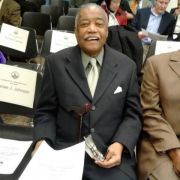
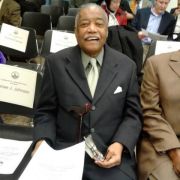
Sasha Talk with guest Donald Newsom, founder of https://bbsradio.com
All About Hemp! This week we'll be talking to our guests Linda Delair, a Sustainable Business Consultant and Lea Walters, a Hemp Solutionary about raising awareness about the environmental and economic benefits of restoring industrial hemp in America and elevate public consciousness about hemp as a basis for a healthy green economy. Join us!
Advanced Consciousness Series:
Earth Influenced by
Enlightened Thought
How does a successful architect go from travelling the world designing and project managing some of the finest 5 and 6 star hotels in the world to contributing to a meeting of Russian Government leaders on sustainable community living and building Eco-Friendly Heart Centered villages?
In 2011, Paul was working overseas in Asia and Caucus region, delivering projects for some of the wealthiest families in the world. Which included the design, implementation and management of 5 and 6 star hotels, Resorts, and VVIP residences and Penthouses.
Although the money was there, and life was relatively easy, Paul became more and more disenchanted with the world of construction, and started to think that Architecture was not his path at all. He experimented with his other passion, music, in the hopes that he may be able to make a difference here, and share his message, but after 2 years of hard work, with several music groups, Paul realized that this was just a distraction, and at the end of 2015, hit a major juncture on his journey.
It was the beginning of 2016, on his 40th birthday when Paul decided it was time to make some drastic changes, and dedicated himself to daily practice of meditation, and self-reflection, to see if he could find peace at least with his present path, and do much needed healing work. It was through the dedication to his inner journey that Paul's mission slowly began to unfold for him, while he built a bridge between his 3D life and his soul's calling.
Ashli had the honor of meeting Paul via phone in November 2017 while providing the counseling portion of his Remote TransPersonal Release Session. At that time he had just found a large parcel of land in New Mexico, where he had visions of building a community, but not only a community, but a living school, that would be an educational and inspiring platform to educate and teach the tools of self-reliance, natural building, permaculture, etc, and facilitate a shift to sovereign community domains. Ashli is honored to support Paul in sharing his heart-centered mission in his first media interview.
After his trip to New Mexico, Paul founded the concept of Haven Earth, a company that he felt he needed to bring to life to be able to offer some platform to assist with the transition into a community centric model of living, a self-reliant life.
Paul's journey from corporate life to living his mission is inspiring and honest - as he shares his journey, his stumbles and the amazing way trusting in his guidance opened doors he had only previously dreamed of.
Tune in for an amazing conversation and help spread the word on social media! And if you are drawn, join Paul in September for a life changing, soul expanding hands-on natural building project in Bodrum, Turkey.
doctorate in patristics and author
Joseph P. Farrell has a doctorate in patristics from the University of Oxford, and pursues research in physics, alternative history and science, and “strange stuff”. He is the author of the following books in the field of alternative research:
The Giza Death Star
The Giza Death Star Deployed
Reich of the Black Sun
The Giza Death Star Destroyed
The SS Brotherhood of the Bell
The Cosmic War
Secrets of the Unified Field
The Philosophers' Stone
The Nazi International
Babylon's Banksters
Roswell and the Reich
LBJ and the Conspiracy to Kill Kennedy
Genes, Giants, Monsters and Men
The Grid of the Gods, with Dr. Scott D. de Hart
Saucers Swastikas and Psyops
Yahweh the Two-Faced God: Theology, Terrorism, and Topology, with Dr. Scott D. de Hart (Amazon Kindle e-book)
Transhumanism: A Grimoire of Alchemical Altars and Agendas for the Transformation of Man, with Dr Scott D. de Hart
He is currently researching and writing two more books, plus jointly writing a second e-book with Dr. de Hart.
About HESS AND THE PENGUINS: The Holocaust, Antarctica and the Strange Case of Rudolf Hess By Joseph P. Farrell
Pursuing his investigations of WWII machinations, secret international agreements, breakaway civilizations and hidden wars in Antarctica, author and researcher Joseph P. Farrell examines the continuing mystery of Rudolf Hess, his sudden flight to Scotland, his supposed imprisonment at Spandau Prison in Berlin and how his flight affected affairs in Europe, Israel, Antarctica and elsewhere. Farrell looks at Hess’ mission to make peace with Britain and get rid of Hitler—even a plot to fly Hitler to Britain for capture! How much did Göring and Hitler know of Rudolf Hess’ subversive plot, and what happened to Hess? Why was a doppleganger put in Spandau Prison and then “suicided”? Did the British use an early form of mind control on Hess’ double? John Foster Dulles of the OSS and CIA suspected as much. Farrell also uncovers the strange death of Admiral Richard Byrd’s son in 1988, about the same time of the death of Hess. What was Hess’ connection to Antarctica? It is Farrell at his best—uncovering the special operations and still-secret activities of WWII and the breakaway civilization. September 6 Publication Date. Pre-Order Now! Farrell's latest book!
Topics include: A Death in Spandau; The Autopsies; Anomalies Noted by Hess’s Son, Wolf Rüdiger Hess; Hess, the Haushofers, “Geopolitics,” and the Thulegesellschaft; The Stellvertreter: Hess’s Power within the Nazi Regime (1933-41); Nonsense at Nuremberg and Difficulties of Doubles; Foretastes of MK-Ultra: Allen Dulles and Hess at Nuremberg; “Hess’s” Strange, Buffoonish Behavior at Nuremberg: “Brain Poison” and Hess’s “Jewish-Bolshevik Mind-Control Conspiracy”; The Real Hess Parachuted into Scotland;, Hess, and the Grand Dame of Conspiracy Theory; The Israelis and Hess; Hess, Halifax, Chamberlain, Churchill, the Reichs-kristallnacht, The Balfour Declaration, and the “Jewish Question”; Lord Victor Rothschild, Heinz Schön and Operation Highjump; A Brief Review of Antarctic Strangeness; Disturbing Questions about Highjump; The German Antarctic Expedition and State Councilor Wohlthat; The Post-war American Expedition of Admiral Richard Byrd in 1946-47; The Operational Plan of Highjump; The Strange Death of Admiral Richard Byrd’s Son; What About Norway?; tons more. Now Shipping!
HESS AND THE PENGUINS: The Holocaust, Antarctica and the Strange Case of Rudolf Hess By Joseph P. Farrell. 288 Pages. 6x9 Paperback. Illustrated. Bibliography.Psychic Medium, Spiritual Adviser, Tarot Card Teacher, Mentor
Kaira Sherman of Divine Guidance with Kaira, has served as a Psychic-Medium, Spiritual Advisor, Mentor, and Tarot Instructor to thousands worldwide since 1998. Her readings are clear and deliver insight, answers, and direction.
Holistic Fitness & Lifestyle Coach, Empowerment Strategist, author, and the host of The Fit 2 Love Podcas
JJ FLIZANES
JJ Flizanes is a Holistic Fitness & Lifestyle Coach, Empowerment Strategist, author, and the host of The Fit 2 Love Podcast. She is on a mission to transform the meaning of the word “fitness” to include not just the state of a person’s physical body, but the emotional, mental and spiritual states as well. She is the author of Fit 2 Love: How to Get Physically, Emotionally, and Spiritually Fit to Attract the Love of Your Life and most recently The Invisible Fitness Formula: 5 Secrets to Release Weight and End Body Shame which is coupled with a robust online coaching program. She was named Best Personal Trainer in Los Angeles for 2007 by Elite Traveler Magazine and has since been featured in many national magazines, as well as appeared on NBC, CBS, Fox 11 and KTLA. JJ advocates against “dieting” and uses customized coaching programs that harmonize all facets of internal and external fitness to provide lasting results.
Indie singer-songwriter who mixes tender folk ballads with pop and rock
TOM GOSS
Tom has been compared to Brett Dennen and Mat Kearney — but with a distinct voice shaped by his identity as a gay man and his unusual history. A college wrestler turned Catholic seminarian turned touring musician, Tom weaves his story throughout a powerhouse live set that moves between touching love songs and high-energy anthems.
Known for his love songs, Tom’s music has been called “moving” and “incredible” (Huffington Post), “beautifully composed” (The Daily Beast), and “hauntingly beautiful” (Out). His songs have been heard on ABC, HBO, in several films, and his inventive music videos (Son of a Preacher Man, Breath and Sound, Bears, Click), have been viewed more than nine million times. Tom has shared a stage with performers as diverse as Andy Grammer, Martha Wash, Taylor Dane, Steve Grand, Adrianne Gonzalez, Matt Alber, and Catie Curtis, and he enjoys a particularly strong following in the LGBT community.
A native of Kenosha, Wisconsin, Tom went to college in Missouri on a wrestling scholarship with plans to become a schoolteacher. A semester of substitute teaching in Illinois changed his mind, but still wanting to make a difference in the world, he decided to become a Catholic priest, moving to Washington DC to enter seminary. Disillusioned by his experiences there, and with a growing awareness that he was gay, Tom found himself in music and began a career as a touring performer.
Currently based in Los Angeles, Tom will be touring the US this spring and summer with a new multimedia show that incorporates guitar, storytelling, and video.
Internationally recognized documentary filmmaker and writer
Ric Burns is an internationally recognized documentary filmmaker and writer, best known for his eight-part, seventeen and a half hour series, New York: A Documentary Film, which premiered nationally on PBS to wide public and critical acclaim when broadcast in November 1999, September 2001, and September 2003.
Burns has been writing, directing and producing historical documentaries for over 25 years, since his collaboration on the PBS series The Civil War, (1990), which he produced with his brother Ken and co-wrote with Geoffrey C. Ward. Since founding Steeplechase Films in 1989, he has directed some of the most distinguished programs for PBS including Coney Island (1991), The Donner Party (1992), The Way West (1995), Ansel Adams (2002), Eugene O’Neill, Andy Warhol (2006), We Shall Remain: Tecumseh’s Vision (2009), Into the Deep: America, Whaling & the World (2010), and Death and the Civil War (2012), a film based on the best-selling book This Republic of Suffering: Death and the American Civil War by historian and Harvard president Drew Gilpin Faust.
His work has won numerous film and television awards including six Emmy Awards, two George Foster Peabody Awards, two Alfred I. DuPont-Columbia University Awards, three Writer’s Guild of America Awards for Outstanding Individual Achievement in a Craft: Writing; the Eric Barnouw Award of the Organization of American Historians, and the D.W. Griffith Award of the National Board of Review.
2015 saw the release of three more films by Burns. American Ballet Theatre: a history, which aired on PBS as a part of the American Masters series, celebrates the rich history and legacy of America’s national ballet company. Debt of Honor: Disabled Veterans in American History, a moving tribute to the history of disabled veterans, aired nationally on PBS in November in honor of Veteran’s Day. And The Pilgrims broadcast as part of the acclaimed American Experience series, also in November of 2015. The film brings to life the story of the men and women of the Mayflower: both the ardently evangelical English Protestants who led the mission, as well as the less fervently evangelical “Strangers” who went with them.
Burns was educated at Columbia University and Cambridge University. He lives in New York City with his wife and two sons.
Lawyer Retired and Technical Consultant on Bela Lugosi Film
Bela George Lugosi (born January 5, 1938 in Los Angeles, California), also known as Bela Lugosi Jr., is an American attorney and the son of actor Béla Lugosi. His legal actions in Lugosi v. Universal Pictures led to the creation of the California Celebrities Rights Act.
The Celebrities Rights Act or Celebrity Rights Act was passed in California in 1985, which enabled a celebrity's personality rights to survive his or her death. Previously, the 1979 Lugosi v. Universal Pictures decision by the California Supreme Court held that Bela Lugosi's personality rights could not pass to his heirs, as a copyright would have. The court ruled that any rights of publicity, and rights to his image, terminated with Lugosi's death.
About Bela Lugosi...
Synopsis
Bela Lugosi was born in Lugos, Hungary on October 20, 1882. He ran away at age 11 and worked odd jobs including stage acting. He immigrated to the U.S. in 1921 and was cast as the lead in a Broadway production of Dracula. He became nationally known when a film version of the play was released in 1931.
Early Life
Actor. Bela Lugosi was born as Bela Ferenc Dezso Blasko on October 20, 1882 in Lugos, Hungary, which was then part of the Austro-Hungarian Empire. His birthplace was only some fifty miles away from the western border of Transylvania and the Poenari Castle, the legendary home of Vlad the Impaler, the historical Dracula, whom Lugosi would portray to great acclaim on both stage and screen. Although descended from a long line of Hungarian farmers, Lugosi's father, Istvan Blasko, broke with family tradition to become a baker and banker. Bela Lugosi was a temperamental and rebellious child. "I was very unruly as a boy, very out of control," he later admitted. "Like Jekyll and Hyde, except that I changed according to sex. I mean, with boys I was tough and brutal. But the minute I came into company with girls and women, I kissed their hands… With boys, I say, I was a brute. With girls, I was a lamb."
Lugosi attended the local grammar school in Lugos and then continued on to the Hungarian State Gymnasium at the age of 11, in 1893. However, Lugosi hated the strict discipline and formality of the State Gymnnasium, and one year later, he dropped out of school and ran away from home. Traveling on foot and relying on the occasional odd job and the charity of strangers for food and lodging, Lugosi finally settled in a small mining town named Resita, approximately 300 miles south of Lugos. He worked in the mines and also as a machinist's assistant. However, Lugosi was captivated by the touring theatrical troupes that came through Resita and set his heart on becoming an actor. "They tried to give me little parts in their plays, but I was so uneducated, so stupid, people just laughed at me," he recalled. "But I got the taste of the stage. I got, also, the rancid taste of humiliation."
In 1897, Lugosi left Resita to join his mother and his sister Vilma in Szabadka. In 1898, he returned to school but dropped out after only four months and took a job as a railroad laborer. Soon after, Vilma's husband managed to land Lugosi a place in the chorus of a traveling theater company. Displaying remarkable raw talent despite his lack of education or training, Lugosi quickly ascended from the back of the chorus into leading roles as he traveled across Hungary performing with the troupe. By the early 1900s, he had been accepted into Hungary's Academy of Performing Arts with a specialty in Shakespearean acting. Adopting the name "Lugosi" as a reference to his birthplace of Lugos, throughout the first decade of the 20th century he toured the Austro-Hungarian Empire performing male lead roles in such Shakespearean classics as Romeo and Juliet, Hamlet, Richard III and The Taming of the Shrew. In 1913, he joined the Hungarian National Theater in Budapest and starred in more Shakespearean plays, as well as Cyrano de Bergerac and Faust.
Although members of the National Theater were exempt from military service, in June 1914 the highly patriotic Lugosi put his acting career on hold to fight for Hungary against Russia in World War I. After being discharged from the army due to health problems in 1916, Lugosi returned to the National Theater and delivered a celebrated performance as Jesus Christ in The Passion. Over the next few years, Lugosi gradually transitioned from stage acting into Hungary's rapidly growing silent film industry. In addition to acting in many silent Hungarian films, Lugosi organized Hungary's National Trade Union of Actors, the world's first film actors' union. He was a staunch supporter of the 1919 Hungarian Revolution that briefly brought Bela Kun's Hungarian Soviet Republic into power, and as a result when the revolution collapsed Lugosi found himself a wanted enemy of the new government. "After the war, I participated in the revolution," he said. "Later, I found myself on the wrong side."
In 1919, Lugosi fled to Vienna, as legend has it buried beneath a pile of straw in wheelbarrow. From there he traveled to Berlin where he quickly found work in the German cinema. Lugosi appeared in several German films in 1920, most notably The Head of Janus, an adaptation of Robert Louis Stevenson's Dr. Jekyll and Mr. Hyde. Despite this quick success in Germany, Lugosi decided to immigrate to the United States; after a brief stop in Italy, he set sail for New Orleans, arriving on December 4, 1920. From there he immediately made his way to New York City, where an already sizeable Hungarian theatrical community welcomed him with open arms. Lugosi plunged himself into New York's Hungarian theater as an actor and director of many Hungarian productions over the next several years. Despite not yet having a firm grasp of the language, he made his English-language stage debut in a 1922 production of The Red Poppy, for which Lugosi memorized his lines phonetically. Since silent films still predominated, Lugosi's language skills were not a barrier to his acting in American movies. He made his American film debut in The Silent Command (1923) and then appeared in The Midnight Girl (1925).
Dracula
In 1927, Lugosi accepted the titular role in the American theatrical run of Dracula, a play based on Bram Stoker's gothic novel of the same name. Lugosi's Dracula was unlike any previous portrayals of the role. Handsome, mysterious and alluring, Lugosi's Dracula was at once so sexy and so haunting that audiences gasped when he first opened his mouth to speak. After a half-year run on Broadway, Dracula toured the United States to much fanfare and critical acclaim throughout 1928 and 1929. "It is a marvelous play," Lugosi said. "We keep nurses and physicians in the theatre every night… for the people in the audience who faint." With the popularization of "talking pictures" – movies with sound – Universal decided to make a film version of Dracula starring Lugosi. The 1931 film, entitled The Strangest Passion the World Has Ever Known, was a smash hit and forever immortalized Lugosi's chilling portrayal of Dracula. Although countless actors have played Dracula since, to this date vampire enthusiasts idolize Lugosi as synonymous with the character.
Throughout the 1930s, Lugosi was typecast as a Hollywood horror villain – playing monsters, murderers and mad scientists – in dozens of B-list films. His most notable performances were Murderers in the Rue Morgue (1932), White Zombie (1932), International House (1933), The Raven (1934), Dracula's Daughter (1936) and Son of Frankenstein (1939). While none of these roles were especially noteworthy in isolation, Lugosi's cumulative body of work during the 1930s established him as one of the first great stars of the horror genre. Nevertheless, throughout his entire career Lugosi was frustrated by his inability to break through into other types of films. "I am definitely typed, doomed to be an exponent of evil," he said. "But I want sympathetic roles. Then parents would tell their offspring, 'Eat your spinach and you'll grow up to be a nice man like Bela Lugosi.' As it is, they threaten their children with me instead of the bogey-man."
After a few lean years in the late 1930s, when horror movies fell out of vogue in Hollywood, in the 1940s Lugosi once again began appearing in countless horror films as well as sequels and spoofs such as The Ghost of Frankenstein (1942), Frankenstein Meets the Wolf Man (1943) and Bud Abbott and Lou Costello Meet Frankenstein (1948). Despite his prolific acting career and high profile, due to Universal's ruthless compensation system and his own careless spending, Lugosi lived the majority of his adult life deeply mired in debt. He spent the last few years of his career in the early 1950s back on the stage in revival productions of Dracula as well as Arsenic and Old Lace.
Later Years and Legacy
In 1956, Lugosi began work on a sci-fi thriller called Plan 9 From Outer Space. However, he passed away in the middle of filming on August 16, 1956, aged 73. Lugosi was fittingly buried in his Dracula cape.
Despite Lugosi's death, Plan 9 from Outer Space was completed with director Ed Wood's wife's chiropractor taking over his part. The final version of the film bizarrely mixes footage of Lugosi as well as footage of his replacement (who looks nothing at all like him), one of many oddities that make Plan 9 From Outer Space both a cult classic and a film many critics have called the worst of all time.
Bela Lugosi married five times. In 1917, while still in Hungary, he married Ilona Szmik. They divorced two years later, when Lugosi fled for Germany and Szmik refused to leave her native land. In 1921, shortly after arriving in New York, he married Illona von Montagh, but they too divorced after three years in 1924. Lugosi married his third wife, Woodruff Weeks, in 1929; their marriage lasted all of three days. In 1933, he married his fourth wife, Lillian Arch, and they remained married for twenty years before finally separating in 1953. He married Hope Lininger in 1955 and they stayed together until his death a year later.
The actor who became synonymous with Dracula, Bela Lugosi paved the way for the incredible proliferation of vampire movies in Hollywood. His depiction of Dracula as at once dangerous and mysteriously sexy continues to shape the way vampires are portrayed in such pop culture phenomena as Twilight and True Blood. However, Lugosi was much more than a one-hit wonder who played out the rest of his career in B-grade slasher movies. He was a multitalented and immensely gifted performer who mastered Shakespearean acting in Hungary before coming to define the American horror film genre. Nevertheless, despite his dozens of films and stage performances, Lugosi lives on for posterity not so much as an actor but as the personification of his greatest character. When he performed as Dracula, Lugosi spoke for his own personal legacy as much as for his character when he pronounced the immortal line, "I am Dracula."
Freelance Journalist, Radio Host, Documentary Filmmaker
JP SOTTILE is a freelance journalist, published historian, radio co-host and documentary filmmaker. His credits include a stint on the NewsHour news desk, C-SPAN, and as a newsmagazine producer for ABC affiliate WJLA in Washington. Joseph “JP” Sottile is a two-time Washington Regional Emmy Award Winner. Documentary film credits include: writer, director, producer of The Warning and various production and photography credits on other public interest films. His weekly show, Inside the Headlines w/ The Newsvandal, co-hosted by James Moore, airs every Friday on KRUU-FM in Fairfield, Iowa. He is the Newsvandal.
Author, Mother, Educator, Activist
I live with my husband and three small children in Oxnard, California, an agricultural town on the Pacific coast. The abundant farms drew my family to California from Mexico three generations ago: one set of grandparents followed the crops as migrant farm workers and never left; the other grandparents worked in a sugar beet factory that gave birth to my hometown.
The morning breeze brings the scent of the season’s crop. Some morning smell of celery; others strawberries. Not all smells are sweet. I was asked by an Angelino (a resident of Los Angeles), “Why does Oxnard smell bad?” The pungent odor of fertilizer spread over the land makes a lasting impression on the “outsider.” Those of us who live here rarely make any comment about the fragrances which sometimes tiptoe and sometimes stomp into our awareness. For us, it’s the aroma of life in our slice of the world.
This intimacy with the land fuel’s my passion for the subject of water conservation, and my strong activist roots transform my passion into action. My father raised me to be a change agent. He refused to swallow his own destiny as a child farmworker. Against all odds, he earned a college degree with the assistance of the G.I. Bill. My childhood memories include my father loading my sisters and me into the stuffy station wagon to take us to the United Farm Workers (UFW) marches and college lectures delivered by his heroes of the Chicano movement. In the summer of 1988, again he loaded us into the station wagon. We drove 200 miles to Delano, California. We gathered among 3,000 mostly farmworker families to pray for the health of Cesar Chavez, founder of the UFW, on his 29th day of his fast. His fast was to draw attention to pesticide use on fields he understood to cause birth defects among farmworker children.
My own entry into water conservation began with the launch of Azul Conservation Products, a distribution business of water conservation products to retailers and industry. Ultimately, I distributed over 80,000 shower timers around the country. In 2010, my small business was honored with a WRAP (Waste Reduction Awards Program) award from the California Department of Resources Recycling and Recovery (CalRecycle). In June 2011, I was profiled in Ventana Magazine as one of Southern California’s most notable “Progressive Thinkers” on the leading edge of the sustainability movement.
My training in Public Policy from the University of Chicago taught me to become a relentless researcher. While building Azul, I discovered while conserving water in obvious ways is important to reducing water scarcity, most water wastage occurs in the production chains of the foods we consume. This research led to Eat Less Water.
When I began my farm visits I saw how the dishes we put on our table entails a far-reaching story about the earth’s water cycles. By telling some of these stories and by bringing the reader face-to-face with people directly involved in the food-production process, the book makes vivid for the reader the seldom-seen connection between the choices each of makes while shopping for groceries and the looming threat of global water scarcity.
It took seven years, 16,000 miles of travel and a whole lot of faith to finish my new book “Eat Less Water (ELW).” The official release is this Wednesday, November 1, 2017:
"As a researcher trained at the University of Chicago Harris School of Public Policy, Florencia sets out to understand problems afflicting vulnerable communities and looks for solutions. Her articles appear in the San Jose Mercury News; the James Beard awarded Edible Communities Magazines and her blog. Florencia has recently been featured on several radio programs including NPR member stations, and Entertainment Weekly. Eat Less Water received the prestigious Gift of Freedom Creative Nonfiction genre prize from A Room of Her Own Foundation (AROHO). She lives in the coastal town of Oxnard, California with her husband and three children. Please join us as we visit with Florencia and discover why it’s important for us to understand that “the same amount of water saved over the course of a year in the bathroom can be saved in a week in the kitchen, because seven out of every ten gallons of water is used for food production.”