Sound Pathways, April 1, 2026

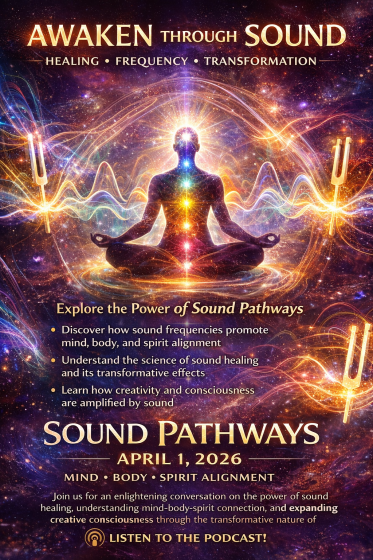

Sound Pathways with Dr. Karen Olson
Guest, Kevin Lucas - Marimaba Mann
Aired at the end of the program, by Kevin Lucas
"Separate Ways-The Journey"
https://www.youtube.com/watch?v=hKczq6jpROM&list=RDhKczq6jpROM&start_radio=1
Summary
The transcript features an in-depth conversation on the healing and transformative power of sound, rhythm, and music, primarily through the experiences and insights of Kevin Lucas, a multi-award-winning percussionist and composer. Hosted by Dr. Karen Olson on Sound Pathways, the discussion explores how rhythm permeates all aspects of life, from planetary movements to human heartbeats, and how sound serves as a bridge between mind, body, and spirit. Kevin shares his journey into percussion, the influence of his mentors, and the concept of “percussion theater,” which integrates visual storytelling with musical performance to create emotional resonance. He emphasizes the importance of meditation and mindfulness to overcome challenges such as stage fright and to enter a flow state where creativity and expression merge. The dialogue also touches on the power of community through drum circles, the inspiration drawn from nature and personal loss, and modern collaborative processes in music creation. Ultimately, the conversation highlights sound’s role in healing, connecting, and manifesting one’s true potential.
Highlights
Sound and rhythm are fundamental forces connecting the universe, life cycles, and human experience.
Kevin Lucas’s mentors, including Scott Stewart and Jeff Moore, profoundly shaped his musical and mental approach.
“Percussion theater” combines intense musical performance with visual storytelling to engage audiences emotionally.
Meditation and mindfulness help musicians overcome stage fright and access a powerful state of flow.
Drum circles and community rhythm exercises serve as potent tools for emotional release and group connection.
Nature’s rhythms, such as woodpecker drumming and ambient forest sounds, inspire musical creation and balance.
Modern music collaboration leverages technology to create and share work remotely, enhancing creative possibilities.
Key Insights
Rhythm as a Universal Language: Kevin describes rhythm as the “common denominator” of the universe, linking celestial bodies, biological functions, and human emotions. This insight underscores rhythm’s foundational role beyond music, providing a framework for understanding interconnectedness in life.
Mentorship and Positivity: The story of Scott Stewart, diagnosed with late-stage Parkinson’s yet maintaining positivity and mental clarity, highlights the power of mindset in artistic and personal resilience. Mentors can influence both technical skill and emotional strength.
Mindfulness in Performance: Meditation and “letting thoughts be” rather than suppressing them promote a zen-like flow state, essential for transcending self-consciousness and enhancing artistic expression. This approach can be applied broadly to reduce anxiety and improve focus.
Percussion Theater as Multisensory Communication: Combining visual elements with rhythmic performance allows artists to communicate complex emotional narratives, deepening audience engagement and making performances immersive experiences.
Community and Healing through Drumming: Group drumming fosters collective energy, emotional release, and subconscious connection, illustrating how music serves as a social and therapeutic tool. The accessibility of percussion instruments allows widespread participation.
Nature’s Influence on Creativity: Observing natural rhythms, such as woodpecker drumming with varying pitches and forest sounds, provides a metaphor and direct inspiration for musical composition, emphasizing harmony between human creativity and the environment.
Grief and Creation: Kevin channels personal loss and grief into his music, transforming sorrow into beauty and life-affirming art. This process reflects how creativity can serve as a healing modality and a legacy for loved ones.
Keywords
Rhythm
Percussion theater
Meditation
Flow state
Drum circles
Nature inspiration
Music collaboration
FAQs
Q1: What is “percussion theater”?
A1: Percussion theater is a performance style that combines intense drumming with visual storytelling, allowing the artist to express emotions and connect deeply with the audience beyond traditional concerts.
Q2: How can meditation help musicians perform better?
A2: Meditation helps quiet the mind, reduces stage fright by allowing thoughts to flow without resistance, and facilitates a flow state where the performer feels fully connected and expressive.
Q3: What types of percussion instruments does Kevin Lucas play?
A3: Kevin plays a variety of instruments, including marimba, vibraphone, hand drums, African drums, konas, and the alaphone, which consists of tuned fence tops.
Q4: How does nature influence Kevin’s music?
A4: Natural sounds such as woodpecker drumming and forest ambience inspire rhythmic patterns and musical textures, creating a connection between the environment and his compositions.
Q5: Can anyone participate in drum circles, and what are their benefits?
A5: Yes, drum circles are accessible to all skill levels and promote community bonding, emotional release, mindfulness, and a deeper connection to rhythm and self-expression.
Core Concepts
Rhythm as a Fundamental Force: Rhythm is not merely a musical concept but a universal principle that governs the cosmos, biological systems, and emotional states. Recognizing this rhythm of life allows individuals to align themselves mentally, physically, and spiritually.
Mentorship and Mental Resilience: The development of artistic skill is intertwined with cultivating a positive mindset. Mentors who embody resilience and optimism can profoundly influence an artist’s approach to challenges, performance anxiety, and creative expression.
Mindfulness and Flow States in Creativity: Achieving a flow state involves accepting thoughts without judgment and quieting the mind to enable uninhibited creativity and emotional authenticity. This practice reduces anxiety and enhances presence during performance or creative endeavors.
Multisensory Artistic Expression: Incorporating visual elements with musical performance—termed percussion theater—enriches the communication of emotion and narrative, offering a holistic experience that engages multiple senses and deepens audience connection.
Community Healing through Rhythm: Group drumming serves as a communal ritual that fosters emotional release, subconscious communication, and social bonding. Such practices are rooted in traditional cultures and remain relevant as accessible, therapeutic experiences.
Nature as Creative Muse: The intricate rhythms found in nature provide both metaphorical and literal inspiration for musical composition. Observing and incorporating natural sounds fosters harmony and balance in art, reflecting the interconnectedness of life.
Transforming Grief into Art: Personal loss and emotional pain can be transmuted through creative processes into meaningful, life-affirming works. This transformation not only aids the artist’s healing but also leaves a legacy and connects listeners to universal human experiences.
Technological Collaboration in Music: Advances in technology enable musicians to collaborate remotely, exchanging files and ideas in real time, which expands creative possibilities and overcomes geographical barriers without losing the human connection essential to artistic synergy.
Together, these core concepts illustrate how sound and rhythm function as powerful tools for healing, creativity, and connection, both individually and collectively, bridging inner experiences with outer expression and community.
Sound Pathways

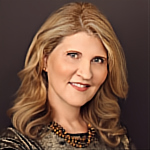
Sound Pathways is an inspiring and groundbreaking journey into the healing power of sound, creativity, and connection, exploring the profound link between Mind, Body, and Spirit. Hosted by Karen Olson, Ph.D., the show features captivating conversations with composers, musicians, sound healers, and inspirational thought leaders who share pioneering insights into how creativity and vibration shape our lives.
Each episode invites you to explore the magic of sound and energy as powerful tools for healing, self-discovery, and achieving your dreams. With special guests, uplifting stories, live call-ins for personalized sound healings, and unique teachings, Sound Pathways inspires you to tune in, align with your inner self, and elevate your life.
[00:11] Speaker 1: Have you ever wondered how sound can heal, inspire, and transform your life? What if the vibrations around you could unlock your true potential and guide you to a deeper sense of harmony? Welcome to Sound Pathways, the groundbreaking journey into the healing power of sound, creativity, and connection with your host, Dr. Karen Olson. In each episode, she explores the profound link between your mind, body, and spirit from composers and musicians to sound healers and visionary leaders. She'll dive into captivating conversations that reveal how sound shapes your reality, heals our wounds, and helps us manifest our dreams. And guess what? You're part of the conversation. So call in and ask questions and experience personalized sound healing live and let your sound be your guide to the life you've always dreamed of.
[01:15] Speaker 2: Welcome to Sound Pathways, where we explore the power of music, sound, creativity, and the deeper currents that move through our lives. Kevin, it is so wonderful to have you here. I'm so grateful. You're a multi-award-winning percussionist, composer, and performer, and I love this quote by the Huffington Post that said you're "the most talented percussionist since Lionel Hampton, Ginger Baker, and Tito Puente." I don't think we need to say anymore. (laughs) Thank you.
[01:47] Speaker 2: Thank you-
[01:47] Speaker 3: (laughs)
[01:47] Speaker 2: ... so much for being here.
[01:49] Speaker 3: Thank you.
[01:51] Speaker 2: Yeah, amazing.
[01:52] Speaker 3: I'm happy to be here.
[01:53] Speaker 2: Thank you. Thank you. So you are just such a master with rhythm, which really pulsates through all of us in our lives. But what first drew you to rhythm and percussion, and when did you realize that it was more than just an instrument, that it was truly your voice?
[02:14] Speaker 3: Well, um, when I was a kid, I just felt very rhythmic, and, and I remember thinking as a child about how everything was rhythm.
[02:25] Speaker 2: Mm.
[02:25] Speaker 3: You know, the, the planets, the Earth, the sun, our heartbeats, our bodies, um, our life cycles. If you think about it, everything in the universe, its common denominator is rhythm. So, um, I, that kind of transcended into adulthood, and I kind of call it the rhythm of life.
[02:45] Speaker 2: I like that.
[02:46] Speaker 3: And, um, so I, I try to transcend that in my performances and, you know, on a daily basis. You know how when sometimes I feel out of rhythm and ev- everybody does. So it's just feeling in that rhythm that you're supposed to be, and you don't always know what that is. It's something you just feel. You just know when you're in the right place at the right time and, and you're just, um, feeling the, the, the right energy.
[03:12] Speaker 2: In a flow.
[03:14] Speaker 3: Yeah.
[03:15] Speaker 2: What, what are some ways that you might help yourself if you feel just a little off?
[03:22] Speaker 3: Meditation. Like, this sounds cliche, but just quieting the mind and just letting it be. And it's not so much shutting off your thoughts 'cause that's impossible. It's just letting them be, uh, letting them be what they are. So it's almost like a state of zen. Um, I do that, and that usually brings me in the right place, and, you know, it's similar to prayer in, in you can find answers and, you know, I do that before I perform too, and that puts me in, in the right mindset before a performance.
[03:59] Speaker 2: Wow. That's beautiful. For, I guess it, part of it is just pausing and first noticing and then pausing and I've been also thinking a lot about performance and how we can kind of merge the parts of ourself that can be on a stage and the parts of ourself that aren't on the stage but that we bring there and how they kind of intertwine. But rhythm, yeah, really is so powerful and it's, it's so exciting to see someone really in their rhythm and, and expressing it. It was really amazing. So who were some of your earliest and biggest influences? The artists, teachers, or experiences that helped shape your sound and, and your style and where you are today?
[04:45] Speaker 3: Um, I, I had a junior high band director who was, uh, amazing. She had to retire because her n- uh, back went out. She had slipped discs in her neck. But, um, she was very intense and very, very amazing. Um, and then later I, um, I played in a drum and bugle corps. I don't know if you've heard of Drum Corps International?
[05:09] Speaker 2: Well, I'd like to know more about that and, and just the whole concept of it.
[05:13] Speaker 3: Yeah, um, Drum Corps International is a circuit of drum and bugle corps, and they, they tour the country all summer and they compete.
[05:20] Speaker 2: Oh.
[05:20] Speaker 3: And at the end of the summer there's a, um, televised competition that used to be on PBS.
[05:26] Speaker 2: Mm.
[05:26] Speaker 3: Um, so I was on the Madison Scouts Drum and Bugle Corps for three years in the-
[05:30] Speaker 2: Wow.
[05:30] Speaker 3: ... 1990s, um, 1992 through 1994, and we had a director named Scott Stewart. Um, and he is just so positive. Everything about him is positive. So I learned a lot about energy and being positive through him, and, um, he was told in the 1990s that he had about a year to live-
[05:55] Speaker 2: Wow.
[05:55] Speaker 3: ... 'cause he had late-stage Parkinson's.
[05:58] Speaker 2: Mm.
[05:58] Speaker 3: Well, um, he lives by...... um, always doing the right thing and, and staying positive all the time.
[06:07] Speaker 2: Wow.
[06:07] Speaker 3: He is still alive right now-
[06:09] Speaker 2: Wow. Seriously?
[06:10] Speaker 3: ... and still functioning.
[06:12] Speaker 2: Oh, wow.
[06:12] Speaker 3: Um, I call him the walking miracle. So he's, his name's Scott Stewart. He's a very strong mentor of mine as far as, like, um, the mental game and, um, you know, clearing your mind and, and being positive. And then also on the same, um, drum and bugle corps, on the Madison Scouts, Jeff Moore was the professor of percussion. Um, sorry, he was the caption head of the Madison Scouts so he ran the percussion program and he was all about rhythm and sound and, um, he talked about the rhythm of life too.
[06:46] Speaker 2: Oh.
[06:47] Speaker 3: And, um, just the, the parts he wrote were so amazing. They were so melodic, rhythmic and created so much emotion, so to this day, he is one of my lifelong inspirations and he's now the dean of fine ar- arts at, uh, University of Central Florida in Orlando.
[07:04] Speaker 2: Oh, that's a great place to be. That's so cool. So how ... These mentors must be so proud of you. Are you able to keep in touch with them?
[07:14] Speaker 3: Yes, um, Scott Stewart, the corps director, was here in mid-March. He, he stayed at my vacation rental, um, and then we went out to dinner. He was on his way to Nashville, Tennessee, so him and his wife and I all went out to dinner and it was, um, just great catching up and-
[07:32] Speaker 2: Mm.
[07:32] Speaker 3: And Jeff Moore I talk to almost, almost every day, whether it's text or, or phone.
[07:38] Speaker 2: Aww.
[07:38] Speaker 3: Which I appreciate because, being a dean, I don't know how he has the time to talk to me. (laughs)
[07:43] Speaker 2: That's beautiful, and I imagine that you're an- such a beautiful influence and mentor to students and people that, uh, be able to expose your experiences that Kevin Lueken-
[07:57] Speaker 3: Yeah, I-
[07:57] Speaker 2: ... his experiences.
[07:58] Speaker 3: ... I've taught on and off a lot in my life. Um, I've taught marching band programs and, um, you know, I try to, uh, just my friends and, um, people I know well, I try to, um, share my view of life with them and just positive thought and, um, try to transcend that. You know, I'm not always successful but we all have our days, but, uh, at least I make a, uh, conscious effort to try to do that.
[08:28] Speaker 2: Oh, it's, it's really comes through, what you do, so it's, it's really beautiful. What you ... I guess it's not just what you think or even what you believe, but it's who you are and, and how you share that. That's very inspiring. So you use the phrase-
[08:49] Speaker 3: Thank you.
[08:49] Speaker 2: ... percussion theater, which is really quite an interesting description. What do you mean by that? Can you describe it? And how is it different than a traditional concert?
[09:00] Speaker 3: Well, it's interesting because, um, I really didn't have a name for what I did for a long time because, you know, I would play intense musical performances and people would tell, always say, "It was so visually cool to watch you," and I, I really didn't know what they were talking about. So I watched videos of myself performing and, um, you know, I, I could kind of see and then I could critique myself and say, "Well, you know, I could be more visual during the impact moments, during the emotional moments and then I can be low-key, uh, you know, and, and build on those in the, um, the moments that aren't as intense, that are more introspective." And just to try to work that into the performance to where, um, I can kind of visually portray what I'm feeling with the audience.
[09:53] Speaker 3: And going back to what we were talking about earlier, having that s- that state of mind where you can just let go and not think, um, or accept all of your thoughts, having that, that zen state of mind, that really enables me to be in the mode to where I can, uh, visually communicate, musically communicate. And, um, what it does is it connects the spirit, mind and body. It makes them one. When you can just let go and let everything be and, like, just let the universe flow through you and let your surroundings and nature and, and the energy of the crowd just flow through you and, you know, it's not something you can really describe, but it's something you feel. When you're in the right moment, um, you can feel it and one of the first times I ever experienced it was in college. I, um, I was in a competition and, um, I just told myself, you know, before that I'd always had problems with stage fright. I would tremble, I would shake, my mind would be going crazy.
[11:02] Speaker 3: So before this one performance, I told myself, "Try something. Just shut down your brain and, and let it be. Don't fight any thoughts. Just let them be, like you're on a cloud and just..." So I did it and man, it was like an explosion. I just felt like, I just fe- felt like my spirit, my mind and my body just explode into, like, one powerful force and I ended up winning that competition, um, upsetting a lot of musicians be- just because I wasn't expected to win it, um. But I remember walking away from that performance and I was like, "I didn't even know this existed." So it was something I, I came upon myself and, um, so once I, I learned... Once it happened once, I wasn't able to do it every time I performed. It would take practice.
[11:53] Speaker 3: For a couple, for a few years it was, like, one out of every five performances I can do it
[11:58] Speaker 2: Mm.
[11:59] Speaker 3: Now I can do it every performance, just, just from practice. I know how to get there.And I know what to do to my brain, um, and my body and my soul to get myself into that spot and it... But it's taken years of practice. So, I really don't get stage fright anymore. I just get more, um, I relax my mind and then I get excited.
[12:22] Speaker 2: Wow. That's, that's beautiful. I totally 100% agree about that. I, I learned myself to connect to a higher place and I think of it as channeling almost, that it comes through me and there's no nerves. I also used to have stage fright and once I just kind of let go, I was just completely free. And the difference was not, sometimes when I was so afraid, I'd be thinking about the audience and there's no way you can split your brain that way. You're either, you're either doing it totally or you're, you know, in this scattered place and it definitely feels better. So, I, uh, also like to communicate to the people listening, you know, how that can apply to our, our lives when perhaps something has triggered us or we get upset by somebody or something and, and it's just really overwhelming and we go to this place where it doesn't help anything.
[13:21] Speaker 2: So the more we can center and just be calm and know that, uh, things do work out and that experience of when you're able to share from your truth and it kind of brings together your rhythm and your movement and your heart. And also, you add the kind of visual storytelling in your amazing videos. I, I just really am so moved by them and, uh, yeah, I would love... If you could share one, could you share a video at the end? Could you tell us what that might be like for us to view and hear?
[14:00] Speaker 3: Yeah. Um, I thought maybe my remake of Separate Ways by Journey.
[14:07] Speaker 2: Mm.
[14:07] Speaker 3: Um, that was a really cool video. When I do a remake, I, I try to make it, um, my own. And what I mean by that is my own interpretation. Just nobody wants it to be exactly like the original, so I just try to make it my own and put my own emotion in it and my own story. You know, you just said something really amazing because we, we have bad days. We, we ha- run into negative people, we have bad things happen to us and, you know, we can't control some things and we can control some others. And learning what you have control over, and that's yourself, so what you said about channeling and when something bad happens or you, you're not feeling well, if you just put yourself into that mindset where you just let go and, um, you know, put yourself at peace and say, "You know what?
[15:01] Speaker 3: I have no control over what's happening, over what just happened or, or what's about to happen." And when you realize that, it really gives you a sense of peace and then you're able to deal with the situation, um, with a clear head.
[15:17] Speaker 2: Well, thank you.
[15:17] Speaker 3: And everything comes out more positive.
[15:19] Speaker 2: Yes. And, and it's a element of trust and just knowing that one way or another it's gonna work out, even though we don't know-how. And it, it, the less we have to control it, you're right, and the more you can be guided to seeing the answers that we can have. That's so beautiful. What do you hope that people experience when they are at one of your performances or watching one of the amazing videos?
[15:48] Speaker 3: Well, I'm just hoping I can emotionally, um, touch them to where they feel deep emotion within themself. And, um, one of the most amazing experiences I ever had in my life, I, I played a rave, which is very rare for me, um, 'cause I'm really not into that scene at all, but I was, I was honored that they wanted me down there to play. And I was the only sober person in this... (laughs) in the whole place.
[16:16] Speaker 2: (laughs)
[16:16] Speaker 3: But, um, it was during the eclipse for two- uh, in 2024.
[16:20] Speaker 2: Oh, wow. Serious?
[16:22] Speaker 3: And they put me on stage while the eclipse was happening.
[16:25] Speaker 2: Oh my gosh, that energy was incredible.
[16:28] Speaker 3: Oh, man. Um-
[16:29] Speaker 2: Ugh.
[16:30] Speaker 3: Like, the, the sun was going, was just disappearing-
[16:33] Speaker 2: No.
[16:33] Speaker 3: And I was playing a song called Cahokia Winds and I literally had tears coming out of my eyes.
[16:39] Speaker 2: Ah.
[16:39] Speaker 3: Um, 'cause it was so powerful and just, you know-
[16:44] Speaker 2: Ugh.
[16:44] Speaker 3: ... tr- it was not only transcending myself, but I felt like this experience of the sun was transcending through me.
[16:49] Speaker 2: Wow.
[16:49] Speaker 3: And it just, it made me cry while I was performing.
[16:52] Speaker 2: Wow.
[16:52] Speaker 3: And the, the audience was crying and it was just this, this beautiful experience.
[16:57] Speaker 2: Oh my gosh.
[16:58] Speaker 3: (laughs)
[16:59] Speaker 2: Wow. Th- I can feel that. Wow. I, I have this dream that I want to take a group to, um, to Iceland in August. There's gonna be a total eclipse there. The energy is really, can't describe it, and I, uh, just thinking of it, it brings it back for me. Wow. That's really beautiful.
[17:18] Speaker 3: Yeah.
[17:19] Speaker 2: So to have people kind of get swept up in that vortex, to kind of feel the thing about the rhythm and, and... Would you have any ways for people to help them experience rhythm more deeply and get more in tune of like when they're in rhythm or not rhythm? Would you think it would be to actually do some drumming or some w- or just, you know, and have it help them live more fully? Is there some type of presence-
[17:53] Speaker 3: Absolutely.
[17:53] Speaker 2: ... you might be able to share? Exercise or something?
[17:56] Speaker 3: Yeah. Absolutely. Um, you know, African drums aren't, aren't that expensive so you can, you can probably get one for a few hundred bucks.And it's just nice to, to quiet your mind and just, just think of a rhythm and start playing it and just see how it makes you feel. And then, um, you know, maybe expand on that rhythm and just kind of, um, let it flow and just, just see where it takes you and just pay attention to how, how you feel and it's really important to, to let go of, of your thoughts and, um, you know, just flow in the moment. I d- I love drum circles, I love what they do, it, the community thing and, um, I just think it's beautiful. You know, going back to that eclipse performance, I really felt like I was accompanying the sun and the moon.
[18:51] Speaker 3: I felt like I was providing-
[18:53] Speaker 2: Mm-hmm.
[18:53] Speaker 3: ... a musical, uh, backdrop for what was happening in the sky and that was just ... It was one of the most amazing things I've, I've ever felt in my life and, uh, so ... (laughs)
[19:05] Speaker 2: I bet you, and you ... Perhaps you have, or I know that you could just drop into that moment and feeling that energy and just using that in a performance. I'm sure i- it's similar to what you do already but it would just add so much power which I'm sure became who y- more of who you are, that experience.
[19:24] Speaker 3: Yeah. Um, absolutely.
[19:27] Speaker 2: Wow.
[19:27] Speaker 3: So, you know, in sharing that drum experience with other people too, it just makes it more, uh, powerful. We're, we're all just have a meditation and you clear your minds and, and someone starts a drum rhythm and then, then someone could add another rhythm on top of it and, um, you know, it's just really important for, um, the community and then you, you feel each other's energy and, um, that can be very amazing.
[19:56] Speaker 2: Yeah. I myself have had some drum circle facilitating training and I like to do energy work and helping people expand and I find with drums, it's ... Really connects you to your subconscious, thoughts and experiences and sometimes, I give some prompts and ask someone just to play and they just play without thought and it really, I feel, releases them and, and then if you're in a circle, it's interesting for other people to respond to what they heard even, you know, speaking wise 'cause then it unites everyone and when we're brought together, there's always reasons and we all share similar things. So I really believe in the power of the drums and also, you can use found sound where you could take, uh, like a tub from Home Depot or a pan or something and some wooden spoons and ... Or you could do body percussion and you can get really inventive and you can even decorate them and, you know, they can be like containers of powder that you can make into the drums, right?
[20:59] Speaker 2: But it's fun to buy them.
[21:00] Speaker 3: Yep.
[21:01] Speaker 2: It's fun to buy-
[21:02] Speaker 3: Yeah.
[21:02] Speaker 2: ... drums, like e- thinking of what tree it came from or ... Yeah, it's just a beautiful world.
[21:09] Speaker 3: Yeah, it is. It's, it's great you said that 'cause anything can be a drum, a table. Sometimes I'll be playing a table and I'll ... And I'm like, "Wow, this has amazing acoustics," you know?
[21:19] Speaker 2: (laughs) Yeah.
[21:19] Speaker 3: (laughs)
[21:20] Speaker 2: That's so cool.
[21:21] Speaker 3: Um-
[21:21] Speaker 2: What are the ... What are the different percussion instruments you play?
[21:25] Speaker 3: Um, well obviously marimba.
[21:27] Speaker 2: Yes.
[21:27] Speaker 3: Um, vibraphone, hand drums, uh, African drums, konas, um, and uh, I've also ... I have alaphone too which is, uh, tuned fence tops and-
[21:41] Speaker 2: What is that?
[21:41] Speaker 3: ... I also play p- Um, it's like tuned fence post tops. Um-
[21:47] Speaker 2: Mm. What is it?
[21:47] Speaker 3: It's called an alaphone. You can hear it in, um ... Grant Maloy Smith and I did-
[21:53] Speaker 2: Yes.
[21:53] Speaker 3: ... Scarborough Fair remake. So I have alaphone in that music video.
[21:57] Speaker 2: Wow.
[21:57] Speaker 3: We shot it on an island, uh, in the Atlantic Ocean, a lighthouse island, so my alaphone is in front of the marimba in that video.
[22:04] Speaker 2: Wow. I gotta see that.
[22:07] Speaker 3: It's, um ... You know, one thing I wanted to mention. You were mentioning drumming and I love African music because African music was founded on rhythm and there were no time signatures. Um, they, they just didn't exist. People played by ear.
[22:23] Speaker 2: Mm-hmm.
[22:23] Speaker 3: So that's why there's so many poly rhythms based on African rhythm, because they're based on things that are not of time signatures and we just meter them just so people can understand them, whereas you compare it to music that came from Europe and that was based on harmony and melody.
[22:39] Speaker 2: Oh.
[22:39] Speaker 3: Um, so it's two different schools of creating music and I love when they come together. I love when you have, um, you know, European style of music and African style of music-
[22:52] Speaker 2: Yeah.
[22:53] Speaker 3: ... and combine the two. (laughs)
[22:54] Speaker 2: And you make it your own style.
[22:56] Speaker 3: Yeah.
[22:57] Speaker 2: That's really beautiful. Oh, I wanna give a sh- shoutout to Eileen Sherman and Grant Maloy Smith and Indie Collaborative. They're, um, great supporters and I, I love some of the work you've done. The videos with Grant Maloy Smith, it's been really powerful. How many videos have you done together?
[23:16] Speaker 3: Um, we have done ... We've released two together. I'm sorry, we've released three together.
[23:23] Speaker 2: Mm-hmm.
[23:23] Speaker 3: And we have a fourth one we filmed that's not released and then we're talking about a fifth one.
[23:27] Speaker 2: Wow.
[23:27] Speaker 3: And, um, I love the Indie Collaborative, it's such a great organization.
[23:32] Speaker 2: Yes.
[23:32] Speaker 3: And I love Grant. He's so multi-talented and-
[23:36] Speaker 2: Yeah.
[23:36] Speaker 3: ... just so creative. I can't say enough good things. Would've ... The best musical experience of my life has, has been working with Grant so it's, it, it's been really amazing.
[23:47] Speaker 2: That's great. He's such a great person and he's so generous.
[23:51] Speaker 3: Yeah.
[23:51] Speaker 2: Bringing all of us together, artists, so.
[23:54] Speaker 3: Yeah.
[23:55] Speaker 2: Yeah, that's beautiful. I think it's, um, great if everyone can find a group where they can collaborate and they can feel like these are their people that kind of-
[24:04] Speaker 3: Yeah.
[24:04] Speaker 2: ... see life and express it in some similar ways, even though we're all different. Yeah.
[24:09] Speaker 3: Absolutely.
[24:10] Speaker 2: Amazing. So ...You are so in touch with all of your feelings. So how are you able to balance such amazing technical facilities and your emotional truths and, and just express it so well? It's amazing and beautiful.
[24:28] Speaker 3: Thank you. I, you know, I don't, I'm not perfect every day, but I try. It's, it's, it's a, um, ongoing project. It's a work in progress, I should say. (laughs)
[24:40] Speaker 2: Mm-hmm.
[24:40] Speaker 3: But a- as we go through life, I think it's something we, we can master and, and work on.
[24:46] Speaker 2: Yeah.
[24:47] Speaker 3: So.
[24:47] Speaker 2: Do you travel much?
[24:50] Speaker 3: Um, sometimes. Some years I do and, um, some years I don't. This year, I didn't book a lot of, um, concerts 'cause I, I have some, um, but not as many as usual just 'cause I have a lot of other personal projects going on.
[25:05] Speaker 2: Nice.
[25:06] Speaker 3: Um, but yeah, I've had periods where I traveled and I really enjoyed it.
[25:13] Speaker 2: It's nice to be able-
[25:14] Speaker 3: So-
[25:14] Speaker 2: ... to find your own balance.
[25:16] Speaker 3: Yeah, sometimes it's nice to stay on your property in the woods and, um, be with nature and sometimes I enjoy that more than playing a concert.
[25:26] Speaker 2: Yeah, well they kind of come together, I'm sure, I know.
[25:29] Speaker 3: Absolutely.
[25:30] Speaker 2: That becomes part of who you are and not everyone has that opportunity of being surrounded by nature and the woods, so you kind of bring it to people. It, it really turns into, um, I really believe and know that your music becomes a service to people and I'd love to know about how you can connect and it, and it just becomes healing as it impacts the rhythm that people have in their lives.
[25:58] Speaker 3: Yeah, you know, I think living, I'm, I'm so fortunate to live in a forest. You can probably hear it right now 'cause I'm on my back patio. But it's just feeling the energy, the life energy and just, it's so calming. And you're right, I do try to bring that to people, uh, through my music. I try to bring, you know, where I live and, and the, the energy of nature and, um, just so people can experience that. And I film some music videos in the forest.
[26:28] Speaker 3: I, I have a bridge going over a creek in the backyard-
[26:31] Speaker 2: Wow.
[26:31] Speaker 3: ... and I, I filmed some music videos back there. (laughs)
[26:33] Speaker 2: It's so beautiful. Nature has so much balance and-
[26:38] Speaker 3: It does.
[26:39] Speaker 2: ... it's so beautiful that in nature, every seed creates the plant, like it's imprinted in the being of each animal and flower and tree and, in the way that we are. But sometimes, we add a little judgment about how we should be or how that one is and, and, you know, that doesn't happen in a forest.
[27:03] Speaker 3: Yeah. Um, one of the things that intrigues me around here is the woodpeckers, because different woodpeckers have different strengths and they're hitting different logs. Uh, bigger ones-
[27:15] Speaker 2: Really?
[27:15] Speaker 3: ... smaller ones. And it creates different pitches. Sometimes I'll hear a low pitch, sometimes I'll hear a really high pitch.
[27:22] Speaker 2: Wow.
[27:23] Speaker 3: And it's, you hear, it's almost like a symphony because you hear just all these different sounds and pitches of wood and it's just amazing how they can be so precise because, um, with their beaks, their, their sound is just so rhythmically precise and it, it's like a metronome could not reproduce, well, could reproduce that kind of precision, but...
[27:46] Speaker 2: Not that energy.
[27:48] Speaker 3: Yeah.
[27:49] Speaker 2: Do you, that would be a great piece. Or I'm sure it's already in many of your pieces.
[27:54] Speaker 3: Oh yeah. I mean, um, the marimba is very similar. I, when I hear that in the forest, I think about the marimba with the different pitches striking wood.
[28:03] Speaker 2: Mm-hmm. On the wood.
[28:03] Speaker 3: When I hear, like in the morning, I'll hear a, a high-pitched and you can tell it's small tree when it's a high-pitched noise and then it'll be a low-
[28:13] Speaker 2: Wow.
[28:13] Speaker 3: ... sounding log a couple minutes later and it, it's just so cool-
[28:17] Speaker 2: Oh my gosh.
[28:18] Speaker 3: ... that nature does this, you know?
[28:20] Speaker 2: Do you ever see them?
[28:22] Speaker 3: Um, I have seen them. Um, they hide a lot, but once or, once or twice I've actually seen one. (laughs)
[28:28] Speaker 2: (laughs) Wow, that's really, sounds very magical.
[28:32] Speaker 3: It is. It's, um, you know, and the, the owls around here at night, they're, it's like a symphony.
[28:39] Speaker 2: And you have frogs that croak?
[28:41] Speaker 3: Oh, yeah. Tons of frogs and crickets-
[28:44] Speaker 2: Crickets.
[28:44] Speaker 3: ... and if you listen right now, you can probably hear it behind me. There's a-
[28:52] Speaker 2: I'm not sure if I-
[28:52] Speaker 3: ... lot of frogs. They're... (frogs croaking)
[28:54] Speaker 2: ... can. I wish I could.
[28:56] Speaker 3: (laughs)
[28:56] Speaker 2: But we can imagine it.
[28:58] Speaker 3: Yeah. (laughs)
[28:59] Speaker 2: And it's coming through you. Yeah, so when, so, wow, so I'm sure all this inspires you to create. But when you create, do you begin with a rhythm or with a mood or an image or is it all different ways? Do you, how do you create? I'm, I'm so into the whole aspect of creativity and helping people really tap into their own creativity in terms of creating their own dreams, 'cause I, sometimes we get stuck and we're like, "Oh, I'm not creative. I don't know what to do." And, and I think it kind of helps you as a bridge to go over things that might be hard. So anything that could inspire us about creating.
[29:36] Speaker 3: Yeah, exactly. And, um, you know, this sounds, um, kind of dark, but this is the truth. The last few years, um, I've lost so many people. Both my parents, both my best friends.
[29:52] Speaker 2: Oh my goodness.
[29:54] Speaker 3: Um, an ex-girlfriend who I was real close to. So, you know-
[29:59] Speaker 2: Aww.
[30:00] Speaker 3: ... a lot of my inspirations, um, honestly have been about death and it, it's been coming through in a lot of, uh, the chord progressions I come up with, um, to the point, you know, 'cause Grant and I write together and I'll send him a chord progression and, uh, some lyrics and, and he'll be like, um, kindly say, "Let's not make this one about death." (laughs)
[30:24] Speaker 2: (laughs) He has a great sense of humor.
[30:26] Speaker 3: Um, I mean, and a sense of humor.But, um, you know, I think, I don't judge it because for me that's what I'm naturally feeling. And because I'm transcending that, that negative feeling into music, it's almost creating life. So, it's almost like you're taking that feeling of death and you're making music and it comes alive. Um, so it becomes something beautiful and I think that's what life is about. I think it's taking the worst things and making something beautiful come out of them-
[30:57] Speaker 2: Mm.
[30:58] Speaker 3: ... and however we do that.
[31:01] Speaker 2: Wow. I'm sure you feel your parents' presence as you're creating and, and connecting it to them and, and that you're sharing that out to the world, like sharing your legacy to them and your love.
[31:16] Speaker 3: I've written, um, songs about my mother. Um, you know, I've thought about my mother while I'm playing and, um, you know, my best friends, I feel like I, I feel their presence when I play. Especially my best friend, Rob. We were friends since grade school and he passed away a year ago in March, and, um, we had a long talk, like, the, the day he died, we had a long talk for-
[31:47] Speaker 2: Oh, no.
[31:47] Speaker 3: ... three or four hours, um, and he was a musician. He was a great, great pianist and, um, I just released an album from him that he never knew I was gonna release. I found music off his laptop and released it worldwide for him.
[32:02] Speaker 2: Wow.
[32:03] Speaker 3: Um, but I feel like as crazy as it sounds, I feel like his energy, he transferred it to me. I feel like he almost channels through me when I play.
[32:16] Speaker 2: Ah.
[32:16] Speaker 3: And his energy just strengthens my energy-
[32:21] Speaker 2: Wow.
[32:21] Speaker 3: ... and it's, it's really a beautiful thing because even though they're gone, it's like they're, it feels like they're still with you. You know?
[32:29] Speaker 2: That's so powerful.
[32:31] Speaker 3: Yeah.
[32:32] Speaker 2: I can feel that. Wow. It's so beautiful what you share and, and I really appreciate that we could learn more about your process and it's very inspiring and I really thank you.
[32:46] Speaker 3: Thank, thank you.
[32:46] Speaker 2: So how can people find more about what you're doing and connect with you and your work live and virtually? They would just, I know so many people would be blessed by that.
[32:58] Speaker 3: The best place, um, I have so many music videos on my YouTube channel, so if you just search Kevin Lucas Experience on YouTube, um, you'll find all my videos. I, I've got couple dozen of them up there. Um, some live, some are music videos. Also, Grant Maloy Smith page, um, has our videos that we've done. It'll say Grant Maloy Smith and Kevin Lucas and, and those are some great ones.
[33:25] Speaker 2: Yeah.
[33:25] Speaker 3: I've just loved working with him.
[33:27] Speaker 2: Amazing.
[33:28] Speaker 3: So-
[33:29] Speaker 2: Wow. That's really-
[33:30] Speaker 3: ... I can't, can't say enough good things about Grant. (laughs)
[33:32] Speaker 2: Yeah. I'm sure he would, he says the same. That's beautiful. Yeah. He, he was a guest here, so, and, um, and his sense of humor is really something, isn't it?
[33:44] Speaker 3: Yeah.
[33:45] Speaker 2: Yeah. It's, and Eileen, they're a really great pair. Wow. So do you have any projects going on now that you might want to share with people or... ?
[33:56] Speaker 3: Yeah. Um, Grant and I are working on a new song. Um, it's, it's so beautiful. I wish people could hear it, but we gotta wait til it's done.
[34:05] Speaker 2: Yeah. It's hard to wait.
[34:05] Speaker 3: It's called Bloodrain. Yeah, it's called Bloodrain and, um, it turned out to be such a beautiful song.
[34:12] Speaker 2: Oh.
[34:13] Speaker 3: Uh, it started with, um, I took it in the studio and came up with a chorus and, and some chords and, um, re- recorded marimba. Then I sent it to Grant and then he started, um, putting together a song because it inspired him and it's in six-eighths time and it's-
[34:29] Speaker 2: Mm.
[34:29] Speaker 3: ... just, um, it's kind of dark yet it's, it's very beautiful as well.
[34:34] Speaker 2: Wow.
[34:34] Speaker 3: Um, so we're working on that and then we're, we got a music video called Jericho we're probably gonna put out, um, relatively soon.
[34:43] Speaker 2: Mm.
[34:44] Speaker 3: So we're just trying to, um, get these songs released, but we're r- really excited about them.
[34:50] Speaker 2: That is beautiful and it's just quite amazing too, I know all musicians know this, but perhaps not everyone knows how easy it is to work even if we're not in the same space, we're not in the same studio at the same time, but we can share the files and create in that way. Even though it's so much fun when you are together, but-
[35:11] Speaker 3: Yeah.
[35:11] Speaker 2: ... it's exciting.
[35:13] Speaker 3: Um, it, it is. Technology's amazing and, um, just to be able to... I mean, heck, we, we couldn't even imagine 20 years ago sending a file instantaneously across the world for-
[35:23] Speaker 2: Yeah.
[35:24] Speaker 3: ... for someone to record it. Even in real time, we could record it together on Zoom, you know? It's just, it's cool. (laughs)
[35:31] Speaker 2: Yeah. It's, it's a really great gift. Yeah.
[35:37] Speaker 3: Yeah.
[35:37] Speaker 2: Even though we don't want to lose the human aspect of it 'cause we also have our opportunities to be, to be together, which is great, but to be able to have both is, um, pretty fabulous. Yeah. So thank you so much for sharing with us so deeply and really inspiring us and I can't wait for everyone to hear your work and, and the visual aspect of it also. They're just, they are experiences. So-
[36:09] Speaker 3: Thank you.
[36:09] Speaker 2: ... it's just amazing.
[36:10] Speaker 3: It was a real honor being on your show and I, I appreciate it so much.
[36:14] Speaker 2: Oh, thank you. Thank you for the rhythm you bring to our lives, everybody's life, and, and the sound that you fully live. Thank you. And I want to inspire everyone as they move through their day to notice their own rhythm in your breath, your steps, your heartbeat, and bring it back to your presence, your expression. (Jungle ambience) And a fuller life. Create the life you were born to live, one breath, one beat, one step at a time now. Notice your rhythm. Blessings and love.
[36:47] Speaker 4: Thank you.
[36:49] Speaker 2: Thank you.
[36:52] Speaker 5: (instrumental music plays)
[42:45] Speaker 6: (Instrumental music plays)
[44:03] Speaker 1: Thank you so very much for joining us on today's transformative journey. We're honored to have shared this space with you, and we hope you're feeling inspired and aligned with your highest self. For more insights, resources, and to continue your path of healing, be sure to visit karenolson.com, your gateway to deeper sound healing music and wisdom. Remember, Sound Pathways is here every other Wednesday at 9:00 PM Eastern, 6:00 PM Pacific on BBS Radio TV Station 1. Until next time, stay aligned, stay inspired, and let the magic of sound guide you.