
Shadow Politics, March 22, 2026

Shadow Politics with Senator Michael D. Brown and Co-host Liberty Jones
Brooke Pinto, DC’s Congressional Future and the defense of local autonomy
In this episode of Shadow Politics, Senator Brown and Liberty Jones host DC Councilwoman Brooke Pinto to discuss her campaign for DC’s Congressional Delegate. The conversation explores the urgent need for local autonomy, Pinto’s legislative successes in public safety, and the strategic "quarterback" role required to protect District residents from federal overreach.
The Struggle for Home Rule and Local Autonomy
The dialogue centers on the unique challenges facing Washington, D.C., particularly the frequent interference from Congress in local governance. Councilwoman Pinto highlights recent "attacks" on home rule, such as Congress disallowing the District from spending $1 billion of its own local funds and attempting to override local tax laws. A significant point of contention involved DC's "decoupling" of local taxes from the federal system to provide relief for working families—a move Congress later disapproved, creating confusion for 75,000 residents who had already filed. Pinto emphasizes that while the city will "recouple" next year to satisfy federal demands, her priority remains protecting the consistency and dignity of DC’s self-governance.
Legislative Track Record: Public Safety and Education
Pinto details her six-year tenure on the Ward 2 Council, specifically her leadership on the "Secure DC" legislation. This comprehensive bill included over 100 interventions and has been credited with a nearly 60% reduction in violent crime since its passage. Beyond safety, she highlights her work in education, noting that DC is currently the fastest-improving jurisdiction for literacy in the country due to targeted teacher training. She also discusses economic recovery efforts, such as incentivizing the conversion of vacant office spaces into affordable housing and retail units to revitalize the downtown core.
Strategic Advocacy on Capitol Hill
As a candidate for the Congressional Delegate seat, Pinto argues that effectively representing DC requires a deep understanding of political psychology. She describes a "mapping" strategy used to protect Medicaid funding, where her team identified which stakeholders—from hospital CEOs to individual beneficiaries—would be most persuasive to specific members of Congress. This nuanced approach is presented as essential for building "pro-DC" coalitions to counter the "anti-DC" sentiments held by a small but vocal group of Republican lawmakers.
Civil Liberties and National Concerns
The latter half of the discussion shifts to broader concerns regarding civil liberties and the current administration’s impact on human rights. Pinto shares her efforts to pass emergency legislation requiring federal agents (such as ICE) to release body-worn camera footage if they use force within DC limits, emphasizing transparency as a prerequisite for justice. Liberty Jones and Senator Brown further discuss the "power games" played at the federal level, expressing concerns over potential voter intimidation and the importance of electing women to leadership positions during International Women’s Month.
Brooke Pinto presents herself as a seasoned legislator ready to transition from the City Council to Capitol Hill. By focusing on public safety, education, and a sophisticated strategy for federal advocacy, she aims to serve as a "new quarterback" for DC residents, ensuring that the District’s values and autonomy are protected in an increasingly volatile political environment.
Guest, Brooke Pinto
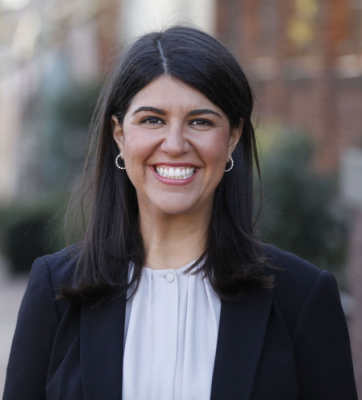
I am running for DC Council because I believe we deserve a leader who we can trust to serve Ward 2 with integrity and transparency.
For the last two years, I have been working on behalf of District residents as the Assistant Attorney General for Policy and Legislative Affairs for the District of Columbia. I saw how LGBTQQIA+ victims of hate crimes were left without protection or recourse in the wake of their attacks. I learned how our small business community was being taken advantage of by out of state businesses defrauding our CBE program. And, I represented DC before the National Attorney General community to advocate for statehood, decriminalized cannabis, and data privacy legislation.
To address the needs of our community, I worked to advance workers’ rights, improve environmental justice, and expand civil rights and consumer protections through everything from data breach to hate crime legislation.
I grew up in Connecticut and I am the youngest of three siblings. I attended Cornell University in Ithaca, New York, and earned my undergraduate degree in Business & Hospitality Administration. I then went on to work at a senior living community in New York where I found myself frequently feeling frustrated on behalf of my clients as I helped them navigate through their healthcare options. This led me to pursue a law degree at the Georgetown University Law Center.
During law school, I served as the Executive Articles Editor for the Journal on Poverty and Public Policy and volunteered at the Landlord Tenant Resource center providing advice to displaced tenants and aggravated landlords. I then advocated for seniors and advanced women’s health issues on Capitol Hill for Senator Blumenthal as his Health and Aging Fellow.
Knowing that I wanted to commit my career to public service, I joined the DC OAG, where I practiced law in our Tax and Finance group litigating cases on behalf of the DC Office of Tax and Revenue. I then moved on to work for Attorney General Racine on Policy, Legislative Affairs, and Legal matters where I was able to work on a broad array of issues plaguing our city.
I am deeply committed to serving the residents of DC and I want to ensure that Ward 2 has a representative on the Council whom they can trust — not only to operate ethically, but also to ensure the issues that matter most are addressed.
Through my experience representing DC residents, I was consistently inspired and impressed our community members’ commitment to equity and advancing justice. We have a lot to be proud of and a lot to work on. I want to be a partner in and advocate for that work.
I felt inspired to get in this race and ensure that an honest, fair, and devoted advocate is at the table. I would be honored and humbled to have your support.
Shadow Politics

Shadow Politics is a grass roots talk show giving a voice to the voiceless. For more than 200 years the people of the Nation's Capital have ironically been excluded from the national political conversation. With no voting member of either house of Congress, Washingtonians have lacked the representation they need to be equal and to have their voices heard. Shadow Politics will provide a platform for them, as well as the millions of others nationwide who feel politically disenfranchised and disconnected, to be included in a national dialog.
We need to start a new conversation in America, one that is more inclusive and diverse and one that will lead our great nation forward to meet the challenges of the 21st century. At Shadow Politics, we hope to get this conversation started by bringing Americans together to talk about issues important to them. We look forward to having you be part of the discussion so call in and join the conversation. America is calling and we're listening… Shadow Politics is about America hearing what you have to say. It's your chance to talk to an elected official who has spent more than 30 years in Washington politics. We believe that if we start a dialog and others add their voices, we will create a chorus. Even if those other politicians in Washington don't hear you — Senator Brown will. He's on a mission to listen to what America has to say and use it to start a productive dialog to make our democracy stronger and more inclusive. If we are all part of the solution, we can solve any problem.
[00:00] Speaker 1: *Opening Music Plays*
[00:35] Speaker 2: That was Sweet Honey in the Rock with Give the People the Right to Vote. Hello, and welcome to Shadow Politics, an hour-long grassroots talk show which is on a mission to make America think again. Uh, we're pleased to have with us tonight Brooke Pinto, Councilwoman, who's running for, uh, to replace Eleanor Holmes Norton, a really important position in, in the District of Columbia, and I just endorsed Brooke, and we're gonna have her on, and ask her a few questions, and then you'll see why I, I ... (laughs) and then you'll see why I did that. Hello to Liberty Jones, who's with us tonight. Hello to Brooke Pinto, and welcome to the, back to the show, Brooke. How are you?
[01:22] Speaker 3: Hi, Senator Brown. It's so great to be with you and Liberty Jones. Thank you for having me, and thank you so much for your support of my campaign to be DC's next congressional delegate. It means so much to me to have you-
[01:36] Speaker 2: Well, and-
[01:36] Speaker 3: ... to have you with us, uh, as you have been from the very beginning.
[01:39] Speaker 2: Well, and, and, and it means so much to me to, to be able to do that for you because you're the right person for this position. I mean, the, s- we really need, uh, someone like you in my opinion, Brooke. And, you know, you, you said right from the beginning, yes, I, I supported you right from the beginning because I could tell immediately upon meeting you and talking to you the, for the first time we talked, that you wanted to get into this for the right reasons. That you understood, uh, I, I really got a sense from you right away that you understood the responsibilities that go with being in elected office. And unfortunately, for me, I've been in politics for 40 years, and I see a lot of people that, that either lose sight of that or, or don't, don't understand it to begin with. And that's the single most important thing, I think, in a candidate, is to, to, to understand that and work for the people that put you there. And I know that's exactly the way you feel.
[02:41] Speaker 2: And I've followed your career, and I've seen some of the things you've done on, done on the City Council, and let's talk about them. They're amazing. But, uh, Liberty, you wanna say something to our guest before we, be- before we ask our serious questions? Go ahead.
[02:58] Speaker 4: Yeah. Hi, Brooke. We're so, so excited to have you on tonight. Um, I'm really excited, too, for you to be running for this position. Um, I believe you're one of l- three or four women who are running. And as a young girl in this world, I really would love to see some representation right now, especially in these times. And so, it's truly inspiring to us, and I'm very excited.
[03:25] Speaker 2: Well-
[03:25] Speaker 3: Oh, well thank you so much.
[03:26] Speaker 2: ... uh, so let's-
[03:26] Speaker 3: That means so much to me.
[03:29] Speaker 2: So, so, so let's start there. You know, you got all your signatures in, right? Anybody that's ever been in the-
[03:35] Speaker 3: Oh, yeah.
[03:35] Speaker 2: ... process understands how excruciating this is sometimes. But you got all your signatures in, uh, was it yesterday was the deadline? Or, or sometime early this, uh, Friday, I think, right? Uh, and you got your signatures in, so that's all done. And now-
[03:51] Speaker 3: Yeah. The, the, the deadline was on, was on Wednesday, and we were so excited to turn in thousands of more signatures than, than we needed. Uh, which was a really great process this year, and, and gave us the chance to speak to voters early, um, all throughout the city, and really galvanize our volunteers, and hear directly from people about what they were looking for, and share my vision with all of them. And as always, the, the petition collection process, um, provides some clarity for the race. So there were 14 people who filed their paperwork and picked up petitions, but only eight, um, turned them in. And so we'll see over the course of the next couple of weeks, um, if all of those signatures are valid for all the campaigns, and how many people are actually gonna be on the ballot.
[04:40] Speaker 2: Well, you know, the processes w- I, I mean, I think anybody that's ever run for public office, uh, um, you know, complains about the process, but I got most of my own signatures, and I felt that, that the, that, that, exactly what you said, that you got to reach out to voters, you got to hear from them, you know, you just didn't go in and pay a fee and sign a document and, and run. You get to, you really get to-
[05:05] Speaker 3: Right.
[05:05] Speaker 2: ... be out there with the people. So you shared your vision with people. Share it with us.
[05:10] Speaker 3: Uh, sure. Well, I have had the privilege of serving district residents my entire career. I, as you know, um, went to law school here in DC at Georgetown Law. Um, I worked for a number of different organizations from the landlord tenant court, to the Washington Legal Clinic for the Homeless, and then worked at the DC Attorney General's Office first as a tax litigator, and then as the Assistant Attorney General for Policy and Legislative Affairs. Um, and then in 2020, I ran to be the Ward 2 Council Member, uh, and have been in that role ever since for the last six years, and love what I get to do, which is, at its core, help DC residents solve problems. And we've done a lot of that together. We've made major progress on public safety. I moved the largest-... piece of legislation in the city's history, all around public safety, that had a hundred different interventions in it, called Secure DC, and we've driven down, since that bill passed, violent crime by nearly 60%.
[06:18] Speaker 3: I've done a lot of work to support our schools and make investments in literacy training so that we can help teach our teachers how to teach reading, and we're now the fastest improving literacy jurisdiction in the country. And I've done a lot of work to support our businesses and really help our businesses recover from the pandemic, um, and help incentivize a lot of conversions of vacant office space to affordable housing and to other more productive uses from retail to hotels. And it's been, uh, a wonderful experience serving on the DC Council, but over the last year or so, since the second Trump administration has come in, I've been spending a lot more of my time on Capitol Hill because we've had so many attacks and challenges on our home rule and our ability to have our own budget. You know, last year, Congress disallowed us from spending a billion dollars of our own money.
[07:18] Speaker 3: Um, there are 30 bills that the House and Senate are considering right now that undermine, uh, so much of our city. Everything from a bill they have that would have Trump appoint our attorney general, our local attorney general, to allowing any Trump-appointed prosecutor to prosecute a 14-year-old child as an adult, uh, and having them serve their sentence in adult prison across the country. Um, and I've been spending a lot more of my time on the Hill meeting with members of Congress in both the House and the Senate, Republicans and Democrats, really explaining to them who we are as a city, why we are serious about public safety, why it is not the right approach to have them intervene in this way, um, and have a lot of respect and admiration for what Walter Fauntroy and Eleanor Holmes Norton have done in this position.
[08:14] Speaker 3: And know that it's time to have a new quarterback who can really full-time, uh, take care of the residents of Washington, DC and protect us, um, in this moment where we have to be really nimble and agile in thinking about how everybody can be safe and everybody in Washington, DC can and deserves opportunity. Um, and that's what I'm so excited and eager to do as our next congressional delegate in this seat.
[08:45] Speaker 2: Well, you know, it's so important. I'm so glad that you went over your experience because it's not only important with inten- in terms of your ability to do the job, but it's also important that you understand these problems because half the job is keeping the District of Columbia from, from being attacked, which you just outlined. You know, we, we spend, uh, Eleanor Holmes Norton spent more times trying to keep our gun laws in, in check than, than she did anything else. So it's really important that, that, that you have the experience to do the job, but it's also important that you understand because you've had boots on the ground and you've talked to people locally and you've dealt with problems locally that you understand the needs that Washingtonians have, which we both understand are very special needs. Liberty, I'm hopping this to Mike. Go ahead.
[09:41] Speaker 4: So I really, I really appreciate that you've been trying to, you know, get out there and advocate for what's going on. Um, that sounds absolutely horrible, a 14-year-old being sent to a prison with a bunch of adults sounds like prison school, in my opinion. (laughs) Um, but how have these reactions been, these conversations that you've been having on the Hill with the Democrats and likewise the Republican? What types of reactions have you been receiving and how have people been taking these worries?
[10:19] Speaker 3: Well, I think one of the most important things to remember is that Congress is not a monolith. It is filled with people representing different parts of the country, different stakeholders, different parties. And so really effectively advocating on behalf of the District of Columbia relies on a deep understanding of psychology and a deep understanding of what drives different members and, and what those are. So I'll give you an example. Um, last year there was an effort by some Republicans in Congress to cut our Medicaid allocation that we received from the federal government. We received 70% of our Medicaid disbursement from the federal government and they were trying to cut that by over 20%, which in practice would have cut billions of dollars that the district receives for, for Medicaid.
[11:14] Speaker 3: And what that would have meant was that thousands, if not tens of thousands, of Medicaid beneficiaries would have lost their coverage, several of our hospitals would have gone bankrupt because they couldn't afford these billions of dollars of cuts, um, and so we mapped out a strategy of what was most persuasive to who. There were some members of Congress who it was most important for them to hear from the hospital CEOs of why, from a business perspective, that would impact them. There were others who it was most helpful for them to hear from Medicaid beneficiaries as to why those cuts would be so detrimental to their healthcare needs. There were others who we went to their home state to determine which stakeholders they were most reliant on and getting them on our side and we had them make those calls to those members. And so mapping out that strategy really is important and it, it depends.
[12:13] Speaker 3: There are a small group of Republican members of the House who are very anti-DC and they will...... almost always, um, be spearheading these efforts to try to trample on DC's rights. And so it's really important to build our coalition of pro-DC people who are i- in the weeds of understanding why these measures are so detrimental to us. And that's, that's part of the work that really excites me, and that is really important to have someone on the Hill who understands all of those different constituencies and is committed to shepherding forward, uh, those coalitions with, with a broad and diverse set of stakeholders depending on what each issue is.
[13:07] Speaker 2: Well, um, I should point out that besides, uh, supporting your campaign and doing what I can for you, I am also, ah, working with, uh, people in, in my new, uh, Democratic Party in Maryland to get rid of one of those DC haters, which is, uh, Andy Harris, who unfortunately is my new congressman-
[13:29] Speaker 3: Mm-hmm.
[13:29] Speaker 2: ... 'cause I've moved to Kent Island. But, um, uh, so, (laughs) so we're gonna work, we're gonna work hard on that. But let me ask you, you, we just had... Congress has just overturned, um, a decision that the city council made on local tax changes to safeguard the people of District of Columbia because Trump Don- the president, Donald Trump, uh, overturned, uh, some of the tax laws that, uh, uh... Well, do me a favor, Brooke. Can you explain that?
[14:02] Speaker 2: What's going on with, with, with what the, with the-
[14:06] Speaker 3: Of course.
[14:06] Speaker 2: ... uh, resolution of disapproval?
[14:09] Speaker 3: Sure. Um, so, so that your listeners know, um, the federal government, when they passed their one big beautiful bill, so to speak, uh, it included a number of different tax changes that also affected our local taxes. And 12 states have decoupled their local state taxes from the federal system, which basically just means that you pay your federal tax obligation to the federal government, and then separately, you have your local tax obligation. It's a very common thing to do when, when the local taxes are, are different, or are so different than the federal system. And so DC, like 12 other states, decoupled our local taxes last fall, um, so that we would, we would be a different, different system than the federal system. DC residents, like all Americans, still are required to pay their federal taxes, um, but then in our local system, we adopted things that were more aligned with our priorities and values. We, um, provided more tax cuts for working families.
[15:18] Speaker 3: We expanded the earned income tax credit, uh, we expanded the child tax credit so that, uh, children would be, a- a- any individual with children would be eligible up to $1,000 per child to get additional cash in their pocket. Um, and so we, we knew that these measures were gonna be more beneficial to our residents and, and our economy. Um, Congress had a different idea, um, and they decided to disapprove our decoupling. However, the problem was, um, they disapproved it late in the season. So 75,000 people had already filed their taxes under the assumption that the law would be abided by, and that they, they were under the decoupled system. And so while I am very aware that we are in a unique situation as a jurisdiction in DC, and we're not yet a state, and so Congress can, uh, step in and vote to disapprove our laws or disapprove our budget, um, the time period that they did it was, was too late, that the taxes had already gone out.
[16:32] Speaker 3: And so what we've said now is we understand, and I understand, their intention is for us to be recoupled. We will be recoupled next year, um, and that will move forward. But for this year, because those changes had already gone into effect, um, it's under the decoupled system for anybody to file their taxes.
[16:54] Speaker 2: And will they accept, have they accepted that? Or is this something th- the council has proposed, or you've proposed?
[17:04] Speaker 3: Um, w- there has been no further action taken. Um, and, you know, that's, that's our plan at the moment, and in the District of Columbia, we're continuing to receive ta- taxes and, um, our residents should file their taxes. But it is a, an ongoing conversation, um, to make sure that people have assurance in their taxes, people have consistency, um, and that Congress knows that we, we understand their intention is for us to be recoupled, which we will be next year.
[17:38] Speaker 2: Well, that's really important, I think, and for you to... This is like on, on-the-job training because in the position of delegate, right, you always have to work in the gray area because there is no black and white area for, for Washington, unfortunately. And I, I've seen Eleanor Holmes Norton-
[17:57] Speaker 3: Right.
[17:57] Speaker 2: ... do it, do it just, uh, artistically over the years. So, uh, yeah. So that's r- that's very important. And it's so strange. I hope everybody in America understands that, you know, we shouldn't have to go through these machinations to, uh, get our equal citizenship, which is all we're asking for, right? We're not asking for any favors or any dispensations or any special treatment. We're just saying treat us like everybody else. Liberty, what do you have to say about that?
[18:27] Speaker 4: I absolutely agree with that. I think we're looking for equality. We're looking to be seen and acknowledged at least and I think that, you know, for a lot of people outside of DC, federal intervention could seem symbolic, y- like just another DC power struggle. But I think as, you know, we've been articulating, it's really detrimental for residents. You know, it affects Medicaid and safety in schools, and this is like a-a problem to me because th- it's affecting the dignity of the city to be able to govern itself as well, which is something we've dealt with for so long, but especially in these trying times. Um, s- DC, you know, a place where it's treated somewhat like a political theater, if that makes sense, with the headlines and the power games and where we're constantly being undermined and now at the peak of it. How, how do you keep that human reality in the center? Which is something that should be easy, but to my perception seems so hard.
[19:30] Speaker 4: And what does ethical leadership look like when protecting it requires compromise in some situations?
[19:44] Speaker 3: It's such a powerful question because the, the source and the inspiration of everything that we do in politics and in public service is and should always be about people. Um, I heard a powerful quote yesterday that I really liked when someone was talking about people getting caught up in principle and sometimes if you get caught up in principle without the people, um, you're kind of debating in the clouds a little bit. And we need to always remember that everything we do is for the people of our city and the people that, that we're representing. Um, and I think this administration has shown us that, you know, their focus on quotas and numbers and deportations really undermine the human beings lives that they're impacting and that they're tearing apart.
[20:38] Speaker 3: Um, we've seen this with, with ICE agents, for instance, who this year have been rolling through the streets of Washington, DC and, and other cities across America and have very little, um, oversight or accountability, if any, to our government, to our residents, to what we wanna see. We have our residents fearful of going to church or going to work and it's totally changed the, the way th- that they live their lives. And so we always try to get that balance of what can we do within our authority, um, and when, when d- do we have to speak up. And so ICE is a good example of a few weeks ago I moved an emergency bill to say if a- any federal agent, whether that be ICE or any other agency, uses force in our city, serious use of force, and our local police officers are there, um, and they've, you know, our local department has a requirement to wear body-worn camera footage, um, then that footage has to be released to the public.
[21:47] Speaker 3: So while in the local government we can't dictate, uh, where federal agents go, we can use our local infrastructure and our local camera footage to make clear that there are still rules and values that we have to apply to everyone, um, especially if there's force used because our residents deserve human rights and dignity and also transparency. And we're big believers that transparency leads to more justice. Um, and so it is a constant battle in this environment that we're not only doing what we normally do every day, which is focused on how we improve residents' lives, how we support their safety, how we invest in their education, how we ensure that this is a great city for jobs and for entrepreneurship, um, but we also have this added dynamic of how do we ensure that the autonomy and structure of our city itself is protected in an environment with an administration who is regularly trying to trample on it.
[22:58] Speaker 2: Now given, given the things you've just said, Brooke, and, and your background, your experience as a lawyer, uh, is there some kind of compromise that you can see right now for this mess that's going on on Capitol Hill? Not that we can, not that we can influence it, but the situation with TSA agents. You know, I'm hoping that they can figure out a way to the TSA agents, uh, and still, uh, stand their ground, uh, on, on what ICE needs to do to reform. But aren't there other ways that we can deal with, uh, trying to reform ICE rather than freezing the budget and scaring everybody in America about flying?
[23:48] Speaker 3: Yes, I think so. And, and what we have seen, um, e- even just in this past year is the Republicans do not blink when it comes to these negotiations. The, the Democrats got farther than they had before with the shutdown in the fall, but then when push came to shove, ultimately they, they blinked, um, before Affordable Healthcare Act subsidies were extended, which was the whole goal. And so my view is that we need to be negotiating based off of the substance. When it comes to DHS reforms-There are lots of Republicans who also agree that there need to be some reforms and oversight. Um, I have been meeting with many of them about this, about the common sense things like making sure that, um, agents are... Have their sig, um, have their insignia on their vest of which agency they come with, not having ICE agents be fully covered with their face in masks so we can see who they are, um, not allowing for warrantless arrests, which is a bedrock value of our system.
[25:02] Speaker 3: Um, and so there certainly are measures that should be moved and have to be moved in a bipartisan way, um, and, and building support for that. We also have to recognize we have a responsibility in this government to run the government. Um, shutting down the government should not be an option. Um, and I, I do worry that we kind of keep getting this worst of both worlds environment where we're shutting down the government and then still not getting to the substantive benefit that we're fighting for because at the end of the day, we as Democrats care about the human lives that we're impacting. But we see Republicans are, and the Republican leadership especially, is not as swayed by the human lives they're impacting.
[25:52] Speaker 3: They are fully committed to, quote-unquote, "winning." Um, and so we have to rethink how we're managing these negotiations so that our, our airports can run and our TSA agents can, can have the coverage and support that they need to keep our, our system afloat, um, and also fight for meaningful, serious reforms of, of DHS. I mean, I, I think that this ICE under this administration should not receive any additional funding, um, and we're, we're gonna have to rebuild a lot of trust in the way that we handle immigration enforcement entirely, uh, because of how sideways this, uh, this agency has gone over the last year.
[26:39] Speaker 2: Yeah, it's just, it's just horrifying in some respects, you know, that they're shooting American citizens and, and, uh, meanwhile, we're, we're, we're fighting a war that seems to be just a-another diversion. It's... The world's going crazy right now. But let me ask you, this is a fear I have, and maybe I'm paranoid because I spent 18 years pushing for the rights of DC residents, but if the Democrats win big in the fall, which I suspect and many suspect they will, does this mean if, you know, if Congress can, can then stiffen up and stand up against this president a little bit, that... Will that give him more incentive to mess with Washington, DC, which he seems to have the right to do with impunity? Do you think that's something we have to fear or, or not?
[27:36] Speaker 3: No. I, I think that all of our goals should be to take back the House and the Senate, um, and to make sure that we have big Democratic wins across the country, and that will help DC significantly. And we've seen over the last year that there are efforts that Trump and his administration have tried to take and some of them have been stopped by Congress and by the court. And so we have a tripartite system of government in this country and we need to rely on it, and we need to have a strong legislative branch that is not fearful of standing up for what's right, um, and what is common sense. You know, we, we saw this a couple of months ago when, when Trump tried to insist that DC not ever be able to change our criminal laws, either up or down, for more penalties or less penalties, and we successfully lobbied in Congress to ultimately get Speaker Johnson to pull that bill from the House floor after it'd gone through committee.
[28:45] Speaker 3: Um, and so there are lots of ways that Congress can and must effectively both push back on the administration but also protect DC and our economy, and we can do that much more effectively with more pro-DC Democratic partners in the House and the Senate.
[29:07] Speaker 2: Uh, it seems the, um, um, sentiments that you're expressing tonight really, uh, underline why I think you're the best candidate for this job because you really do understand the, the difference that we have here in the District of Columbia, the special needs we have, and, and how best to achieve those, I think. Liberty Jones, what do you have to say?
[29:33] Speaker 4: Yeah. You know, I think a big part of this, and I really agree with you, you said this in the beginning of our chat, that you truly have to have a deep psychological awareness to understand the dynamics of this city. And of course, you both are much more experienced than I am in that realm, um, but I, I think trust is also a really big part of this and I have many worries that come with that. Um, I think America has always been a very influential country to the world and its people, and I'm worried about what our future will look like even after Trump. Um, I want to ask you, how do you think that we can re-instill this trust? What can we do to be effective and rooted in civil liberties and re-institute the trust of the people, which is who we're supposed to be taking care of?
[30:28] Speaker 3: Hmm.It's so, so important, I think, for all of us. No matter our position, our station in life, our age, our gender, our race, our sex, e- e- all of us have to recognize and should recognize that we all have the power to rebuild that trust, and it is not gonna happen overnight. Um, you know, just one example of, of the president, you know, pausing all programming at the Kennedy Center. I mean, that's gonna take years to rebuild. That's just one institution. The, the slashing of USAID, to the trust that took decades to build around the world to prevent diseases and to meet basic healthcare needs of our global population, um, that is not gonna be recovered from overnight.
[31:31] Speaker 3: But it will be rebuilt if the people of our city and this country recognize that each of us have the ability to stand up, to do what's right, to look out for our neighbors, to use our own positions of privilege, whethe- whatever that may be in a specific context, to help keep one another safe and protected, and to vote for people who are gonna stand up for human rights and safety and opportunity. And what gives me optimism right now is as I meet with people across DC and across the country, I think there is a real galvanization of people who are fed up of seeing our own government treat people this way and know that there can and must be a better path forward. And I have great confidence, um, that most of our major progress has happened in this country following great strife.
[32:35] Speaker 3: And so while this is a period of injustice and war, uh, and frustration, it is going to be a period that has a bounce back of the people of this country coming together and saying, "We deserve safety, and we deserve respect. And we deserve a country that comes together and remembers what our values are." And so I am inspired by the people I meet every day, um, and hope that everybody knows that they have a role to play in rebuilding the trust that our institutions have failed them on.
[33:16] Speaker 2: Well, I, I've gotta say that, you know, I, I, I agree with you and I think that's a lovely vision and, and I have great hope. And I lived through 1968. I'm old enough to remember 1968, which the two of you may not be. Uh, and I remember the Great Strife and how horrible it was. And, and, you know, it really seems really dark right now, but it was really dark then. We had a war, we're in the middle of a war. Uh, the 1960s saw the, the assassination of, of, uh, John F. Kennedy, Robert Kennedy, Martin Luther King, uh, Medgar Evers. It was, it was a horrible time. But then we, we, you know, beyond that, we came together and, and we worked out many of our problems. Um, let me ask you, how's the cam- I know the campaign's going great. You're raising a lot of money and you just had a poll come out and, and you're ahead in the polls? Is that right?
[34:18] Speaker 3: Yes. Um, thank you. So yeah. We're, we're feeling great about the campaign. Um, we have raised more money than all the other candidates combined and from more individual DC donors than the all, all the other candidates. Um, we just did a poll, uh, last week that we just got back, uh, that has us, uh, in the lead of the race. And so we're feeling really excited and optimistic. But like all races, we, we never take anything for granted. And so we are not taking our foot off the gas. And it's become really clear that the more people that we can meet and that we can, um, get our message to, the more people come on board to what we're trying to accomplish for the city. And so I hope, uh, folks can, can join us. We'd love to have you. Our website is brookepintoforcongress.com, and it is spelled B-R-O-O-K-E and then Pinto is T-I-N-T-O for congress.com. Um, and we'd love to, to have folks, whether you can donate, whether you can volunteer for the campaign.
[35:24] Speaker 3: Um, and we really want this campaign to be a positive, exciting experience for everybody of all ages to get a part, to become a part of and really know that our city is worth fighting for and we're gonna fight for the future of this city and it's going to be bright, but we need everybody to be with us. Um, and the election is June 16th is the primary election, um, in, in this city, which is, you know, the really competitive piece, um, because so much of the city are, are Democratic voters. And so I hope that, that everybody will be with us on, on June 16th. Again, my name is Brooke Pinto.
[36:03] Speaker 2: And you know what? Uh, we will post your website on, on our, on our website so that people can refer to it, uh, if they want to. And I know you have to leave, Brooke, because you've got another commitment, but let me just say, uh, I believe...... that everybody in the world has a superpower, and you need to discover what it is. And, and my superpower is that I can tell great character almost instantly, and I saw it in you. That's how I found Liberty Jones. So I'm encouraging everybody out there to vote for you because you're the right person for the job. Thanks so much for coming on the show. I need to talk to you about right choice voting and lots of other issues, so I hope you'll come back again before the election.
[36:53] Speaker 3: Absolutely. I would love to come back, and, and thank you both for having me. And let me also just thank you, Senator Brown, for all of your incredible service to our city. I remember vividly meeting you at the Iowa Caucuses in 2020, um, when you were spreading the word about DC statehood and why it's so important. And that's what we need to do n- now more than ever, is make sure Americans across this country understand that statehood for the people of DC is an American interest and an American value. It's not just for us. It's for everyone. And so I'm so appreciative of all of your huge effort and success, um, in working on that issue, and, and look forward to carrying it across the finish line, uh, with you in the next couple of years.
[37:40] Speaker 2: Yeah. Absolutely. Uh, and thank you again, Brooke, and we'll talk to you again soon. We'll see you out there on the campaign trail.
[37:47] Speaker 3: Okay. Thanks for coming, Brooke.
[37:50] Speaker 4: Okay. Thank you, Brooke.
[37:50] Speaker 3: Thank you. Thanks, Liberty Jones.
[37:50] Speaker 4: Thank you so much.
[37:51] Speaker 3: Bye.
[37:51] Speaker 4: All the best. Bye.
[37:54] Speaker 2: So what... We've got a few minutes left, and let you and I talk, uh, Liberty. What... First of all, what Brooke didn't tell you is that the reason (laughs) ... The reason she walked up, I think, and talked to me in Iowa is because I walked in with my daughter, who was my aide at the Iowa Caucuses, and she immediately dumped me to go have a drink and, and socialize with people. We were at a party, and so, uh, yeah. So good... So Brooke, I think, took, uh, pity on me and came over and talked to me. But anyway, uh, she's a great candidate, and, uh, we wanna see her win 'cause it's an important position. But let's talk about what's going on today with... what's going on with you, uh, Liberty. Because, uh, uh, you're at the age right now where the people around you, especially the men, could be subjected to being drafted into this crazy situation we've got going on in, in God knows where. It started in Iran, but it looks like it's all over the Middle East now.
[39:02] Speaker 2: And now, this crazy man is talking about going into Cuba and, uh, Greenland and Canada, and (laughs) I don't know what's going on. How do you feel about all this as a young person? Do you feel like, like the old people that are supposed to be running things are out of control?
[39:19] Speaker 4: Yeah. I think... I'm gonna make an analogy. Imagine a young boy who is really rich, and he's like, "Mom, Mom, I want this, I want that." And so to get him to shut up, she just gives him whatever he needs to the point where later in his life, he keeps this going on. He had seven bankruptcies. You're the one who told me that. And he's still like, "Hey, hey, I want this, I want that," and everyone's just giving it to him. Imagine that little boy in office with maybe five layers above of emotional maturity. I think, right now, he is really greedy. I think he was given a lot of international power, and he's having the best time with it doing whatever he can to gain the most authority globally. Um, and I think it comes from his... I think it comes from that. And it's so... It's really troubling to me, because I think it's just one big power game that he's having with himself, and I think the more people hate him, the more he's gonna wanna explode everyone. I'm really happy that he hasn't...
[40:28] Speaker 4: I mean, I don't think he... the United States would allow him to touch nuclear power. If that happens, we're all gonna die, because-
[40:34] Speaker 2: Yeah.
[40:34] Speaker 4: ... it seems like he has no- much rationality when it comes to his abuse of power. But it, it is really worrisome. However, I think that eventually the countries are going to stop this. I think it's not gonna persist. I think if they get to Canada, you know, I think things are gonna get a little more heated. I think if they get to Greenland, to... I think it's really easy to pick on who he's picking on right now. I also think... I think a lot, but I (laughs) think there... it's a lot related to, um, his desire to use oil, to have, um, dependent oil, which is another power trip for him, 'cause he went to Alaska and realized he couldn't kill enough bears to get his own dependent oil, so now he's trying to find it everywhere else. But I definitely don't think that it's going to be escalated more. I don't think it's gonna affect, um, Europe or North America. I hope not, or else we're gonna be in a world war, and I, I really don't think so.
[41:32] Speaker 2: Well, it's great that you have that much hope in the American people, 'cause I, I do too. I think that... I think that you're right. I think that people are starting to realize that this man is, is... I- it's hard to even decide whether he's becoming unhinged or he's just, like you say, being more greedy and more, you know... The more power he gets, the more power he wants.
[41:55] Speaker 4: Mm-hmm.
[41:56] Speaker 2: You know, just like, uh, somebody that's addicted to anything.
[41:59] Speaker 4: Yeah.
[41:59] Speaker 2: That's addicted to a drug or addicted to gambling or addicted, uh, you know, to, to, uh, uh, being bullied by Mrs. Brown like I am or, you know, anything, you know. That, that I really... I really think that, that you summed it up, all kidding aside, uh, uh, Liberty, that, that, uh, I think that the American people will stand up. And I'm glad that you're not scared. We weren't scared-... uh, when I was your age either, and we were out protesting the Vietnam War and we were, uh, pushing for social change because I think we felt what I hope you feel, which is the momentum of people, of good people, that tends to, um, stand up at times like this, or come out at times like this. You know?
[42:51] Speaker 2: There's the, the, uh, uh, thing that's, uh, inscribed on the archives that says, "All it takes for evil to prevail is for good men to do nothing." And I think as the good men, the good people sit back, uh, very often they're quiet, but then when, when, um, uh, times like this come along, they stand up and they're equal to the challenge. And I'm, I'm glad to see that, uh, young people haven't lost, uh, um, you know, faith in, in our system of government and people that occupy our country. So let, let me ask you, how about you? You're about to graduate from college soon.
[43:36] Speaker 4: Yeah.
[43:36] Speaker 2: Or am I jumping the gun? Do you still have to take some exams or you're not sure?
[43:41] Speaker 4: No, I'm graduating, but I still have a lot of exams in that-
[43:45] Speaker 2: Yeah. Yeah. It's a, uh, so, and then, and what do you see after graduation? I, I know that you're considering other options, uh, besides going, uh, you know, taking a career path, maybe more education and stuff, but what do you see as your path? Do you see a path?
[44:06] Speaker 4: I do see a path. I, you know, I see an end game, and I see little trinkets of a path, but I definitely need to learn a lot more to be able to organize everything like I would hope to do. If I could, I would organize my path by the hour for the next 40 years, and I unfortunately-
[44:31] Speaker 2: Whoa.
[44:31] Speaker 4: ... I can't do that, and I have to remind myself 'cause it's hard. But for me, you know, I think about it in two ways. Most importantly, I want to be able to help people. I think to do that, I need a certain amount of leverage and power. Um, and not that that would ever affect my morality like it has for some people in office. (laughs) Uh-
[45:01] Speaker 2: There are a few, a few people, yeah.
[45:03] Speaker 4: A few. But, um, I, yeah, I, I really hope right after college, you know, I want to find myself in a place where I can learn a lot, whether it be, um, through political environments where there's people who can teach me through their experience and through practice, or whether it be with legality or even nonprofit work, trying to understand what needs to be helped more. And I have a question for you.
[45:35] Speaker 2: Uh-oh. Yeah. Go ahead.
[45:37] Speaker 4: (laughs) Well, first of all... (laughs)
[45:41] Speaker 2: I know.
[45:42] Speaker 4: I, I don't know if Mrs. Brown is gonna like being called a bully, but (laughs) that's okay. (laughs)
[45:52] Speaker 2: Well, first of all-
[45:53] Speaker 4: (laughs)
[45:53] Speaker 2: ... Mrs. Brown does not need any more advocates. Everybody's on her side to begin with.
[45:59] Speaker 4: Okay.
[45:59] Speaker 2: You know, I need somebody who's got my back, all right?
[46:01] Speaker 4: And that, that is a great entryway to my next question.
[46:06] Speaker 2: All right.
[46:06] Speaker 4: We've been here for two years already. Not even two years. Do you think that this election is truly going to have an impact if, you know, if we have a lot of Democratic wins, do you think it's truly going to impact the course of Trump's next two years?
[46:23] Speaker 2: Oh, absolutely. Absolutely. And I think the thing that's really scary about this to me is that I think the Republicans, or, or, or is potentially very dangerous, is I think the Republicans understand that they may get a, a, you know, a really good whipping in December, I mean, in November when people stand up. But, and, and that makes them really scared of what's gonna happen to them. Because, look, the truth of the matter is, I've been a Democrat for 40 years, but the game is played on both sides. And it may not be, uh, maybe the Republicans are a little more vicious and they have a different agenda, but I think the Republicans fear that if the Democrats take ahold of the House, they're gonna do as much as they can to get rid of Republicans or to torture the ones that are left, and they're gonna do everything they can to rig the elections. They've already started to do that. They've done it in several states.
[47:34] Speaker 2: They've, they've changed election law, and, you know, the law is, is, uh, elections are, uh, st- are organized by the states. Each state has its own set of rules for elections. So they're already tampering with them. Of course, this idea that you need to prove your citizenship to register for, to, to vote is absolutely crazy. They've created a problem where there is no problem, but they understand they need to keep Democrats away from the polls if they're gonna win. And, uh, you know, it, it, it's gotten to the extreme that Mrs. Brown, for example, would not be able to vote unless she had a passport. This is a woman whose family has been in America for generation. She not, would not be allowed to vote because the name on her birth certificate is not the same as her current name, because she took my name, or, as her last name.So, she'd have to do one of two things. She'd have to come up with her birth certificate and, and her marriage license, which shows that she took my name...
[48:47] Speaker 2: I mean, it gets to the point where it's ridiculous, right? And how many people are gonna go through this trouble to, to vote, and how many people are gonna w- wait in long lines if they, if they shut down polling places like they've done in the past? Uh, and now they're talking about putting ICE agents at polling places. Now, I worked on a Indian reservation, and I want you to know that in order to intimidate Native Americans on voting day, I, I did, I get out to vote on an Indian reservation, they send out, the Republicans send out men in suits to take down tag numbers, to stand at the polls. They don't do anything, they don't say anything, they don't push anybody, but their very presence is intimidating. The fact that they write down your tag number, no law against me writing down your tag number, but, you know, it, it becomes worrisome to people and it keeps them away from the poll.
[49:47] Speaker 2: And we even had a lawsuit when I was at Democratic National Committee against the Republican Party in New Jersey, because they sent armed guards to the polling places with armbands and they put up signs about what would happen to you if you tried to vote illegally, and things like that, and we won the lawsuit. And that's exactly what these people are trying to do right now. That's exactly what they're trying to do. They're trying to keep Democrats away from the polls. So, another great question, and, uh, but unfortunately, I'm not sure that that's a very happy answer to it.
[50:25] Speaker 5: Yeah.
[50:25] Speaker 2: But I think, you know, I think we need to do what we can to stand up to that, and maybe we can get some people, um, you know, to speak to that in the next few weeks. And, and l- let me just say this. I wanna make a statement, uh, now, because it's International Women's, uh, Month, and we should... First of all, I wanna say to Eleanor Holmes Norton, um, you know, what, what a great job you've done and how we all owe you a, a, a debt of gratitude for your, for your loyal service. I'm glad that we had Brooke Pinto on, uh, who is an amazing woman in my, um, my opinion. And also, I wanna thank Liberty Jones. You're, you know, you give me great hope for the future, because I, I, I, I listen to people like you, and my daughter Tricia, and, uh, Mary, and, and a few young people I know, and I know that you're filled with hope, and brilliance, and enthusiasm, and I know that the world is a better place. And come on, America, it's time to elect women, right?
[51:39] Speaker 5: Yes.
[51:39] Speaker 2: We're the only country in the world that hasn't m- major industrial power that hasn't had a woman. We've had, uh, you know, you name the country, England, Germany, France, India, uh, uh, Japan, and, you know, right? Wasn't... That was my favorite quote of the week, when he insulted the President of Japan. What? This man's an abomination. Anyway, we gotta go now, but we'll be back next week. You wanna say anything before we leave, Liberty?
[52:12] Speaker 5: No. (laughs)
[52:14] Speaker 2: Oh, okay.
[52:14] Speaker 5: Happy International Women's Month, and I really hope that Brooke does well in this, because we need to see her there.
[52:21] Speaker 2: Okay. Well, this goes out to Brooke, and this goes out to every woman everywhere, because you know what?
[52:27] Speaker 5: (laughs)
[52:28] Speaker 2: I've gotten along great in my life by the wo- by the women that have been involved, my wife Pat, my mom Louise, my sister Patricia, and, uh, even Liberty Jones. So, uh, happy International, uh, Women's Month, and here's, uh, Girl on Fire by Alicia Keys.
[52:47] Speaker 5: (laughs) I love this song.
[52:50] Speaker 2: Me too.
[52:50] Speaker 5: (laughs)
[52:52] Speaker 2: See you next week.