
Shadow Politics, April 26, 2026

Shadow Politics with Senator Michael D. Brown and Co-host Liberty Jones
Reclaiming Truth, Guest, Josh Levs on dismantling victim narratives and the formula for media literacy
In this episode of Shadow Politics, former CNN lead fact-checker Josh Levs joins hosts to dissect the systemic collapse of media integrity. He explores how "clickbait politics" and memetic warfare have replaced objective journalism, offering a framework for citizens to reclaim the truth through curiosity and context.
The Crisis of Mainstream Media and the Rise of Clickbait
The American media landscape has shifted from being a "standard bearer" of truth to a fractured environment driven by engagement metrics. Josh Levs notes that mainstream outlets, including the New York Times, CNN, and the BBC, have frequently failed to correct factual errors or provide necessary context, leading to an all-time low in public trust. This decline is fueled by a corporate focus on short-term stock returns and "rage-bait" headlines designed to trigger emotional responses rather than inform the public. As trust erodes, audiences are increasingly turning to social media, which often acts as a breeding ground for unverified conspiracy theories and partisan echo chambers.
Mechanics of Manipulation: Memetic Warfare and Victim Narratives
Political extremists on both the far right and far left utilize sophisticated "memetic warfare"—the use of images and brief, emotionally charged messages—to bypass the conscious mind and influence the subconscious. This is often coupled with "victim narratives" based on the "Drama Triangle" (Victim, Villain, Hero). By casting their audience as victims and themselves as heroes, political figures and media outlets manipulate public sentiment to fuel hatred and radicalization. Levs points out that surveys show a growing acceptance of political violence across the spectrum, a reality often ignored by mainstream media because it does not fit their established partisan narratives.
Building a Truth Counter-Movement
The long-term solution to media manipulation lies in a "truth counter-movement" rooted in curiosity rather than opinion. Levs advocates for a shift in education—moving away from teaching children how to "debate" a side and toward teaching them how to investigate facts. By prioritizing instinctive curiosity and demanding "facts plus context," citizens can pressure the media to return to its essential societal role. Furthermore, the rise of independent voters suggests a potential for a centrist political coalition that could move beyond the hatred-driven duopoly of the current two-party system.
The current crisis of truth is a result of both human nature and systemic media failures. However, by recognizing manipulation tactics like the "Drama Triangle" and insisting on a standard of "Facts + Context," individuals can navigate the noise. The path forward requires a collective commitment to curiosity and the courage to hold both media institutions and political leaders accountable to the reality of the facts.
Guest, Josh Levs
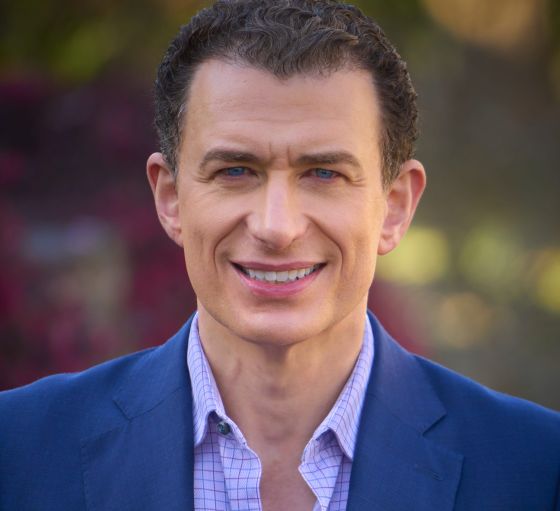
Josh Levs is a longtime broadcaster and journalist who fights against lies, myths, and distortions. His reporting on air and online, columns, book, speaking and consulting work all share a clear throughline: an unshakable commitment to truth.
Now, he has launched a podcast, They Stand Corrected, taking on the news media. In it, he explores systemic problems that prevent major news organizations from ensuring they provide the truth, the whole truth, and nothing but the truth.
Each episode is accompanied by a newsletter packed with links for everyone to see, and an opportunity for paid subscribers to post questions, comments, and more.
Josh spent 20 years at NPR and CNN, reaching audiences across the country and around the world. He received many of the highest honors in his field, including six Peabody Awards, two Edward R. Murrow Awards for his own series, and awards from the Society of Professional Journalists, the National Association of Black Journalists, and more. A scholarship was awarded in his name at his alma mater, Yale University.
At CNN, where he became lead on air fact checker, he regularly corrected politicians, pundits and leaders on all sorts of claims. He was referred to as “Truth Seeker in Chief” and “Mr. Reality,” and was invited to lampoon himself on a comedy program. A father of three, he also began busting myths about modern dads. He showed that contrary to stereotypes, dads are trying to “do it all” at work and at home.
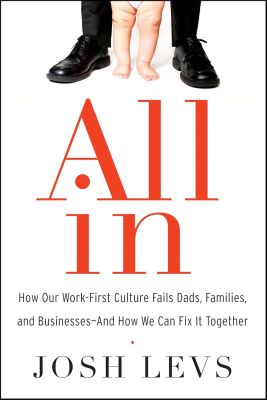
Josh then stepped into a global spotlight by taking legal action against Time Warner (then CNN’s parent company) for fair paternity leave so he could care for his preemie daughter and sick wife. The company ultimately embraced his call, revolutionizing its parental leave policy to make it better for moms and dads. The news made headlines. He wrote a book, All In (HarperOne) busting myths about dads and modern families. It received rave reviews and won the Nautilus Gold award for “exceptional literary contributions.”
The U.N. named Josh a Global Champion of Gender Equality, the Financial Times declared him one of the world’s top 10 male feminists, and a New York Times front-page story described him as “a pioneer.” He has testified in Congress, won a debate on feminism at Oxford, and spoken at major conferences, businesses and organizations across the country and overseas. (See videos at his YouTube channel.)
With his new podcast, Josh is doing for the mainstream media what he has spent many years doing for other topics: busting myths, exposing lies, and fighting to make things better.
Shadow Politics

Shadow Politics is a grass roots talk show giving a voice to the voiceless. For more than 200 years the people of the Nation's Capital have ironically been excluded from the national political conversation. With no voting member of either house of Congress, Washingtonians have lacked the representation they need to be equal and to have their voices heard. Shadow Politics will provide a platform for them, as well as the millions of others nationwide who feel politically disenfranchised and disconnected, to be included in a national dialog.
We need to start a new conversation in America, one that is more inclusive and diverse and one that will lead our great nation forward to meet the challenges of the 21st century. At Shadow Politics, we hope to get this conversation started by bringing Americans together to talk about issues important to them. We look forward to having you be part of the discussion so call in and join the conversation. America is calling and we're listening… Shadow Politics is about America hearing what you have to say. It's your chance to talk to an elected official who has spent more than 30 years in Washington politics. We believe that if we start a dialog and others add their voices, we will create a chorus. Even if those other politicians in Washington don't hear you — Senator Brown will. He's on a mission to listen to what America has to say and use it to start a productive dialog to make our democracy stronger and more inclusive. If we are all part of the solution, we can solve any problem.
[00:00] Speaker 1: No taxation without representation. 200 years of exploitation in the capital of this nation. No, no, no, no, no. No representation in the capital of this nation. 200 years of exploitation. Give the people their right to vote. Someone asked me, "Was it true, the voting rights of the district were long overdue?"
[00:35] Speaker 2: That was Sweet Honey in the Rock with Give the People the Right to Vote. Good evening and welcome to Shadow Politics, an hour-long grassroots talk show. We're here interviewing the people that are making it happen, not always in front of the camera, but always a bit ahead of the curve. We're not gonna tell you how to feel or who to vote for. We're just putting the information out there, because it's what happens in the shadows that really makes the world go round. So come listen, listen, learn, and learn, because a vote is a terrible thing to waste. And now more than ever, we need everyone listening, learning, and engaged if we're gonna make America sane again. If you got a question, call in at 888-627-6008. And tonight, we're very lucky to have with us Josh Levs. Josh is a, was the number one fact-checker at CNN. He's got an amazing podcast himself called They Stand Corrected.
[01:32] Speaker 2: Uh, he's been a journalist and, uh, has really covered every aspect of, um, journalism, I think pretty much in the last 20 years. So we're excited to have him with, uh, us. He's gonna tell us, uh, he's gonna straighten all this stuff out for us. He tells us both sides are giving us the wrong information. So let's hear what Josh has to say. Welcome to the show, Josh. Thanks so much for being with us.
[02:00] Speaker 3: Thanks for having me. I like that you started with that song too. I mean, just for the record, it makes no sense for there to be-
[02:06] Speaker 2: What do you mean?
[02:07] Speaker 3: ... any Americans, taxpaying Americans not represented in the Senate. There, I mean, I know you're a shadow senator.
[02:12] Speaker 2: Yes.
[02:12] Speaker 3: But the whole idea-
[02:14] Speaker 2: Yeah, it's crazy, yeah.
[02:16] Speaker 3: ... uh, it-
[02:16] Speaker 2: And, and, and, you know, it-
[02:20] Speaker 3: Sometimes it... Go ahead. Yeah.
[02:20] Speaker 2: Y- yeah, a- and it's funny, you know. E- everybody says it's crazy too, you know, but the majority of people say it's crazy. But nobody really has a dog in the fight except us Washingtonians, so we don't get very far. And as you understand as a journalist, it's, uh, really a partisan matter, which it's all-
[02:38] Speaker 3: Well, except whichever political party thinks it would benefit them at any given time.
[02:42] Speaker 2: Yes.
[02:42] Speaker 3: You know?
[02:43] Speaker 2: Yes, and, and, right, and that's what it always is, you know? It's always been that way. It's all when, uh-
[02:49] Speaker 3: Yeah.
[02:49] Speaker 2: ... y- y- you know, it's always been a fight over what political, uh, party is gonna control Congress. So it's still that way, and, and, uh, we'll see what happens, you know. Uh, it's been going on since 1801, so, uh, you know-
[03:05] Speaker 3: Right.
[03:05] Speaker 2: ... we're certainly playing the long game. Um, anyway-
[03:08] Speaker 3: You know, um-
[03:10] Speaker 2: Go ahead.
[03:10] Speaker 3: ... that might, actually would be a really g- good place for me to start with you here, because, if, if your listeners are wondering, I, (laughs) I'm not right or left. I am over the entire concept of it. It's, it, at this point, you know, there's the, the horseshoe theory, right? The further you go to the right or the further you go to the left, you end up in the same place. The horseshoe theory has become a full circle. The, the extremists and the far right and the far left are now best friends, and on each other's podcasts and YouTube streams, and praising each other. You know what? So I, what I'm about is, is facts. And I know that (laughs) a lot of people think they're about facts, but unfortunately, in my 20 years in big media, I saw how incredibly often we in big media have failed to provide the truth. And when I say that, these days some people instantly get the Trump image in their mind, like, fake news. But it goes way before that. It goes back way before that, you know.
[04:09] Speaker 3: And, and, and so what I do on my show and my newsletter at They Stand Corrected is I basically look at two ways in which this happens. One is what I call open mic nights, when places that are supposed to be bastions of truth just quote whatever a person says, (laughs) or invites them to say whatever they wanna say, without telling you what's true. And then the second is that the media itself pushes lies, and the media itself has been infiltrated by extremists who have their own agendas. So when I'm fact-checking things, it's usually really clear. It's like, here's what the media said, and here is concrete proof that it's false. And I take people through it step by step, so they can come to see for themselves that we don't currently have big media as trustworthy sources of truth.
[05:01] Speaker 2: Well, and you know, I, I gotta tell you, I don't know how to combat this. Maybe you can tell us. But what I do generally is try to listen. I think the best thing I can do is I try to listen to CNN and also Fox to see what-
[05:16] Speaker 3: Mm-hmm.
[05:17] Speaker 2: ... and try to figure out, y- you know, uh, try to glean what commonality I can find and, and thereby find the truth. I don't know if that's the best way to proceed, but-
[05:28] Speaker 4: Well, I think in these trying times-
[05:30] Speaker 2: ... go ahead, deliver it.
[05:30] Speaker 4: ... one of the best ways to really get proper news is by watching British news. (laughs)
[05:35] Speaker 2: British news. What do you think about the Brits?
[05:38] Speaker 4: An international source.
[05:40] Speaker 3: Well, I'll tell you, like, that would be great, and GBN does some really good stuff. Unfortunately, the BBC has had a bunch of disasters lately in which they got a lot of facts wrong, to the point that they even acknowledged it and, and had to apologize for some of it. Um, so the same kinda infiltration has taken place there. You know, when it comes to openly partisan media, like CNN and, and MS Now, which used to be MSNBC-I always tell people, there are big lies on the right and there are big lies on the left. If you watch, uh, Fox, you're unlikely to hear the big lies on the left. And if you watch MS Now, you're unlikely to hear the big lies on the right. But what we're supposed to have are mainstream outlets that are neither, that are just about the truth. You know, like where I used to be, CNN, NPR. These are, these places are supposed to be saying, "Here's what the truth is and why you can trust us," and it keeps not happening. And in some ways we can see that right now.
[06:41] Speaker 3: I mean, every day there's a new story in which there's just so much context missing. Like, there was, you know, this horrible shooting last night at the, um, White House Correspondents' Association Dinner, which we can talk about this, it shouldn't exist anyway. But I still am not seeing in these reports this widespread surveys that have existed over the past year and two years now, that show even more support for political violence on the left than the right. We're just not hearing that. So we hear so much about January 6th, we don't hear about all the growing support for violence from people on the left. So it shocks people when an anti-Trump person engages in some kind of violence, I guess. But we need to recognize this reality. These extremists are growing and we need the media to be projecting that, to making it clear so that... You know, I always say, if we don't have facts, we can't fix something. If I want somebody to fix my dishwasher, they have to first see what's broken.
[07:41] Speaker 3: We need to recognize what's broken in America so that we can fix it together.
[07:46] Speaker 2: Well, I gotta tell you, I'm one of those people that's startled by that statement because, you, you know, it seems to me, now please explain that to me, 'cause it seems to me that the narrative that the right puts out is really much more provocative and oriented towards violence than that the, that the left's putting out. So please explain to me, how is the left, uh, just as extreme violently?
[08:15] Speaker 3: Yeah, I mean, I'll tell you a couple of the statistics. I always say in broadcasting (laughs) , I, I tell listeners this, uh, y- numbers can go in one ear and out the other. So you can find all these numbers at my, uh, Substack and, and in my show, um, They Stand Corrected, and, and you'll find it at just theystandcorrected.substack.com. But here's a couple of them. One survey found that 40% of, um, of people on the left said that they would be willing to support violence to get Trump out of office, and around 25% on the right said they would be up for considering violence to crush anti-Trump protests. And meanwhile, there's a group called FIRE, um, Foundation for Individual Rights and Expression, and they said that... So they, they interview students every year and they say that for as long as they have asked the question, they have found that people on the far left are more willing to support violence. So this is what we're seeing grow across our society now, you know?
[09:19] Speaker 3: January 6th was horrifying and that was a- and, and so was the, uh, people might remember the, the Charlottesville riot, those, you know, those Nazis-
[09:28] Speaker 2: Mm-hmm.
[09:28] Speaker 3: ... and that was a far right action. Um, but we've also seen a string of terrorist attacks in the United States, Islamist terrorist attacks, that are supported and fueled by people on the left. So until we stop to realize that the rhetoric, and not just rhetoric, but the straight-up lies are fueling violence and until we start to, to realize that what we have to do is educate people around facts, around truth, it's just gonna get worse. And people are turning to social media now, you know? Because they're not, (laughs) they're not getting truth and everything they need from the media so they're turning to social media, and social media's filled with conspiracy theories. And then some of the media themselves pick up on these conspiracy theories and just rush with them in this desperate search for clicks, you know?
[10:20] Speaker 3: And if you look at what happened last night, what we really need are calm heads to explain that after any act of violence, if it's an assassination attempt, whatever it is, it always takes time to find out what the motivation was, what the security gaps were, this is what I wrote about today, how it happened, who this person is. We never know, almost never know, within the first hours or minutes. But it took no time for media and others to start rushing with any scraps of information they can get, and that just feeds these conspiracy theories. So we're already seeing it, people saying it was fake, people saying, uh, it was the deep state, people blaming the left, people blaming the right. We don't know.
[11:02] Speaker 3: And if we have major sources of truth that we can come together around to help people understand, we don't have to have all the answers right away, let's investigate, let's find out, that would be a way of calming things, bringing us together, and allowing us to move forward as one country instead of getting more and more bitter and angry and partisan.
[11:26] Speaker 2: Well, where do you find those unbiased, uh, keepers of the truth, intelligent truths? How do you find them? I mean, how do you separate bias of, "I'm a liberal, I really believe that everything I say is tainted to a certain extent by my, uh, my liberal perspective on the world"? So how do you filter that out? Or how do you get the, that truth-teller that can come in and speak only about the truth and not about their bias? How, how, how do you find that person or people or institution?
[12:02] Speaker 3: Yeah. No... You know, I totally understand that. So I'll give you some examples of the, the kinds of things that I do. Like, for example, the, the New York Times published this report-... claiming that a group, um, knew how many civilians were killed in an attack in Gaza. All right, so this is something very substantive. It's a number. It's concrete. They said, "This group knows for a fact that the following number of civilians were killed." Well, unlike the New York Times, I contacted that group (laughs) and the group told me, "No, we don't." They were just going with what Hamas, this terrorist group that runs that region, claimed. And I told th- The New York Times that and they said, "Okay, but we're not gonna change it." You know, this is the kind of thing I'm talking about, that, that there are just literally statements that are not corrected. Or just the other day, Kash Patel, um, he said this thing that made no sense.
[12:53] Speaker 3: He said he has worked twice as many days as all other previous FBI directors, but he hasn't been there that long and there are FBI directors who have worked there for decades. Like, uh, Hoover worked there. I mean, nothing he said made sense (laughs) . And so people send me his quote and I was like, "That's physically impossible." So I've been looking into hard, concrete facts. What did he actually mean? These are the kinds of things that the media should be doing in the first place. So left and right become totally irrelevant when there's something you can actually check. And when it comes to the support for violence that I was just talking about, these are, um, analyses. This one is where it gets a little bit tricky. So part of what I did at CNN was I looked into studies and surveys and people are rightfully wary when they hear about polls and stuff. I dig into them. I look at methodology, I look at what questions were asked, how many people were interviewed.
[13:52] Speaker 3: You know, like, if you ask 10 people something and nine of them say that they agree on something, that just means nine out of 10 people think something. That doesn't mean 90% of Americans (laughs) believe something. But then there are these surveys that are done that are really extensive, some of them take place multiple times a year, interview tens of thousands of people, use scientific methodologies, make sure to match the population. You know, they take all these steps. And when we see those over time and we see actual behaviors in real life change along with them, we can say, "Okay, here's a place that knows how to gather data." So when I tell you about support for violence, these are groups that have been tracking it for years, that have been asking the same questions and working with scientific methodologies. Anyway, I put those out there so that people can, can see them. And just so you know, I'm always inviting listeners and readers to, uh, get in touch.
[14:50] Speaker 3: Tell me if I got something wrong, you know? I would love to do segments called I Stand Corrected, where people tell me, "You got something wrong." Because there's nothing shameful about getting something wrong if you make a good faith effort in the first place. And that's where the media fails. In the rush to get people to click, the media is constantly running with whatever they just heard, instead of stopping to find out what the truth is.
[15:15] Speaker 2: Okay. Uh, have my brilliant co-host, uh, straighten him out there, Liberty.
[15:21] Speaker 4: (laughs)
[15:21] Speaker 2: Tell him, tell him where, tell him where he needs to be corrected. Go ahead.
[15:25] Speaker 3: Yeah. (laughs)
[15:25] Speaker 4: So I, you know, actually, I really agree with you. I like to refer to it as clickbait politics. And I think social-
[15:33] Speaker 3: Yes.
[15:33] Speaker 4: ... media is a really big part of that. You know, as a young person, it's really interesting to see how this progressed in the ways they taught me to check for fake news. When I was maybe in, like, seventh grade, middle school, they used to tell me, "Okay, so to find fake news, make sure that you have a reliable source that has .org." And that was very simple back 10 years ago. Now, they're teaching me about Citizens United court case, which was where-
[15:59] Speaker 3: Mm-hmm.
[16:00] Speaker 4: ... I'm sure you've heard about that, but it's the Supreme Court decided that money and technically power can infiltrate the media. And so my question to you, this is so interesting to me, 'cause I'm also a believer that both sides of extremism are actually very similar. They're just ideologically fed anger.
[16:18] Speaker 3: Exactly.
[16:19] Speaker 4: And so if these-
[16:19] Speaker 3: Oh, you're exactly right.
[16:21] Speaker 4: (laughs) If these facts are increasingly more accessible and more easily, let's say, distributed, um, do you think that the real power behind journalism is now just basically creating this context? And most importantly, where do you think, being back there in the back rooms of all of these processes, where do you think that mainstream outlets are structurally failing in this role?
[16:49] Speaker 3: Oh, such great questions. First of all, you're 100% right. The far right and the far left are now the same. Um, and they just get there through (laughs) opposing ideologies-
[16:57] Speaker 4: (laughs)
[16:57] Speaker 3: ... and end up at the same place. Yep. Um, there, so there are groups that are very clever about this. And let, let me tell you something 'cause I, I did an episode about something called memetic warfare. And the idea is in our society we see memes. And to us, most memes are funny. They're, like, these silly images or whatever. But the studies of memes go back decades. And I, I interviewed this expert about it. He explains that people who want to manipulate thought processes, people who want to change cultures, people who want to help shape minds of young people in your generation, they learned long ago that one thing you do is memetic warfare. So you use images and very brief messages to push your ideology. You find ways to associate certain images with certain ideas, and that impacts people's subconscious minds. It gets them to instinctively believe certain things. And there are groups, some of them are, they're foreign. I mean, Iran is famously engaged in memetic warfare.
[18:03] Speaker 3: It's doing these images with LEGOs and stuff. It hired memetic warfare teams. Um, but there are also extremist groups in America. On the show, I, I shared some studies from, like, US military colleges and others that have been tracing this for decades.So, the dream of manipulators is to get memetic warfare content, get memes, get images and ideas directly to as many people as possible, especially young people. And guess what? (laughs) They are living in a time now in which they could not have dreamed of something this convenient, because they can literally send content into people's pockets, starting when they get their first phones, which at this age is, what, like, for a lot of kids, 12, 13, 14? Cell phone penetration in America is at, like, 96% and, and a lot of teens get them. So, social media content is filled with memetic warfare in addition to individuals like you and me and, and whoever else doing our best.
[19:07] Speaker 3: The role of the media should be to ignore all that noise and provide the truth. But instead, it did the opposite, and I saw this inside CNN. There was this recent study, um, that looked at m- millions of headlines, and they found that over time, headlines have turned to greater and greater anger, more and more rage bait, regardless of journalistic quality. So, true or not, accurate representation of what's going on or not, these headlines have become angrier and angrier. And I know why 'cause I was there on the inside, clickbait. So, instead of standing against that phenomenon, big media have joined it. We are so, they are so desperate to get clicks that, I mean, I remember sitting there at CNN and we would change a headline until we saw the click rates go up, and (laughs) that leads you to give up on quality. And it, w- w- as a result, what ends up happening is more and more people tune out. So news audiences are flocking away.
[20:14] Speaker 3: The number of people who follow the news closely has gone down from just over half, uh, back in 2015, 2016, to less than a third now. People are not following the news as closely, and instead, here's what they get. Headlines, just headlines, because people screenshot headlines or send around articles in, in social media and on our phones. People only look at the headlines. And so I always say mainstream media, big media is super, super powerful these days, but the reason is that social media people (laughs) grab those headlines and share them. So, that is the field we've entered into, and that's how we've ended up at this time in which people don't have trustworthy sources of truth that will always put truth first. You see what I'm saying?
[21:01] Speaker 2: Yeah, but how about the individual? I mean, he certainly ... The individual, as you just pointed out, uh, is-
[21:08] Speaker 3: Yeah.
[21:08] Speaker 2: ... not benign here. You know, my opinion is that people don't seek the truth. My opinion is that people-
[21:16] Speaker 3: Right.
[21:16] Speaker 2: ... seek, uh, things that reinforce their existing prejudices, right? So-
[21:21] Speaker 3: Yup.
[21:22] Speaker 2: I don't, I don't wa- That, and that's why those little headlines work, right? "I don't like, uh, people of color," so I see, I see somebody call the people that are coming from, uh, Latin America into America, they're calling them rapists and murderers and I'm like, "Oh, ƒ (00:17:39) you, I didn't vote for them to begin with."
[21:41] Speaker 3: Mm-hmm.
[21:41] Speaker 2: I mean, isn't that a, a, a major factor? I used to say my-
[21:45] Speaker 3: Yeah.
[21:46] Speaker 2: ... my Italian grandmother, who believed every stereotype, uh, would not know if a person of color gave her a, a kidney, but she would remember every person of color she ever saw cash a welfare check in a liquor store. You know, I mean-
[22:01] Speaker 3: Oh, yeah.
[22:01] Speaker 2: ... those things resonated, right? And, and, uh, and the other things, she just didn't pay attention to. So how, what do we do about that? What do, especially-
[22:10] Speaker 3: Right.
[22:10] Speaker 2: ... with social media where, where you can pick your, you can, uh, pick the rabbit hole you wanna go down, right? And so no matter what crazy-ass idea you come up with, there are other people out there that will support you in it. So, you know-
[22:25] Speaker 3: Yeah.
[22:25] Speaker 2: ... what do we do about, how do we, how do we get people to listen to the truth?
[22:31] Speaker 3: Yeah. There's a short-term answer and a long-term answer. The, the short term, the, the best I can offer is to, uh, (laughs) be skeptical of everything you hear, and feel free to come to me. Like, I, I, (laughs) I mean, (laughs) I'm just one person, I know, but, uh, the reason I created They Stand Correct is that literally nobody else was fact-checking the news. You know, I used to be on-air on CNN fact-checking politicians and pundits. Now, I'm fact-checking the news. So when you see something, you can reach out to me, and I, I tell people this all the time. I explain in every episode how you can reach me. So, short term, question everything. Don't trust it just because it comes from a famous news source. Um, you know, it, it's good to look around and see whether it's true or not, but unfortunately, there's so much false content out there, it can be hard to get through to the truth.
[23:19] Speaker 3: So, feel free to come to, to me with that, and do be skeptical and do be aware that groups on the left and right want you to hate, and they want to use your hatred for fueling their own movement. So, so there's that, but there's also a long-term solution that I think is really important that speaks to our mentality in the next generation. I have kids, and I've seen how this works. I believe that we make a big mistake, um, out of the best intentions, in our culture, in the way that we raise the next generations. We keep teaching kids that the most important sign of intelligence is how they argue for a position, you know, like debate teams or, like, I, I've seen it with my own little kids. Like, uh, "Should lunch be five minutes longer? Argue yes or no." And then they judge you on how well you argue, and we keep praising that. But what I want is for us to stop that. I want us to instead say, "Okay, should lunch be five minutes longer? Well, how can we find out?
[24:23] Speaker 3: Hmm."Let's look into schools around the country that have lunch five minutes longer. What happens there? Are test scores any different? Are kids any happier? What happens when someone makes it five minutes longer? Does everything stay the same? Always look for facts. Just put curiosity ahead of a desire to express your own opinion. And instead, we pressure people to have an opinion, like ƒ, it happens to me all the time. People say, "Noel, what's your opinion of blah, blah, blah?" And I say, "Uh, my opinion has nothing to do with anyone else's life." (laughs) I- I don't even think about my own opinions on those things until it's time to vote. It's like what I wanna do is learn more. So what facts can I explore? What questions can I explore in order to learn more about this? And that curiosity, unfortunately, it just seems to be limited to, like science (laughs) and science class. Like let's test and do a hypothesis and blah, blah, blah, and it sounds boring.
[25:24] Speaker 3: But if we faced all of life that way, everything we ever hear, I heard that this thing happened. Okay, what can I do to find out whether it happened? Can I talk to someone who was there? Can I find authentic video that was not run through AI? Can I, um, see whether these things have happened before? Can I find, uh, someone to reach out to? Like that kind of instinctive curiosity, instead of trying to form an opinion, I think that will be a sea change in how we develop our entire society. You see what I'm saying?
[25:57] Speaker 2: Yeah, I do, but again, my agenda, because unlike-
[26:00] Speaker 3: Yeah.
[26:00] Speaker 2: ... Liberty Jones, I was not a great lifetime long learner. I was a kid that wanted to get the hell out of school. I would've gone for-
[26:09] Speaker 3: Me too. (laughs)
[26:09] Speaker 2: ... a five-minute longer lunch just because it meant five li- minutes less of academic, uh, endeavor. You know, I wouldn't have had to go any further than that. We got five more, four, five more minutes of eating rather than five more minutes of English. Yes.
[26:25] Speaker 3: (laughs)
[26:26] Speaker 2: Uh, so y- uh, I don't know how you get rid of that and how you get people to listen to people like you, to wanna search out people like you. Uh, that's, that's a conundrum for me. But go ahead, uh, Liberty, uh, you're the younger generation.
[26:42] Speaker 3: This is-
[26:42] Speaker 2: What do you think?
[26:43] Speaker 3: ... so interesting, truly. You know, I think you're talking a lot about the dissolution of the ego and what that means with social media. So, you know, if curiosity is the foundation of better thinking, what's, what's a cultural habit that us adults do that we need to unlearn in order to prioritize curiosity? And, you know, what do we need to change first? Is it education? Is it media incentives? How do we even change that? Cultural norms? Should we start mass creating meme- memetic warfare about curiosity?
[27:18] Speaker 3: (laughs) Like how do we go about this- Yeah
[27:20] Speaker 2: ... cultural shift?
[27:22] Speaker 3: Yes. We should be... Uh, by the way, (laughs) you really, are you, uh, well, how old are you? I'm 22. (laughs Wow, I am so impressed right now (laughs)
[27:33] Speaker 3: ... because (laughs) you, and I'm always weary of saying that because I don't wanna sound condescending. Like, you're so young, it's not that. It's that you've grown up surrounded by so much of this stuff, but you definitely have, you know, a lot of wisdom and, and open-mindedness and are not, you're clearly not caught up in either of the, uh, extremes, which is amazing. Um- Thanks, dude The answer is yeah. So, yeah, no, it's a beautiful thing. So I, um, I spoke with, um, this expert on memetic warfare. His name is Jason Korman. He runs this company called Gaping Void. He says we fight fire with fire, but we, we use these same tools in a good way. So, for example, he wants active memetic work, m- memetic campaigning, you can even think of it as warfare, I guess, um, that instills a national identity for what it is for all of us to be American, like what that even means anymore.
[28:26] Speaker 3: You know, we have these very popular people in podcasting and online who are openly, uh, yeah, Americans who are openly anti-America. Like they say so, right? Um, and w- he says, if we had a joint national identity, if we had memetics showing great things about America, then that could help build a national identity and that could help us want to work together more. And yes, the same thing goes for pushing curiosity, pushing facts. You know, I, in my own tiny little way, make social media content and, uh, and try to put that out there. Um, just a few facts here and there to change the mindsets and get people interested. Um, now I will tell you that (laughs) part of the problem is that we are at a disadvantage being a democracy. All right? So be- democracy is the best form of government. It is, uh, you know, the one in which people end up being free, the most free we can be. However, in a democracy, we are always focused on the next election, and they happen every two years.
[29:35] Speaker 3: And what that means is both parties are always trying to make us feel that things are awful because we need to switch parties to make things be good. So we, inside a democracy, are always getting (laughs) negative memetic content from our own leaders. You know, I mean, if you think about what Trump's campaign were, were all about, for all three of his presidential races, it was all about American carnage and, and, you know, uh, j- craziness, like immigrants are eating your pets or whatever far-right craziness. It, it, it's, it's, you know, and you need me to come along and clean it up, or your whole society is gonna be on fire. Um, and we're getting the same thing on the left, you know, people like trying to call Trump a Hitler or a Nazi or what... He's not a Nazi. Like n- the Nazis were Nazis. (laughs) Non-Nazis are not Nazi. And so what's happening is..Both sides, internally, are pushing all this hatred. So, it's an uphill battle to stand against that.
[30:39] Speaker 3: But (sighs) what would have to happen would be positive responses to positive messaging. We had some of that back in 2008 when Obama ran an overall very positive campaign. Um, and there are studies that show that anger over the years has become, has gone from being one force in politics to the dominant force in politics. So, we would all need to come together around a coalition politically that presents a vision of a better America without pushing hatred. Um, and some of that can be done grassroots by, you know, quote unquote progressive and, and quote unquote conservative groups working together. Um, and I say this all the time, by the way, I say, "Let's progress in all the ways we need to, conserve everything that's working well, and move forward based on truth and justice." Like, we can do this. We, we can, at a grassroots level, build coalitions around a larger, uh, uh, a larger purpose. That's what just happened in Hungary.
[31:48] Speaker 3: That's how they got rid of the, uh, the guy Viktor Orbán you might have heard about in the news. Uh, a lot of Democrats here were celebrating when D- Viktor Orbán lost in Hungary, but they were getting the wrong message. They were saying, "Aha, a far right guy lost." No, no, no. What happened in Hungary was the, the Left, the far Left dropped out and threw its weight behind a more centrist, palatable, still conservative leader. Here, I'm not saying there's not gonna be conservative liberal, but we, the people, can work to create a more centrist political coalition, and that could (laughs) help push more positivity in America, less hatred, less violence, and in turn, more openness to learning about each other, which means more openness to the truth.
[32:35] Speaker 2: Well, let me ask you. Let me, uh, look at the other side of the coin for a minute. What about repercussion? Um, o- one of my favorite guests on this show has been Dan Rather. If, uh, some of our listeners don't know, Mr. Rather was one of the number one broadcasters in America-
[32:56] Speaker 3: Yup.
[32:56] Speaker 2: ... who made a mistake by saying that George Bush, President Bush at the time, had never s- or maybe it was Kennedy Bush, I can't remember. I think it was Kennedy Bush, uh, never served in, in, in militarr- in the military. And he got that information from a reliable source, but unfortunately, he didn't check that source, and it wasn't true. George Bush actually had served in the National Guard, and he served honorably in the National Guard. So, his career just went, right? He's still got a career. I mean, he's got a podcast and everything, but it, it really took a nosedive, right? So, why doesn't that happen to people that are putting out, uh, uh, unverified facts these days?
[33:42] Speaker 2: What's happened-
[33:42] Speaker 3: Uh, b- I-
[33:43] Speaker 2: ... to the media where they're not policing themselves?
[33:45] Speaker 3: Right. Well, first of all, you're absolutely right. Second of all, w- w- in a way, it did happen to the media in general because we no longer have standard bearers. Like, you know, if, if you look farther back... I was actually looking at these statistics today 'cause I'm working on my, uh, next episode. Um, so back in the 1970s, the... about three-quarters of Americans trusted the media. That is now down to an all-time low of 28%. And this is legit figures from Gallup. They ask the same questions every year, broad selection of Americans. So, Dan Rather was at the midpoint in there. Dan Rather was in that post-Walter Cronkite era in which there was still this concept of standard bearer of news. So like, you know, there used to be three big TV networks. They had evening newscasts. Technically, those things still exist, but I never hear about them. I haven't watched one in decades. But the idea is (laughs) that it, what's happened instead is everything has atomized.
[34:44] Speaker 3: Um, people have smaller audiences at more places getting different content because there are no trusted standard bearers of news anymore. Um, you know, The New York Times has become super far Left and gets so much wrong, and, and NPR, too, where I used to be. Um, and, and as a result, the media has been, has had to pay a price for it. Um, but as for why they're not policing themselves, that boils down generally to money. Most of these places are corporate-owned, and the big bosses are focused on the next day's stock returns. And (laughs) if you can get some more clicks that one day, you get more advertisers. Now, in the long run, it's a terrible form of leadership, even business-wise, because they're giving up their own audiences. What's happened is people are, um, announcing proudly that they are... It, it's called JOMO, the joy of missing out. Larger numbers of people have announced that they are giving up on the news, and they're happier that way because the news is so negative.
[35:49] Speaker 3: So, what happens is instead of trying to win back all the people who have left, who have flocked away from the news, these news agencies instead are competing for the smaller pie, right? A, a piece of that smaller pie by getting angrier and angrier and angrier content. And in the process of doing that, they're making the pie even smaller. So, the media is paying a price for it because people are giving up. But there isn't one prominent individual who is being held responsible anymore because we don't all watch the same people anymore. Does that answer your question?
[36:24] Speaker 2: Yeah, I think, but can... Is there a way we can go into this, um, uh, from another angle in that, uh, we can train people? You know, the, the biggest political motivator since the beginning of time, in my opinion, has been fear.So how do we take the fear out, you know, and that's why we do it, right? You gotta, "These people are gonna take your job. These people are gonna come in and, and rape and murder. These people are gonna-"
[36:52] Speaker 3: Yeah.
[36:52] Speaker 2: ... whatever, right? And, and, and it's not to, it's not to make you aware, it's to make you fearful, right? So that you go for the-
[37:01] Speaker 3: Yeah.
[37:01] Speaker 2: ... for the other side. Don't know how to get that, you know, is there a way that, you, you know, you talk about the way we, we, we raise children, for example. Is there a way that we can put more trust out there so that people are not fearful? How do, uh, uh, uh, how do we do that?
[37:18] Speaker 3: Yeah. Yes. So one of the things I talk about a lot on my show, um, is victim narratives. And the reason is that victim narratives are super manipulative and once you see this, you can't unsee it. The vast majority of news operates with victim narratives, okay? And so what victim narratives are, are, um, also known as the drama triangle. There are three characters in most stories. And th- this will answer your question, trust me. Sometimes it sounds like I'm going in another direction, (laughs) but when I swing back, you'll hear me. All right. So victim, villain, hero. Most stories, the way they are presented to you, have that. So this horrible stuff that was being said about immigrants, "They're coming in to take all your jobs. They are raping your children. Um, they're eating your pets," that, the, the kind of victim narratives that are popular on the far right make you the victim. You are the victim, all right?
[38:13] Speaker 3: And, um, the villains are whoever they want you to hate, right then, so immigrants or whoever it is, you know, scapegoating someone so that you will blame them for all your problems. And then the hero is the right-wing political figure who promises to come in and do something about it. So there's that kind of victim narrative. But the victim narratives on the left are just as dangerous. They're just shaped differently. The victim narratives on the left go mostly like this. You are privileged. In order to be a good person, you must stand for victims, and I, the progressive activist, get to determine for you who the real victims are, and you must agree with me or you're a horrible person. So what you find in the media, as soon as you start to notice, it's almost always a triangle, victim, villain, hero. You start to see that stories are usually shaped that way. If you are being given information and as you read it...
[39:08] Speaker 3: I mean, look, sometimes there's an obvious victim and villain, like a person kills someone, you know? A person commits a crime. Like th- that's literal. But when it's more complicated, when it is about people with, like, different political solutions wanting to run for office or, um, when it's one side that, that, that is saying something true and another side that's saying something false, the media instead runs to effectively make you feel that there is a victim and a villain and, um, a hero. And if you start to notice that, then you can realize you're being manipulated and then you can start to think, "Wait a second, what am I not being told here?" You know, "What are the facts here?" So for example, um, one thing I, I reported on recently was the Global Terrorism Index.
[39:57] Speaker 3: It's out this year, um, it showed that, uh, deaths from terror killings from Islamist terrorism, uh, nearly quadrupled last year and hit the highest rate in America since 2019, and they're, they're shooting up and that increasingly these attacks are being carried out by teenagers and that now even kids as young as eight are being radicalized, including through memetic warfare. All right? So this is just an example. So th- the Global Terrorism Index comes out every year. It shows this extreme and rising danger of Islamist terrorism. It, it talks about this thing called Islamoleftism where a lot of leftist groups are working with, uh, Islamist terrorist groups. Okay. No major mainstream outlet reported on that. None of them. They didn't. Because it doesn't fit their victim narrative.
[40:50] Speaker 3: They don't want to (laughs) acknowledge the growing terrorism and violence on the left because they want, in general, the victims to be people on the left, the villains to be people on the right, and that's what gets their radicalized audiences to click. So when you start to look for that in the news, it can help wake you up and realize, "Oh, I'm being manipulated here. Oh, there are things I'm not being told," which you can find out from my podcast and, and, and that's s- a lot of what people say to me. They're like, "I had no idea these things were even happening until you reported on it." But I always say, "Don't trust me. Like, uh, here are the links. Go to the, you know, check it out for yourself, he- here's the original reports.
[41:31] Speaker 3: It's all in the, in the, uh, newsletter." Um, but the idea is, if you, if you start looking for victim narratives, "Am I being made to feel that there's a good guy and a bad guy here?" then you become a more aware, conscious news consumer and you start to rethink some of your own prejudices and open your mind to new ways of seeing the phenomena that are going on in our society. I wanna make sure I'm answering this for you. (laughs) Is this, is this helpful?
[42:01] Speaker 2: Well, you know, I, I think that, I think that so far, and y- you've been an amazing guest, I think that, that, uh, you're right on about so many things. Y- I might not express them in the same terms that you do, but I have much of these same feelings, especially when it comes to the Democratic party. I've been a, uh, you know, a Democrat for, for, uh, 40 years and I agree with you 100% that the left on, in the Democratic Party does the same thing that the right in the Republican Party does. They have the same kind of influence, they have the same, uh, they have similar, uh, agendas, uh, maybe not in terms of what they want to accomplish, but certainly in terms of their methodology. I, I agree 100%.
[42:50] Speaker 3: But, you know, I also understand that truth without context can be a very, uh, dangerous thing too. And I'll give you an example. I worked for a guy named Senator Claude Pepper. And Claude Pepper was a member of the House of Representatives, but we called him senator because at one time, he had been a United States senator. His opposition found out that most of his, m- many of the people that voted for him were itinerant farm workers, so they put out information that he was a heterosexual and he practiced celibacy before marriage. And those, and they didn't know what celibacy meant, but it didn't sound good. It sounded like communism or, you know, some other thing they didn't like. Oh, God. Right? And- and he really got defeated on the basis of, you know, the fact that these people were ignorant to the terms that they were using, and they cast him in such a way that they always sounded horrible, you know? So what do you do about that? Oh, yeah.
[43:56] Speaker 3: I mean, you can't just put raw fact out there, can you? Um, I'm so glad you said that because I haven't told you this. (laughs) So the one thing that people are always quoting back to me when I, like, when I meet people who have heard This Thing Corrected or- or who write me about it, is this thing that I say, that I- I- I just say it so often I forget (laughs) that it's a thing that I say. Truth equals facts plus context. All right? So it's exactly what you were just saying. You don't actually have truth without context. Like, like imagine that I tell you, um, a, uh, a Black guy just walked up to a white guy and killed him, right? Like, that reinforces a racist idea, and now here's the context, right? Imagine this context, the, uh, Black man I referred to is a police officer, the white man was about to shoot a kid, and the Black police officer saved that kid's life by shooting the white man. Okay? See what happens when you get context? So, in fact, without context is a form of lying.
[45:03] Speaker 3: It can be a half-truth, it can be one-tenth of the truth. You just reminded me, I don't know if this story's apocryphal, I'll look it up when we're done, but when I was young, I heard that there was some woman who had run for office and the opponent spread a rumor that she was a thespian in college, which is a way of saying actress, um, but people didn't know what they meant and they assumed it meant lesbian and they voted against her. So, yeah, I mean, (laughs) l- you know, taking a, taking a single fact out of context is a form of lying. And that kind of thing happens all the time too. People extract a few words from a quote. Um, I even did an episode about how a lot of people think that, um, uh, that if you are charged with libel, that truth is an absolute defense against libel. That you can just say, "No, no, no, it was true," and therefore you get off. It's actually not always the case.
[45:59] Speaker 3: You can be, uh, charged successfully with libel for saying something that is technically true, a lawyer (laughs ... drew me to this, um, if what you are saying is strategically designed to mislead people to think something's false. So, so a- a fact without context is lying, and context is more facts that you need in order to legitimately understand the first fact. So you are 100% right. That manipulation of separating fact from, you know, truth (laughs) is just a way, is just a way of lying. If you're not getting facts plus context, you are not getting the truth. Well, I was always taught to quit while you're ahead, so Liberty, you go. I'm 100% right, I'm gonna stand on that (laughs) Liberty, ask a brilliant quos- question.
[46:50] Speaker 3: So, I can't help but to think, do you think, you know, if truth depends on context, and context is shaped by these attention-driven systems and now we're stuck in this environment where these victim manipulative narratives are completely out-winning any aspect of l- reliable source, so is there a level of human nature to this? Is there a level of this being innate? Or do you think that we're being trained by the media itself? Um, no, yeah, great question. It is in our nature. Um, and one reason I know that is I look at the really big picture of history. You know, one thing I talk about on this show is- is- is anti-Semitism and- and the history of anti-Semitism, um, and, uh, you know, I talk about how in every culture at some point, (laughs) th- pe- people turn on scapegoats. Eh, people look for- for minorities to scapegoat. And I explain that as a Jewish person, I know that w- you know, we don't proselytize.
[47:56] Speaker 3: We don't try to get anyone to be like us, we don't go around and try to make people be like us, so we remain a minority, and humans scapegoat minorities. These things that people do in every culture over time always end up repeating. Uh, lies catch on. I was looking at the other day actually for one of my episodes about how news was spread in the Roman Empire and how, um, you know, uh, propagandists would hire these basically town criers to (laughs) to go travel through town, spread lies, and have the next people spread lies, and have the next people spread lies, and, um, people are willing to believe it. And part of, you know, what I'm up against, what you and all three of us on, uh, uh, in this call are up against is that we care deeply about truth and about doing the right thing.
[48:41] Speaker 3: We are not facing the world like a selfish politician or another selfish person who thinks, "Okay, this is a human failing, how can I use it to get myself more power, more money, more..." Whatever feels like the trappings at the moment, you know? Quote/unquote fame, whatever the...... the, the desires are. A lot of people do look at the world and think, "How can I use that?" And then there are the rest of us who would never do that to people, who really want people to have the truth. And so I talk about, we need a truth counter-movement in which we create an instinctive curiosity when we hear any claim of any kind from anyone. How can I fact check that? And that's why I talk about long term and raising kids, and, and you know, when my kids tell me something they learned, I say, "Oh, that's so interesting, I wonder if that's true, how can we check?" Um, so, so the, the human failing is always going to be there.
[49:47] Speaker 3: It will always be as long as, as, as, as we the human homo sapiens are (laughs) you know, still around, there will always be people using that, manipulating it, uh, sp- fueling anger, fueling hatred. Ah, the, the, the classic image of the villagers with torches happens today when, uh, you know, it happens online. (laughs) And it happens in, in, in vicious violent protests, and it happens when someone opens fire at the White House Correspondents' Association Dinner. It's people being worked into an irrational frenzy, um, ready to engage in group violence or individual violence because they are so deeply convinced that it will be the right thing, and that what they are fighting against is, um, you know, somehow going to benefit from, from, from their horrible action. So yes, that weakness will always be there, but it takes more and more and more of us to weed it out and expose it, and shame it.
[50:53] Speaker 3: And that's why it's so frustrating to me to see the force in society that's supposed to do exactly that, fail. Like I, (laughs) the media, I say all the time, people should on- only be in journalism for the societal role. You know? It's like becoming a teacher or a firefighter or a doctor. If, uh, if all the American hospital- major hospitals were letting half the patients die instead of treating them, like literally not treating them, we would see how awful that is. If all the firehouses in America were only bothering to respond to half the calls (laughs) and not, not bothering to respond to the other half, if teachers were only teaching half the material and ignoring all the rest, we would, we would see these as national crises. Our big, major media have the crucial societal role of providing the truth, and they are failing to that exact same extent.
[51:50] Speaker 3: So we need a counter-movement that will force, (laughs) that will shame the media for fact failures and force, pressure, and push them to do the job, which is to provide the truth, which is facts plus context.
[52:08] Speaker 2: Well, you know, given what you said, uh, during the, uh, broadcast, do you think the movement of people, especially young people, to become independent rather than to become Democrats or Republicans are a reaction to exactly what you're saying? Is this, uh, um, i- i- is, is these people, uh, seeking a different way, you think, to, to... and we see, uh, independence becoming more popular and more popular and more important in the political system, right? The, the, the, the, the, the outlier, the unpredictable factor. So is that something we can use to get to the point that you want to get to?
[52:57] Speaker 3: Y- yeah. I mean, so that's a mix. So what's happening with people giving up on the two parties is in many ways a good thing. Uh, they're not getting their solutions from the party. Um, it's also unfortunately, some of those people doing that don't feel that the parties are big- extreme enough, you know? (laughs) Like there are people who feel that, that Trump and Trumpism and the Trump era are not far enough to the right, and people who feel that Democrats have not gone far enough to the left. Which you, as a des- as someone who served, recognized how crazy that is, given what's happened to the Democratic Party and how quickly they're moving far left. Um, so some people who are moving toward, you know, independent status, um, are extremists, um, but some are not. Now, the, the benefit there is, you know, this is my dream. Like what if, what if finally in America we could have an actual independent candidate?
[53:48] Speaker 3: And I don't mean a maverick who thinks independently, I mean an actual person who is not beholden to either party who can create a government that removes the power, that finally puts up a halt on some of the power of the duopoly, some of the power of these two parties, that, that comes along and creates a real coalition that proves that people who consider themselves right or left or neither can actually work together based on facts, based on truth to build. And if, if we see that somewhere, like even at the state level, you know, or at a, at a city level in a big major city, if we see someone create a coalition like that, that's truly outside of the two-party system, that would be a big opportunity to demonstrate to America that we can do this, that we can find common ground around real solutions and tone down the hatred and work together.
[54:48] Speaker 3: So yeah, a, a growing independent movement in America that's about working together as opposed to the extremes, that, that could be a beautiful m- step forward
[55:00] Speaker 2: Well, there you go, Liberty. And that's, uh, that, uh, you're, you're looking for a new career, that'd be great for you. I could see you doing that.
[55:06] Speaker 5: That would be. (laughs)
[55:07] Speaker 2: Uh, but we're running out of time, here. So, is there something... I have so many more questions for you, Jocelyn. I hope you come back on again. But, is there something-
[55:17] Speaker 3: But I have a question.
[55:18] Speaker 2: ... that we can... Yeah, go ahead.
[55:20] Speaker 3: Can Liberty become the first ever senator from Washington, DC who gets a vote?
[55:24] Speaker 5: Yes. (laughs)
[55:25] Speaker 2: I hope. I hope. That's the plan.
[55:28] Speaker 5: That's the dream.
[55:29] Speaker 2: That's the absolute plan.
[55:30] Speaker 3: Yeah.
[55:30] Speaker 2: And- and- and let me tell you, she's got everything she needs to, to do that. So, um, um, yeah, that's what, that's what we're working for. I'm just- I just hope I'm still around so she can give me job.
[55:43] Speaker 5: Yes. You both get jobs. (laughs)
[55:46] Speaker 2: Okay. Uh-
[55:46] Speaker 3: Absolutely. Hey, I'll be your, um- I'll- I'll- I'll handle your press.
[55:50] Speaker 5: Thank you. (laughs)
[55:51] Speaker 2: Tell- tell our listeners one more time what your podcast is 'cause I think it's really worthy.
[55:56] Speaker 3: Yeah, sure. Um, yeah, m- my name is Josh Levs, L-E-V, like Victor, S like Sam. I'm the only Josh Levs in the world. (laughs) Um, and you'll find my website, joshlevs.com. My podcast is called They Stand Corrected. It's wherever you listen, so wherever you're listening to this right now, you can listen to it there. And, um, the Substack is, uh, technically a Substack bestseller. It's theystandcorrected.substack.com. Or- or just look me up. Just google me, Josh Levs, and you will find all those links. And, uh, I love hearing from people, so tell me that you heard me on this show and what you thought and what questions you want answered. Send me links that you want me to fact check. Inundate me with stuff. I love hearing from people.
[56:34] Speaker 2: Well, thank you so much for being with us, and I hope people do that, and I hope you come back again. And, you know, we always close out with a song that we dedicate to our guest, and this goes out to you, Josh. This is Don Henley with Dirty Laundry. See you next week.
[56:52] Speaker 5: ... representation. In the capitol of this nation. Two hundred years of exploitation. Give the people their right to vote. Give the people their right to vote. Give the people their right to vote. Give the people their right to vote.