
Shadow Politics, April 19, 2026
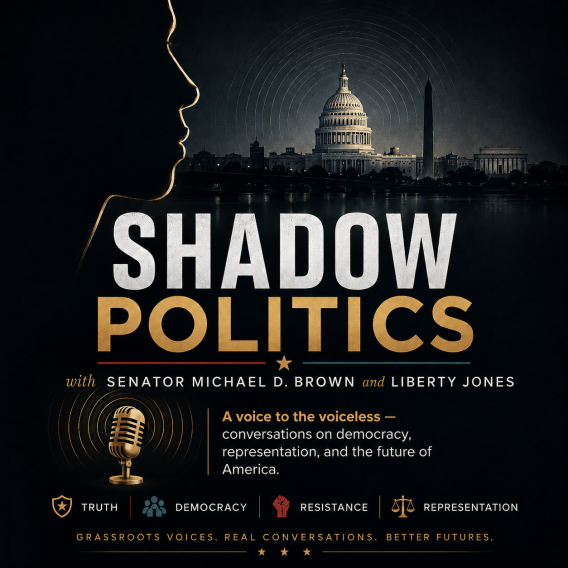

Shadow Politics with Senator Michael D. Brown and Co-host Liberty Jones
Navigating War, Narrative, and the Digital Divide
This episode of Shadow Politics explores the escalating conflict in Iran, the systemic erasure of Indigenous history in American museums, and the widening socioeconomic gap exacerbated by Artificial Intelligence. Hosts Michael D. Brown and Liberty Jones challenge mainstream narratives, urging listeners to seek truth beneath political rhetoric and foster genuine human connection in a divided nation.
The Iran Conflict and Diplomatic Isolation
The discussion opens with a critical assessment of the ongoing war in Iran and the strategic instability surrounding the Straits of Hormuz. Senator Brown highlights a significant disconnect between administration claims of victory and the reality of continued naval attacks, suggesting that the U.S. is faltering on the diplomatic front. A primary critique is the lack of international consultation; by acting as a "singular actor" without the overwhelming post-WWII economic dominance it once held, the U.S. has left itself without allies in a "forever war" that suffers from a total lack of an exit strategy.
Historical Revisionism and Indigenous Rights
Liberty Jones shares her disillusionment with the Smithsonian National Museum of the American Indian, noting that the exhibits often present a sanitized narrative of "compromise" rather than the brutal reality of colonization. The hosts contrast these "passive" stories with the historical record of figures like General Howard and the ongoing disrespect signaled by the Washington Commanders' use of Indigenous imagery on helmets. They argue that America’s inability to be culturally sensitive stems from a mainstream narrative that avoids uncomfortable truths about the past.
The AI Frontier: Progress vs. Deterioration
The conversation shifts to the dual nature of technology, specifically Artificial Intelligence. While acknowledging AI's potential to cure diseases, the hosts express deep concern over "brain deterioration"—the loss of basic skills like mental math or addressing envelopes due to automation. More critically, they discuss how AI can be weaponized to exploit public ignorance through "alternative facts" and deepfakes, potentially reinforcing existing prejudices rather than expanding human knowledge.
Social Fabric and the "Woke" Narrative
The hosts analyze the weaponization of the term "woke," lamenting that a word meaning "to be aware" has been reframed as a pejorative. They argue that the current political climate thrives on "us vs. them" ideologies because they provide a false sense of belonging in an increasingly lonely, digital world. The segment concludes with a call for the Democratic party to stop "talking down" to voters and instead focus on genuine listening and empathy to bridge the divide.
The episode serves as a sobering reminder that while technology and warfare evolve, the fundamental human need for truth and connection remains unchanged. By dismantling false narratives—whether they concern historical atrocities or modern military engagements—society can begin to move toward a more "sane" and inclusive future.
Shadow Politics
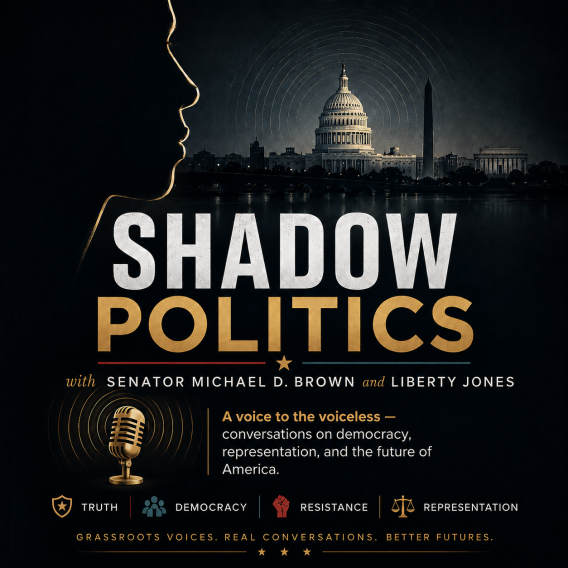

Shadow Politics is a grass roots talk show giving a voice to the voiceless. For more than 200 years the people of the Nation's Capital have ironically been excluded from the national political conversation. With no voting member of either house of Congress, Washingtonians have lacked the representation they need to be equal and to have their voices heard. Shadow Politics will provide a platform for them, as well as the millions of others nationwide who feel politically disenfranchised and disconnected, to be included in a national dialog.
We need to start a new conversation in America, one that is more inclusive and diverse and one that will lead our great nation forward to meet the challenges of the 21st century. At Shadow Politics, we hope to get this conversation started by bringing Americans together to talk about issues important to them. We look forward to having you be part of the discussion so call in and join the conversation. America is calling and we're listening… Shadow Politics is about America hearing what you have to say. It's your chance to talk to an elected official who has spent more than 30 years in Washington politics. We believe that if we start a dialog and others add their voices, we will create a chorus. Even if those other politicians in Washington don't hear you — Senator Brown will. He's on a mission to listen to what America has to say and use it to start a productive dialog to make our democracy stronger and more inclusive. If we are all part of the solution, we can solve any problem.
[00:00] Speaker 1: No taxation without representation. 200 years of exploitation in the capital of this nation. No, no, no, no, no. No representation in the capital of this nation. 200 years of exploitation. Give the people their right to vote. Someone asked me was it true. The voting rights of the district were long overdue.
[00:35] Speaker 2: Good evening, and welcome to Shadow Politics, an hour gra- an hour-long grassroots talk show which is on a mission to make America think again. I'm your host, Michael D. Brown, United States Senator Emeritus from Washington DC, and along with my amazing co-host Liberty Jones, we are interviewing the people who are making it happen. Not always in front of the camera, but always ahead of the curve. We're not gonna tell you how to feel or who to vote for. We're just putting the information out there because it's what goes on in the shadows that really makes the world go round. So come listen and learn, because a vote is a terrible thing to waste. And now more than ever, we need everyone listening, learning, and engaged if we're gonna make America sane again. Got questions? Call in. 618886276008. And I implore people to call in tonight because it's just me, uh, and, uh, we don't have a guest tonight.
[01:39] Speaker 2: We're waiting on Liberty Jones to show up, and if she doesn't, I'm just gonna have to carry the ball. So, uh, welcome to Shadow Politics and, um, let's get started. Um, lots gone on this week. We closed the Straits of Hormuz. We opened the Straits of Hormuz. The Straits of Hormuz is closed again or are closed again. Um, the war in Iran is going terrible. It- it really seems like nobody knows what's going on. Um, the president told us that, uh, the Iranian Navy no longer existed. Yet today, two ships were attacked by, uh, Iranian naval vessels. So we're not getting the truth, folks. And we're not, uh, we're not winning this war. I mean, it's a- I don't think America's gonna lose in terms of- of the military battle, but we're certainly l- losing on the diplomatic front, and that's, um, that's really something.
[02:50] Speaker 2: Uh, we really need to, uh, do more, but it's hard for us to do that because we never consulted with any of our allies before we went in- went in there, and now they don't want any part of it. Just imagine. Imagine if you started a fight and then you call up a couple of your friends and say, "Hey, can you come over and help me?" Uh, but you didn't bother to- to- to, uh, inform them or, um, you know, consult them before you went into the session, which is crazy. This idea that we can face the world alone, uh, and stand alone as a single actor, um, singular actor is- is crazy. Uh, after the Second World War, the United States was more powerful than 10 next countries combined, both economically and militarily. Uh, that's not, that's not the case anymore. Um, so we c- you know, we just can't take that approach. And, uh, it's crazy that the president seems to wanna do this, seems to think that, you know, that s-, uh, it- it- it's- it's just us. We don't need anybody else. It's just...
[04:13] Speaker 2: Excuse me. It's just wrong. The world cannot s- we cannot solve the world problems by ourself. We cannot confront global climate change, we cannot confront an actor like Iran, uh, by ourselves. Why would we do that? They're out there saying right now, the- the administration is saying that, um, we, um, you know, that, I'm sorry, I lost my train of thought there for a second. I'm trying to do three things. I'm trying to get ahold of Liberty. But anyway, uh, they, you know, um, they said, the president has said and the administration has said that Iran was a threat to the entire world. So why isn't the entire world involved? And the entire world isn't involved because we never consulted them. We went on, uh, this journey by ourselves, and it was, uh, ill-conceived. It should've never, that should've never happened. We should have, um, consulted people and we should have gone in on a joint action, both first, diplomatically more than militarily. And let me just say here.
[05:23] Speaker 2: Let me set another, uh, myth straight. Um, we, uh, we've been told that Iran's been screaming death to America for 47 years. Well, that's true. I worked for Jimmy Carter and, uh, if you remember, 47 years ago, that's what these guys are talking about. Uh, our embassy was taken over in Tehran and our, um, diplomats were held hostage for more than a year. Um, but the reason for that, you have to look deeper than just, uh, listening to the rhetoric-... is that we supported an illegitimate and, and horrible regime when we supported the Shah of Iran, and then we gave the Shah asylum. That's why these people hate us. And look, how many times, how many years have we been screaming about the Chinese and the Soviet Union, I'm sorry, Russia now, not... We did scream about the Soviet Union for a long time, but, uh, Russia and, and, uh, North Korea, and nobody's attacking us because of our hatred for other people.
[06:34] Speaker 2: Uh, this is just crazy to base this war on the fact that these people don't like us because of the propaganda that they've been fed, and because of the reality, actually, that we, we supported, uh, this man who was so brutal. Um, so, um, you know, I, I, I don't know, (laughs) I really don't know what to say about that other than it's just, uh, just another lie, uh, that's being perpetrated. And I don't know why in media this stuff pe- people never check the facts. So when they say, uh, enough people say, "Yes, they've been screaming death to America for 47 years," then people buy it, and they go, "Yeah, that's it. They've been out to get us." But was, when was the last time we were attacked by, by Iran? Uh, remember that, uh, January 11th was, uh, 9/11... I'm sorry, January. September 11th, those were Saudis on the plane. Saudis are friends, remember? Not, uh, not, uh, Iranians. So this myth that Iran has been at war with the United States for 47 years is just wrong.
[07:53] Speaker 2: And now, thank God, Julie, uh, uh, Liberty Jones is with us, uh, so, so that we have some intelligent conversation going on. Liberty.
[08:03] Speaker 3: Hello, everyone.
[08:05] Speaker 2: How are you?
[08:06] Speaker 3: I'm great. How are you?
[08:09] Speaker 2: Good. You're coming to the finish line, right?
[08:12] Speaker 3: Yes.
[08:12] Speaker 2: Almost done with school.
[08:14] Speaker 3: Super exciting. Super exciting. Now I will be an active member of society.
[08:19] Speaker 2: Yeah. Well, for... Yeah. Good luck. (laughs) That's all I-
[08:23] Speaker 3: Thank you.
[08:23] Speaker 2: ... can say.
[08:24] Speaker 3: Thank you.
[08:24] Speaker 2: The way society is going these days.
[08:26] Speaker 3: But I like what you were talking about over there. Um, you know, I'm taking a terrorism class, and-
[08:34] Speaker 2: Wait a minute, a terrorism class?
[08:36] Speaker 3: Yes.
[08:36] Speaker 2: What the hell is that? They're, they're teaching you how to be a terrorist or what?
[08:39] Speaker 3: (laughs) Well, that's one way to look at it, for sure. (laughs) But, um, terrorism and extremism, we're learning about all the different types, all the different ways it manifests, all the different ways to counter it, and it's really interesting because we talked a lot about 9/11, of course, and our, our relationship with the Middle East as a whole because of it. And, you know, when we talk about counter-terrorism, the United States is deeply problematic when it comes to that. I don't know if you, if you got, if you heard about this, but this, this was very big at the time. After 9/11, not only did the United States kill 998,000 people to try and counter terrorism post-911, but they had such horrible, um, torture mechanisms with people that they kidnapped that it was almost, uh, a national crime that the American military and government committed in order to counter terrorism.
[09:53] Speaker 2: Yeah. It's, you know, I think that we, we always think that God is on our side, uh, but, uh, w- (laughs) but that's never true in a war. God is on nobody's side in a war. And, uh, yeah, I think that we all knew about the bombing and the, the, the, what was done in Afghanistan and the American response there, but w- we always think that we take the high road, and, and, you know-
[10:24] Speaker 3: Yeah.
[10:24] Speaker 2: ... we don't necessarily. And, and, um, uh, yeah. Y- you know, this is the thing that really gets me right now, um, Liberty, is, uh, this, (laughs) you know, Donald Trump fighting with the Pope, for example. The Pope is out there saying, "God, you know, God doesn't believe in war. God believes in peace." And, and so what, (laughs) what does the president of the United States say? "He's weak on crime." Well, I got news for you. Jesus was weak on crime. Okay? Jesus wasn't about persecuting anybody and about, you know, uh, uh, punishing criminals or anything else. Uh, the man is doing what he should be doing.
[11:09] Speaker 2: He's preaching the Gospel, and yet-
[11:12] Speaker 3: And you kn-
[11:12] Speaker 2: Yeah, go ahead.
[11:13] Speaker 3: I don't even know if Trump fully believes these things he says or if he preaches them more to remain with this clear ideology that he needs to represent to the people, you know, which is the narrative we tell America, which is the narrative that we told them after 9/11 about counter-terrorism. And the other day... I'll give an example of this that kind of broke my heart. I love the Smithsonian Museums. I love them here in DC. They're all free. I think it's wonderful, remarkable. And the other day, I went to the Indian Museum, is what they call it, the Indigenous Peoples' Museum, which used to be my favorite because I'd only ever gone to the first floor. And I went to the third floor finally, I made it there, and all of the historic accounts that they were telling about the American relationship with the indigenous people were stories of compromise.Stories of settlements, stories of, "Thank you, Americans.
[12:13] Speaker 3: Thank you, British." And obviously, you know, told in a more passive way, but that was really the narrative they were telling me and that broke my heart. Like, even in the heart of the United States, a museum that is run by such awesome people, we still have such strong and distinct narratives that we tell the people.
[12:35] Speaker 2: Oh, yeah, that's true. And you know, they do leave out the part about, uh, giving Native Americans blankets, uh, infested with smallpox. Uh, Howard, General Howard, uh, for whom, uh, Howard University is named, he started the college so that, uh, uh, African... D- the, the sons and daughters of slave owners could have a place to go and learn and, and become educated. He, he is known in, uh, Indian Country as a man that, uh, murdered, uh, thousands of women and children. Uh, he pursued Indian tribes, even, uh, even when there were only women and children left. He, he hunted them down and killed many of them. Uh, yeah, I would say to anybody out there that's listening that wants to know about what Liberty is talking about, read the book Bury My Heart at Wounded Knee. Bury My Heart at Wounded Knee is a, um, um, kind of historical record of the Plains Indians and what happened to them. Uh, they also deal with, with, with what happened with Chief Joseph, for example, and Nez Perce.
[13:52] Speaker 2: That was a Northwest America tribe. But, but anyway, you'll see that the Native Americans have just, uh... The narrative that Liberty's talking about, yes, is not a true narrative. And today, believe it or not, I still work with Native Americans. Uh, so does Liberty Jones, actually, as she, uh, worked on the campaign to help one of them get elected, uh, uh, to the DNC.
[14:18] Speaker 3: And I'm published in a book with Native American-
[14:22] Speaker 2: The what?
[14:22] Speaker 3: ... Research.
[14:24] Speaker 2: Yeah. You've what? Hmm?
[14:25] Speaker 3: I'm published in a legal research book about indigenous law.
[14:30] Speaker 2: No, you are not.
[14:31] Speaker 3: I am.
[14:32] Speaker 2: So, why do you deal with me?
[14:33] Speaker 3: (laughs)
[14:33] Speaker 2: You're just so accomplished. Tell me about that.
[14:37] Speaker 3: No, he's... Well, it's actually a beautiful book. It's called Climate Change and the Voiceless, and it's, uh, an exploration about indigenous and environmental law and the successes, the fails, and the unresolved cases.
[14:54] Speaker 2: Wow. Well, uh, you know, give me a second to brag here. My sister, who is an Indian lawyer, uh, and dealt with exactly the issues you're talking about, uh, won a case for a tribe where, uh, she won $40 million for the tribe for... Back in the 1970s, won $40 million for the tribe-
[15:14] Speaker 3: Wow.
[15:14] Speaker 2: ... because their natural resources had been misused by the government, uh, and they have a lot of problems on the Indian reservation. That's what I was gonna say. I still, I, I've still done work with, uh... In, in, uh, places like Minnesota and California and the way Native Americans are treated, they're still not treated very well, to be honest with you. Uh, there's a handful of them that, that have become wealthy with things like casinos and stuff. But for the most part, uh, they still have a very, very hard way to go in life. And, uh, uh, you know, this idea that, um, we're... Well, there's a controversy here again in Washington, by the way, uh, the new, the new, uh, Commanders, Washington Commanders, that people probably know that the, um, name Redskins was cons- was seen as, as pejorative and, and, and, you know, just, uh, racist. And it was finally changed to the Commanders, a name I hate, but they're putting an arrow on the envelope. On the envelope?
[16:25] Speaker 2: On the helmet of the football players, and now the controversy is open again, that, that, uh, uh, Native Americans feel like they're being, uh, disrespected once again. The, you know... We're not very, we're not very culturally sensitive in this country, are we, Liberty, do you think?
[16:44] Speaker 3: You know, that's a good question. Um, I think about this a lot. I try to be optimistic, but I think we try... I think the United States, one thing that is really beautiful about them is how much they take respect as an important moral value. I think there's a really big aspect of respect here, and I think they would be more culturally sensitive if that was the narrative that was in the mainstream, if that was the assumption to be made. And that's what I think the huge problem with Trump is, is that he's building a whole different story. He's rewriting history books, literally. And so I think if people had the opportunity to truly be able to see others' perspectives for what they realistically are and therefore empathize with them, I think we would be more culturally sensitive.
[17:33] Speaker 2: Well, I think you're right, and I think that part of what you're speaking about right now is that we're still s- so separate. Now, I don't know about your generation. I assume and I hope that they're much more together than we were. But, you know, even when I was in college and we were the, the loved generation, you know, we were all about singing Kumbaya and hugging each other and coming together. Uh, our cities were still segregated, even at the university where I went, the University of Maryland, big school.... uh, you could walk in the cafeteria and Black people would be on one side of the cafeteria and white people would be on the other side of the cafeteria. And you know what happens is when you get people together, they start to recognize their humanity, I think, in each other and they connect. And so part, still part of the problem is that we're still separate, we're still so separate, you know. I think it's a problem we have between men and women too.
[18:32] Speaker 2: I think it's a problem that we have in the way we raise our children, you know, that we raise women differently than we raise men, and, and, you know, it's caused us all sorts of problems in, in, in our society. So I think that, that you're, you're, you're absolutely right. We have to, you know, we have to connect people, and we have to have a narrative that connects people in order to, uh, overcome this prejudice that we all seem to have in America. And, you know, we're the great melting pot. We should, we should take pride in that. We should take... It's not an American value to be prejudiced, I don't think. I think sometimes we make that mistake. We see it all over the world. We see, you know, we see in London that people are prejudiced against Pakistanis, in, in, you know, uh, all over the world we see this. Uh, look at what's going on in the Middle East. These people are from the same cloth. They're, they're all Semites.
[19:34] Speaker 2: Jews and, and Arabs are connected, they're cousins, you know, and they, and they, they're, they're, they've been fighting with each other for 2,000 years. Um, so it takes work. It's just not gonna happen, right? It's just not, not gonna naturally occur. It takes work. And that's why it bothers me to see, um, the right wing, kind of, conservative movement, um, make fun of things like being woke. Explain that to me. How did woke become a bad term when it means to be aware? What's wrong with being aware, you know? Now it stands for liberals that wanna talk down to you and tell you what to do, you know? I don't know how that happened. That's a narrative. Well, for... I'm gonna digress here for a second because I have to make an announcement that once a year we do this. We tried to get a guest to talk about it this week, but she was unavailable. And that is that on the 16th of, uh, April, that's Emancipation Day in Washington.
[20:41] Speaker 2: It's the only holiday, it's the only actual official holiday of the District of Columbia. And for those of you who may not know, uh, Emancipation Day is the day that A- Abraham Lincoln bought 8,100 slaves in the District of Columbia. Uh, he paid, he actually paid for 'em. It's the only, um, uh, uh, compensated emancipation in the history of the United States, and he set all the, um, sl- slaves in DC free nine months prior to the Emancipation Proclamation, which set all the slaves in America free. It was kind of a, a PR move, but it's a seminal moment here in the district, and we celebrate it, and it's ironically the day after tax day, you know, we all pay our taxes and we're not represented, you know, and it annoys us. And then, uh, (laughs) the next day we celebrate Emancipation Day, but we've yet to be fully emancipated. So if you're out there, uh, look it up, uh, see, see what it's about and, and stand with the District of Columbia as we try to make the people of DC equal.
[21:53] Speaker 2: Um, anyway, I had to throw that plug in there 'cause we can't let the, the occasion go by without mentioning it. But, um, let me ask you, what's the big concern now on campus? You know, we hear, we hear in the news that, uh, young people are leaving, uh, Donald Trump in droves over the war in Iran. Is that the big issue? Is that what people are talking about on campus, the war
[22:24] Speaker 3: Um, you know, I think people are talking about the war. I think people are concerned about the war, but I think people are not surprised as much about it as they are with his other atrocities. I think people have been more numbed to his abuse of power, and I still think that a really big issue that I hear about at least once a week is his, hmm, his engagement with the immigrant population in this country. I still think that's the biggest issue here. What about on the news, on the, on the, on the, I don't wanna say elderly, but on the, on the lived experience news, what's going on there?
[23:14] Speaker 3: (laughs)
[23:14] Speaker 2: Well, uh, us people here in old people land, uh, all we hear about is the war right now. That's, that's, you know, that... I mean, I, look, I, I listen to CNN and, and, and MSNBC more than I listen to Fox, but I listen to all of them and it's all about the war. And, and you wonder, "Oh my God, is this just another distraction? Could this possibly be all 13 dead thousands of, of Iranians killed, all, all this for, uh, uh, to cover up the Epstein files? I mean, i- is that what this is about?" Is it about, uh, that? Is it about, uh, Bibi Netanyahu playing Donald Trump and saying, "Look, oh, you know, uh, it's in the best interest of, uh, Israel to go to war with Iran and, and to set the Middle East on fire? (laughs) Come on, join us. Be, be part of it." You know, did they push him into this war? I mean, I don't know if he's just incompetent or he's just evil.
[24:20] Speaker 2: I mean-
[24:21] Speaker 3: Yeah, I think-
[24:22] Speaker 2: ... right?
[24:23] Speaker 3: I agree.
[24:23] Speaker 2: Go ahead.
[24:24] Speaker 3: I- I think he's- he- I genuinely think he needs to go to therapy. Honestly, I think that would solve a lot of problems with the entire country. I think that with this war, he definitely... It was very stupid. I mean, what they're saying is that this is gonna be a forever war, because this is a very high risk, very catastrophic war. The- the United States government didn't realize how much power, militaristically, Iran actually had. It was somewhat of a miscalculation on Trump's behalf, which is what's really concerning. There's economic risks that come with that as well. And so, what I- what I have heard, and I've talked about this in my Democracy and Violence class, is that this was a- an extremely miscalculated war, and, um, there's no exit strategy.
[25:13] Speaker 2: Well, and you know what? Doesn't that say, doesn't that speak volumes, that you're taking a class on terrorism, you're taking a class on violence and war, you know? These weren't things they taught when I was in school, right? We took classes on sociology and, you know, and- and- and, uh- uh, you could even get credit, science credit, at the University of Maryland for beekeeping. You know, we were- we were- we were kind people. We wanted to deal with... We wanted to make honey and- and- and be friends.
[25:47] Speaker 2: Uh-
[25:48] Speaker 3: Yeah.
[25:48] Speaker 2: ... but yeah, now the reality is, right, it- it- this is what's going on in the world. It's- and- and you know, the sad thing, we- we- w- we gotta give a shout-out to our guest last week, Noah, who got invited on the basis of our show to- to speak at a- a conservative Christian con- conference, and I'm sure he did a great job. Ver- very, very smart guy. But, you know, like, we said to him, "You're the guys that are gonna pay for all of this." I mean, that's the thing that really bothers me as- as, uh, uh, a person that's now retired and- and in my twilight years, as they kindly call them. Uh, that we're leaving you a world where we're screwing things up, but it's you that's gonna have to pay for it. It's you that's gonna have higher taxes. It's you that's gonna have a worse environment. It's you that's gonna have more of an unstable world.
[26:43] Speaker 2: And, you know, I wish there was somebody out there that would call in some young people and tell us how you feel about that, 'cause I think that's really, really the thing that bothers me most about all this, is that, um, you know, what's gonna happen in the long run. And you're right, in the Middle East, I don't know t- when this war's ever gonna end, but certainly t- this guy is not gonna end a 2,000-year-old conflict in- in the Middle East. It's gonna go on, and it's just, what it's gonna look like as it progresses forward. But it- it'll- I- I would be surprised if it's not a threat during your entire lifetime. That, uh, it's more of a threat than it's been in the past. Um...
[27:30] Speaker 3: Yeah.
[27:30] Speaker 2: Domestically, uh, um, you know, the economy, the... Look, this guy hasn't done anything he said he was gonna do. He wasn't gonna get involved in any more foreign entanglements. So far, we've attacked the Venezuelans. We invaded Venezuela. We've taken their leader. We've- we've- we've- we've attacked Iran twice. Uh, we're talking about taking over Cuba and Greenland. I mean, what does this guy... He's like the ultimate expansionist, all of a sudden. And the thing that- that's really surprising to me is that he can reconcile all this with his voters. That somehow, they, you know, like we saw last week with our guest, no matter what you say to them, they have an excuse for it. They- or they don't believe it. If they can't- if they can't put forth an argument to counter what you're saying, they just say, "We don't beli- it's fake news." I mean, it's amazing what this guy has done, uh, in- in- in that regard. Uh, we all- not we all- all the people on his side believe in fake news.
[28:40] Speaker 2: They believe that because you can have a liberal bias or a conservative bias, that makes your information false. And that's crazy. It doesn't. I don't know what people listen to. What do you listen to? You're on the internet, right? You don't listen... Do you watch TV news?
[28:57] Speaker 3: No, I do not watch TV news. Um, I would say I- I read more than I listen. But that's the problem. This is the problem to me. I think- I think the internet, I'd love to blame the media. You know me. As much as beautiful things as they do, I have a question for you as well. Do you think that things have always, or do you think right now, truly, things are getting a lot worse? Because, you know, in the 1960s to the '70s, we had the Vietnam War. We had the Nigerian Civil War, which also resulted in like 3 million deaths. We had colonial wars with the Portuguese and their colonies in Africa. We had- we had a lot of horrible, painful wars too. It- it- the media wasn't as advanced, so we weren't as accesse- accessible to them. But do you think that truly the world is getting that much worse? Or do you think that we just have more access to what's happening?
[29:55] Speaker 2: I think that we have more access. I think that- that the- the world has always been a hard place, as you pointed out. And- and- and you only- you only outlined some of the terrible conflicts. There was also Pol Pot. There was also, uh, you know, where millions of Cambodians were killed and- and-
[30:15] Speaker 3: Yeah, that was-
[30:17] Speaker 2: ... and all- all- all over the world. And yeah, I think that- I think we just have more access. But I think, also, what happened in the '60s and '70s was this great hope that we were gonna make things better.And that's what I am concerned about. I don't know that they're any worse, but I also don't know that they're any better. I mean, the quality of our life is better. We're curing diseases. I, I, you know, um, we're making advances in environment, but, you know, the, the, the problem is that we don't advance as fast as our technology does. So here, we now know for a fact, right, that all energy comes from the sun. We've probably known that for 1,000 years, but we know that all energy comes from the sun, and we know that global warming is caused by, to, for the most part, for, uh, by, uh, you know, uh, carbon being put into the air. So what do we do? Do we... Are we working hard to make solar energy the, the, the primary source of energy and to make electric cars?
[31:29] Speaker 2: Well, there are some people that are doing that, yes. But we're also, we're also got a president up there and people that support him, uh, just say, "Drill, baby, drill. We need more oil. We need more, uh, uh, coal. We need more carbon in the air." It's crazy. So we don't advance as much as it... There, there are problems that we could solve today that we don't s- solve because of our own ignorance and prejudice. And that's the whole thing that bothers me and how do we, uh, get our social consciousness to, to, to keep up with the technology that we're inventing. H- how about AI? I mean, scary.
[32:10] Speaker 3: Mm. I... Yeah, it's, it's very scary. I think young people are also very afraid of AI and its capabilities. And I think those two things work very hand-in-hand. You know, I think all of these advancements technologically, you know, they bring a lack of, a lack of s- human connection, right? There's no more, there's no more beekeeping classes. I, I'm super sorry to break it to you. It's sad because I love honey. But I think that this lack of human connection really creates somewhat of a, s- a need for social belonging, a need for identity. And that's what makes Trump's ideology so powerful, because he's really crafting this us versus them, this is where you belong, m- place for people to feel, you know, like they fit in somewhere. Like there's not just catastrophes in the world that are out of their control, there's not just loneliness and lack of connection because, because of the division we see. Like I can belong here because now I'm excluding someone.
[33:10] Speaker 3: And I think that's what's so powerful of his ideology, and that's really sad that we've gotten there. I would have to agree with you.
[33:17] Speaker 2: Yeah. And I-
[33:17] Speaker 3: And AI too. Well, I have a question for you. (laughs)
[33:22] Speaker 2: Yeah, go ahead.
[33:23] Speaker 3: So I talk a lot about this with my friends, and one day they brought up that Aristotle, when we first started writing books, he said, "Well, now that we can write this all down, the human brain is gonna deteriorate. We are no longer going to practice with our memory. This is a horrible invention." And books today are marvelous. And so, you know, AI systems, I'm always the one to be like, "We're gonna be dumb. We're not gonna use our brain power functioning anymore. Look at, look at these. Compare these CAT scans." And some of my more progressive friends are saying, "Well, no, this is actually going to evolve the human brain even more." What are your thoughts on that? Do you think that there is potential here f- for even more human development, or do you think that this is actually going to slow, um, the growth of humanity and their potential success?
[34:20] Speaker 2: I see, I see both. And, and I think that, and I think it depends on what aspect you look at, because look, you can go into a store now, I, this is beyond me. I worked minimum wage jobs when I was a kid, when I was young, and I was always making change. I was, you know, always dealing with cash. Uh, I was pumping gas before the days of credit cards, uh, before, you know, before gasoline credit cards. Everybody paid in cash. I've, I worked in a retail store, you know. Now you go into a store and something costs a dollar 97 and you give the cashier $2, and half the time if he can't punch the number in, he doesn't know what your change is. He can't figure it out. My wife, a school librarian, was teaching high school students how to put their name and address on envelopes because they don't need it and, and, and 'cause they, they don't learn how to do it anymore. And the worst thing is some teacher walked in and said to her, "Oh, you don't need to do that.
[35:24] Speaker 2: They can just auto-fill." You know? So what you say, there's a lot of truth to that. We see a lot of evidence of the fact that when you, uh, when technology takes over and you're allowed to shut off your brain, you lose it. And we all know this from our personal experience too, right? Uh, what's your, what's your phone number? Well, your phone number on my phone is Liberty Jones, you know? And if I don't hit Liberty Jones, I'm, I don't know how to get ahold (laughs) I don't know how to get ahold of you. You know? How many times have I called the number? 100 times, and I still don't know it off the top of my head. We used to walk around with hundreds of phone numbers in our head. So I think that's, I think that's true. And I think just like anything else, it, it, it can be used for good or, or for evil. And that's what scares me is that the forces for evil are, are always present. Let me tell you one good use of AI, uh, that I came upon recently. One of our neighbors, uh, we have...
[36:30] Speaker 2: We live on a pond.... and he has grandchildren, he didn't want his grandchildren going near the pond, you know, they were fright... They're afraid. They don't want... The... 'Cause they're tiny, they don't want the kids f- out there without an adult. So Pat, my wife, was walking the other day, and this little boy, walking with the dog, and this little boy's hollering at her, and hollering at her, "Pat! Pat!" Uh, uh, uh. So she goes over to find out what's going on, and he doesn't want her to go near the pond 'cause there's alligators in it. (laughs) And what his grandfather has done is he's put AI alligators in the pond and shown the kids alligators growing out of the, crawling out of the pond, so that they stay away from the pond. Uh, so, you know, you can be, uh... Of course, now, the children may be afraid to go to Florida the rest of their lives, or, or somebody el- something else, you don't know what, uh, ultimately what that's gonna do. But I mean, you can use it...
[37:27] Speaker 2: Look, I think it has the potential to cure diseases and, and free people, but it also has the potential to put everybody out of work, to, uh, what are we all gonna do when AI takes over everything? And, and, you know, they've recently, uh, done studies where they... Or shown examples of where AI has gone off the rails already, where, uh, they've advised people to do things like kill themselves because of whatever the algorithm is that led them to that particular decision, uh, you know. Um, I mean, yeah, it- it- it... Again, it's all about what we do with it, you know? It's just a tool like anything else, you know? It's like, it's like saying I love the, the... One of the major problems in America, I think, is guns, and I love the gun, people that say, "Guns don't kill, people kill." Yeah, but you know what? It's a lot harder to beat somebody to death than it is to shoot them, and, uh, uh, today, eight children were killed in Louisiana, uh, in a mass shooting.
[38:44] Speaker 2: Um, you can also kill a dozen people in a minute with a white, white, white weapon. So, uh, yes, there's truth that, that, you know, for guns to be a bad thing, they are a tool, to be a bad thing, they need, uh, an evil, um, intent behind them, and, but there's plenty of that in the world. So we have to control... I think we have to control the distribution of guns. Nobody wants to take a gun out of a guy that wants to go hunting or, or use it for some legitimate root- use. We just wanna keep it away from, uh, crazy people, but we don't seem to have the ability to do that. We don't seem to b- be able to separate those things, right? That, that you can ha- you know, you can have a gun and go out deer hunting if you want, but, but, uh, we wanna keep it out of the, out of the hands of crazy people, and we don't seem to be able to do it. They're, they're... They have access all over the place.
[39:44] Speaker 2: So I think it really depends on how we approach it, and let's hope we approach AI different than we approach things like guns, you know? Um, but I think, you know, we'll just have to wait and see and, and, and hopefully... That's why it's so important. When, when I read that Charlie Kirk said that college was a scam based on the fact that you went to school, they taught you, uh, the things they're teaching you, and then you couldn't go out, come out and get a job that you were trained for, college is so much more than job training, right? You're right in the middle of... Well, you're at the end of it now, but it's so much more than job training, right? It's about making a whole person, isn't it? Isn't it about making somebody that, that contributes to society, and, and, and, uh... So when you think of it only in terms of, you know, getting a job, you really overlook the, the, the most powerful part of it, and I think that's the problem. How do we look at AI? Who's gonna control it?
[40:55] Speaker 2: I think Congress is, is wrestling with it right now. So I don't know that that's a good answer, but I think it's, I think it's, uh, I think it all depends, and we're gonna see evil things happen from it and, and, and, and good things happen from it. I mean, uh, are there people out there that believe it? Are there people that saw those images this week and believe that Jesus really comes down and talks to Donald Trump, and, or, or that, that He... The image of Him as Christ was really, you know, him, him being a doctor, you know? 'Cause most doctors dress like that, right? They don't wear white coats. Have you seen the images?
[41:41] Speaker 3: Oh, I've seen the images. I think my favorite is when I see Donald Trump in a miniskirt, I won't lie to you.
[41:47] Speaker 2: Oh. (laughs)
[41:47] Speaker 3: Those are my favorite ones. (laughs)
[41:50] Speaker 2: Well, I like the one, the one of, of Christ, if you look at it closely, the guy that He's supposed to be healing looks just like Jon Stewart.
[41:58] Speaker 3: (laughs)
[41:58] Speaker 2: Jon Stewart had him on the show, and he said, "Oh my God, I thought you didn't like me," you know? And here he is-
[42:04] Speaker 3: That's funny.
[42:04] Speaker 2: ... raising hell on you. I don't even think they, they... Do you know that Pete Hetzel, now this is the guy who's head of the Department of War, how the hell that ever happened, why it's not the Defen- Department of Defense anymore, but he sa- he quoted Pulp Fiction, the movie, Pulp Fiction, at a prayer breakfast this week, thinking that he was qu- uh, quoting the Bible. These guys don't even kn- n- n- they don't even take the time to figure out what they're doing, you know? I've been a Christian all m- all my life, like I said, and I've read the Bible from cover to cover, and, uh...Uh, I wouldn't quote the Bible without checking it before I did it. You know? I mean, they don't, they're so careless. They don't even care. And I wonder, does that, is that the kinda supervision you're gonna have over AI? Is it gonna be, like, uh, laissez-faire like everything else? And, you know, and I was a small businessman. I can tell you the, the, the, uh, objective of business is to make money.
[43:07] Speaker 2: It's the primary objective. And, and if being, being honest and true can als- always be trumped, no, no pun intended, by the profit motive. And so that worries me. When it gets in the hands of business, what does business do with it? Right now, I don't know. Uh, I just moved. I'm buying lots of things for my new house to get my house set up. Uh, when I buy, uh, let's say I bought a couple of chaise lounges for our new patio. Uh, isn't that bougie? Boy.
[43:50] Speaker 2: Uh-
[43:50] Speaker 3: (laughs)
[43:50] Speaker 2: ... uh, how, how did I say it out loud? But I did. But today, I've already gotten 20, 20 emails from furniture manufacturers that make outdoor furniture. You know? "Now, don't you need a table to go with those chairs? Don't you need..." So I mean, these people are right on top of it. When I moved, and, and AI is, like, not even in its infancy yet. It's just starting. And when I moved, two wee-, two, two, two or three days later, I got a, uh, an email from my insurance company saying, "You, you m- the post office told us you moved. Y- you haven't changed your address. Change it." So I mean, people are right on top of this shit.
[44:30] Speaker 3: They are. You know, actually, I was reading the other day that already, my biggest concern with AI is the socioeconomic divide. Already in 2025, 27% of people making over 100K were already more knowledgeable about AI than 19% of those earning less than 2,500. So we're already in the, and, uh, just as you said, in the early baby steps of this evolution of artificial intelligence, we're already seeing a disparity in socioeconomic divide, and I think AI is gonna make that even more worse.
[45:09] Speaker 2: Yeah, I think you're right. Because the people that can afford to use it, uh, will be the people that have it, and, uh, uh, and it also could be used against, right? Could be used, uh, against poor people. It's, it's, uh, you know, when you study politics, some of the things that have been done, uh, to capitalize on the ignorance of people is just amazing. I worked for a guy at one point named Claude Pepper, and we used to call Claude Pepper Senator Pepper even though he was a member of the House of Representatives because one time, he had been a United States senator. But he got beat for reelection because his opponent realized that many of his workers in Florida, well, many of the voters in Florida were, in the 1950s, were itinerant farm workers. They voted, but they weren't very educated. And so they started to spread rumors that, uh, he practiced monogamy and that he was celibate before marriage. And people didn't know what celibate meant, but it didn't sound good, right?
[46:25] Speaker 2: It, he pra- they said he practiced celibacy in, in, before he was married, and people didn't understand what that meant. It just, uh, it sounded like communism or, you know, some other thing they didn't like. And they actually used that against him and, and, and won. So AI, the potential for it to play on people's ignorance is just incredible, right? Because you can, you, you can see, they can, they can make anything sound credible, make anything sound authentic. And people that are not like people that, that, like you, that read a lot, that, that delve behind that 15-second sound, sound bite, they'll be prey to that. They really will. And you know, my, I grew up in a family where my grandparents were prejudiced. They believed in every stereotype about everybody, and there was no information out there to contradict them. There was no, uh, they didn't interact with people of other races because, uh, they were afraid. So there was nothing to contradict this information.
[47:34] Speaker 2: And when the AI is out there, it'll be so powerful if they're giving out the wrong information, and who's gonna be out there to set the record straight? And now that we have alternative facts, I still haven't figured that one out, Kelly Conway, uh, but we have alternative facts and we have fake news, uh, people are gonna believe what's most convenient, right? They don't look for the truth very often. They look for things that make them feel comfortable with their prejudices. Um, and that, that's very unfortunate. I think AI is so scary. We have to have somebody on this show, some young people, to talk about it. And we'll try to get Brittany Kaiser back, who's an expert on this. She was on this show once, uh, to talk about it.
[48:18] Speaker 3: Yeah, we had some great environmentalists one time talking about, uh, AI and all the efforts they were making to try and appeal some of the bills being passed right now in its favor.
[48:31] Speaker 2: So, all right, t- this is the, this is the big question for you. Tomorrow, uh, in a few weeks when you graduate, they, they say, "You've done such a good job, we're gonna make you queen of the world."What's the first thing you're president of America? What's the first thing you wanna do? Besides paint the White House, uh, a different co- or paint the old executive office building a different color-
[48:59] Speaker 3: Yeah. (laughs)
[48:59] Speaker 2: ... build an arch, the Liberty Arch? What, what-
[49:02] Speaker 3: Oh, of course.
[49:03] Speaker 2: ... you do?
[49:04] Speaker 3: Well, that would be first, obviously. (laughs)
[49:07] Speaker 2: Yeah.
[49:07] Speaker 3: But I think in second place, I think I would get up there, and I would give a speech. I think I would try and want to reinstill hope to the people. I think I would have a banquet where I would call Buddhist monks. I would call different international representatives. I would like the president of Mexico to be there. I would like Macron, the president of France, to be there, and I think I would like us all to have a conversation, recorded live on television, about what we want from the world right now. And I think i- it would be a 20-minute conversation, maybe as a ratio, as opposed to a 40-minute question and answer, and I want, I want so many questions. They can leave, of course. I know Macron probably has some great issues in France to deal with, and I know (laughs) our Mexican queen also has some issues to prevail with the gangs, but I, I think that the people need to feel heard right now.
[50:13] Speaker 3: I think that's what gives Trump a lot of power is he makes people feel heard, he makes people feel heard, and I think the people need to be listened to. I, I think I want to understand, I think I need to understand what they really need. That's the first thing I would do, is I would get out there, and I would learn about what needs to happen, what actually needs to be done. Where are we seeing the most issues in these small communities of people who are not being heard, who are now sitting in comfort with their silence? Because silence is the powerful road nowadays. If you talk loud at all, you'll be sent to El Salvador in, as an analogy, but, you know. So, I think that's the first thing I would do, is I would make people feel heard again and, and learn about what it is that needs to happen as the president of, the queen of the world, of course. Then I would hire the best people in the jobs, the people with compassion in their hearts, and you would be there.
[51:06] Speaker 2: Oh, you're so sweet.
[51:07] Speaker 3: Mrs. Brown would be there too. (laughs)
[51:10] Speaker 2: Yeah, and she'd be telling me what to do, you know? No, that's not-
[51:14] Speaker 3: Well, that's okay. You guys can have different branches.
[51:16] Speaker 2: ... that's not, that's not fair.
[51:17] Speaker 3: (laughs)
[51:18] Speaker 2: Yeah, you can make her secretary of, uh, education-
[51:22] Speaker 3: Education, yes.
[51:22] Speaker 2: ... right.
[51:23] Speaker 3: Yes, of course.
[51:23] Speaker 2: Yeah, and I could be, uh, secretary of social interaction.
[51:27] Speaker 3: Yes.
[51:28] Speaker 2: Um, uh, but anyway, I think that's very smart, and, and, and maybe that makes you, maybe that disqualifies you because you're too smart, but yeah, that, that, that should be a first step. And you're so right. Um, you know, there's a favorite movie of mine called Jojo Rabbit. I don't know if you've seen it, but-
[51:45] Speaker 3: Wow, I love that one.
[51:47] Speaker 2: Yeah, right? And at the end of the movie, when he feels guilty about being a Nazi, the little girl that he's in love with says, "You're not a Nazi. You're a kid that wanted to join a club." And you're so- and you're so right about. So many of these people just wanna be heard, and they wanna be embraced, and, and this is what the Democrats have to learn. If you're out there and you're a Democrat, listen to this. We have been talking down to America for, for a decade now, and we need to stop that because that's what these people feel. They feel like you're, they're, we're always, you know, mansplaining th- things to them or, or, you know, trying to, uh, y- you know, as a liberal, "You don't really want a gun.
[52:37] Speaker 2: You're just too damn stupid to realize it, so we're gonna explain to you why you don't want it."
[52:41] Speaker 3: (laughs)
[52:41] Speaker 2: You know? And, and, and, and that's what, because you're right, people wanna be accepted and, uh, you know, they wanna feel part of something. And we should all feel part of America I think. Now, you brought up the most amazing point last week when you said, "Make America great again for who?" Because in the 1950s, w- w- w- America was not great for women. It was not great for Black people. It was not f- uh, great for people, b- for brown people, anybody but white people, you know? And that's the thing that I hear every time he says it.
[53:22] Speaker 2: I hear, "Make America white again."
[53:24] Speaker 3: Yes.
[53:24] Speaker 2: And it, and it really, and it really bothers me 'cause I think that's what resonates, what resonates with people. I mean, I didn't mind growing up in the 1960s and, you know, making more money than women and, and, and-
[53:38] Speaker 3: (laughs)
[53:38] Speaker 2: ... you know? And, like, you know, when people say, "Was it the good old days?" Yeah, for me, it was the good old days, right? Everybody thinks of, this is something that will amaze you. 20 years from now, you'll think of college as your favorite time in life, even though maybe now you're going, "God, I can't wait 'til it's over." You know? Uh, but yeah, I think that, um, um, you're so right about all that. We need to connect people and, um, uh, once again, uh, thank God you s- you're, you're on the show because you hit the nail on the head as always. And we're out of time. I can't believe it.
[54:15] Speaker 2: So, Liberty Jones-
[54:16] Speaker 3: Thank God for having me on the show. It's always such a pleasure to talk to you.
[54:21] Speaker 2: And it's always such a pleasure to get your insight 'cause you really make the show better. And, uh, tonight, we're gonna leave you with a song for all America, and I'm gonna dedicate it to my, my co-host, uh, Liberty Jones. Uh, here's Come Together by The YoungBloods, and we'll see you next week. Thanks.
[54:43] Speaker 4: ... representation. Da-dum, da-dum, da-dum. In the capital of this nation. Da-dum, da-dum, da-dum. Two hundred years of exploitation. Da-dum, da-dum, da-dum. Give the people their right to vote. Da-dum, da-dum, da-dum. Give the people their right to vote. Da-dum, da-dum, da-dum. Give the people their right to vote. Oh. Da-dum, da-dum, da-dum. Give the people their right to vote.