
The Power of Synergy, April 27, 2026


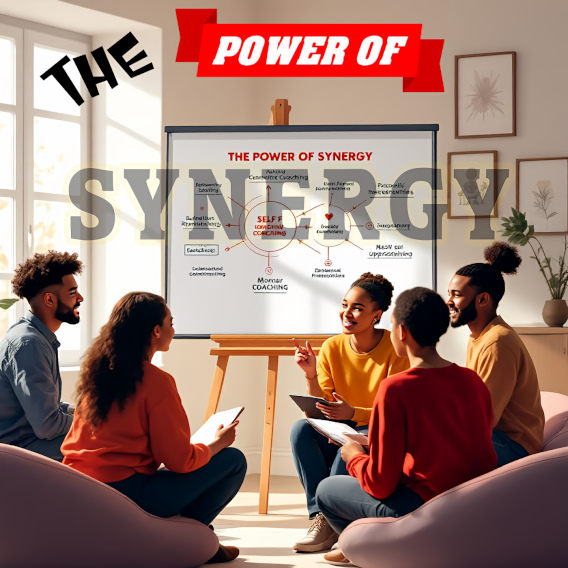
The Power Of Synergy with Gabrielle Cardona
Decoding Human Synergy: A Framework for Personality Profiling and Relationship Growth
In this episode of The Power of Synergy, relationship coach Gabrielle Cardona explores the transformative power of the Myers-Briggs Type Indicator (MBTI). By moving beyond internet myths, she provides a deep dive into how understanding our natural "functional order" can prevent conflict and foster genuine connection through appreciation, respect, and trust.
The Core Philosophy of Synergy
Synergy is defined as the synchronization of thoughts, feelings, and actions to empower individuals. Cardona argues that the strength of any relationship is determined by its weakest link—often a lack of appreciation, respect, or trust. By putting down technology and engaging in deep listening, individuals can reconnect and synergize. The goal of coaching, unlike clinical therapy, is not to "fix" what is wrong but to provide the strategy and equipment necessary to "score in the game of life".
The Four MBTI Dichotomies
Introversion (I) vs. Extroversion (E)
Sensing (S) vs. Intuition (N)
Thinking (T) vs. Feeling (F)
Judging (J) vs. Perceiving (P)
"Nature distributes talents; synergy is the result of utilizing those differences."
Understanding the Four Dichotomies
True personality is rooted in nature, not nurture. Cardona emphasizes that while behavior can be modified by environment, one's underlying nature remains constant. Introverts gain energy alone and spend it on people, while extroverts gain energy from people and spend it alone. Sensors focus on the external environment and literal details, whereas intuitives focus on internal thoughts and the "big picture." Decision-making is split between thinkers (logical/rational) and feelers (needs-based/humane), and lifestyle execution is divided between structured judgers and spontaneous perceivers.
The Secret of Functional Order
The most critical aspect of MBTI is the "functional hierarchy," which dictates how we should allot our daily energy. Every person has four levels of activity: Dominant, Auxiliary, Tertiary, and Inferior. Cardona warns that "ambiversion" is a myth; instead, everyone performs two functions in an introverted way and two in an extroverted way. Misunderstanding this order leads to "suffocating" oneself by performing tasks that go against one's organic nature.
The 8-4-2-1 Energy Rule
| Level | Metaphor | Daily Target |
|---|---|---|
| Dominant | Breathing | 8 Hours |
| Auxiliary | Eating | 4 Hours |
| Tertiary | Walking | 2-3 Hours |
| Inferior | Running | 1-2 Hours |
Practical Application in Relationships
By profiling partners and family members, one can avoid roughly 80% of common interpersonal problems. Understanding that an INTJ needs isolation for intuition while an INTP needs to "verbally vomit" thoughts allows for better spatial and emotional boundaries. Recognizing that an inferior function—like "Feeling" for an INTP—is like "running uphill barefoot in the snow" helps partners set realistic expectations and offer patience rather than judgment segment54.
Key Data
- 25+ Years: Gabrielle Cardona’s experience as a certified MBTI practitioner.
- 80%: The percentage of relationship problems that can be avoided through accurate personality profiling.
- 16 Types: The total number of unique personality profiles generated by the four dichotomies segment26.
To-Do / Next Steps
- Identify your natural preferences by asking what is easiest and most pleasurable, rather than what you currently do for work.
- Audit your daily routine to ensure you are spending roughly 8 hours on your dominant function ("breathing") and no more than 2 hours on your inferior function ("running").
- Communicate your functional needs to those you live with; for example, explain if you need silence to perform sensory or intuitive tasks effectively.
- Avoid uncertified internet personality tests that provide misinformation; seek logical, functional order analysis instead.
Conclusion
Synergy is not about changing who you are to fit a social mold, but about mastering your natural design. When we stop reacting and start reading the "code" of those around us, we move from conflict to intelligence, creating a world where every difference is a vital piece of the whole.
The Power of Synergy

"Is relationship coaching right for me?"
Unlike conventional counseling, relationship coaching is about insightful education and listening more than talking.
Connection, communication, and accountability are the 3 elements to a successful relationship. All 3 are vital and perpetual. Relationships are about knowing yourself and understanding others so that what you share is healthy and beneficial--to you both.
Some questions to ask yourself:
- Are you truly ready for healthy change?
- Can you handle homework?
- How honest are you with yourself?
- How much support do you provide to others?
- Are you qualified for a relationship?
Only YOU know the answers!
Do you know what the things people say mean? How do you interpret their actions? Try taking a look at their personality! There are 16 different personalities, and one statement from one person can mean something completely different when coming from someone else.
Learn about what's behind behavior. Information from "experts" can confuse people. It is inaccurate. If you attend an MBTI seminar, you'll walk away knowing AND understanding what people do, how they do it, and why they do it. You'll also understand yourself.
"Relationship Coaching"
What's the formula to success? How can you reach your goals? Want some practical advice on how to get what you want out of life, without making it painful or complicated?
The Relationship Coaching program provides information, tools, resources, and support to set you up for success in every area of your life. Define your goals, know where you are, and create the path in life that YOU want to take. Check it out and take the Workbook that comes with it home with you for free!
00:09
Speaker 1
We are more than what we see. Every voice, every story holds a key. Together, we rise in synergy. Different faces, different pain. Different story, same refrain. Trying to find a place to stand. Trying to feel a guiding hand. What you say and what you mean. Life's somewhere in between. Every action has a cause. Every heart behind the walls. If we listen, we can hear it. If we look, we can see it. There's a pattern in us all. Every piece can make us whole. The power, the power of synergy. Understanding you and me. Every difference, every truth leads us back to some...
01:03
Speaker 2
Welcome to The Power of Synergy on BBS. I'm Gabrielle Cardona, a relationship coach. I started out as a life coach, but yeah, there's a lot of life coaches out there. They do a lot of different things. Someone told me about 15 years ago, "You have to have a niche. You have to have a specialty, an area of expertise that makes you different from every other life coach out there." And I thought, "Well, what, what is it that people come to me now in life for help with?" I kind of did an inventory. I looked back and said, "You know what? A lot of the people who have issues, personal issues, they've been with everything from weight, money management, time management, career. You know what? A lot of it came back to the people in their life. The challenges that they were facing had to do with coming together in a healthy way with the people that mattered to them." Yeah.
02:06
Speaker 2
So, I thought, "How about just a relationship coach?" Well, of course, my beautifully insightful, little wise-butt son called me a shrink in denial, and I said, "No, actually, because I think that the difference between a shrink and a coach, a shrink tries to fix what's mentally wrong with you. A coach teaches you how to score in the game of life. They give you equipment and strategy and support, encouragement to succeed, actually reach your goals." Yeah. So then I thought, "I need to get a plan, kind of a game plan for my clients when they're having an issue with maybe someone that they love. They just can't stand to be in the same room with them (laughs) , okay? Or someone that they really hate, and they don't even wanna try to love them. But they have the same job. Okay. So they have to." Let's see. Hmm. Or, you know what? Sometimes it's people they just don't know, they just don't, they don't wanna be around people. You know what? Technology. I realized that's another issue.
03:11
Speaker 2
We have this huge explosion of computers, and everybody wants to be on their machines. It was actually separating them. They call it social media, but what's synergy? Synergy is when we come together, when we unite, when we synchronize. We actually get into the same movements with each other. That could be of our thoughts or our feelings or our actions. When we synchronize and we synergize, we empower people. Okay. Now, see this, this is gonna be my selling point. I thought, "You know, if we can go ahead and make people feel like they have the opportunity to be more powerful, just has to be in a healthy and constructive way." I knew that my personal success, in my mi- in my mind, my personal life, in my marriage, with my children, with the work that I've done, a lot of it had to do with understanding the differences. Not only understanding those differences, but appreciating the differences and respecting them and trusting people.
04:21
Speaker 2
Those were the foundation, the core elements of a relationship that were not negotiable. Obviously, a chain is only as strong as its weakest link. Well, the same is true in relationships. The strength of your relationship is based on its greatest weakness. And most people, one of the weaknesses in the relationships that really did matter to them was either appreciation or respect or trust. So then, if people really got to know each other better, if they took the time to put their technology down and spend time with each other, listening and talking about what matters to either one of them or both of them, they could reconnect. Yeah. That's when they could synergize, and so... When I was a little girl, I actually had a very weird personality. My mother thought I was mentally ill. She sent me to many different professionals, but it wasn't until I had my Myers-Briggs personality profile, MBTI, Myers-Briggs Type Indicator personality profile, that I discovered, you know what?
05:31
Speaker 2
It was okay to be weird. My personality, if I knew how to use my talents and strengths and abilities in a healthy and constructive and proactive way, I could be amazing, and I didn't need to be medicated, and I didn't need to be treated, and I didn't need to be labeled. No. Do you know what? When I was going through puberty and I understood who I was, and my peers, they were all frustrated and confused, I thought, "You know,"It's unfortunate that they don't really understand who they are. It's easier to accept something when you understand it. So when I got married at a very young age, and I became a mother at a very young age, the only reason why my husband and I, and my kids and I got along as people is because I profiled them. That was my secret. That was my, (laughs) my trick. When I knew not only what to do, but what not to do in different situations with different personalities, I avoided about 80% of the problems that most people were having in the first place.
06:37
Speaker 2
All right, so I wrote a book about it because this is something that I really want the world to know. Ordinarily, I don't talk exclusively about personalities, but I decided this week, today, I'm just gonna make this show about Myers-Briggs Type Indicator Personality Profile System, the logical information, and how it's been completely messed up on the internet now. (laughs) Unfortunately, people go on different websites and they get different information, and sometimes they go to people who are not certified, qualified experts, so they get misinformation or they get confused. So today, I want everyone to know the entire show is gonna be about the dichotomies and the functionality, not just the disposition, but the actual order of activities that every personality really does need to stick to, the dominant, auxiliary, tertiary, and inferior. Those are the levels of behavior that you're even gonna do things that are not your personality letters.
07:41
Speaker 2
Activities, at some point in life, you're gonna have to do things that are not your personality's preference. What's the best way to do those things? And what do the letters actually mean in terms of daily life activities? What is tertiary introverted sensing? By the end of the show today, you're gonna know. So if you have a specific question that you wanna ask me, even if it's not in harmony necessarily or in line with what I'm saying at the moment, if you have any questions about Myers-Briggs Type Indicator, I am MBTI certified. I have been qualified as a practitioner for over 25 years. Call in. Ask me a question. I will absolutely give you the straight up and correct answer, not my opinion, which is what the internet now is overflowing with, is stupid people's opinions. 888-627-6008. Okay, so let's just, let's just, uh, start off, (sighs) oh, just probably with my biggest headache right now is the ambivert. Ambivert is a myth.
08:46
Speaker 2
Ladies and gentlemen, before we even get into the dichotomies of all of the letters, (sighs) let me just say, everybody, every personality does two things in an introverted way and two things in an extroverted way. When you're doing the things that are not your personality, you are doing them in an either introverted or an extroverted way. Let me repeat that. Extroverts do things in an introverted way, and introverts do things in an extroverted way. But it's very important to know which of the letters of your personality is introverted and which one is extroverted because the first part of your, your personality is gonna tell you which one of those two middle letters you're gonna wanna do more. You will do both of those activities. Some of them you are going to want to do with other people, even if you are an introvert. And some of those activities, you are gonna need to do alone, even if you're an extrovert. And that's what's very important.
09:51
Speaker 2
But then also, the very last letter of your personality, whether it's the P or the J, is gonna tell you which letter you're gonna wanna do in an introverted or an extroverted way. Okay, so I am gonna go over the dichotomies, all of the four letters, and I'm not gonna ask 200 questions like I usually do in my sessions. As a coach, I actually have a session where I ask people the questions, I give them their profile, I explain their disposition and their functional order. Yeah, it's kind of a long process. Ladies and gentlemen, I've decided that I'm gonna try and make this all fit into one hour because I'm not dialoguing with anybody, I'm monologuing with the world. (laughs) Okay? When I come back, I'm gonna go ahead and discuss all four of the dichotomies, but not asking questions, explaining them conceptually.
10:45
Speaker 2
So as you're thinking about yourself or maybe someone that you love, you might know yourself well enough, you're trying to understand someone else, think about not what they exclusively do, but what is easiest, what is the most natural, and what is the most pleasurable, what are they good naturally at, not what they currently do. We'll talk about that. We're gonna take a real quick break here. Again, the number to the station is 888-627-6008. This whole show is gonna be about Myers-Briggs Type Indicator Personality. This is The Power of Synergy on BBS. I'm Gabrielle Cardona.
11:33
Speaker 3
It's the power we can be when we see what's underneath. Not just words, but energy. That's the power of synergy. 16 ways to see the world. Every mind a flag unfurled. What you think is black and white might be someone else's light. Read between the lines they speak. There's a strength inside.... understand. We can finally take a stand. Not against but side by side with awareness as our guide. The power, the power of synergy. Understanding you and me. Every difference, every truth leads back to something new. It's the power we can be when we see what's underneath. Not just what's on the surface.
12:36
Speaker 2
Welcome back to The Power of Synergy on BBS. I'm Gabrielle Cardona, a relationship coach specializing in personality profiling. In the context of relationships, remember, everybody has a personality, and that's a good thing. You are in fact born with strengths and talents and gifts and abilities. So before I go over the four dichotomies in ideas, not just yes or no questions, which is usually the way the test is administered, think about what in life is easiest for you naturally, not what you currently do. What brings you the most pleasure, not what you're best at. Some things in life may have changed the way you behave. That does not change your nature. Okay. So now, again, think about this just as a principle. Nature distributes talents and strengths and gifts and abilities because certain things need to be done, and when people get together, different people having different skills is a very, very, very good thing. Now, let me ask you this. Just ask yourself this.
13:47
Speaker 2
What do you think is worse for someone, not doing what they are or doing what they're not? Well, yeah, they're happening at the same time, but it's worse, it's worse to not do what you are because you can do what you're not and still restore and compensate yourself for. But when you're doing what you're not, you're repressing and suffocating yourself. So answer these kind of general principal questions that I'm gonna be posing to you throughout the next few minutes. What is naturally the most pleasurable thing for you? What is naturally automatic, so easy that you don't even have to think about it for it to happen? Okay, let's start with the first dichotomy. Your social energy. You're either an introvert or an extrovert. Now, let me just again get rid of all the garbage out there. Introvert people are not socially retarded. Extrovert people are not obnoxiously verbose. An introvert is someone who gets their energy when they're alone and they spend it on people.
14:47
Speaker 2
An extrovert is someone who gets their energy from people and spends it when they're alone. Very simple. Which one's right? Which one's wrong? They're both right. They both are necessary in the world. So let me ask you, who do you consider your friend? An introvert would say, "Friends are very special, they're very intimate. I only have a few. I like a lot of people. I love a lot of people. I get along with a lot of people, but I only call very special people my friend." An extrovert would say, "Yeah, no, I met that person. I like them. Yeah, we're friends." They can have 5,000 friends just from one event. (laughs) And that's okay. They don't use... Or they, they... You know what? They use that word very liberally. Introverts use the word friend very conservatively. Okay, another question that I ask people, a very general question is, how much does it bother you to have to yell when you're talking? Extroverts don't realize they've raised their voice.
15:43
Speaker 2
They just get excited and it happens. No, an introvert would say, "I'd rather stop talking than have to yell in order to be heard." Which begs the next question, how much does it bother you to be interrupted? Introverts would stop talking if someone interrupted them. An extrovert would keep going and see who wins. (laughs) Okay. Very simple. Now, the world needs more extroverts than introverts. I'm gonna say it again. What's worse, doing what you're not or not doing what you are? Some cultures do not give people the opportunity to be who they truly are because certain things are considered more socially acceptable behavior. Certain families, they don't like children who behave a certain way, so they force their children to behave in a way that's not really what the child wants and is and thinks and feels. And it doesn't matter if you've gotten very good at being loud. If it makes you very uncomfortable to do it, then that's not who you are.
16:42
Speaker 2
And you can have a lot of people in your life, but if y- you spend time around a lot of people and you're exhausted, you're probably an introvert. Okay, so now let's look at the second dichotomy. The second one is, where do you focus your attention? You're either sensory or intuitive. Now, the letter I went to the word introvert in the first dichotomy, so the word intuitive starts with an I but the letter designated to it is N. S or N. Now, sensors are about focusing on what's going on around them. They're very aware of their environment. Intuitives are about what's going on inside of them. They're aware of their thoughts and their feelings. Okay, well, yeah, you can do both. Everybody does both. But which one are you more generally focused on, your external world or your internal existence? Sensors are great with direction. They have an amazing sense of direction. Intuitives get lost walking around the block, okay? Yes. Sensors remember faces.
17:44
Speaker 2
They remember visual elements of a situation. Intuitives, they could probably see something two or three times and confuse it with something else. Here's my favorite one, here's another one that I love to ask people, could you be holding something in your hand and be looking for it in the refrigerator? Then you're probably an intuitive. (laughs) Yeah, no, sensors, that, that makes them a little bit crazy about us. Yes, I'm an intuitive. Now, um, th- another thing I really love about sensors is that they tend to be, um-... literal and intuitives are figurative, because intuitives are about big picture, long term, sensors are about the right here, right now. If I'm calling my husband, a very sensory ESTP, saying, "Where are you right now?" And I'm, I'm saying, "You know, you're making a lot of no sense here, so what are you thinking about?" My husband's sensory answer when I ask him, "Where are you?" is, "I'm in the kitchen." (laughs) Yes, I do love sensors, 'cause I'm not one. Okay.
18:45
Speaker 2
The third dichotomy is how you make decisions. You're either a thinker or a feeler. Okay, I'll tell you what it's not. Thinkers are not intelligent compared to feelers. Some, some of the stupidestest of people are thinkers, okay? They're very dumb people. And feelers are not emotional, okay? Feelers are about caring for other people's needs. Thinkers are about making logical, rational conclusions that are gonna be intelligently applied. Well, you know what? Feelers would say, "Other people's emotional needs are a logical thing to take into consideration." The question is, how do you make your decision? Is your ultimate decision based on what other people personally need? Then you are a feeler. If needs are an element and a factor but certainly not the deciding factor of what you are going to personally do in your life, then you're a thinker. Yes, we know as thinkers, I'm a thinker, that people's needs are important.
19:53
Speaker 2
People do have personal things about themselves that don't make logical sense. They just don't. But let me ask you this question to determine if you haven't figured out just by the fact that how important are other people's needs to you. One of the, the best questions I ask people is, "If you have to tell someone you love, heartbreaking news, how much does it hurt your heart to be the one to tell them?" You know what? A feeler would say, "I'll do anything to be the, the person and not have to tell them," or, "You know what? It hurts me more than it hurts them." A thinker would say, "You know what? You really need to toughen up, because this is just life. Deal with life and move on." The third letter, (laughs) again, I'm gonna say this again, is either a T or F, thinker or feeler, it's how you make decisions. Thinkers can learn to be very humane, and feelers can be very objective. The question, again, is what is naturally your first inclination, not what do you currently do?
20:54
Speaker 2
Because, again, nurture may have told you you're just gonna have better results if you do things in a different way. That has not changed your nature. And, again, what's worse, doing what you're not or not doing what you are? Not doing what you are is not doing anybody any favors, because you have talents and abilities as a thinker or a feeler that the world needs from you. Not being who you organically are hurts the people around you, and it suffocates you. But the last letter, and this is, I think, probably my favorite, 'cause this is the funnest, that people, people don't wanna commit to whether they're a perceiver or a judger. But you are either a P or a J. Perceivers carry out the decisions that they make in a flexible, spontaneous, fly by the seat of their pants kinda way, okay? And judgers are structured, they are planned, they are organized, they're consistent.
21:52
Speaker 2
Yeah, they really and truly do like to have things predictable in that way, not only for themselves but for the people around them. It gives them a sense of security. Three questions I ask. Number one is, would you rather be five minutes late or 55 minutes early to an appointment? A judger would rather be 55 minutes early, a perceiver is five minutes late. W- Or do you get more energy at the beginning of a project or the end of one? You know what? A jud- judger, they get more and more and more energy as they get closer and closer to the end. A perceiver kind of fizzles out, (laughs) before ... And one of my favorite questions to pose is, if you have a to-do list i- and you do something that's not on your to-do list, will you write it down just so you can scratch it off? Judgers love to complete things to the point where they feel rewarded and gratified when they do. Yeah, no, a perceiver will probably lose their list halfway through the day. All right.
22:51
Speaker 2
So, we're gonna take another quick break. Again, the number to the station is 888-627-6008. And if you have any questions about yourself, your personality, please don't hesitate to call in. We're gonna take another real quick break. We'll be right back to The Power of Synergy on BBS.
23:12
Speaker 3
... energy. That's the power of synergy. Oh, oh, oh, oh. Oh, oh, oh, oh. In silence, there's a reason. Oh, oh, oh, oh. In the chaos, oh, oh, oh. There's a meaning. Oh, every soul is speaking loud. If we only slow it down. No more guessing who we are. We've been brilliant from the start. When we see with open eyes. We don't divide. We unify. It's the power. The power of synergy. Breaking walls and setting free. Every voice and every mind. Finally seen, finally aligned. Oh, it's the power, the truth we couldn't see. Now it's right in front of me.
24:13
Speaker 2
Welcome back to The Power of Synergy on BBS. I'm Gabrielle Cardona, a relationship coach. I specialize in communication and conflict prevention, not just-... resolution. Yeah. You know, w- resolving problems is a wonderful skill to have but preventing problems is even more impressive one because when people understand each other, they appreciate and respect and trust each other. That is the foundation for connection and that's the core of the elements that synergy are comprised of. You know what? When we're talking about different people, they have different dispositions, they have different preferences. Yeah, we have different elements of our personality. I just went over the four dichotomies of the Myers-Briggs type indicator, but when we think about it, anybody can type in four letters, ESTP, INTJ, ESFJ, u- onto the internet but it's, there's a lot of garbage out there right now. It's not specific and it's not accurate.
25:20
Speaker 2
So what I'm gonna be talking about now in this segment is functionality. Not your disposition, not your personality profile. Each of the 16 different potential personalities that the four dichotomies could create have a different order of function. Everybody has to do everything and it really makes me crazy when I have a client and I say, "Okay, so in this situation, would you do this or this?" "Oh, no. I do both." Okay, it's not about what you currently do. What you currently do is just your behavior. Your personality is what you would do naturally if life didn't demand things of you and punish you if you didn't do them. Okay. Some people say, "What would you do if you had a million dollars?" I say, "What would you do if you were on a deserted island that you could turn into a paradise and be who you truly are?" Let's get you back to the high-quality version of you. I even have to sometimes explain it to them in terms of a body part. Right?
26:25
Speaker 2
What's more important, your heart or your brain? They're both equally vital and they need each other. They're symbiotic. Yeah, they have to have each other in order to be of any value to each other, for each other. So let's just, there's no right and there's no wrong. Functional order, there are four different order levels of performance. So even someone who's like me, I'll keep reverting back to me, I'm an INTP, I have to do things that are ESFJ. The point is, I need to do them in an INTP way or for an INTP reason. If I am doing something that is not my personality's original first choice, okay, that's not what I would want to do, I can still infuse myself into it through my functionality. Okay. Now this is the secret and I'm sorry ladies and gentlemen, but you know what? I'm writing a book about this because it's the only reason why my husband and I still like each other after 30 years.
27:31
Speaker 2
He's an ESTP, I'm an INTP, and if I didn't understand functionality, there's no way we would've lasted past three weeks. Okay. So, the four levels. The first level is your dominant function. This is the activity that you should do for eight hours a day. The second lever- level is auxiliary. That's something you should do for four hours a day. Tertiary, that's the third level, that's something that you should only do for, mm, two to three hours a day. And your inferior fourth level of activity, you should only do that for one to two hours a day. You have got to know what activity for you is dominant, what activity is auxiliary, what activity is tertiary, and what activity is inferior.
28:25
Speaker 2
When you know out of all of the letters which ones you should do most to least and you can actually allot your time towards those activities, when people and situations in your life demand that you do things that are not your personality's preferences, you can still do them in an organic way for your functions. Okay. So let's figure out, first of all, the order. We'll, I'll pull a personality, um, I like to use my daughter. She's an ENFJ. The last letter of your personality is either a P or a J. That determines which of the two middle letters will be extrovertedly oriented. A P has the second letter in an extroverted way. A J has the third letter extrovertedly oriented. Now, okay, so an ENFJ, a J would have the F, the feeling activity would be extroverted. So when the principles of balance, that means her N is introverted. So if she's an extrovert, ENFJ, her extroverted feeling would be her number one activity. Her introverted intuition is number two. Yeah.
29:44
Speaker 2
The dominant one is an extroverted feeling and the introverted intuition is auxiliary. That means she's still gonna have to do things like thinking, right, and sensing. So how do we know which of her thinking and sensing is introverted and which one is extroverted? Because the principles of balance in nature are what really make everything work. Still, you can have everything going on in your life as long as it stays in balance. So, if her extroverted feeling is her dominant function, the one at the very, very, very bottom is the polar opposite. See what's at the very top is the polar opposite of what's at the very bottom, so the polar opposite of extroverted feeling is introverted thinking.So her thinking then would be introverted and it would be at the very bottom. That means the other one, sensing, would be the opposite of her intuition, which would make it extroverted, and it's tertiary, number three.
30:48
Speaker 2
So for an ENFJ would be extroverted feeling, introverted intuition, extroverted sensing, introverted thinking. Now, the numbers that I gave before, eight hours. She would need to spend eight hours a day being extroverted in her feeling activities. She would need to spend about four hours a day being an introverted intuitive. She would need to spend, hmm, two to three hours a day being an extroverted sensor, and about one to two hours a day introverted thinking. Now, doing those in blocks of time, yeah, that's possible, but it's not a good idea. It's best to have those, it's best to have those activities infused into each other. And if someone is very healthy doing their dominant function for eight hours a day, they can sprinkle their auxiliary and tertiary and inferior functions into the activities that they're doing. I explain those levels, like, um, in terms of general daily life activities, like breathing and eating and walking and running. Your dominant function is like breathing.
32:07
Speaker 2
You have to do it. It literally would stop you (laughs) or it would stop your life if you stopped doing it. The second level, like auxiliary, is like eating. You don't have to do it all the time, but you still have to do it. If you don't, you'll die. The third level is walking. This is the things that, yeah, technically you can still live without walking. And your inferior function is like running. (laughs) Most people don't run very far very long. You have to have a very, very strenuous lifestyle to have that as the bulk of your activity. That's, that's really not something you should do. Even though it's a healthy activity, you shouldn't do it for more than a couple hours a day or it will actually harm you. Okay. So thinking about your dominant, like breathing, you need to do it all the time, but it's not the only thing you're gonna be doing. Okay. And then your auxiliary function is like eating. You need to do it consistently, but you don't need to do it all day.
33:10
Speaker 2
The third one is like walking. You know what? Yeah. You can walk four or five miles at a time, but it's best to do that over eight hours (laughs) and running. Do it, do it consistently enough to have a good, healthy stamina, but don't make it your primary focus. Okay. When we come back, I'm gonna explain the different activities in terms of those different levels. This is BBS. I'm Gabrielle Cardona, talking about the power of synergy. We'll be right back.
33:42
Speaker 1
Same words, different meaning. Same moment, different scene. You think it's them. They think it's you. But there's a deeper point of view. You said it straight, they took it wrong. Now you're wondering what went on. Same sentence, different weight. Now you're standing in debate. You call it honest, they feel hit. You move fast, they need to sit. You think silence means they don't care. They think space means you're aware. It's not the words, it's how they land. It's not the fight, it's what they can. Explain in ways you recognize. 'Cause you're not seeing through their eyes. That's the power, the power of synergy. Understanding what you don't see. Same words but a different code. Different minds on a different road. That's the power...
34:42
Speaker 2
Welcome back to the Power of Synergy on BBS. I'm Gabrielle Cardona. Now, I've been talking a lot about the general concepts of the Myers-Briggs type indicator personality profile system, but now I'm gonna get very specific, giving examples and descriptions of what each of these terms mean in terms of daily life. Yeah, the activities that we all have to do all day, every day. It doesn't matter if you're an INTP, you still have to do ESFJ things. What's the best way to do 'em? Yeah. Okay. If you have a question, the number is 888-627-6008. Okay. So we've gone over the four dichotomies and the four levels of function, accepting that you have to do things that are not your personality. So what's the best way to do something that's not your true nature according to your functions? Well, let's start off with the four different elements that are either dominant, auxiliary, tertiary, and inferior, are either the S, N, T, or F. So everyone does S, N, T, and F activities.
35:54
Speaker 2
The J or P determines which one of those activities you're going to do in an extroverted way, and the E or I of your personality is just gonna tell you which one of those you prefer. Do you prefer to do your extroverted activities more or your introverted activities more? Okay, so let's start with sensing. I'm gonna pull off some, some personalities to describe the difference between sensing, introverted and extroverted. Okay. So, uh, again, I'm gonna use me and my husband. I'm an INTP. My sensing is tertiary and introverted. So for me, introverted sensing is like walking. I can go ahead and, and do sensing activities, which means I'm using my hands, I'm using my, my body, I'm using my eyes, I'm using my ears. I have to pay attention and engage with my environment. But since it's introverted, I cannot be distracted by people while I am doing those things or I won't do them very well.... and it's tertiary, so it's like walking.
36:55
Speaker 2
It's not too hard but I can't do it for very long or I'll get tired. My husband is an ESTP. His sensing is extroverted and it's dominant. He can literally multitask better than a woman. I'm serious, people. He's just, um, absolutely amazing, and that also means that when I'm talking to him about something, he can be cooking and cleaning and changing a diaper. He will hear me better because he's being extrovertedly inclined when he's being sensory. Yeah. So it's okay if he's not looking at my face because his brain is still engaged in an extroverted way while he's being sensory. I cannot be sensory with other people, maybe one other person, only someone that I'm very, very close and comfortable with, because I'm an introvert. Okay, so how about intuition? What's the difference between introverted and extroverted intuition? Okay. We'll use an INTJ or an INTP. As an INTP, my intuition is extroverted. An INTJ has introverted intuition, and it's their dominant function.
38:08
Speaker 2
An INTP's extroverted intuition is their auxiliary function. Now, again, intuition is about processing information. It's about having enlightenment. It's about understanding things on a profound level and how things are connected. Wow, that's a lot of mental activity. (laughs) You know what? An INTJ needs to be alone while they're doing it. They can think, think, think. Th- they can literally not talk for four or five hours at a time because their brain is a computer. (laughs) And their intuition introverted means the minute that you talk to them, you've just shut down their computer. Whoa. Okay, but see, as an introvert, my intuition is extroverted. Still, my intuition is extroverted because my thinking is introverted. So, that means when I'm having those things going on in my mind the way an INTJ would, I really do need to talk about them. I think out loud, and that's really nice because I call it verbal vomit sometimes (laughs) when I'm talking to my kids.
39:11
Speaker 2
And I say, "I have no idea what I'm thinking until I hear myself say it." Yeah, that's okay. (laughs) Well, how about thinking activities? Okay, we'll do, um, again, INTJ versus INTP. Now, if an INTJ's intuition is extroverted because J made their third letter extroverted, okay, there, that means that when they are thinking, they wanna make logical and rational and intelligent conclusion, decisions in a group. You know what? As an INTP, when it's time for me to make a decision, you need to leave me alone because if you get me around you and verbally interactive, my intuition comes on. My thinking shuts down. When I'm alone, I have epiphanies. I have aha moments all the time, and I, I write them down. And then when I'm around people, my intuition comes back on. I can share those thoughts with those people, those brilliant epiphanies that I've had. But you know what?
40:12
Speaker 2
An INTJ, they really do exponentially better when they're on the cusp of making a decision when they can collaborate with other people 'cause their intuition has already done a whole lot of work when they were alone. Okay, well, how about feeling? You know what? Let's use a INTP, which is me again, with, with an INFP. Wait a minute now. This is one that I've, I've kind of always had a hard time explaining to people because they don't really wanna accept that if you're an introvert, you can care about people. Yes. You know what? An INFP, introverted feeling is their dominant function. I love this about INFPs. They have this infinite source of love and caring and nurturing. It just means that as an introvert, they need to have it with an intimate, um, relationship. Okay? So when they are doing something very, very generous and nurturing and supportive and encouraging with someone, one-on-one is best for them. It's their dominant function. You know what?
41:21
Speaker 2
As an INTP, man, feeling is so hard for me. It's my inferior function. It is like running uphill barefoot in the snow, but I do it in an extroverted way. You know what? If I have a group of people and I'm getting some good momentum going with those people, I can actually turn my feeling on. I just can't sustain it for very long because it's so low on my ladder. Whereas, for an INFP, man, it is number one on their list. They love to do it, but again, in a private, intimate setting.
41:56
Speaker 2
Okay, so if we're thinking about the difference between not only the level but the social orientation of the things that you do and the amount of time that you should spend on each level and which people you should be around while you're performing that activity, ask yourself right now how much of what you're currently doing in your daily routine, in your general lifestyle based on what you're very, very good at and in the socially inclined way that's the most organic for you, how much time do you currently spend with the people who not only appreciate, but respect and trust all of those abilities and strengths and gifts that you have, to say to you, "I want you to be who you truly are. I'm not gonna make you feel bad when you do something in a way that, you know what, I don't agree with it." I can understand and appreciate that in certain settings.You know what? You need to be alone while you're doing something sensory.
43:00
Speaker 2
I can take a step back, because I know that if I leave you alone while you're being sensory, your quality of work is gonna go through the roof. Even if it's a dominant function, like my husband, he's an extroverted sensor, if he is isolated, his sensing is not as good as when there are other people around. In fact, the more people for him, the better, and he can do it for an extended period of time. He was an amazing bartender, yeah, actually, because he was not only fun to talk to, but he had five hands, (laughs) and- and he never got tired. He actually had to take time when he got home from work just to relax enough to get to sleep. Do you know yourself well enough to be able to say, if you were to c- to play the segments a couple sec- segments ago for the dichotomies, what is the easiest natural thing for you to do? It is a gift for you not only to know who you are, but to be able to share with people in the most healthful way for you. So think about that.
44:10
Speaker 2
We're gonna take one last real quick break, and the number to the station is 888-627-6008. When I come back, we're gonna talk about very specific examples of what tertiary introverted sensing is, as opposed to dominant extroverted feeling. This is BBS Radio, The Power of Synergy. I'm Gabrielle Cardona.
44:32
Speaker 4
Not about wrong, not about fixed. It's about reading what's underneath. That's the power of synergy. You read the moment, miss the mind. You judge the move, ignore the design. Every action has a base. Every person has a pace. 16 ways to take it in. 16 ways to lose or win. What feels normal in your frame to someone else is not the same. You stop reacting, start to see, there's a pattern to identity. And when you learn the way they move, you know exactly what to do. That's the power, the power of synergy. Understanding what you don't see. Same words but a different code. Different minds on a different road. That's the power. When it all aligns. You stop guessing, start reading signs. It's not surface, it's energy. That's the power of synergy.
45:33
Speaker 2
Welcome back to The Power of Synergy. I'm Gabrielle Cardona, a relationship coach. This is BBS Radio, and you know what? Here's the bottom line. I've been hearing a lot of garbage out there about personality profiling, particularly the Myers-Briggs system, and it- it got to me. It actually upset me. As I was talking to a colleague this week about the work that I'm gonna be doing, I'm actually gonna be having classes and making videos to explain the different functions. The- a comment that she made about Myers-Briggs was just based on completely inaccurate information, and that I thought, "Okay, I try not to do this on my radio show, but I'm sick and tired of the- the garbage out there. I'm gonna make sure people understand what it really means so that they can then determine what would be the best thing for them." Unfortunately, if you have just a little bit of misinformation and you get confused, it can end up sabotaging pretty much everything you do for the rest of your life.
46:32
Speaker 2
My first client, he literally came to me in a public place and said, "If you can tell me why, I have a perfect life, I have an amazing job, I have great health, I have more money than I know how to manage, people respect me because I do have an impressive job, if you can tell me why I'm not happy, I'll give you $60 an hour," which 25 years ago in Phoenix, that was a lot of money for me, okay. Um, yeah, I found out that he loved the law, but he was an attorney. He had to be verbal for about six to eight hours a day. He was actually an introvert. That meant he needed to be quiet for about eight hours a day, so now he's a professor. Yeah, and it's very important to know that everybody does everything, they just do it in a different way, and knowing those little minutiae differences is huge. Okay, so what I was explaining was that the four dichotomies, but there's four levels of functionality relative to the four letters of the S, N, T, and F.
47:35
Speaker 2
Everybody is going to do the things that even aren't their personality's preferences, and they're going to do two of them in an introverted way and two of them in an extroverted way. So let's take the examples of the personalities that I was explaining before, and how they can do their lower level, tertiary and inferior level activities in their dominant and auxiliary functions way. Okay, so let's- let me see. I- I think I wrote one down here. Okay, ENFJ or ESFJ. Okay, the difference between ENFJ and ESFJ, they both have extroverted feeling as their dominant function, but the ENFJ has the introverted intuition as their auxiliary. The ESFJ has introverted sensing as their auxiliary function. So the other functions that they have with the same orientation as their dominant function, for an ENFJ, it would be sensing. The sensory activities for an ENFJ would need to be done in a feeling way. But for an ESFJ, tertiary feel- um, activities would be intuition. Their intuition is extroverted.
48:53
Speaker 2
So when an ESFJ is being intuitive, they need to do that in a feeling way. Okay, so if we're only talking about one letter of difference, it's the difference-... and which activity they're going to do in their dominant function. Okay. You know what? That doesn't necessarily mean anything if we're talking about feeling as something emotional. No. Feeling is about being loving and nurturing and generous. So for an ENFJ, when they have to do something sensory, they... They're, they're not gonna wanna be sensory. They wanna be intuitive. But if they're doing a sensory activity like cooking and they're doing it for someone that they love because the person that they love needs their food for their pleasure, then an ENFJ can say, "I love to cook." (laughs) Yes. Whereas an ESFJ, they don't wanna be intuitive. SJ's, they wanna be working with their hands and they wanna be doing practical, pragmatic work that's good for the community.
49:57
Speaker 2
For them to be intuitive, if they were to actually say, "You know what? This person in my life, they are kinda complicated and my extroverted feeling that I don't wanna turn off gives me the opportunity to have an intuitive activity. I can do something intuitive in nature for a feeling purpose that's gonna make me successful." Okay. But that means that their introverted activities, right, for an ENFJ, their introverted thinking, you know what? The only way they can really do introverted thinking, because it's inferior, it's like running, is if they're intuitive because their intuition is also introverted and it's auxiliary. So if an ENFJ is doing thinking activities like, "What job am I gonna do for my career? What, um... How much money am I gonna spend on this particular, uh, item for my household?" If they're doing it in an intuitive way, which is also introverted, they can say, "Well, you know what?
51:05
Speaker 2
Long term, I'm thinking about the big picture of what this could potentially mean for me in the future." Then their thinking goes, "Yeah. I definitely wanna do whatever's the most objective and logical and rational activity, because it's gonna be for an intuitive reason." That's when they can get the running uphill barefoot in the snow that thinking is for them. (sighs) Yeah. But it feels natural because it, it's going to be profoundly insightful and meaningful in the world of intuition. Whereas an ESFJ, you know what? They don't necessarily wanna be thinking and logical and rational, but since their sensing is introverted, if they're doing a sensing activity like something on the job with machines, yeah, then with their sensory activity that's introvertly inclined, if they have...
52:02
Speaker 2
Can make that kind of application of logical, rational, analytical, problem-solving, thinking activities for something that's gonna produce a physical product for them, it's going to be a beautiful product because it's gonna be perfect in every way. And you know what? ESFJs love being perfect. SJ's are very much about perfection. Now, thinking about those things, just those two examples, one letter of difference can make a huge difference in what they want to do but also how they wanna do it and why they wanna do it. It's very important for you to get the letters of your personality right. When you are taking the test, ladies and gentlemen, you have to remember, don't answer the questions based on what you currently do. Answer them based on what is easiest for you, what is naturally the most pleasurable thing to you, and what naturally are you really, really impressively good at. You never had to get lessons on whatever it is that we're talking about here.
53:09
Speaker 2
This skill, you don't have to practice. You're so good at it naturally, you don't have to practice (laughs) and you can still stay really, really good at it. Those are the things in life that you should be doing not only for yourself but for the world around you. Because again, I'm gonna say it, ladies and gentlemen, people have a purpose. And when they come together and they appreciate their differences and they can say to each other and to themselves, "You know what? I'm really bad at this, but you're really good at it. I'm gonna give you the opportunity to do what you're good at." You are making the quality of their soul better because there's more joy in giving than in receiving, but also you're allowing them to be who they truly are, to reach their full potential in a high-quality way, and know that who they are is making the world a better place. That's gonna fulfill their soul. And that gift that you could give someone else is priceless.
54:09
Speaker 2
So when you can say to people honestly, "You know what? What you're asking me to do right now, it's kind of a lower function for me. It's a lower level activity. I might not be very good at it. If you can be patient with me, I'd really appreciate it. Or you can just give this to someone else to do, and that would be good too. This is what I'm good at." They appreciate your honesty because that's another thing that, that relationships anymore, it's just not there. People don't trust people because they, they're not honest with each other, not only about who they are but what they need. So principles that I explain about synergy, there's no neutral energy. You're either positive or you're negative. And your personal power makes you accountable. Who do you believe you're accountable to? Always remember the way you wield your personal power is gonna make the world a better or a worse place. This is The Power of Synergy on BBS Radio. I'm Gabrielle Cardona.
55:10
Speaker 4
... about understanding them. It's not about winning arguments. It's about knowing what matters to them. You want better relationships? Then read deeper. You want real change? Start with you. Same words, different meaning. Same truth, different seeing. Not conflict, misread signs. Different wiring, different minds. That's the power. The power of synergy. Where awareness becomes clarity. Every difference finally makes sense. Now you move with intelligence. That's the power. The shift you feel. When you finally see what's real. Not reaction, but strategy. That's the power of synergy. Not guessing, not reacting. Understanding that synergy.