
Popp Talk, April 18, 2026


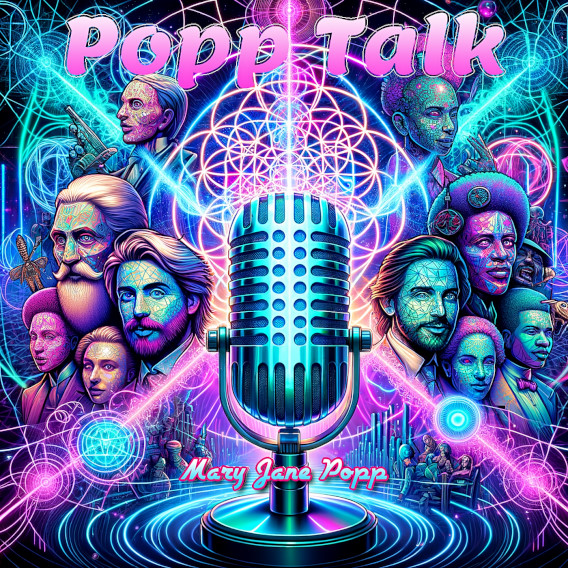
Popp Talk with Mary Jane Popp
Echoes of the Strip andThe Science of the Gut
Guests, Richard Lefkowitz and Dr Dean Mitchell
This episode of Pop Talk features a dual exploration of cultural history and modern wellness, bridging the gap between the rock & roll idealism of 1970s Los Angeles and the cutting-edge science of the human microbiome. Host Mary Jane Pop welcomes author Richard Lefkowitz to discuss his memoir on the Sunset Strip and Dr. Dean Mitchell to provide a holistic roadmap for conquering chronic illness.
The Rock & Roll Soul of "Fabulous Angeles"
Richard Lefkowitz, author of Welcome to Fabulous Angeles, recounts a childhood spent at the edge of the Sunset Strip, where the sparkle of Hollywood met the heavy reality of the 1960s and 70s. He describes an era defined by a "spiritual revolution" and artistic idealism, even as the nation grappled with the trauma of assassinations and the Vietnam War. For Lefkowitz, music wasn't just entertainment; it was a "life raft" that transported and elevated a generation of "wayward" youth. He shares vivid memories of the era, from being handed a bottle of champagne by Ronnie Wood to learning the harmonica from Keith Richards, illustrating a time when the barriers between stars and fans were porous and spontaneous.
The conversation also highlights the erosion of community and "baseline truth" in the modern age. Lefkowitz and Pop lament the transition from the warm, spontaneous connection of human-led radio to the fragmented, often unreliable nature of the internet. They observe that while technology offers convenience, it has led to a loss of "humanity" and critical thinking, contrasting the collective hope of the "Space Age" with today's more cynical, splintered social landscape.
Holistic Healing and the Microbiome
In the second half, Dr. Dean Mitchell, an immunologist and holistic specialist, shifts the focus to internal health, specifically the "root cause" of chronic illness. He argues that modern medicine often fails by treating symptoms in isolation—sending a patient to a dermatologist for a rash and a gastroenterologist for bloating—without realizing these issues are often interconnected through a microbiome imbalance. Dr. Mitchell emphasizes the importance of the gut as the primary site where the immune system interacts with the environment, noting that decades of antibiotic overuse have "disrupted" this delicate ecosystem.
A central theme of Dr. Mitchell’s work is the management of Candida (yeast) overgrowth. He explains that Candida is a hardy organism that survives when beneficial bacteria are wiped out by antibiotics or chronic use of acid blockers. This overgrowth can lead to "Leaky Gut" syndrome, where the intestinal lining thins, allowing allergens and yeast to migrate to other parts of the body, causing symptoms ranging from brain fog and fatigue to chronic sinus infections.
Dr. Mitchell also offers a provocative take on probiotics, suggesting that common supplements like Lactobacillus can sometimes act as "bullies" that crowd out microbial diversity. He instead advocates for "prebiotics" sourced from high-fiber whole foods—nuts, seeds, and leafy greens—to create "good carpeting" for the gut. Regarding the rise of AI in medicine, he views tools like ChatGPT as helpful for education but warns patients not to get "crazed" by self-diagnosis, urging them to seek experienced physicians to avoid the "rabbit holes" of misinformation.
Whether looking back at the vibrant streets of 1970s Los Angeles or looking inward at the complexities of the gut microbiome, this episode underscores a singular message: the path to a "better life" requires a blend of artistic hope, human connection, and a proactive, holistic approach to health. As Mary Jane Pop concludes, the secret lies in living simply, loving deeply, and "daring to dream."
Popp Talk
Support my show
$5.99/mo or $9.99/mo or more
Click HERE
SUBSCRIBE TO TALK SHOW
POPP TALK! A fast-paced Magazine-style Show dedicated to keeping you on the cutting edge of today's hot button issues. The show is high energy, upbeat and entertaining. It gives you the tools to feel better, reach for that brass ring, and live longer and happier. It's Fun! It's Fascinating! It has guests from politics to health, to the stars from La La Land. It's Radio with sizzle!
[00:01] Speaker 1: Are you ready for new dimensions and countless possibilities today and for the future? It's an exciting new time, and the answers are out there. So join Mary Jane Pop as she explores the unique and unusual for a better life on Pop Talk, in search for the truth. And here she is, Mary Jane Pop.
[00:25] Speaker 2: Hey. Welcome to Pop Talk. It's Mary Jane Pop with you, and we are always going in search of truth, and this hour is no exception. Little bit later on, we're gonna get into some health issues, and how you can have some smart medicine for a change (laughs) , you know? I... Chronic illness seems to be the talk of the day, and, you know, we... I guess we have to control our own bodies. And hopefully, I'll give you some good information. But before we do that, have we got a story for you. Uh, for those of you who were kinda growing up in the '60s and '70s, you will recognize a great deal of what we're talking about, and I wanna make sure that you're gonna have a lot of fun as we do. So here's someone I bet you will recognize.
[01:16] Speaker 3: I can't get no satisfaction. I can't get no-
[01:37] Speaker 2: Bring back some memories? (laughs) Well, it should. And the memories are all part of the interview that we're gonna be doing with this guest. Um, he had a wild life in the City of the Angels, uh, born at the edge of the Sunset Strip beneath the sparkle of the Hollywood sign, and what a life it was. Uh, he went through the Space Age to a great deal of grief during times of loss with JFK, MLK, RFK, assassinations. Um, it was an age of Los Angeles color in the '60s and '70s, and Richard Lefkowitz, well, he put... was part of it. And now he shares those times with stories and a soundtrack of '70s classics in his book called Welcome to Fabulous Angeles: The Rock & Roll Adventures of a Wayward West Side Teen. We'll find out why he was so wayward. Nice to have you with us, Richard.
[02:39] Speaker 4: Same here. It's great to be here, Mary Jane. Thanks for having me on, and, uh, I look forward to, uh, discussing the vivid '70s and '60s.
[02:48] Speaker 2: Okay. Which was your favorite, '60s or '70s?
[02:50] Speaker 4: Well, I was young. You know, in the '60s I was still in single digits. So it... a song like Satisfaction that you just played, which, by the way, still sounds great-
[02:59] Speaker 2: Uh-huh.
[02:59] Speaker 4: ... which was recorded on Sunset Boulevard in LA as so many great songs were, a song like that, that was... it came out in '65. I was eight.
[03:07] Speaker 2: Oh. (laughs)
[03:08] Speaker 4: So it's... Yes, it had an impact. It was an attitude.
[03:11] Speaker 2: Well, you know what? I was graduating high school when you were eight in '65.
[03:16] Speaker 4: (laughs)
[03:16] Speaker 2: So (laughs) I was a little bit ahead of you. Uh, but man, it... I don't know. It was a more special time. It, it-
[03:23] Speaker 4: Well, I had an older brother, so I saw it through his eyes too, and I remember the Beatles going on Ed Sullivan, and that was earlier, and, and-
[03:29] Speaker 2: Oh, don't talk about that. That pissed me off. I was watch... trying to watch TV to see the Beatles, and you couldn't hear a doggone thing 'cause the girls were all screaming their heads off.
[03:38] Speaker 4: (laughs)
[03:38] Speaker 2: I'm going, "Shut up, so I can hear the Beatles."
[03:41] Speaker 4: Right. It was just the first of the manias, and there was nothing like it because it was the first. And when those songs... when those first Beatles songs came on the radio in California in the USA, they were fresh and exciting, and-
[03:53] Speaker 2: Oh, yeah.
[03:54] Speaker 4: ... there's been lots of great music since, but there's just nothing like the first time.
[03:57] Speaker 2: Okay. But you had a wonderful teenage time. You lived during those times. You survived those times, and then you became a lawyer. Are you kidding? Why?
[04:09] Speaker 4: Well, there's lots of reasons. And yes, it was a wild, fun time, but there was also... it was scarred with some trauma and some tough times, and that was not just the country at large, but in the inner tor... turmoil of being on the short end of the generation gap. But it's a story... The book, Welcome to Fabulous Angeles: The Rock & Roll Adventures of a Wayward West Side Teen, is about the '70s, '60s, '70s, formulating the... as adolescence and the angst of being young and what those songs, how they transported us, elevated us.
[04:43] Speaker 4: They served as life rafts, the concerts, being able to go up to the Sunset Strip and run into somebody from the Rolling Stones and have a guy like Ronnie Wood hand you a bottle of champagne and-
[04:53] Speaker 2: Really?
[04:54] Speaker 4: ... as a souvenir, or going into a hotel and finding Mick Jagger in a room, and partying with him for hours. Things like that happened in the '70s, but later on in the '80s, I came from a household where creative life was not exactly encouraged. My parents came out of the Depression and I had to put some bread on the table, and I just realized at that point my rock and roll dreams had to take a second, uh, second base to, uh, the most important thing of all, which is survival.
[05:24] Speaker 2: Okay. So what, what were your dreams?
[05:28] Speaker 4: Well, I was... (laughs) I went to school as... and I had a tough time 'cause I was sort of forced to do it because I was supposed to, and I went to college and passively aggressively didn't go to classes, and just wanted to play, write music and stories.
[05:45] Speaker 2: Mm-hmm.
[05:45] Speaker 4: And I pursued that and worked in the family business when that was sold later on, and the book doesn't go past 1979. But having had these adventures and having had a guy like Keith Richards teach me to play the harmonica after just walking into a rehearsal and feeling so up close and personal at a Led Zeppelin concerts and all these others, The Who, and all these major events that they really affected us deeply inside, it made me believe that I could have a creative career.
[06:12] Speaker 2: Mm-hmm.
[06:12] Speaker 4: So I was struggling with that, taping songs, writing stories, but somewhere in the 1980s, which is not covered in the book-... the ne- that'll be the next book, Mary Jane.
[06:21] Speaker 2: Oh, okay. No, I'll- I'll look forward to it.
[06:23] Speaker 4: So I decided to go to school, to go back to school and get a law degree, and that was a good thing. But I'm here to tell you, Mary Jane, it's never too late. I'm back to the creative side.
[06:32] Speaker 2: Well, good for you. I mean, I- I went through that a little bit, because I went through college and worked on a bachelor's and master's. I was a opera major, then theater, and then, uh, you know, I was go- I was the one who was gonna be interviewed, and then all of a sudden someone dared me to go audition for a television show. So, I had my dreams in '74. Um, I auditioned for the TV show and I got it. And I- and I- I did that for about four years, and then fell into radio in- in Sacramento. That, long story, but you know what? I- I lived my dreams all these years. For 50 years I've been doing radio and television. Can you believe that?
[07:09] Speaker 4: No, I can't belie- you don't sound anywhere near me being that- that age. But the one thing you can do is, you can look in the mirror and say, "I did it. I tried." And I really didn't. I was held back-
[07:20] Speaker 2: Mm-hmm.
[07:20] Speaker 4: ... for reasons, for the lifestyle that I lived, being kids of pe- parents who grew up in the Depression, who thought it was ridiculous that I would wanna do-
[07:28] Speaker 2: Yeah.
[07:28] Speaker 4: ... something like play music for a living.
[07:31] Speaker 2: Yeah.
[07:31] Speaker 4: It's a long shot. 99% of the people are unemployed. And by the way, my parents are not wrong. They were right about that. But the difference between you and me, Mary Jane, is I don't know, 'cause I never really tried. And now, in my second childhood- (laughs)
[07:46] Speaker 2: Yes. (laughs)
[07:46] Speaker 4: ... probably just the extended part of my first childhood, I'm finding out. So you always know you gave it your best, and here, you know, it's what lands you on- doing this great show helping people today.
[07:58] Speaker 2: Yes. Mm-hmm.
[07:59] Speaker 4: Whereas I'm just in my 60s going, "Hey, I can help people. I can write this story about Los Angeles. People can relate to it-"
[08:06] Speaker 2: Good.
[08:06] Speaker 4: "... and we can build a- a commonality."
[08:08] Speaker 2: But you know, I was born and raised in the Chicago area. Uh, and- and it was so funny, because we always used to think of California, oh my gosh, that's the place you always wanted. My dad was from Los Angeles.
[08:19] Speaker 4: Mm-hmm.
[08:19] Speaker 2: Uh, he was a furrier with Metro-Goldwyn-Mayer. Uh, and he, I- I always had the dream, that was one part of the dream, I wanted to come back to California for his sake, um, becau- But I loved Chicago. It was great. I was, you know, and I went to the university and all that kinda stuff. But, my whole idea was to go to that place that- that's so progressive. You know, California was always ahead of the times. Uh, it, we would find Chi- in Chicago what you guys already had in LA, you know, (laughs) ah, later, uh, later in- in that time. Uh, but you know what? So many people really trivialized or, you know, belittled Los Angeles, uh, you know, calling it... I even did. I mean, I used to call it La La Land or Tinseltown. Why do you think they did?
[09:10] Speaker 4: Jealousy. So, thank you for bringing that up, and it's, well, I can't say that was the ma- major motivation to chronicle the truth. But my mission statement in writing this memoir is just the truth, and I had to break a few eggs to make that omelet. But at the end of the day, uh, I'm not out to judge people. I leave it to the reader to draw those conclusions. But people have been disparaging our fine city since I was born, and this is not so much a love letter to LA, because the smog and the traffic, it's all there.
[09:40] Speaker 2: Yeah.
[09:40] Speaker 4: It's all part of it. And I think everybody has a love-hate with their own hometown, but by the same token, if people are interested in the truth, what it was really like, it goes back to Day of the Locust. There's, for 100 years of literature, it's... I picked up a book in- at a bookstore the other day in the LA section, and it was really well-written, but the first line is, of that chapter was, "Los Angeles is shaped like a coffin."
[10:07] Speaker 2: Are you serious? Really?
[10:08] Speaker 4: And by the way, the book was really well-written, it was well-known, and I just think, no, this is why, one of the reasons, in addition to wanting to preserve this in a time capsule for future generations, so that we can learn from the experiences I had and what the culture, the psychedelic New Age was like back then, that idealism and that optimism, what can we learn to apply to the present day? But yes, thank you for bringing that up, Mary Jane. Another part of that is, here's the truth of what LA was and is really like.
[10:40] Speaker 2: Amazing. Yeah, I mean, my dad used to tell me stories about how beautiful, you know, Los Angeles and Hollywood and all that, with, especially with the- the orange groves. Now, I never got a chance to see that, because that was before my time. But, um, you know, he- he had a really soft spot for Los Angeles, and- and the- the, I don't know, it was the images of life and the possibilities of the future that were built in Los Angeles. You- you had dreams that you could work at. You didn't always reach it, but so what? You still enjoyed trying, right?
[11:14] Speaker 4: Exactly. And it reminds me of when I was a kid, I don't remember, Disneyland opened a couple years before I was born-
[11:21] Speaker 2: Yeah, it was about 56, yeah.
[11:21] Speaker 4: ... but it was brand-new.
[11:22] Speaker 2: Yeah.
[11:23] Speaker 4: And what was the biggest attraction at Disneyland was Tomorrowland.
[11:26] Speaker 2: Yeah. Yeah.
[11:27] Speaker 4: And there was a ride, the Car- GE Carousel of Progress, if anybody remembers that, where the theme song is, was, "It's a great, big, beautiful tomorrow."
[11:37] Speaker 2: Yeah.
[11:38] Speaker 4: And we believed that stuff. We believed that there's a d- a rainbow here coming up, and that anything was possible. It was in the music, it was in the culture, the way... Yes, it was a p- mixed bag, because there was Vietnam and there was Watergate and there was some really tough times for the country. There were those assassinations you spoke of. It was terrible. But at the same time, there was a movement, an artistic revolution, a spiritual revolution. It may have fizzled out. It's not my job, I'm not a social scientist and the book isn't about that. The book is a- is a, just a piece of history of what it was like in the culture, the colorful culture of the '70s. It's there. There's no conclusions. But just between you and me, Mary Jane- (laughs) That peace and love and that idealism sort of just slipped away for whatever reason.
[12:24] Speaker 2: Oh, boy. (laughs) You know, it, it, it is sad, though. Because, uh, did we always agree with it? No. But so what? Th- there were dream- we had dreamers. We really did have dreamers. I don't know if we have dreamers anymore. Uh, all we do is, is have fighters, you know? (laughs) And it's just w- always fighting and saying, "My, my way or the highway." You know, this type of thing. No. Back then, you didn't necessarily agree with them, but you didn't say anything wrong about them. Let them do what they need to do. Right?
[12:56] Speaker 4: R- right. A- and now it's trolling and people-
[13:00] Speaker 2: Yeah.
[13:00] Speaker 4: ... antagonizing each other and being crass and vulgar. And, and yes, that's the downside. There's upside to social media, I guess, if you look hard enough. (laughs)
[13:10] Speaker 2: Well, it kind of depends. (laughs)
[13:13] Speaker 4: (laughs) But there is, it's, I mean, there's a lot of advantages to, to having music on your phone in a library for $10 a month that gives you thousands of songs. But when I grew up, it was just different. There was, there were these large radio stations, FM album-oriented rock stations that played deep cuts, and it was a movement of people in a community.
[13:36] Speaker 2: Yeah.
[13:36] Speaker 4: And I don't wanna overstate it. It wasn't like we all held hands and sang Kumbaya. But sometimes I remember leaving one concert where the DJ on the radio said, "Everybody honk their horns." And everybody was listening to the same station, and they, there was a movement. We all, you'd be on the freeway and you'd hear a song that would just at the perfect time because the DJ, who's a human... I have nothing against satellite radio. I have it in my car, it's great. But it's not warm.
[14:02] Speaker 2: No.
[14:02] Speaker 4: It's not spontaneous, and it doesn't create community the way it did when we had these big radio stations that really hit to the heart of what the pulse of the city was.
[14:11] Speaker 2: Yeah. We've u- we've lost a certain amount of humanity. And believe me, it's gonna get a lot worse with artificial intelligence (laughs) , believe me. Um, you know, I've gone on the air several times and they said, "Hey, it's Mary Jane Pop ons. It's Pop Talk." Maybe, but we don't know. I mean, we don't even know if it's f- for, for real anymore. Um, you read something and you go, "I better double fact-check this, because I don't know if it's for real or not." You know, it's-
[14:37] Speaker 4: There's no baseline of truth. Like, uh, we had Walter Cronkite.
[14:40] Speaker 2: Cronkite. Yeah, yeah, yeah.
[14:41] Speaker 4: If he said it... And there are only, what, three stations to, two, you know, 24-
[14:45] Speaker 2: Yeah, ABCs.
[14:46] Speaker 4: ... and 7 in LA. And if it was on the news, uh, you didn't doubt it. It was just true. Now, uh, it's so fragmented and it, you don't even know. I, you have to, uh, if you're so inclined to actually read journalism, there's rules to journalism. You're supposed to have independent sources that corroborate-
[15:03] Speaker 2: (laughs) Not anymore. (laughs) Not anymore.
[15:05] Speaker 4: Right, everybody calls themself a journalist and they're, they're not.
[15:08] Speaker 2: Yeah. And, and some of them even come right out and say, "Well, people, after they read the whole article, they'll see it's fake." No, they won't. (laughs) They d- they'll th- they, I've had young people, uh, eh, to my face, "Oh, well, if it was on the internet, it has to be true." Are you serious? (laughs) Okay, no. Uh, they don't live... People on the internet do not live under the rules and regulations of radio and television. They don't. And it's not fair, to be honest with you.
[15:36] Speaker 4: No, it should be the opposite. If it, if you see it on the internet, the baseline presumption should be that it's not true. (laughs)
[15:42] Speaker 2: Thank you. Thank you. Okay, so what do you want people to remember or think about, or maybe, uh, y- read your next book about, uh, Los Angeles?
[15:53] Speaker 4: Well, so, very special time and a very special place. And, uh, people, I'd like people to see what it was like, what it was really like, as opposed to the way LA's been portrayed. But most importantly, what can we learn, what can we apply to the present day? There was that great idealism we talked about, there was optimism, and most of all, there was hope.
[16:15] Speaker 2: Yeah.
[16:15] Speaker 4: Because the world may have been go- felt like it was going to hell in a bucket, or whatever metaphor you wanna use. Sure, we had tough times. Peop- uh, when your president's assassinated, and MLK and all the other terrible things did happen. But we w- the people had the, we really believed that we could change the world.
[16:33] Speaker 2: Yes.
[16:34] Speaker 4: That the people had the power, and the music propelled that. Where is the artistic movement today? I don't know. It probably has a, the voices are so splintered and they, they're, they're b- weak and ineffectual, because they just don't get the bu- bu... There isn't no, any big radio station to publicize it.
[16:53] Speaker 2: Mm-hmm.
[16:53] Speaker 4: The networks, it's all social medias of everybody believes something different. So, it's a different world. I'm not blaming any artists. Uh, but we had protest movements. So, we- the people still have the power. It's just there's a lack of critical thinking, as we know.
[17:07] Speaker 2: Yeah.
[17:08] Speaker 4: And that's an educational issue. It's systemic to the country. And this, not my place, but I would like people to be entertained and uplifted by what it was really like in a place that you could just go into a hotel and the members of Led Zeppelin would be on the roof throwing groupies in the pool.
[17:26] Speaker 2: Oh, that is so cool. Really?
[17:28] Speaker 4: Fun things, I, uh, there was a, it's, uh, there was just a, yeah, it was fun. But what, we can bring that back. We can bring back that sense of hope.
[17:36] Speaker 2: What, what is the, I know that it's hard for you to pick out just one thing, but, uh, maybe one of the craziest things that you did or felt or experienced during that time?
[17:50] Speaker 4: Well, when you say, de- if you, give me a more clarity on crazy, what are you looking for? 'Cause we, the book's filled with all kinds of celebrity encounters and-
[17:57] Speaker 2: Yeah.
[17:57] Speaker 4: ... other things.
[17:58] Speaker 2: Whatever. You know, whatever you wanna talk about.
[18:01] Speaker 4: Well, the most meaningful to me would be being able to be validated by somebody like my guitar hero, Keith Richard, and have him, Richards, and have him sit with me and treat me like an equal.
[18:14] Speaker 2: Aw.
[18:14] Speaker 4: Or to, to, uh, uh, smoke an illegal substance with, uh, Mick Jagger-
[18:21] Speaker 2: (laughs)
[18:21] Speaker 4: ... in, in 1978-
[18:22] Speaker 2: Uh-huh.
[18:23] Speaker 4: ... when-... but the, the craziness was just out on the streets. And there's some real pathos in there with my parents and what it was like being in that household, trying to be true to my creative bent and having it be insulted and attacked. So, the, the craziness was, was maybe some f- kind of intergenerational trauma that I'll let the readers decide. But whatever it was, for whatever reason, it was a day-to-day insanity that really resulted in us just deciding at some point, and it was probably after seeing the Rolling Stones five-night run in 1975, the Fabulous Forum Arena, after seeing that, saying, "Okay, I get it.
[19:05] Speaker 4: You can do whatever you want with your life, I'm not, I don't care if I go to class, I'm never listening to my parents."
[19:11] Speaker 2: (laughs)
[19:11] Speaker 4: And that was really the, the insanity, just to say, "S- the heck with everybody." Uh, l- as Jimi Hendrix said in one of his songs, "I'm the one who's gonna die when it's my turn to die. I gotta live my life the way I want to."
[19:24] Speaker 2: Oh, yeah. Those days are gone, I'm afraid. (laughs) And do you think-
[19:28] Speaker 4: Well, the problem with Jimi-
[19:29] Speaker 2: ... they'll ever come back?
[19:30] Speaker 4: ... what's that?
[19:31] Speaker 2: Do you think they'll ever come back? Those days?
[19:35] Speaker 4: I think we can use... No. But I think we can use... You know, the problem with Jimi Hendrix is, like, you know, he's gonna... He died too soon after that because of drugs and alcohol-
[19:44] Speaker 2: Yeah, yeah, yeah. ... and it was a different... Right? So, it, that's not a, a... It's not a c- clear path to success. The clear path to success is learning. And t- this isn't an instruction manual. It's fun, it's funny, and hopefully, p- it's warm and people get an insight. But hopefully, people who read it and go, "Ah, whatever happened to the Age of Aquarius? Mm-hmm
[20:04] Speaker 4: Like peace, and love, and hope. And no matter how dark the country was, and it was very dark, you could argue it was worse than now, though after the pandemic, I told my kids, "All right, I give up. It's worse for you."
[20:16] Speaker 2: Yeah.
[20:17] Speaker 4: I always thought Nixon and Watergate and all that was the worst thing and the whole country was splintered, and it's nothing compared. But I do believe that it could get better now, because if you look at history, if you read a book like James Michener's The Source that goes back thousands of year, you know, 6,000 years-
[20:33] Speaker 2: Uh-huh.
[20:34] Speaker 4: ... I think you'll find that civilizations come and go, and that it's not unusual that we are, have barbaric times. But we can rally around together, and the music can really get us there.
[20:44] Speaker 2: Yeah, yeah. Absolutely. I mean, we lived under the Cold War, you know? We all... Remember, I, I don't know if you were a little bit younger, in your 60s. Um, they, they used to teach us, you know, if the nuclear w- uh, or the atomic bomb comes or whatever, hide under your desk, you know? (laughs) And it's like, yeah, like that was gonna really help. Uh, but, you know, w- it didn't... How do I say this? It was the Cold War. There was Russia. There was even, you know, with JFK, et cetera. Um, but we, we, we had goals. We wanted to make it to the Moon. Uh, we had hope that we can do it, and we fought for it. Uh, and now it's like, well, okay, whatever. Uh, and I don't like, that's not a good feeling. It's not a good feeling.
[21:31] Speaker 4: I, I, really put a lot of it on the lack of a good education system. And some would say that's by design to hold down the masses, because people are not using the God-given brains they've been given.
[21:41] Speaker 2: Thank you.
[21:42] Speaker 4: You know, we... And so, yeah, we used to do duck and cover because the... Which is hide under your desk in case there's a bomb. I, I mean, I was really young, but they did test the air raid signals in West LA.
[21:54] Speaker 2: Yeah. Yeah. (laughs)
[21:55] Speaker 4: Right? So, I mean, it's very real. It was very scary time. But yet, art can elevate us. Let's find our best selves.
[22:02] Speaker 2: Mm-hmm.
[22:02] Speaker 4: That's really the message I'm try-... And it's, it's true to this day, and we're just one great benefit concert or one great s- popular m- artistic spiritual movement, some kind of a revolution. But I think if, like, for example, uh, the Beatles song Revolution says, John Lennon says, "Well, we all want to see the plan." And I think there wasn't a plan, and that's kind of the problem. And now we need a really specific plan to get out of the darkness we're in and get back into the light.
[22:30] Speaker 2: Oh, absolutely. Yeah, it's, it's just thinking back then, if, uh, young people, if, since they're gonna be on the computer anyway, uh, a- and then the phone is their computer, but what, what bothers me, though, is there was, you already alluded to this, there was that humanity, people to people. Uh, whether it was to the radio with whoever was hosting the show, or just on the street, people cared about each other and felt like they could do eyeball to eyeball. Now, I mean, people are having dinner across from each other and they're texting each other. They're not even talking to each other anymore.
[23:08] Speaker 4: We can get that back, though. It's, it's there. It's, it's, it's not gone, it's just forgotten. It's, we have the ability to reconnect. And whether it's literature... For my, for me, it was the songs and the albums and the music that really got us through the tough times at home and the darkness in the country. So I'm a big proponent of art elevating us and music getting out, us out of this mess.
[23:32] Speaker 2: Oh, wow. Well, it, it was a fabulous time, but it could be a fabulous time again, is what you're saying.
[23:40] Speaker 4: Why not? We're, there's so mu-
[23:42] Speaker 2: Yeah.
[23:42] Speaker 4: There's a lot of great things going on right now. There's a lot of great art out there, and there's no, the progress technologically shouldn't be a detriment, it should be a benefit.
[23:52] Speaker 2: But, you know, the other thing too that I feel, back in the '60s and '70s, even the '80s for that matter, um, you didn't have, you know, stages blowing up and fireworks and all that. You actually heard the music, and the music meant something. It, it got something inside of you. Uh, it lit a fire inside of you.
[24:12] Speaker 4: Exactly. And I think that's why Adele was very popular. She was very stripped down, it was her and the piano.
[24:17] Speaker 2: Yeah.
[24:18] Speaker 4: And I think that's what Taylor Swift is able to connect that way. There's, yes, a lot of the songs are overproduced and all the computers-The sound of machines is never gonna resonate with people. It might be good to dance to, and some of the tunes are great and I'm not gonna disparage that, but there's gonna be nothing like the sound of air-
[24:37] Speaker 2: Yeah.
[24:37] Speaker 4: ... and people-
[24:38] Speaker 2: Yeah.
[24:38] Speaker 4: ... and space in a room, and that could really serve to, I think, it's a sal- it was salvation for me personally, and I think that's a universal message.
[24:46] Speaker 2: You bet. Now, do you have a website?
[24:49] Speaker 4: We do. Thank you for asking. So the book, Welcome to Fabulous Angeles: The Rock & Roll Adventures of a Wayward West Side Teen, is available out now at your favorite places. And the website is, funnily enough, fabulousangeles.com.
[25:06] Speaker 2: Oh, fab- oh, that's good. I like that. Fabulousangeles.com. Oh, that's great. Hey, listen, you gotta come back when you have the next volume. It's gonna be ... There, there's several volumes here. I can just hear it. (laughs)
[25:19] Speaker 4: Maybe. We'll see. One da- one day at a time. We'll get through today. I thank you for having me on, and I would love to come back.
[25:24] Speaker 2: Oh, fantastic. Once again, folks, Richard Lefkowitz, and it's Welcome to Fabulous Angeles: The Rock & Roll Adventures of a Wayward West W- Side Teen. (laughs) You know what? I think he's still that same teen in his heart, no matter ... Age doesn't mean a doggone thing anymore when you have that kind of feeling. Anyway, stay with us. Let's talk a little bit about your health. I wanna keep you guys around for a while.
[25:49] Speaker 5: We're Sell My House Fast, and we've been buying unwanted houses for cash fast for 25 years. We buy old houses, new houses, abandoned houses, all types of houses, and we'll buy your unwanted house for cash fast. If you're relocating, inherited a home you don't want, if you've got a tenant you really don't want, Sell My House Fast will buy it fast. If you're behind on taxes, wanna avoid foreclosure, if you're going through a divorce or just need cash fast, we'll buy your house at a fair cash price, and we'll close fast, too. Sell with us and there's no real estate agent, which means no real estate commissions. We'll do all the repairs, all the cleaning, and clean-up. We've got hundreds of Google five-star reviews because our offers are fair and the process transparent. Call now to connect with a qualified local buyer. Call 1-800-735-8731. 1-800-735-8731. 1-800-735-8731.
[26:49] Speaker 3: Sometimes life is wonderful, and sometimes it's not. Cherish the good, but always be prepared for life's challenges. At Private Healthcare, we provide the peace of mind you deserve. With Private Healthcare, you'll get the coverage you want and healthcare you need. If your employer doesn't supply healthcare coverage and you don't qualify for Medicare or Medicaid, you need to give us a call right now. Private Healthcare is private health insurance for ages 65 and under with medical, dental, vision, and even prescription coverage. When life comes at you unexpectedly, you need to be ready, and health insurance is your financial safety net. If you're looking for health coverage at the best price and your annual household income is 35,000 or more, give us a call at 800-694-0036. That's 800-694-0036. 800-694-0036.
[27:49] Speaker 6: That's the ease at which you get information. You want it, you get it. Like that. Ask your phone, group chat, smartphone. You're always connected and informed in real time. No waiting. So if you're diabetic and still using finger sticks to read your blood sugar, what are you waiting for? Knowing your blood sugar levels instantly is important for managing diabetes. Call US Med at 888-665-0704 to learn more about continuous glucose monitors, a real-time instant method to track your blood glucose. US Med is an approved provider for Medicare and over 1,000 private insurers. And the best part? Call 888-665-0704 and we'll give you a free insurance benefits check today. So call 888-665-0704 today. That's 888-665-0704. And manage your diabetes as easy as...
[28:47] Speaker 6: (bell dings)
[28:49] Speaker 7: If your credit card bills have gotten out of hand, call Consolidated Credit now. If the interest rates on your credit cards are so high it'll take years to get out of debt, call Consolidated Credit now. They've helped over 10 million people. Without destroying your credit, they can reduce your interest rates, lower your total payments up to 50% to get you out of debt fast. For a free consultation, call Consolidated Credit now. The program works.
[29:13] Speaker 6: Call 800-806-9175. 800-806-9175. 800-806-9175.
[29:23] Speaker 8: Consolidated Credit Solutions Incorporated, 5701 West Sunrise Boulevard, Fort Lauderdale, Florida, 33313. Licensed by the New York Department of Financial Services and by the Vermont Department of Financial Regulation. Kansas CSO 0019051. Maryland DM1492. Oregon DM892. Licensed by the Virginia State Corporation Commission, license number D-C-A-3. Service may adversely affect the individual's credit. Non-payment of debts may lead to additional finance charges or collections activity, including legal action. Actual interest rates, length of program, and monthly payment reductions will vary by consumer and creditor. Yours could be higher or lower. Not a loan company. We do not lend money.
[29:48] Speaker 9: Do you have trouble getting in and out of the bathtub? Are you afraid you'll slip and fall entering or exiting a tub? SafeStep walk-in tubs can transform your bathtub from an area of concern to a calming refuge. Call them today at 1-800-242-1585 and save $1,600. SafeStep walk-in tubs and showers are proudly made in Tennessee, and offer an ultra-low step-in, avoiding that difficult climb over a traditional bathtub wall. They also offer a variety of therapeutic benefits that may help soothe your aching muscles and joints, increasing your mobility, boosting your energy, and improving your sleep. SafeStep walk-in tubs are designed to easily fit your existing tub space, and are often installed in as little as one day. Just dial 1-800-242-1585 today to save $1,600 and receive a free shower package. That's 1-800-242-1585 for a free, no-obligation consultation, and to save $1,600.Safe Step walk-in tubs, safety never felt so good.
[30:48] Speaker 5: If you struggle to keep up with conversations, if you have trouble hearing the TV or radio, or in restaurants, Audien Hearing Aids wants you to hear better, because when you hear better, you're going to feel better. There are over half a million very happy Audien Hearing Aids customers. They're happy because they now live a better life, and they live a better life because they hear better, and they hear better because they purchased a full pair of Audien ATOM 2s for only $189. Audien was rated in the best OTC hearing aids of 2024 by USA Today. You trust USA Today, so you can trust Audien. The ATOM 2 is so tiny, nearly invisible, but they've got great sound quality. And did we mention only $189 for a full pair? Shipping is free and you get a 45-day money back guarantee. So easy to order. Call Audien. Call 1-800-715-6440. 1-800-715-6440. 1-800-715-6440.
[31:51] Speaker 2: Stars from yesteryear join us on Pop Star Talk. They come from movies, television, radio and more. I'm Mary Jane Pop, here. I've had the opportunity to know these stars up close and personal for some five decades, and I wanna share their secrets and lives with you on Pop Star Talk, with some surprises too. So let's share these stories together on Pop Star Talk right here on BBS Radio. Well, we do need to know whatever we possibly can for our health and, and kinda take, uh, charge of our own bodies. But you know what? We gotta have the good information, so we're talking with a board certified allergist, immunologist, and an integrative, uh, medicine specialist, and he's written books on allergies and asthma, and he's into the holistic approach, which I think is fantastic, uh, to managing our immune system. Oh, oh, and by the way, he's host of the Smart Medicine Podcast and Treating Chronic Illness and Restoring Vibrant Health.
[33:05] Speaker 2: Now, we're gonna try and kinda put that all in a, a, a way for all of us to understand. And his latest book is called Conquering... and I hold on, now is it Canada or Candida? I'll find out. Uh, The New 30-Day Protocol for Restoring Your Microbiome and Health. He is Dr. Dean Mitchell. Dr. Mitchell, thank you so much for taking the time to be on Pop Talk.
[33:31] Speaker 10: Thank you, Mary. Thanks for having me on.
[33:33] Speaker 2: You betcha. Okay, so i- is it pronounced Canada or Candida?
[33:37] Speaker 10: You know, it's so funny you say that, because I... it's really supposed to be pronounced Canada.
[33:42] Speaker 2: Uh-huh.
[33:42] Speaker 10: Um, but a lot of the patients, it's a 50/50. So, uh, I don't hold it against anybody however they pronounce it.
[33:50] Speaker 2: Okay. Well, I like to be as accurate as I can. All right, so you believe that you can heal at the root of a problem. And, and that's what we have to get to, because unfortunately, normally we're treating symptoms, right? Uh, i- i- and is that getting to the root of the problem so we can heal that?
[34:11] Speaker 10: Yeah, th- that's really important, what you're bringing out. You know, one of the things that I try to do as a doctor, you know, patients can present with a lot of symptoms, you know, whether... and kind of pitch that I see in my clinical immunology practice, they can have gut symptoms, you know, where they're having bloating or constipation. The women can have vaginitis. I have patients that get migraines or brain fog. Now, what happens unfortunately the way medicine is structured now, people go to a lot of different specialists. They go to the... you know, you have a headache or migraine, you go to a doctor and he gives you something for your migraine.
[34:43] Speaker 2: Mm-hmm.
[34:44] Speaker 10: You know, you have a vaginal yeast infection, you go to the gynecologist or you go... you have a skin rash, you go to the dermatologist, and sometimes these things are all interrelated.
[34:53] Speaker 2: Oh.
[34:53] Speaker 10: So that's what I try to put together, and by treating the underlying possible microbiome imbalance, that's where patients really ultimately get better.
[35:04] Speaker 2: Now, microbiome.
[35:06] Speaker 10: Yeah.
[35:06] Speaker 2: Is that in the gut?
[35:08] Speaker 10: I'm sorry?
[35:09] Speaker 2: Is that in the gut, the microbiome?
[35:11] Speaker 10: Well, yeah, we do believe in, you know, the science is kind of proving that now, that the microbiome in the intestine is one of the most important areas where the immune system interacts with our environment, again, from what we're eating. Um, there is a microbiome in our sinus passages and, you know, on our skin.
[35:31] Speaker 2: Oh.
[35:32] Speaker 10: Um, but the gut is a really big one.
[35:34] Speaker 2: And, uh, and with all the antibiotics that we've used over the decades, uh, from what I understand, it destroys the... well, it's... it gets rid of the bad stuff in the gut, but it also destroys the good stuff in the gut, right?
[35:50] Speaker 10: Yeah, that's the good... that's a really key point, that unfortunately the patients that I tend to see in my practice with what I call a microbiome imbalance, which candidate is probably the most classic example, because it's a very hardy organism. It, it survives when all of the good and bad bacteria get knocked out.
[36:10] Speaker 2: Mm-hmm.
[36:11] Speaker 10: And unfortunately, patients, a lot of years, like, for example, with acne, were put on antibiotics for six months. Patients that I see with chronic... who've had chronic Lyme disease are sometimes put on antibiotics for also months or years. And this does really disrupt the microbiome and lead to these other problems.
[36:29] Speaker 2: Huh. Okay. So I, I'm a firm believer, uh, for all the years that I've gone to doctors, number one, if you have a doctor who is giving you the bum's rush, you know... (laughs)
[36:41] Speaker 10: Mm-hmm.
[36:41] Speaker 2: You're here, you got a... you got a headache, good, here's a pill. Um-
[36:45] Speaker 10: Right.
[36:46] Speaker 2: And if you have a doctor like that, find somebody else. I know it's-
[36:49] Speaker 10: Yeah.
[36:49] Speaker 2: ... it's very difficult these days, but you can find them. Uh, because-
[36:53] Speaker 10: Yeah.
[36:53] Speaker 2: ... a doctor, and I, I, I'm sure you do it because you have the holistic approach, you need to know the lifestyle. You need to know how their sleep habits are, their exercise, their diet. I mean, you gotta know the person inside and out to be able to figure out what's wrong.
[37:12] Speaker 10: Yeah. Again, you're absolutely right. I mean, that's one of the things that I do in my own practice. I mean, I'm the only one who takes the history, you know. I'm really dismayed only because, you know, doctors go through a lot of medical training. And while there are very good nurses and PAs and, who work in urgent care centers and, and other offices, and they do important things, I, I feel it's my job to spend that 20 or 30 minutes with a patient to really be able to hear their story directly from myself.
[37:43] Speaker 2: Yeah.
[37:43] Speaker 10: And to then help guide them so I get the information that I need. You know, I almost feel like the old game of telephone, like if a, like an assistant, physician assistant, a medical student comes in, takes the history. Then they turn around and tell the nurse. And then the doctor walks in-
[37:58] Speaker 2: Yeah. (laughs)
[37:58] Speaker 10: ... for a few minutes and gets the, the report from them. The story could have changed quite a lot.
[38:02] Speaker 2: Yeah, you're right.
[38:03] Speaker 10: And, uh-
[38:03] Speaker 2: You're right.
[38:04] Speaker 10: And I think, going back to your point, this, this is just old-school medicine. I mean, I like using the new technology and we can get into that, but there, I don't think anything, um, takes the place of a really good history by an experienced doctor.
[38:17] Speaker 2: And I'll be honest with you, I've got a very good GP, and, uh, it, it seems, it h- it's a female, but it doesn't matter to me whether it's a female-
[38:24] Speaker 10: Good.
[38:24] Speaker 2: ... or a male. But I also have a holistic physician. And I told her the first time I ever met with her, I said, "Now, I, I listen to you, I wanna take your advice, but I'm gonna also take the advice of my holistic physician, and if you feel that you can't accept that, I gotta find somebody else."
[38:43] Speaker 10: Yeah.
[38:44] Speaker 2: You know? It-
[38:44] Speaker 10: Yeah. It-
[38:44] Speaker 2: They should be working together.
[38:46] Speaker 10: It's a- It's- Yeah. Well, it's good that you actually... Actually, you said something very important. You know, I've heard stories. (laughs) I once read this story, it was actually very funny, actually, um, a, a patient was telling the doctor, um, the general doctor that, uh, you know, about their medical problems, and then the doctor found out afterwards that she was seeing a holistic doctor, and he says, you know, "Well, why didn't you tell me about using those other doctors?" Or whatever.
[39:17] Speaker 10: And the guy goes, "Well, why would I tell my plumber when I was having a party?" (laughs)
[39:22] Speaker 2: Yeah. (laughs)
[39:22] Speaker 10: And honestly, if you think about that for a second-
[39:24] Speaker 2: Yeah.
[39:24] Speaker 10: ... he was, like, associating, like, you know, 'cause your, your regular doctor's there to fix and plug up the leaks.
[39:30] Speaker 2: (laughs)
[39:30] Speaker 10: You know, and the holistic one is there to follow up, like, a little fun, what kind of vitamins do I take, you know. But it's kind of really important that it's all integrated, unless you could run into a lot of problems taking supplements of vitamins, and I see this all the time, that are really not good for them. You have to be very specific. Each person is so individual. Yeah.
[39:49] Speaker 2: Yeah.
[39:50] Speaker 10: So that's my experience.
[39:51] Speaker 2: Well, and I gotta be honest with you, I take a lot of vitamins and minerals. (laughs)
[39:56] Speaker 10: Hmm.
[39:56] Speaker 2: I really do.
[39:57] Speaker 10: Okay.
[39:57] Speaker 2: I always, I tell people, you know, I rattle when I walk. Uh, but it's, uh, it's keeping me going.
[40:03] Speaker 10: (laughs)
[40:03] Speaker 2: You know, I'm, I'm 79 years old and still doing, uh, two shows, uh, two different shows, and I, I exercise every day, I, I've got two dogs that I have to take care of, and, and it's just, you know, it, you have to find what's right for you, not what's generally speaking.
[40:19] Speaker 10: Well, that's why I think you're probably, I can tell in your voice, you sound so young, because you're keeping busy. You're too, you're too busy to get old, you know?
[40:27] Speaker 2: Yeah.
[40:27] Speaker 10: And keeping, uh, keeping yourself, your mind active. I mean, this stuff is just as important. You know, people obsess about what, what they eat and vitamins they take. I mean, that's important, but what you're describing, you know, for any person, you know, is the key to a, a vibrant life.
[40:46] Speaker 2: Gee, it's so funny. People say, "Well, when are you gonna retire?" Uh, and I say-
[40:50] Speaker 10: (laughs) I tell them never.
[40:51] Speaker 2: That's it. Well, I always tell them, "When I drop behind the microphone and film at 11:00."
[40:56] Speaker 10: Yeah.
[40:57] Speaker 2: There you go. (laughs) I'm done. But that's it. Uh-
[41:00] Speaker 10: Well, you know, maybe there's, like, a special place in heaven for podcasters like you and I, you know?
[41:04] Speaker 2: There you go. (laughs) That'd be good. Uh, but yeah, I've been doing this for, believe it or not, five decades. Five decades.
[41:12] Speaker 10: Wow.
[41:12] Speaker 2: And-
[41:13] Speaker 10: Wow.
[41:13] Speaker 2: And I, and I have no intention of, of... Why would you... Y- it's your life, you know, your hope, your dreams and everything. Why would you wanna give that up and sit home and stare at a wall? I don't understand that.
[41:25] Speaker 10: No. But, you know, again, another interesting fact that I, uh, heard along the way, and I forgot who said this, I wish I could quote them, they said the two most dangerous years of your life are the first year you're born, as you can imagine, you're an infant, you're prone to infections or whatever, and the, the year after you retire.
[41:43] Speaker 2: Yes.
[41:44] Speaker 10: So-
[41:45] Speaker 2: Well, I've read-
[41:45] Speaker 10: ... that was always very interesting to me.
[41:46] Speaker 2: ... I actually read some stats that basically said that a person who just... A- and if you have hobbies and you wanna travel and all that, that's different, you know, when you retire.
[41:55] Speaker 10: Yeah. Right.
[41:55] Speaker 2: I understand that. Uh, but if you just retire and say, "That's it, I'm done," you will be done probably in about 16 months.
[42:03] Speaker 10: Yeah. That's right.
[42:04] Speaker 2: That's what the stats show, and it's like, okay, if that's what you want. Uh, the other thing is, there's a lot of talk about, uh, probiotics, prebiotics and-
[42:14] Speaker 10: Yeah.
[42:14] Speaker 2: ... probiotics. Now, I'll be honest with you, I take both. Uh-
[42:17] Speaker 10: Okay.
[42:19] Speaker 2: ... but what is it exactly, if you can give us an explanation, and is it a good idea to have, to take prebiotics and probiotics?
[42:28] Speaker 10: Yeah. That, that's also a very good question. You know, it's one of the things I, I discuss in the book, which even to me was surprising, but again, I've had the benefit of doing my podcast, not as long as yours, I've been doing it five years, you know, The Smarter Doctor in the Room.
[42:41] Speaker 2: Mm-hmm.
[42:42] Speaker 10: And I've been fortunate to interview top specialists around the country in a whole range of specialties.And one of my... Two, uh, actually two of them were gastroenterologists, Dr. Mark Pimentel and Dr. Satish Rao. Dr. Pimentel's at UCLA. He's at the cutting edge of the, of the gut microbiome, the work he's doing, and I interviewed him twice on my podcast. And one of the more recent ones, which I included some of this information in my book, Conquering Candida, was that Dr. Pimentel explained something very important, you know, 'cause it... from the studies that he's doing, you know, in humans, and that a very diverse microbiome is a healthy microbiome. I mean, we should have different kind of bacteria and yeast and viruses in our, our gut and intestines.
[43:25] Speaker 2: Mm-hmm.
[43:26] Speaker 10: When it becomes more homogeneous because other, you know, things have been knocked out, that's when problems start.
[43:32] Speaker 2: Oh.
[43:32] Speaker 10: Now, he said something very interesting, 'cause I asked him the same thing you're bringing up to me about probiotics, 'cause I was always on the fence. I, I personally couldn't take them. I didn't feel good on them and I found my practice... You know, it was like kind of a 50/50 thing. Some people loved them, some people hated them. So I did... And, and other people I, I, I interviewed on my podcast didn't seem that pro- probiotic, but Dr. Pimentel really clarified it for me because what he said, again based on his research, he felt probiotics are really not a good thing. He said... And he pointed to studies in the literature that, you know, supported that. And what he explained was that especially, uh, the... you know, most probiotics contain Lactobacillus which is considered to be the good prob-... you know, the good bacteria. But he called Lactobacillus the bully. It actually crowds out a lot of the other bacteria. So again, in a sense, you're getting a less diverse microbiome.
[44:26] Speaker 2: Yeah.
[44:26] Speaker 10: And so this was... I thought it was a little still... I mean, it was a surprise to me, but it ex- explained some of my sort of intuition about why I, w- I... you know, it didn't seem to be making a big difference in my patients or myself. And... But regards to the other question, I... which I think is important, I encourage my patients, I think prebiotics are very important, but I think you can really get your prebiotics from your food. The gut likes high-fiber foods like, you know, ground flaxseed, nuts, seeds, you know, cruciferous vegetables, lot of leafy greens. This is all what I call and I tell my patients good carpeting for the gut. And, uh, and I think that's what people need. I don't think they need take a supplement that's a prebiotic, and I really don't advocate for probiotics.
[45:16] Speaker 2: So how do you feel about, uh... because like I said, antibiotics are... I think they're overly used, uh, and they have been. I mean, m- it was like a miracle-
[45:25] Speaker 10: Yeah.
[45:25] Speaker 2: ... when it was discovered but then now people... You know, they take it and they got a virus. "Well, antibiotic won't help you with a virus." Uh...
[45:32] Speaker 10: Exactly.
[45:32] Speaker 2: So-
[45:33] Speaker 10: Exactly.
[45:33] Speaker 2: But if they do take an antibiotic for... There are some good reasons for antibiotics, I understand that.
[45:39] Speaker 10: Yeah.
[45:39] Speaker 2: Sh- I, I was told by my holistic doctor that if you do that, then either increase like yogurt or, you know, then... or double your probiotic because you've killed off an awful lot of stuff with those antibiotics.
[45:52] Speaker 10: Right. Right. You know, that's a gr- this is also, again, a great question, and what I actually tell my patients is something a little different, and I think this works better.
[46:00] Speaker 2: Okay.
[46:01] Speaker 10: Something they used to do a lot of years ago and they forgot about. I don't think the probiotics are gonna really help. Um, I don't think yogurt's gonna help because yogurt also most of them are milk-based and they have sugar-
[46:11] Speaker 2: Mm.
[46:11] Speaker 10: ... and candida yeast feeds on that. What I tell my patients, you know, especially the ones that have candida overgrowth, that I put them on a very gentle antifungal like Nystatin at the same time that they're on the antibiotic. Believe it or not, this was something Dr. Crook, who was one of the original discoverers of candida overgrowth back in the 1950s, used to prescribe for his patients to keep them well.
[46:38] Speaker 2: Mm.
[46:39] Speaker 10: And that's what I do for my patients. So if you... you know, you would come to me and you had a concern about candida in your system and had to go on antibiotics for, let's say, a week after a dental infection or procedure, um, I would have you go on Nystatin, a very gentle antifungal that doesn't even get absorbed through the rest of the body, just... I call it a gut cleaner, and that's what I would do around... at the same time that you're taking the antibiotic.
[47:05] Speaker 2: Okay, let's go back to candida, uh, and-
[47:08] Speaker 10: Yeah.
[47:08] Speaker 2: ... define candida. What is it and what causes it?
[47:12] Speaker 10: Yeah. So candida is a yeast, you know, which is part of the fungi family.
[47:18] Speaker 2: Mm-hmm.
[47:19] Speaker 10: Um, we... It is part of our natural microbiome. I mean, you're supposed to have candida. But the problem becomes, as I mentioned a little bit earlier, when the candida overgrows-
[47:33] Speaker 2: Oh.
[47:33] Speaker 10: ... when it's the sole survivor, and that throws off the immune system.
[47:39] Speaker 2: Yeah.
[47:39] Speaker 10: Now, I trained in the late 1980s, early 1990s in a hospital in New York City, and that was actually at the height of the AIDS epidemic-
[47:47] Speaker 2: Mm-hmm. Yeah.
[47:48] Speaker 10: ... and I was seeing a lot of patients come in, being admitted for a lot of medical issues related to their immune deficiency, but one of them was they clearly had candida overgrowth in their throat or esophagus. You could see their tongue was all white.
[48:02] Speaker 2: Yeah.
[48:02] Speaker 10: They had trouble swallowing. And this is where the sort of misunderstanding about candida was like it could only be like an AIDS patient, which is not true. Uh, they're just a very dramatic example of that.
[48:14] Speaker 2: Mm-hmm.
[48:15] Speaker 10: Um, so candida, as I said, is part of our natural microbiome, but when people have been on a lot of antibiotics, when they've been on a... very strong acid blockers for a long time, sometimes when the women have been on the birth control pill, these are all part of my 15 directed questions I have in chapter two-
[48:32] Speaker 2: Okay.
[48:32] Speaker 10: ... to help figure out if I think a patient's at risk for candida, that can allow the candida to overgrow for various reasons.
[48:40] Speaker 2: So what's the solution?
[48:43] Speaker 10: Well, the solution, and I... and again, that's something I put forth in my book, um, that, again, from treating thousands of patients, it's really, uh, what I call a four-part program.Diet is important. It's not everything, but it's important. You don't wanna feed the candida by eating a very high-carbohydrate diet, like, with simple sugars, you know, too much bread, too much rice, things that will raise your blood sugar. That helps the candida feed itself. The second thing I do, which I think is very important to make the patient's immune system strong, is I do vitamin therapy. And I tend to do it through injection or IVs because when you take oral anti-bi, uh, vi- vitamins, as, as much as it's, you know, a good thing, you only get about 1%, you know, increase in levels from just oral.
[49:35] Speaker 2: Mm-hmm.
[49:36] Speaker 10: So really, it's not the time for that. I mean, that could be later on. So I, I'll do injectables with patients. The third thing I'll do is a couple-week course of a stronger antifungal. This will clean out and lower the candida in your body. And then the fourth thing I do is something called sublingual immunotherapy drops, which are drops that people do at home that are, like, a way to desensitize the body to candida and build up your own natural immunity.
[50:04] Speaker 2: Ah. That makes good sense though. Now, you also mention, um, ChatGPT. First of all, what is that? It has to do with diagnosis, right?
[50:15] Speaker 10: Oh. Well, ChatGPT is interesting. You know, it's the new form of the artificial intelligence. You know, before people used to go to Google and google their symptoms.
[50:26] Speaker 2: Yeah.
[50:27] Speaker 10: And they would get a bunch of websites to go to and information, and it was helpful and it got people more educated, which was nice, you know, instead of having to go to a medical library. But now what's really been phenomenal with the advances in artificial intelligence, patients now can have these apps such as ChatGPT and, and inquire about their condition and their symptoms and see if they think it's related. And what I tell patients is this, I- I've never been opposed to people becoming more informed. I think it's a good thing. The only thing I do warn patients, and it just happened today, I had a young man come in from several hours away to see me. He's been really suffering and he's been ChatGBTing and googling everything and he's getting a little bit crazed because he's- you read so many things.
[51:13] Speaker 2: Yeah.
[51:13] Speaker 10: And I tell the patients, it's okay to be a little bit informed, but ultimately when you're getting ready to really be treated, you have to hopefully turn to an experienced doctor because that way you don't go down, you know, the dead ends, the rabbit holes that don't lead anywhere.
[51:28] Speaker 2: Yeah.
[51:29] Speaker 10: You want to get on the path that you, you know, have a, your best chance for success.
[51:35] Speaker 2: The other thing is you, you're not really a fan of antacids.
[51:41] Speaker 10: I'm not doing what?
[51:42] Speaker 2: Oh, you're not a fan of antacids.
[51:44] Speaker 10: I'm not. I mean, you know, look, everybody, and myself included, have had heartburn, you know.
[51:49] Speaker 2: Yeah.
[51:49] Speaker 10: And it's uncomfortable. Um, you know, typically, usually you really have to watch your diet. Um, believe it or not, the old-fashioned method of using, like, a teaspoon of baking soda in a little bit of hot water or taking sodium bicarbonate tablets, you know, the kind of things that grandma and grandpa used to have available to them-
[52:07] Speaker 2: Yeah, yeah.
[52:07] Speaker 10: ... works really nicely and gently. Um, if somebody's having to chronically use antacids, then they need to see the specialist, a gastroenterologist, to see why.
[52:16] Speaker 2: Yeah.
[52:17] Speaker 10: But again, what happens is, and I, I always say this too to my patients, the most dangerous medicines you could take are the ones that don't require a prescription, the over-the-counter.
[52:30] Speaker 2: Yeah.
[52:30] Speaker 10: Because patients start taking it and they keep on taking it and they keep on taking it and they can have long-term consequences, like taking long-term powerful, you know, antacids like Nexium or Prilosec, they make the stomach too alkaline, which doesn't allow...
[52:47] Speaker 2: Mm-hmm.
[52:47] Speaker 10: ... your stomach to digest and break down food.
[52:50] Speaker 2: Oh.
[52:50] Speaker 10: And that candida can overgrow. So this is where people have to be careful.
[52:55] Speaker 2: Now, the other thing is, I, I'm gonna get back to that gut again. Uh, there's something they call leaky gut.
[53:03] Speaker 10: Yeah.
[53:03] Speaker 2: W- why is it leaking?
[53:05] Speaker 10: (laughs) That's a good point too. So, and I, again, this is something I, I took very seriously in, in addressing in the book. So for a long time, patients would hear, you know, certain doctors, holistic practitioners, you know, "You have leaky gut. You have leaky gut."
[53:21] Speaker 2: Yeah.
[53:21] Speaker 10: And then they would go to their conventional doctor and he'd say, "Nonsense. Gut doesn't leak." But a very eminent, well-respected, famous doctor who's now at Harvard, used to be at University of Maryland, Dr. Alessio Fasano, and I was really fortunate to interview him on my podcast. He's written a book called Gluten Freedom. He was one of the original, like, really discoverers of different things about celiac disease. But one of the things he discovered about celiac disease, which has some similarities to candida, is that the gut, when it gets inflamed, the cells be- that join, uh, together in the gut, um, loosen up and a little space can, can happen between the cells. And this is what's called leaky gut.
[54:08] Speaker 2: Oh.
[54:08] Speaker 10: And when that happens, allergens, infections, you know, even the candida, they can sneak out of the gut and they can go to other places, like the vaginal area, why women get the vaginal yeast infection. It can go to the sinuses, so people get chronic sinus infections.
[54:24] Speaker 2: Huh.
[54:24] Speaker 10: It can go to the brain and people get brain fog. And it can actually get even into the muscles and people get, you know, that fatigue or, or muscle pain, like fibromyalgia.
[54:34] Speaker 2: Yeah.
[54:34] Speaker 10: So that's what leaky gut really is, is that, just that the cells in the intestine are only one cell thick, it's a very thin lining, and when they space apart a little bit, those things can open up and let things out and get to places they shouldn't be.
[54:49] Speaker 2: Hmm. So what is your... I mean, what kinds of things... Let's go to the, the, the diet, because right now-
[54:56] Speaker 10: Yeah.
[54:56] Speaker 2: I mean, I just read a thing this morning that says, you know, the, the overly processed foods and stuff.
[55:01] Speaker 10: Mm-hmm.
[55:01] Speaker 2: Uh, I had someone say, "Hey, look, if, if something can stay on the shelf for, uh, you know, 100 years, this is not a healthy thing." (laughs) You know, it's overprocessed.
[55:09] Speaker 10: Right.
[55:09] Speaker 2: So, but how do I know if it's overprocessed or not?
[55:13] Speaker 10: I'm sorry, how do you know that, what?
[55:14] Speaker 2: How do I know it's overprocessed? How do I know if it's a bad thing for me?
[55:19] Speaker 10: Well, I do have a little simple rule.
[55:21] Speaker 2: Mm-hmm.
[55:21] Speaker 10: I quote the biblical diet rule: If it was around in, in the Bible times, you probably can eat it. You know? They had lots of fresh fruit and vegetables. They didn't have packaged snacks. I don't care how good they say it's a packaged snack, so they didn't have it then.
[55:37] Speaker 2: Yeah.
[55:37] Speaker 10: They had olive oil. You know, they had a lot of, you know, vegetables, leafy greens. So look, you know, we are in a society of convenience, so I understand people are going to sometimes need that, or that's what, you know, is available to them. But I, I do believe a little bit in, like, the power law, meaning the 80/20 rule. You gotta try to be good 80% of the time. Once in a while, the 20%, you get away with some cheating or stuff that's not so great. But if that power law reverses, so that 20% ... you're, you're only good 20% of the time and you're bad 80%, probably gonna run into some trouble.
[56:13] Speaker 2: Yeah, it's gonna catch up with you, right? (laughs)
[56:16] Speaker 10: (laughs) Yeah.
[56:17] Speaker 2: Oh my gosh. Yeah, 'cause I remember, my golly, you know, when I was a kid, we had bread at every meal, you know?
[56:25] Speaker 10: Mm-hmm.
[56:25] Speaker 2: And if, if y- ... It was terrible if you didn't have bread. But it was a different kind of bread.
[56:29] Speaker 10: Well, you know, the bread might have been a better quality back then, too. You know, things have changed so much, you know, um, um-
[56:36] Speaker 2: It's too processed, you know?
[56:37] Speaker 10: Right.
[56:37] Speaker 2: Even the flour is processed. But, you know, it was stuff that you made at home.
[56:41] Speaker 10: Right.
[56:41] Speaker 2: You didn't necessarily buy it at the store and all that.
[56:44] Speaker 10: Right, right.
[56:44] Speaker 2: So again, uh, it- it's just stuff ... We gotta go back to what we were supposed to be, instead-
[56:50] Speaker 10: Yeah, back to basics. Back to, uh, a little bit simpler way of life.
[56:54] Speaker 2: Yeah.
[56:54] Speaker 10: And I think people are starting to do that. I think the, I think the places that are surviving, like the restaurants and things, it, it really is changing. Um, so I think we're headed in the right direction.
[57:05] Speaker 2: Oh, I hope you're right, (laughs) 'cause it ... We seem to ... Honestly, I mean, w- we're sicker. I mean, they're talking about-
[57:11] Speaker 10: Yeah, well, I'm sure.
[57:11] Speaker 2: ... colorectal cancer now-
[57:13] Speaker 10: Yeah.
[57:13] Speaker 2: ... is, is, uh, uh, in people under 40, for gosh sakes, you know? And, and-
[57:18] Speaker 10: So my practice, if you were to come to my practice, the bulk of my patients are in their 20s, 30s, maybe some in their 40s. Um, very, very young-based practice.
[57:29] Speaker 2: Gee. A- and they shouldn't, they shouldn't even need you at 20 or 30. (laughs) They won't-
[57:34] Speaker 10: I know, I know, right. They, right. They should ... (laughs)
[57:37] Speaker 2: Y- c- ... I mean, it's good to come in once a year and get your check-up.
[57:40] Speaker 10: Right.
[57:40] Speaker 2: But not to come in with major, uh, deficiencies.
[57:44] Speaker 10: No, right. I mean, that's what, that's what's a little bit heartbreaking.
[57:46] Speaker 2: Sure.
[57:47] Speaker 10: You know, seeing a lot of these young people in the prime of their life really struggling. And, you know, I take it upon myself, and try to get them back on track, to get their life back.
[57:56] Speaker 2: Well, you're doing a, a great service, and keep up the good work, because people need it. And it, and it, it, it ... It's more than just even the, the medical part of it. It's the spiritual part. It's the, uh-
[58:09] Speaker 10: Absolutely.
[58:09] Speaker 2: ... brain part. It's, uh, Mind-
[58:12] Speaker 10: Yeah.
[58:12] Speaker 2: ... Body- Spirit. It's all ... You have to look at everything. And as a doctor, you have to know all that, too, for the person.
[58:19] Speaker 10: Uh, I ... You know, it's funny you mention that, 'cause I ... Over the years, I, I really like to think of myself as a spiritual person, and I think it's a big part, an important part of my practice. And, and obviously, I gotta deal with the nuts and bolts of, of things, but I do feel that people that recover more completely, um, need ... And unfortunately, that's lacking a lot today, is that spiritual side, to realize-
[58:40] Speaker 2: Yeah.
[58:40] Speaker 10: ... you know, there's something hopefully bigger than yourself that's there, you know, to watch over you.
[58:44] Speaker 2: Now, do you have a website? Real quick.
[58:47] Speaker 10: Yes. It's Mitchell Medical Group, and there's a lot of information in there for patients to see the different things that we do, and-
[58:55] Speaker 2: Fantastic.
[58:55] Speaker 10: ... and we try to hear people out. And I also have on my, you know, social media, it's, you know, The Smartest Doctor in the Room. We have a lot of videos for patients to see, you know? And, uh, and I'm actually ... It's funny, I'm ... Thank you for bringing all this up. I ... Besides the book, I'm ... We're coming out with a, like a five-part series of short videos explaining chapters in the book, so for people who are, you know, really in a hurry, in three to five minutes, you'll get a fairly good idea, uh, of what-
[59:25] Speaker 2: Well, you've got-
[59:27] Speaker 10: ... uh, cancer is and, and how it can be fixed.
[59:27] Speaker 2: You just have to come back again, and thank you so much for being with us.
[59:32] Speaker 10: Thank you, Mary. I appreciate being on.
[59:34] Speaker 2: You bet. In the meantime, live simply, laugh often, love deeply, and above all else, dare to dream. If you don't have a dream, how do you make the dream come true? Talk to you next time on Pop Talk.


