
LEO Round Table, March 6, 2026

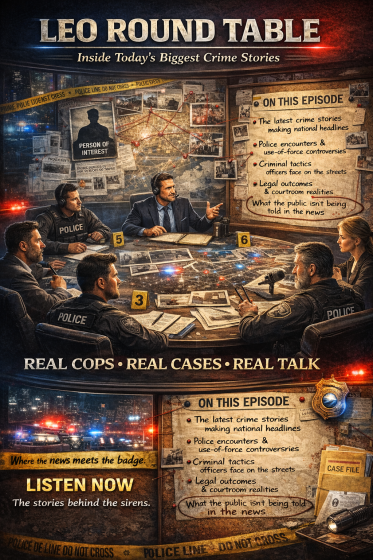

LEO Round Table with Chip DeBlock
S11E045, Cop Tases Suspect After He Points A Loaded Gun At Him During Arrest! LEO Round Table
Why we need ethical leadership in a heightened threat environment. ICE claims police department lied about how many detainer requests they ignored. Suspect with a knife shot multiple times after refusing to drop his weapon. Cop tases suspect after he points a loaded gun at him during arrest.
LEO Round Table: Ethical Leadership, Political Friction, and Critical Use-of-Force Analysis
LEO Round Table: Critical Incident Review
Ethical Leadership in Heightened-Threat Environments | March 06, 2026
The "TEB" Model & Ethical Leadership
- •TEB Model: Analysis of Thoughts, Emotions, and Behavior to determine if de-escalation is viable or if forced compliance is required.
- •The "Green Light": Legal authority for deadly force often exists long before officers choose to engage; restraint is a discretionary "assumption of risk."
- •Proactive Training: Leadership must prepare officers for "cognitive aggressors" who cannot be de-escalated and require immediate "direct to threat" action.
Critical Debates
ICE accuses Boston PD of prioritizing politics over public safety by releasing criminal aliens.
Charlotte County: Deputy brings a Taser to a gunfight; suspect's weapon failed to fire only due to empty chamber.
This episode of the LEO Round Table features law enforcement experts discussing the imperative of proactive leadership in a heightened-threat environment, the growing tension between local and federal immigration enforcement, and a deep-dive tactical analysis of recent life-threatening encounters. The panel emphasizes the shift from de-escalation to "direct to threat" mindsets when faced with active violence.
Detailed Point Summary
Ethical Leadership in High-Threat Environments
The discussion centers on the necessity of proactive leadership before chaos erupts, particularly as the threat landscape evolves with international tensions and domestic sleeper cells. Experts argue that leadership serves as an "umbrella" for community safety, requiring agencies to prepare officers for massive terrorism scenarios that a newer generation of police may not have experienced. There is a noted concern that current training often over-emphasizes de-escalation in scenarios where "direct to threat" action is the only viable ethical choice to save lives. The panel suggests that the industry must evolve to support officers who must immediately stop threats of death or serious injury without fear of political retribution.
The TEB Model for De-escalation
A framework to determine when to transition from communication to forced compliance.
The Political Divide in Immigration Enforcement
A significant controversy has emerged in Boston, where ICE officials claim the local police department ignored 167 detainer requests in 2025, contradicting the city's report of only 57. The panel critiques the politicization of these requests, noting that the ignored detainers often involved individuals facing serious criminal charges. The consensus among the experts is that releasing criminal offenders back into the communities they victimize undermines public trust and prioritizes political optics over actual public safety.
Tactical Breakdown: The Hartford Knife Incident
Analysis of body cam footage from Hartford, Connecticut, shows an officer firing nine rounds at a man with a knife during a mental health crisis. The panel highlights the "Green Light" concept—the point at which deadly force becomes legally justified—noting it was lit early in the encounter. Despite the eventual shooting, the officers displayed significant restraint and empathy, attempting multiple taser deployments and verbal persuasion. However, the failure of these less-lethal tools and the subject's ability to "sprint" despite his physical condition eventually forced a lethal response to protect nearby civilians and officers.
Deadly Force Justification Factors
- ⚔️ Means: Possession of a weapon (e.g., knife or firearm).
- 🎯 Opportunity: Proximity and lack of containment.
- 💪 Ability: Physical capability to cause harm.
- 🔥 Intent: Actions or words indicating a willingness to kill/injure.
Narrow Escape in Charlotte County
In a Florida traffic stop, a homicide suspect pulled the trigger on a deputy, but the gun failed to fire because there was no round in the chamber. The panel identifies a critical tactical lesson: the importance of securing a suspect's hands immediately when red flags (refusal to exit, burglary suspicion) appear. They argue that waiting for a warrant confirmation before taking physical control gives suspects the "discretionary time" needed to plan and execute an attack.
Key Data
- 167: The number of ICE detainer requests allegedly ignored by Boston PD in 2025.
- 250,000+: Successful deployments of the "Glove" non-lethal technology with zero reported deaths.
- 9: Rounds fired by the Hartford officer during the knife encounter.
- 1.5 - 1.7 Seconds: The average time required for an officer to draw a weapon, compared to 0.1 - 0.25 seconds for a suspect to draw from a pocket.
To-Do / Next Steps
- Adopt the "Direct to Threat" Mindset: Leaders must train officers to recognize when de-escalation is no longer a viable tactic to prevent mass casualties.
- Prioritize Hand Control: During high-risk stops, officers should secure a suspect's hands immediately upon observing non-compliance or criminal indicators.
- Establish Clear Legal Standards: Agencies must provide standards that allow officers to predict the lawfulness of their behavior in advance of a crisis.
- Community Education: Law enforcement should communicate to the public that de-escalation requires a willing participant and is not a universal solution for violence.
Conclusion
The discussion underscores a growing tension between tactical necessity and political pressure. Whether dealing with international threats or local criminal encounters, the panel concludes that effective law enforcement requires clear-eyed leadership, immediate tactical control of suspects, and a refusal to allow political narratives to compromise the safety of both officers and the communities they serve.
LEO Round Table


LEO Round Table is a nationally syndicated law enforcement satellite radio talk show discussing today's news and issues from a law enforcement perspective. They also have components on TV, Podcasts, and Social Media. Their panelists are among a Who's Who of law enforcement professionals and attorneys from around the country.
https://leoroundtable.com/how-to-become-a-panelist/
[00:13] Speaker 1: Welcome to Leo Roundtable at leoroundtable.com. My name is Chip DeBlock, and I'm your host for a group of law enforcement professionals to talk about today's news and issues, but we do it from a law enforcement perspective. Let me introduce you to the crew. Guys, if you don't mind waving from the, uh, uh, for the video portion of our show, we've got Attorney Vaughn Klim from Force Science, also former law enforcement officer. Uh, he's pretty well-known in the professional circuits, so, uh, thanks for, uh... I said circ- circuits, not circus. And, uh, so thanks so much for being on the show, Vaughn.
[00:41] Speaker 1: And, uh-
[00:41] Speaker 2: Okay.
[00:41] Speaker 1: Oh, I'm coming to you next, Travis. Don't start smiling 'cause I'm- I'm getting Vaughn. Yeah, we got Travis Yates, uh, on. Wait, I got... He's got a paper here for me to read. I gotta remember. I forget what title I'm supposed to use today. Doc- Dr. Travis Yates.
[00:54] Speaker 2: (laughs)
[00:54] Speaker 1: He's a retired police major from the, from the, um, Tulsa Police Department. And there's one more thing I'm supposed to say. Uh, over 30 years of exemplary, exemplary law enforcement experience. So there you go.
[01:04] Speaker 2: Now they know you're lying. Now they know you're lying.
[01:06] Speaker 1: (laughs) So thanks for being on the show, guys. I appreciate it. Hey, uh, a shout-out to our sponsors as well. Guys, please support our sponsors. They go to great lengths to make sure that this quality content is available to you. Uh, we have our title sponsor, Gullis at gullis.com. And don't forget that code RADIO15 in order to get 15% off your next purchase at gullis.com. We also have compliantetechnologies.com, our satellite sponsor. And we, uh, we got on satellite radio last May, and we're killing it. Gunlearn.com, mymedicare.live, safeguardrecruiting.com, our streaming sponsor. And yes, if you have an agency, you need recruits, you want to get them the right way so they'll actually stay on and you don't have to just pay them to show up, safeguardrecruiting.com. And they're also, being our streaming sponsor, they're allowing us and helping to stream to over a million followers on social media right now during the live show.
[01:50] Speaker 1: And we have tubells.com that built our new online store at leoroundtable.com. Go to our website, leoroundtable.com. Upper right corner, you've got the online store. You can buy, uh, cool shirts, hats, mugs like the one behind me and stuff. And, uh, we don't charge anything extra. We don't make a dime off of that. We're just trying to get our gear out there, so, uh, so please check that out. A shout-out to Bryan Burns for the Tampa Free Press at tampafp.com. Thanks for carrying our content, Bryan. Also, Ray Dietrich with formerlawman.com, and also Travis Yates, our very own Travis Yates with lawofficer.com. Thanks to all those entities for helping make this show happen. And now, what in the world are we talking about today? Guys, we have got a, uh, a main story. You know, they have a tendency to be a little bit deeper. This one was actually... It's from Travis, our very own Travis Yates. Ethical leadership in a heightened-threat environment.
[02:35] Speaker 1: With everything going on with Iran and the, and the threats to public safety and stuff, and, and, uh, you know, sleeper cells and stuff, this is a, uh, this is gonna be a good article to cover. And we've got a segue into another story after we leave that one, and it is, ICE hits back at Boston. We're talking about Boston PD. And they say the police ignored 167 detainer requests in 2025 alone, not 57, which is what the- they're throwing out there. There's some drama and a story involving that one. Uh, and then we got the video. You guys are gonna love this. This is where, where Vaughn's gonna lose it. Body cam video show Hartford police officer shooting at a man, uh, with a knife nine times. It's just leading up to that. And I'm kinda... I mean, Vaughn may not get all animated on it. I certainly am going to, but it, it's a pretty wild story. And then we got another body cam. It shows a homicide suspect pointing a gun at a deputy and pulling the freaking trigger.
[03:27] Speaker 1: And, uh, and, and it left me wondering, who realized he had the gun and who didn't? And then we got, uh, California's epic recordkeeping fail. Yeah, we need Gov... We need, uh, Governor Newsom for president. Uh, nearly half a million criminal cases were not properly reported. What could go wrong with that? I'll tell you at the end. And then we have a K9... You know I lo- I love K9 bite videos. K9 catches a career criminal when he tries to hide under the crawl space in... under a house. And, you know, that's just beautiful because you can't get away. Once that K9 latches on, dude, you can't move and fight. It, it was, it was beautiful. And then police cruiser rolls over after a PIT maneuver when sh- when stuck on a trailer during a, during a chase. I... Words can't even describe what the video shows. It's just... We're gonna have to cover that. Um, so look, um, we got a little less than eight minutes before we take our first commercial break.
[04:15] Speaker 1: So if you guys are ready, let's talk about ethics. Lawofficer.com, ethical leadership in a heightened-threat environment. So remember that. Now, I'm just gonna, gonna do the subtitle right now to kind of do a s- uh, you know, a lead-in for, uh, Dr. Yates. Uh, no community or infrastructure is immune. Any location where terrorists could achieve retaliation, intimidation, uh, publicity, coercion, or disruption is a potential target. He goes on to say that ethical leadership, vigilance, and community partnerships are imperative to safeguard lives, protect property, and to maintain public trust. Um, and so that's the current threat landscape. And Dr. Travis Yates, the floor is yours.
[04:56] Speaker 2: Yeah. Thanks, Chip. Uh, this was written by Vincent Bove. He's a leadership trainer based in New York City and pretty much trained exclusively NYPD. And what he said was really dead-on. First off, leadership is exposed in times of chaos, right? And there has... All these events that we see, we've seen failures of leadership. I mean, we can recently look in, uh, Arizona and other areas and, and, and leadership needs to be right before chaos happens. That's why I think it's what the article is getting at the heart at, right? Good leadership, good decision-making. You're gonna be proactive in the community. You're gonna be proactive with safety. You're gonna be proactive with training. You're gonna be proactive with resiliency programs. You're gonna prepare your officers for what is to come, and you're gonna prepare your community for what is to come. So leadership is sort of the umbrella of everything.
[05:42] Speaker 2: That's why I think it's the topic to always talk about, 'cause everything falls underneath it. But I think right now in America, we're in a very unique time. We're obviously multiple decades past 9/11. Most of this new generation's never experienced massive terrorism. We've seen sort of the lone terrorism type stuff.What would the country react to? What would law enforcement react to? So, I think it, it's time to prepare now because I have a feeling there's a few bad actors inside our borders as we speak, unfortunately. We've seen a couple of those events just in the last week based out of the Iran, Iran conflict. So, I think it's a good time to remind everybody. I think that's why the article was so solid.
[06:22] Speaker 1: Yeah. You know, Vaughn, the article even mentioned what happened over in, uh, in Texas, uh, you know, the other day, so.
[06:28] Speaker 3: Yeah. Um, I think that's part of this challenge. You know, when we started talking about, uh, well, let me back up. A lot of cops, and I think your audience know, cops work really hard to slow things down and create space and buy time when they can and to deescalate. And then, they got, got that beat into them. If you use violence, something went wrong. If you use violence, it could have been avoided. And we all know that's not true. There's cognitive aggressors out there who don't want to be deescalated. Well, we remember when we went to school shootings and we started doing t- training for school shootings, you're going direct to threat. You're pushing kids off your legs, you're walking over bodies because you've got to stop the dying, right? Now, we're going into this heightened threat environment and we're gonna have people who are embedded in our communities who they, violence is the purpose, and we're gonna see this conflict of tactics now.
[07:15] Speaker 3: We're gonna have officers, in one of our videos shows this, officers are gonna be trying to negotiate. They're gonna be trying to slow down, they're gonna be trying... Because they don't want to engage in the violence. And with what the threat we're about to see, or we, you know, that we've already seen, um, it's more like the school shooting. It's more like there's nothing to talk about here, you've got to get direct to threat. And when we talk about ethical leadership, that is something those leaders need to be very clear that we can't wait for that moment to, to train you for violence, to be accurate with your firearms, but more importantly, to have the mindset to go direct to threat. We can't wait for that. And it is extraordinarily challenging and the leaders have got to understand, you got to empower your people for the s- to have the skills to, to, to confront that violence, the mindset to confront that violence, and then you have to back them up when they do.
[08:07] Speaker 3: And we're gonna see this get hyper-politicized. We're gonna certainly see shootings, um, it's very predictable, where an officer goes direct to threat, stops the violence, and half the country says he should've waited, should've slowed things down because, uh, yeah. And I've s- I've said enough on it. It's gonna be a huge challenge and leaders have got to get ahead of it.
[08:27] Speaker 1: Um-
[08:27] Speaker 2: Y- you know, y- you know what, Chip? I want to go back about 35 years when I did my interview to how to get hired in law enforcement at Tulsa Police Department. The last interview question was, here's a scenario. Now, this sounds very archaic and old school, but this was legitimately the scenario. There's a man in a crowded, uh, room holding a Molotov cocktail. You know, most kids today wouldn't even know what that is. What do you do?
[08:51] Speaker 3: (laughs)
[08:51] Speaker 2: And the, and the correct answer is, you shoot him. If you didn't say that answer, you would have a hard time getting hired out of that interview. So, my question would be, if we ask that question today-
[09:06] Speaker 3: Oh, yeah.
[09:06] Speaker 2: ... what would most our recruits say? And I think we need to really acknowledge that these so-called tech- techniques that we're training overarching for law enforcement that I would argue on many times almost all the time with violent encounters, they're not working. We'll watch some videos today where that's not working. Are we gonna bring those tactics to terrorists? 'Cause if we do, we're not gonna win.
[09:27] Speaker 1: Well, I, you know, it's funny. When you're, when you're given that scenario, you know, I'm, I'm... Well, we're guys, we're visual, right? (laughs) I mean, you know, that's, that's about the only thing we got (laughs) going for us. And I'm playing that scenario in my brain-
[09:37] Speaker 2: Not always a positive thing, Chip.
[09:38] Speaker 1: (laughs)
[09:39] Speaker 3: Yeah.
[09:39] Speaker 2: Not always a positive thing.
[09:39] Speaker 1: Well, yeah. I guess you're right. Uh, but I'm play- I'm thinking, are there police leaders out there with some agencies that would, that would expect a different answer in order to get hired with their agency, Travis, today?
[09:50] Speaker 3: Yeah.
[09:51] Speaker 2: Are you kidding me?
[09:52] Speaker 3: 100%.
[09:52] Speaker 2: Today?
[09:52] Speaker 3: Yeah.
[09:52] Speaker 2: They wouldn't hire you.
[09:54] Speaker 1: Well, yeah. That's what I'm saying. I mean, he's-
[09:54] Speaker 2: You wouldn't be hired-
[09:55] Speaker 1: Well, yeah.
[09:55] Speaker 2: ... if you took out the threat immediately.
[09:57] Speaker 3: Yeah.
[09:58] Speaker 1: I mean, but you come to Florida, you don't answer the question the same way, you may not get a job. But yeah, yeah. But of course, in Florida-
[10:03] Speaker 3: Well, they, they, they do that. And this is not a small thing, because this is gonna have to, the, the, uh, the industry's gonna have to evolve. There was a day when, you know, I, I was in the '90s when I was doing policing, and, and we were still in the thing where they gave you a choice. If you, if you have a choice to go to a robbery in progress, uh, an injury accident, or a past homicide, which one do you prefer to go to? And you're like, if you try to say, "Well, I, I wanna go to the robbery in progress. I wanna identify e- end, close with, and destroy evil, that's what I wanna do." And they're like, "Well, no.
[10:35] Speaker 3: You should've prioritized the injury accident because there's, there's people who are injured and you gotta be compassionate and you, you need to go to that."
[10:42] Speaker 2: (laughs)
[10:42] Speaker 3: And so, you had to kind of get your mind shifted around. They saw if you had the mindset to identify, close with, and destroy evil, or identify, close with, and destroy crim- uh, uh, crimes in progress, whatever you want to call it, that was the wrong mindset. It evolved out of that mindset. Now, you had better get in the mindset that you not only need to identify, close with, and immediately destroy... I'm sorry, stop the threat of death, disfigurement, or bodily injury, right?
[11:13] Speaker 2: (laughs)
[11:13] Speaker 3: You got to do that immediately. Um, you've got in the background how am I or am I not gonna be supported in this?
[11:20] Speaker 2: Mm-hmm.
[11:20] Speaker 3: We gotta front load that. We cannot wait. We, and, and, you know, an honest accountability, you cannot have standards that... I mean, you have to have standards that allow an officer to predict the lawfulness of their own behavior. Right? And if you are not clearly establishing standards that allow them to predict in advance the lawfulness of their own behavior, you are not serving your officers.
[11:41] Speaker 1: Oh, excellent, an excellent point. And, you know, Vaughn, you still have a choice. If you can't handle police work, you can always be a firefighter. But on that note, uh, it's time to take our first commercial break. So, we will be right back. (instrumental music plays)
[11:52] Speaker 2: My family only cares about one thing: that I come home safe.
[11:58] Speaker 4: At Gulls, every order begins with a promise. Made with purpose.Stitched for support. Back with pride. Answered by dedicated hands. Delivering the standard you have sworn to uphold. We serve more than the mission. We serve the person. Each piece is engineered to help get our first responders through the shift and back home safe.
[12:50] Speaker 1: Welcome back. Leo Roundtable at leoroundtable.com. The law enforcement talk show, my name is Chip The Block, and I'm your host. We're joined by Attorney Vaughn Kleim from Forsyth and Travis Shames from The Courageous Police Leader. Uh, we just got done talking about... A- a- and Travis, I thought that you written the article, so my mistake. I'm glad you cleared that up. Uh, but, but a- an excellent article and a great segue for our next story. So, are you guys okay if we, if we transition over to Boston real quick?
[13:14] Speaker 3: Of course.
[13:14] Speaker 2: Of course.
[13:14] Speaker 1: We're good with that? Okay. So, globalordinancenews.com, "ICE Hits Back at Boston, Says Police Ignored 167 Detainer Requests in 2025, Not 57," which is what they're saying. So this, this story, it just, it kind of blows my mind and it's a perfect segue. So, we're in Boston. Acting ICE Director Todd Lyons said that the Boston Police Department ignored 167 federal immigration detainer requests last year, not 57 as reported by the city's commissioner. And that the request included serious criminal charges. Now, uh, Lyons, our ICE director, or acting ICE director, has declared closure on Monday. It comes after last week's nine to four vote from the Boston City Council, and their vote blocked a formal request from Councilor Ed Flynn, who was, uh, trying to require the mayor to provide the City Council with specifics on ICE detainer requests that were ignored by the police department in Boston since January of 2024. Including whether they, uh, pertained to open criminal cases.
[14:15] Speaker 1: So, the council prevented that from happening. Now, but there's one council member that's, that's, that's true and blue, it sounds like. According to Director Lyons, all of the detainer requests ignored by the city last year relate to illegal immigrants facing criminal charges. So, that wraps that up. Now, ICE logged 167 immigration detainers against criminal illegal aliens into the Boston Police custody during 2025, far more than the Boston Police Department is admitting to. And Lyons said this in a statement to The Herald. Ironically, Commissioner Michael Cox, so the Boston Police chief, says that the police won't honor detainers, uh, because they're committed to building and strengthening relationships and trust within the community. Uh, but our ICE director says, "How does releasing criminal illegal aliens back into the communities they victimize build trust?" It doesn't.
[15:03] Speaker 1: And he added that, "It shows Bostonians that local police leaders are so politically motivated that they would rather release criminals than work with ICE, which completely undermines public safety." So, there you go. And, and, and that's, and that's a connection with the first article. Vaughn Kleim?
[15:21] Speaker 3: Yeah, I mean, for those of us who worked with federal agencies over the years, this is, this was never a politicized issue. This was, this was, uh, we- we cooperated with the feds early and often, and it just made sense to do it. Officers to officers, this is not a problem. This is not a patrol level issue. This is certainly a politicized issue. Now, I don't know why they got the number wrong. You know, sometimes your senior leaders have to rely on whoever provided them the data, so I'm, I'm not, I'm not in a position to assume a level in intent on the numbers. But it doesn't matter whether it was 60- 167 or 57, right? At the end of the day, they're either supporting the- the federal officers and the, in, in the execution of federal law or they're not. And it sounds like they're being very overt in that political position they're taking. Um, and, you know what? I- i- if anybody who's been paying attention knows that this was not a... This was a bipartisan issue for decades.
[16:16] Speaker 3: The, the-
[16:17] Speaker 1: (laughs)
[16:17] Speaker 3: ... Democrats and Republicans all wanted illegal immigrants out. Um, it's, it, it, whatever, whatever you think is the motivation behind, uh, the failure to cooperate with the feds, and there's plenty of, of theories out there, at the end of the day, it is so overtly politicized, um, that, uh, and it is gonna be the communities that suffer for it. Absolutely. And, and in fairness, come on, like, we all have worked within these communities. They do not want criminals released back into their communities any more than anybody else. This is not a race issue. This is purely politicized because the people who live in those communities do not want these people released either. Um, and that's, that, that has been the case when we work with Black communities, Hispanic communities, white communities. It didn't matter. They're not idiots, right? They're not, they're not engaged in some level of self-destruction that they want criminals released back into their communities.
[17:12] Speaker 2: It's just, it's such a disingenuous topic. And, and Vaughn's right. The only thing we know is it's political. That's all it is. Because everyone's seen the sound bites of Clinton and Obama and Hillary Clinton, all talking about, worse talk than Trump, about-
[17:26] Speaker 3: Oh, yeah.
[17:26] Speaker 2: ... illegal aliens, illegal crimi- But they're so disingenuous, they play with words. When they say this, they always say what? Immigrants. They never say the word illegal. They, they, they're-
[17:35] Speaker 3: You're right.
[17:35] Speaker 2: ... trying to make people believe that, "Oh, these are just immigrants." Just like Donald Trump's wife, immigrants, right? Same thing they do with voter fraud. You notice the wordplay. They don't say there's no voter fraud. They say, "There's no evidence of massive voter fraud." Well, what's, what's your definition of massive, right? So, it's just wordplay where they, where they think that people who listen to them are stupid. And I guess there's a s- part, portion of society that is stupid. I don't know any other way around it. So, um, hopefully, the smart people understand it. They see it, they vote accordingly, because I don't think anyone... Like Vaughn says, nobody wants criminals let loose in their na- in their communities.
[18:11] Speaker 1: You know, uh, John Richardson, uh, Carlson, in our 51st state there in Ca- in, uh, in Canada just weighed in too. He's agreeing with us, so, uh, I'm having some fun with the terminology, John. But thanks for watching the show and for, uh, and for backing us up. We appreciate it. Um, you know, we've got a story with a video component, guys, that I cannot wait to get into. Um, we've got two minutes left before our first comm- before our second commercial break, so I won't have time to get all the way through it. But are you guys, uh, you guys game to, uh, to handle this first video? It's gonna be, it's gonna be, it's gonna be a doozy. All right. Um, so I will go through as much of this as I can before the break. Uh, rumble.com, our favorite law enforcement video channel, called, this is butter, body cam video shows Hartford police officer shooting at a man with a knife nine times.
[18:55] Speaker 5: Aah! Drop the knife. No! That's my father! Aah! No
[19:03] Speaker 6: I'm not gonna shoot him.
[19:05] Speaker 5: Help me!
[19:06] Speaker 6: Drop the knife.
[19:11] Speaker 5: Help me! Help me!
[19:11] Speaker 6: Drop the knife.
[19:12] Speaker 5: Aah! Aah! No!
[19:21] Speaker 6: Drop the knife, please. Drop the knife.
[19:27] Speaker 5: Help me! Aah!
[19:28] Speaker 6: Drop the knife. Shit is ineffective.
[19:36] Speaker 7: You gotta drop it. You gotta drop it. You gotta drop it. We don't wanna shoot you. We don't want to.
[19:41] Speaker 5: (sirens)
[19:42] Speaker 6: Dr- drop the knife.
[19:44] Speaker 7: Drop it.
[19:44] Speaker 6: Drop the knife.
[19:45] Speaker 7: Siren's shot. You're the subject. You're the subject.
[19:47] Speaker 5: (screams)
[19:47] Speaker 7: Come on, drop the knife. You don't want to get it. Drop the knife.
[19:55] Speaker 5: (screams)
[19:56] Speaker 7: Drop the knife. (sirens) Stop it. You gotta drop it. We don't wanna shoot you. We don't want to, bro. You gotta drop it
[20:11] Speaker 6: Gotta drop the knife.
[20:11] Speaker 7: Drop it.
[20:12] Speaker 6: Drop the knife.
[20:13] Speaker 7: You don't wanna get shot. You don't wanna get shot. Come on, drop the knife. We don't wanna do that. Can, can you just drop the knife for me, my man?
[20:23] Speaker 6: Drop the knife.
[20:23] Speaker 7: Just drop it. Just drop it. Just drop it.
[20:28] Speaker 5: Drop the knife.
[20:32] Speaker 7: My man.
[20:33] Speaker 5: Come on.
[20:33] Speaker 7: You don't wanna get shot. Think about it. Drop the knife. We're just gonna get you help. We're gonna get you help. Just drop it. Just drop it. My man, my man, we're good. Yo, look at me, look at me. We're here to help you.
[20:48] Speaker 5: Help me!
[20:48] Speaker 7: We're here to help you. Just drop it.
[20:51] Speaker 5: Drop the knife.
[20:52] Speaker 6: Goodnight.
[20:52] Speaker 7: Stevie-
[20:53] Speaker 5: Drop the knife.
[20:53] Speaker 7: You gotta drop it.
[20:54] Speaker 6: Drop the knife. Last time. Drop the knife.
[20:56] Speaker 7: Stevie, Stevie, drop it.
[21:00] Speaker 5: Drop the knife. (guns firing) Oh.
[21:03] Speaker 1: So we're in Hartford, Connecticut. So the Connecticut Office of Inspector General released body cam footage of a Hartford police officer firing nine rounds at a 55-year-old bad guy carrying a knife on Friday morning. Now, the family member of Stephen Jones, or, or ... And I say bad guy. And, and he, and he was a bad guy. He had a knife. He was n- not compliant with police, uh, directives, but he was also i- in a mental health crisis. So they ... There's a 911 call. This is 11:00 in the morning, and a family member, um, calls the cops, says, "This guy's having a mental health crisis." So Officer, uh, Josue Charles arrives and he's the first of, like, four or five that get there. He gets there at 11:07 in the morning. He finds Jones standing on a, on a, on a front porch, um, stoop at the entrance of an apartment and he's got a, a knife in his hand.
[21:47] Speaker 1: So the officer begins walking towards, um, you know, uh, steps out of the car and starts immediately giving commands to this guy, "Hey," uh, you know, "drop the knife." Instead the guy keeps it in his hand and he starts walking towards the sidewalk where the officer's at. And, um, he's still got the knife in his hand. So when, uh, Jones, our bad guy, continues to ignore the officer's request to drop the knife, the officer, uh, starts deploying the taser multiple times. And it, it never seemed to be successful in, in immobilizing him, and there were a ton of taser deployments. This was, uh, one of the tasers that has, you know, is capable of doing multiple deployments, and it, it, it, and it just, it just, you know, wasn't working. Uh, but now we've got other officers arriving on the scene. This is gonna get really interesting, guys. Don't go anywhere. Stick with us. Commercial break. We'll be right back. All right, guys.
[22:30] Speaker 1: Introducing Comply Technologies at complytechnologies.com, and they're committed to providing non-lethal solutions to help officers gain the upper hand safely and rapidly in a humane, low optics manner, utilizing what they call their CD3, which stands for Conductive Distraction and De-escalation Technology. Now, their flagship product, we all know, especially Travis and I, uh, it, it's called the Glove. It, it's helped officers not just tens of thousands of times, but they've had over 250,000 deployments with no injuries or death, deaths. That's amazing. They've actually achieved non-lethal status in an arena that predominantly can only offer less lethal results. And when it comes to weapons retention, transitioning to your sidearm or conductive energy weapon, the Glove at complytechnologies.com. They virtually eliminated weapons confusion. So stay ahead of the game with Comply Technologies and the revolutionary CD3 that hundreds of agencies have already turned to nationwide.
[23:17] Speaker 1: And friends, take it from me, when it comes to safety, this is one of the most commonsense, hands-on solutions that's ever come to market. Uh, go to the complytechnologies.com today and tell them that Chip and Travis sent you. Again, complytechnologies.com. You'll be glad that you did. Welcome back. Leo Roundtable at leoroundtable.com, the law enforcement talk show. My name is Chip Deblocque, and I'm your host. We're joined by Dr. Travis Chace from Tulsa Police Department, retired as a major, and also attorney Vaughn Killeen with Force Science, also former police officer. We've been talking about, uh, uh, a body cam video in Hartford, Connecticut. And, you know, we've got about four or five Hartford cops that show up. We've got a, a, a guy in mental crisis. He's got a knife. He's not following police orders to drop the knife. And so we've got one officer, um, that's giving the guy commands.
[23:58] Speaker 1: He leaves the porch, walks to the yard, and now he's, you know, on the sidewalk, and now he's by the, the cop's police car. Um, cop's backing, uh, backing up and, uh, I, I initially thought the guy was gonna try to get into the police car. It was kind of hard to tell what he was doing by the driver's door because it was ... the view was obstructed. Uh, but our, our cop keeps verbalizing, uh, you know, uh, that he, that he doesn't want to shoot the guy. Uh, we have a second officer, uh, James Prignano. He arrives on the scene, requests the bad guy drop the knife. And so, at this point, this officer, you know, keeps saying, uh, and I've got my show notes, but from memory, saying something to the effect of, "Hey, we don't want to shoot you." And, uh, and so the bad guy starts charging this, this second officer, uh, while the first officer was cycling tasers like they're going out of style. Uh, this guy started charging the officer.
[24:46] Speaker 1: I was amazed at ...The officer, um, drew his gun but he, he, he never... I never saw him point it at the, at the suspect until much, much later. So, he's being (laughs) charged. The suspect's taking swipes at him with the knife and the dude's just got his gun, i- from my recollection, just pointed down at the ground and, um, and he's backing up. And, uh, and so the guy continues to charge the officer. He's backing up and now we got more officers, you know, showing up on, uh, on the scene. Uh, uh, Jaclyn Torres and Joseph Magnano, and, uh, we finally have, um, uh, Magnano, you know, showing up on the scene saying, "You're gonna get shot." And, uh, Magnano walks backward to get distance between him and the bad guy who's now approaching him at an intersection. Last time, "Drop the knife. Drop it," Magnano said, and then he fires nine shots at the bad guy who ends up going to the ground.
[25:37] Speaker 1: He suffered numerous gunshot wounds and, uh, he remains in the ICU in critical condition, which I, I find that pretty amazing. Now, going back to my show notes, I'll let you guys talk, you know, talk about it, but, um, I- I kind of, you know, I'm talking to... Uh, the- the tactical deployment's not a big deal, they just weren't, they just weren't effective. Uh, but the officer that was backing up and that didn't really raise his gun up until the, uh, until much later and he was not the shooting officer. You know, the communications that he was given is that, "We don't wanna shoot you." Um, and, uh, and then we... O- our officer with the bo- with the initial body cam, the backdrop for him when he finally switched over, um, to firearm, it was a horrible, horrible backdrop and there were...
[26:21] Speaker 1: And people need to realize that if I cre- can create a verbal picture for you, there were civilians freaking everywhere and they were approaching the bad guy while cops are surrounding him giving him commands. So, not only do you have a, you know, our main guy with a body cam. His backdrop, if he was to use the lethal force 'cause he had a gun in his hand, the backdrop was not just one, it was multiple civilians and/or, or cops. Um, and, and that never really changed much, um, from what I saw and, um, and even when the shooting actually happened, um, there were just... No one... I never heard a command for anyone to tell the civilians to stay back, get back, or anything like that, um, and yet we heard nine shots. We don't know how many times the bad guy, uh, was shot or hit, uh, so we can assume he was probably hit one time out of nine (laughs) . But, uh, I'll, I'll let you guys, uh, take it from here in just a wild one. Vaughn, you wanna start us off?
[27:10] Speaker 3: Yeah. So, for those listening, what police are looking for when they can use deadly force is an imminent threat of death or serious bodily injury, which loosely means that the man has the intent or the, uh, or the willingness, um, the means, which is a knife, the opportunity, uh, the, the ability which is a physical ability, upright and mobile, and then the opportunity. And what was interesting about this is if you ima- watch this video, uh, if you imagine a green light going on like a, a go signal as soon as there's lawful authority to use deadly force, that go signal goes on in the very beginning of this thing. This guy comes off the porch, is given multiple commands, um, he's being told in actually nice tones of voice, uh, "I don't wanna shoot you. Drop the knife. Hey, buddy, drop the knife." Uses his name, "Drop the knife." You can tell the officer's trying to engage in good de-escalation, persuasion, communication tactics. The officer simply does not wanna shoot this guy.
[28:01] Speaker 3: And in tasers, so when we look at the use of a taser against somebody with a knife, when you look at physical means, this is probably one of those cases where it was a good idea except, and only because the guy was moving so slow, he was obese, he was kinda hobbled as he was walking, so I could see why a reasonable officer might think, "Okay, I'm at least willing to assume the risk." He doesn't have to. It is 100% compassionate on his part, it is restraint, it is an assumption of risk, but I could see why under these circumstances he was willing to do that. Typically though, when you do try to use a taser and assume the risk, um, you have lethal coverage. You have another officer there with lethal cover so that the taser doesn't work, uh, and you need to, you can respond with lethal cover. So, a lot of agencies are training that. That is saving suspects from the consequences of their own decisions which means we are trying to reduce the number of lawful shootings.
[28:52] Speaker 3: If the officer would have just shot him initially, it, it would have been a, likely would have been privileged, and again I'm just looking at a, at a video, so I'm, I'm happy to say I've got a lot of, uh, unanswered questions still. But I could see why he did what he did, but now when the, uh, uh, uh, like Chip mentioned, when you're making a decision to use lethal force, backstop matters. Right? You gotta know who's on the other side of that bullet that you're firing, not just the suspect. What were the houses, what were the civilians, what were the other officers? Um, and when the other officers started to show up, what I noticed is like what changed for them? What additional information did they have that made it more reasonable for them to go ahead and, and use deadly force instead of a taser?
[29:32] Speaker 3: And one of the things I noticed, and I don't know what the officer's perception was or what they relied on, but while this guy appeared hobbled in the beginning, moving very slowly, he was obese, he was just kind of zombieing along as I call it as he was hobbling along, there... By the time the other officer shows, he had taken multiple short burst sprints. And so while he was hobbling, if he would have gotten within a, uh, 15 feet or less, um, those short sprints, he, he would have that knife on top an officer before any officer could, could stop him. And stop him means not just shoot him but shoot him in a way where the wounds can take effect. Right? So, you don't just shoot somebody, you have to shoot them in a way that the wounds can take effect to stop the threat, and at close distances there is zero guarantee that happens.
[30:16] Speaker 3: And so the, every one of those officers who let that guy get within 10 feet, six feet at times, was doing so because none of them wanted to kill this man, none of them wanted to shoot this man, is a fair reading of it. And so you saw an awful lot of restraint, an awful lot of talking, and I want everybody to know that while that was occurring, that green light was flashing. They could have shot him at any time and had been, likely would have been privileged in that use of force, um, and yet they didn't. So, that final officer, he decided there had enough had ch-... I don't know what he decided. Let me back up. I could see objectively in the video that the circumstances had changed significantly from what the first officer was dealing with. And Chip hit it on the head, there was now more civilians around, there was crossfire problems, the guy had done multiple sprints....
[31:05] Speaker 3: that showed that he was capable of closing that distance if he decided to, and the officer decided, uh, it's on balance, he was no longer willing to assume the risk. And that is a discretionary call. Deadly force, just because you can doesn't mean you have to. And they... and you saw that in this case, they could have lawfully used deadly force much earlier. And at some point, the balance just shifted and the officer decided to, to engage.
[31:32] Speaker 2: You know, Chip, we bring guns and knife fights. That's what we do. And when I first saw this video, I immediately started screaming at myself. But the more I thought about it is, the more I sort of landed where Vaughn has landed, in which I appreciate the empathy. I appreciate the fact that officers do not want to use deadly force. That's something we don't want to do, or we wouldn't have even recruited them to be in law enforcement. We don't have that violent nature like criminals do. Uh, but I think there's, there's, there's a disconnect here, you know? I mean, de-escalation, I don't want to throw de-escalation out, because obviously it's a wonderful tool, but I've yet to see solid evidence where de-escalation, de-escalates potential violence. It's great in non-violent encounters. It's great in mental, uh, crises. But when someone has weapons and they, and they're showing intent to commit violence, I've yet to see the de-escalation work, and that's what they were doing.
[32:26] Speaker 2: You know, they told him 10 times, uh, in the first 30 seconds to drop the knife. At one point, he kind of said, "Come on, baby, please drop the knife. We don't want to shoot you." They just kept begging him, begging him. But where we're... I think the disconnect is in this profession is, is when those de-escalation tactics, and it's a tactic, it's not something that's guaranteed, when that tactic doesn't work, where do we transition to the next tactic? And we're really failing to do that. I think we've been... some of us have been sold a lie that just de-escalate and this works every time. Just like a taser, it doesn't work every time. In fact, I would make an argument, I've yet to see any evidence whatsoever, like I said, where a situation like this where it worked. I mean, we watch videos here every day, Chip. We haven't seen it work yet, right? We, we typically see something like this. And so I think we have to start thinking about different tactics. Uh, I agree with Vaughn.
[33:15] Speaker 2: I mean, there was a lot of different ideas we could do. I don't want to... I don't want to, uh, talk, you know, based on what I know now, because at the time... but we ought to be thinking about, in this profession, are there other options in shooting people? Uh, do we have ballistic shields where we could knock the guy down? Do we have cars where we could clip him? You know, where it typically doesn't kill him. Yeah, that's all con- the car's considered deadly force, but have we, have we encouraged and supported this type of training to where that may be better to, better to do early on than our only option is the gun with a knife fight? And so I think very few you could do that in. This one I think you could, because this guy was kind of like not moving very quickly at first, right? And I think that's why the officers had some confidence to spend a little longer on this.
[33:52] Speaker 3: Right.
[33:52] Speaker 2: I think there's lots of things to think about coming out of this video.
[33:56] Speaker 3: Yeah. And I, I would add, what we do at, at, in our realistic de-escalations, we talk about thoughts, emotions, and behavior, this TEB model. And-
[34:03] Speaker 1: But Vaughn, we got, we gotta go to commercial break, so I'll tell you what.
[34:06] Speaker 3: Perfect.
[34:06] Speaker 1: Hold that thought. We got a GunLearn coming up in a second. We'll be right back. All right, guys. Time to talk about GunLearn at GunLearn.com. And, you know, as law enforcement officers, we deal with guns and ammo every day, but it's what we don't know about them that gets us into trouble. Injuries, civil lawsuits, accidental discharges, missed notifications, lost prosecutions, and disciplinary issues, but GunLearn.com, they have your back. You can quickly become extremely firearm knowledgeable by simply learning 14 training modules from the convenience of your home or your office, or by attending a live seminar at GunLearn.com. You can also become a safe, accurate, and competent certified firearms specialist like our very own Captain Brett Bartlett and also attorney Ken Apianco.
[34:43] Speaker 1: The course has had huge success in raising the bar of firearm knowledge, and GunLearn's been a trusted source since way back in 2011 by gun manufacturers, federal agencies, forensic organizations, and even police departments nationwide. Now the founder, Dan O'Kelly, has got a deal for you if you have your own agency. If you're a chief or sheriff, you can actually host a seminar for absolutely no cost, which is an amazing opportunity. You can go to GunLearn.com to get more information. Again, that is GunLearn.com. Welcome back. Leo Roundtable at LeoRoundtable.com, the law enforcement talk show. My name is Chip DeBlock and I'm your host. We're joined by Attorney Vaughn Klim from Source for Science, and also Dr. Travis Yates, retired police major from the Tulsa Police Department. We've been talking about a, uh, a use of force, uh, in Connecticut. We have a guy with a mental health crisis. He's got a knife and, uh, I just saw Vaughn's hand coming at me like it was...
[35:31] Speaker 1: like it was the, you know, the glove. And I got a little nervous there for a second, Travis, from my-
[35:34] Speaker 3: No, my auto... my auto focus isn't working.
[35:37] Speaker 1: Focus. (laughs) Oh, there you go.
[35:39] Speaker 2: There it is.
[35:39] Speaker 1: There's that. There he is.
[35:40] Speaker 2: You looked bet- yeah, you looked better before.
[35:41] Speaker 1: But, uh, we've been talking about this guy, a mental crisis. He ended up getting shot by the police, um, after, uh, as Vaughn... Vaughn did a great job of ex- with the, with- I, I call them like word pictures, talking about the green light, um, went off very early, and there were so many, I don't necessarily want to say op- opportunities 'cause I, I don't look at them as opportunities, but there were so many justified, um, instances, or so many, so many, um... the, the window for a justified shoot was there long before they, they, um, they took advantage of it. Um, so anyhow, it... great, great breakdown of the shooting. Anything else in reference to this, guys, you, that you want to add? Vaughn?
[36:19] Speaker 3: Just very quickly. So, uh, I think Travis brought up a great point about recognizing... I teach a class called The Bridge from De-escalation to Use of Force, and it answers that question, why did you stop talking enforced compliance? What are... what are the circumstances that are appropriate for de-escalation efforts, like containment, control, contact, communication, and ultimately consent? Like Travis said, you can't... not everybody's able or willing to be de-escalated. And so we got to very quickly recognize and... when somebody, uh, does... is, is engaged in thoughts, emotions, or behavior that are inconsistent with, uh, high, high levels of, of de-escalation success. And so we train officers in the TEB model, thoughts, emotion, behaviors, not because we're diagnosing them, but we can, we can start to see whether we have sufficient containment, control, psychological and physiological contact.And then ultimately, do you have the communication skills to do it?
[37:15] Speaker 3: So when we have cognitive aggressors, which is what, uh, Travis, what doctor, Dr. Yates was describing, a lot of people police come in contact with violence is the purpose. And we're not gonna deescalate them, right? There are certain circumstances with enough time when you have discretionary time that you can engage in all sorts of things because you can do it safely. You got time on your side. You could let drugs metabolize through their system if that's the problem when you have discretionary time. But when you have a guy like this who's mobile, who's armed, you got crowds forming, you got crazy backstops, you do not have discretionary time because you don't have sufficient containment and you don't have sufficient control. Without those two things, you don't have discretionary time and then that's when you transition from attempting verbal persuasion to forced compliance, right? You've got to use a reasonable amount of force to overcome that threat.
[38:05] Speaker 3: So we saw all of that, um, and I think Dr. Yates is pointing out, we have got to ensure not just that the officers understand that, but the communities who are standing in judgment of those officers have to understand not everybody's able or willing to be deescalated.
[38:20] Speaker 1: You know, you're so right. You're so right on that, on that point. And, and, Vaughn, while you're talking, I'm looking at your shirt. It's very, very small but does that, does that say Gulls on your chest?
[38:30] Speaker 3: It does say, it does say Gulls because I'm a Gulls advisory board member and, uh, a huge fan of Gulls. And, uh, I tell you what, I still see Gulls signs and remember the days when we were flipping through those Gulls magazines and ordering our-
[38:43] Speaker 1: Yeah, baby.
[38:43] Speaker 3: ... new boots and our n- Yeah, no. Gulls, that's why earlier you (laughs) you were saying, "Gulls loves law enforcement." I'm like, "Well, you know what? They love firefighters too."
[38:52] Speaker 1: (laughs)
[38:52] Speaker 3: They love EMS. They love their military. Uh-
[38:55] Speaker 1: No, no doubt.
[38:55] Speaker 3: ... they're doing a phenomenal job. They really are. So yeah, this is my Gulls shirt today. Uh, shout out to, uh, to Gulls and, and the team that we have over there.
[39:05] Speaker 1: Yeah. They good, good people. And, uh, Mike Fadden, great CEO. I'm very impressed with Mike Fadden and what he's done with the company and, uh, um, he had great, great history. Um, you know, they've got, they've got a lot going on and now they're making their Mission Made pants. I've got a pair of their Mission Made tactical pants on. I actually wore those when, uh, when, um, Travis and I got gloved. And, uh, they're double stitched. I mean, there's so many things, I could be here like all day talking about how well these are made compared to other tactical pants I've had. And I, I just bought a pair of, uh, of their waterproof Danner boots and, uh, and I, I took them to Georgia. Remember last time I went to Georgia, I blew my knee out, right? I slipped in the woods and I fell. And, uh, no issues this time in Georgia with my new Danner boots and stuff.
[39:45] Speaker 1: But, uh, they've actually got some exclusive, uh, um, like some wor- like, um, like shirts, some, some, um, um, some neat partnerships and, and if you want to get certain shirts, you have to go through Gulls in order to get them, I guess is what I'm trying to say. Um, so they got... If you go to thegulls.com and kind of look and see what they've got going on with... And I think everything that they're making themselves is Mission Made I think is what the title is they're using, Mission Made. Like those tactical pants that I have. So people, I encourage everybody on the show to check those out. And remember, when you're making the purchase, use that code, RADIO15, in order to get 15% off. So if, um, if you guys are ready, we have another story that I'd love to cover and, and it's, uh, it's gonna be pretty sensational here. Uh, rumble.com, this is Butters the channel, body cam shows homicide suspect pointing a gun at a deputy, pulling the trigger.
[40:30] Speaker 7: All right. Put your hands-
[40:31] Speaker 1: Put your hands-
[40:31] Speaker 7: Put your hands behind your back.
[40:31] Speaker 1: Put your hands behind you.
[40:33] Speaker 7: Taser. Taser. Get back. Get back.
[40:35] Speaker 8: (screaming) .
[40:52] Speaker 1: Now, we're in, we're in Charlotte County, so not too far from where I'm at here in Florida. Um, a wanted homicide suspect pointed a loaded gun at a Charlotte County sheriff's deputy, pulls the trigger during an arrest attempt on February the 20th, uh, according to the Charlotte County Sheriff's Office. Now, the gun did not fire because it was, there was not chamber, there was no round in the chamber. Deputies, they stopped the rental car after observing a traffic violation and then they get intelligence that the two suspects, um, connected to a Sarasota burglary were traveling, uh, through Charlotte County. So they identified the driver. Uh, the driver is Amy Lee, but the passenger, you know, doesn't want to talk, right? Doesn't identify, uh, himself. And so, um, and then they both initially refuse to get out of the car. So later they get both guys out. Remember we know who the driver is. They're trying to identify the, the, uh, the passenger.
[41:43] Speaker 1: And a member of the sheriff's strategic Targeted Area Response Unit, uh, they end up finding through her- criminal history check and all kinds of stuff that the passenger, they believe it's Brian Huson and, um, deputies learn that he had multiple warrants including homicide, uh, from the state of Pennsylvania. So when deputies tried to arrest him, he starts resisting. So, uh, we have a guy drawing his taser while the other two deputies are wrapped up with the bad guy and the bad guy breaks free from those two deputies and then the third deputy wearing a body cam with a taser, um, guy produces a gun out of nowhere and points it and pull, and pulls the trigger right when the, when the deputy's tasing him. The guy runs a few feet, goes down. He's still got the gun in both hands and they say that he's trying to rack a round in the chamber. No one shot him. They, they go hands on and, and, and disarm him. I, I, I...
[42:36] Speaker 1: And he had fentanyl and all kinds of stuff on him but, uh, I gotta wonder whether they knew he had the gun. I'm curious what you guys think. I don't know. This is cra- And this is Florida, where we shoot, you know... It's not like California where, you know (laughs) they live to, to fight another day, you know. I was so surprised the guy didn't get shot. Travis.
[42:52] Speaker 2: Well, I guess sometimes we bring a taser to a gunfight but I'll leave that one alone right now.
[42:56] Speaker 1: (laughs)
[42:56] Speaker 2: This is something that I talk about every day. I've been studying this at a high level for well over a year now. So here, here's the facts. You stop a car. They refuse to get out of the car. Probably argued at the same time but we don't have that video portion. And then you find out they're burglary suspects.Get some handcuffs on him right then and there. What are we waiting for? Why are we waiting for the homicide warrant to come out? You have enough right there that tells you something's up. Let's secure the hands. The hands are what can hurt us. Uh, I mean when we look at this research, those combinations, uh, burglary suspects, refusing to get out, non-compliance, arguing, that's all it takes to secure somebody because of the potential of what could happen next. And we wait too long. We let him stand on the side of the road. We give him time to make these decisions, uh, that ultimately we're very fortunate there wasn't a round chamber- in the chamber when he shot that gun.
[43:56] Speaker 1: Wow. Man, we'd be having a different conversation then. Vaughn?
[43:59] Speaker 3: Yeah, no, I th- there's a couple things I think. Uh, so there's a from an officer safety tactical after action review, look, we, every, every tactical engagement we can, we can make better in hindsight, right?
[44:10] Speaker 2: Yeah.
[44:10] Speaker 3: I don't know what these officers knew about him. Um, I don't know, uh, how he was presenting at the scene initially. But here's what we know. Um, they were where they were when they decided to take control, when they decided to put him in handcuffs, like Travis says. They decided to go hands-on, okay? Uh, other officers might have decided to put them in a position of disadvantage at gunpoint first to do to pres- to check compliance first, to get control of the hands first. Okay. That's probably very common, actually, (laughs) like with a homicide suspect. (laughs) Um, but you didn't see that. So fine, they are where they are. The things they didn't do were for officer's ta- safety reasons, right? I mean, w- the things that they could have done would have been for officer safety. They didn't do them. Um, but once he decides to put his left hand in his pocket and they realize he's about to go for a gun, it is not time to try to outdraw him.
[45:01] Speaker 3: He can pull the gun in a tenth of a second, on average a quarter of a second. But we've seen h- we've seen them pull it in a tenth of a second. These officers can't get their guns out of their holsters any faster than probably one and a half, one point seven seconds, and some much slower than that, understand-
[45:15] Speaker 2: They don't even see it for a third of a second.
[45:18] Speaker 3: They don't even see it-
[45:18] Speaker 1: Yeah.
[45:18] Speaker 3: ... for a third of a second. So, they will be shot, and if we showed you two photos side-by-side, they will not have moved by the time they were shot because their brain never even recognized a change. What they did then, I would say if you see the guy and you believe he's about to draw, you attack the weapon. You attack that arm. You gotta get after it.
[45:37] Speaker 1: Yeah.
[45:37] Speaker 3: And that's what they did. Two officers went in. One went for his left arm. It simply was ineffective. He broke free and was able to pull the gun anyway. But I do not fault them at all. They were where they were. He went for a gun.
[45:50] Speaker 1: Excellent.
[45:50] Speaker 3: They attacked the weapon.
[45:51] Speaker 1: Excellent. Vaughn Kleem, For Science, Travis Shanks, Courageous Police Leader. Guys, want to mention our sponsors again, gullist.com, complianttechnologies.com, governor.com, mymedicare.life, safe way of recruiting, and twobells.com. Thanks for watching the show. We'll see you guys back tomorrow at 12 noon Eastern. (rock music plays)