
LEO Round Table, March 5, 2026

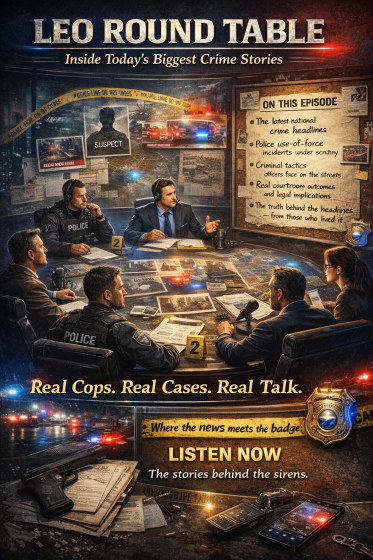

LEO Round Table with Chip DeBlock
S11E044, Intense Shootout With Cops Leaves One Injured And Suspect Dead On Video
Cities ramp up security amid Iran conflict. Churches issued national terrorism advisories. Chief wants to fire three cops with disabled veteran license plates. Intense shootout with cops leaves one injured and suspect dead on video. Suspect fatally shot after going for rifle during struggle.
Tactical Analysis: National Security Threats and High-Intensity Engagements
LEO Round Table: Tactical Analysis
Expert Law Enforcement Perspectives on National Security & Field Operations
Critical Incident Briefings
San Jose Multi-County Shootout
A violent spree involving stolen Corvettes ended in a high-intensity gunfight. A Sergeant was shot in the head but survived. Suspect neutralized after being struck by a police SUV.
The Riverside License Plate Dispute
Chief Larry Gonzales moves to fire 3 officers for using 100% Disabled Veteran plates on personal vehicles, citing policy violations and questioning fitness for duty.
National Security: Iran Conflict
DHS issues bulletins for churches and synagogues. Focus on lone-actor threats and fusion center coordination across major US metros.
Expert Commentary
"We don't breed that type of warrior mentality. We only breed the guardian... You gotta have both."
— Danny King
Panelists
- • Chip DeBlock: Host
- • Ralph Ornelas: Retired Chief
- • Danny King: Expert Witness
Key Concepts
This episode of the LEO Round Table features host Chip DeBlock alongside law enforcement veterans Chief Ralph Ornelas and Officer Danny King. The panel provides a professional critique of domestic terrorism warnings, a controversial personnel policy regarding disabled veterans, and a detailed tactical breakdown of two recent fatal police shootouts.
National Security and the Iran Conflict
Law enforcement agencies across the United States have increased patrols and security measures following escalating tensions with Iran. A Department of Homeland Security (DHS) bulletin warned that while a large-scale physical attack is unlikely, the conflict could inspire "lone actors" or small-scale cyber activity within the homeland. The panel highlighted the critical role of "fusion centers"—24-hour intelligence hubs that monitor social media and intel bulletins to provide real-time updates to officers on the street. Concerns were also raised regarding border security, with mentions of known terrorist cells potentially operating within major U.S. cities.
Domestic Intelligence Framework
- 📍 Fusion Centers: 24/7 hubs connecting local, state, and federal intelligence.
- ⚠️ Threat Profile: Shift from organized militants to "lone actor" disruptions.
- 🛡️ Soft Targets: Increased focus on churches, synagogues, and metropolitan centers.
The Riverside Veteran Plate Controversy
A significant portion of the discussion focused on the Riverside Police Department's move to terminate three officers for using "Disabled Veteran" license plates on their personal vehicles. While the officers are rated 100% disabled by the U.S. Department of Veteran Affairs, the department alleges this violates internal policies regarding the use of such designations. The panel expressed confusion over the correlation between a DMV-issued status for a private car and an officer's fitness for duty, especially if the officers had already passed departmental physical fitness standards.
Tactical Breakdown: San Jose & Brentwood Shootouts
The panel conducted a frame-by-frame analysis of a violent crime spree in San Jose involving suspect Mohamed Hussein. After a multi-county pursuit involving stolen Corvettes, Hussein engaged in a close-quarters gunfight, shooting a police sergeant in the head. Despite the wound, the sergeant continued to return fire. The suspect was eventually neutralized when a second officer used a police SUV to run him over. The panel commended the sergeant's "warrior spirit" and the secondary officers' clear communication regarding crossfire during the chaotic final moments.
In a separate incident in Brentwood, a traffic stop escalated when a suspect reached for an AR-style pistol inside his vehicle. The officers initially retreated for cover, with one female officer notably exposed while running across the street. The male officer eventually utilized his cruiser as cover and neutralized the suspect with his sidearm. The panel noted that the suspect's decision to raise a rifle set in motion an irreversible sequence of events, leaving the officer with no choice but to use lethal force.
Critical Incident Takeaways
1. Human Performance: The San Jose sergeant fought through a head wound, proving that training and resolve are paramount in survival.
2. Tactical Cover: The Brentwood incident highlighted the danger of "bamboozling" (panic) and the necessity of finding immediate ballistic cover when a rifle is introduced.
Key Data
- Glove Challenge Results: Host Chip DeBlock won the endurance challenge by lasting roughly 1.1 seconds, narrowly beating Major Travis Yates.
- Safety Record: The "Glove" by Comply Technologies has seen over 250,000 deployments with zero reported injuries or deaths.
- Terrorism Statistics: Former CIA targeter Sarah Adams reports approximately 18,000 known terrorists have crossed the southern border, with confirmed cells in cities like Las Vegas.
To-Do
- Chip DeBlock will donate his prize pair of Comply Technologies gloves to the Tampa Police Department this week.
- Michael van Slag (MVS) must select a law enforcement agency to receive his donated pair of gloves.
- Viewers should check the LEO Roundtable Rumble channel at 9:00 AM Eastern tomorrow to watch the full video footage of the San Jose and Brentwood incidents.
- The panel encourages all citizens to "keep their head on a swivel" and carry personal protection where legal.
Conclusion
This session underscored the dual nature of modern policing: managing complex administrative and political challenges—such as the veteran plate controversy—while maintaining the tactical readiness required to survive high-intensity, life-threatening ambushes. The survival of the San Jose sergeant serves as a testament to the resilience of law enforcement professionals under fire.
LEO Round Table


LEO Round Table is a nationally syndicated law enforcement satellite radio talk show discussing today's news and issues from a law enforcement perspective. They also have components on TV, Podcasts, and Social Media. Their panelists are among a Who's Who of law enforcement professionals and attorneys from around the country.
https://leoroundtable.com/how-to-become-a-panelist/
[00:00] Speaker 1: (heavy metal music plays) Welcome to Leo Roundtable at leoroundtable.com. My name is Chip DeBlok, and I'm your host for a group of law enforcement professionals that talk about today's news and issues, but we do it from a law enforcement perspective. And let me introduce the crew. Guys, if you don't mind waiting for the video portion of our show, uh, he's back. Uh, we have Chief Ralph Ornelas, formerly LA Sheriff's Office, and before he, he, uh, he went to a PD over there in California, became a chief, and, uh, and, and now retired so far. We'll see how long that lasts. And then we've got, uh, Danny King as well. Uh, he's got a exemplary law enforcement career. Let me ch- is that the word he wanted me to use? Exe- exemplary. Yeah. I- I- I said it. Exemplary law enforcement career, and, uh, hey, he, he's also, he's also got, uh, he's also got a website that you guys, uh... Now, y- you're doing work on the website, I know, Danny. Uh, but it is americanpatrolmen.com.
[01:02] Speaker 1: When he gets that site back up and running, uh, you guys can get more information about Danny or doing the expert testimony thing, uh, with him. So, but thanks for being on the show, guys. Appreciate it. And, and the shout out to our sponsors, guys. Please support our sponsors. They go to great lengths to bring this good quality content to you. We have our title sponsor, Galls at galls.com. We have Comply Technologies. They're our satellite sponsor, Satellite Radio. We have gunlearn.com, MyMedicare.live. Safeguard Recruiting, our streaming sponsor, thanks to them we're, we're streaming to over a million followers during the live show right now, and we're getting ready to pick up another 250,000 as well. Uh, so, uh, it- it's all good. And then we have 2bellas.com. They built our new online store at leoroundtable.com. Go to our website, upper right corner, you see the online store, and you can go there and get cool gear like the mug I have behind me and all kinds of stuff.
[01:45] Speaker 1: Shirts, hats, all kinds of stuff. So check that out. And a shout-out to Brian Burns for the Tampa Free Press at tampafp.com. Thanks for carrying our content, Brian. Also Ray Dietrich, with formerlawman.com, and then lastly, Travis Yates with lawoficer.com. Thanks to all those entities for helping make this show happen. You know, um, I'm gonna tal- talk about what we're gonna talk about. Uh, but first, let me just say that, um, l- yesterday we released the results of the glove challenge, the glove by Comply Technologies, you know, our sponsor. And so, uh, people may remember that both myself and panelist, uh, Doctor and Major Travis Yates from the Tulsa Police Department, we both got gloved on a Thursday during SHOT Show, and it was, uh, Dan De La Cruz, uh, applied the glove. And we were both trying to resist, um, the longest period of time. And so the way the glove challenge worked was that there were two of us doing the glove challenge.
[02:36] Speaker 1: We were trying to see who would last the longest, and then we were trying to get people to donate to The Wounded Blue, that's Lieutenant Randy Sutton's 501 (c) (3) ) , and whoever donated the most money to The Wounded Blue and the name of the person that lasted the longest, both those parties would end up getting a free pair of gloves. They're valued at about $2,000 a pair. And, uh, and so I ended up winning, but just by a fraction. I made it, like, one-point-something seconds, and Travis was around the one-second mark, i- i- when it was done. If you would've told me that Travis won a- and, and, and I- would, would- didn't, I would've believed you, because it wa- it was really that close. I mean, i- it just, it was just the luck of the draw. So, um, so I'm getting a free pair of gloves that I'm donating to the Tampa Police Department and trying to get that done this week.
[03:19] Speaker 1: And also, uh, Michael van Slag, or MVS, one of our, our, uh, our, one of our biggest fans, probably our biggest fan, uh, he, uh, he won, uh, he donated to both me and Travis. And he, he, he double-played it and he, and he, and, and he was the highest bidder, uh, for me. And, uh, and so he, he's getting a free pair of gloves, too, that, that he can donate to an agency of his choice. I don't know if he's picked the agency ou- yet or not but, uh, so it- so it's a win-win. And we got some money for The Wounded Blue, so it, it all works. So that happened. I just wanted to refresh everybody's, uh, minds about that. Um, what are we talking about? We have... Ther- there's a, a couple stories. They're really about the same. We have a list of US, uh, cities that are raising security amid the Iran conflict, but we've also got, uh, national terrorism advisory issued for churches, so talking about the same thing.
[04:04] Speaker 1: We got a police chief wants to fire three officers with disabled veteran license plates on personal cars. I'm sure Danny King's got something to say about that. We got, uh, uh, San Jose police, uh, they released helicopter and body cam footage of a shootout that left the suspect dead. Guys, I have never written so many notes before on a, on a police video. Wild, cra- uh, I, we have three videos. Unbelievable. Then we have Brentwood police officer, um, fatally shot a suspect who went for the rifle inside of his car. Uh, we've got, um, after a suspect accused of injuring an NYPD officer with snowballs, the DA lessens the charges. You know what? We'll, we'll drop that one. We won't even go to that one. And then we got a police cruiser, um, there's a gr- (laughs) a police car tries to pit a guy in an SUV pulling an empty trailer and then he ends up on top of the trailer being pulled by the bad guy.
[04:52] Speaker 1: A second police car has to pit the SUV pulling the trailer with the police car on it, and then it's just, everything breaks loose. The jackknife, cop car falls off the trailer and tumbles over sideways and the SUV pulling the trailer crashes head-on into a tree. Just a nightmare. It's just... But what a video, huh? It's only, like, a 30-second video. Wow. So if you guys are ready, let's go on and get the party started. Um, you know, our first story, uh, main s- uh, main topic, newsweek.com, uh, list of US cities that are raising security amid Iran- Iran conflict. You know, there's a lot of ci- I'm not so much focusing on the cities. Of course, you've got, you know, New York, and you've got, you know, Chicago and other ones. But it talks about how law agencies across the United States, so really everywhere, they've increased patrols following the escalating tensions involving Iran. We all know what's going on with Iran. And, you know, it's pay now, pay later.
[05:42] Speaker 1: I'd rather, I'd rather pay now and, and not have to worry about a nuclear, you know, armed missile being headed my way. Um, federal authorities have warned of a potential elevated-risk environment because of what's going on. Homeland Security Secretary Kristina Noem told Newsweek, "I am in direct, uh, coordination with our federal intelligence and law enforcement partners as we continue to closely monitor and thwart any potential threats to the homeland." And the Department of Homeland Security, they've circulated an internal bulletin for law enforcement partners warning that the conflict could inspire lone actors or small-scale cyber activity inside the US, and, um, ABC News got ahold of that. And they're also talking about, uh, a large-scale physical attack is unlikely, and Iran and its proxies probably pose a persistent threat and targeted attacks in the homeland.
[06:27] Speaker 1: And it will almost certainly escalate retaliatory actions or calls to actions if the reports of the Ayatollah's death were confirmed, which of course, you know, they have been. And then, um...... uh, moving along. The next one that we have in reference to that, and I'm just gonna lump them in together, lawoficer.com, national terrorism advisory issued for churches. You know, there's a... You know, we're concerned about churches and synagogues. This is where these people are typically gonna hit, places like that, major metropolitan areas, where we've got New York, Los Angeles, Washington, D.C., Tampa, where I'm at. You know, CENTCOM, Central Command, is right here. Uh, so a lot of these areas and other ones, you know, soft targets. And, uh, they're talking about the same DHS bulletin and stuff. So, um, guys, watching the show, uh, you know, we want our, our panelists to talk.
[07:10] Speaker 1: I want them to talk but, but guys, wherever you go, keep your head on a swivel and make sure you carry wherever you go. Um, we have two open mics. Danny King, you want to start us off?
[07:20] Speaker 2: Yeah. So, um, naturally this is something that, that Americans are, uh, concerned about, but also familiar with, where we have a lot of, uh, mass shootings, and, and that's the biggest thing is that you don't need, you know, a dozen armed militants or terrorists to show up at any one place, um, and start creating havoc or wreaking havoc. You can have one guy walk into a bar in Austin, right, or into a hotel here in Vegas. Um, and so, those are things that are ever present. And for law enforcement, it... these types of increases in security or concern aren't anything really new, right? Most people don't know that most cities have what's called fusion centers in them. And fusion centers are a group of law enforcement officers and intel analysts that are there 24 hours a day that monitor social media, uh, regular media, intel bulletins, and they have the ability to send out, oftentimes, either state-wide, county-wide messages.
[08:18] Speaker 2: So as an example, when the thing in Austin happened, uh, if it happened at 2:00 in the morning, all law enforcement on duty would get a message via their MDT or email saying, "Hey, this is what's going on in Austin." Right? And so now that allows law enforcement to shift, uh, maybe go to their local kind of, uh, district where there's bars and nightlife, things like that. So, um, yeah, you know what? I'm curious to see what's gonna happen. Iran is not usually the center of, of any type of, uh, anything that gets people up in arms on one side or the other, so I'm curious to see what's going to happen here. Um, but, uh, you know, I'm hoping it's not much, but we'll see with time.
[08:59] Speaker 3: Well, yeah, I mean, well, well laid out, Danny, what you just stated there, and, you know, the joint Regional Intelligence Center, you know, a lot of different sectors of the United States. And here it go... it goes again. You know, the street cop does have int- information out there and they sh- they pass it along laterally or up and down and stuff, and we all know that, you know, we have to communicate effectively all the time from, from a local, state, federal agencies. And we have proven, you know, around the country after even 9/11 how much we improved. We're still improve more, but the intelligence is so critical. But, you know, I look back, you know, when I was at work in Central America, the fact that, you know, uh, our intelligence and also in... interviewing people in other prisons, which I did with investigators from LAPD and the county sheriffs down in... uh, in Central America. I'll tell you something.
[09:54] Speaker 3: We acquired a lot of intel from that because a lot of the Latinos had a lot of, uh, Islamic extremist tattoos on their back, which we passed along to the Air Force intelligence and we'd pass all that stuff. So, we know that... what we could do and can intervene, but when you have a lone actor like what happened the other day in Austin and other places, sometimes it slips through the cracks. And that, that's where, Danny, you mentioned the community has to he- see things, say something too. And so we all have to work together. And I like the fact that, you know, uh, NYPD still has investigators in Israel working with that to get intel back to our country to help out. LAPD's doing that. So, I think that there's a lot of... a lot of different levels that we have to do to mitigate this and, uh, also, I'll leave this, the last second, to get a minute left, is that, you know, the last few years, we got a lot of people in this country, over 12 million that came in.
[10:49] Speaker 3: We don't know really who they are. We don't know where they are... where they're at and who they are and what level of, um, training they've had and from other countries.
[11:00] Speaker 1: Yeah, that's scary, right? And that's what... if anything keeps me up at... awake at night, that's what that... that's... (laughs) that's what it does, so. Um, any more commentary, uh, gentlemen? Are you guys ready to roll to the, uh... to the next one? Danny?
[11:12] Speaker 2: Yeah, actually, uh, with the few seconds we have left, I was listening to a gal named Sarah Adams. She's a former CIA targeter, and, um, she mentioned, um, you know, there's 18,000 known terrorists that I believe came across the southern border. And she mentioned they know for a fact there's a cell in Las Vegas, which, you know, uh, it stunned me because it's not what you want to hear, but it's one of those things that, that, um, unfortunately, it's, it's probably true. So, we know that we have, have problems and, and we've got to fix these things pretty quick.
[11:46] Speaker 1: Oh, yeah. Well, we need to send them to meet some virgins. And, uh, it's time for our first commercial break, guys. We're gonna be talking about Galls. Stick with us. We'll be right back.
[11:56] Speaker 2: (instrumental music plays) My family only cares about one thing: that I come home safe.
[12:04] Speaker 4: At Galls, every order begins with a promise. Made with purpose. Stitched for support. Backed with pride. Answered by dedicated hands. Delivering the standard you have sworn to uphold. We serve more than the mission.
[12:42] Speaker 5: (instrumental music plays) We serve the person. Each piece is engineered to help get our first responders through the shift and back home safe.
[12:56] Speaker 1: Welcome back. LEAR Round Table at learroundtable.com, the law enforcement talk show. My name is Chip Devlock, and I'm your host. We're joined by Chief Ralph Cornelas, all the way from California. Don't hold it against him. And then we got Officer Danny King from Las Vegas area. And we have been talking about, uh, Iran and the threat to the homeland that the war in Iran is, uh, is, is presenting. And any more, uh, commentary on that? And especially to church, synagogues and places of worship, stuff like that. What I'd like to do before we get to these unbelievable videos, I'd like to cover, uh, that update story, um, that is in Riverside, California. So, let's go to that. Uh, lawofficer.com is the source. Police chief wants to fire three officers. And guys, I'm getting some horrible background noise. If you guys could mute your mics, I appreciate it.
[13:42] Speaker 1: Riverside Police Department is moving to fire three patrol officers after the department discovered the officers were using disabled military tags and, uh, you know, license plates on their personal vehicles. And this according to Police Chief Larry V. Gonzales. He said this last week. Now, at the center of the dispute, uh, is a collision, they're calling it a collision of paperwork and perception. So, the officers were rated 100% disabled by the US Department of Veteran Affairs, uh, which is what makes them eligible for the DMV disabled veteran plates, which is what they had on their personal vehicles. The lawsuit was filed on the officers' behalf on July of 2025, so this h- less than a year ago. The department's position is that these plates, again, on their personal cars, violate internal rules, specifically a policy that restricts ... A- and I'm gonna say this slowly because I, I missed it the first time.
[14:34] Speaker 1: The police department policy in California, Ralph, uh, it restricts disabled veteran plates to official vehicles used for disability-related duties, not personal cars. So, it restricts them just to be used on those. So, the department's move, um, to seek the termination of these employees escalate, uh, escalates, uh, what began as an internal investigation back in 2025 after the plates were noticed, and then it became, uh, a public test of where the department's administri- adminis- uh, administrative authority ends and a veteran's legal recognized disability status begins. And so, the officers, they're being represented by an attorney, Matthew McNicholas, and he said the plates have no relevance to their ability to do the job and that the officers have done nothing wrong. So, what he's saying is, is that even though they're, for the military purposes they're maybe 100% disabled, but he's saying that they're, they're fine to do the job. There's no correlation there.
[15:28] Speaker 1: The attorney goes on to frame the department's action as an inappropriate leap from a state-issued designation on a privately-owned car, uh, to imply judgment about fitness for duty, raising the question of whether an employer should be scrutinizing a veteran's disability status when the employee's otherwise performing patrol duties, and, and satisfactory a, a- as well. Um, you know, I don't have an open mic yet so let me just go ahead and start it off. I know that in my time with Tampa, at the Police Union, we had an issue where a vet had a disability status, but the problem that got him into grease is that he lied on his application and he never let TPD, never made them aware of it, nor the pension system. So, we hired on a guy that ended up having some, um, well he had some PTS- PTSD issues too, uh, wh- which, which, which complicated the issue.
[16:21] Speaker 1: Um, so anyhow, when we found out that he had these issues, that they were diagnosed and that he was receiving a check for them and, i- i- but it was never declared during the hiring process, that created a, a problem. So, we, we, we, we had to move from salvaging or saving the job to exit strategy, right? And I think Danny probably knows better than anybody what I'm talking about. There isn't really a lot we could do for him because he wasn't forthcoming through the application process with the agency. So that said, I, I find this kind of fascinating because, you know, I, I, I, it seems like it's such a reach, you know, Danny, for them to go in for the ... 'cause these are their personal cars, so they have these, these DMV tags on for showing veteran status.
[17:03] Speaker 1: And I know there's no necessarily a correlation between disability, asu- assuming that the agency hired them, knew about their disability status, but that they still must have passed that physical fitness test which I'm assuming they, you know, they, they had to do. Ralph, you're over there in California, not me. Um, so, it's a, it's a good conversation. Danny?
[17:20] Speaker 2: Yeah, well, this story quite honestly confuses me. I would think that the chief has, has bigger fish to fry but it- at the same time, I don't understand the correlation between veteran plates and, and, uh, a department policy. Um, I think the bigger issue would be, "Hey, listen, you're saying you're a disabled veteran. How can you do law enforcement work?" But that doesn't seem to, to be the issue. So, I, I know we have guys, um, you know, when I got out of the Army I was busted up, um, and I have cracks in my spine from flying on helicopters and falling out of helicopters and doing all kinds of crazy stuff. But when I left the Army in the '90s, um, you know, disability was nothing and I had a family to feed, so I just had to suck it up for the last, uh, 20, you know, 30 years.
[18:08] Speaker 2: That's why I look the way I look, is that I'm-
[18:10] Speaker 1: (laughs)
[18:10] Speaker 2: ... I'm all busted up. Um, but now those things are, are coming to, uh, I'm paying for them now, you know what I mean? At, at 52 years old I'm like an old Russian helicopter, so-
[18:23] Speaker 1: (laughs)
[18:23] Speaker 2: ... um, you know. I, I, I get that there's an issue, what that issue is, and, and if it's the chief's issue or if it's the VA's issue, um, you know, I guess I'm confused.
[18:36] Speaker 5: You know, you know, first of all, thanks for you service, Danny, number one. Number two, um, I, I, I gotta tell you, I, I put through the academy a lot of military, uh-
[18:47] Speaker 3: You know, when I was a staff inspector at the academy. And I can tell you this, we always checked on the backgrounds. I never... We never hired anybody had a disability from... that my memory... that we, that they had a disability from the military, Danny and Chip and audience. So, that kind of confuses me. Something I, I kind of... and being a chief, I've had military come and, as a chief we hired on. I never heard of anybody that we hired had a disability from the military. Uh, and so it's really... As Danny says, I'm a little perplexed here. You know, the hiring process, the background, the medical, would see that. And I never saw anybody in my time that had a mi- military disability. I could be wrong, but my memory does never... has never, um, you know, uh, bring back that anybody had a, uh, disability from military. But it... So, so this chief obviously maybe...
[19:45] Speaker 3: Again, I'm only ho- hypothesizing right now, maybe he found out that his background investigators or contracted background hire these people, him not knowing, now he's going after them, finding out... I'm just surmising here, I don't know, that now they got a disability license plate. That's kind of interesting. It's really, it's really perplexes me, I'll be honest with you, Chip and Danny.
[20:06] Speaker 1: Well, I, I gotta admit that I did not know that. And we're getting... We're about 30 seconds out from a commercial break, but I did not know that you have to have 100% disability to get those veteran plates. If I did see somebody I knew to be a cop driving around with a plate advertising he has 100% disability, but he's, you know, carrying a gun to protect me and stuff, I would probably... It would probably give me pause, to be honest with you. I know a lot of veterans, um, that have disabilities, just like 10%, 50% or something pretty low. But, look, we got a commercial break coming up. We'll continue this in a minute. Stick with us. We'll be right back. All right, guys. Introducing Comply Technologies at complytechnologies.com. And they're committed to providing non-lethal solutions that help officers gain the upper hand safely and rapidly in a humane, low optics manner, utilizing their CD3, which stands for conductive distraction and de-escalation technology.
[20:56] Speaker 1: Now, their flagship product, we all know by now, it's called The Glove. It's helped officers... I was gonna say tens of thousands of times, but now there are over 250,000 deployments with no injuries, no deaths. Uh, uh, you heard me correctly. I said no injuries. The Glove has actually achieved non-lethal status in an arena that predominantly can only offer less lethal results. And when it comes to weapons retention, transitioning to a sidearm or conducted energy weapon, The Glove at complytechnologies.com, they virtually eliminated weapons confusion. So, stay ahead of the game with Comply Technologies and their revolutionary CD3 that hundreds of agencies have already turned to nationwide. And friends, take it from me, when it comes to safety, this is one of the most common sense, hands-on solutions that's ever come along. So, go to the complytechnologies.com today. Welcome back. LEO Roundtable at leoroundtable.com, the law enforcement talk show.
[21:40] Speaker 1: My name is Chip DeBlock and I'm your host. We're joined by Chief Ralph Ornelas all the way from California, uh, Officer Danny King from Las Vegas metro area. And, uh, we've been... (laughs) We've, we've been talking about, um, uh, a chief that didn't like his, uh, his officers driving around with the, with the disabled vet tags. So, I, uh... I- is there anything more on that or are you guys ready to go to the vide- to the videos?
[22:03] Speaker 3: No, I'm ready to go.
[22:04] Speaker 1: Ready?
[22:04] Speaker 3: I'm ready to go to the video.
[22:06] Speaker 1: All right, guys watching the show, put your seat belts on. This is gonna be a wild ride. I, I, I, I kid you not. Now, look, every once in a while... Well, let me just go and say, our source for videos is almost solely, uh, This is Butter's channel at rumble.com. So, This is Butter, kind of like us, we had a huge presence on YouTube and then YouTube started trying to cancel us because we're conservative and we're law enforcement. And so This is Butter moved the operation, kind of like we did, over to rumble.com. So, if you go to the rumble.com, the name of the channel is This is Butter. They have all the police videos that come out well before anybody else gets them. San Jose police release a helicopter body cam footage of a shootout that left the suspect dead.
[22:49] Speaker 4: Northbound Notre Dame passing Carlisle.
[22:54] Speaker 6: 11182 Notre Dame, but he's still... Nope, he's got a foot bail, bailiff. He's gonna be... Tried turning 215 another vehicle. San Jose, you have a Unit 11-96 with him right now. (beeping) Shots fired, shots fired. Code Blue still, Code Blue still. (beeping) He's trying to 215 the patrol car. He's out of the patrol car now. He's gonna be running, uh... (beeping) He's trying to carjack another vehicle. Oh. Shots fired, shots fired. One of your officers, uh... (police sirens) .
[23:49] Speaker 4: Trying to 215 another vehicle. 11-96 with him right now.
[23:55] Speaker 6: (groaning) Big 10, I'm shot. (police sirens) (gunshots)
[24:56] Speaker 1: So, we're in San Jose, California, so I expect Chief Ornelas to have some inside scoop on this. Now, I've got ... My notes are ridiculous on this thing, so I'm gonna, I'm gonna go quickly on this. But, the ... If we get the all three videos, people listening to the show, you absolutely, positively have to watch them. In order to do that, all you have to do, you know, our live show is Monday through Friday during the lunch hour Eastern Time, 12:00 to 1:00. If you wanna watch this show with the videos embedded into it, all you have to do, the very next day at 9:00 in the morning, producer Will, he'll put them up on our Rumble channel, and at 9:00 in the morning. So, uh, at 9:00 tomorrow morning, this ... A copy of this live show will air, and it'll have a thumbnail on it that's got, like, a screenshot of what, of the action from one of the videos. And it'll have, you know, a t- you know, like, uh, "Suspect run over," you know, or something like that on it.
[25:45] Speaker 1: And it'll appear at 9:00 on our Rumble channel, and it's called LEO Roundtable, is our Rumble channel name. San Jose, California violent crime spree in, uh, northern California ended in a deadly police shootout on Wednesday. Now, the multi-day crime spree included several armed robberies and carjackings spanning multiple counties and cities. The suspect was a 30-year-old named Mohamed Hussein. (laughs) That name. Uh, he, and he died after he was run over by police. And there was more than one attempt to run this dude over, too. Meantime, a police sergeant ends up getting shot in the head by this sucker and is expected to survive, though, thank God. Um, under fire, wounded and under extreme stress, his training and resolve kicked in, according to San Jose Police Chief Paul Joseph. Only a person with a warrior spirit could fight through an encounter like that and live.
[26:34] Speaker 1: I gotta tell you, when I first watched the video, I took my notes, and when I saw the body cam of the sergeant that got shot in the head, I w- had to go back and erase a lot of what I, what I wrote, because the, uh, the, the, the initial helicopter video I saw misled me into thinking some stuff happened that didn't happen. We'll, we'll cover that in a second. So, according to Chief Joseph, on January the 17th, Hussein, our bad guy, he likes Corvettes. He stole a red Corvette from a dealership in Sacramento, California, committed multiple armed robberies in Northern California and the Bay Area over the following days. And then on Wednesday, license plate readers, they spot the Corvette in San Jose, but officers cannot find the driver. And then, he steals a bright green Corvette at gunpoint from a dealership in San Jose, and there's a police cha- police chase when he steals that second Corvette.
[27:22] Speaker 1: Now, we got air service up, so a helicopter's following him about 45 miles south of Hollister, and this dude, uh, gets into a shootout with San Benito, uh, Sheriff's Department and the Hollister Police Department. And then, he steals another car in Hollister and i- it was captured on cellphone video, and he drives back to San Jose. And he's, during the process, while he's fleeing, he's firing shots at California Highway Patrol, uh, who, who's involved in this chase, too. So, it all ends in downtown San Jose. They got a video from a ... It starts off with a, with air service, you know, helicopter video obtained by fugitive.com. So, you can see the suspect. He shoots the sergeant. So, let me kinda go mash this together. You see our bad guy running from police and he tries ... (laughs) He gets in an intersection. People are stopped from the light and he tries to fit between two cars. He hits one of the civilian's cars and then he ends up stopping. Uh, not clear whether ...
[28:13] Speaker 1: It didn't look like there was maybe enough damage to disable the car. There could have been. I don't know. W- regardless, he stops his car, gets out, and now he looks like he's gonna go up and try to carjack a civilian. Well, when he's walking between the vehicles, this police car, at a high rate of speed, comes zooming between the two cars, trying to take him out, trying to hit him. Well, he dodges out of the way of the, of the police, uh, SUV, and the police car, um, it sideswipes our bad guy's car, which was stopped in the middle, middle of the intersection. And so, our police SUV just goes a few feet forward, stops, and that's our sergeant that gets shot in the head As soon as he gets out, bad guy's waiting, bam, shoots him in the head. You can see the sergeant bleeding. So, it- i- i- from the, from the air service video, I thought the sergeant ex- exited the car.
[28:56] Speaker 1: I didn't thi- I didn't know he'd been shot, and I thought that he was engaging the bad guy and that he retreated back inside the car. Not what happened. Sergeant just opened up the door and l- looking to get out, he gets hit in the head immediately. So, now the sergeant is half sitting in the car and half leaning out. Bad guy notices this, comes up and engages him from the rear, uh, of the, uh, of the police SUV, close-quarter gunfight. The, the sergeant's just partially, you know, has partial cover. Like, his right leg is out and you can see the rest of h- his body is in there, but he, he gets in a gunfight with the guy. Um, the bad guy walks around the side of the car. Our police sergeant leaves the cockpit of the cruiser, goes into the middle of the intersection while the bad guy is circling, getting into the, into the open door on the police cruiser now, trying to steal it, and it's a big police SUV.
[29:41] Speaker 1: Our sergeant's standing, not ideal situation, but, of course, he's been shot in the head. There's a lot going on there. He, he, he fires shots through the glass windows on the passenger side of his own SUV, trying to put bullets into the bad guy who's in his car trying to steal it. No problem with that, right? Bad guy, um, at this point, gives up on stealing the car Now, while this is going on, all the cavalry is showing up. A- and you're unaware until you watch body cams afterwards that you've got so many cops from different agencies showing up with long guns, and mostly long guns. There were pistols, too. And they're taking shots at the guy. I'm a little surprised that the bad guy was able to get out of the police sergeant's SUV, run across the intersection and, to go carjack, uh, uh, uh, yet another vehicle.
[30:25] Speaker 1: But when he gets there, he's not successful because now we have another high-speed police SUV, takes him freaking out, drags him to the rear of the car, and now you've got two things lumped in the, in the, in the road. I thought it ... It looked like two bodies. I thought that maybe the civilian got carjacked and was laying there. No. It was, uh, it looked like the rear bumper of the car or something and they, they're dithering the, you know, the body of the bad guy. But then you hear all the gunfire. And, and then when you watch the body cams, even our ... I mean, the, the bad guy, I mean, the, the cop that took out the bad guy, he gets out. I think he, he engages, um, the c- the sergeant that got shot in the head, he runs up and he gets some rounds off. I- it's just like the O.K. Corral. Uh, the best news is that the bad guy dies and the sergeant's gonna, gonna survive. Um, I think I covered everything. Um, if I left something out, don't feel bad about correcting me.
[31:10] Speaker 1: You usually don't anyhow. Um, Chief Ornelas, why don't you start us off on this oneThree minutes.
[31:15] Speaker 3: Yeah. Uh, so I, first of all, I wanna commend that sergeant for his, what his, his heroism and his strength in taking a shot to the head. And you see the video, uh, audience and Danny and Chip, and blood is on his hand. You can see the blood dripping down as he's shooting at the suspect. And, and I, and when, when... The only thing w- I'll critique, I have to critique is if that would have been me, I would have went through the intersection, spun around distance, used my car as, as, as a, as a potential barrier. Because when he stepped out, he was so close to that suspect.
[31:51] Speaker 1: Yeah.
[31:51] Speaker 3: That suspect, that suspect took advantage of that, that opportunity. But that put aside, the sh- the sergeant's a hero. But when that suspect got in the car, the, the SUV patrol vehicle and noticed he couldn't drive it, he started running. There was another officer who was further to the right, if you wanna say, of the screen. He's running, shooting him as the sergeant's shooting him. That suspect, I believe, went down. And I gotta tell you, I, I gotta commend that other officer w- who ran him over, right? He ran him over and his front bumper w- was also, like you said, was that another body? Was it, you know, was that something else?
[32:29] Speaker 1: Yeah.
[32:29] Speaker 3: You know? And that other officer who came out with his, his rifle, I gotta commend him for yelling, "Crossfire, crossfire. Move to the right, to the right." And he was giving a lot of good direction, taking command of that. Because I've been in a situation where you get so many officers or deputies in a situation, emotions high, that we had a deputy one time hit another deputy in the back of the, uh, back of the shoulder accidentally, friendly fire. So I gotta give, that one officer who came out with a rifle coming along in front of that suspect whose laying, his body was laying here, yelling commands out. And I gotta tell you, that's, that's, that's great command of a situation and, and having the wits about you to yell that to your, to your fellow officers. I'm sorry, Danny, go ahead.
[33:19] Speaker 2: No, great, uh, great commentary and you're absolutely right. The only thing that I would point out to our, our civilians, uh, f- especially in light of the incidents that have happened across the country with Rene Good and Alex Peretti, um, is that you have a lot of officer-involved shootings, um, and, and this is more the norm than the Rene Good type shooting, right? And so in the coming political season, uh, you're going to see a lot of people bring up those instances. And, uh, all those are tragedies, okay? But, but remember, when you affect a change because of a Rene Good or Alex Peretti, you're also affecting the change of the San Jose sergeant or, and, and what they do, right? So we look at the George Floyd Justice and Policing Act where they wanted to remove qualified immunity. Okay. Let's say Rene Good, they wanna sue, uh, that, that officer's family. So be it. Same thing with the San Jose sergeant. You're affecting the ability to, to sue his family as well, so.
[34:21] Speaker 1: Guys, we're gonna have to run through commercial break. I got 10 seconds, but hold that thought. Danny King, we'll be right back. All right, guys. Time to talk about GunLearn at gunlearn.com. And, you know, as law enforcement officers, we deal with guns and we deal with ammo every day. But it's what we don't know about them that gets us into trouble. Injuries, civil lawsuits, accidental discharges, misidentifications, lost prosecutions, and disciplinary issues, but gunlearn.com, they have your back. You can quickly become extremely firearm knowledgeable by simply learning 14 training modules from the convenience of your home or your office or by attending a live seminar at gunlearn.com. You can also become a safe, accurate, and competent certified firearms specialist like our very own Captain Brett Bartlett and also Attorney Ken Apianco. Now, the course has had huge success in raising the bar of firearm knowledge.
[35:04] Speaker 1: And GunLearn has been a trusted source since way back in 2011 by gun manufacturers, federal agencies, forensic organizations, and even police departments nationwide. Now, if you have your own agency, the founder, Dan O'Kelly's got a deal for you. You can actually host a seminar for absolutely no cost. It's an amazing opportunity. You can go to gunlearn.com to get more information. And again, that website, it's gunlearn.com. We're back. Leo Roundtable at leoroundtable.com. The Law Enforcement Talk Show. My name is Chip DeBlock and I'm your host for joined by, uh, Officer Danny King from Las Vegas metro area and Chief Ralph Ornelas from California. Man, we are talking about a story with a video component that is just unbelievable. Bona fide bad guy, armed robber, carjacker, going through all kinds of multi-counties in California, getting in shootouts with cops from different agencies, county, state.
[35:53] Speaker 1: We got, you know, California Highway Patrol involved in this in different cities and long pursuit for... and we had air service up and this guy's engaging the cops. And then, uh, a- a- at the end, um, he, uh, damages a civilian's car in an intersection. We have a police cruiser tries to take him out at high speed. When the sergeant gets out of the cruiser, when it stops, bad guy shoots a sergeant in the head. Sergeant survives, uh, but now there's, you know, a shootout. Cavalry arrives, a lot of long guns. Bad guy is able to try to steal the police cruiser, exits, runs to the intersection and gets to a c- another civilian's vehicle that he's trying to carjack and then he's finally taken out by a second police SUV at high speed. And, uh, and, and, and there's quite a bit of gunfire a- a- at the end of that. So that's what we've been talking about. This is one of those videos that you guys are gonna absolutely, you know, wanna see.
[36:44] Speaker 1: An- and you do that on a rumble channel called Leo Roundtable tomorrow, starting at tomorrow morning at nine o'clock Eastern Time. Um, but I... When we left off, I... Who wa- Ralph?
[36:53] Speaker 3: Yeah.
[36:53] Speaker 1: I can't remember who was talking, but go ahead.
[36:55] Speaker 3: Yeah, yeah. You know, and I, I know Danny's gonna test me and see if my memory's good and that I come back and remember those two, two areas.
[37:01] Speaker 1: (laughs)
[37:01] Speaker 3: Number one, I gotta give commi- commendation to that one officer saying, "Check on the civilians," number one. Number two, when the sergeant was walking between cars and blood's dripping down him, I gotta commend those other officers saying, "Let's get him to the hospital. Let's get him right away in a, in a patrol vehicle, code three to a hospital." So, I mean, I gotta give... And i- and in those situations, we all know when we've b- been in those situations, it's hard to get, to g- get, to thinking clearly. But these officers, I felt, did a really good job articulating some of those commands.
[37:34] Speaker 1: Agreed.
[37:35] Speaker 2: Well, that's, uh, that's one of those things that, that only comes with experience, bro, and so when you're looking at the large flight of officers from agencies, um, and you're looking at, um, the ability to handle those crisis situations, that was my element, man. I wasn't... I didn't like long-term investigations and case management and all those other things. When, when someone was gonna get injured or killed and, and things have to be, uh, taken care of, like, that's where I thrived. Um, and law enforcement got to the point where I, I'd had my fun and, um, you know, I, I'd never worked in a system that fought against itself to do its job so much that finally I was just like, hey, man, I've, I'm, I'm good. I've had my fun. Good luck. And, you know, to go back to your question, law enforcement has changed so much in which it's a good thing that we take care of our community more and, and we're out there, but, but what about this guy?
[38:28] Speaker 2: What about this guy who's going to drive through our neighborhoods injuring and killing our citizens? Right? We have to have the capacity to deal with that individual instantaneously, right? If my family's in that intersection, I want decisive action. I want that guy wiped out immediately, right? And, and unfortunately we don't breed that type of warrior mentality. We only breed the guardian mentality, um, and that's, that's... You gotta have both, so.
[38:57] Speaker 1: Good distinction.
[38:58] Speaker 2: Um, yeah.
[38:58] Speaker 1: Well, guys, we, we... If we don't, if we don't do it now, we're not gonna have time to cover the second one.
[39:02] Speaker 2: Do it.
[39:02] Speaker 1: So, let me roll, let me roll this. Rumble.com, this is better. Brentwood police officer fatally shot suspect who went for the rifle inside of his car.
[39:14] Speaker 4: Okay.
[39:16] Speaker 1: (suspenseful music playing)
[39:16] Speaker 4: Let me see that. (car door clicks) (grunts) Turn around.
[39:27] Speaker 1: Get on the ground. This is a fucking manhunt.
[39:30] Speaker 4: Yeah, yeah. Z4, get away from pursuit.
[39:34] Speaker 1: Get out of the car! Get out of the car!
[39:35] Speaker 4: Grab him, grab him. Get on the ground!
[39:39] Speaker 1: Get out of the car! Get on the ground! (music continues) Get on the ground! Fuck! Shit Get on the ground
[39:49] Speaker 4: Get on... Get your taser! Get your taser!
[39:49] Speaker 1: Get down! Get on the ground! (police sirens) (gunshots)
[39:57] Speaker 4: Z4, shots fired! Shots fired!
[40:00] Speaker 1: Get on the ground!
[40:00] Speaker 4: Get on the fucking ground! Get on the ground!
[40:06] Speaker 1: Get on the fucking ground! (beep) 35, cover, 20-30. 35, we're covering 94th, but, uh, I need 33. 10-34, I got
[42:14] Speaker 1: you. (door slams) 10-34, I got you. 15 out. (gunshots) (beep) ... goes up to the... The g- the door's open, waiting for him. The, the, the rifle's sitting right there in the driver's seat. He grabs it and spins around and he's raising it up towards... Both females are right there in front of him. And, I... The, the male officer was out of frame, but not, not far behind. So, no one draws a gun and shoots, and the closest female had a taser in her hand because she was told to do that, so everybody bamboozles. They all... It, it, it took more time for them to run away than it would have been to draw and shoot. So they run around, they're taking cover behind the cruiser, except for one female that's, like, going across, running across the street with no, absolutely no cover at all. Um, so finally, our male officer, um, using the car as partial cover, the police cruiser, ends up engaging the guy that's got a rifle... Not a fair gun fight at all.
[44:15] Speaker 1: Uh, the guy's got a rifle and the cop wins, and he takes, uh, he takes the guy out, uh, with a pistol. Bad guy's pronounced dead at the scene, and he was a convicted felon, prohibited person, but of course it didn't stop him from having a gun. So there we go. Um, we got two open mics, whoever wants to take it first. Uh, well, Chief Ralph, you're representing California today and you're doing it so well, why don't you take this one?
[44:36] Speaker 3: Well, you know, first of all, I, you know, I would've, I would've got... My suspicion went up real big time when he te- he's at the door of the suspect's car and says, "I'm not going to let you search my car." Now, now when somebody ever said that to me, that tells me, bingo, there's something in that car more than what he's even revealing stuff, you know? The other thing is controlling a body. They didn't control the body when he, when they went back. I probably, being the small man that I am, I probably, when I sent him back to the back of his car, I'd probably say, "Sir, you're under arrest. I'm putting the handcuffs on you right now," right?
[45:09] Speaker 1: (laughs)
[45:10] Speaker 3: All right?
[45:10] Speaker 1: Yeah.
[45:10] Speaker 3: And th- and at that moment in time, he might have went Duke City with me, but guess what now? You know?
[45:15] Speaker 1: Now you're ready.
[45:16] Speaker 3: I, I, I, I'm ready for it, right? Mentally. The other thing I have a problem with is this. The, the, the, the other lady, the female on the other side of the car, what did she not see that, you know... I know there was some clothing, but th- did she really look hard enough with the flashlight in- into that vehicle? And then, and then all of a sudden, here, here they go, they're in the back of that car, you know, and they're not breaking leather, and h- they know when he's finding them. He... The suspect wants to get back into that vehicle to get that weapon. And the female that's to the left of the vehicle's, she's exposed, as you eloquently said, um, you know? And those, there's a lot of different tactical stuff. And, you know, I gotta give, I gotta give the male guy, uh, uh, kudos, though, what he did.
[46:01] Speaker 1: All right. Danny King, we may have to go. We got a minute left, but we may have a... We have 60 seconds after that, so we may have to cut into the Wounded Blue time, but go ahead, Danny. (laughs)
[46:10] Speaker 2: Yeah, well, j- again, just craziness. One of the things that you notice in this incident is the body camera... What you may not notice is that the body camera shows the individual put his hands up as he's being shot. Um, and the important thing about that is the body camera is lower than the eye line of the officer. The officer has a firearm in front of his, his face, essentially, so he can't see the suspect's arms, right? So at the moment that suspect brings up that rifle, it's a pistol, a AR pistol, at the moment he brings it up, he sets in, in motion a series of events that he cannot recover from, right? Because the officer punches out his weapon, that weapon is now consuming everything below his eye line, um, and he starts firing at that individual who has now apparently dropped the weapon. But at that point, it's too late, right? You're asking a, a police officer to be a human being.
[47:02] Speaker 1: Ugh.
[47:02] Speaker 2: He's being a human being at that point.
[47:04] Speaker 1: Yeah. Definitely in hindsight, some things that could have... You know, it's... A lot of this is training. Look, none of us are perfect. You, you put me on, on 10 calls at, at my peak, and you're gonna be able to find things I did wrong on every one of them. You know, it's just an advantage for cops to learn from this, but definitely, how many, how many potential bad guys, even good guys, have I handcuffed? Because I show up at a scene with multiple people running around, I'm grabbing all of them, handcuffing them until I sort things out. There is nothing wrong with handcuffing them. Uh, you can do a lawful detainment without arresting people. Um, and yeah. There's some things that could have been done differently. Look, I want to mention the Wounded Blue at the woundedblue.org. Check them out. Hey, thank you so much, uh, Danny King and Chief Ronellas for being on the show. Appreciate it.
[47:42] Speaker 1: And also, our sponsors, gollos.com, compliantetechnologies.com, gunlearner.com, medicare.lifesafeguardrecruiting, and tubellus.com. We'll see you guys back tomorrow, 12:00 noon Eastern. (instrumental music plays)